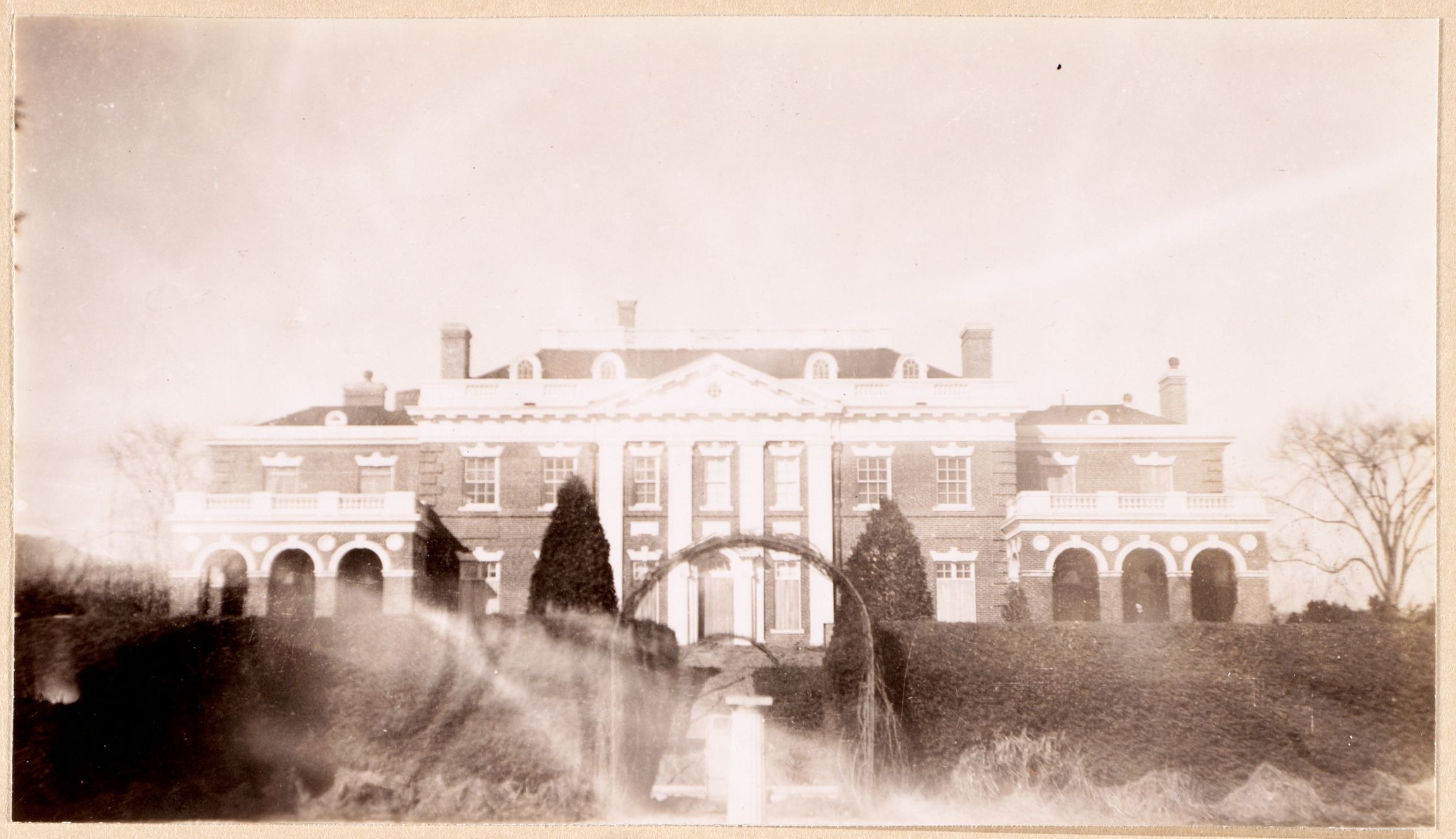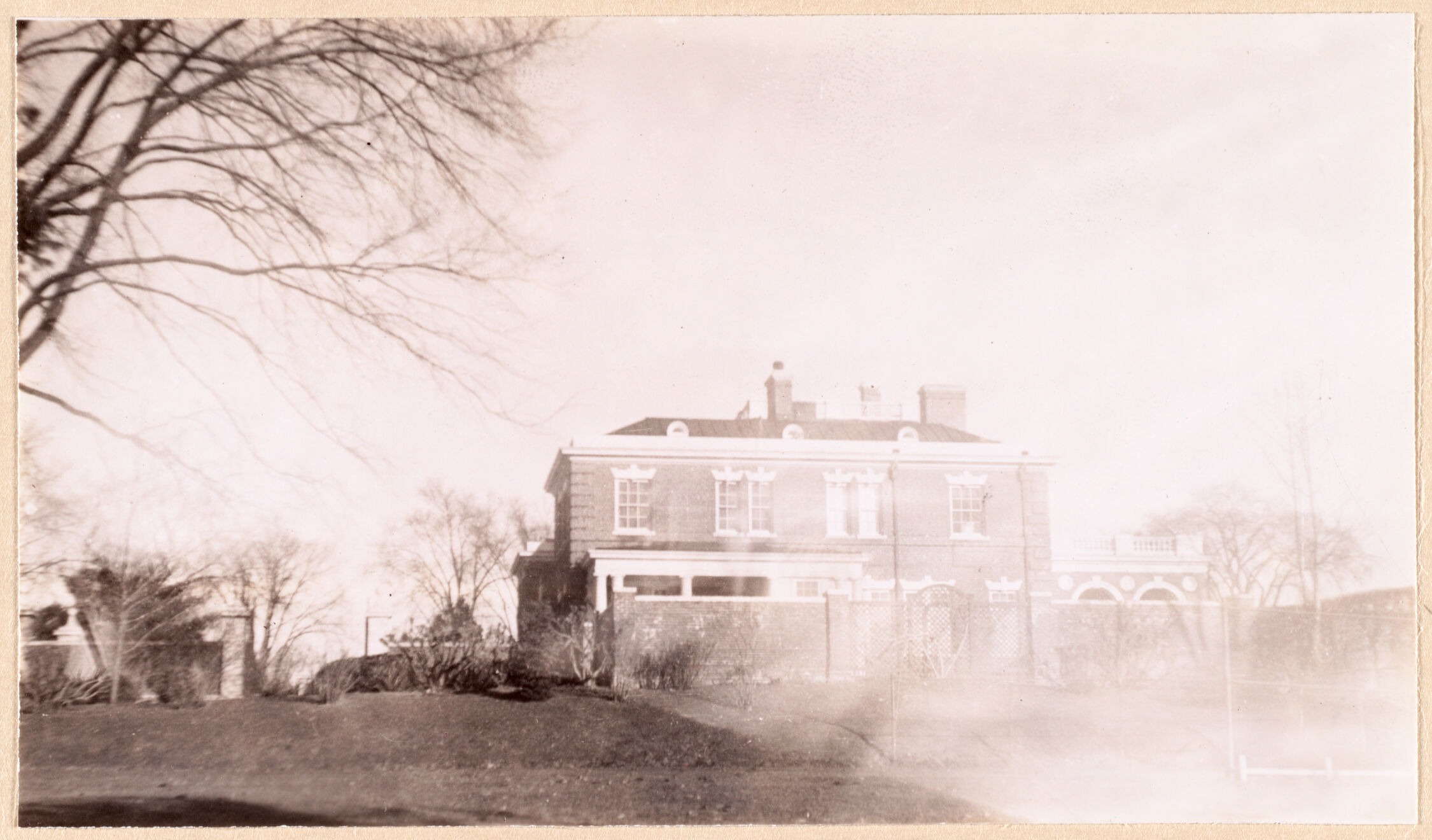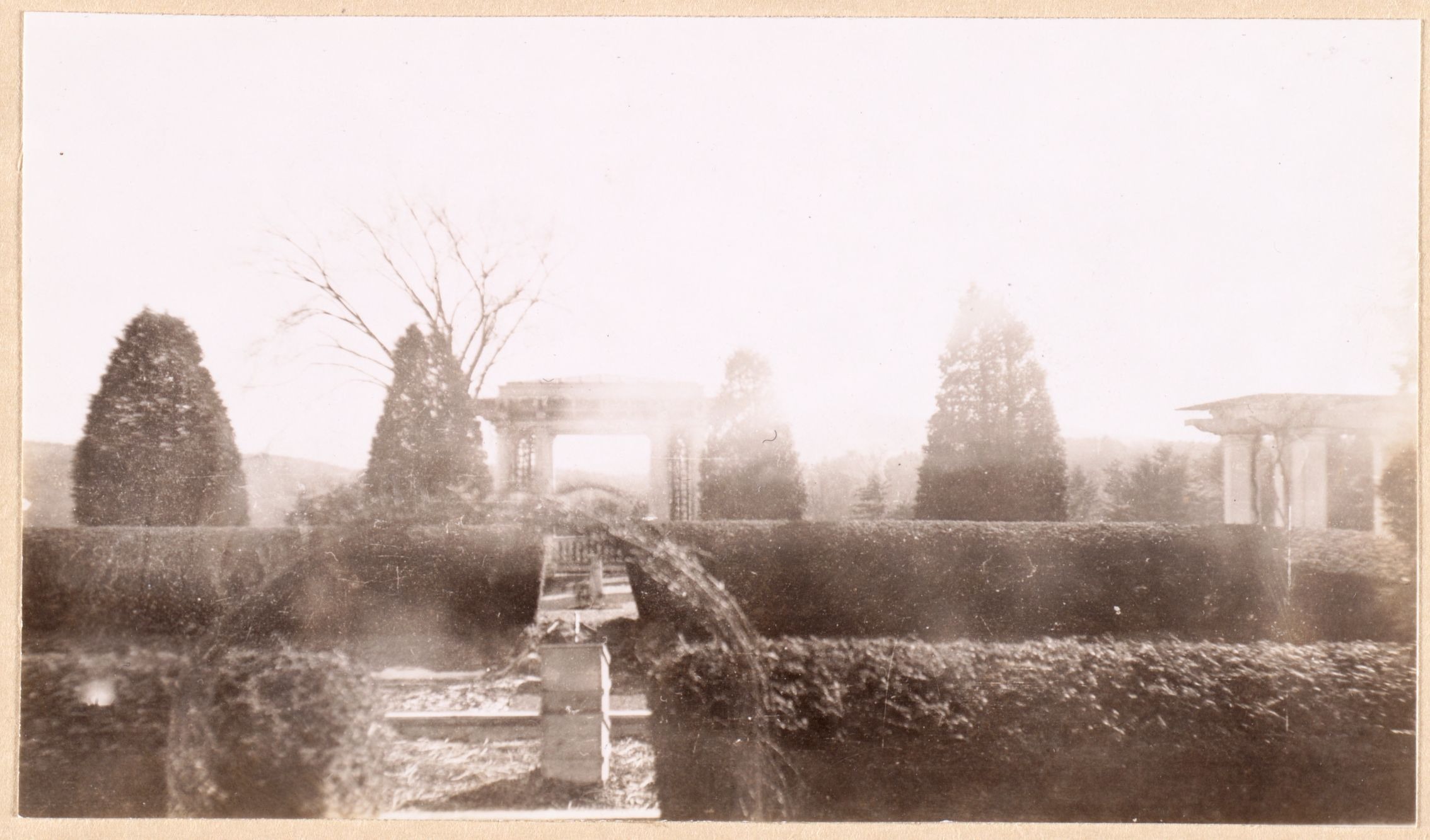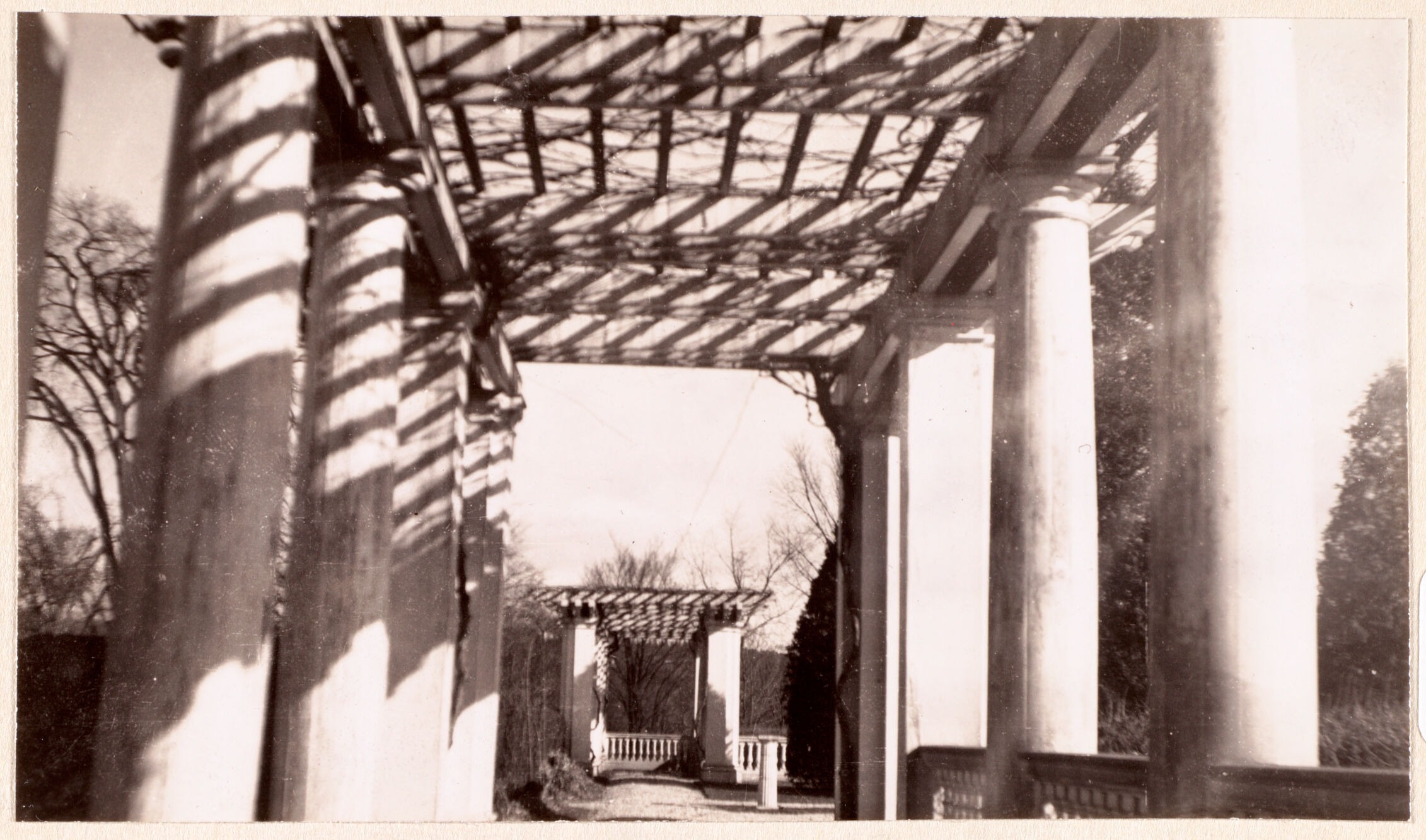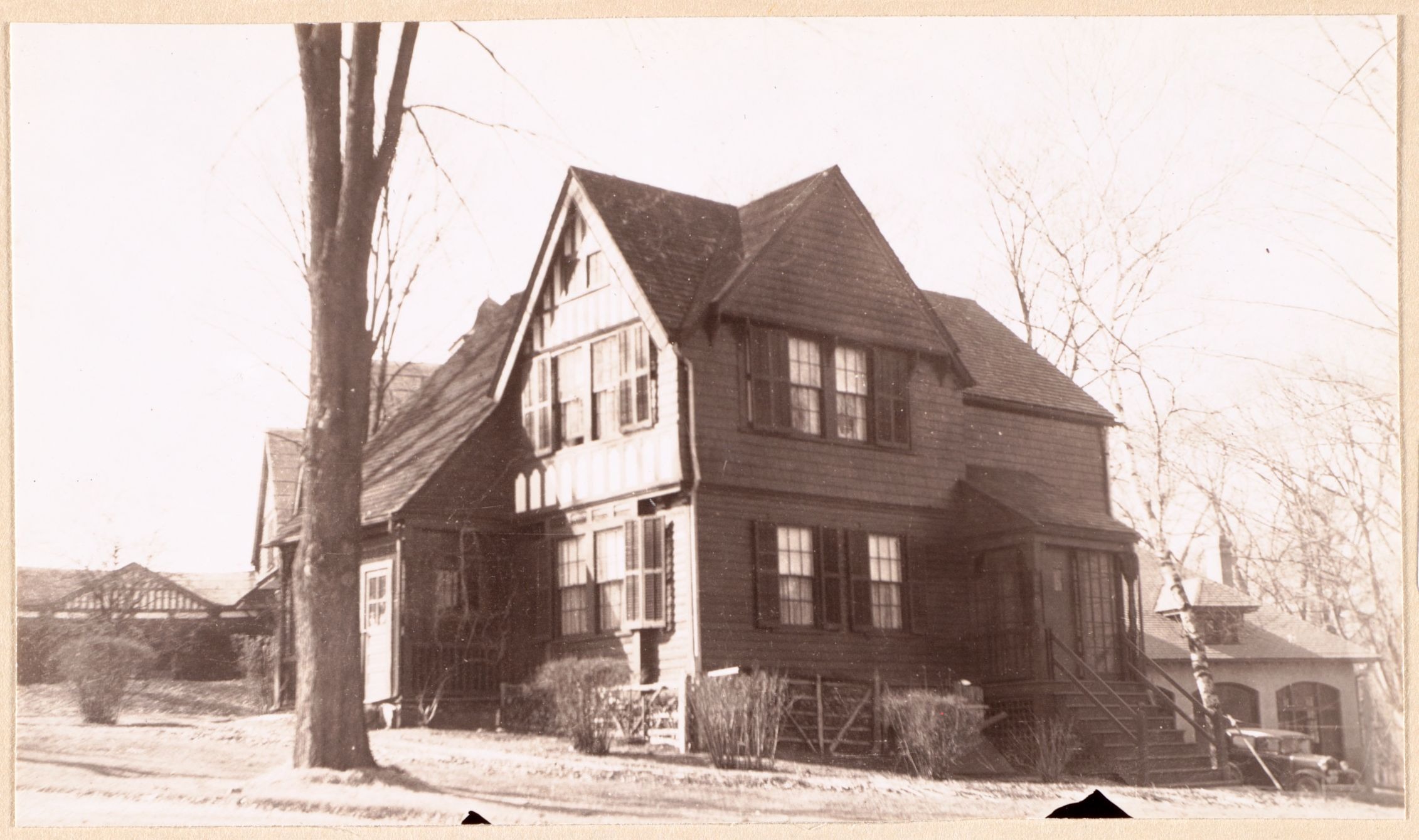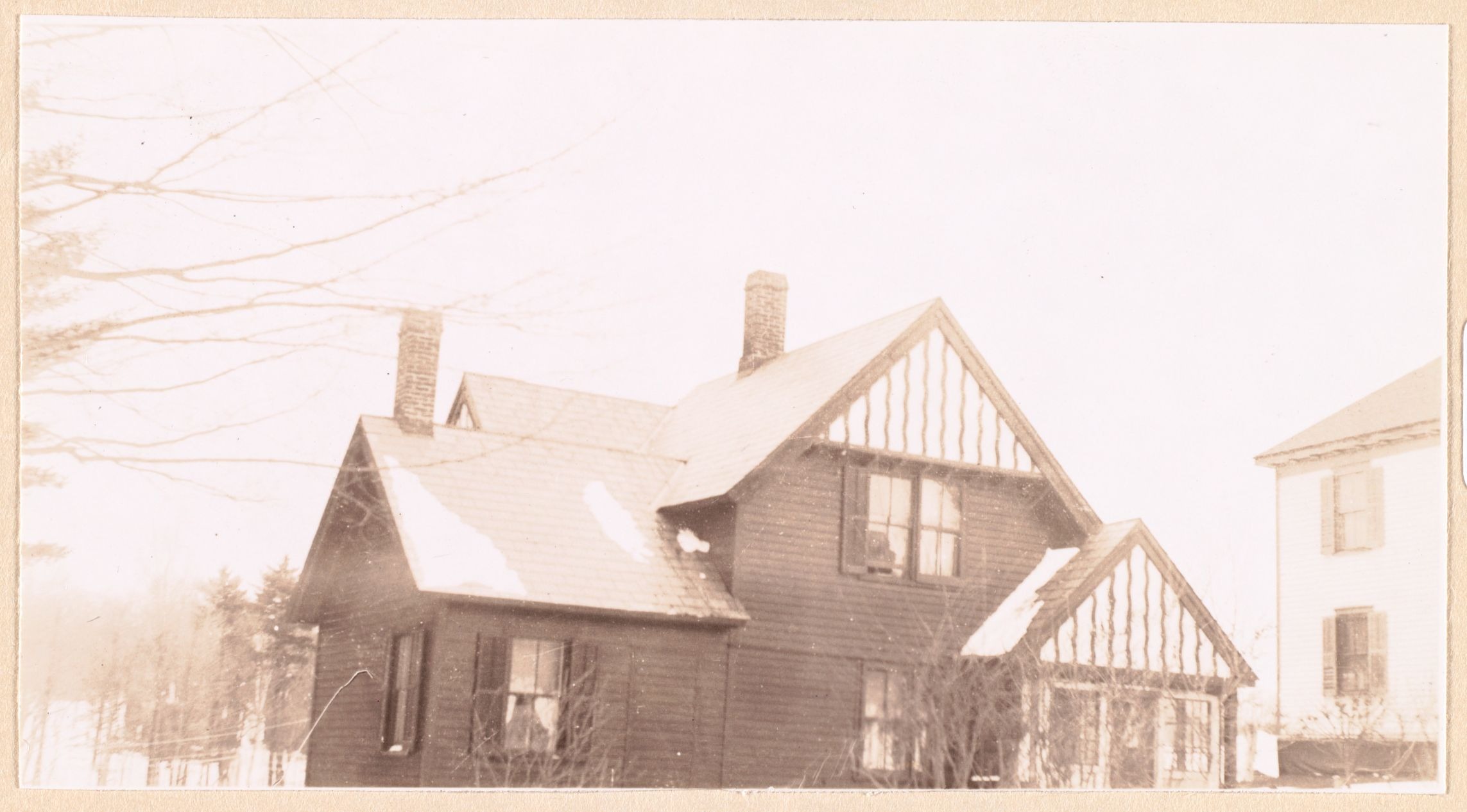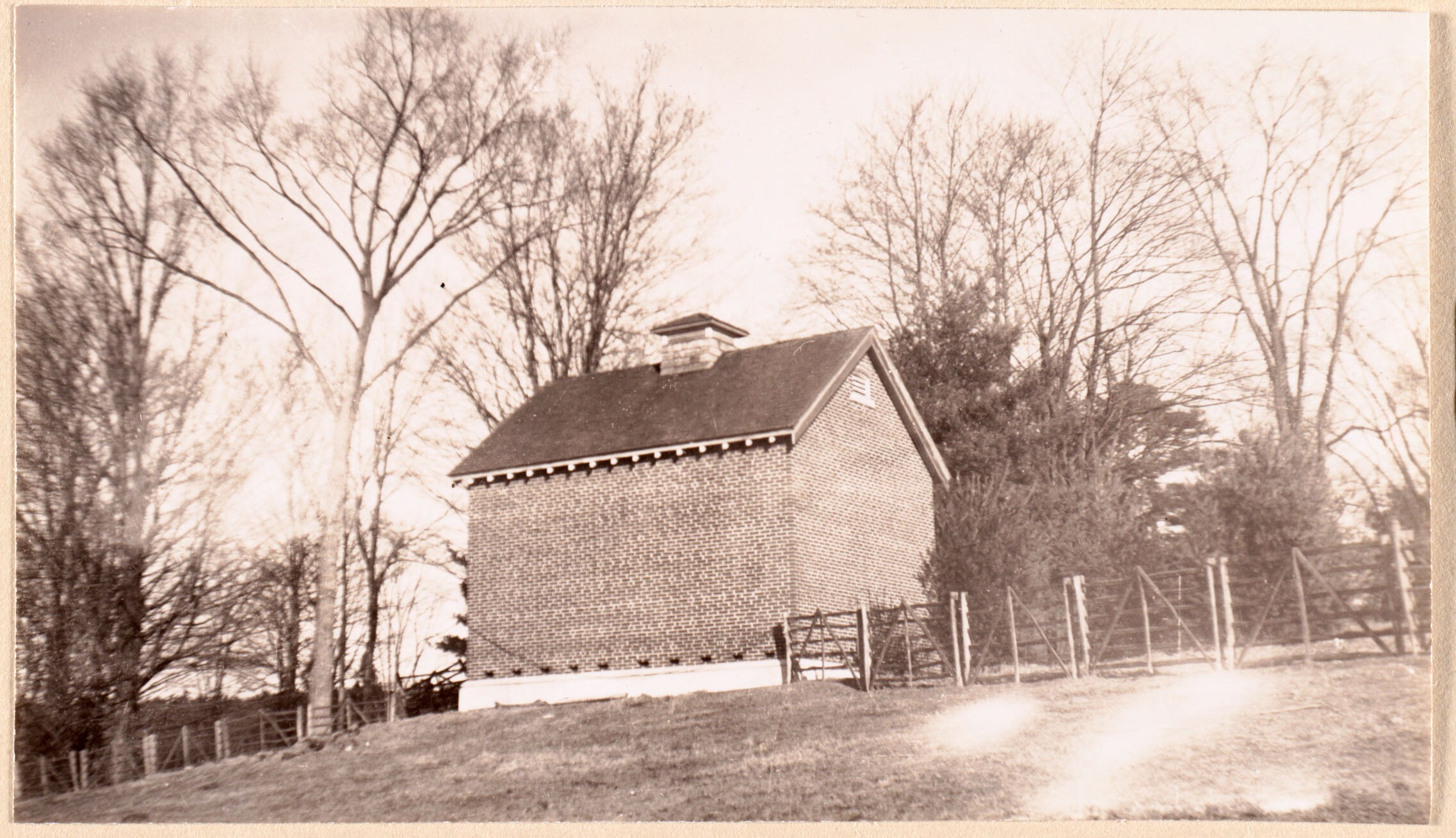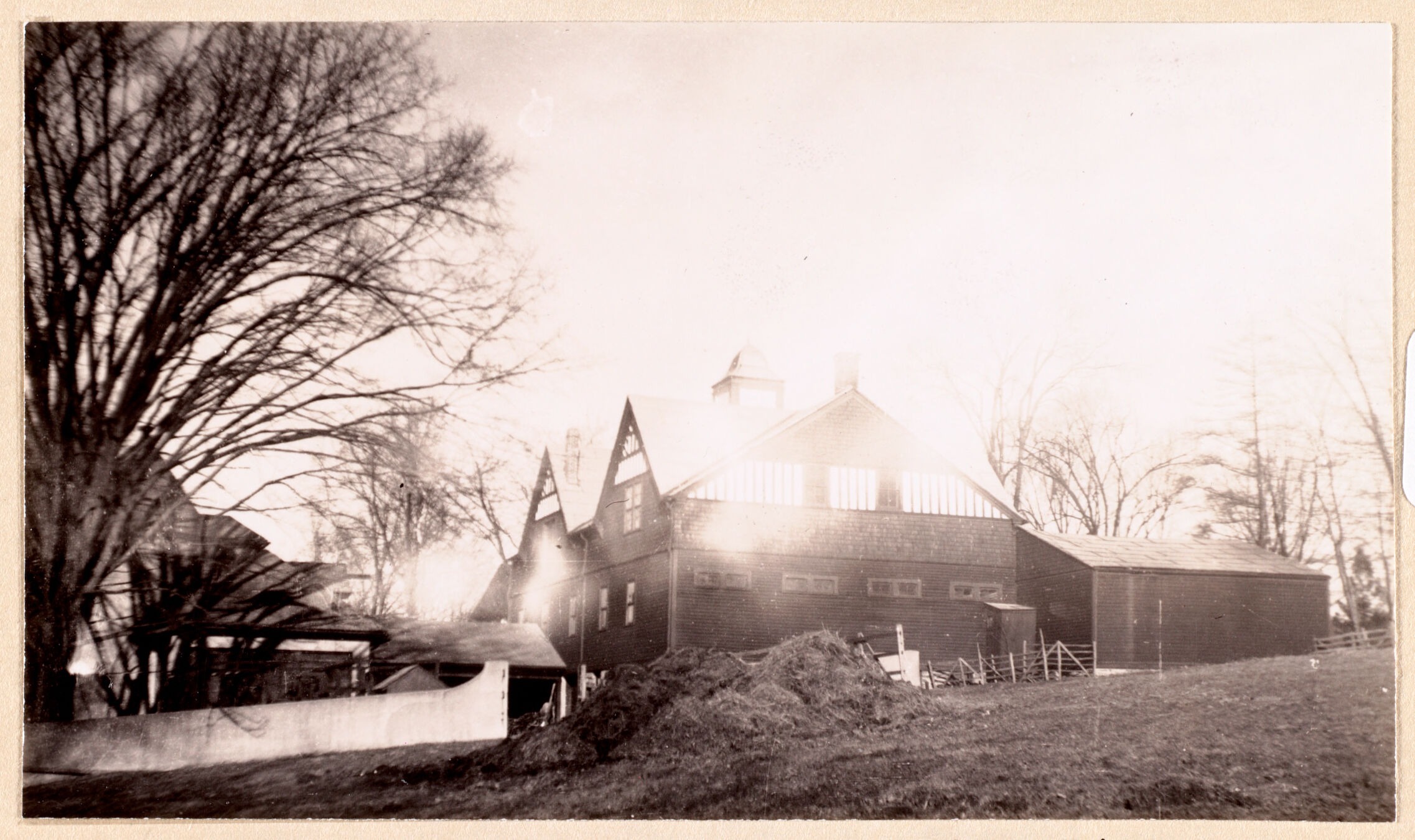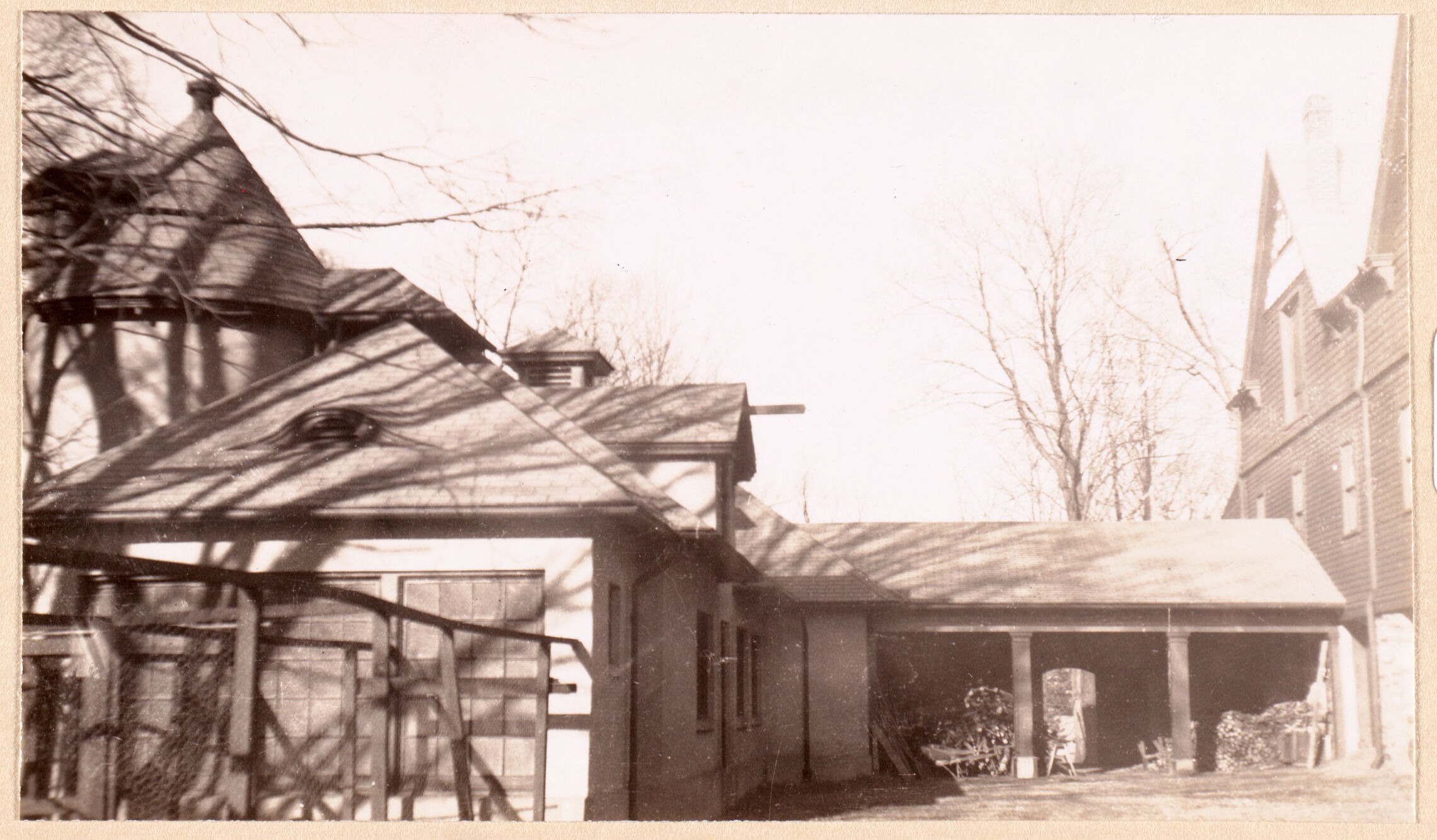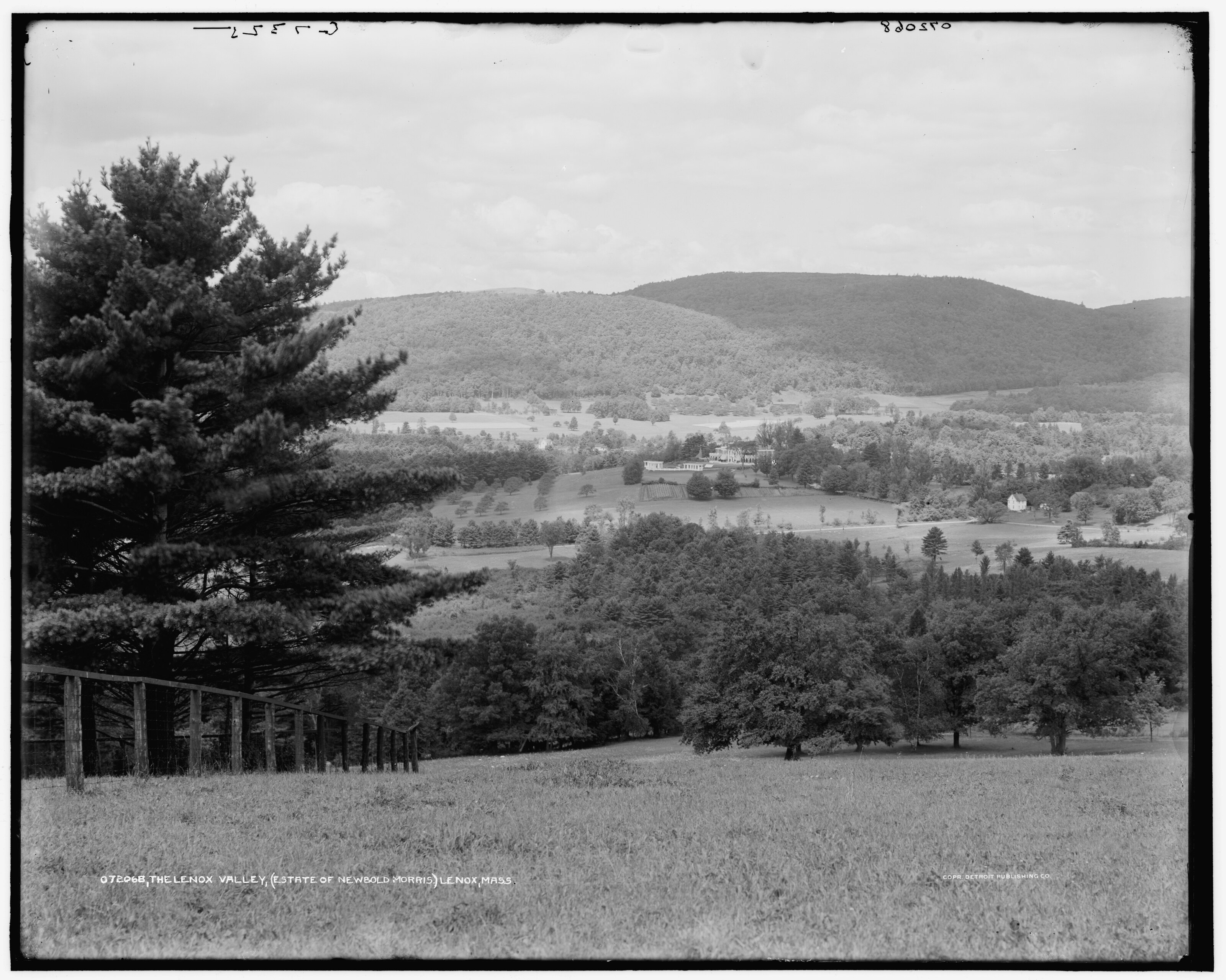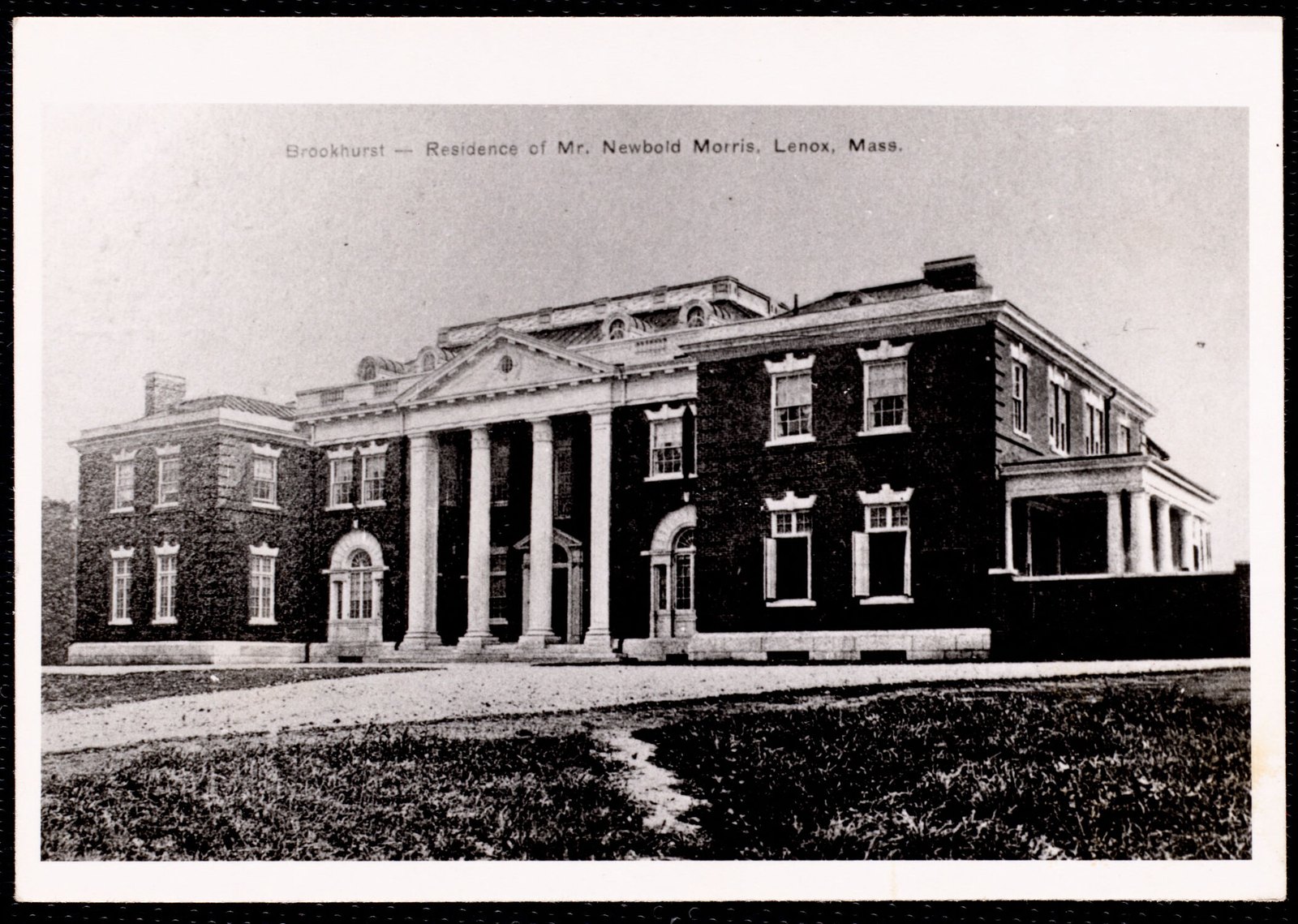
Eleven of the thirteen photographs on this page were taken in February 1938, and they are catalogued by elevation: residence south, residence west, main barn northeast, main barn southwest, cow barn south. Nobody photographs a house that way for pleasure. The Lenox Library holds the same kind of sequence for The Mount, made in January 1940, and for Ethelwynde in this same February — and Ethelwynde’s set includes a measured floor plan whose title block names J. R. Hampson, Inc., Appraisal Engineers, of Pittsfield. Somebody went round the cottages of Lenox that winter with a camera, a tape and a list, and it was a valuation.
I. Two houses of the same name
The first Brookhurst was built in 1885 by William B. Shattuck, in the Eastlake manner. It burned. The Berkshire Eagle dates the fire to 1904; Wikipedia’s account of the neighboring property says the main house burned in 1908. Both dates are given here and neither is preferred.
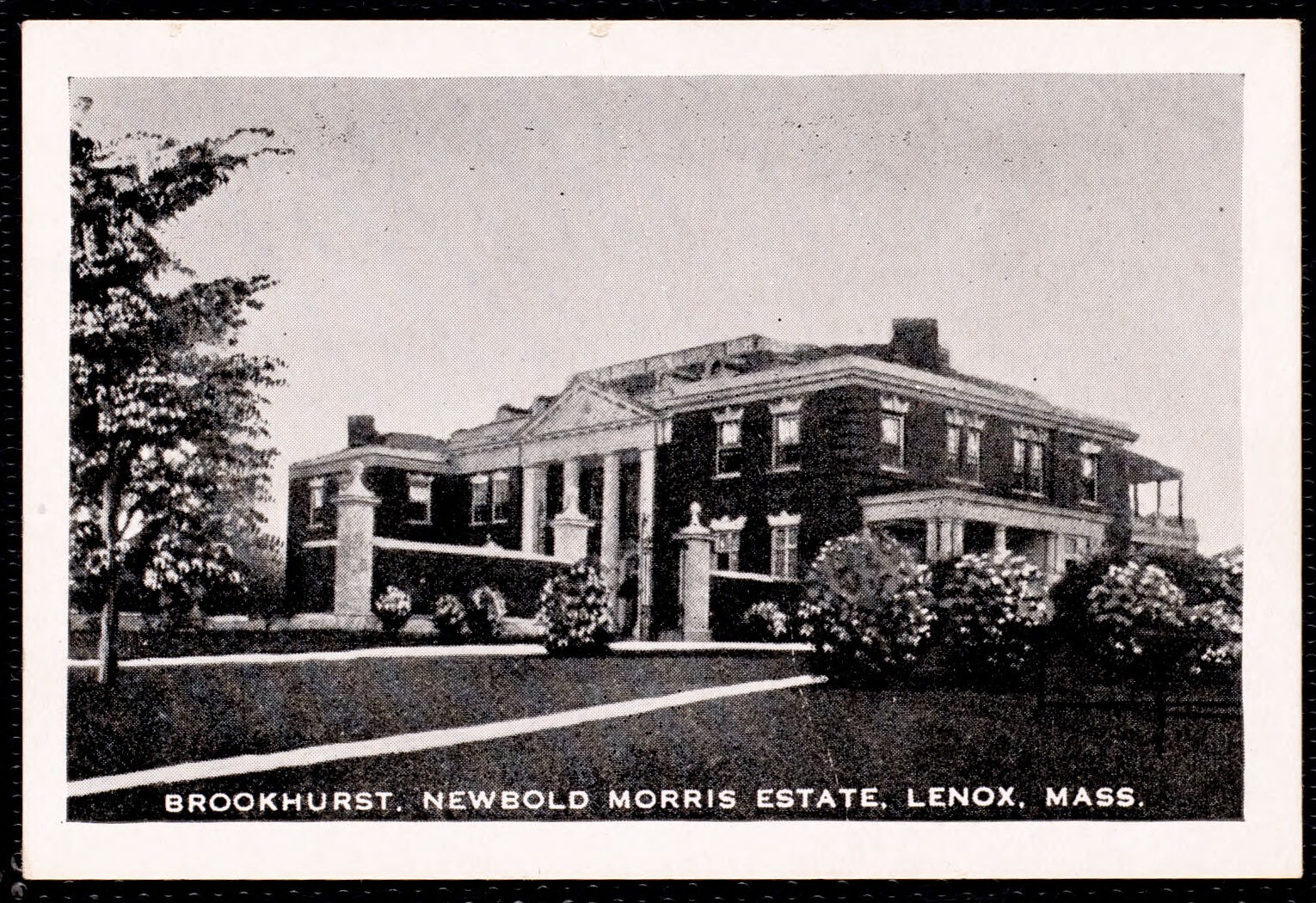
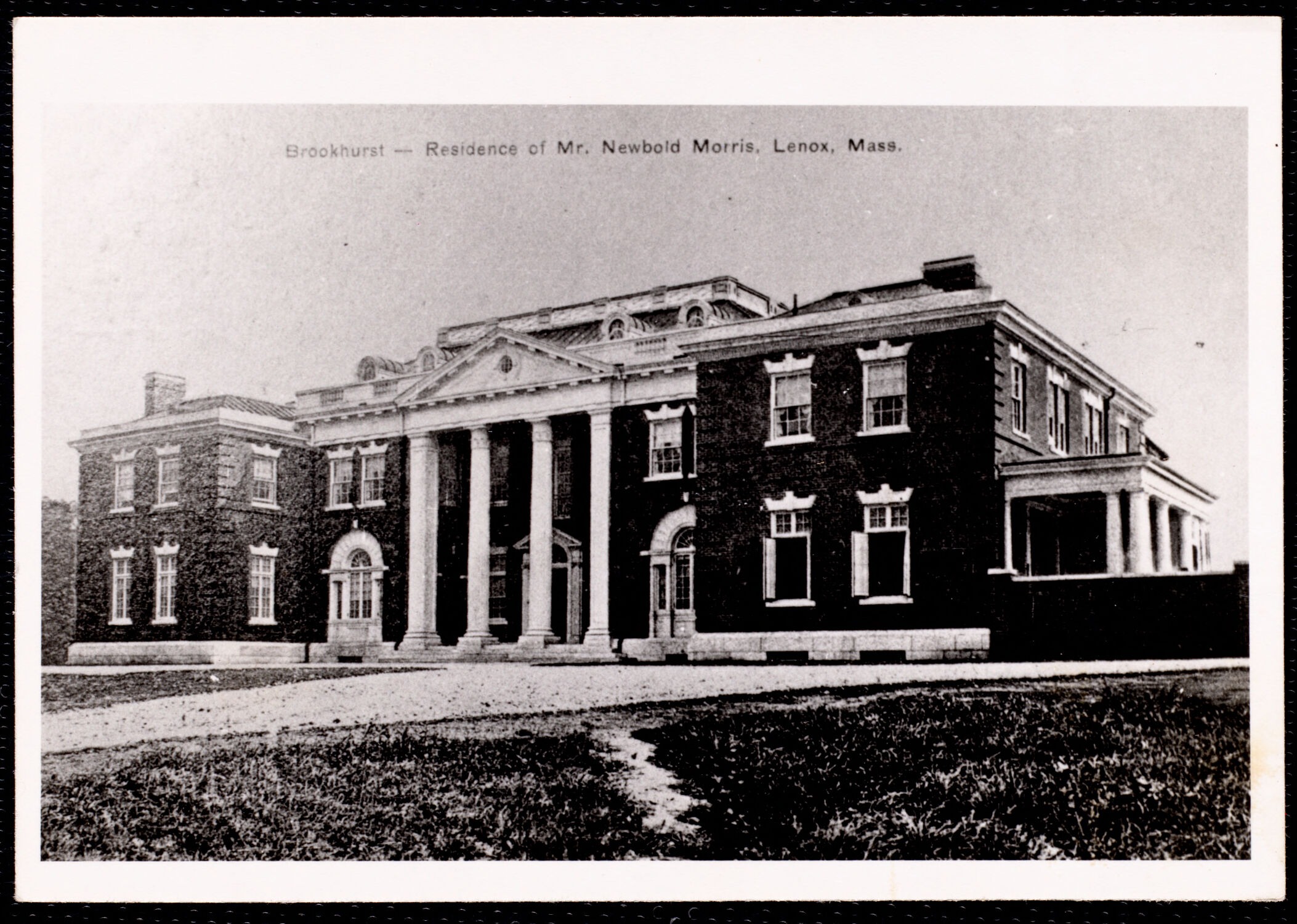
The second Brookhurst, the one in these photographs, is Georgian Revival and was built in 1908 for Newbold Morris and Helen Schermerhorn Kingsland Morris. The Eagle’s ownership list has Newbold Morris at Brookhurst from 1906 — two years before the house it names.
Newbold Morris descended from General Lewis Morris, who signed the Declaration of Independence. He was also a cousin of Edith Wharton, who had built The Mount in the same town six years earlier and sold it three years after this house went up.
II. The last family
Helen Morris kept Brookhurst until her death in 1956, when it was divided among three sons — A. Newbold, Stephen and George. Stephen Morris and his wife Persis used the mansion seasonally from 1959 into the late 1980s, and in 1986 it sold for a million dollars: the first single-family house in Lenox to reach that figure, and, by the Eagle’s account, one of the last of the Gilded Age cottages still in the hands of the family that built it.
The westernmost piece of the estate, forty-six acres with some of the original outbuildings on it, went to the third son. George L. K. Morris (d. 1975) and Estelle “Suzy” Frelinghuysen (d. 1988) were abstract painters and founding members of the American Abstract Artists. Morris built a studio there with George Sanderson in 1930 — one of the oldest modernist buildings in Massachusetts — and after they married, a house by John Butler Swann in 1941. They hung their own cubist work beside Picasso, Gris, Braque, Miró and Matisse. The place is a museum now, on the National Register since 31 May 2016.
The Frelinghuysen name appears elsewhere on this site, at 2 Kemble Street, built in 1887–88 for the widow and children of the Secretary of State.
III. February 1938
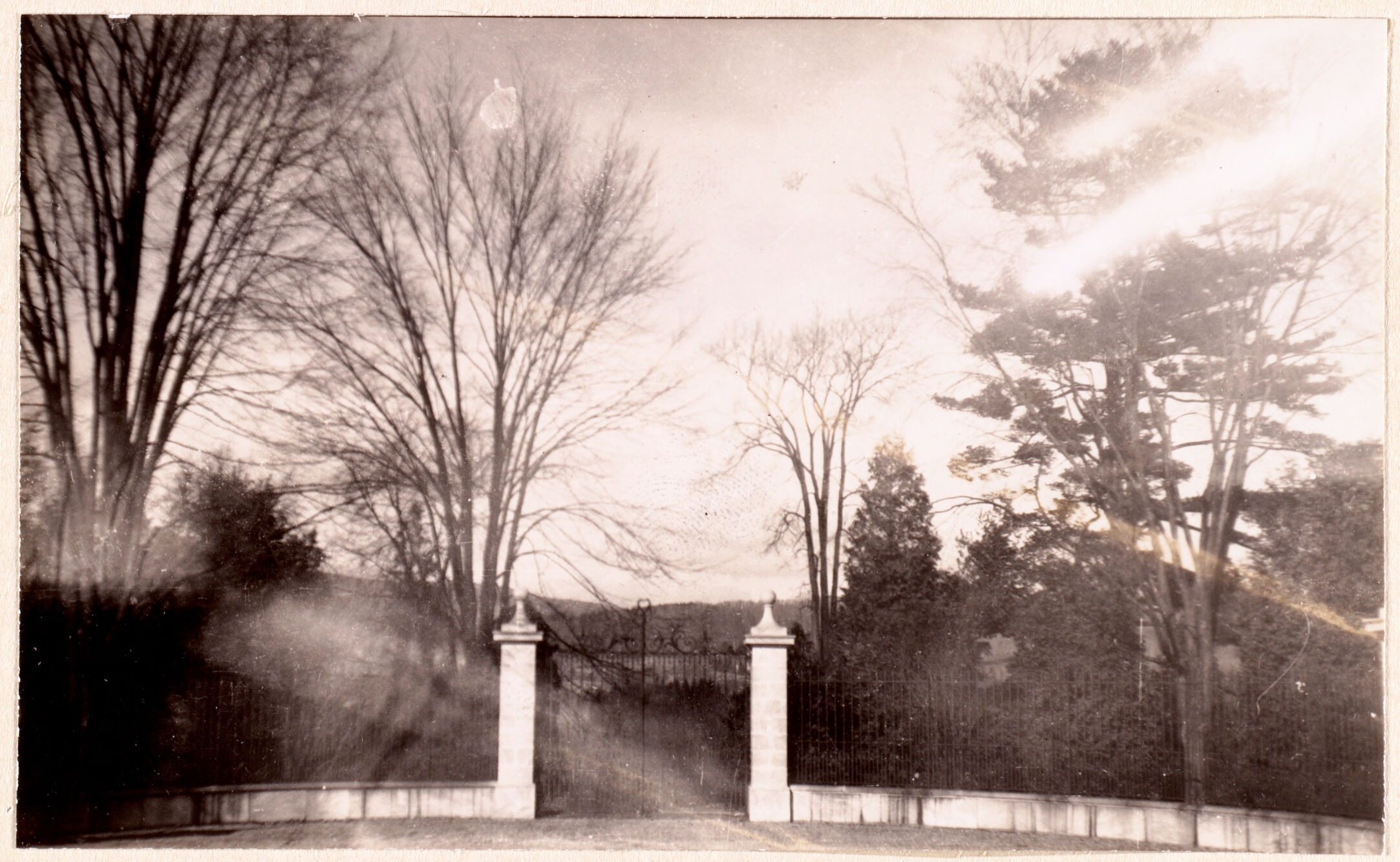
What the winter survey records is an establishment, not a house. The residence gets two elevations and the formal gardens two more. Then: the north entrance gates. The superintendent’s house. The tenant’s house — a separate building from the superintendent’s, and worth noticing. The ice house. The main barn and wagon shed, from the northeast and again from the southwest. The cow barn with its connecting shed.
A cow barn, in 1938, on a Lenox cottage estate. The photographs are the argument this whole survey keeps running into: that these places were farms with a large house on them, and that the large house is the only part anyone photographs on purpose.
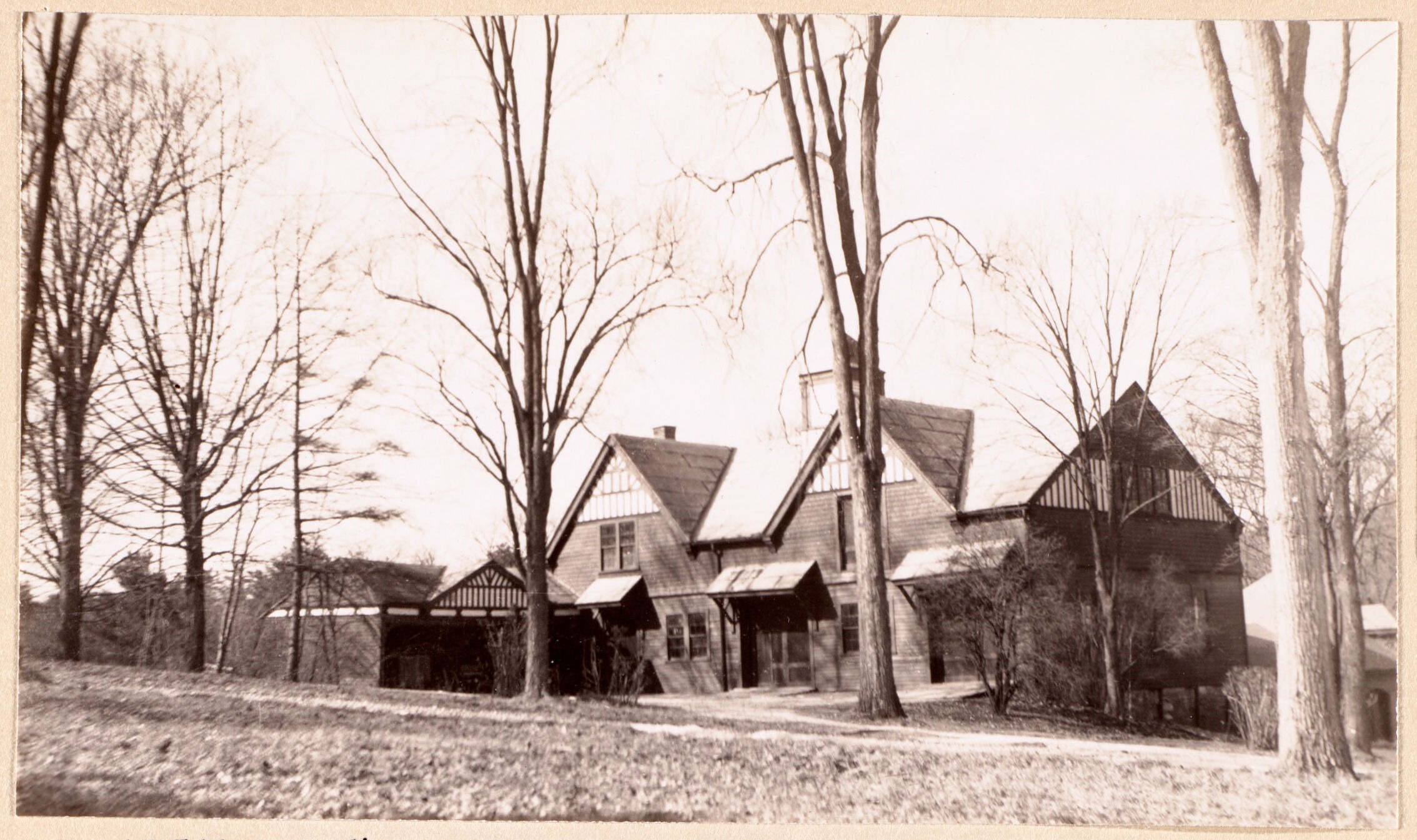
The two earlier views, of the front and the gate, are the conventional kind — the house as its owners would have wanted it seen. They are the exception here rather than the rule.
Sources
Lenox Library Association, Local History Photograph Collection, via Digital Commonwealth: thirteen photographs, CC BY-NC-ND 4.0. Titles and dates are the Lenox Library’s own; a fourteenth view, “front of house and fountain,” is in the collection but marked all rights reserved and is not shown. The Berkshire Eagle, “The Cottager: Brookhurst: Modern art finds a home on former estate’s property,” for the 1885 Eastlake house by William B. Shattuck and the fire of 1904, the Georgian Revival house of 1908 for Newbold and Helen Schermerhorn Kingsland Morris, Newbold Morris’s descent from General Lewis Morris and his cousinship with Edith Wharton, the ownership sequence from 1906 to 1986, Stephen and Persis Morris, the million-dollar sale of 1986, and the forty-six acres that went to George and Suzy Morris. Wikipedia, “Frelinghuysen Morris House and Studio,” for the studio of 1930 by Morris and George Sanderson, the house of 1941 by John Butler Swann, the American Abstract Artists, the collection, the National Register listing of 31 May 2016, and the fire date of 1908 that conflicts with the Eagle’s 1904. No Olmsted job for this estate appears on the firm’s Berkshire list. The purpose of the February 1938 photographic sequence is not stated in this catalogue; the attribution to J. R. Hampson, Inc. is this survey’s inference from the shared form of the Ethelwynde material, and only the Ethelwynde drawings carry that firm’s name.