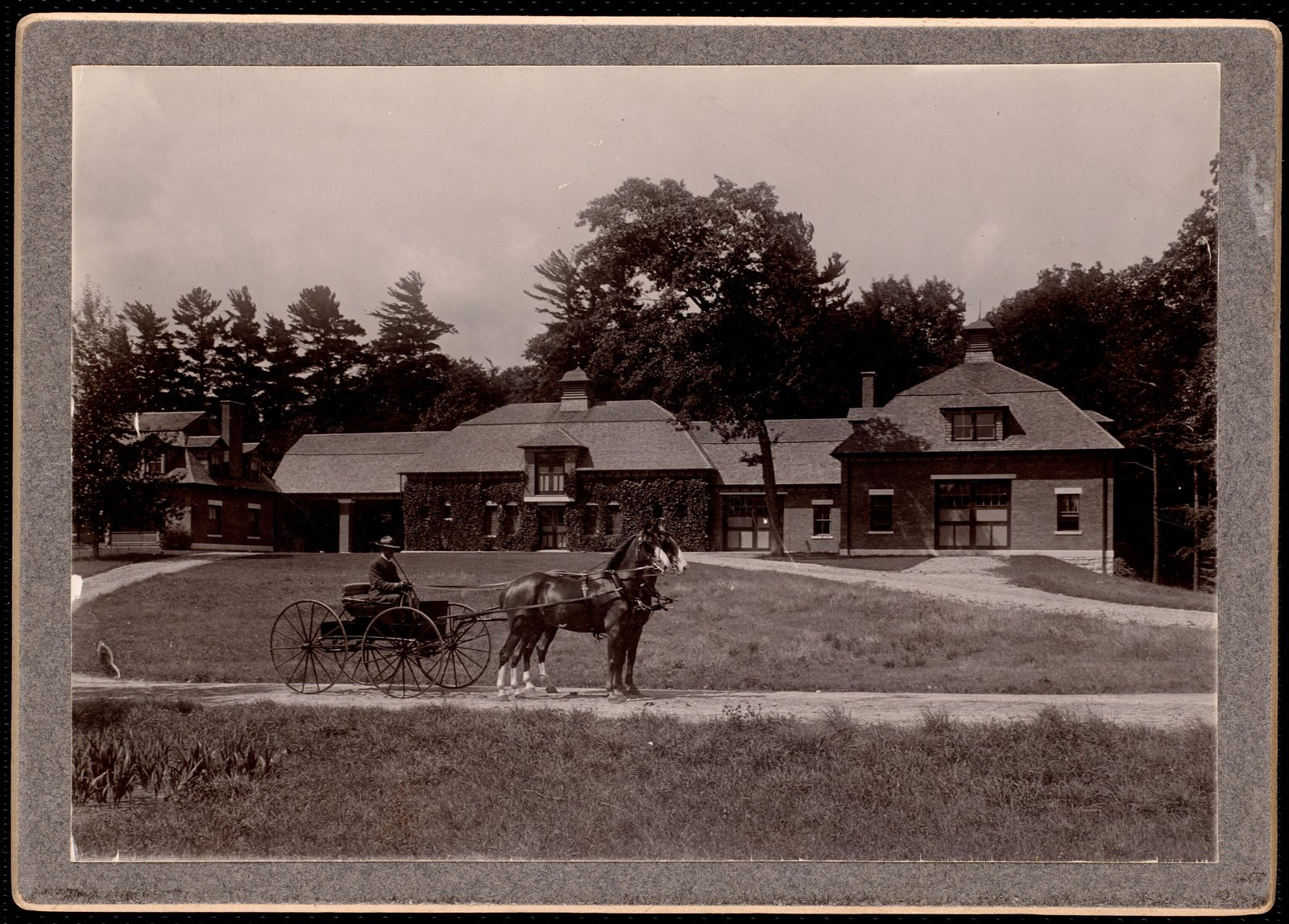
There is a photograph in the Lenox Library of a man named James Renfrew, and the whole of the catalogue entry is this: Pinecroft: James Renfrew, coachman. No date beyond about 1900. No account of where he came from or what became of him. A surname that sounds Scottish, a job that no longer exists, and a face that somebody thought worth the cost of a plate.
He is holding the reins. That is the thing to notice. Most of the people who worked these houses appear, if they appear at all, as a blur at the edge of a photograph of a terrace. Renfrew is in the middle of his, in a trap, with the horse standing to him, in front of the stable he ran — which is to say he was photographed the way the owners were photographed, doing the thing he was good at, on the ground where he was the authority.
I. What he knew
It would take a modern reader an afternoon to list and a decade to acquire. He knew the temperament of every horse in a stable that might hold eight or twelve, which could be paired and which could not, which would stand and which would not stand. He knew harness — its fitting, its oiling, its repair — and the difference a quarter inch of bearing rein made to an animal’s mouth over four hours. He knew the roads of two towns in every condition they took: frozen, thawed, rutted, dust, mud that would take a wheel to the hub. He knew what a lame stride sounded like before it looked like anything.
And he knew how to bring a carriage up a gravel sweep at the pace the house expected and stop it so the step came level with the door — at night, in rain, having waited four hours in the cold for people who were enjoying themselves.
He was also, on any given evening, the person most likely to know exactly who had been where. Coachmen were invisible in the way that mattered least and entirely visible in the way that mattered most.
II. The buildings say how seriously it was taken
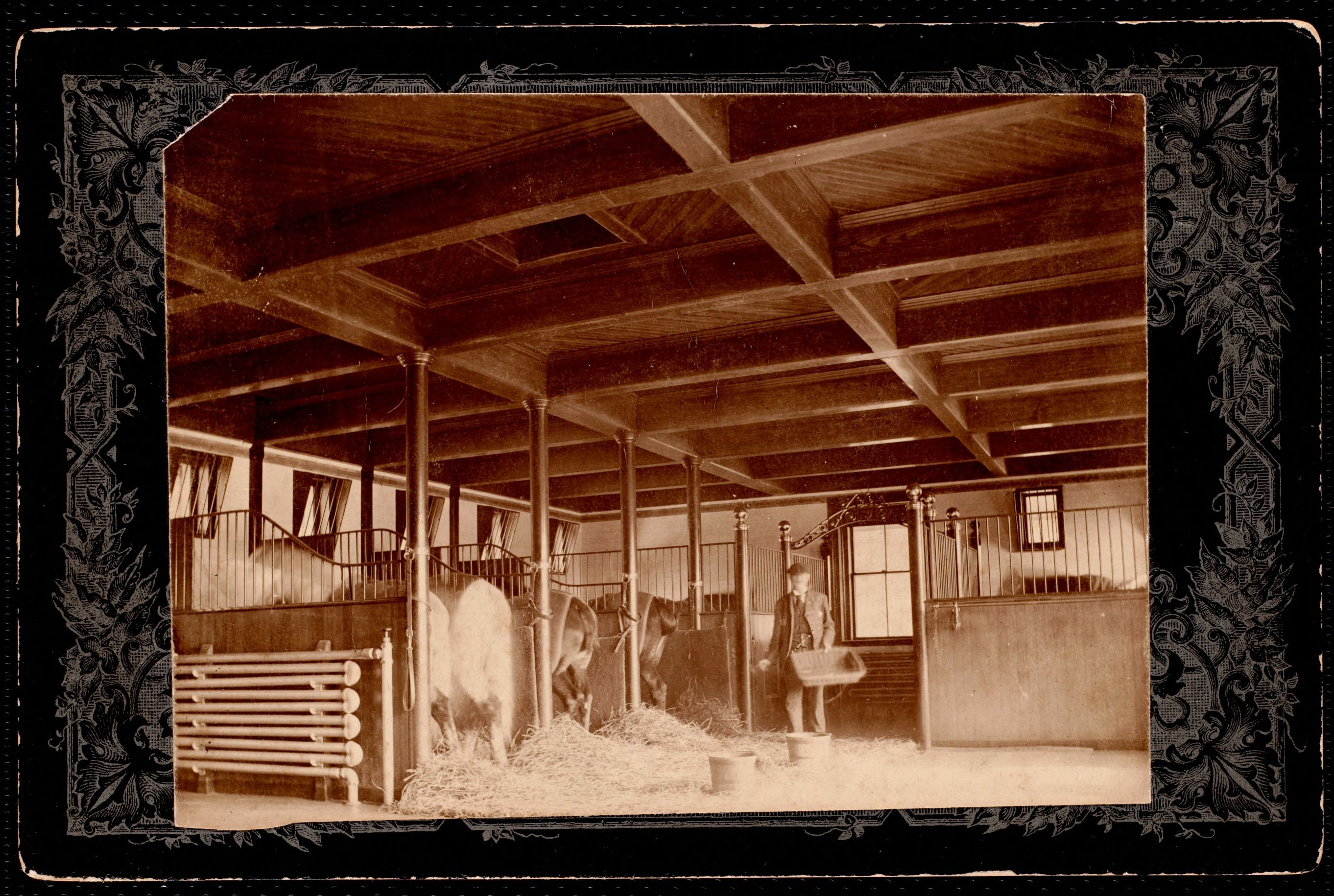
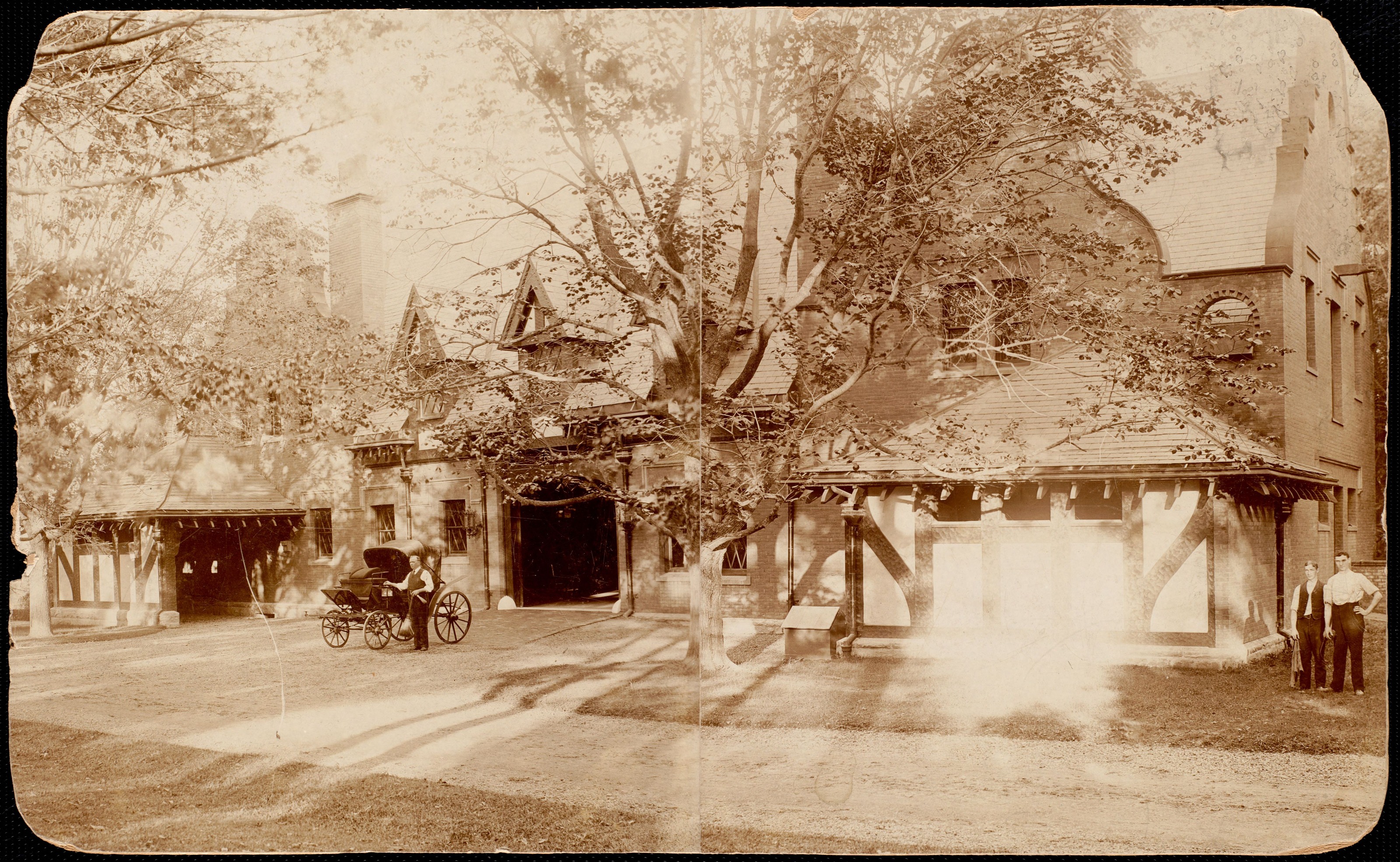
Pinecroft’s coach stable was photographed twice outside and once in, and the interior is a piece of architecture: stalls, tack, a man with a bucket, a horse standing quiet in the straw, the whole of it framed and lit like a drawing room. There are stables at Shadow Brook, at Allen Winden, at Lakeside, at Ventfort Hall, where the carriage stands under the porte cochère and the men are arranged along the wall to the right of it. On most of these estates the stable came before the house was finished, because the horses arrived first, because the horses were how anything arrived.
III. Seventy-eight to eight
Then, inside about fifteen years, the whole of it ended. You can watch it happen in a single book.
Crowley & Lunt’s South Berkshire Directory for 1923–’25 canvassed ten towns door to door and printed what it found. Across the southern county it lists eight coachmen and six hostlers — and seventy-eight chauffeurs. Not a decline. A replacement, very nearly total, of one body of knowledge by another, inside the working life of one man. Somewhere in that book is a boy who went into a stable at fourteen to muck out, who spent twenty years learning horses, and who was thirty-eight when the thing he knew stopped being worth knowing.
Some made the turn. The directory has them: Caldwell Leonard A, chauffeur. Black Robert M, chauffeur, Miss A M Brown’s. Men who had read a horse’s mouth through leather now read a gearbox through a clutch, and the ones who managed it did so because the job had never really been about horses. It was about being the person who gets the family there, in weather, at night, without being asked twice. The machine changed; the position did not. The book even lists a Chauffeurs’ Lodge — which tells you they still waited, and still waited outside.
Others did not make the turn, and the directory records their leaving in the same compressed shorthand it uses for everything:
Hughes Thomas H, coachman — rem to Ravina, Ohio.
Ray Samuel, coachman — rem to New York City.
Daniel, coachman — rem to Waterbury, Ct.
Three men, three lines, no explanation offered and none available. They had been here long enough to be printed in a book of who lives here, and then they were somewhere else.
IV. What survives
The stables survive, most of them — converted, subdivided, reroofed, the stalls gone. The photographs survive. The knowledge does not survive at all. There is no one now who can bring a pair up a wet gravel sweep in the dark and stop them level with a door, and there has not been for a century, and nobody wrote any of it down, because the men who had it assumed, the way people do, that there would always be someone to hand it to.
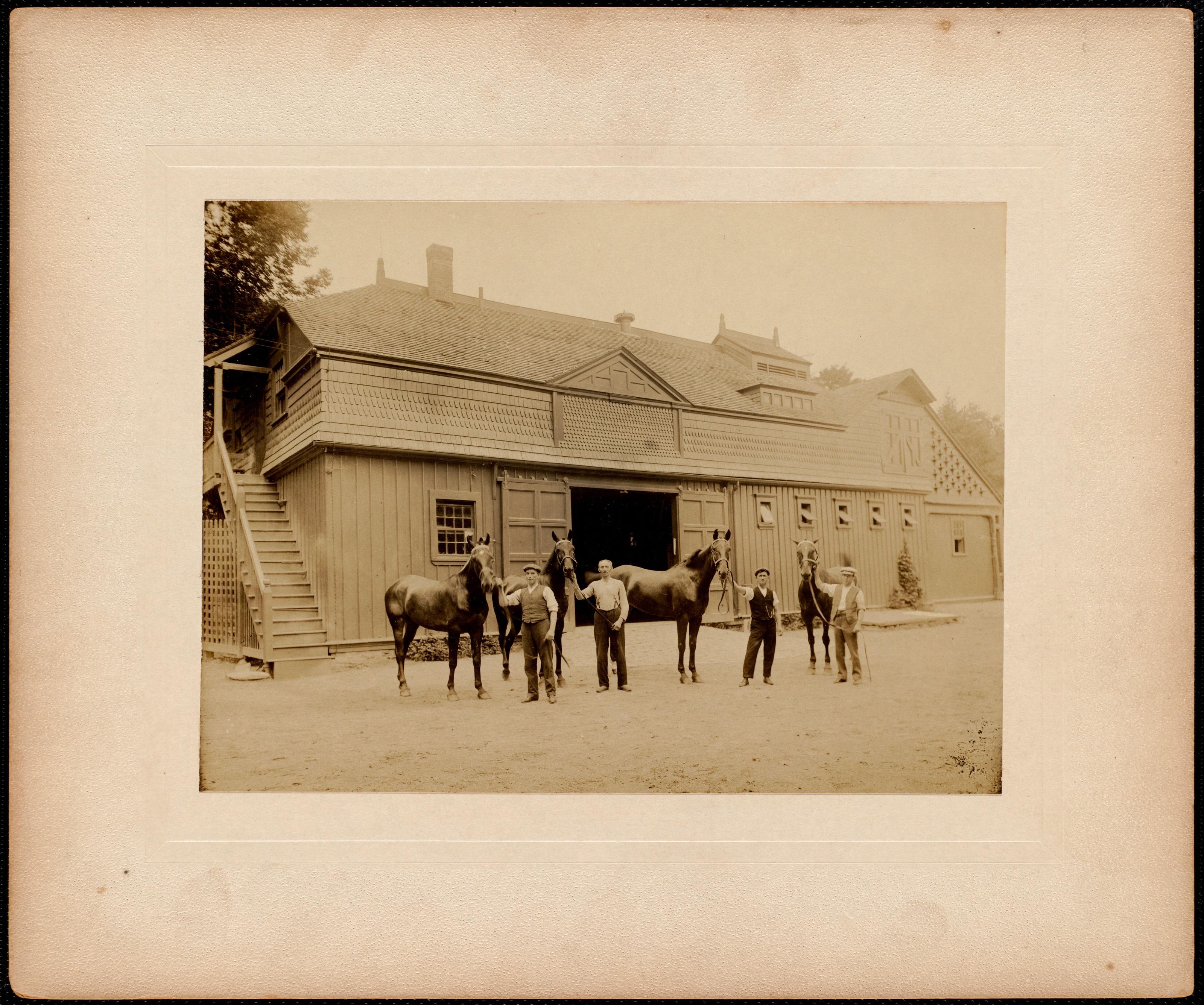
James Renfrew is holding the reins in a photograph, and that is the whole of the record.
Photographs, Lenox Library Association, through Digital Commonwealth. Occupation counts and quoted entries from Crowley & Lunt’s South Berkshire Directory, 1923–’25 (Alford, Egremont, Great Barrington, Monterey, Mount Washington, New Marlboro, North Canaan, Sheffield, Stockbridge, West Stockbridge), scanned by the Internet Archive from the University of Massachusetts Amherst copy; every page is reproduced here. Lenox is not covered by that volume, so those counts are South County. The 1926 Central Berkshire directory does cover Lenox, and still finds twelve coachmen in the hill towns in 1926, two years after the last one disappears from the Pittsfield book. Directory entries are quoted as printed, abbreviations and all.