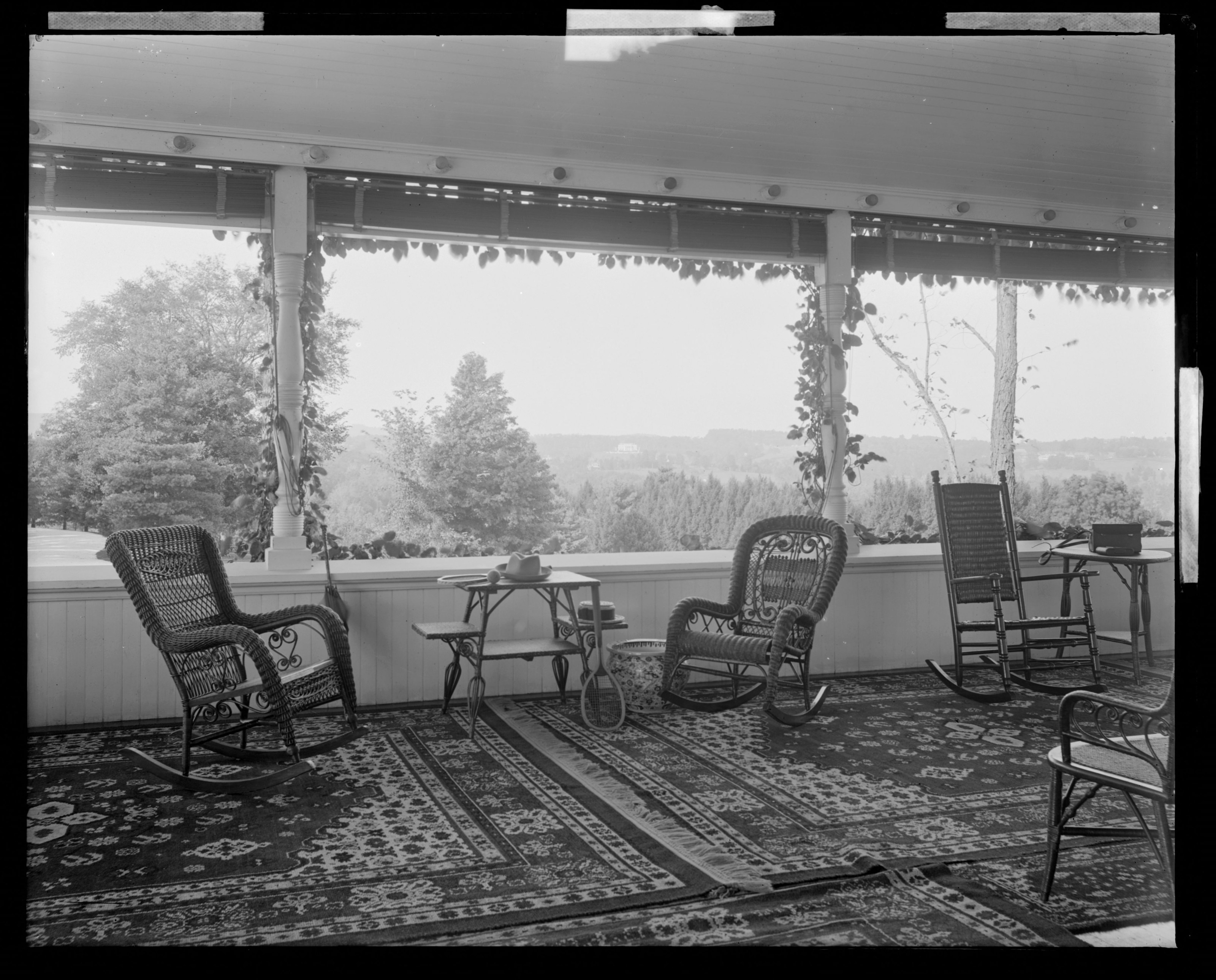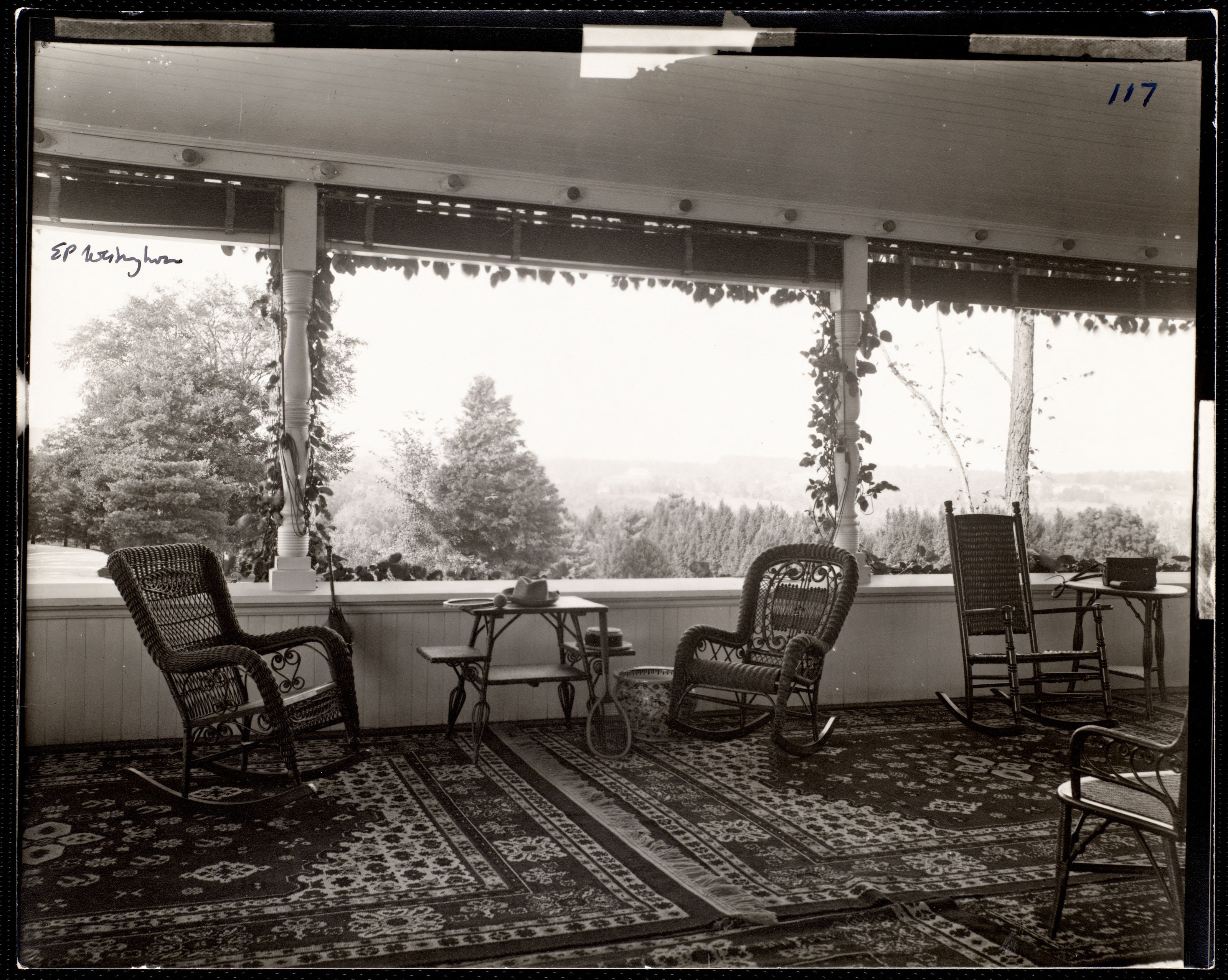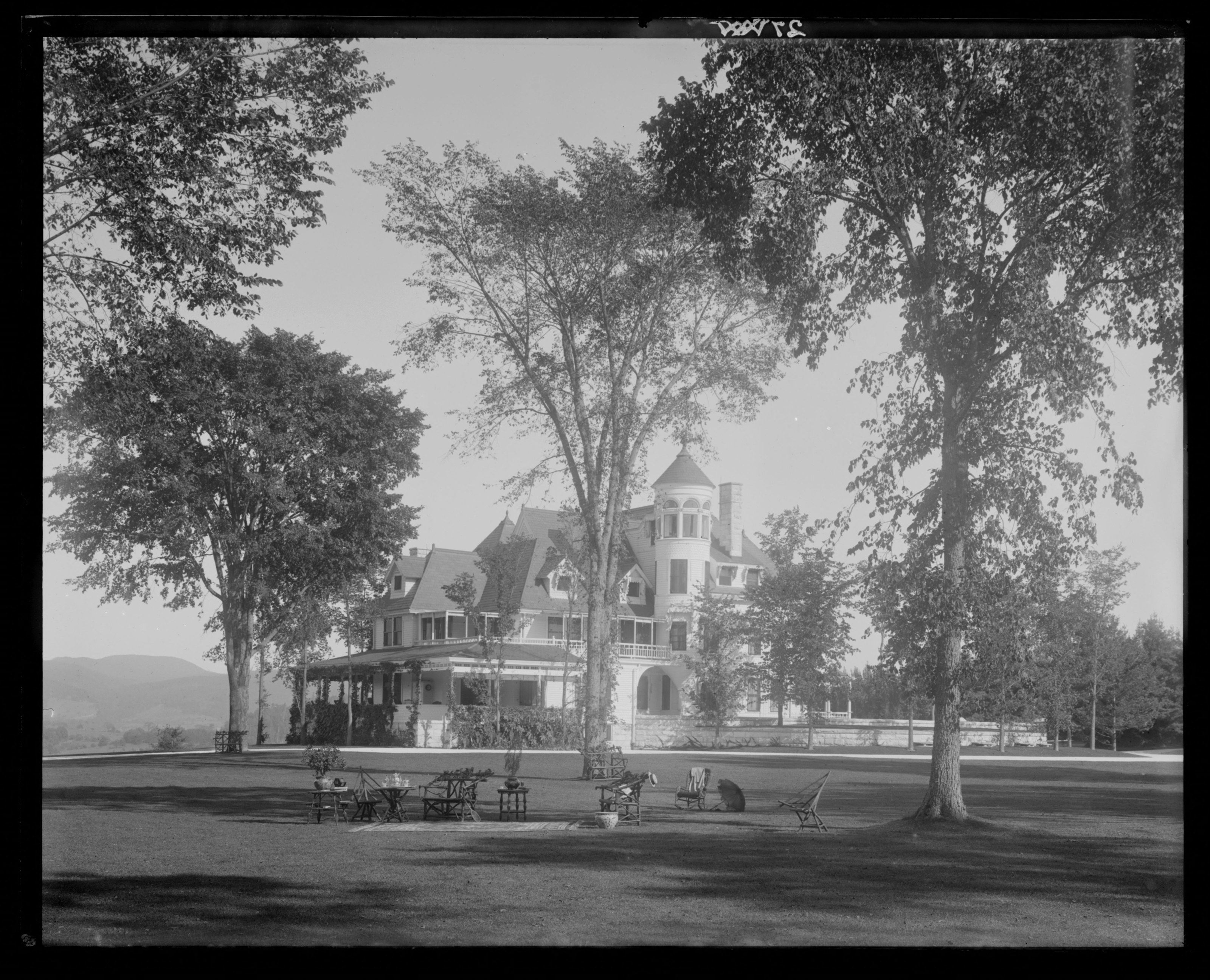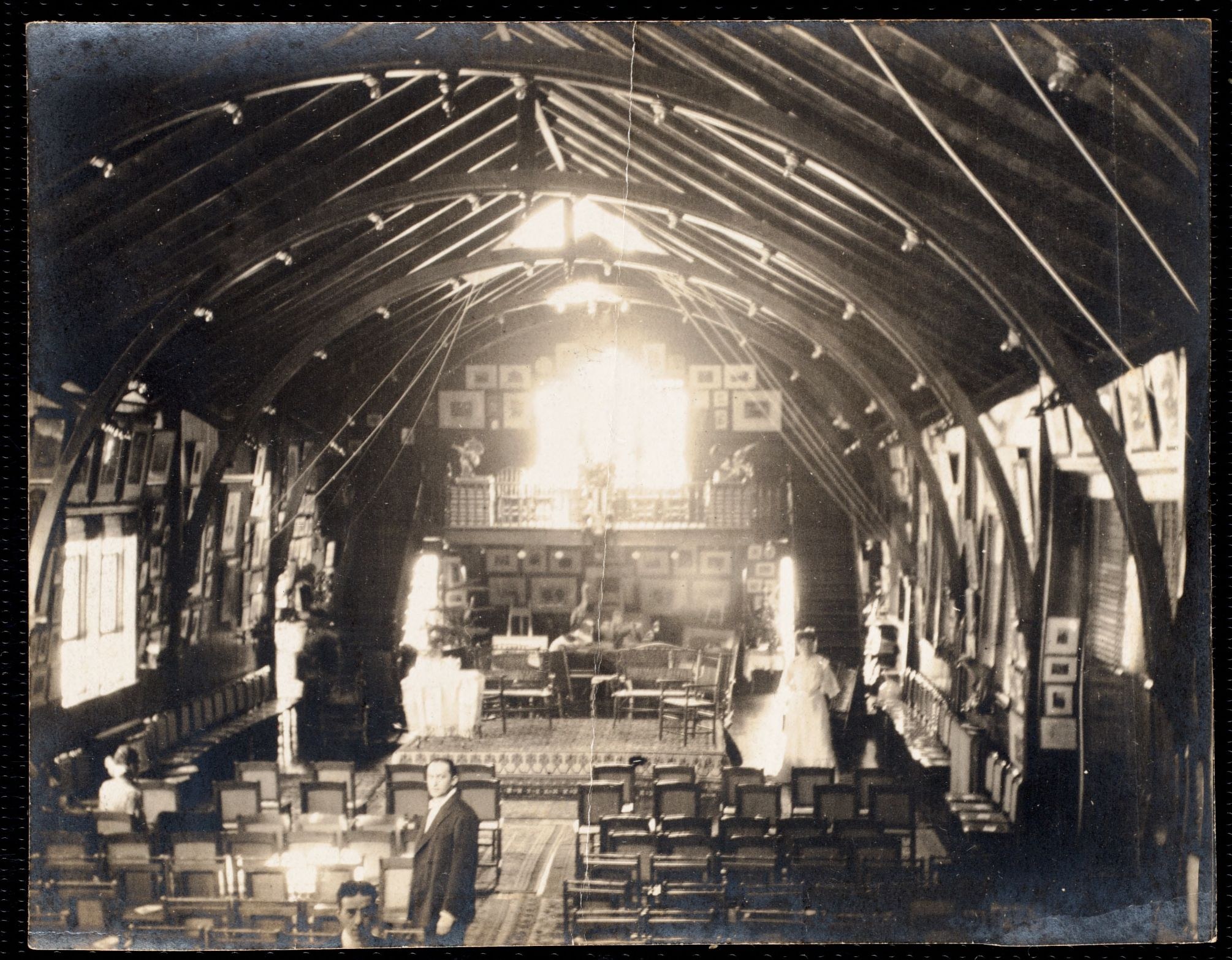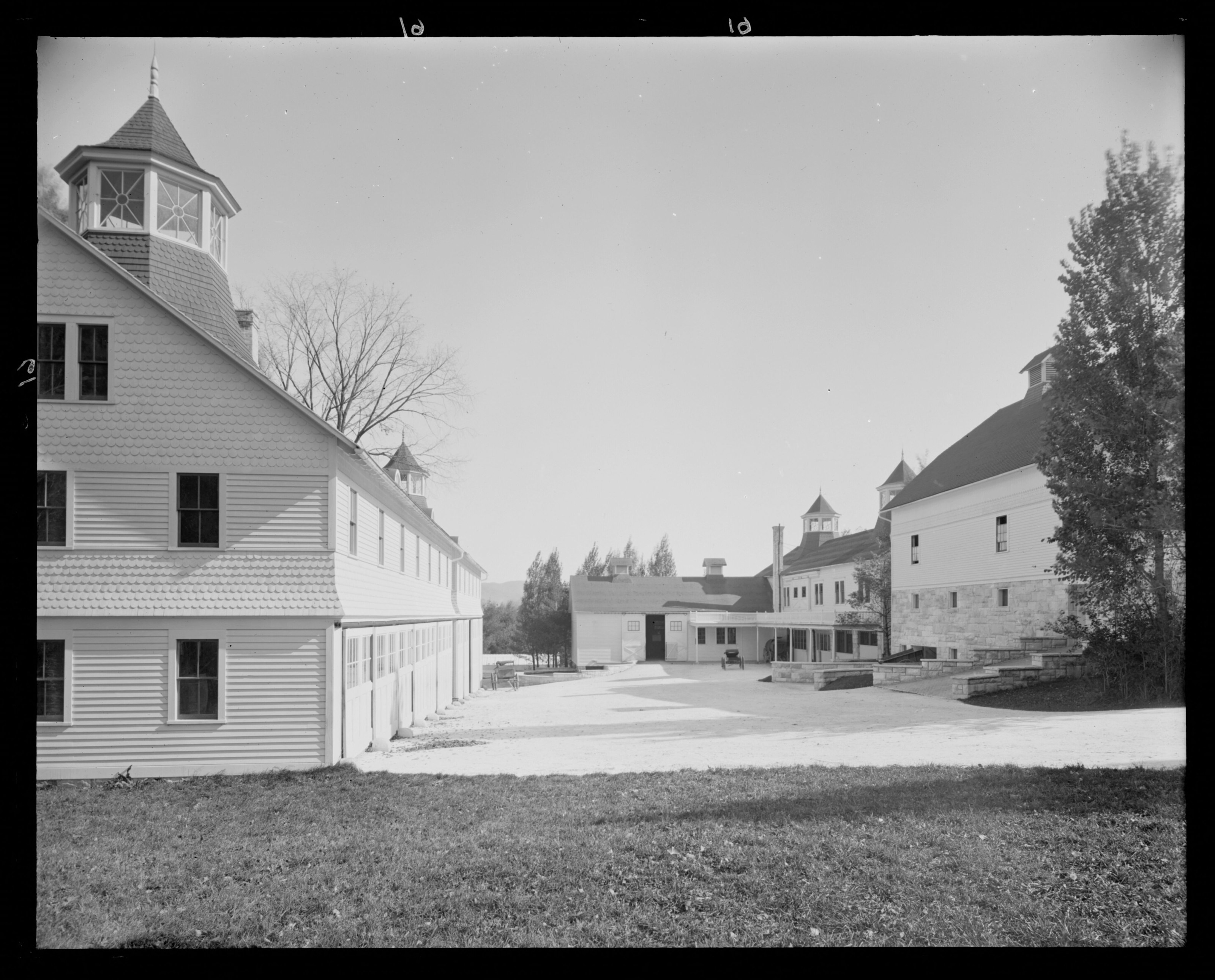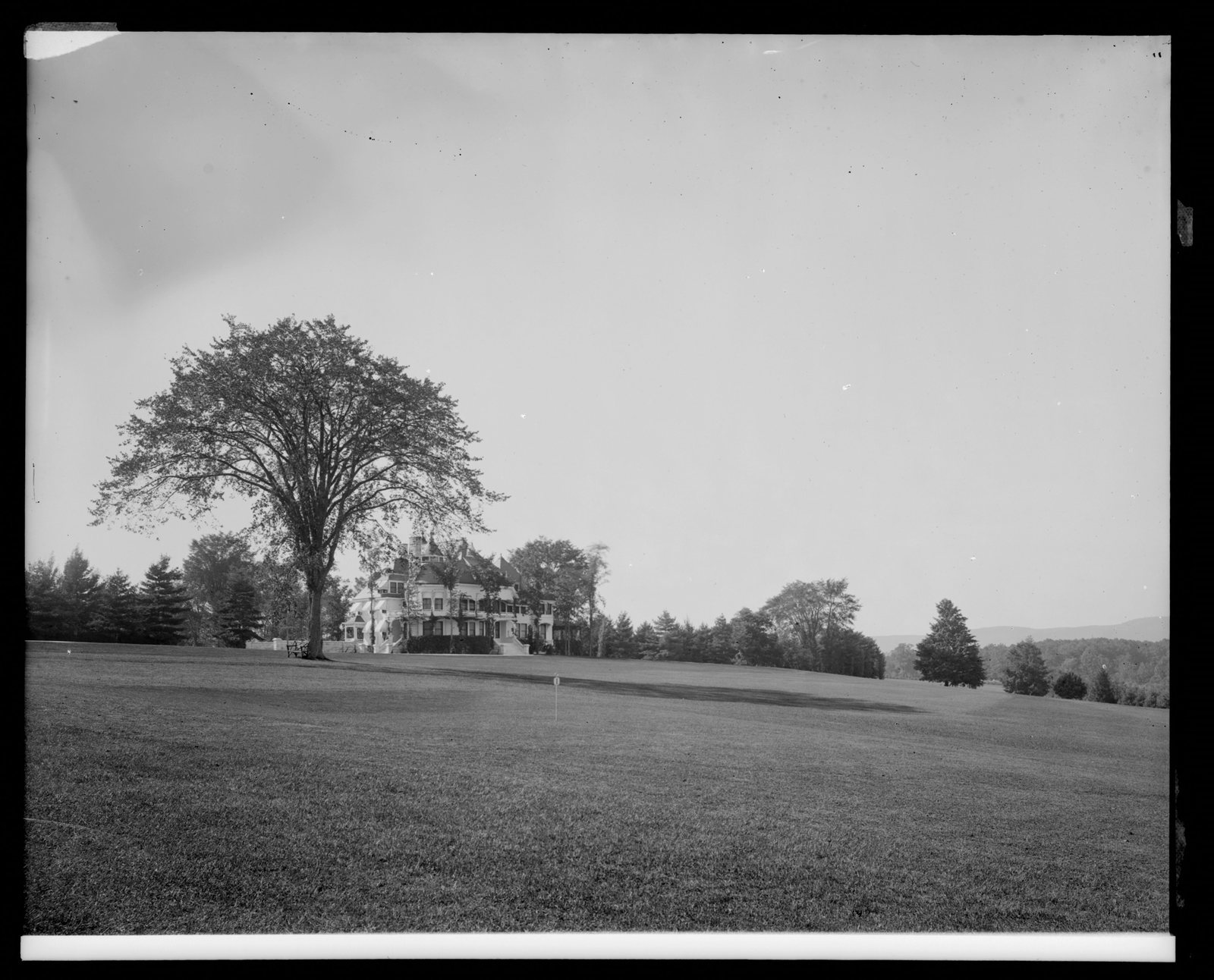
George Westinghouse built a white house on a Lenox hillside, lit it with his own current, and filled the grounds with ponds. A generation later the next owner agreed to tear it down. What survives is the photographs — and there are a great many of them.
I. The place
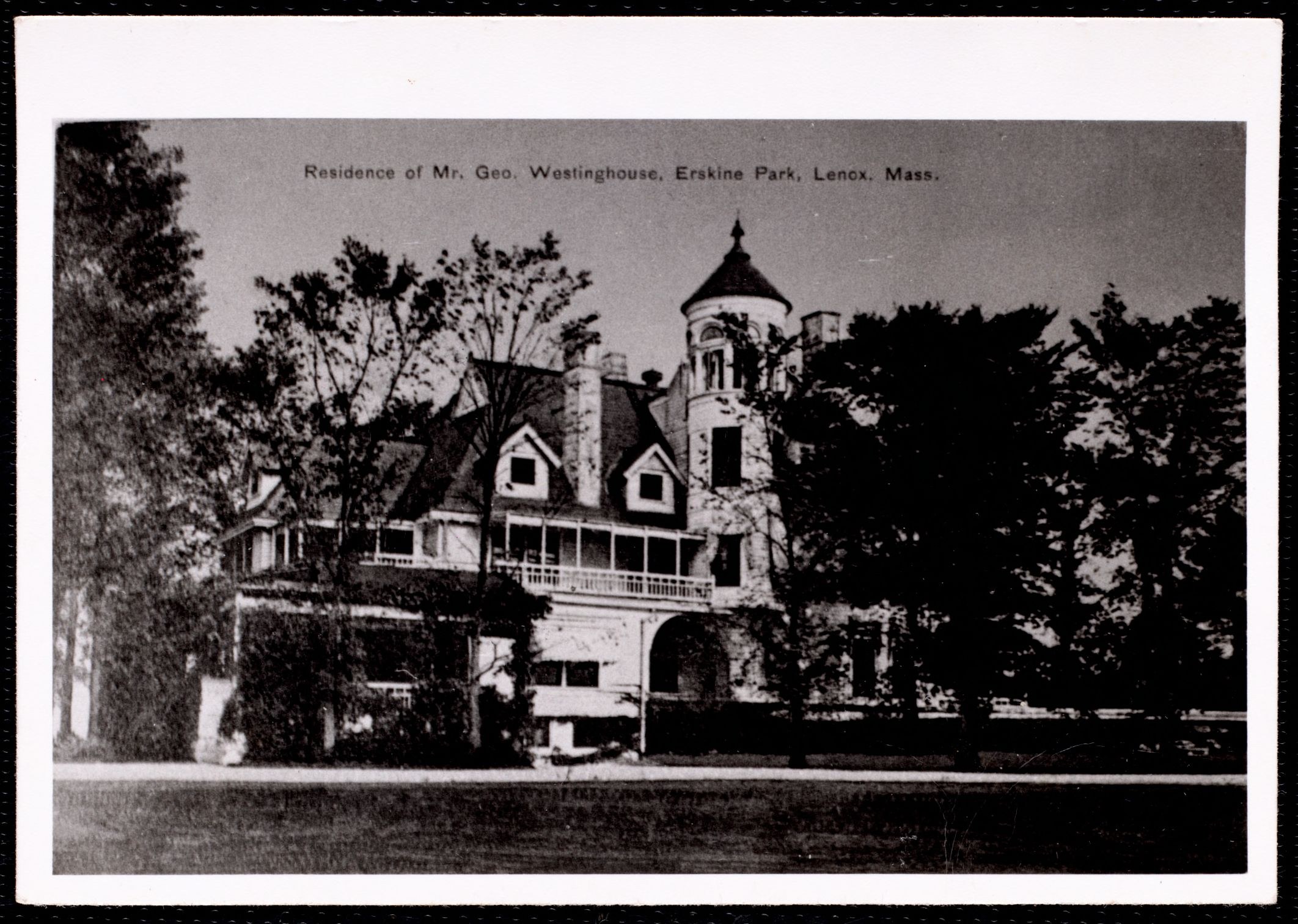
Westinghouse and his wife, Marguerite Erskine Walker, used the estate as a summer house, away from Pittsburgh. Wikipedia puts the construction at “by 1893.” The place took her name.
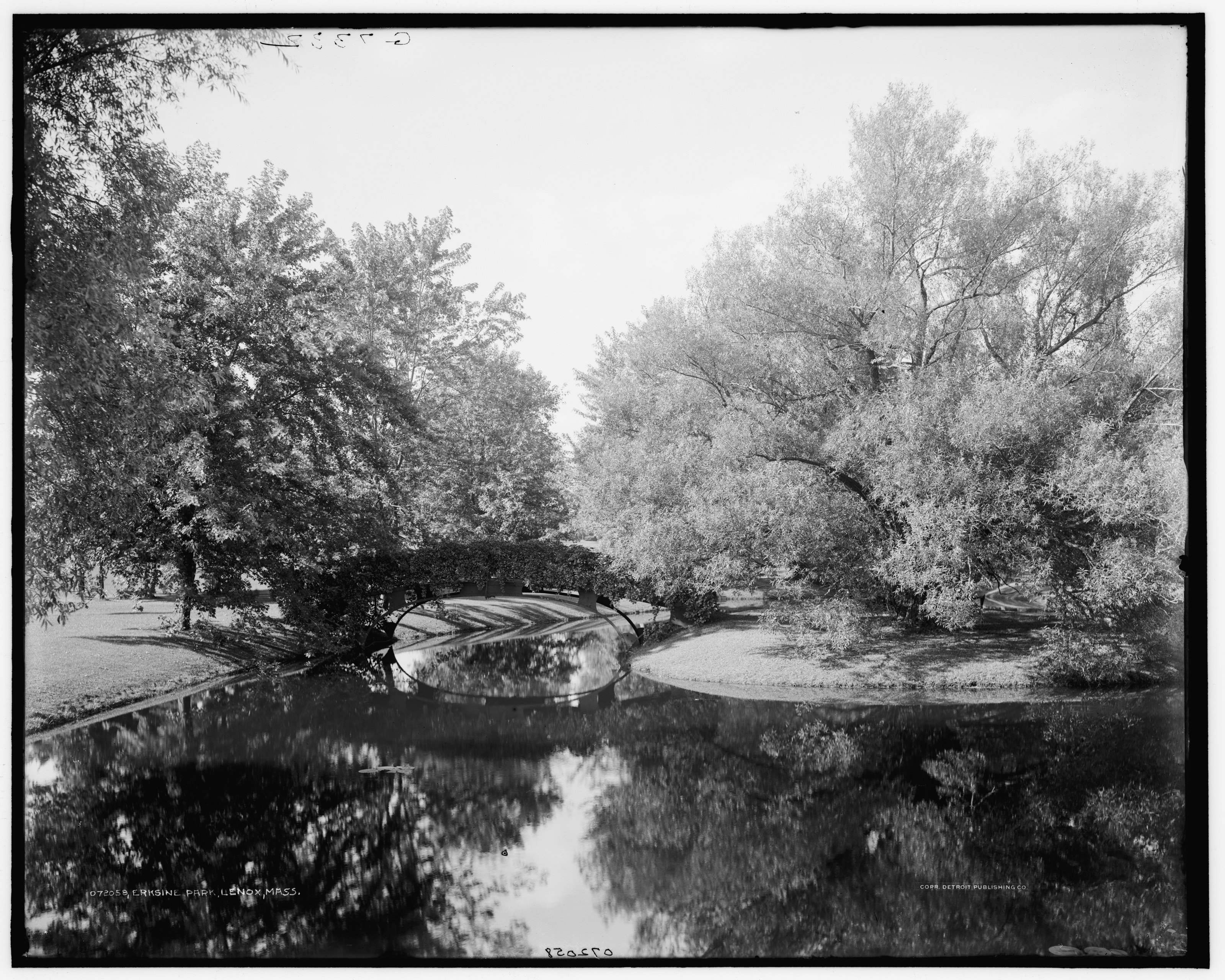
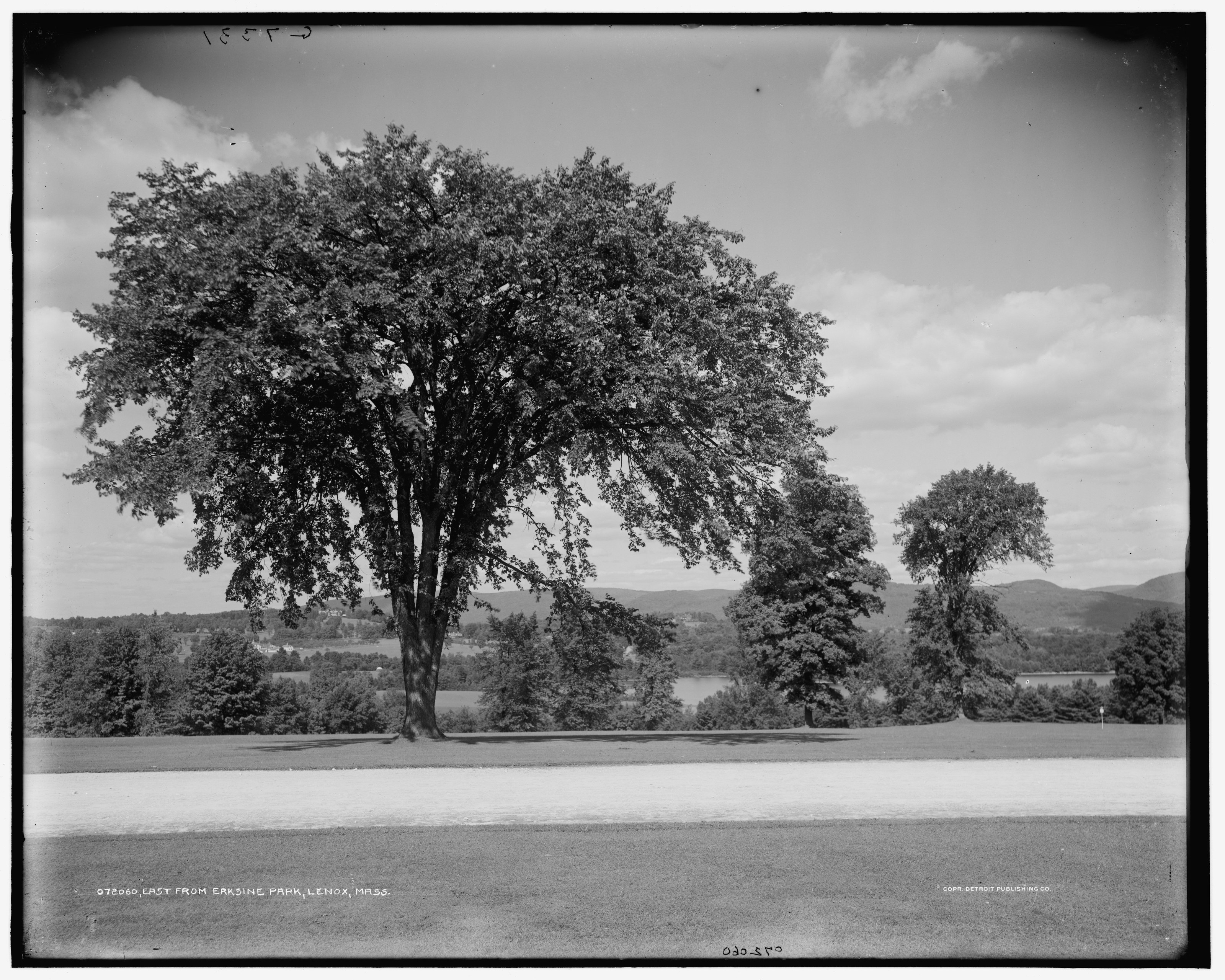
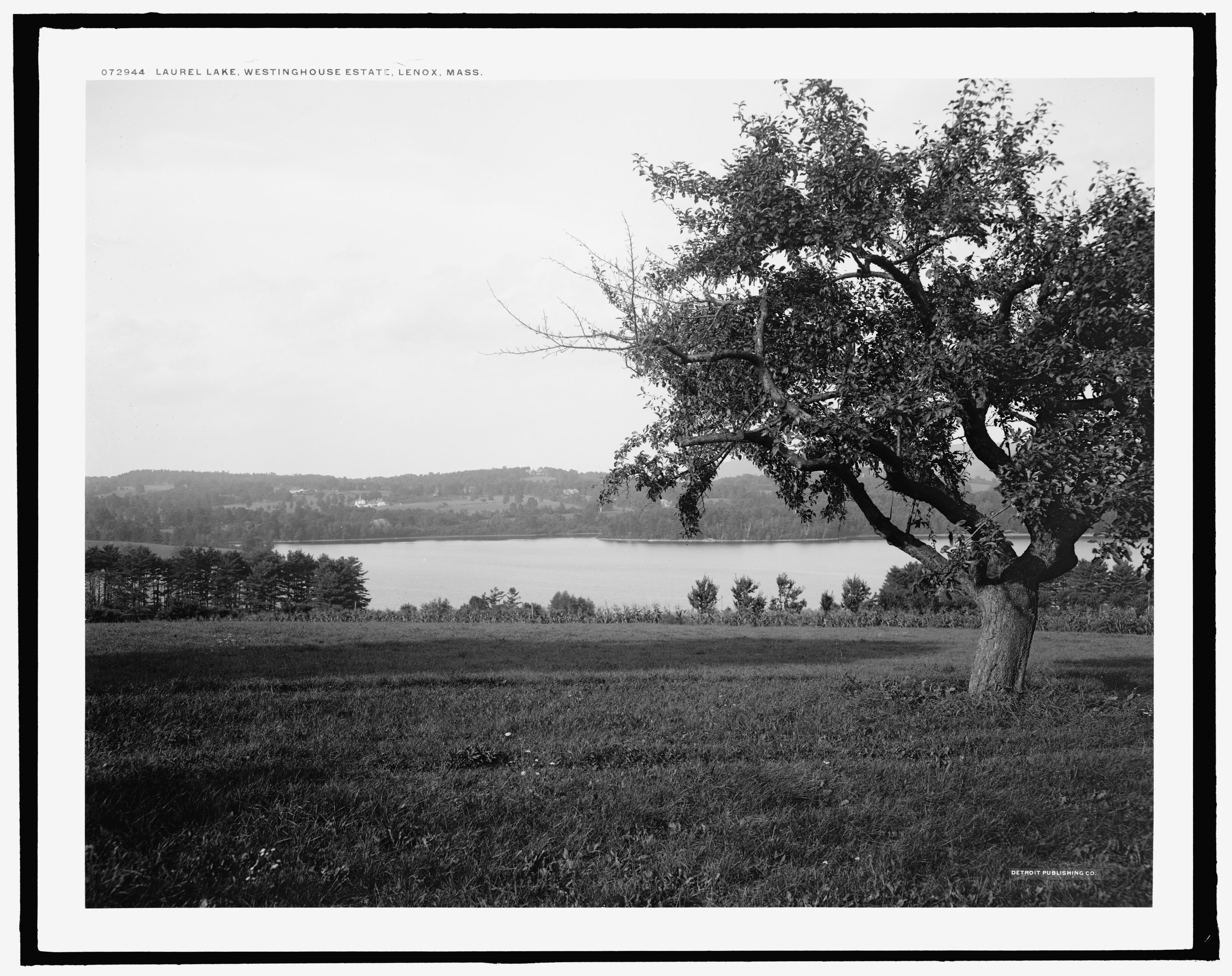
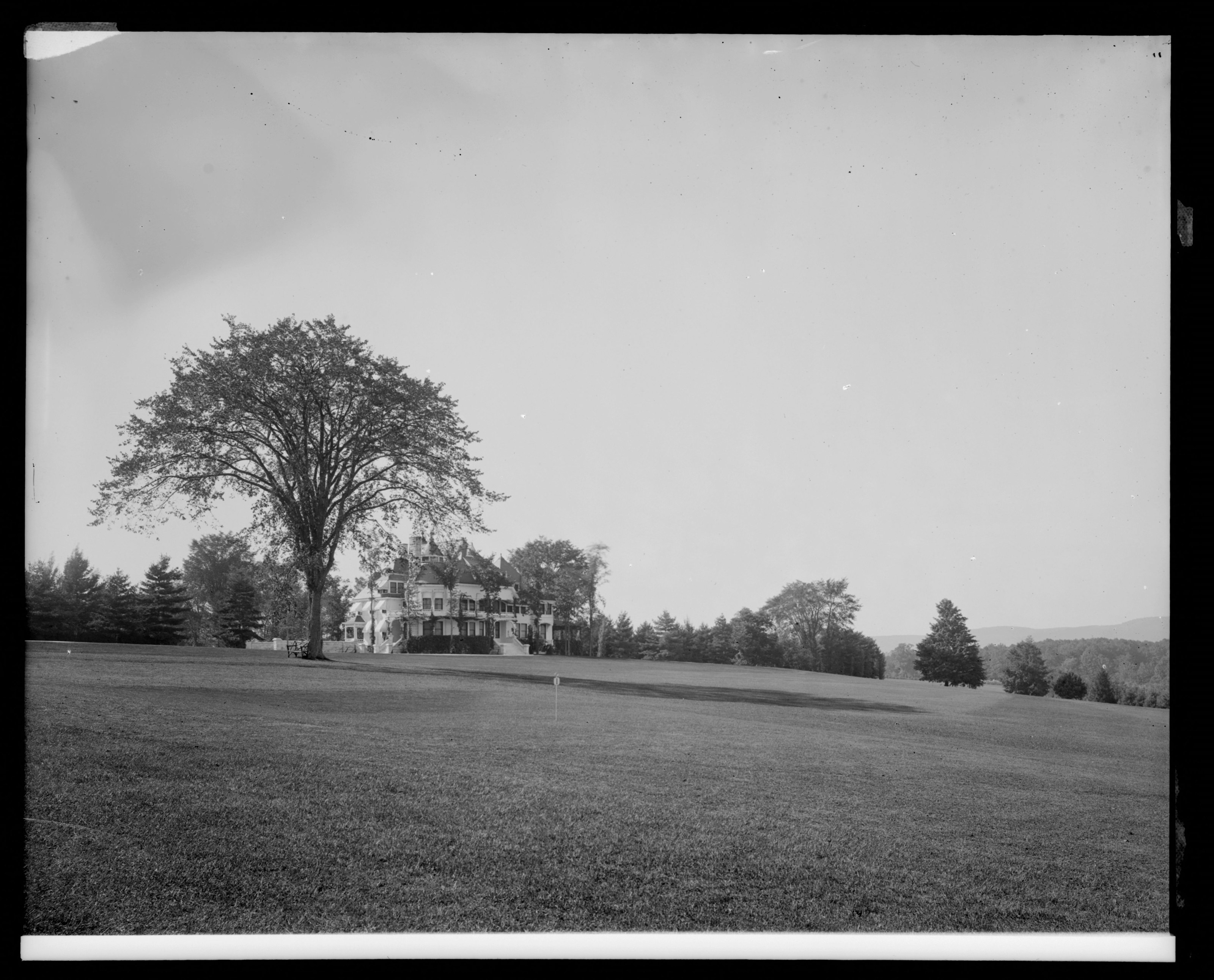
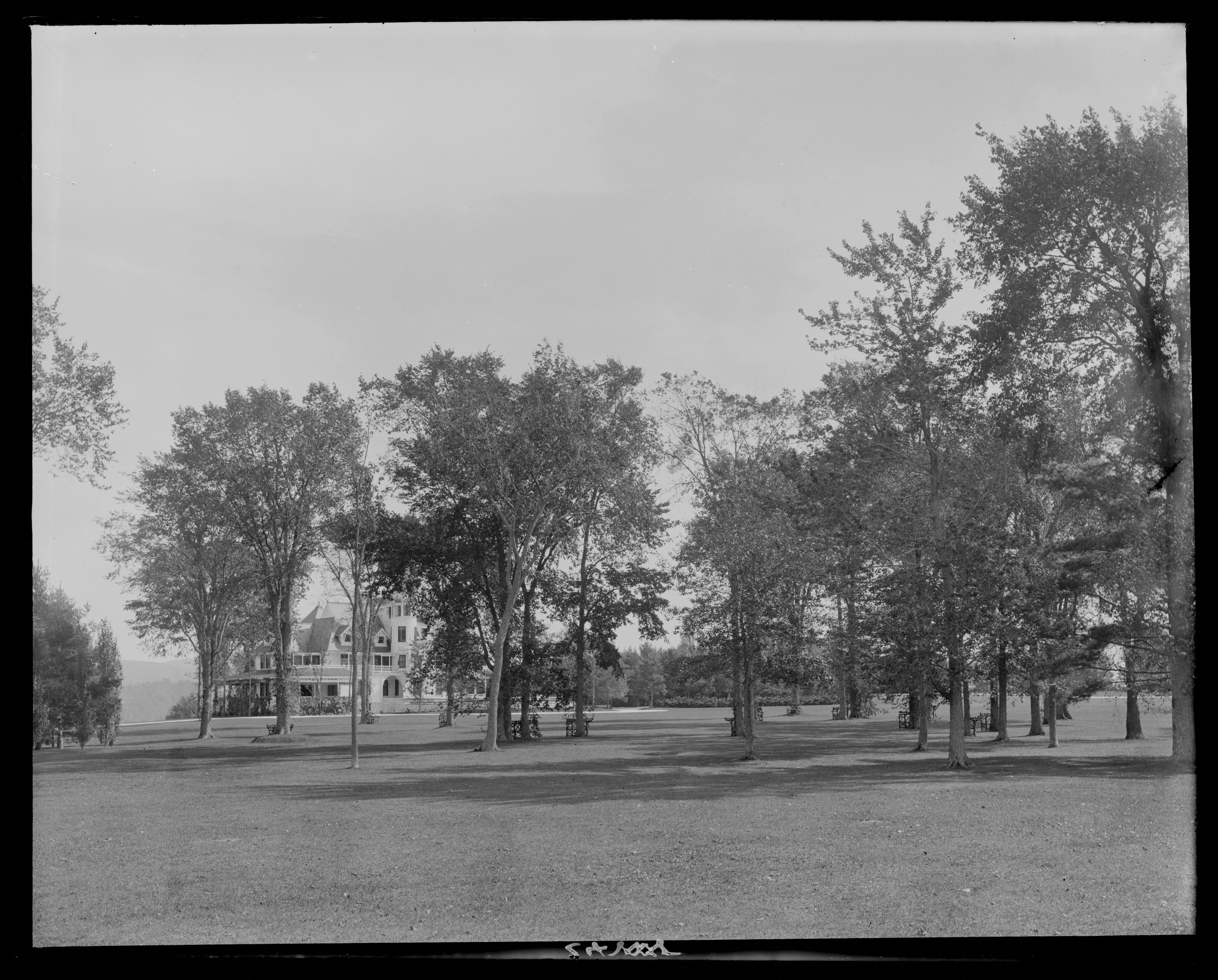
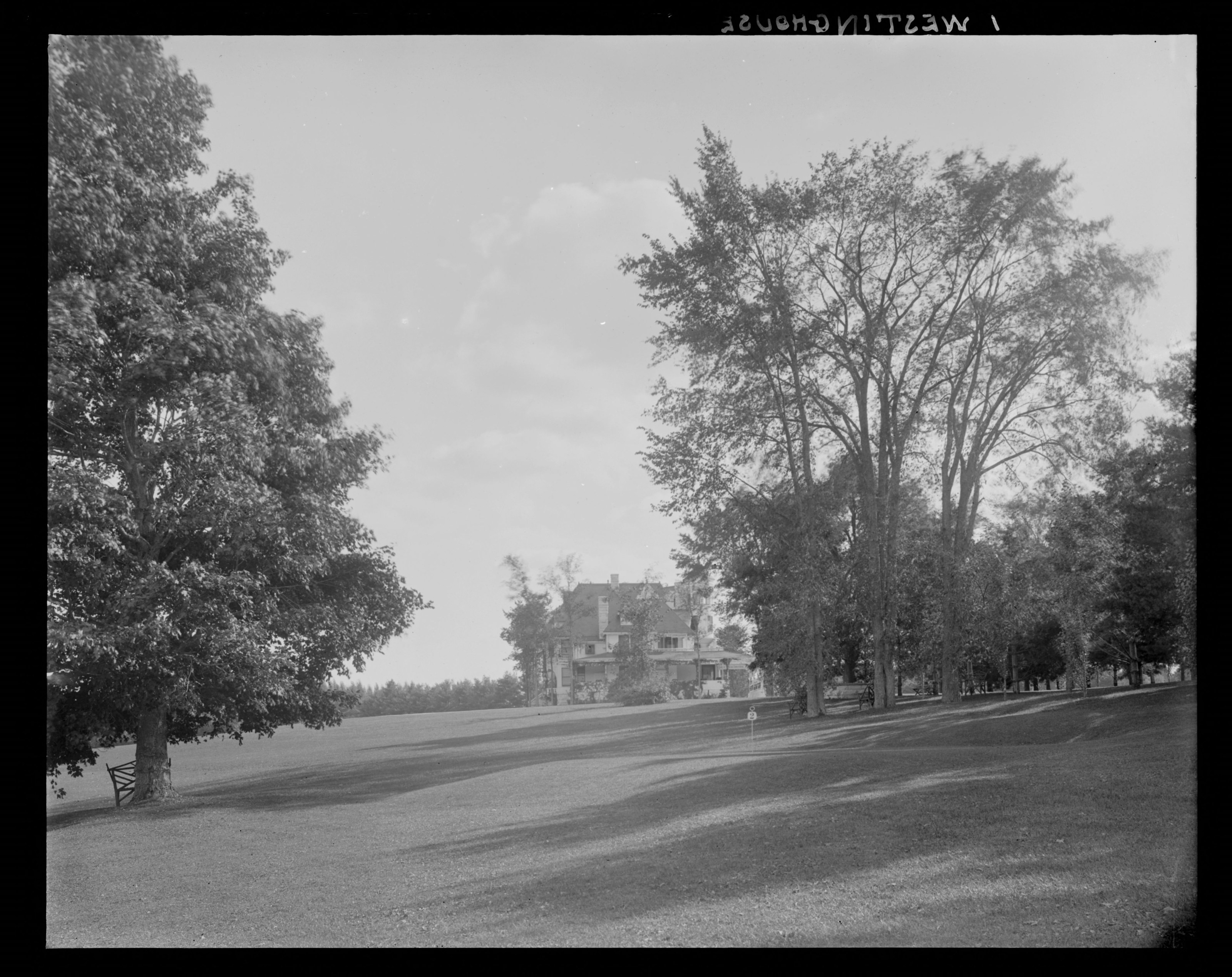
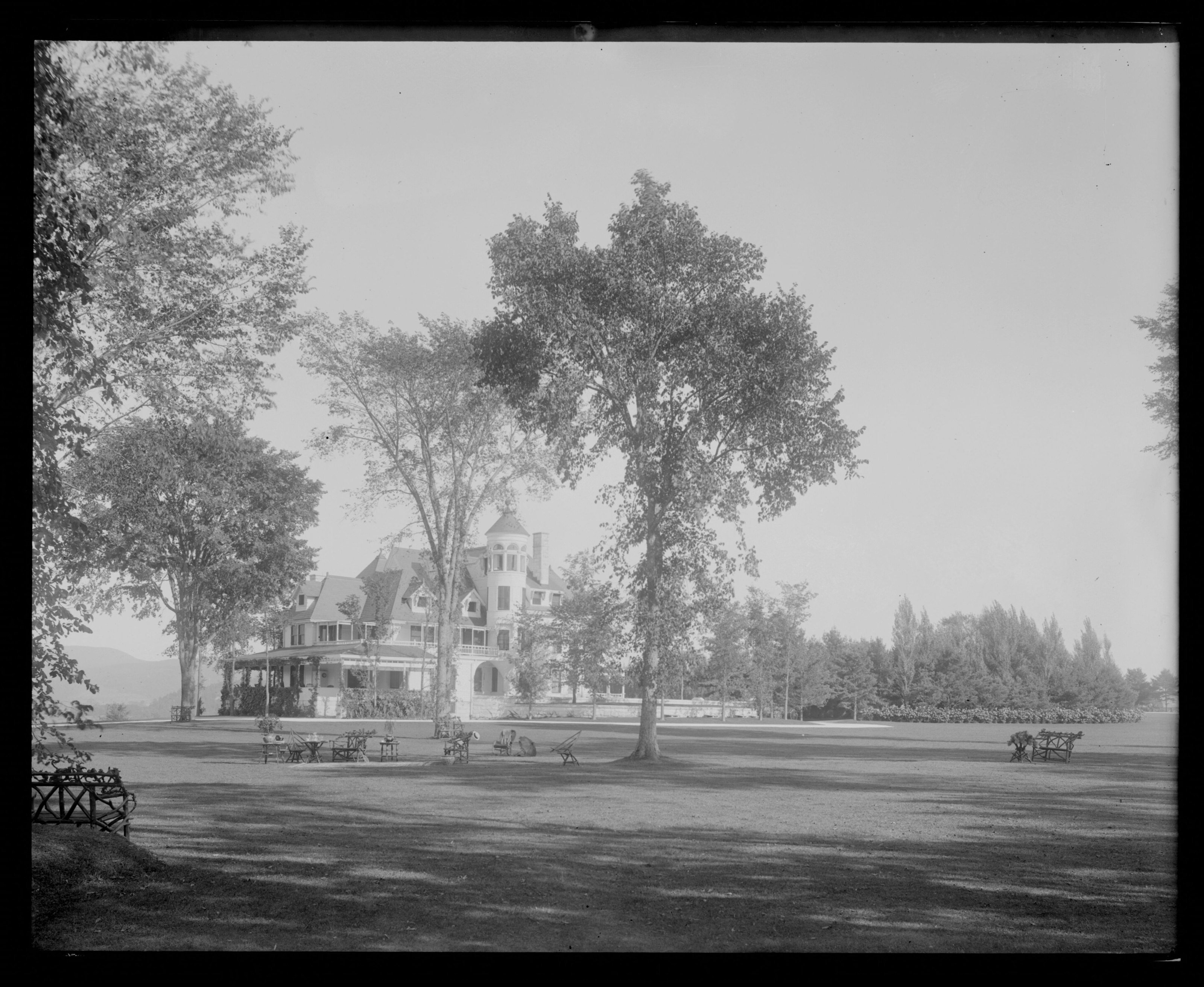
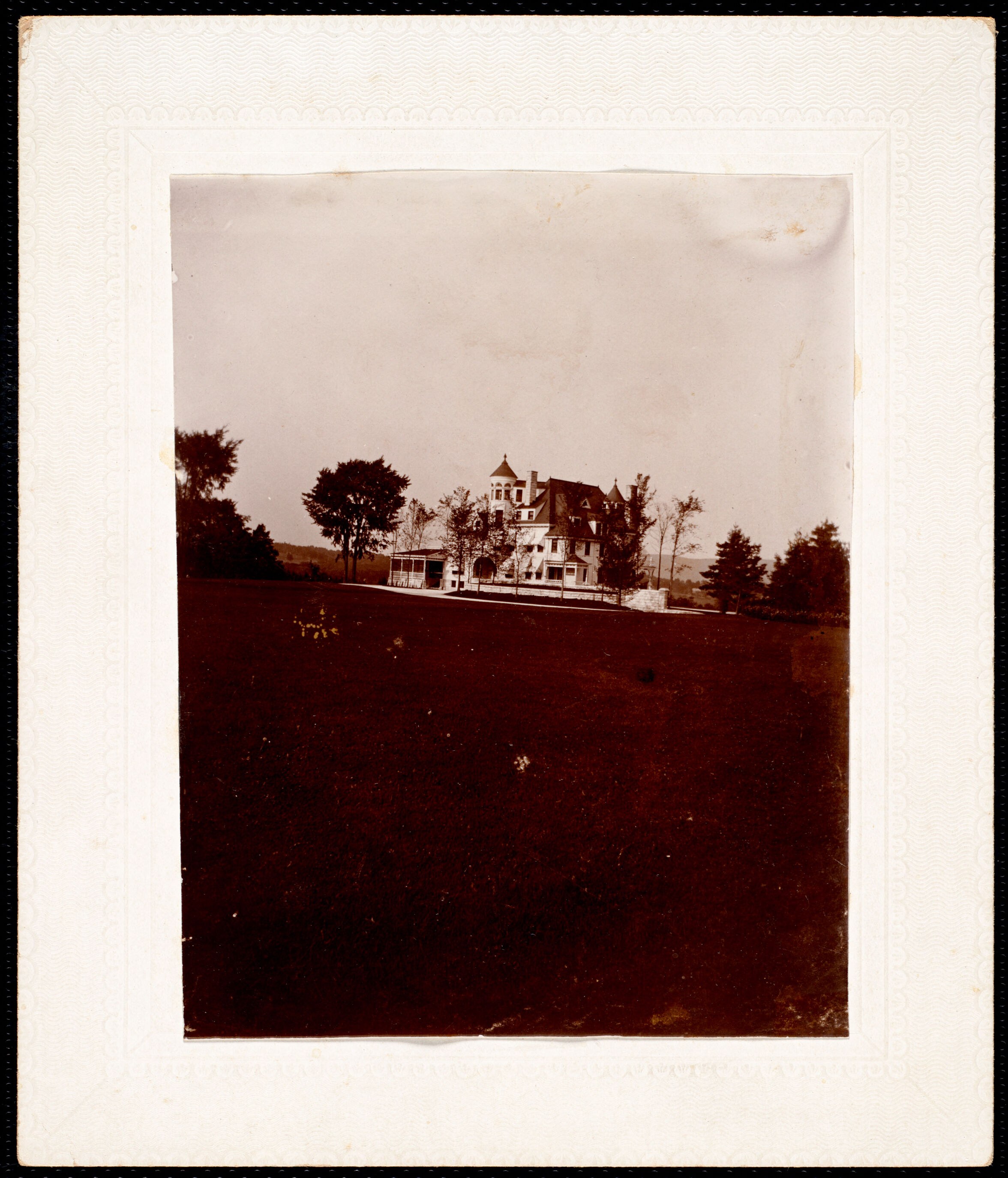
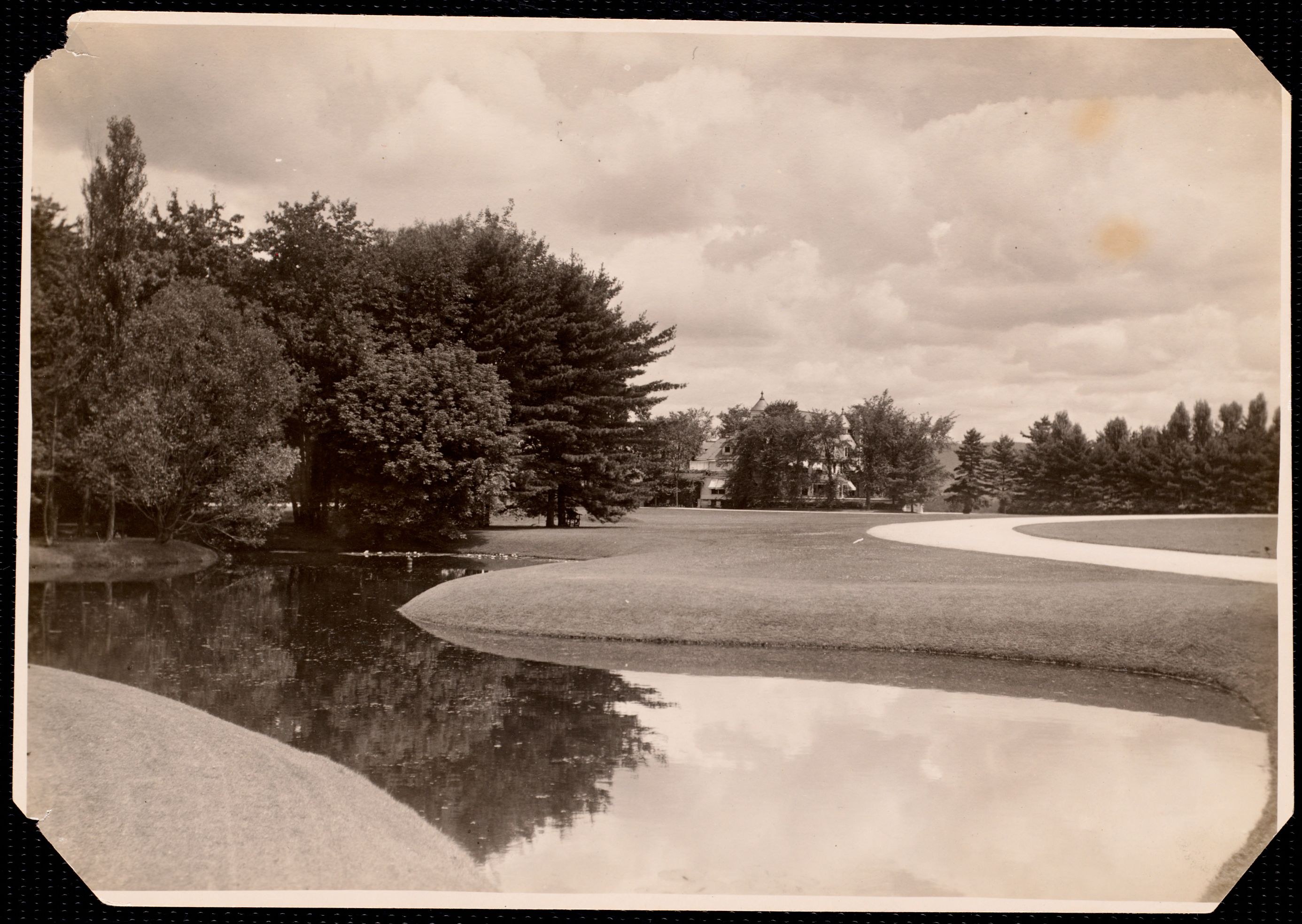
The house sat above Laurel Lake, and the Detroit Publishing Company photographed it from the lawn, from the drive and from the east. Its titles are the plainest record of who lived there: “Erskine Park, estate of Geo. Westinghouse, Lenox, Mass.”
II. White
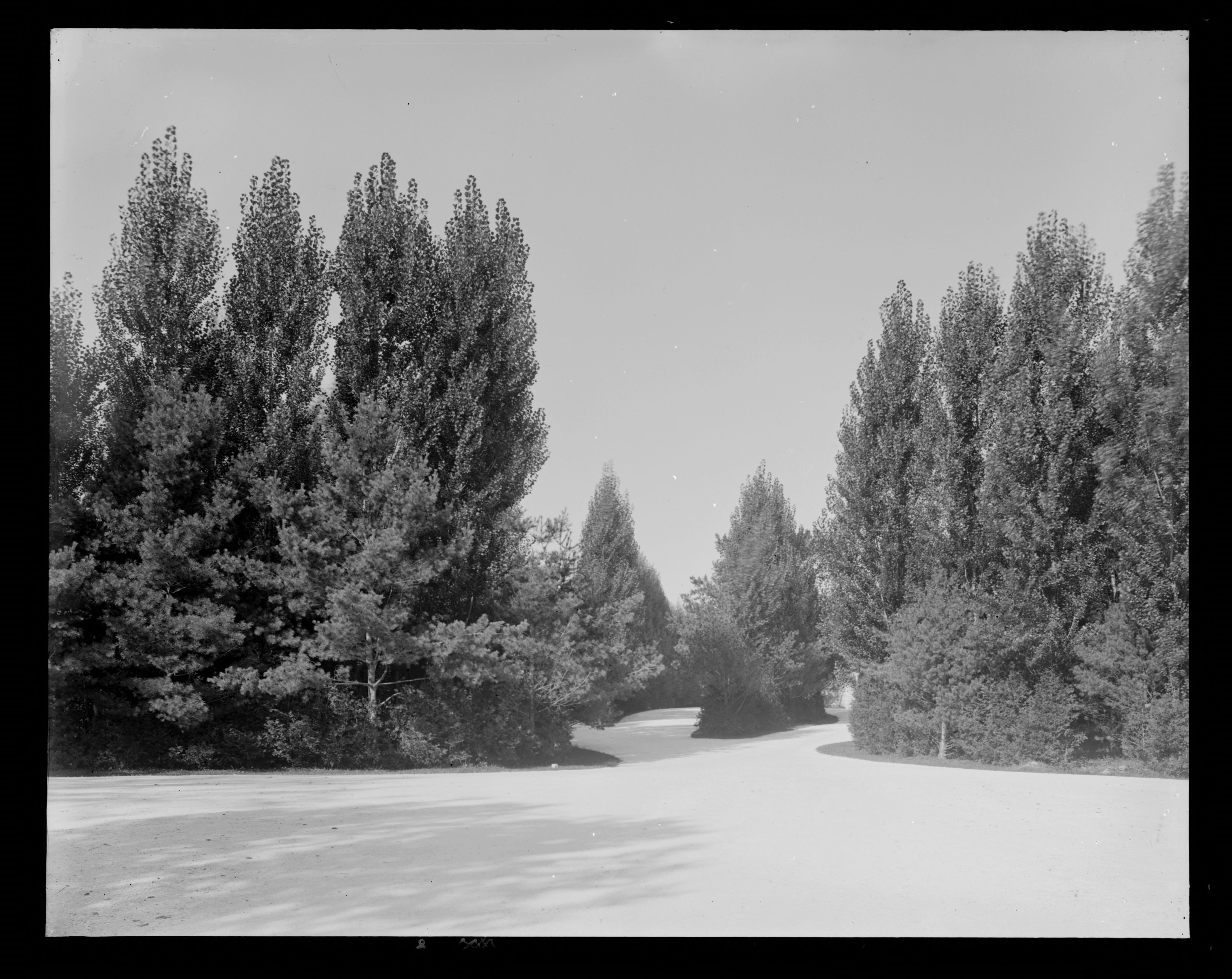
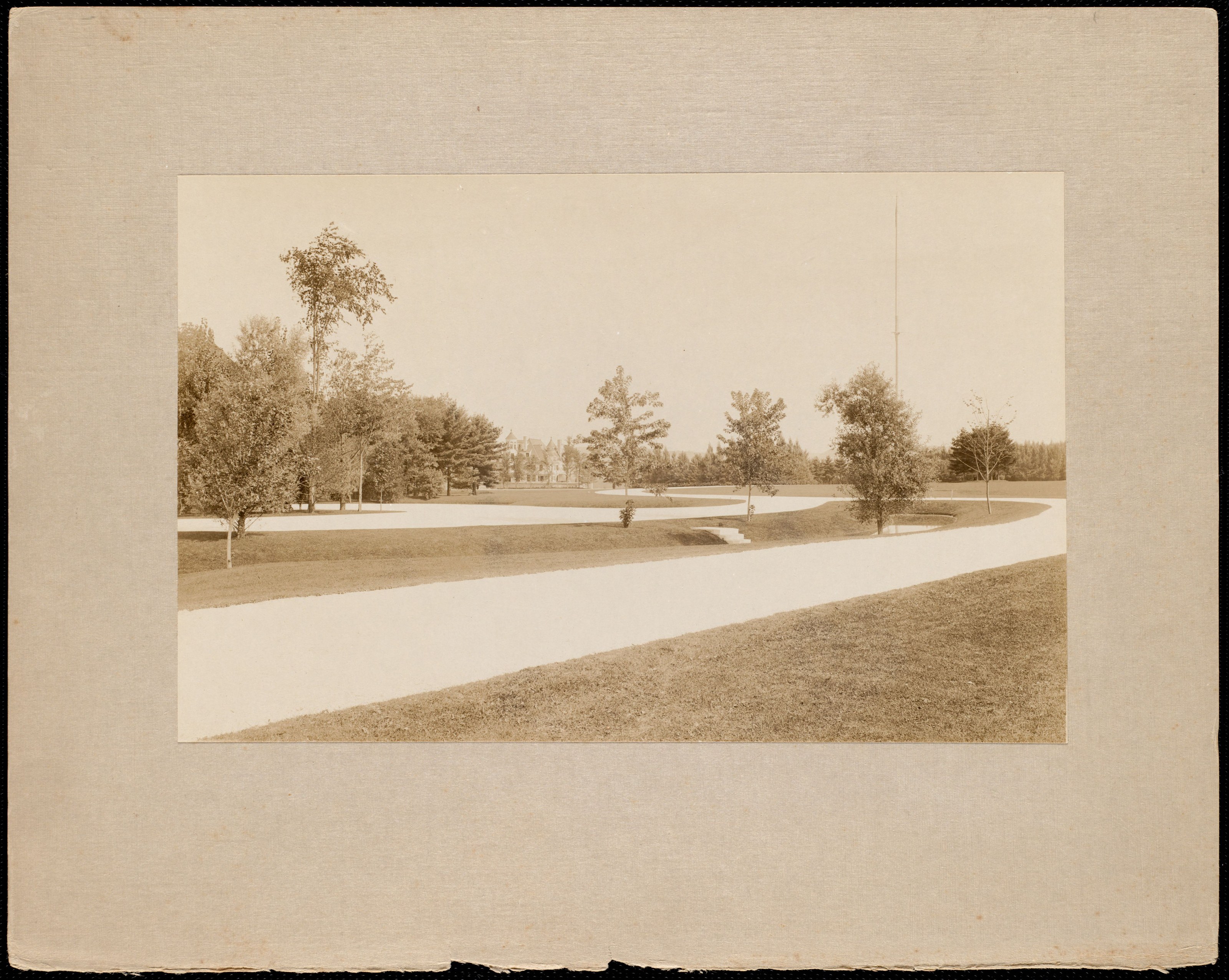
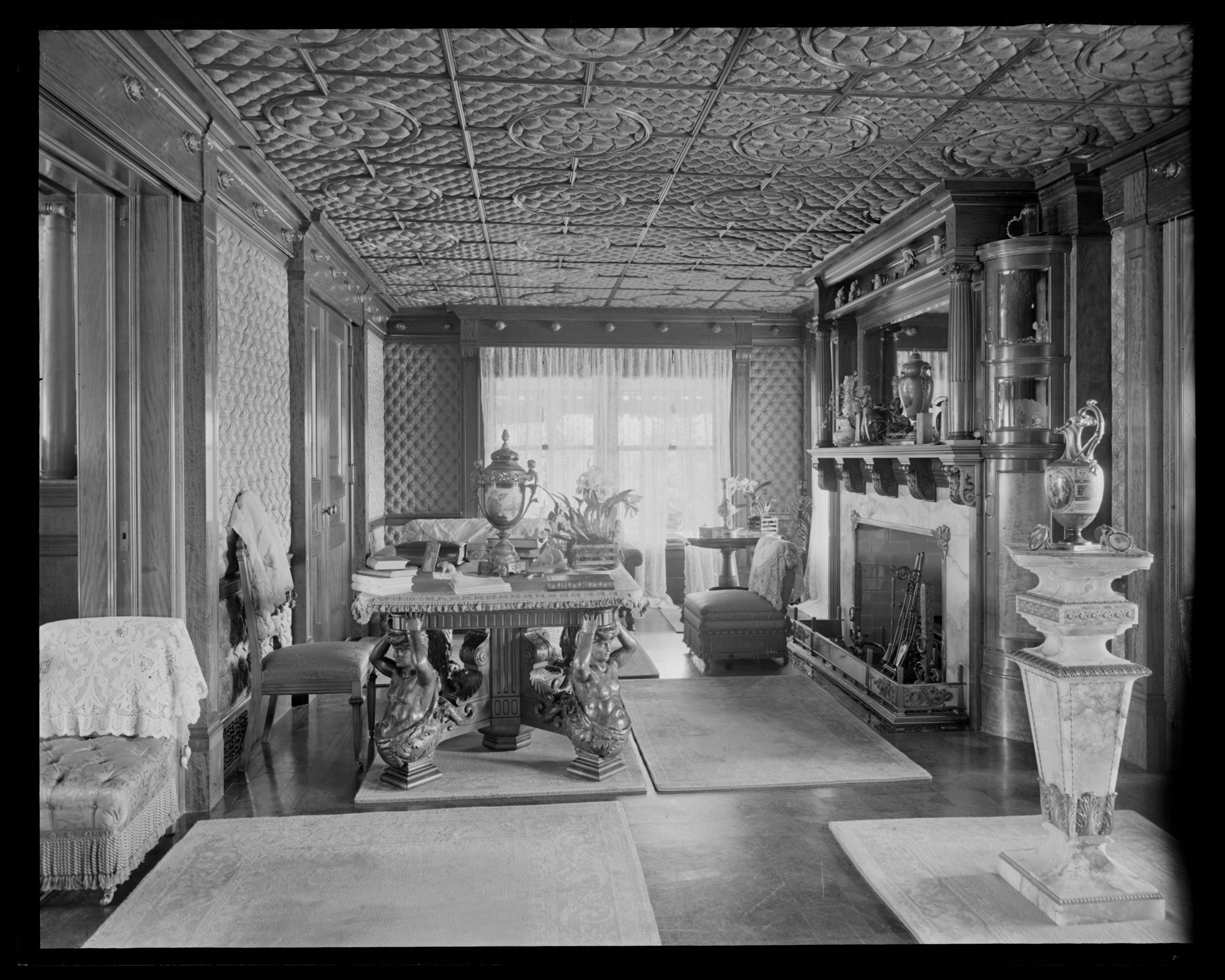
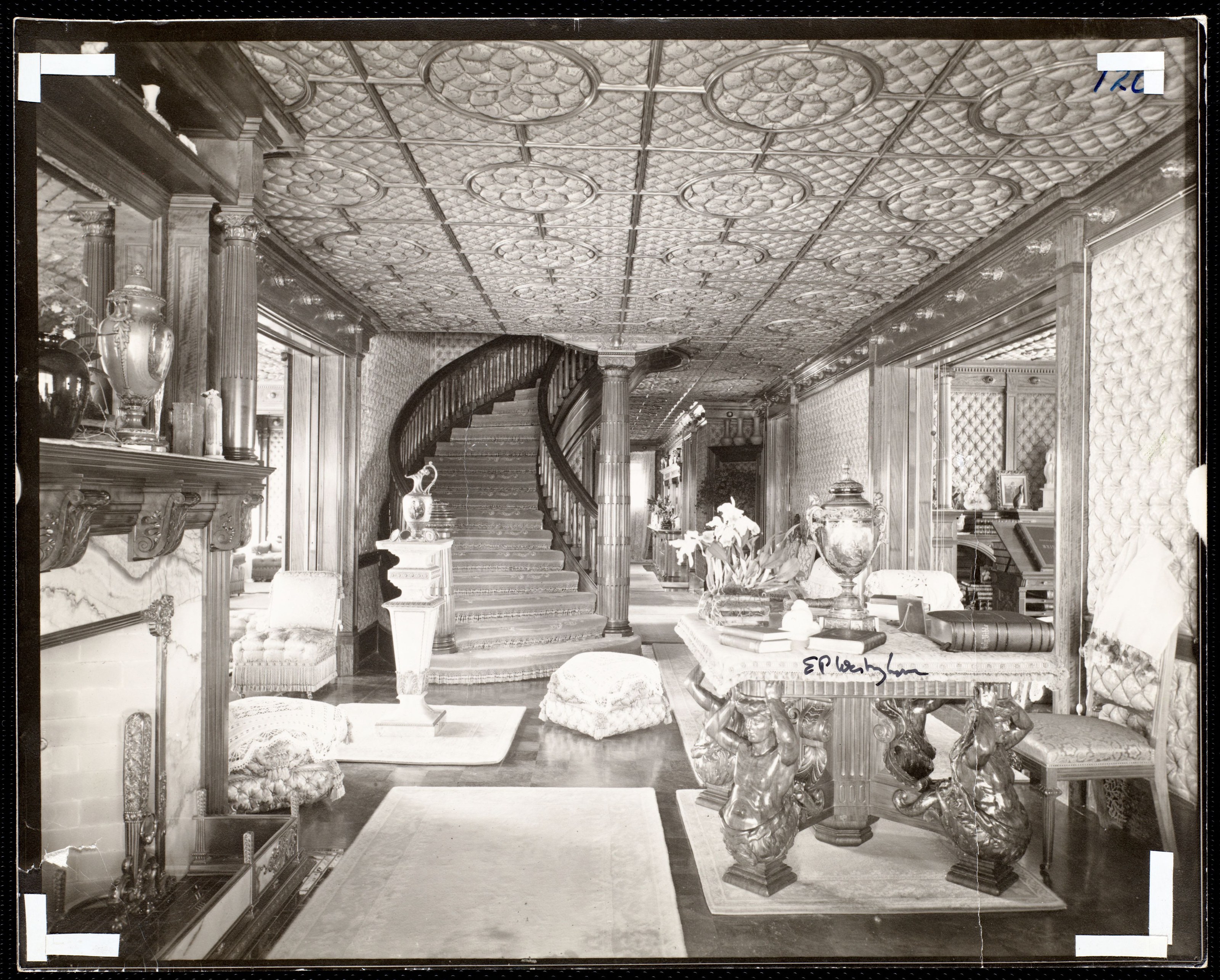
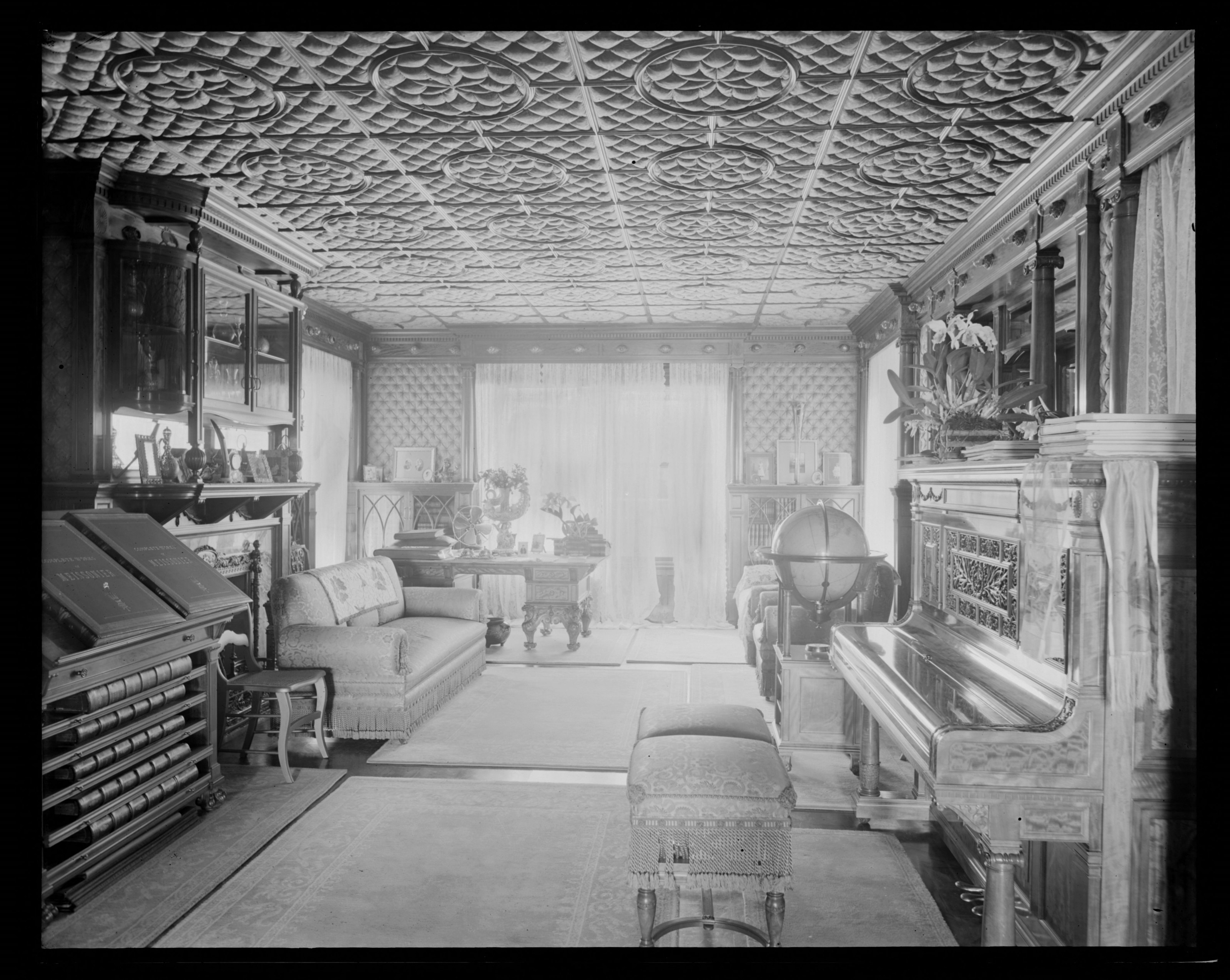
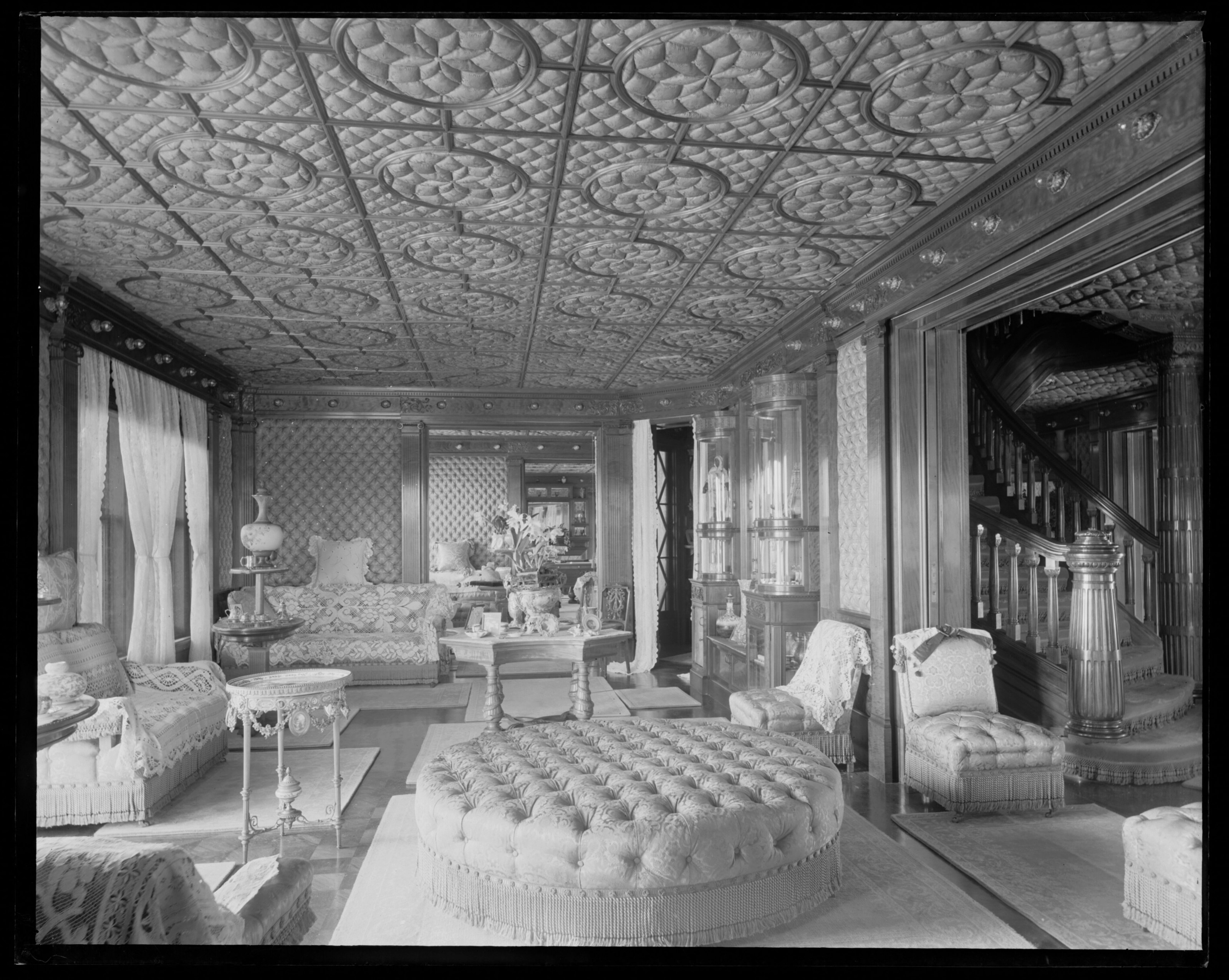
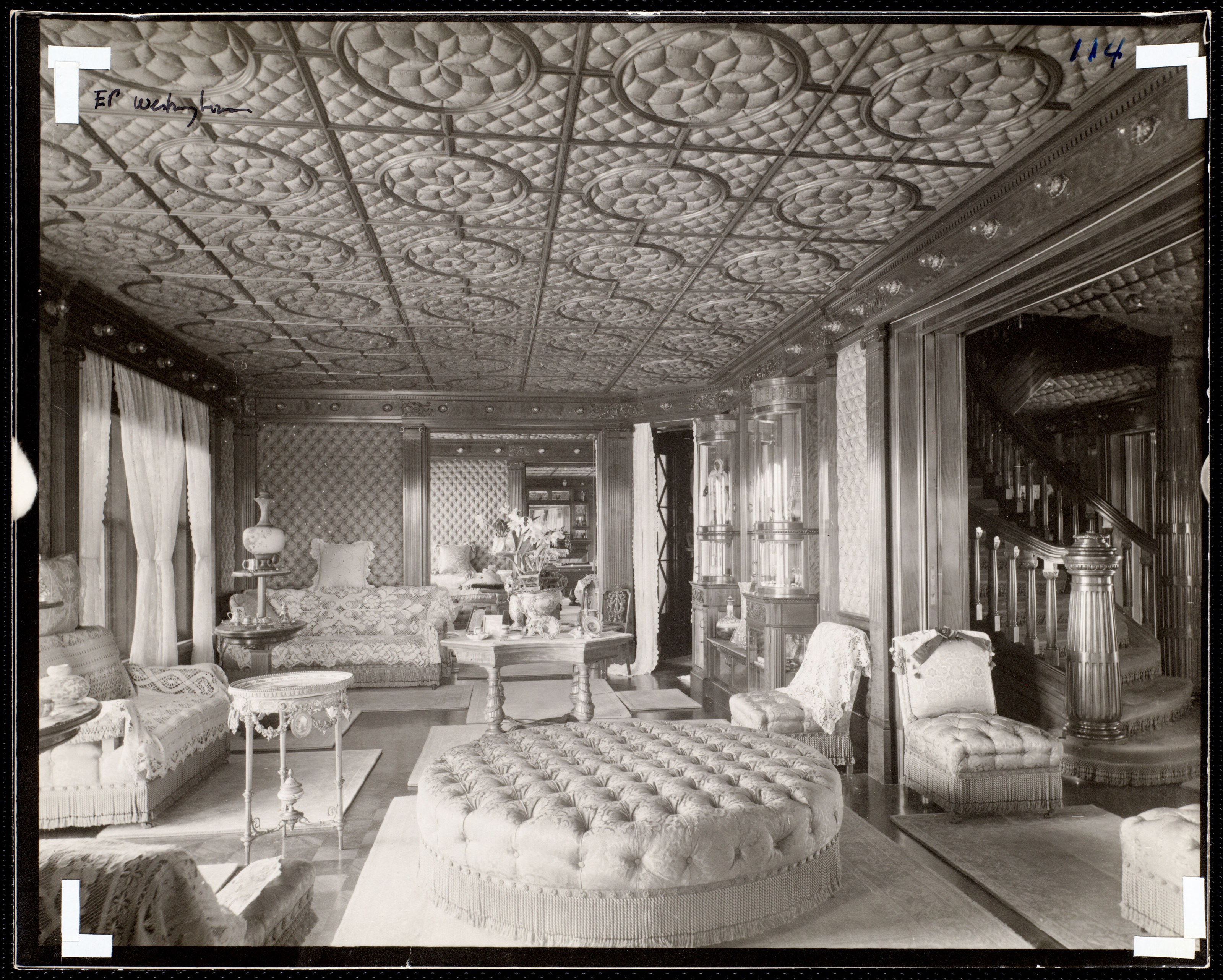
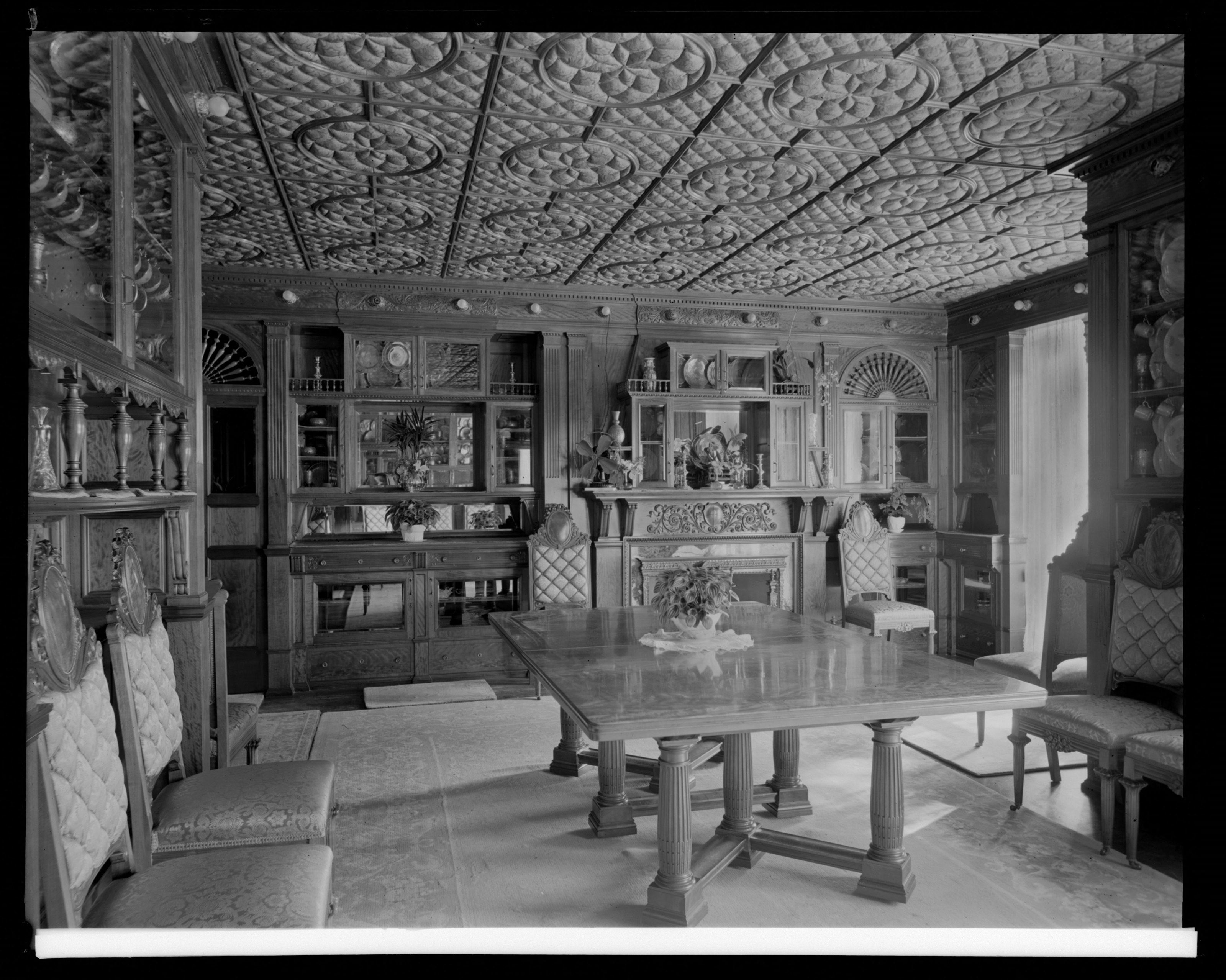
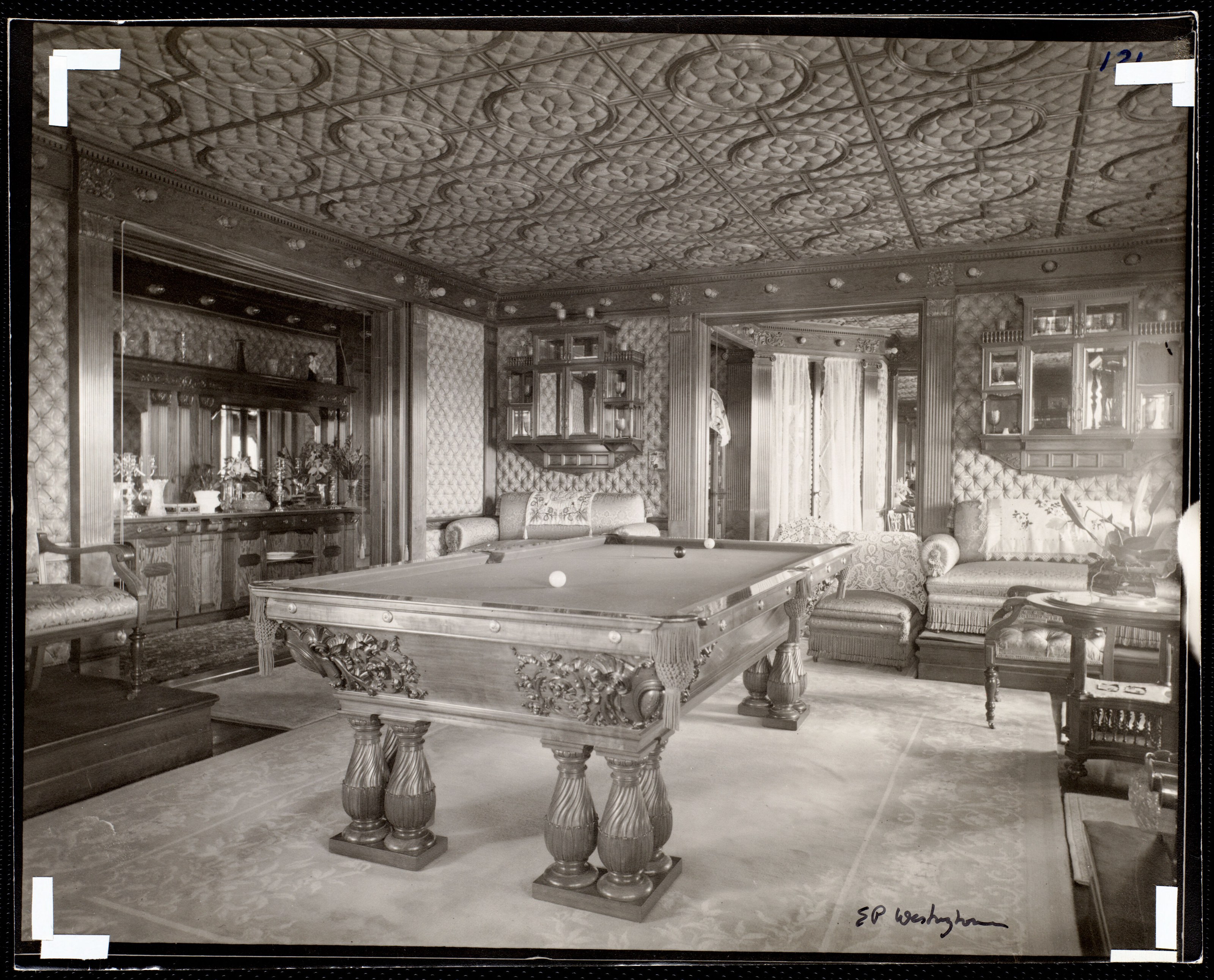
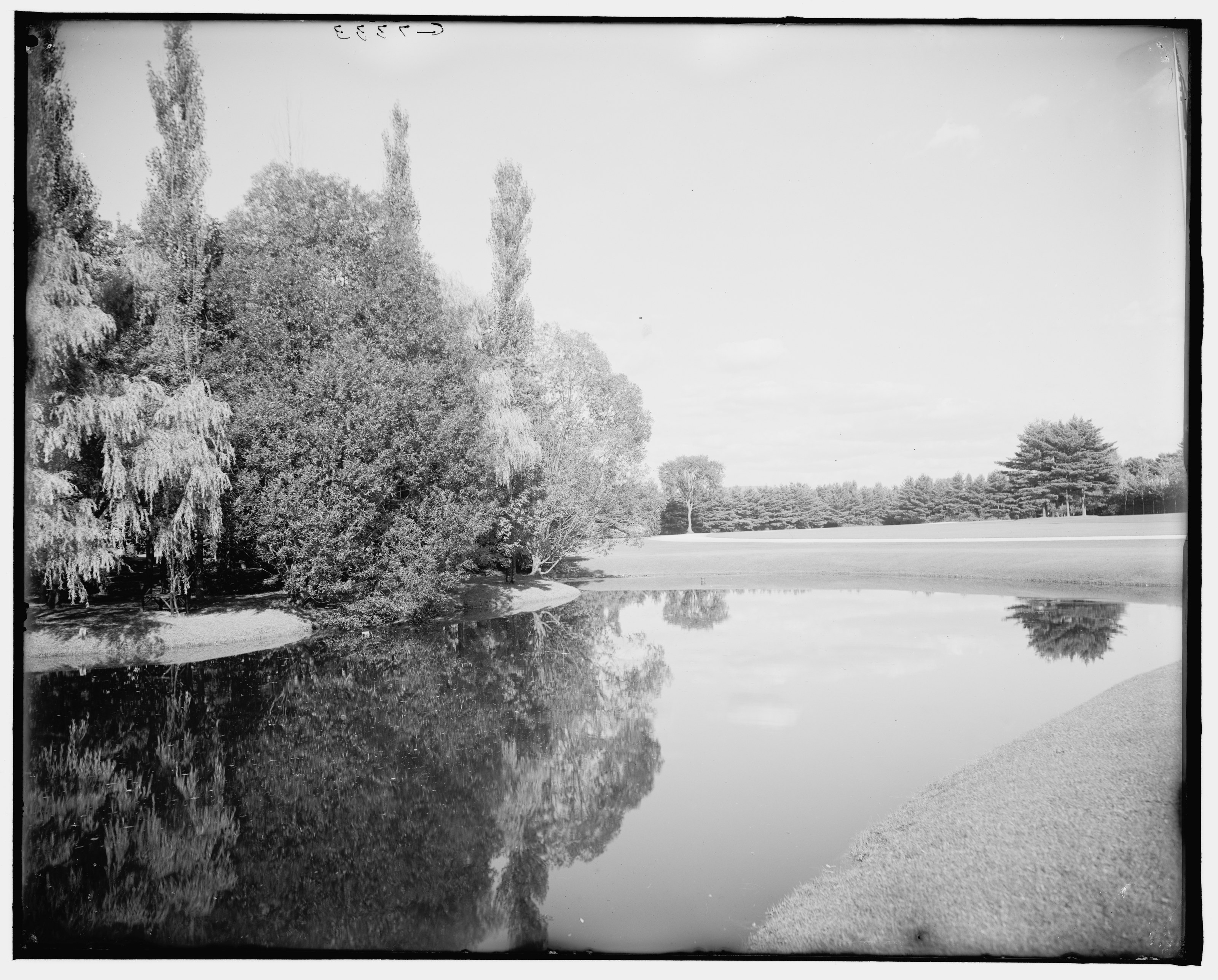
The estate ran on a single idea carried to its end: white. The account at American Aristocracy describes marble from nearby Lee used on the exterior and in the drives, white mahogany furniture inside, and ceilings lined with quilted white satin. The Lenox Library’s photographs of the drives show a pale surface against dark lawn; one of its prints is catalogued “crushed marble drive.”
American Aristocracy is a secondary source and the only one consulted here for those details. No architect has been established for the house, and the Olmsted firm’s job list for Berkshire County has no Westinghouse job in it — whoever laid out these grounds, it was not that office.
III. Current
The man who sold alternating current to the country lit his own grounds with it. American Aristocracy counts almost 1,500 bulbs in the house, the outbuildings and the grounds, fed by a generator on the property, with underground cable running to neighboring estates and into the town.
The Lenox Library holds a photograph its catalogue titles “Erskine Park[?]: Westinghouse workshop.” It is a plain clapboard building with a tower. The question mark is the library’s.
IV. Water
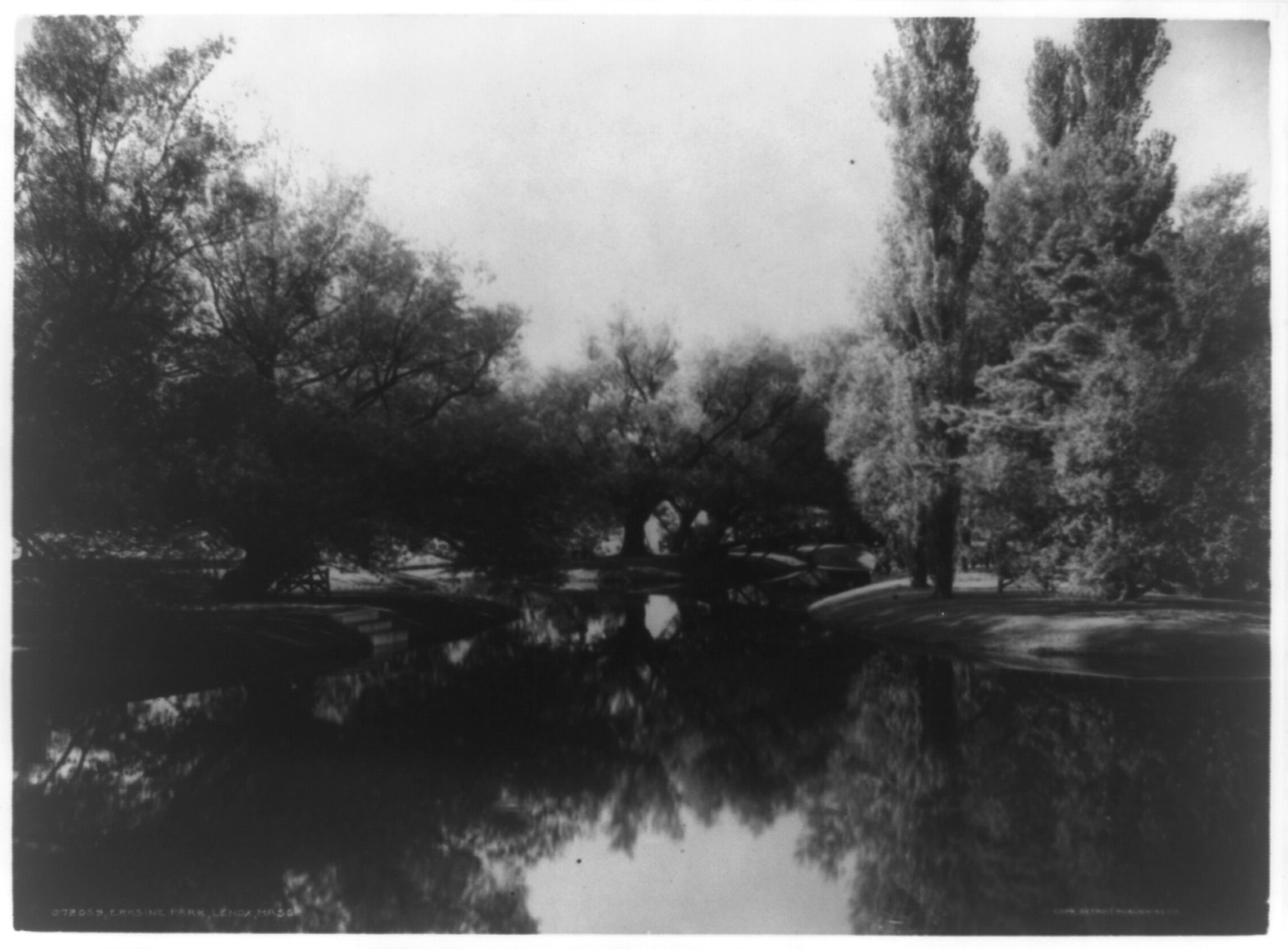
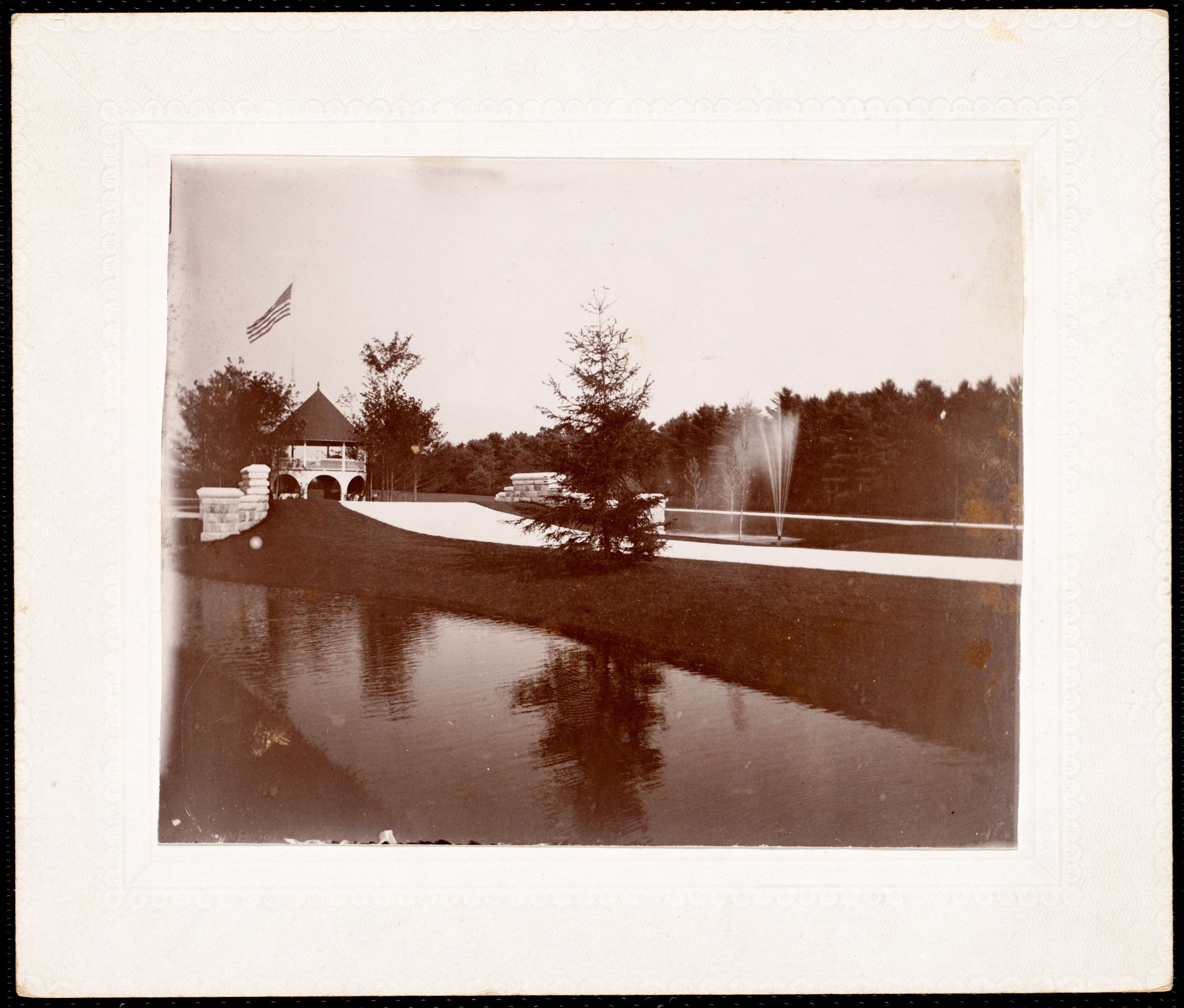
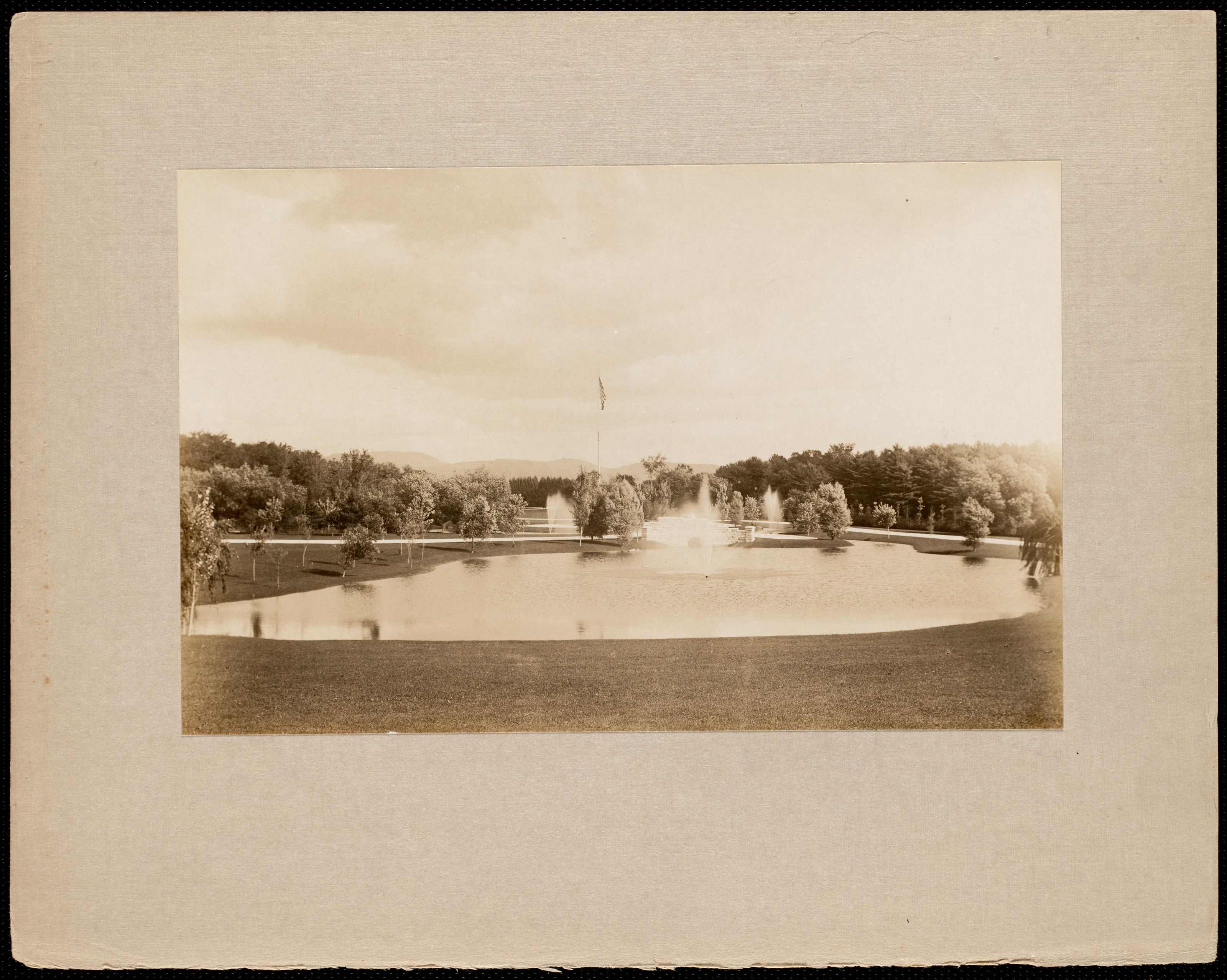
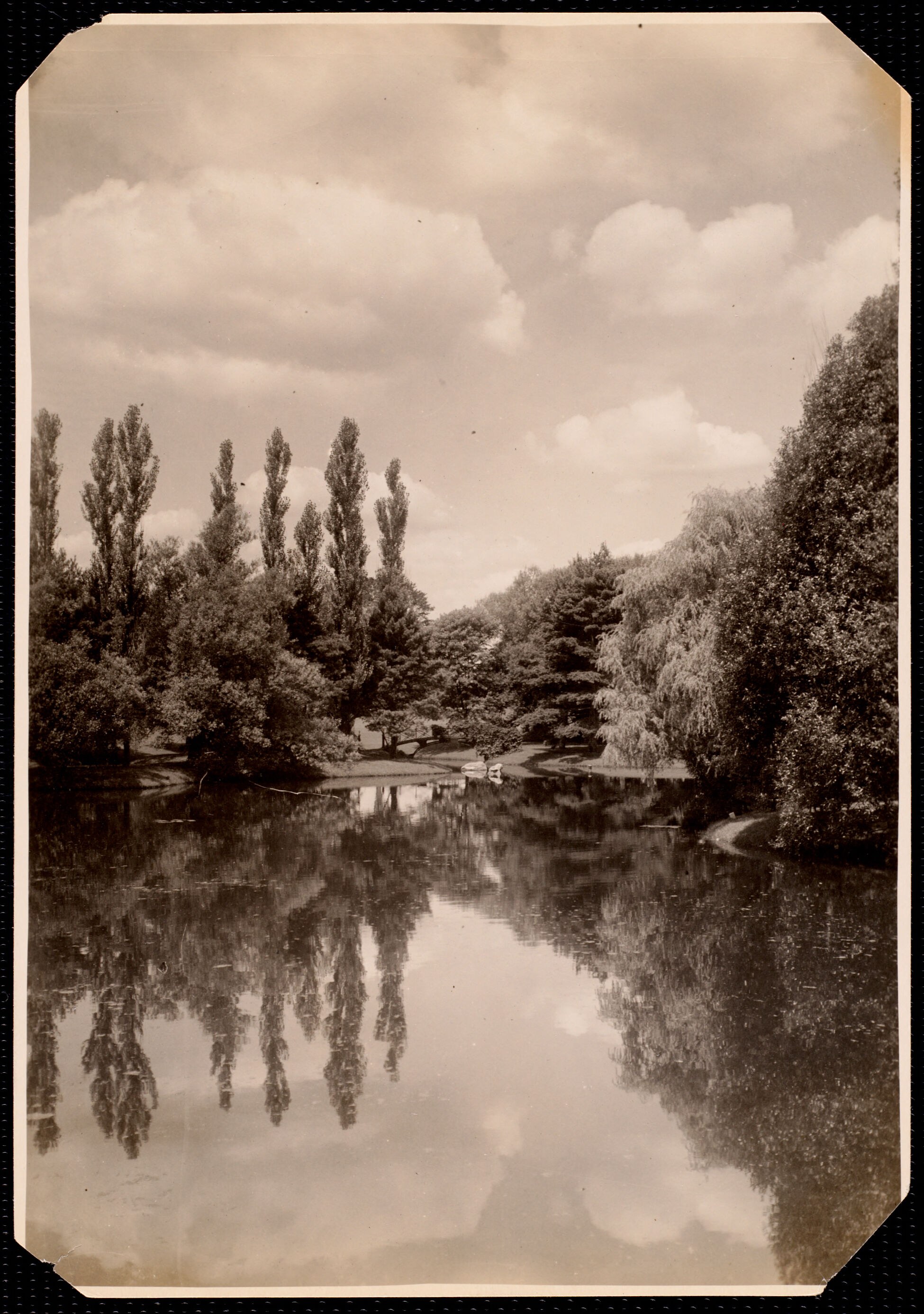
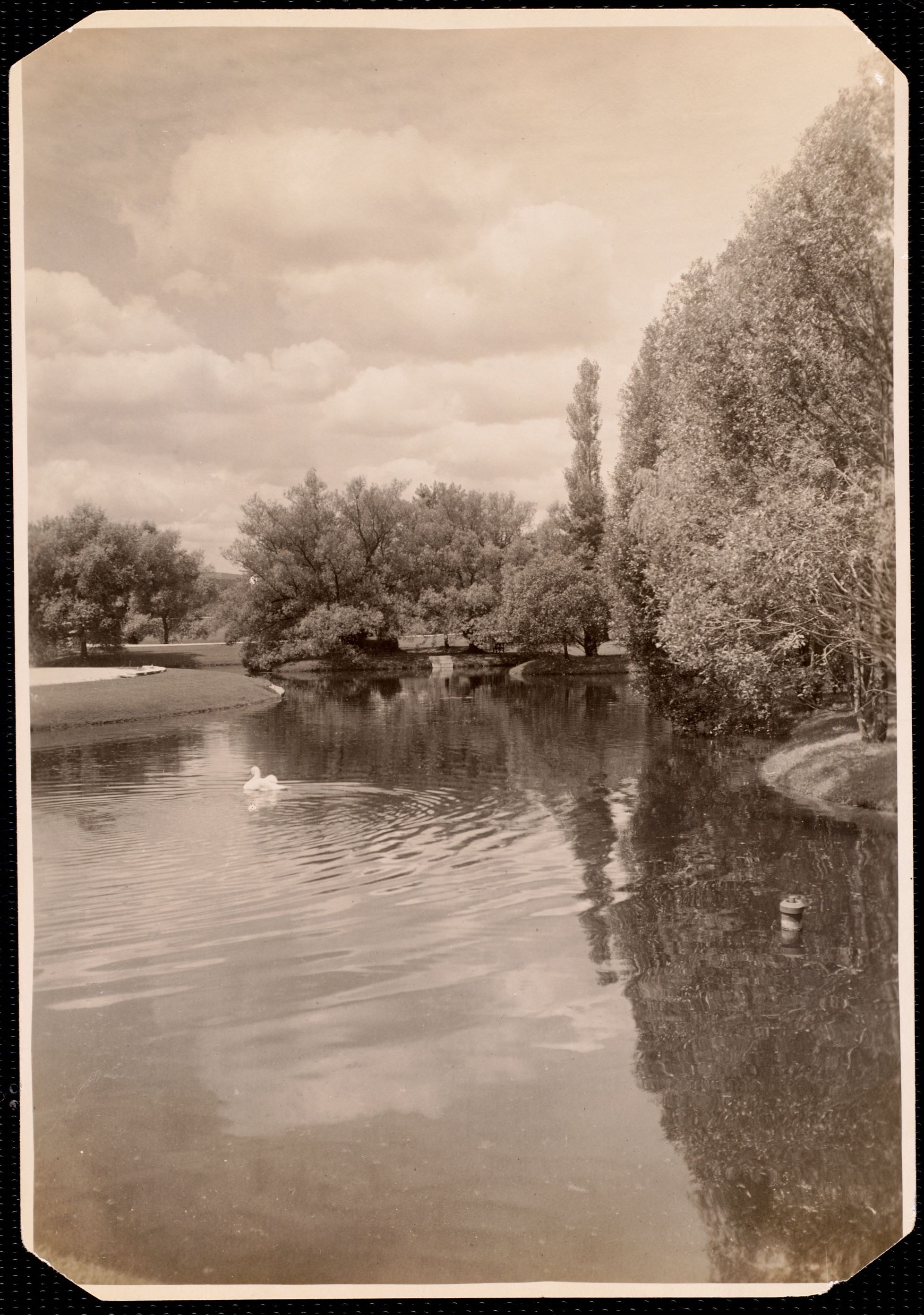
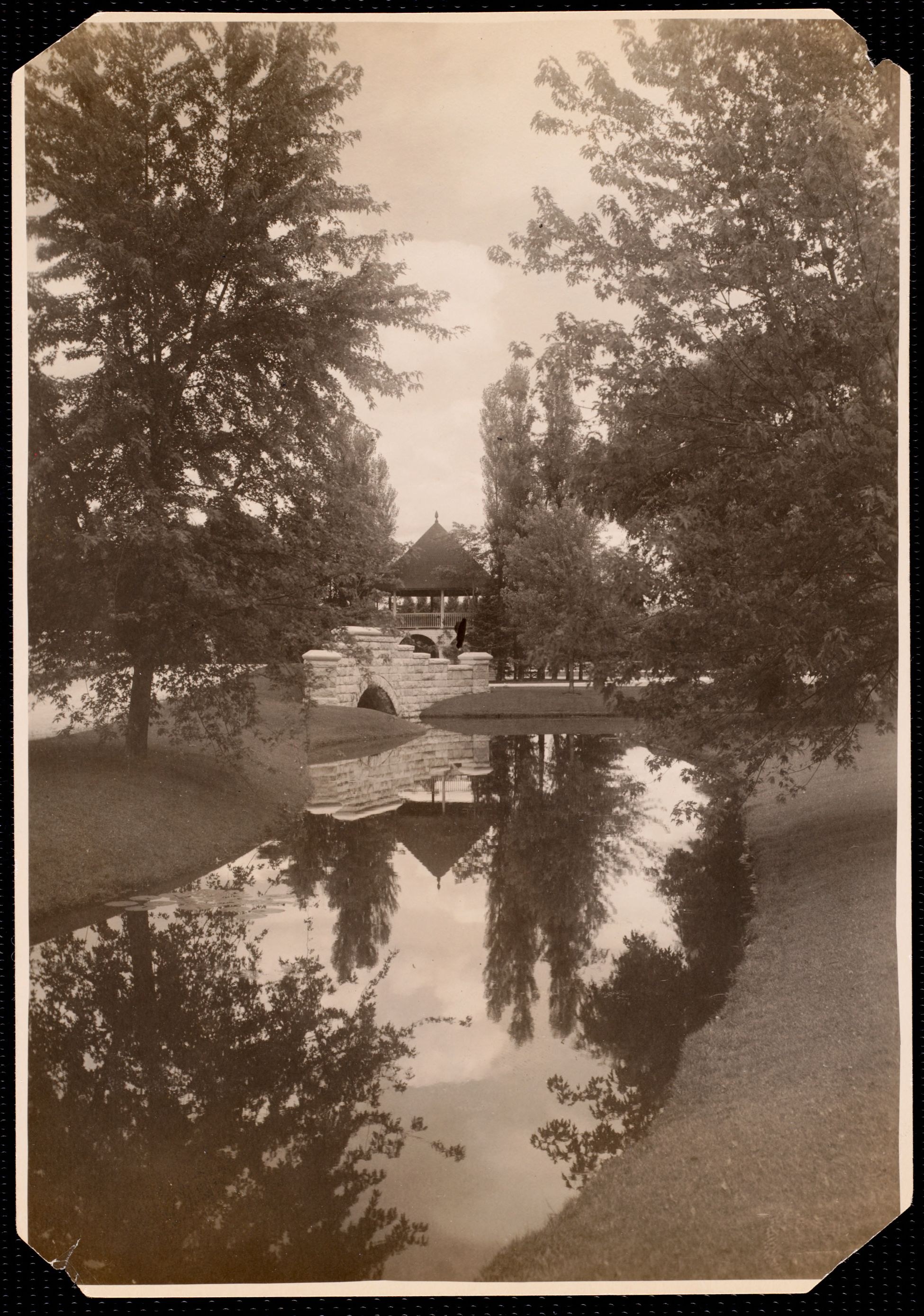
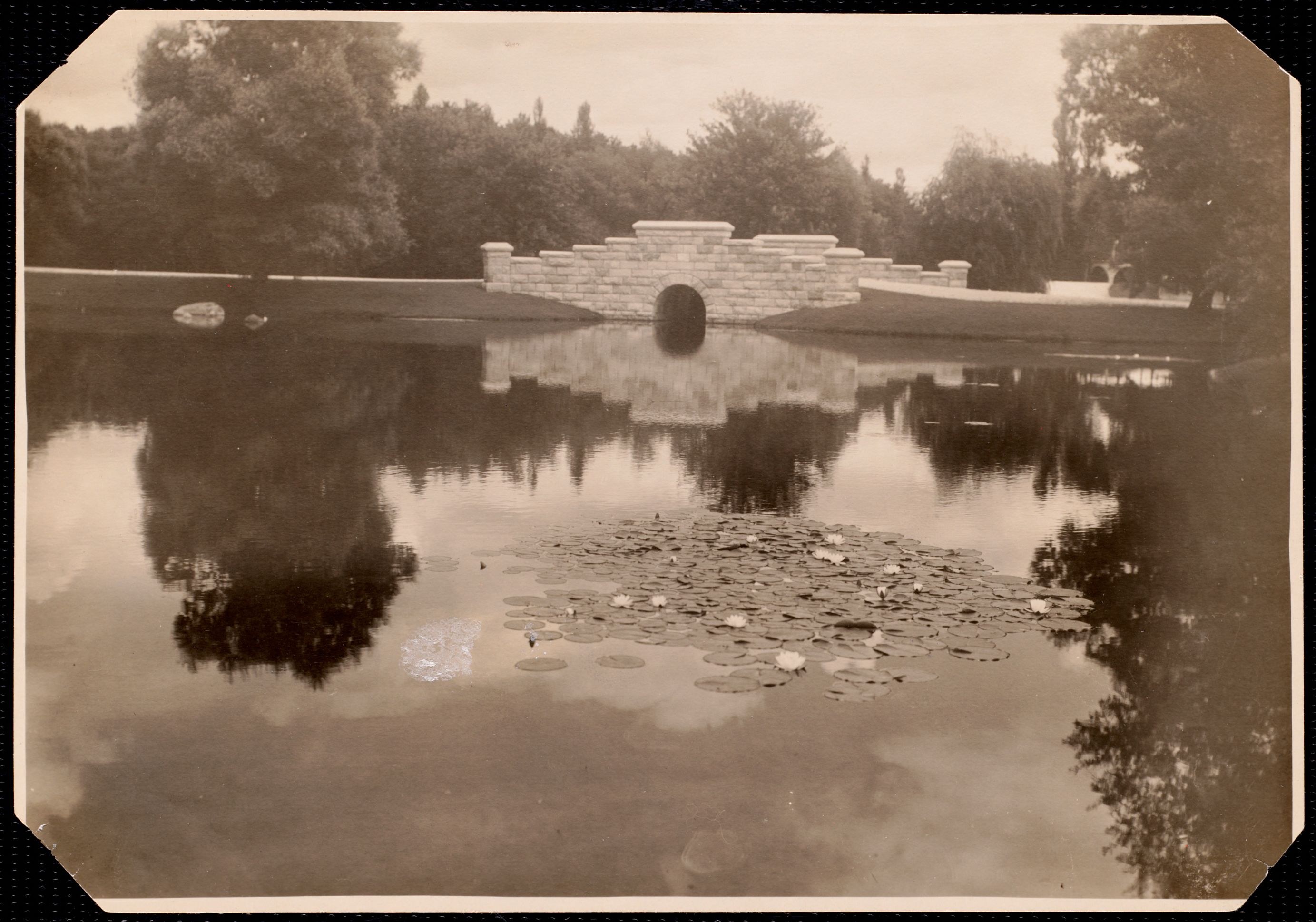
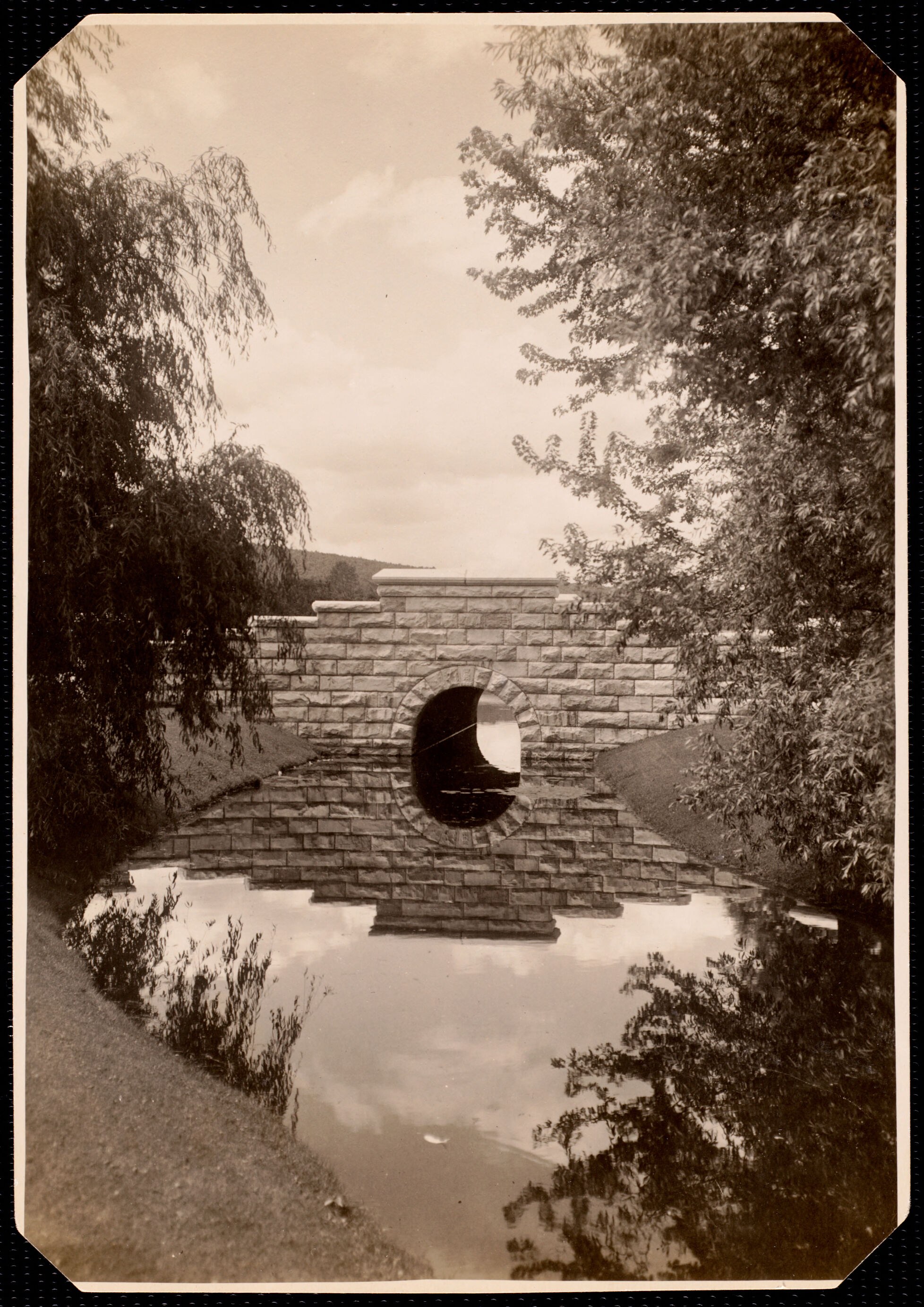
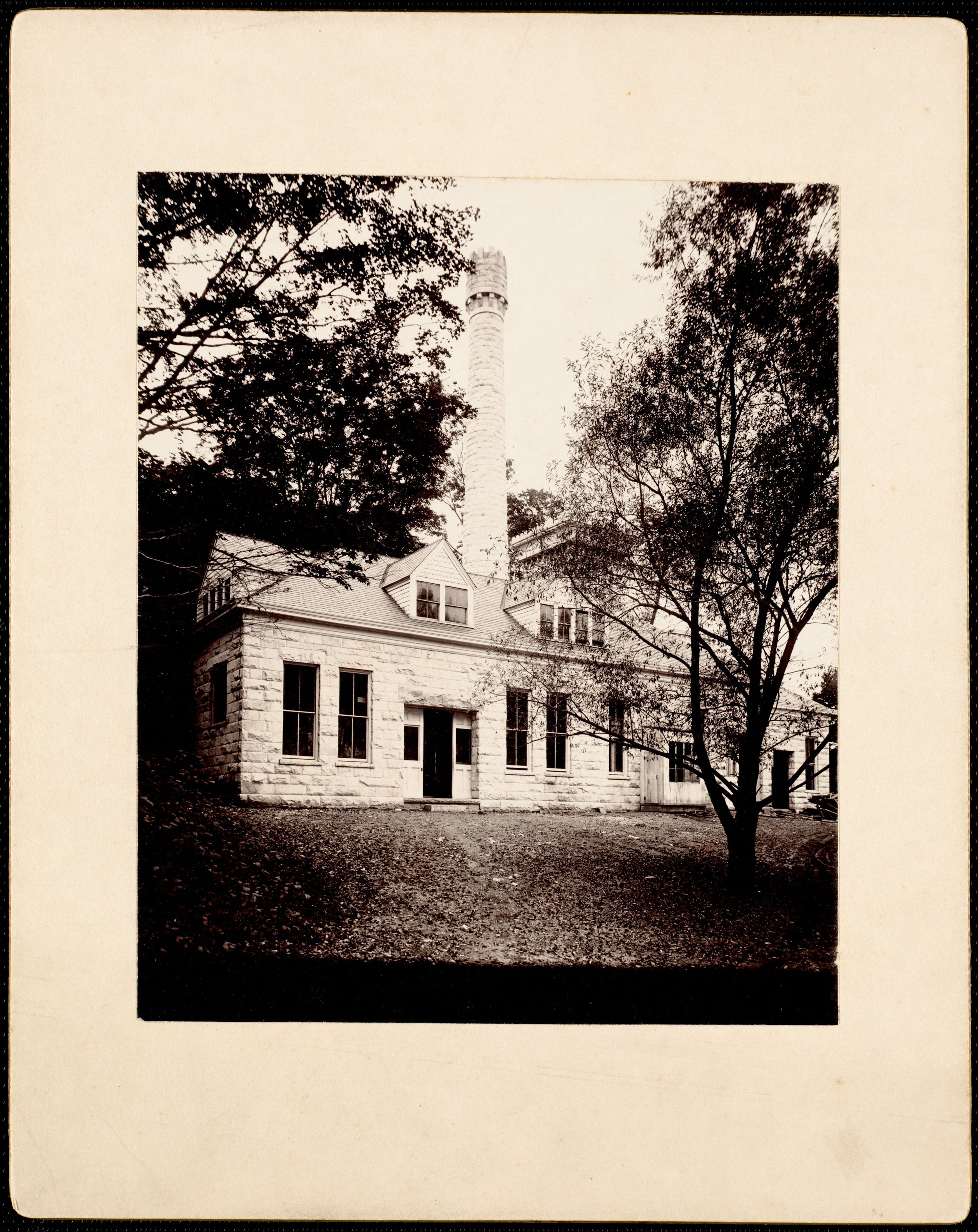
The photographs return again and again to the water: ponds with fountains playing, a stone bridge with a gazebo on it, lily pads, a swan. American Aristocracy describes man-made lakes with swans and silver birches. The library’s own captions — “stone bridge with gazebo,” “swan floating in pond,” “drive, pond & fountain” — are the best inventory we have of a landscape nobody surveyed.
V. The end of it
Westinghouse died on 12 March 1914. Marguerite survived him by three months.
In 1917 the estate was sold to Margaret Emerson, widow of Alfred Gwynne Vanderbilt — according to American Aristocracy, with a condition attached that she demolish the mansion. In 1919 she built a Colonial Revival house, Holmwood, on the site, to designs by Delano & Aldrich. It still stands. The Library of Congress holds a photograph titled “Holmwood, residence of Mrs. R.T. Baker, Lenox, Mass.”
It has one more claim on the record. In August 1936 the third Berkshire Symphonic Festival was held at Holmwood, under a tent two hundred and fifty feet by a hundred and twenty, with five thousand tickets sold. The Boston Symphony moved to Tanglewood the following year. The first concerts of that festival, two summers earlier, had been given on Dan Hanna’s farm in Stockbridge.
So the sequence is: a house built to be looked at, photographed thoroughly, and then removed by agreement. The Detroit Publishing negatives and the Lenox Library’s prints are what is left of it.
Sources
Library of Congress, Prints & Photographs Division, Detroit Publishing Company Collection: LC-D4-39873, LC-D4-72058, LC-D4-72060, LC-D4-72944, and LOT 9109 — all marked “No known restrictions on publication.” Lenox Library Association photographs via Digital Commonwealth; titles quoted as catalogued. Wikipedia, “George Westinghouse,” for the 1893 date, the marriage and the deaths. American Aristocracy, “Erskine Park,” for the acreage, the marble, the lighting, the 1917 sale and Holmwood — a secondary source, uncorroborated here, and flagged wherever used. lenoxhistory.org for Delano & Aldrich as Holmwood’s architects, and for a build date of 1890 for Erskine Park, earlier than the “by 1893” used here. Boston Symphony Orchestra, “A Festival Is Born: 1934–1936,” for the third festival at Holmwood in August 1936, the tent and the ticket sales. The Olmsted firm’s Berkshire job list holds no Westinghouse commission.