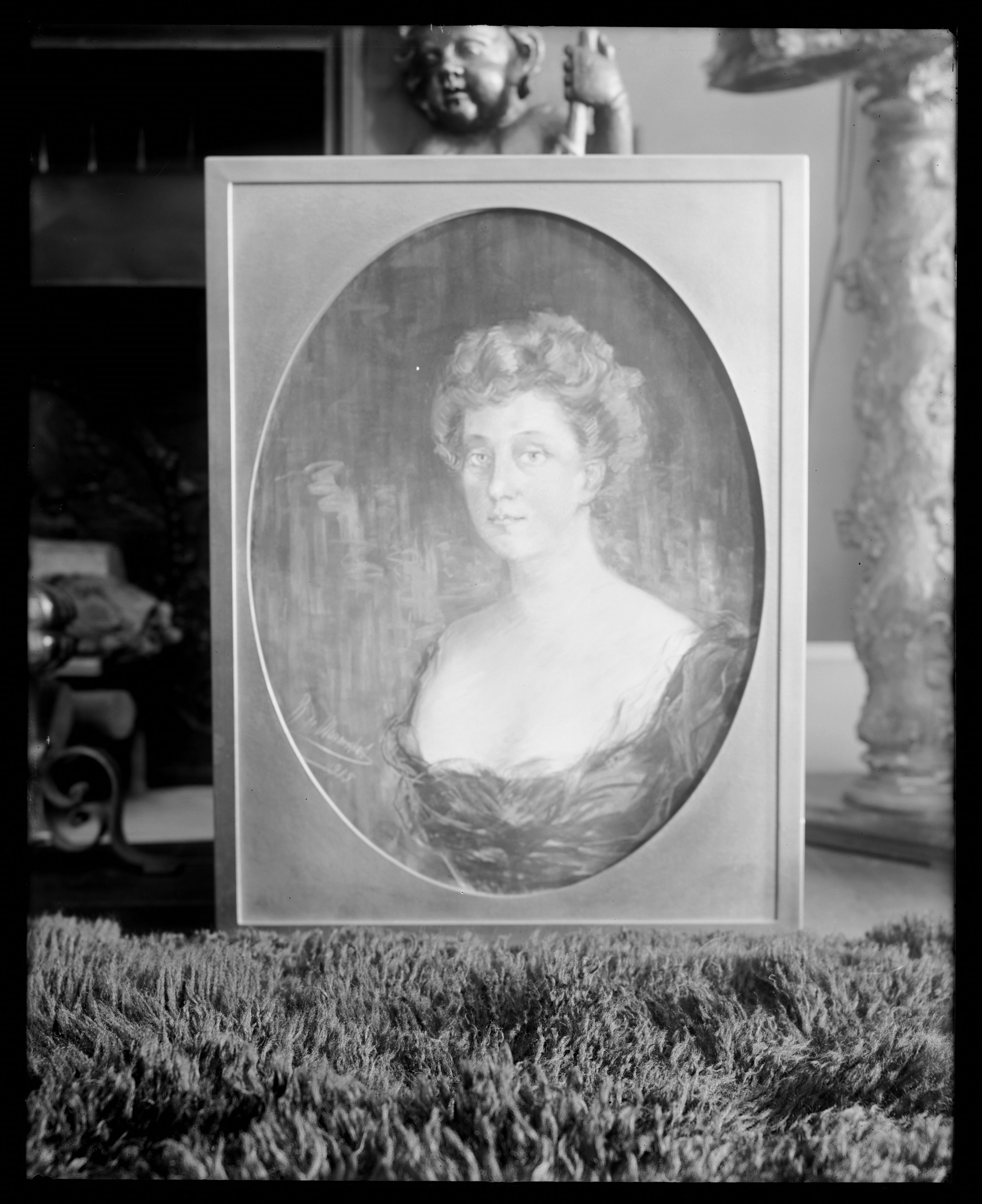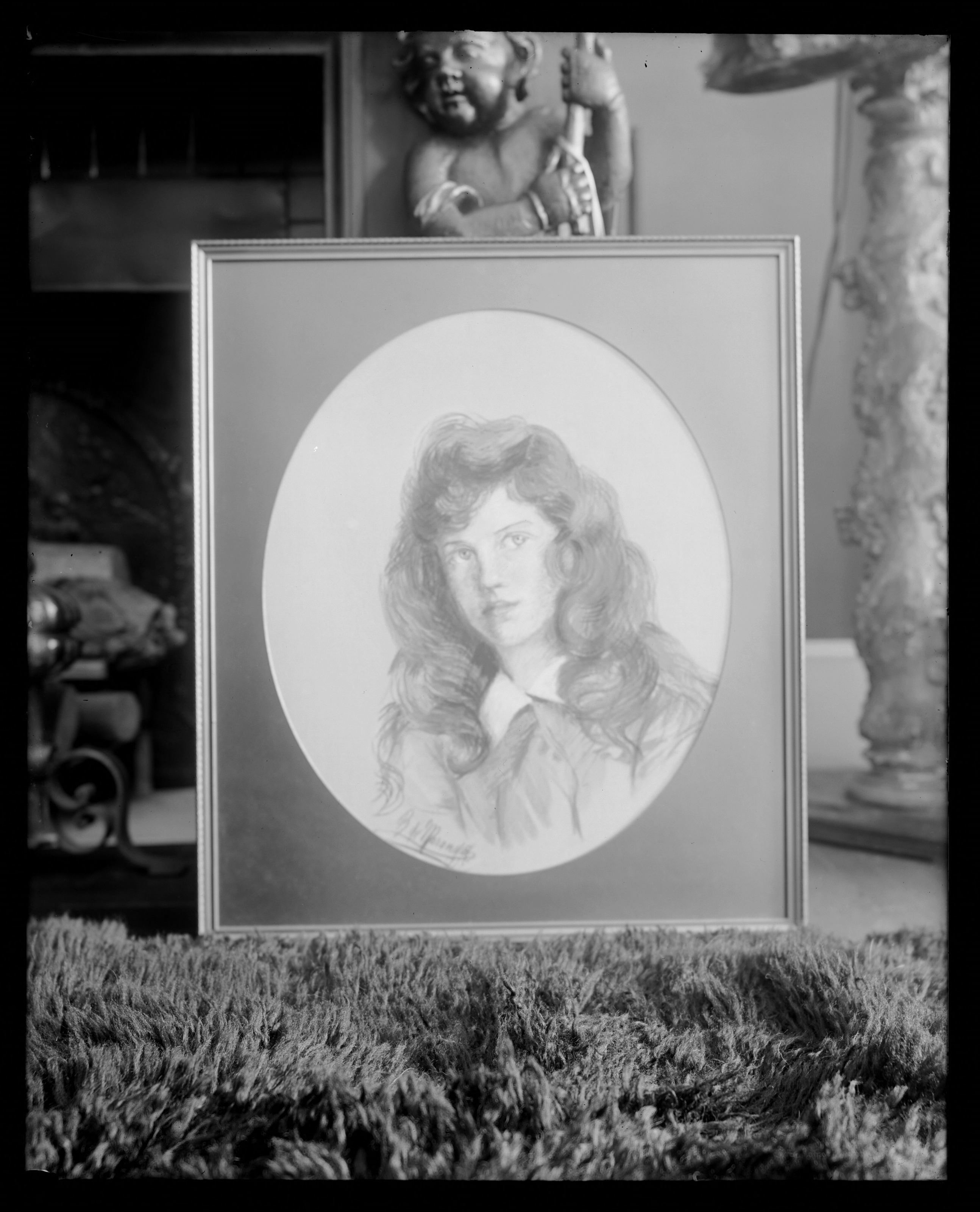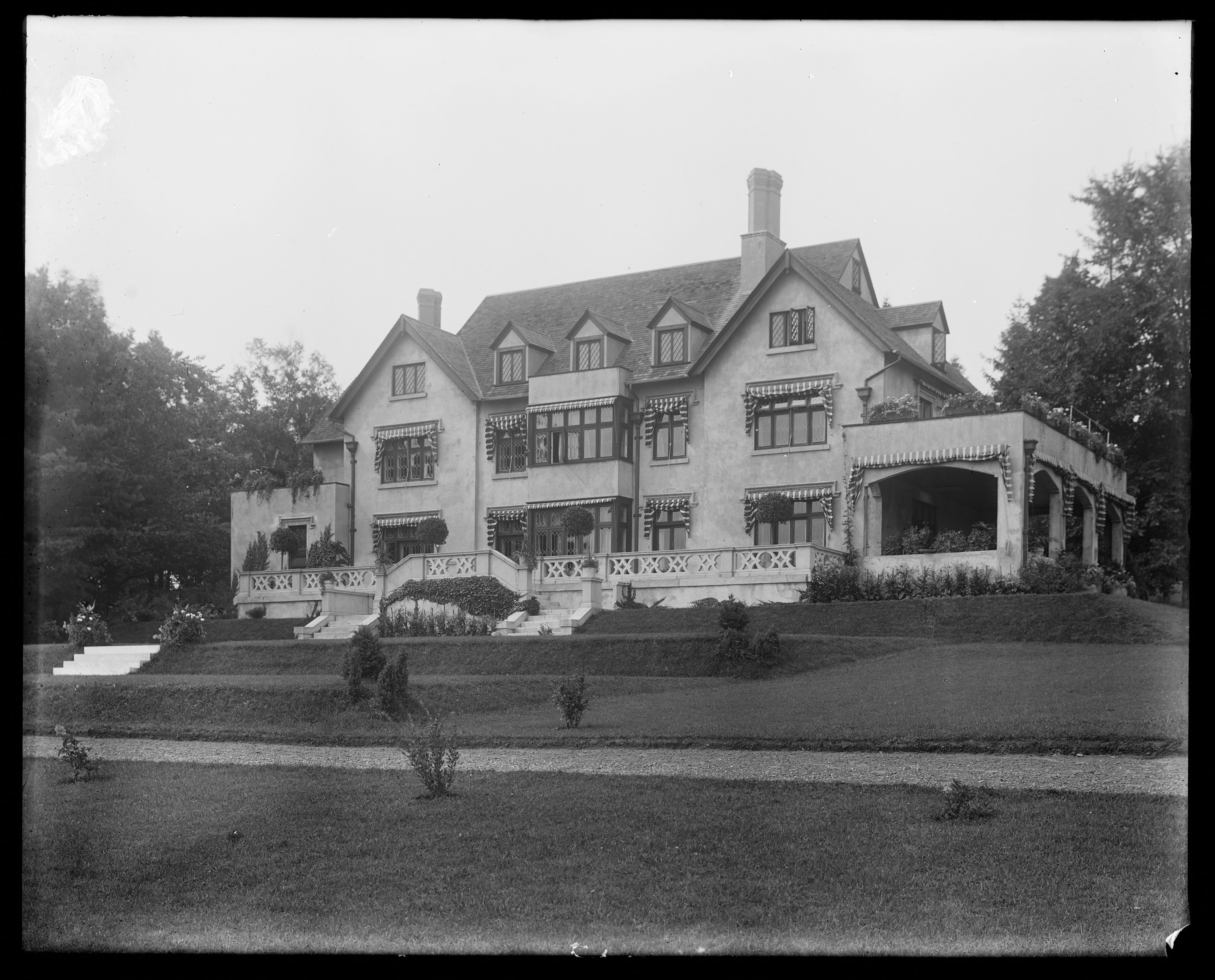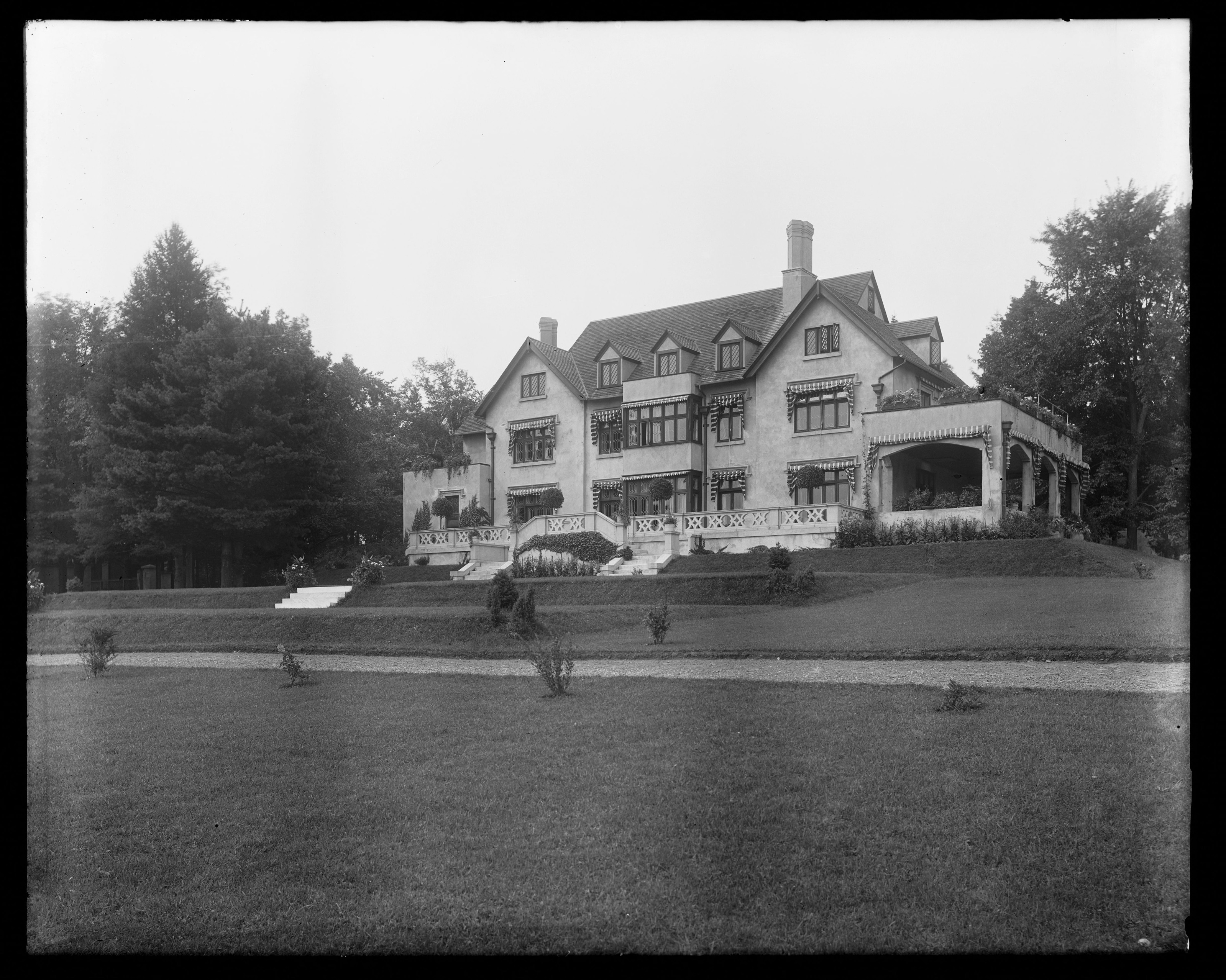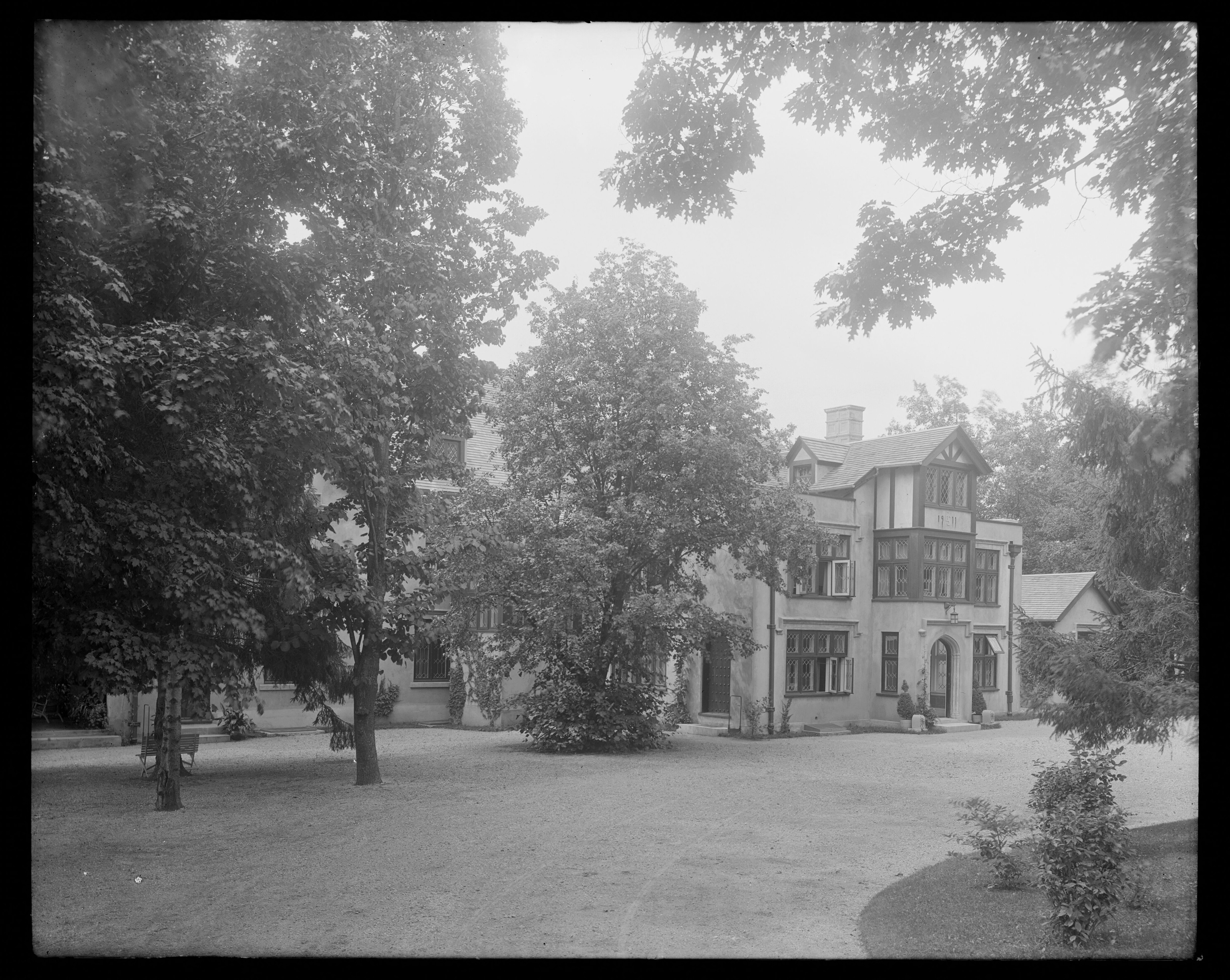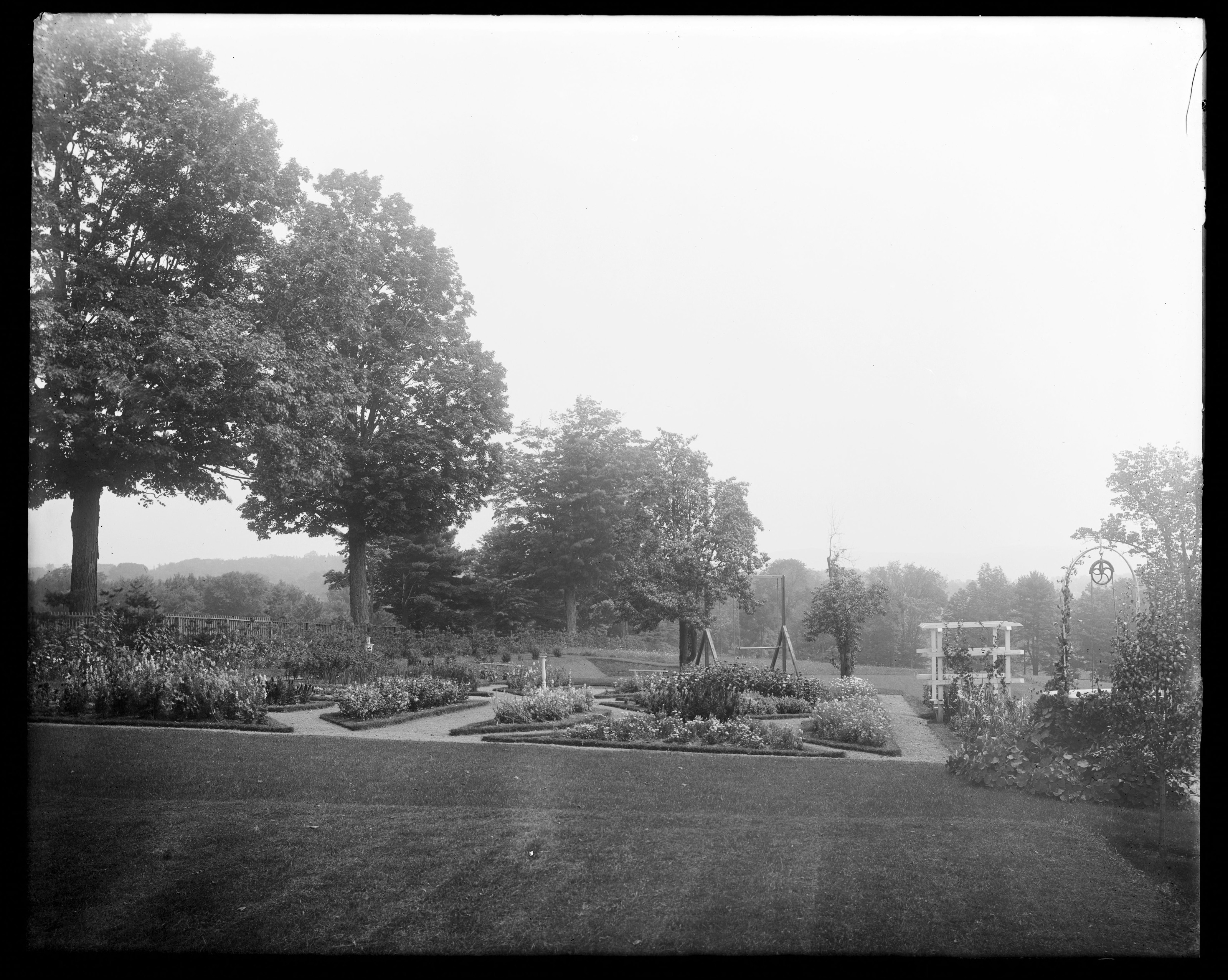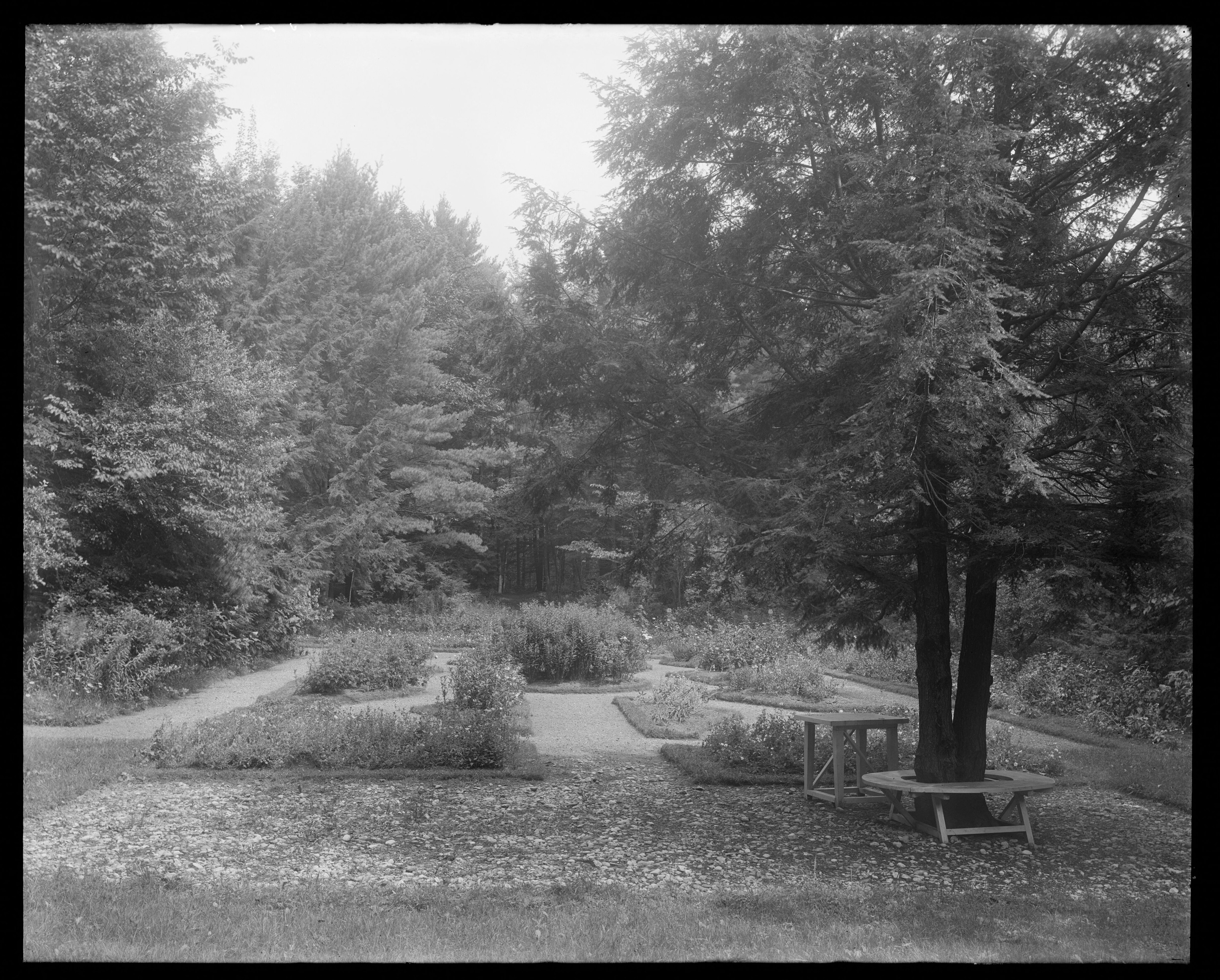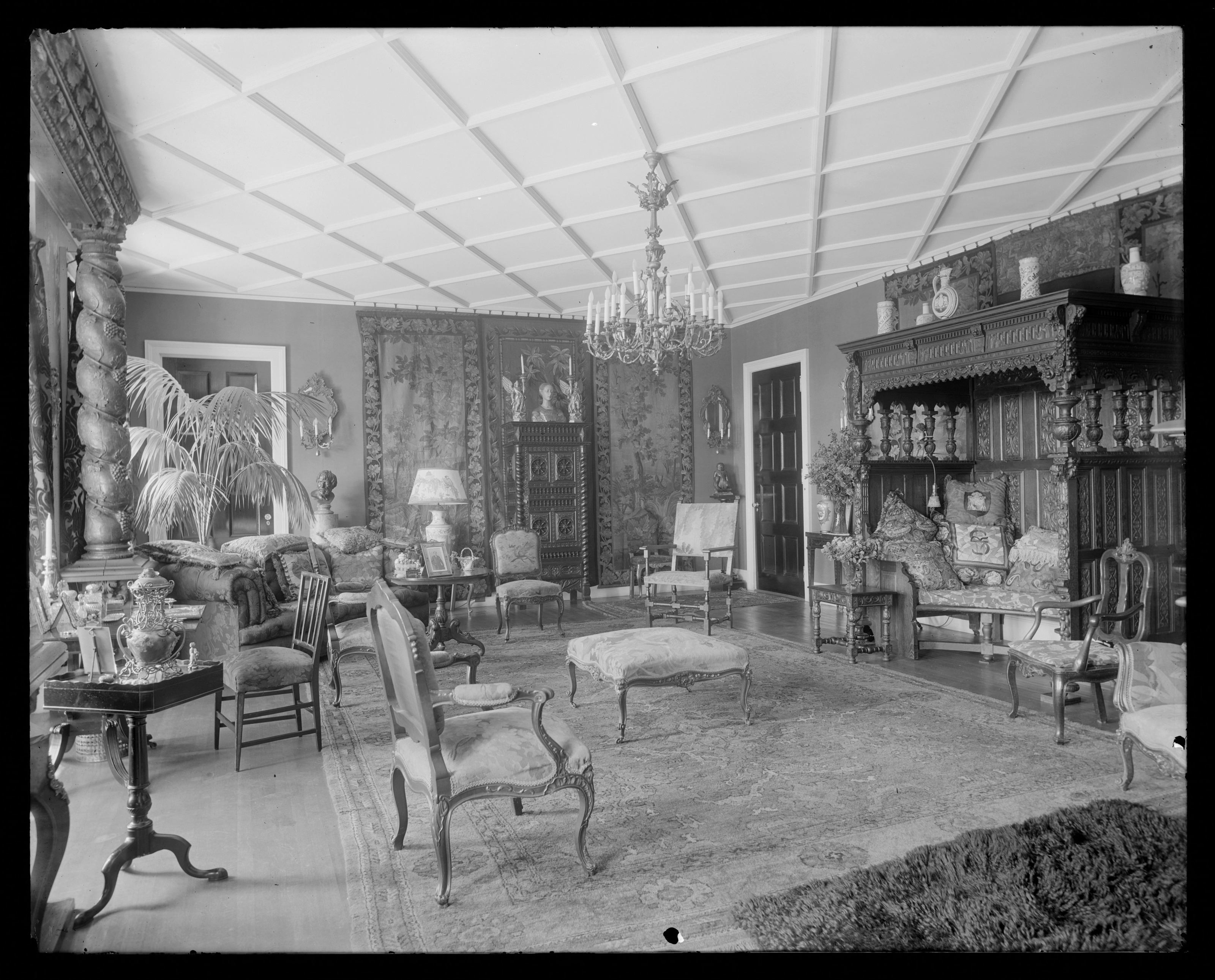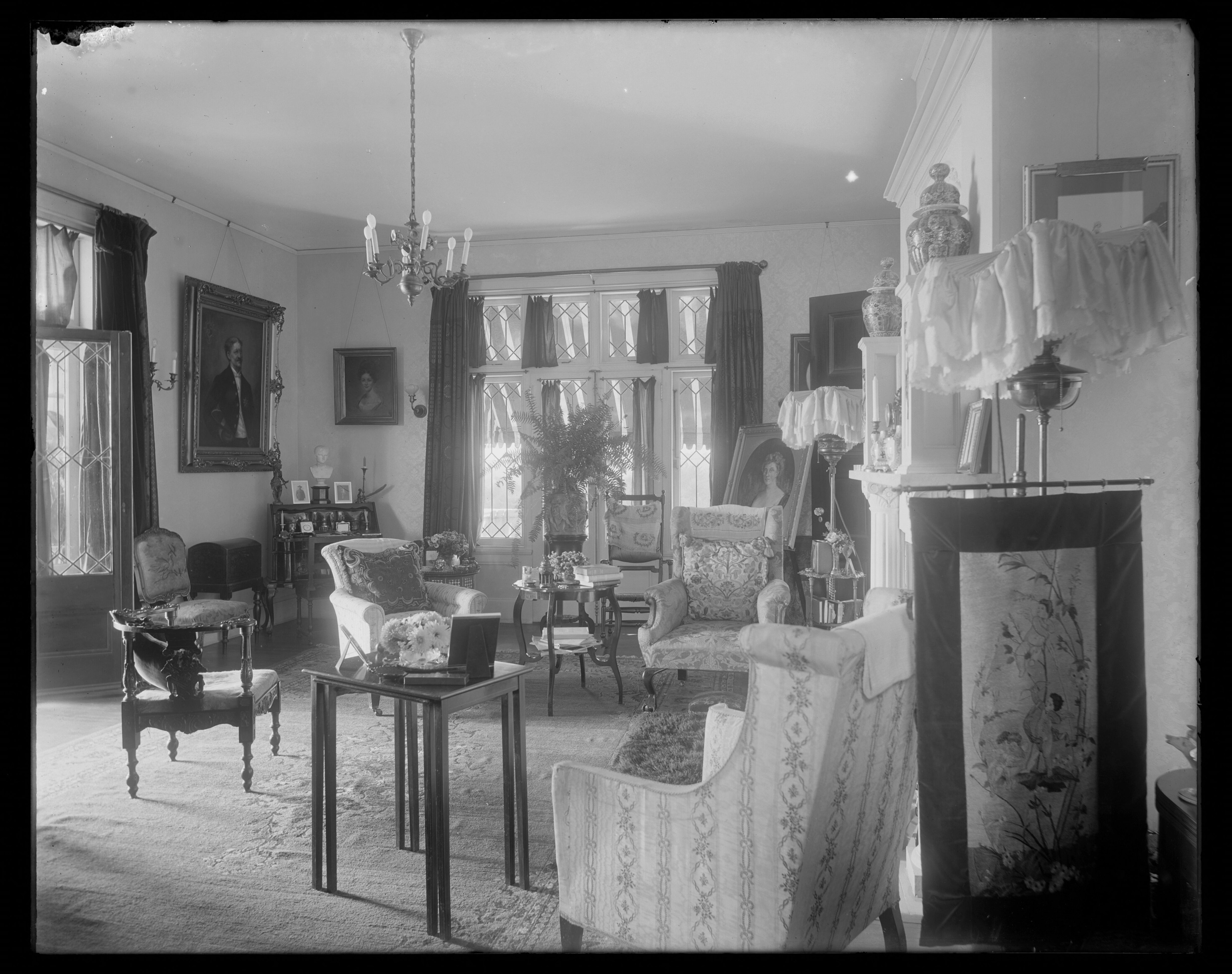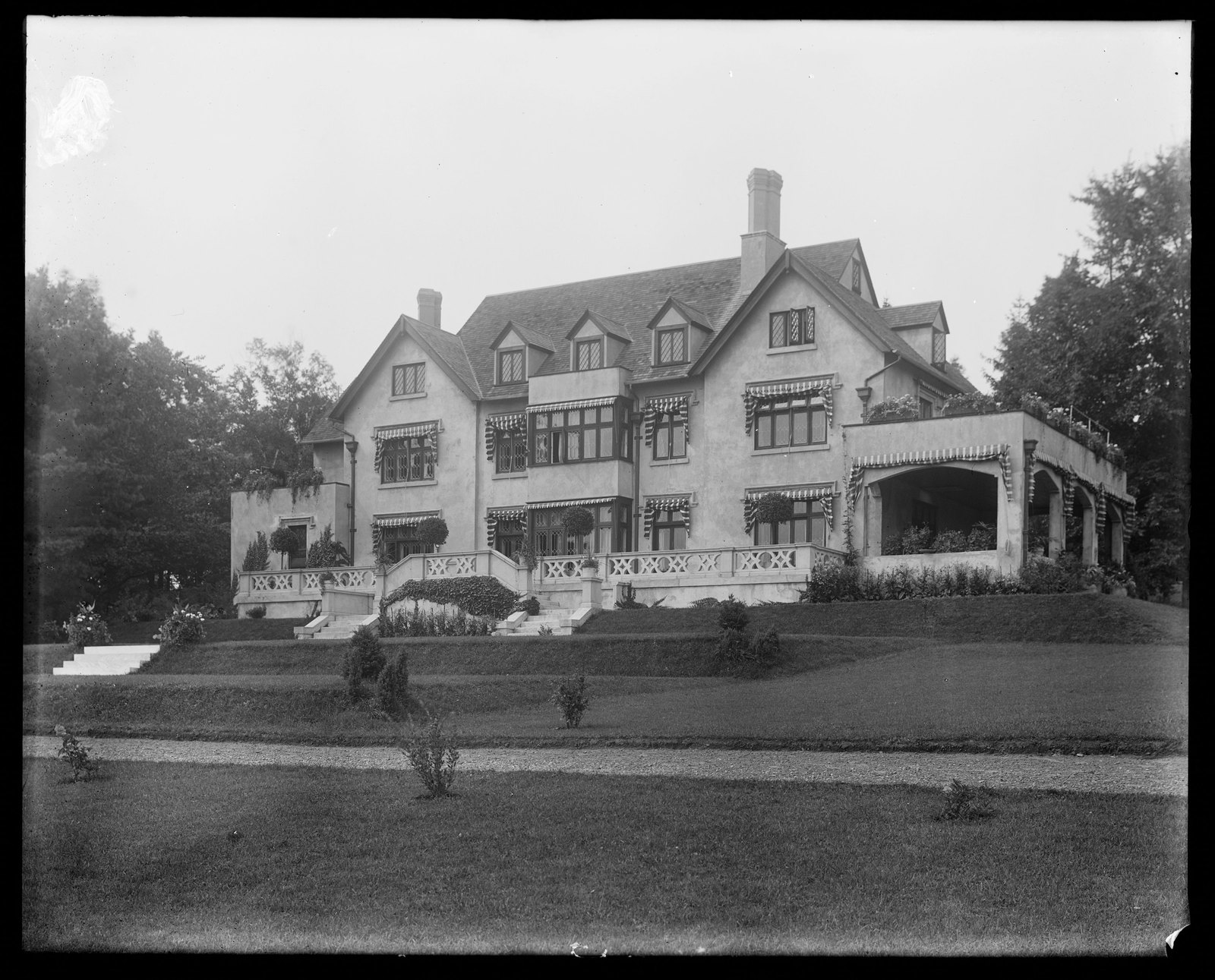
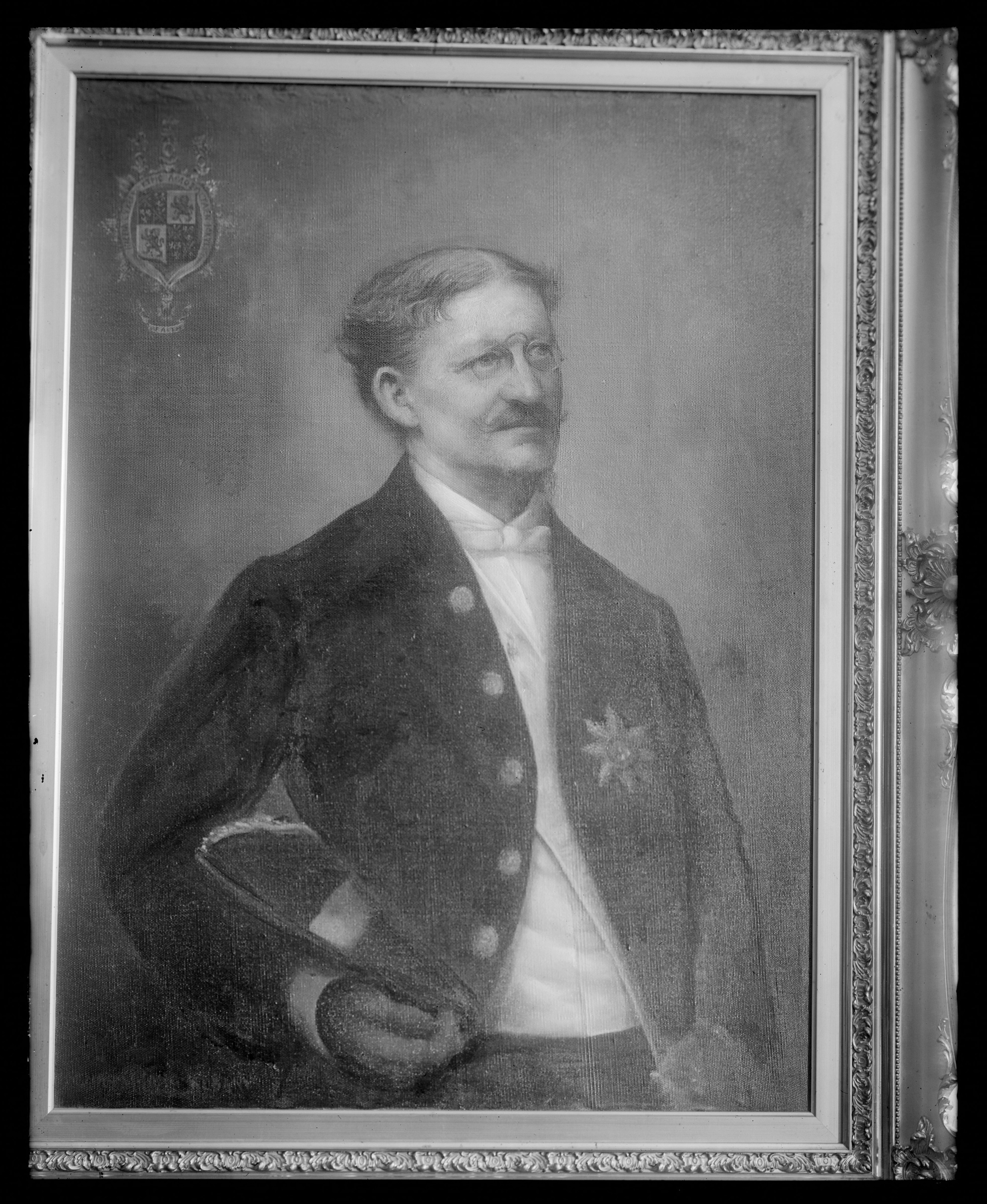
Fourteen plates, all made in 1915: the house from the lawn, the drive, the flower garden, the veranda, the hall, the dining room, the living room three times — and then four photographs that are not of the house at all. They are photographs of paintings, carried out of doors and stood on the grass against a stone column so that daylight could do the work. One of them is captioned portrait of General Meredith Read.
I. Pictures of pictures
Copying a painting before good artificial light meant taking it outside. That is what these are: the canvases lifted off the wall, propped in the open air with a carved figure visible above them on the column, and photographed square on. A woman in an oval frame. A girl with long loose hair. A man in a dark coat with a star on his breast and a coat of arms behind him.
It is an unusual thing to find in a set of estate negatives. The office of a landscape photographer was recording not the place but its possessions — which means somebody was making an inventory of the family’s pictures in 1915, and hired the best camera in Berkshire County to do it.
II. The General
J. Meredith Read was born at Philadelphia on 21 February 1837 and died in Paris on 27 December 1896. The rank in the caption was real but brief: he was Adjutant General of New York in 1861, and the title stayed with him.
His career was diplomatic. He was the first United States consul general for France and Algeria, from 1869 to 1873, and acting consul general for Germany through the Franco-Prussian War. From 1873 to 1879 he was United States Minister Resident to Greece. In 1886 King George I of Greece made him a Knight Grand Cross of the Order of the Redeemer — the highest honor in the gift of that government, and the likeliest explanation of the star painted on his coat.
He married Delphine Marie Pumpelly in 1859; their four children married into French and Bulgarian families. He lived in Paris from 1881 and is buried at Saint-Germain-en-Laye.
The likeliest route from a Paris deathbed in 1896 to a Lenox wall in 1915 is a descendant.
III. The house
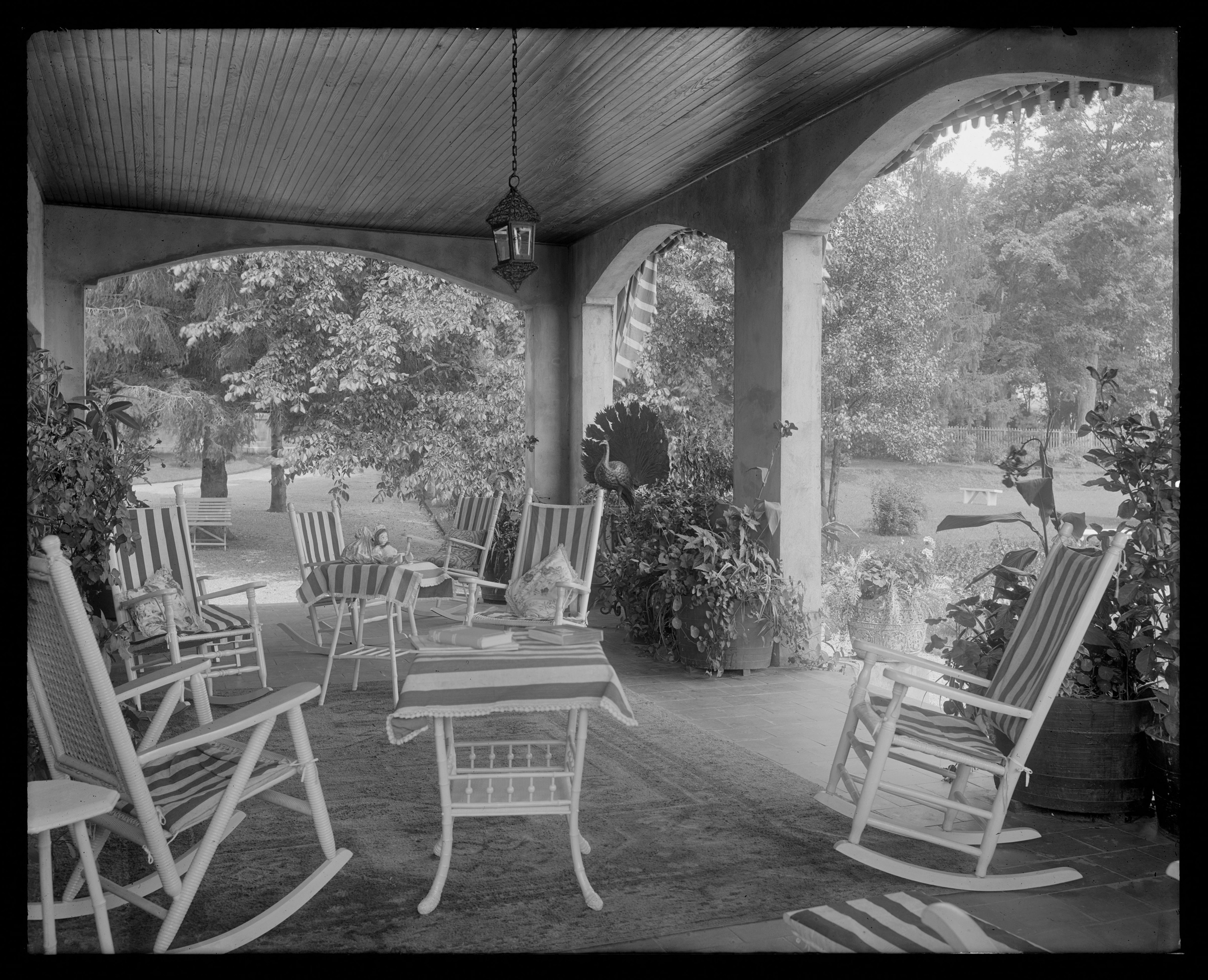
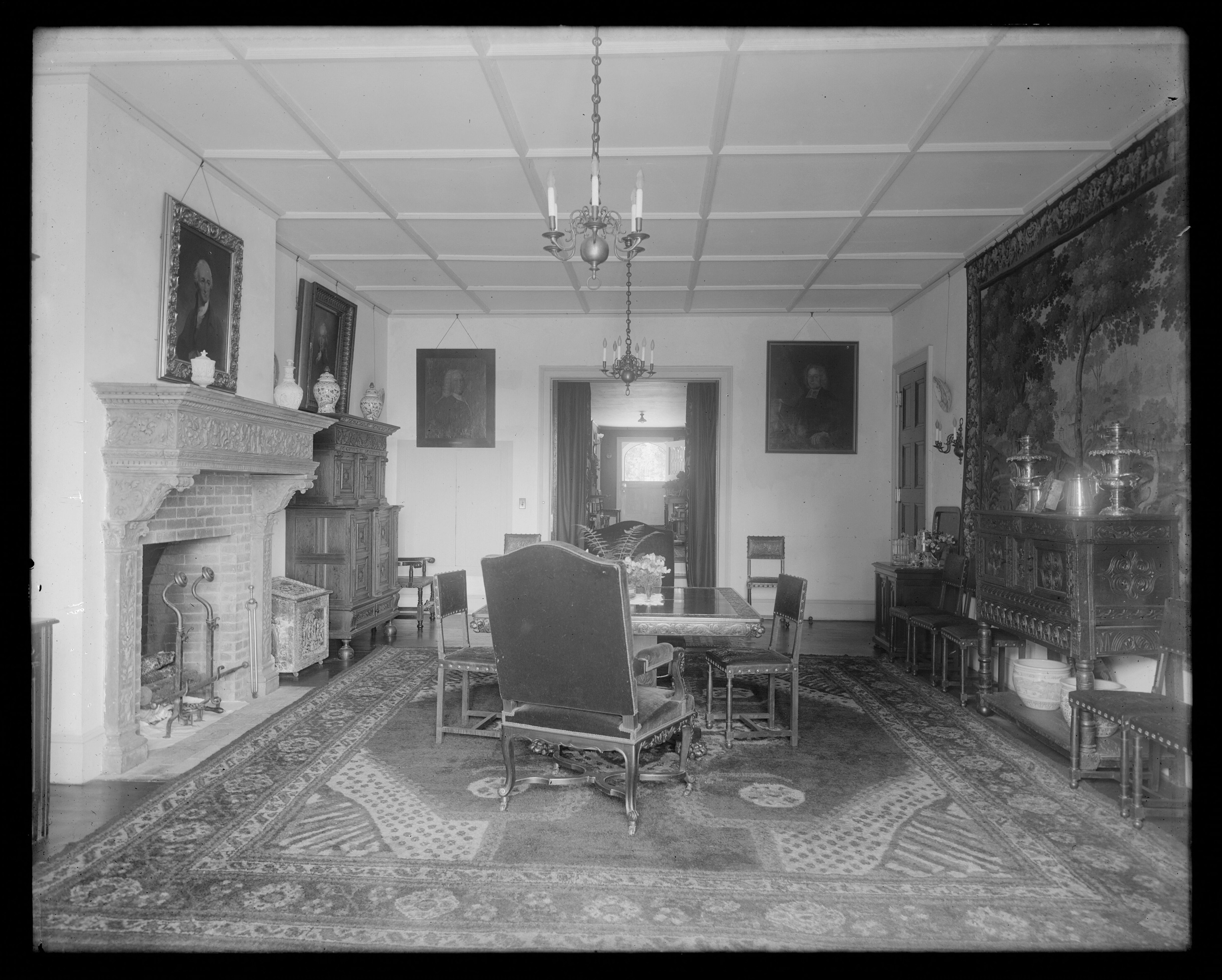
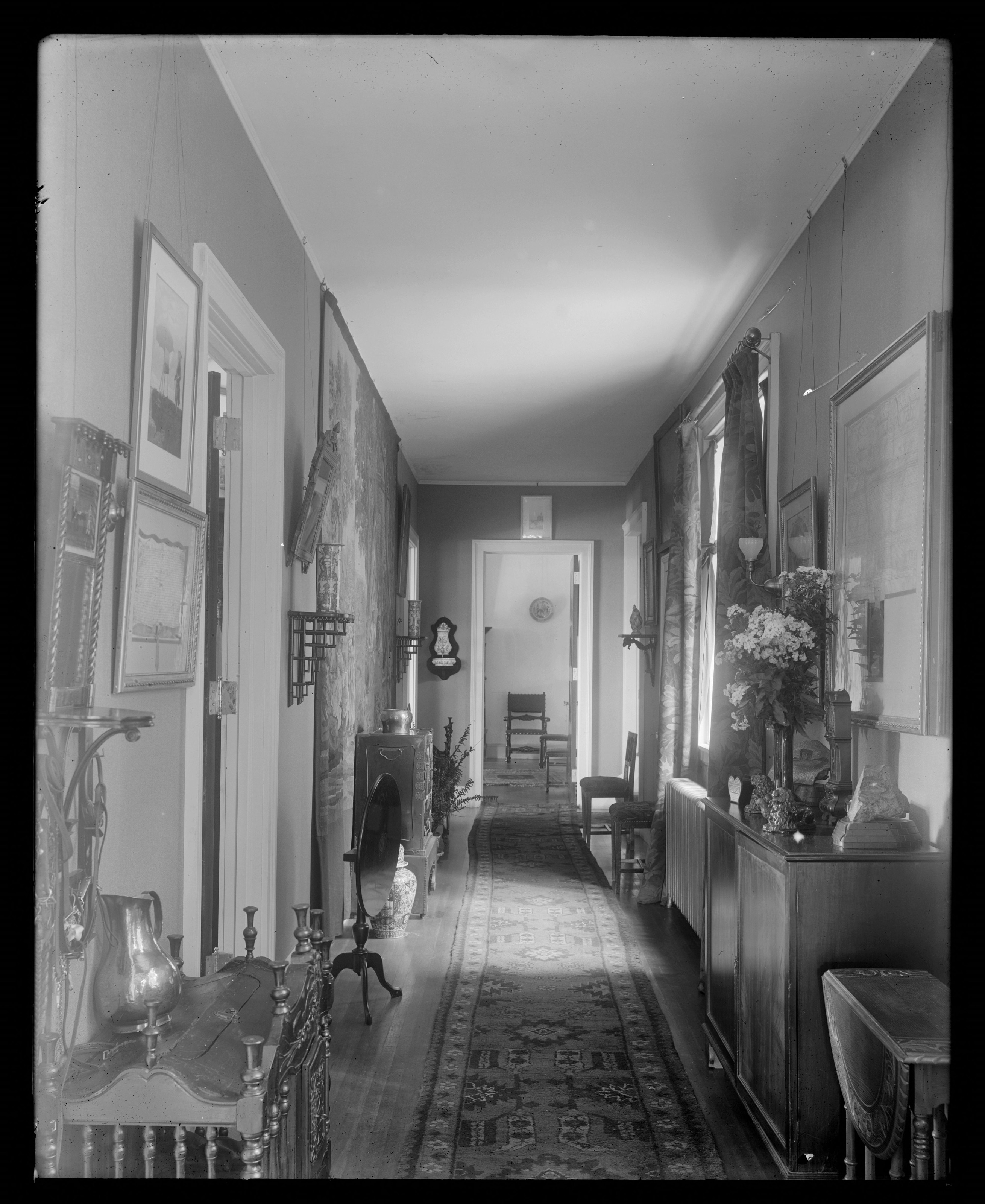
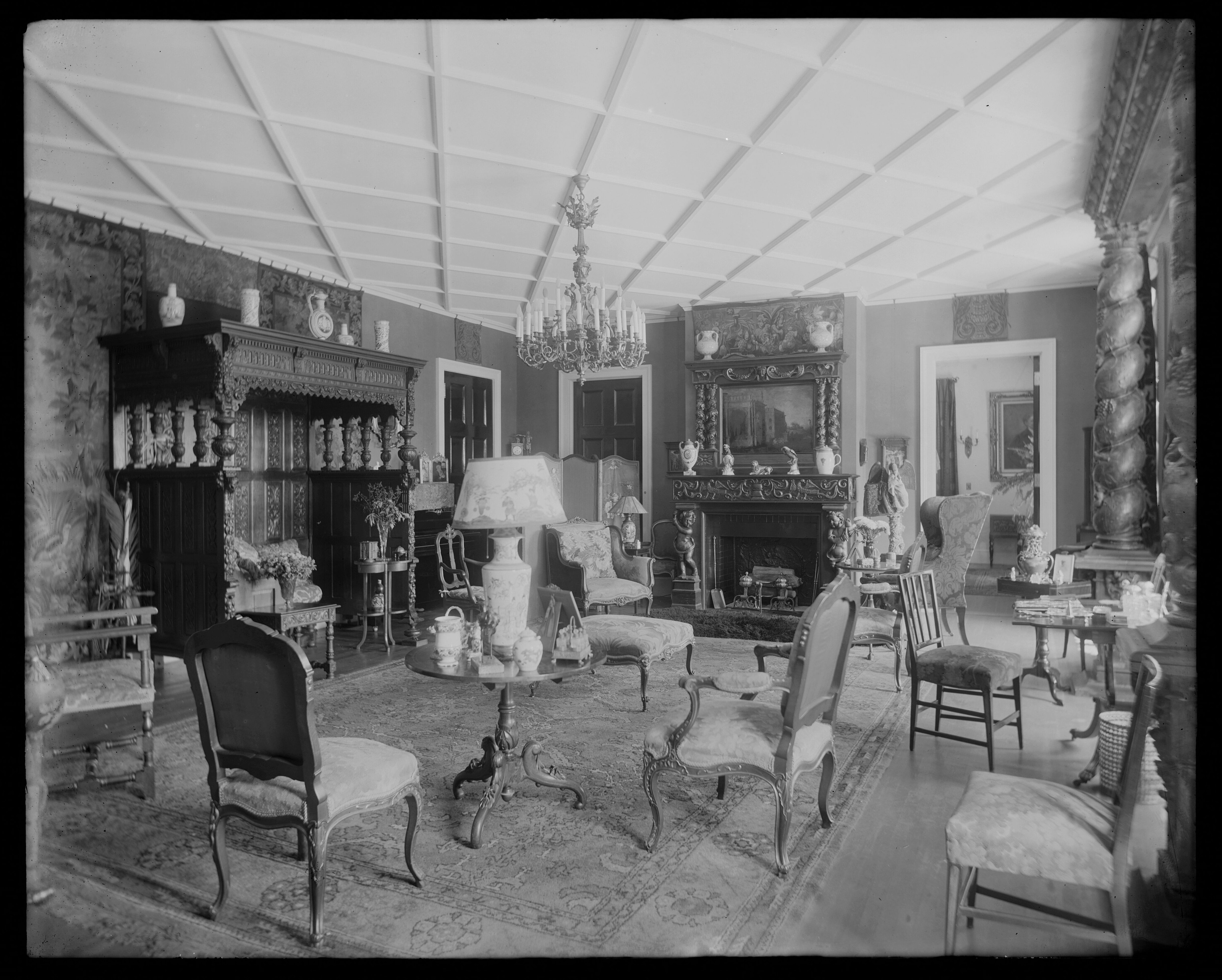
What the other ten plates show is a substantial half-timbered house with tall brick chimneys and a deep open veranda furnished with rockers and steamer chairs; a broad mown slope in front of it; a flower garden; and inside, coffered and beamed ceilings, a long hall hung with prints, a dining room with a stone chimneypiece and a tapestry, and a drawing room of painted furniture, pale chintz and a chandelier.
The Lenox Library’s titles here are all supplied by the cataloguer, and all fourteen negatives are dated 1915.
This is the third house in this survey — with Hillingdon and Pinecroft — that is fully photographed and barely written about. In each case the negatives are better evidence than anything in print.
Sources
Lenox Library Association, Edwin Hale Lincoln Photographs, via Digital Commonwealth: fourteen items, all dated 1915 and all titled by the cataloguer. The Library gives their rights as “No known copyright restrictions” and asks that it be contacted about reuse. Wikipedia, “J. Meredith Read,” for his birth at Philadelphia on 21 February 1837 and death in Paris on 27 December 1896, the adjutant generalship of New York in 1861 that gave him the title, the consul generalship for France and Algeria from 1869 to 1873 and the acting post for Germany during the Franco-Prussian War, the ministry to Greece from 1873 to 1879, the Knight Grand Cross of the Order of the Redeemer conferred by King George I in 1886, the marriage to Delphine Marie Pumpelly in 1859 and the four children’s marriages, his residence in Paris from 1881 and his burial at Saint-Germain-en-Laye. Descriptions of what the photographs show are this survey’s reading of them.