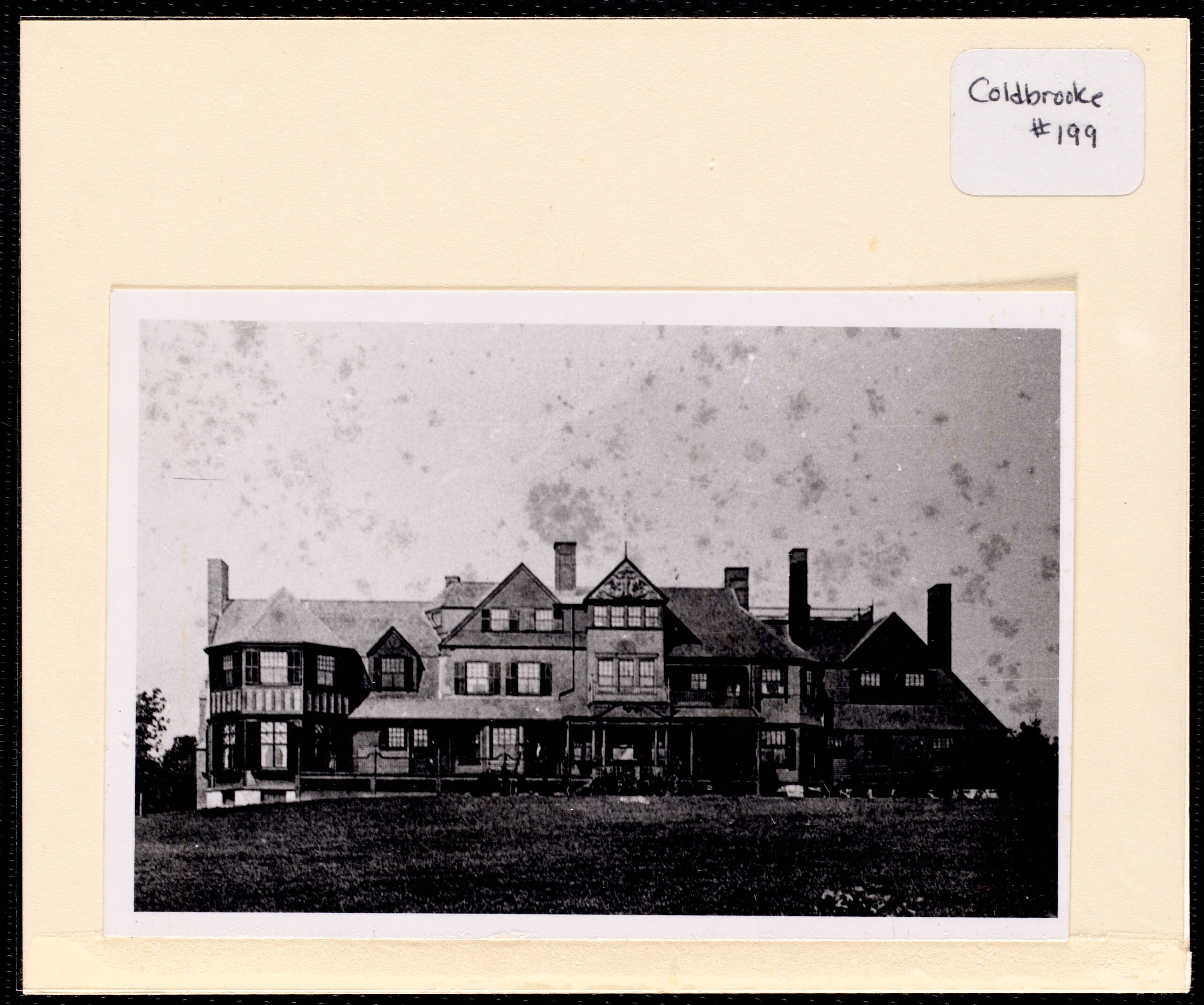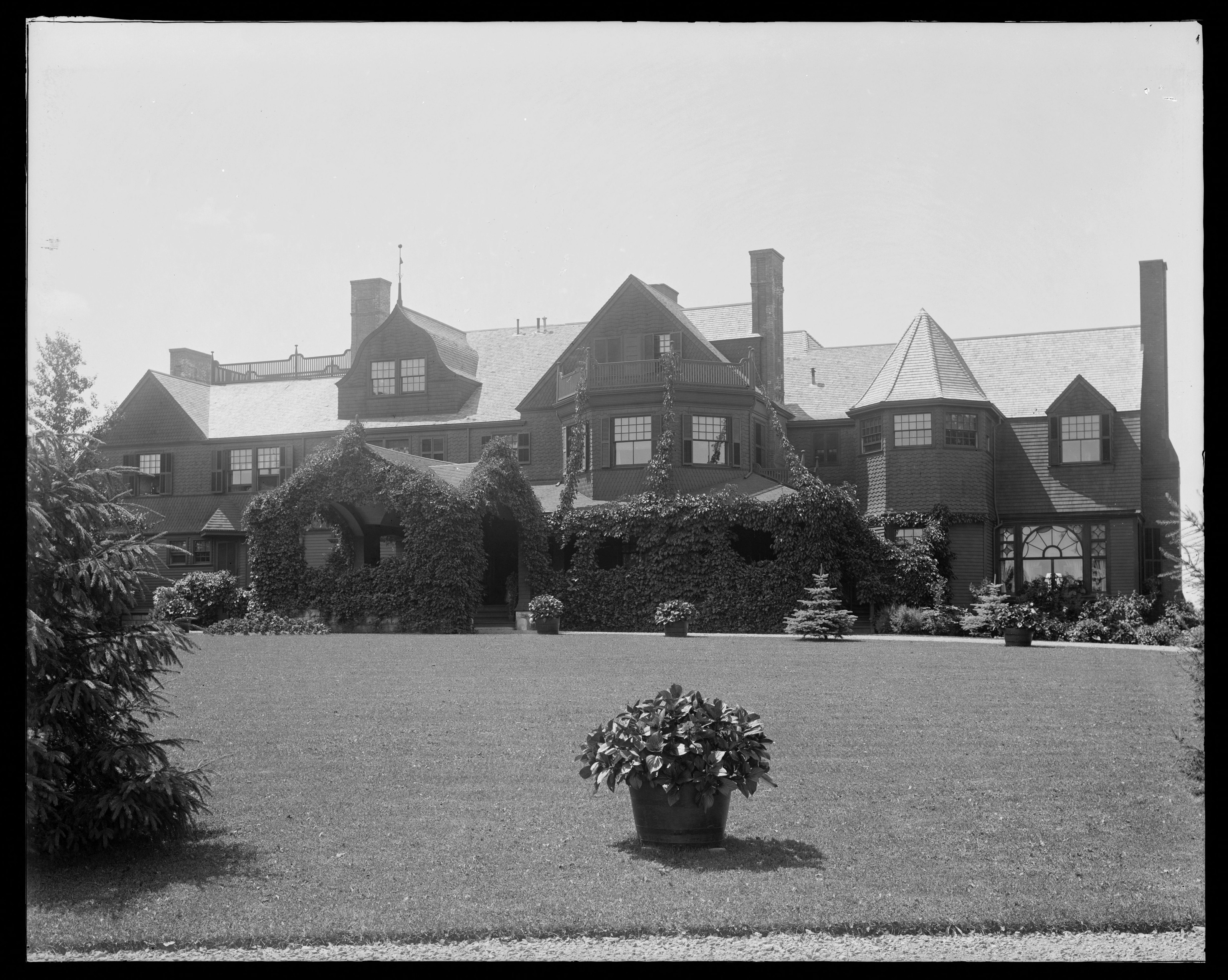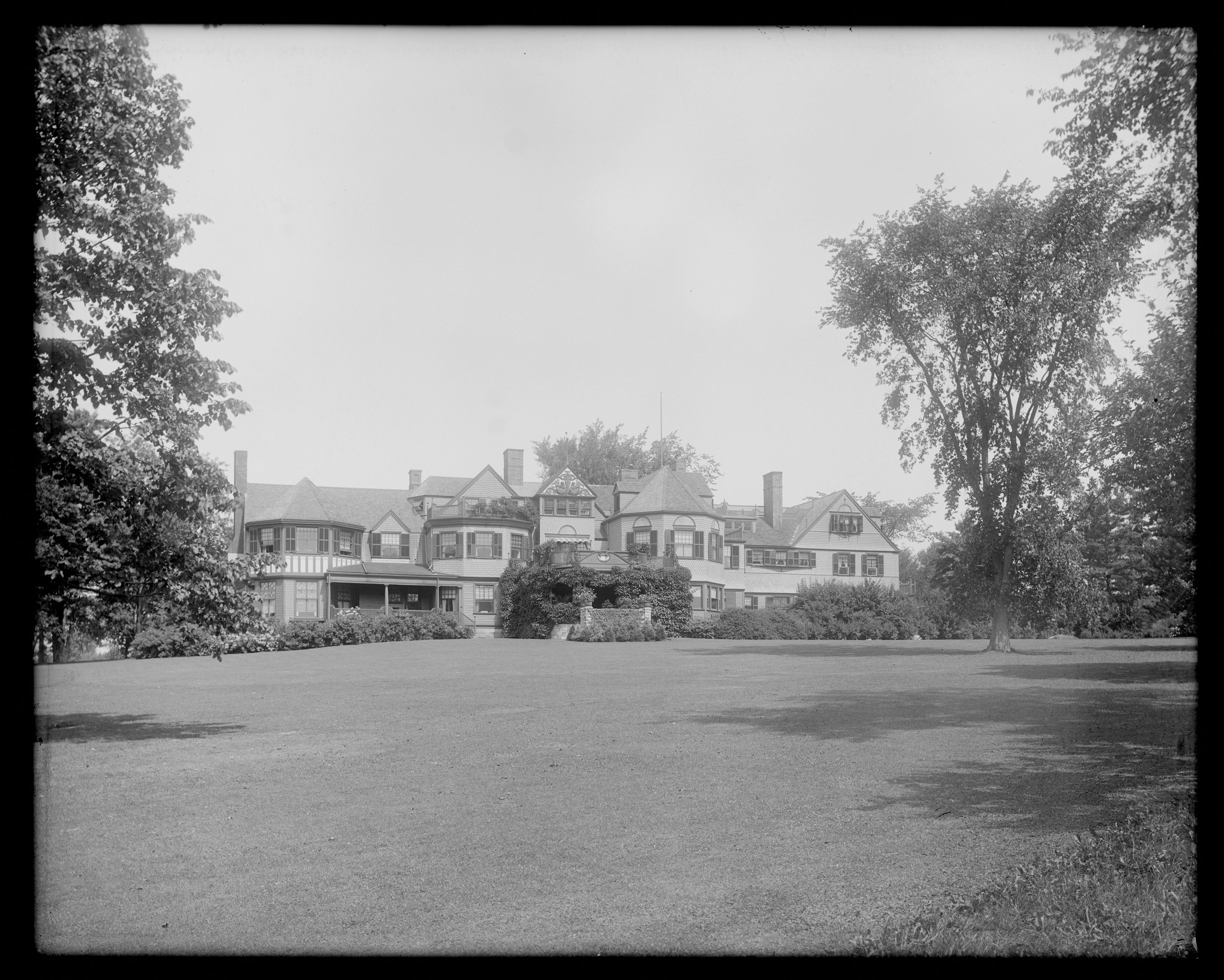
The man who built this house had already written the first serious book in English on torpedo warfare, and then spent eleven years raising the money that became the Great Northern Railway. His name is on the back of one of the photographs, in ink: “Coldbrooke, 1882, Mr. John S. Barnes.” On the back of another, in a different hand and a later decade: “St. Joseph’s Hall - Cranwell.” Between those two inscriptions is the whole history of the place.
I. Barnes
John Sanford Barnes was born at West Point on 12 May 1836 and entered the Naval Academy at fourteen. At twenty-one he was made assistant professor of ethics there. He served in the Civil War as navigator of the Wabash and then commanded the Dawn, the Paul Jones, the Lenape and the Bat, and afterwards the Academy’s practice ships Marblehead and Savannah.
He wrote Submarine Warfare — the first major work on the use of torpedoes.
From 1869 to 1880 he was in private business, chiefly raising finance for what became the Great Northern Railway. He was the first president of the Naval History Society and put together the naval collection that became its foundation. He married Susan Bainbridge Hayes in 1863; she was a granddaughter of Commodore William Bainbridge. He died in New York on 22 November 1911.
The house is dated 1882 on the back of the earliest photograph — two years after he left that business.
II. What is here
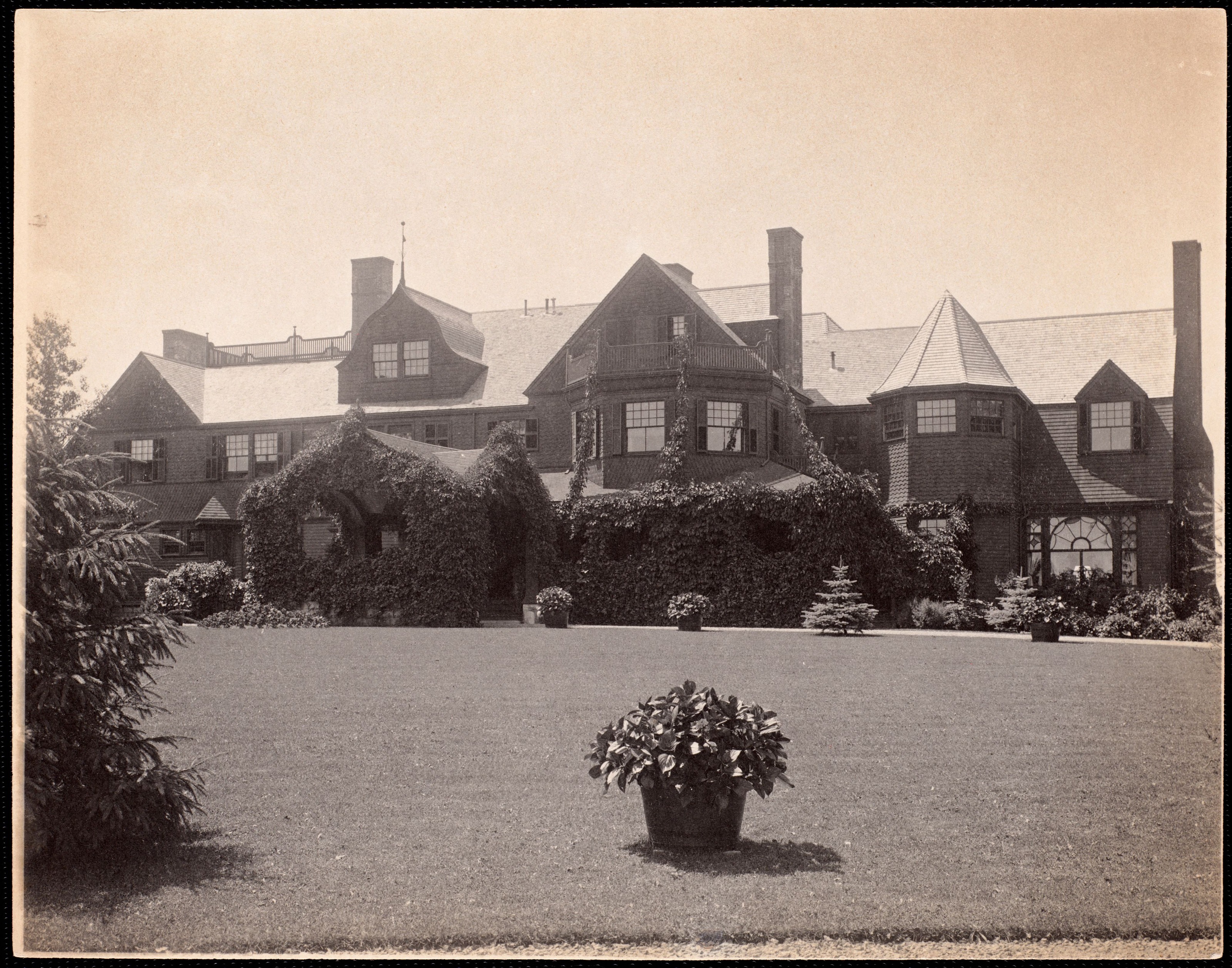
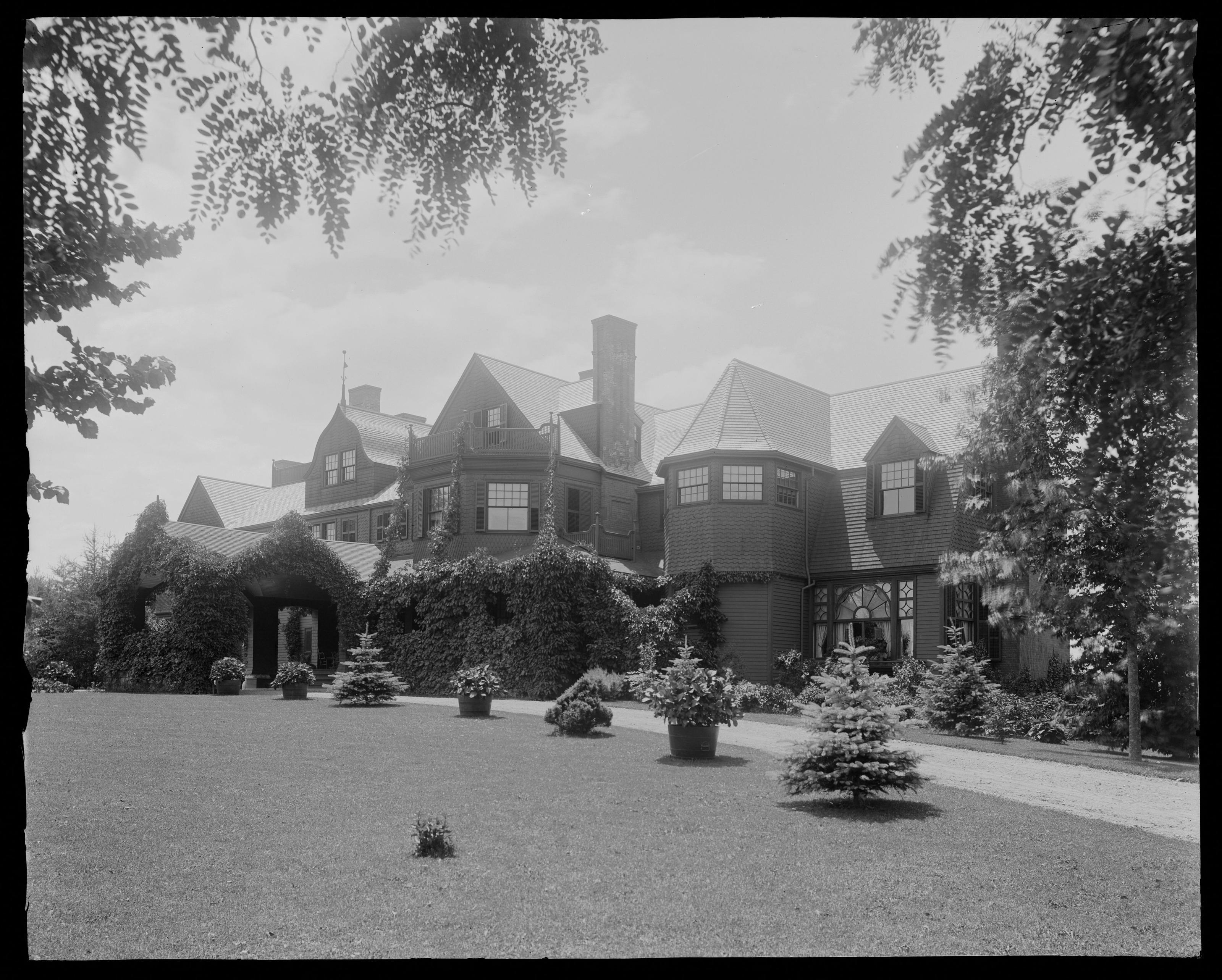
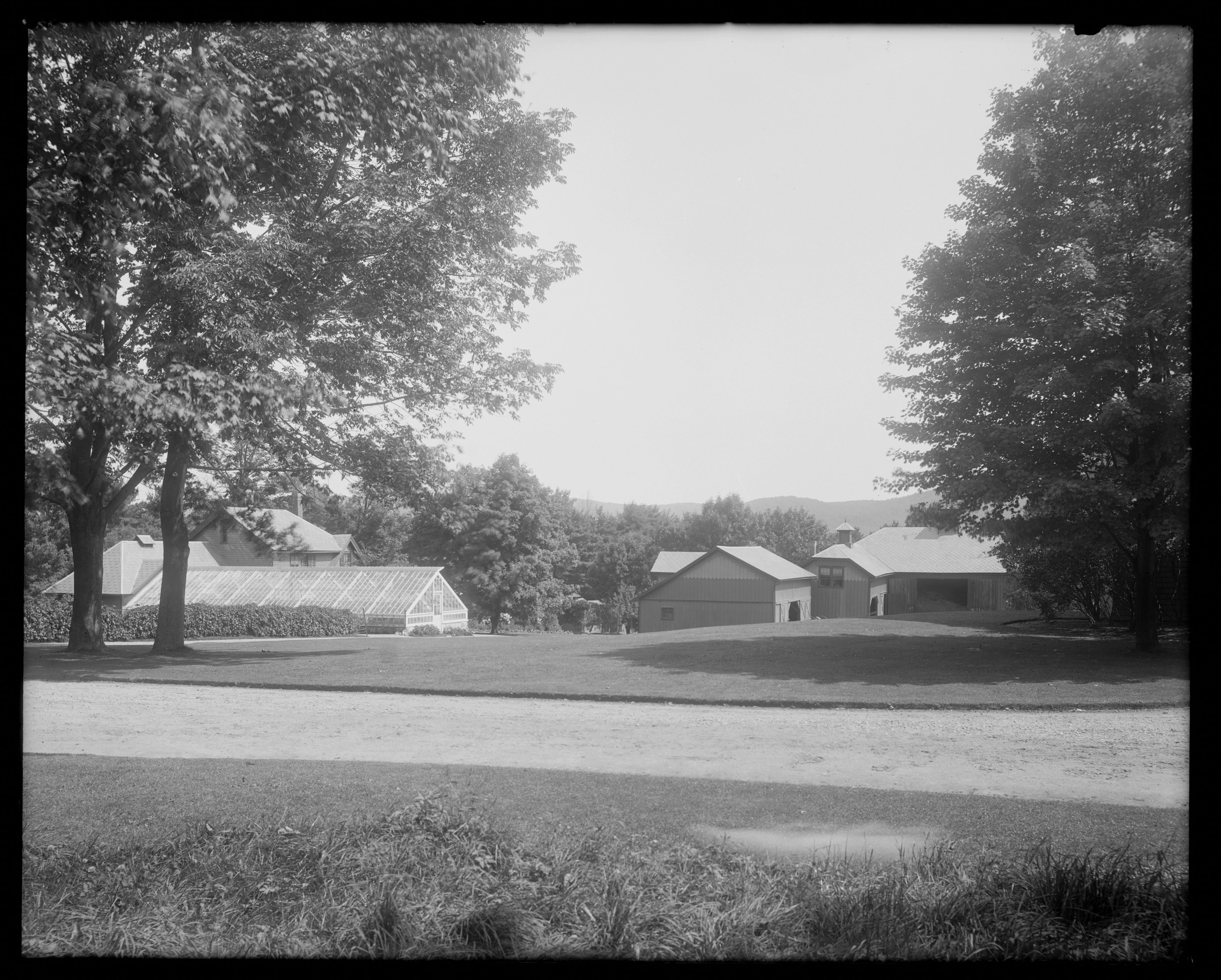
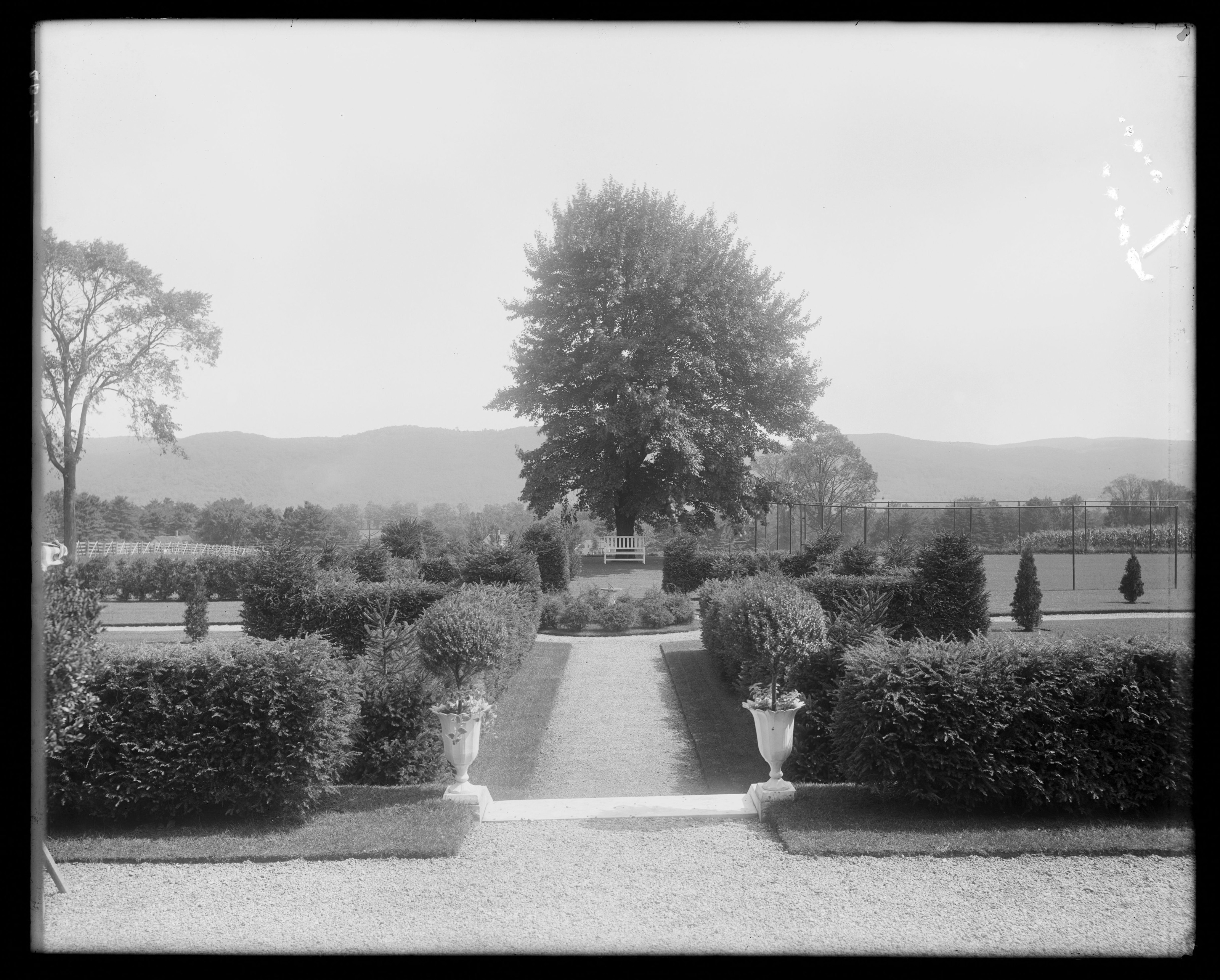
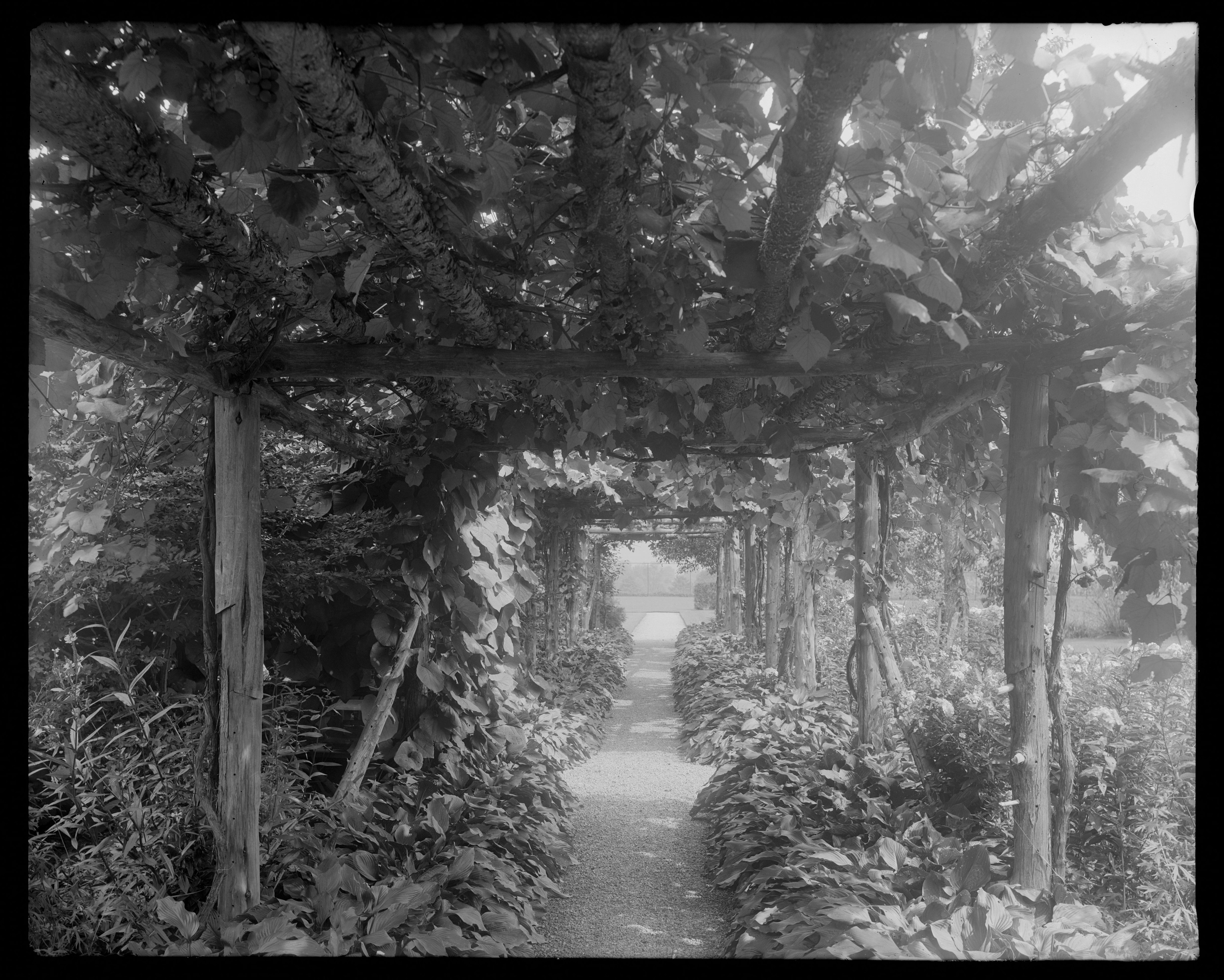
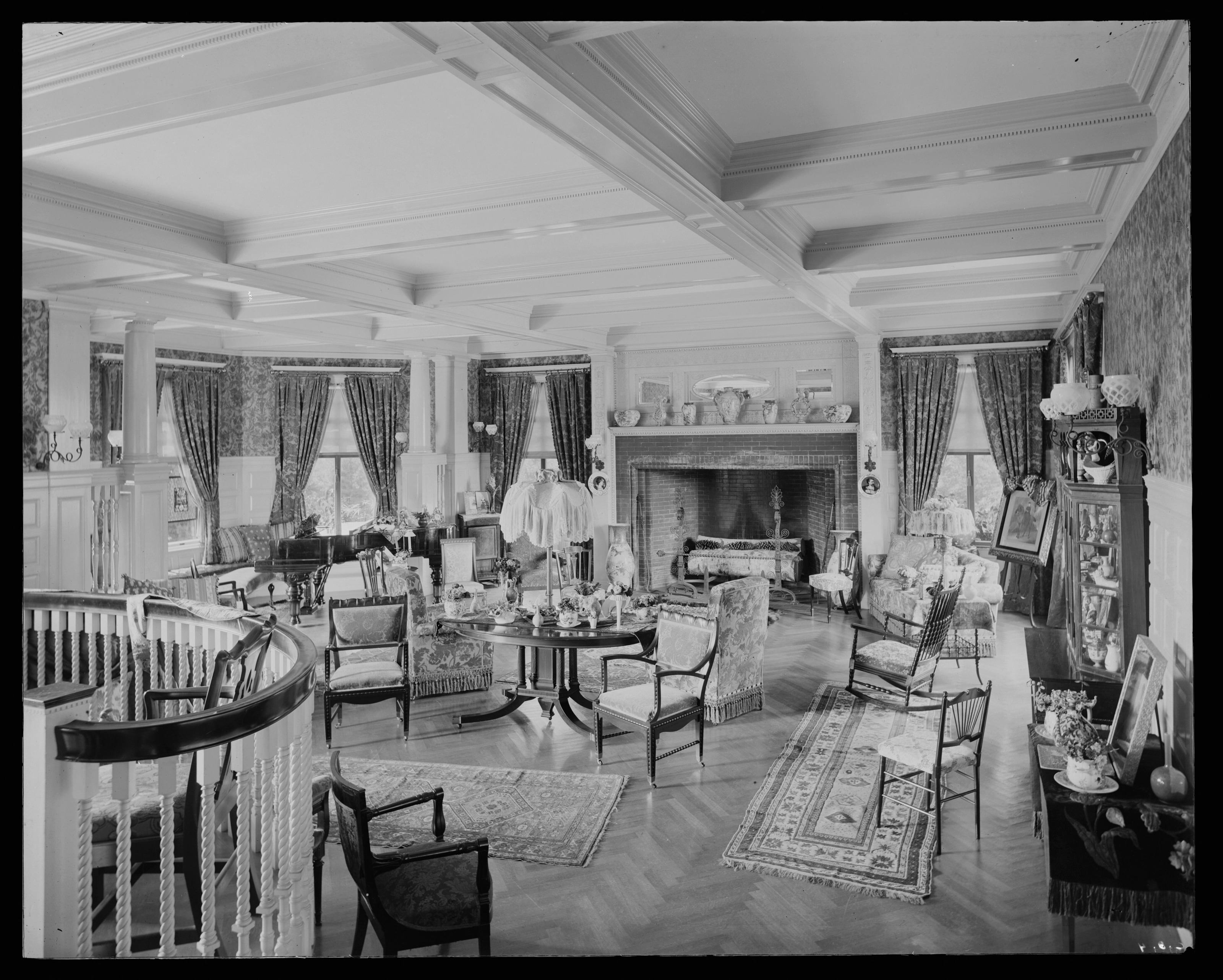
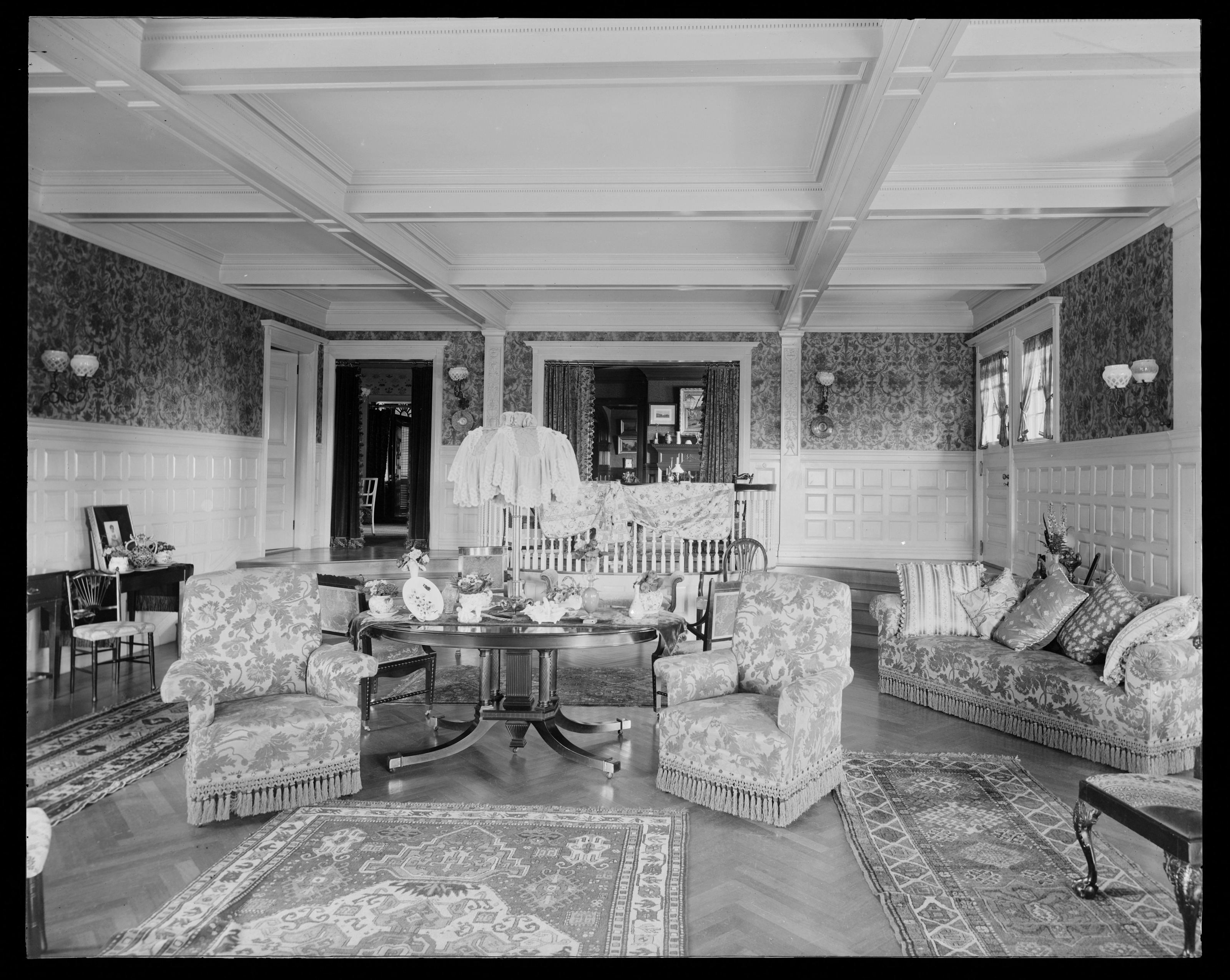
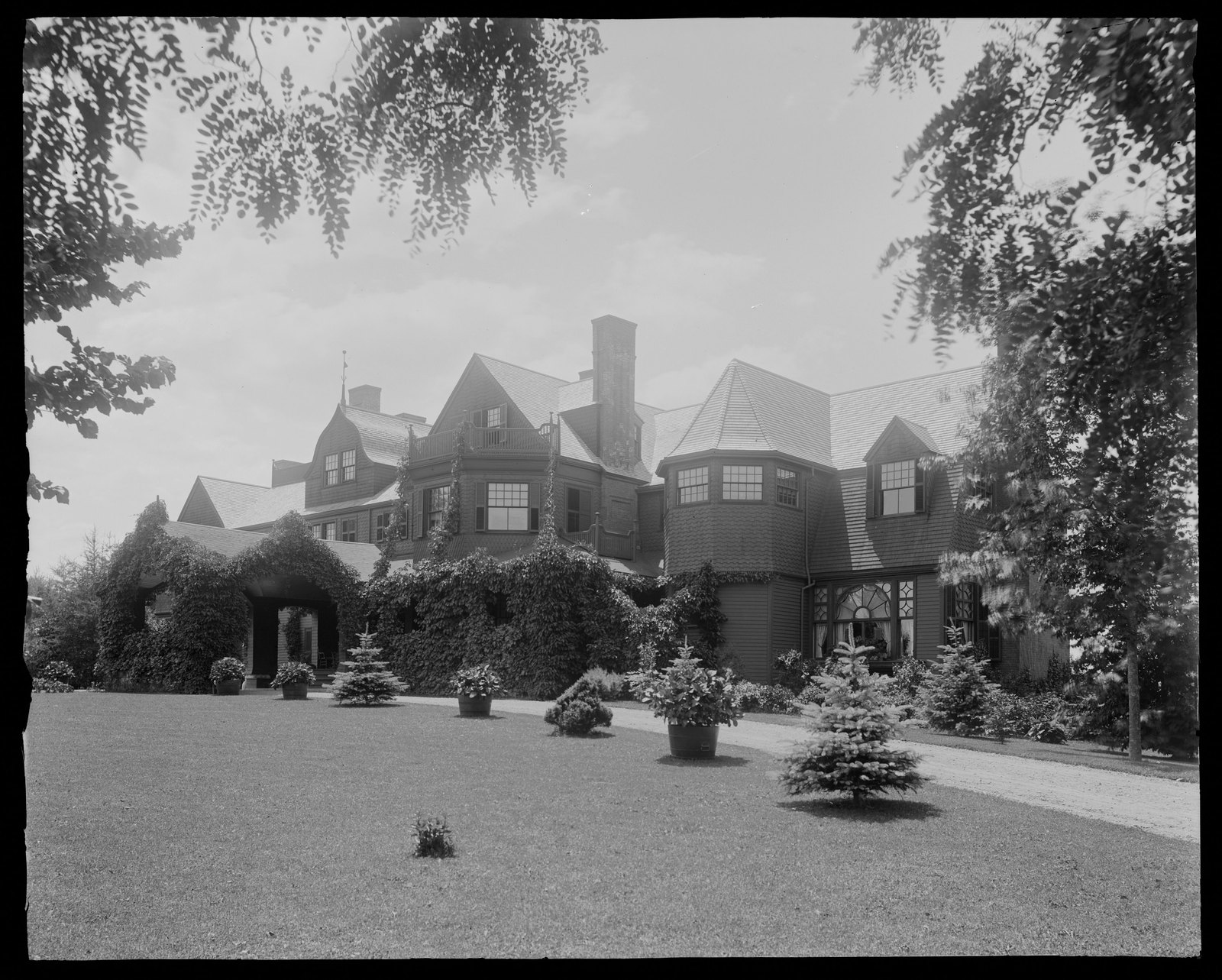
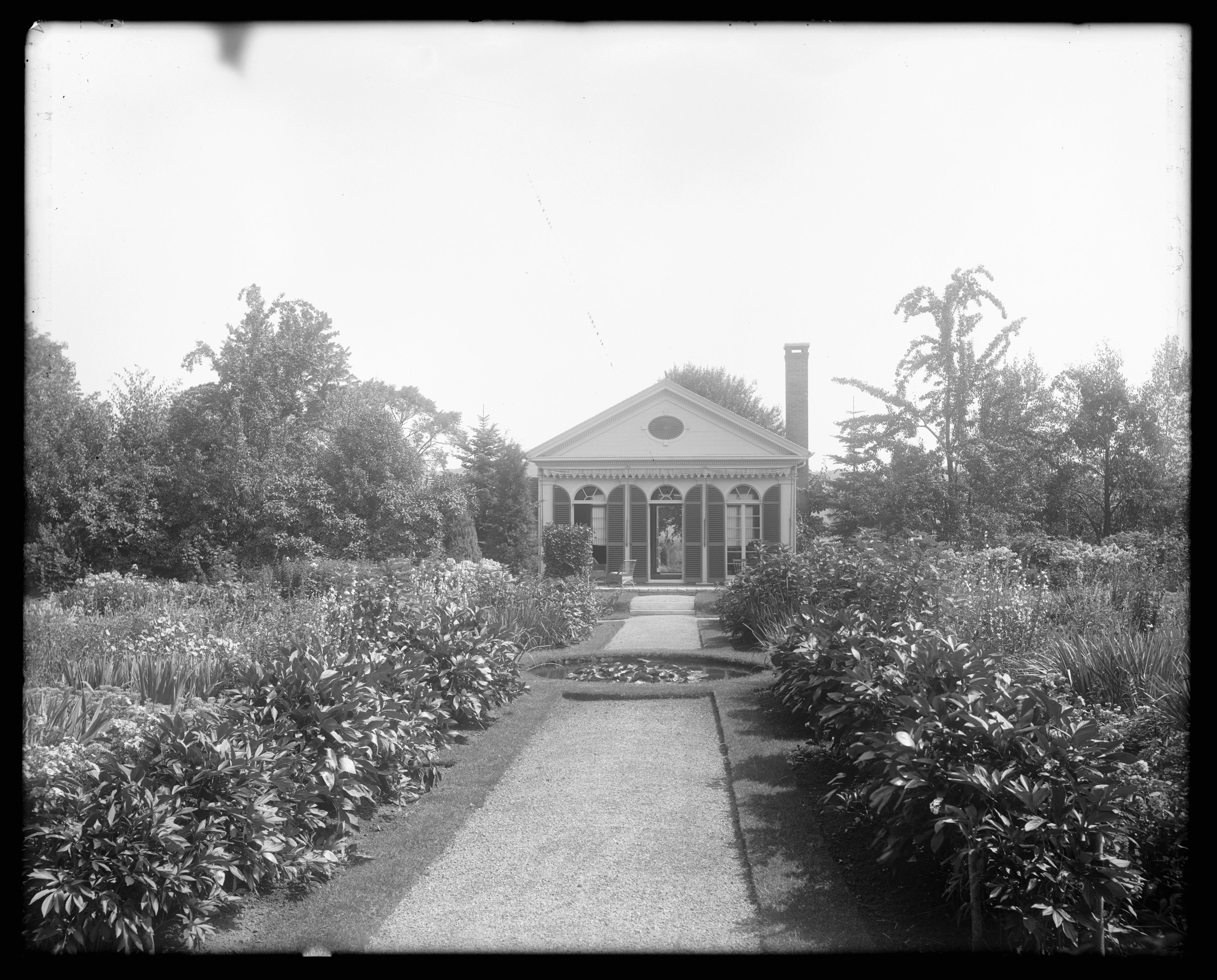
Eleven photographs, in two groups. Two are ordinary prints of the early 1880s, the ones carrying the inscriptions. The other nine are glass negatives by Edwin Hale Lincoln, dated by the Lenox Library to about 1892–1915, and they are a proper survey: the front façade, the north front, the south front with its lawn, the stables and greenhouse, the reception room, the sitting room photographed from the fireplace, an arbor under vines, a garden with a tennis court, and a garden with a pool and a summer-house.
The captions below are the Library’s and they drop the final e. The house is Coldbrooke, as it is written on the back of the earliest photograph and lettered on the 1904 atlas.
III. St. Joseph’s Hall
The second inscription is the ending. Cranwell is the school the Jesuits ran on the Wyndhurst estate from the 1930s, and at some point Coldbrooke became part of it and was renamed St. Joseph’s Hall. The Olmsted office itself worked at Cranwell between 1952 and 1956.
What the two inscriptions establish is the pattern this whole survey keeps finding: a cottage built by a man with a particular career behind him, and then absorbed, renamed, and put to a use nobody in 1882 was thinking about.
Sources
Lenox Library Association, via Digital Commonwealth: eleven items. Nine are from the Edwin Hale Lincoln Photographs collection, whose rights the Library gives as “No known copyright restrictions,” asking that it be contacted about reuse; two are from the Local History Photograph Collection, licensed CC BY-NC-ND 4.0. A twelfth, “Coldbrook: drive and front,” is marked all rights reserved and is not shown. All titles are the cataloguer’s, as the Library marks them, and drop the final e; the spelling used here is the one written on the back of the earliest print, “Coldbrooke, 1882, Mr. John S. Barnes,” and lettered on the 1904 atlas plate. The second inscription, “St. Joseph’s Hall - Cranwell,” is transcribed from the Library’s record the same way. Wikipedia, “John Sanford Barnes,” for his birth at West Point on 12 May 1836 and death in New York on 22 November 1911, his entry to the Naval Academy at fourteen and the assistant professorship of ethics in 1857, the Civil War commands and the postwar practice ships, Submarine Warfare as the first major work on the use of torpedoes, the years 1869 to 1880 financing what became the Great Northern Railway, the first presidency of the Naval History Society and his collection, and the marriage in 1863 to Susan Bainbridge Hayes, granddaughter of Commodore William Bainbridge. No Olmsted job under this name appears on the firm’s Berkshire list.