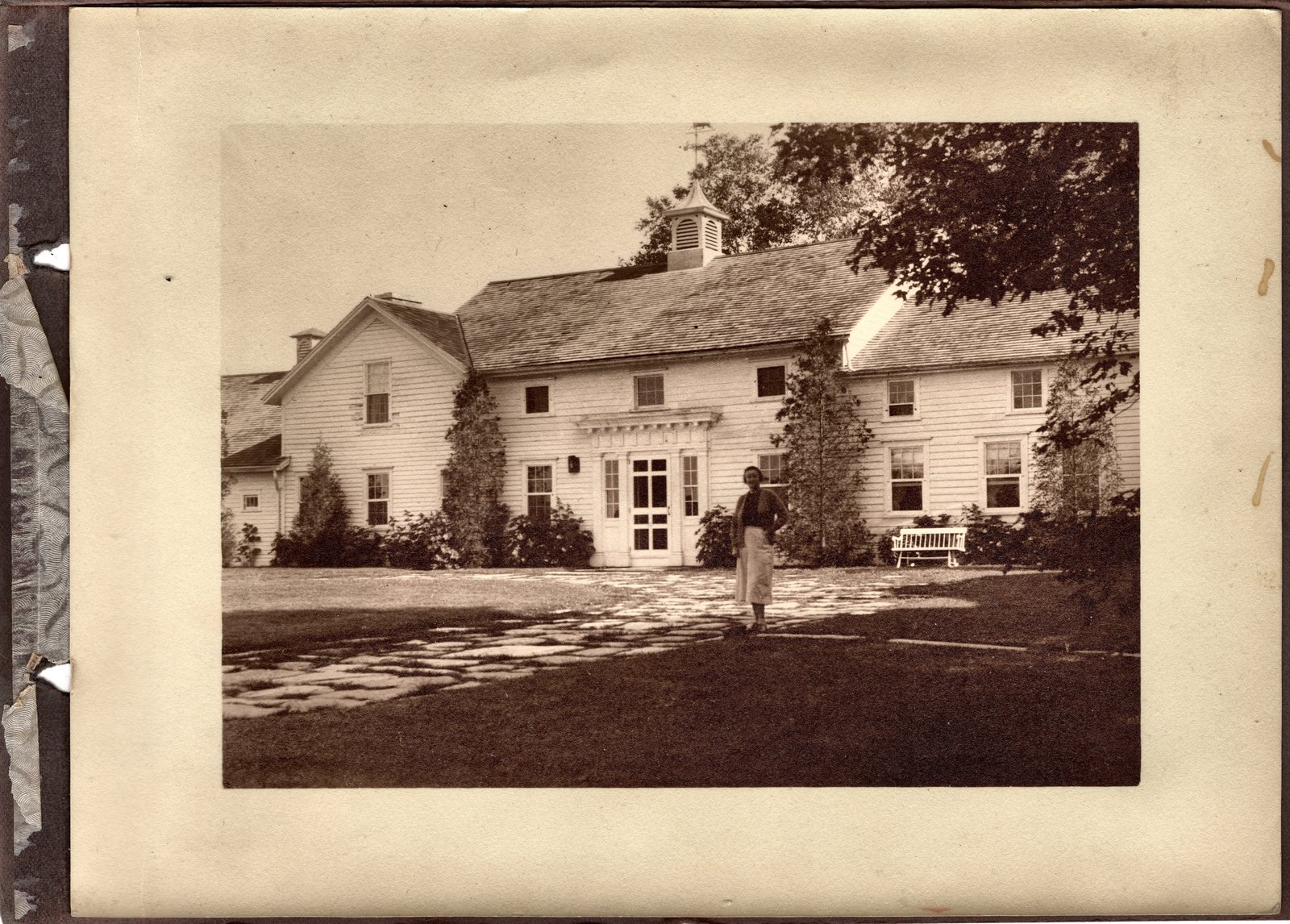
This page was built without a single photograph of the place. There were none in the Lenox Library’s collection, none in the state’s, none in the Library of Congress. What there was instead was a road — drawn once in 1904 and walked twice in the 1920s by men writing down every house on it in order. Orleton Farm is the seventh house on that road, and the last four houses on it are Wheatleigh.
Then, in October 2026, Mary Stokes Waller — a descendant of the Procter and Stokes families, who lives on the farm to this day — opened the family album in front of a camera. Everything below the road is new, and it comes from her: the farm as it was being rebuilt between 1905 and 1910, its owners back to the Revolution, and the fact that the place has not been sold since 1901. The long version of that story is A Working Farm.
A note on the name. The family spells itself Procter, and that is the spelling this page uses. It has been written Proctor, with an o, for the better part of two hundred years — by both directories that recorded the farm, by the 1904 atlas on the Williamstown plates, and by the photograph catalogue at Blantyre. Where this page reproduces or describes what those books print, their spelling stands uncorrected, and the search on this site treats the two as one word: type either and you get everything.
I. The road
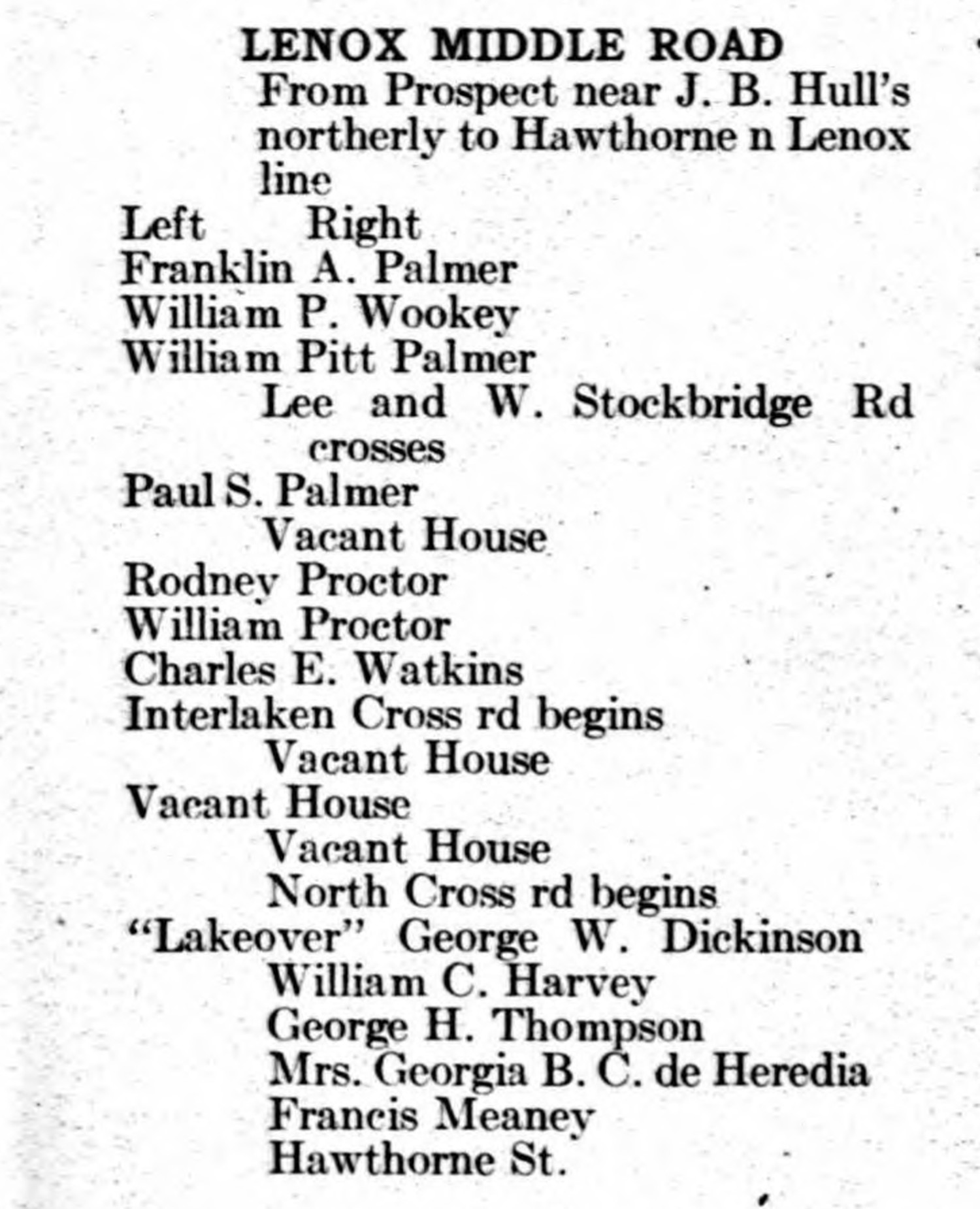
In 1926 the Central Berkshire directory printed a street-by-street index of Stockbridge: every road in the town, and every household on it in the order a man on foot would pass them. One of those roads is Lenox Middle Road — the middle of the three ways out of Stockbridge toward Lenox, running north from Prospect Hill to Hawthorne Street at the town line.
Here it is, entire.
LENOX MIDDLE ROAD
From Prospect near J. B. Hull’s northerly to Hawthorne n Lenox line
- Franklin A. Palmer
- William P. Wookey
- William Pitt Palmer
- Lee and W. Stockbridge Rd crosses
- Paul S. Palmer
- Vacant House
- Rodney Proctor
- William Proctor
- Charles E. Watkins
- Interlaken Cross rd begins
- Vacant House
- Vacant House
- Vacant House
- North Cross rd begins
- “Lakeover” George W. Dickinson
- William C. Harvey
- George H. Thompson
- Mrs. Georgia B. C. de Heredia
- Francis Meaney
- Hawthorne St.
Central Berkshire County Directory, 1926, printed page 270 (image 283). Flush entries are the left-hand side of the road as the canvasser walked it; indented entries the right. Reproduced in full, in order.
Eighteen stops. The Procters are the seventh and eighth. Nine stops further on, the road ends in Mrs. Georgia B. C. de Heredia — Wheatleigh — with her superintendent George H. Thompson on one side of her and two more of her people, William C. Harvey and Francis Meaney, on either side of them. The whole top of the road is one household.
This site is compiled by someone who lives in one of the Wheatleigh gatehouses, which is the far end of this road. That is disclosed here because the road is the argument.
II. What the books say about the farm
Three entries, in two volumes, three years apart. That is the whole documentary record of Orleton Farm in the directories this site reproduces, and it is worth having in front of you in full because it is short.
Proctor Rodney, (Beatrice) h “Orleton Farm”, Lenox Middle rd
William, (Emily,) h “Orleton Farm”, Lenox Middle rd
Watkins Charles E., (Minnie M.) farmer, emp Orleton Farm, h Lenox and Stockbridge Middle rd, P. O. Stockbridge
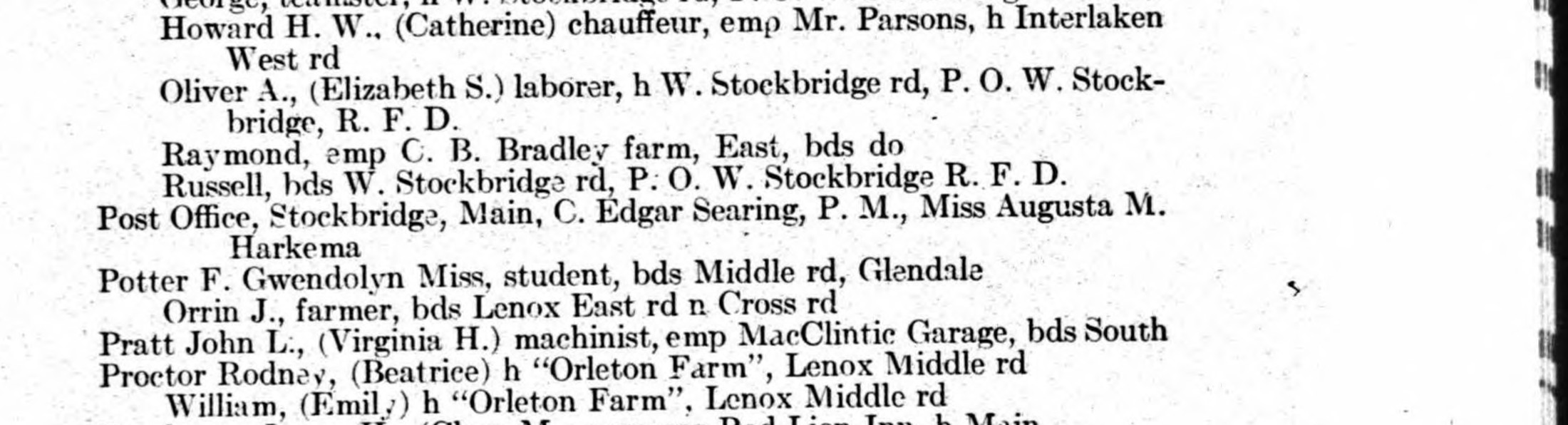
The 1923–’25 South Berkshire volume, canvassed three years earlier, has the same two men at the same place in the same words — Proctor Rodney (Beatrice) h ‘‘Orleton Farm’’ Lenox Middle rd (image 333) — and the same farmer working there (image 339). Two independent canvasses, two publishers, three years apart, agreeing on the name and the road.

One farmer. Compare Elm Court, which appears thirty-eight times in the same book, or Wheatleigh, which appears fourteen. Orleton Farm is a working farm with a name in quotation marks, not a cottage with a staff. The Eastover story shows what these books catch and what they miss; against that, one named farmhand is what a farm of this size looks like in print.
III. The Palmers, 1874 to 1926
The south end of this road does not change for fifty-two years, and that is what makes the middle of it interesting.
Open the 1874 county directory at Stockbridge and the farmers include Palmer F. A., Palmer Paul S., Palmer W. Pitt and Palmer Wm. H. (image 509) — and, two pages earlier, Hull John B., coal (image 507), the man the 1926 book still uses as the landmark for where the road begins. Fifty-two years, and the canvasser is still saying near J. B. Hull’s.
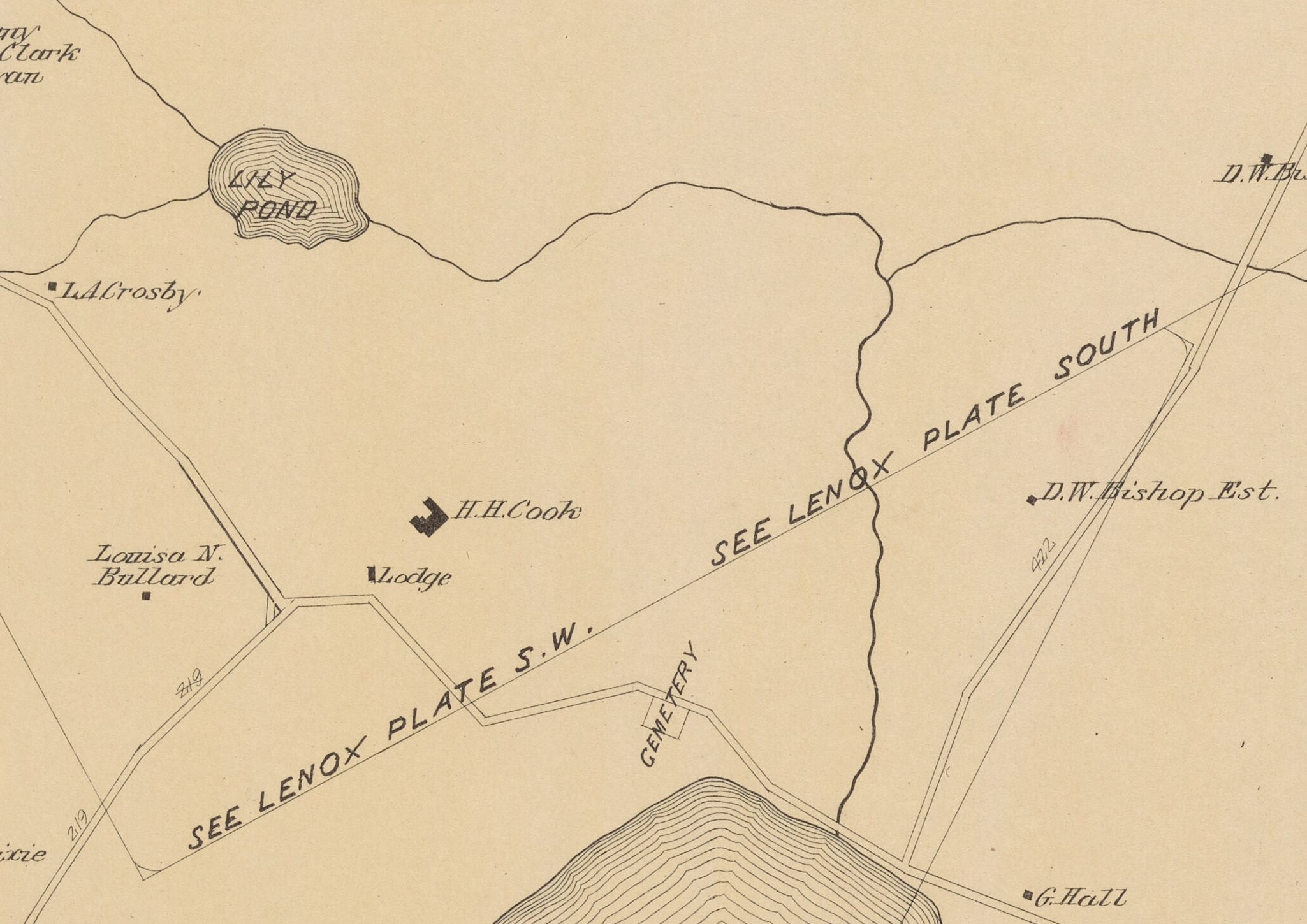
Put the 1904 atlas beside it. Barnes & Farnham drew every parcel in the county with the owner’s name on it, and the road runs from Hull’s north-west past F. A. Palmer, W. P. Palmer, P. S. Palmer, two houses of Mrs. J. A. Babcock, then E. S. Curtis, two of C. T. Cutler, G. Hall, the cemetery, a Lodge, and H. H. Cook, with the Lenox line above.
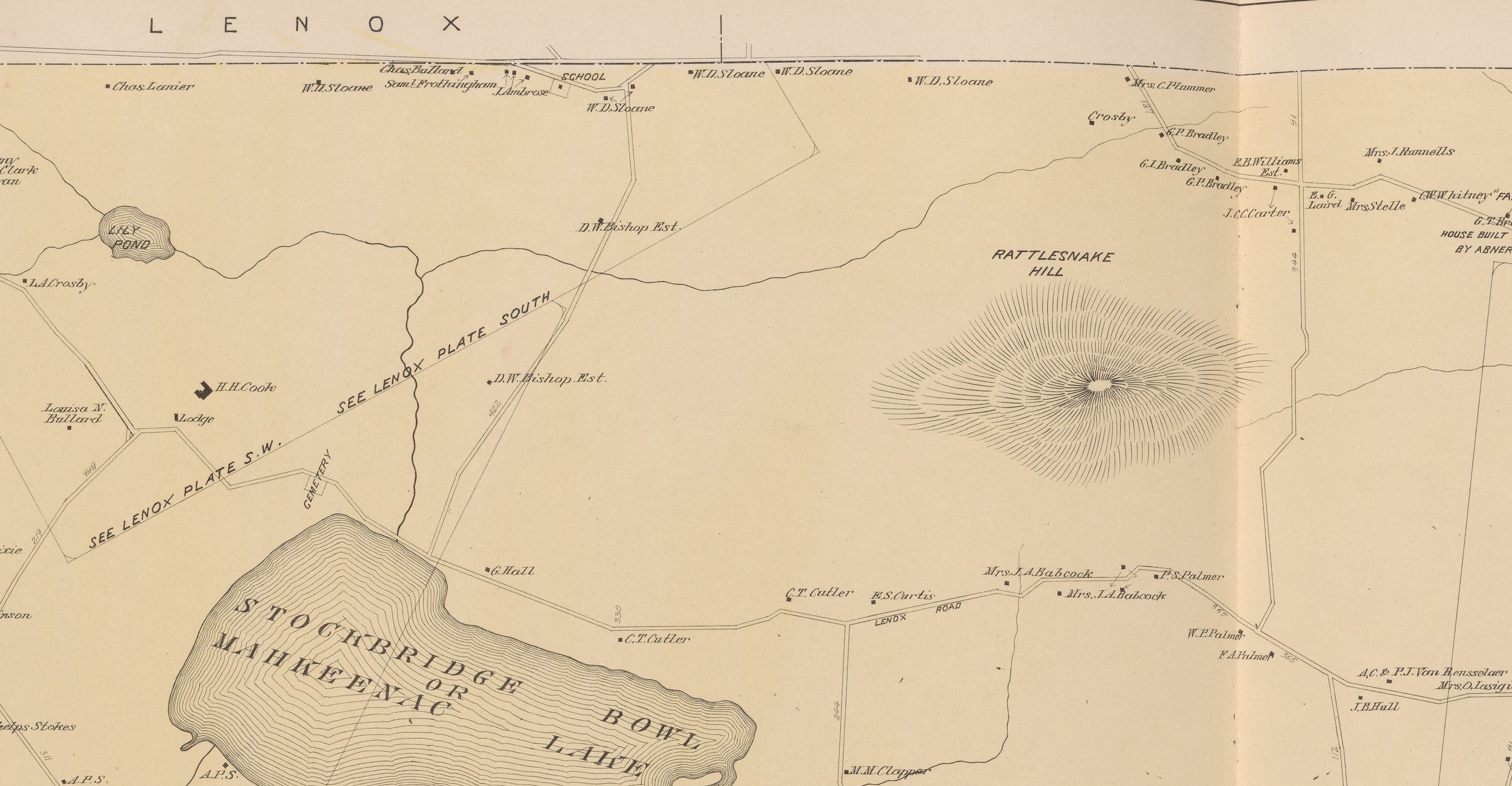
Three sources, 1874, 1904 and 1926, and the same family holds the bottom of the road through all three: Franklin A., William Pitt and Paul S. Palmer are named as farmers in 1874, drawn on their parcels in 1904, and printed as the first houses on the street list in 1926.
The Procters are not in 1874 and not in 1904. In 1904 the parcels where the 1926 street list puts them belong to Mrs. J. A. Babcock and E. S. Curtis. What lies between those two facts is a deed, and deeds are not in these books.
IV. The name
Orleton is not a Berkshire farm name. It arrives here from somewhere, and the most likely somewhere is four miles up the road.
In 1912 a house was built on Walker Street in Lenox for Harley Thomas Procter — born in Cincinnati in 1847, son of William Procter of Procter & Gamble, and the man who in 1879 named Ivory Soap and invented the advertising that sold it. He called the house Orleton. The building’s present owners say he bought the land from the Lenox Club for a dollar, wanted the house rectangular and white to echo the cake of soap, and had McKim, Mead & White design it; they also say he sold it in 1919, and that it became an inn in 1937 under the name it still carries. Those are the inn’s own account of its own building, offered here as that and not as an independent finding. Procter died in New York in May 1920.
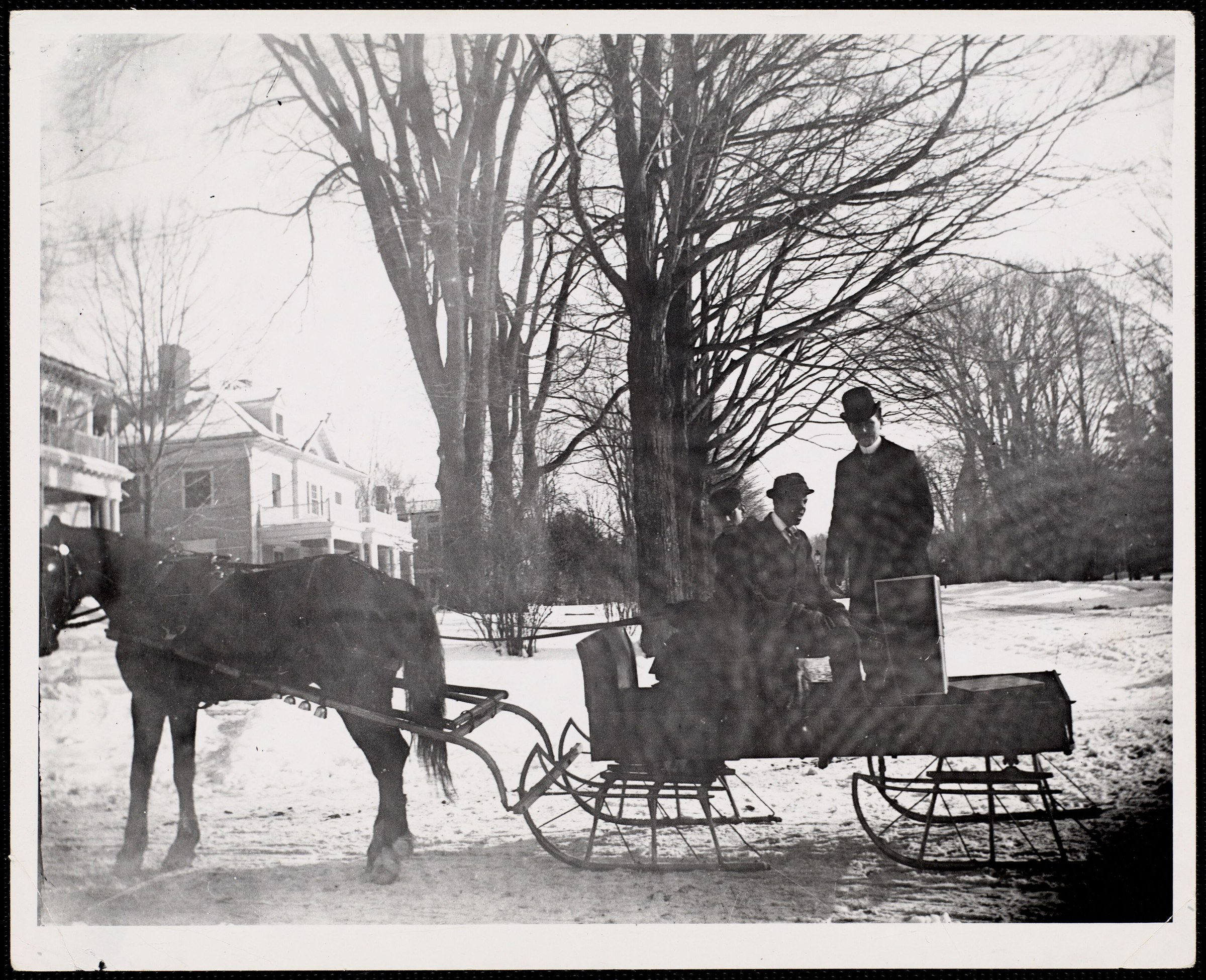
So: a Procter house in Lenox called Orleton, sold in 1919; and from 1923 at the latest, a farm four miles south in Stockbridge called Orleton Farm, with two Procters living on it. Both directories print the name Proctor, with an o; the family spells itself Procter. Directories misspell constantly, and Proctor is a common name in these towns — there is a Thomas Proctor gardening at Blantyre in the same period. What ties these two men to the Lenox house is not a deed. It is the name of the place they lived on.
A descendant of the family writes that Orleton is a village in Herefordshire where two Procters were vicars of the parish church and where many of the family are buried, and that when the Procters came to America they named all of their properties Orleton. That is family account rather than document, and is given here as such. It would explain two Orletons four miles apart without requiring any connection between them beyond the family carrying the name.
V. A working farm
Harley Thomas Procter bought the place in 1901. He had named Ivory Soap, printed 99 and 44/100 percent pure on the wrapper, and retired from his father’s firm at forty-five. He found the farm in poor condition — an awful sort of green-gray, as his descendant describes the paint — and the barns no better.
What happened next is the whole character of the place. Of his children, it was Rodney Procter who wanted to run the farm, and he took it over. The album is the record of a man doing exactly that, and almost every print in it is dated to the month.
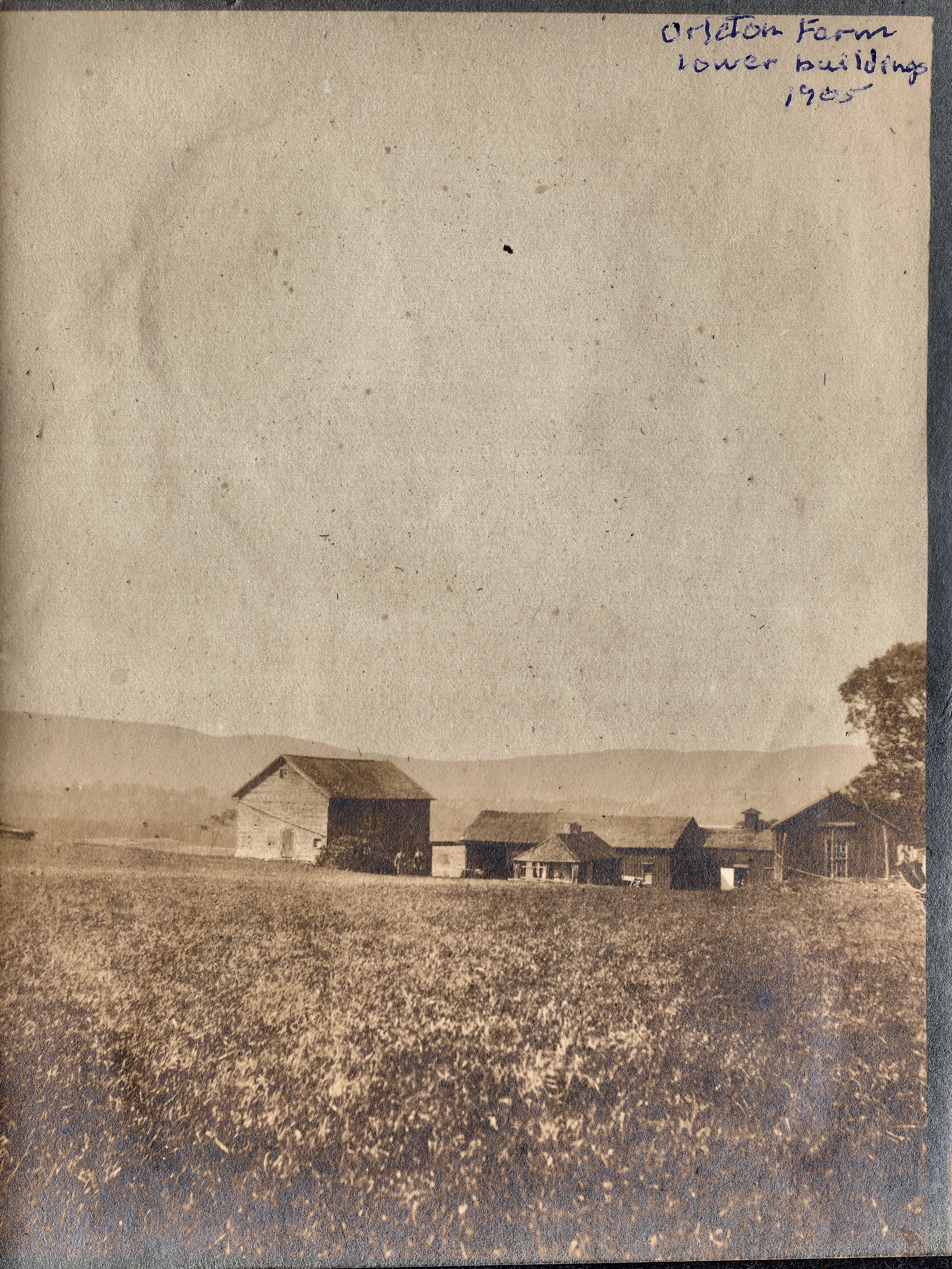
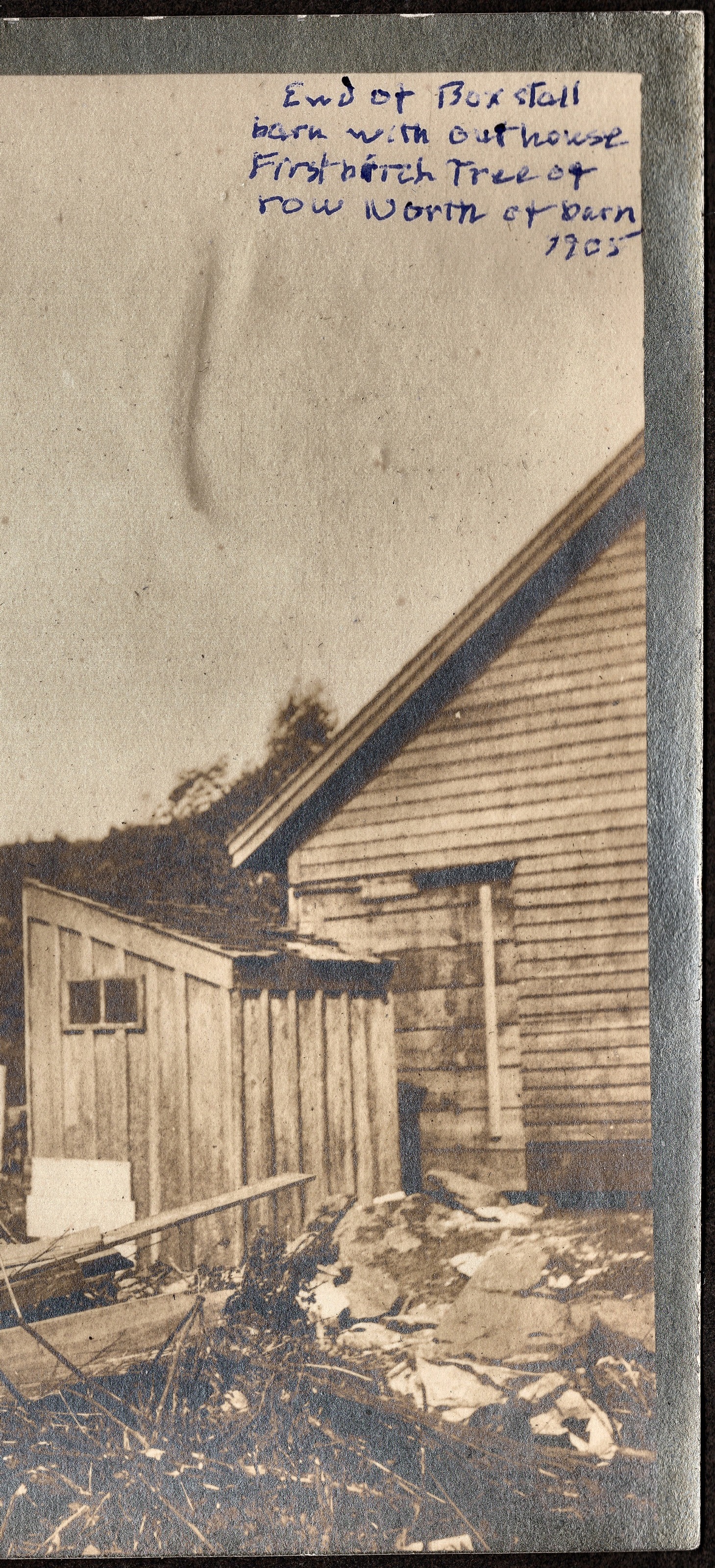
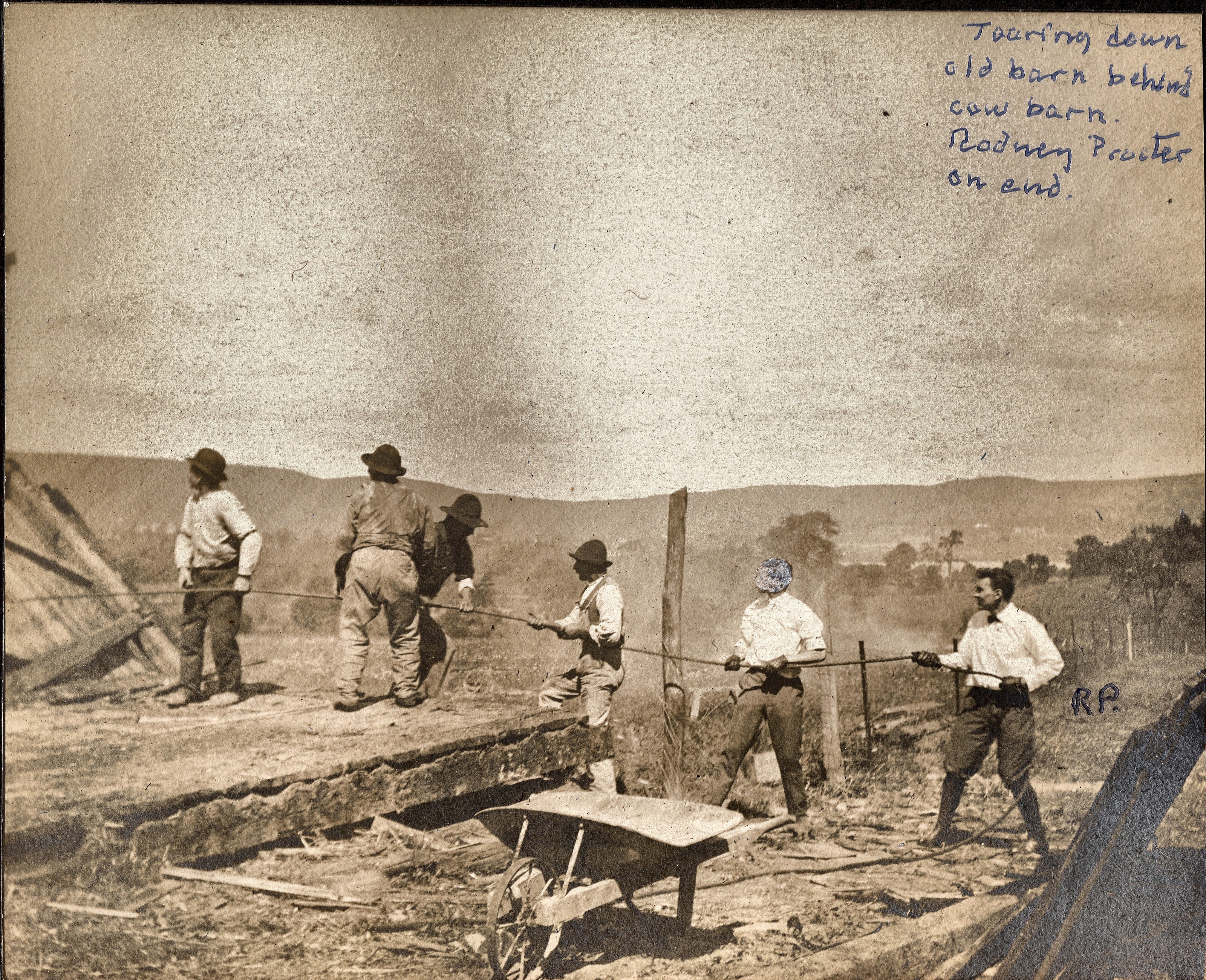
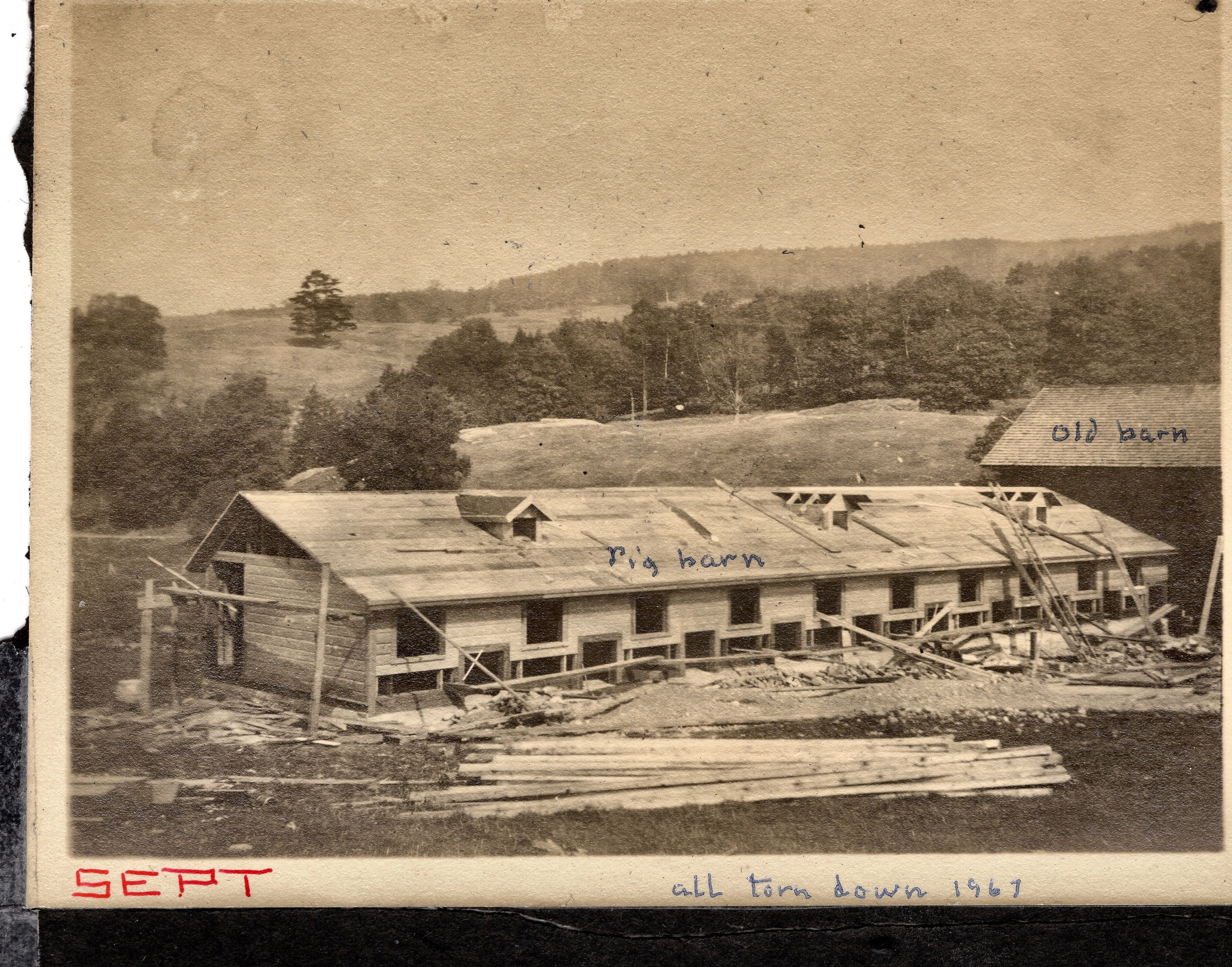
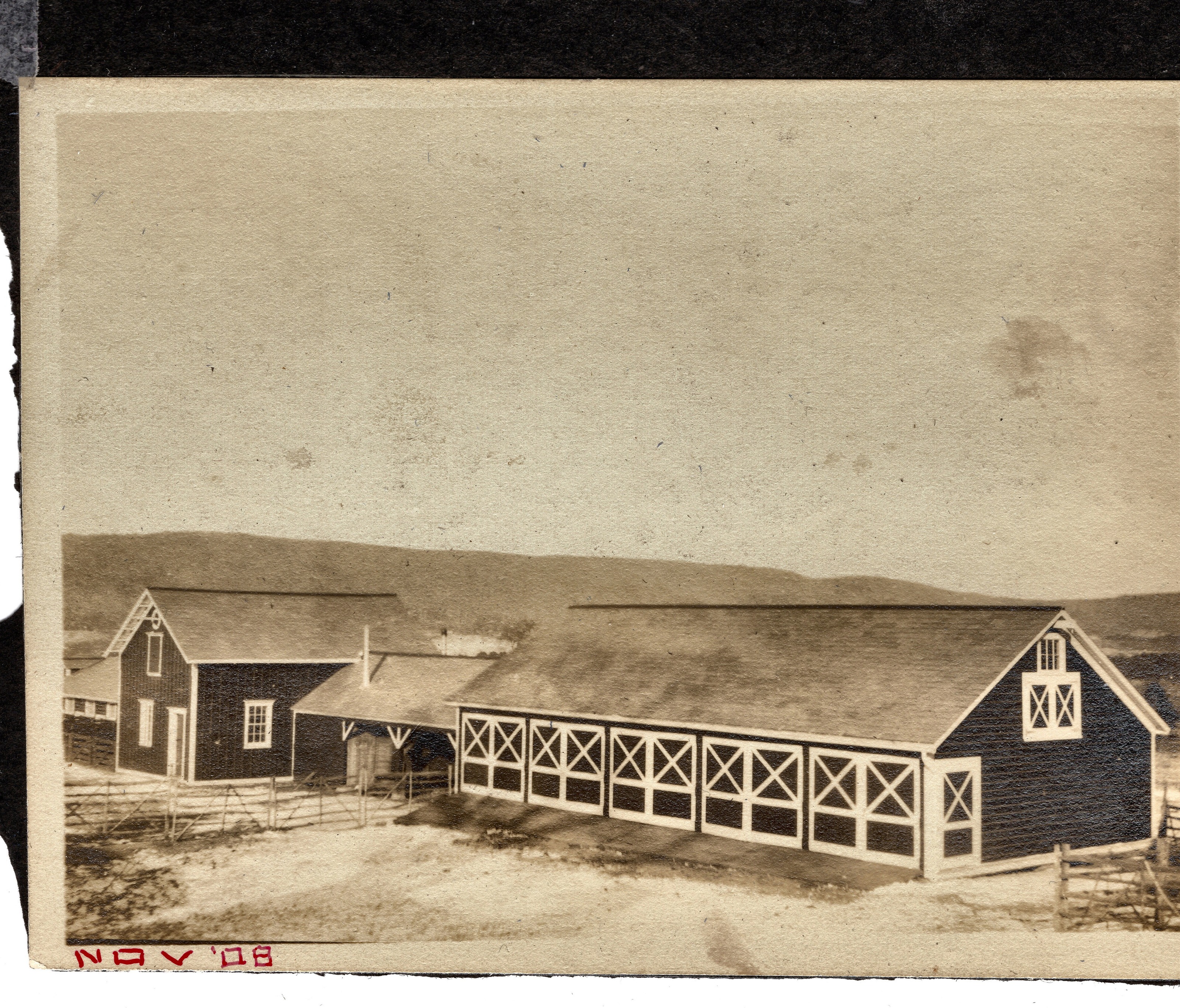
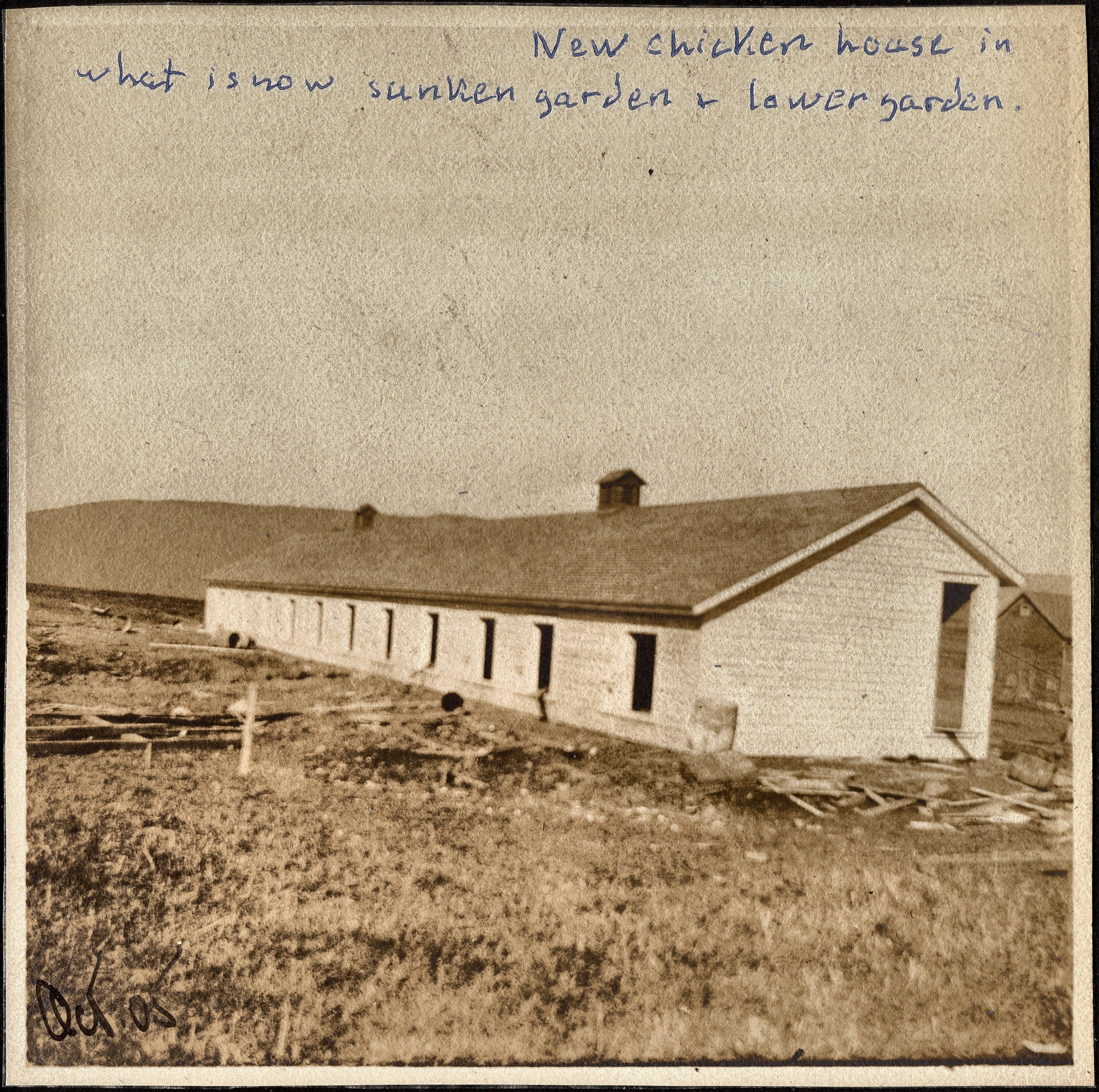
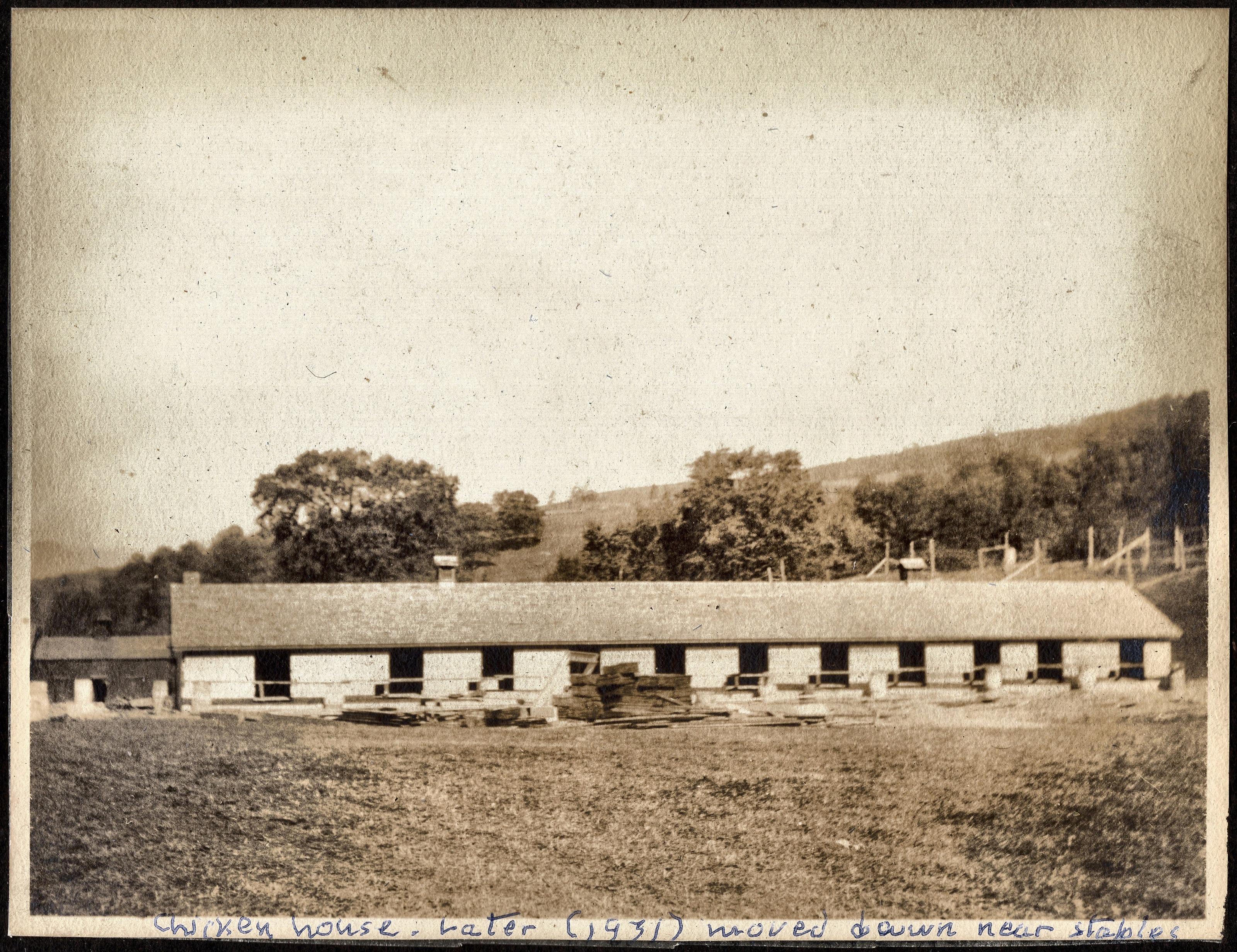
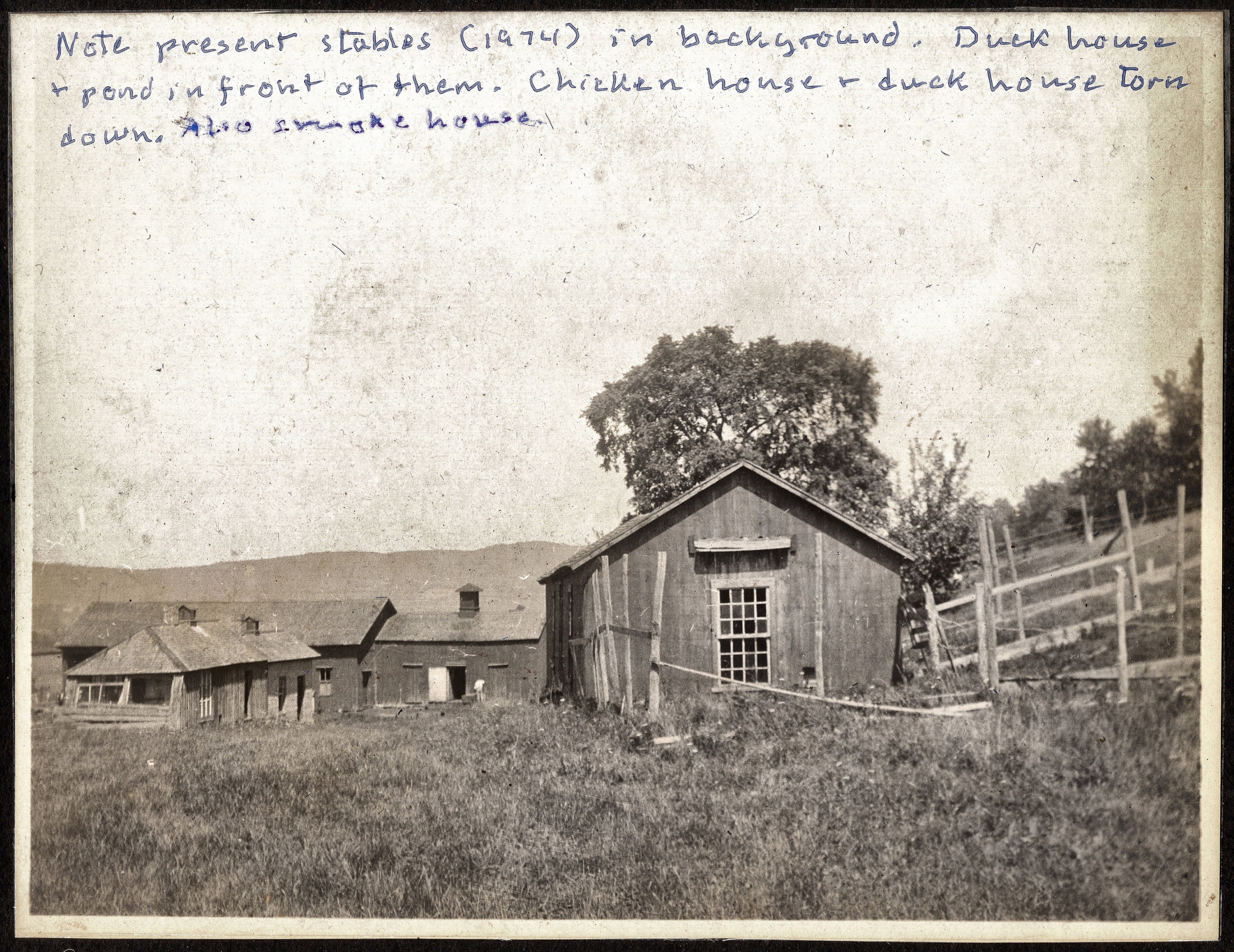
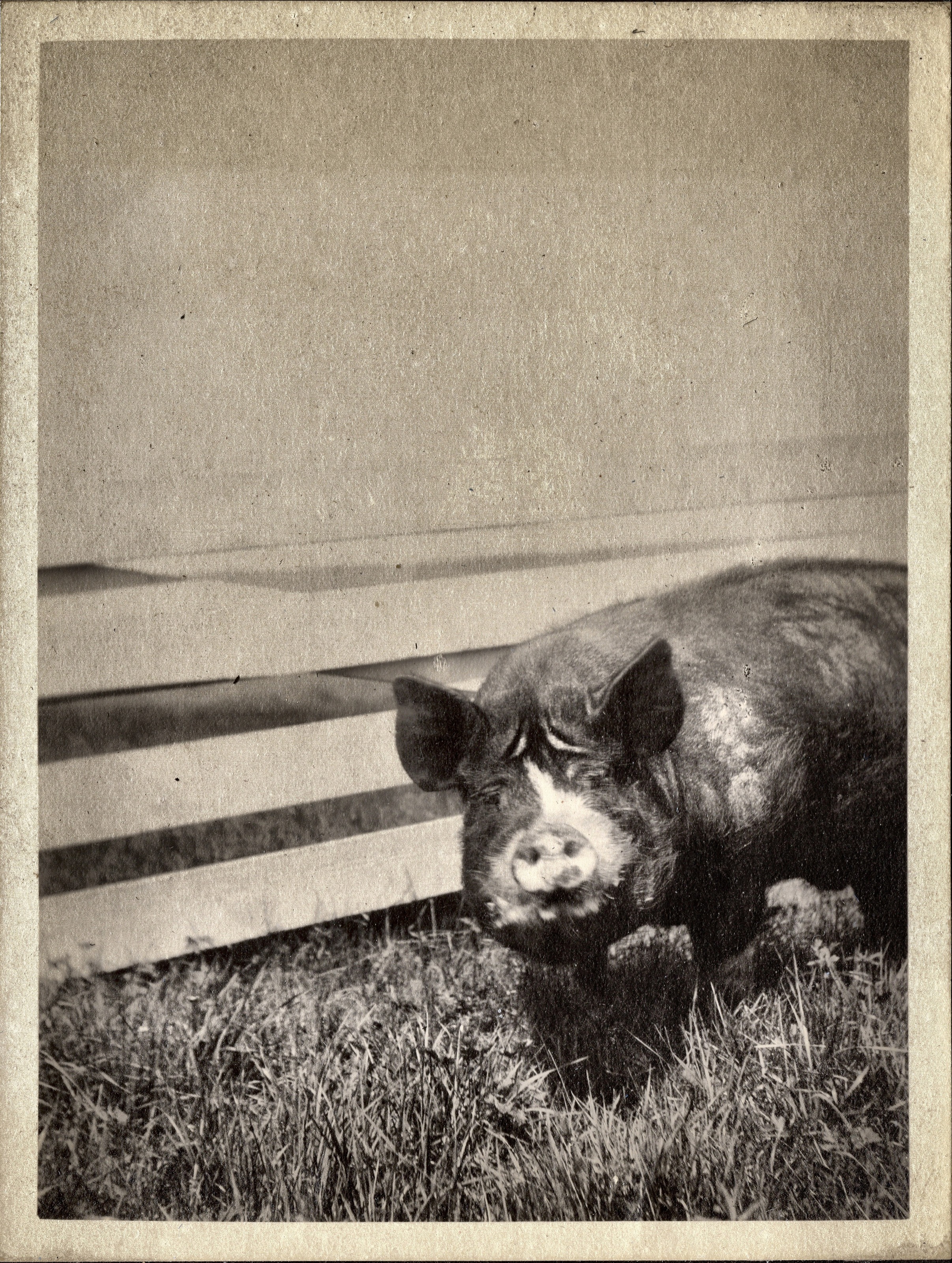
These were the heirs to two or three fortunes, and they were tending the pigs and the sheep and the horses. Rodney is in the fields himself, twice in July 1906 alone.
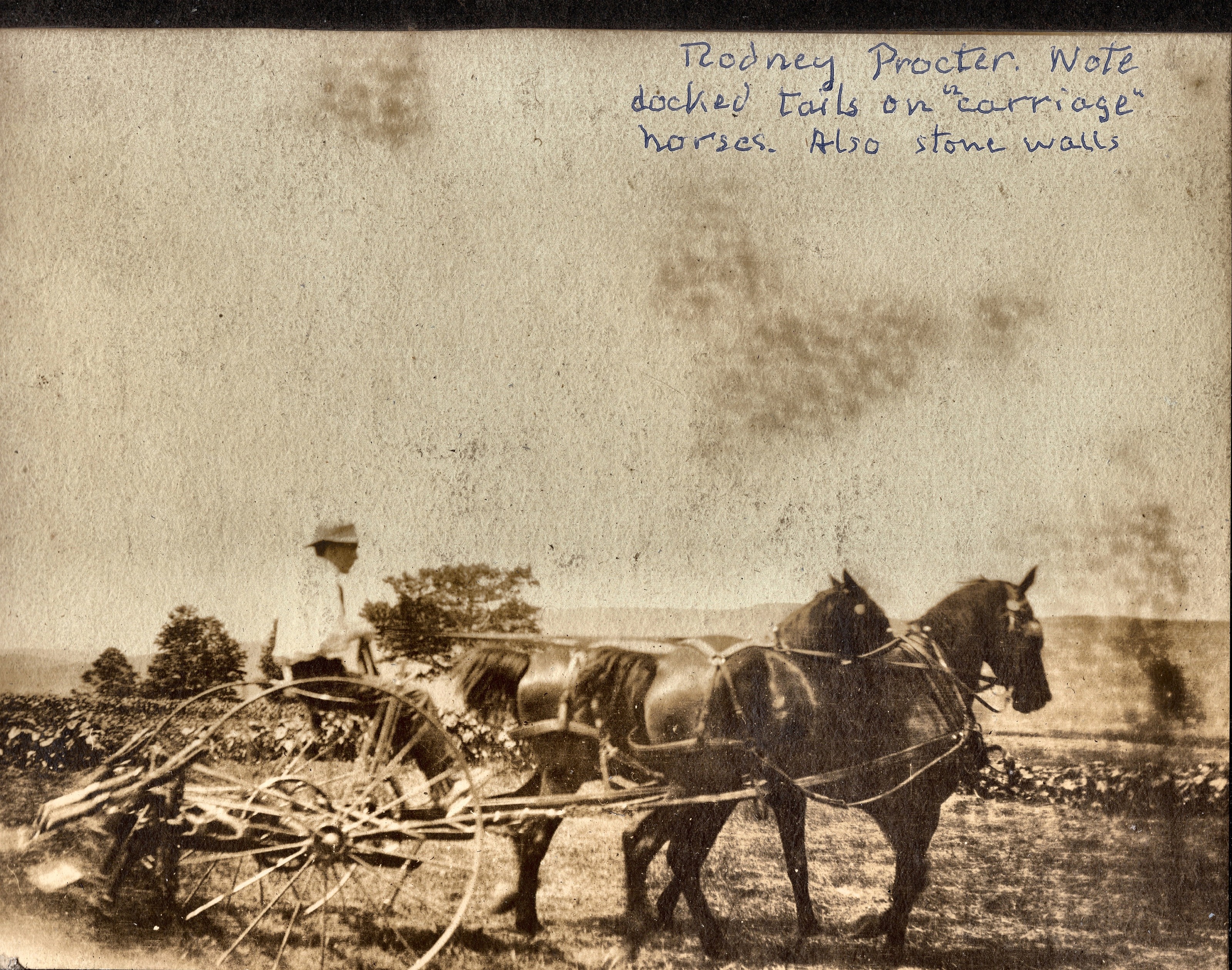
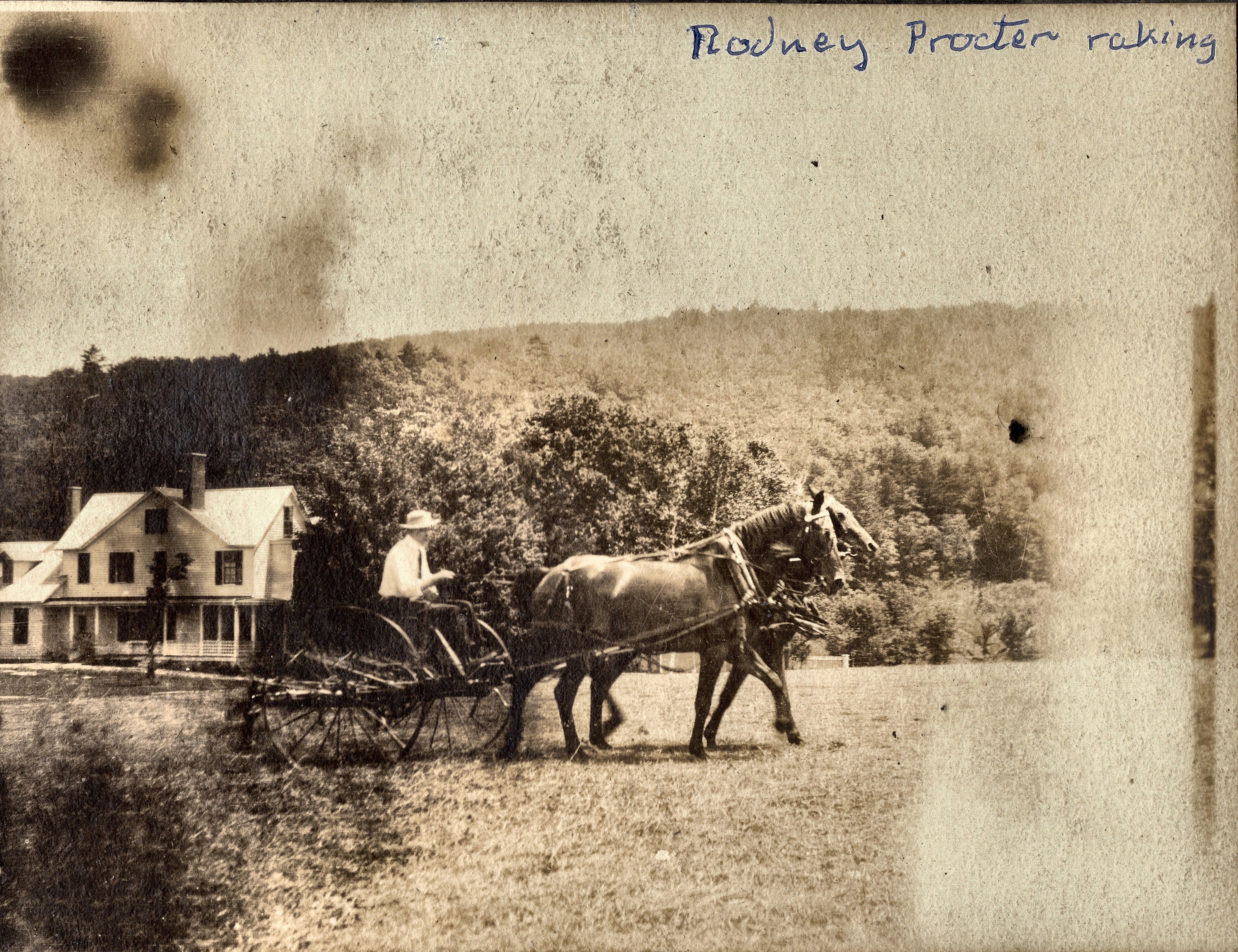
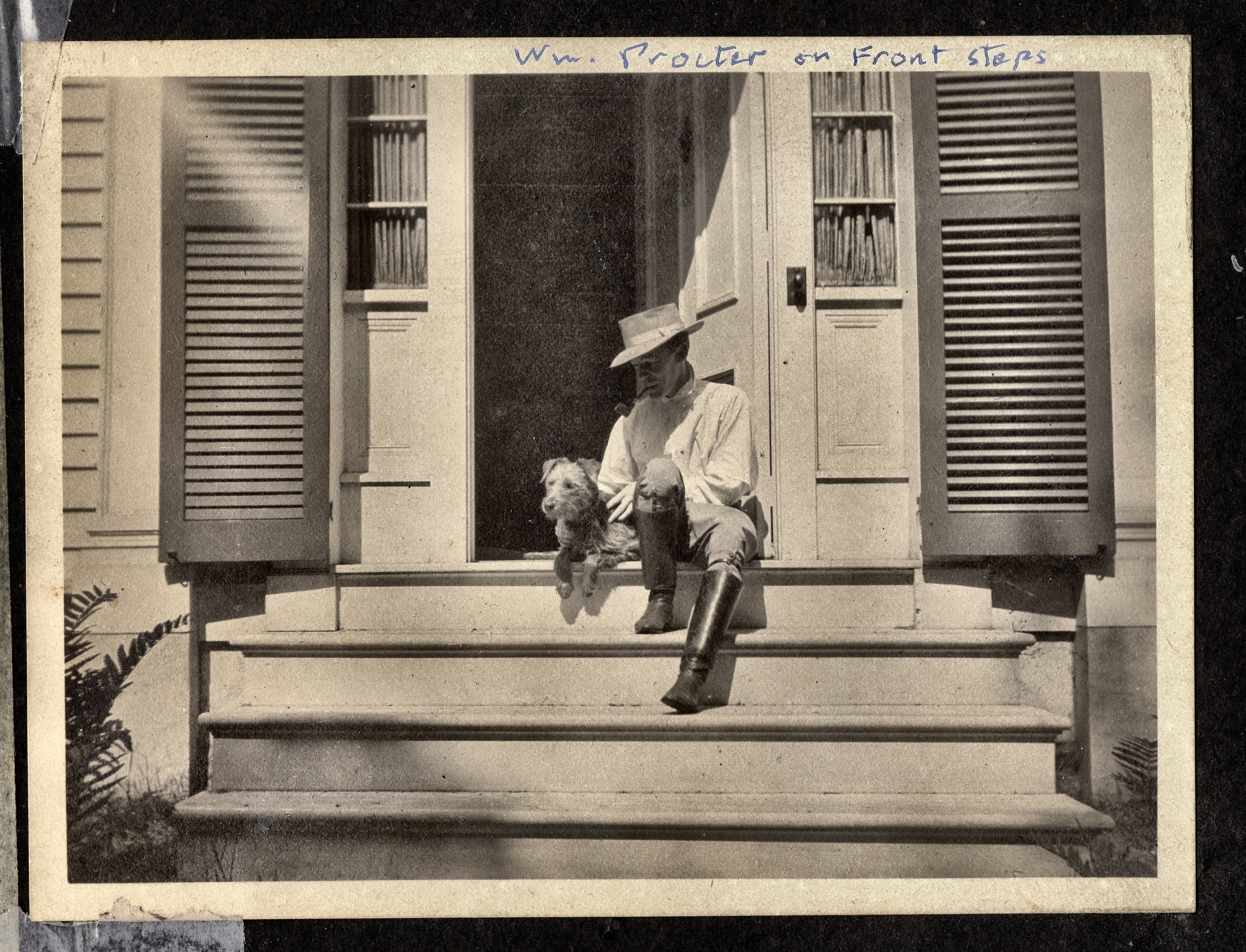
Two photographs in the album, four years apart, carry the other half of the story. R. P.’s first car. 1904. N. Y. to Williamstown is written on the first print, which means that Rodney Procter’s introduction to the motor car was a two-hundred-mile drive from New York to the Berkshires over roads built for horses — the roads his father would shortly offer to pay to macadamize. Four years later he is standing beside a Winton.
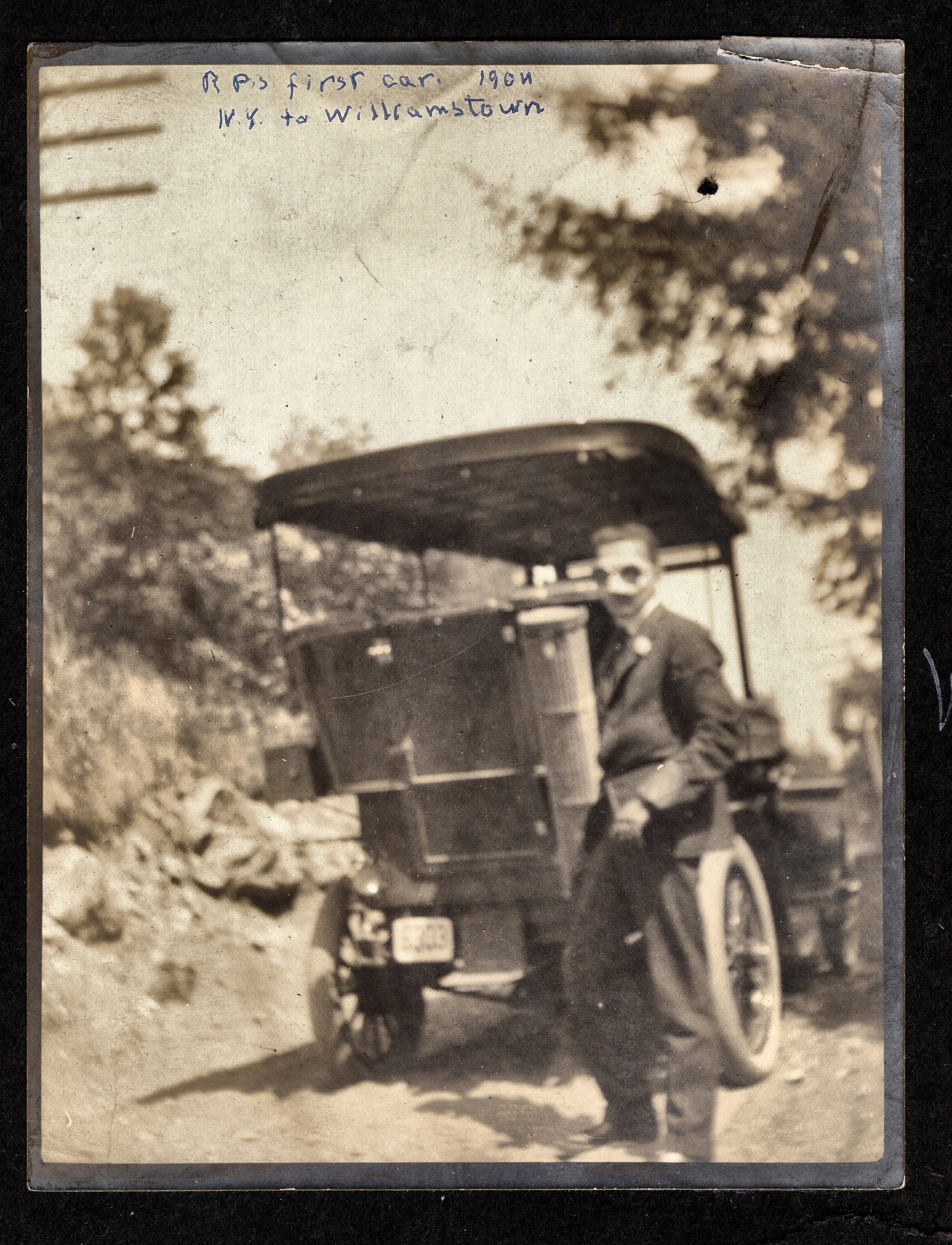
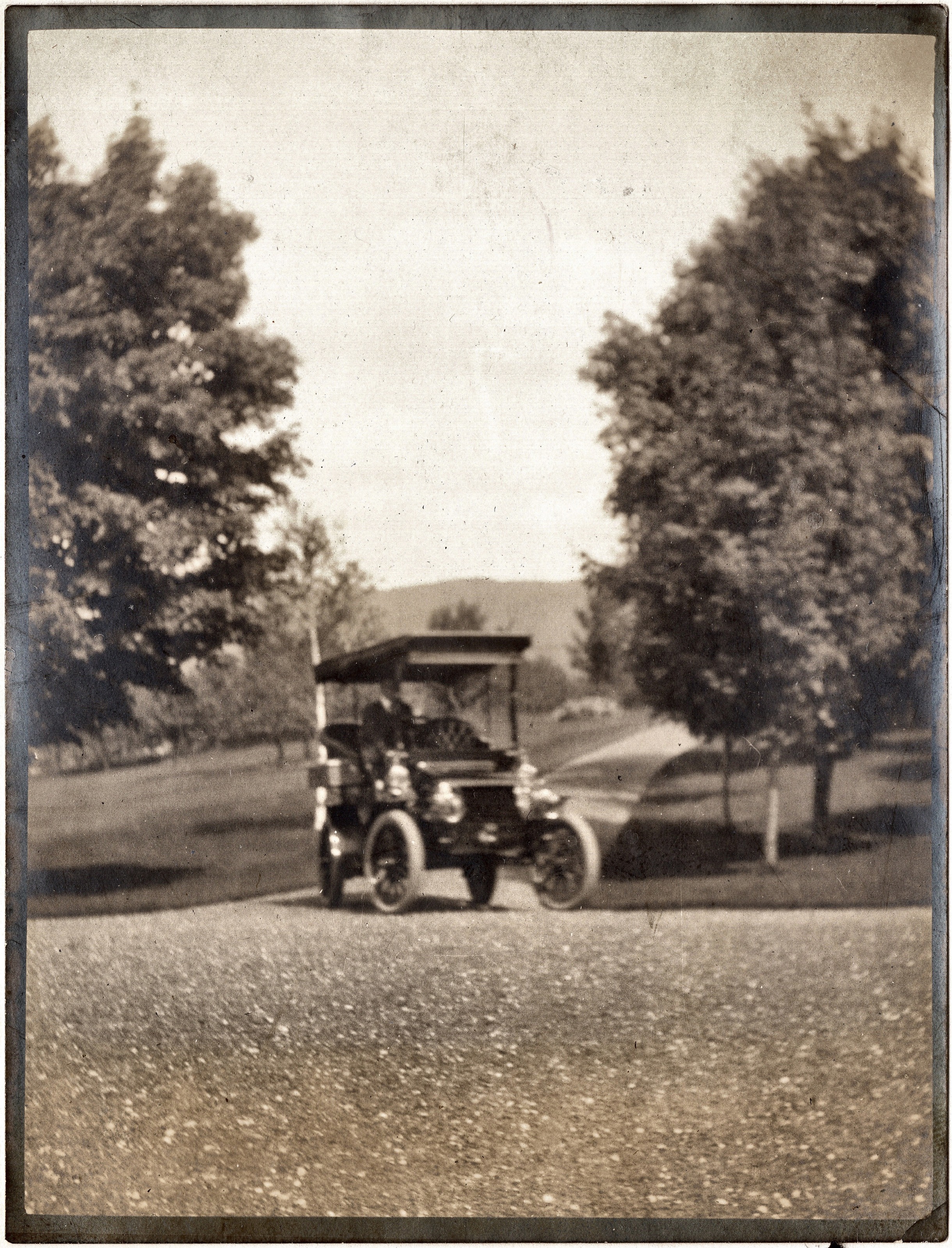
On the album page the Winton sits directly above a photograph of a pig at a board fence, which is the farm in two frames: a motor car that cost as much as a house, and the animal it was bought with.
Winter was the harder season and the album does not look away from it. The road was not plowed but rolled, and the team that rolled it was mixed — two oxen in front for the weight of the pull, two horses behind at the roller where a driver could steer it. That is the subject of a separate story, Rolling the road.
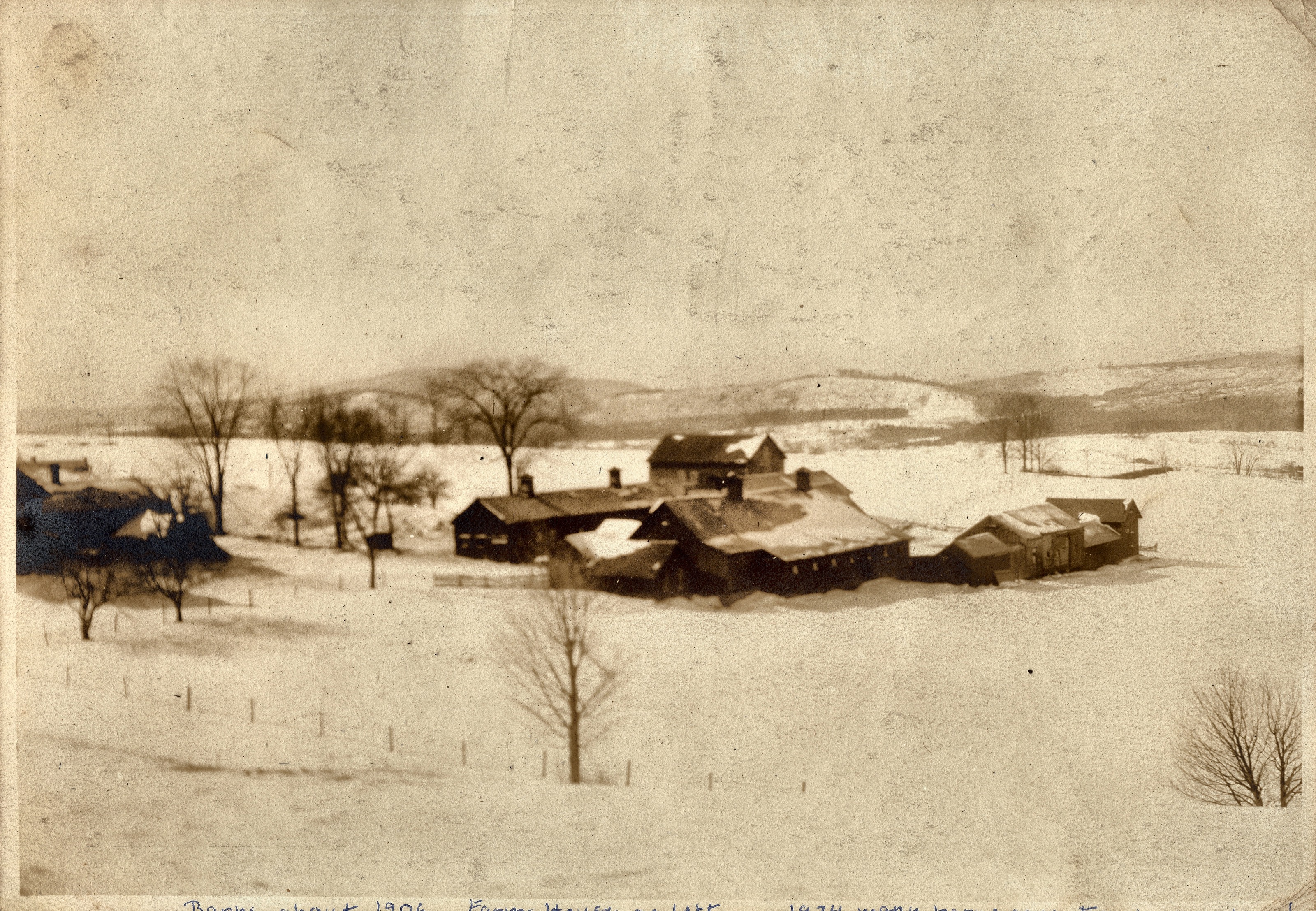
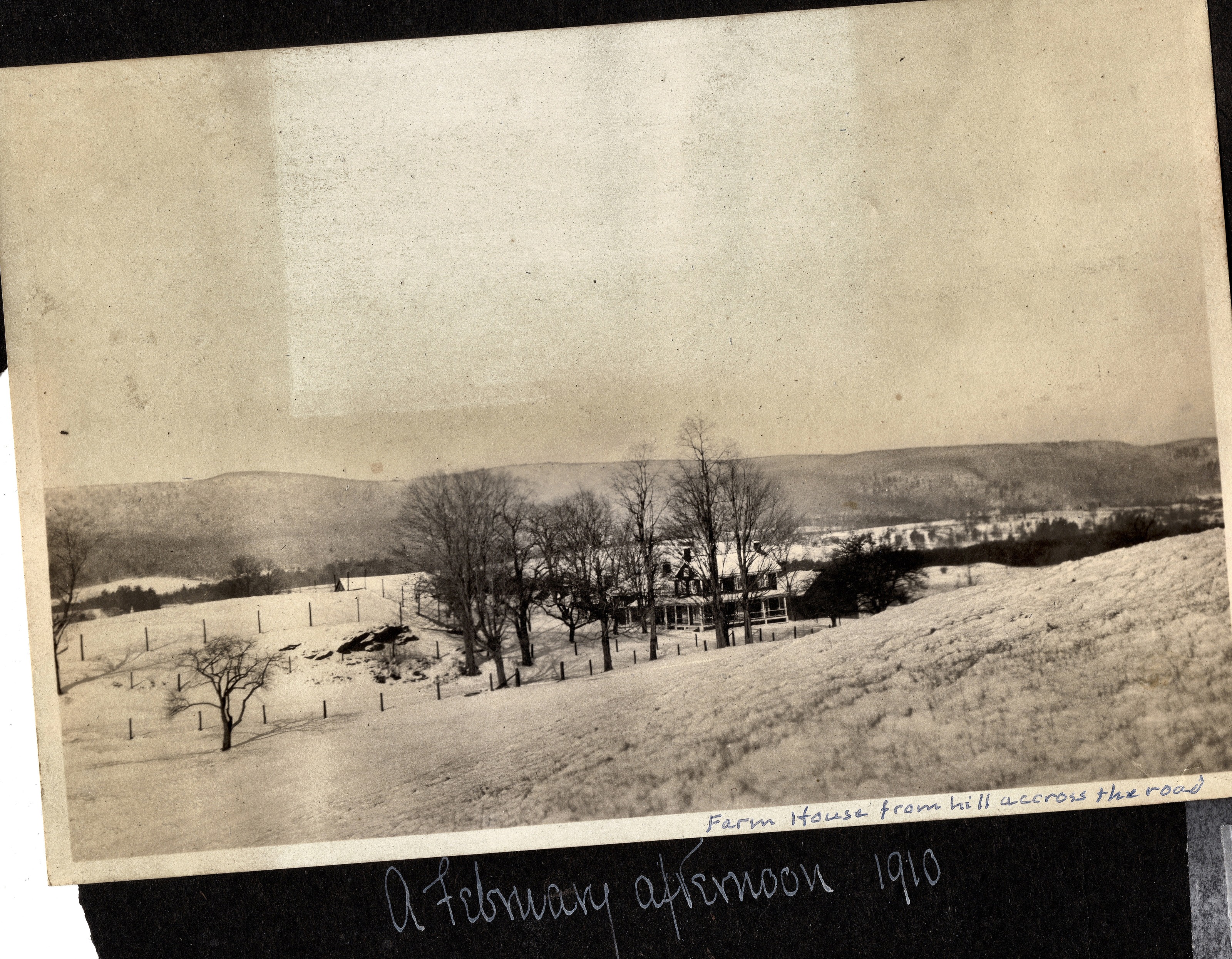
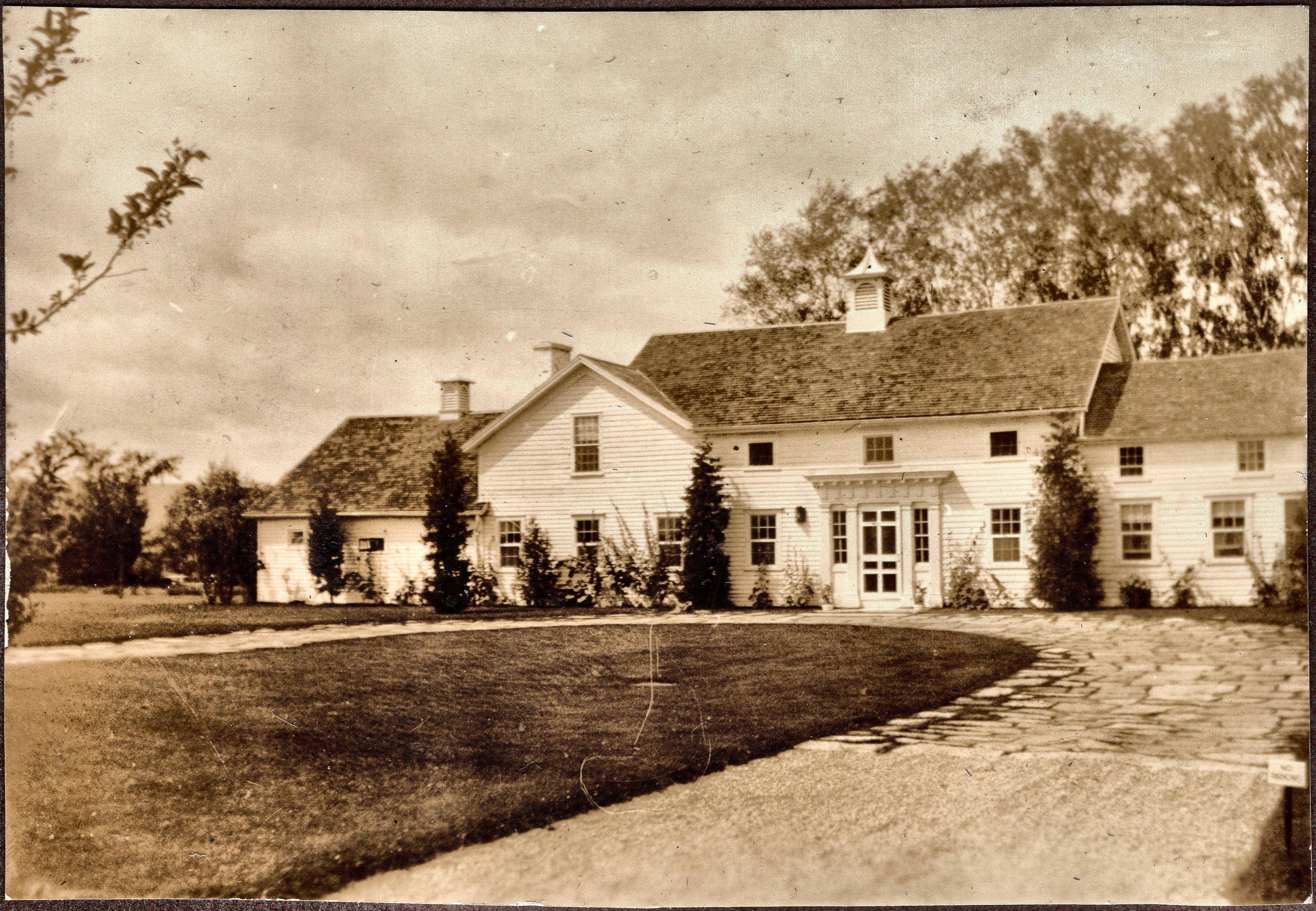
The house itself was photographed carefully, more than once, with its cupola and its flagstone walk and its curved drive — and so was the barn that was not torn down, which became a hall with French doors and a chandelier under the original framing. The family calls that one what it was: a dowry, for a daughter’s wedding.
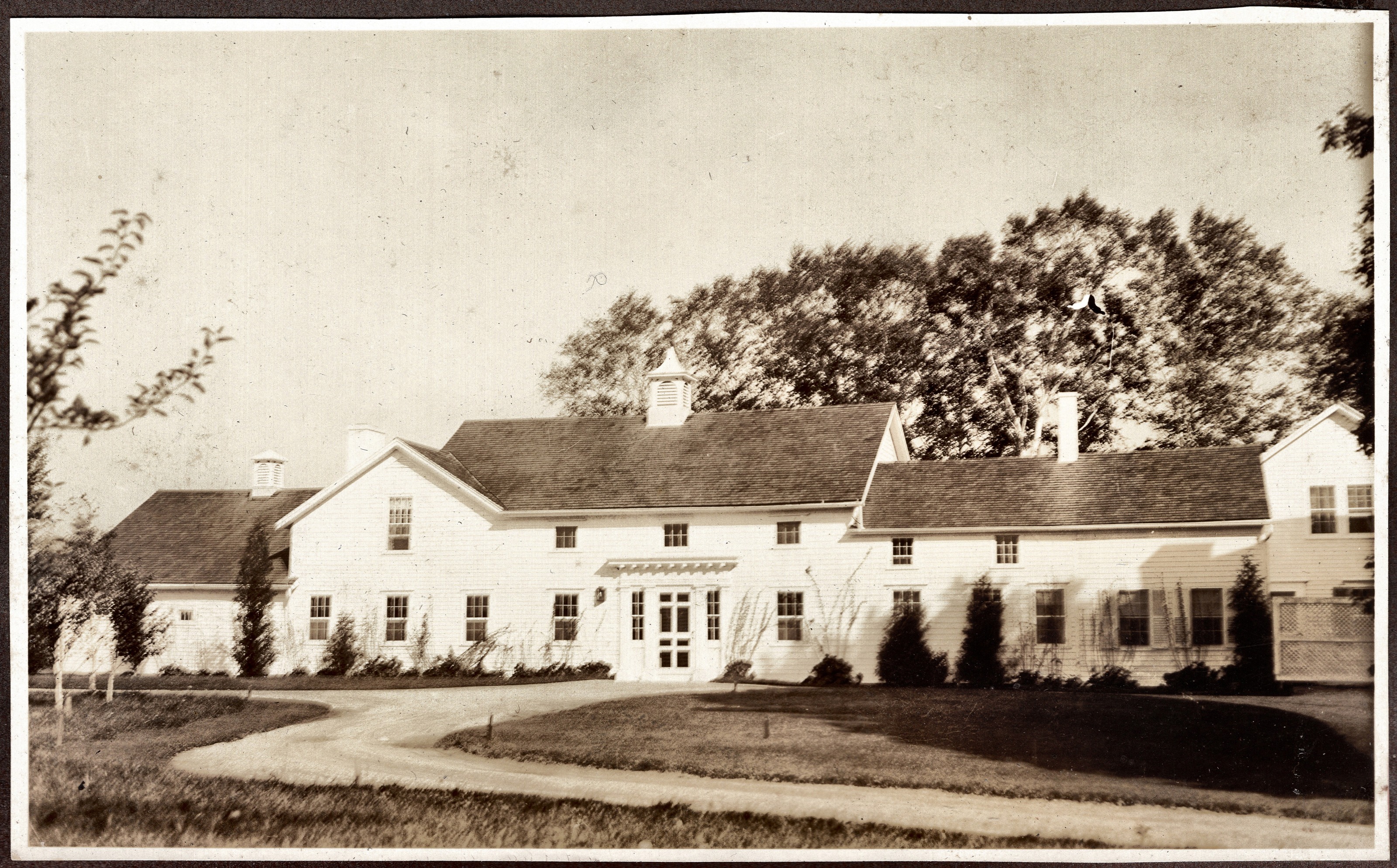
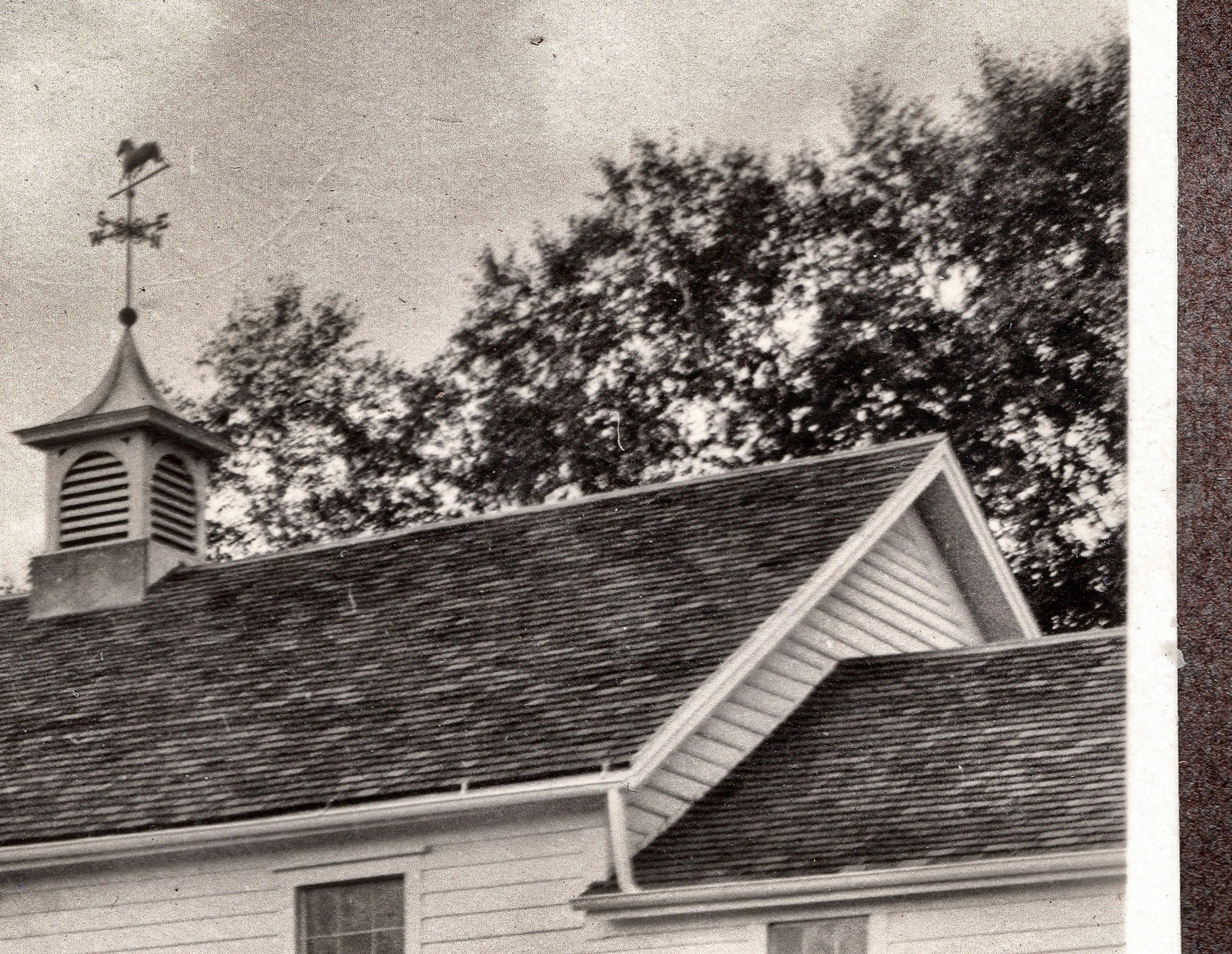
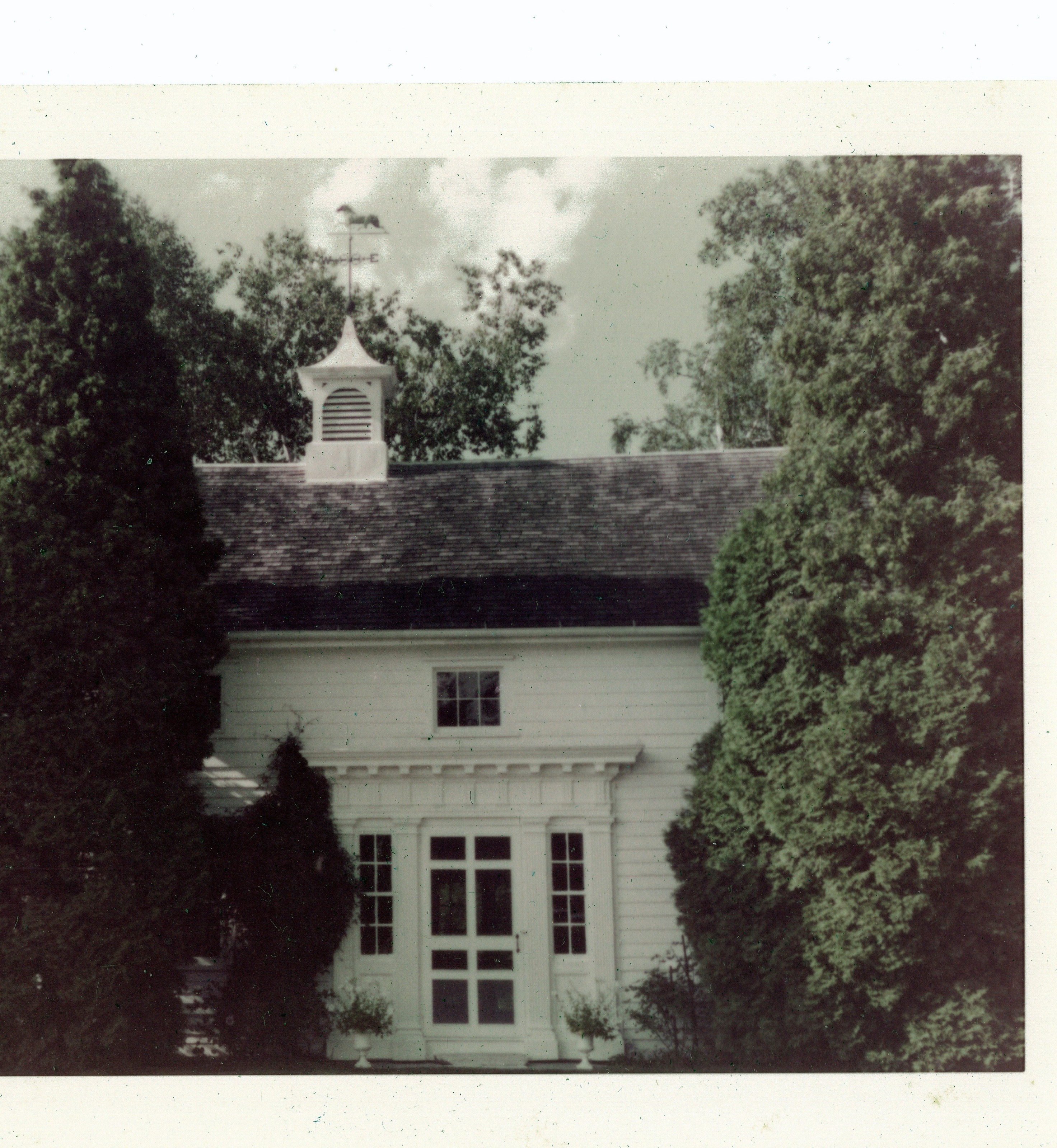
And then the inside, which is the surprise.
The album’s last run of pages is a different undertaking from the rest: brown stock, white-bordered prints, and a deliberate walk round the house and grounds inside and out. One of those pages is dated, in the later hand, 1934 — a generation after the farm was rebuilt, and in the decade the Berkshire estates came apart. Elsewhere in these hills that is the period of the forced sale and the empty house and the wrecking crew. Here somebody went round with a camera and photographed the rooms.
What the rooms show is a house that was never dressed. In the years this family could have furnished to the local standard, the rooms at Elm Court and Wyndhurst and Shadow Brook were being ordered from New York decorating firms and shipped north in crates, finished, by Herter Brothers and W. & J. Sloane and Pottier & Stymus. They could have bought any of it twice over. The walls here are the boards that were already there. The floor is laid for use. The chairs are plain, the mantel is plain, the china sits on an open shelf. The one extravagance is a chandelier hung from a barn frame nobody took down, and even that reads as a joke about what the building used to be.
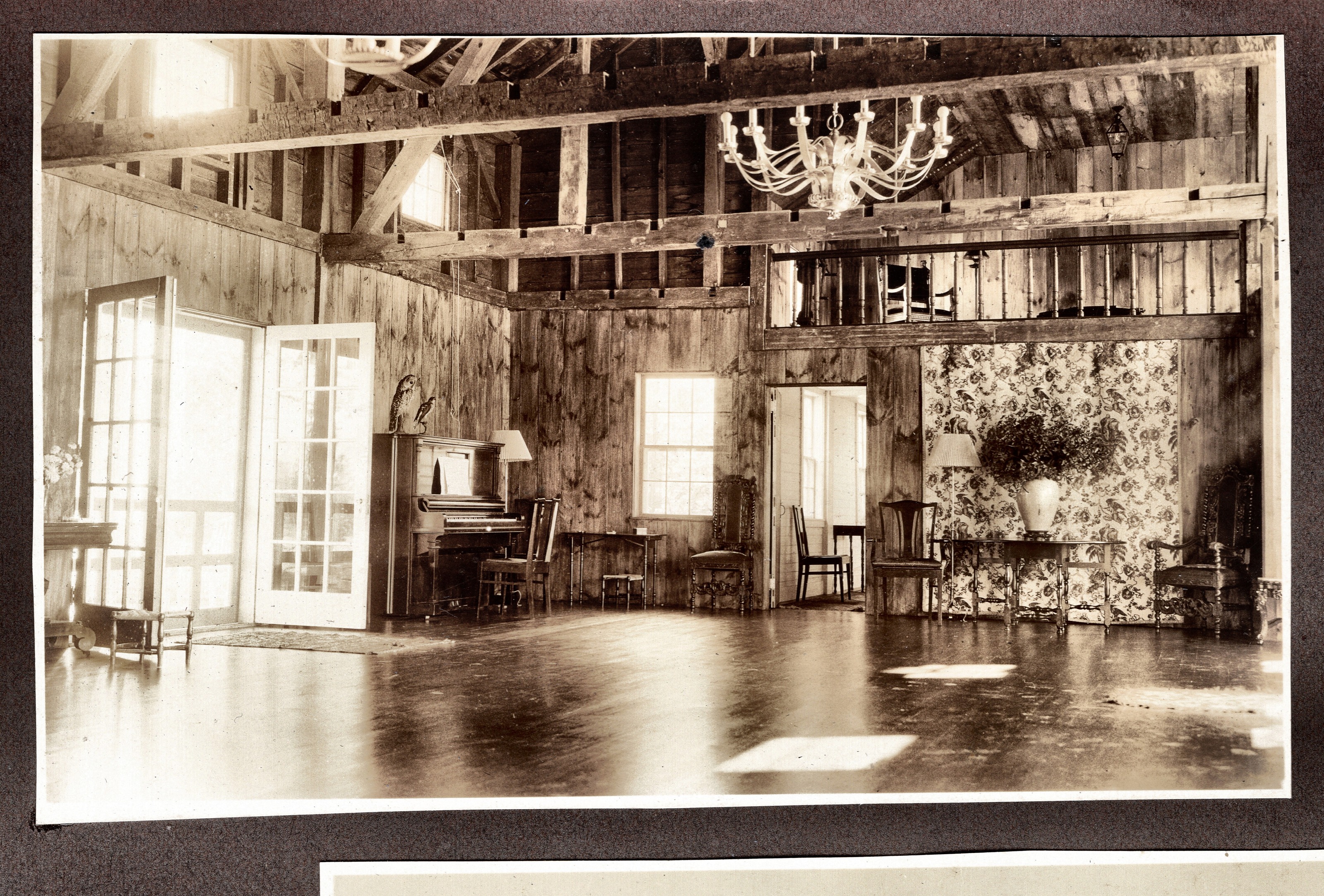
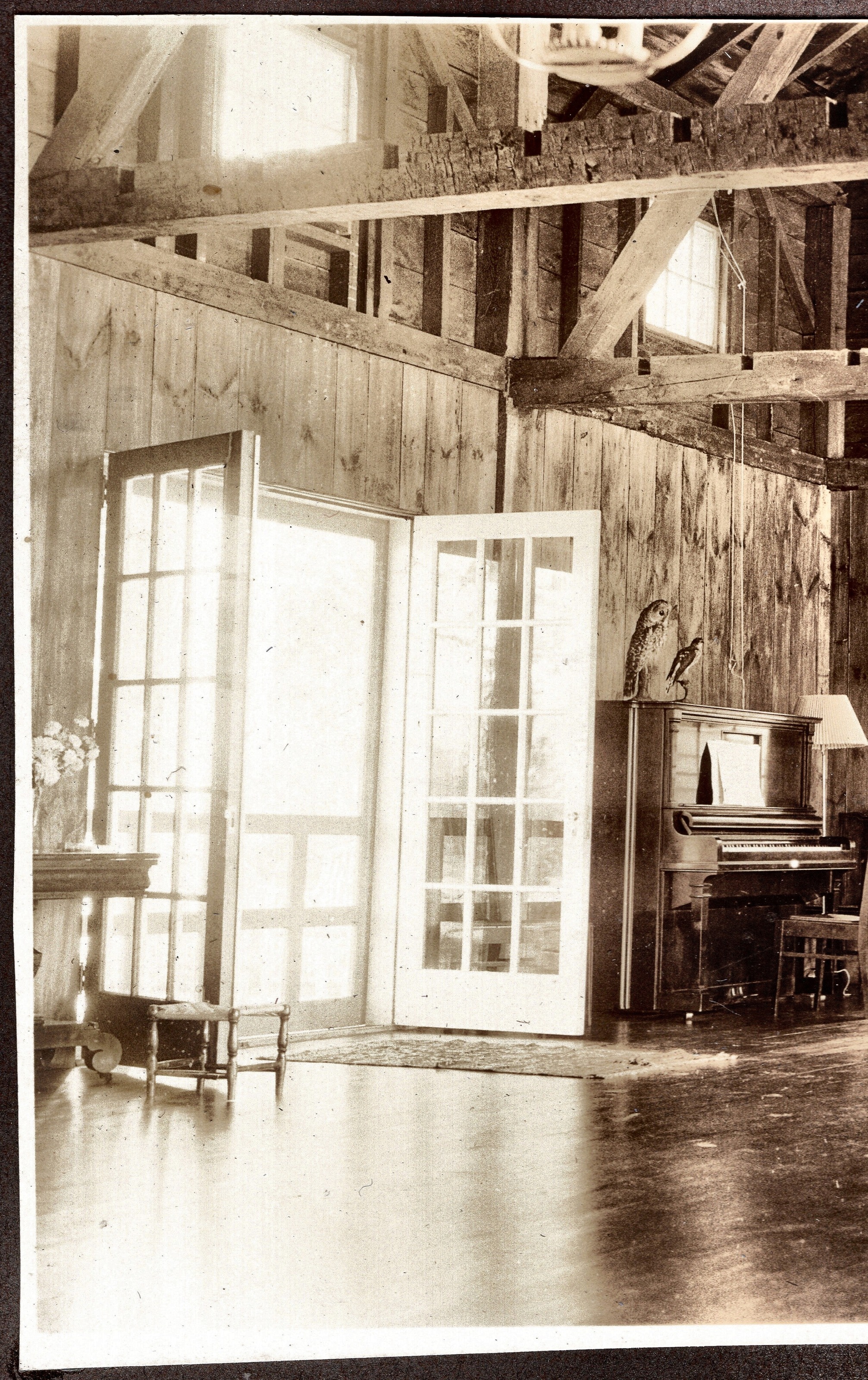
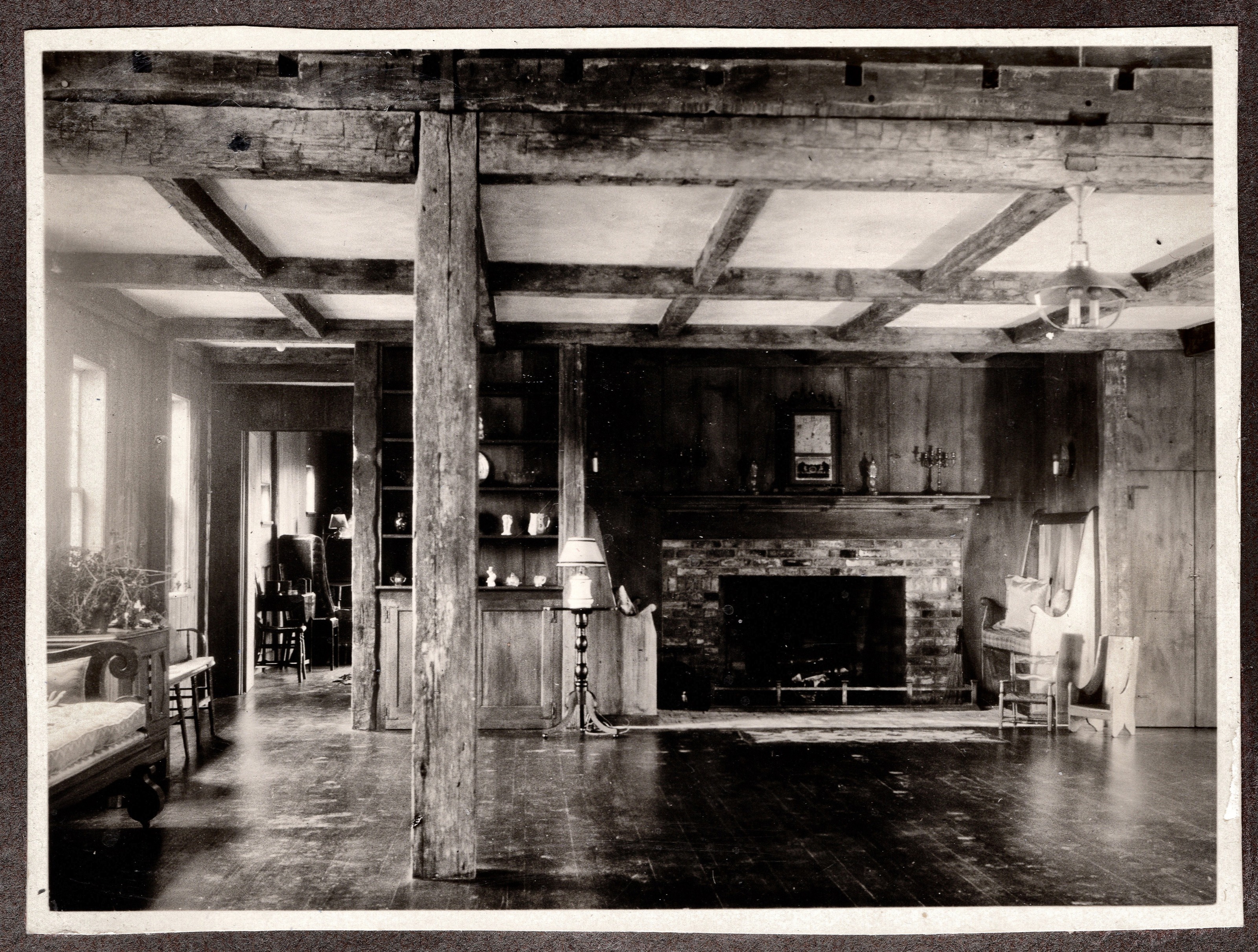
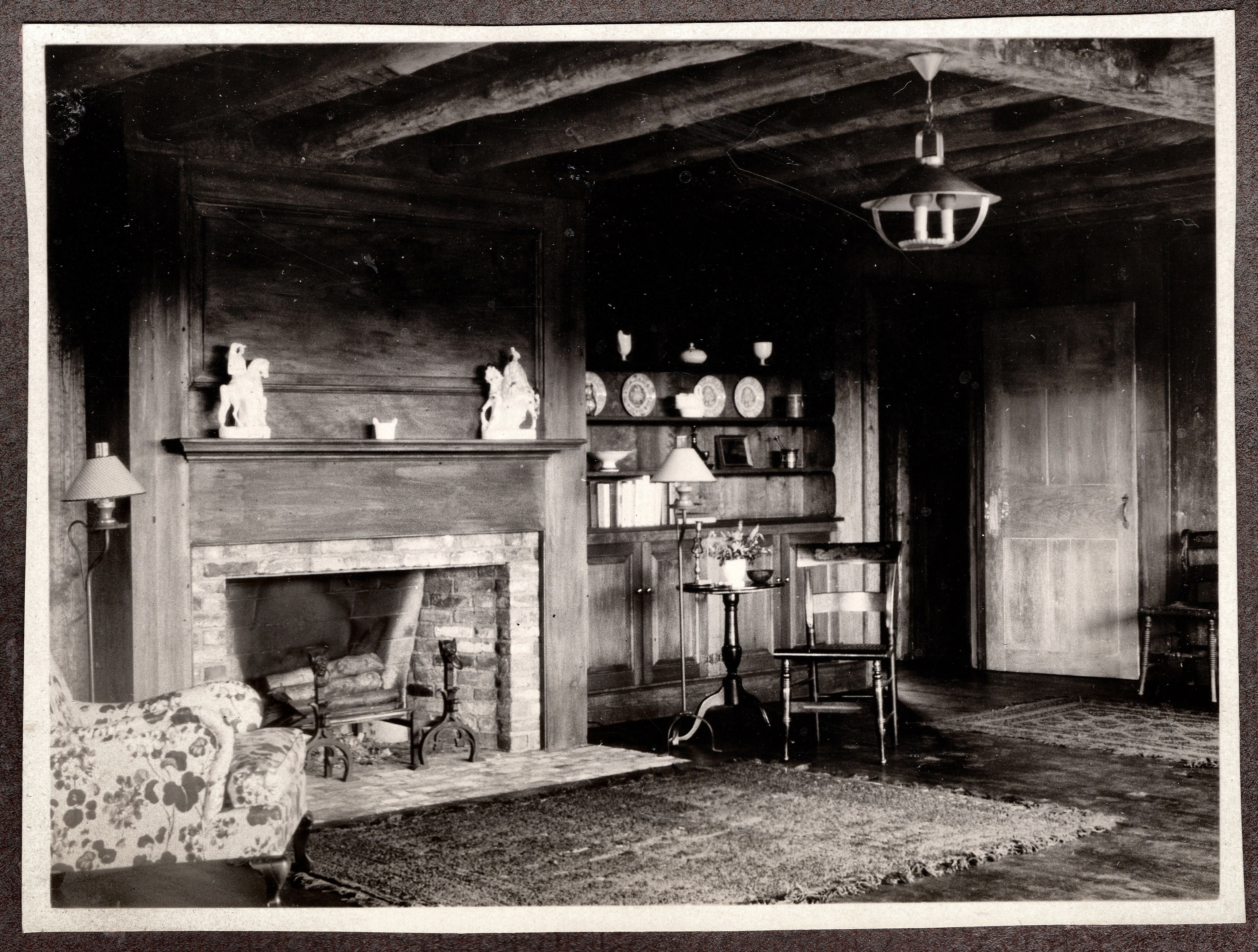
None of which makes them plain people. The same family held an estate in Williamstown, built a house on Walker Street in Lenox, named all three places Orleton, took the train to Florida for the winter and parked a Winton in the yard at a price that would have put up a barn. The money is in these photographs too, once you look for it: a cupola and weathervane set on a farm building, a flagstone walk, clipped conifers down a curved drive, and the fact that somebody thought the place worth a full photographic survey in 1934, when most of their neighbors were selling.
What they declined was display indoors. They spent on the working half of the farm and lived in the other half without decorating it — which is a choice only people who could have done otherwise get to make. That sensibility did not leave with the people who set it. It is still what the house is like.
There is one more thing in the album, written on a brown page under the year 1916, in the second hand: Barn that burned. It was along side of the road to the Farm House and covered the vegitable garden and space where chicken house is now. The spelling is the album’s. Whether that is the same breeding barn the family says Henry Mali built in the 1870s and lost to fire is the open question of the longer story.
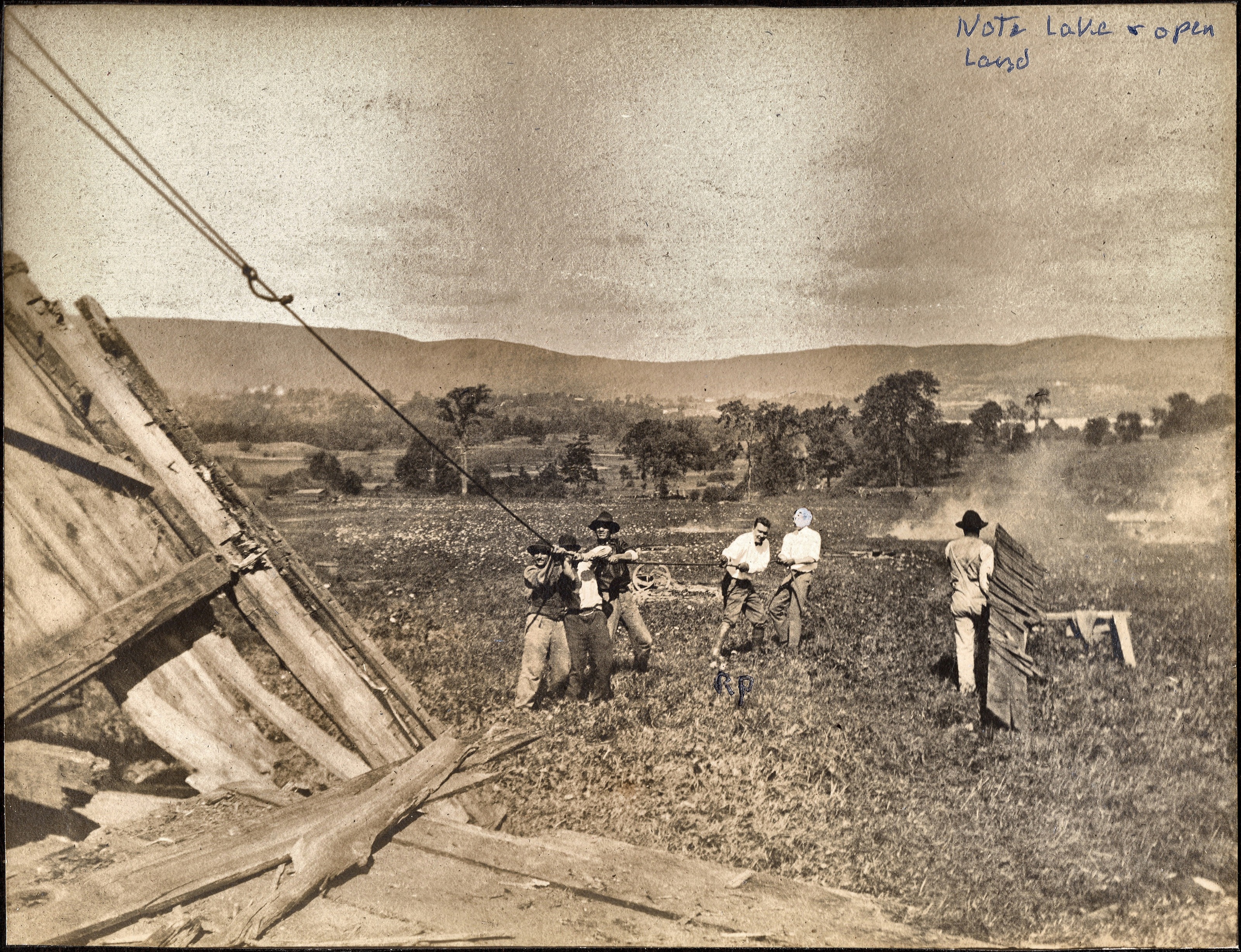
That last photograph is the one to sit with. The hills here were cut over, and from these fields you could see clear across the Stockbridge Bowl to Shadow Brook — the hundred-room house that Anson Phelps Stokes built in 1893 and that burned in 1956. A daughter of this farm married into that family. Stand on the same ground now and the second growth has closed it: no lake, no far shore, no house.
VI. Horses
The place is still a horse farm, and the Colonial Carriage and Driving Society holds its driving events on it. The custom it keeps alive is a Lenox one, and it is older than the estates that made Lenox famous: the Tub Parade, a procession of small flower-covered carriages down Main Street and Cliffwood at the end of the season. The Lenox Library holds photographs of it from the 1880s and 1890s.
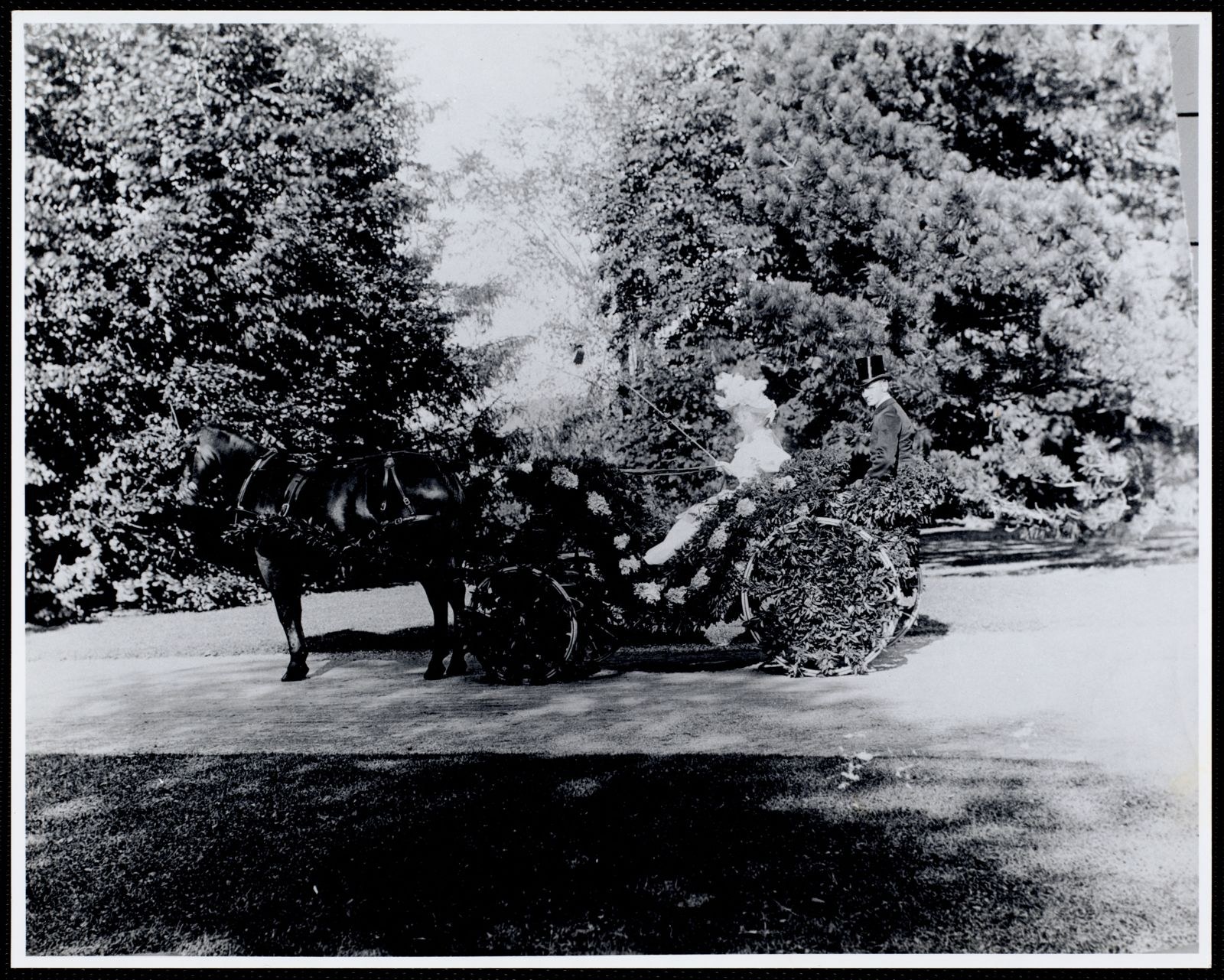
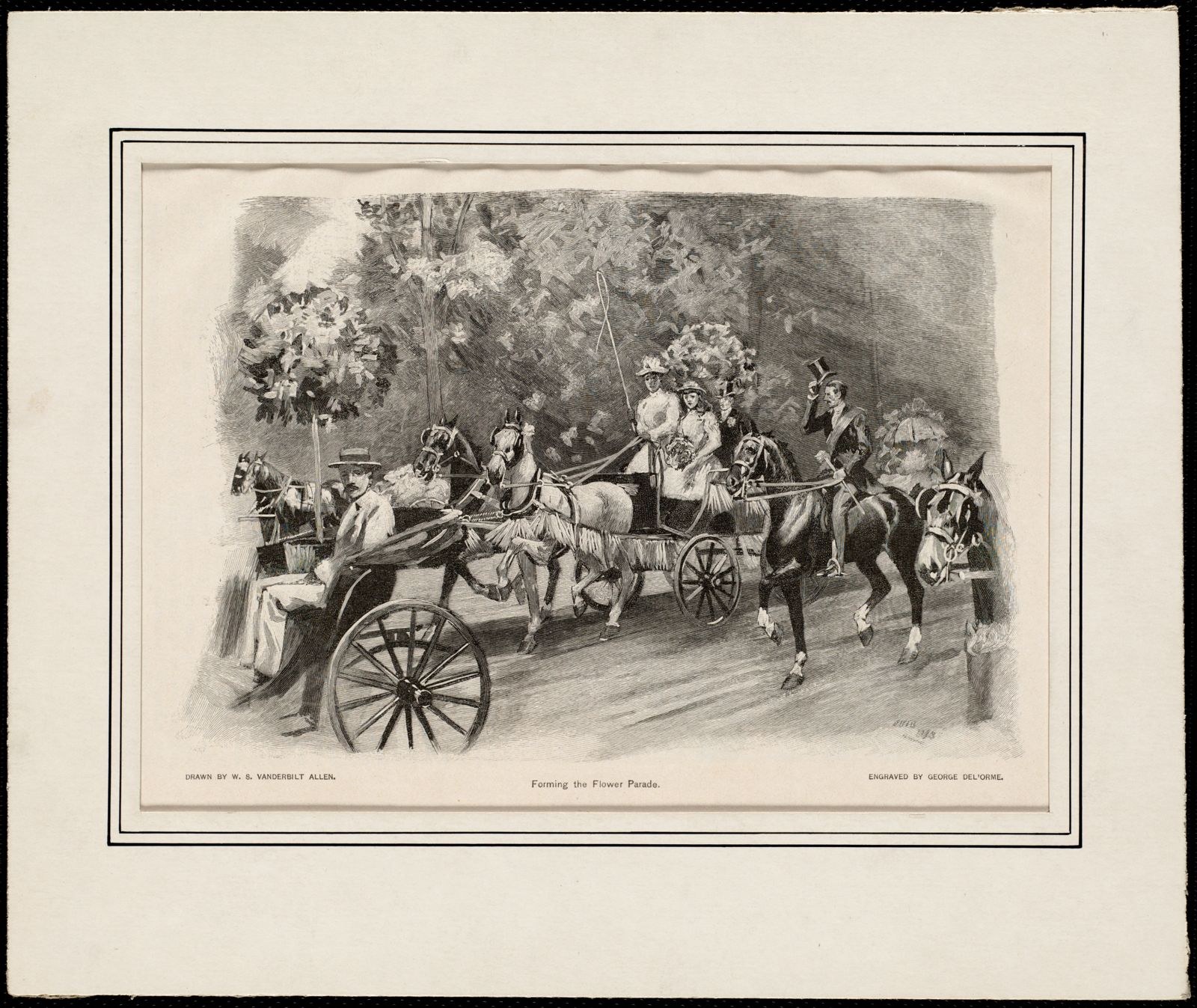
Those were taken thirty years before anyone wrote Orleton Farm in a directory, on a street four miles from it. They are here because they are what the carriages on this farm are a continuation of, and because the coachmen story follows the other end of it — the men who drove, and the motor cars that replaced them.
The street list and the two Proctor entries: Central Berkshire County Directory, 1926, from the Pittsfield + Berkshire County MA Directory Collection at the Internet Archive., printed pages 270, 293 and 298 (images 283, 306 and 311), reproduced in full on this site. The earlier canvass: Crowley & Lunt, South Berkshire Directory, 1923–’25, Stockbridge section, printed page 345 (image 333) and image 339. The 1874 names: Briggs & Co., Berkshire County Directory for 1874, Stockbridge section (images 507 and 509); that volume prints a name and a trade and no street, so it places the Palmers and John B. Hull in the town but not on this road. Map: Atlas of Berkshire County, Massachusetts, Barnes & Farnham, 1904, Stockbridge plate 27, Boston Public Library copy through Digital Commonwealth, no known copyright restrictions; parcel names are read off the plate and are the atlas’s, not this site’s. The State Library of Massachusetts holds a second copy of the same atlas whose scans require written permission, and it is not used here. Photographs: Lenox Library Association, Local History Photograph Collection, through Digital Commonwealth, CC BY-NC-ND 4.0; titles and dates are quoted exactly as catalogued, and the inscription on the back of the Walker Street print is given as the Library records it. Harley Thomas Procter’s dates, parentage, the naming of Ivory Soap in 1879 and his death in New York in May 1920 are from the Daytonian in Manhattan account of his Manhattan house, which cites contemporary press. The 1912 build on Walker Street, the purchase from the Lenox Club, the McKim, Mead & White attribution, the Ivory Soap shape and the 1919 sale are the Gateways Inn’s own history of its own building and are attributed to it; none of them has been checked against a drawing, a deed or a firm list, and the Massachusetts historic-building inventory was not reachable for this page. The driving events are the Colonial Carriage and Driving Society’s own published schedule. No photograph of Orleton Farm was found in the Lenox Library, Digital Commonwealth or the Library of Congress; the photographs on this page are from the Procter family album at the farm, lent and reproduced by permission of Mary Stokes Waller, and scanned in October 2026. Album captions are transcribed exactly as written, misspellings included. The album carries two hands: captions on the prints are contemporary with the photographs, and a second hand annotates the same pages much later and dates itself — 1931, 1961, 1974. Harley Thomas Procter’s purchase in 1901 and the descent of the farm through Rodney Procter and Hope Procter Stokes are the family’s account; see the longer story. No Olmsted job under this name appears on the firm’s Berkshire list. The spelling Proctor is the directories’ and the photograph catalogue’s and is reproduced here as printed; Procter is the family’s own and is the spelling used in this site’s prose. The Herefordshire origin of the name, the two Procter vicars and the family graves there are a descendant’s account, received directly and given as family testimony; none of it has been checked against a parish register.