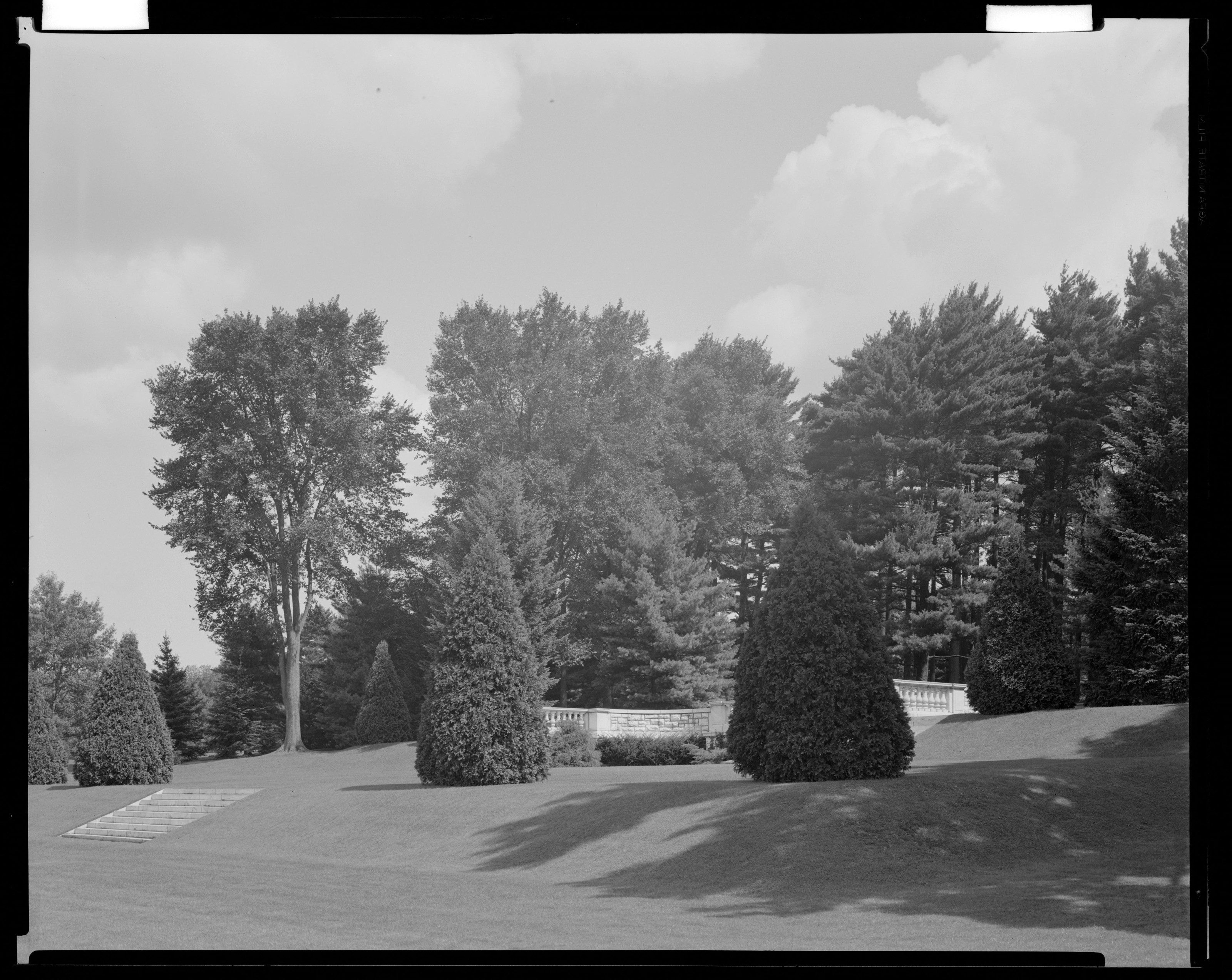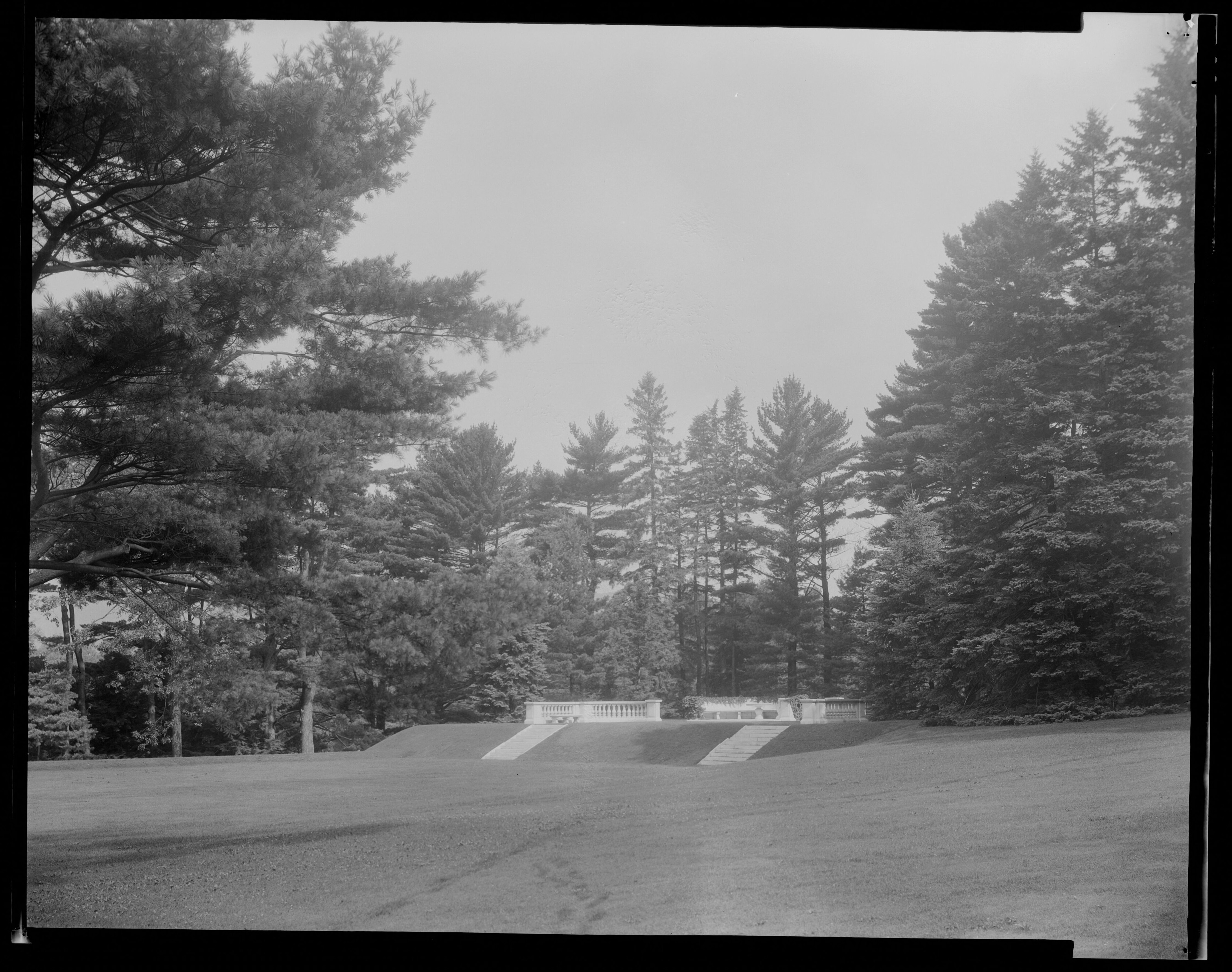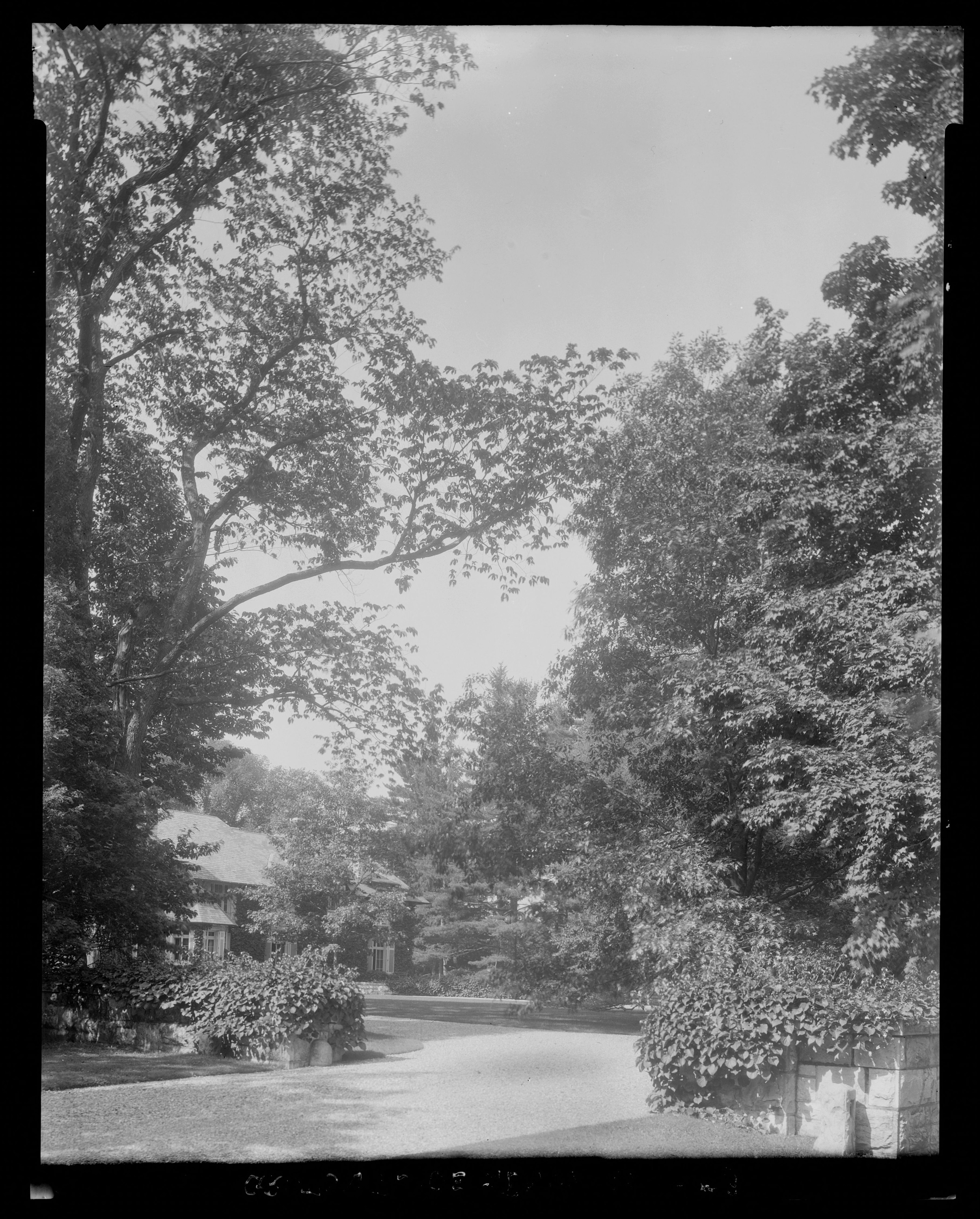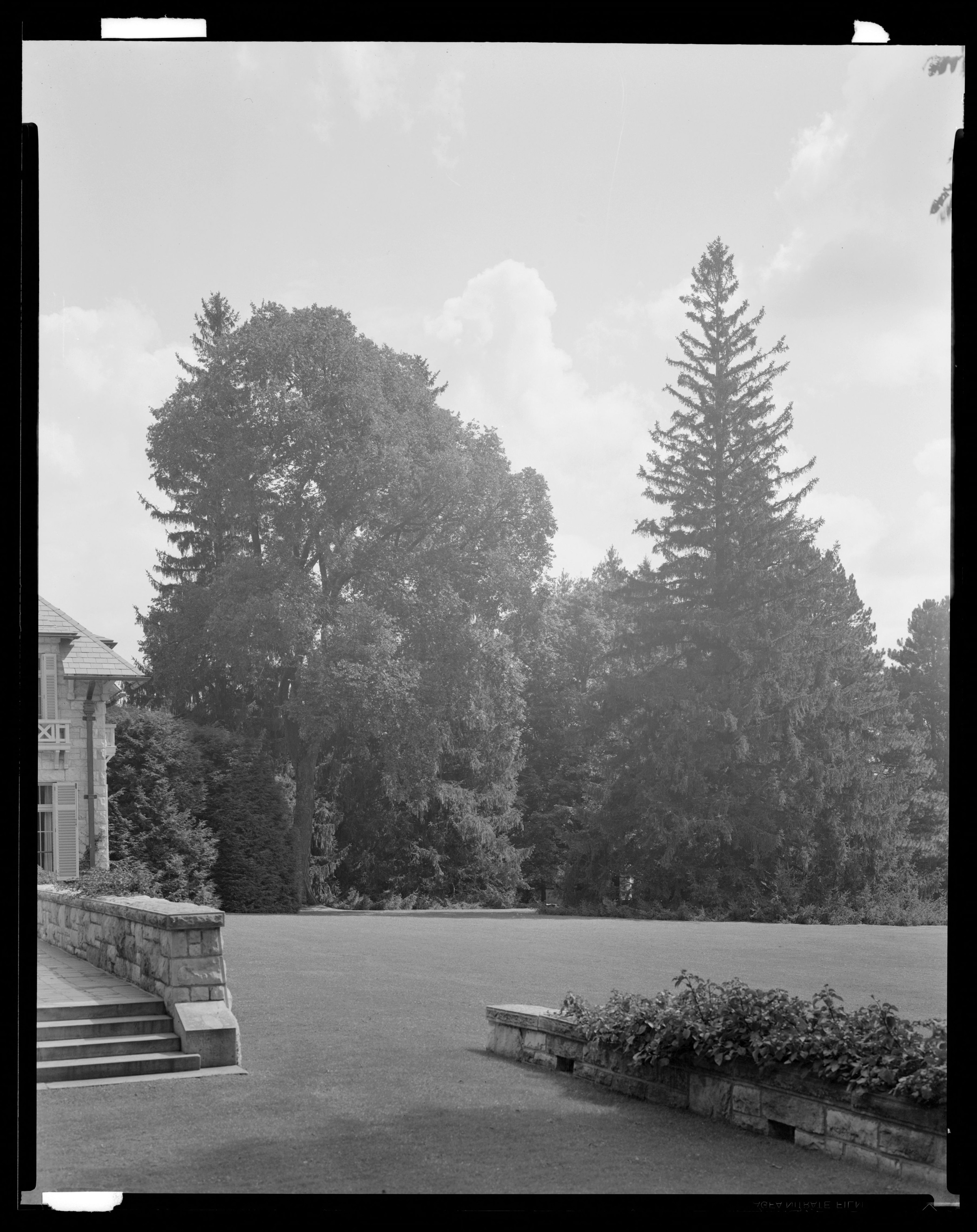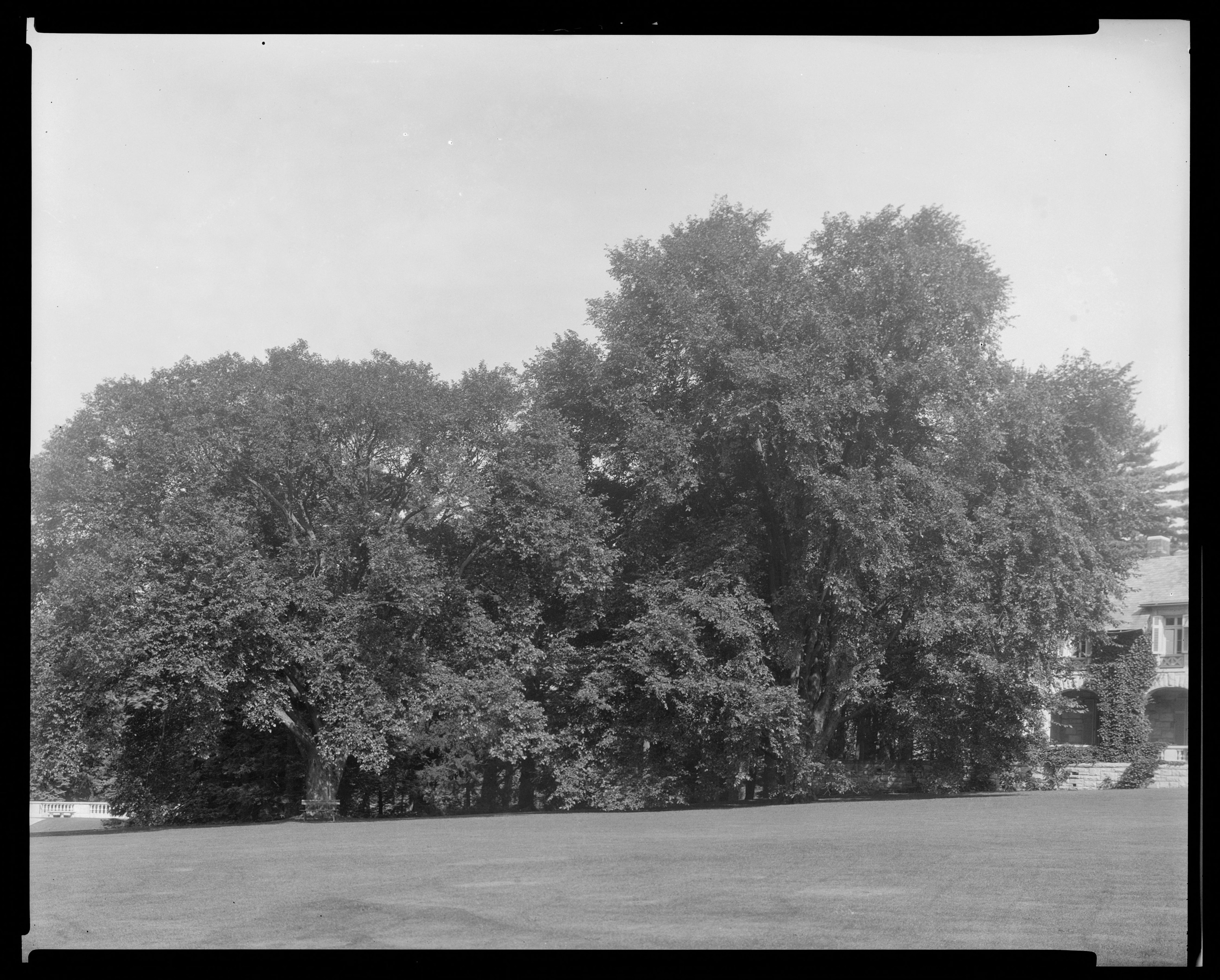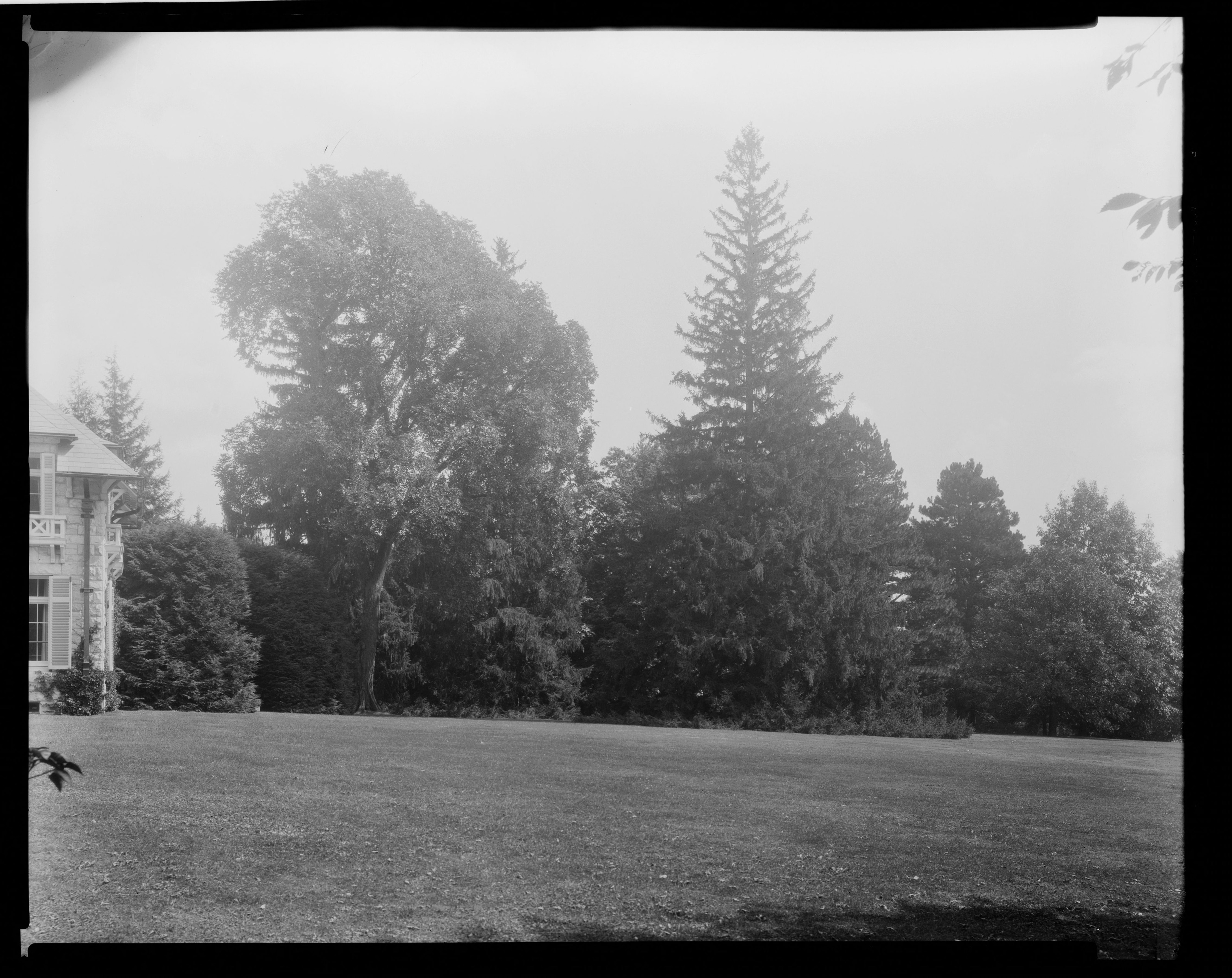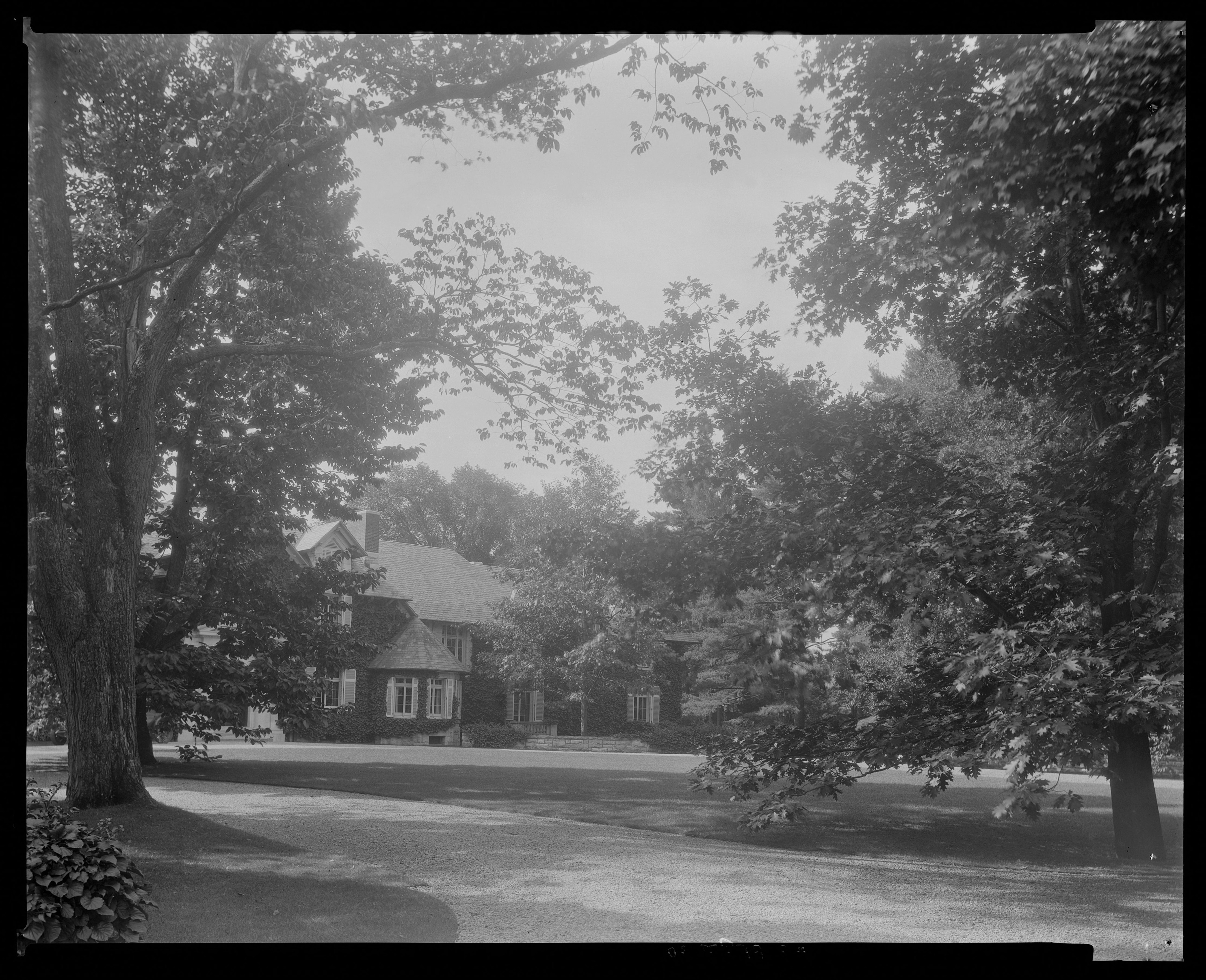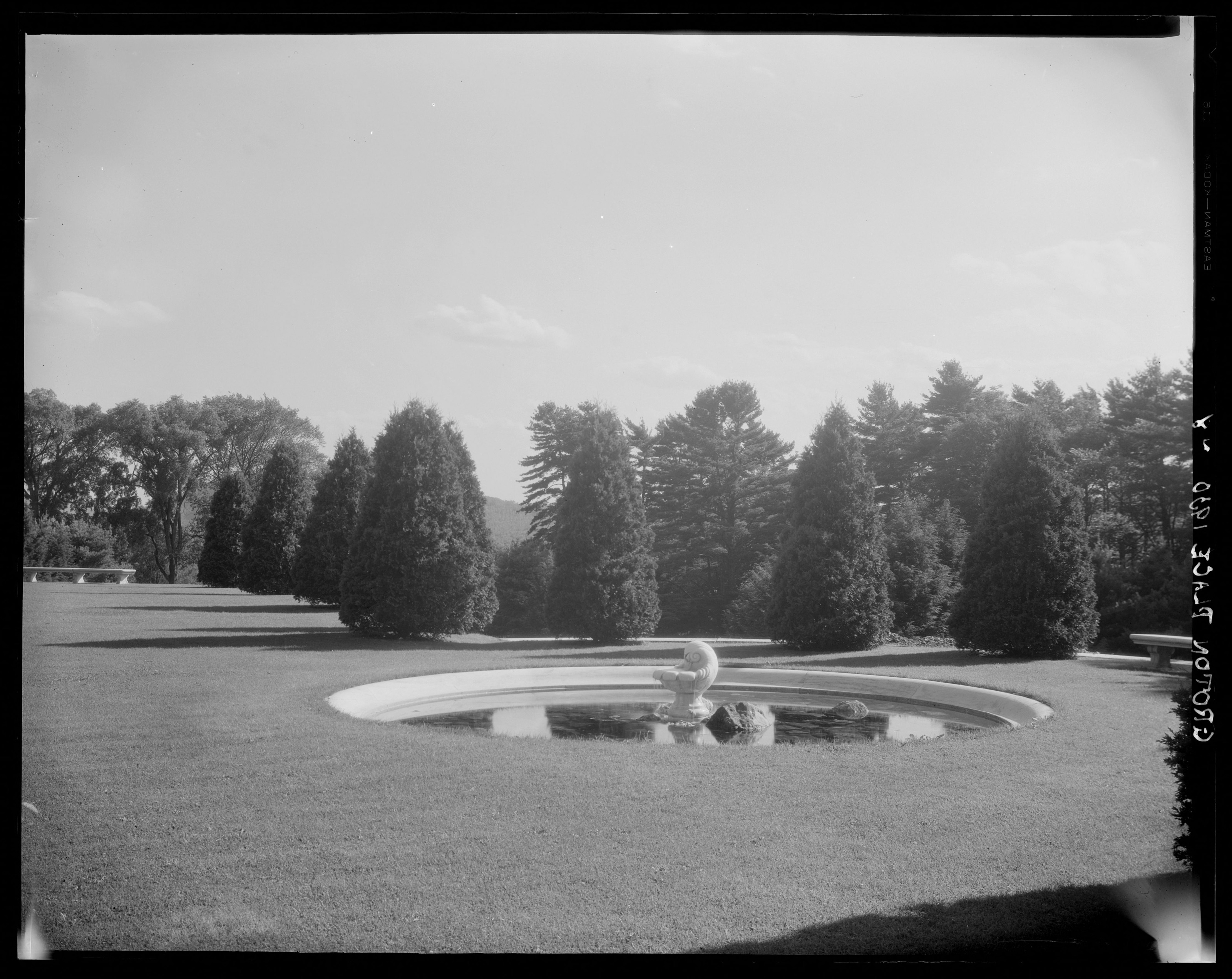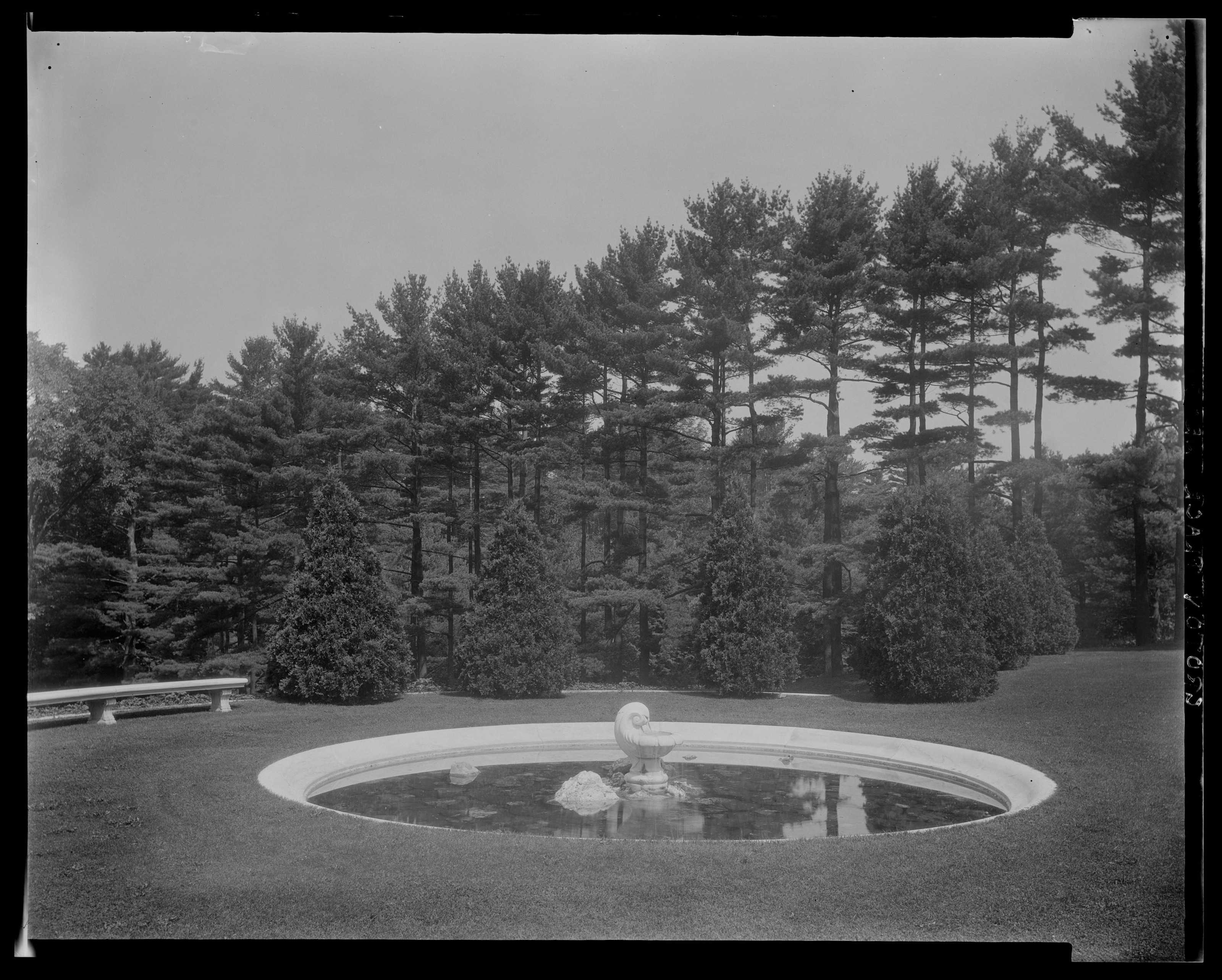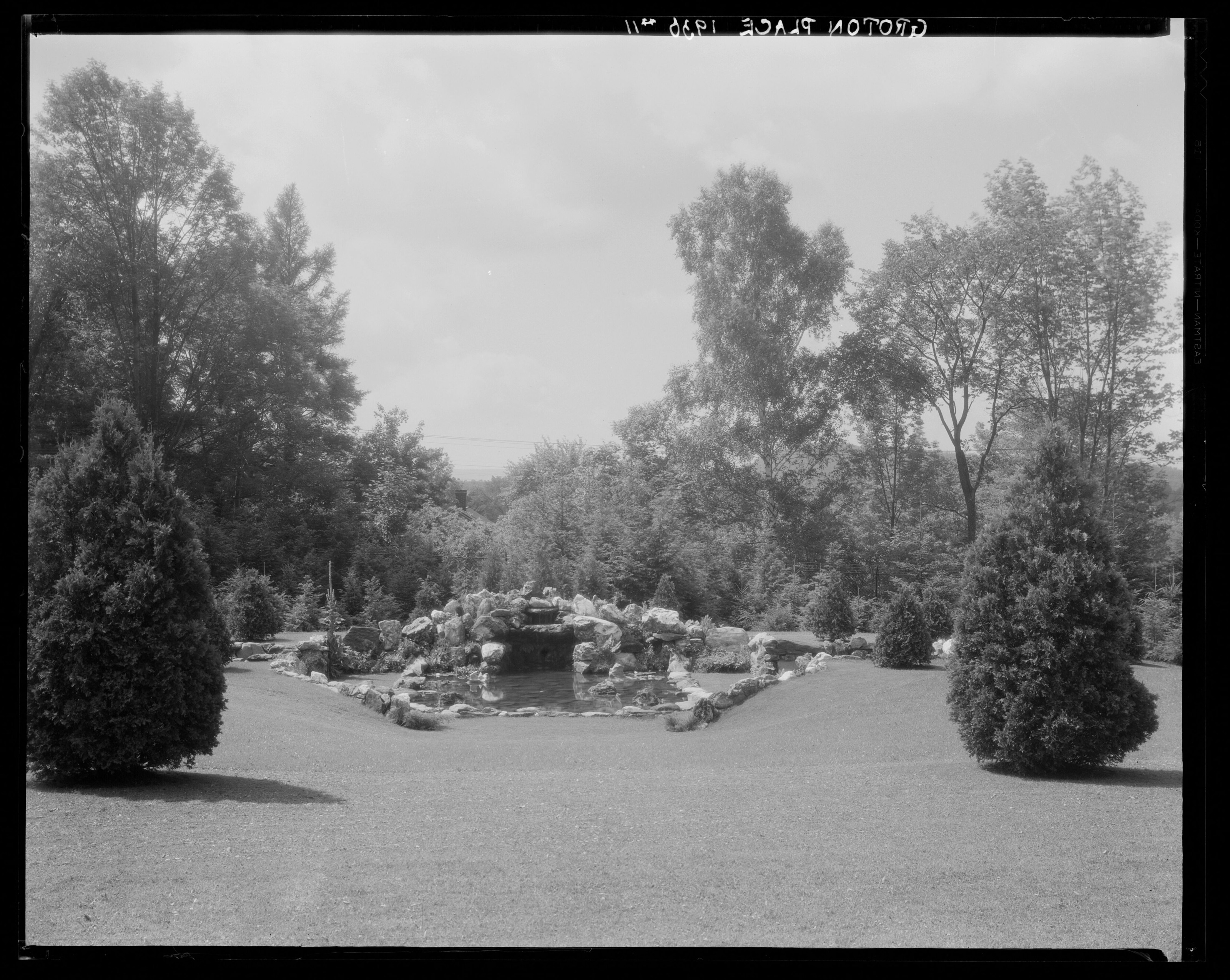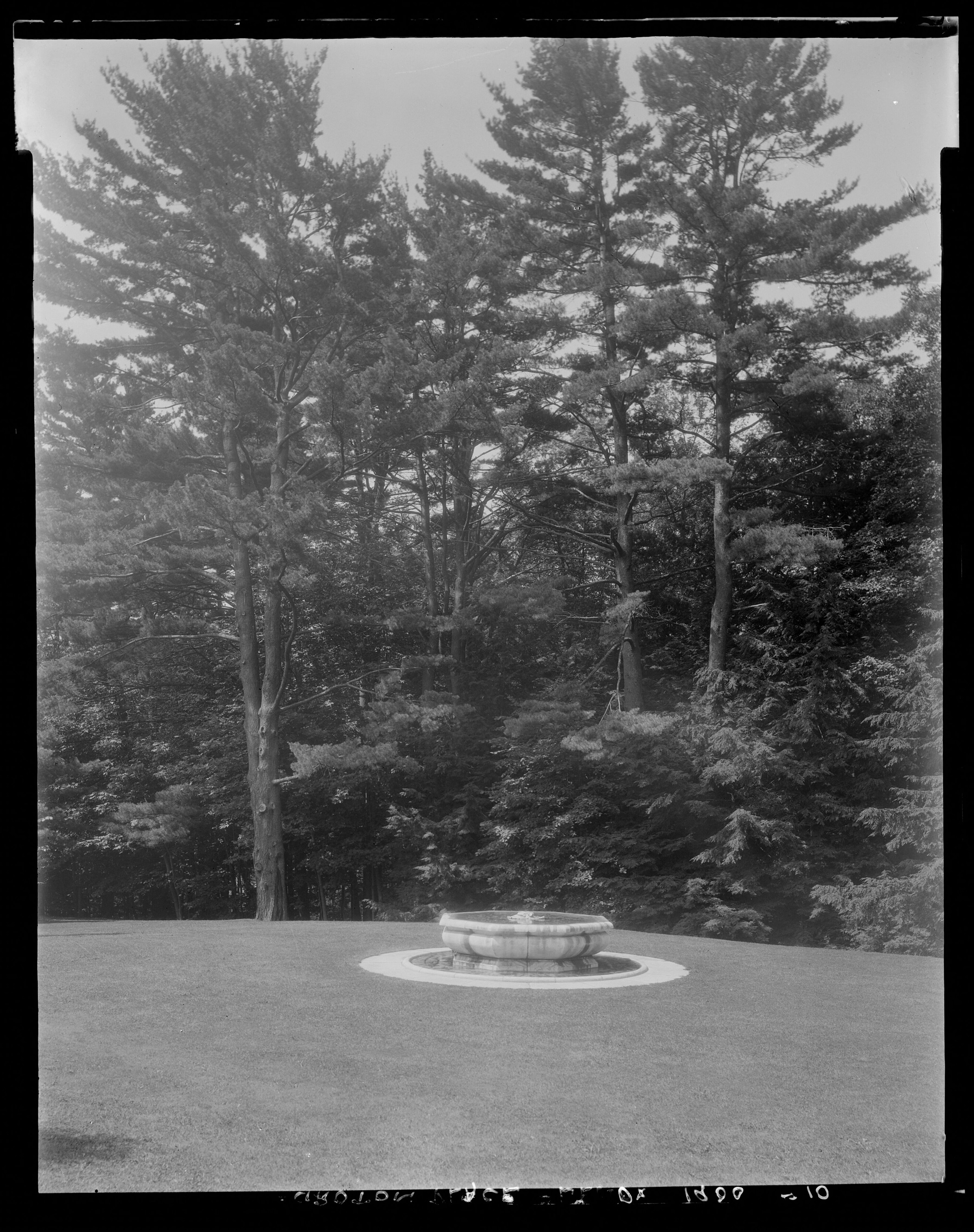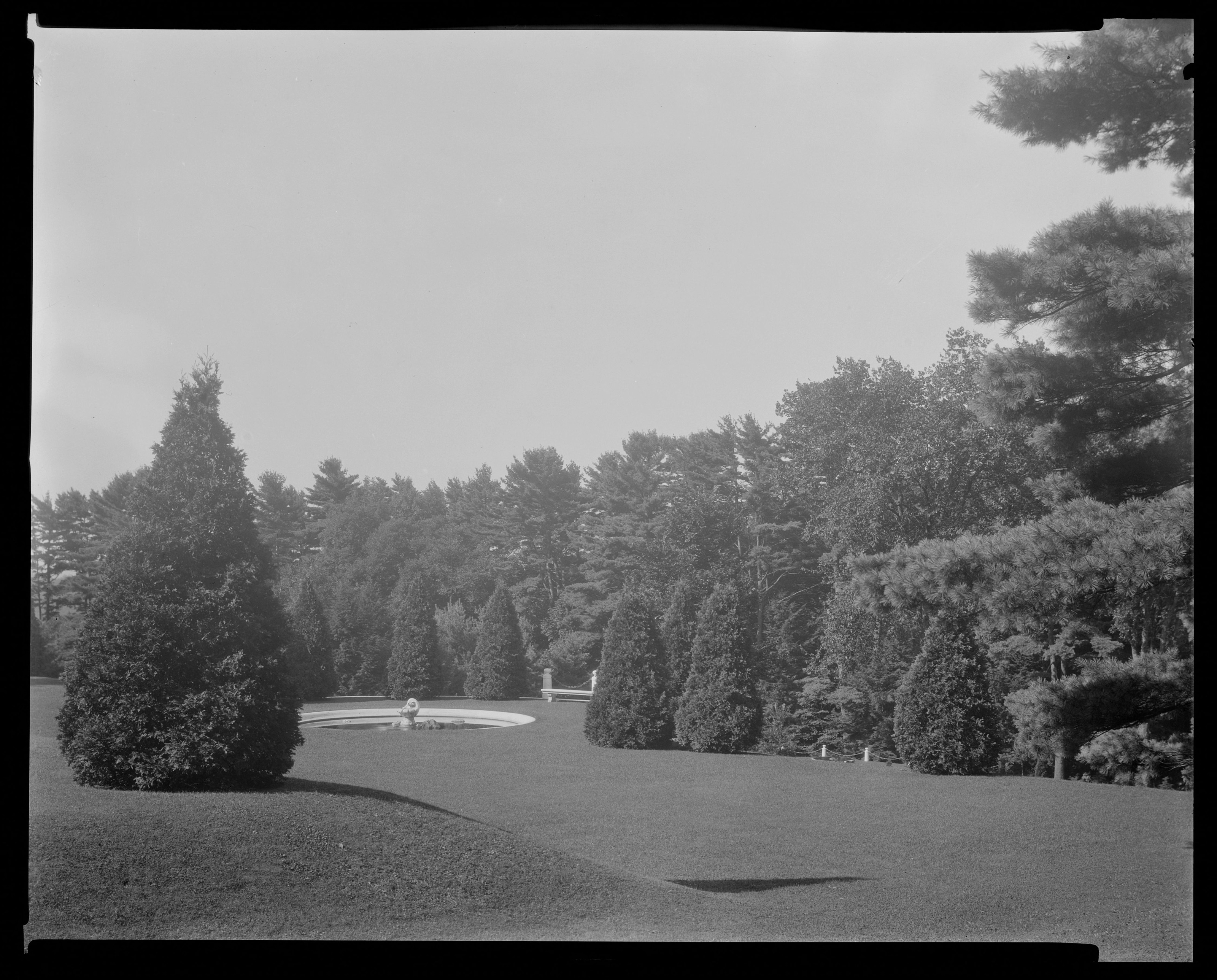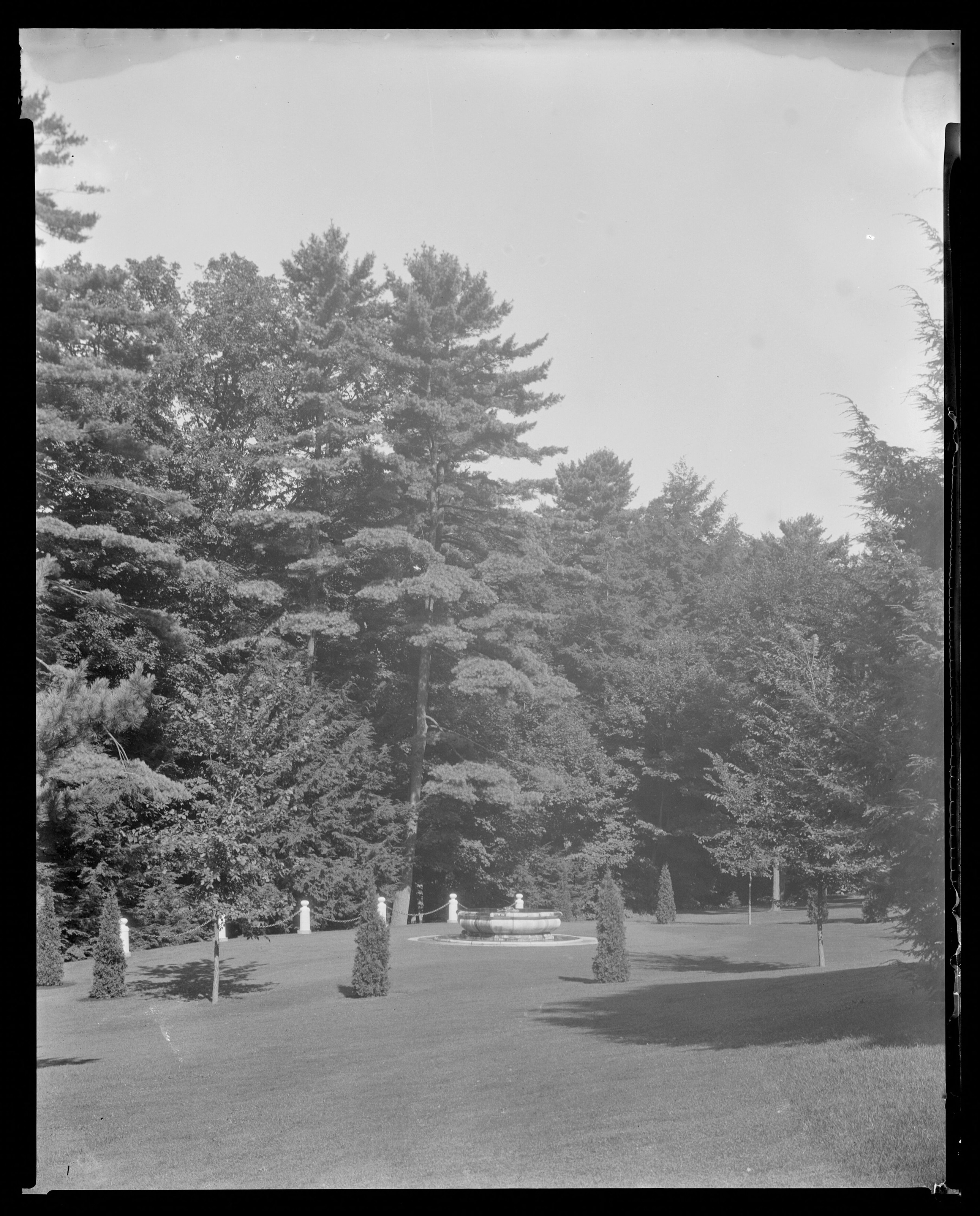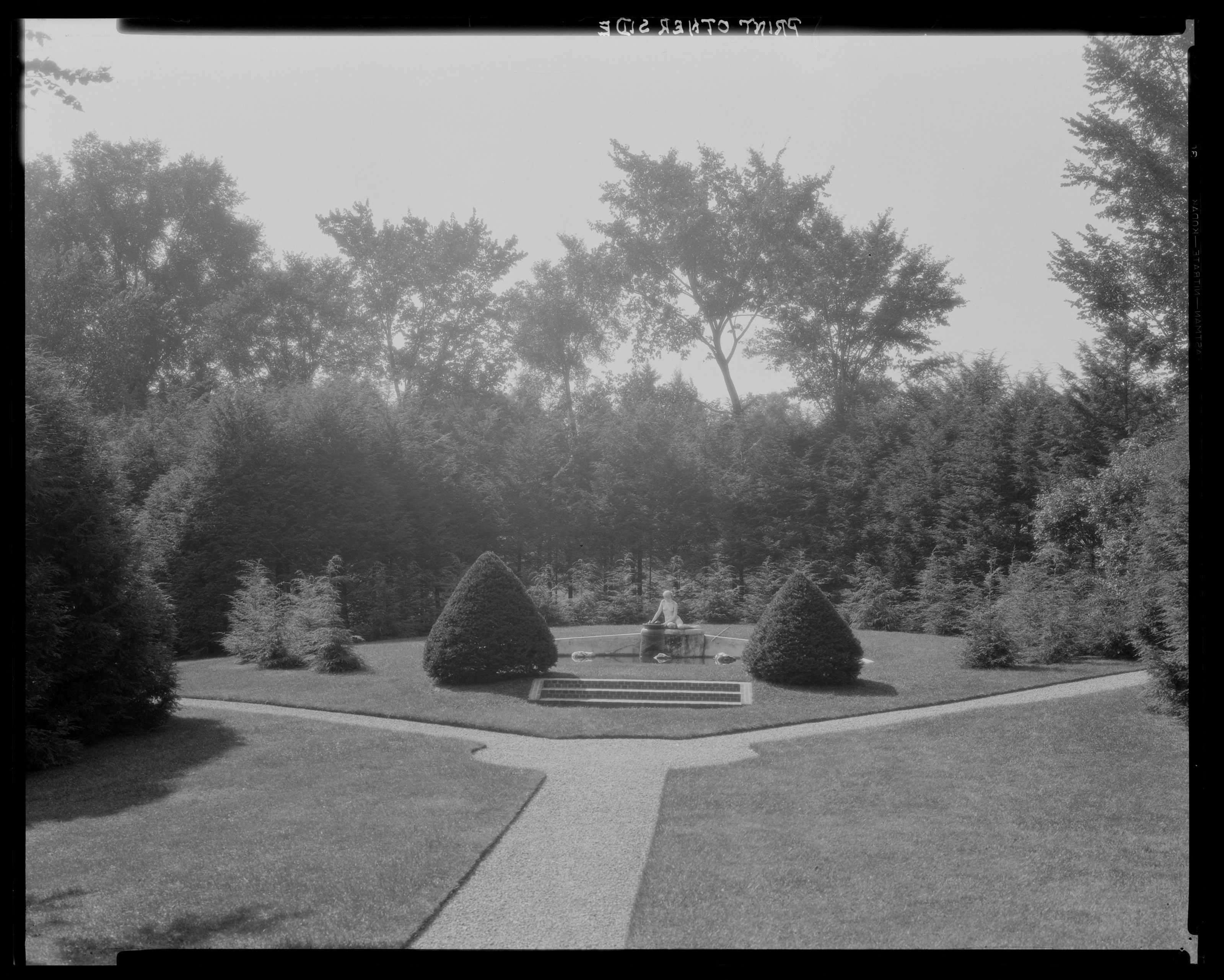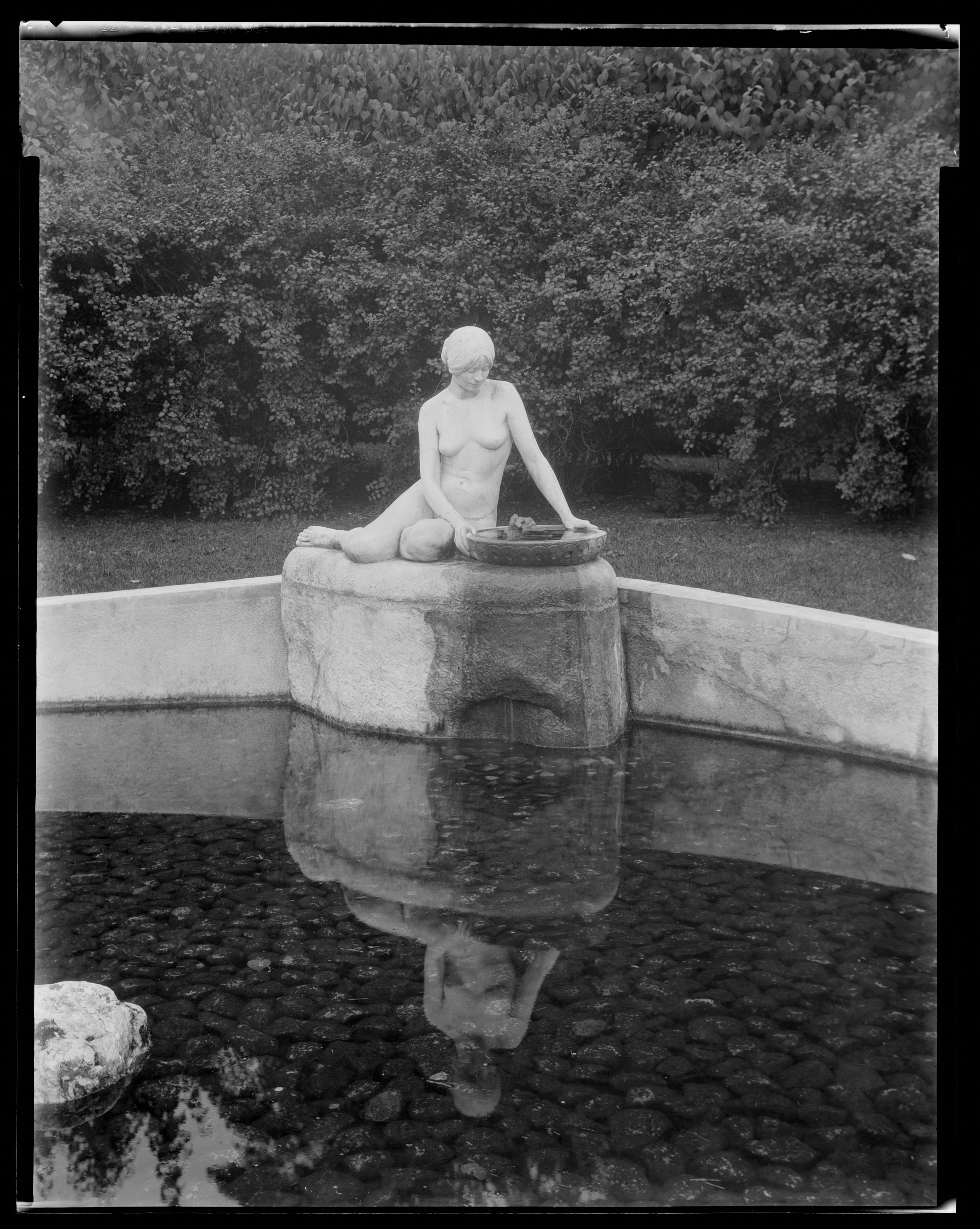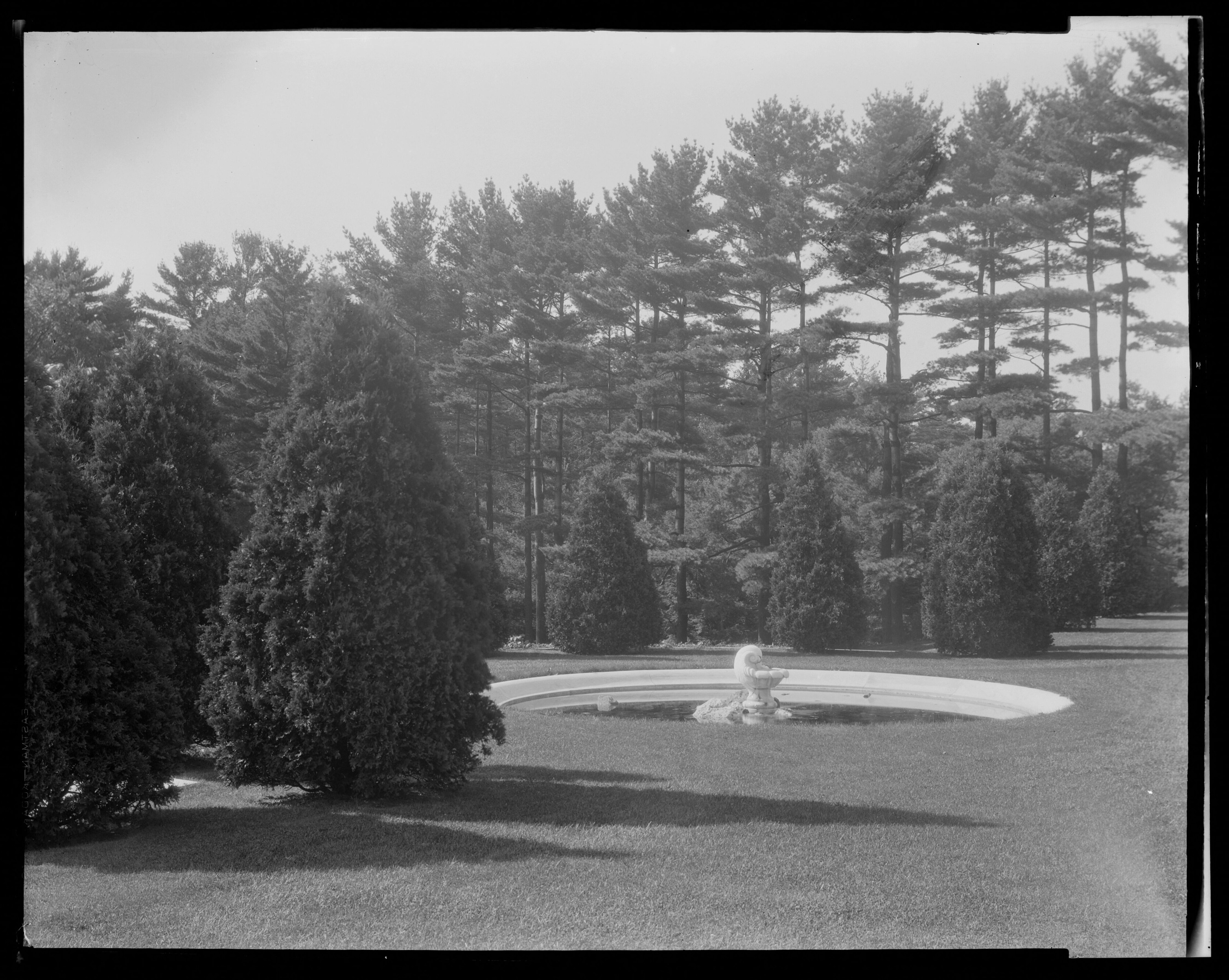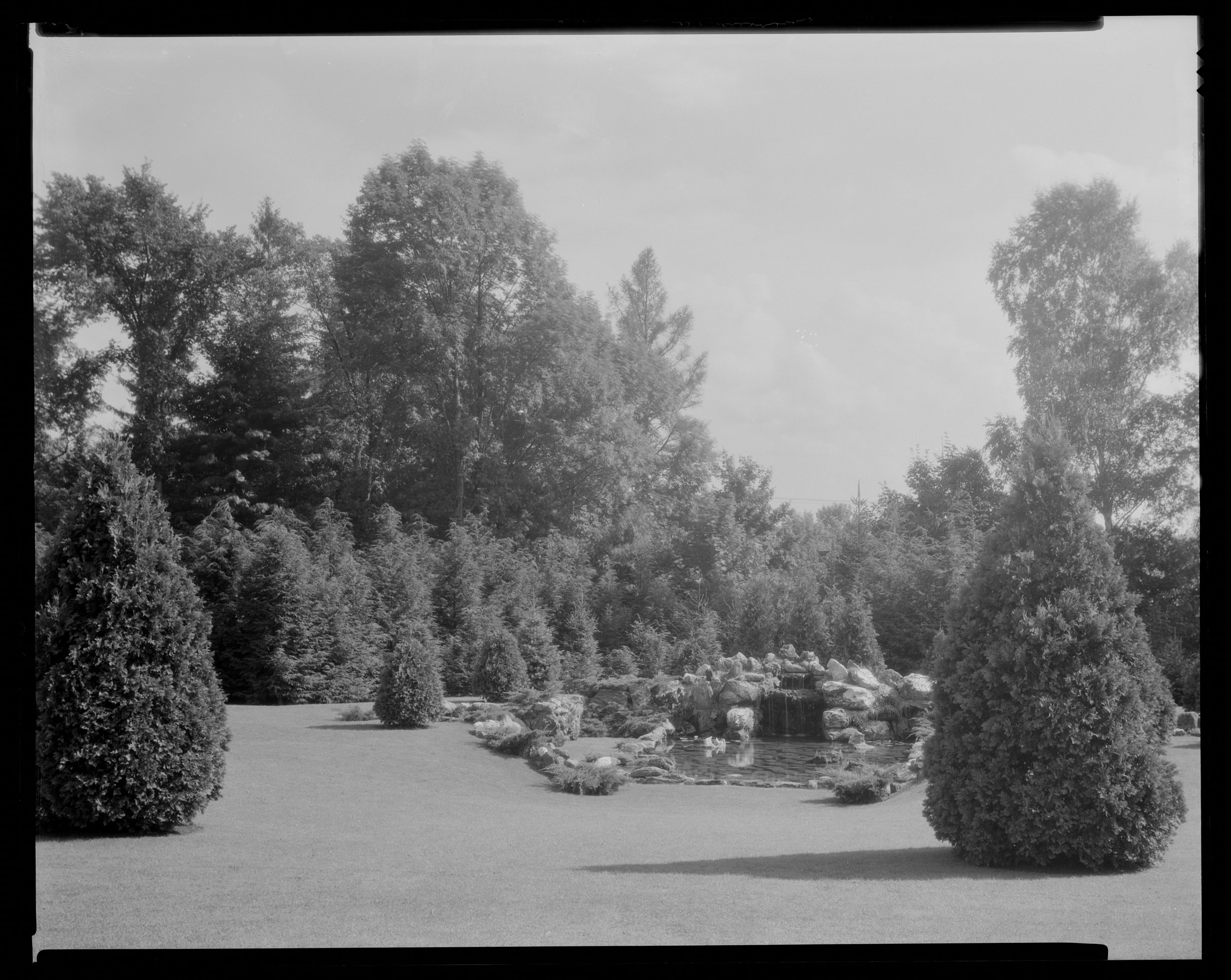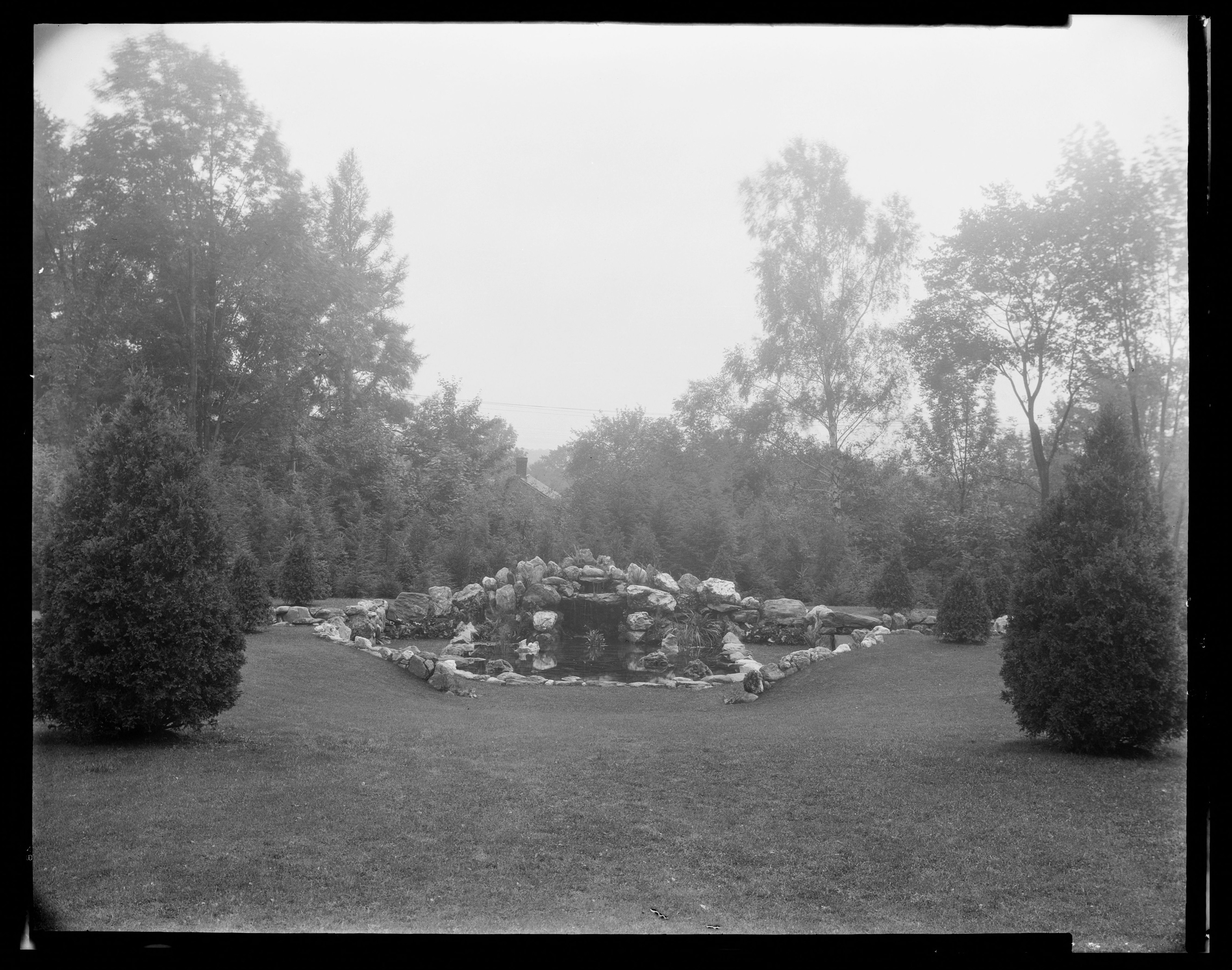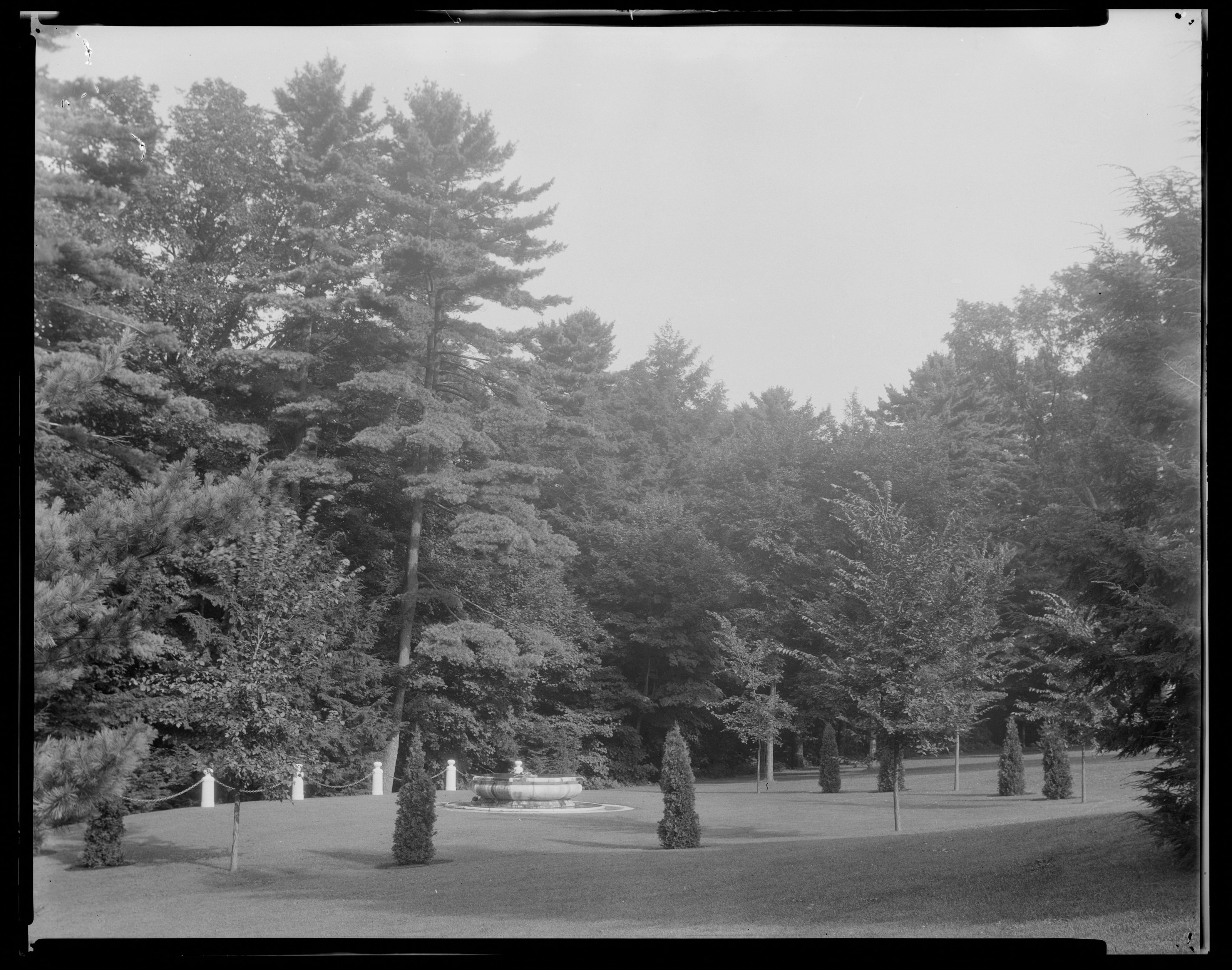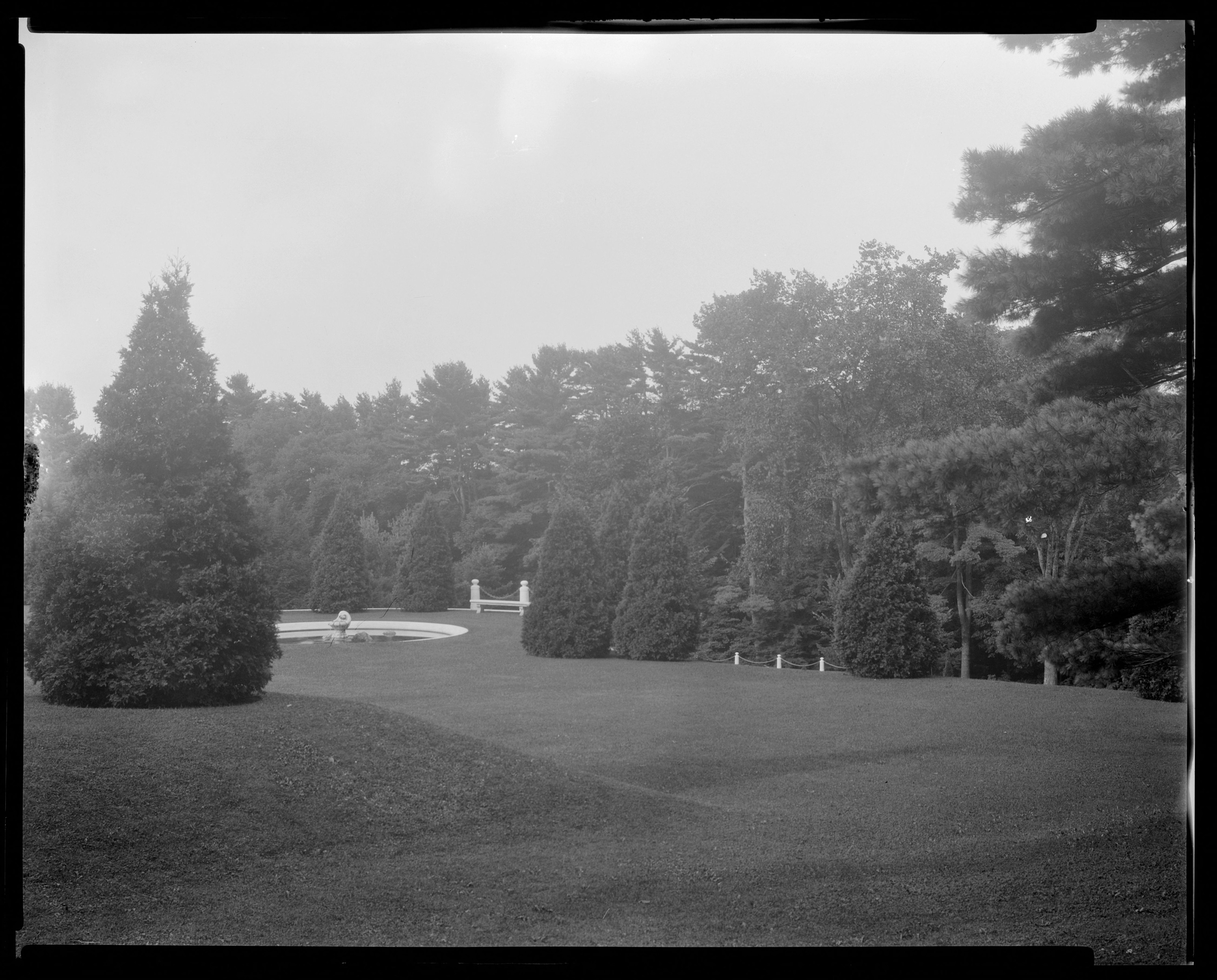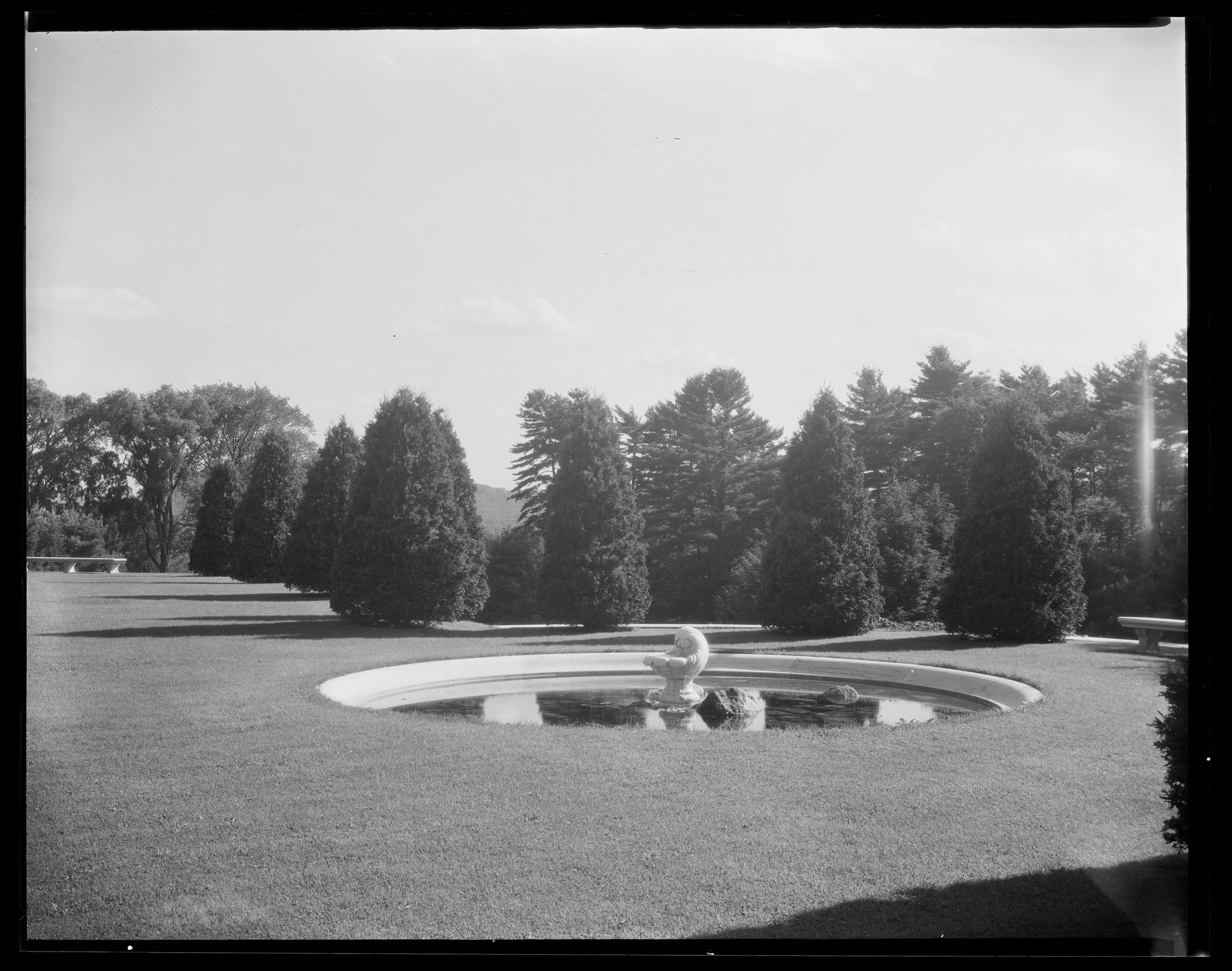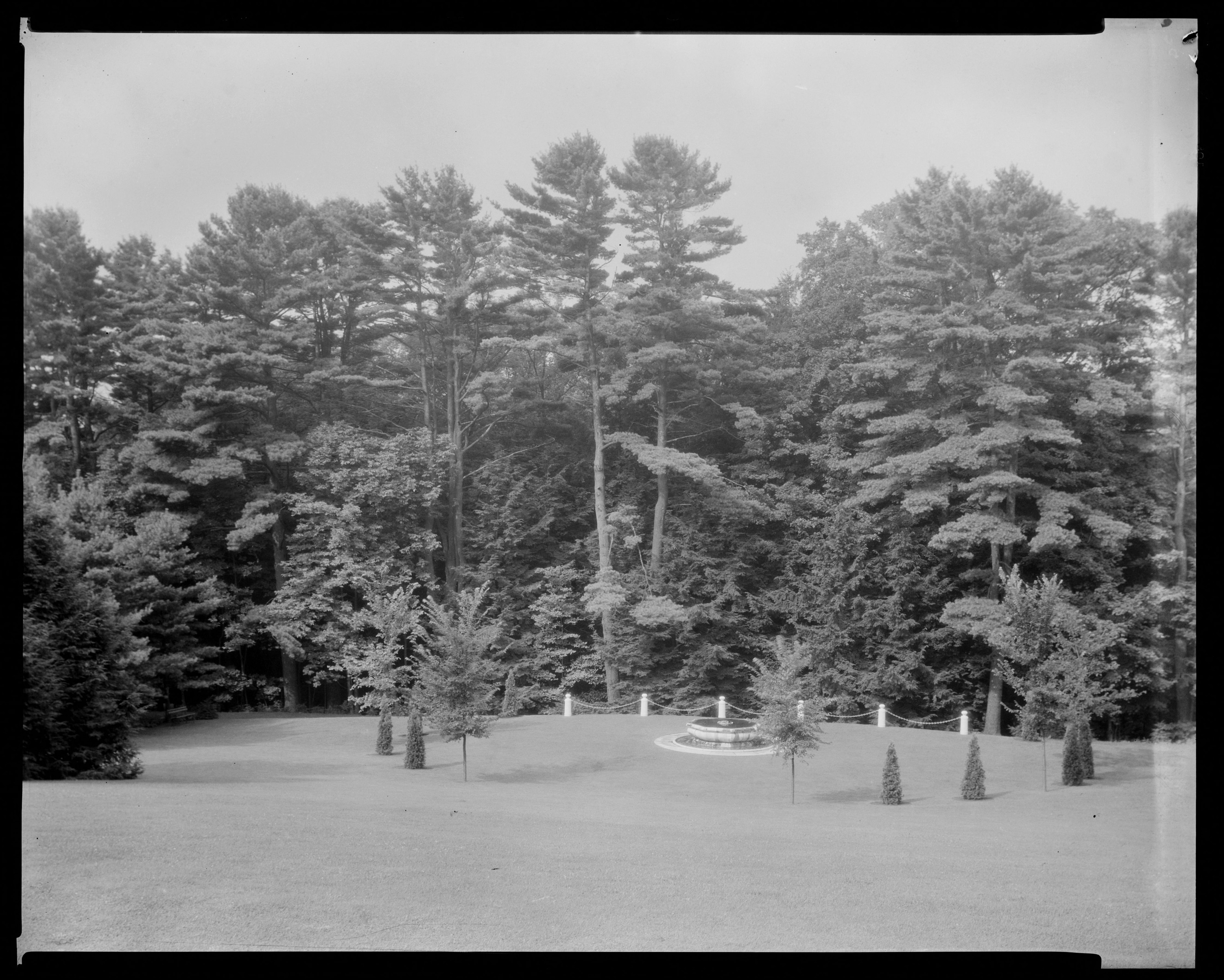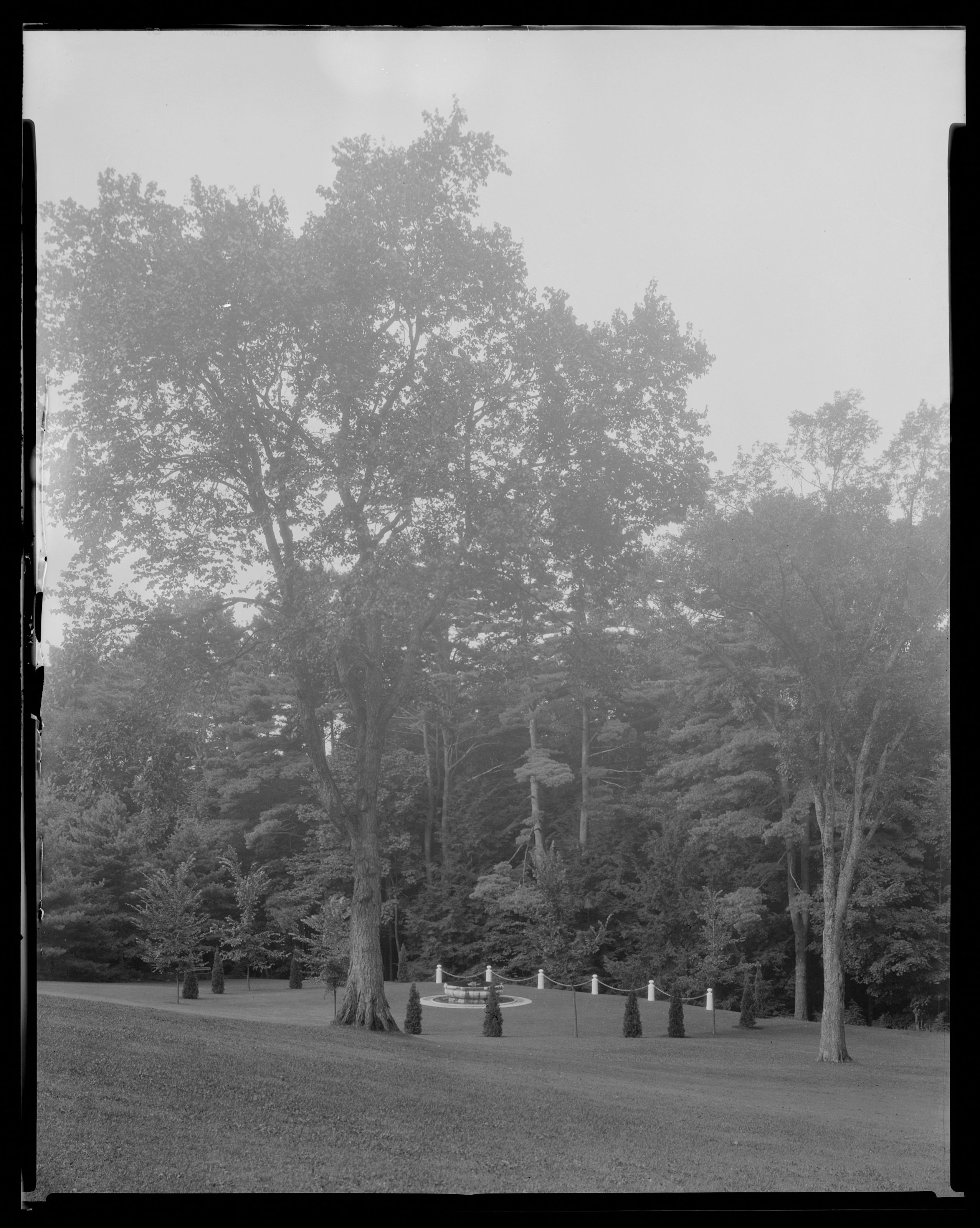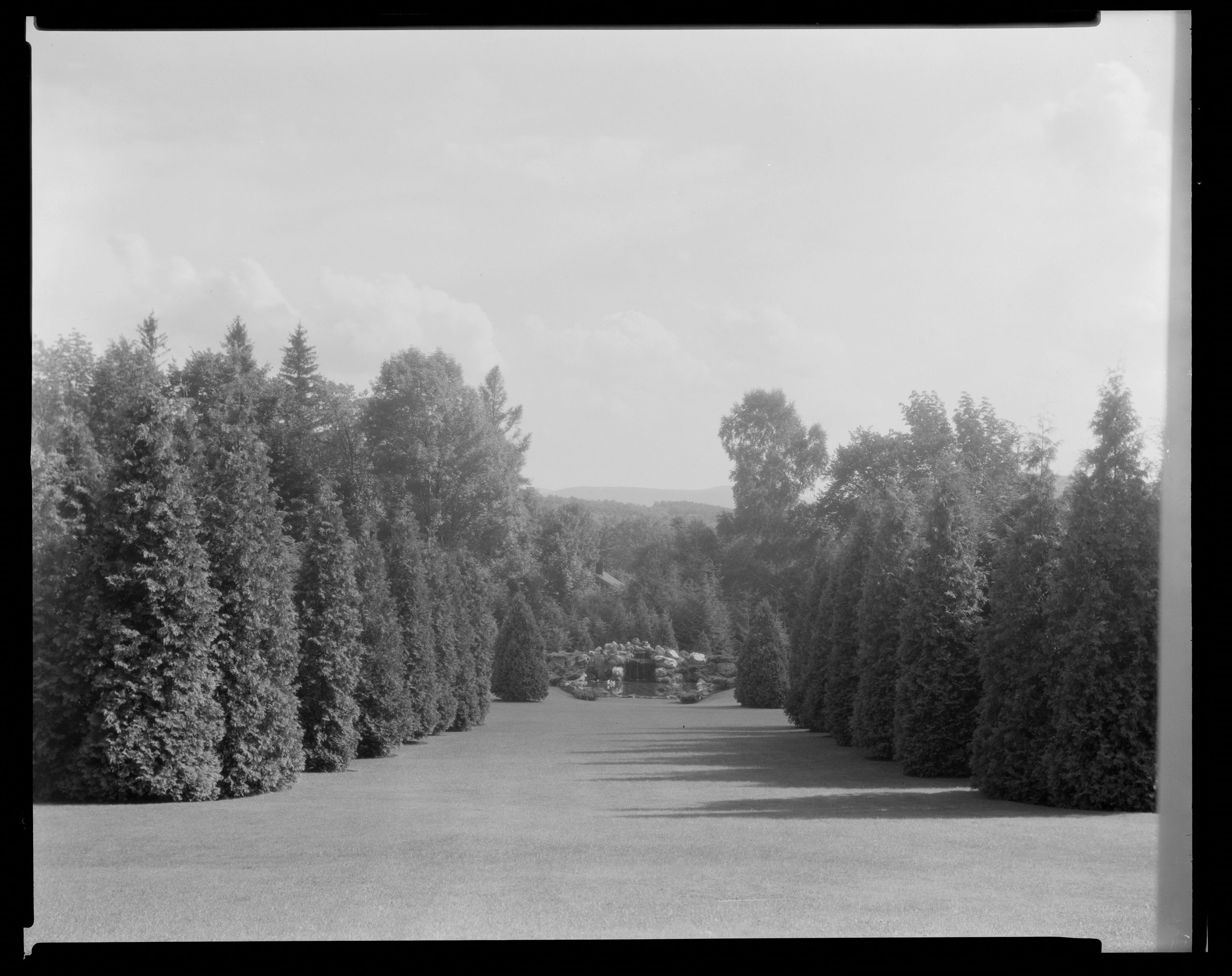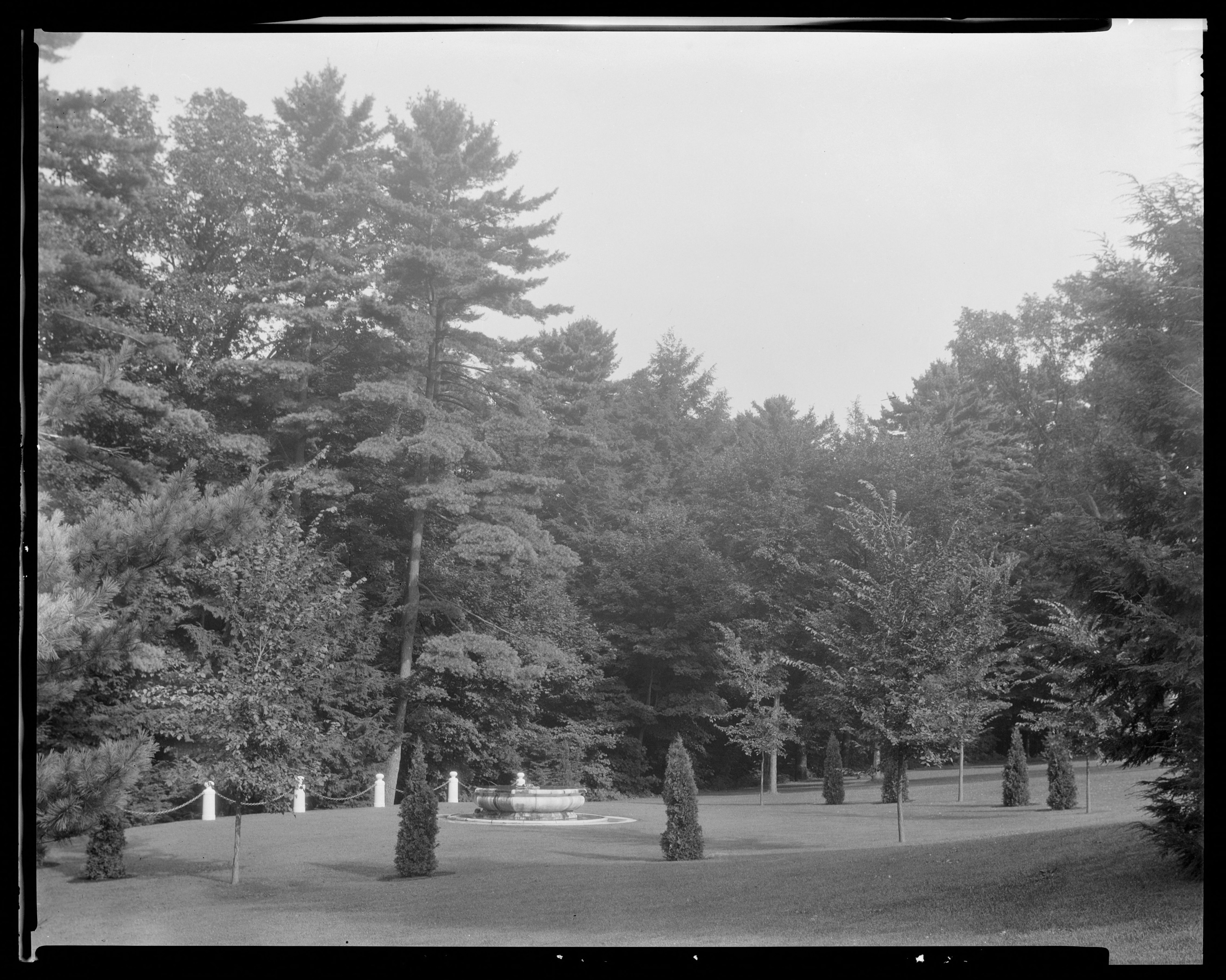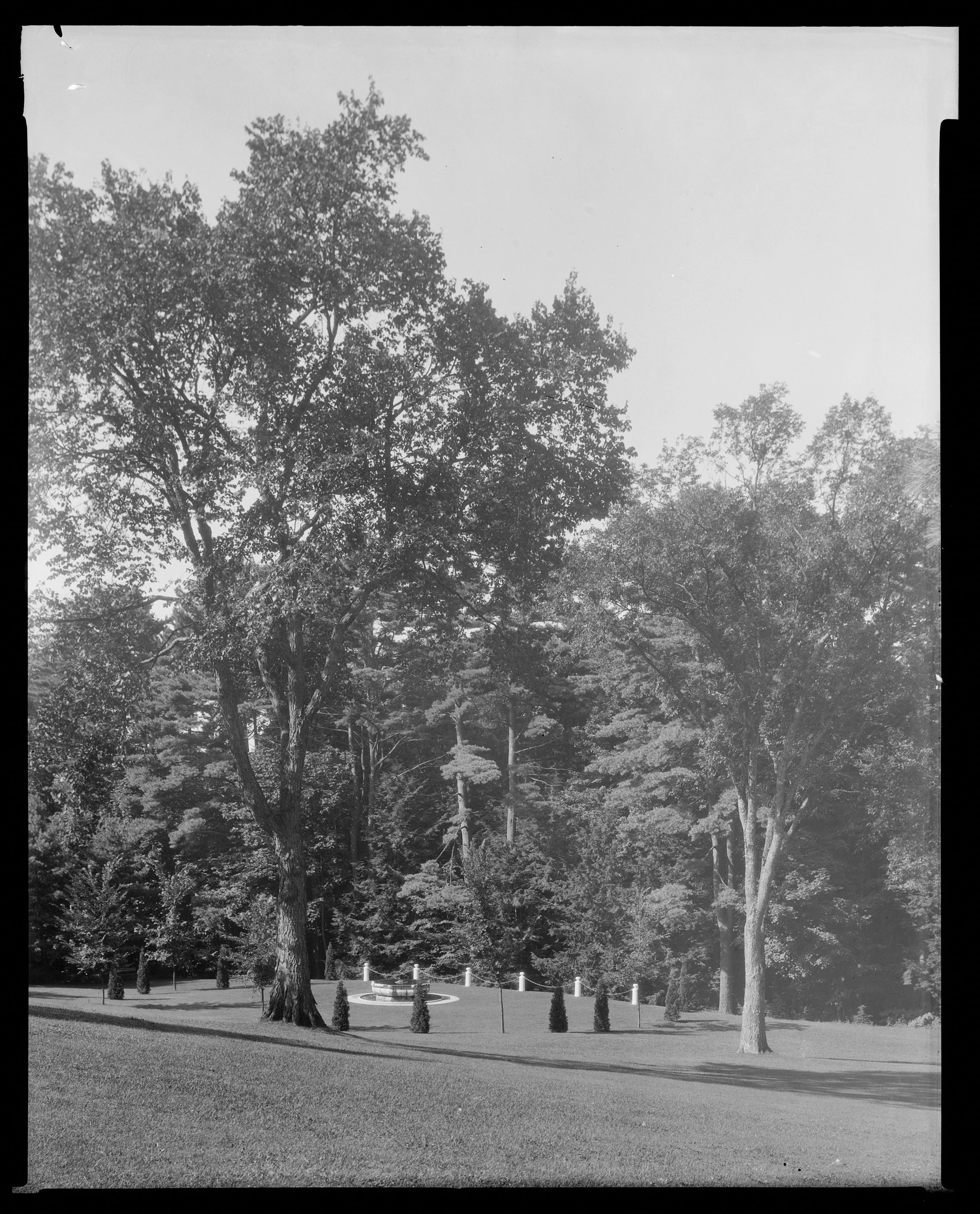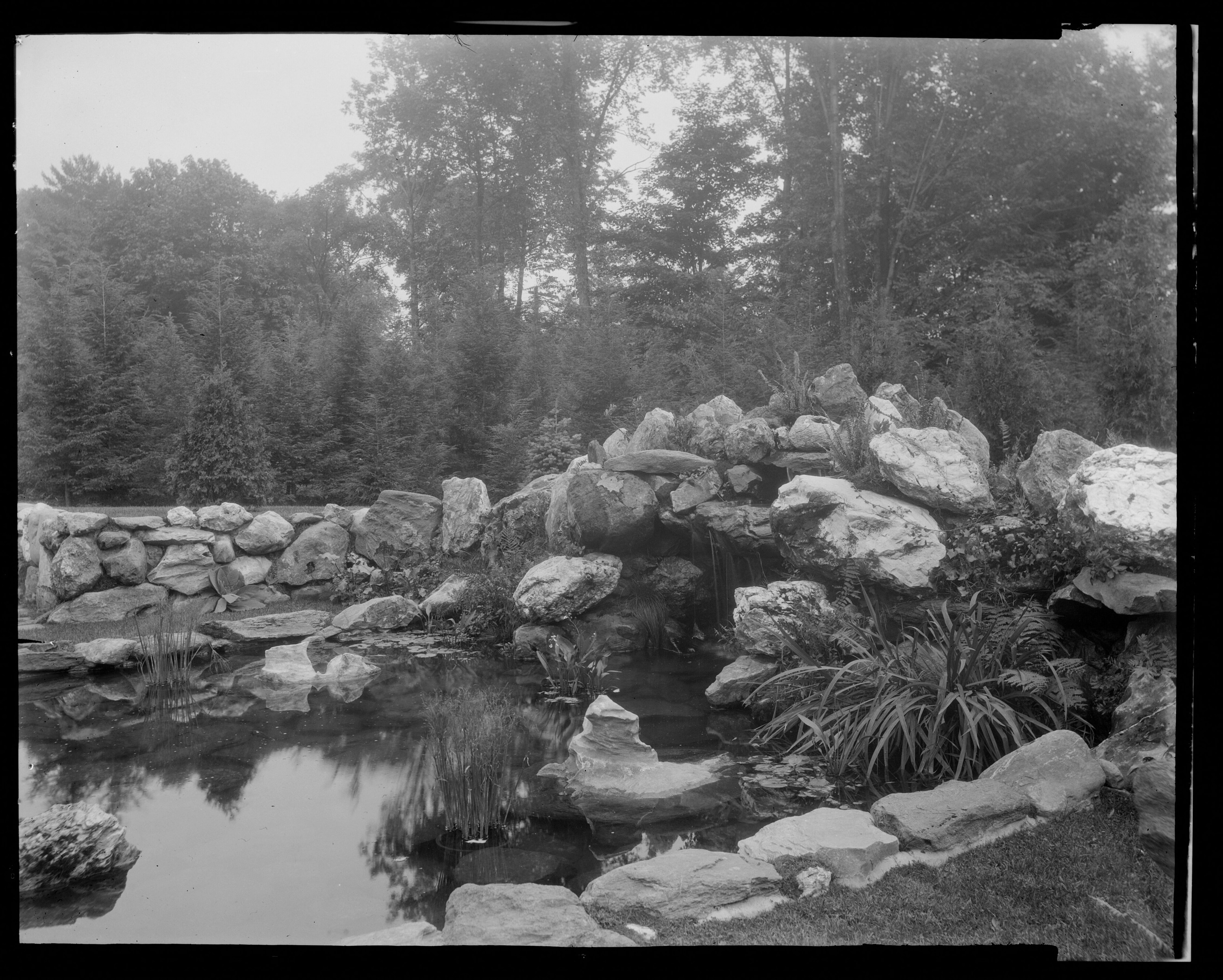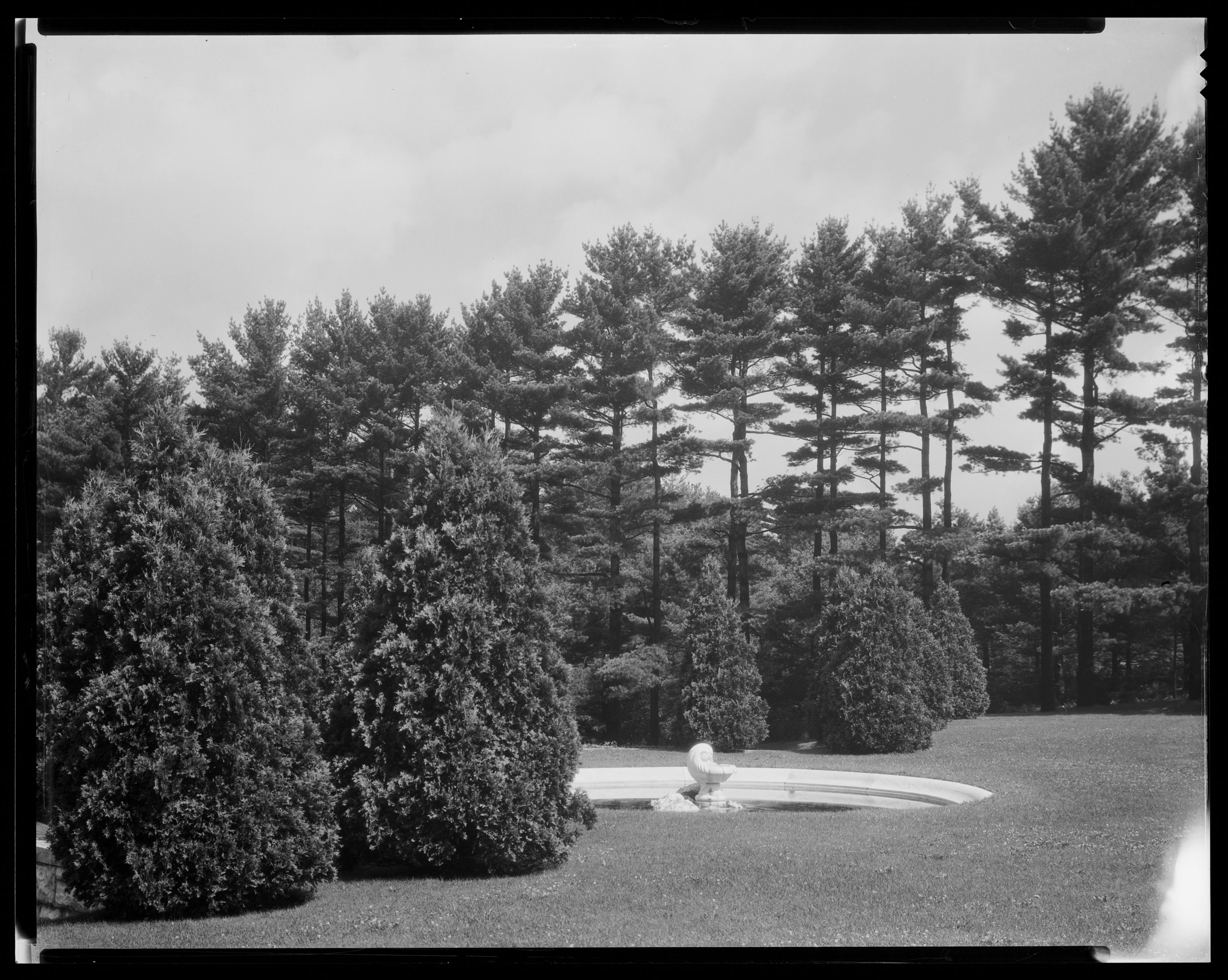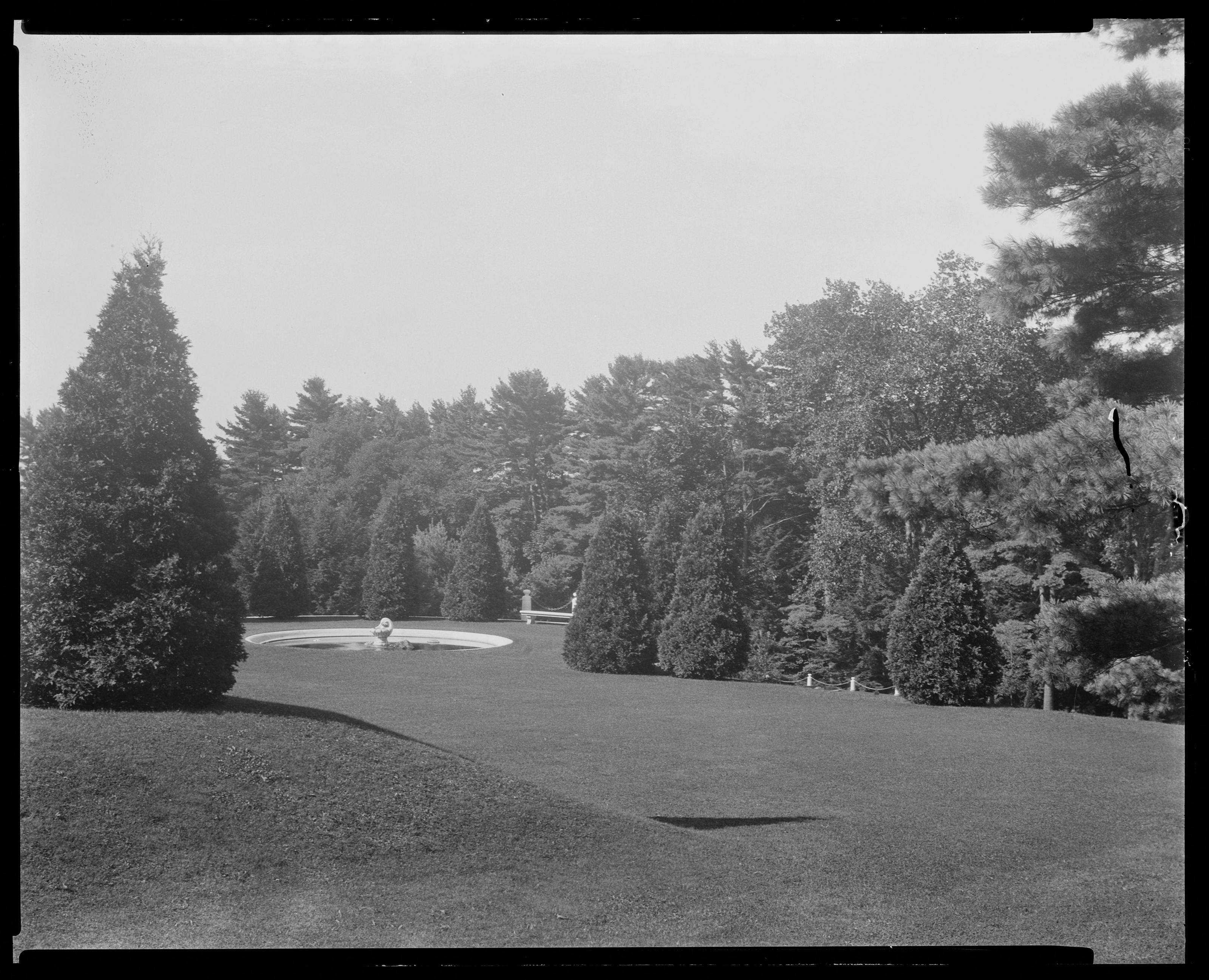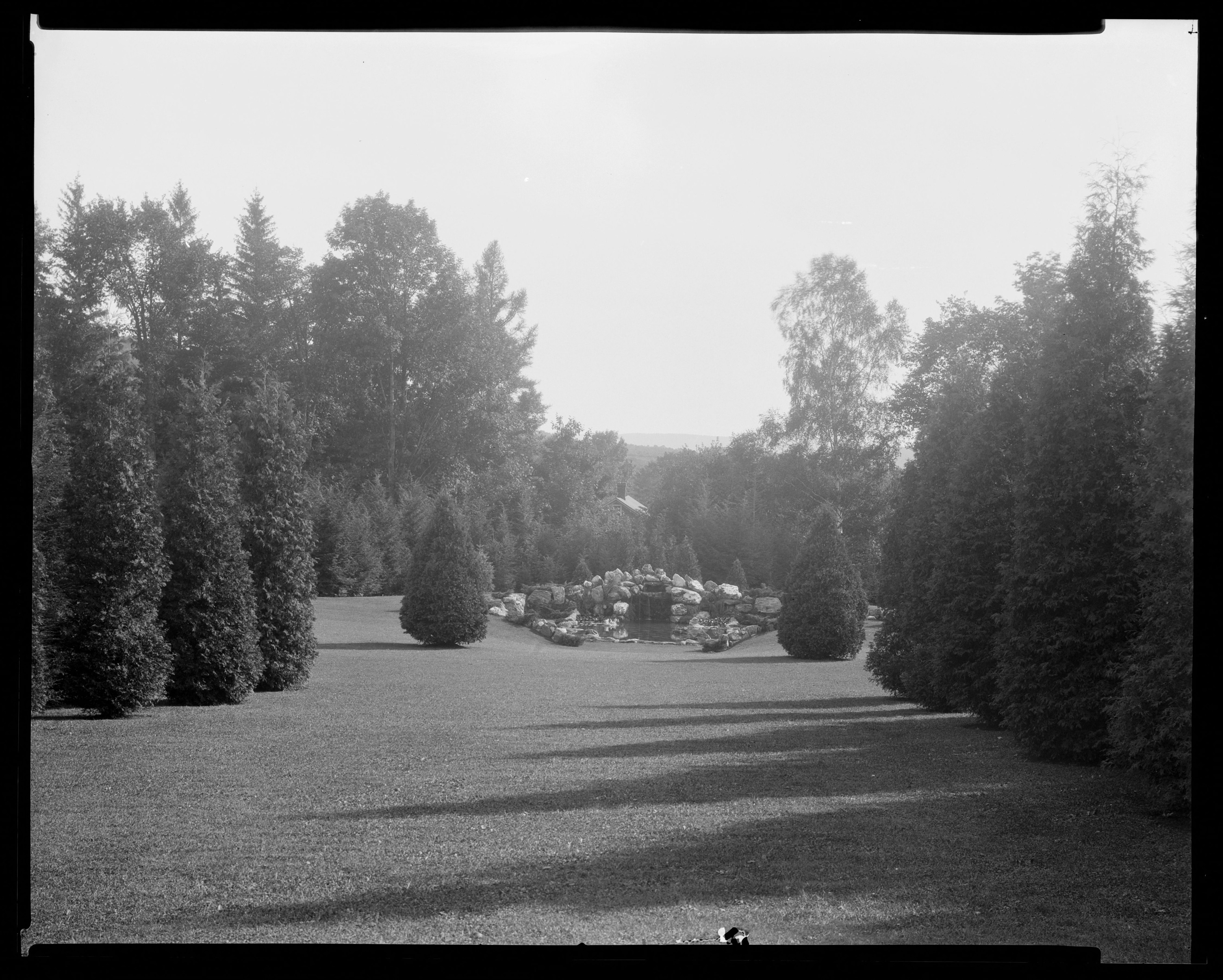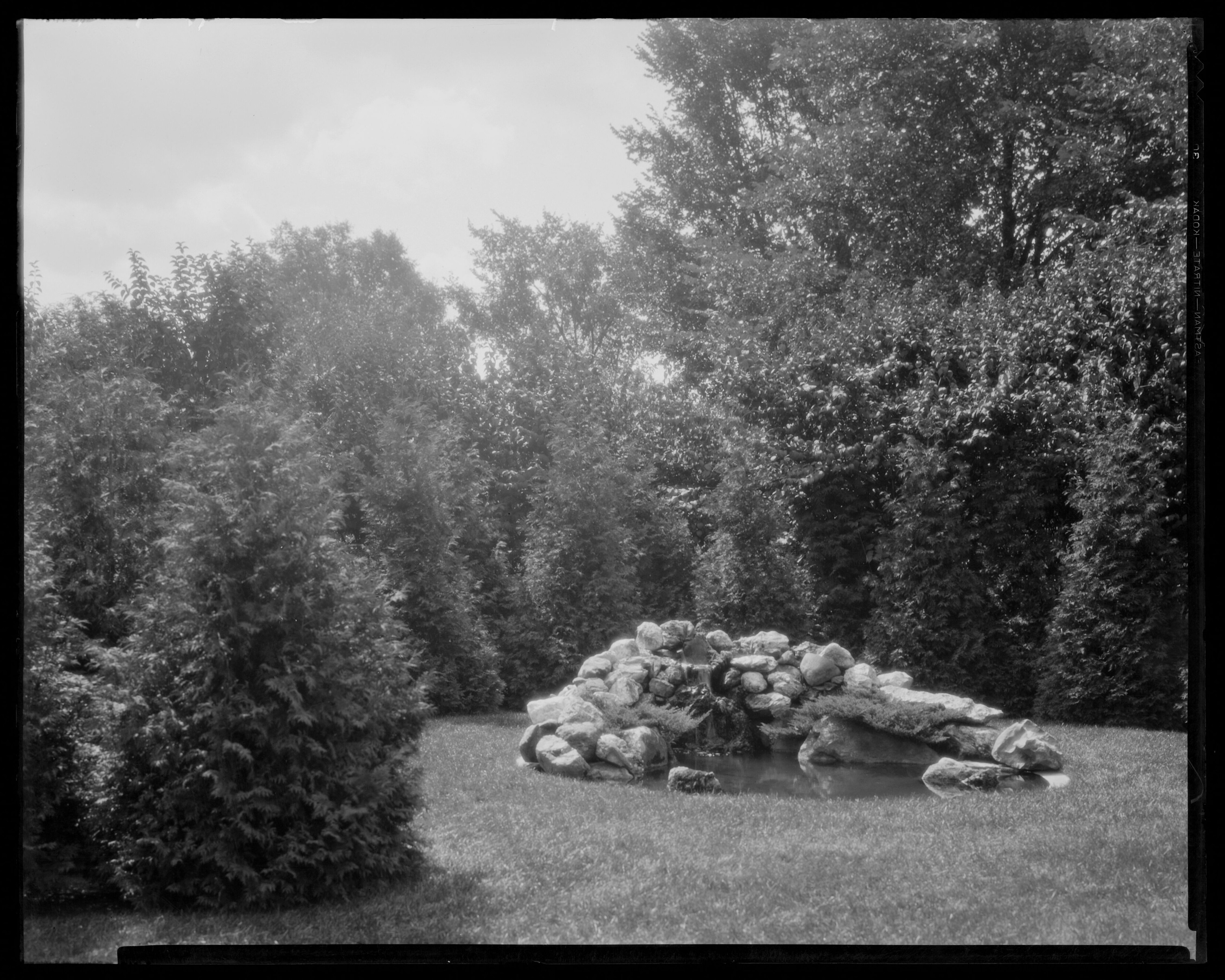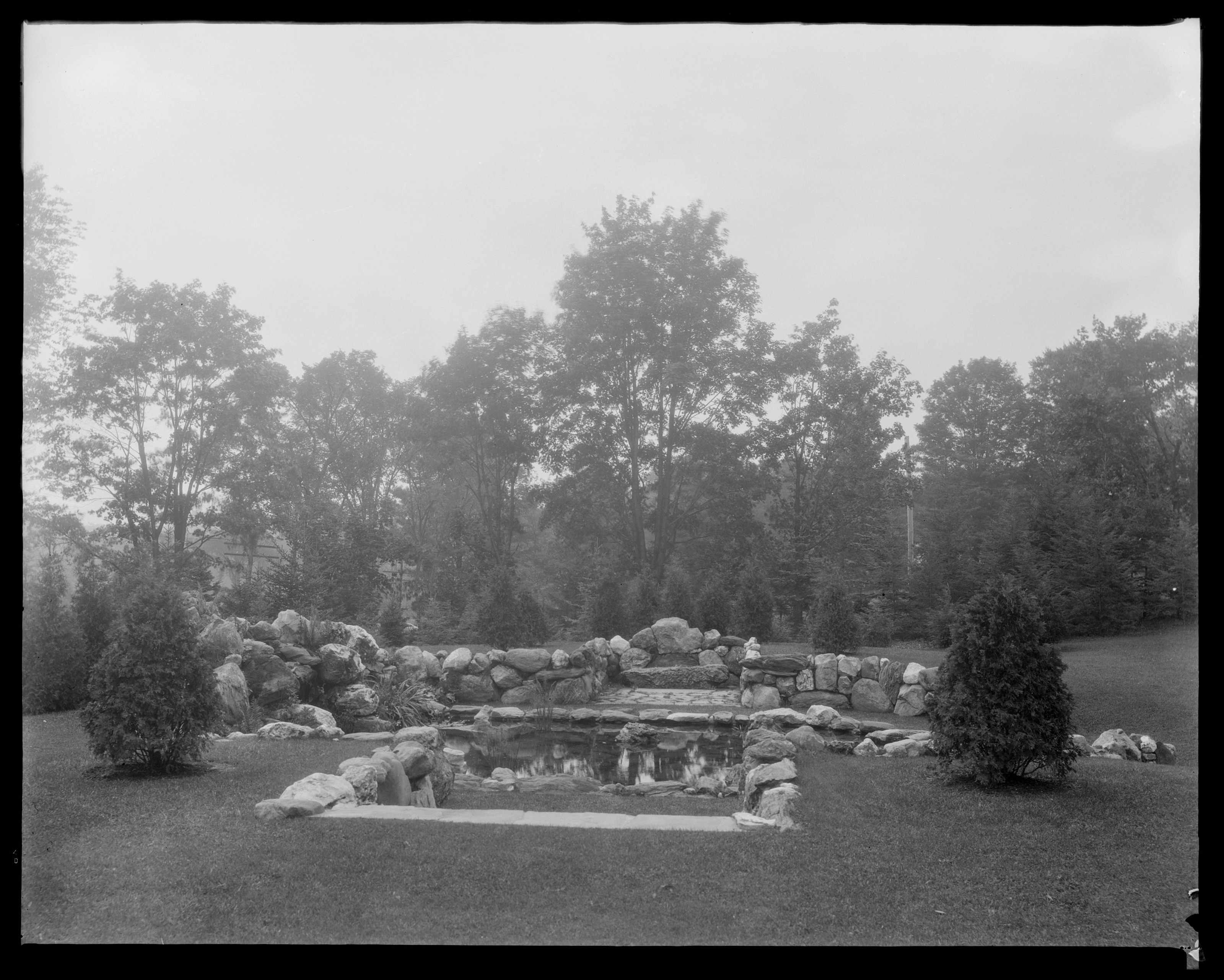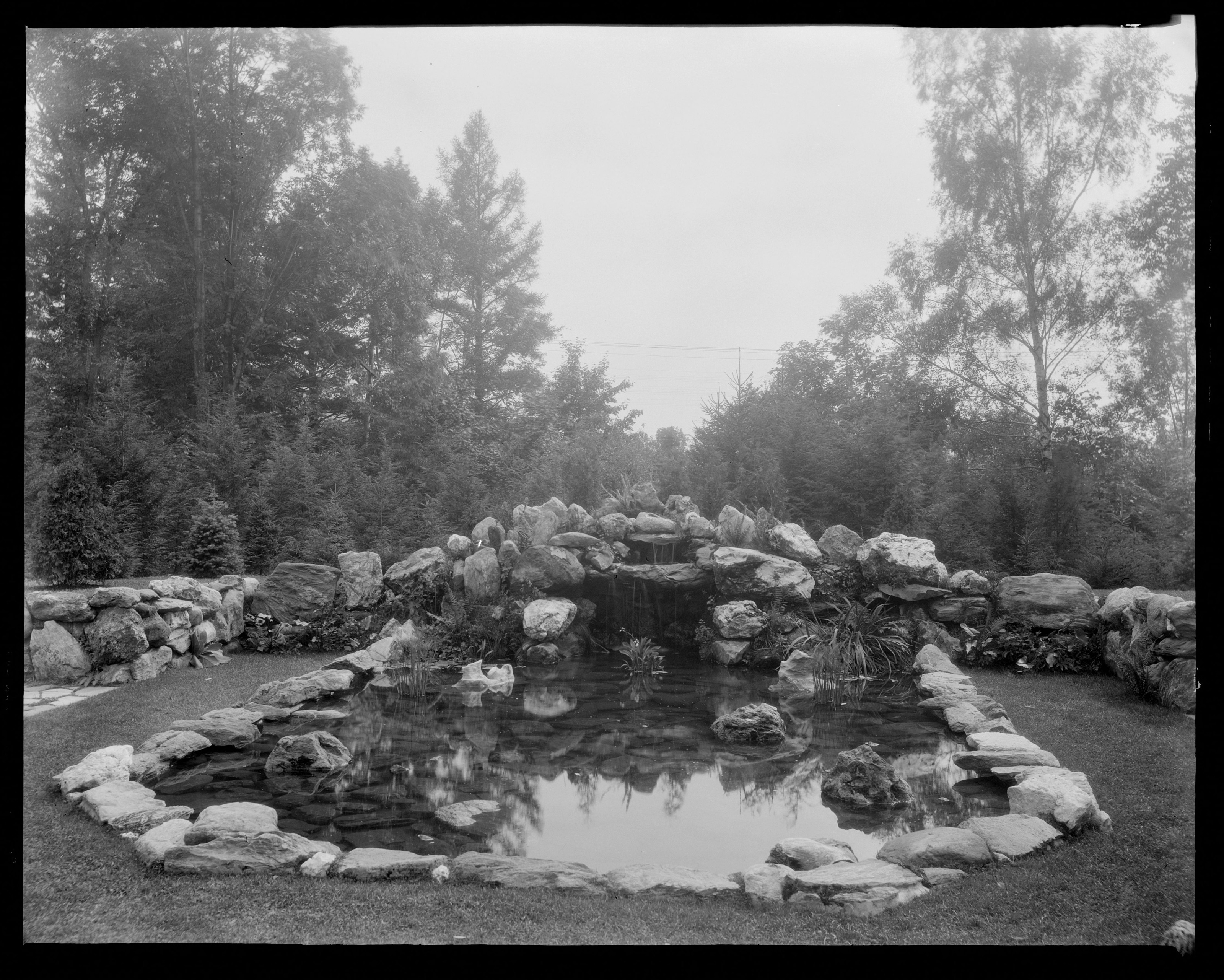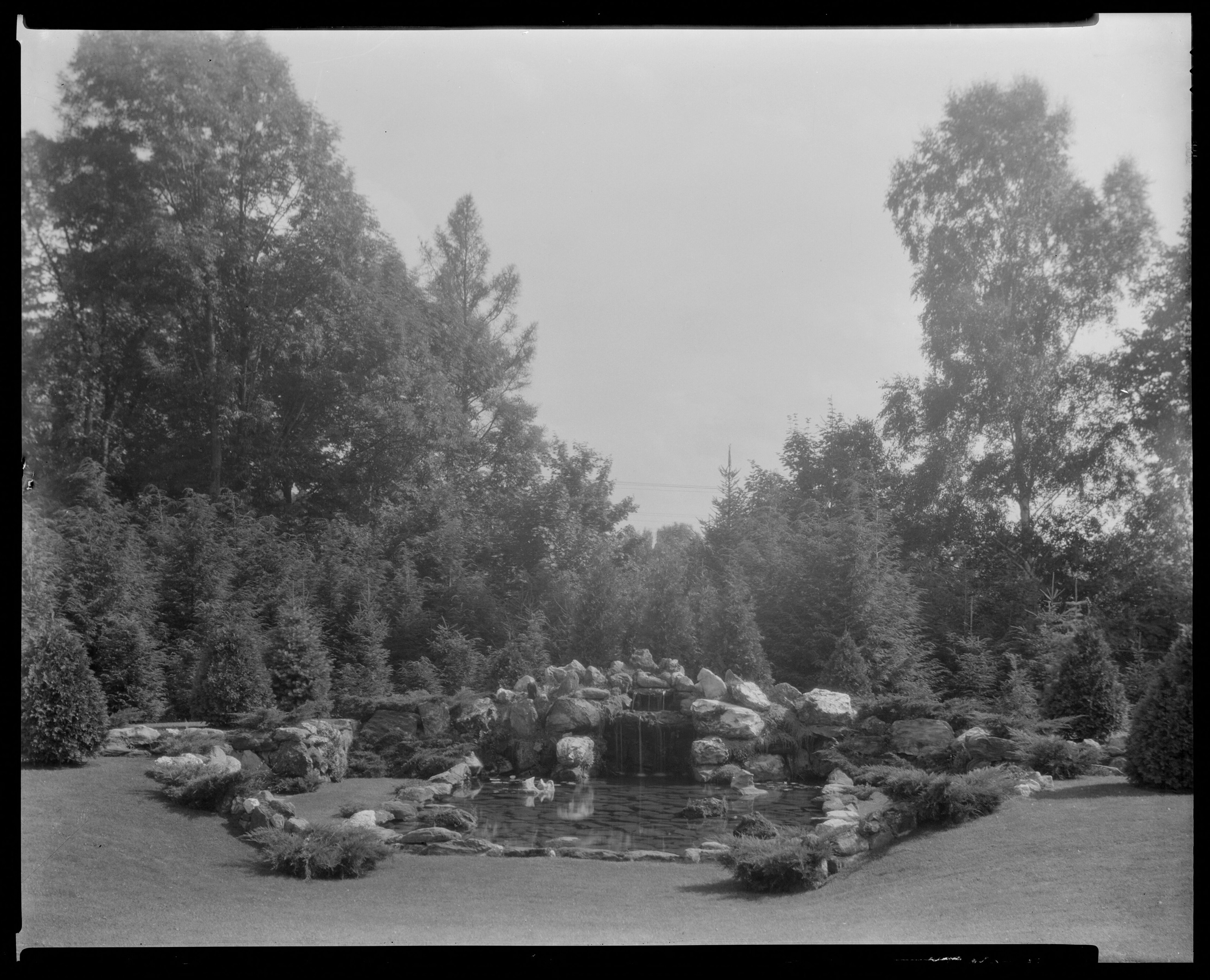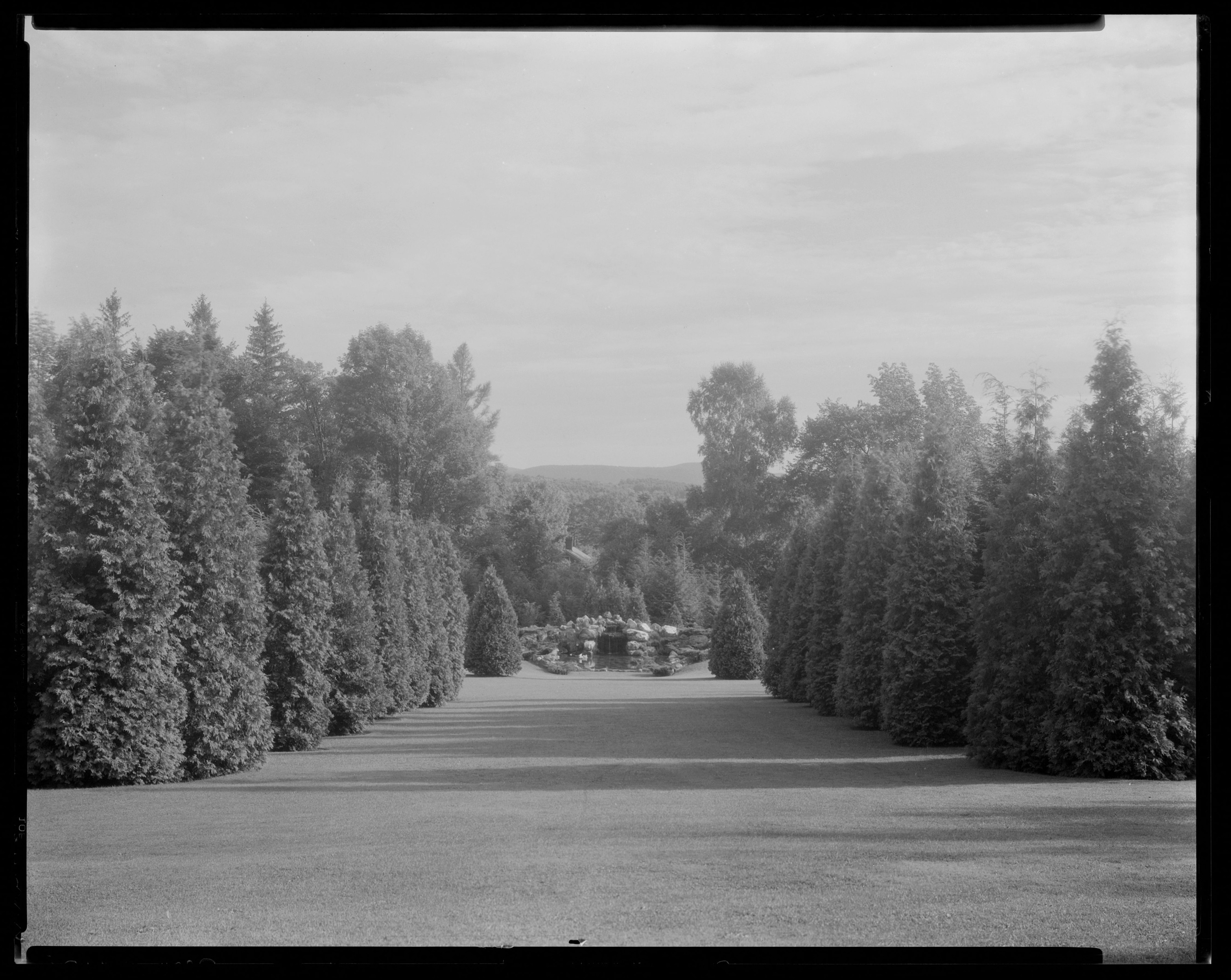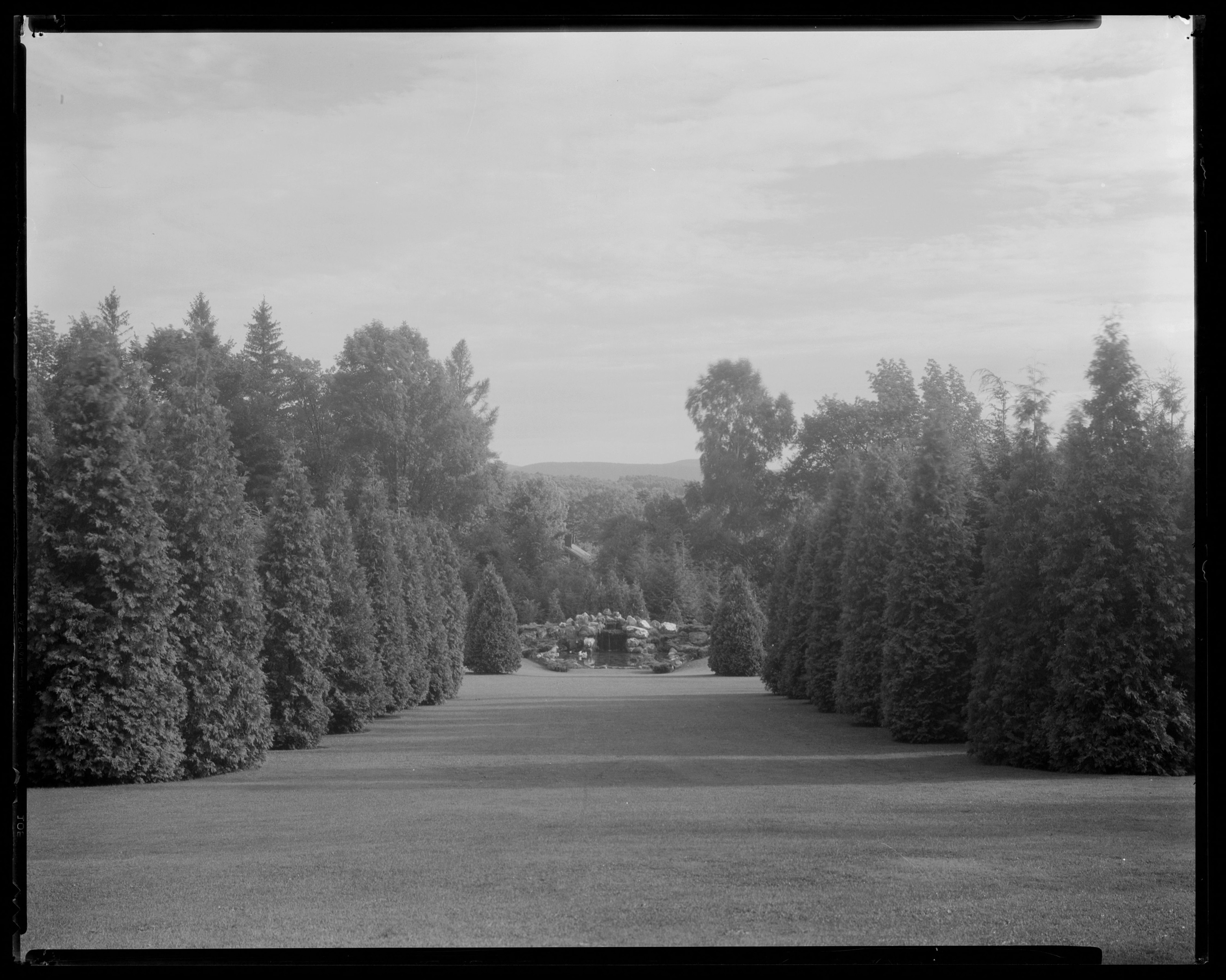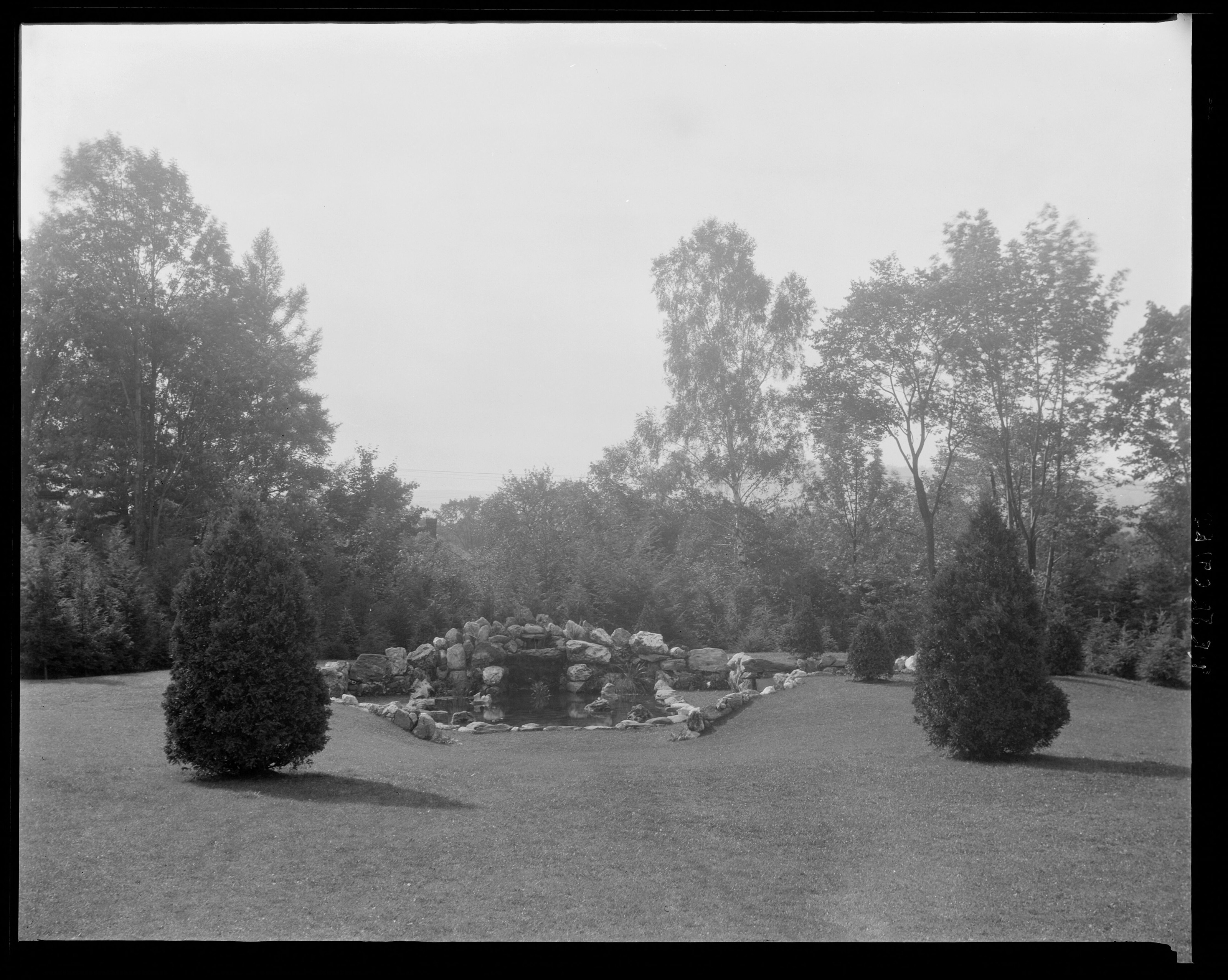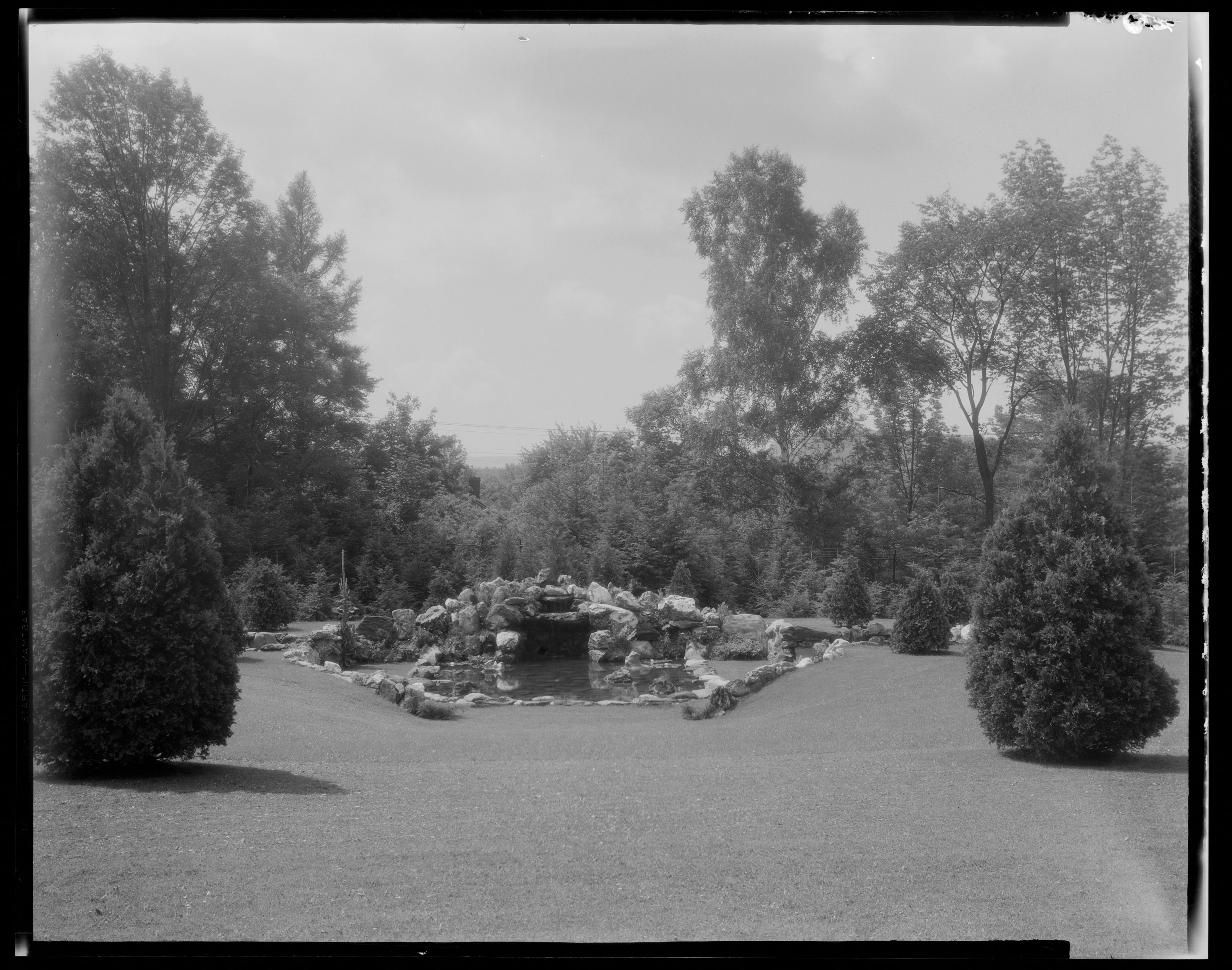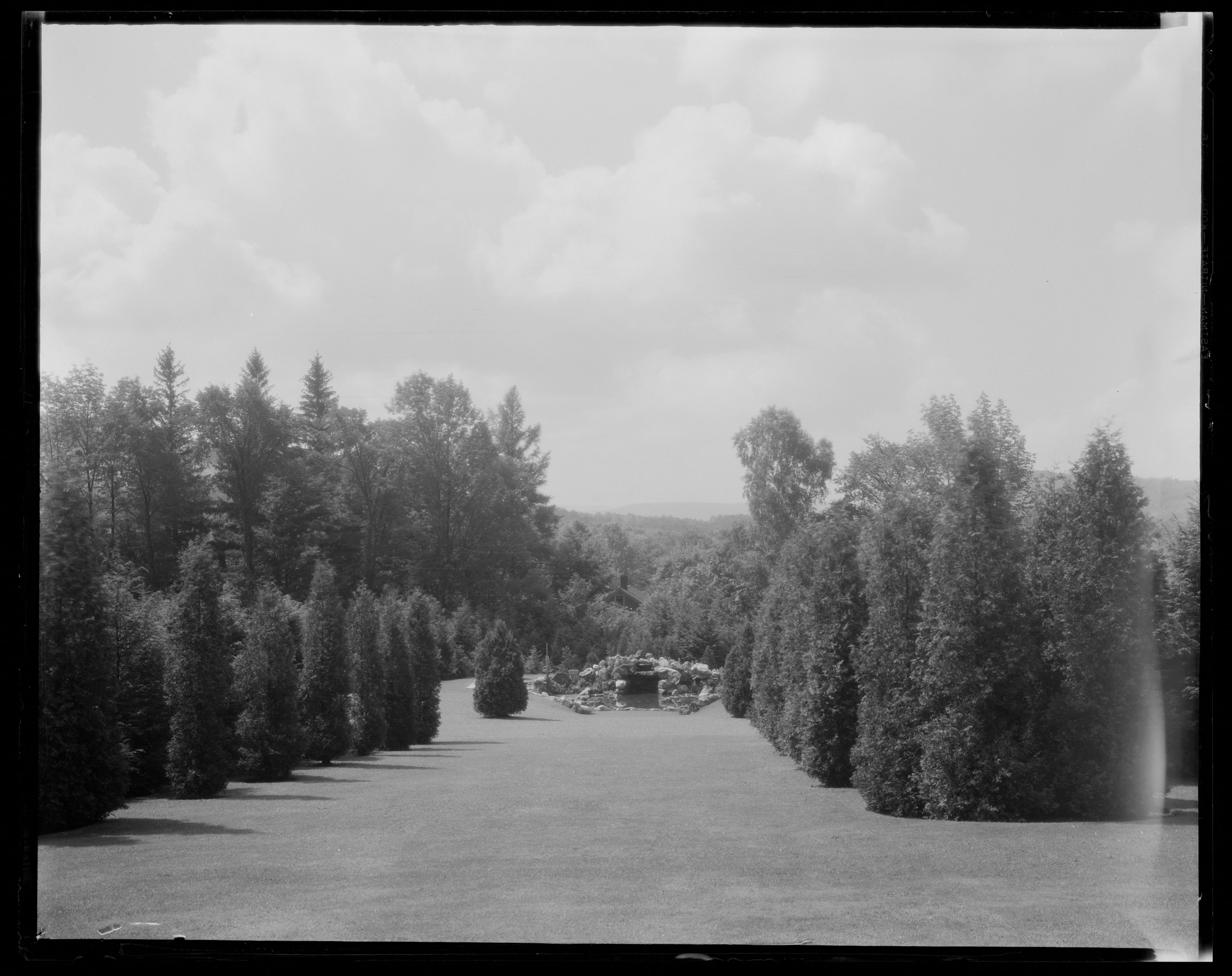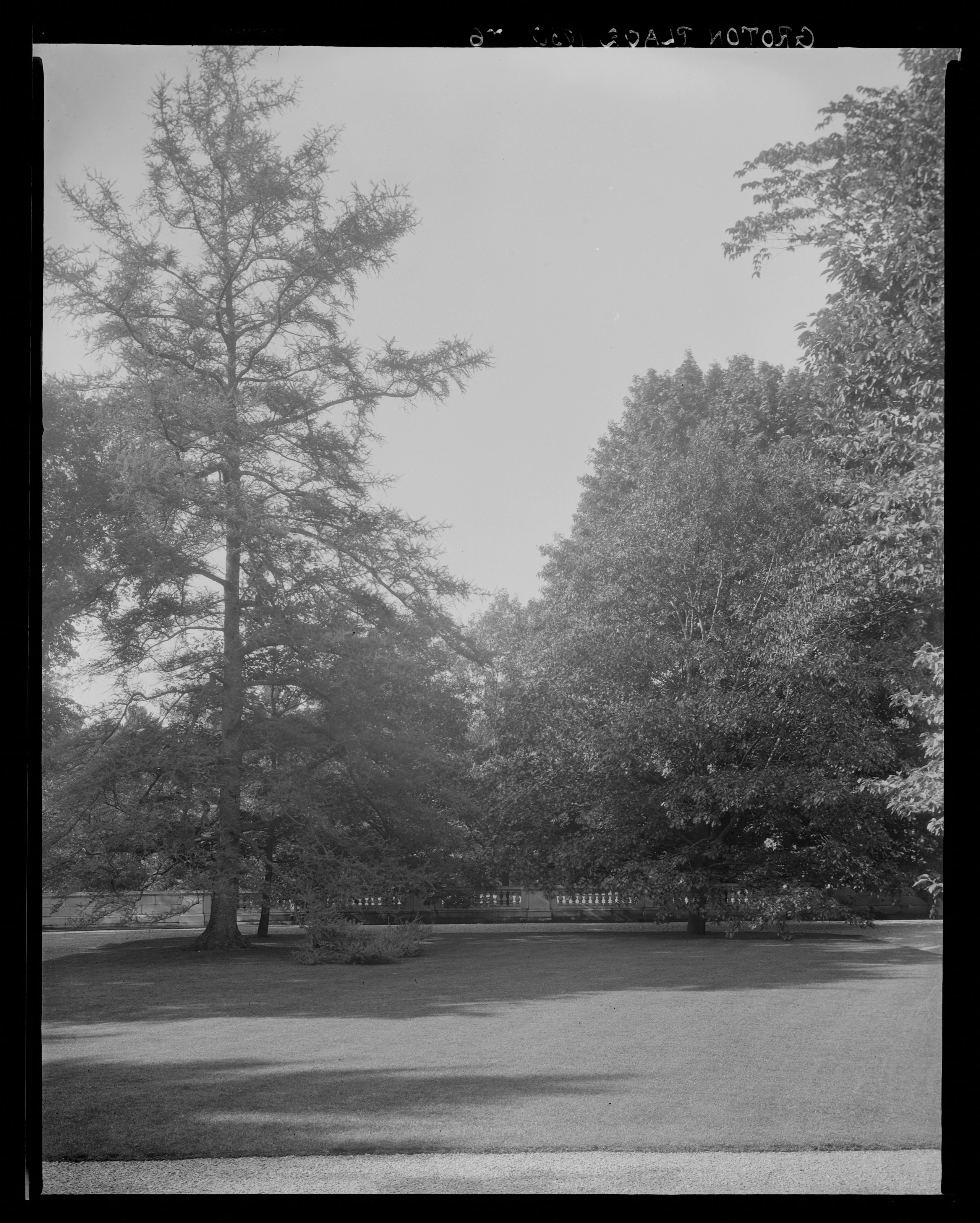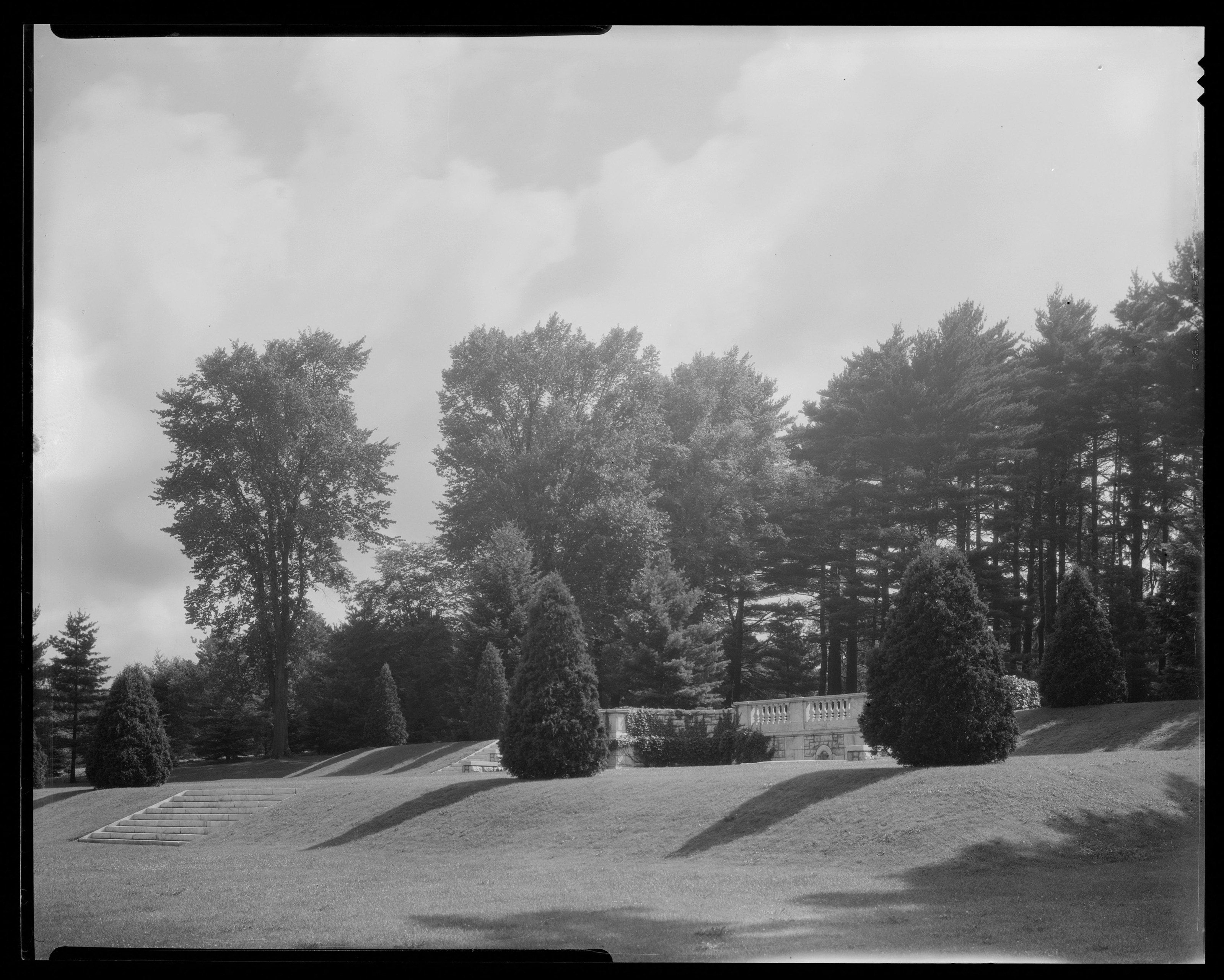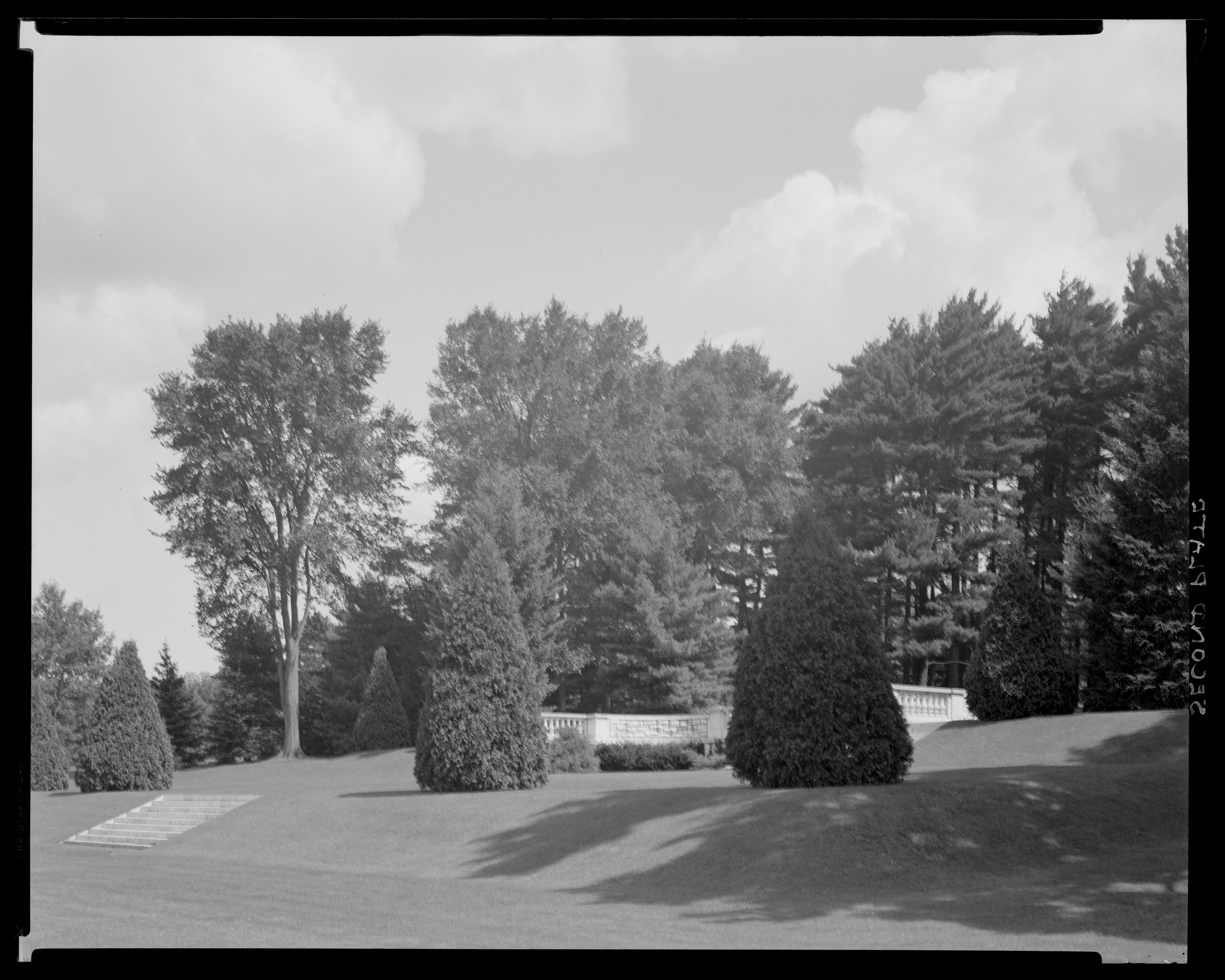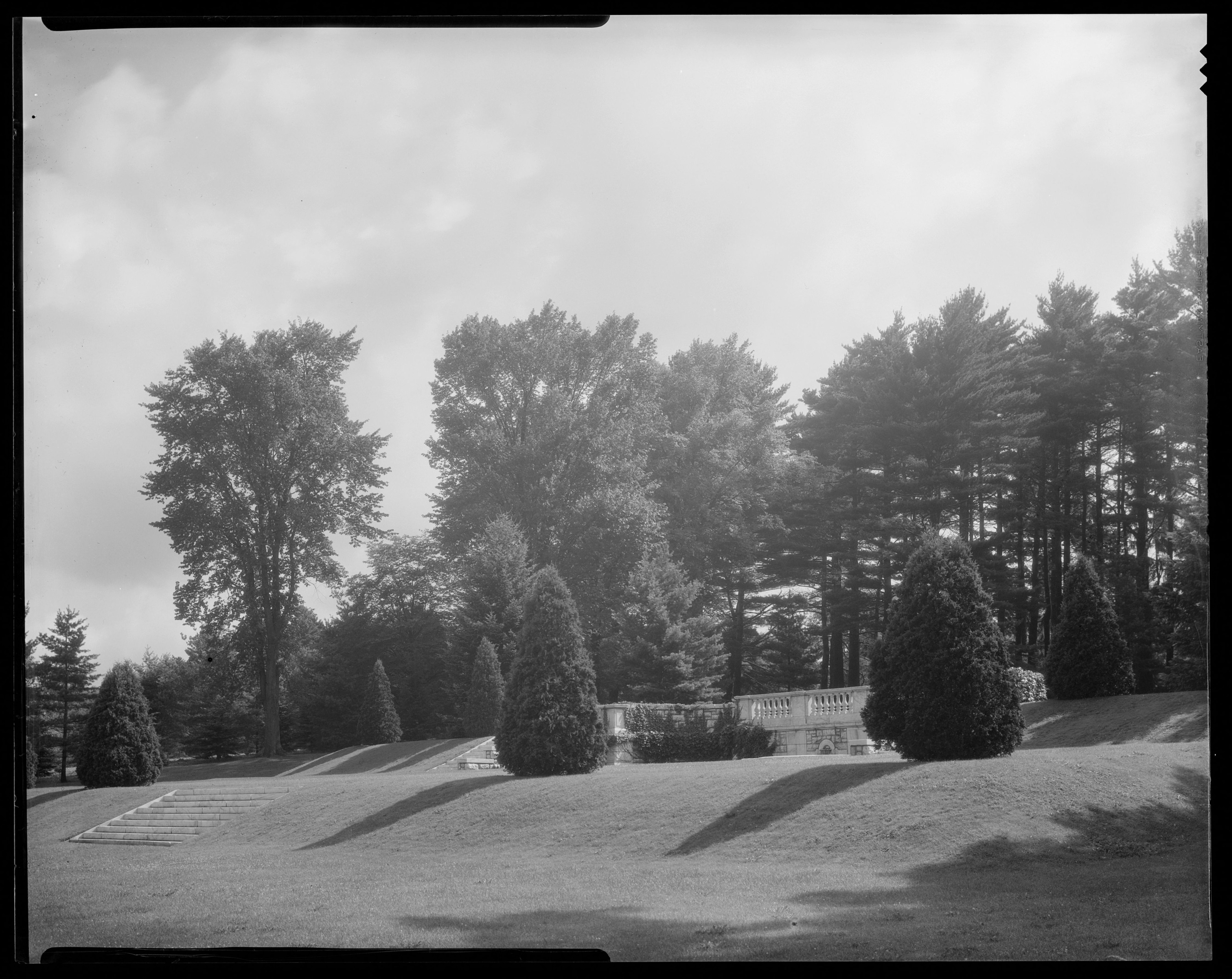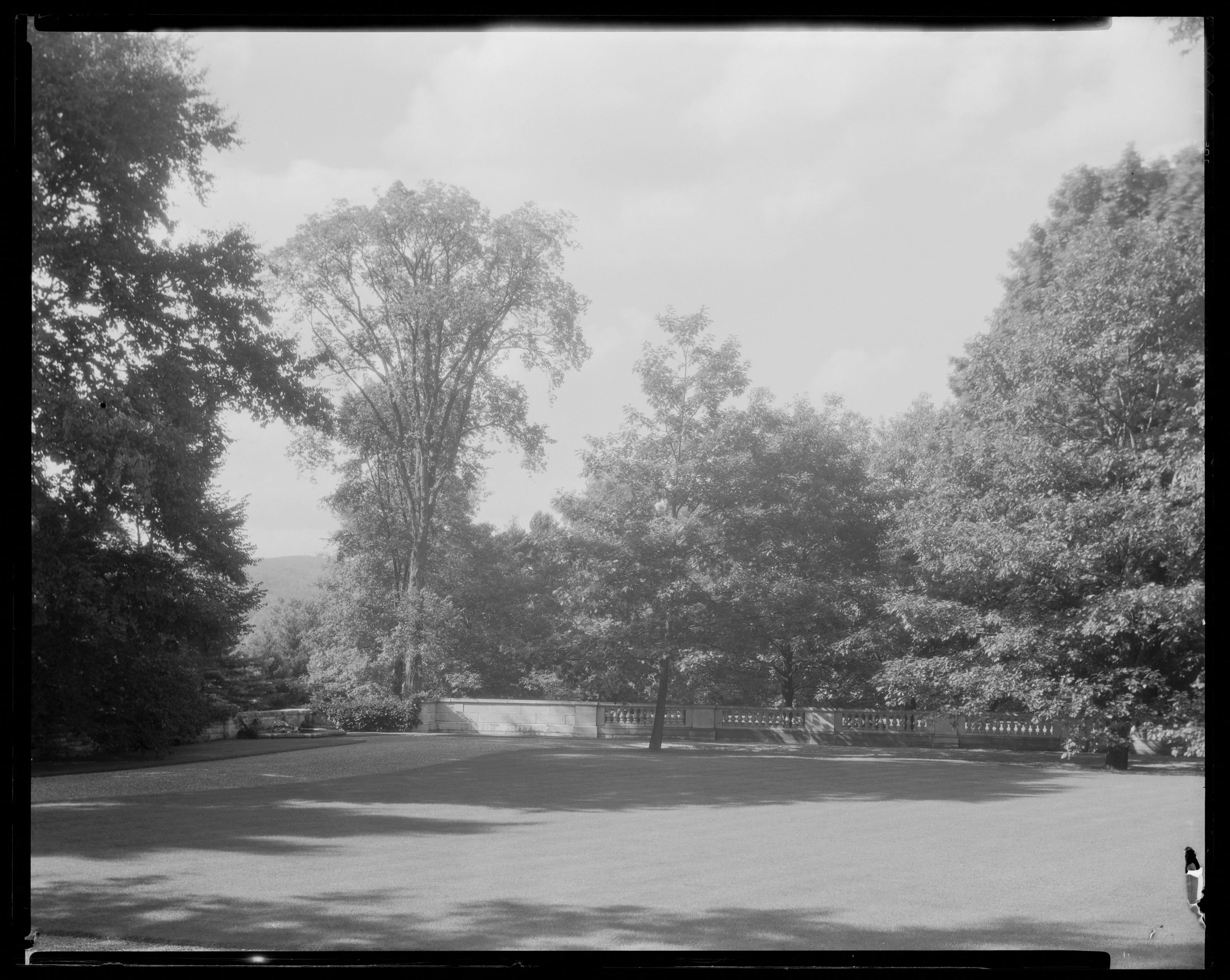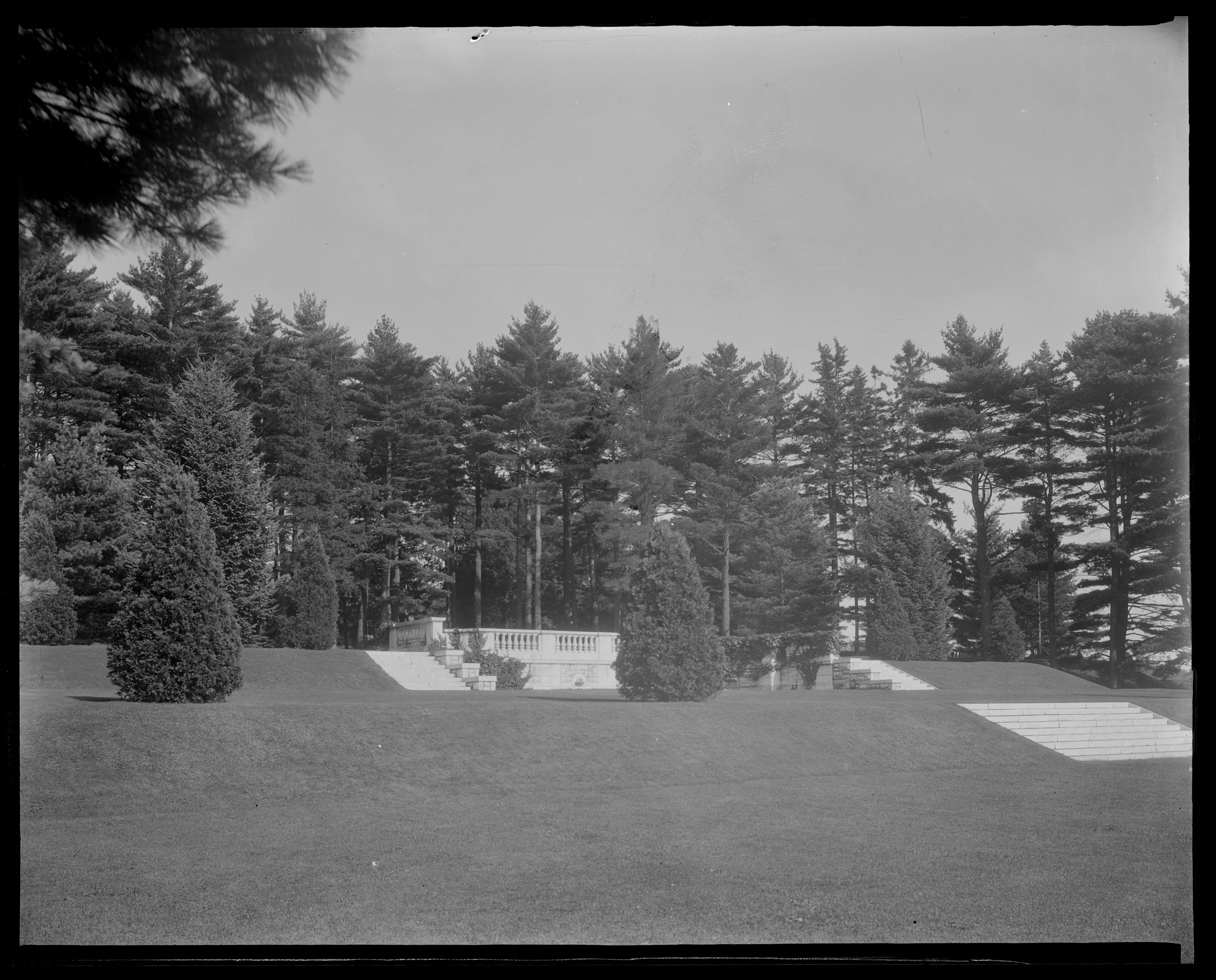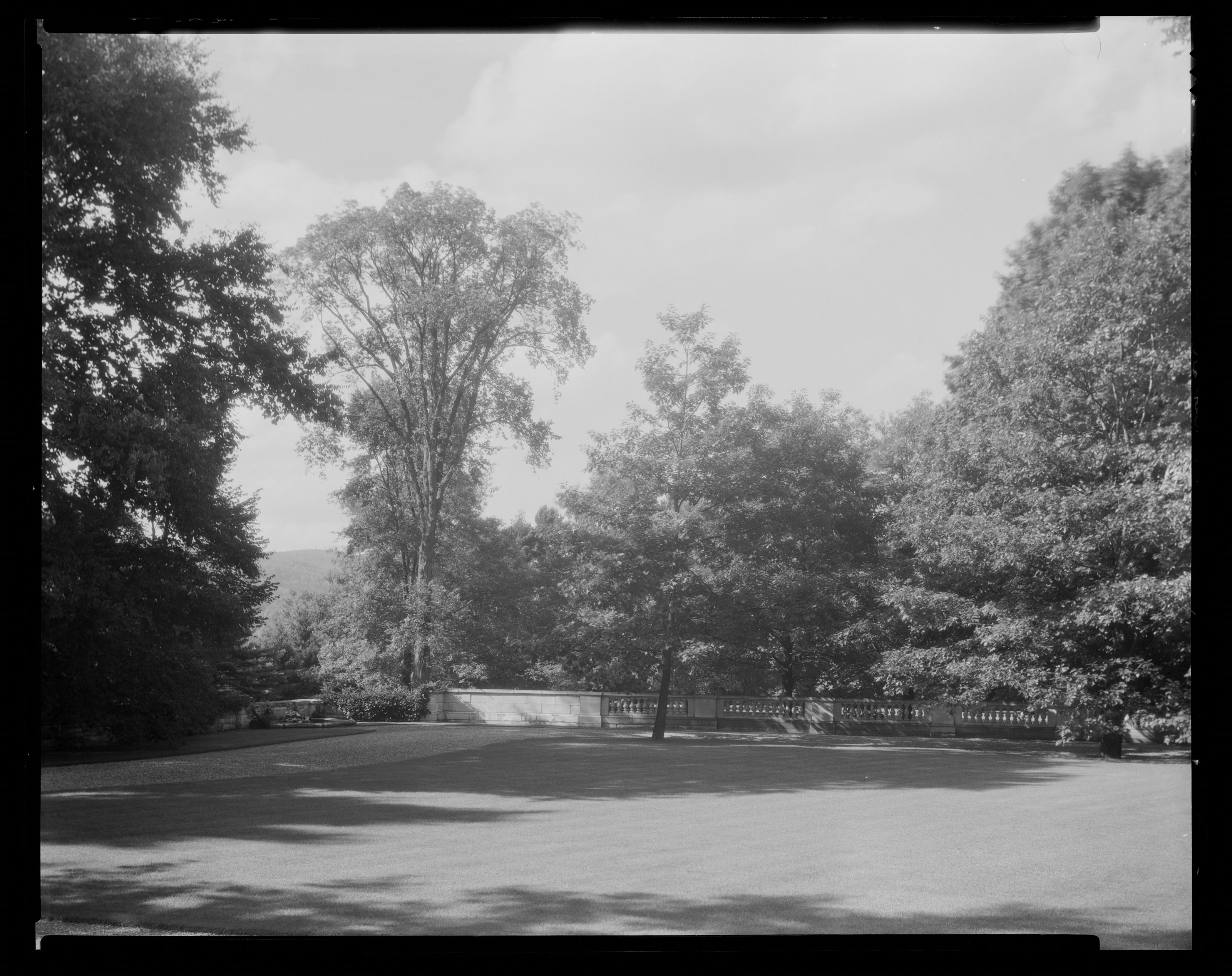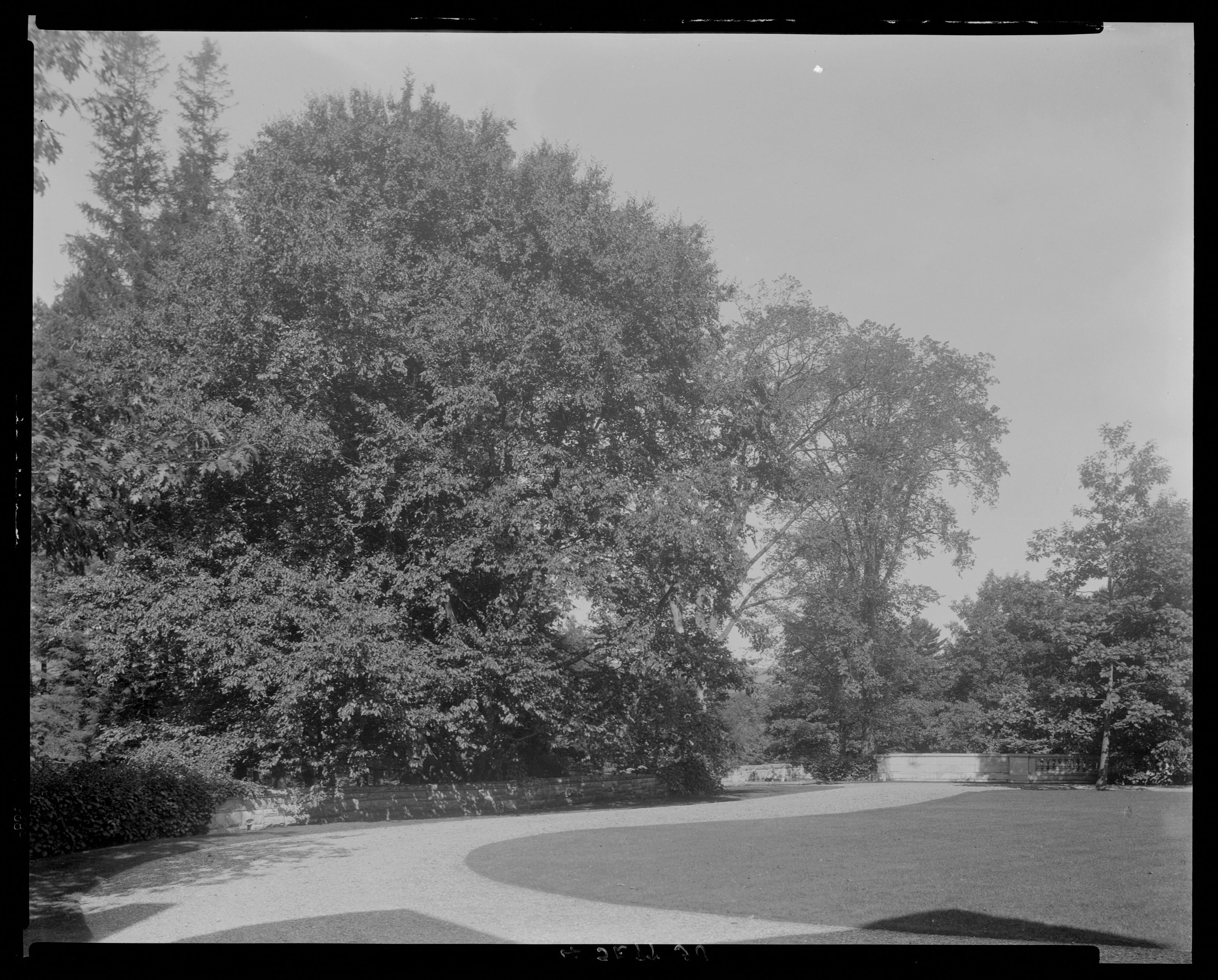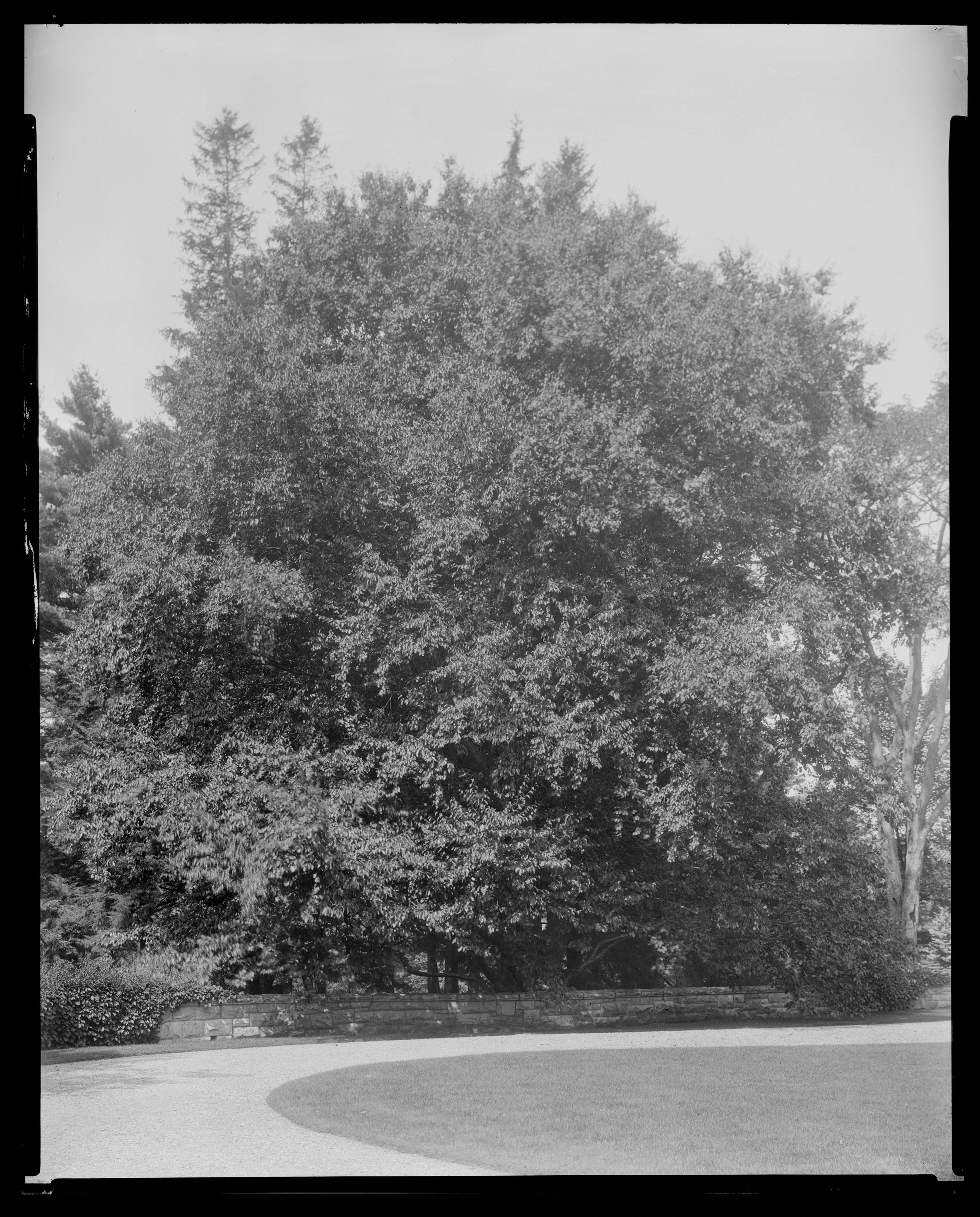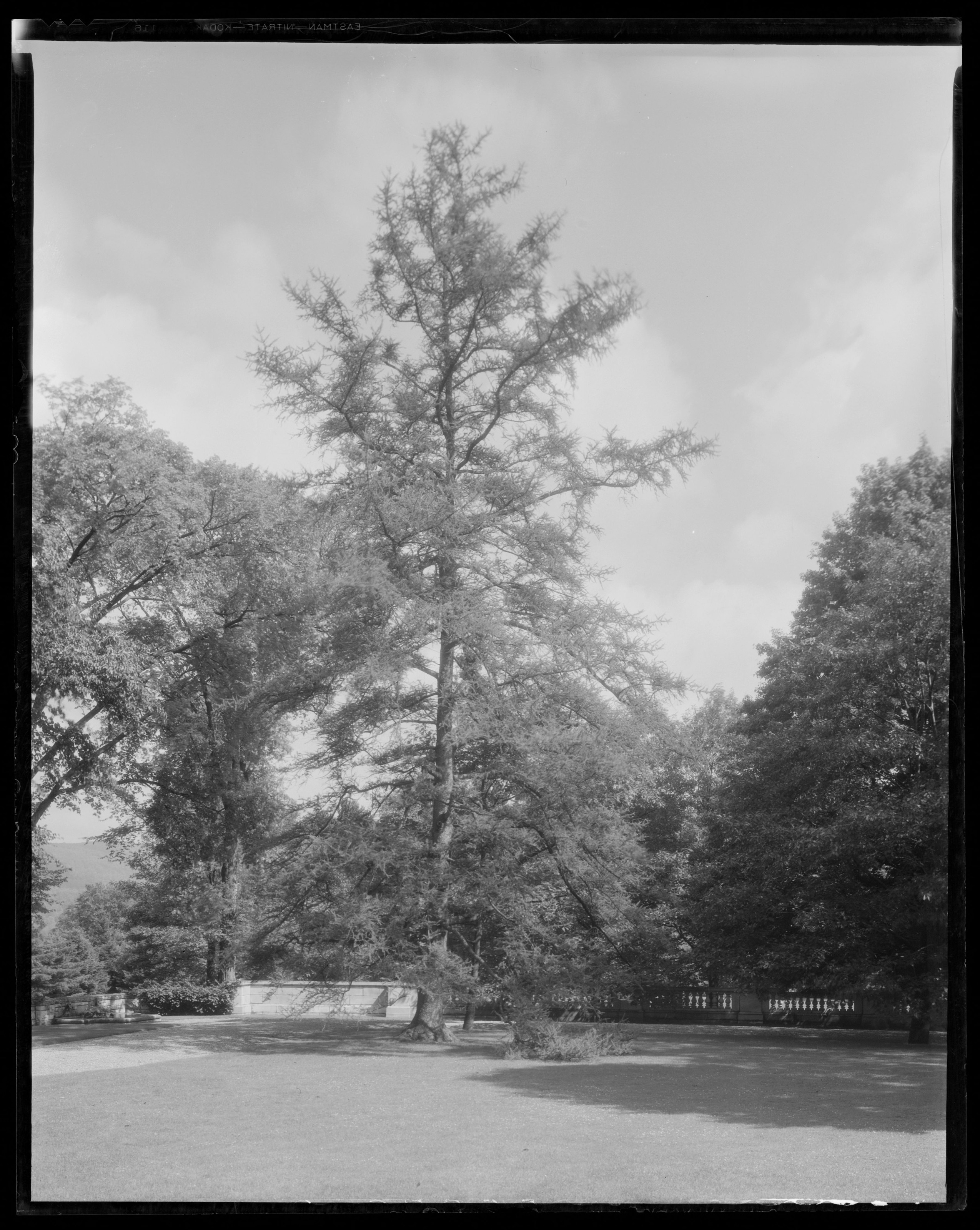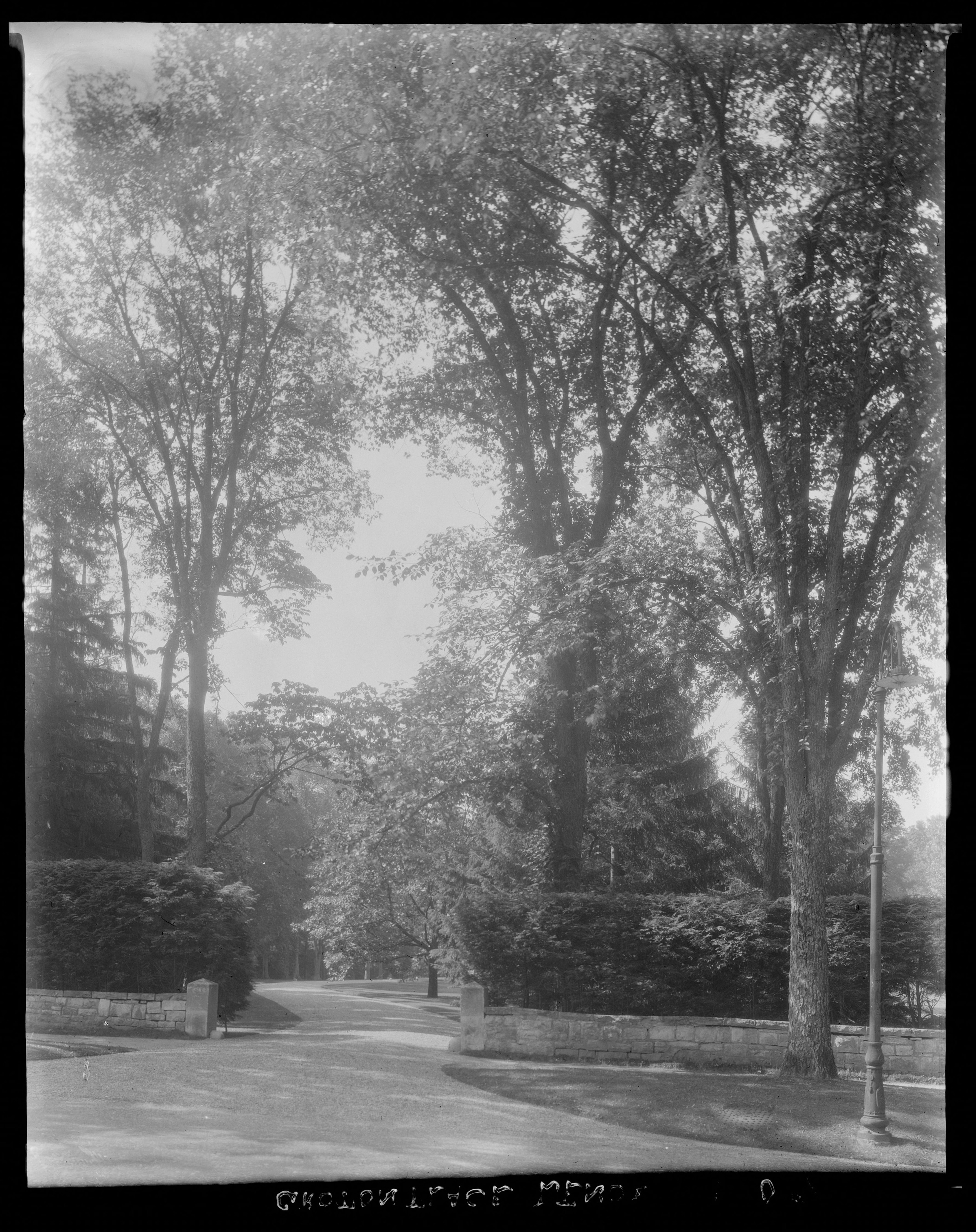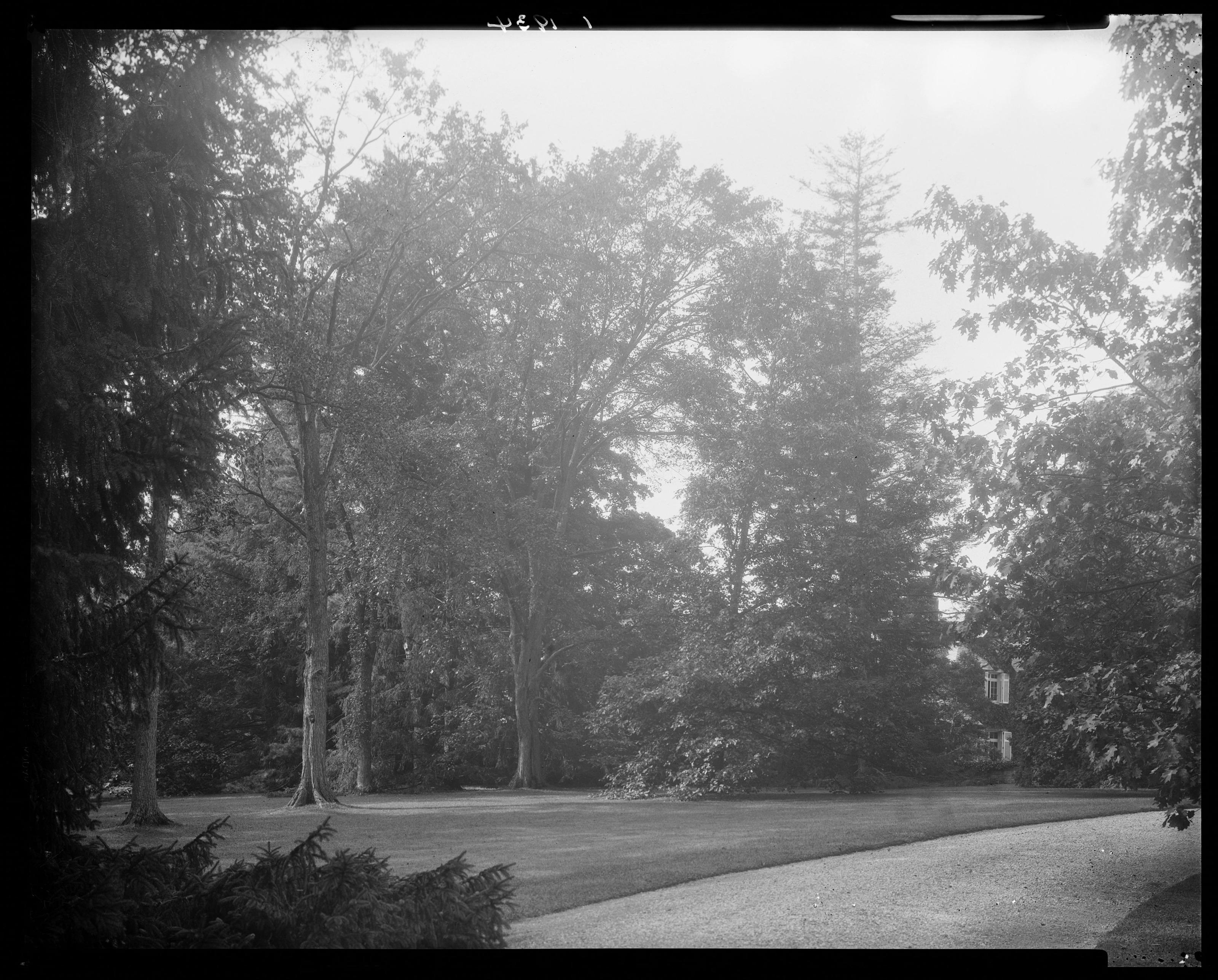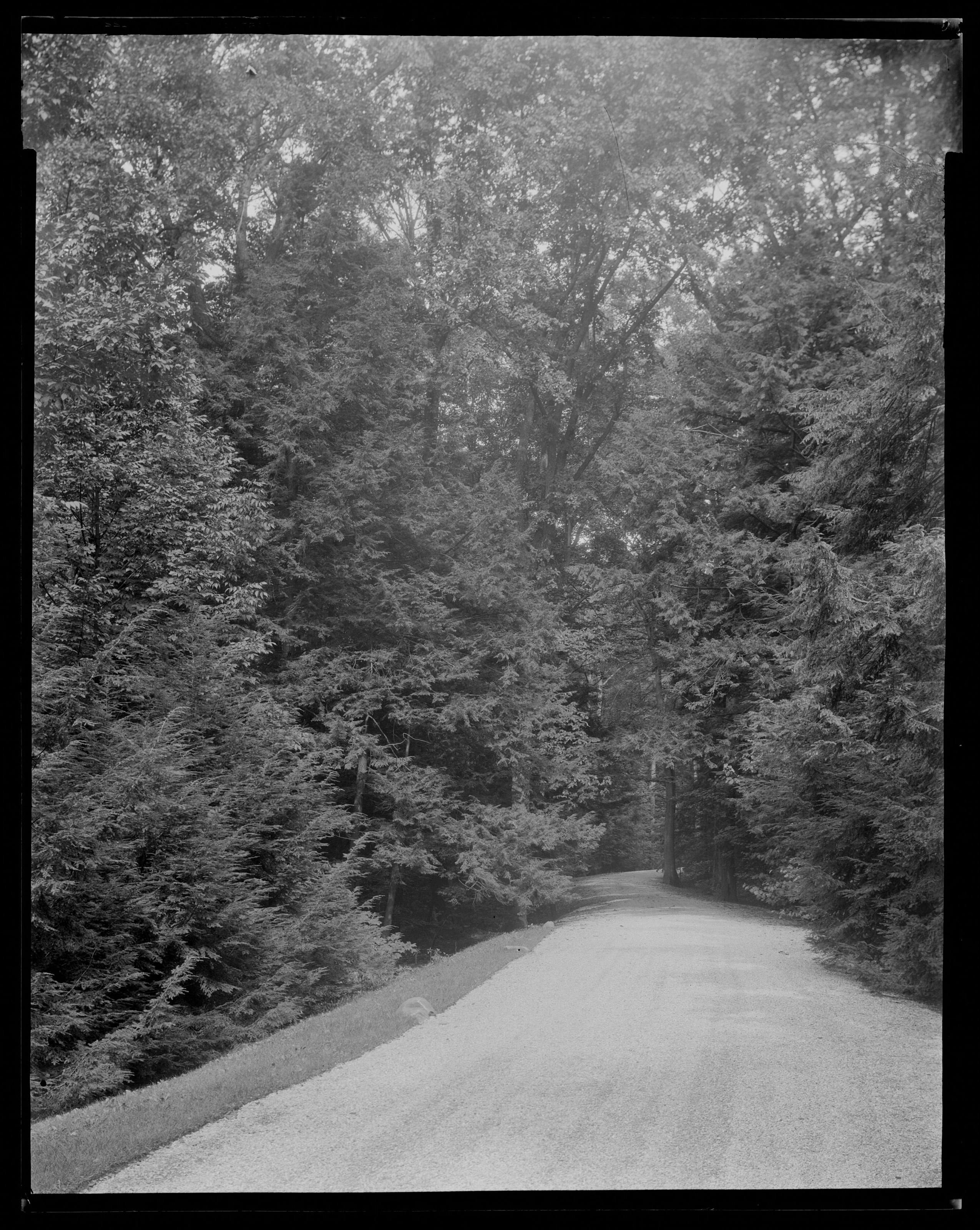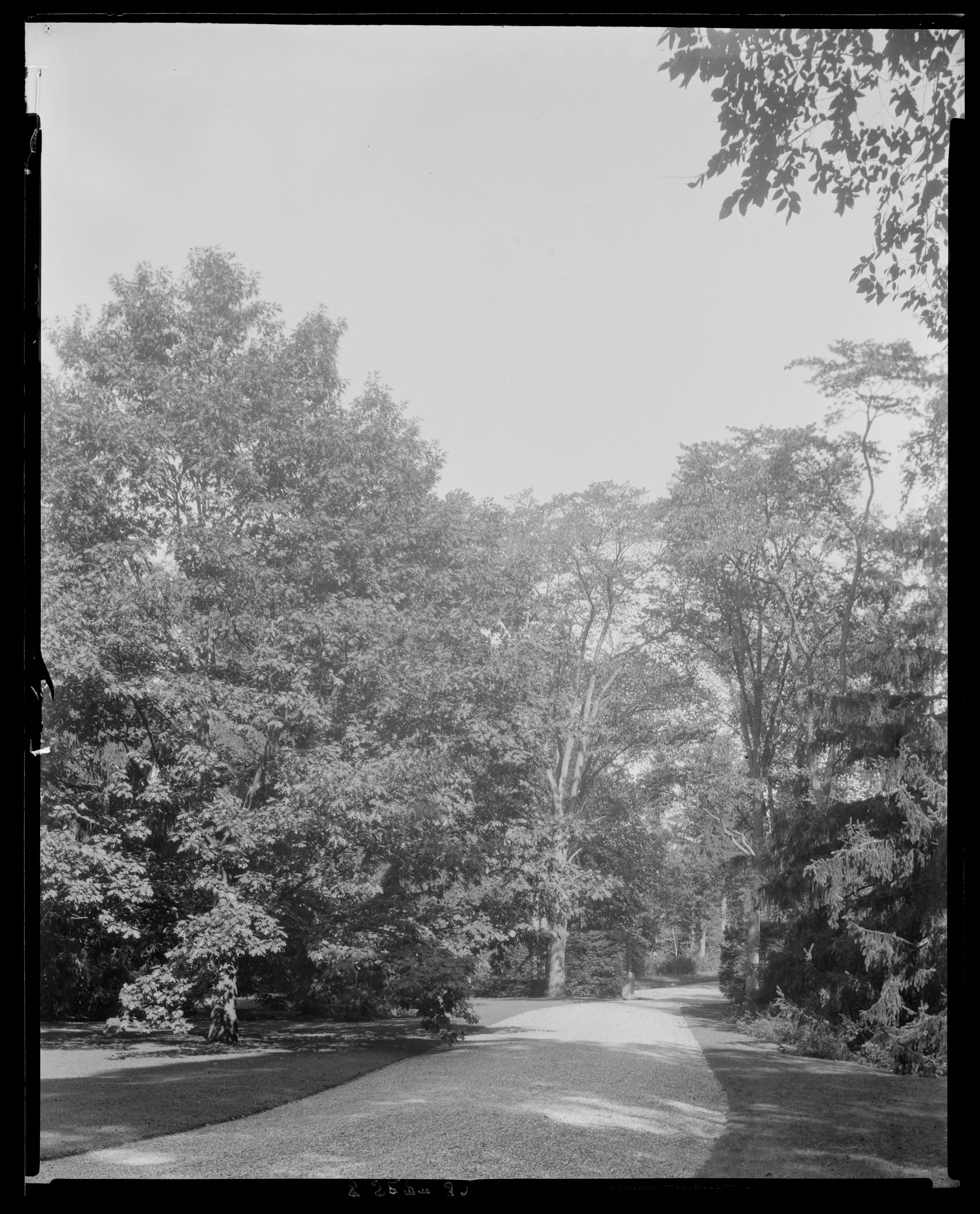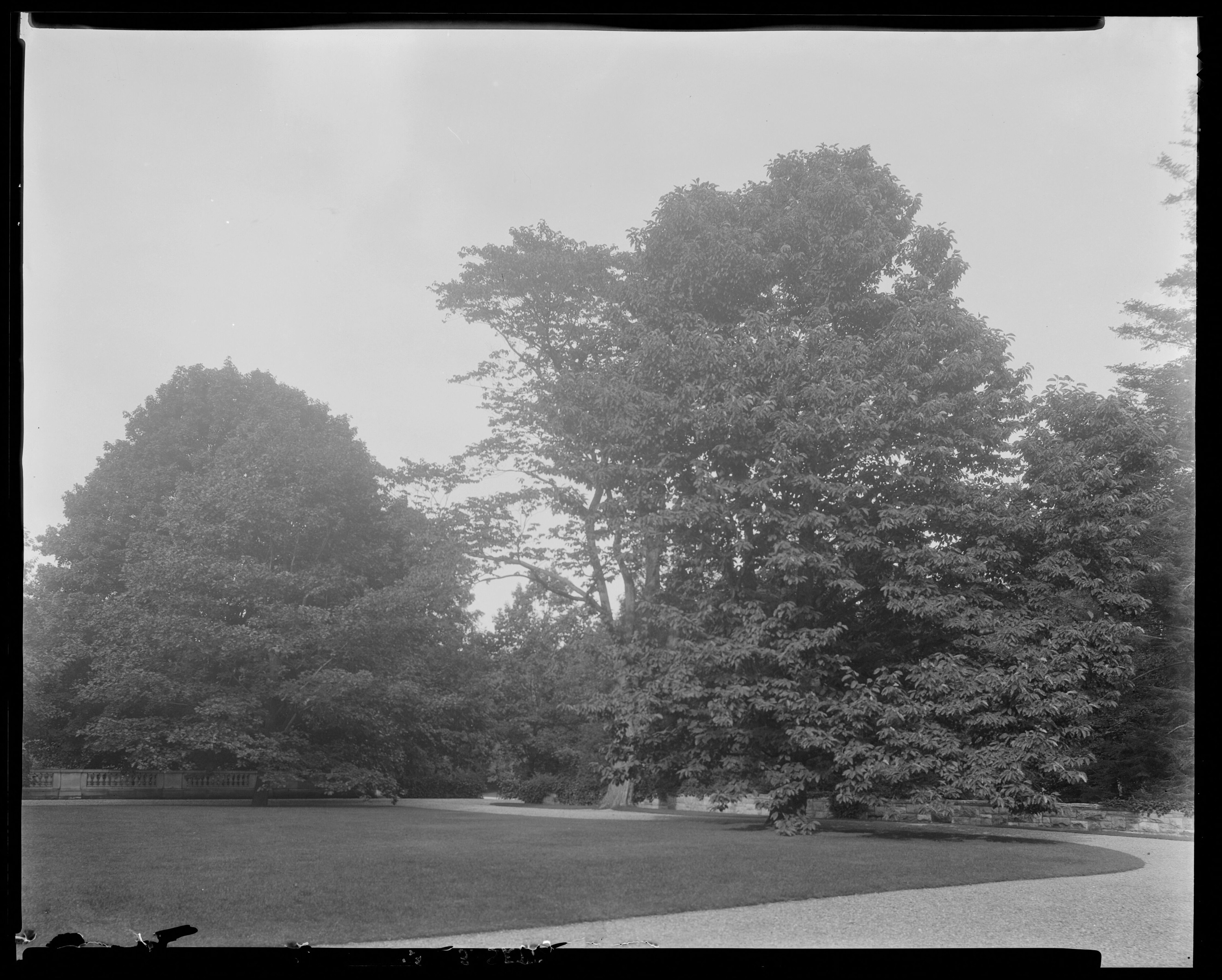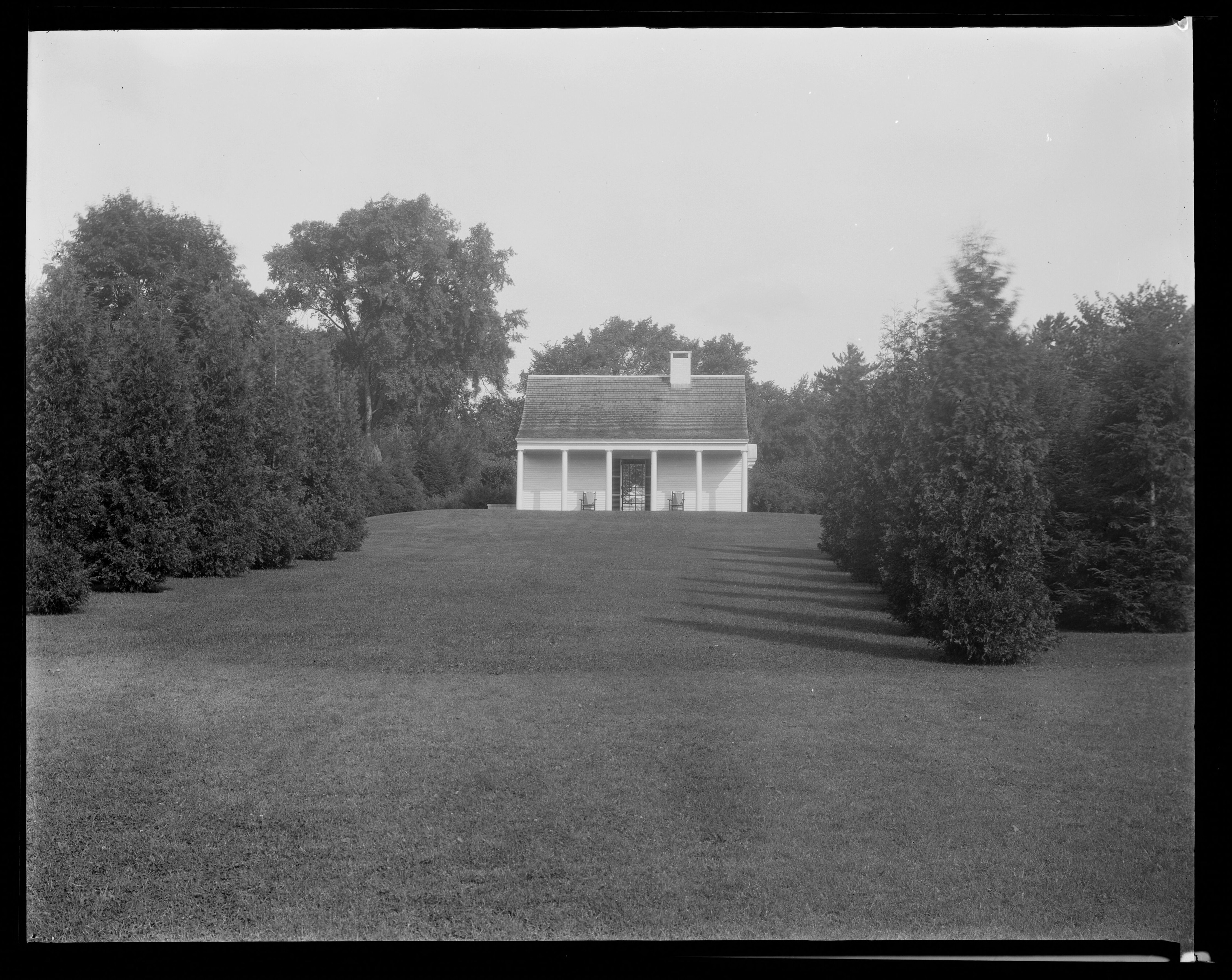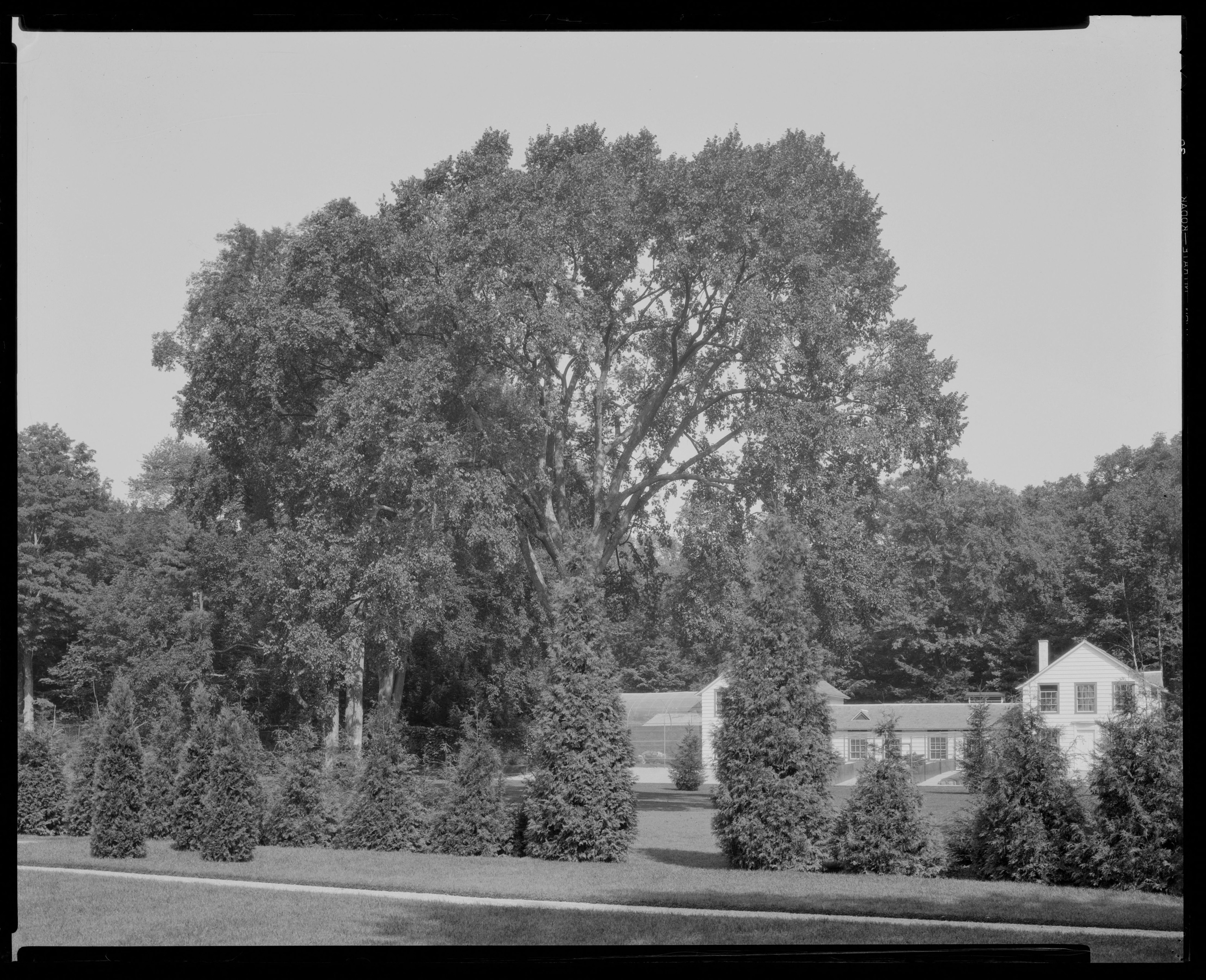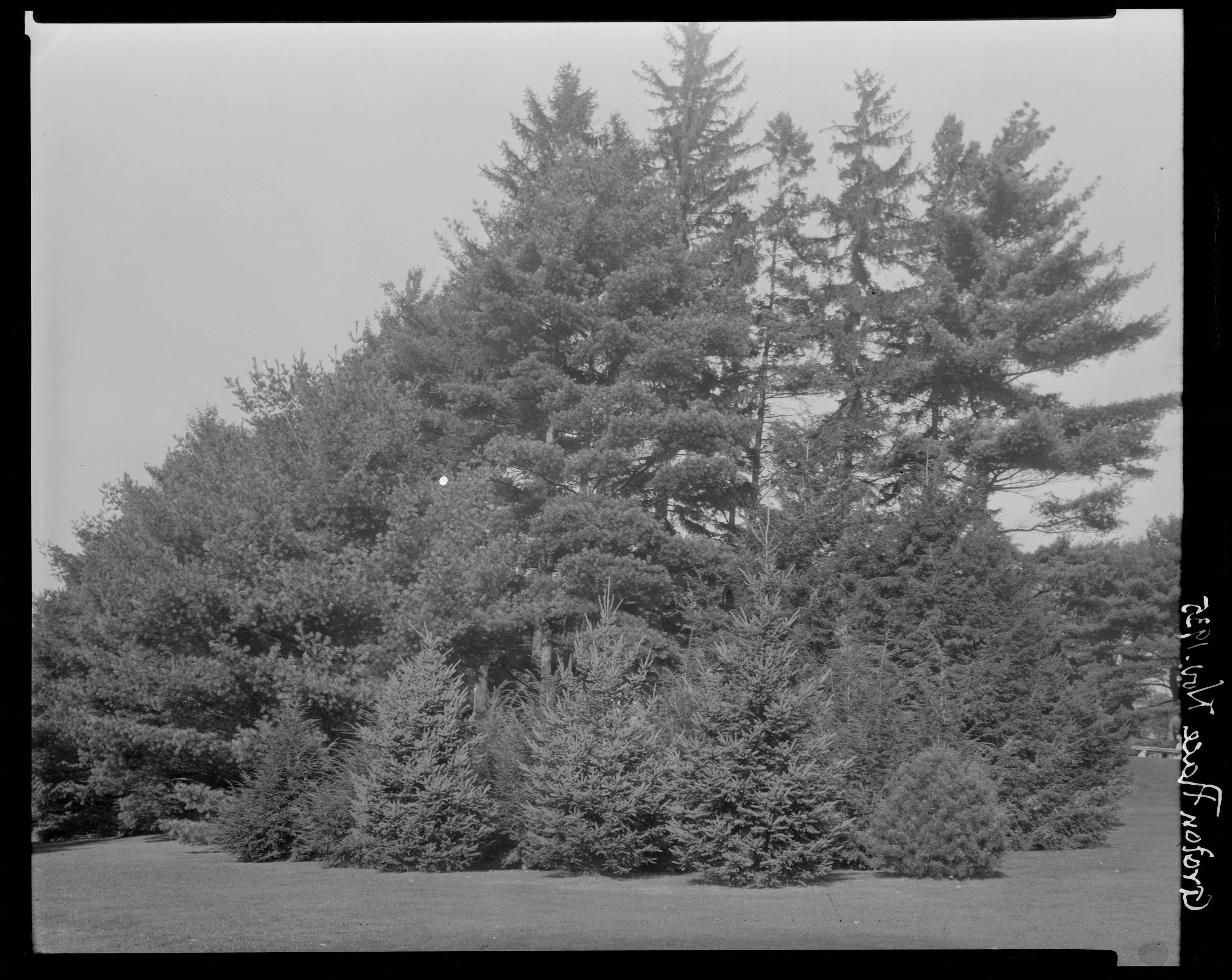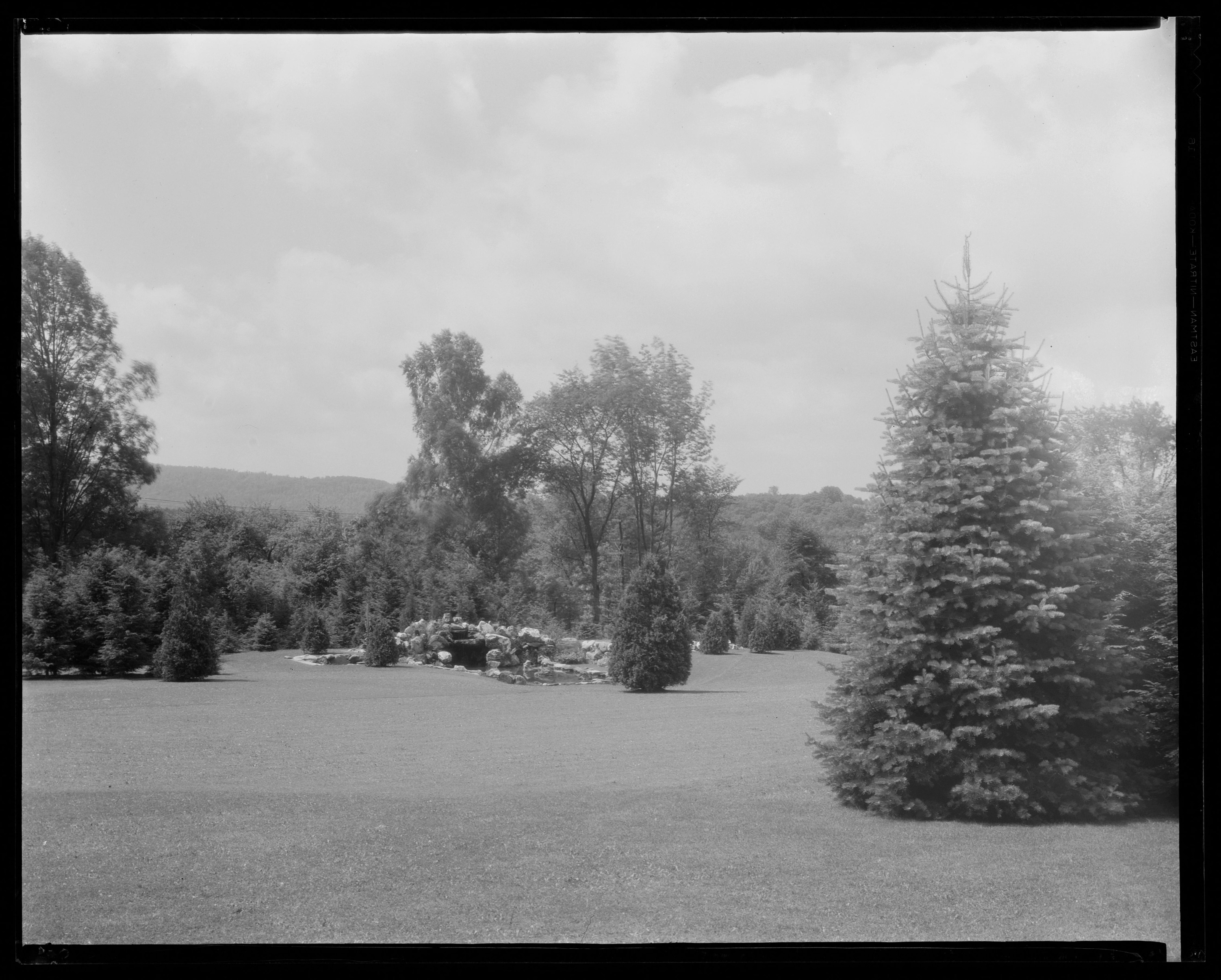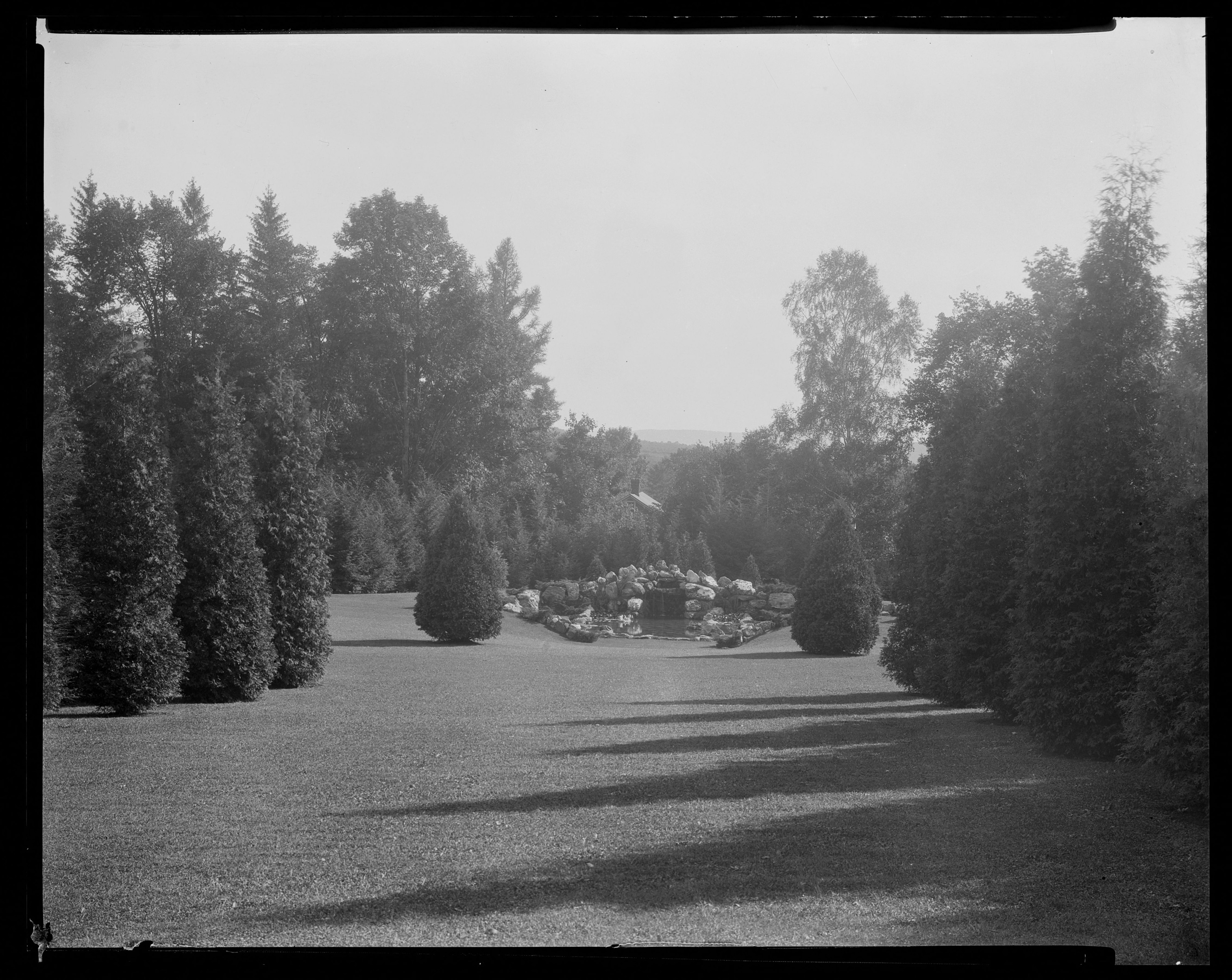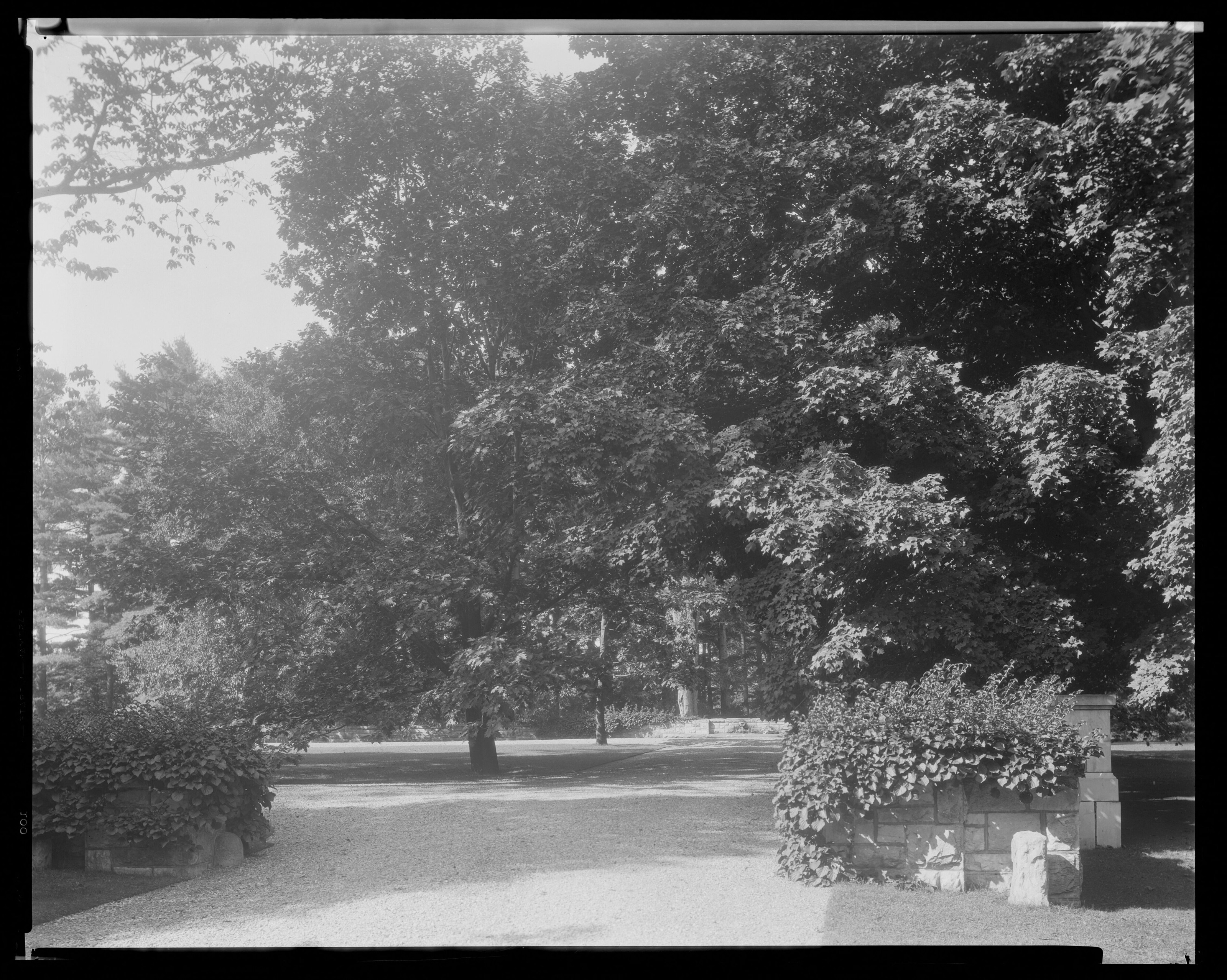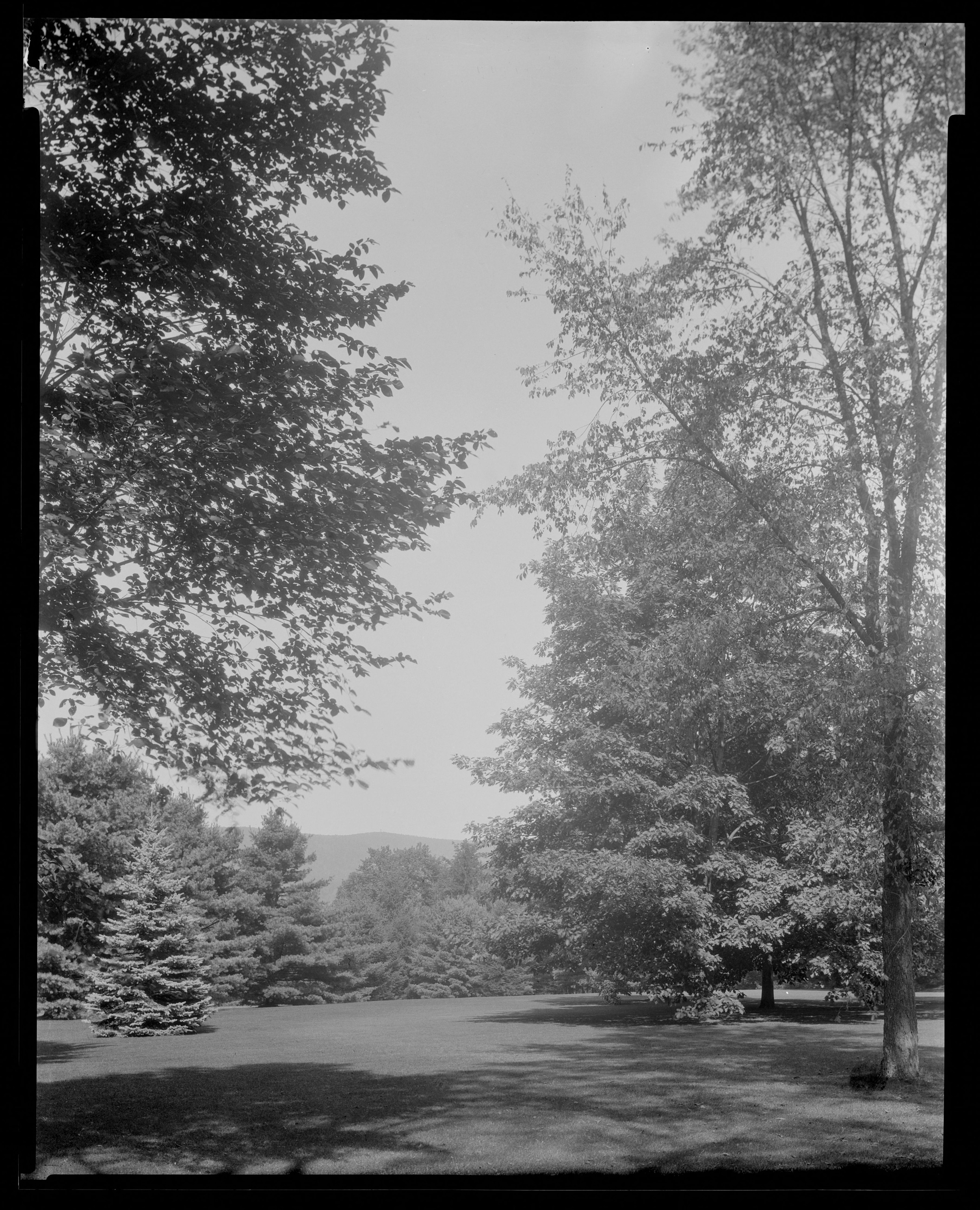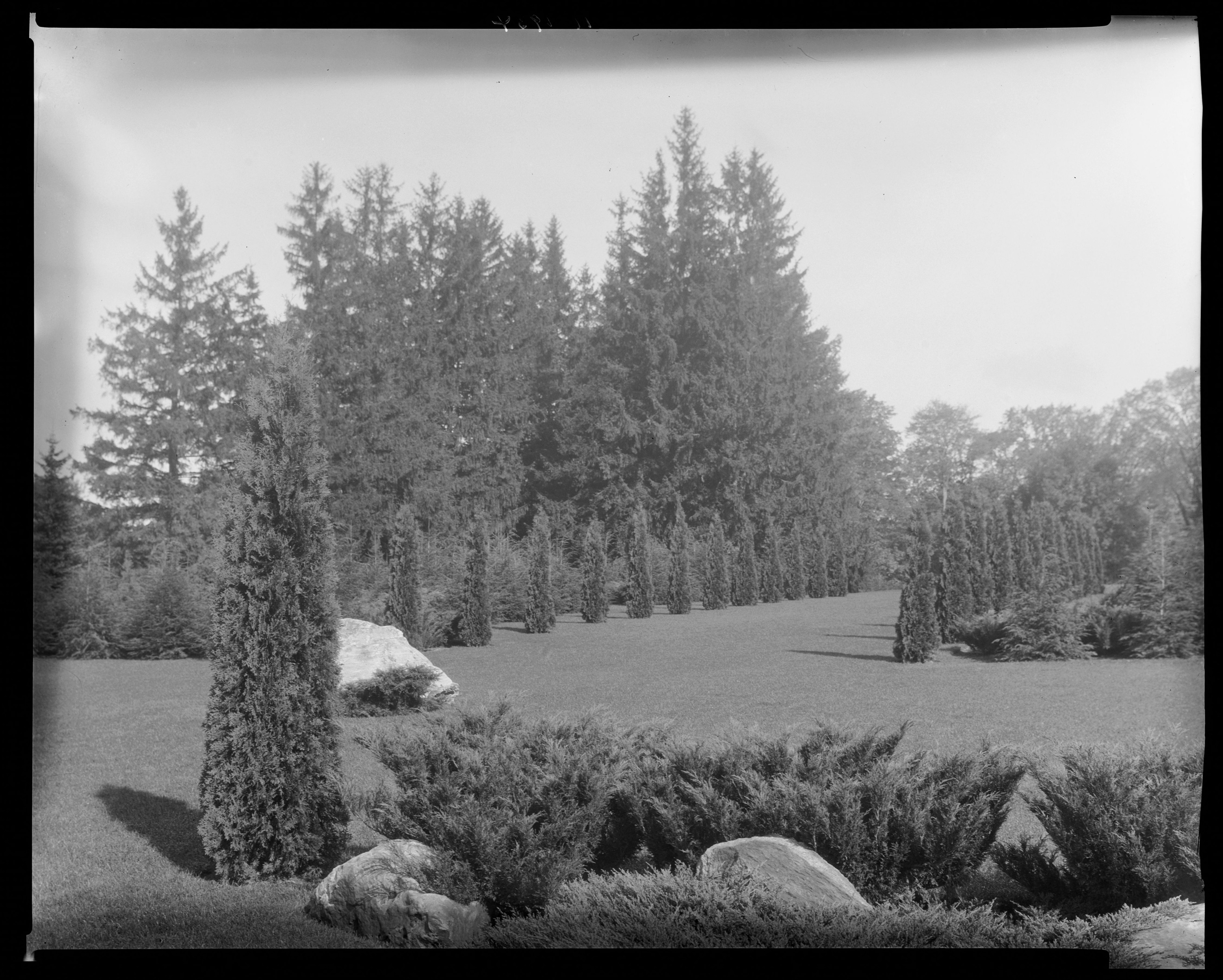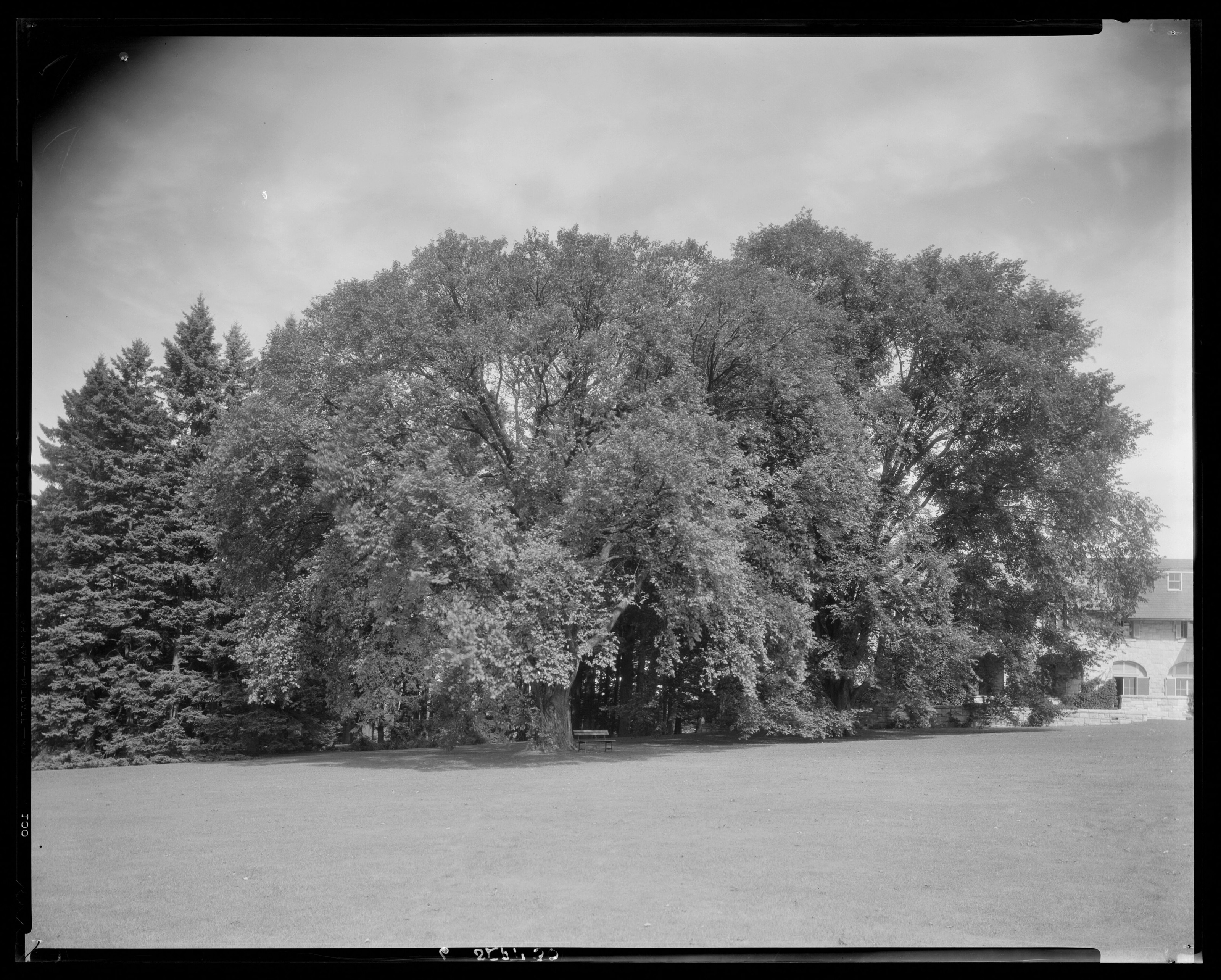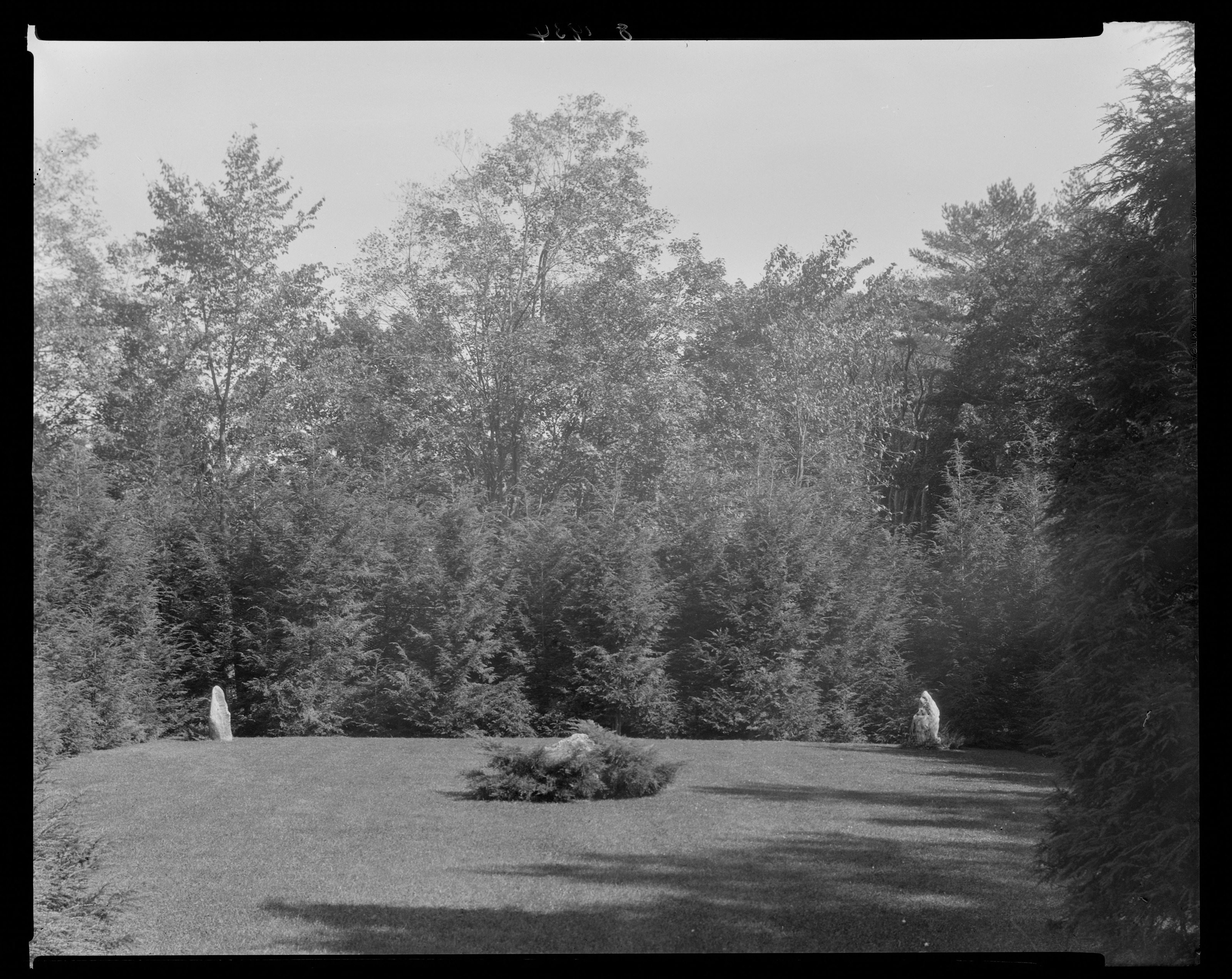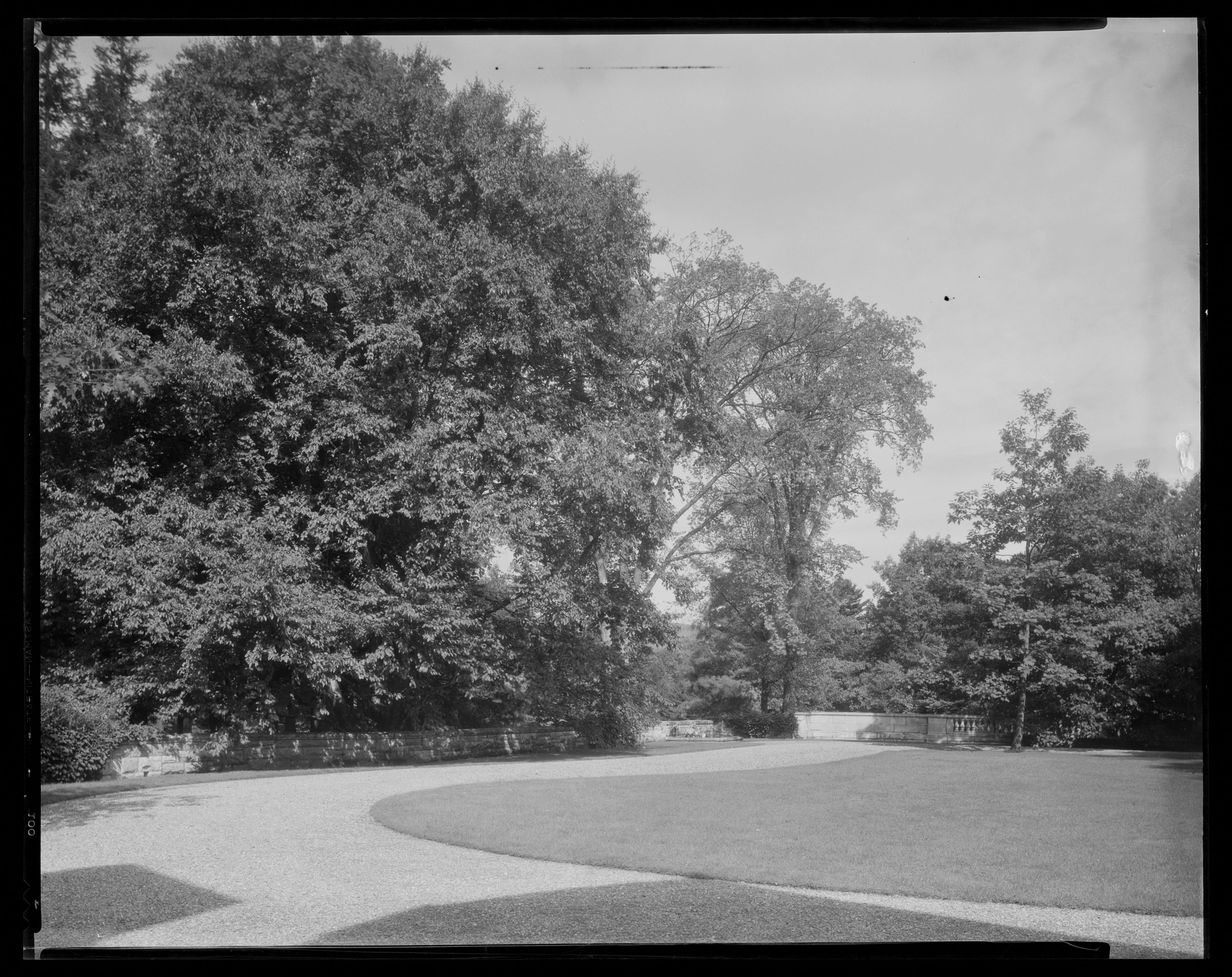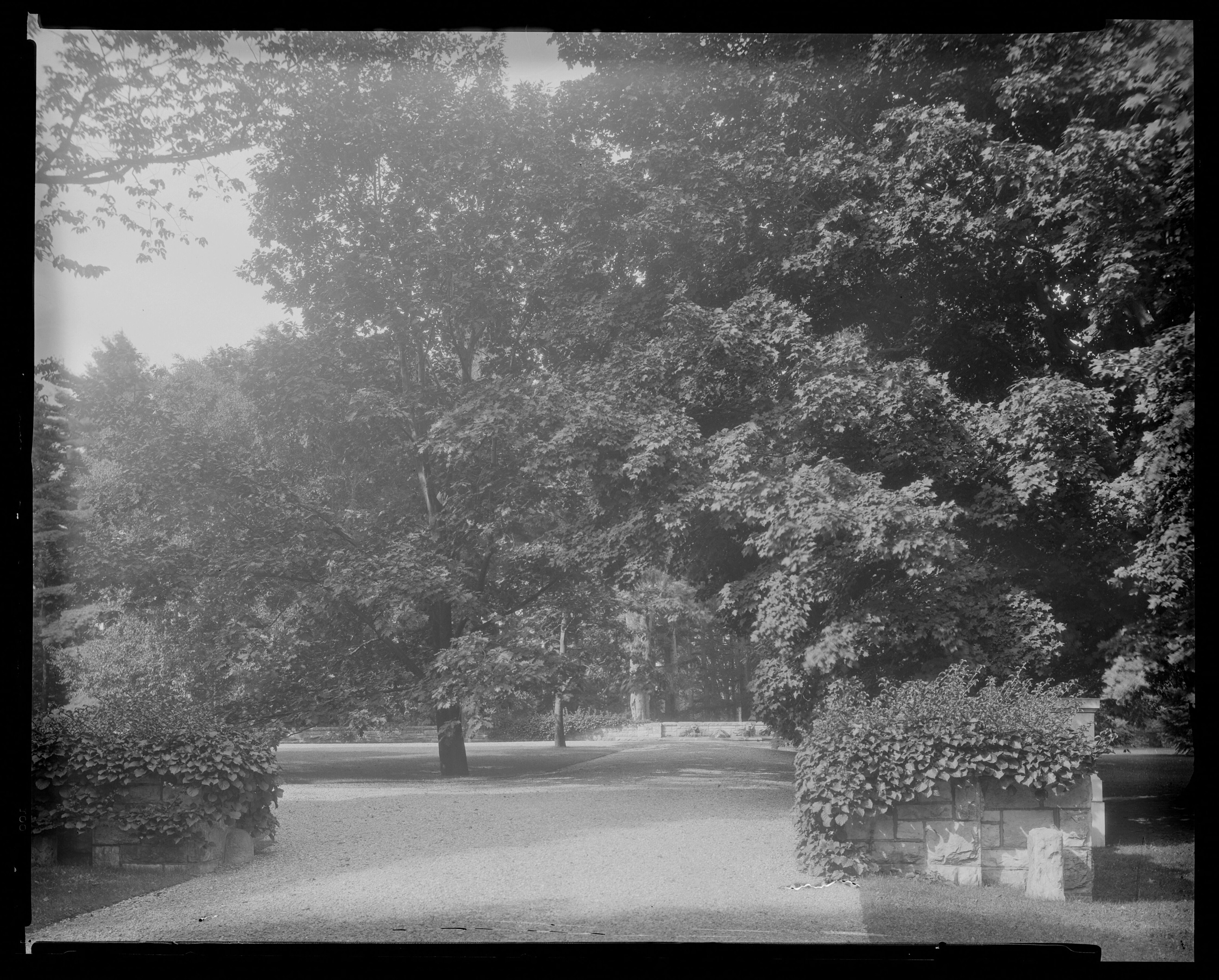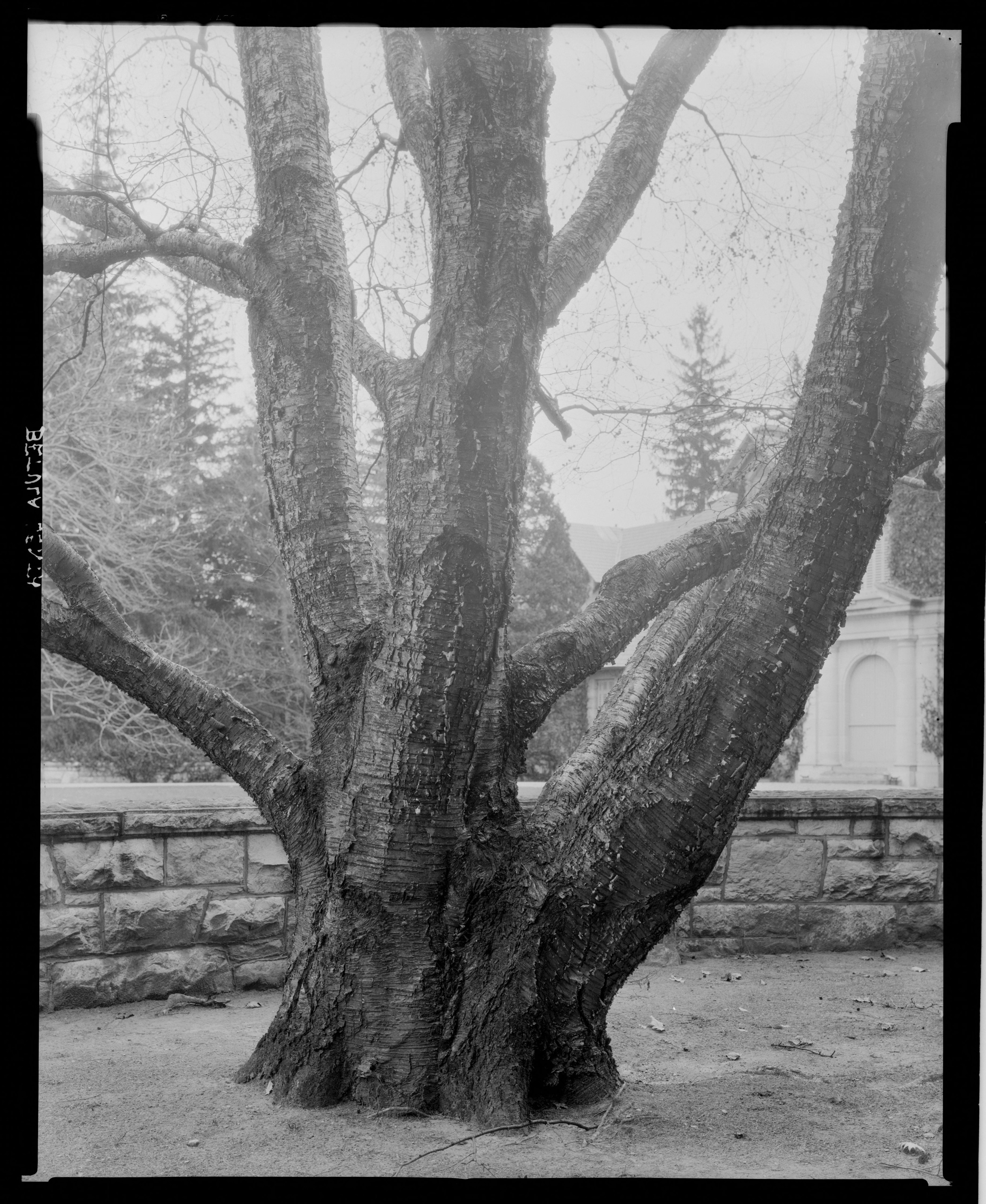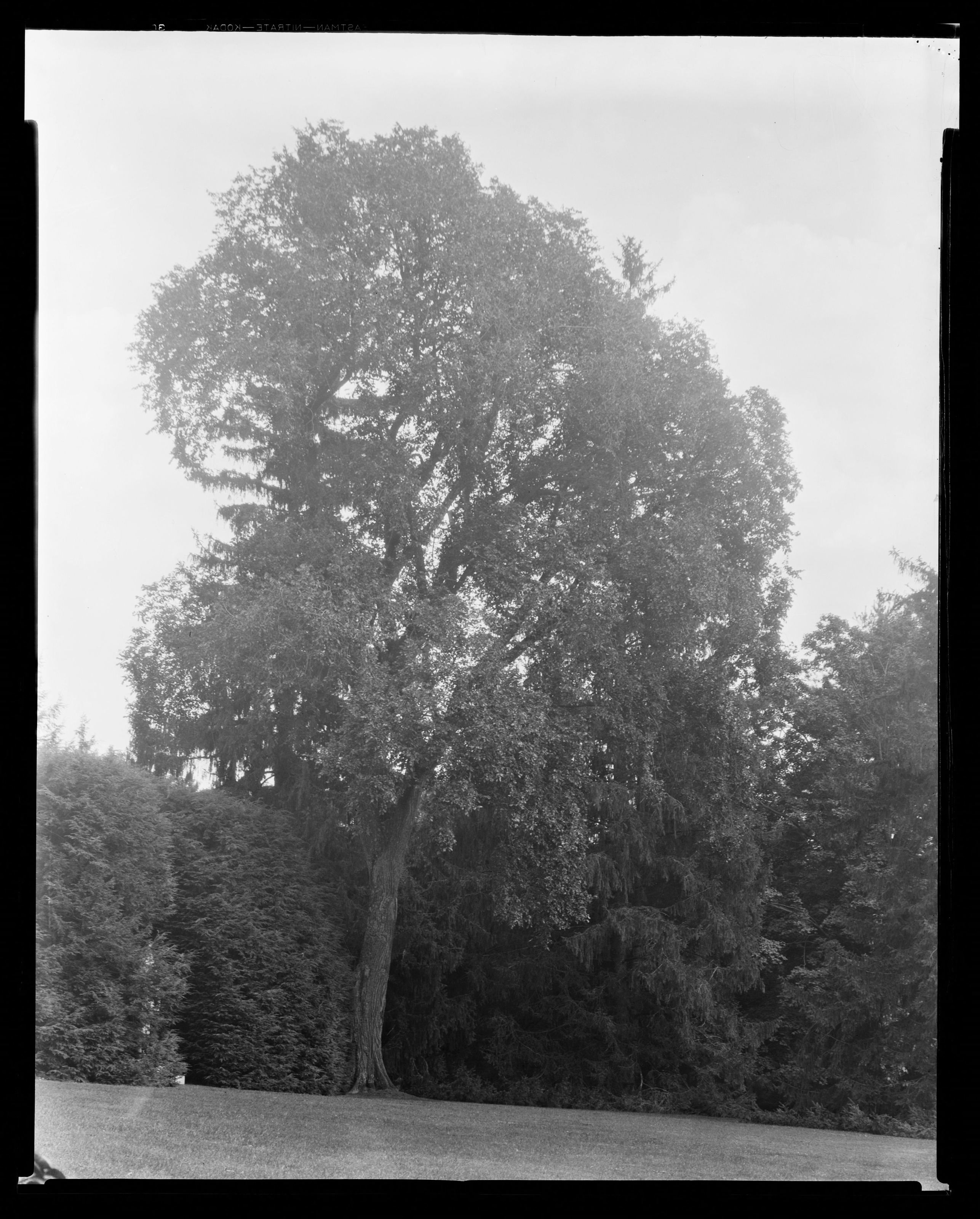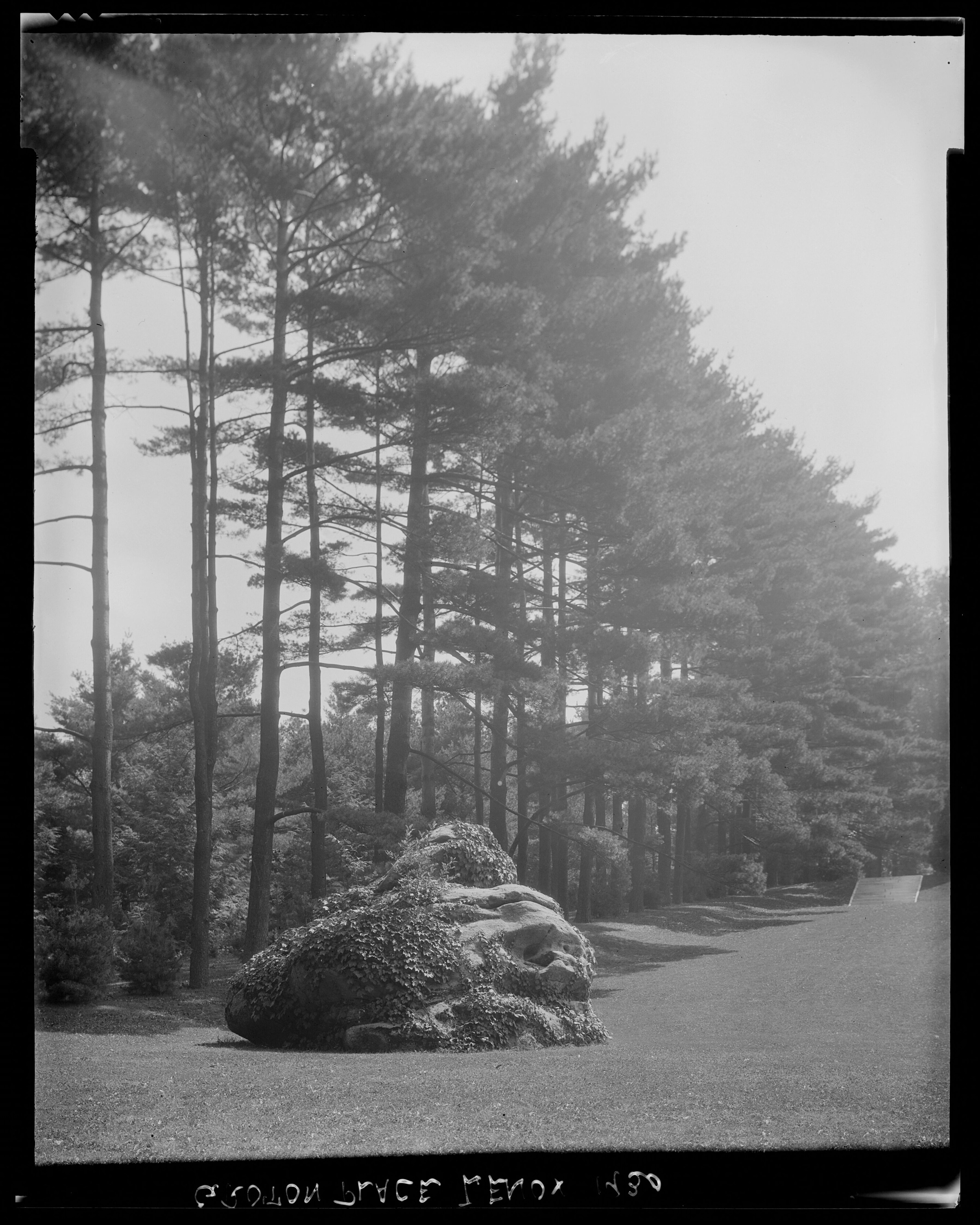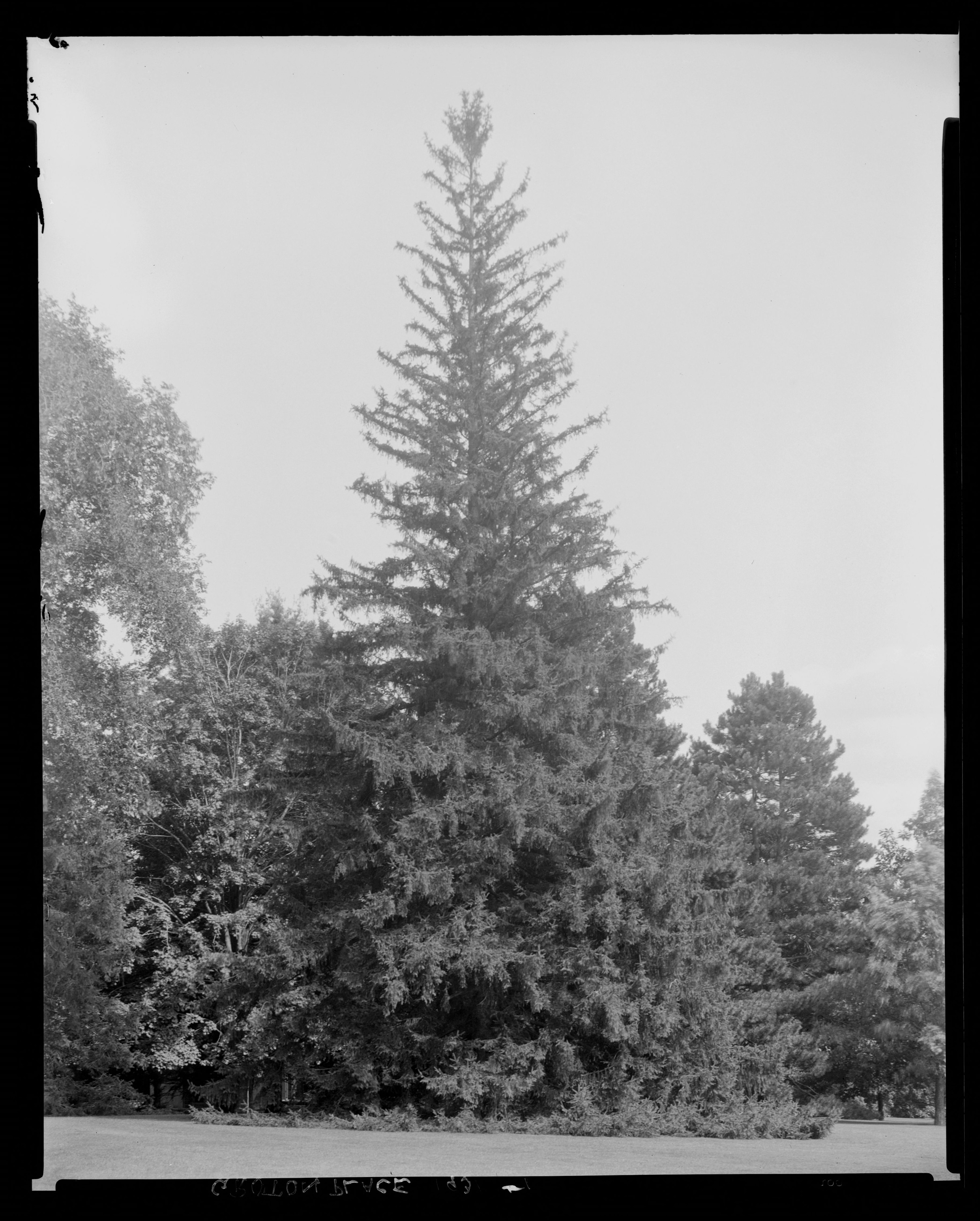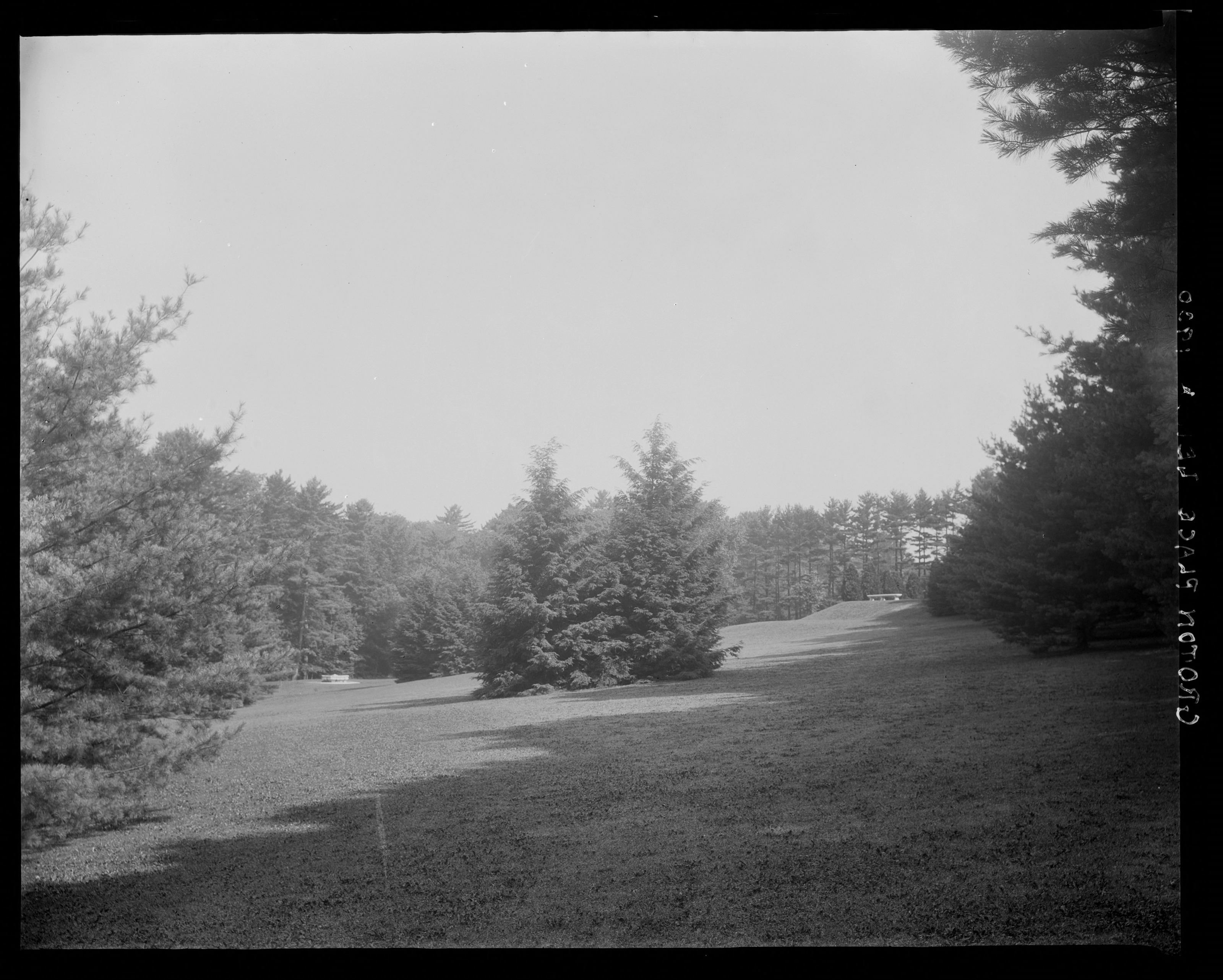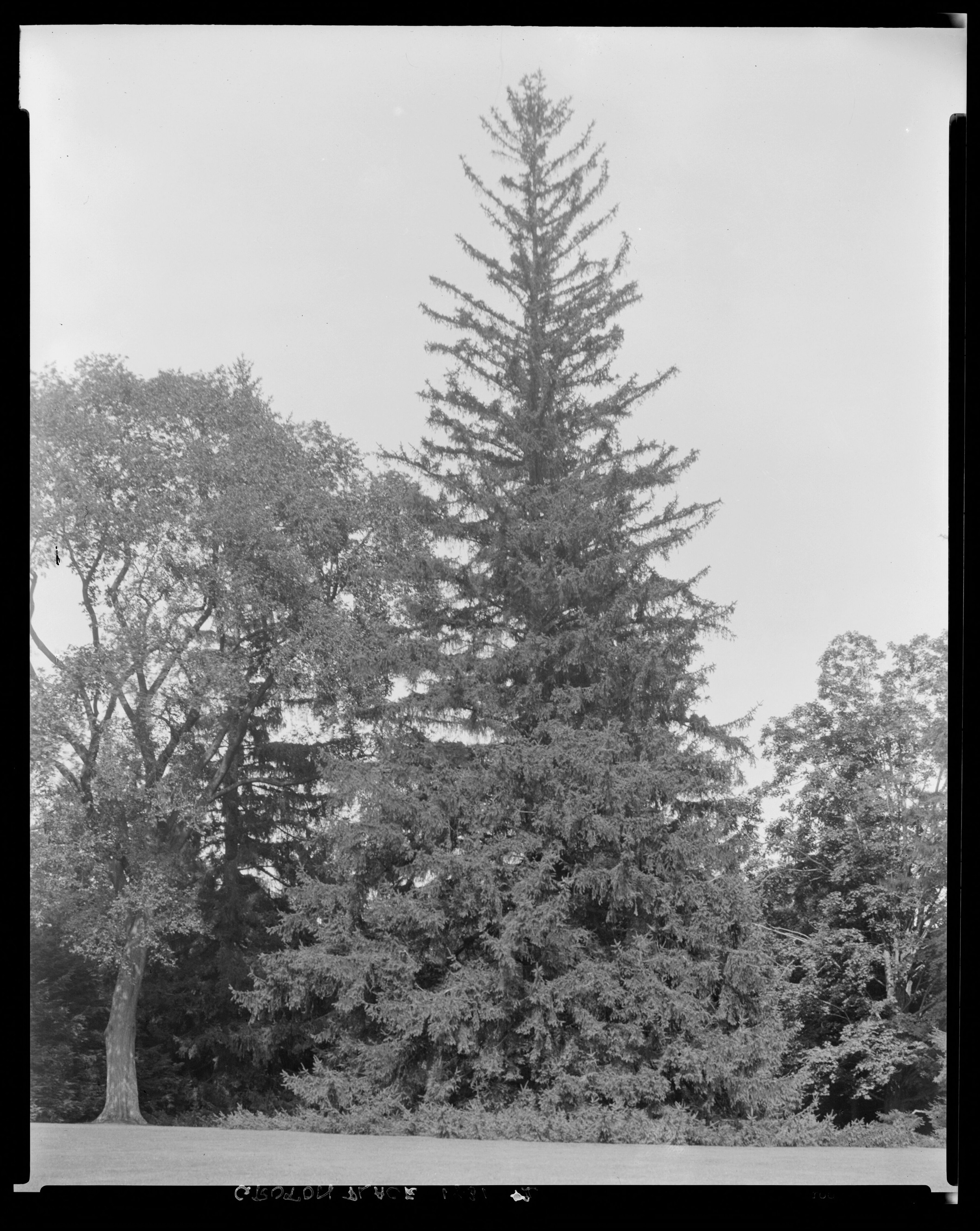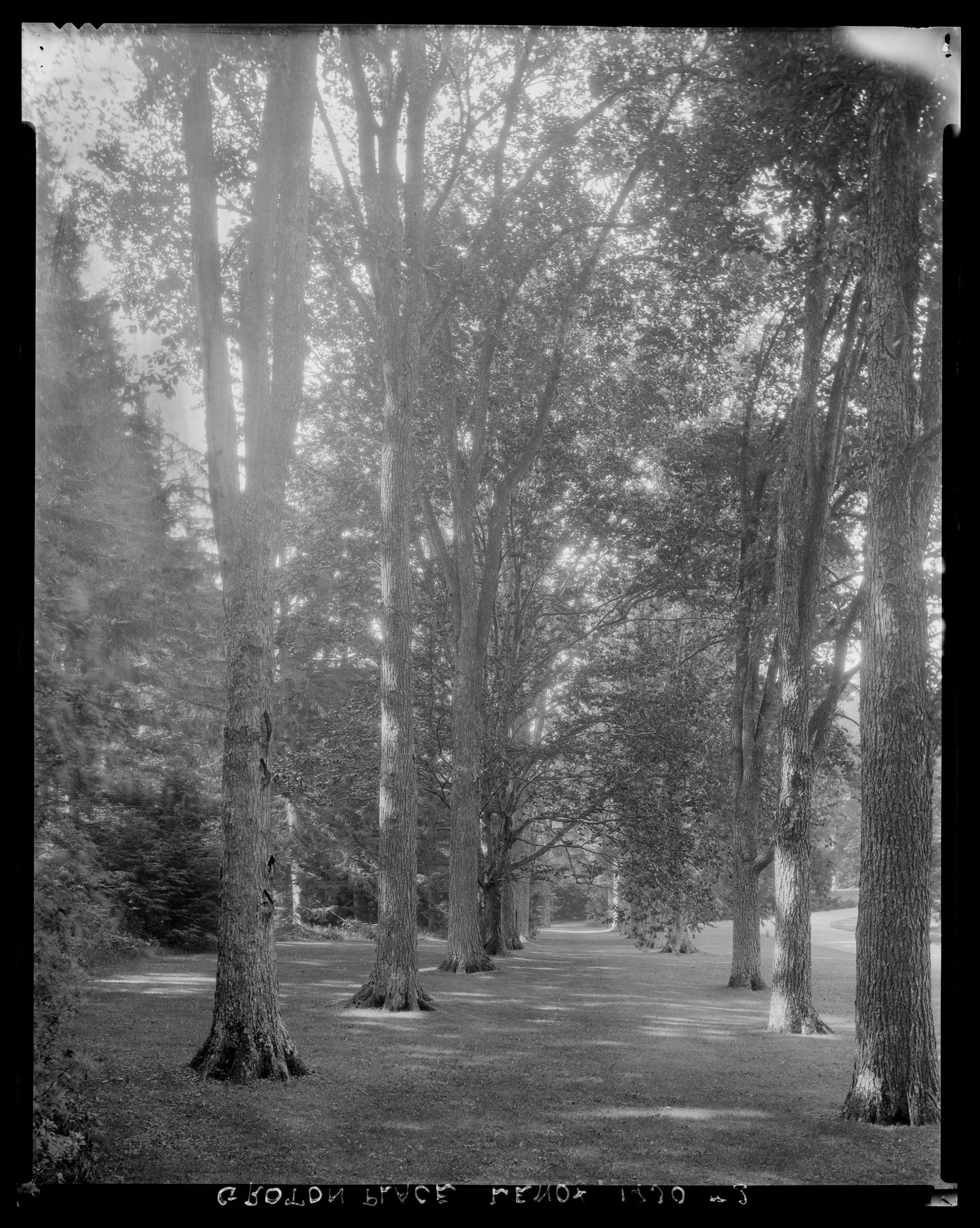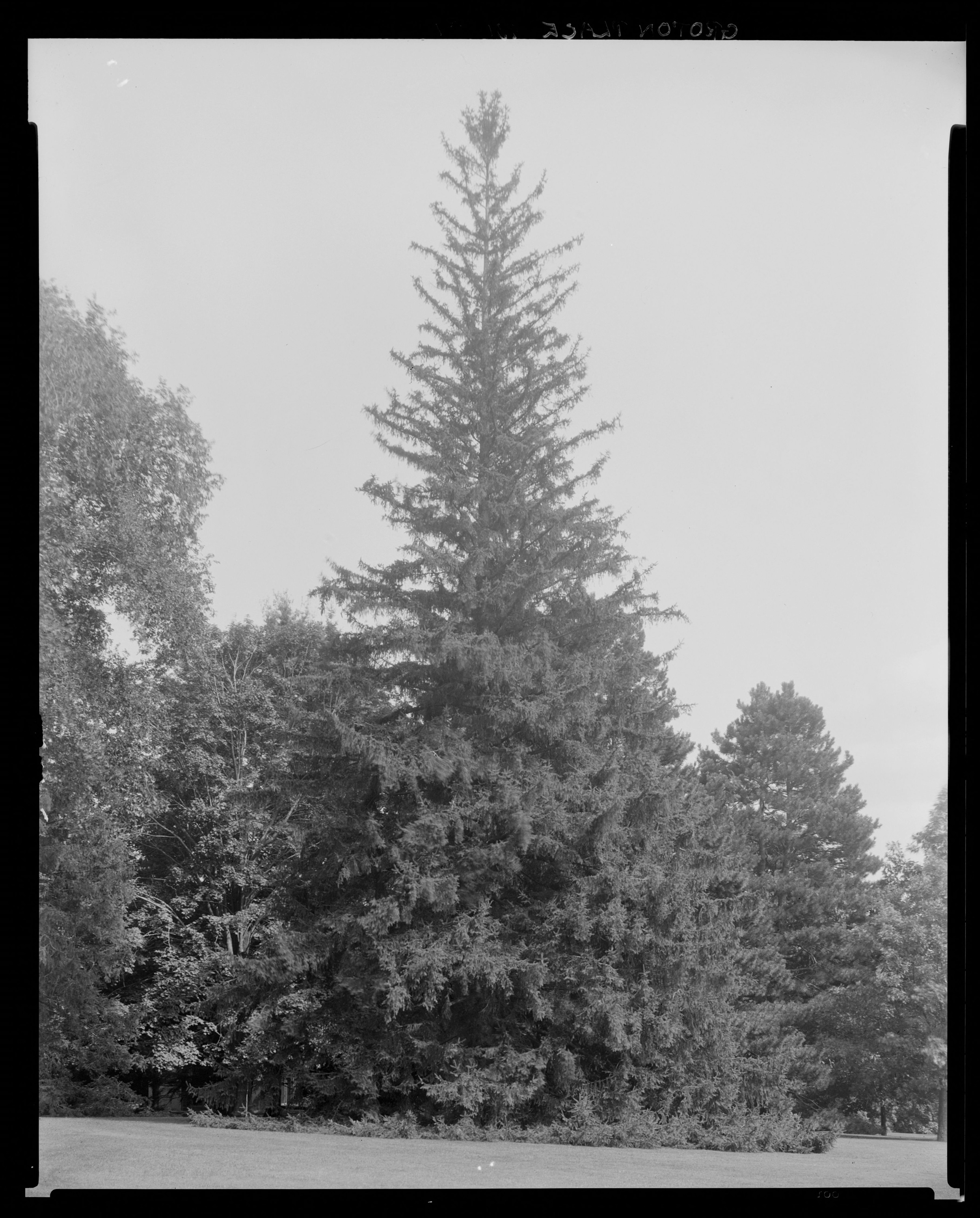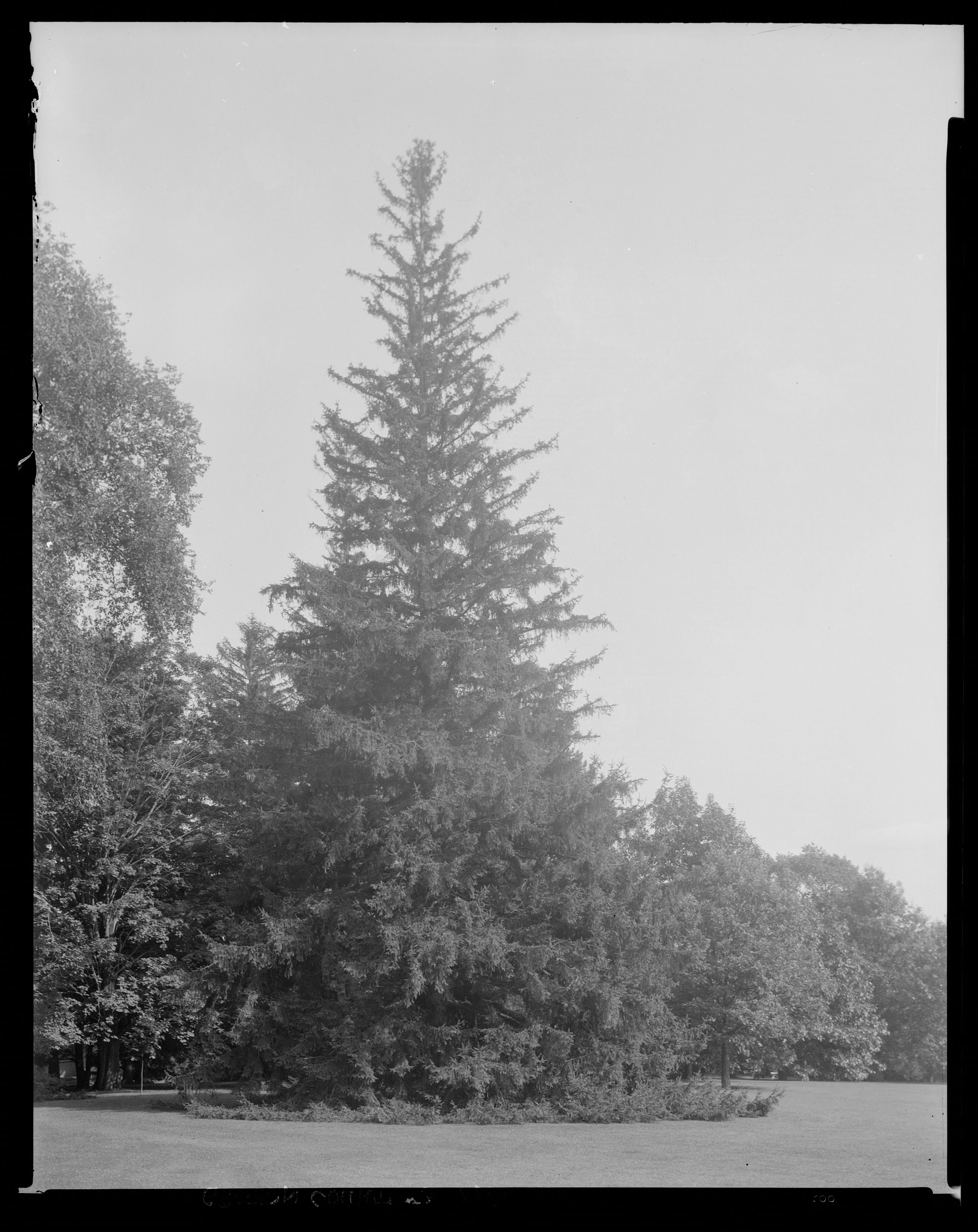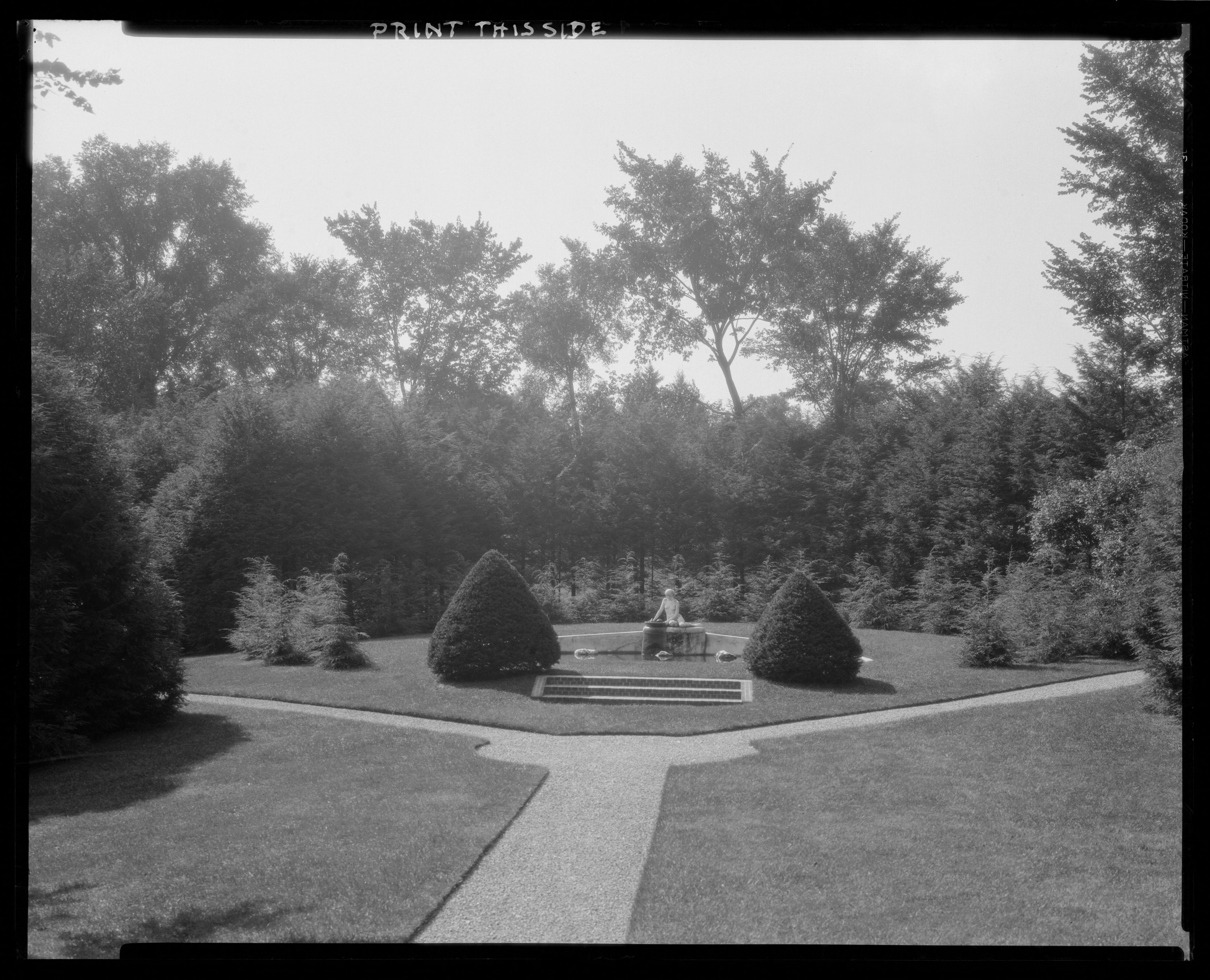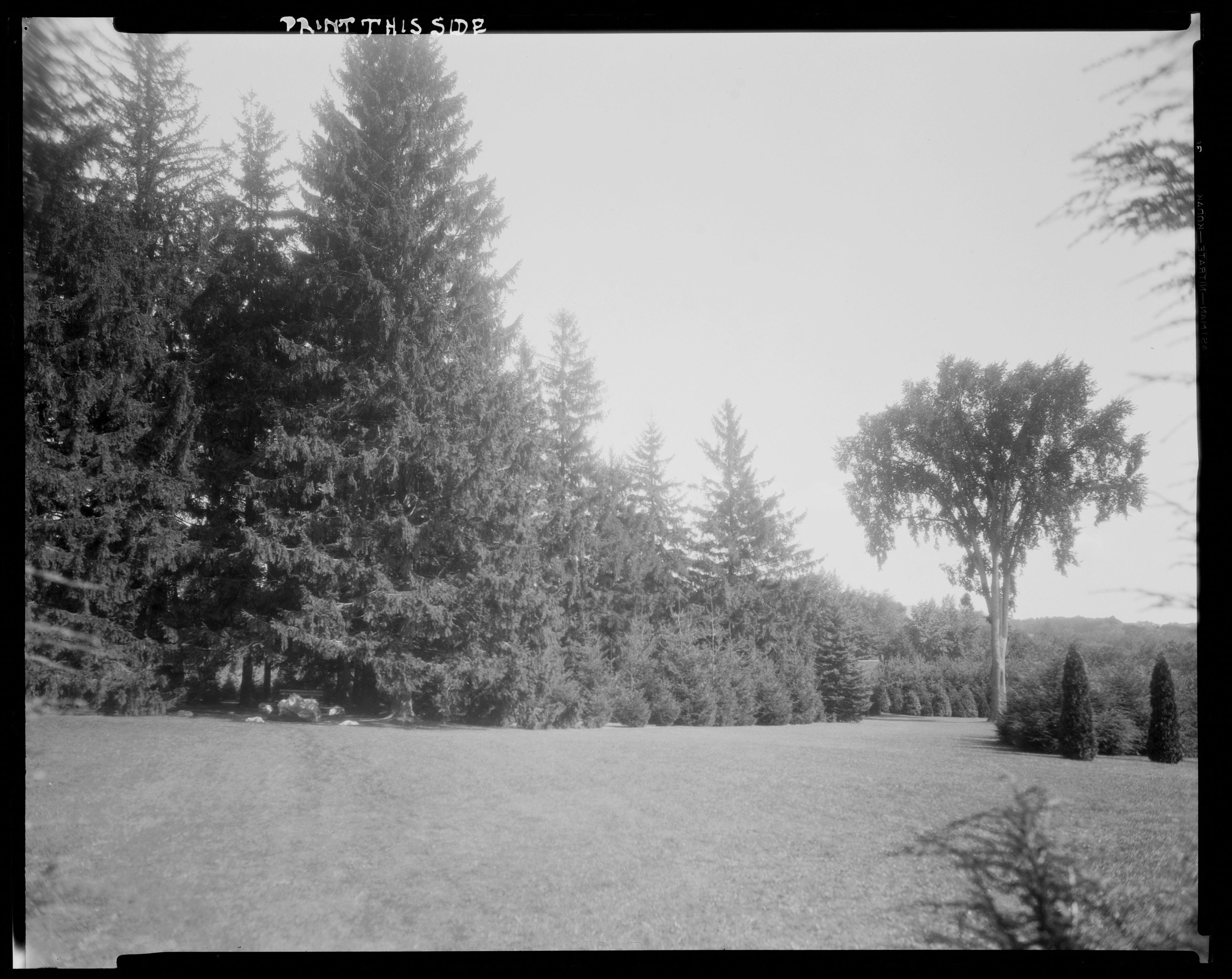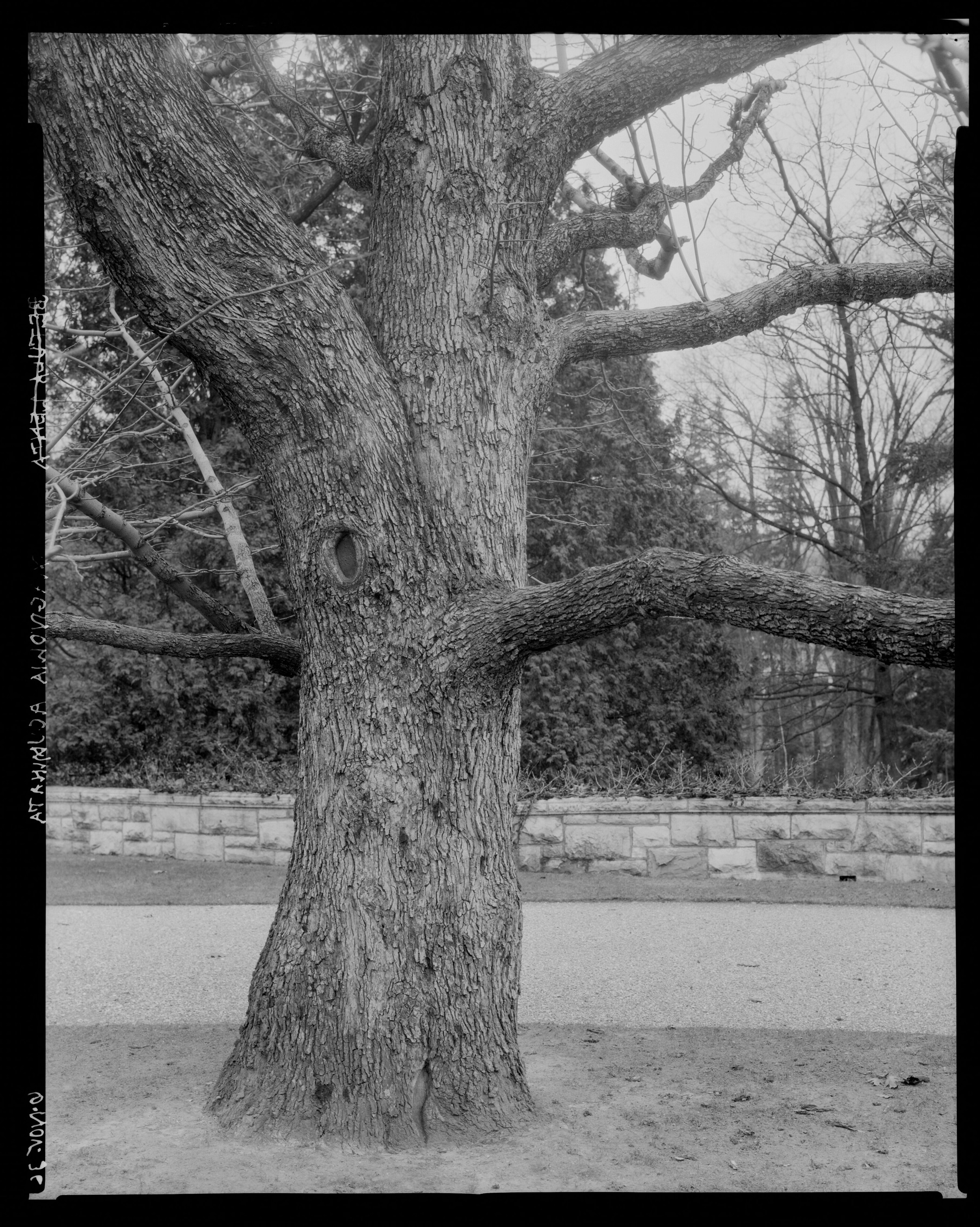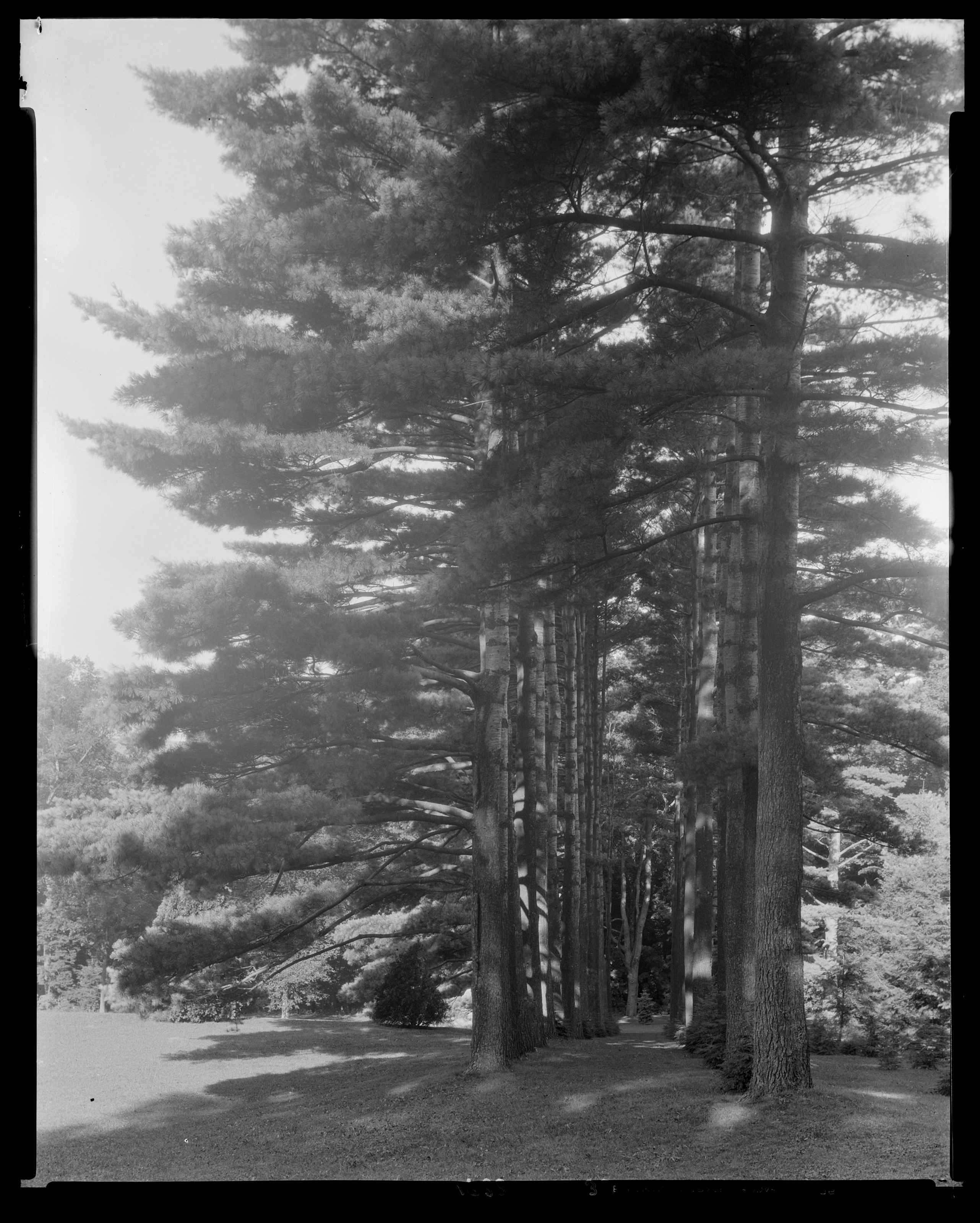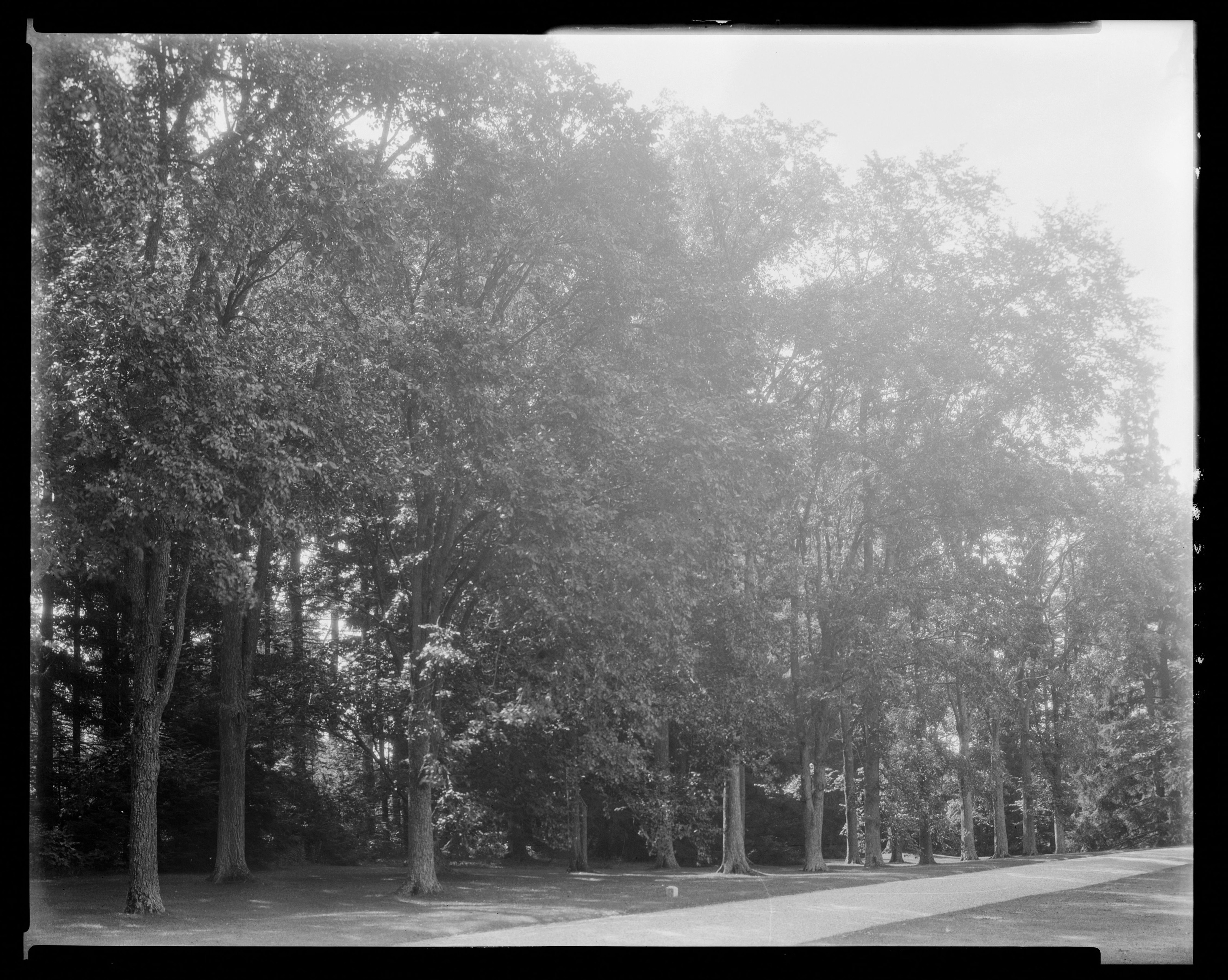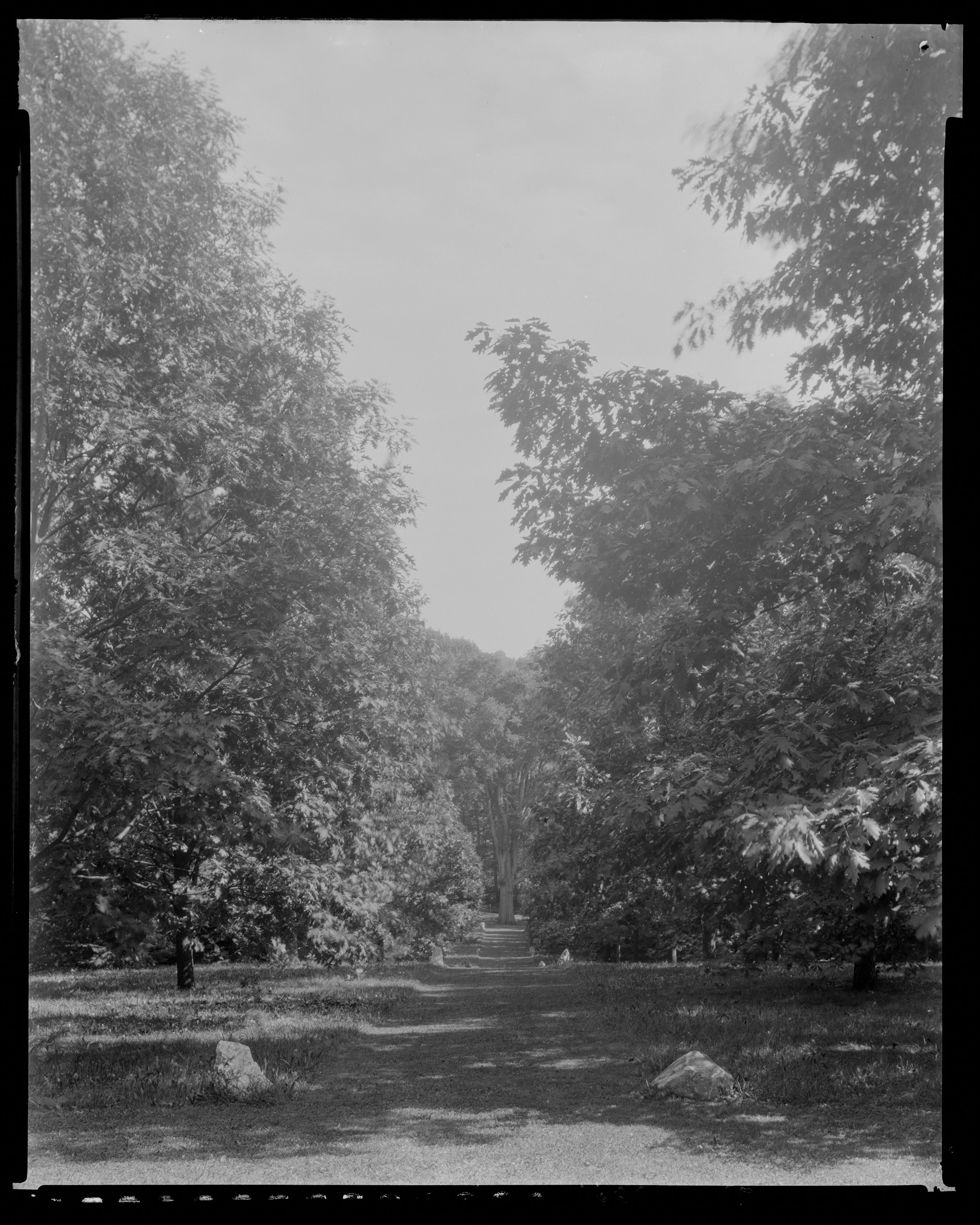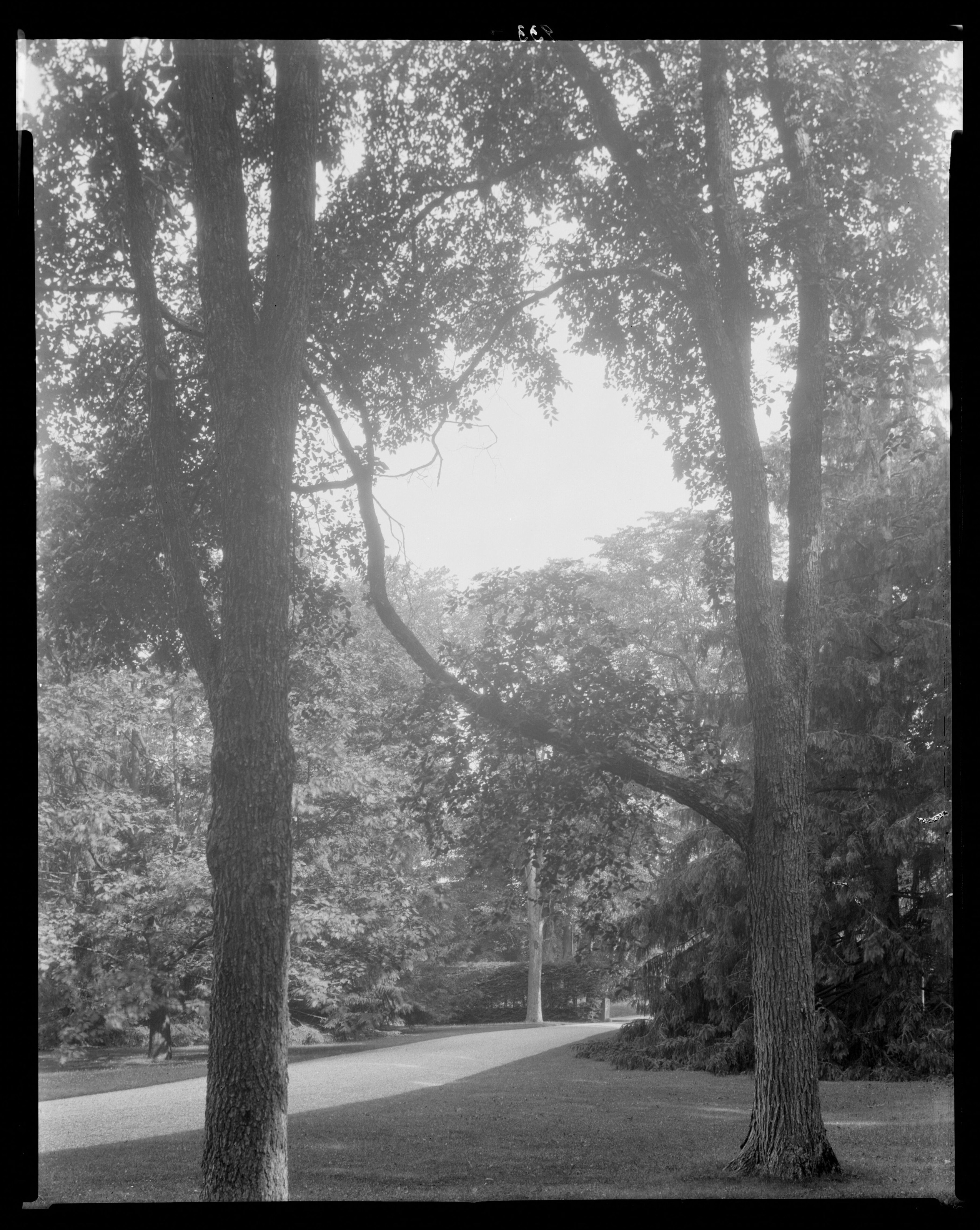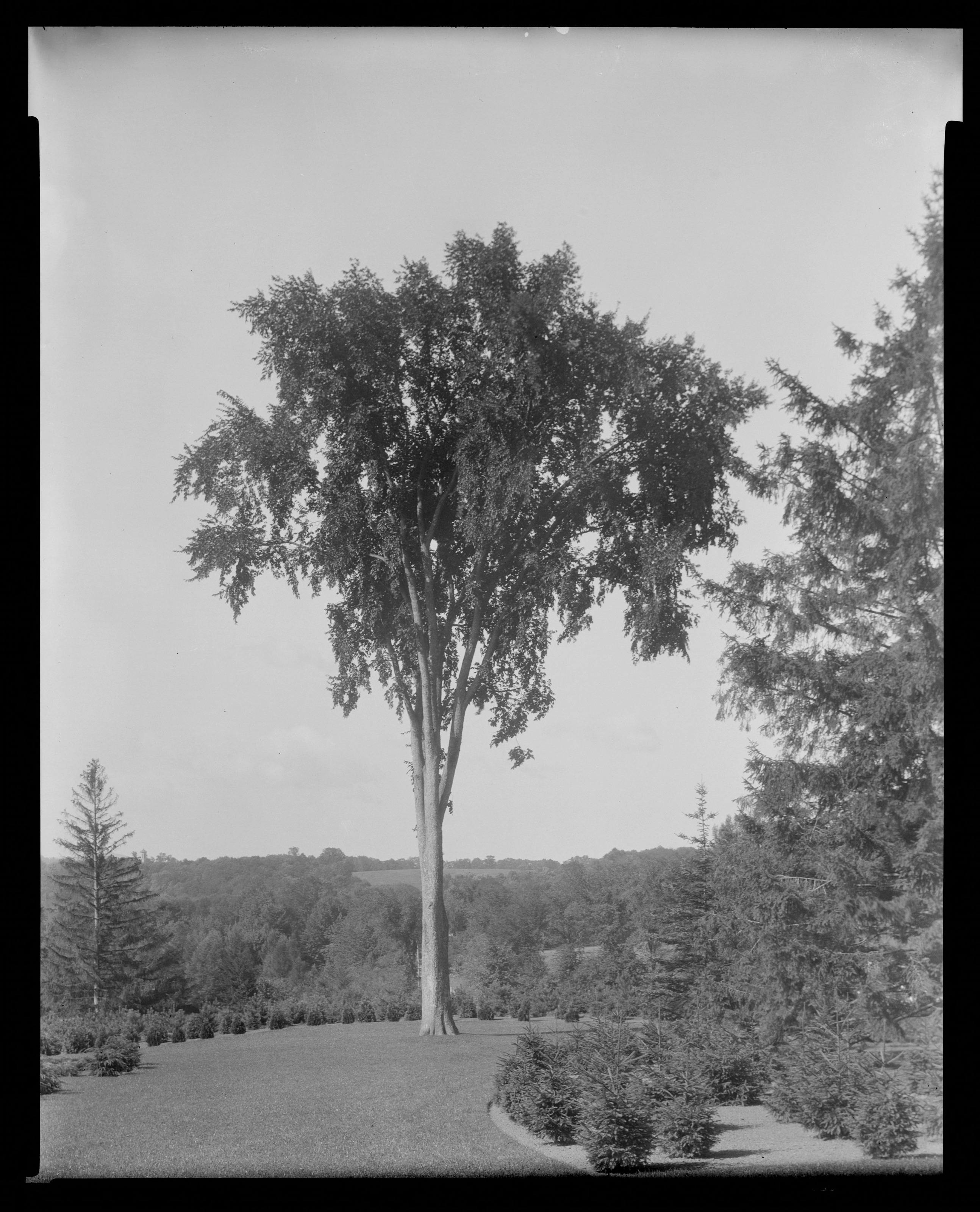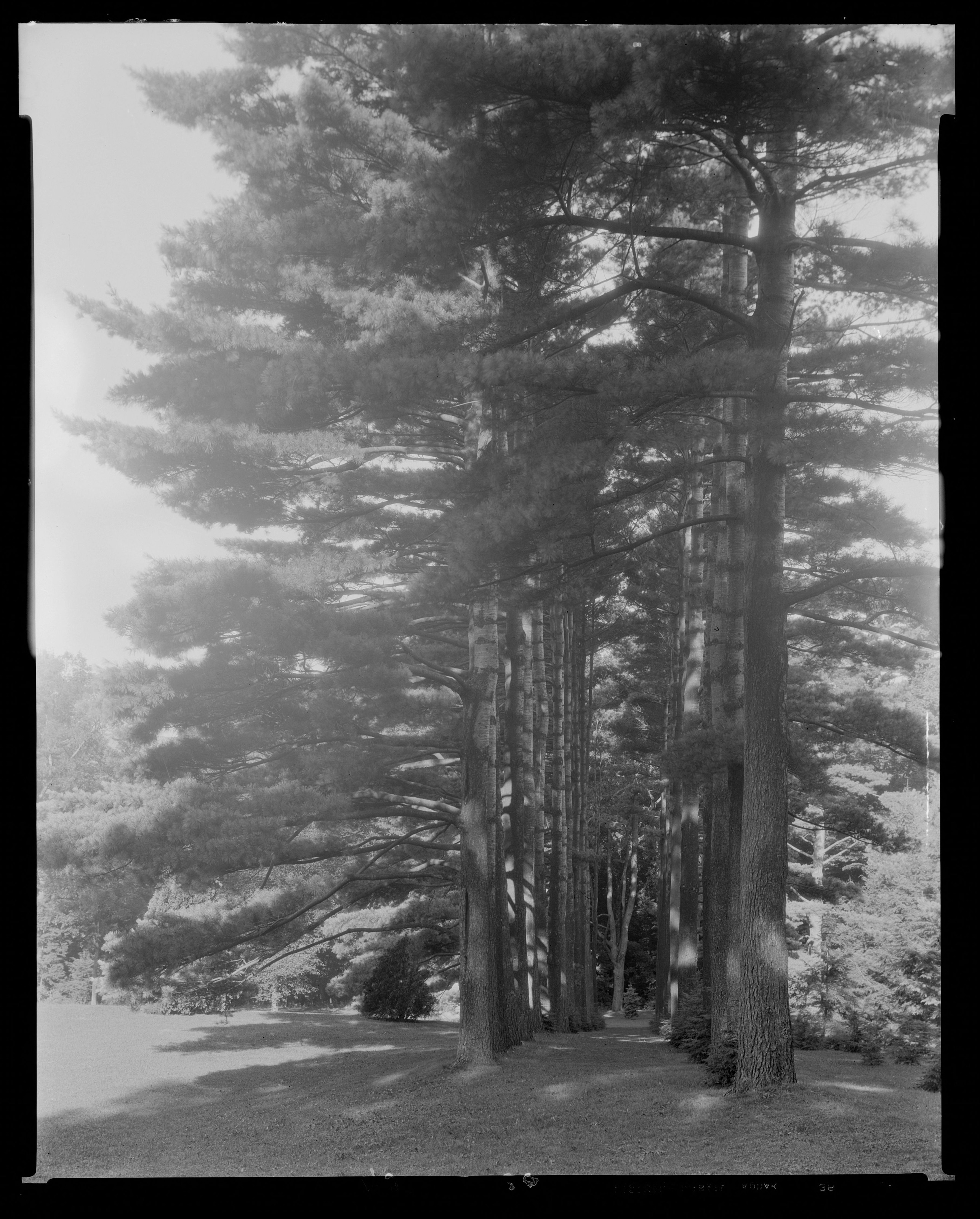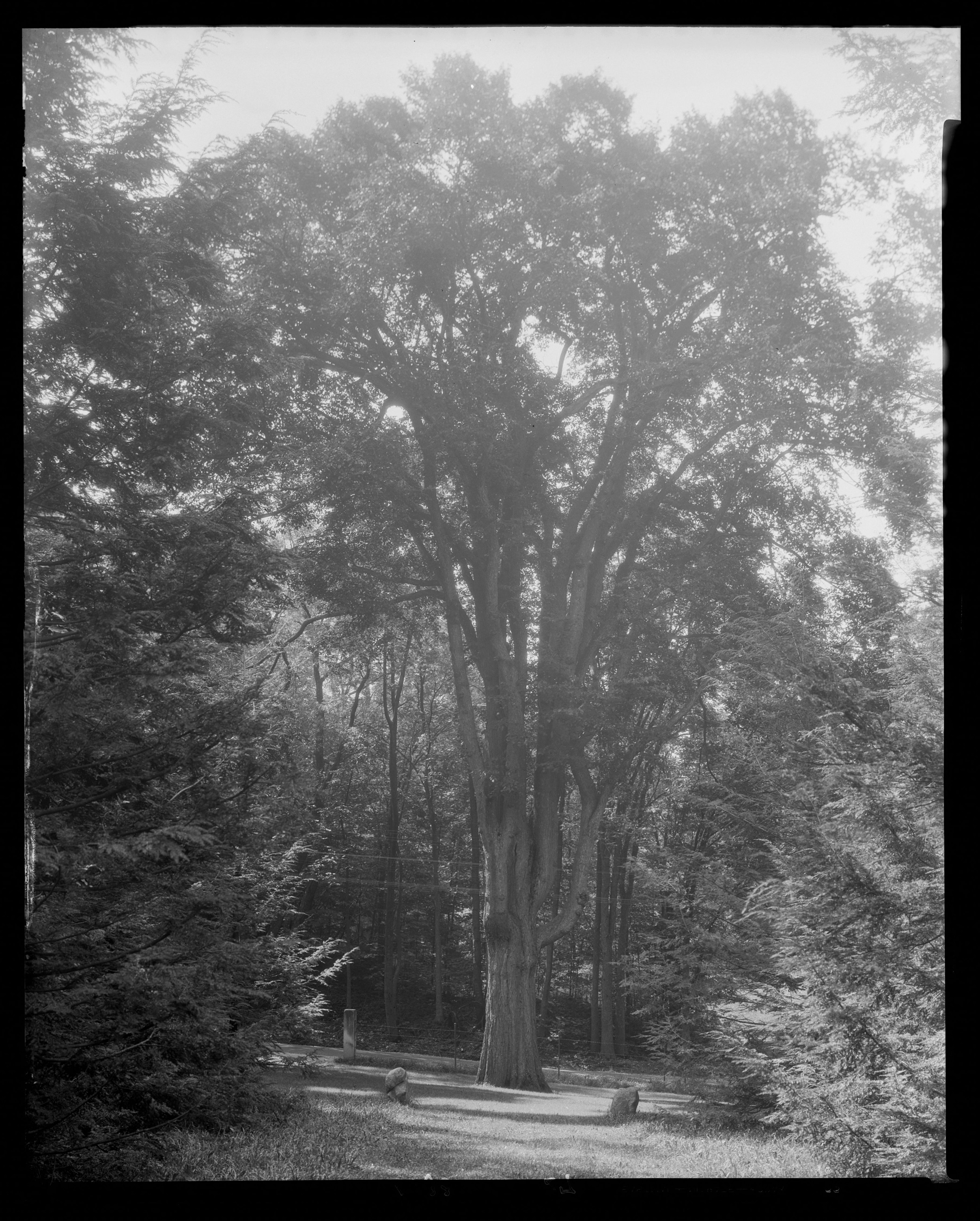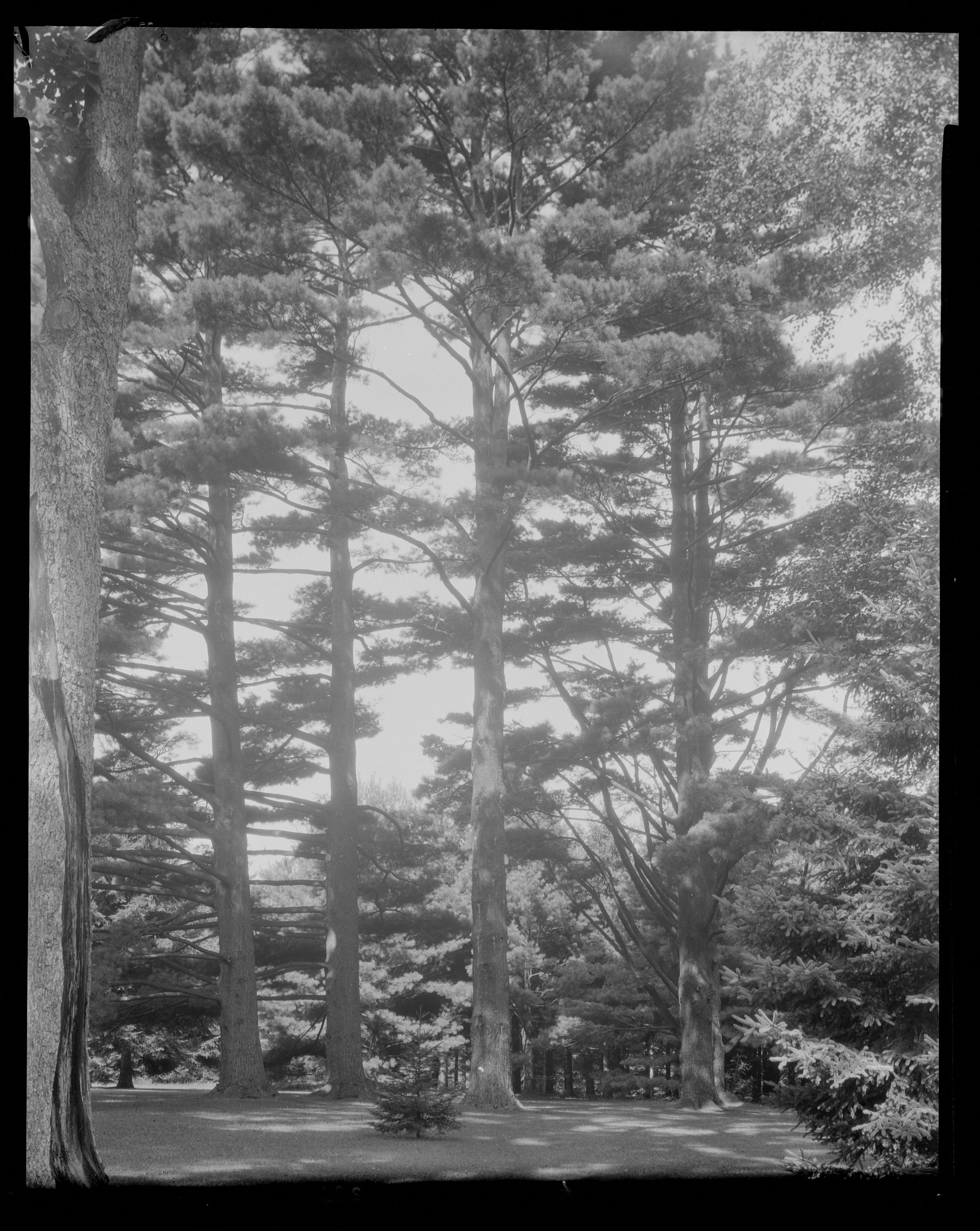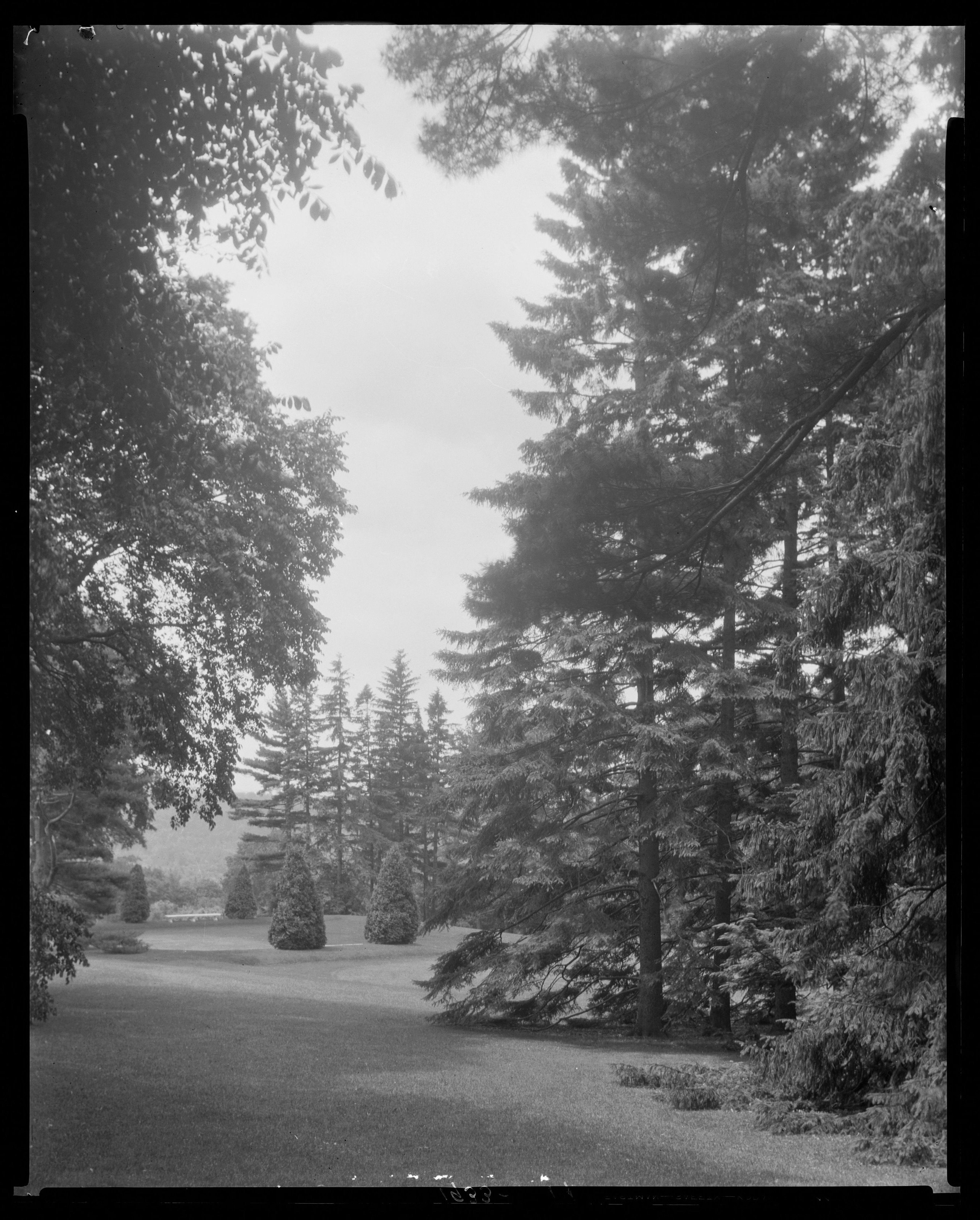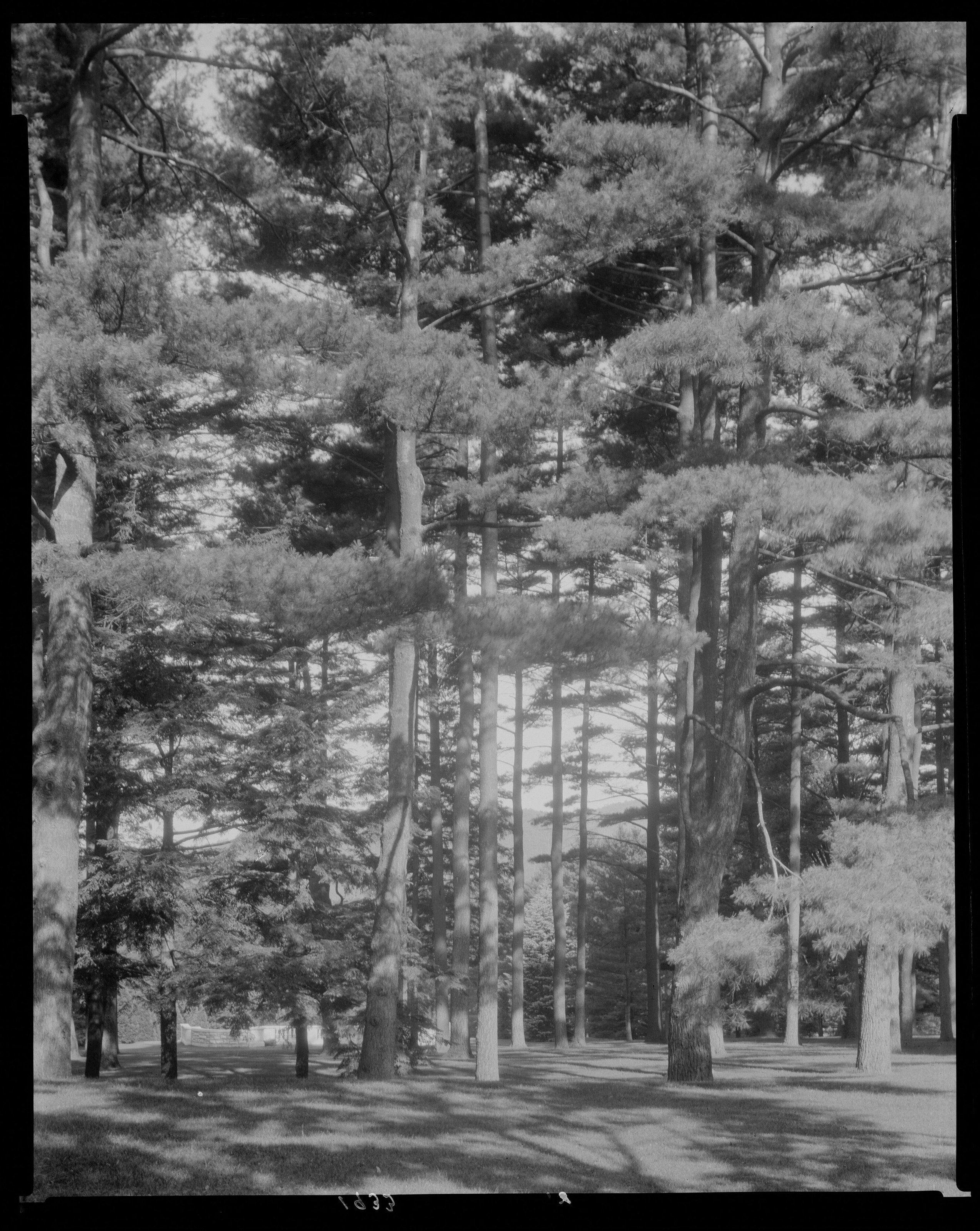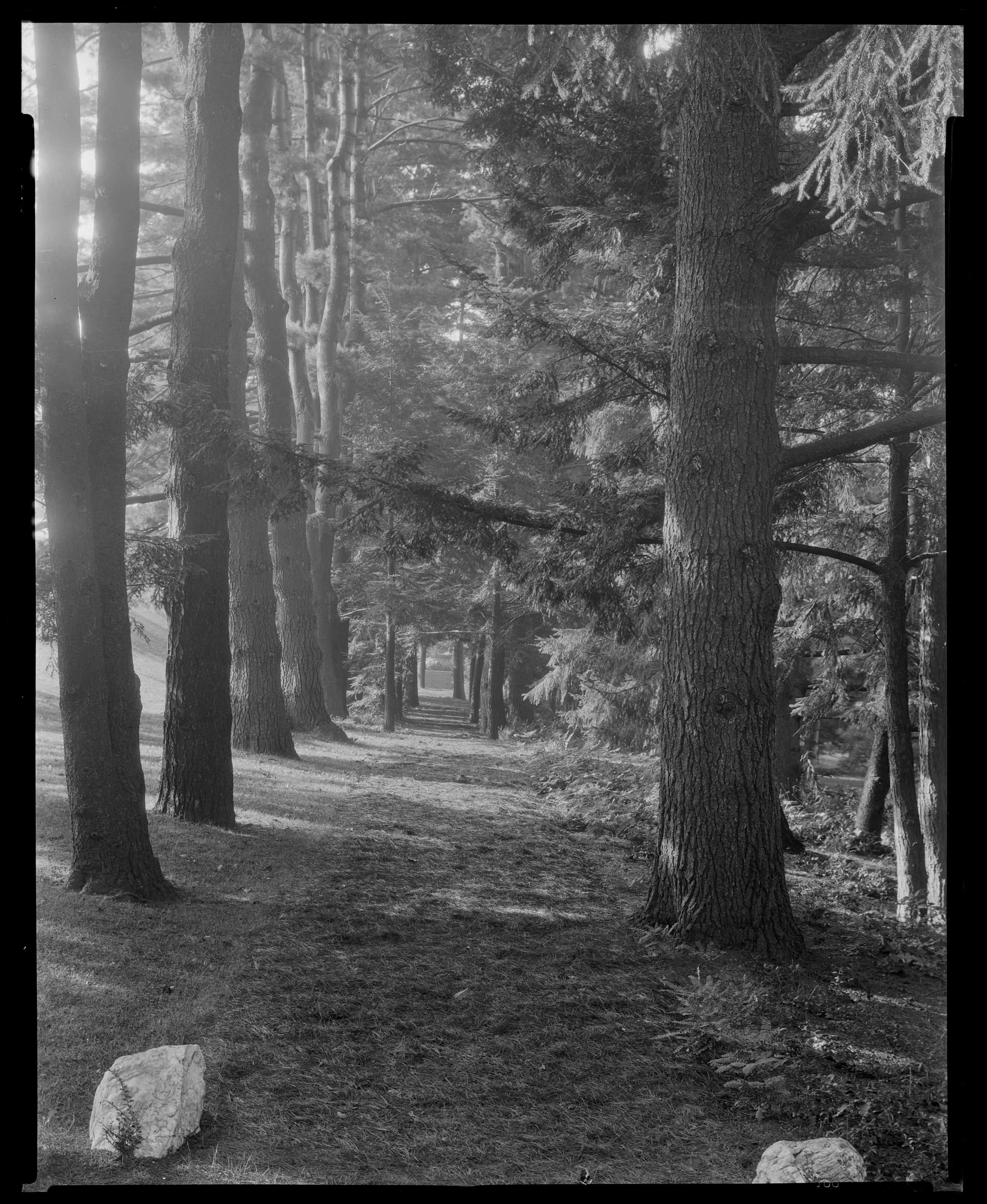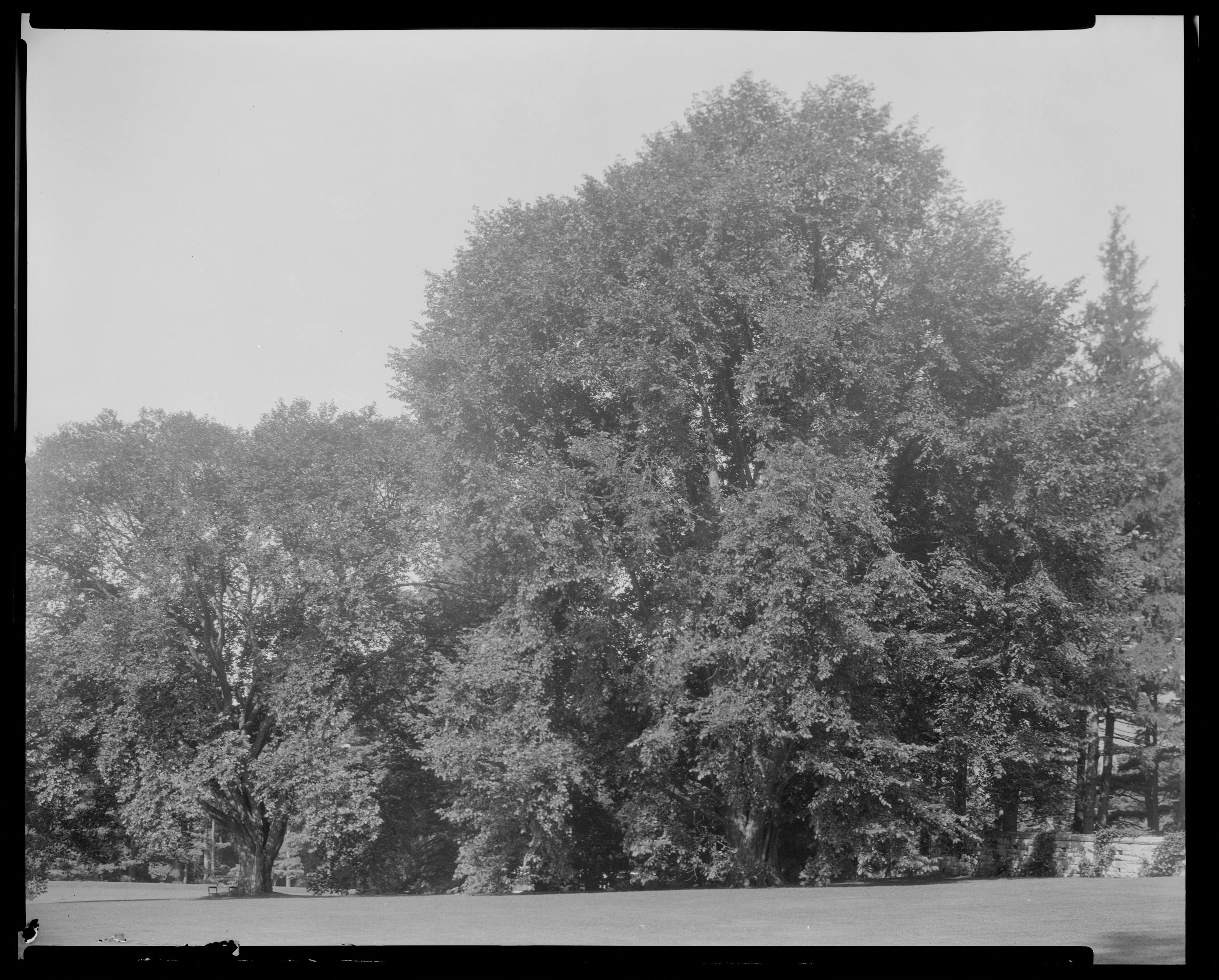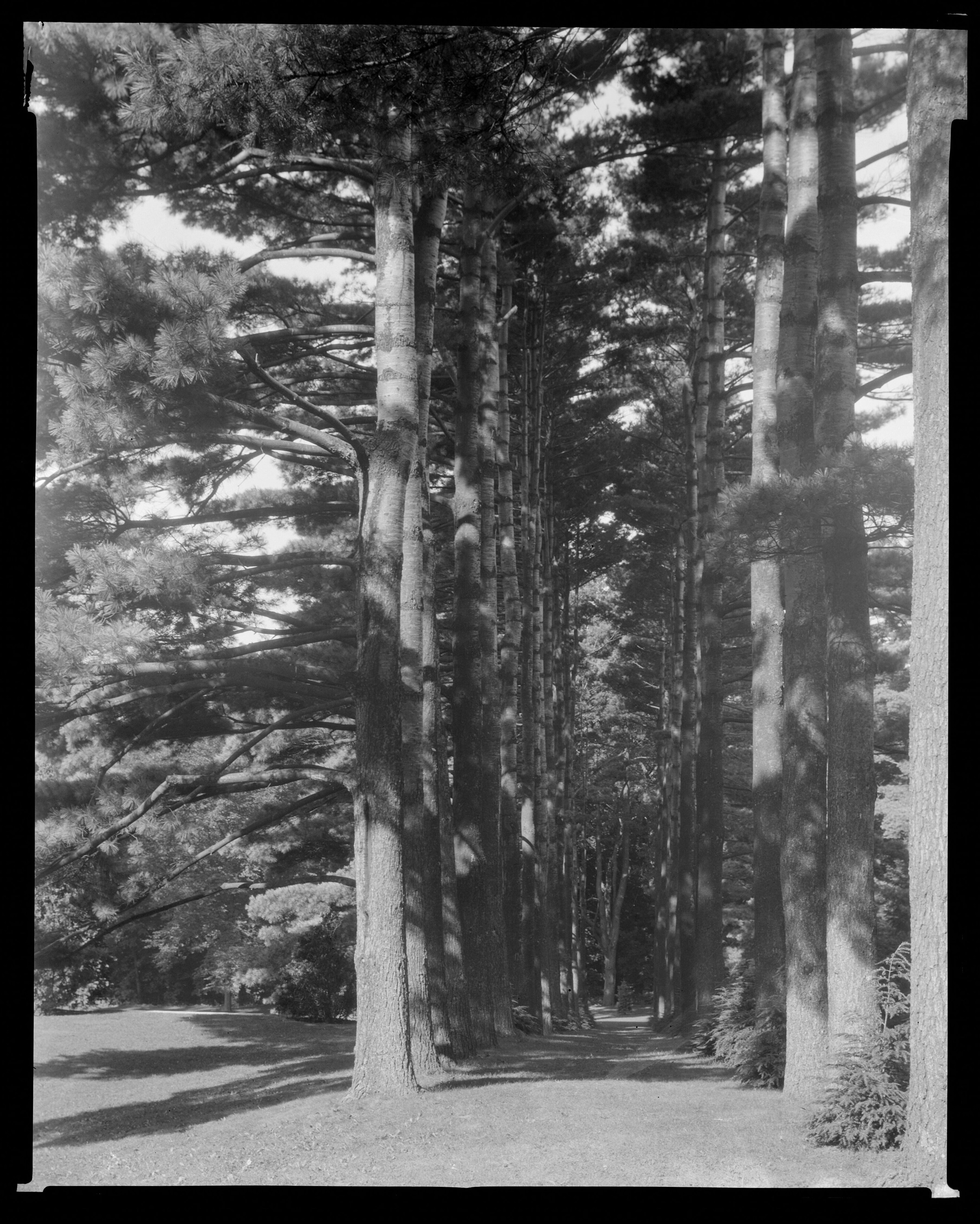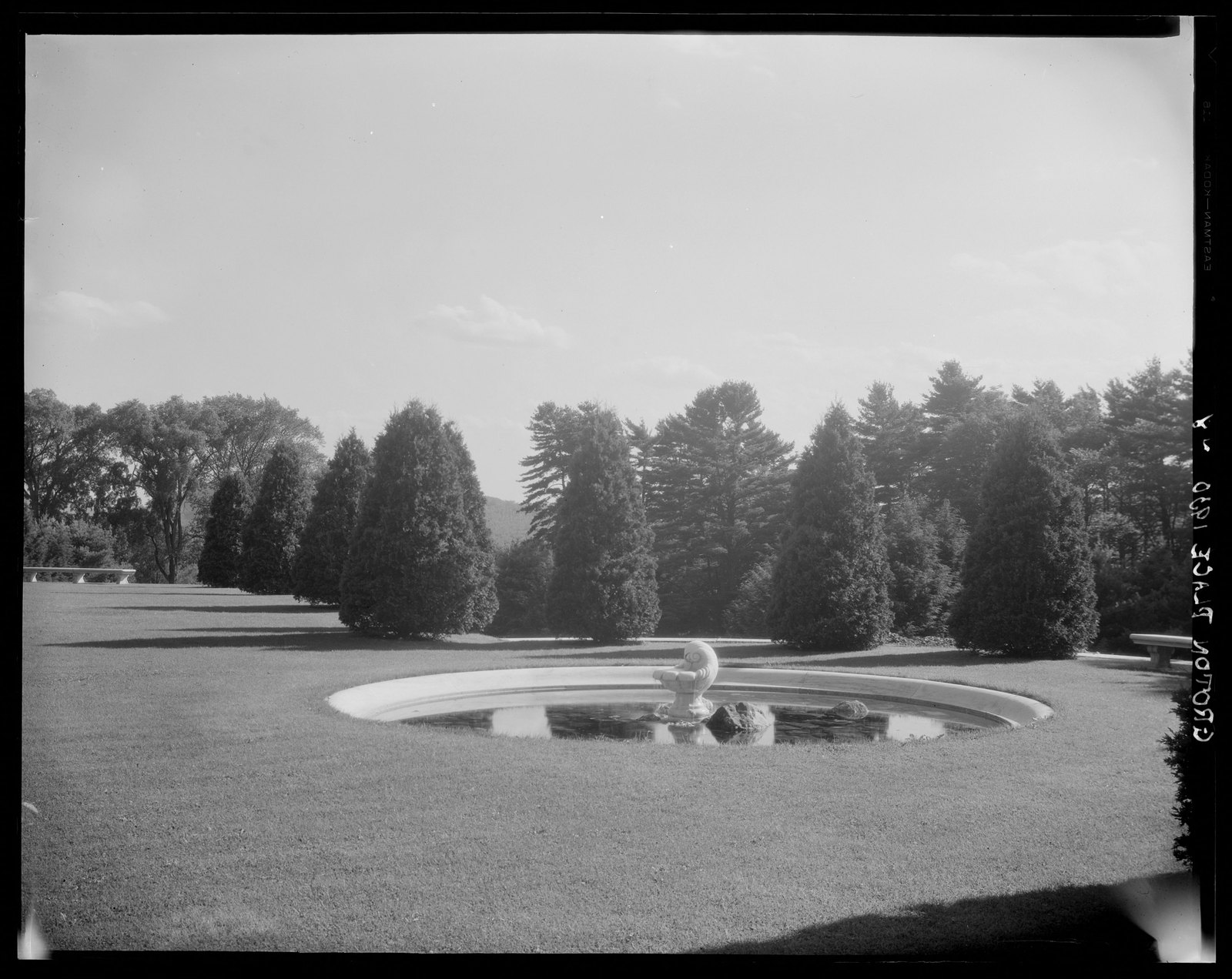
A hundred large-format negatives survive from Groton Place, made between about 1930 and 1936, and there is almost no house in them. There are lawns, tree masses, a fountain in a plain round basin, a balustrade, a rock pool, a drive under branches — and three plates of an aquarium. There are no flowers at all. That is not an accident of what the photographer chose. It is what the garden was.
I. The man who pretended to be his butler
Grenville Lindall Winthrop, 1864–1943, was a ninth-generation descendant of the first governor of Massachusetts Bay. His father was a banker; his mother was the daughter of another. He took degrees at Harvard in geology and art history in 1886 and in law in 1889, helped found a New York firm, and retired from it in 1896 at thirty-two. He married Mary Tallmadge Trevor in 1892. She died in 1900, leaving him with two daughters.
He was reclusive, exacting, and by one description a figure out of Henry James. He is said to have shown visitors his pictures while pretending to be his own butler. Both daughters eloped — one with a chauffeur, the other with an electrician.
He assembled about four thousand works of art, including the largest single holdings anywhere of William Blake and of Ingres, and left the whole collection to Harvard’s Fogg Art Museum on a condition: nothing was to be lent to another institution unless a hundred thousand dollars went first to the New York Foundling Hospital. The collection toured as A Private Passion in 2003–04.
II. A stone villa, replaced
A stone villa of 1858 called The Elms already stood at 45 West Street. Winthrop had it replaced, and the new house was completed in 1905. The architects were Carrère & Hastings — the same firm that had built Bellefontaine for Giraud Foster a few years earlier, and Lenox History draws the contrast directly: where Bellefontaine is ornate, Groton Place is plain, symmetrical and restrained, which is said to have suited its owner.
The estate ran to about a hundred and fifty acres, with more land bought near Bald Head Mountain purely to protect the view. Forty men are said to have worked the grounds, and five hundred peacocks and pheasants lived on them.
III. A garden with no flowers
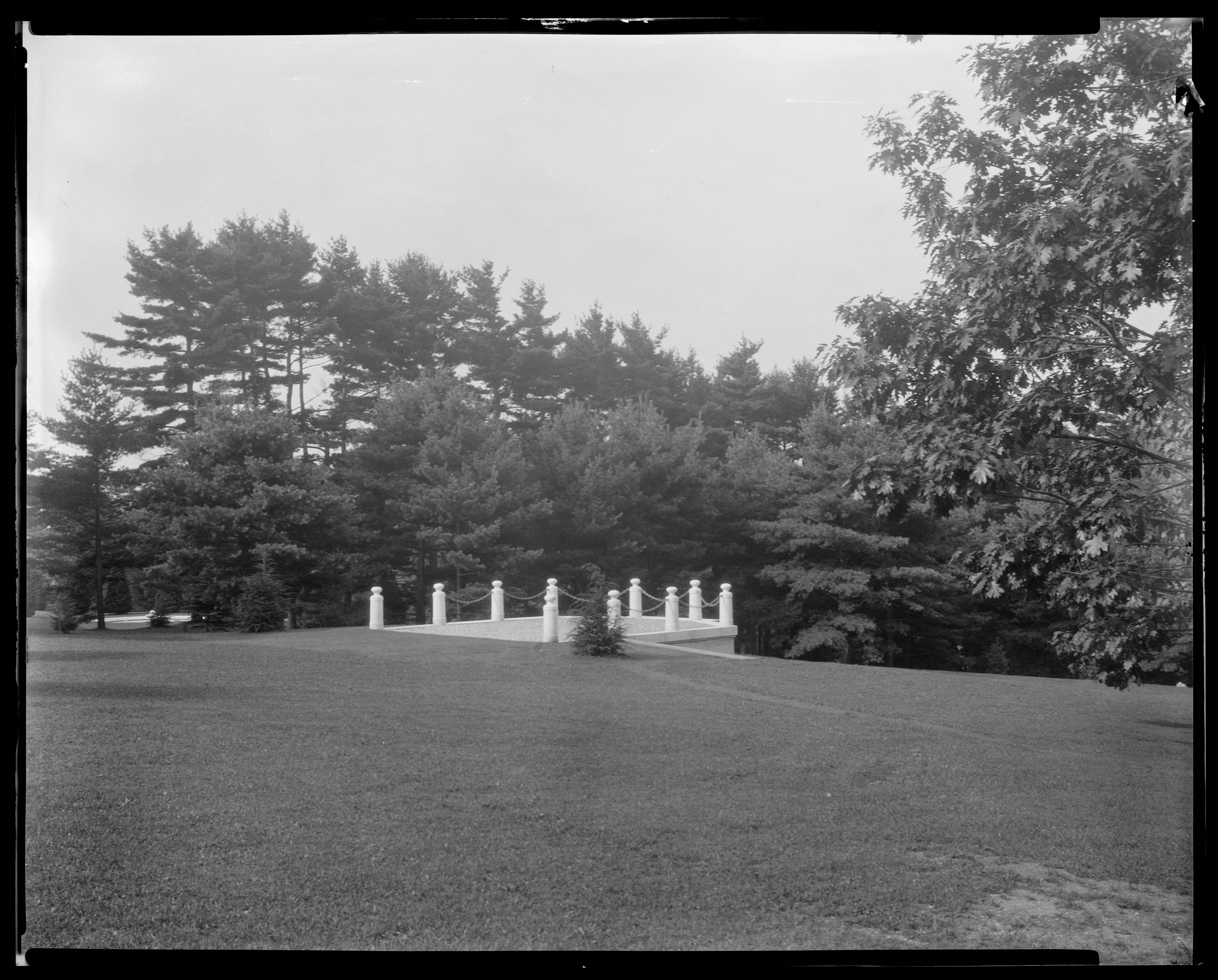
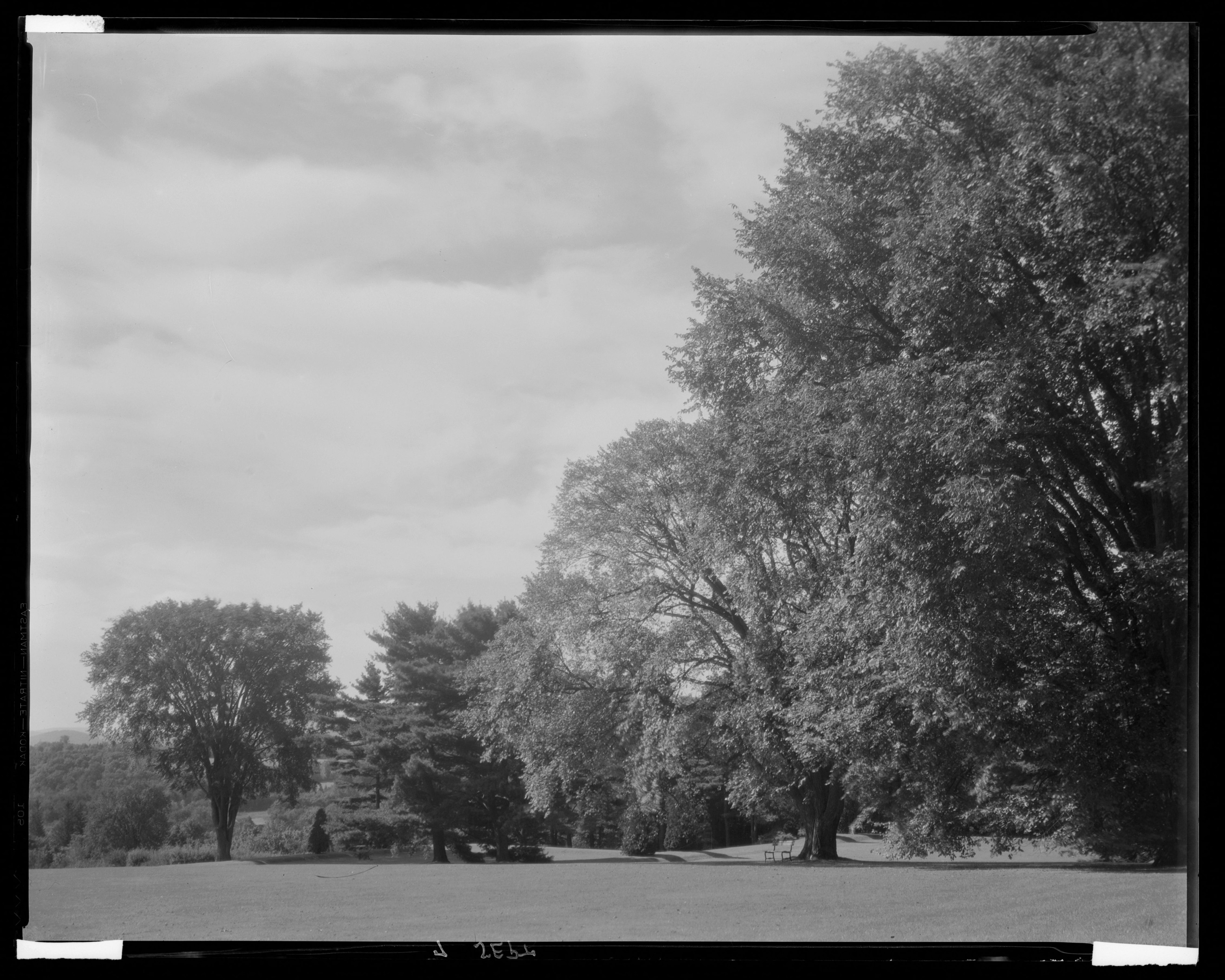
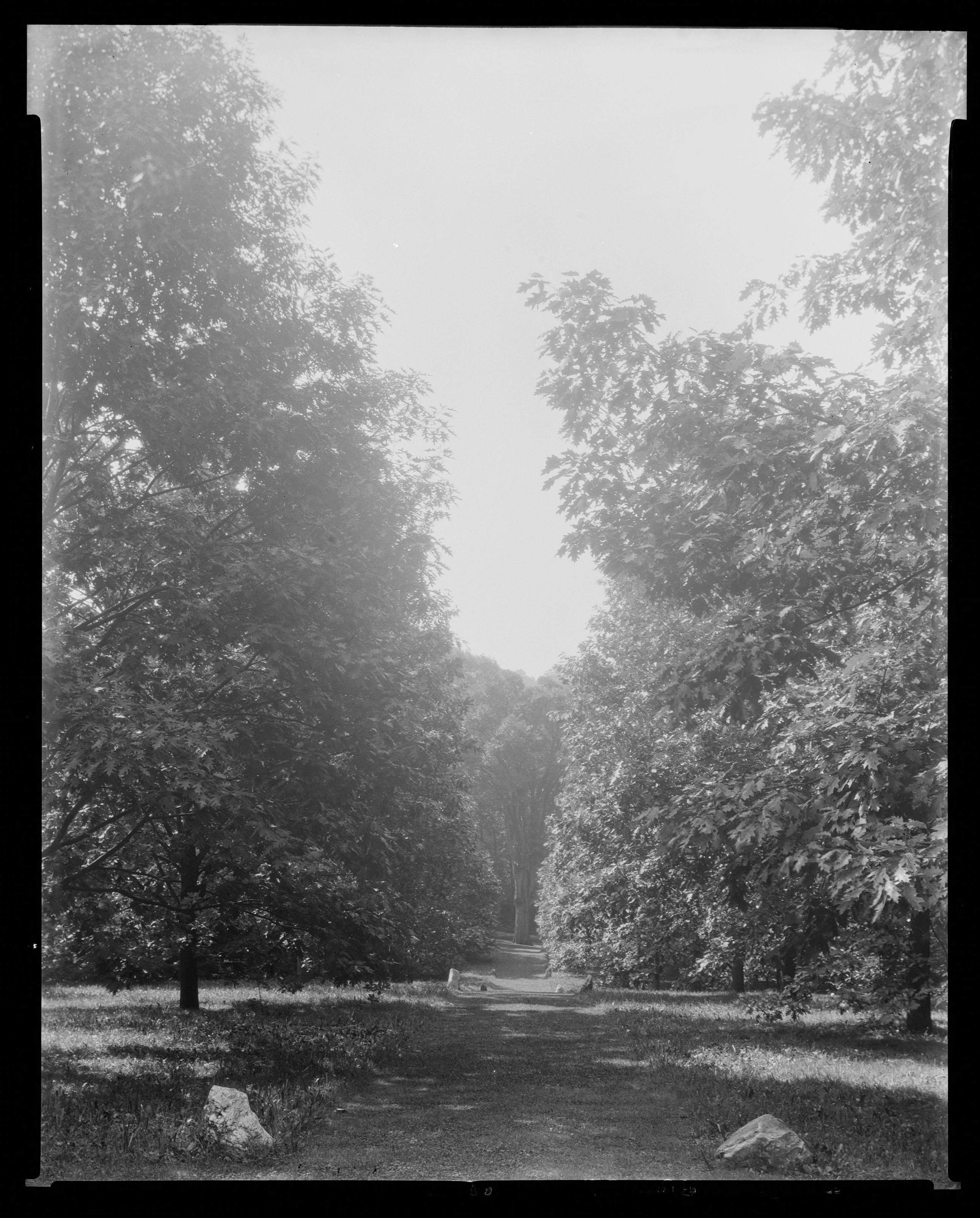
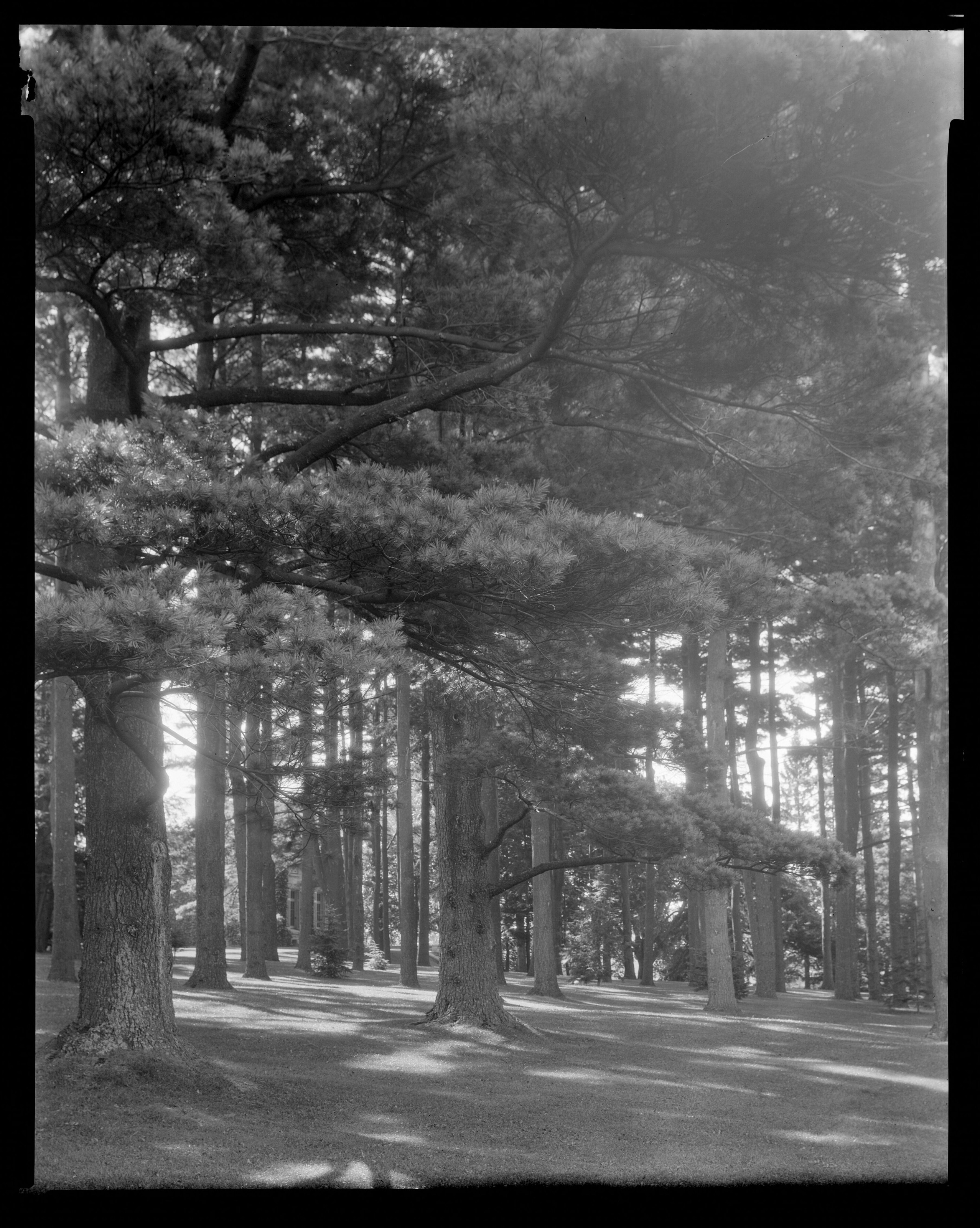
What Winthrop directed was massed shrubs, ornamental water, decorative outbuildings and hedges cut to an inch — and, by every account, no flowers. Run through the hundred plates and the account holds. Twenty-one are catalogued as fountain landscapes, twenty as trees in landscape, thirteen simply as landscape, ten as rock pool, nine as balustrade. Not one shows a flower bed.
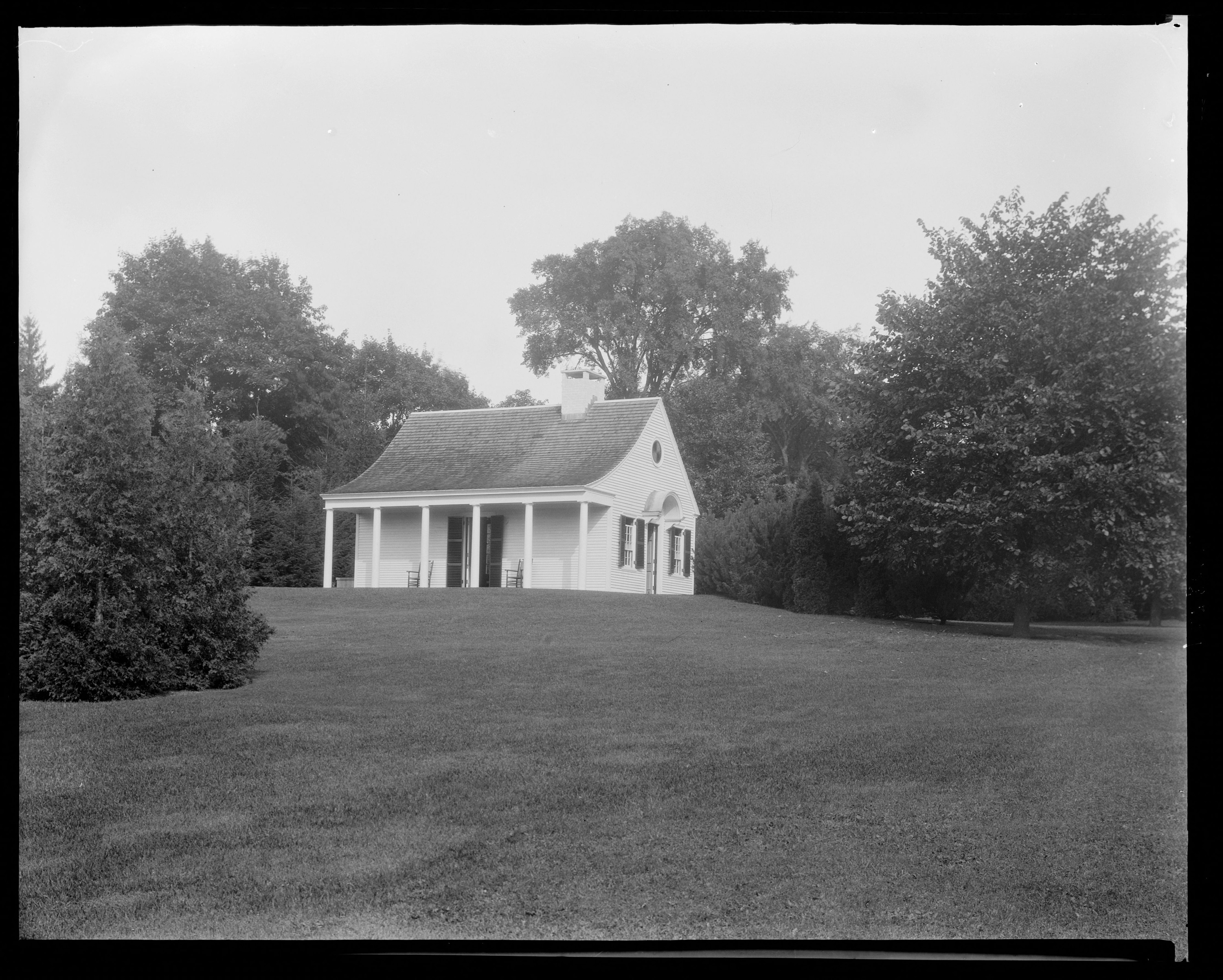
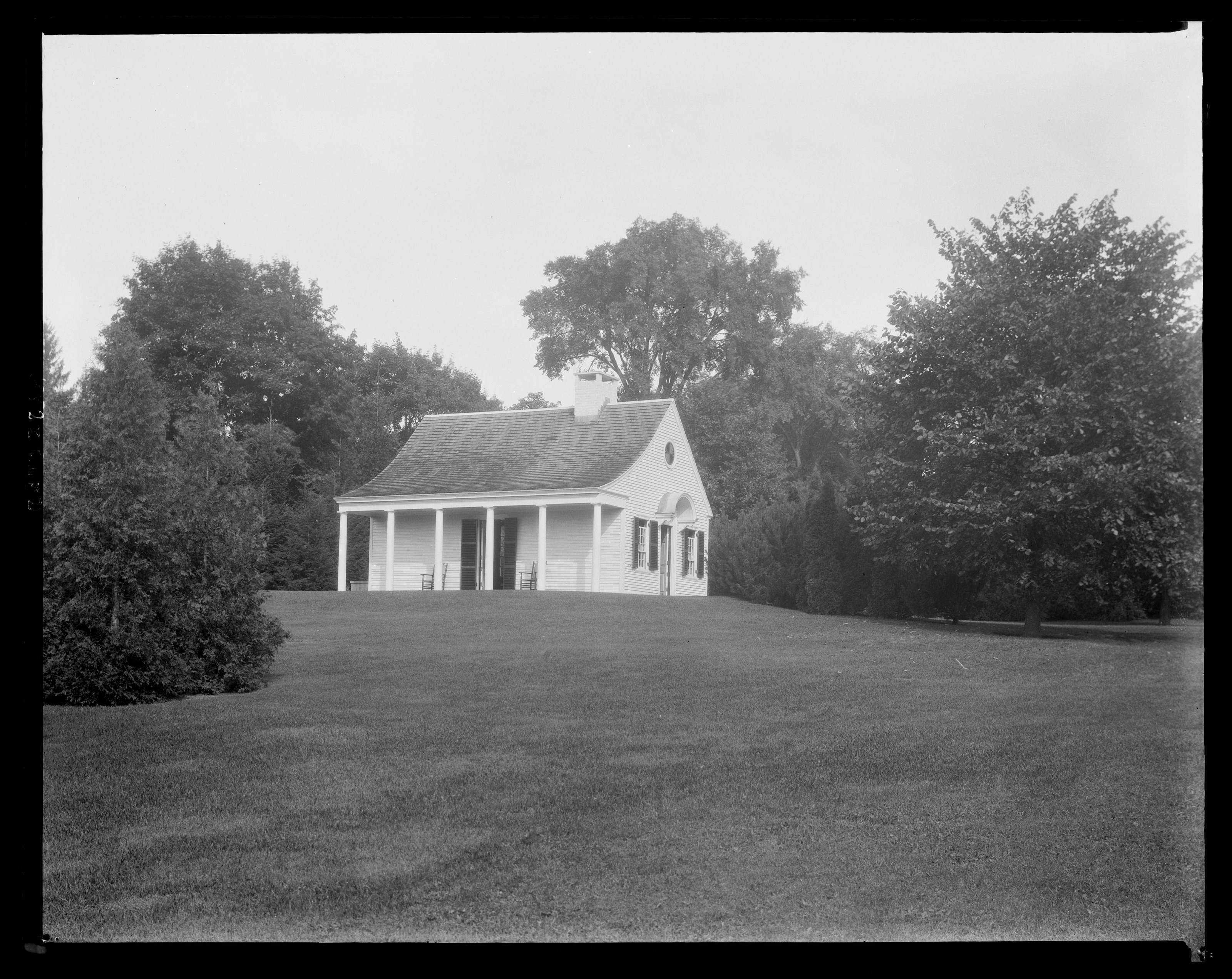
What it shows instead is a composition in three materials: cut grass, dark evergreen, and dressed stone. The fountain sits in a circular basin on open lawn with nothing around it. The balustrade runs along a bank with conifers behind. A small classical pavilion with a columned front stands alone on the grass, doing nothing. The drives run in under the trees and out again.
It is a colder idea of a garden than anything else on this site, and it is the only one photographed thoroughly enough to be read as a whole.
IV. The aquarium
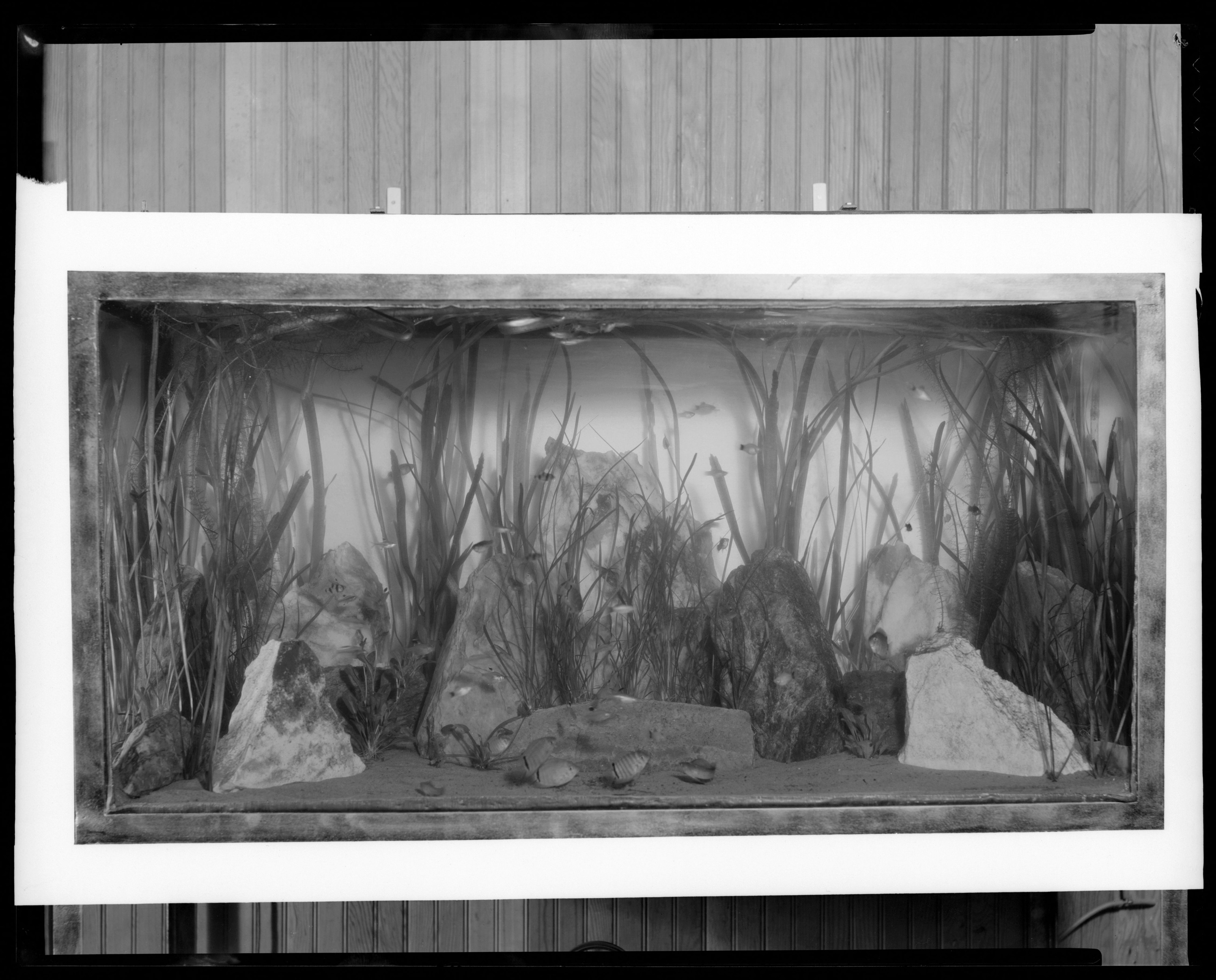
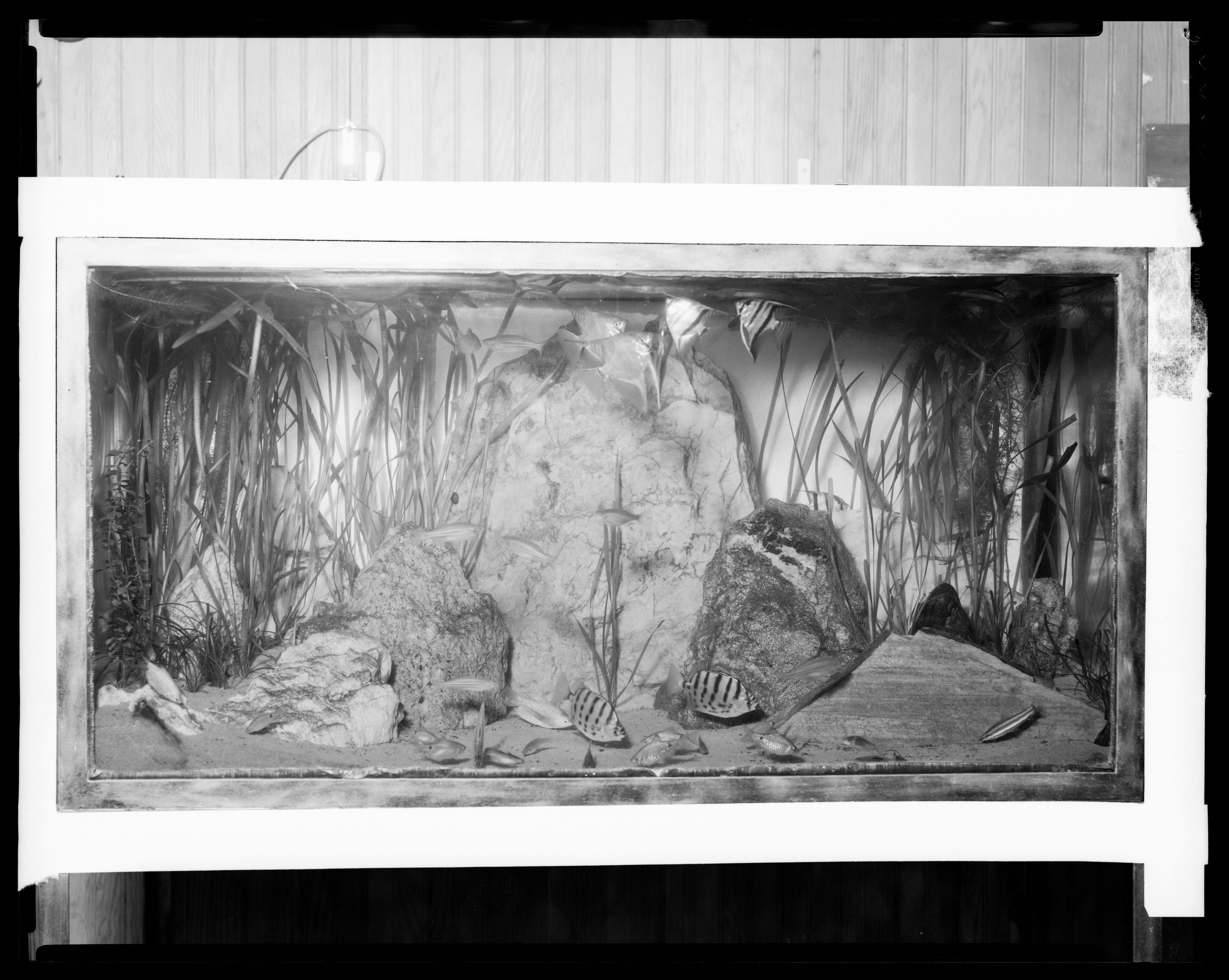
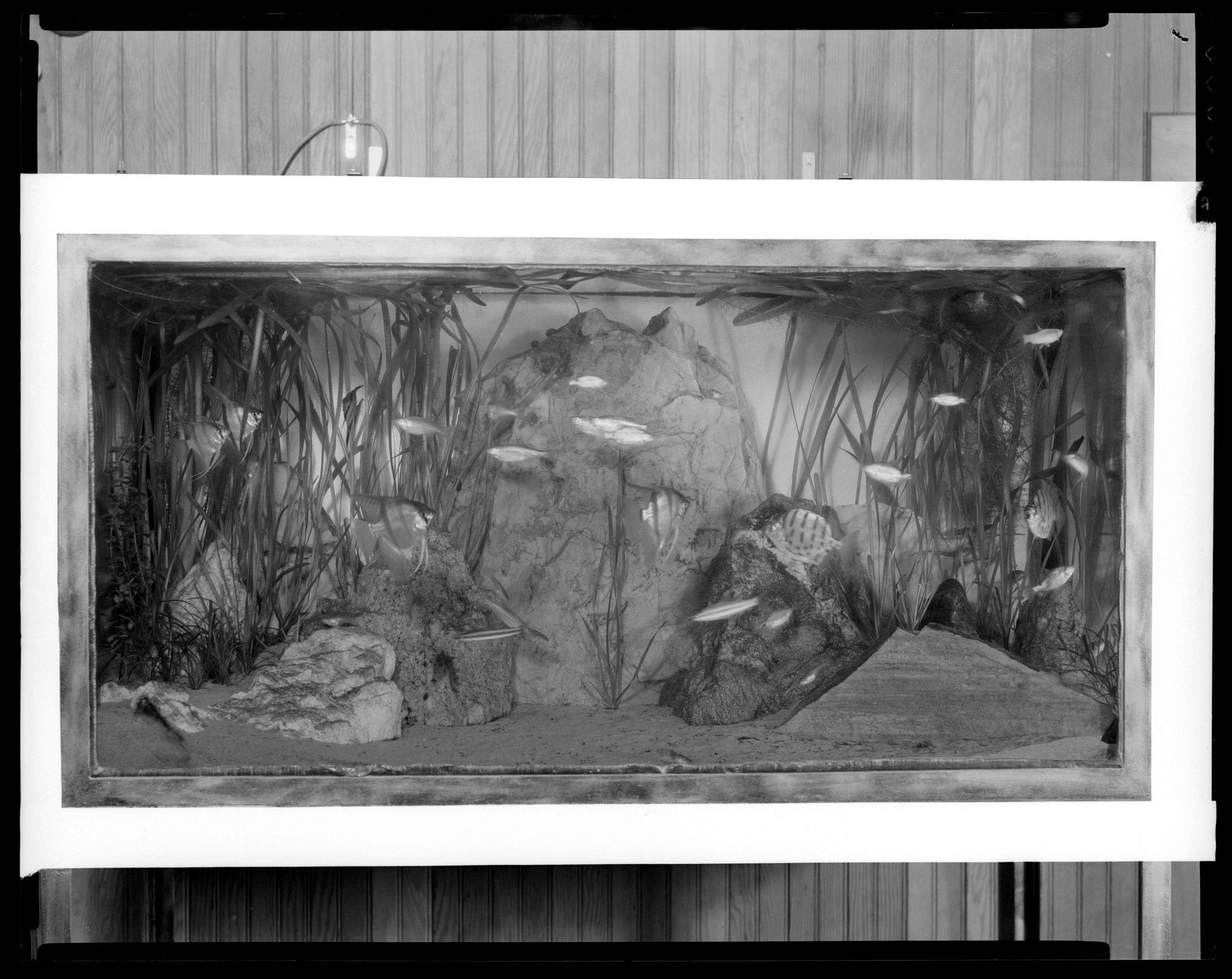
Three plates show a long glazed tank, perhaps eight feet across, with a built rockwork interior, stood against a clapboard wall and photographed square on from a little way back. The Lenox Library catalogues all three as “Groton Place: aquarium,” about 1930–1936, and says nothing further.
A man who kept five hundred peacocks and pheasants may well have kept fish. It is also possible this is something else that the cataloguer read as an aquarium. The plates are here at full size; somebody who knows what they are looking at should look.
V. Afterwards
Winthrop died in 1943. Max Bondy bought the estate and opened Windsor Mountain School in it. Boston University owns it now and uses it for the Tanglewood Institute; Berkshire Country Day School has held classes there.
The negatives are dated between 1930 and 1936 — late in Winthrop’s life, and long after the garden was made. They are not a record of building something. They are a record of a finished thing, made while it still existed.
Sources
Photographs: Lenox Library Association, one hundred items via Digital Commonwealth, titles and dates quoted exactly as catalogued. All hundred are from the Edwin Hale Lincoln Photographs collection; the Library gives their rights as “No known copyright restrictions” and asks that it be contacted about reuse. Text: lenoxhistory.org, “Groton Place — 45 West St., Completed 1905,” for the 1858 stone villa called The Elms, Carrère & Hastings and the contrast with Bellefontaine, the massed shrubs and ornamental ponds, the tailored hedges and the absence of flowers, the hundred and fifty acres and the land bought near Bald Head Mountain, the forty groundsmen, the five hundred peacocks and pheasants, the paneled library, the New York house of the 1920s, and Windsor Mountain School and Boston University afterwards; Wikipedia, “Grenville Lindall Winthrop,” for his dates and descent, his parents, the Harvard degrees of 1886 and 1889, his retirement in 1896, the 1892 marriage to Mary Tallmadge Trevor and her death in 1900, the two daughters and their elopements, the presidency of the Women’s Hospital 1915–41, the four thousand works, the Blake and Ingres holdings, the Fogg bequest and its Foundling Hospital condition, the butler story, and A Private Passion. The Library’s titles do not say what the three aquarium plates show. No Olmsted job for this estate appears in the firm’s Berkshire list.