Every other place on this site was built with money made somewhere else and brought to the Berkshires for the summer. Dalton is the exception. The money was made here, in mills on the Housatonic that have been turning out the paper of the United States dollar since 1879, and the family that made it never left. The Olmsted office worked for the Cranes of Dalton from 1897 to 1969 — fourteen separate jobs. This page is the first of them.
I. The file
Olmsted job 00027 is filed as Crane, Zenas — Dalton, MA, type “Private Estate & Homesteads.” Ten plans are inventoried and nine are scanned; the tenth, plan 27, has no image. The surviving sheets are numbered 7, 10, 12, 13, 17, 19, 21 and 22, and their own notes refer to sheets 5, 9, 15, 16 and 25. The job therefore ran to at least twenty-seven drawings, of which we can see eight.
The dates are worth the attention. The first sheet, 17 March 1897, is signed in the inventory OO+E, LA — Olmsted, Olmsted & Eliot, the same partnership that was drawing Wheatleigh four years earlier. Every sheet after it is signed OBLA: Olmsted Brothers, Landscape Architects. The job outlived the firm’s name.
II. The family and the paper
Stephen Crane bought the Liberty Paper Mill in 1770 and supplied the paper Paul Revere printed colonial money on. In 1801 Zenas Crane, with Henry Wiswall and John Willard, opened a mill at Dalton — the first paper mill in the United States west of the Connecticut River. In 1844 the company worked out how to embed parallel silk threads in banknote paper, to mark denominations and to make forgery harder.
Then 1879, and the contract that changed everything: Winthrop M. Crane won the supply of currency paper to the Bureau of Engraving and Printing in Washington. Four new mills followed, designed by David H. Tower. The Berkshire Edge tells the story of the bid with the competitors locking Crane in his hotel room and Crane climbing out through the transom; it also has the workforce going from fifty-five to five hundred across five mills. The company was incorporated in 1922 under Frederick G. Crane.
The Edge’s account treats “Zenas” as one continuous person from 1801 into the 1860s. The founder died in 1845. Later Zenases are meant, and the story does not distinguish them.
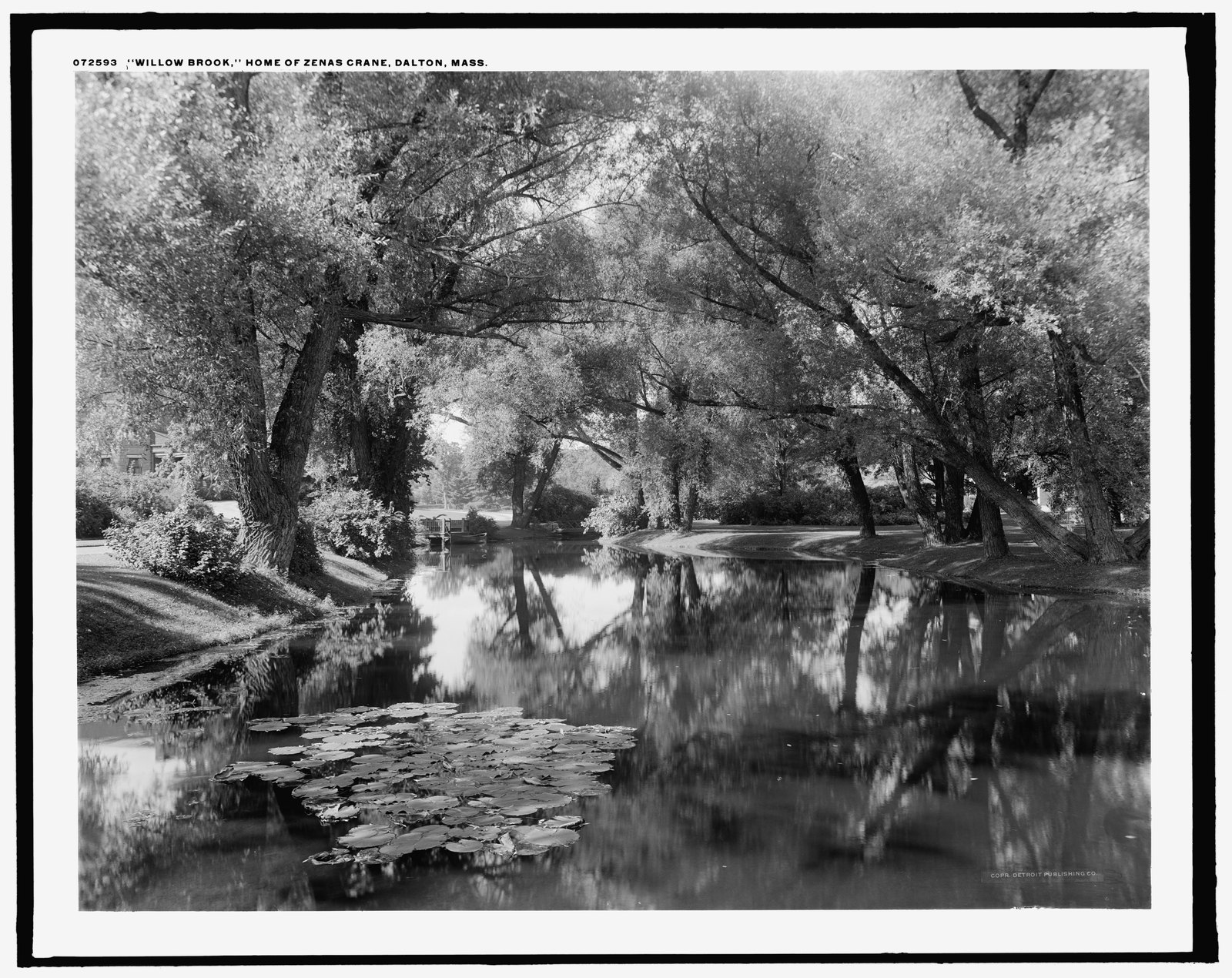
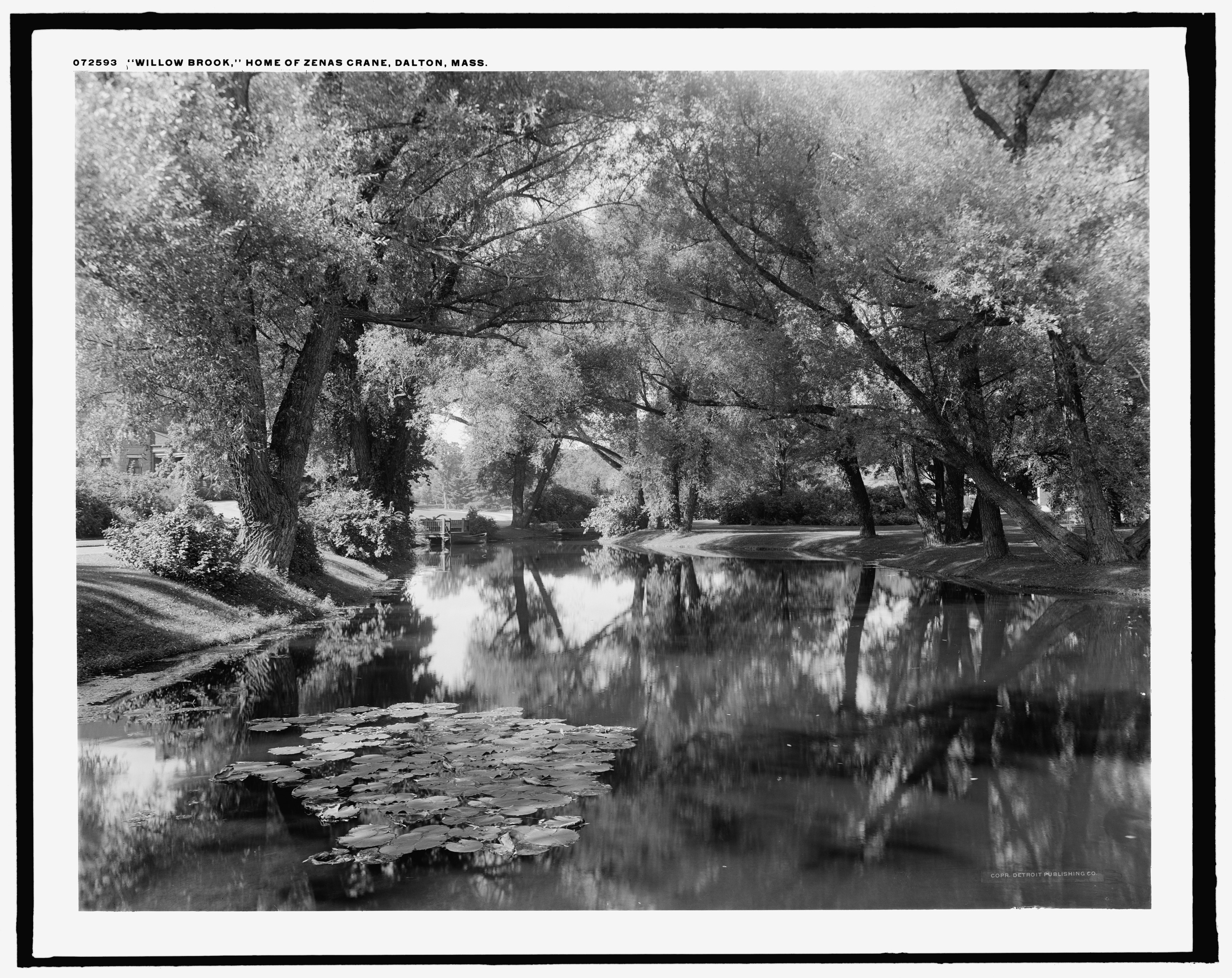
The client of this job is entered as Z. Crane, Esq. and Zenas Crane, Esq. In 1903 — the year of the last sheet in the file — a Zenas Crane of Dalton, the third-generation owner of Crane & Company, founded the Berkshire Museum in Pittsfield. In 1909 the Detroit Publishing Company photographed a house at Dalton and captioned the negative “Willow Brook, home of Zenas Crane.” On the evidence available here these are the same man; no source consulted for this page states it outright.
III. Six years on one garden
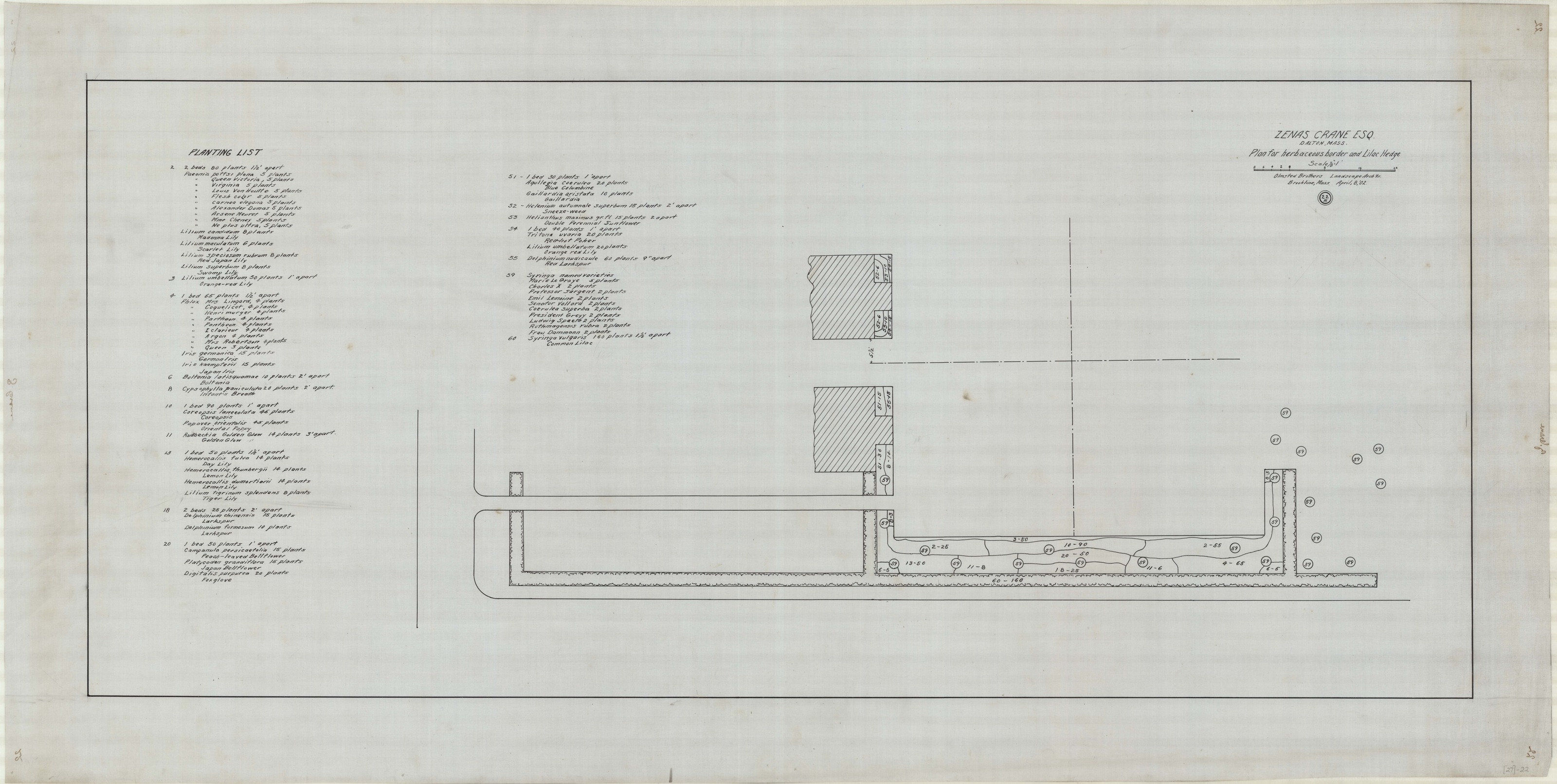
What the Olmsted office was doing at Dalton, on the evidence of these eight sheets, was a flower garden and a lilac hedge — worked over and over for six years.
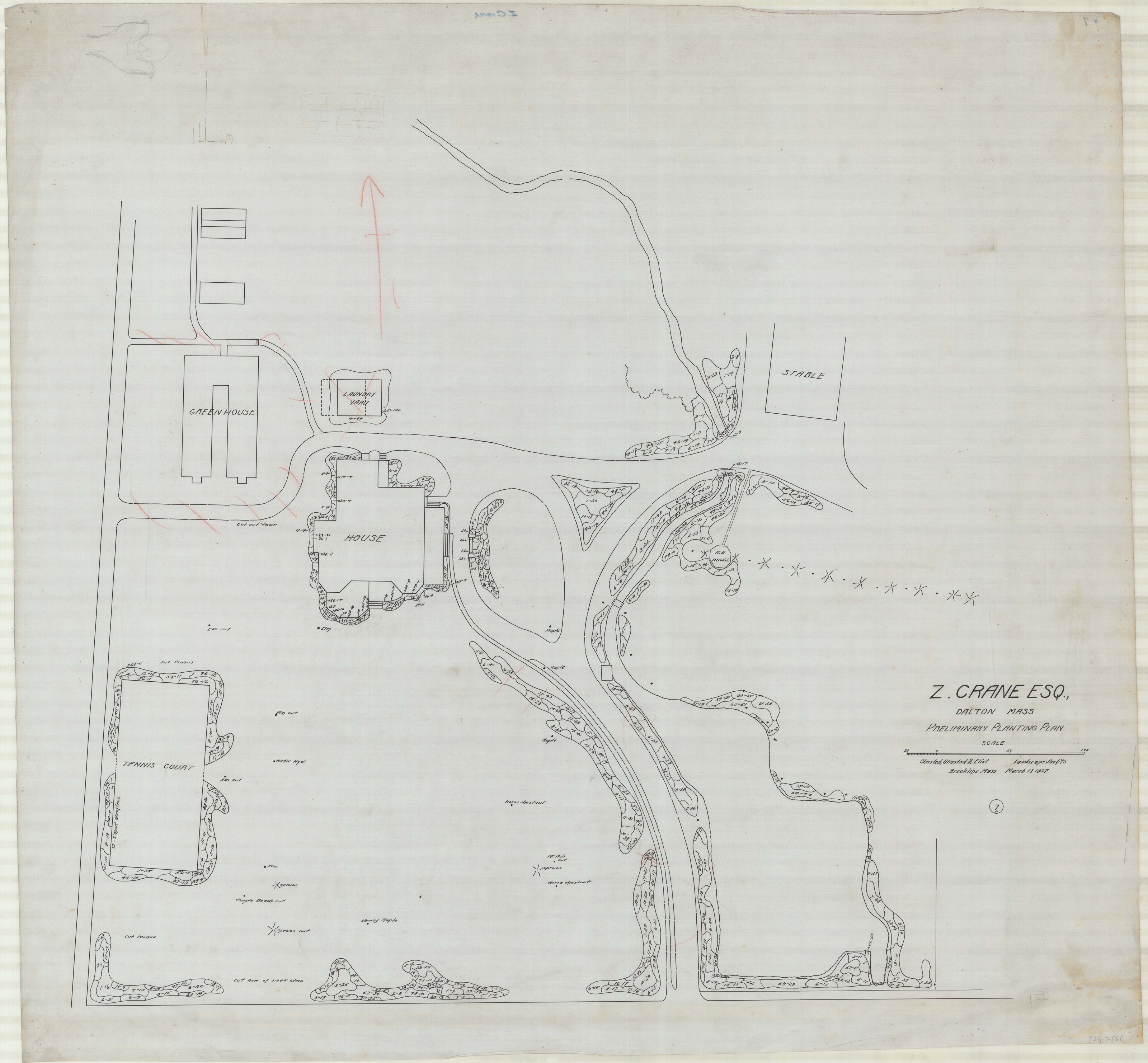
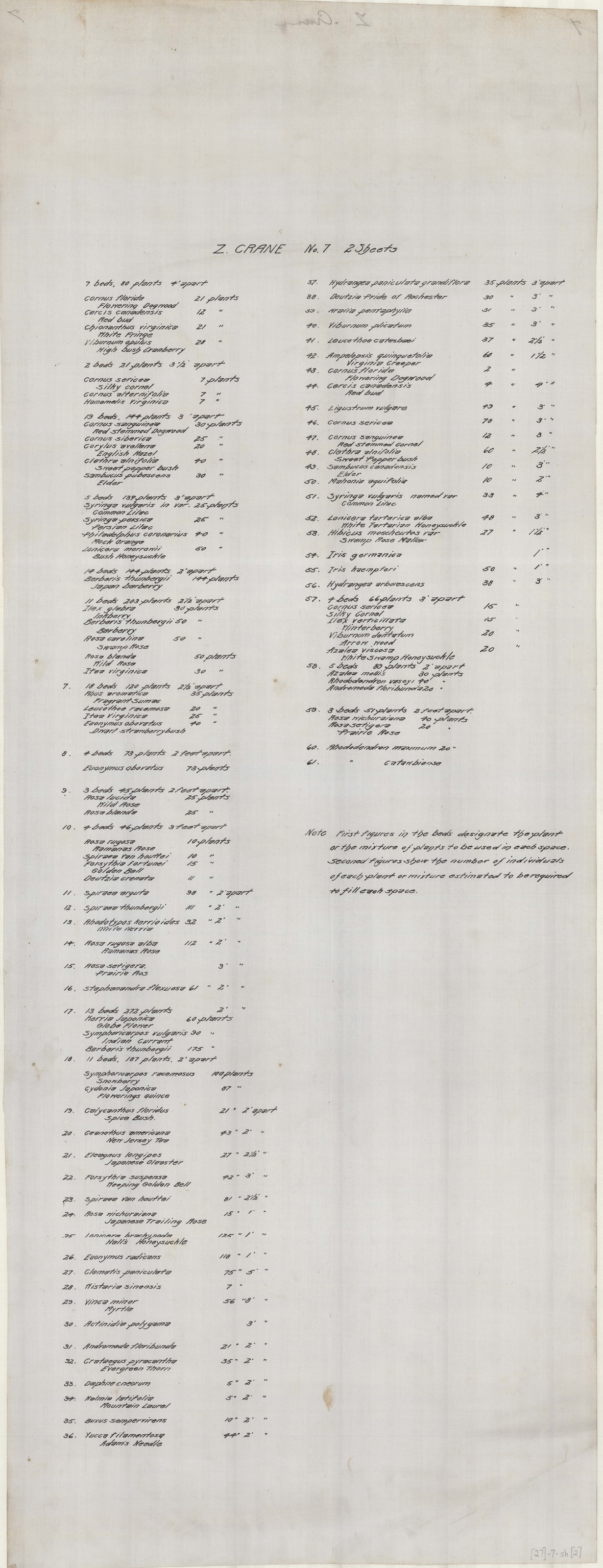
It opens in March 1897 with a preliminary planting plan at twenty feet to the inch and a separate strip of paper thirteen and a half inches wide carrying the planting list that goes with it. Then the file jumps four years.
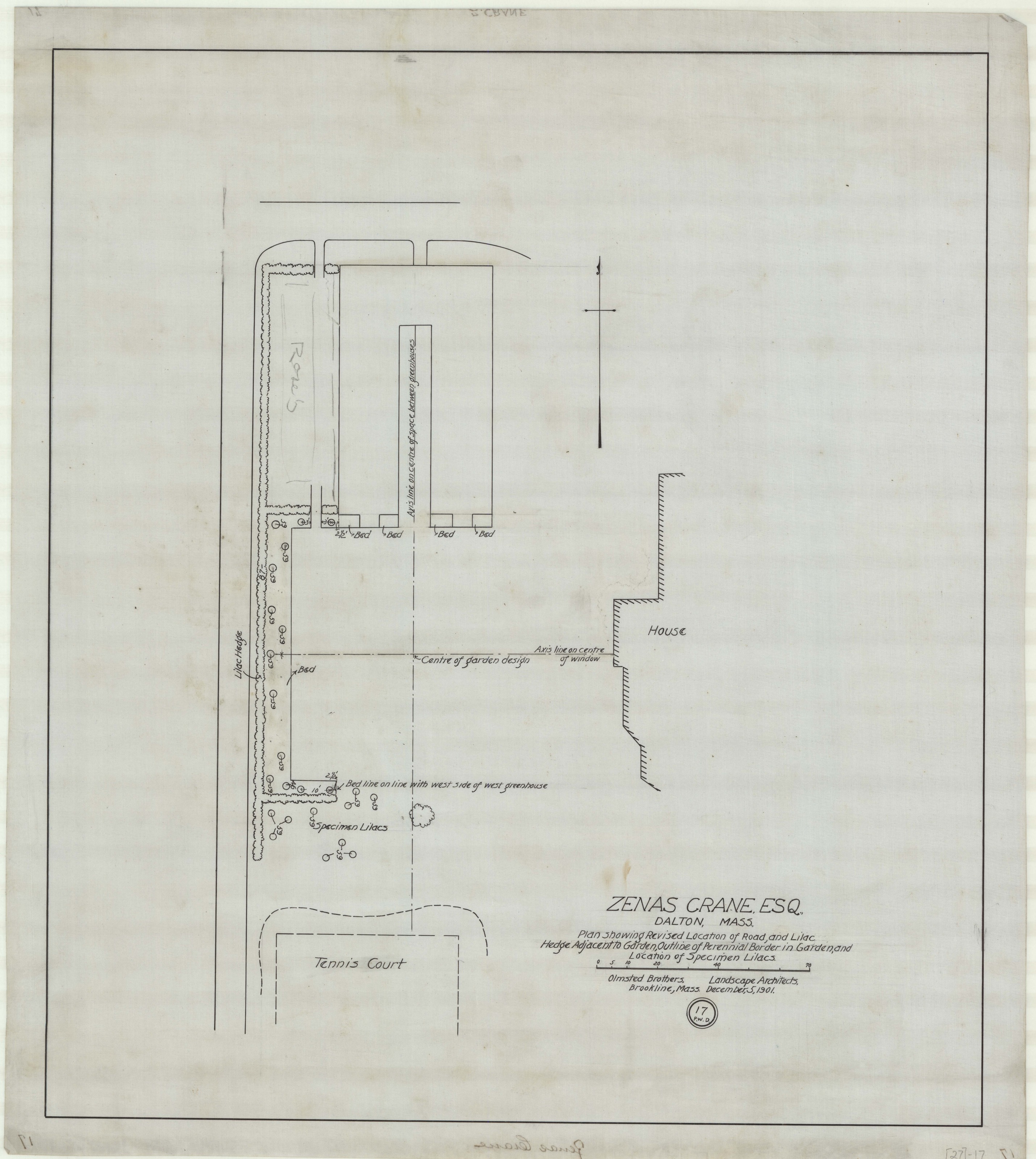
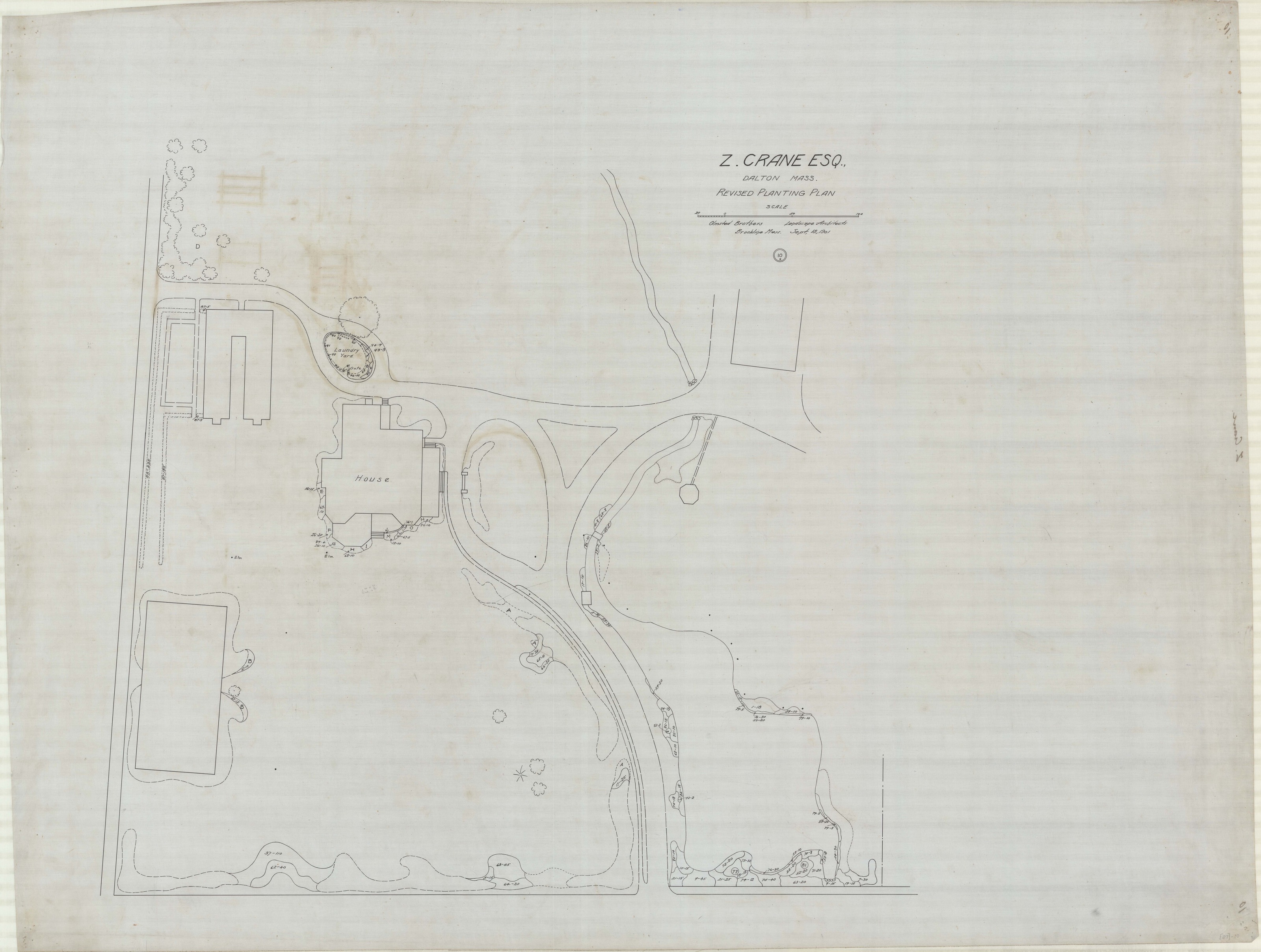
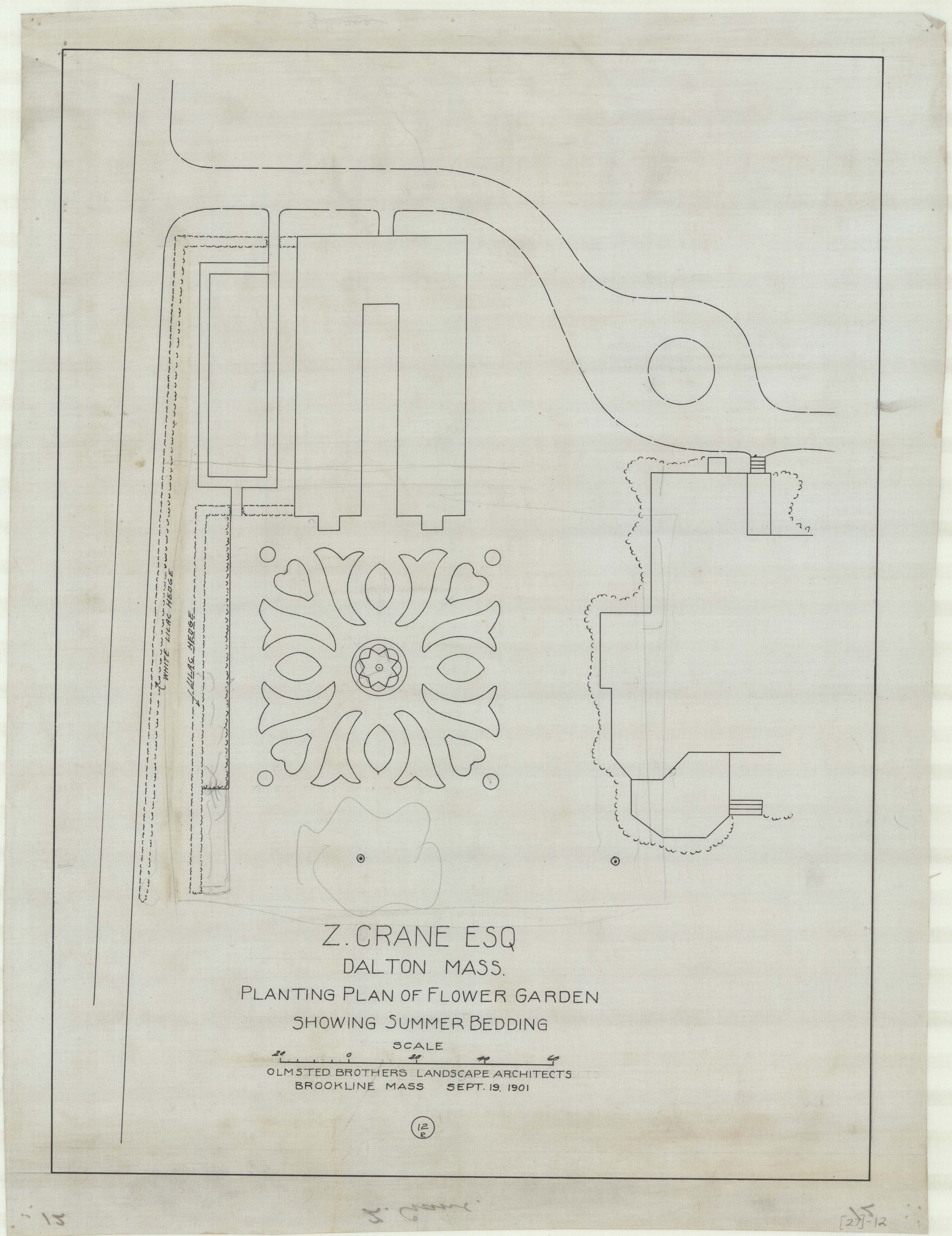
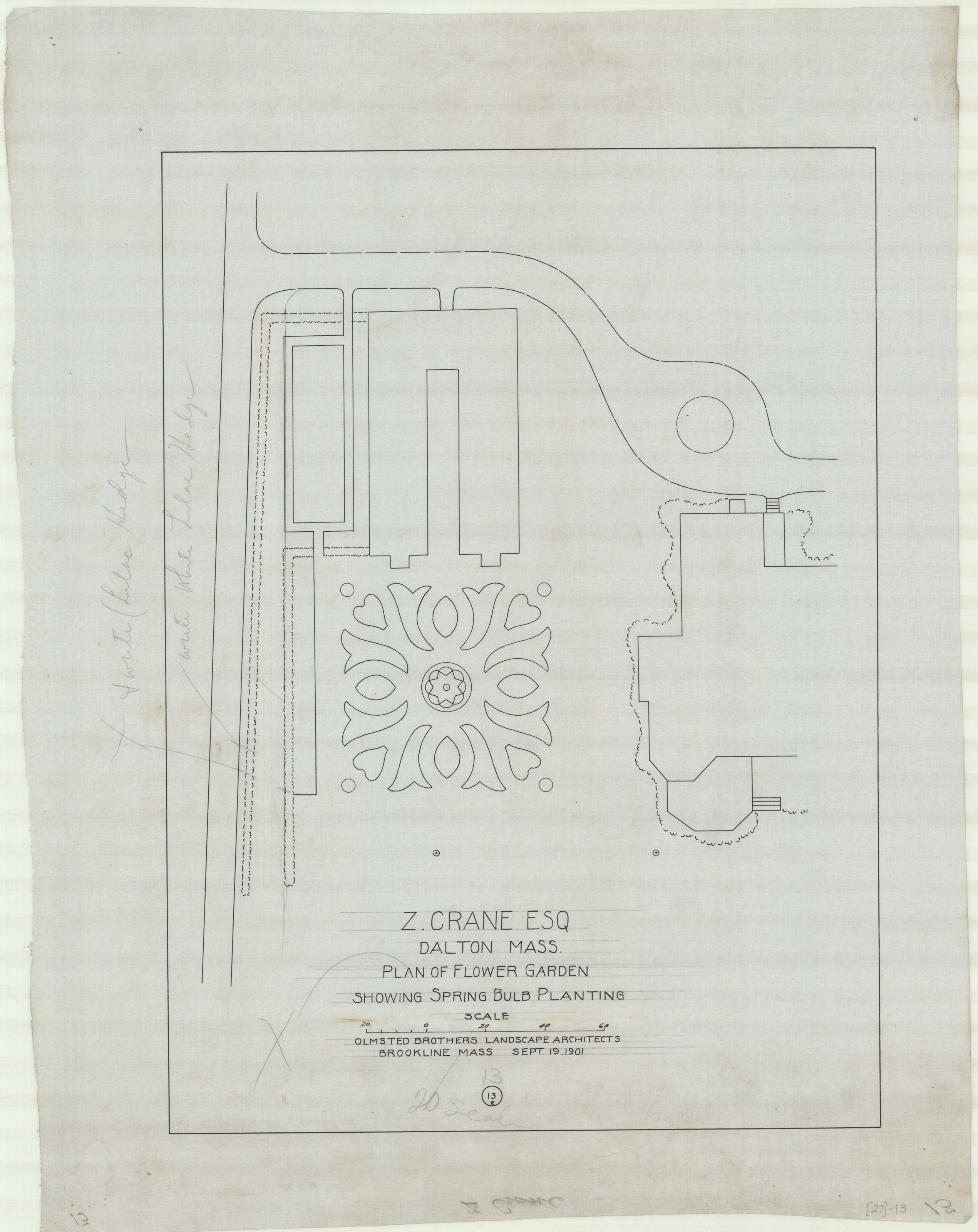
September 1901 is the crowded month. On the fifth, a sheet whose title is almost a paragraph: “PLAN SHOWING REVISED LOCATION OF ROAD AND LILAC/HEDGE ADJACENT TO GARDEN, OUTLINE OF PERENNIAL BORDER IN GARDEN, AND LOCATION OF SPECIMEN LILACS.” On the eighteenth, a revised planting plan nearly four feet wide. And on the nineteenth, two drawings of the same flower garden — one “SHOWING SUMMER BEDDING,” the other “SHOWING SPRING BULB PLANTING.”
That pair is the most interesting thing in the job. It is a garden drawn twice over, in two seasons, so the client could see what the same ground would look like in May and in August. Small sheets, both of them: eighteen inches, twenty inches. Not presentation drawings. Working ones.
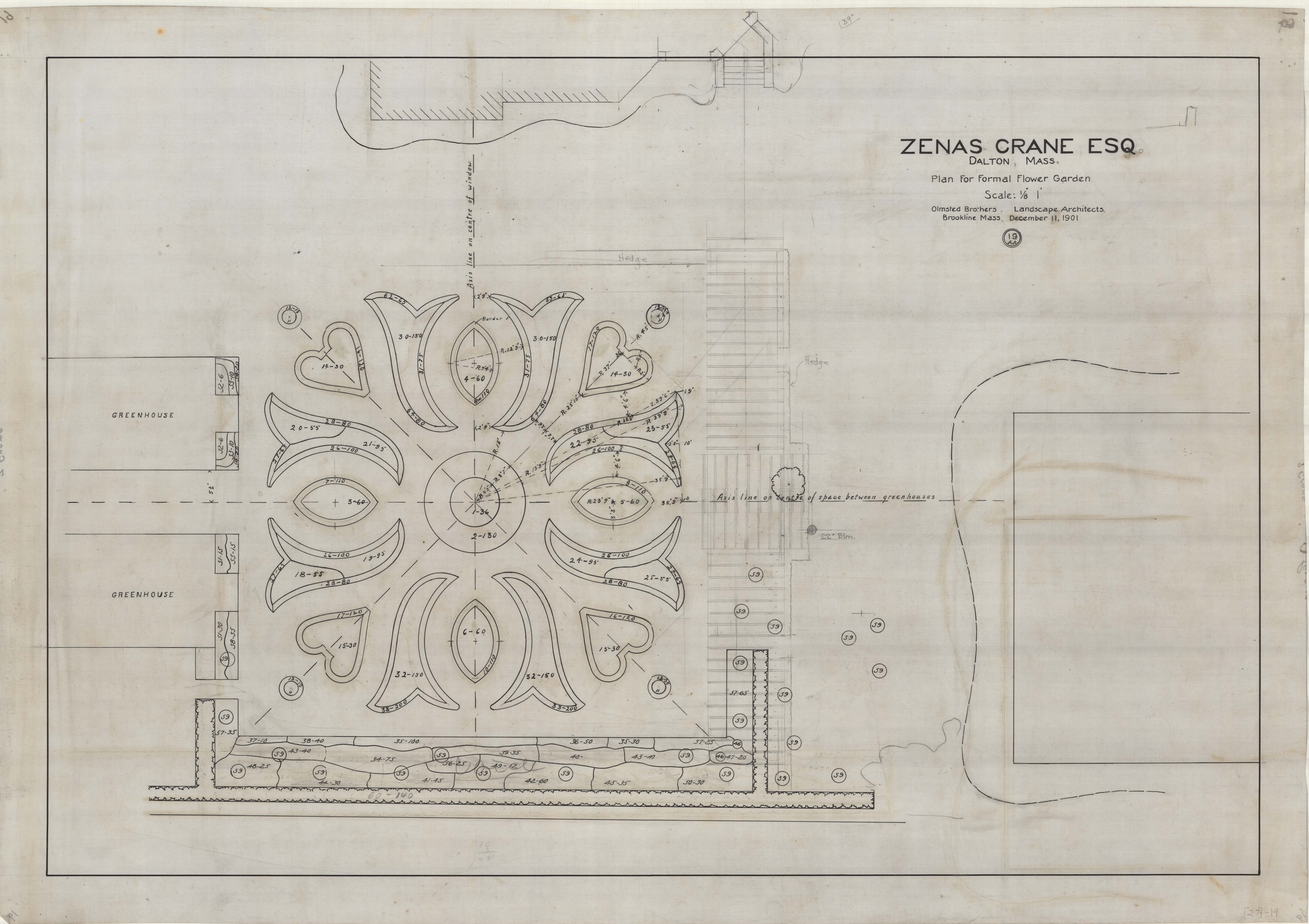
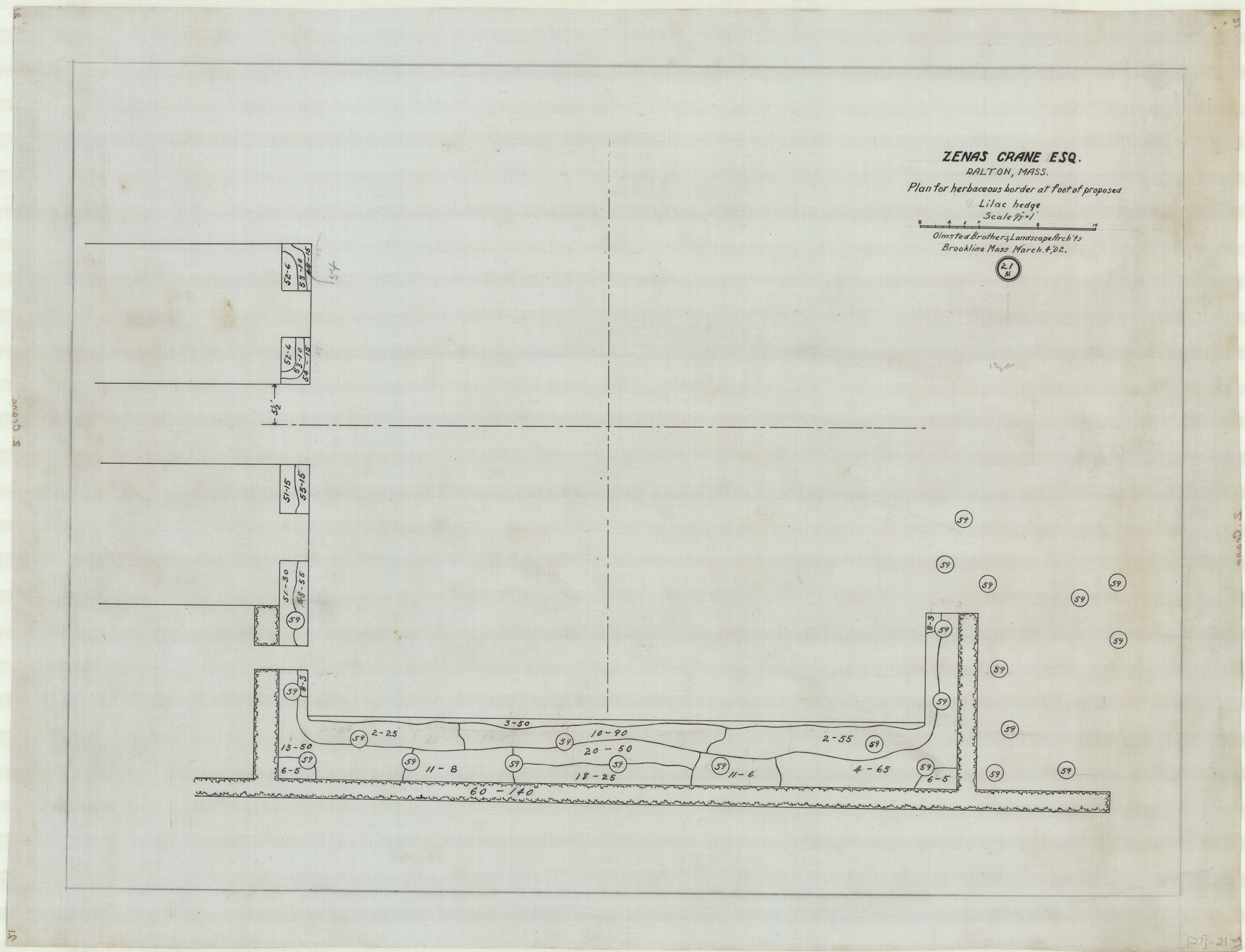
In December 1901 the flower garden was drawn again at an eighth of an inch to the foot, marked as a revision of a sheet that is missing. In March 1902 came a plan for a “HERBACEOUS BORDER AT FOOT OF PROPOSED LILAC HEDGE,” and in April a sheet three and a half feet wide combining the border and the hedge and carrying the planting list.
The last drawing in the inventory, plan 27 of 11 February 1903, is not scanned. It is described as “PLANS AND ELEVATIONS FOR GARDEN ARBOR” at a quarter-inch to the foot, with a section and details, and it is a revision of a sheet numbered 25. Six years of work ending in a drawing of a structure to sit in.
IV. Five negatives, one afternoon
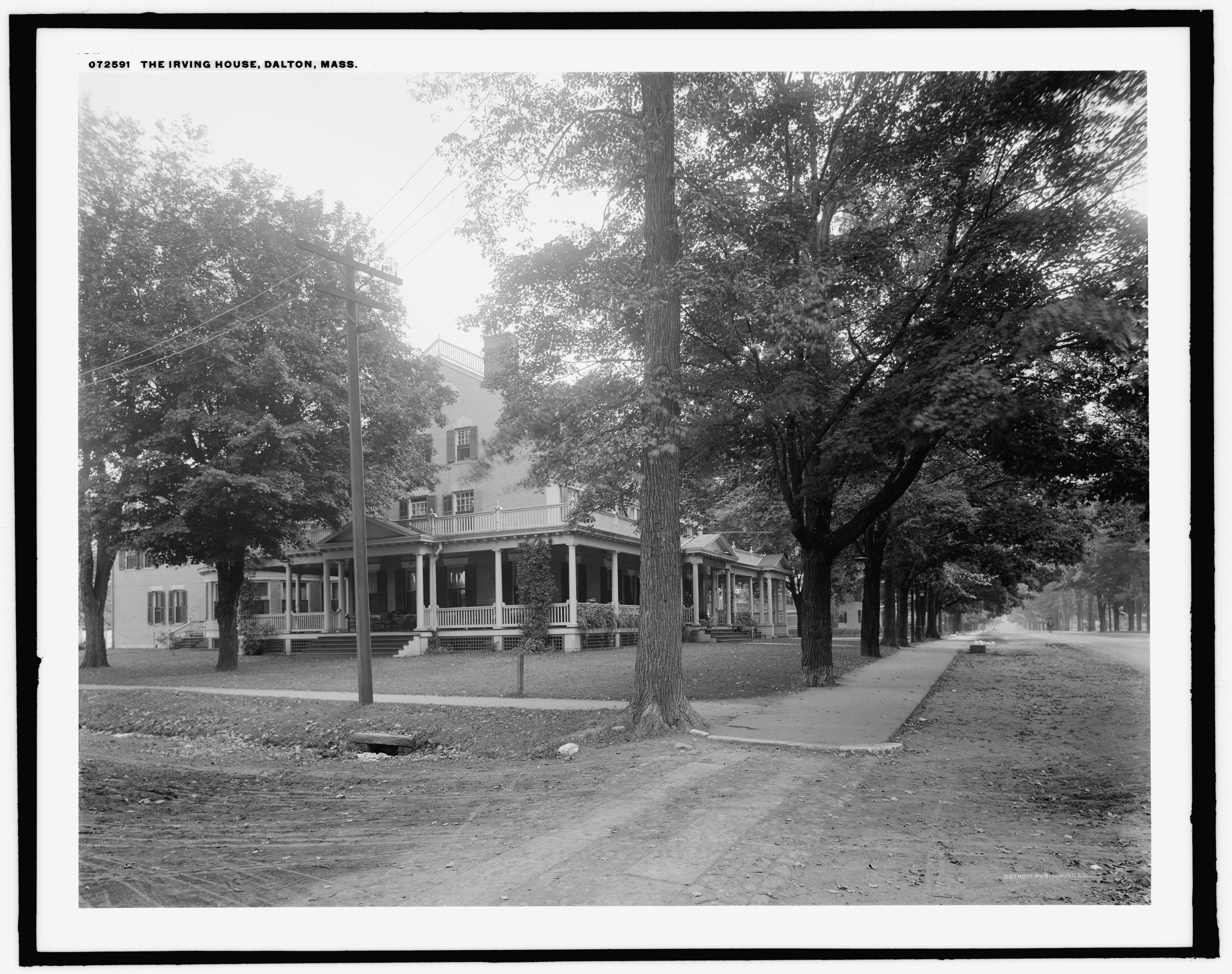
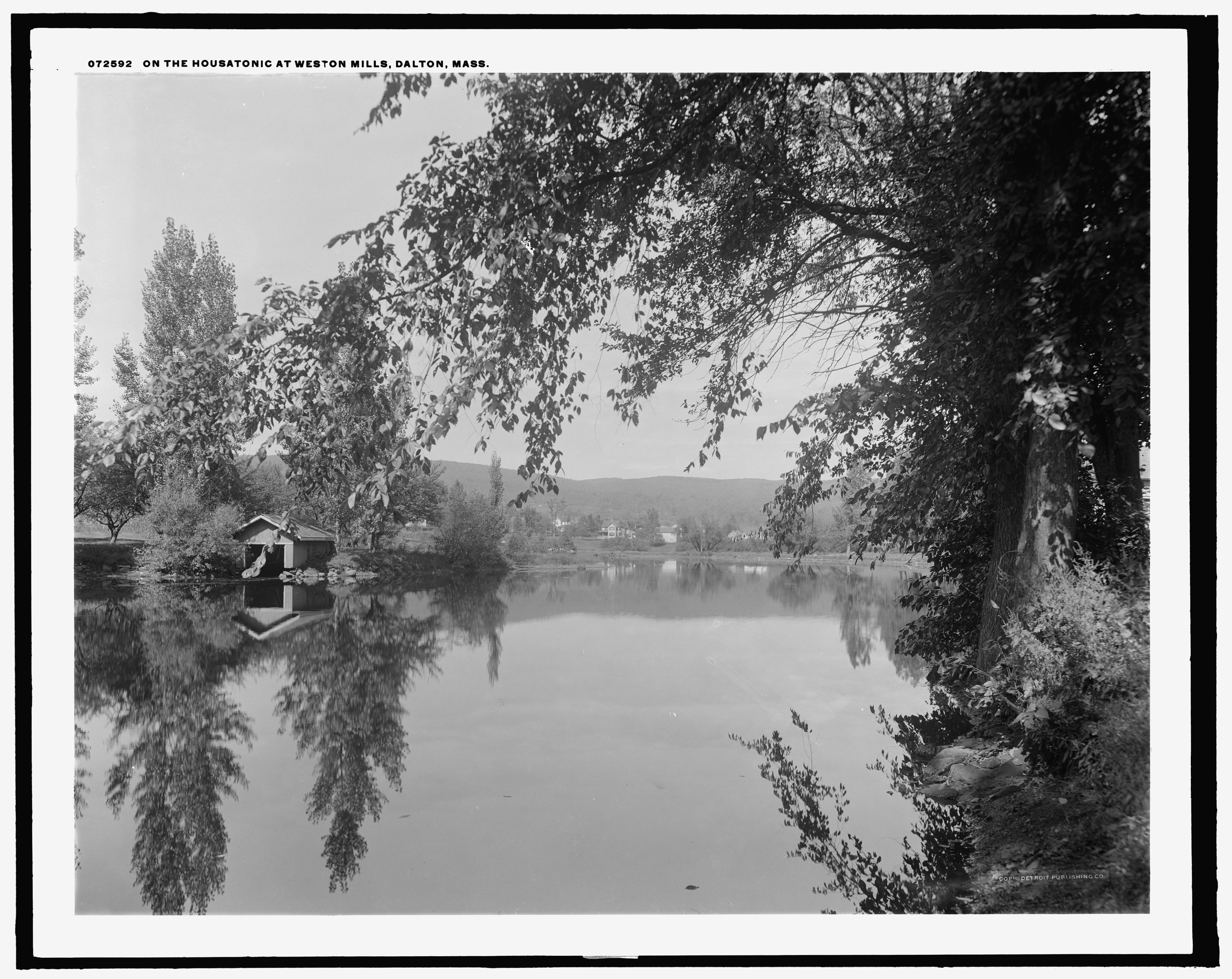
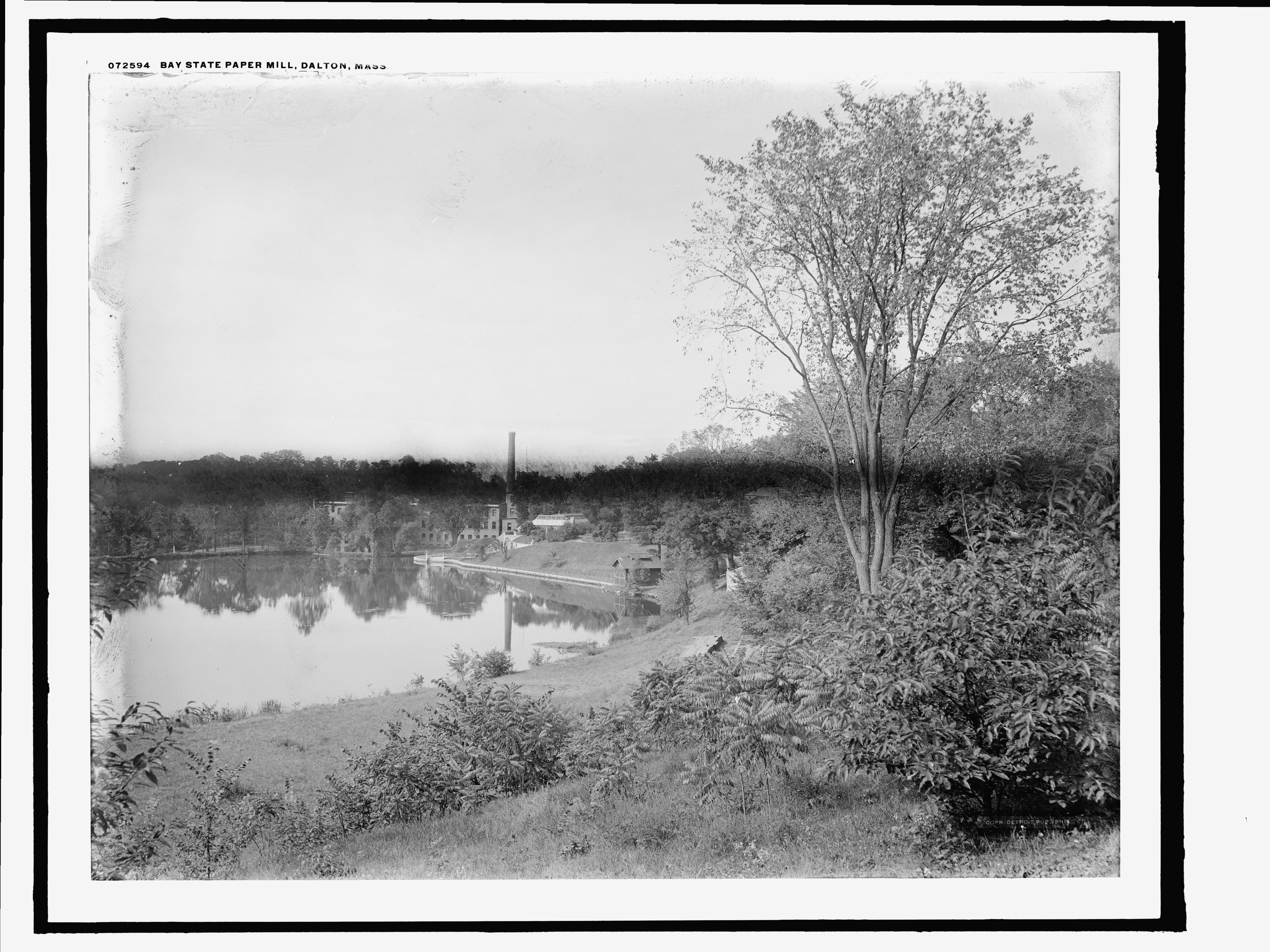
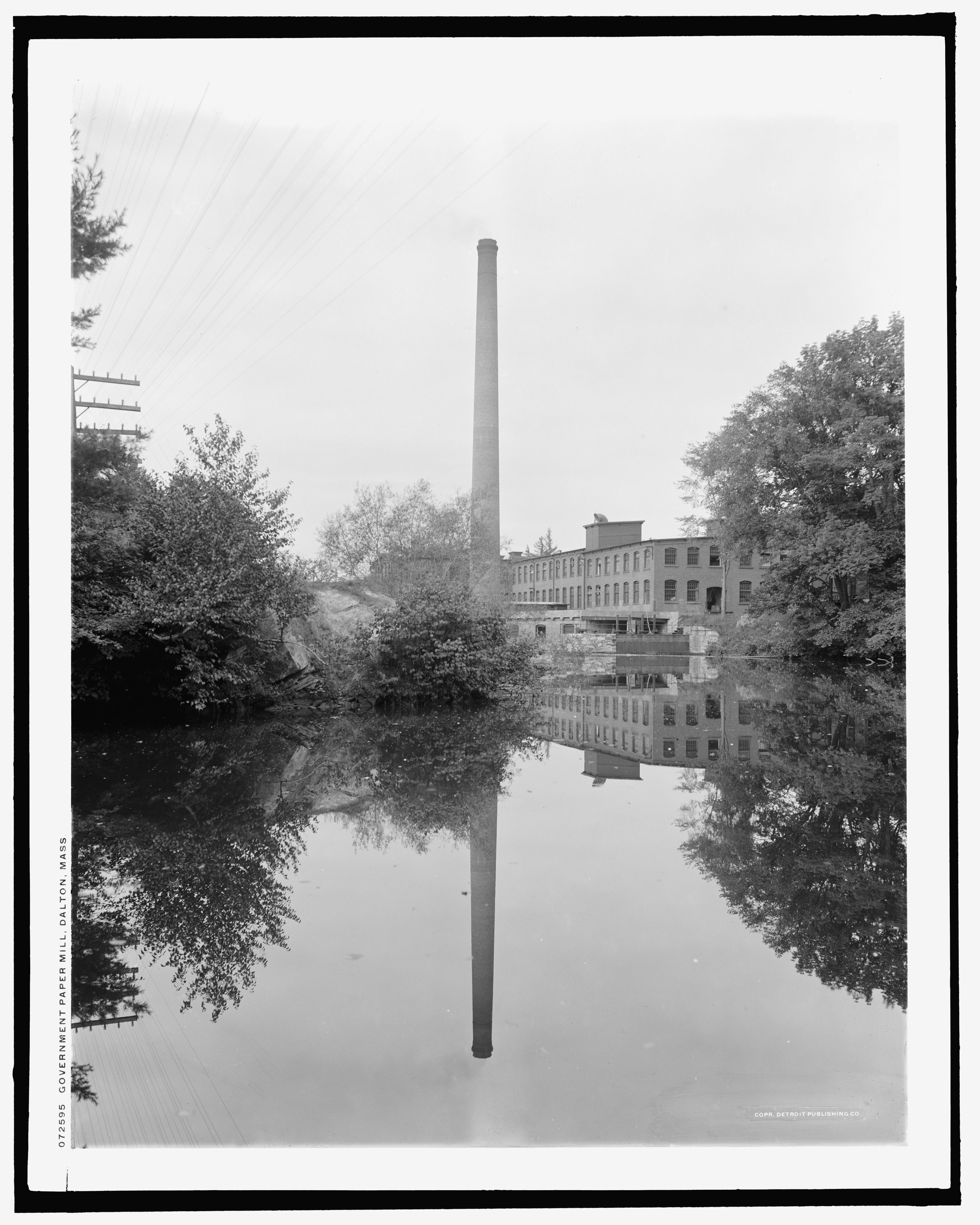
The Library of Congress holds seven Detroit Publishing Company plates of Dalton, and five of them run consecutively: LC-D4-72591 to 72595. In order, they are the Irving House; the Housatonic at Weston Mills; Willow Brook, the home of Zenas Crane; the Bay State Paper Mill; and the Government paper mill.
Consecutive negative numbers from a commercial view company mean one photographer working through one visit. In five exposures he recorded the hotel, the river, the owner’s house and two of the mills — the whole of a company town in the order he walked it. That is a rarer document than any single one of the pictures.
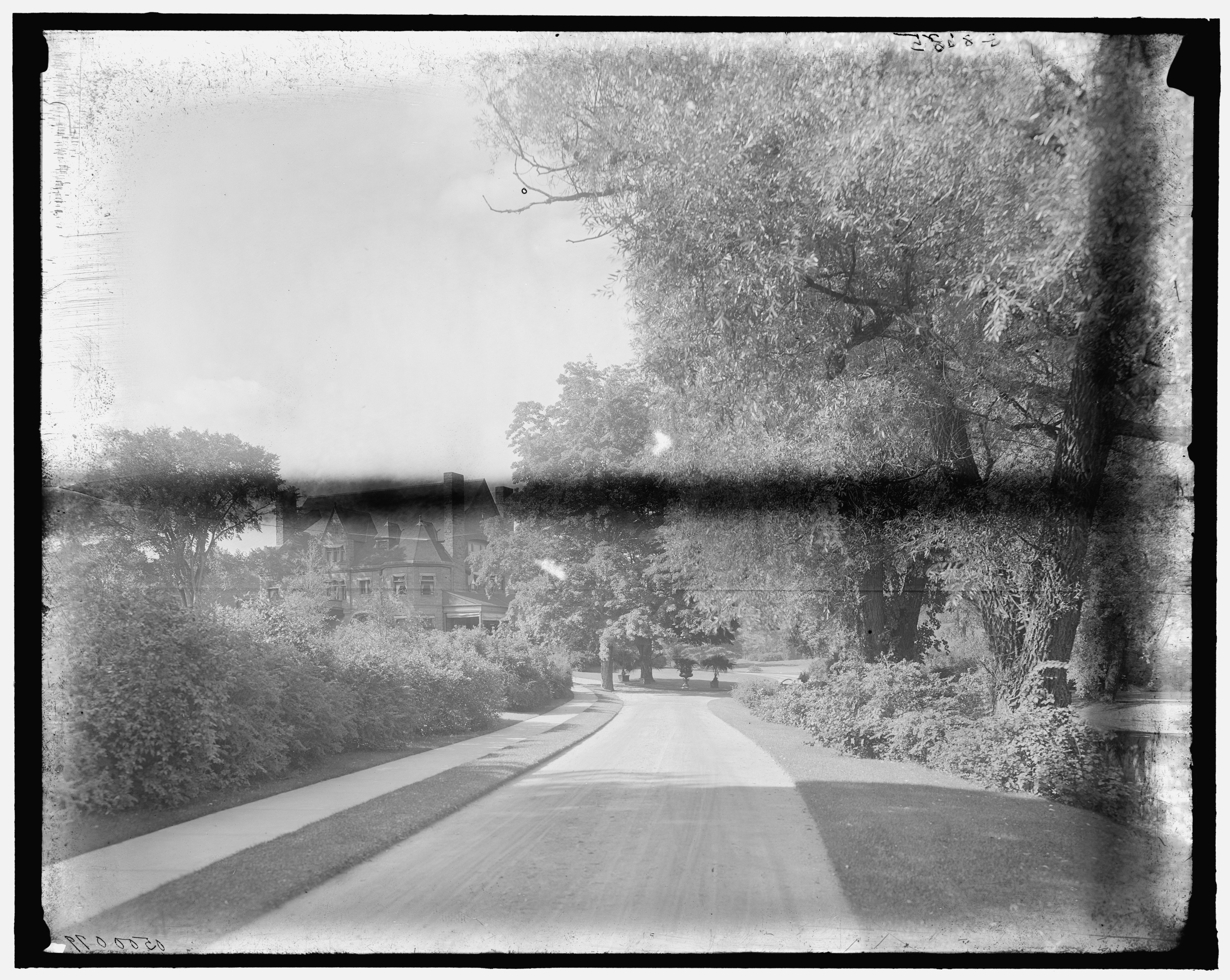
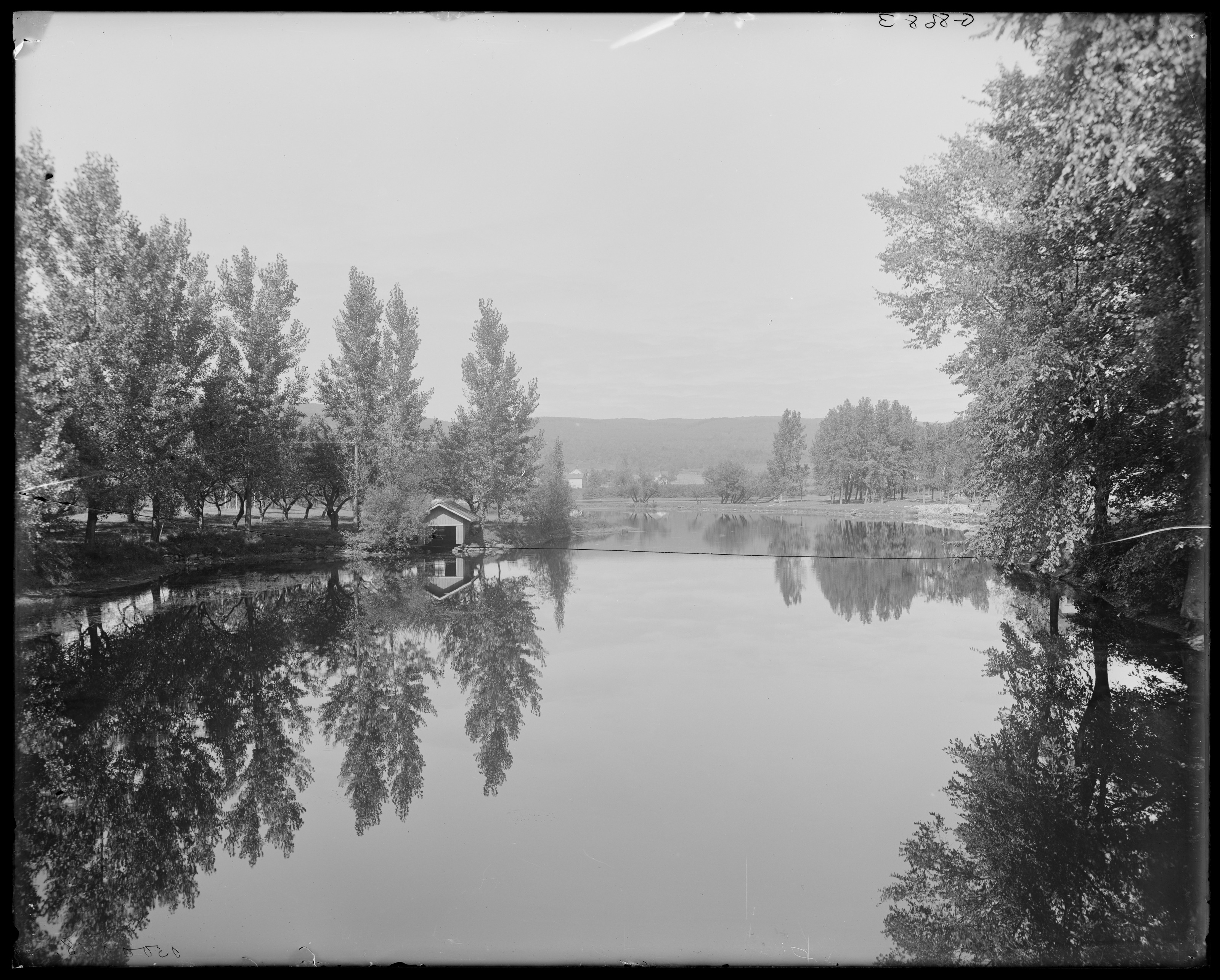
Two further plates, numbered in a different series, show the house again and the river again. The river plate is captioned Wesson Mills where the earlier one says Weston. Both spellings are the Library’s; neither is corrected here.
Sources
Olmsted Archives, Frederick Law Olmsted National Historic Site, National Park Service: job 00027, ten plans inventoried and nine scanned, with titles, dates, sheet sizes and inventory notes as recorded at olmstedonline.org — including the firm signatures OO+E, LA and OBLA and the cross-references to the missing sheets; scans from the Olmsted Archives on Flickr. Titles and notes are quoted as catalogued. Library of Congress, Prints and Photographs Division, Detroit Publishing Company Collection, items 2016818750, 2016796098, 2016812174, 2016812175, 2016812176, 2016814269 and 2025164713, all “No known restrictions on publication,” with the call numbers as given above. Wikipedia, “Crane Currency,” for Stephen Crane’s Liberty Paper Mill of 1770 and the Paul Revere connection, the 1801 mill with Henry Wiswall and John Willard and its being the first west of the Connecticut River, the silk threads of 1844, Winthrop M. Crane’s 1879 contract with the Bureau of Engraving and Printing, the four mills by David H. Tower, and the incorporation of 1922 under Frederick G. Crane. The Berkshire Edge, “Connections: The buck starts in Dalton,” for the 1806 rag advertisements, the growth of the workforce, the transom story and the figure of fifty-five to five hundred employees across five mills — and for the conflation of the Zenas Cranes noted above. Wikipedia, “Berkshire Museum,” for its founding in 1903 by Zenas Crane, third-generation owner of Crane & Company. The remaining thirteen Crane and Dalton jobs in the Olmsted files — the Crane Memorial, the Crane Library, the mills, the community house, the cemetery and the estates of Winthrop, Arthur and W. M. Crane Jr. — are not covered here and are the next work on this survey.