Louis Comfort Tiffany spent fifteen years failing to get the glass he wanted, which is the part of the story that usually gets left out.
He began as a painter. By 1878 he had a glass house of his own, with a Venetian named Andrea Boldini at the furnaces — Boldini represented himself as having worked at Murano under Salviati — and the house burned down. So did the second. From about 1880 he rented time at the Heidt glasshouse in Brooklyn and experimented there for thirteen years, on the grounds, as his authorized biographer put it, that it was “useless to expect to make really beautiful windows unless he could control furnaces of his own where his ideas would be carried out without interference from those who either could not or would not understand.”
Anyone who has tried to get a contractor to do a thing properly will recognize the sentence.
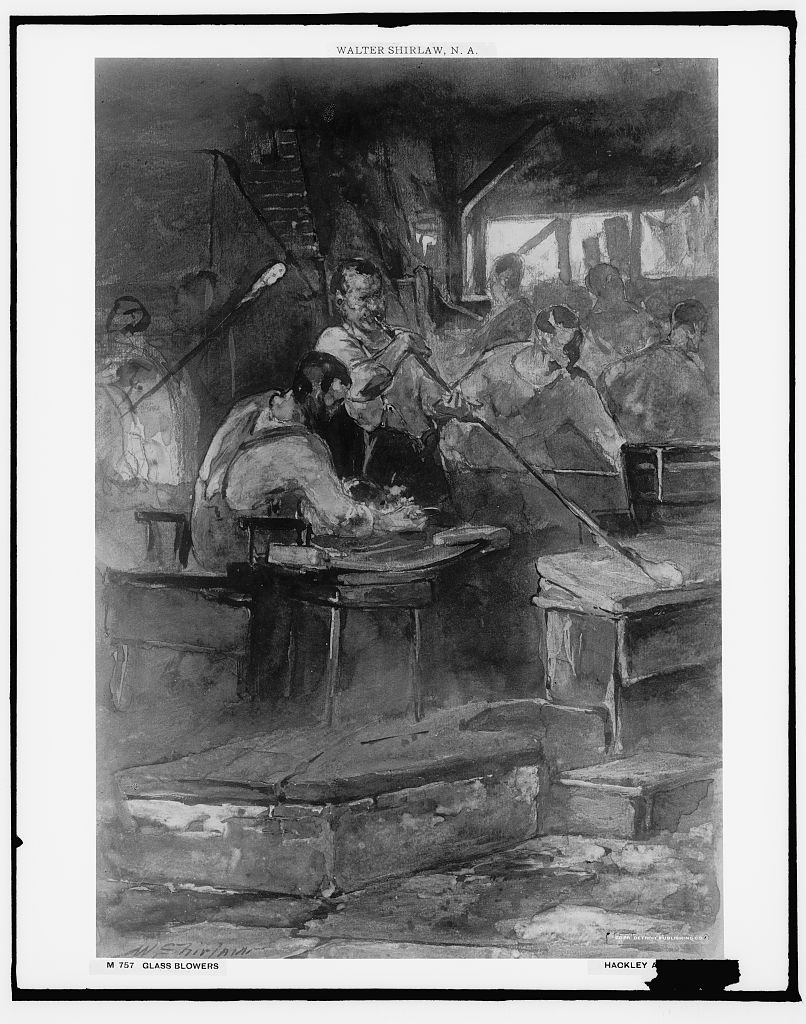
In 1893 he stopped renting. A glasshouse went up at Corona, on Long Island, under Arthur J. Nash, a practical glass manufacturer out of Stourbridge in England, who superintended the building of the factory. In 1902 it took the name Tiffany Furnaces. Everything that follows — every window in a Berkshire house with his name on it — came out of that decision and out of that furnace. And 1893 is also the year Henry Cook finished Wheatleigh.
I. What the material actually was
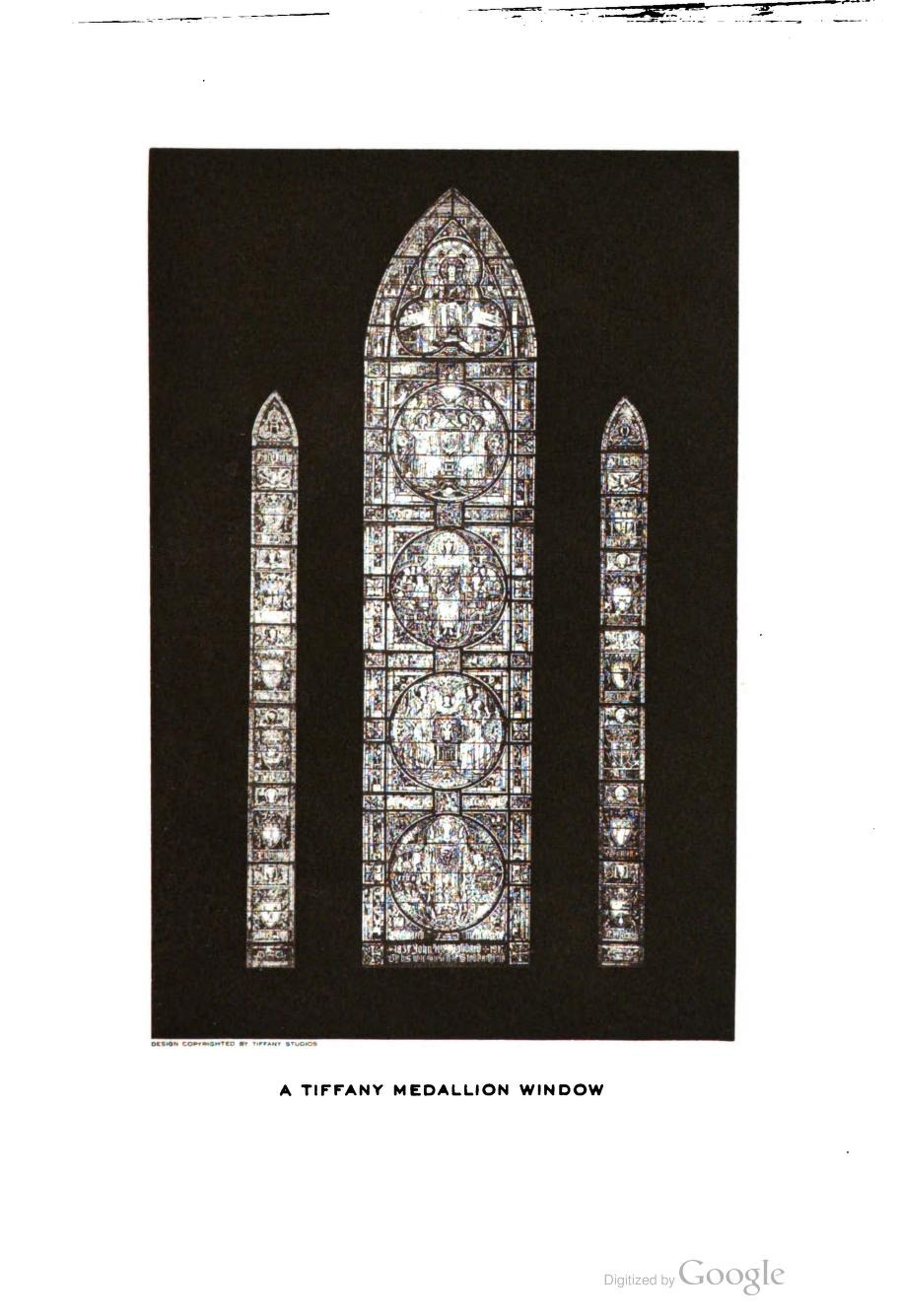
The whole argument of a Tiffany window is that it is not painted. Mediæval glaziers, and the Victorians after them, drew the shadows on with brown enamel and fired them in. Tiffany refused. The Studios put it in their own catalogue, in capitals, with no modesty whatsoever:
“Opalescent, iridescent, imperishable and requiring no paint, Tiffany Favrile glass is the basis of all Tiffany windows. This exclusive basic material surpasses the best of the mediæval glass workers, whose art reached its zenith in the thirteenth century.”
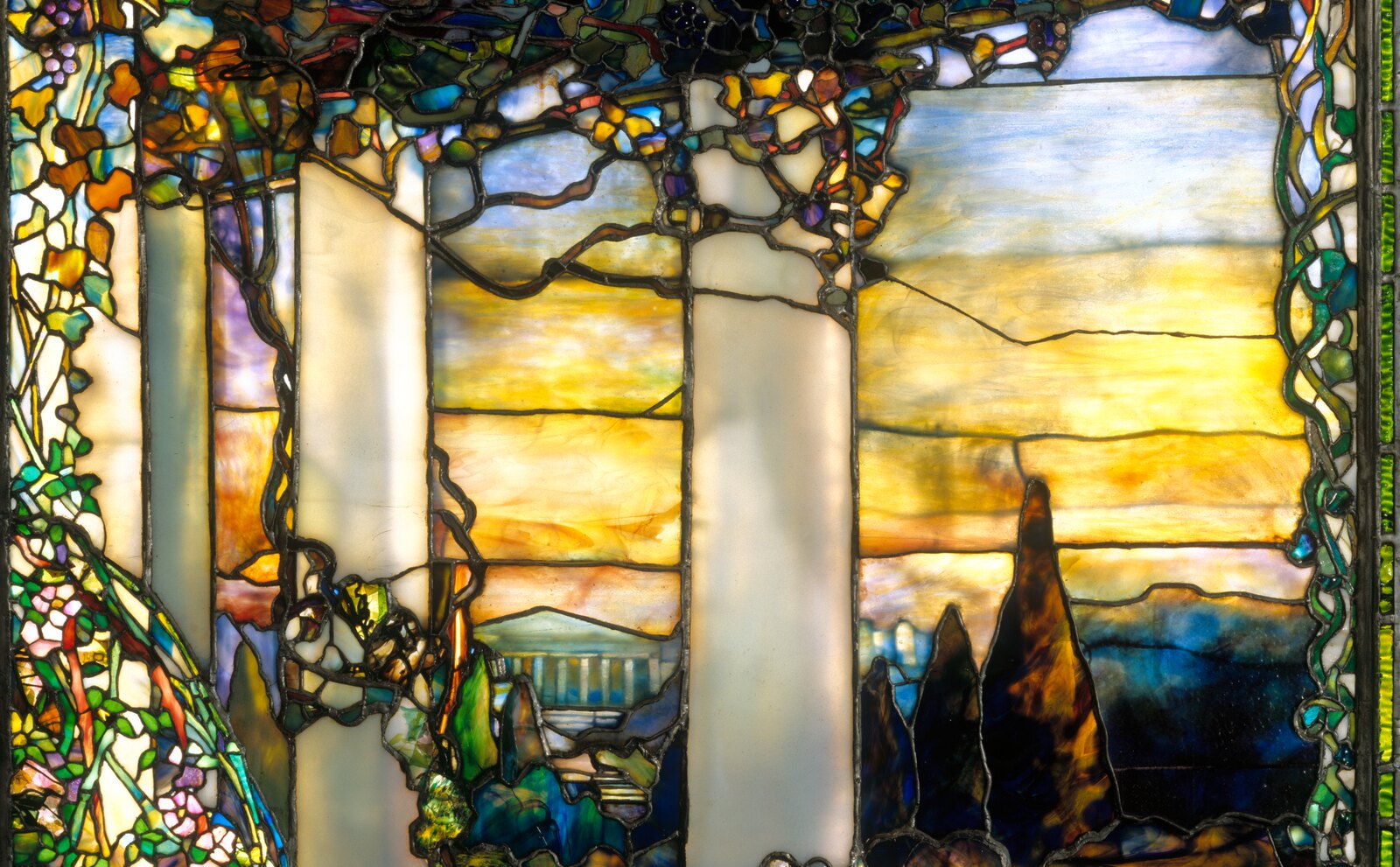
Which meant the color, the shading and the modeling all had to be in the glass before anyone cut it. Opalescent glass carried several colors in a single sheet. Drapery glass was pot metal crumpled into folds while still molten, so a sleeve or a robe took its light and shade from the physical wrinkle of the material rather than from a lead line or a brushstroke. Plating — layering two or three sheets behind one another — produced depths no single sheet could. The claim was that a window could be colored the way a painter colors, and it was largely true.
II. From drawing to glass
The sequence was fixed, and it ran like this.
A color sketch settled the composition and the distribution of color. From that came the grand cartoon — the design at full size, every line of it final. Two paper transfers were taken off the cartoon. One was kept whole, as the guide for the man who would arrange the leads. The other was cut up along the lead lines into separate patterns, one for every piece of glass in the window.
Those paper patterns were then arranged on a glass easel standing against a strong light, each one removable. And here is the step that makes the whole enterprise expensive. To choose the glass for any one piece, the selector lifted its paper pattern off the easel, took a sheet from the racks, and held it up in the gap — between his eyes and the light — to see what it did. If it was wrong he tried another. Thousands of pieces, one at a time, judged by eye against daylight by a man whose judgment was the product of years.
Only then was anything cut. The pieces were edged — copper foil for the fine work, lead came for the rest — soldered, cemented, and stiffened with saddle bars and reinforcing rods to stop the panel buckling under its own weight or letting the pieces shift out of order. A window of any size arrived as several panels, not one.
The Studios’ own summary is the best sentence anyone has written about the process: “No part of the development of a Tiffany window can be done mechanically.”
III. How it got into the wall
This is the part nobody photographs. A leaded window is not a pane; it is a heavy, slightly flexible mosaic held together with soft metal, and it has to be planned for before the wall exists.
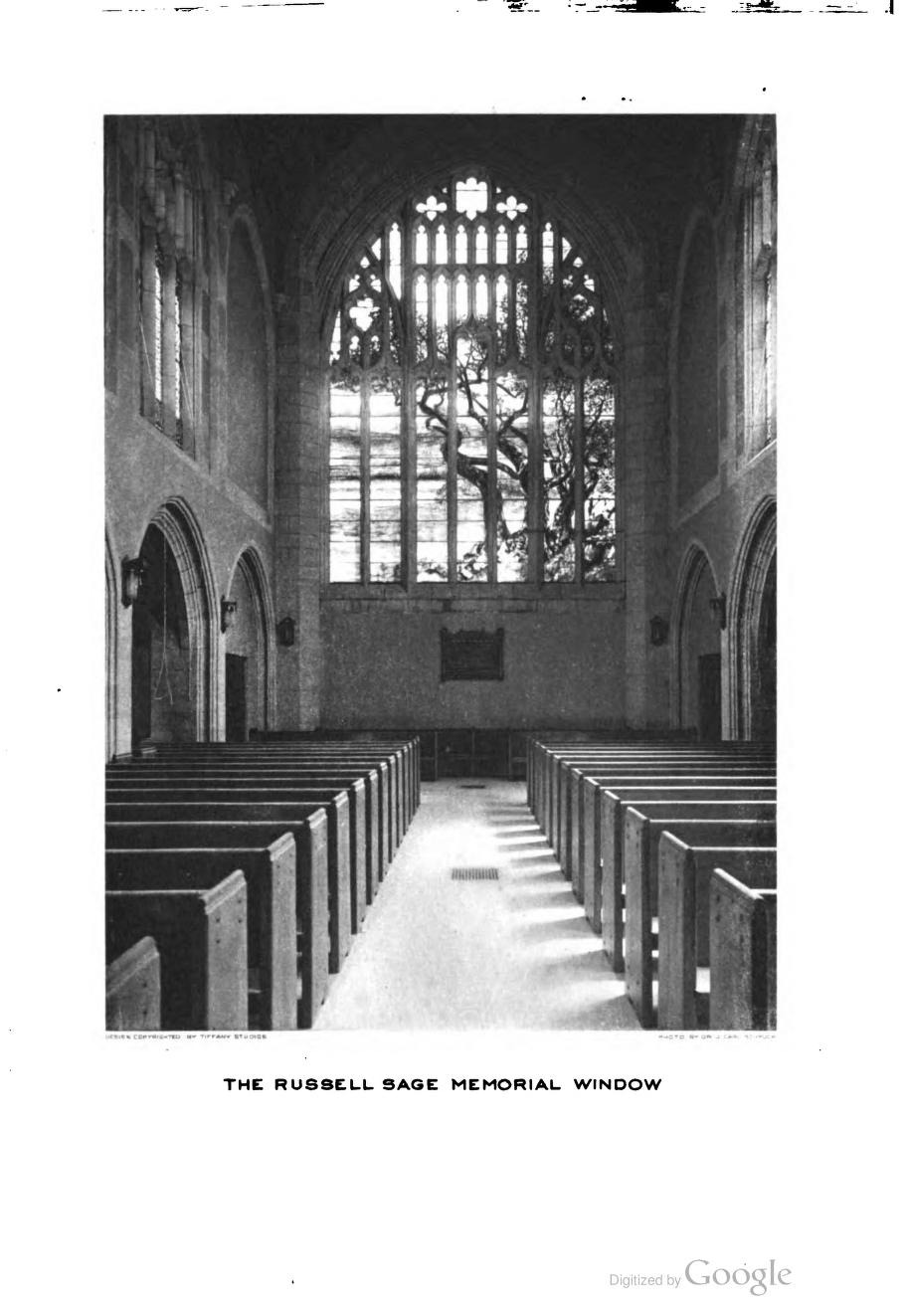
The architect’s sheets had to carry the opening at the exact size, with a rebate deep enough to take the panel and its bars, and structure above capable of holding the weight without settling onto the glass — because stone settles and glass does not forgive it. The glass house needed the measured opening long before delivery, and the two trades had to agree a figure while one of them was still a drawing.
Then the panels were crated flat, packed with straw and sawdust, carried by waggon to the rail, sent up to Pittsfield or Lee, and brought the last miles over exactly the sort of road the coachmen knew — frozen, rutted, or mud to the hub. On site, glaziers set each panel into its rebate, bedded it, fixed the saddle bars to the frame, and pointed it weathertight. If a panel arrived cracked it went back to Long Island and the opening stayed boarded for a season.
IV. The Berkshire rooms
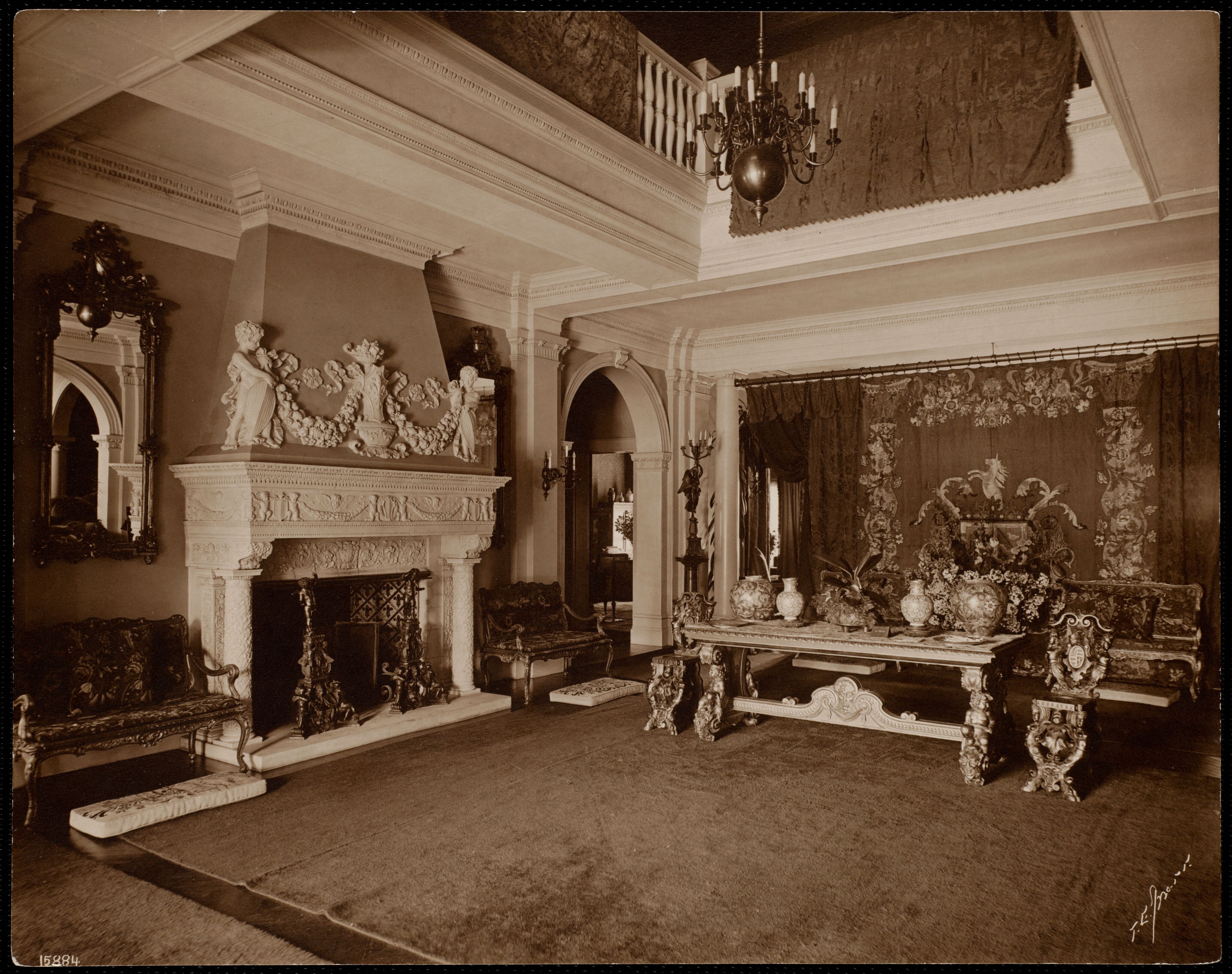
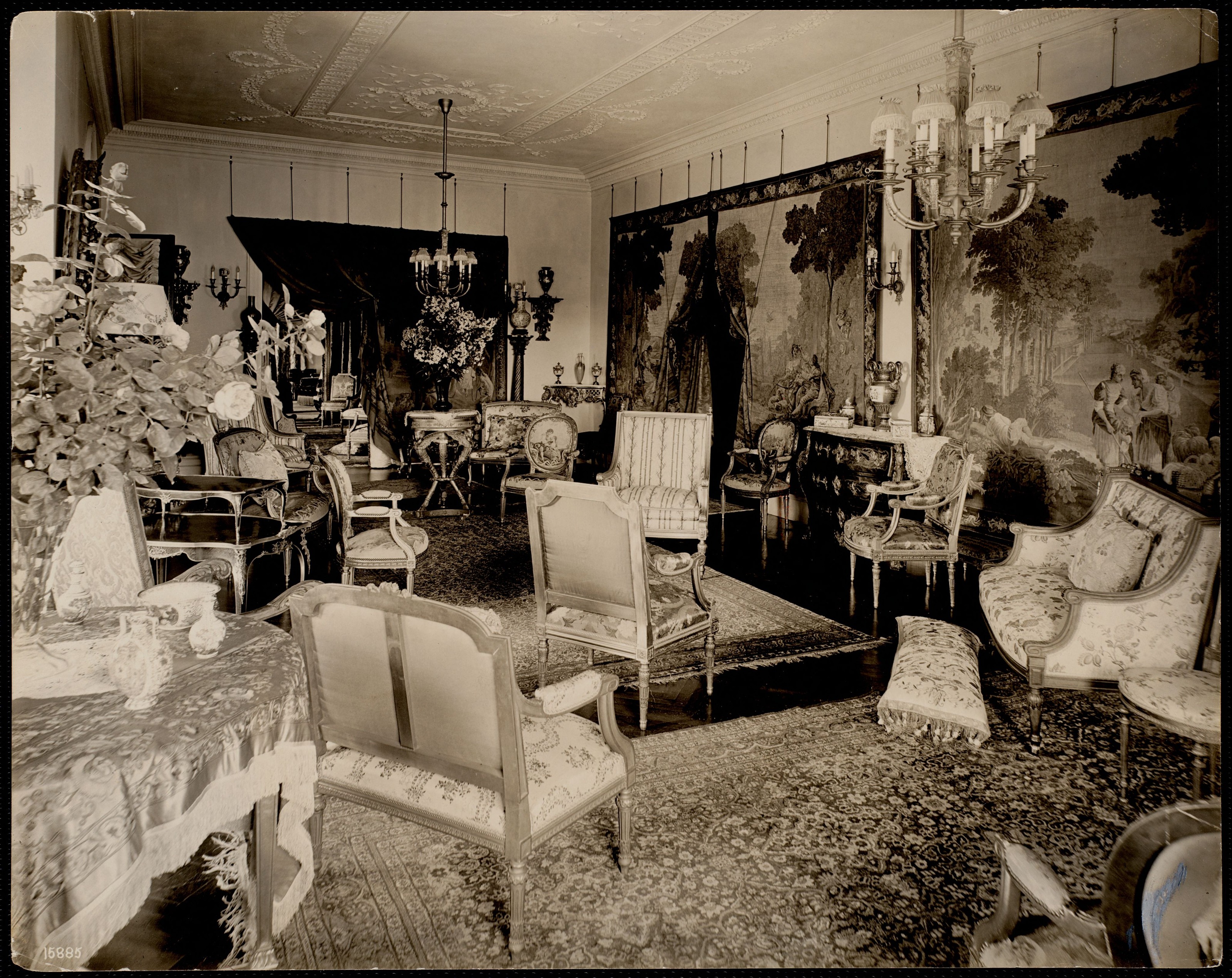
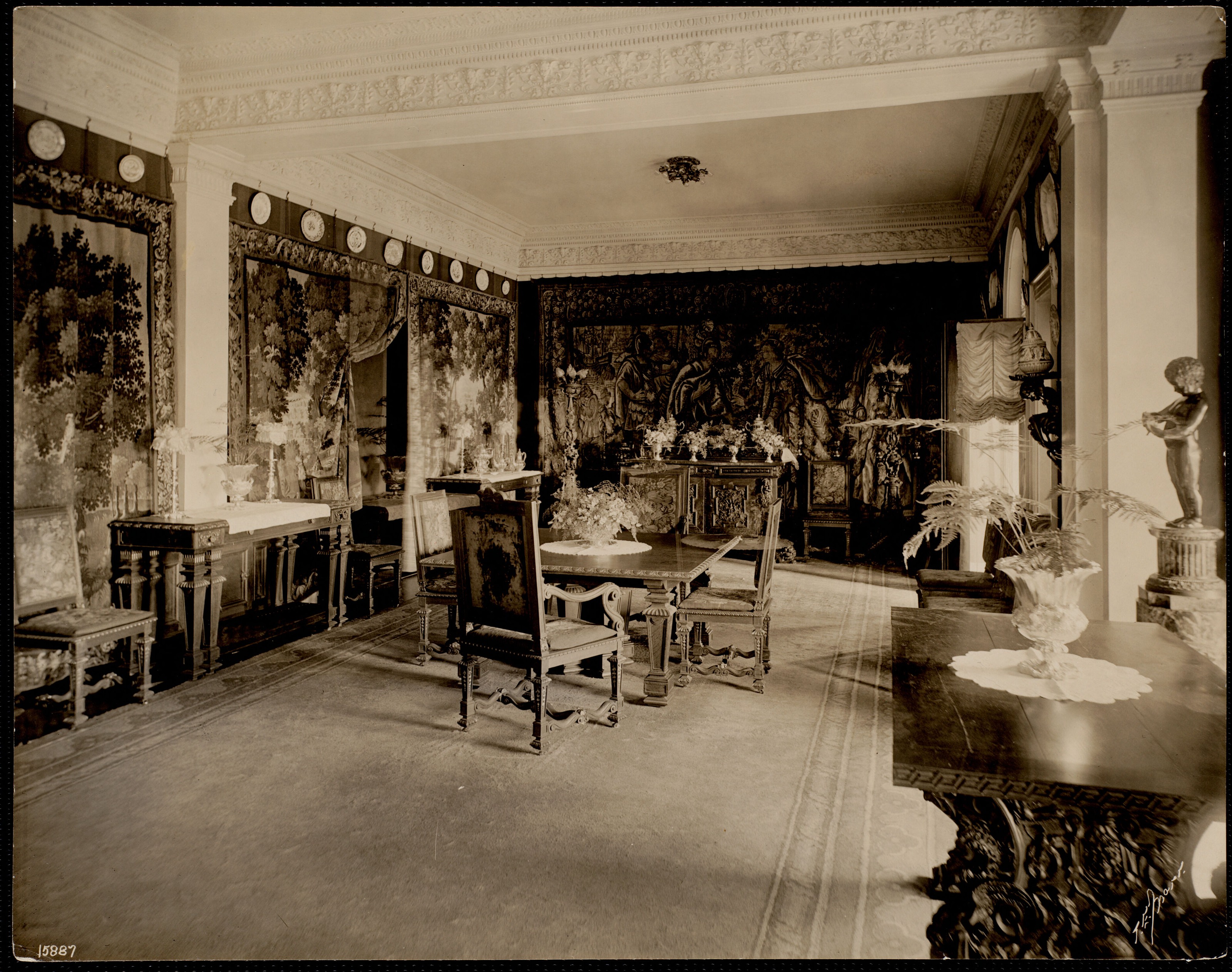
What these houses looked like inside is well documented; what is in their windows is not. The Lenox Library holds interior views of Wheatleigh — the hall with its carved mantel and gallery, the tapestry rooms, the dining room — and they show the scale these rooms worked at.
Wheatleigh is said to hold four Tiffany windows. The attribution is repeated locally and is entirely plausible on the dates — the house was finished the year Corona opened, for an owner who could afford anything — but this site has not yet found it in a document, and until it does it is set down here as what it is: a strong local attribution awaiting a paper.
What is not in doubt is the process. Whoever made those four panels chose every piece of glass by holding a sheet up to the light and looking through a hole in a paper pattern. Somebody crated them. Somebody carried them up a Berkshire road in a waggon. And somebody stood on a ladder in an unfinished room and set them into a wall, where they still are.
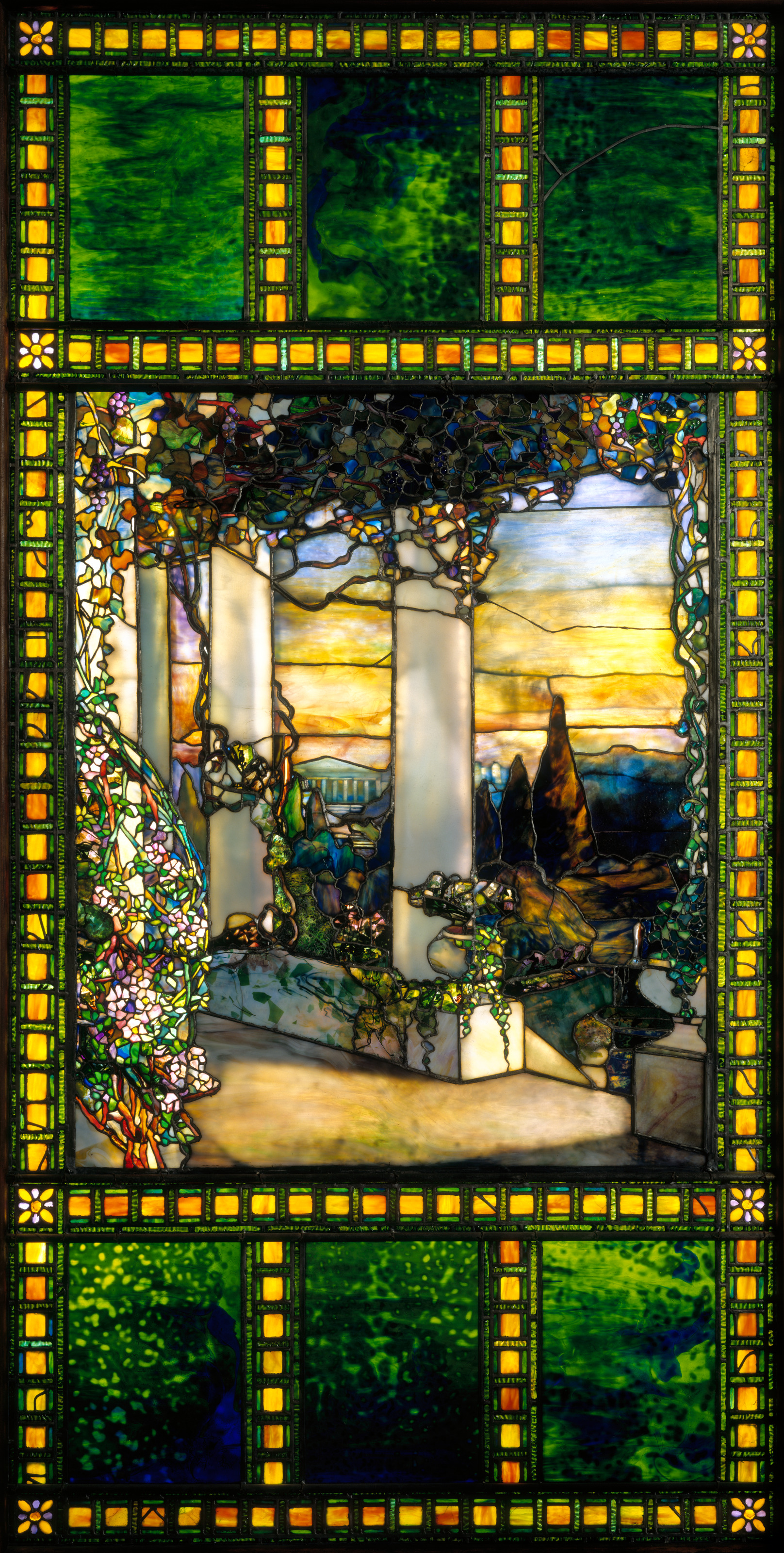
Quotations from Tiffany Studios, Memorials in Glass and Stone (1913), and from Charles de Kay, The Art Work of Louis C. Tiffany (1914), the authorized account, for the Boldini and Heidt glasshouse years, the founding of Corona under Arthur J. Nash in 1893, and the cartoon-and-easel method of selecting glass. Plates from the 1913 Tiffany Studios catalogue. Glass blowers is a Detroit Publishing reproduction of a painting by Walter Shirlaw, not a photograph of the Corona works. Wheatleigh interiors, Lenox Library Association. The Hinds House Window, Tiffany Glass & Decorating Company, about 1900, is in the Cleveland Museum of Art and is published by the museum as public domain; it is not a Berkshire window, and stands here for what the firm was making for private houses in exactly these years. The four windows at Wheatleigh are a local attribution this site has not yet documented.