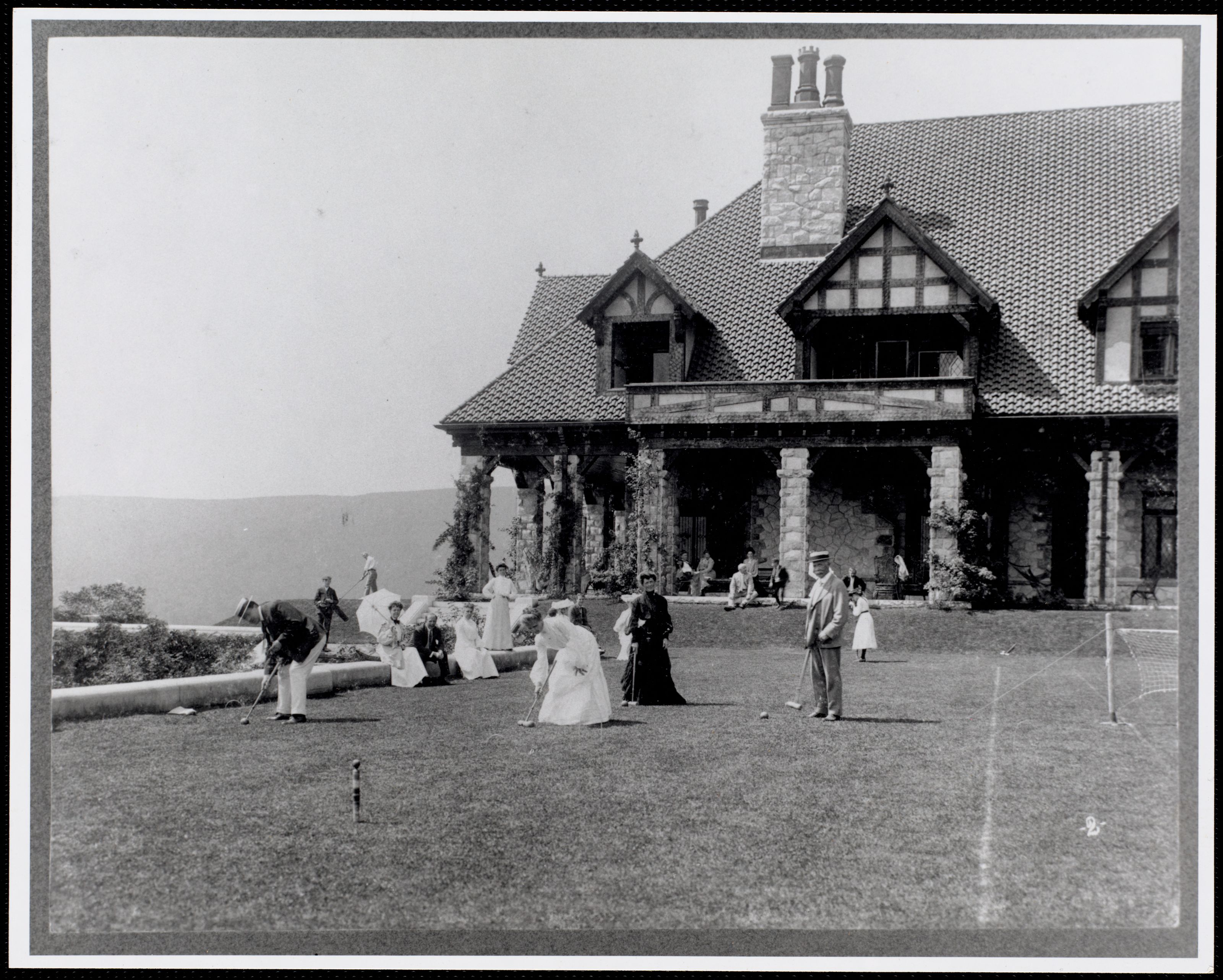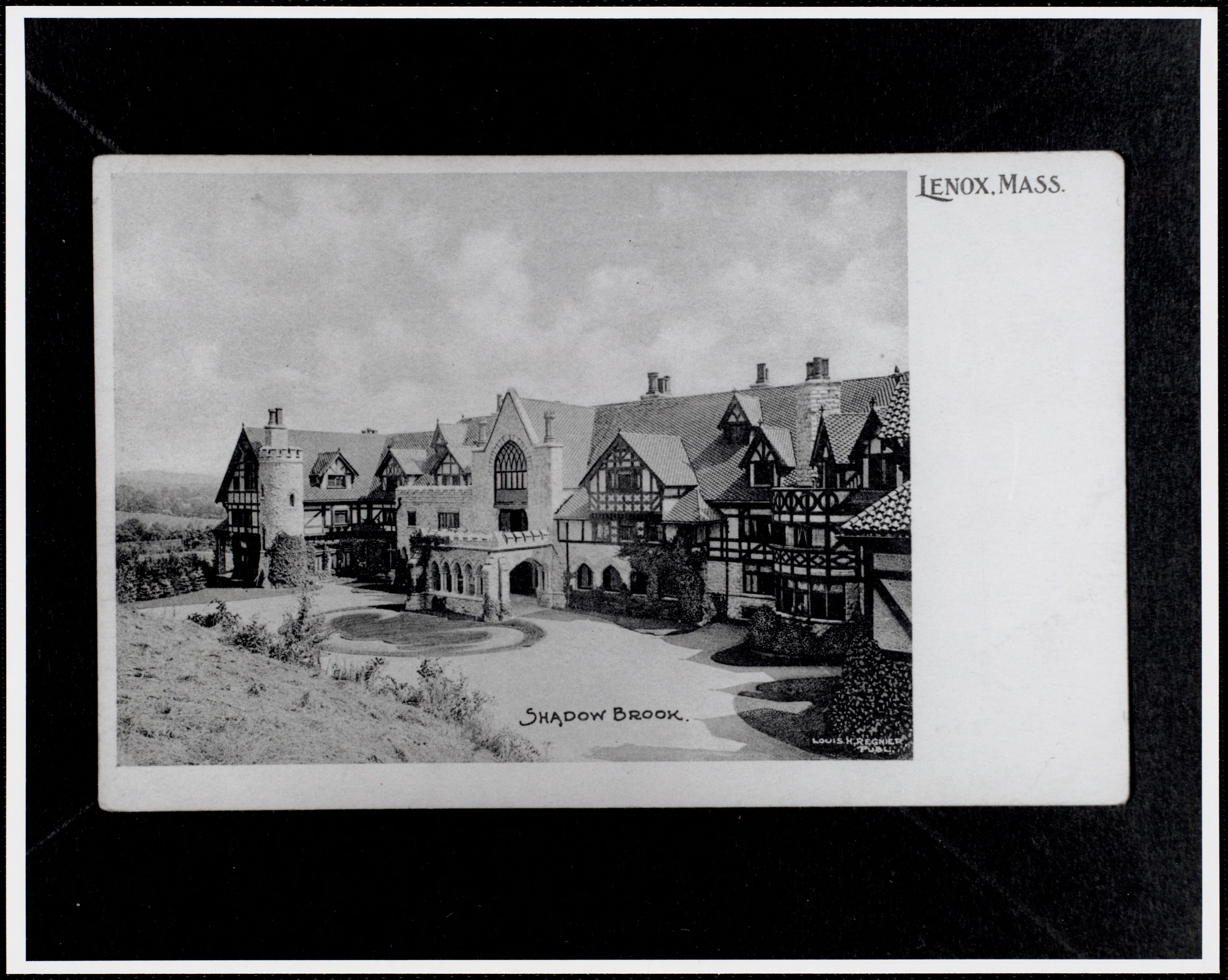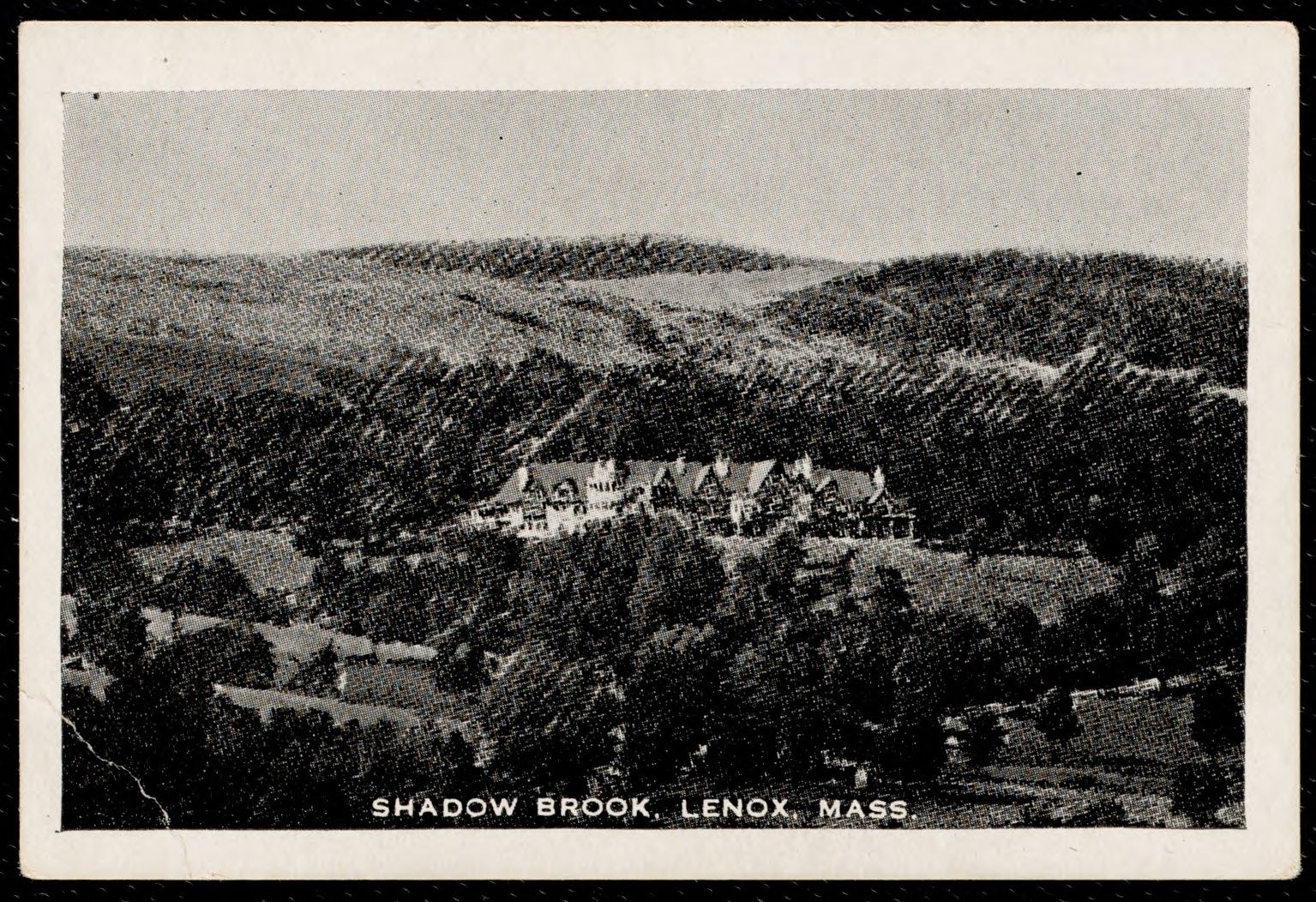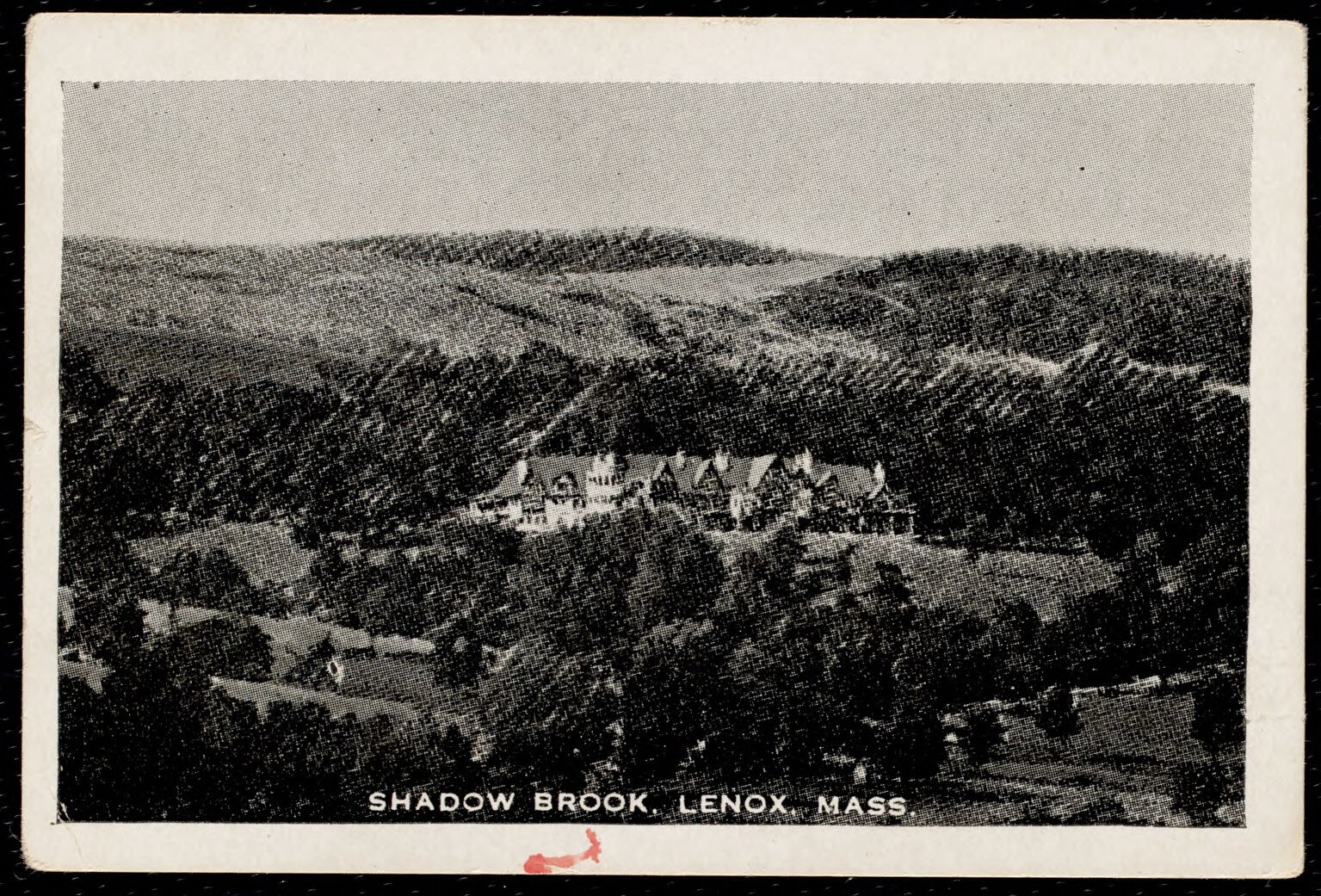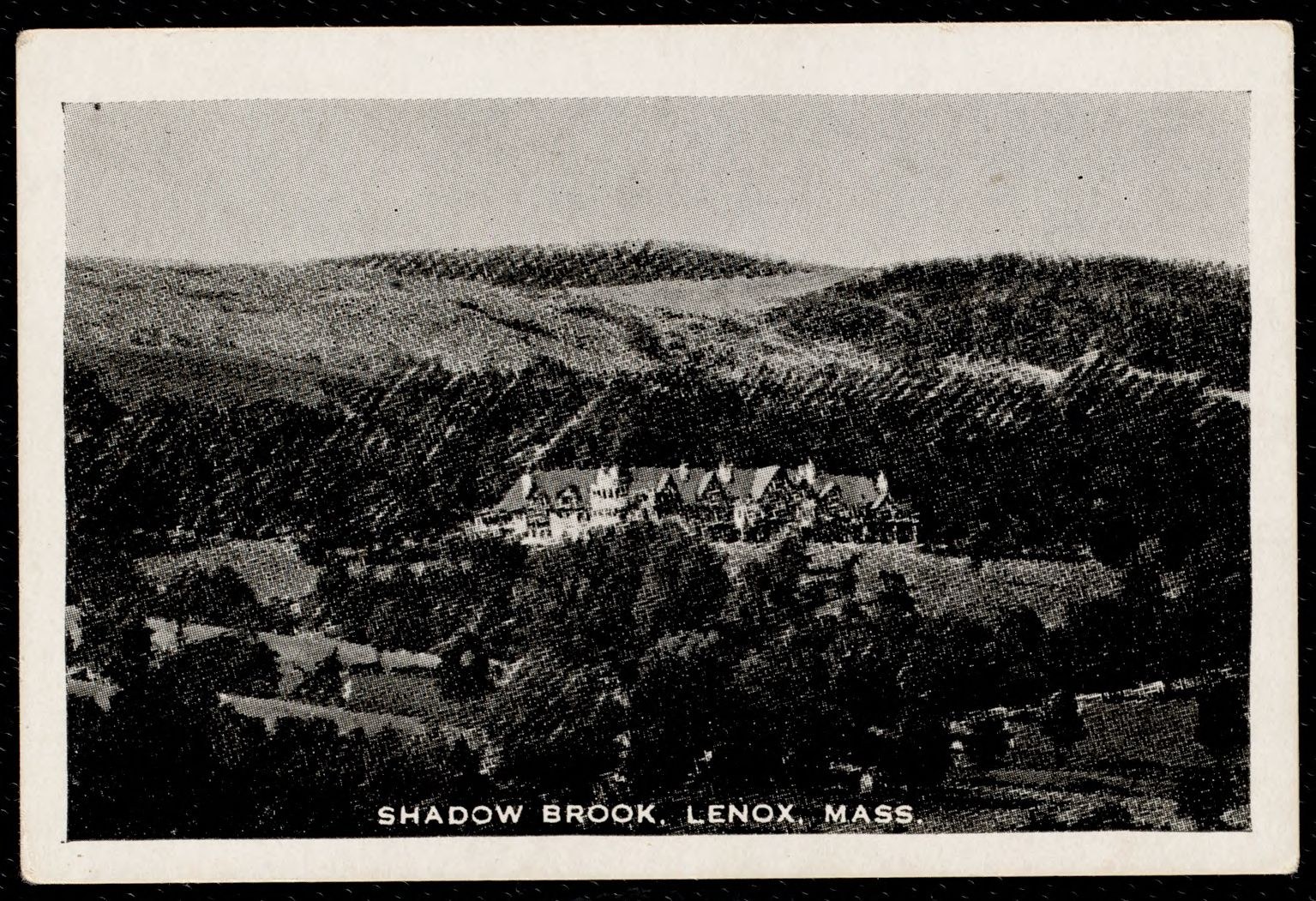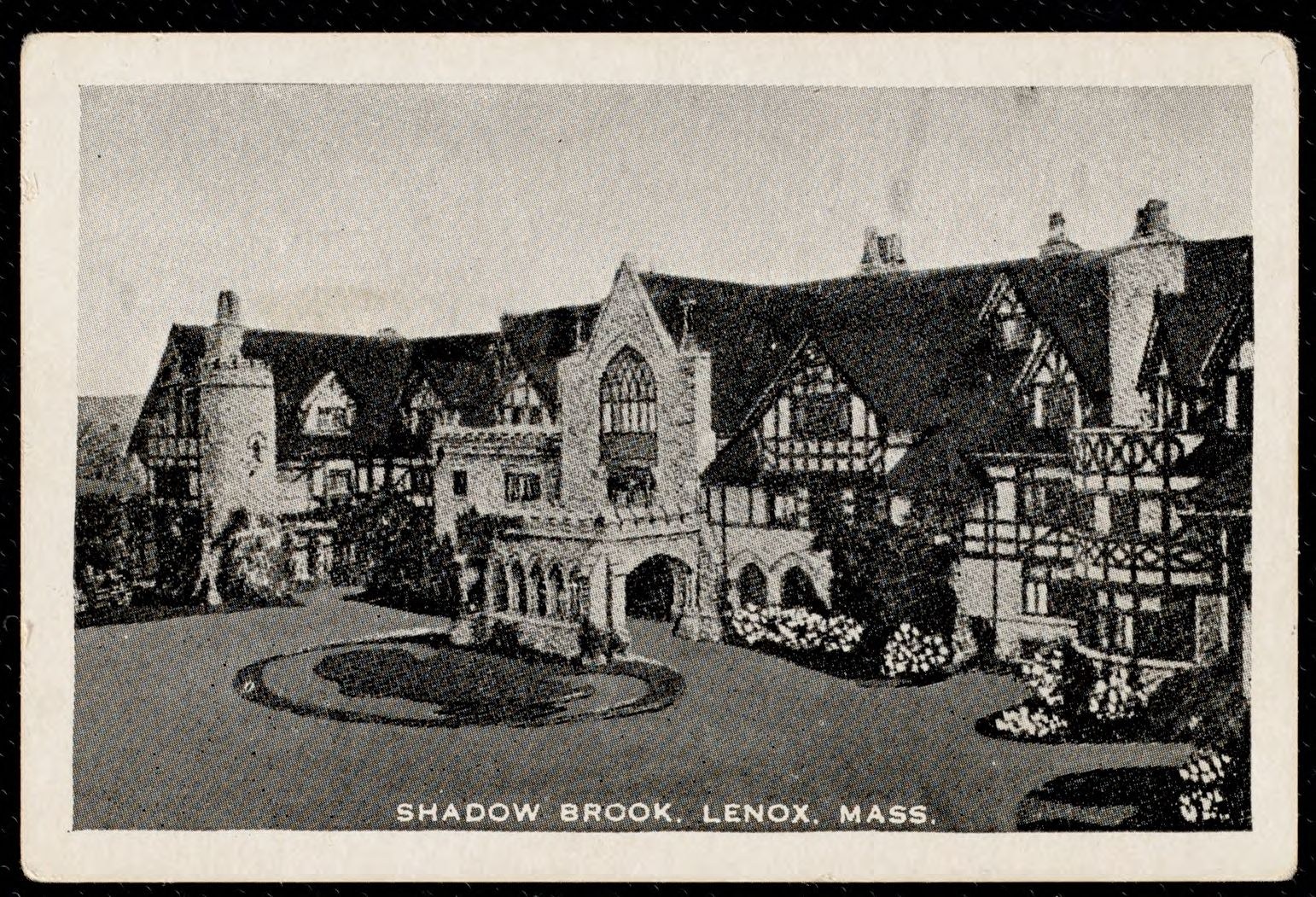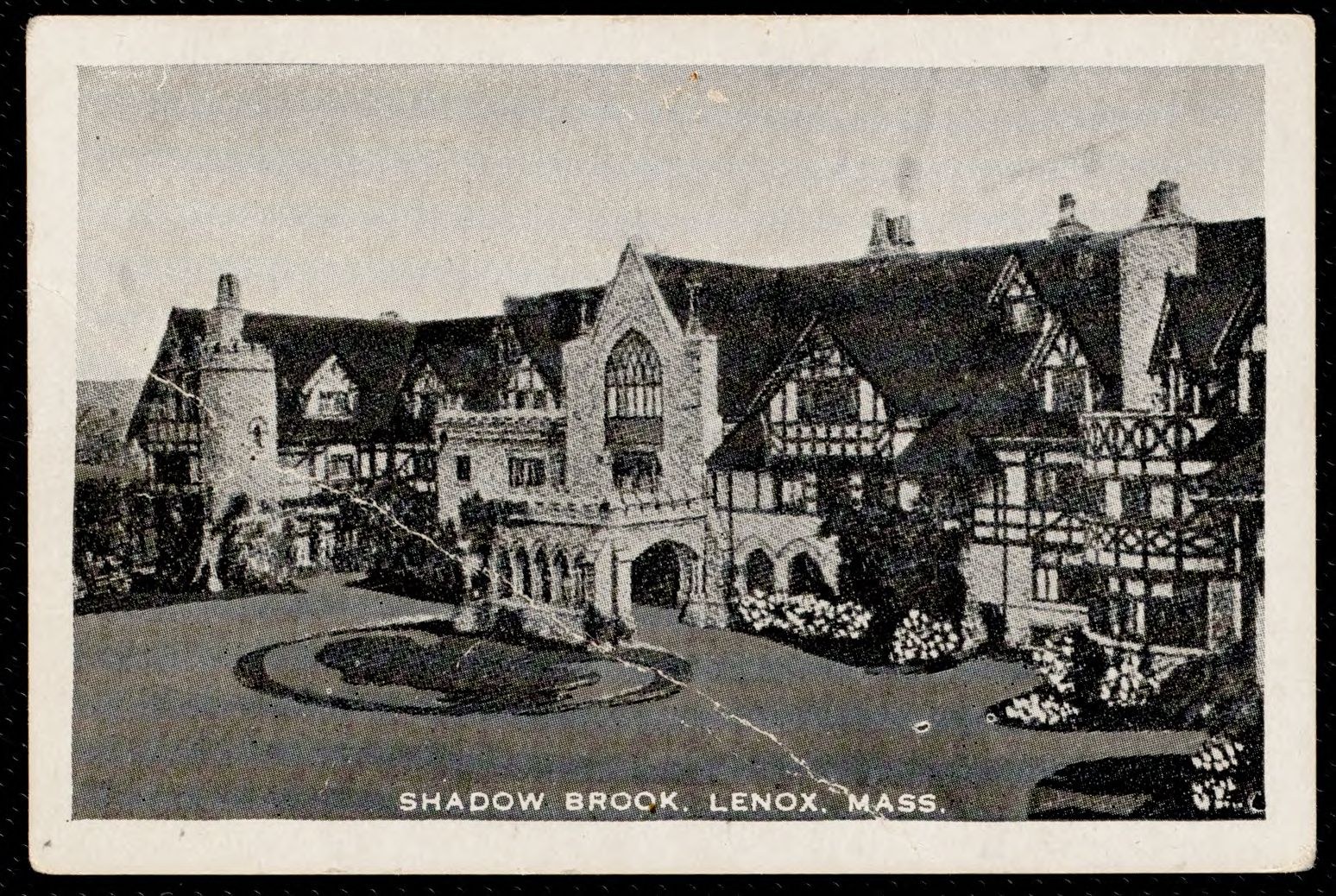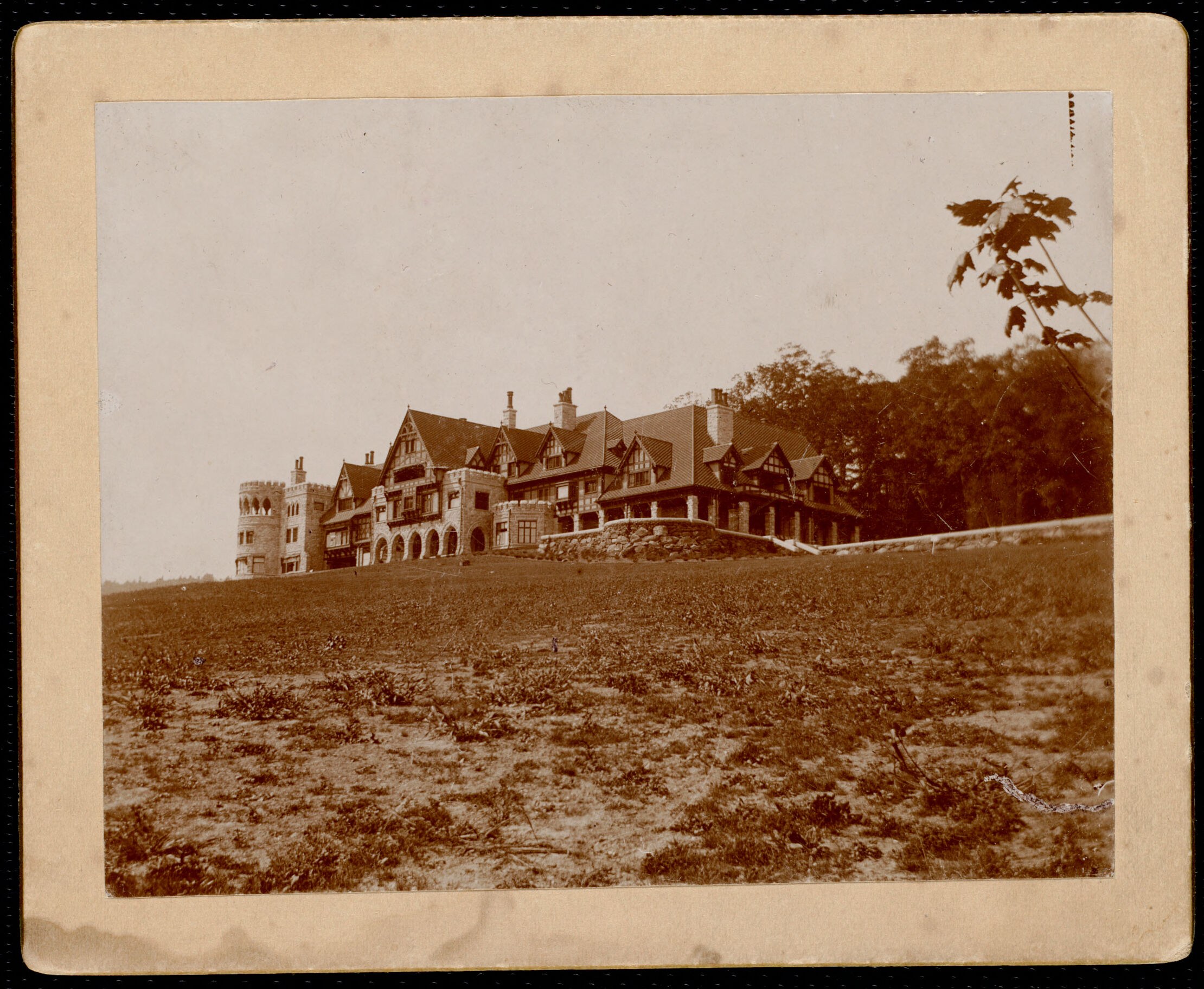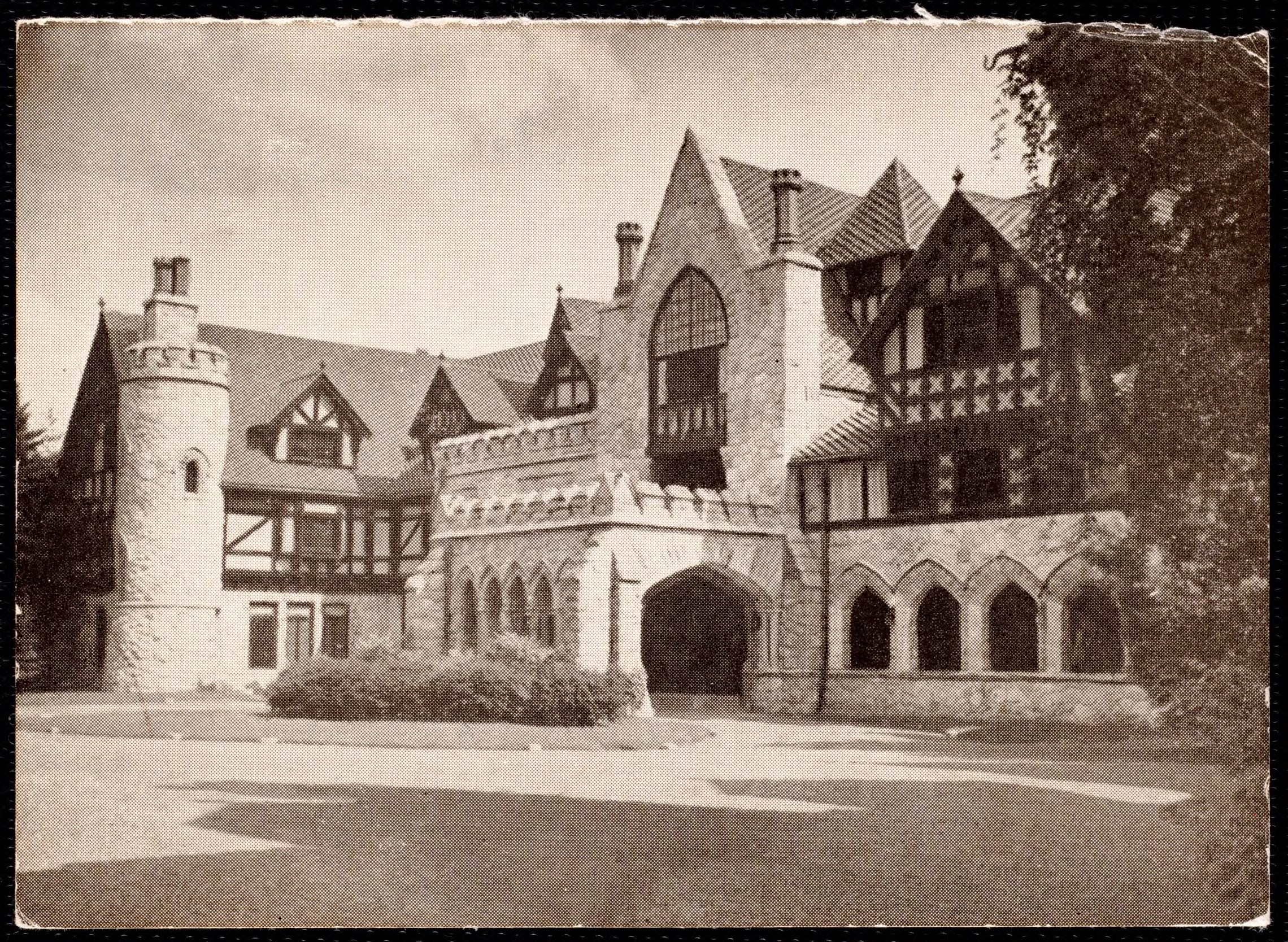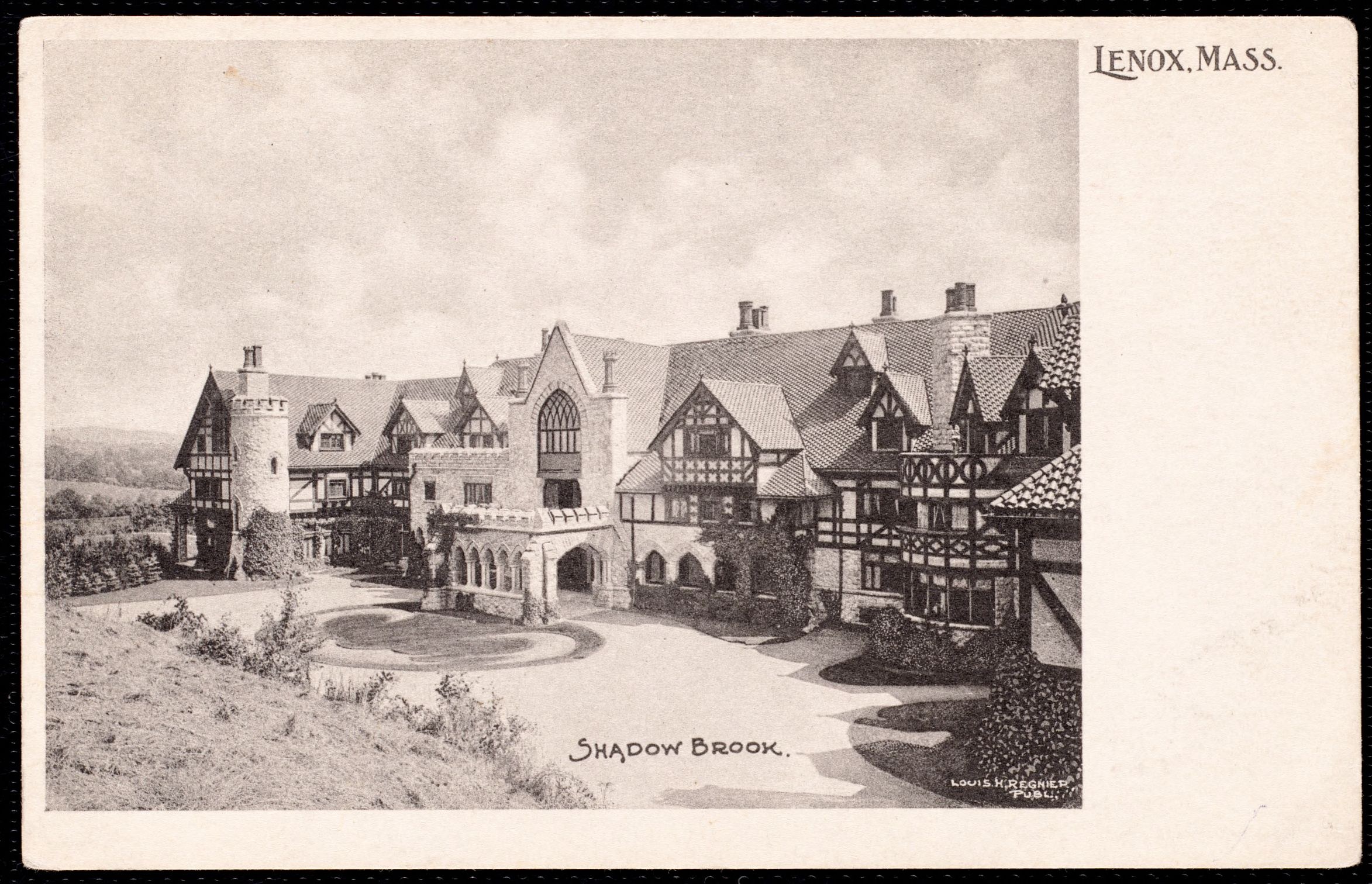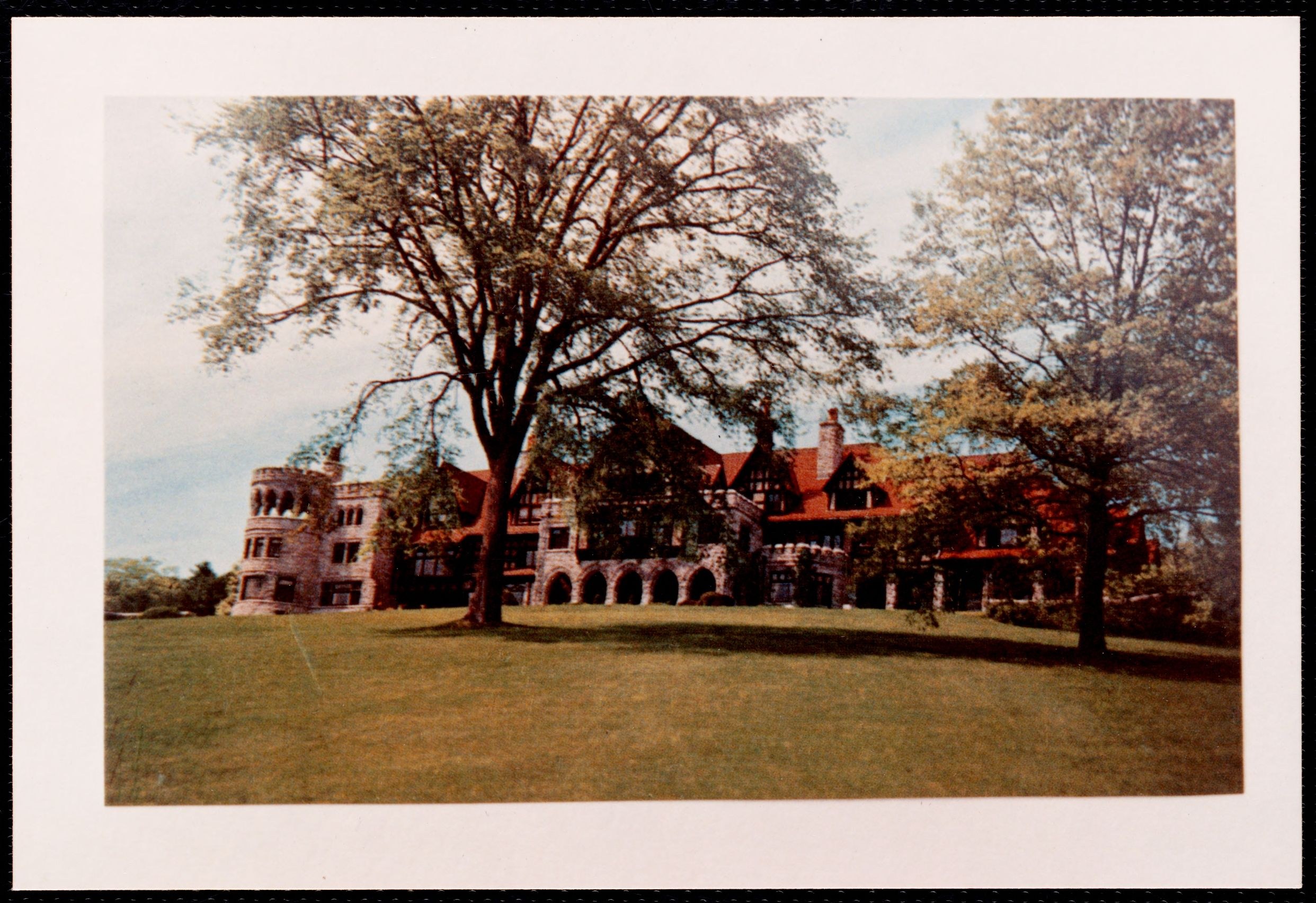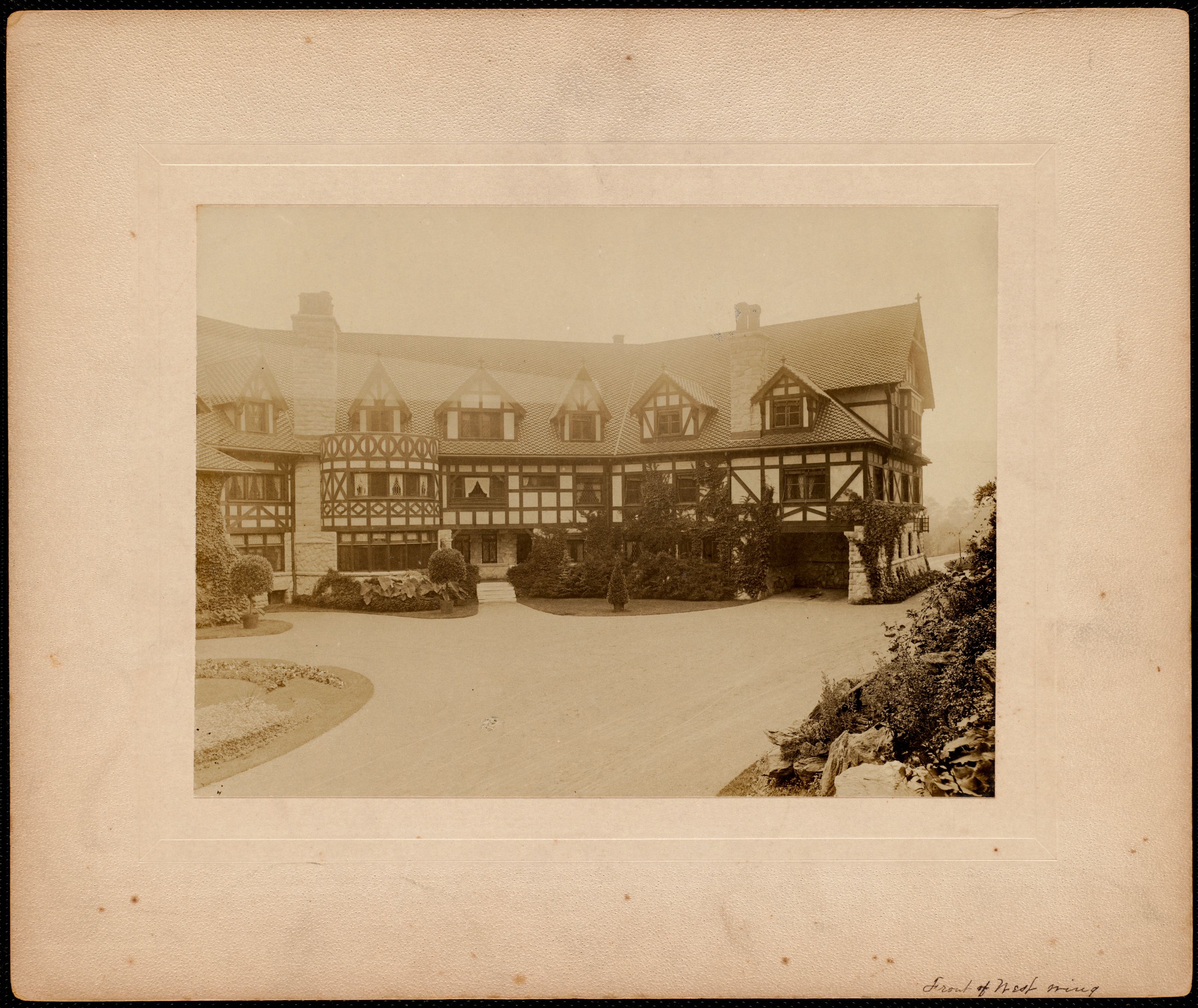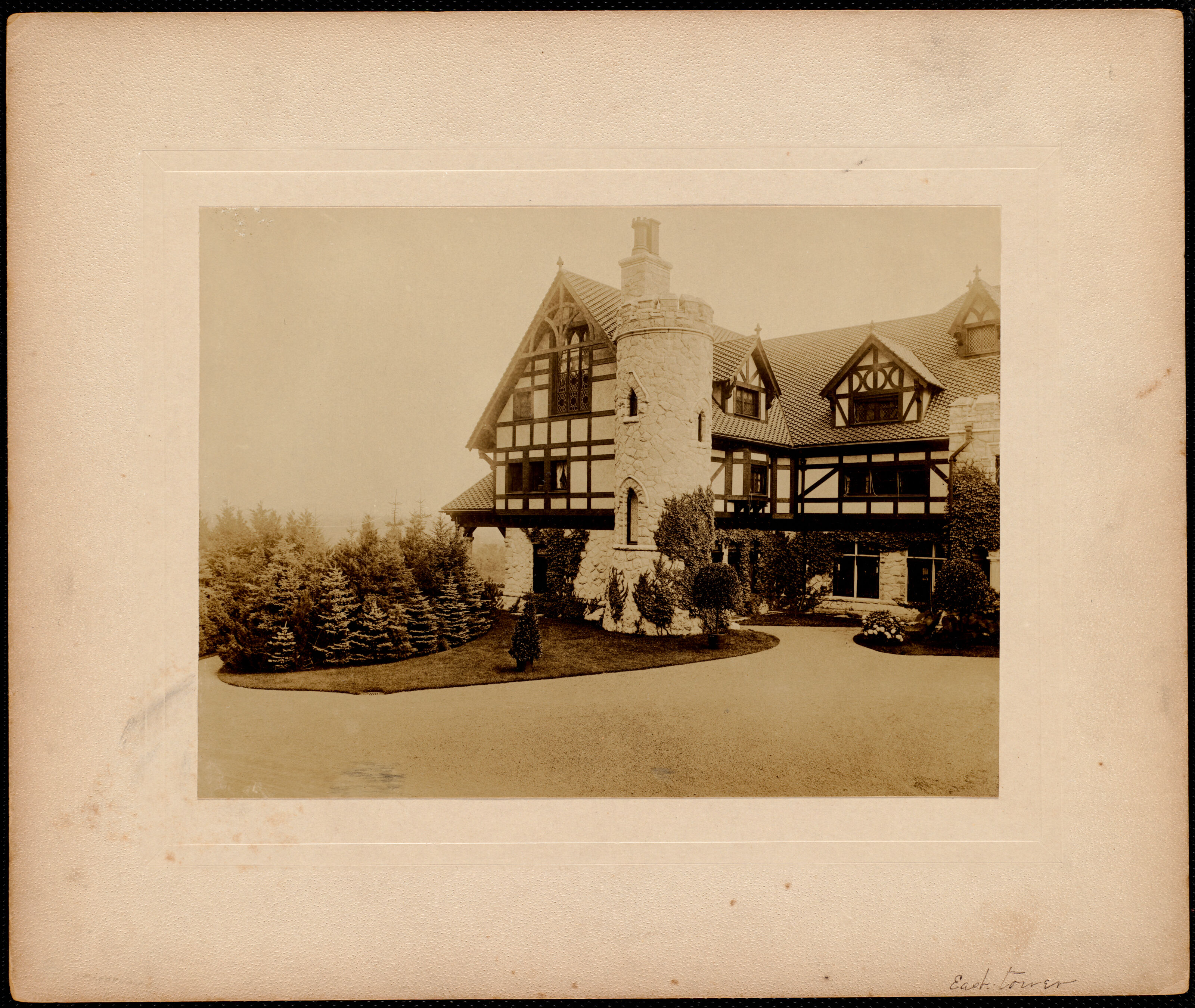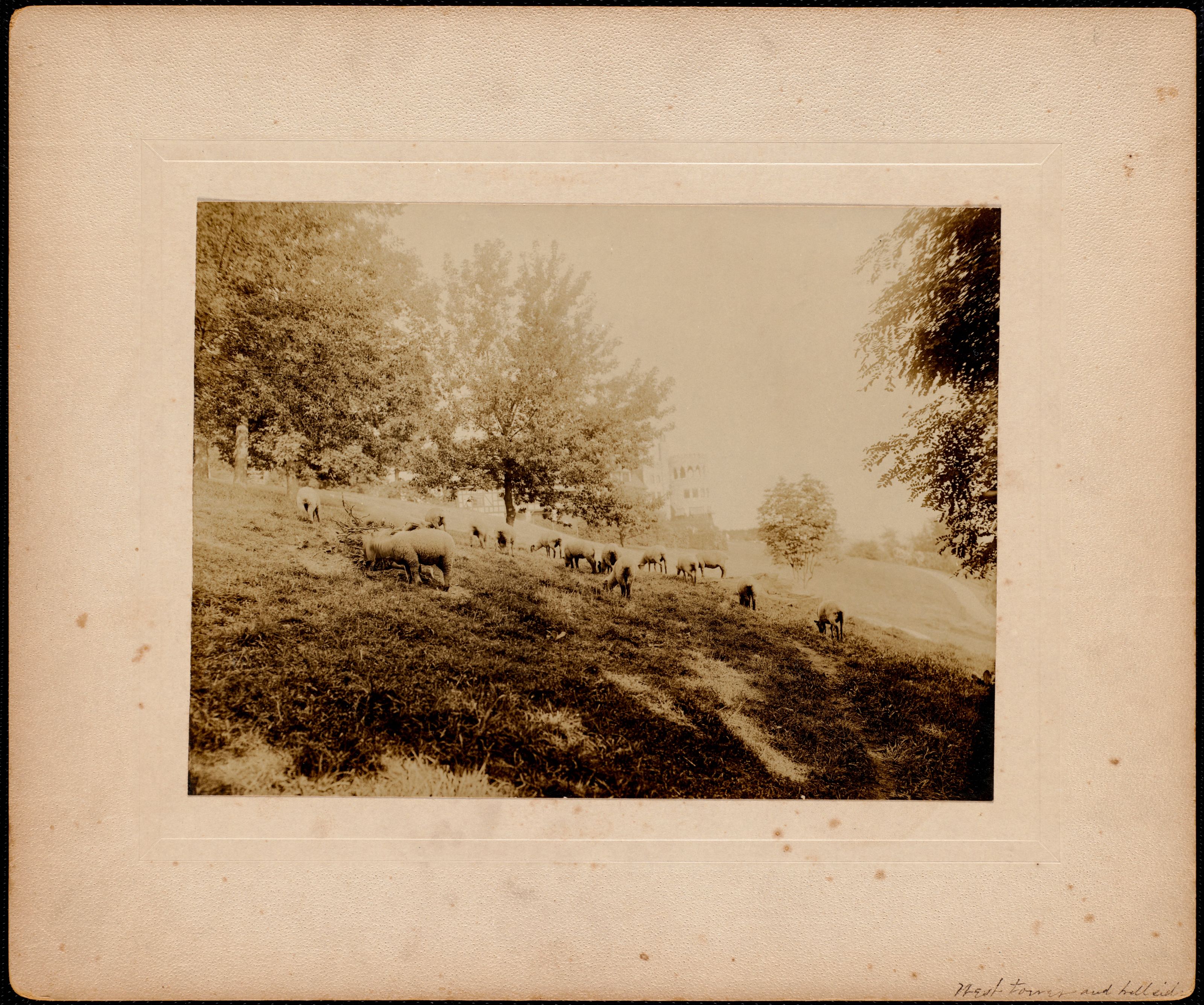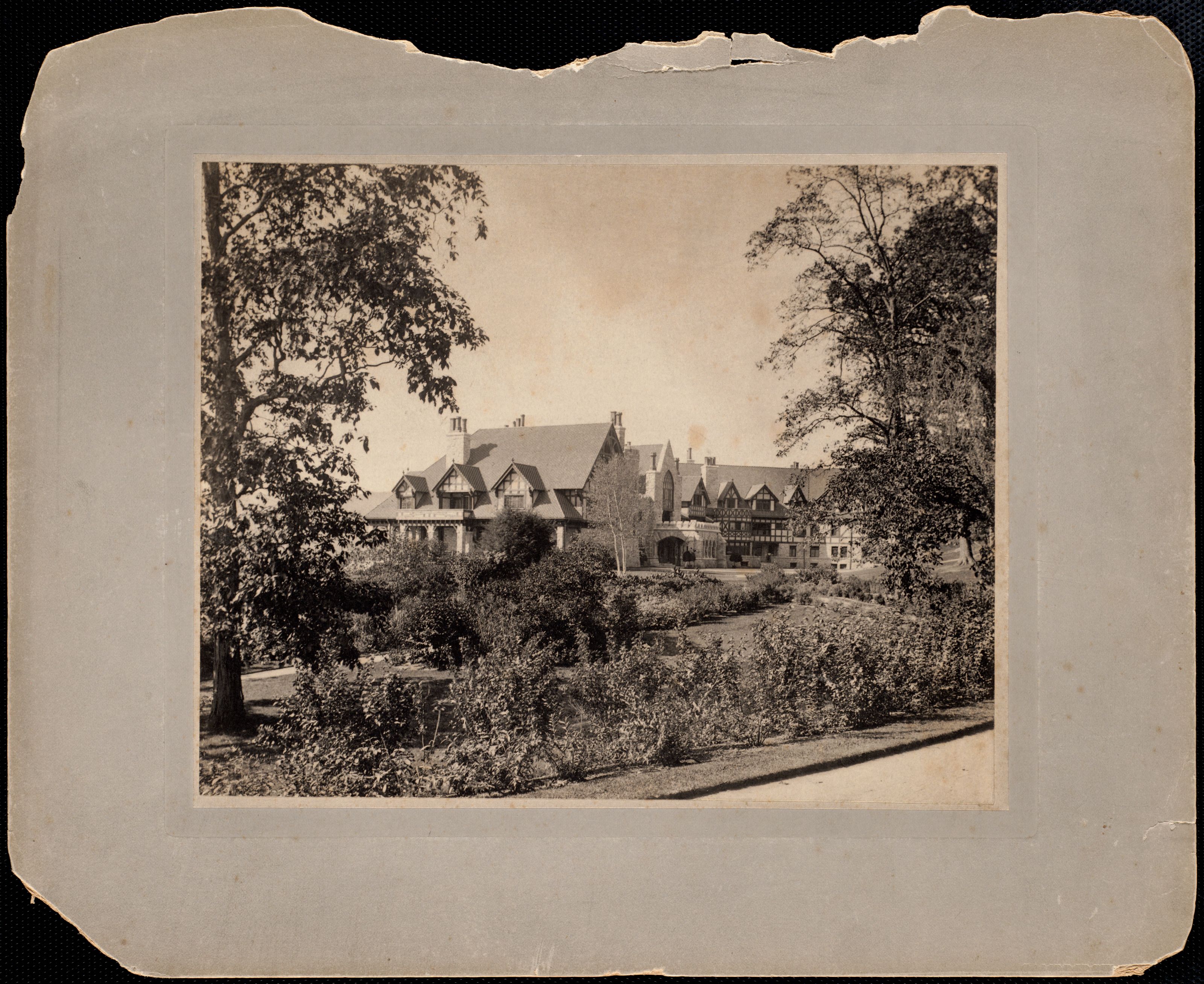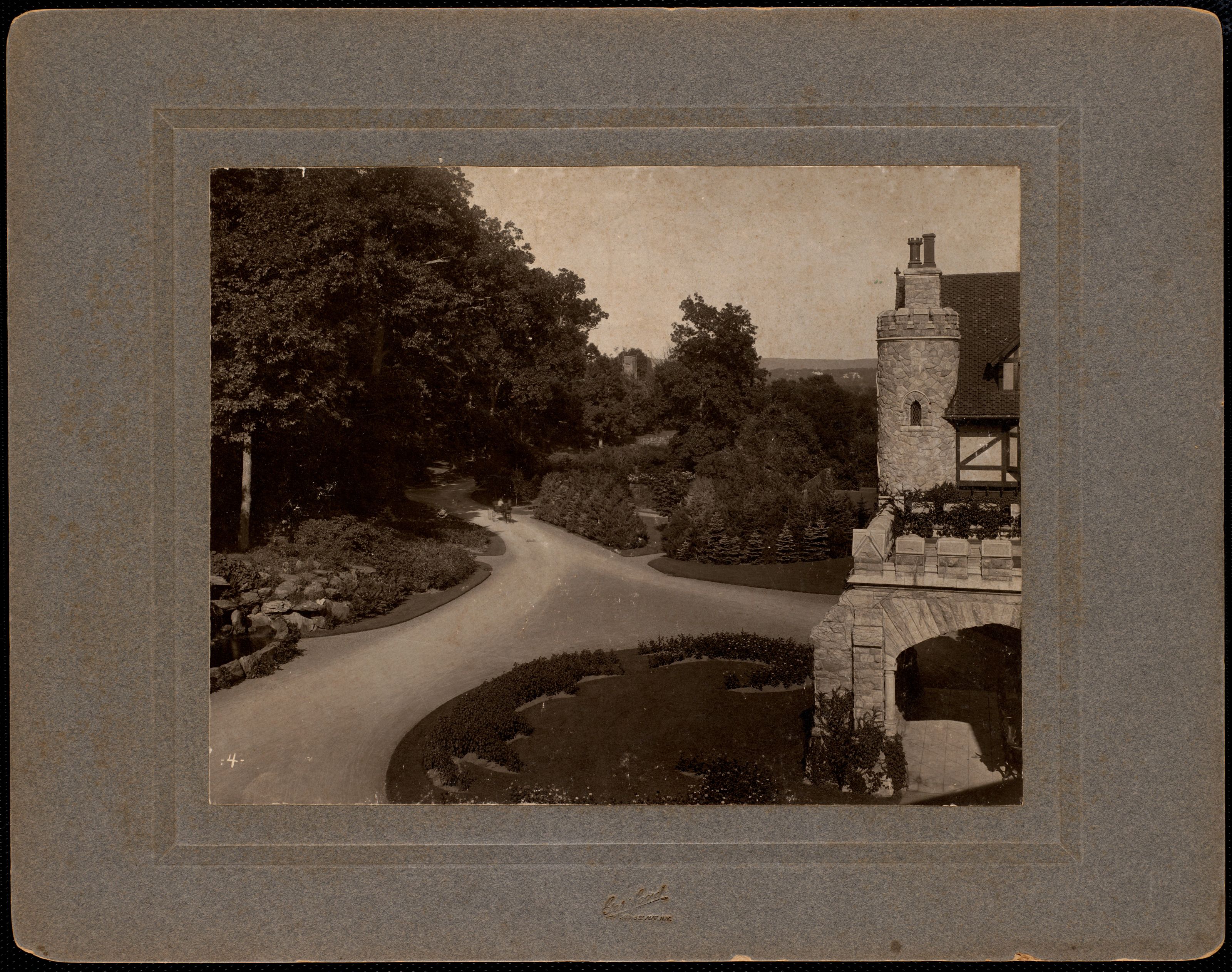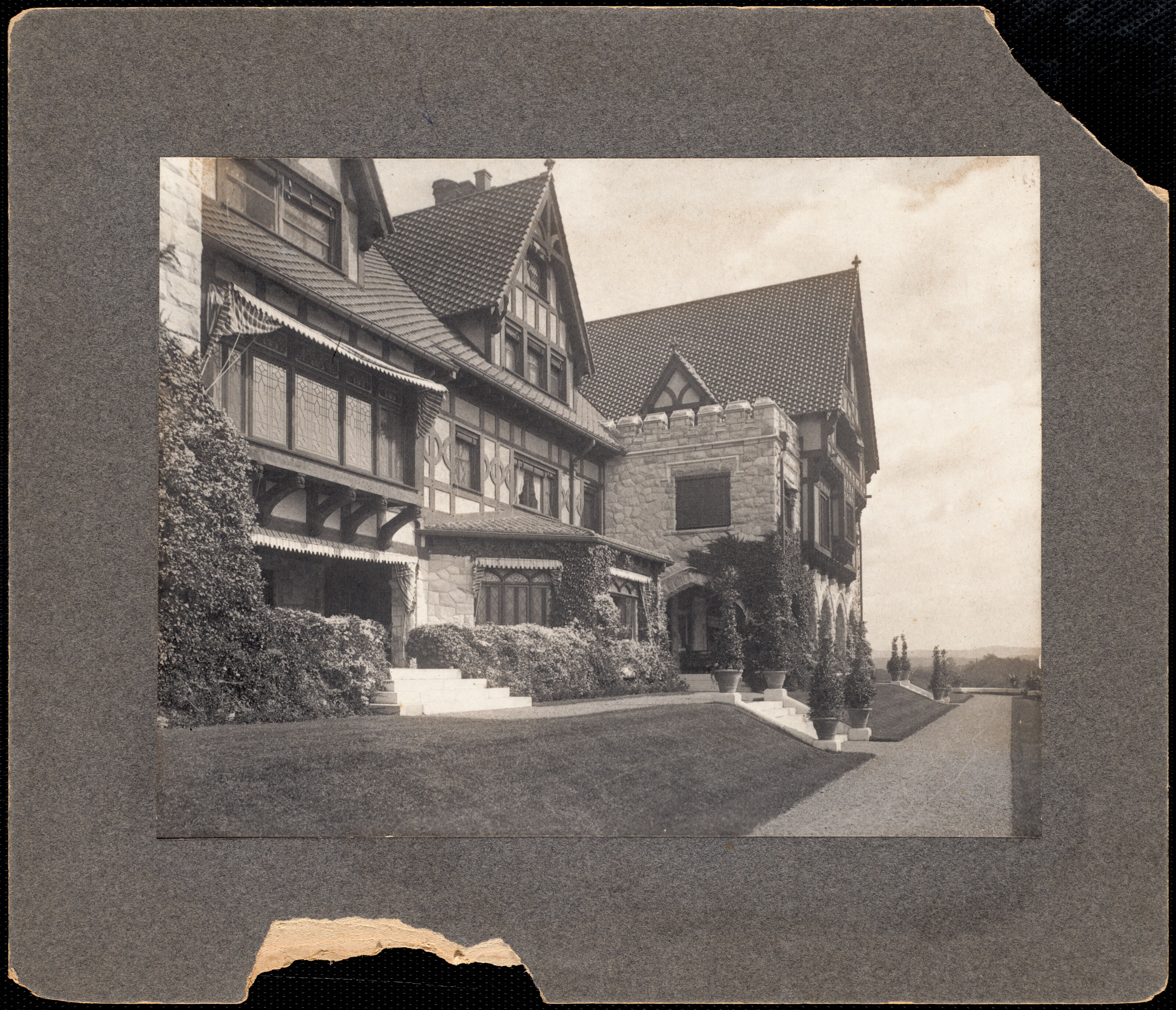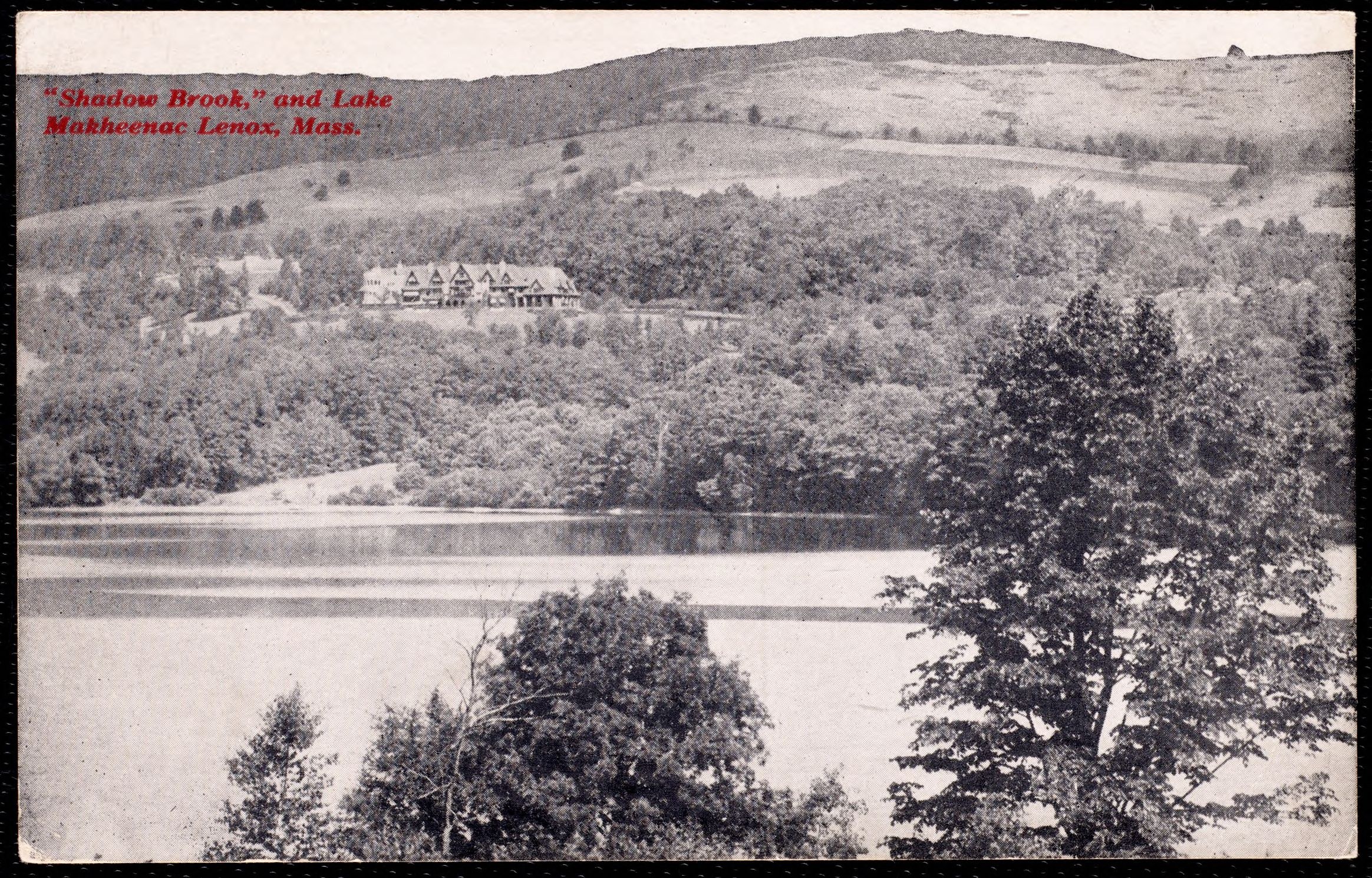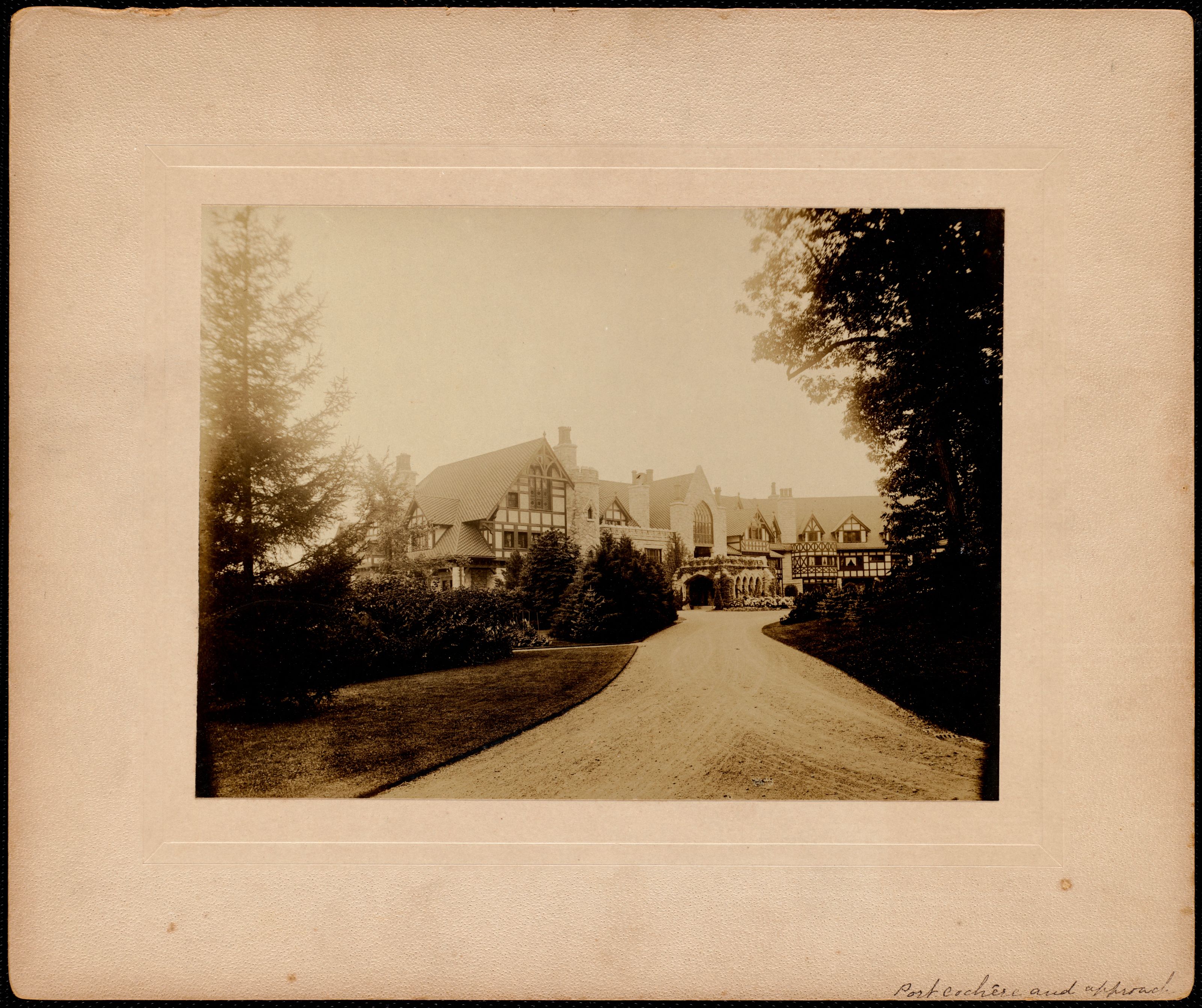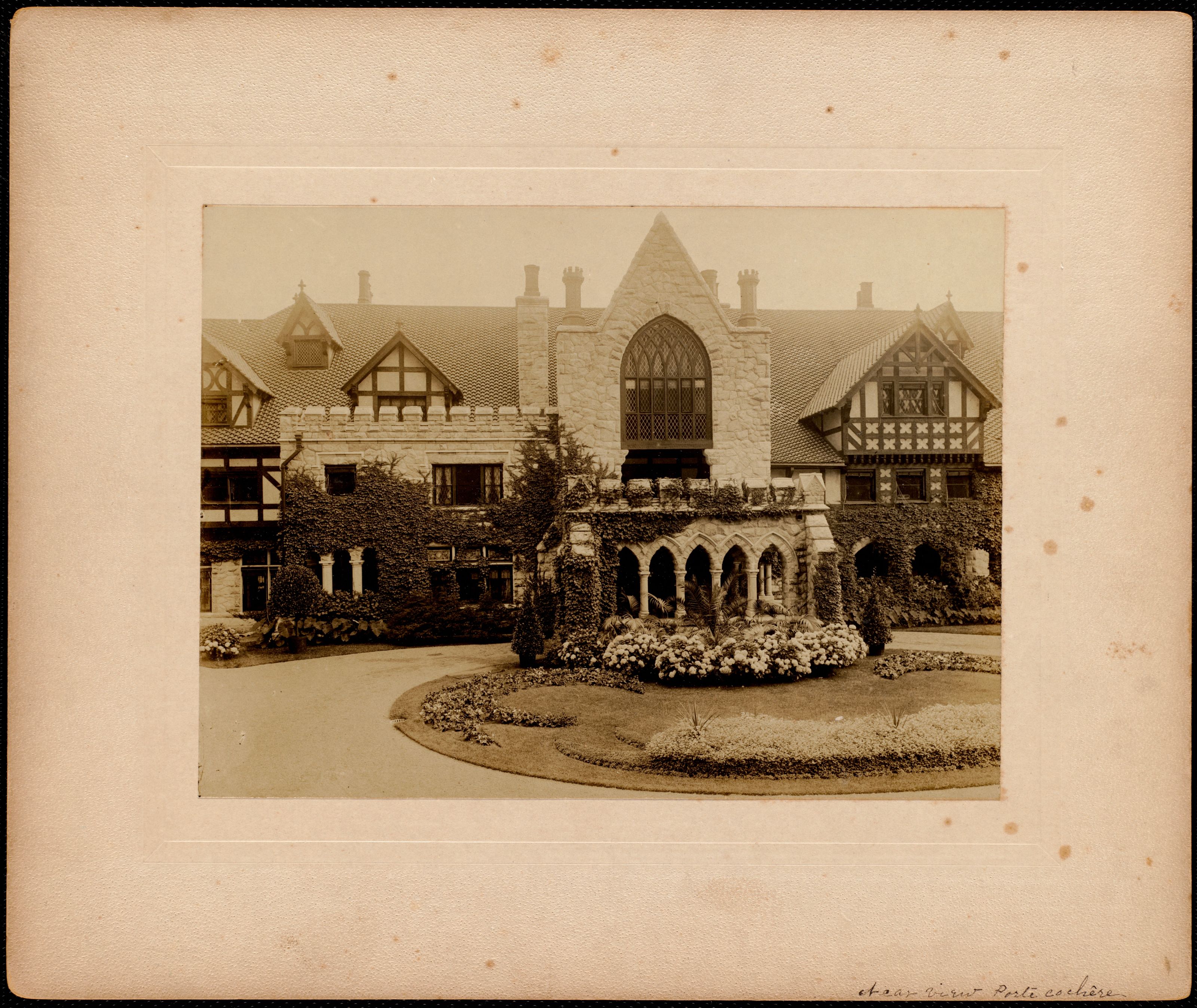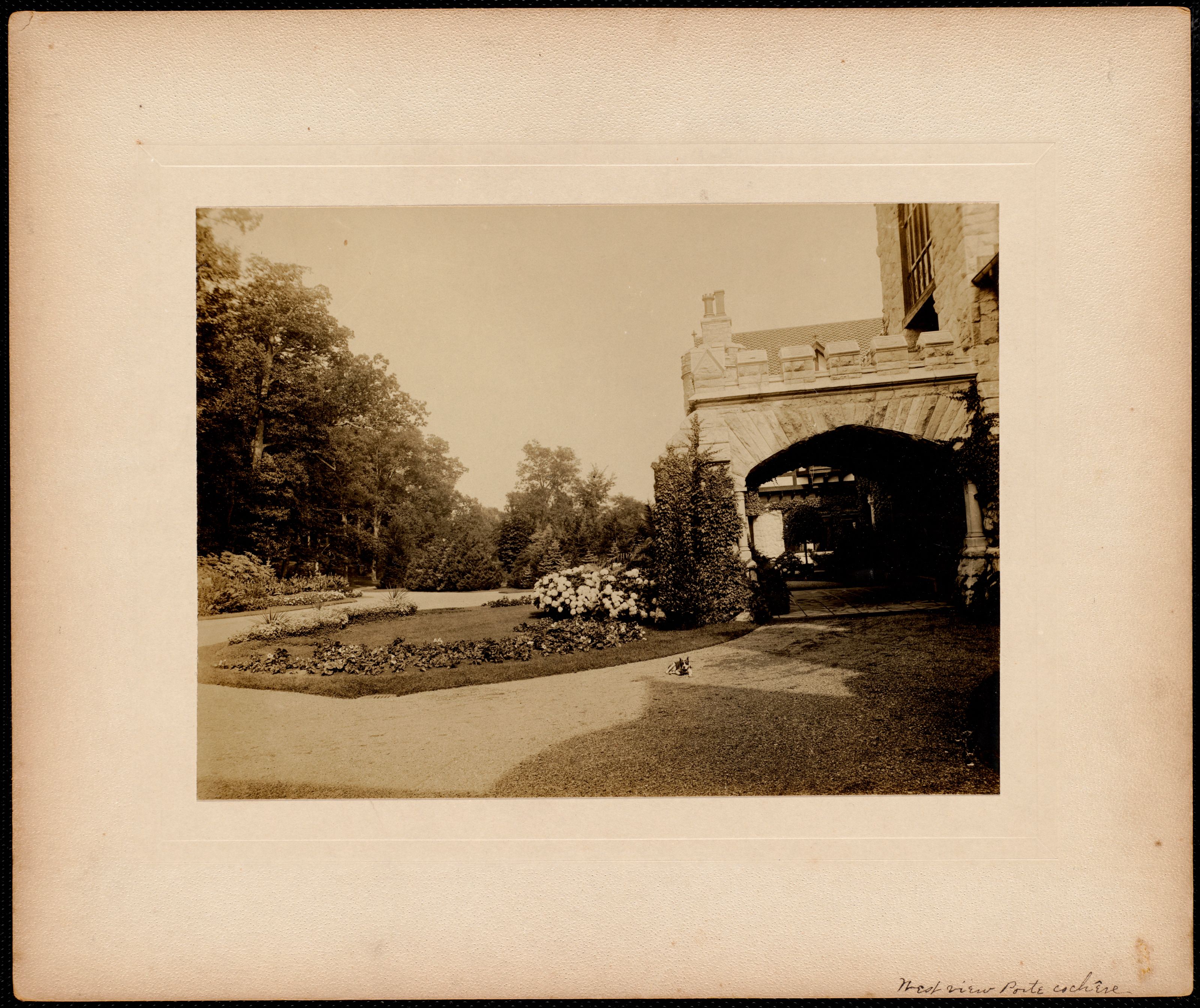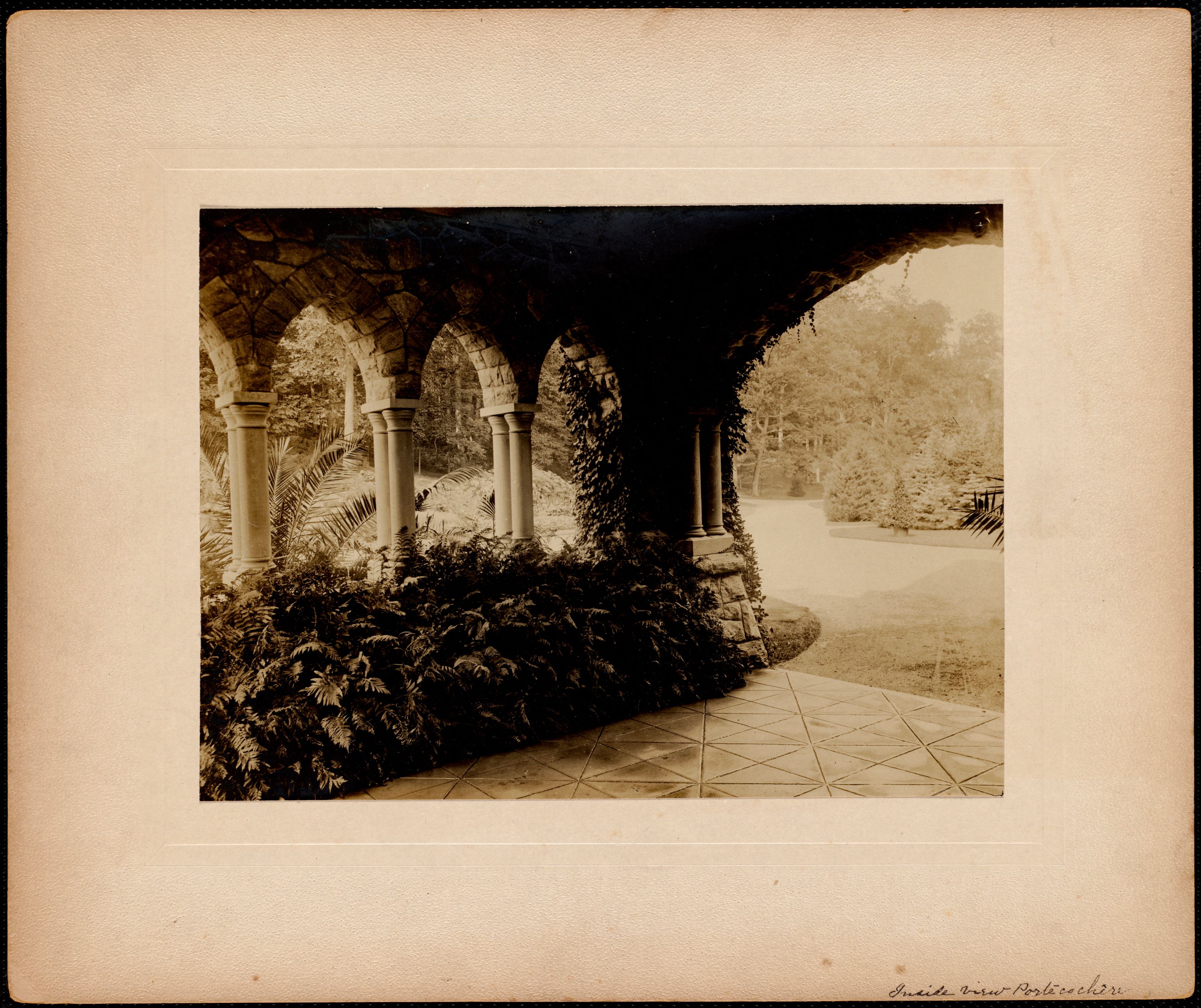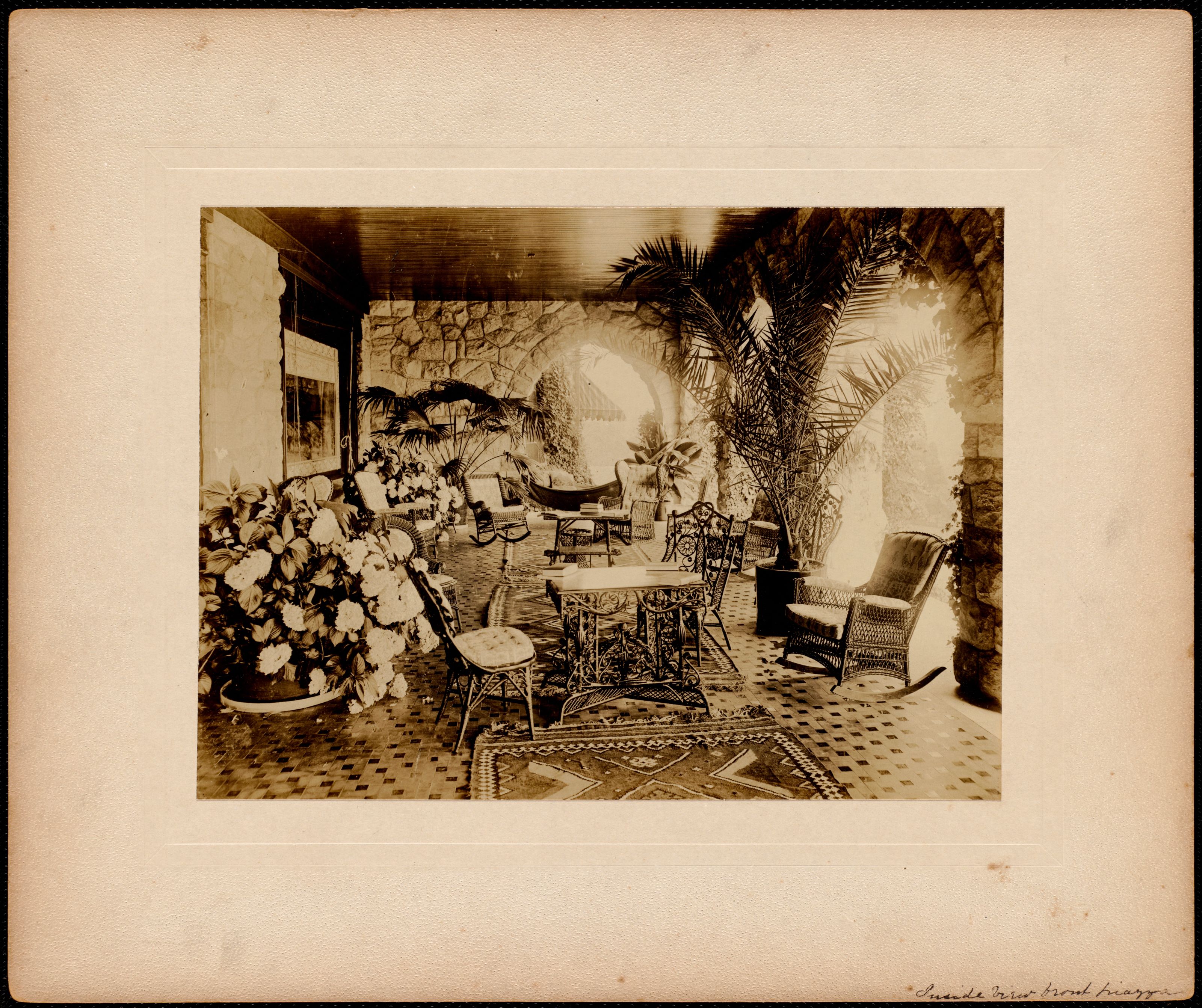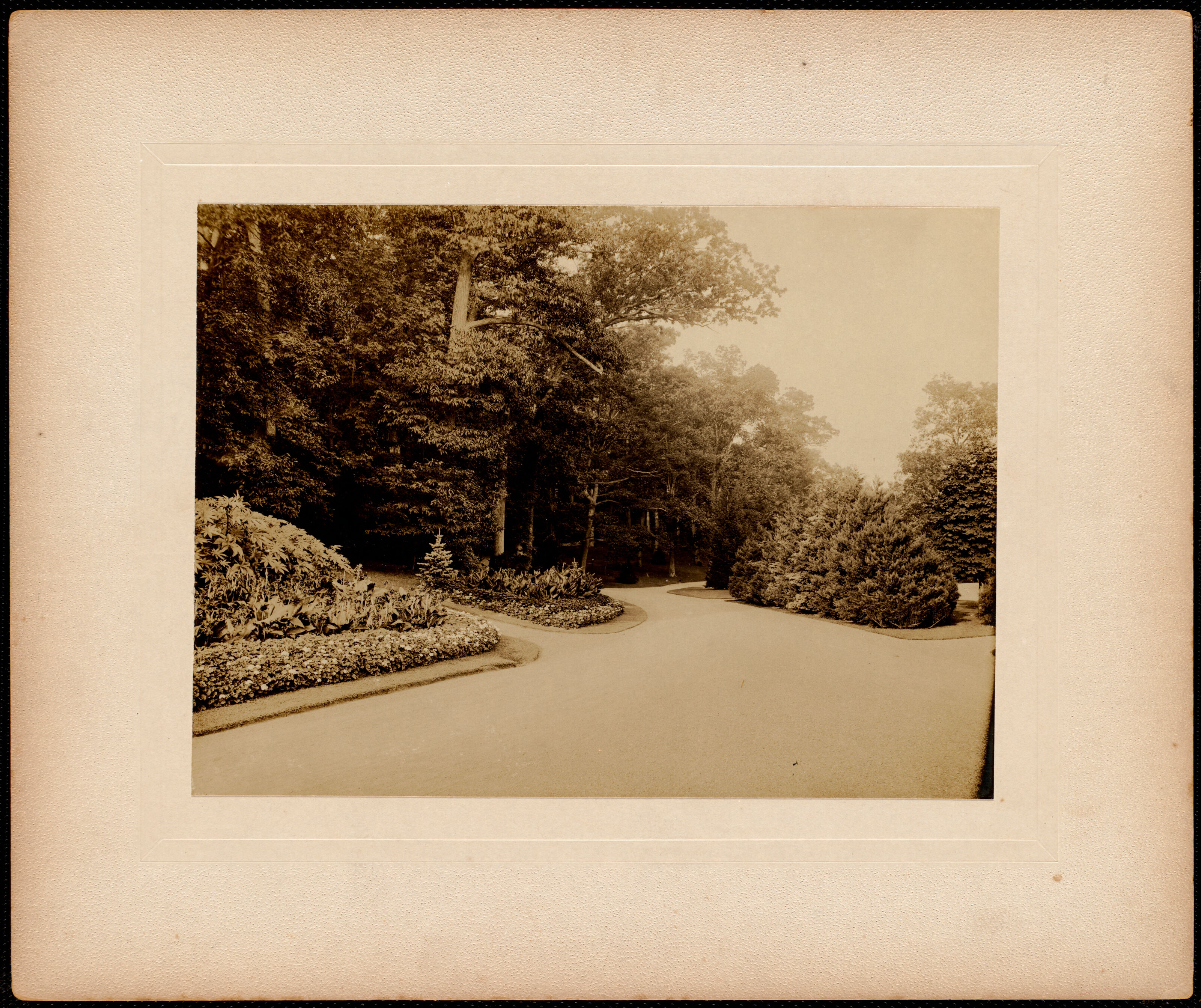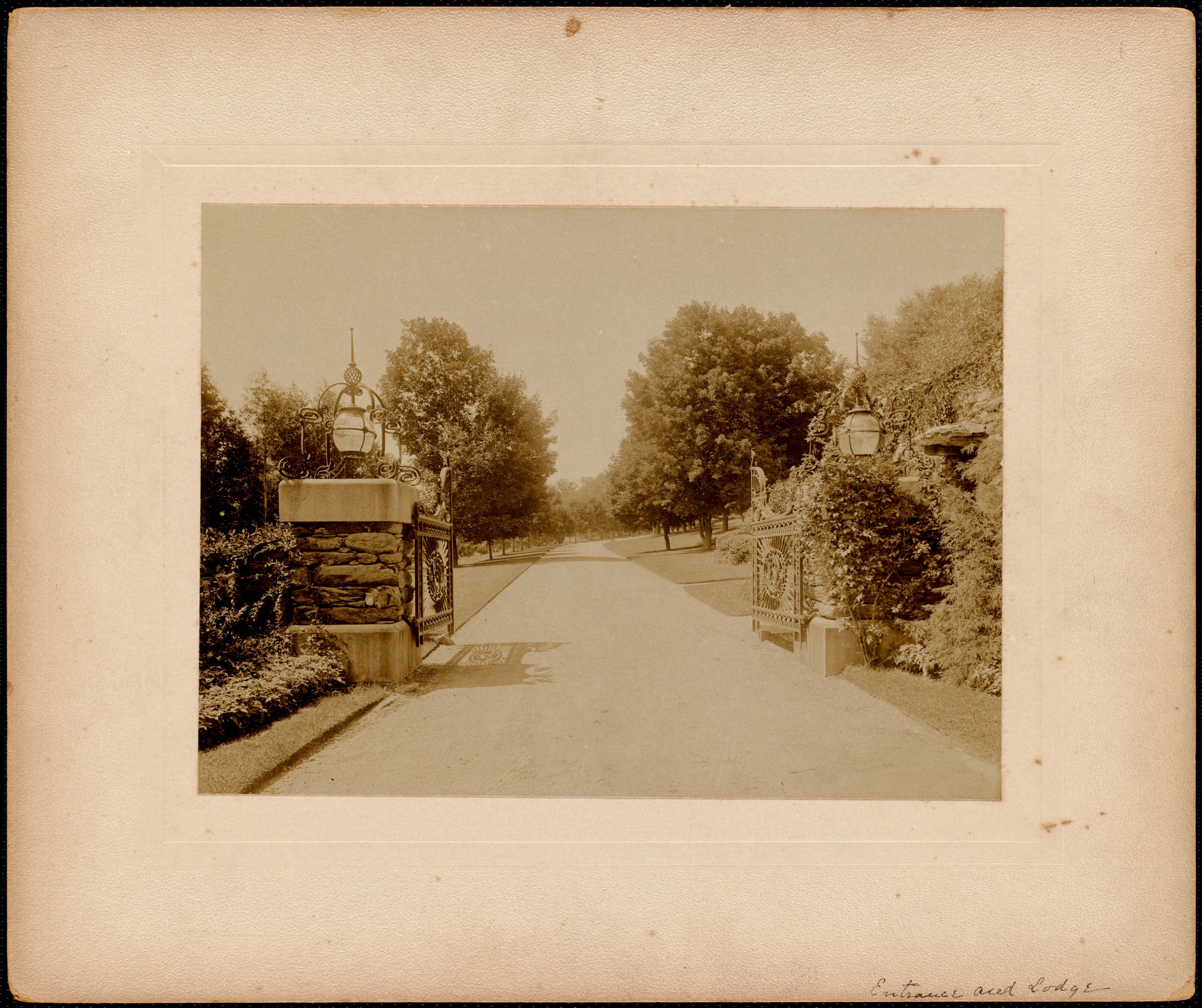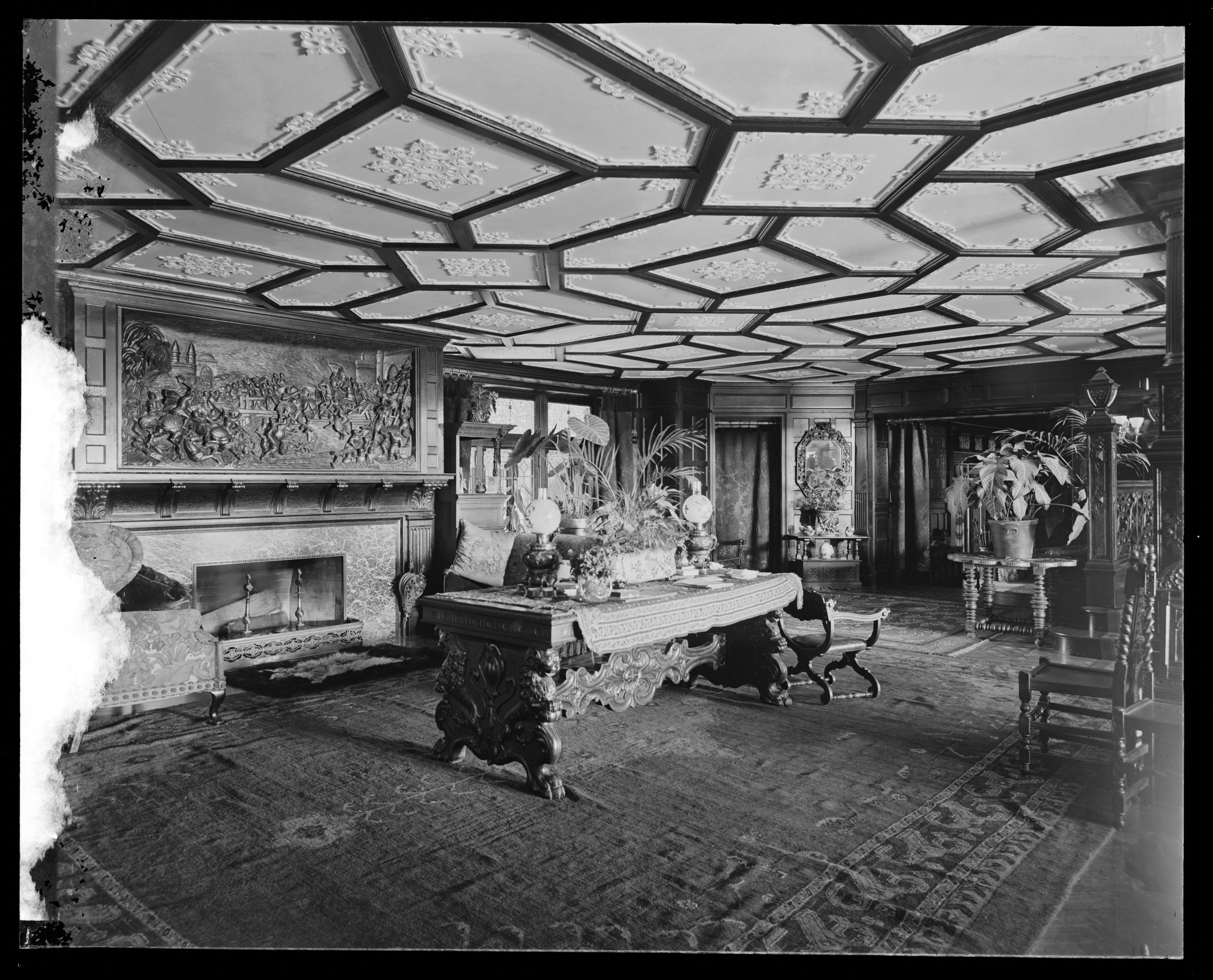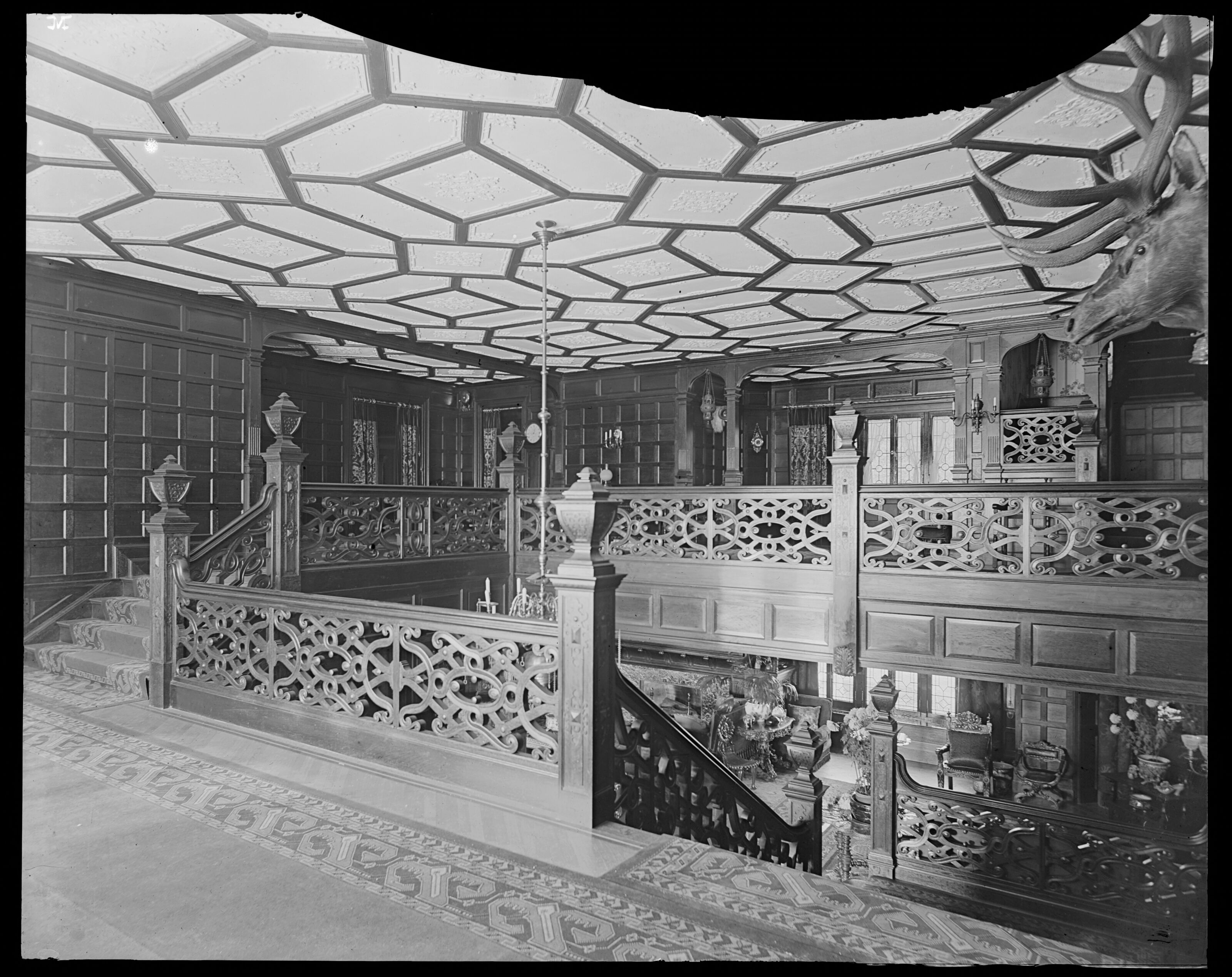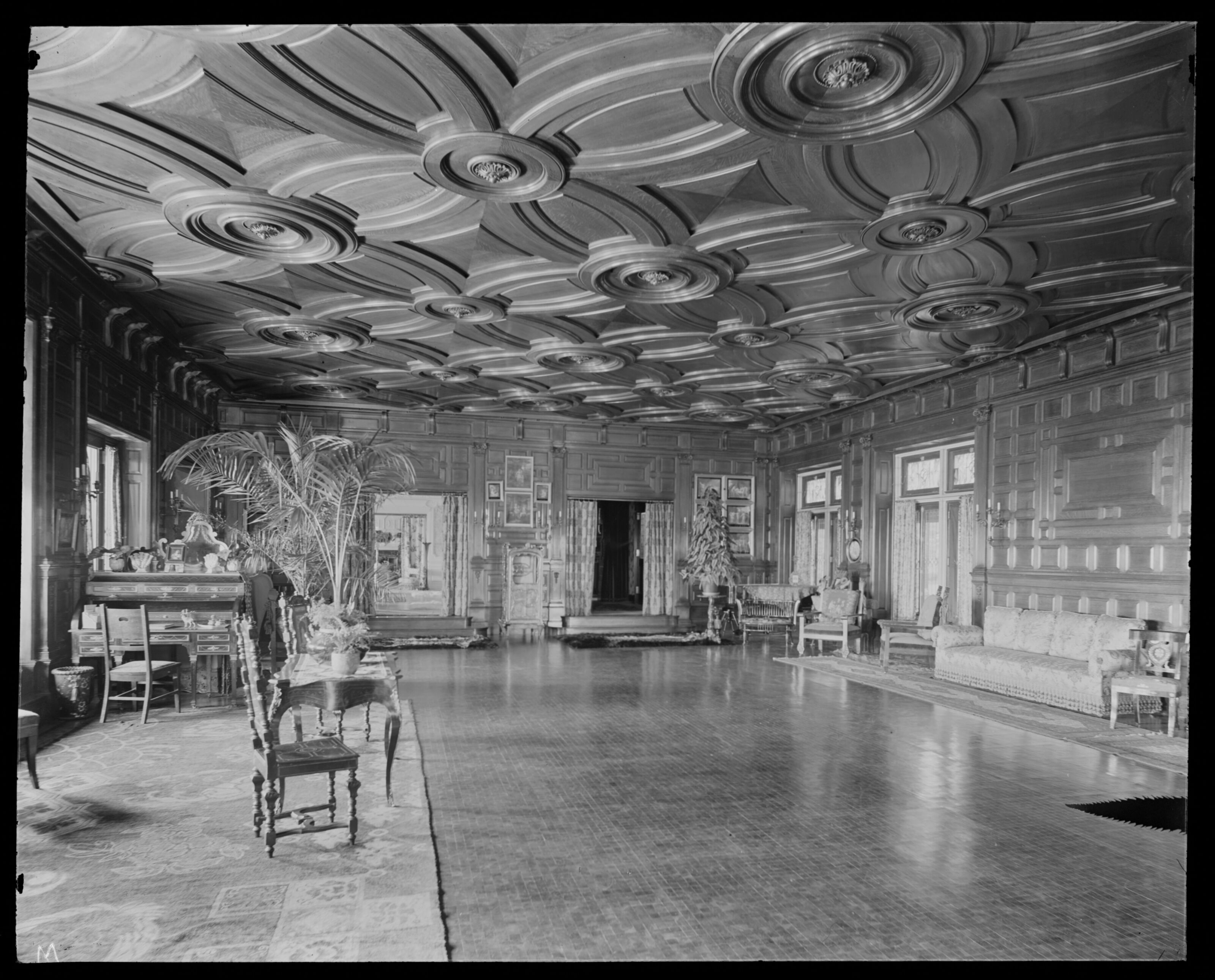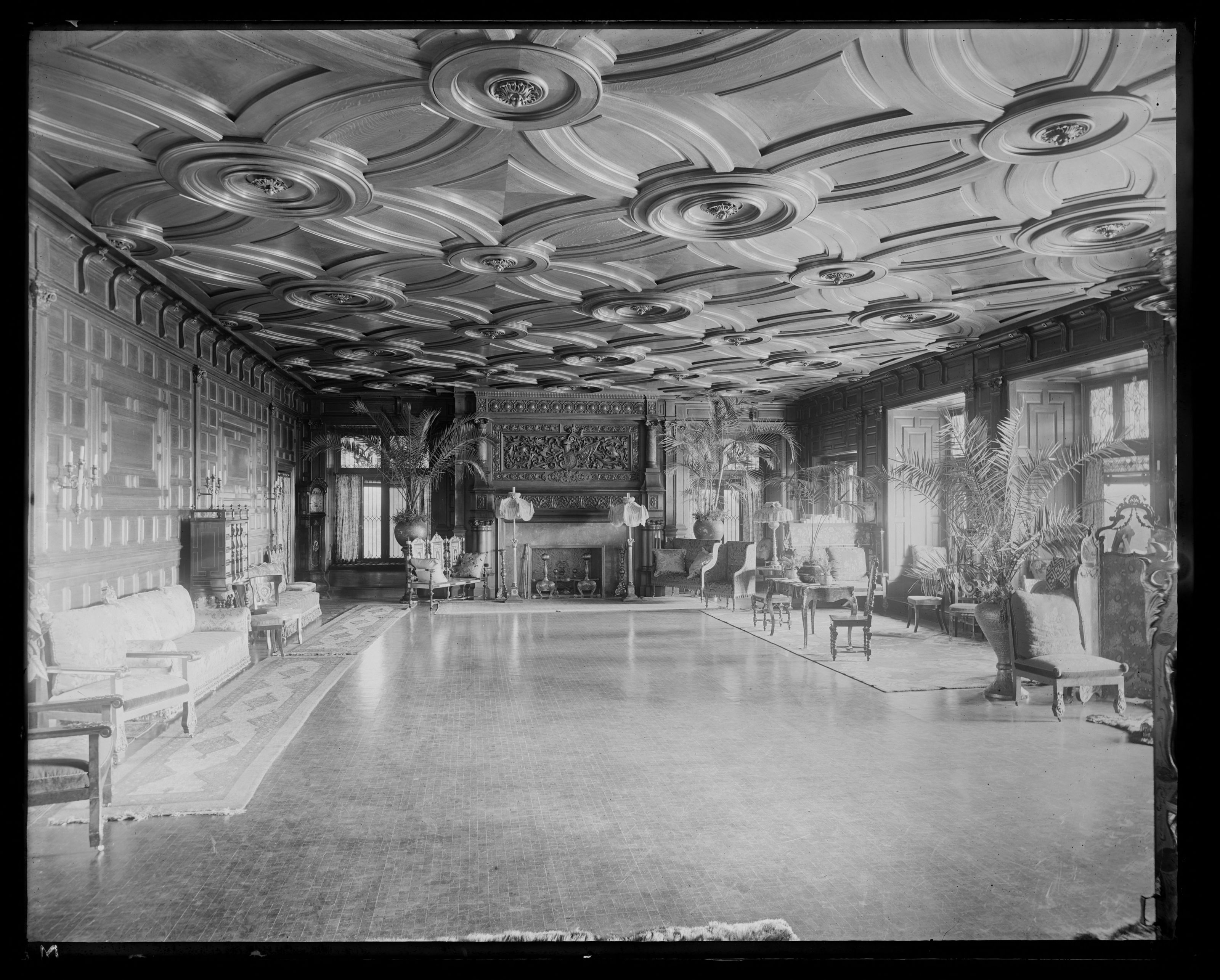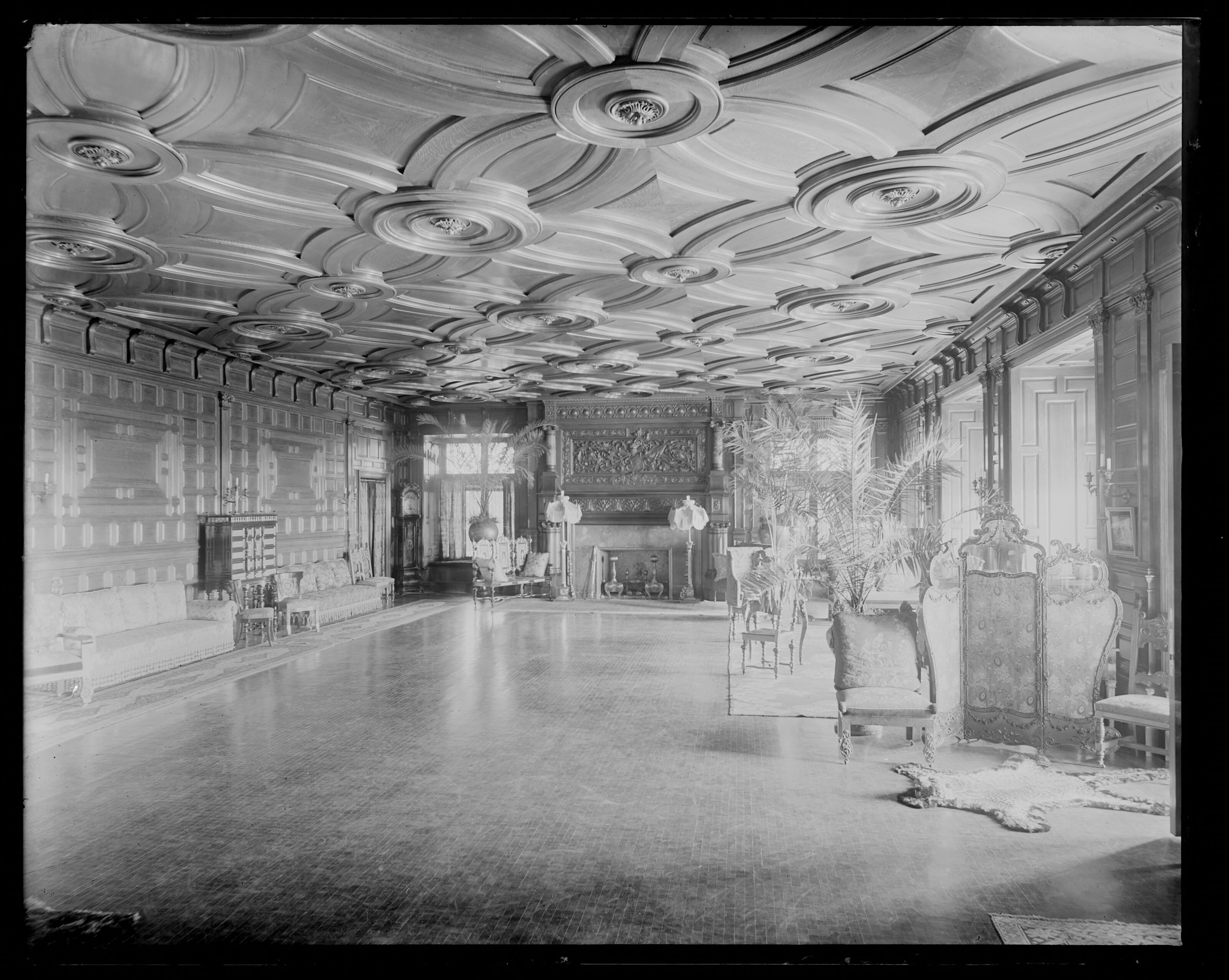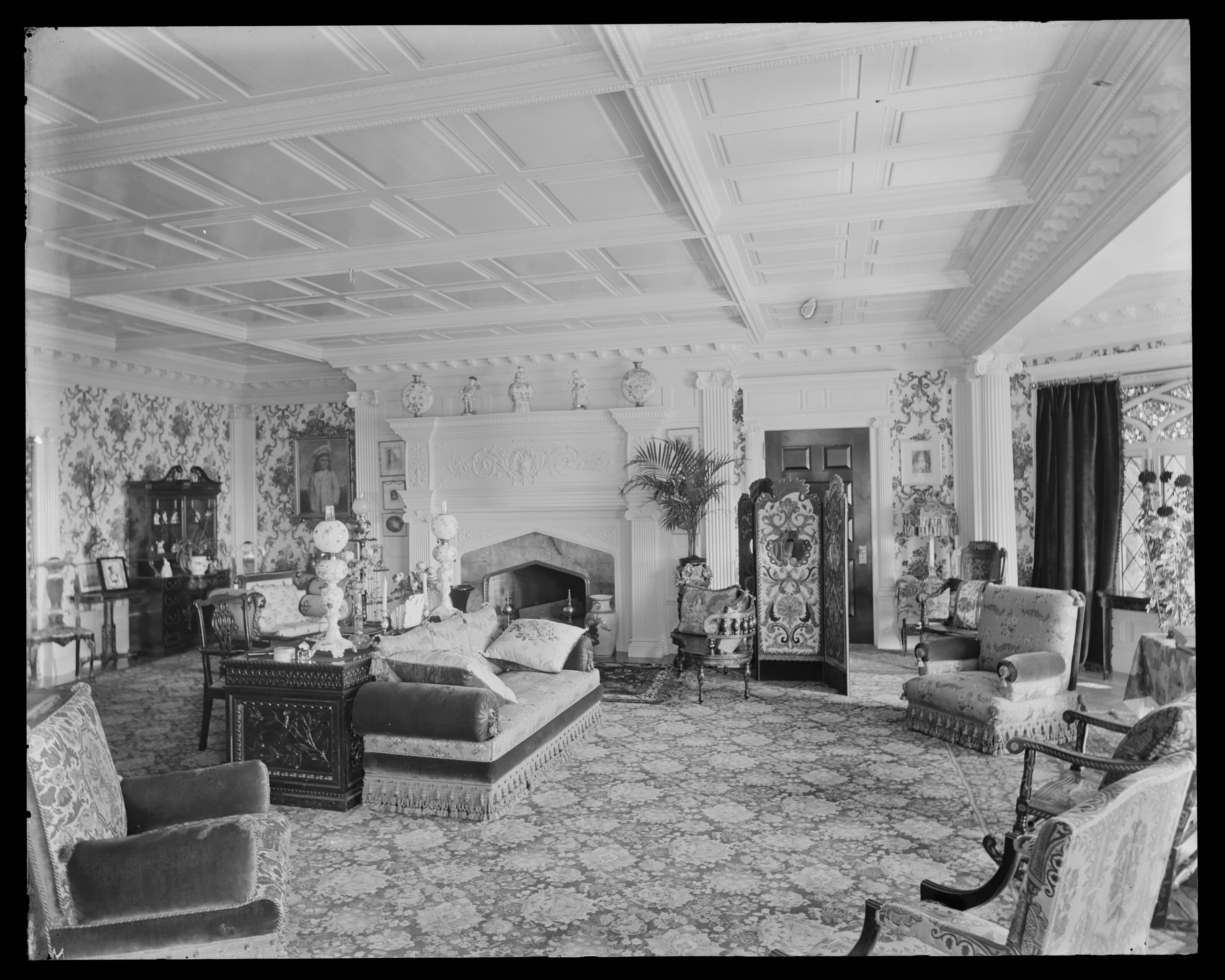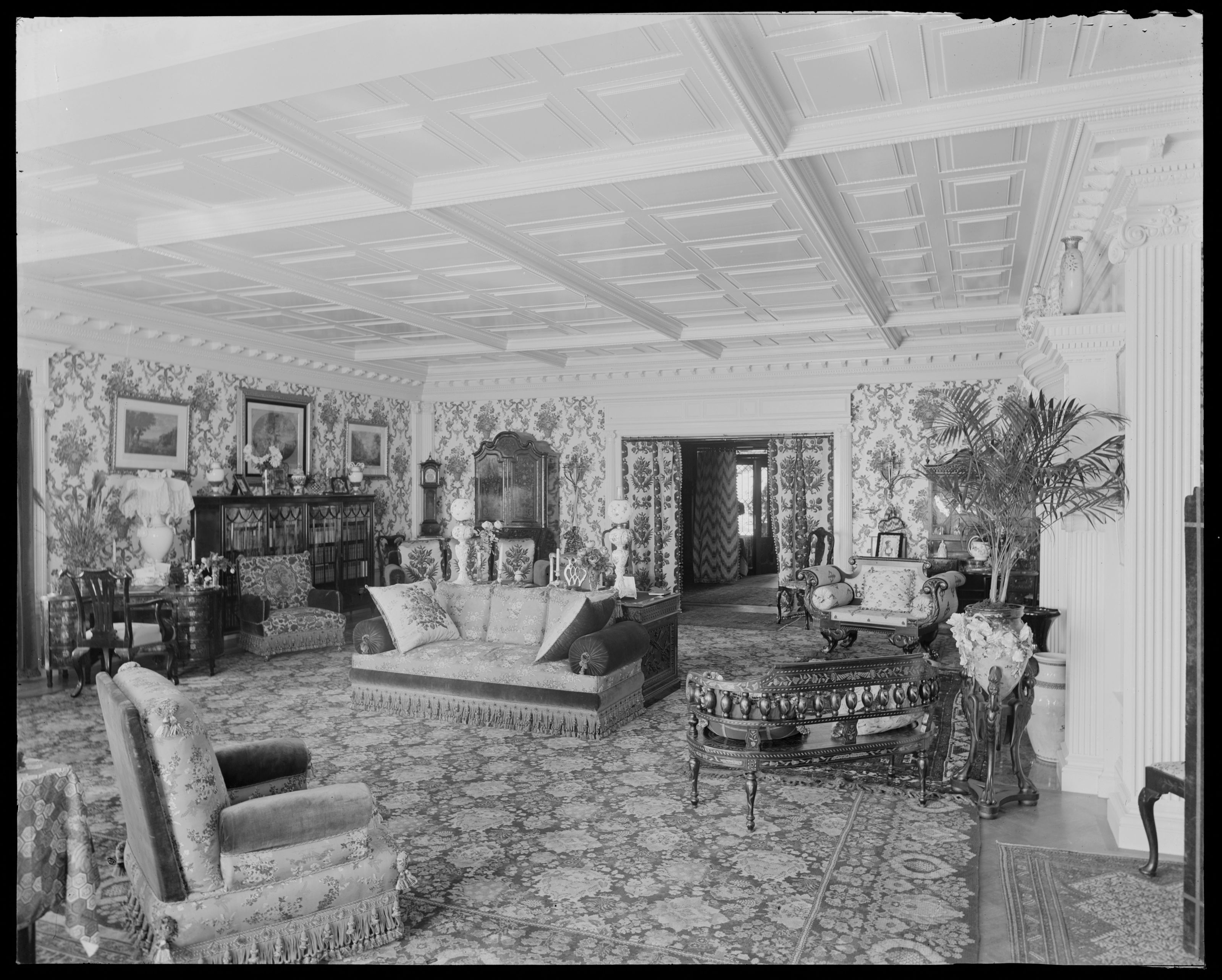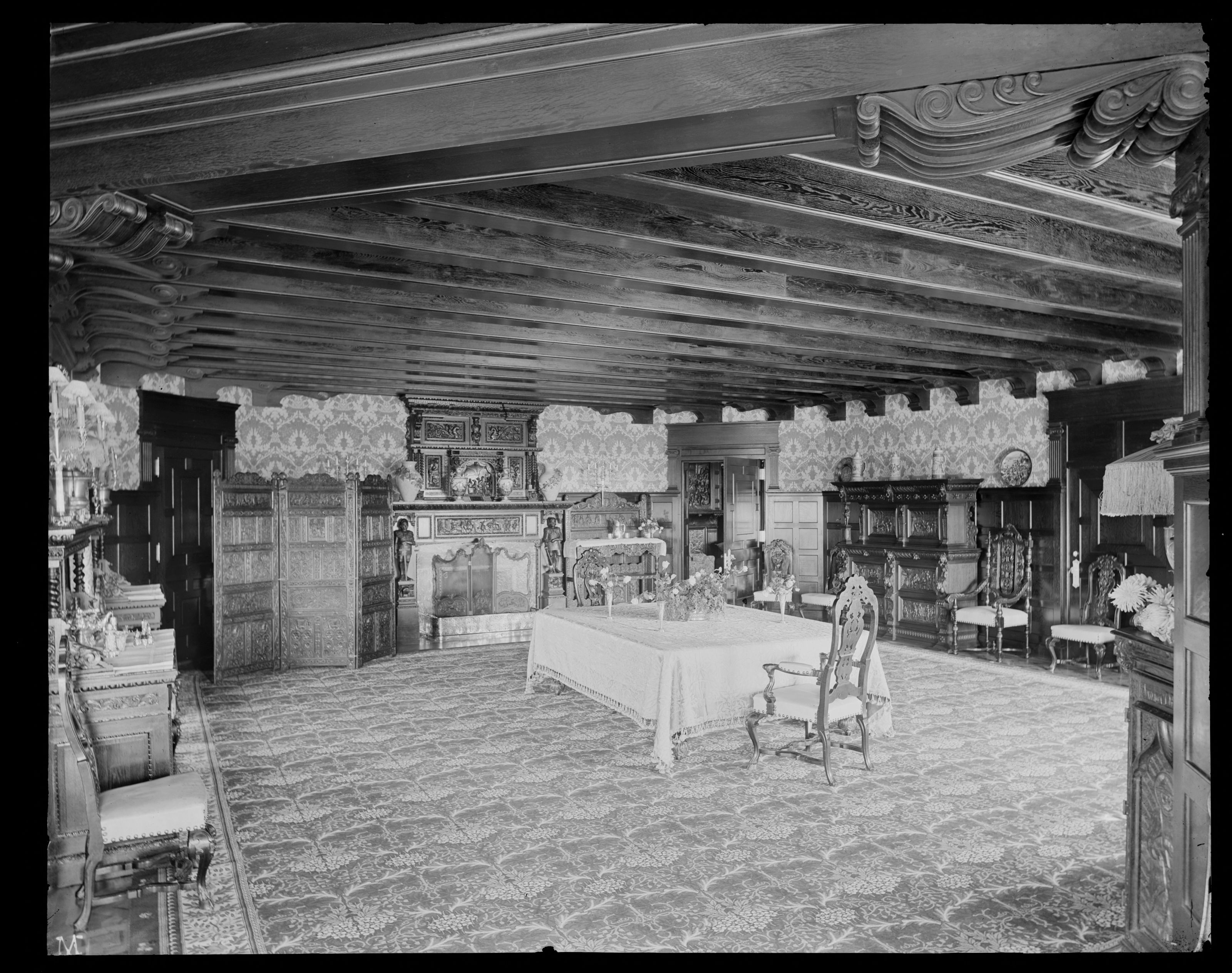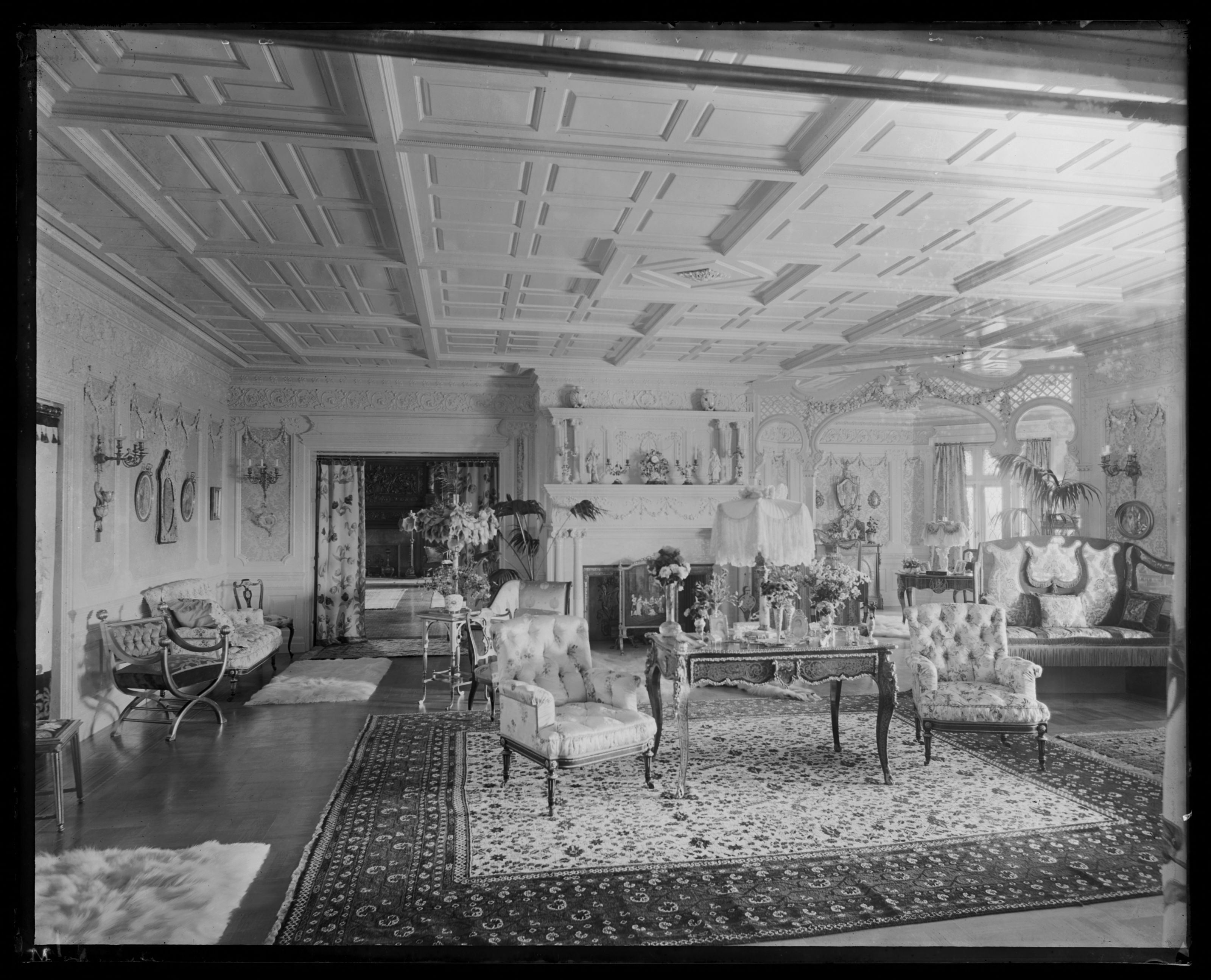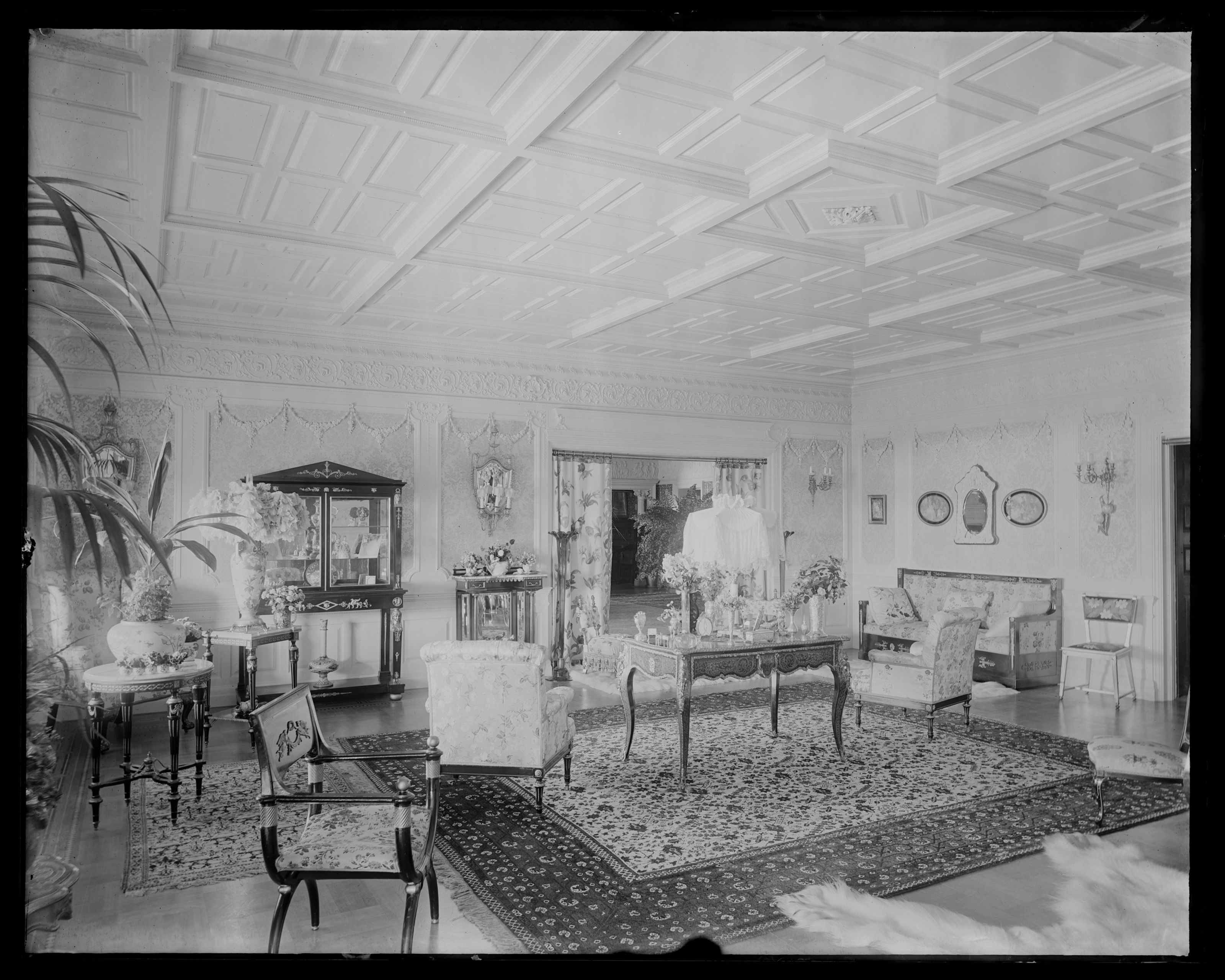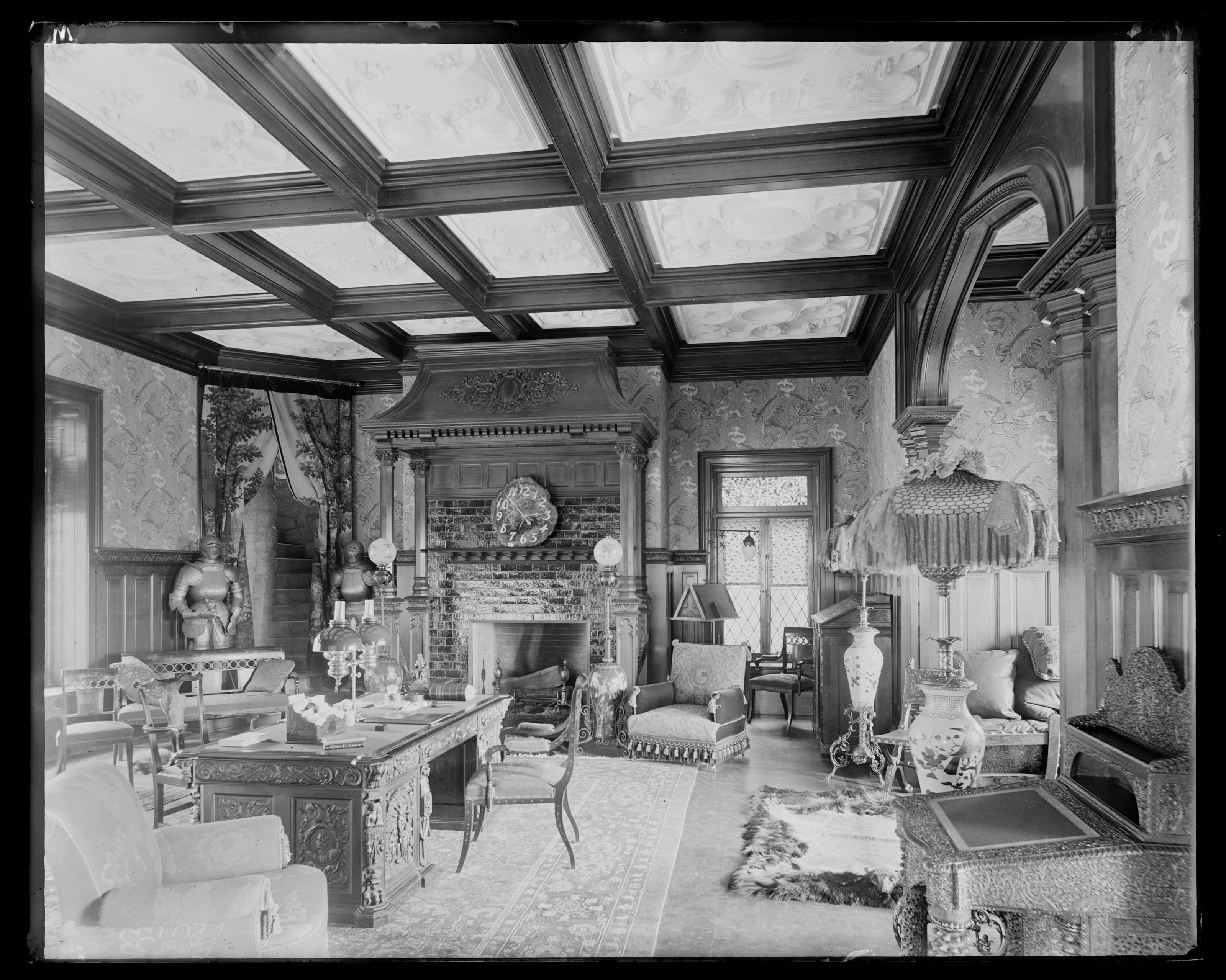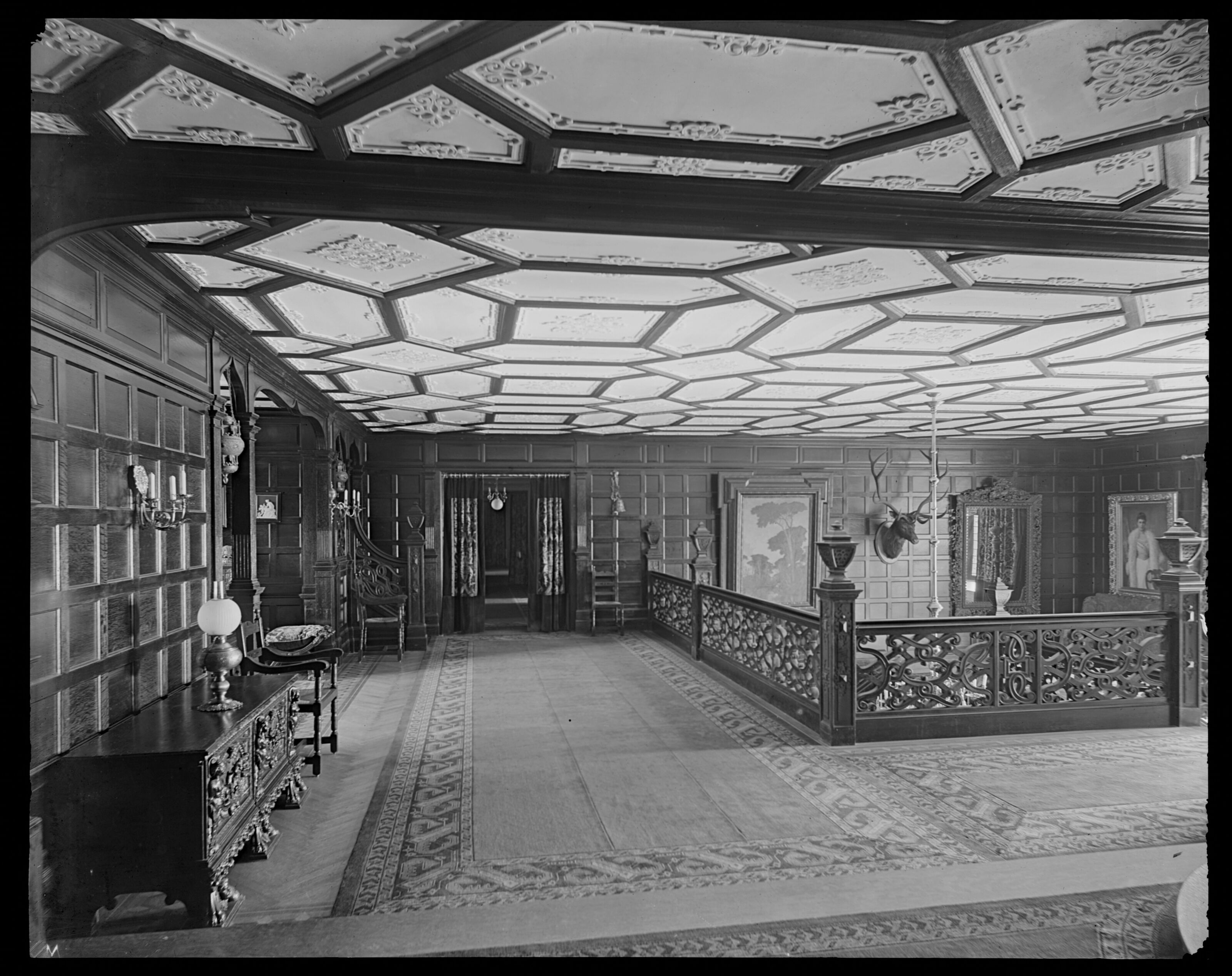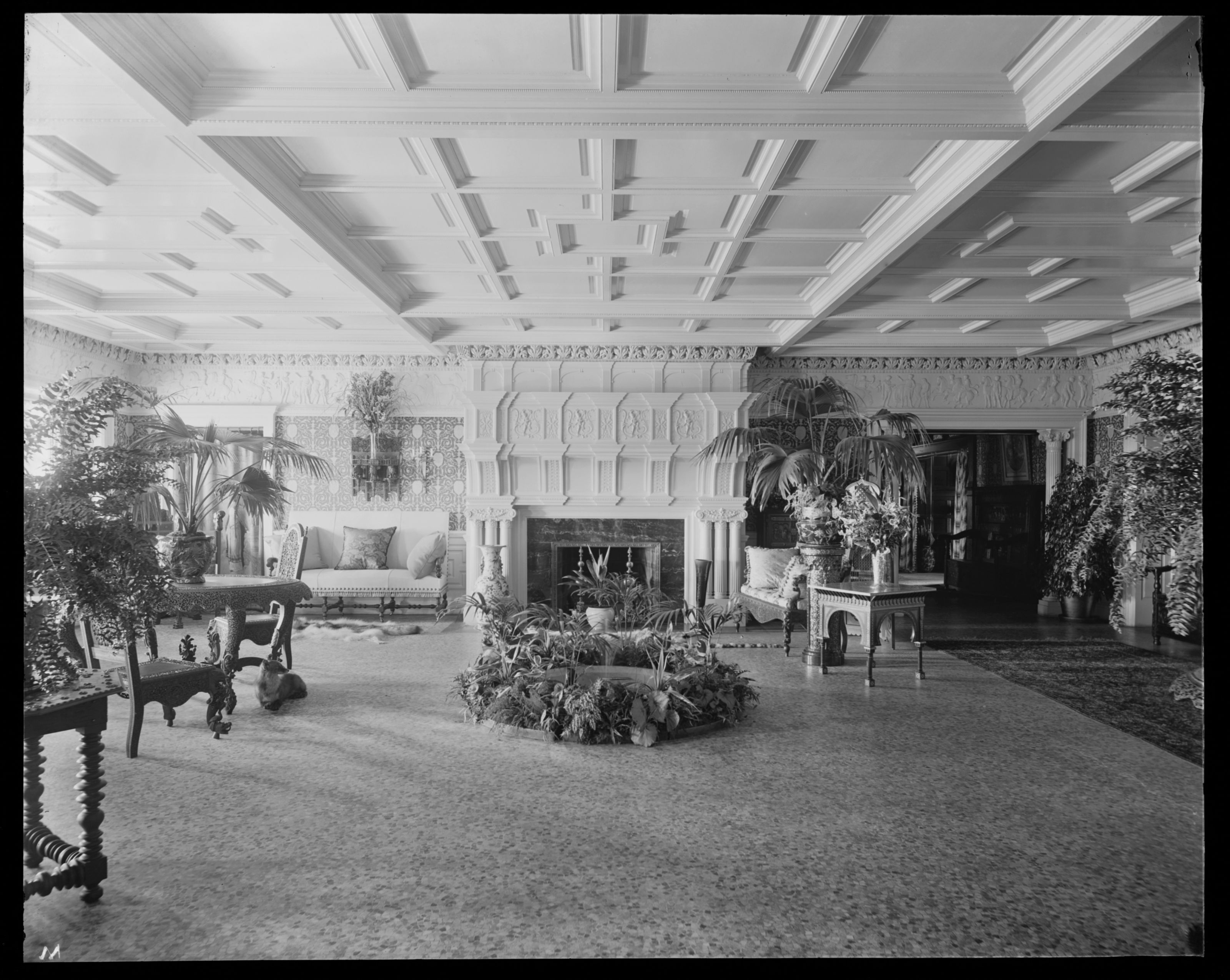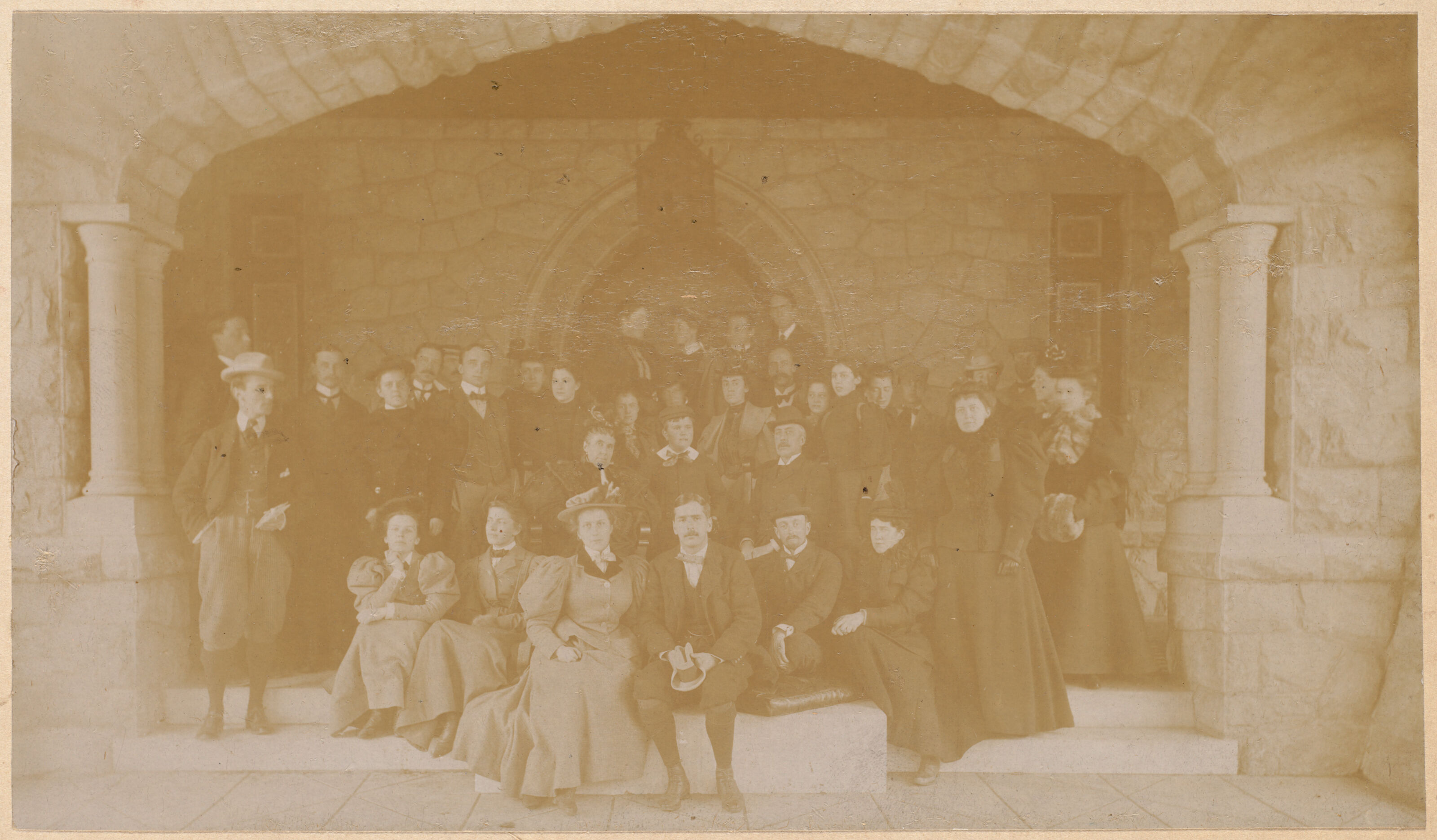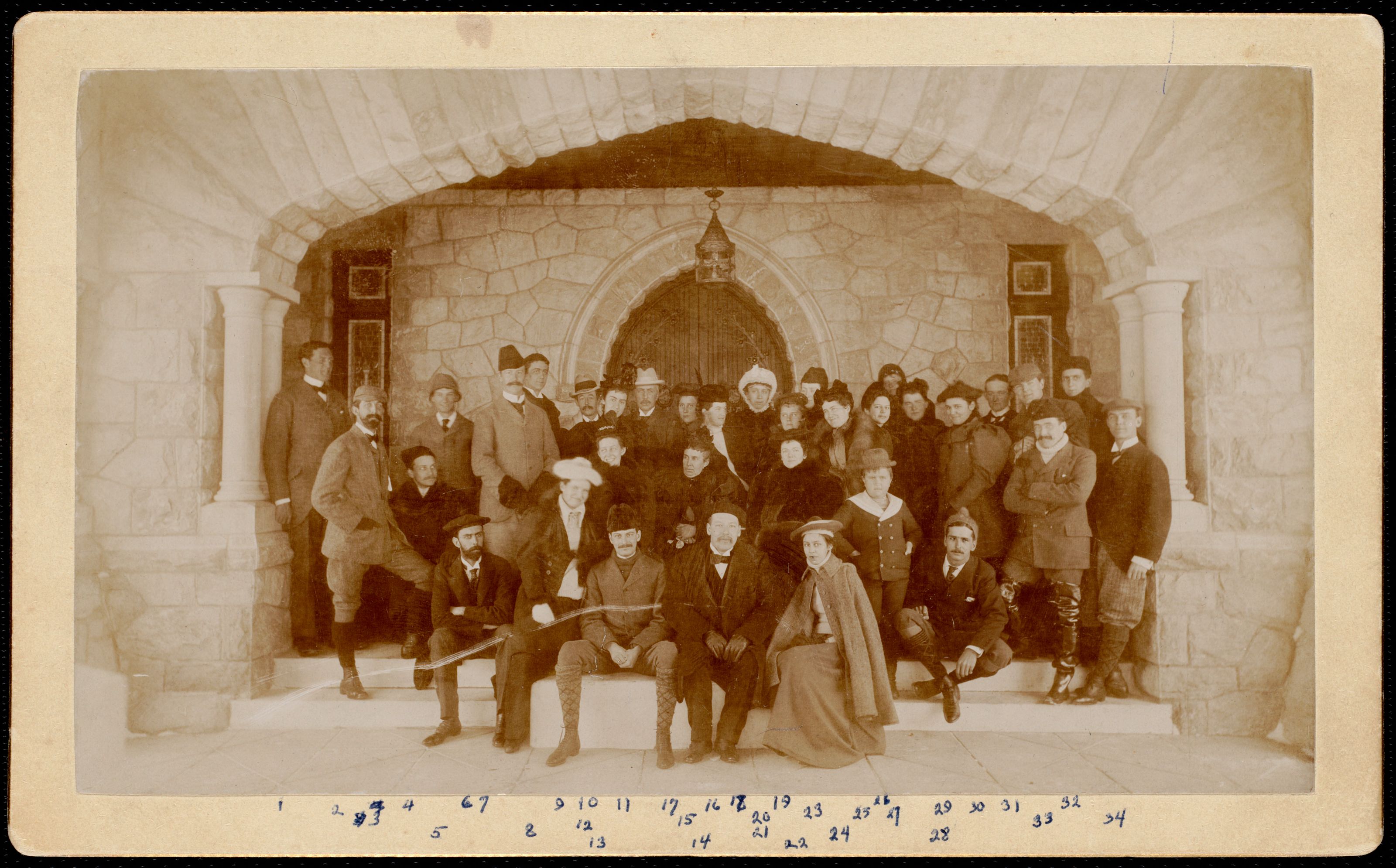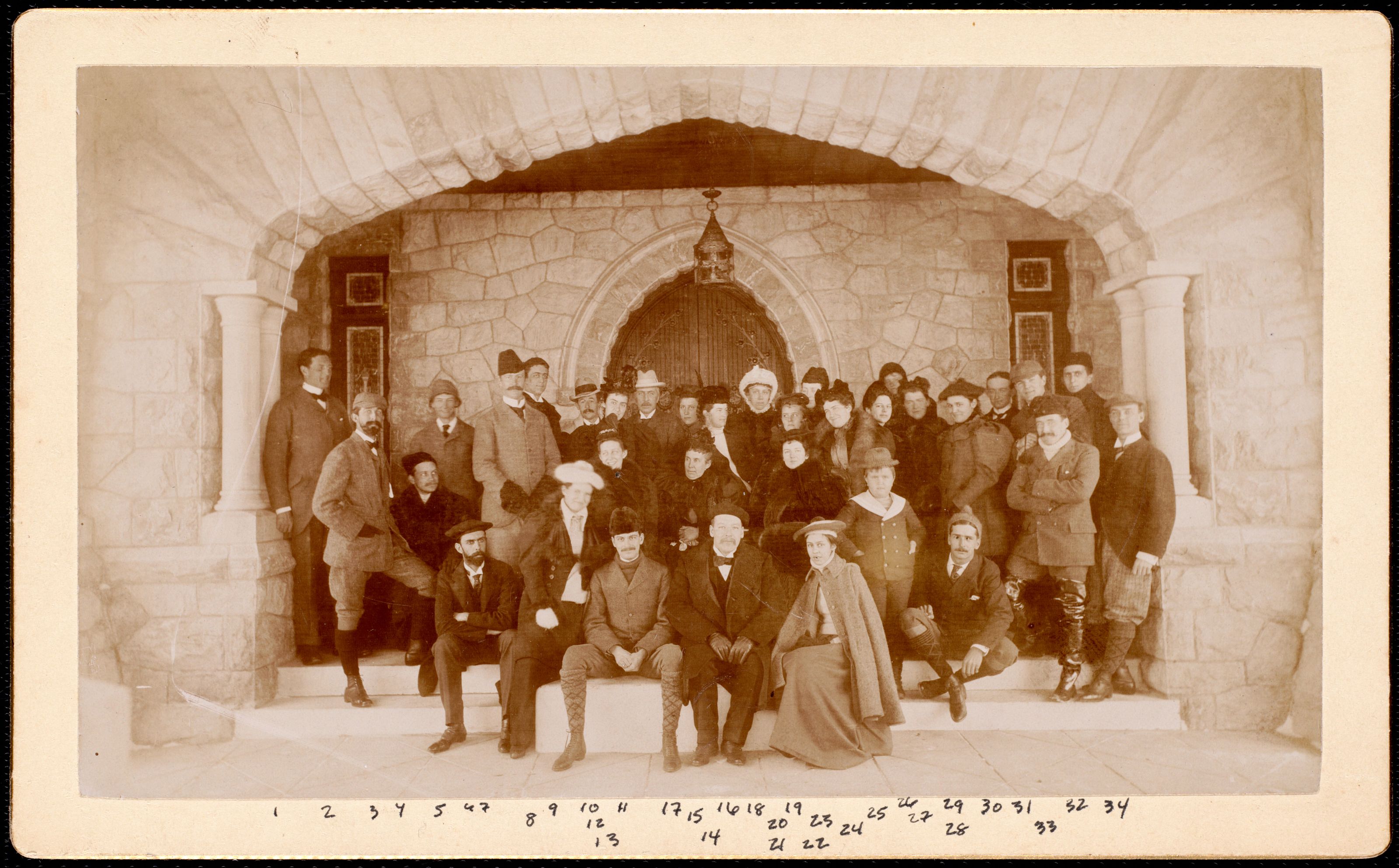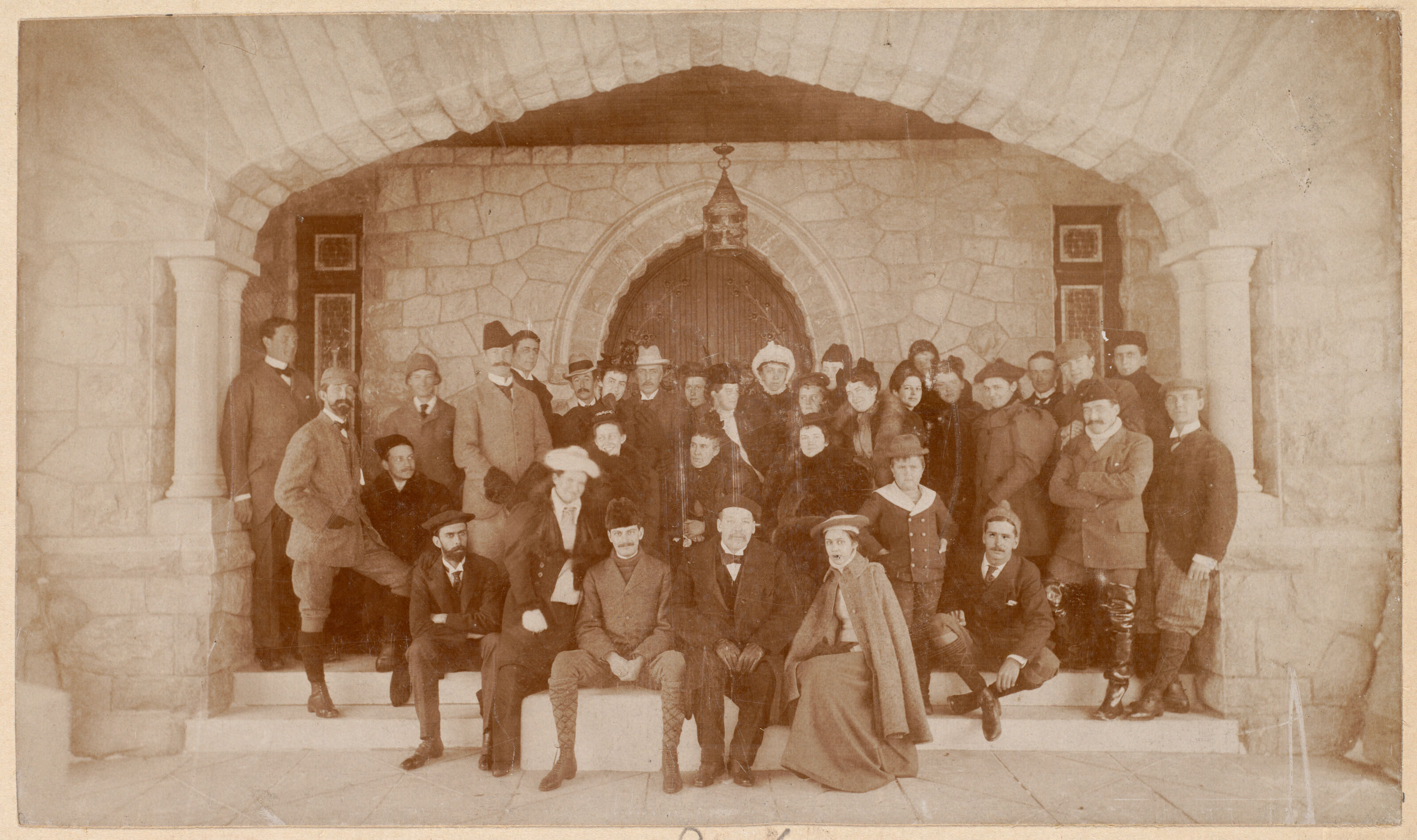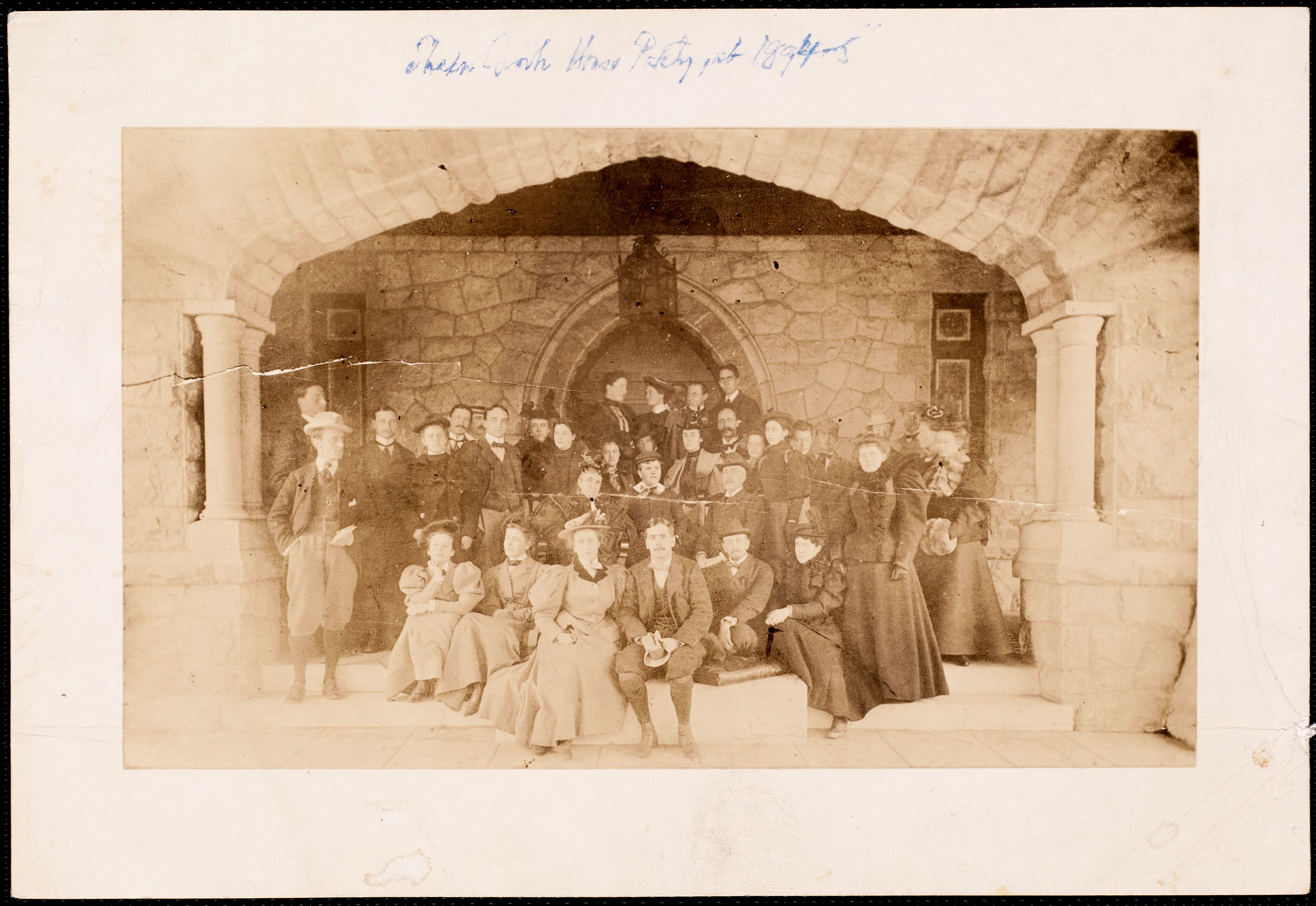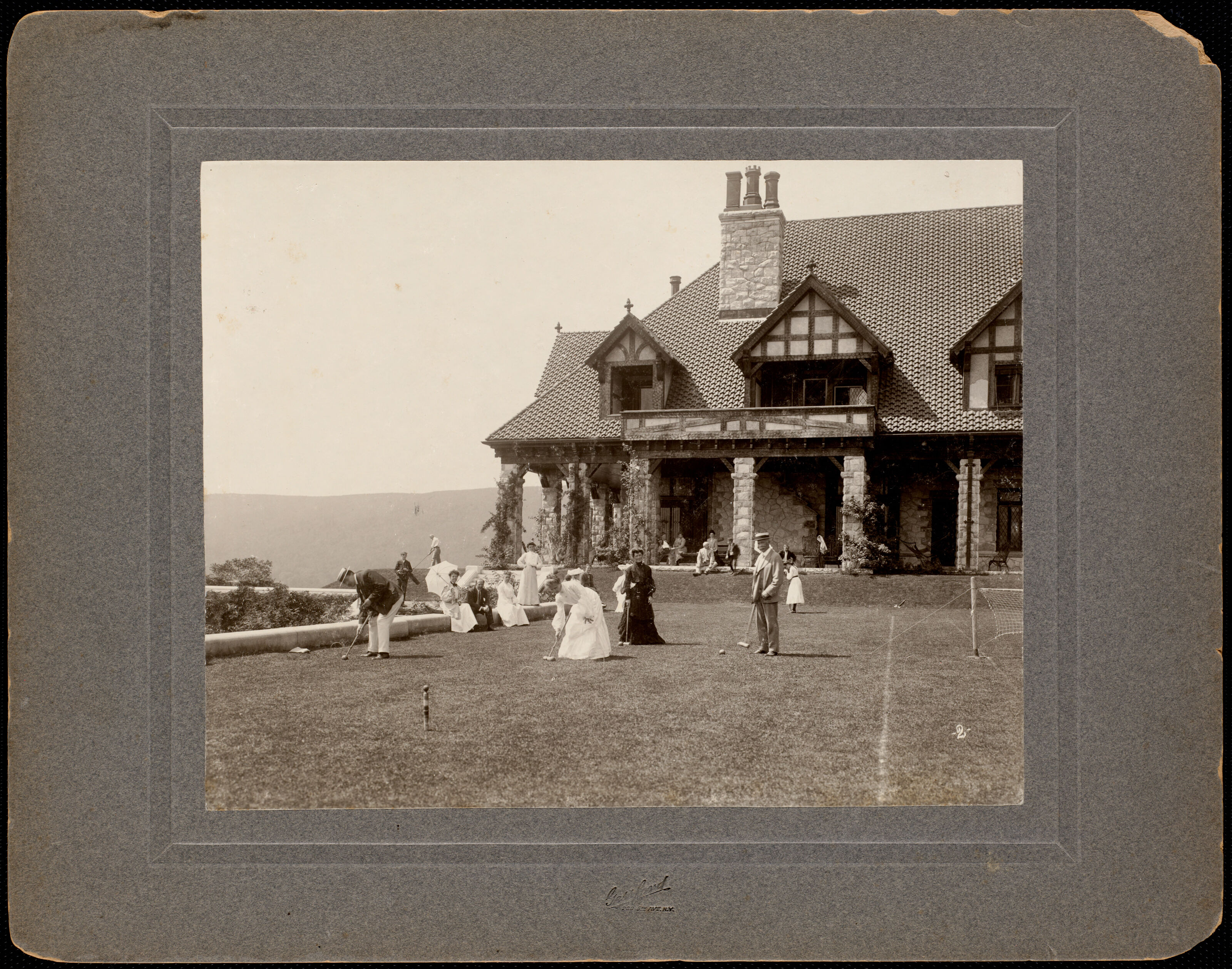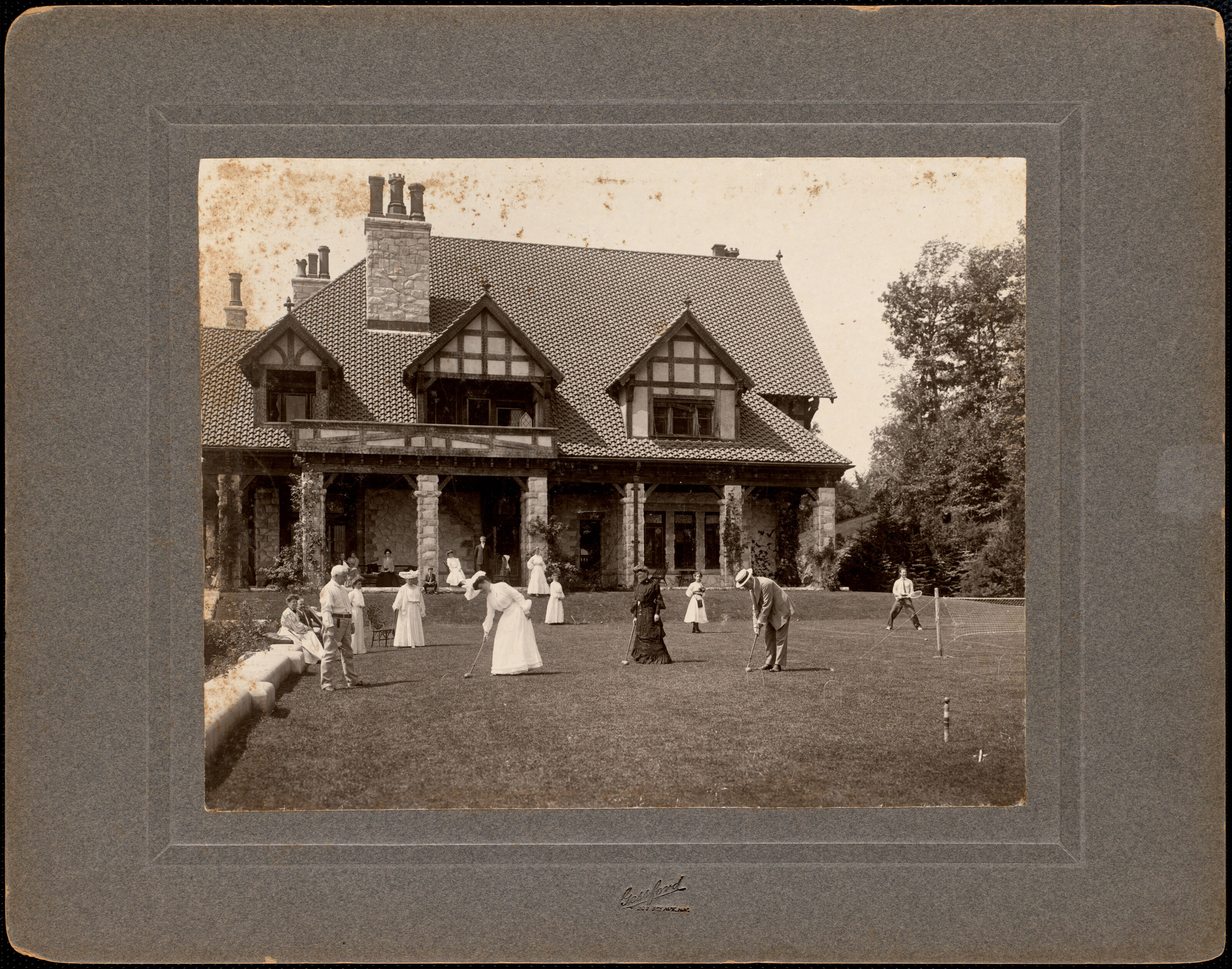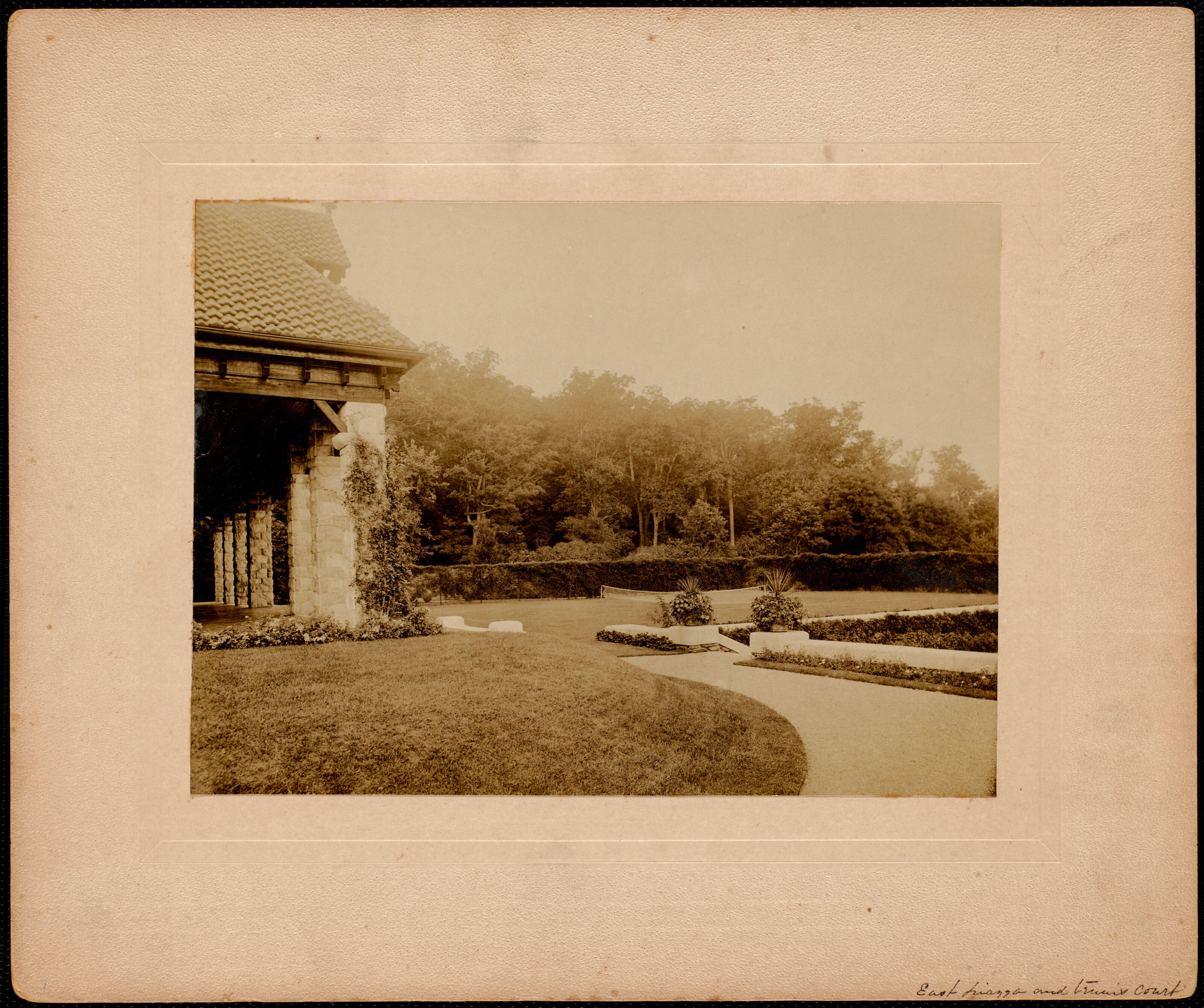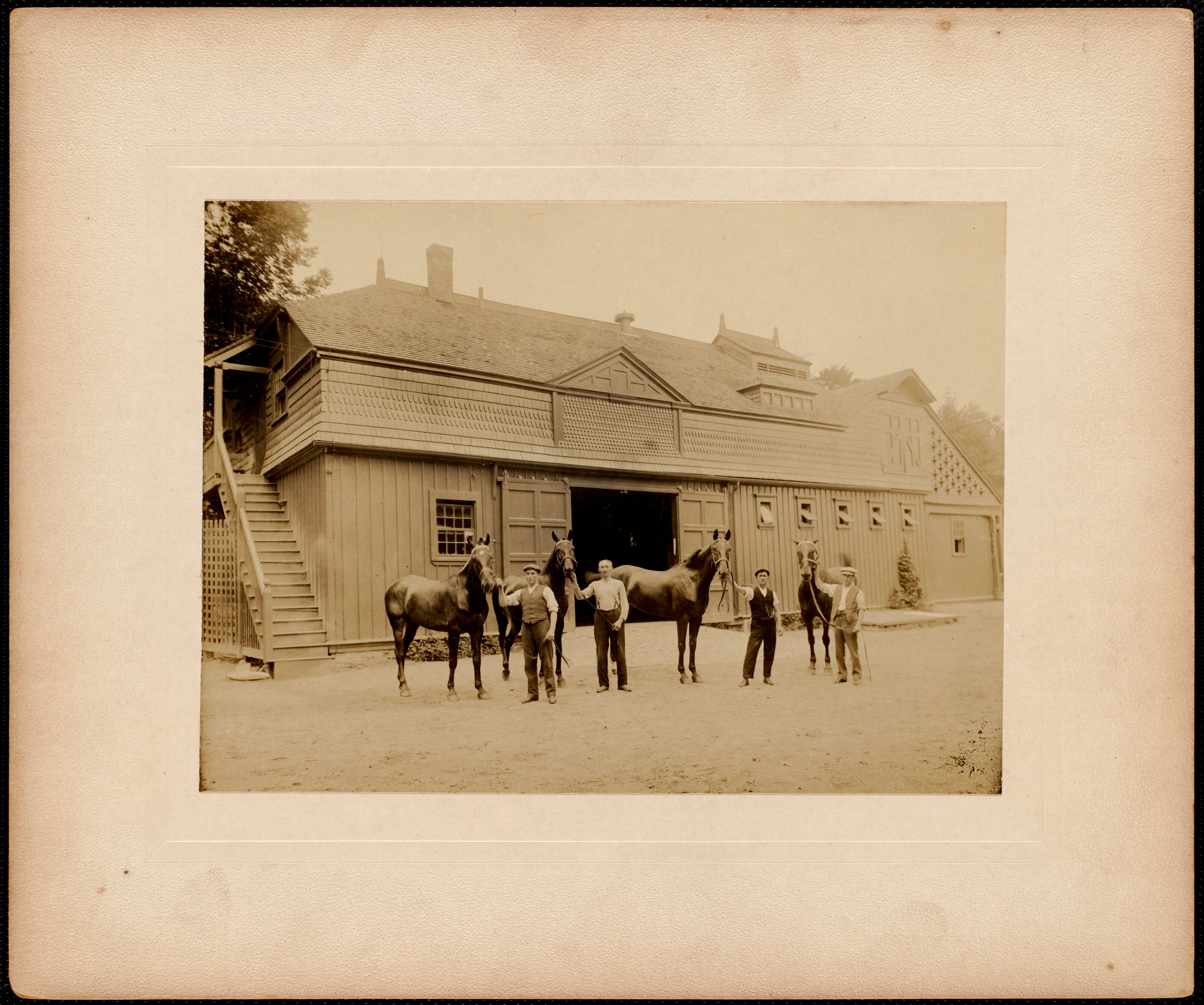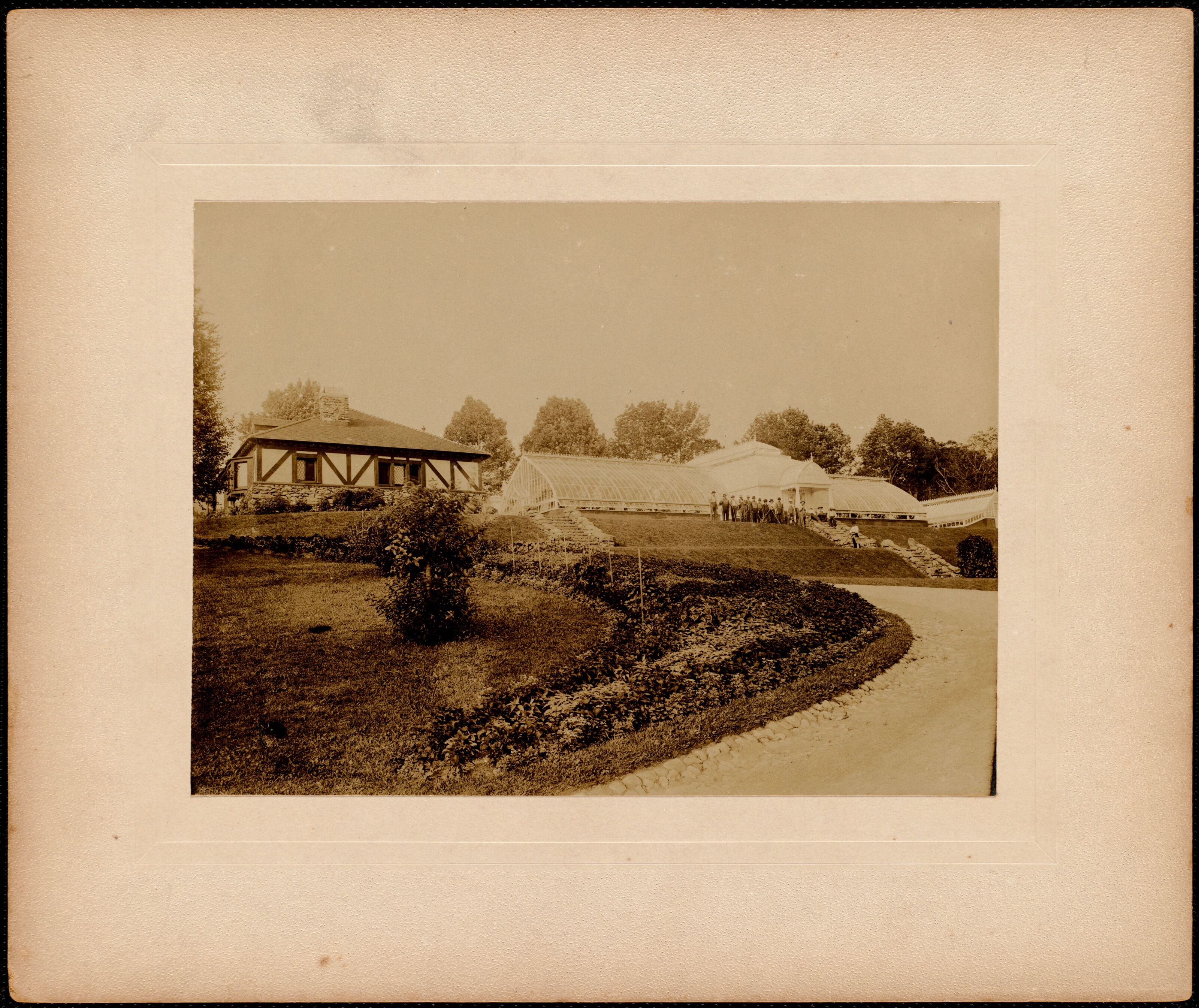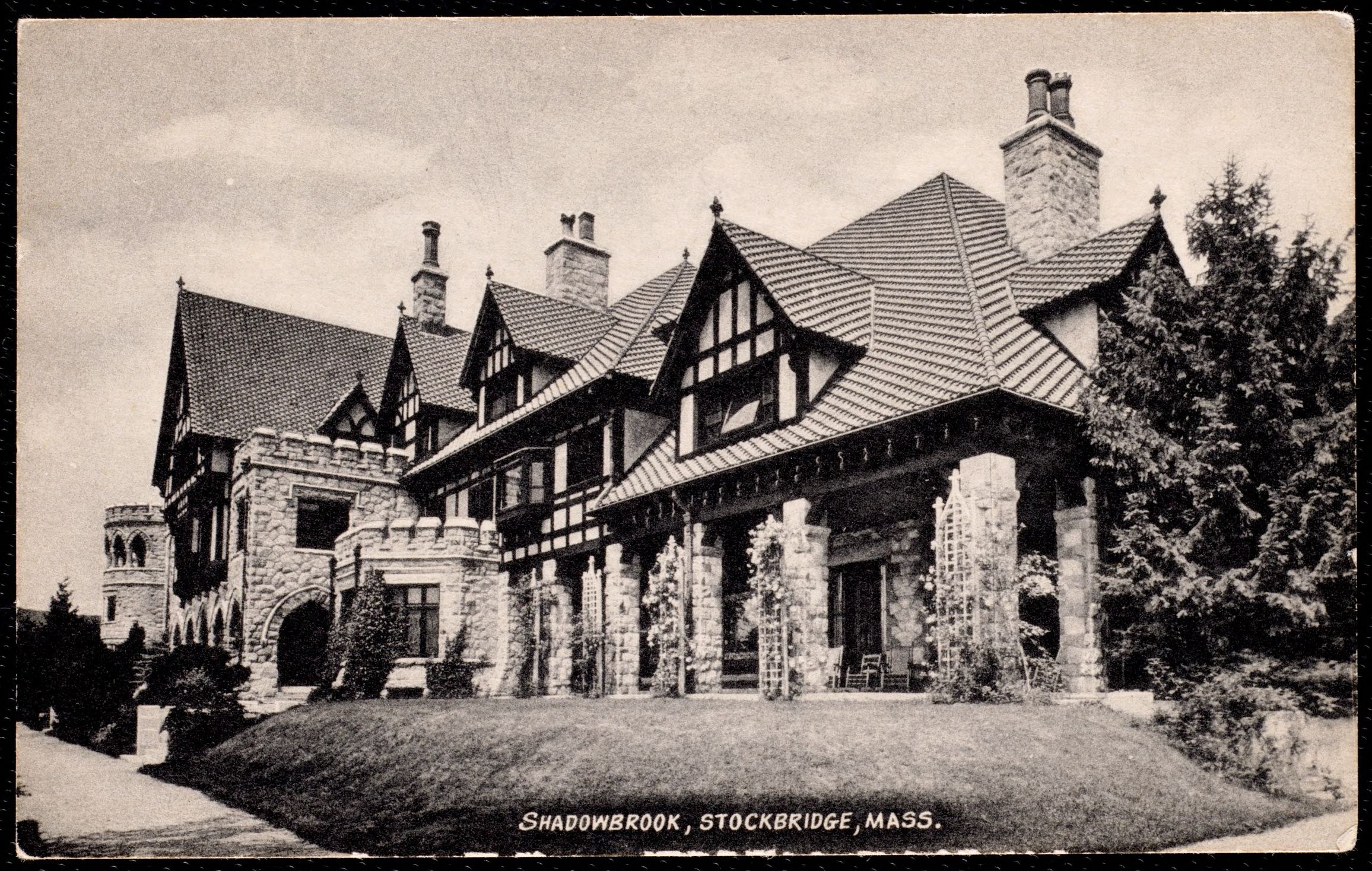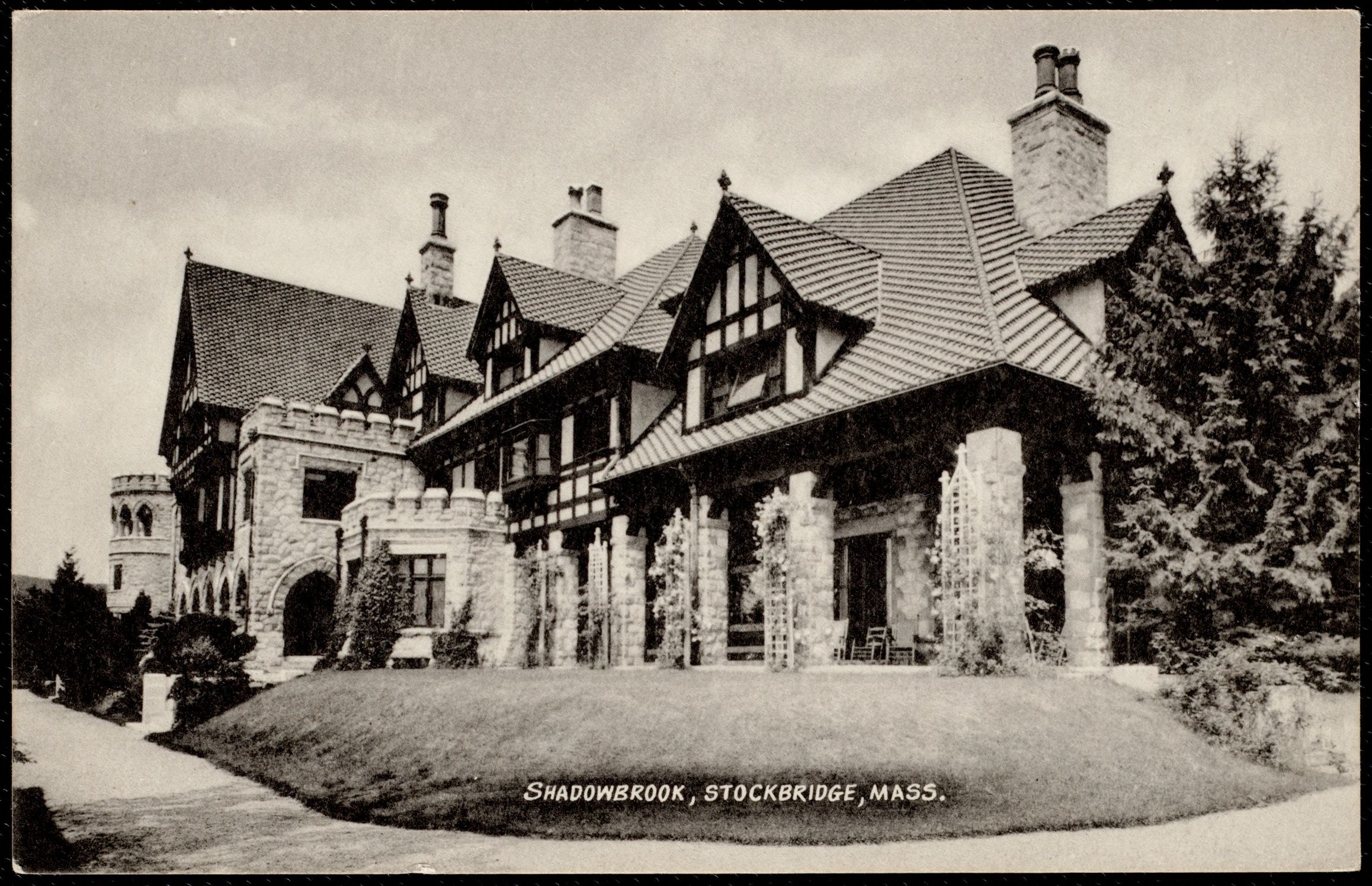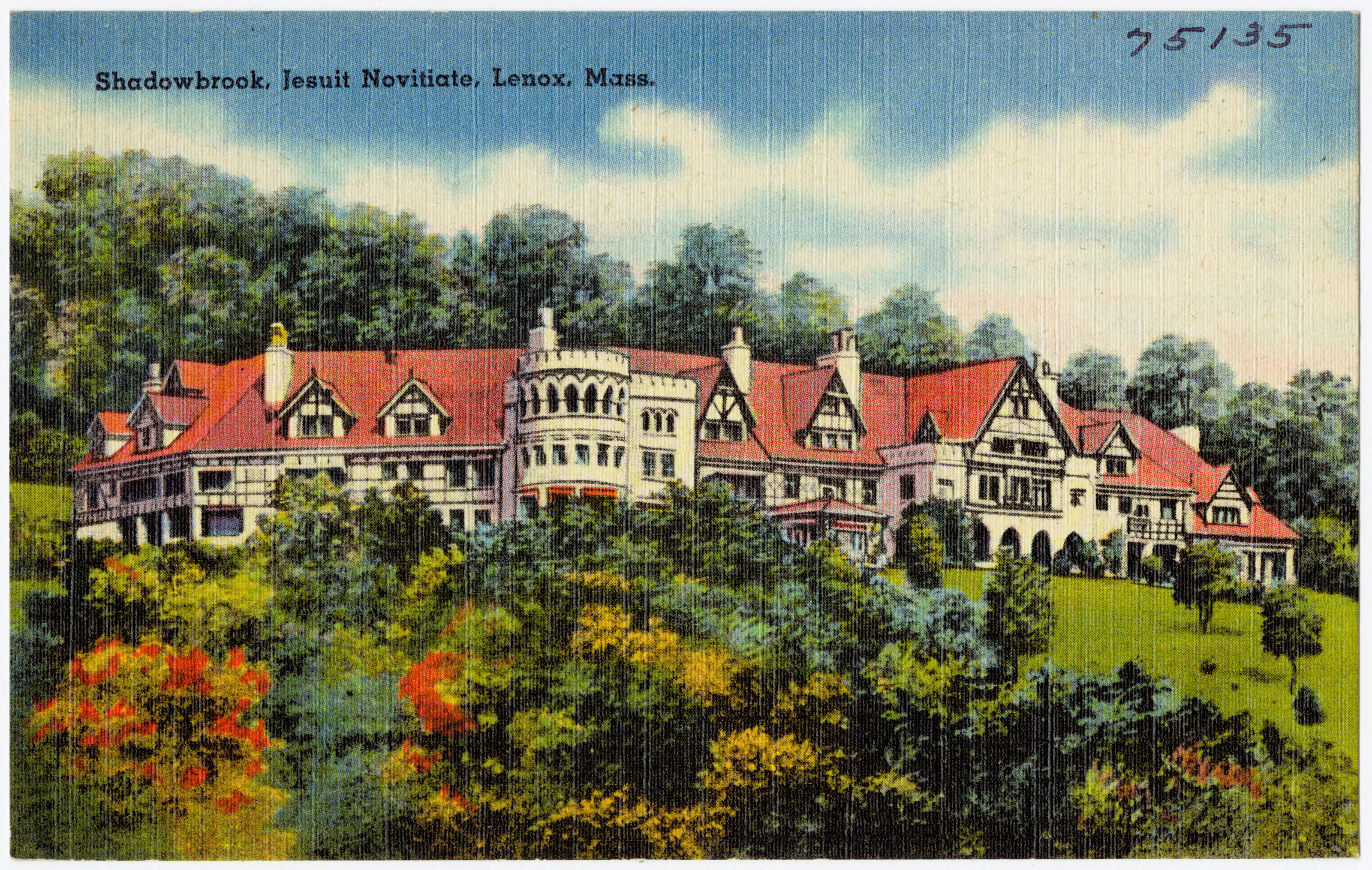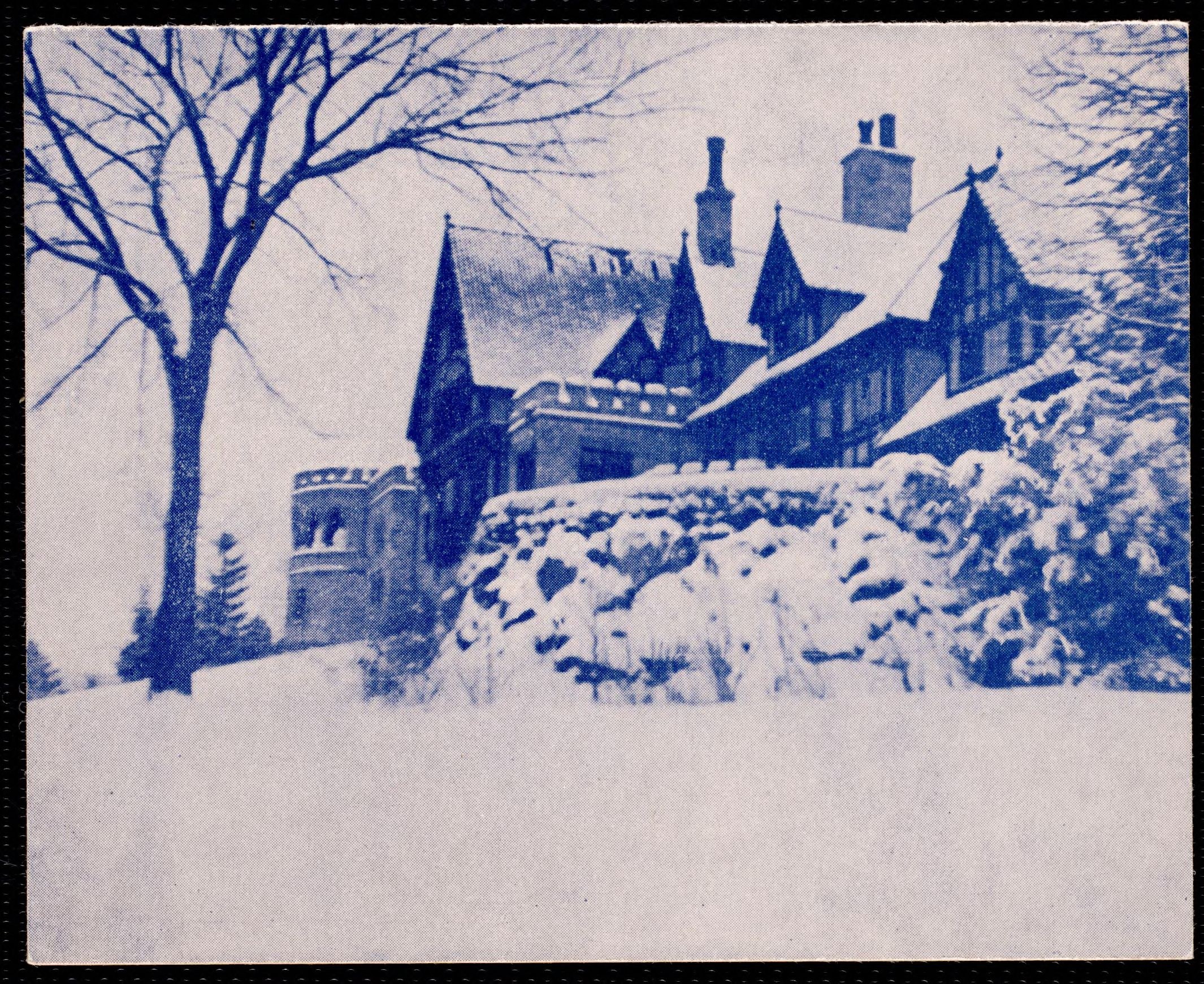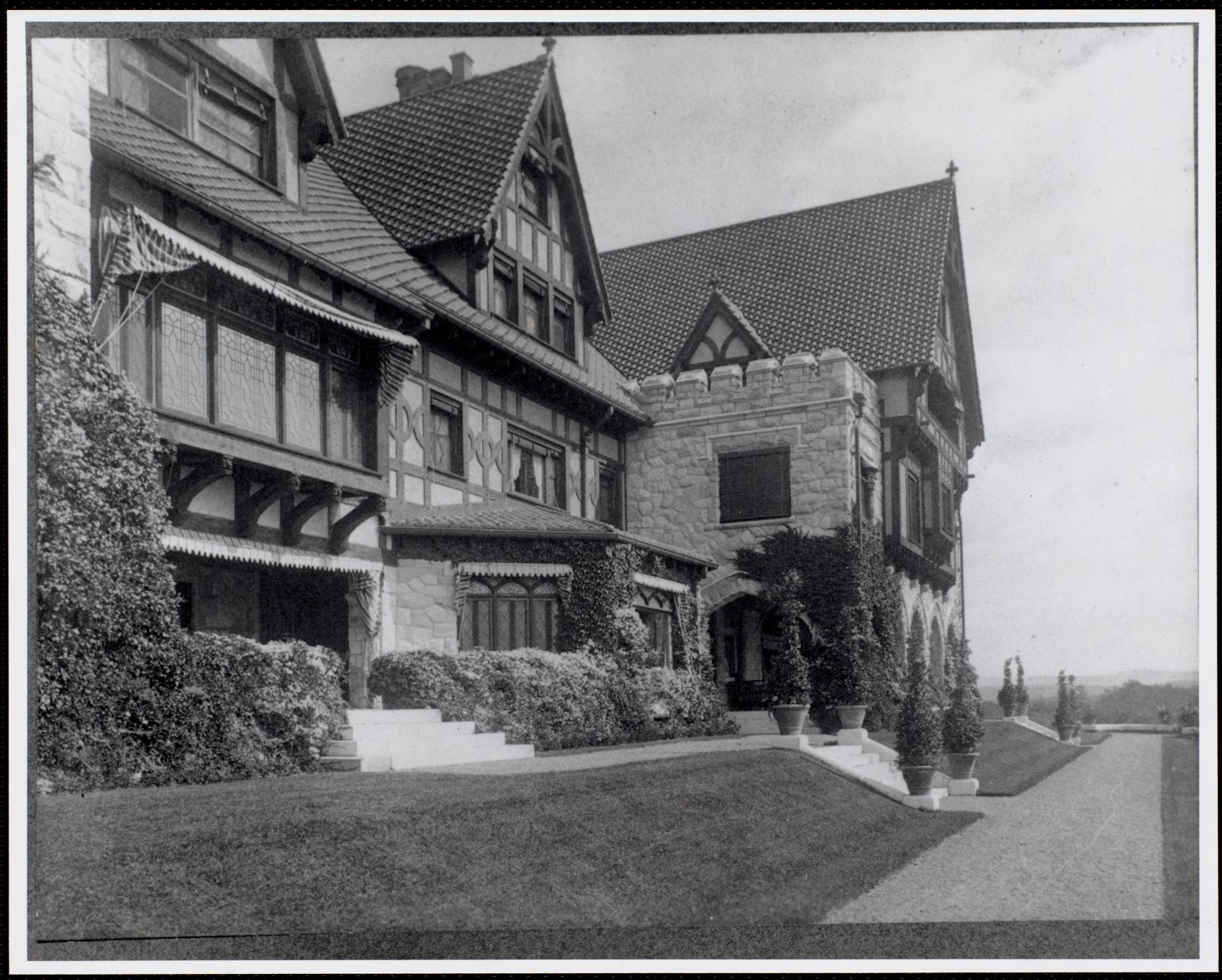
For sixty-three years the second largest private house in America stood above the Stockbridge Bowl. Andrew Carnegie died in it. A hundred and fifty Jesuits were living in it the night it burned. What is left is one of the fullest photographic records of any Berkshire cottage — the architect’s drawing, the men who built it, the rooms, the house parties, and the ruin.
I. Stokes builds
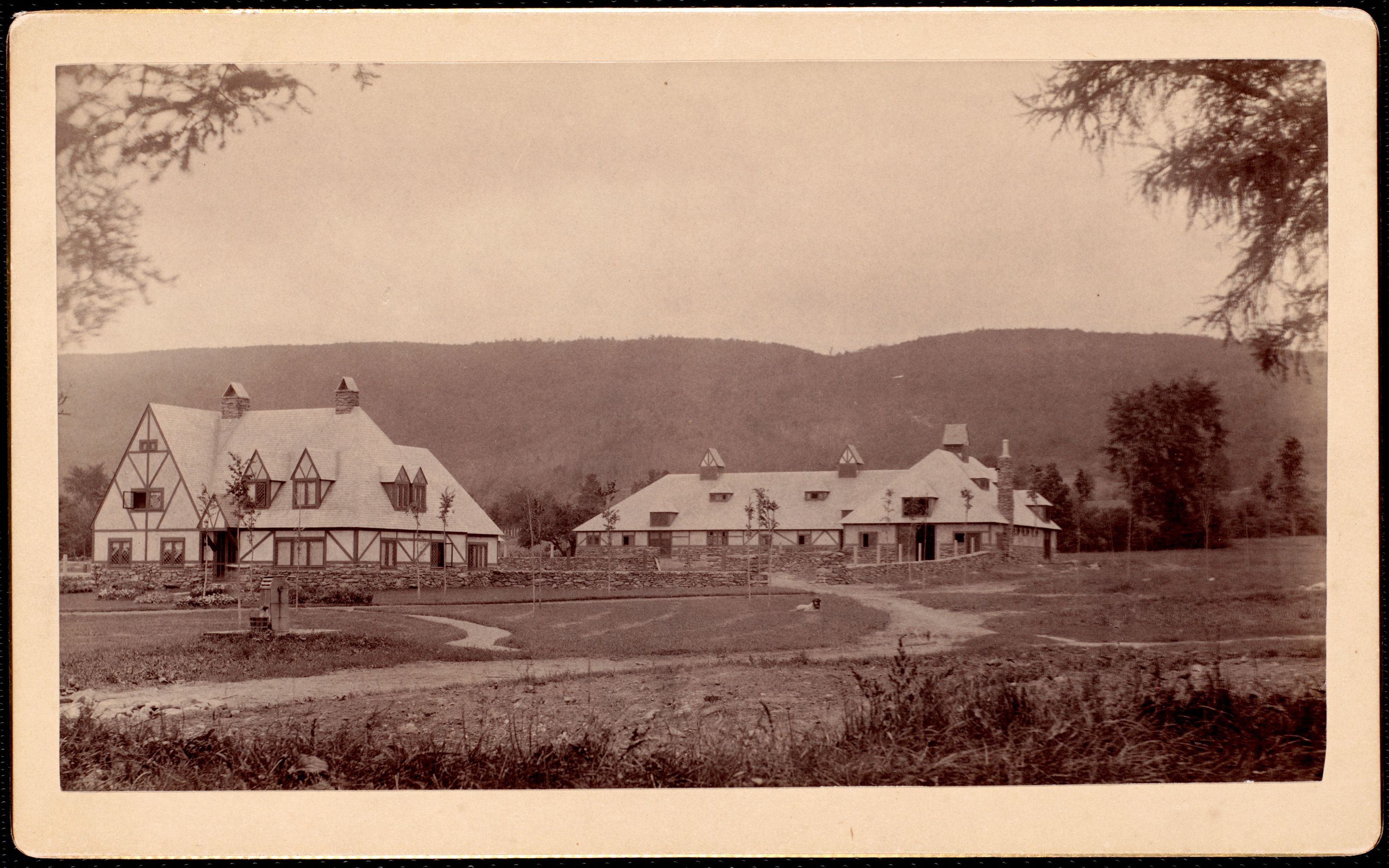
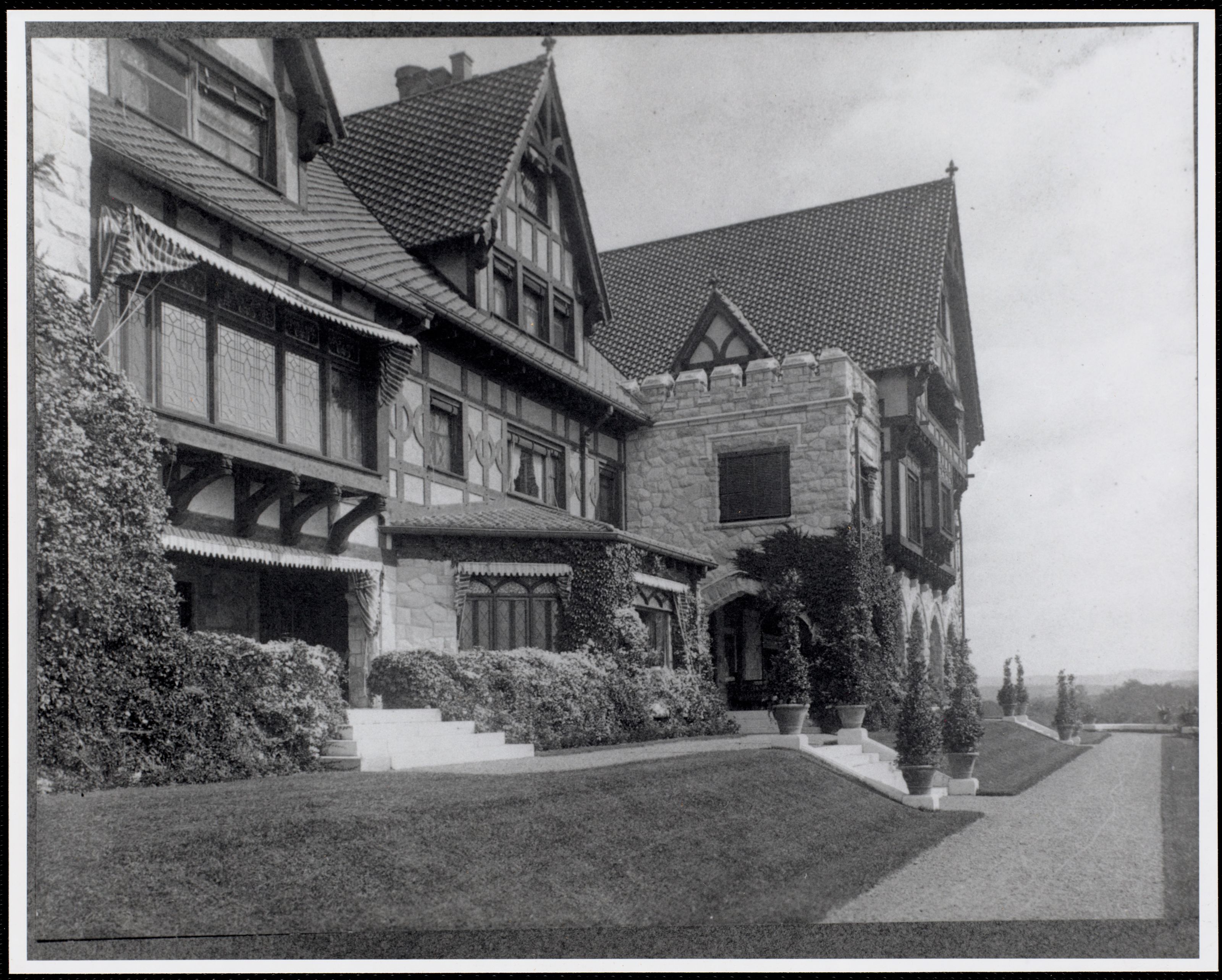
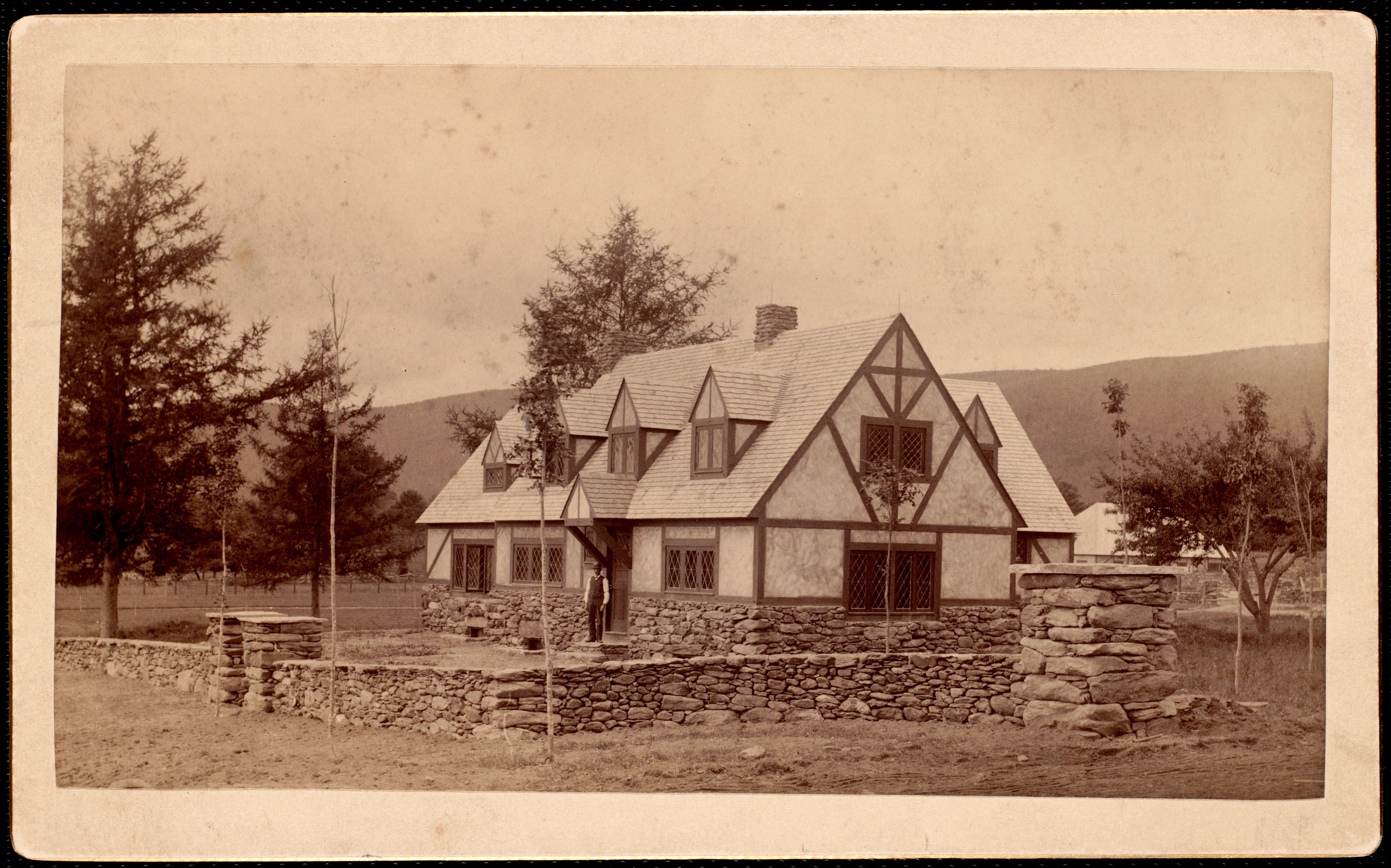
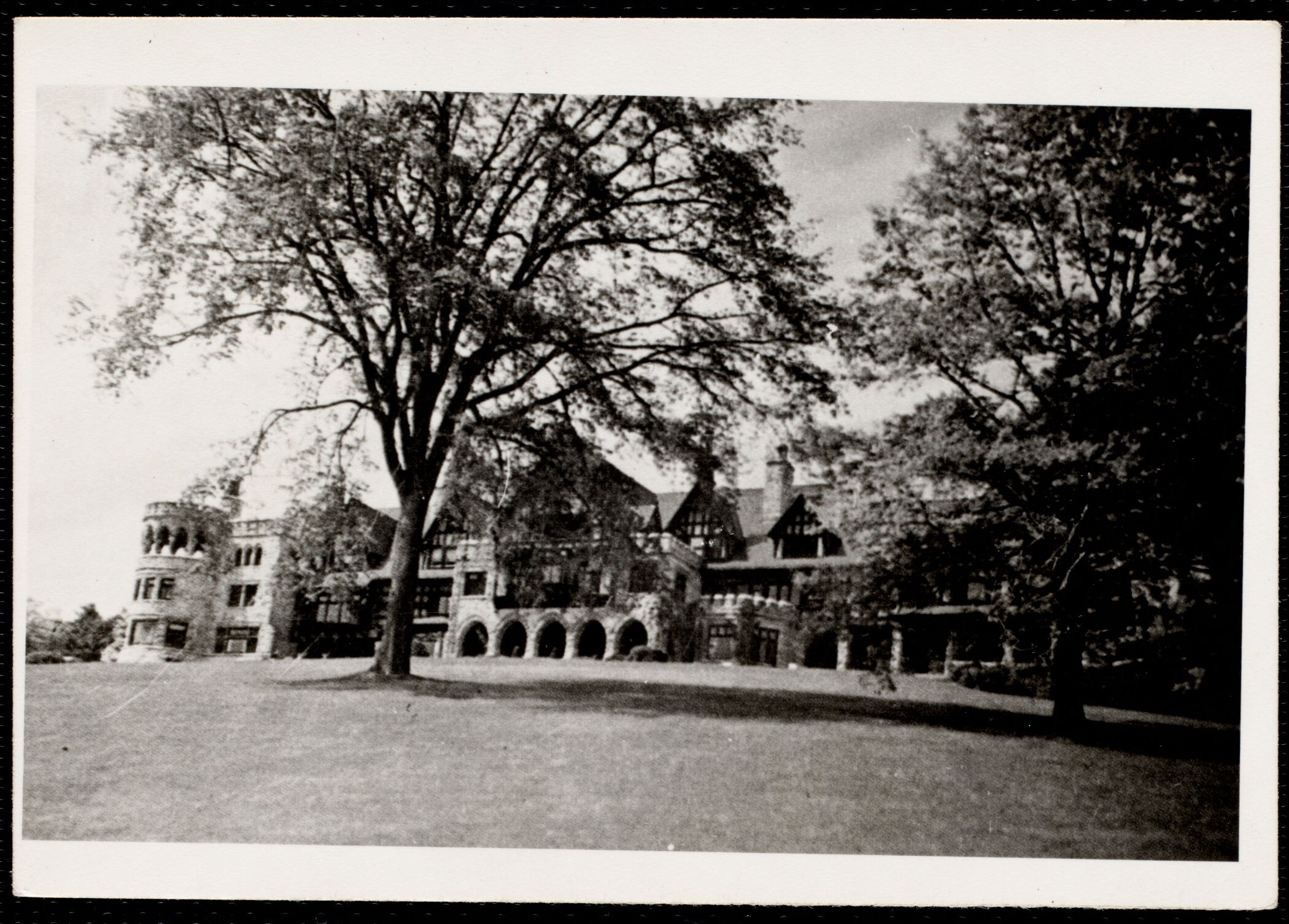
Anson Phelps Stokes, banker and merchant, bought land above the lake in 1892 and put up a Tudor Revival house of about a hundred rooms with a frontage of more than four hundred feet. It was finished in 1893.
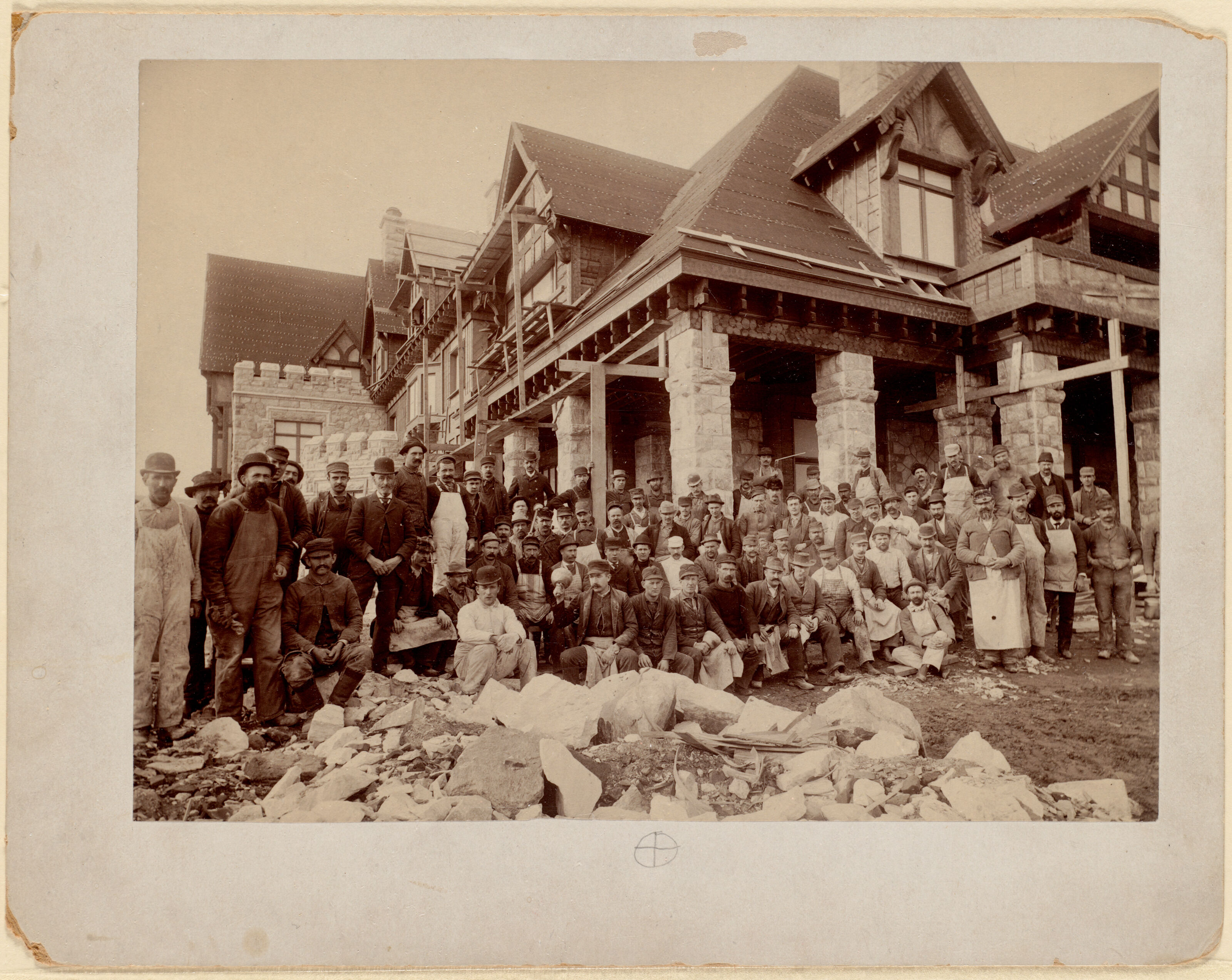
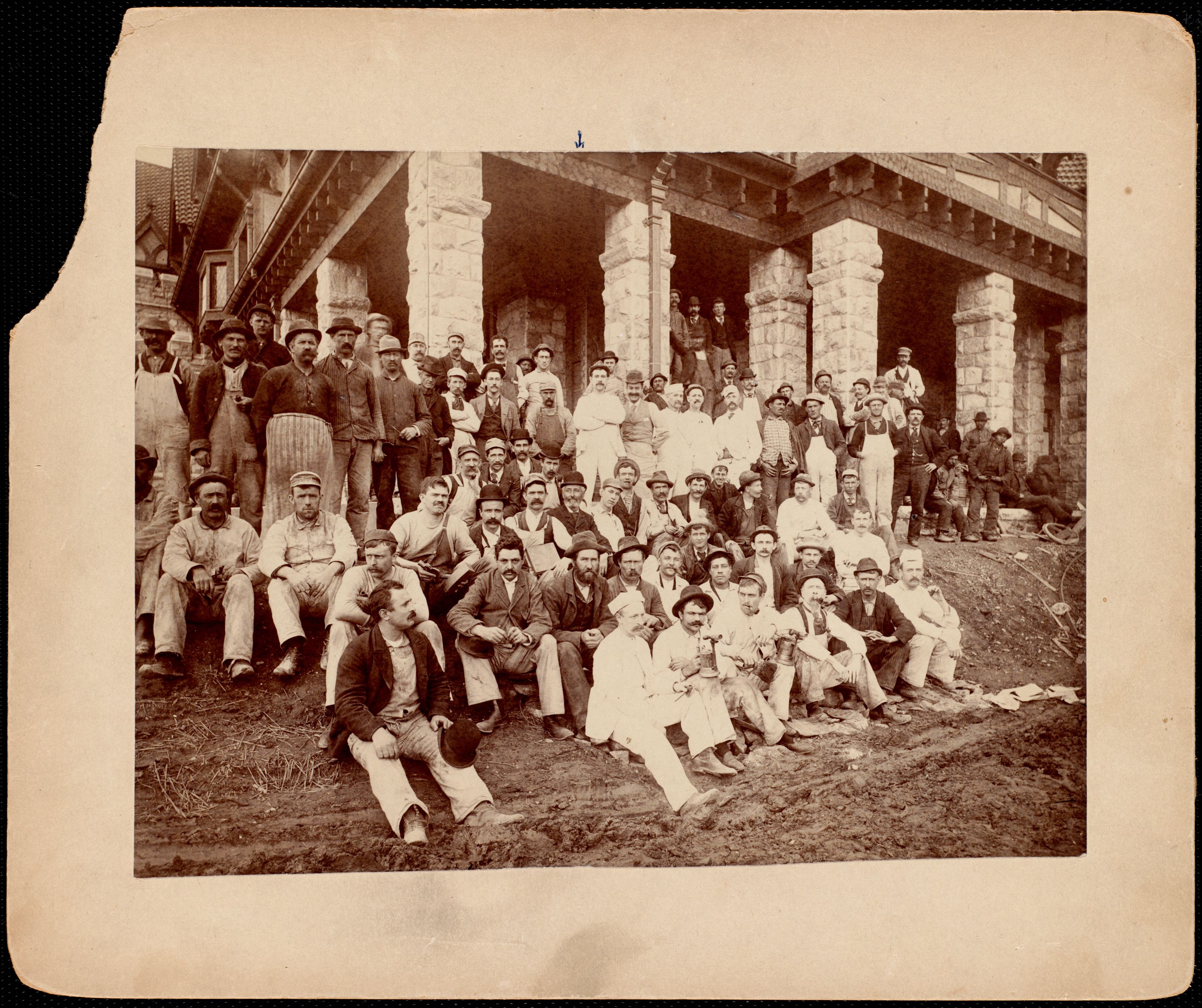
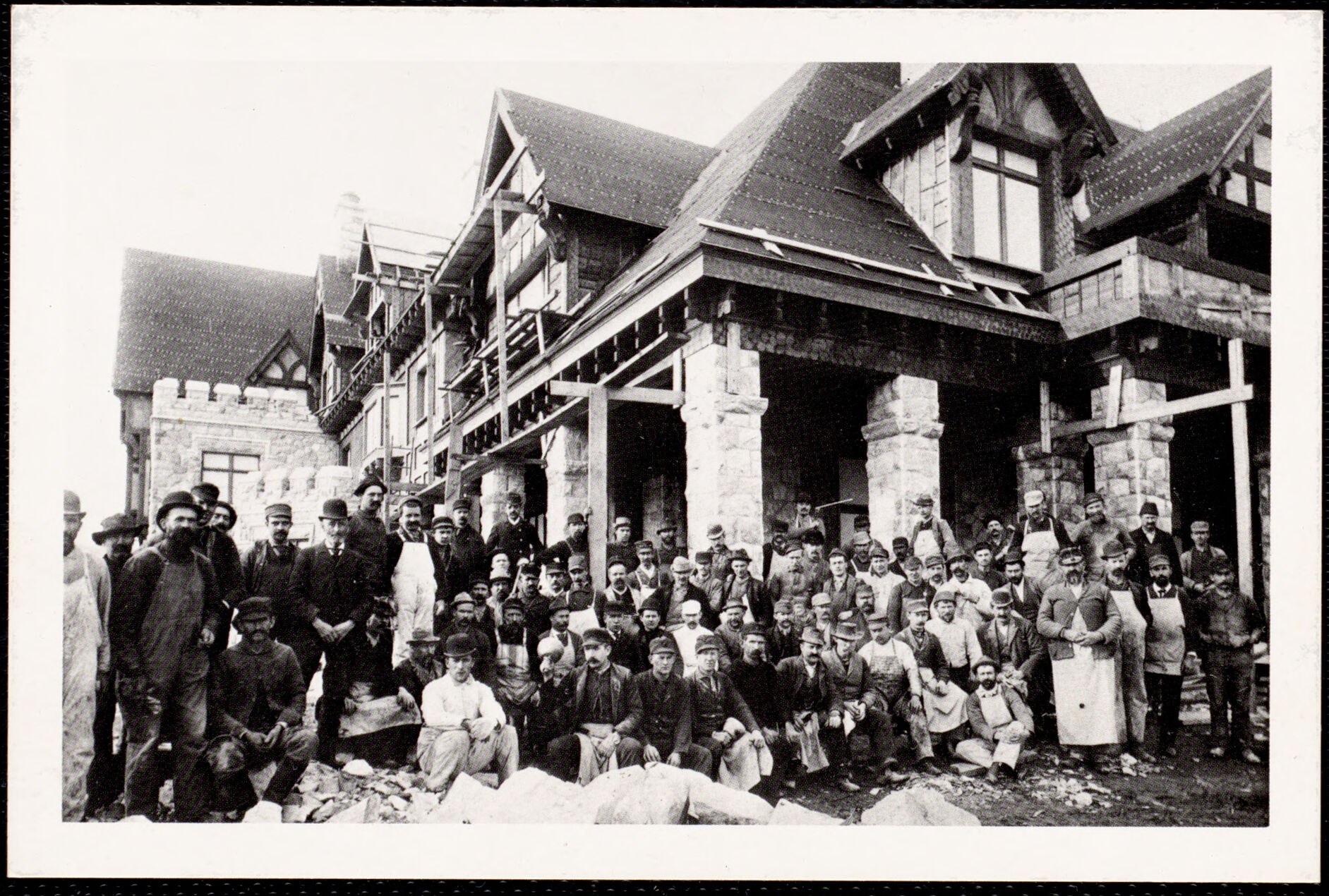
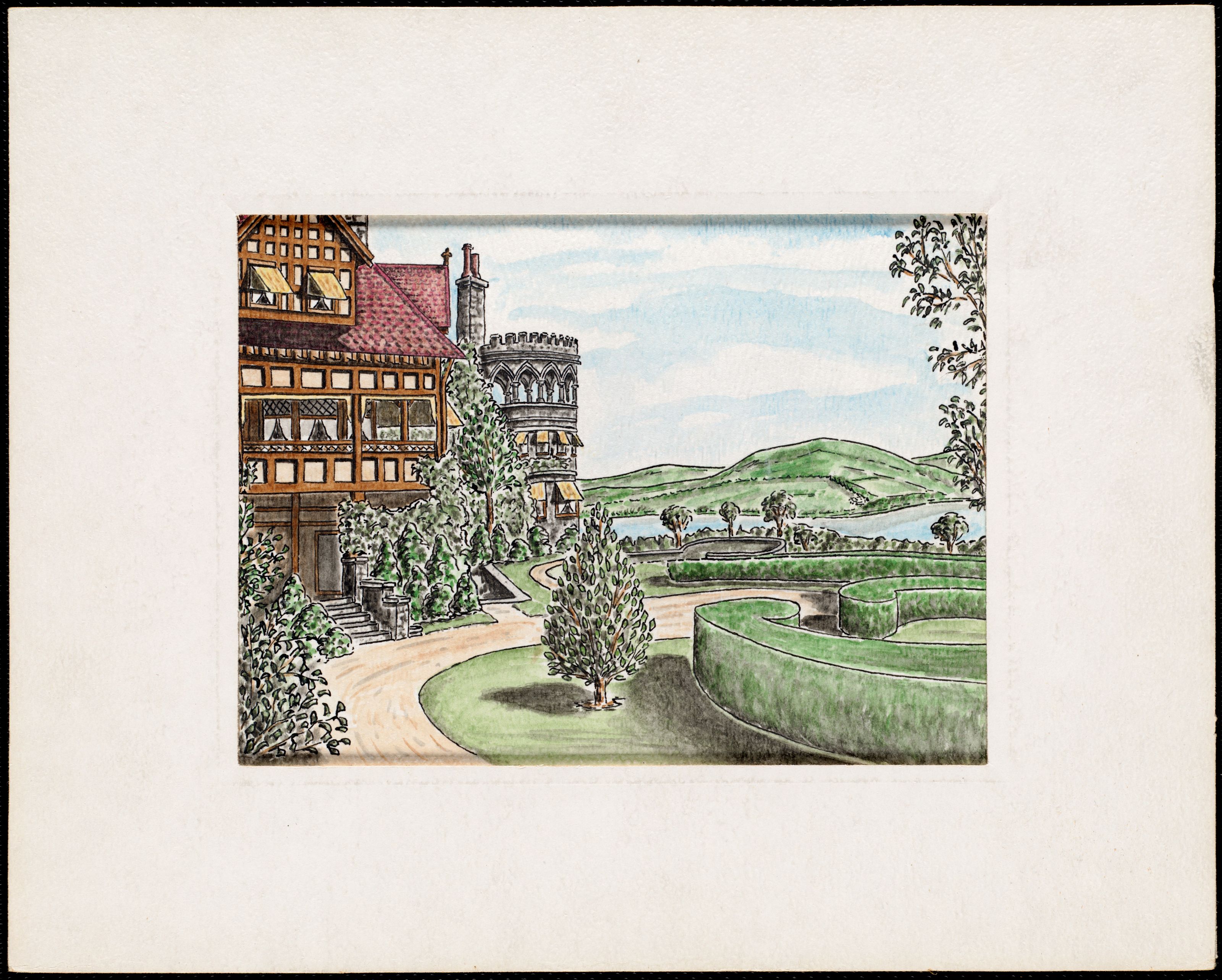
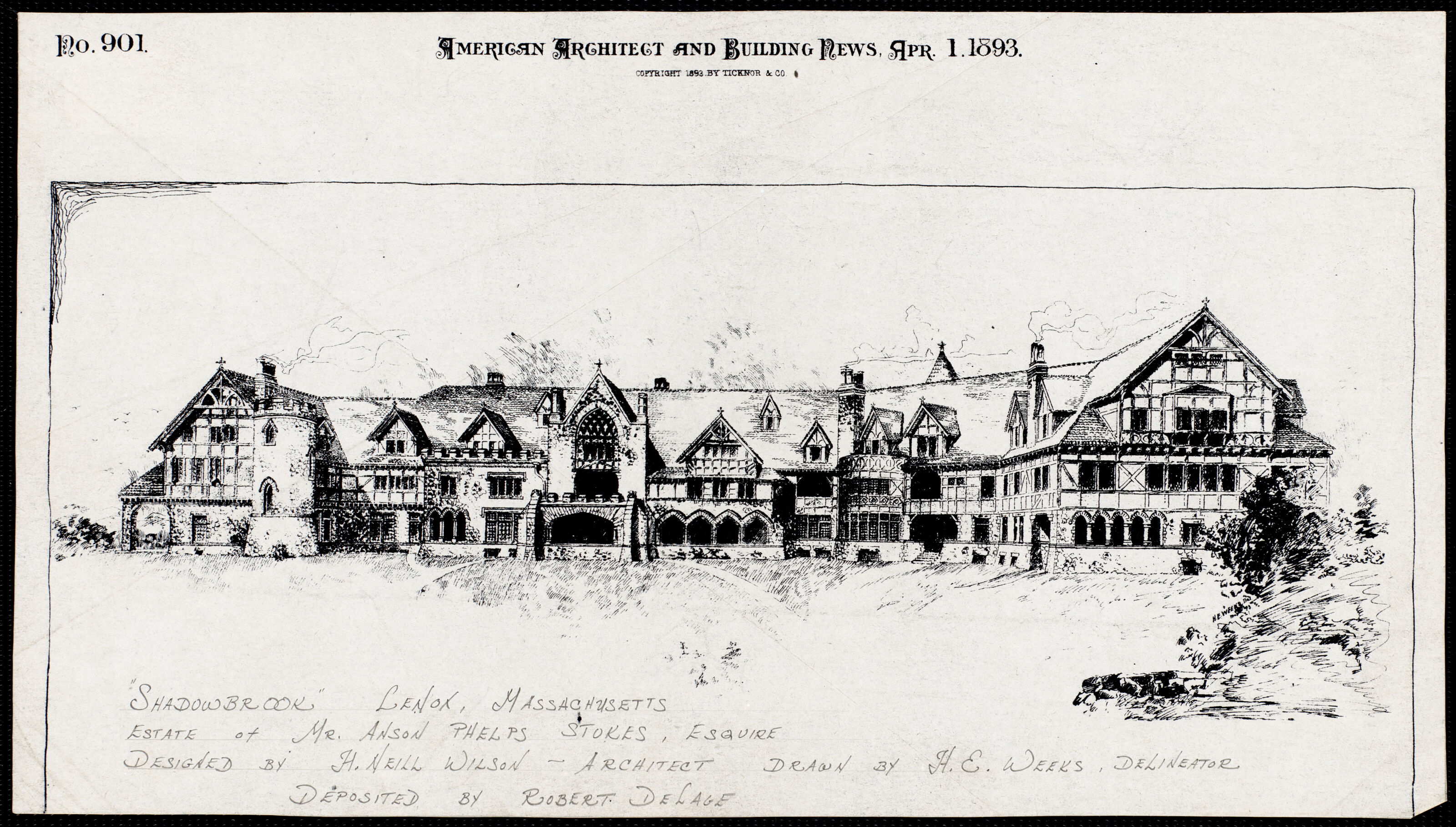
The architect was H. Neill Wilson of Pittsfield. He was not the first choice: McKim, Mead & White had the commission before him. The Lenox Library holds the architect’s elevation, dated 1 April 1893, and two photographs of the construction crews; the Lenox Historical Society holds a third.
The figures differ by source. Wikipedia gives a cost of $500,000 and an estate of 1,500 acres; American Aristocracy gives $1 million, 900 acres, a two-year build and a workforce of five hundred; loveproperty.com also gives 900 acres, and counts seventeen reception rooms on the ground floor, more than twenty guest suites and eleven family bedrooms. Nothing here reconciles them.
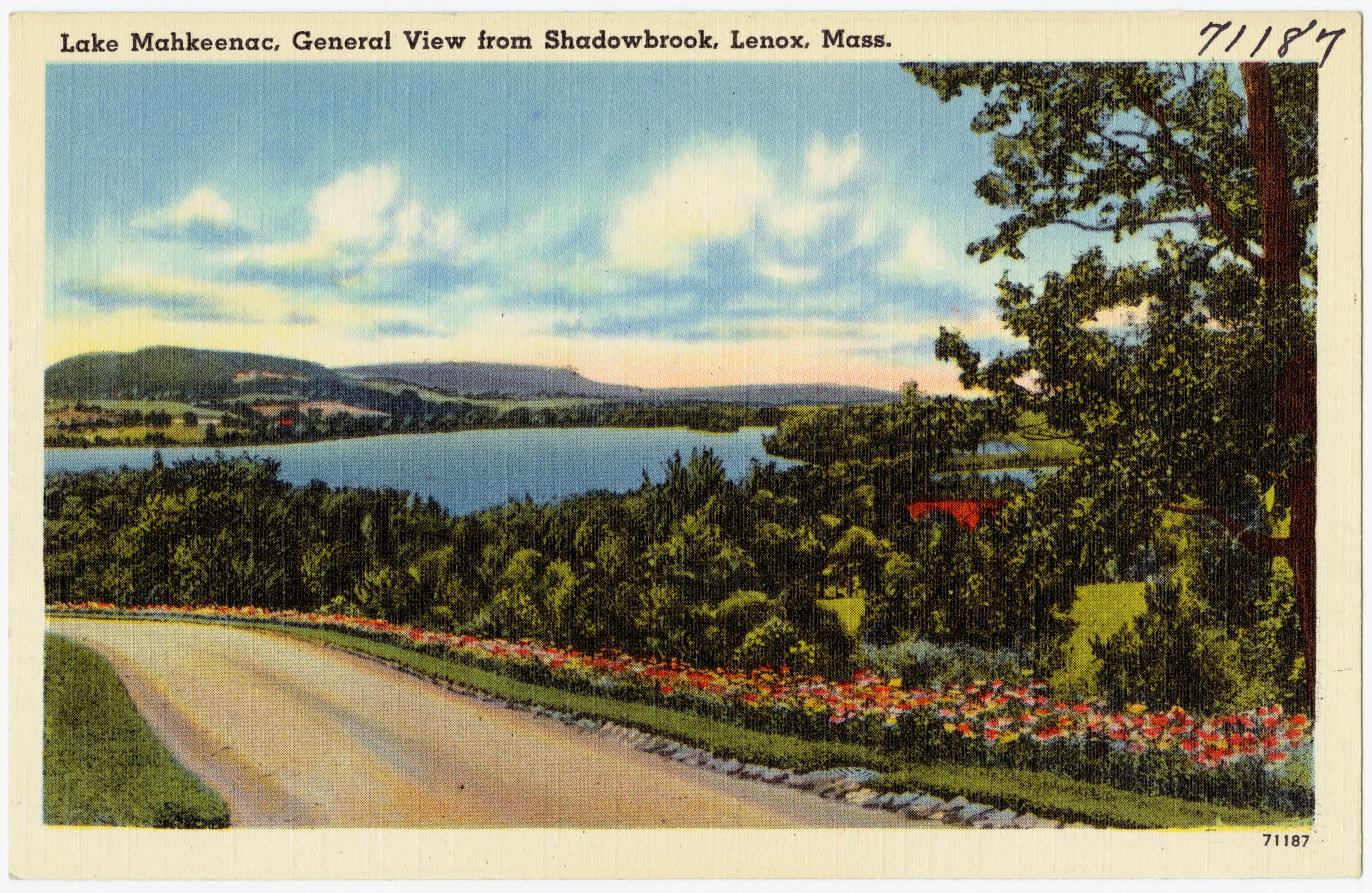
The estate was in Stockbridge. Most published accounts place Shadow Brook in Lenox, and the Lenox Library titles its photographs “Lenox, Mass.,” but the house and grounds stood entirely in Stockbridge; a few of the library’s own captions say so, including “Shadowbrook, Stockbridge, Mass.” The catalogued titles are quoted here as written.
II. Who laid out the grounds
Two secondary accounts credit the grounds to Frederick Law Olmsted, with Ernest W. Bowditch finishing the work. The Olmsted firm’s own job list for Berkshire County contains no Stokes commission and no Shadow Brook. Whatever the office did here, it is not in the file under this owner or this name.
What is in the file is next door and ten years earlier: job 01022, Appleton, Julia S., Lenox, eleven plans from 1883–84, one of them titled “GENERAL PLAN; MISS JULIA APPLETON, LENOX, MA; MCKIM, MEAD, AND WHITE’S PLAN.” Another is “CROSS SECTIONS OF COOK AND LOOMIS LOTS IN LENOX.” The Lenox Library catalogues a photograph of the “Homestead: enlarged Appleton-Stokes house.” The names in this story keep meeting. Whether any of that amounts to Olmsted work at Shadow Brook is an open question, and this page does not answer it.
III. Twenty-three years, five owners
Stokes was thrown from his horse in 1899 and lost the leg. The house went out of the family’s hands and passed through a succession of them: leased to the Reads in 1901–02, run as a hotel from 1903 to 1906, sold to Spencer P. Shotter in 1906 — Kripalu’s own history says the resort-hotel use continued under Shotter, and the Jesuit archives at Holy Cross describe a luxury hotel running from 1898 to 1922, a wider span than any other account gives — leased to Margaret Emerson Vanderbilt in 1915 — the same woman who bought Erskine Park two years later and had it pulled down.
Andrew Carnegie bought Shadow Brook in 1916. Wikipedia puts the price at $300,000; two other accounts say $350,000. Kripalu, which owns the site now, dates the purchase to 1917. He died there on 11 August 1919.
IV. St. Stanislaus
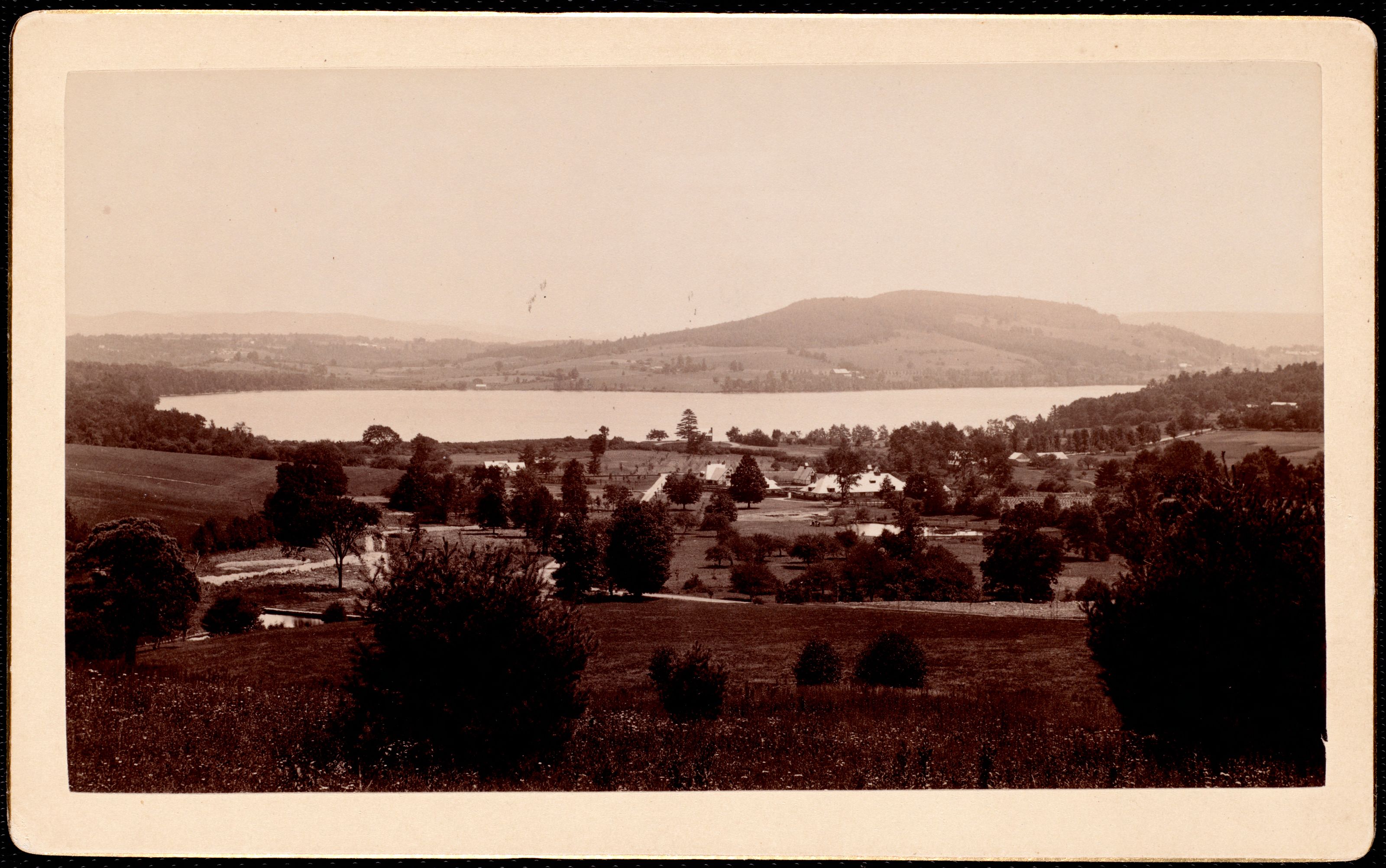
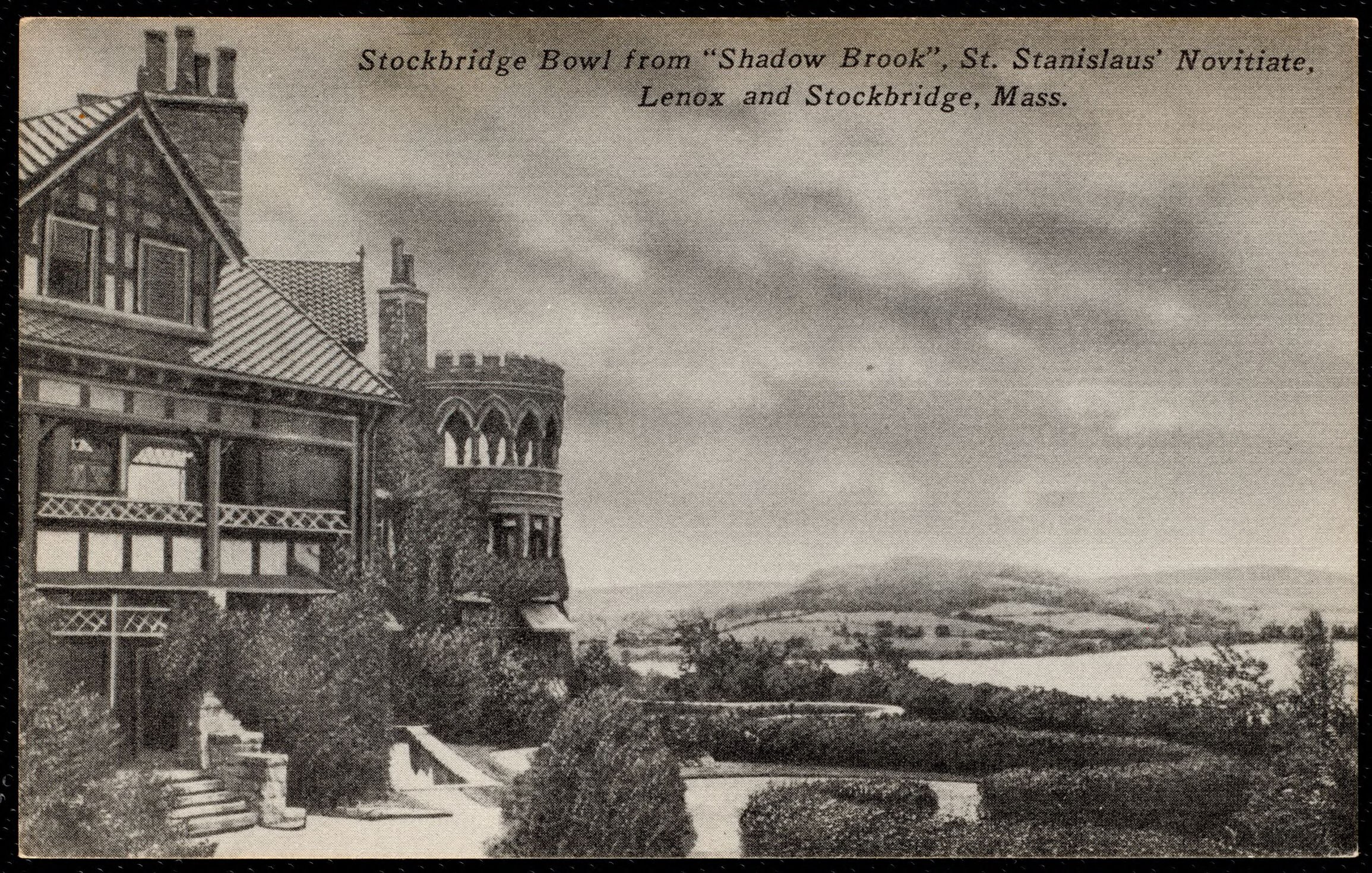
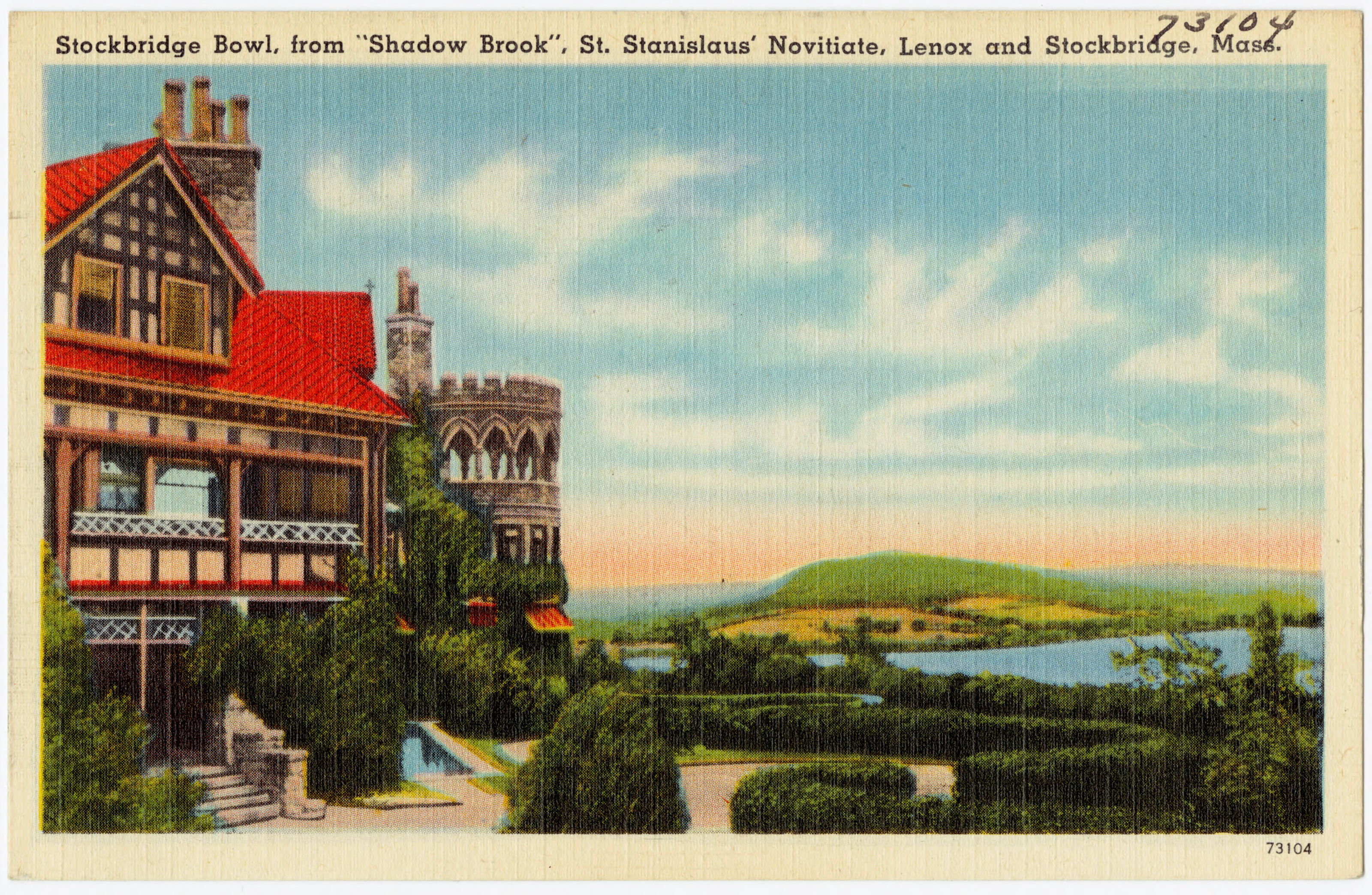
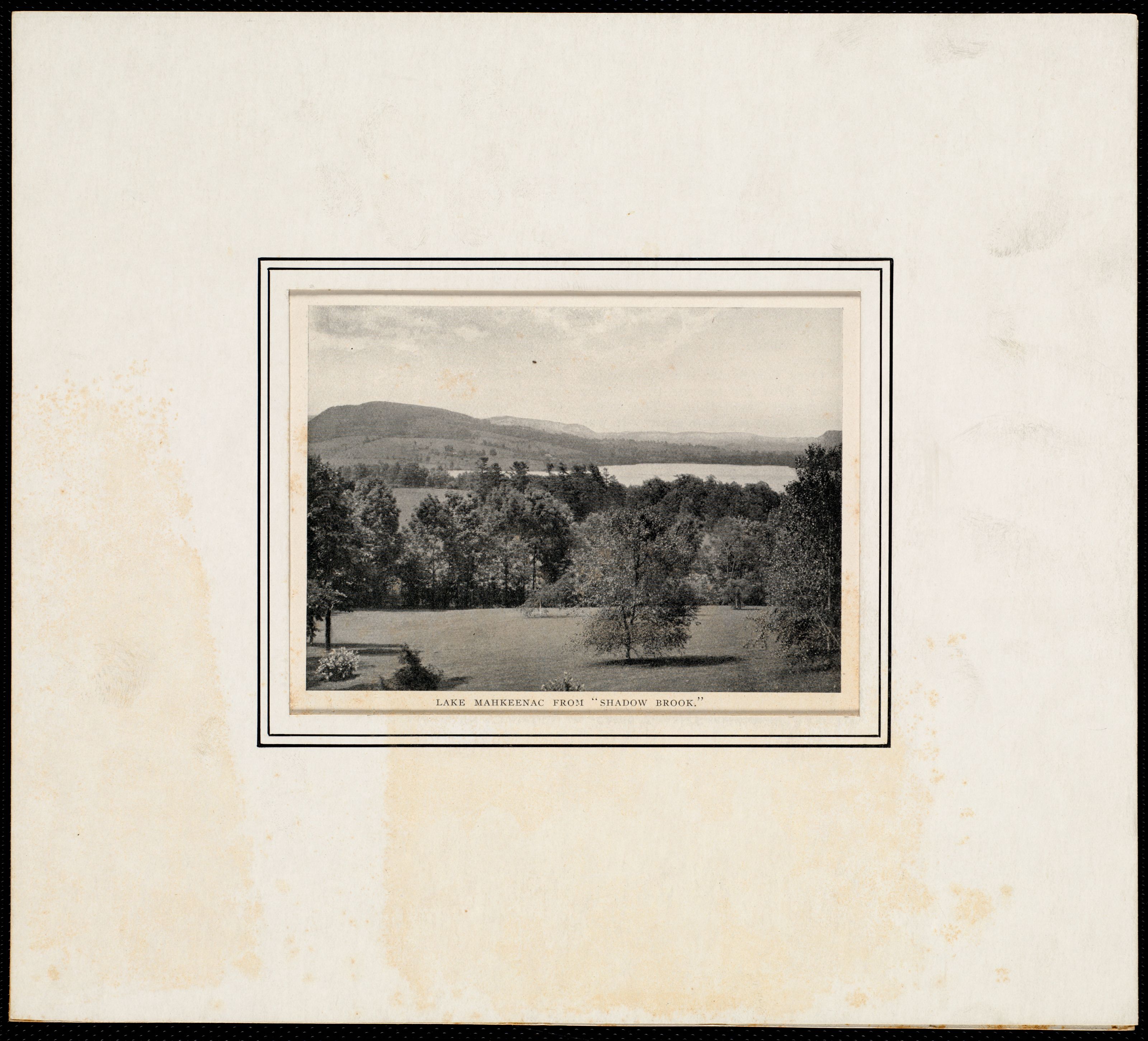
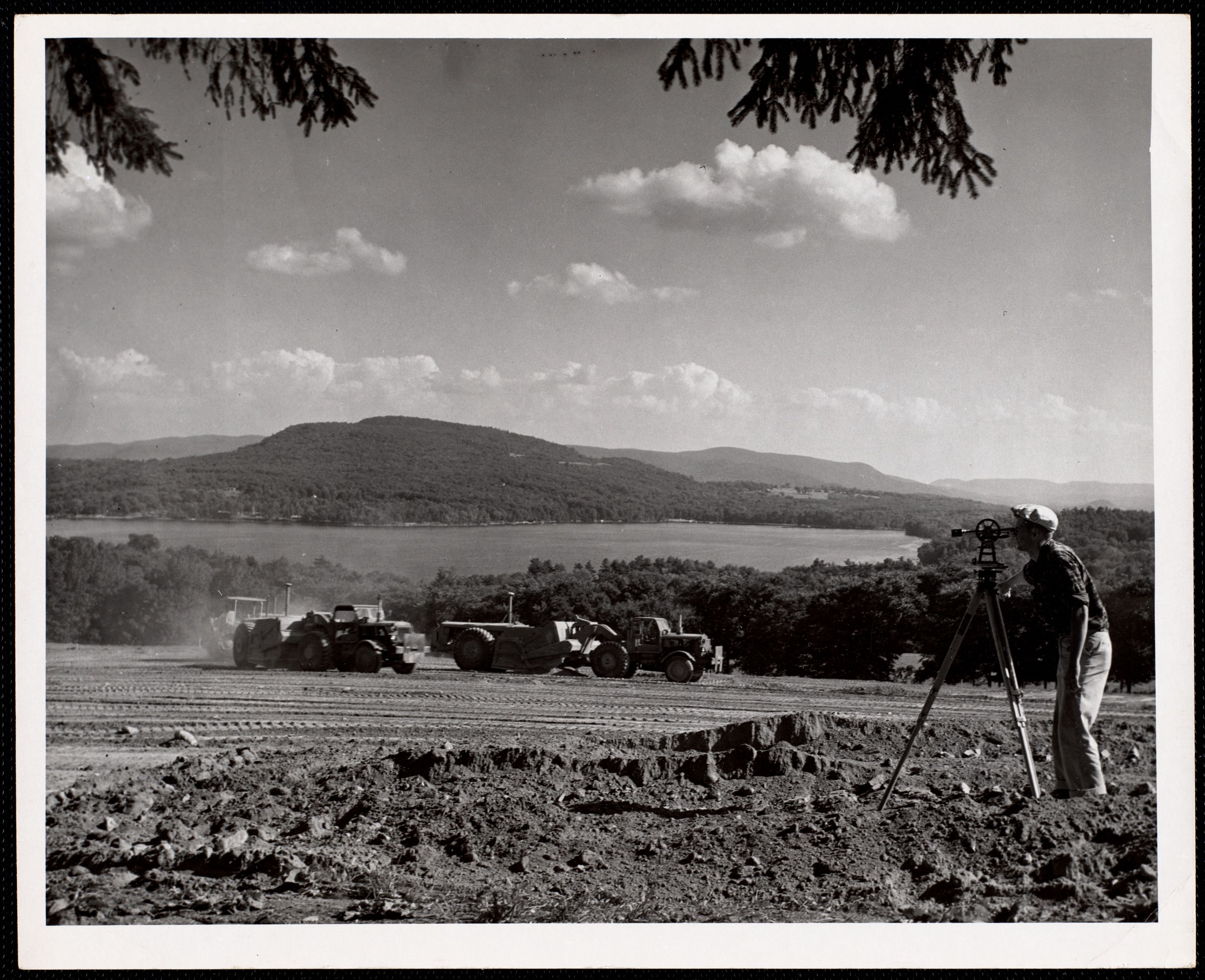
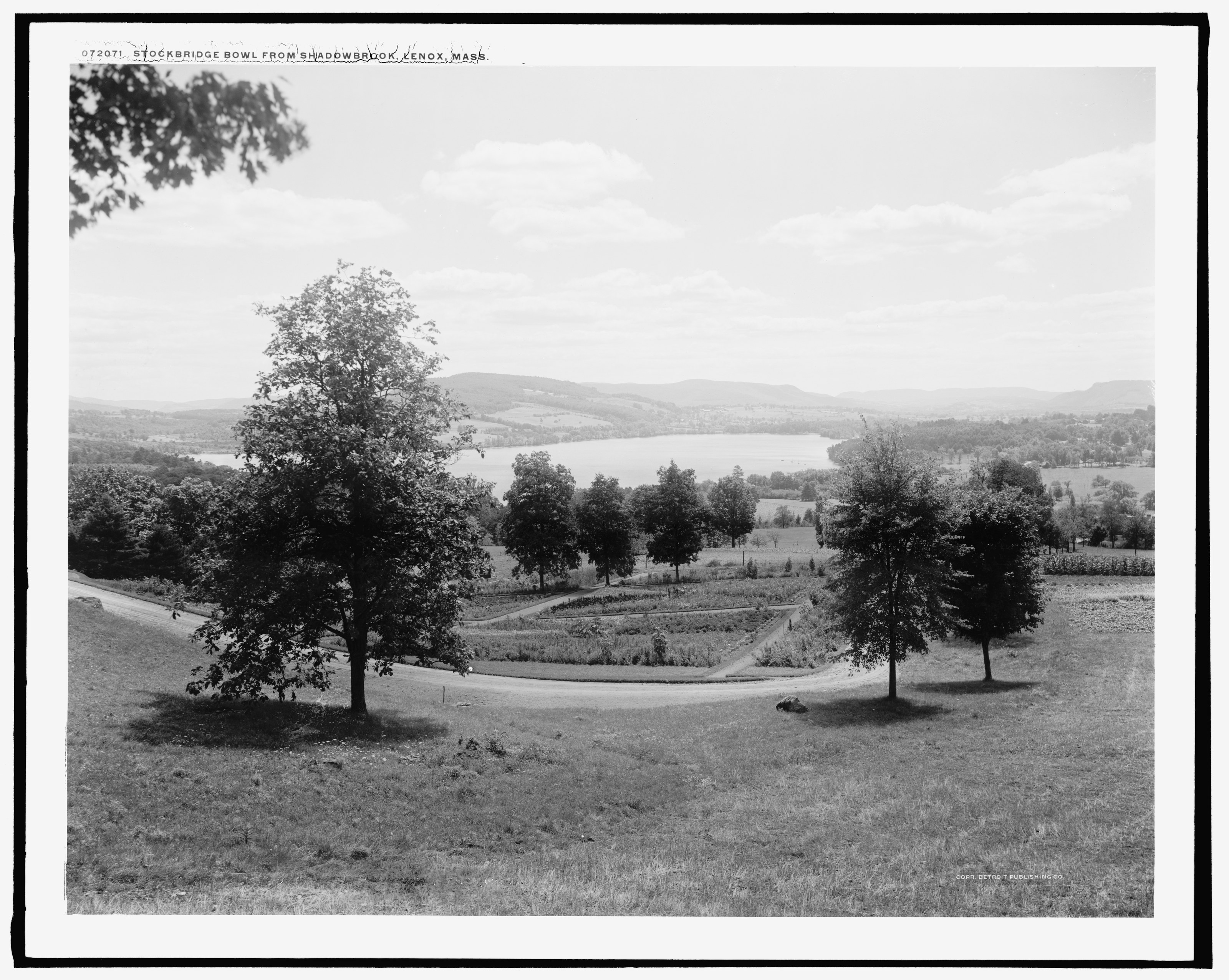
The Jesuits of the New England Province bought the place in 1922 for about $200,000 and made it a novitiate. It served as one until 1970. Photographs from those decades are titled “Shadowbrook, Jesuit Novitiate” and “Stockbridge Bowl from ‘Shadow Brook’, St. Stanislaus’ Novitiate” — the same view down to the lake the Detroit Publishing Company had been selling since 1900.
V. 9 March 1956
A fire that began in the boiler room destroyed the house on 9 March 1956. Wikipedia says four of the hundred and fifty residents died; loveproperty.com names three priests and a lay brother; American Aristocracy says five. A replacement building went up — the Lee Library has a photograph of that construction, about 1957 — and since 1983 it has housed the Kripalu Center.
The last Lenox Library photograph in this set is dated 1975 and titled simply “Shadow Brook.”
Sources
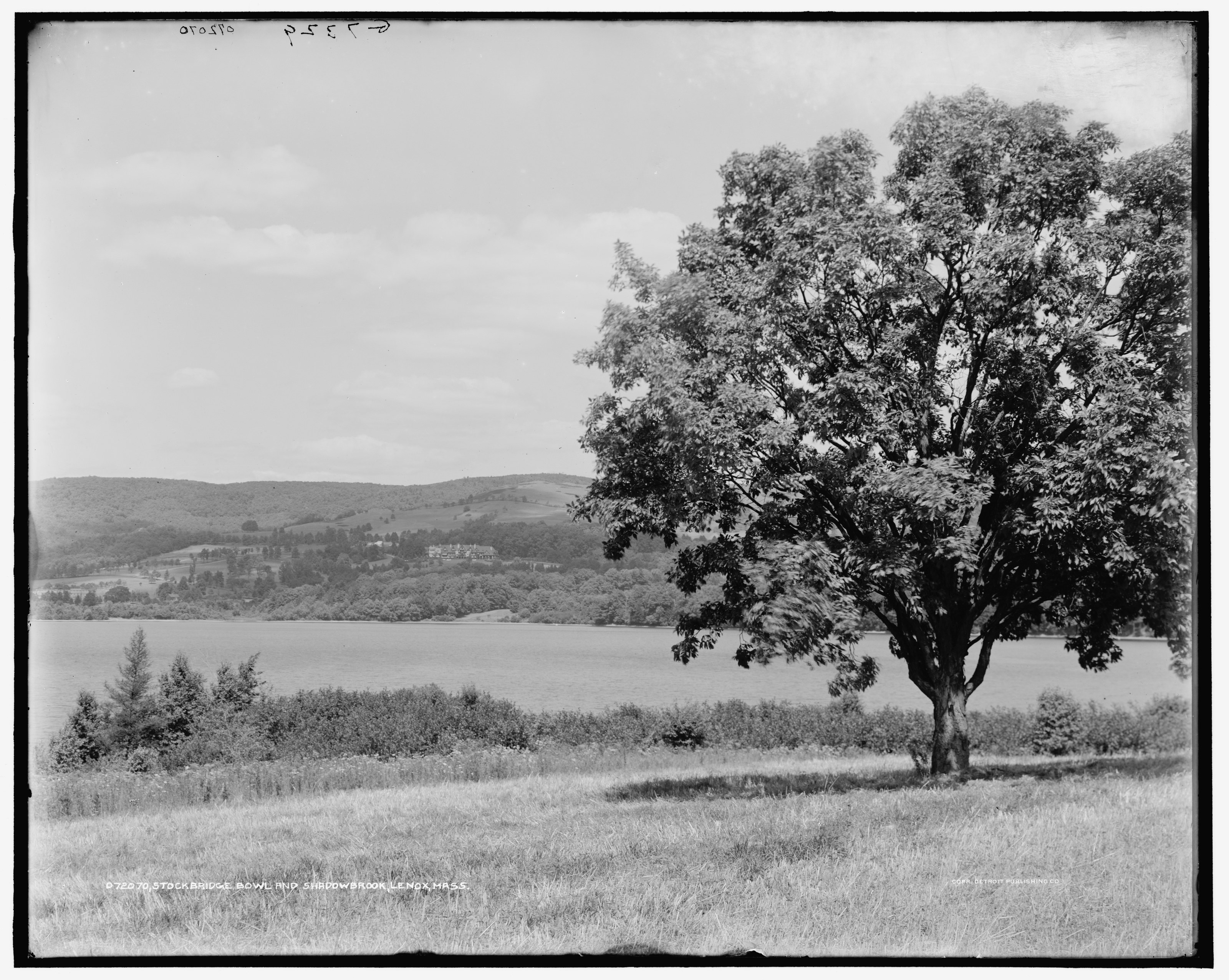
Photographs: Lenox Library Association (66), Boston Public Library (3), Lee Library Association (1), Lenox Historical Society (1), all via Digital Commonwealth; titles and dates quoted as catalogued. Fifteen of the Lenox Library items are from the Edwin Hale Lincoln Photographs collection, whose rights the Library gives as “No known copyright restrictions,” asking that it be contacted about reuse. Library of Congress, Detroit Publishing Company Collection: “Stockbridge Bowl from Shadowbrook” and “Stockbridge Bowl and Shadowbrook,” no known restrictions on publication. Text: Wikipedia, “Shadow Brook Farm Historic District”; americanaristocracy.com, “Shadow Brook”; loveproperty.com, “Shadow Brook: the tragic tale of America’s second-largest Gilded Age mansion.” The two commercial sites are secondary and are named wherever used. Olmsted job 01022 from the firm’s inventory at olmstedonline.org.