Building it
Ground, water, stone, timber, iron. The trades that put the shell up, in the order the season allowed — and, in two towns, the public buildings and the current that came with them.
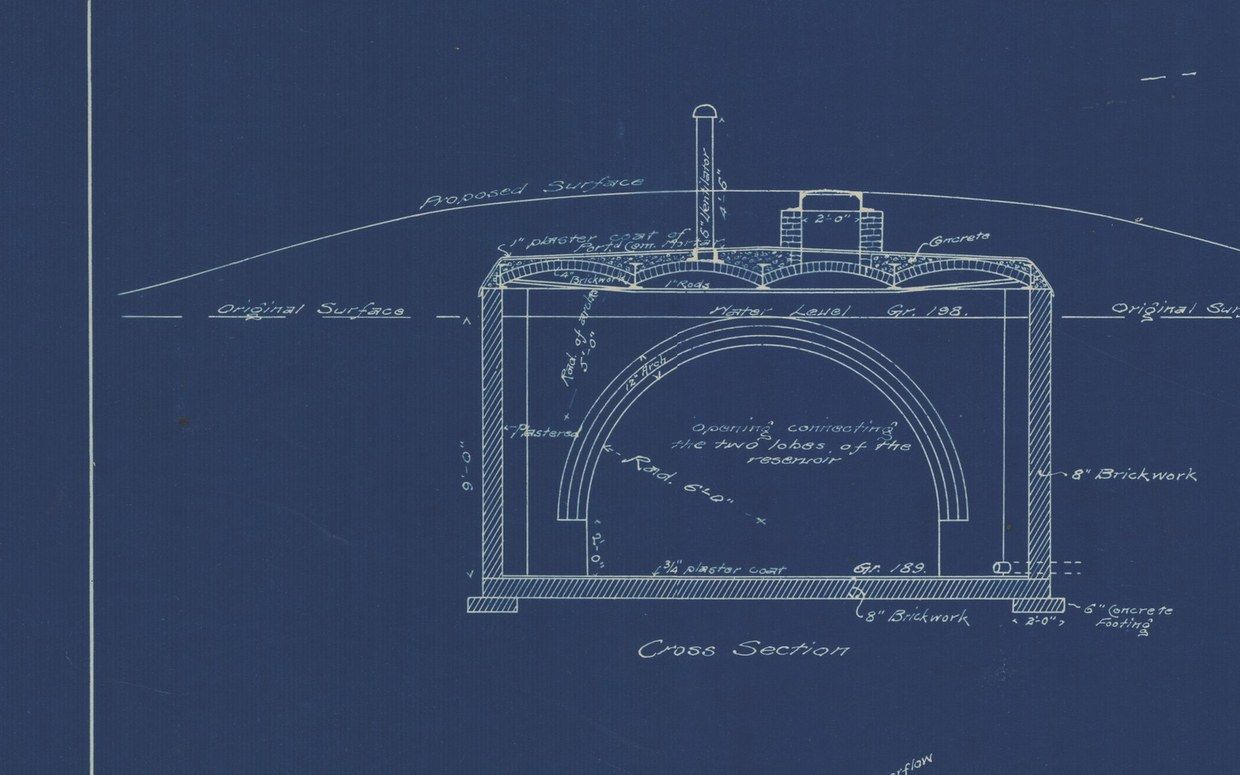
Ground and water
Grade 76 to grade 198
Reshaping the hill, moving a public road off it, and getting water to the top — one estate buried a brick reservoir in a lawn, another put a tank on a frame and had it drawn in perspective first.
Read →
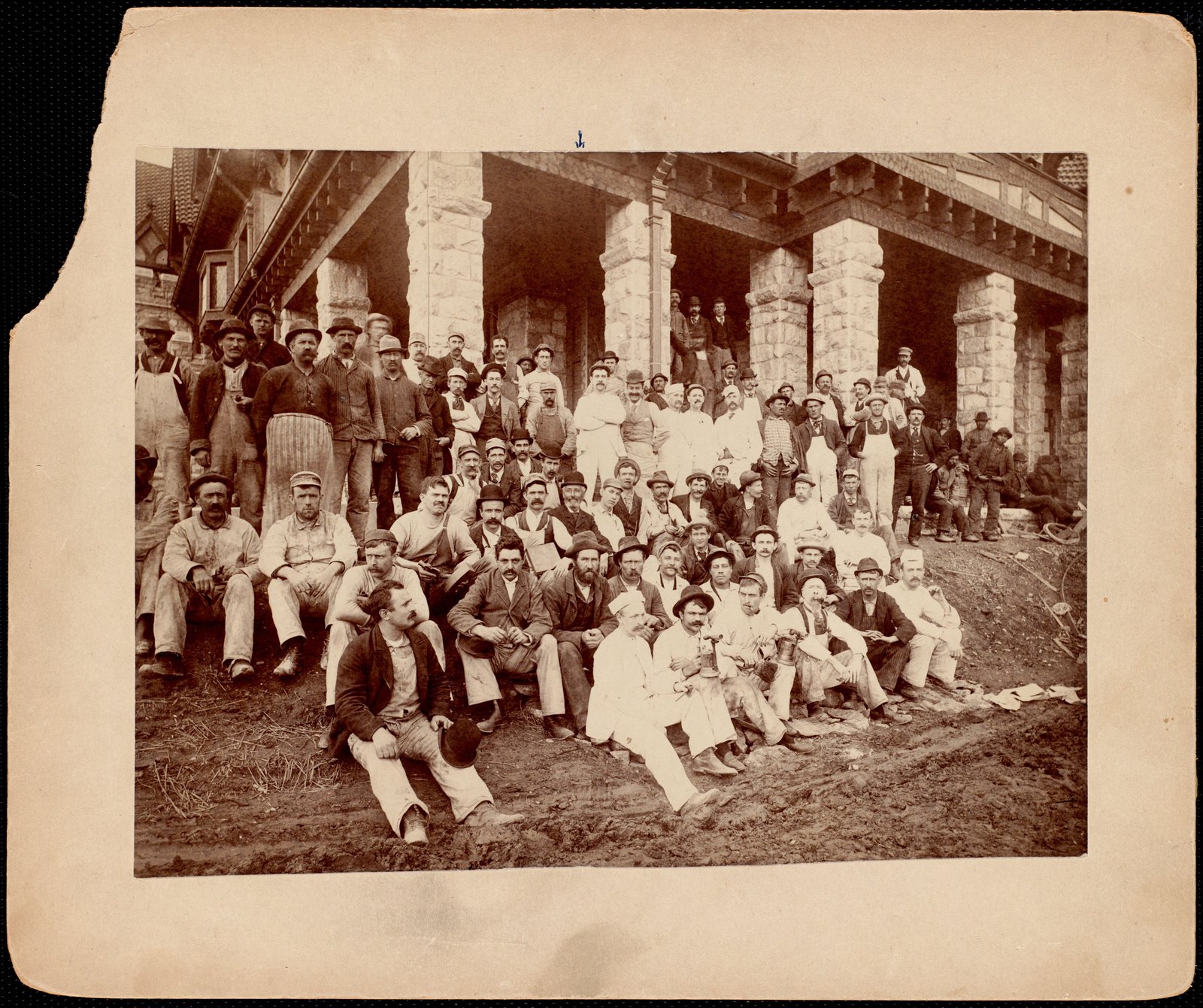
Stone
The men on the steps
A hundred and more of them, sitting on the rubble in front of the house they were building, photographed once and named nowhere.
Read →
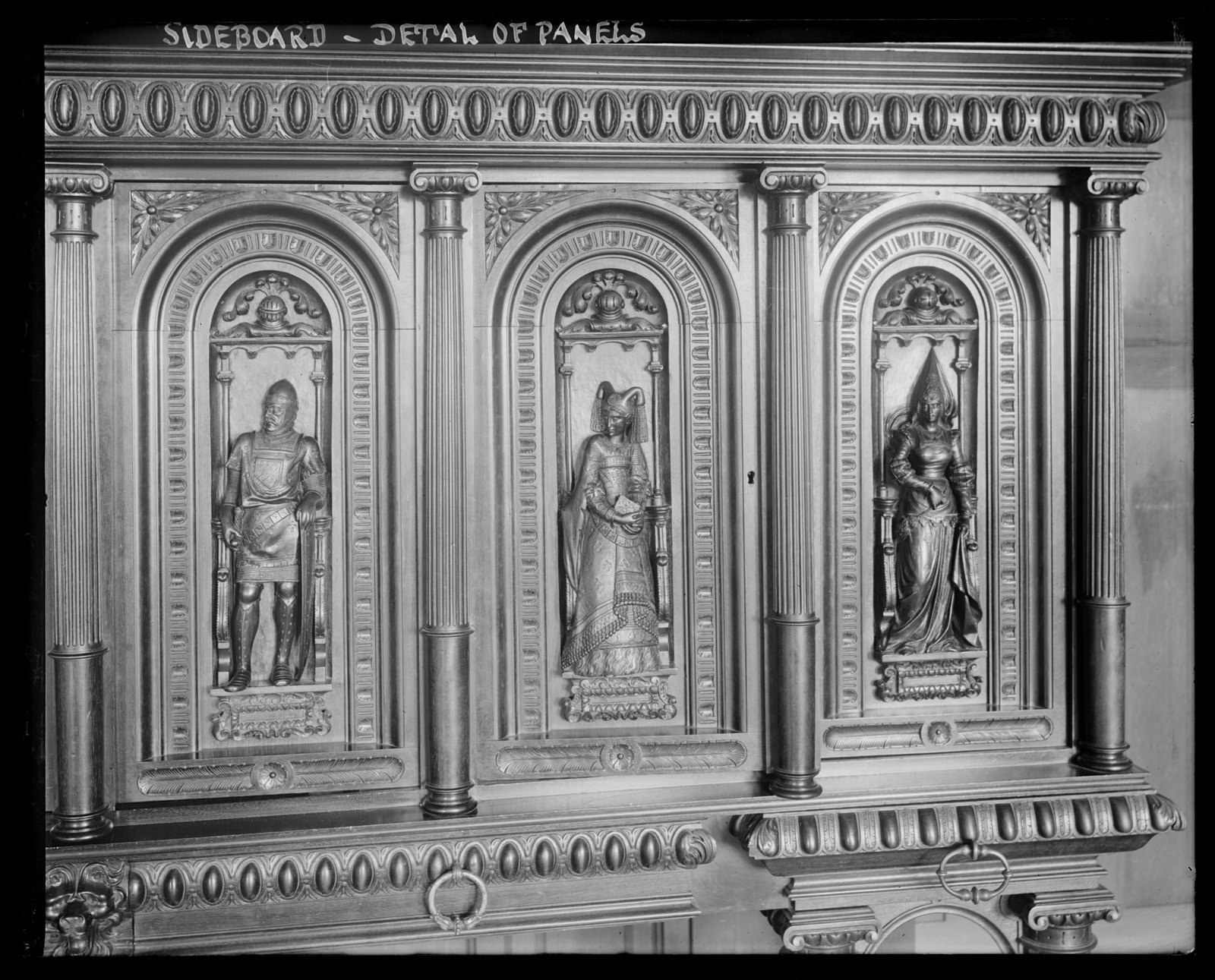
Timber
Cut to a tolerance that assumes the wood will move
A hundred and forty-four carpenters in South County, and a stair that has to be right the first time in a material that never stops changing size.
Read →
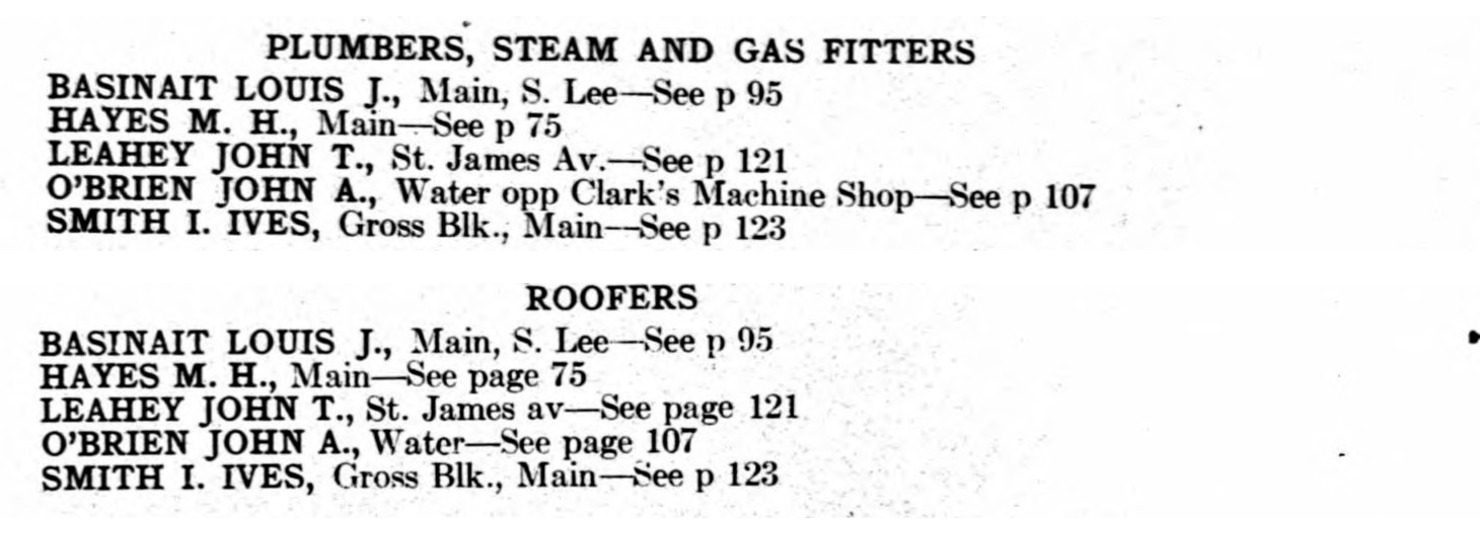
Metal
The roof was a plumber’s job
All three towns that printed a trade directory in 1926 list roofers — and in Lee the five roofers are the five plumbers, name for name.
Read →
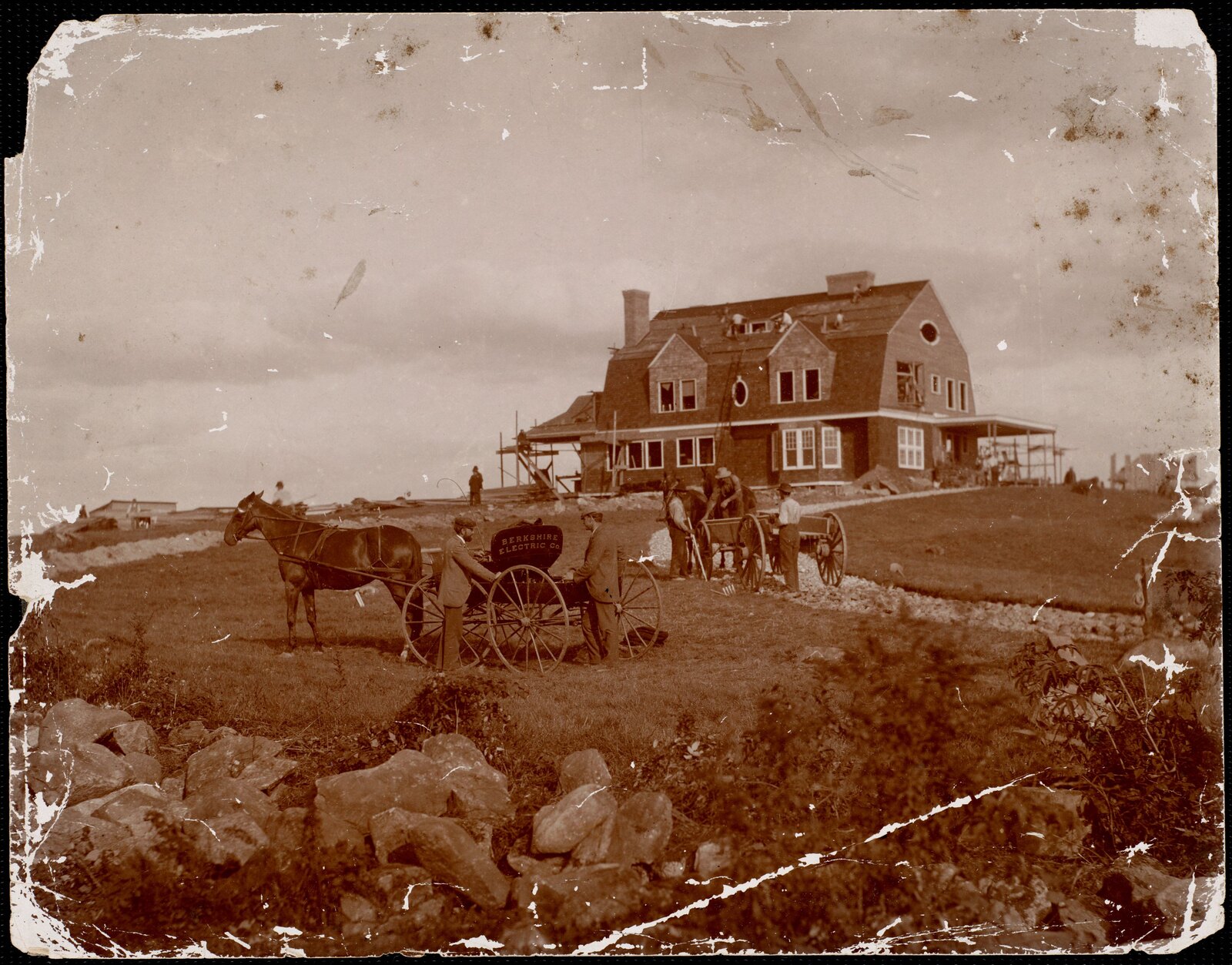
Heat, light and water
Wires on the elm trees
Great Barrington had alternating current in 1886. Within ten years the houses on the hill were making their own, and every one needed a man in the cellar who understood it.
Read →
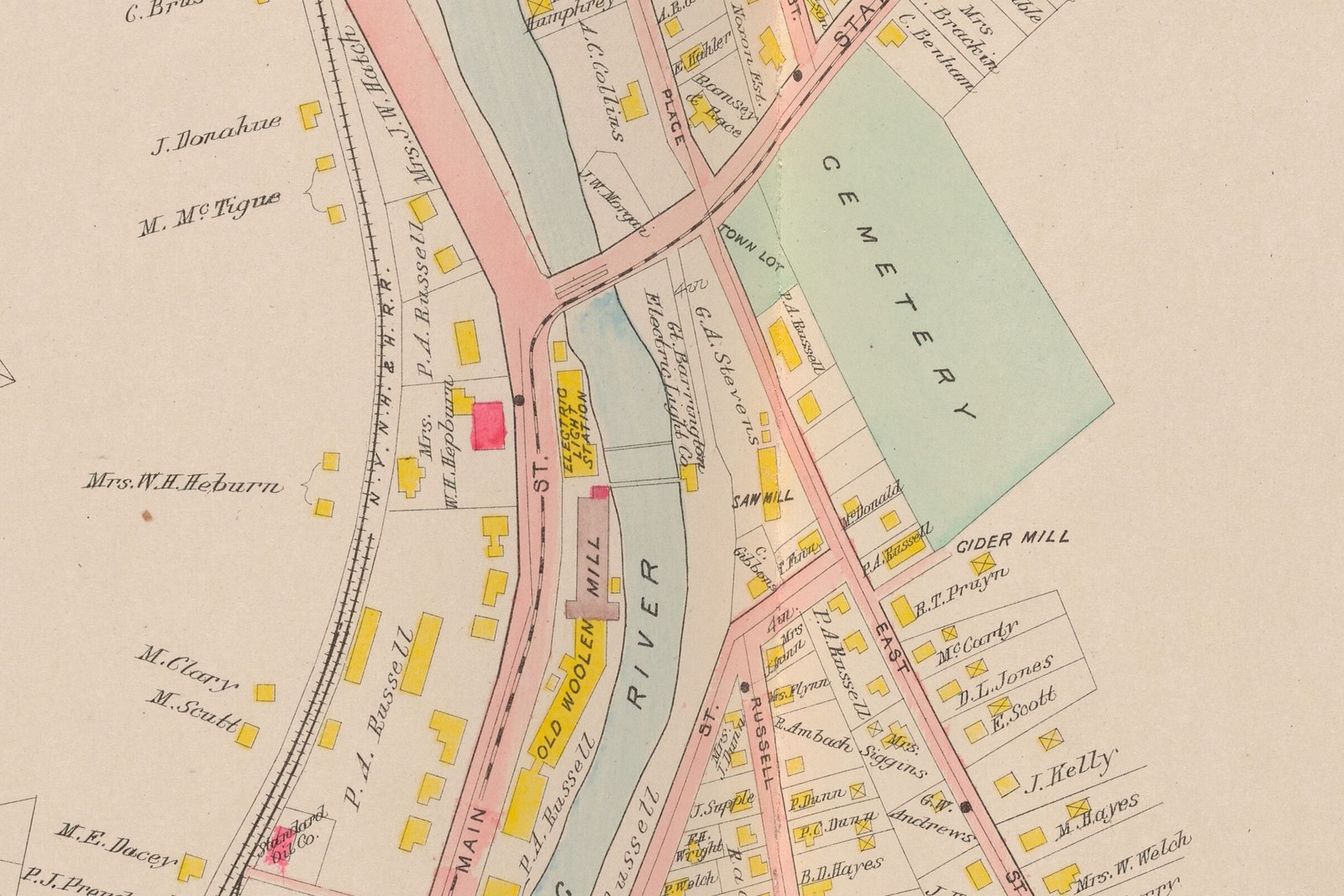
What ran up Main Street
Five hundred volts
The number everyone quotes for the 1886 Great Barrington line is three thousand volts. Stanley’s own words are five hundred — and the atlas draws nothing at all where the plant stood.
Read →
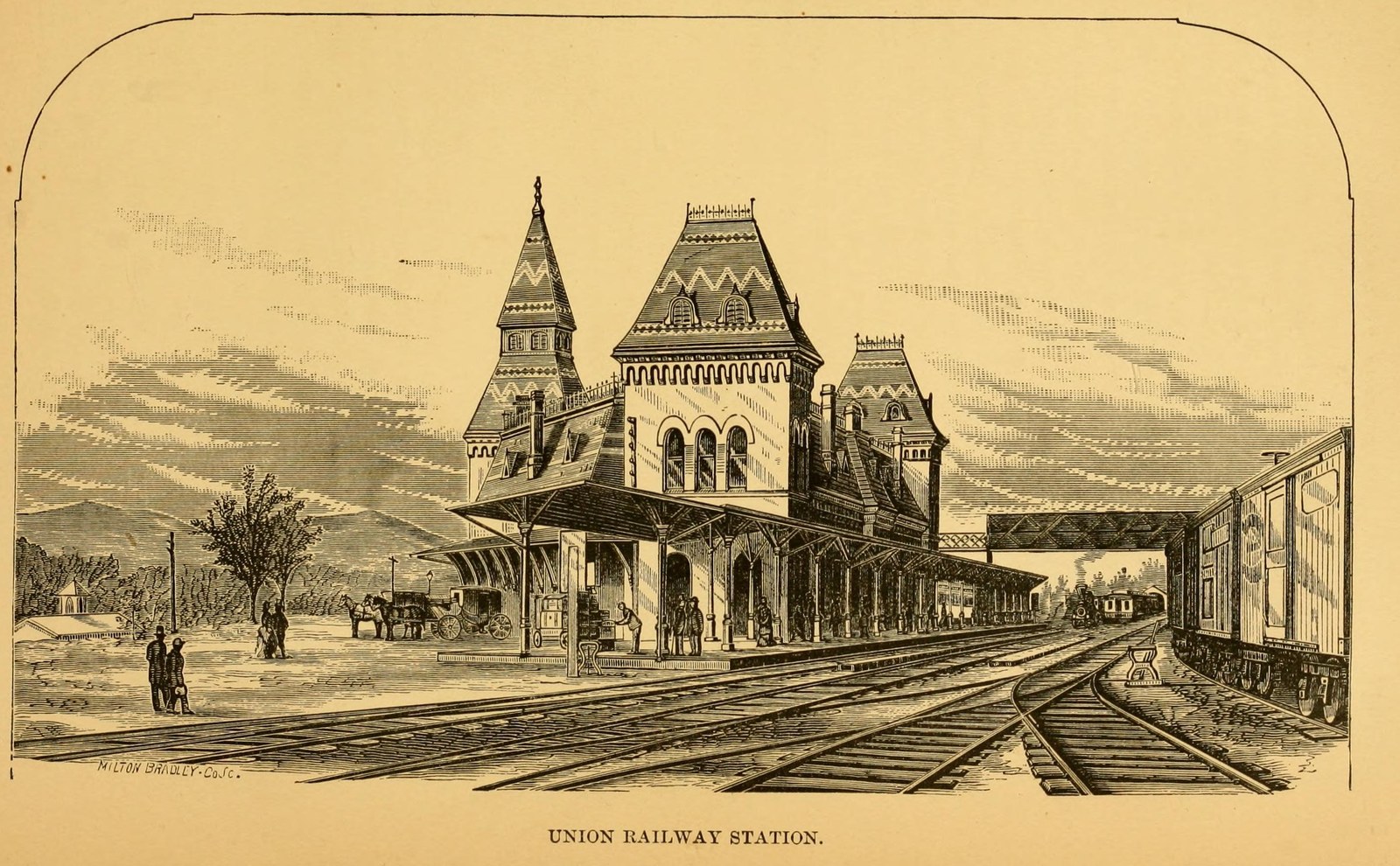
Three stations on West Street
The building that closed a street
An act of 1866 let a railroad put a depot across West Street in Pittsfield, and the street was discontinued. The engraving of it has been sitting in a digitised book the whole time.
Read →
Keep up with it
New properties go up here as the research turns them up.