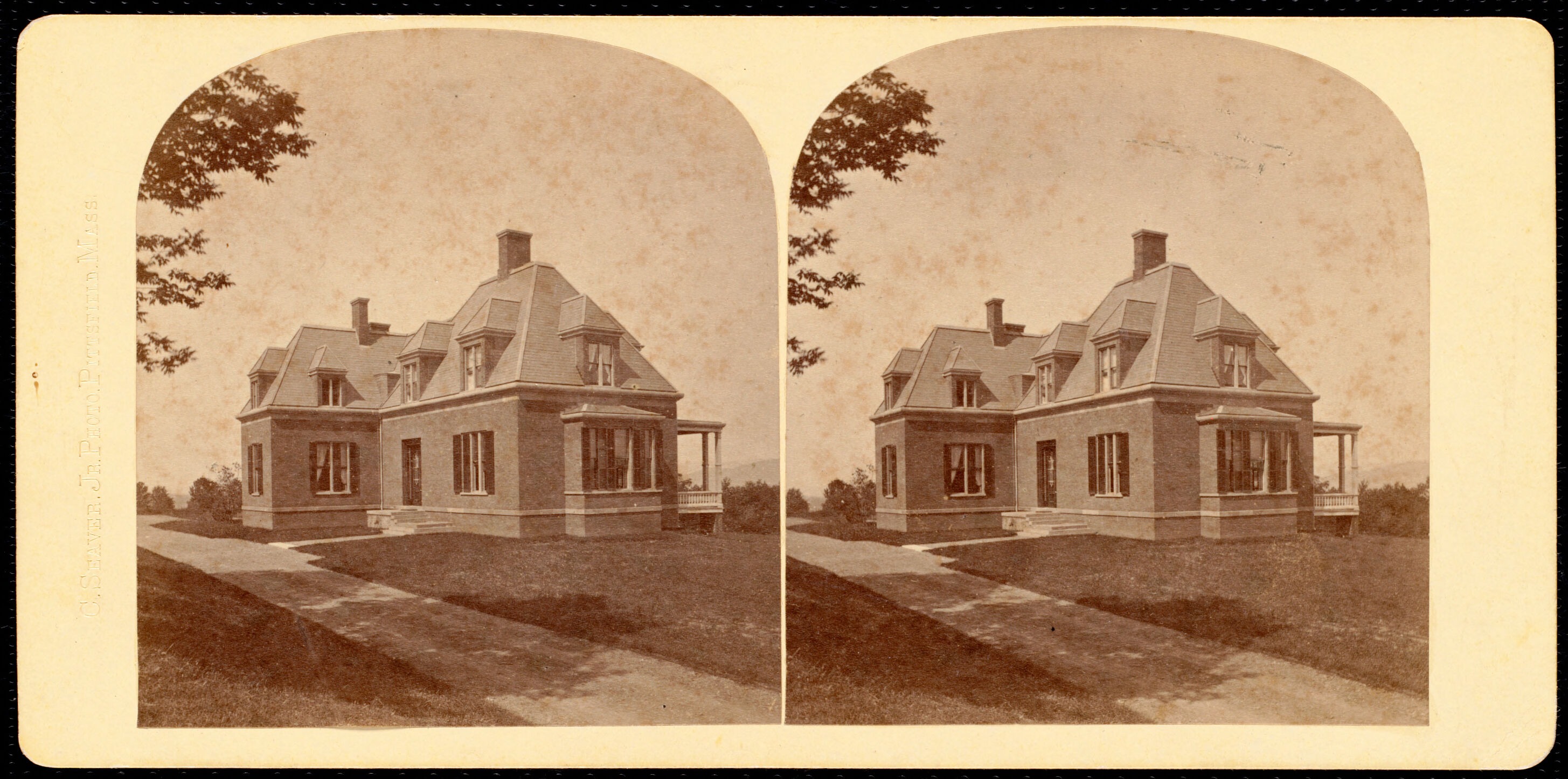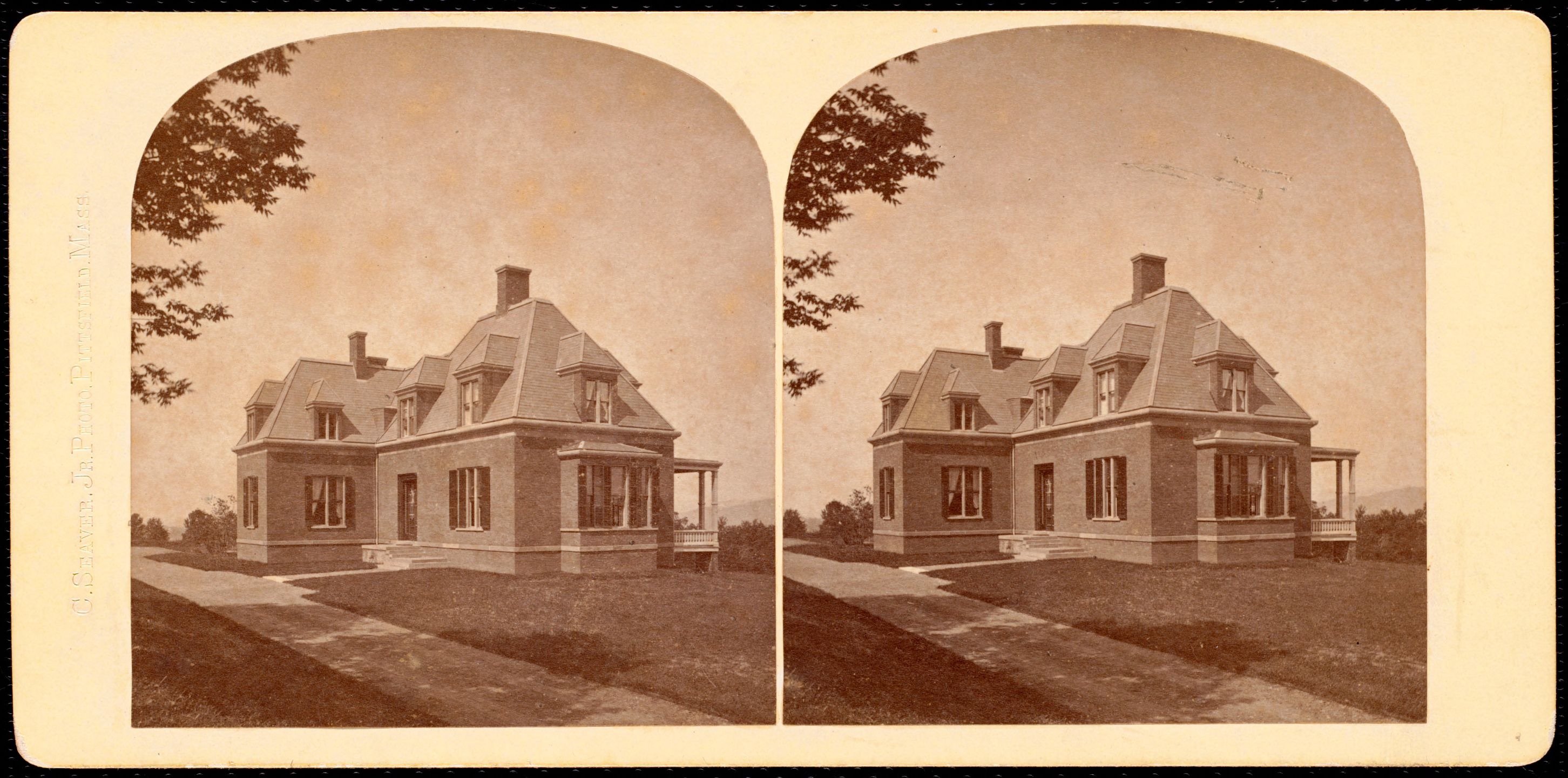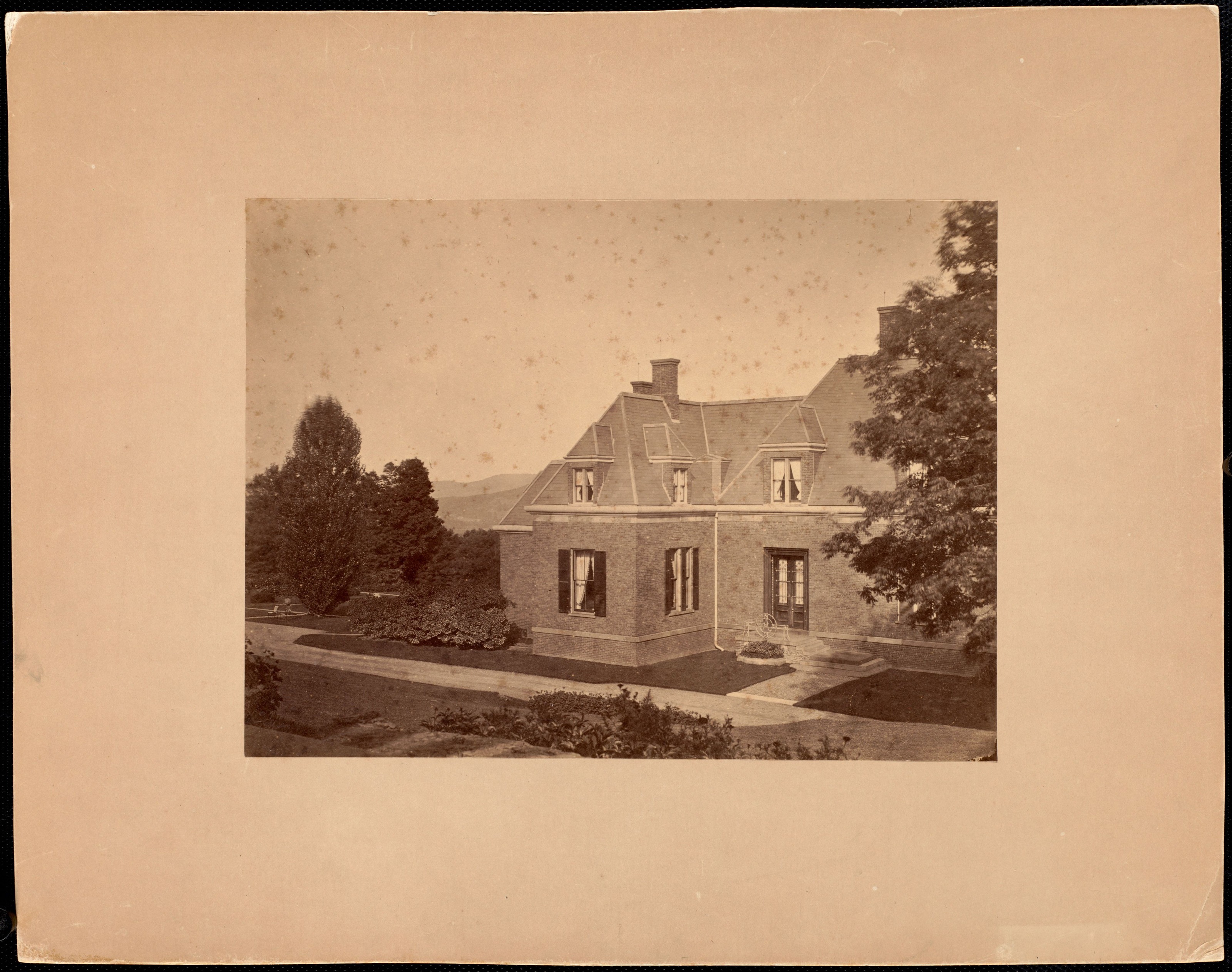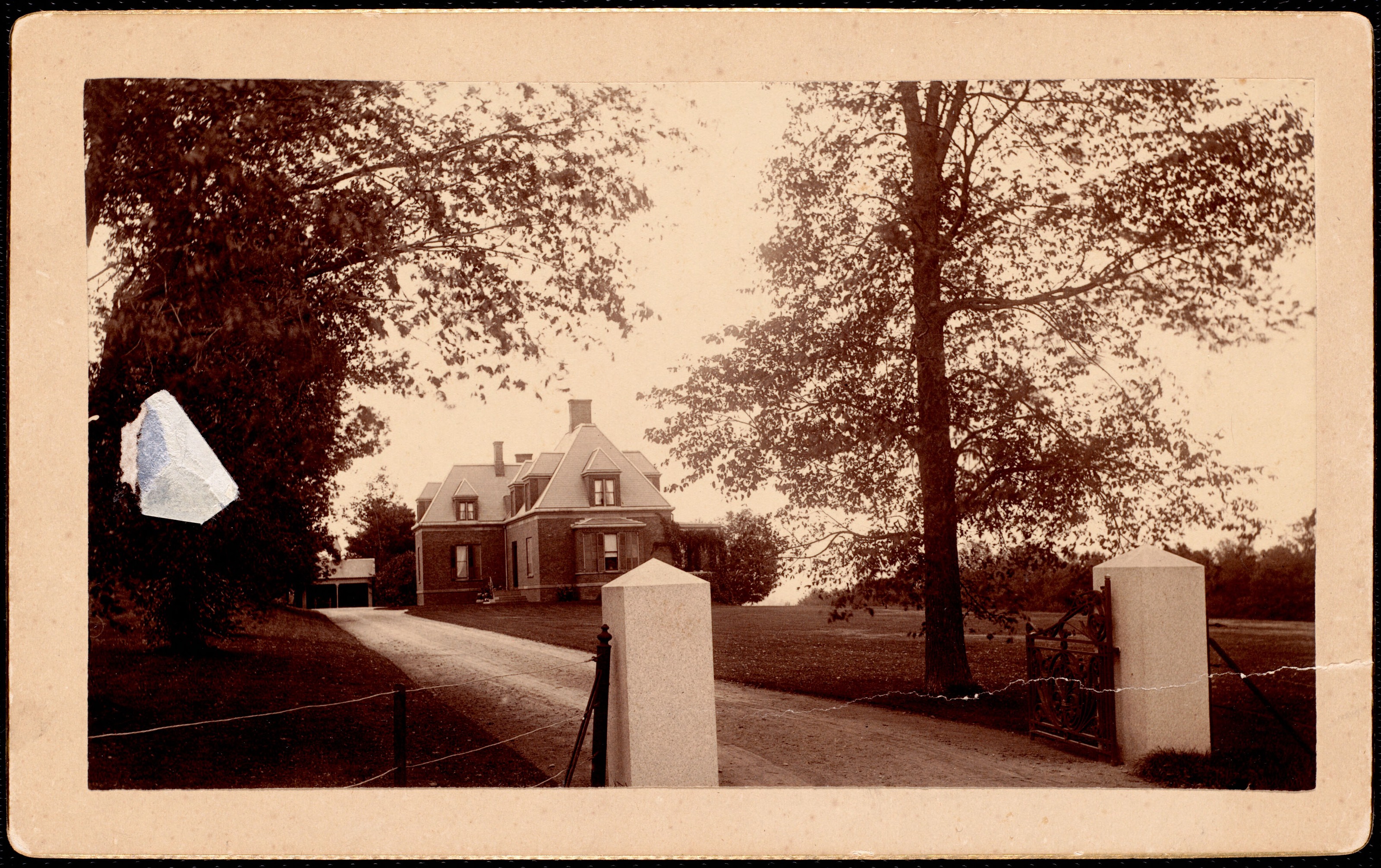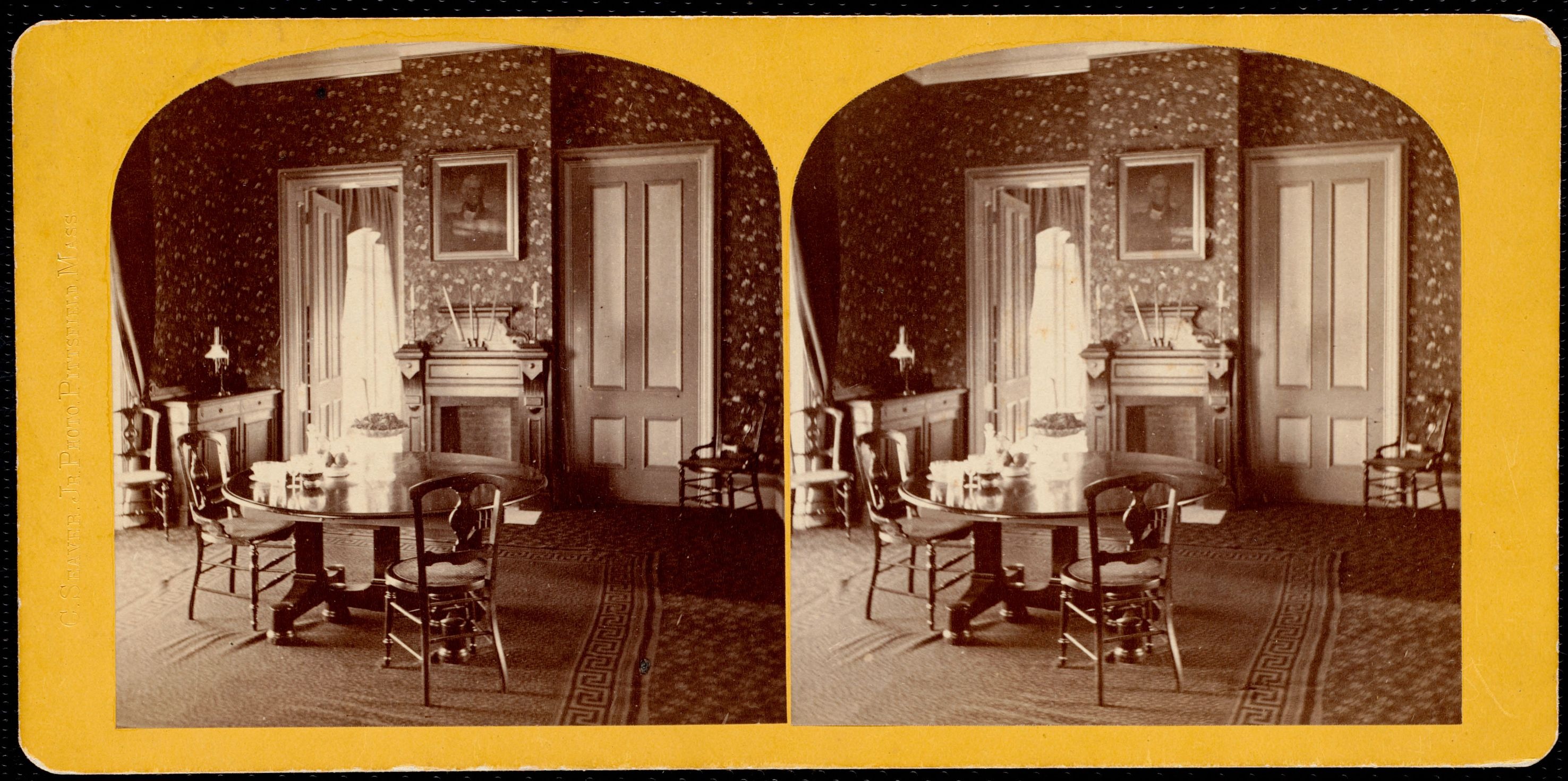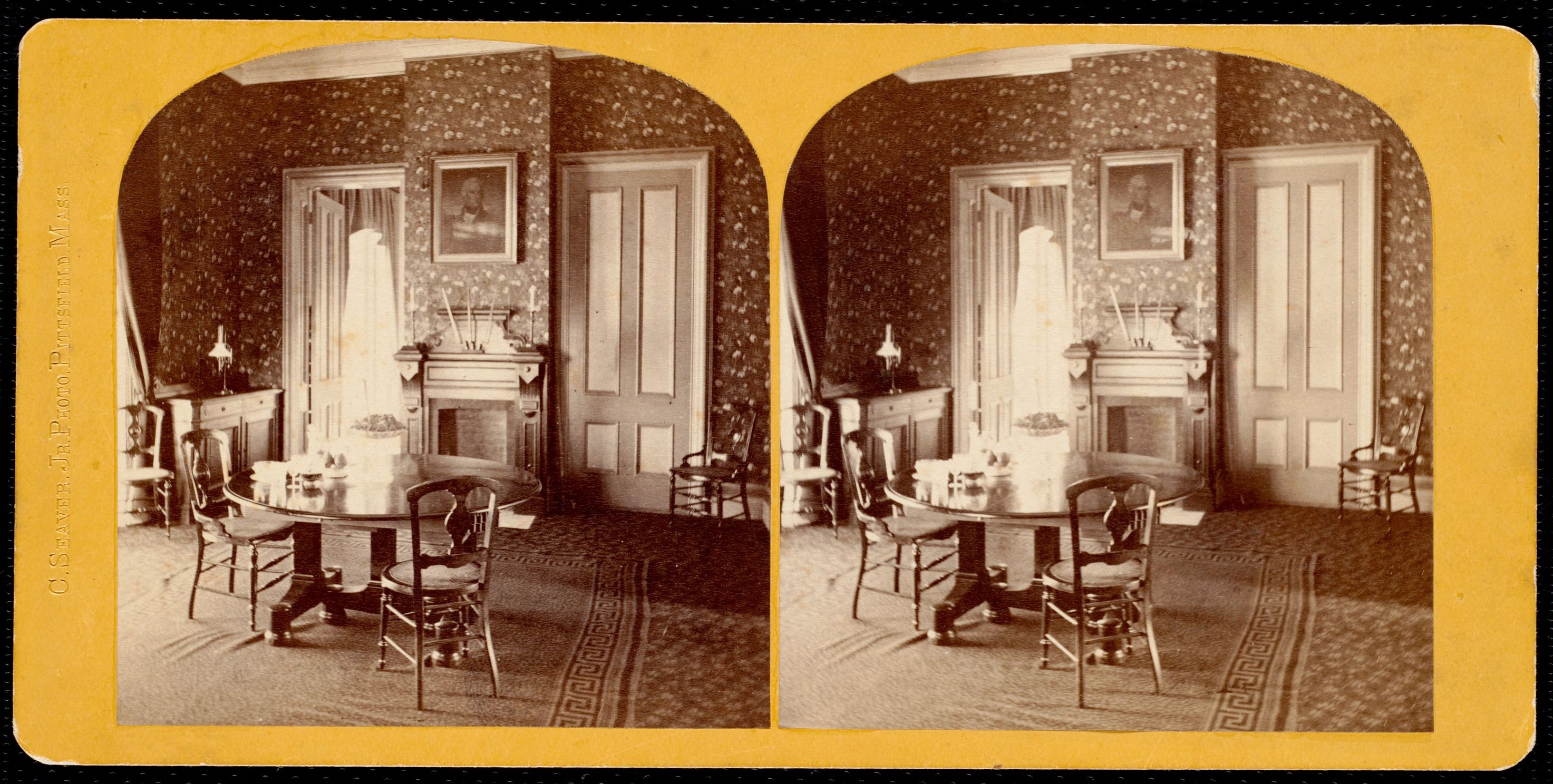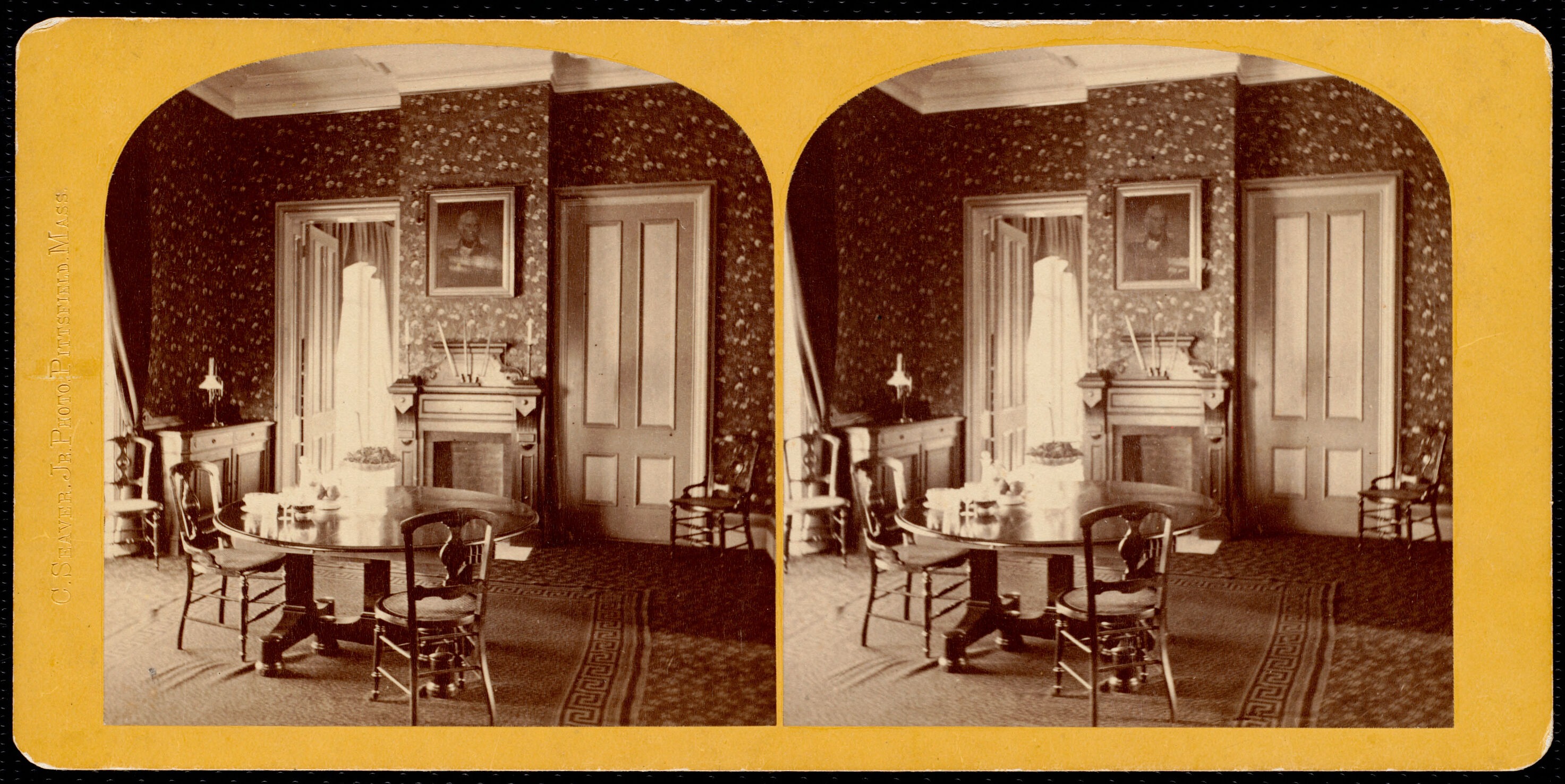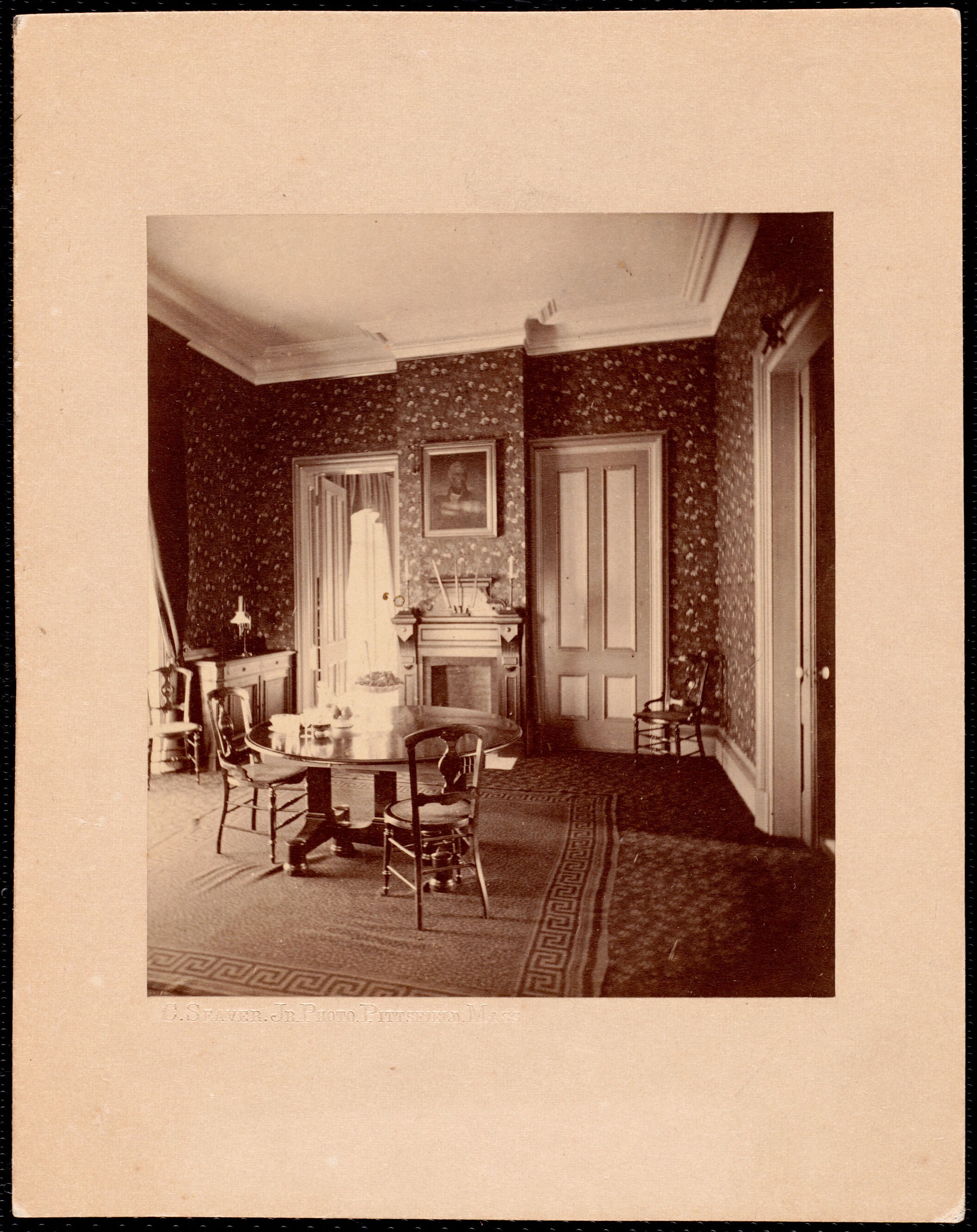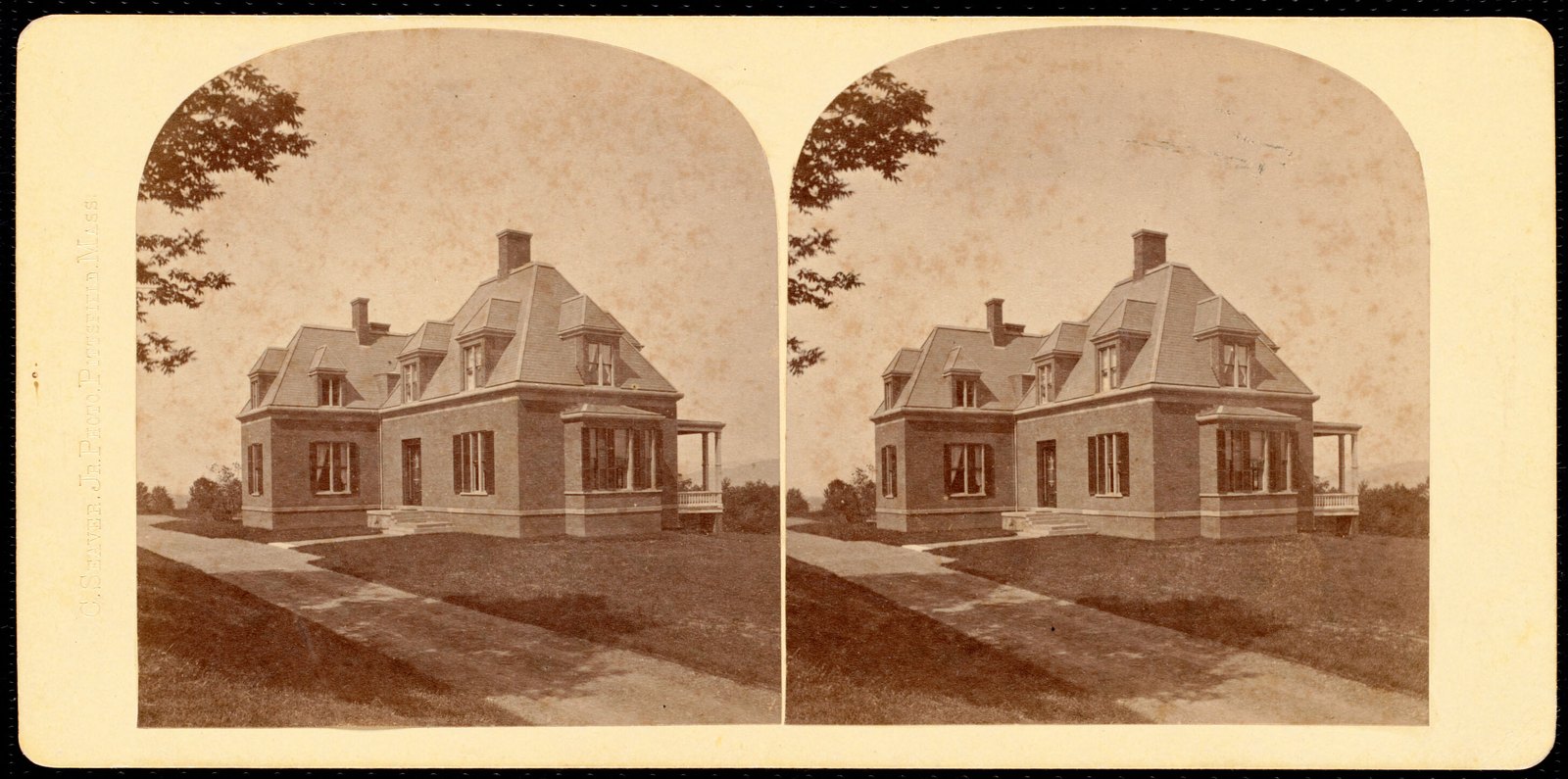
Five of the twelve photographs on this page are stereographs — double images on card mounts, two of the house on cream and three of the dining room on yellow, made to be looked at through a viewer in somebody’s parlor. No other estate in this survey is recorded that way. The Dormers is also the only house here designed by the man who lived in it, and he designed a good deal else in Lenox besides.
I. Colonel Auchmuty
Richard Tylden Auchmuty was born on 15 July 1831 and died on 18 July 1893, at this house, of pulmonary edema. He joined the Union Army in 1862, served in the Fifth Corps, was at Gettysburg, and came out a lieutenant colonel. He was an architect: he worked with and then partnered James Renwick Jr., and two of his churches are on the National Register — St. Mary’s Episcopal in Brooklyn and Trinity Episcopal in Lenox.
He arrived in Lenox in 1866, bought land on the Pittsfield road, and built The Dormers to his own design about 1868. What he then did in the town is a list: he chaired Trinity Church’s building committee and put up to $20,000 into it; he designed the town hall; he ran the water and sewer projects; he built and gave a school in 1883; he organized Memorial Day and the dedication of the Patterson monument. He rode a Civil War horse called Mrs. Gaines around the village.
In 1881 he founded the New York Trade Schools, to teach young men bricklaying, plastering, plumbing and carpentry at a time when the building trades were closed by apprenticeship. It is the thing he is remembered for outside the Berkshires.
His New York Times obituary opened: “The death of Col. Richard T. Auchmuty is a great blow to Lenox.”
II. Ellen
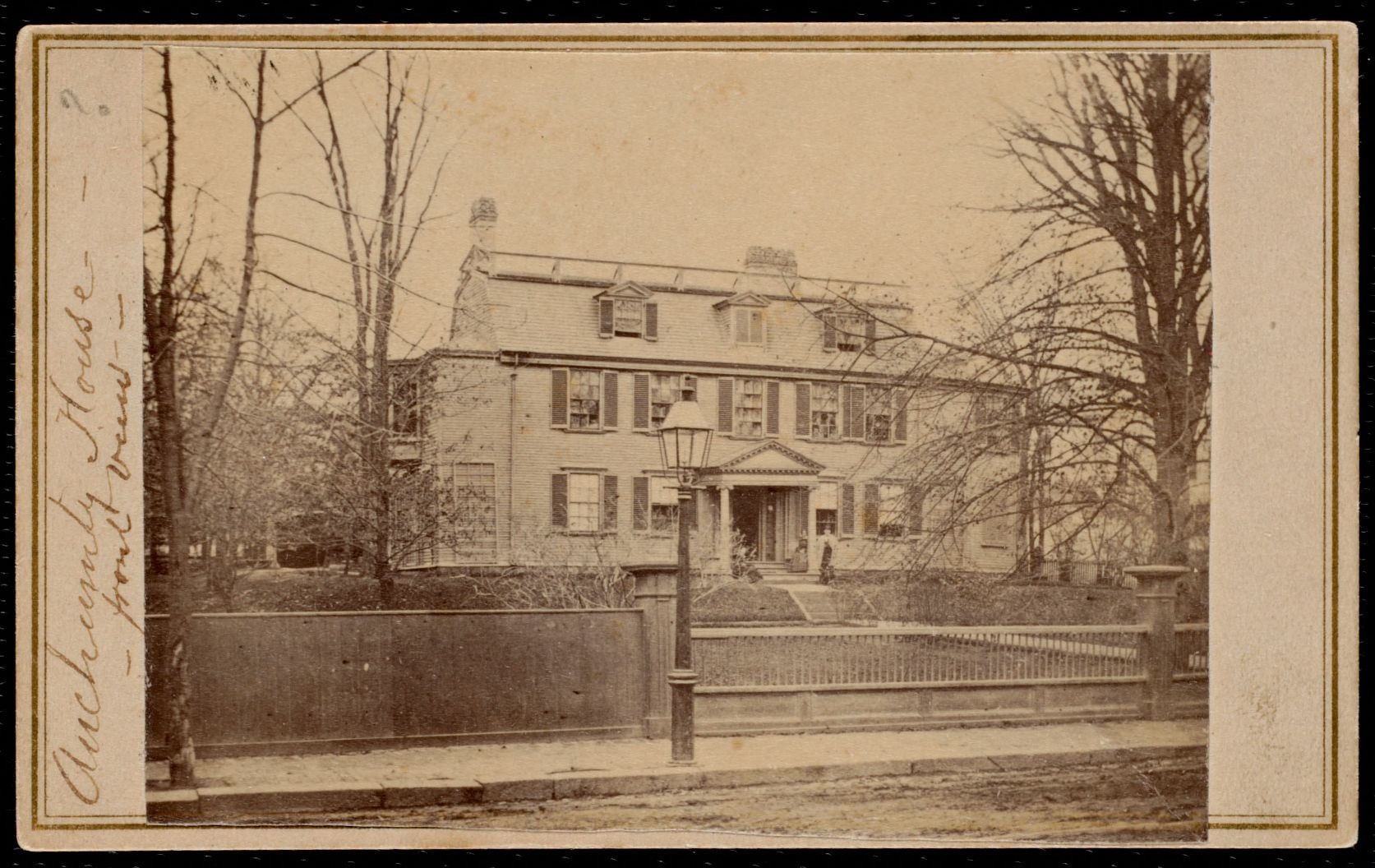
Ellen Schermerhorn Auchmuty outlived him by thirty-four years and died in 1927. She never took to motor cars, or the telephone, or steam heat, and she ran her money and her giving shrewdly to the end.
Her family had already given Lenox something considerable. In 1874 the Schermerhorns gave the town the second county courthouse — the building that became the Lenox Library. Which is where these twelve photographs are, and why this page exists at all.
III. The stereographs
A stereograph is two nearly identical photographs mounted side by side; seen through a stereoscope they resolve into a single image with depth. They were the domestic entertainment of the 1860s and 1870s, and the great majority of them are of scenery, monuments and foreign cities — bought, not made.
These are of somebody’s dining room. Three separate stereo views of one room, on the same yellow mounts, taken from within a step or two of each other: the wallpapered corner, the doorway, the table set, the chairs pulled out. Two more, on cream mounts, of the house from the drive.
Somebody was photographing this household in three dimensions, for a viewer, at home. The Lenox Library’s own dates for them run from about 1880 to about 1930, overlapping Auchmuty’s residence of 1868 to 1893 rather than sitting inside it, and for a man who had spent his life on buildings that is not a surprising thing to have commissioned.
IV. The sitters
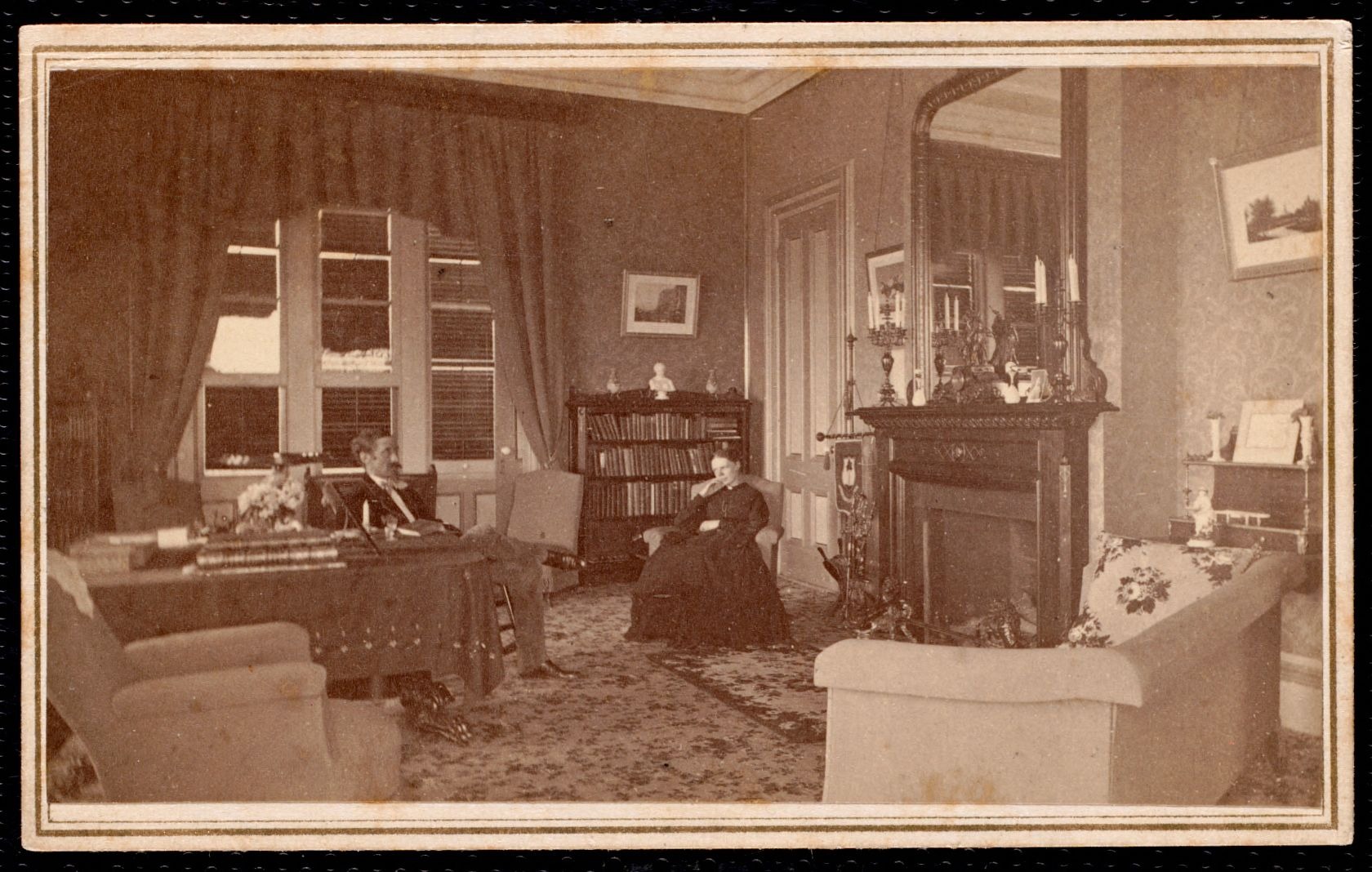
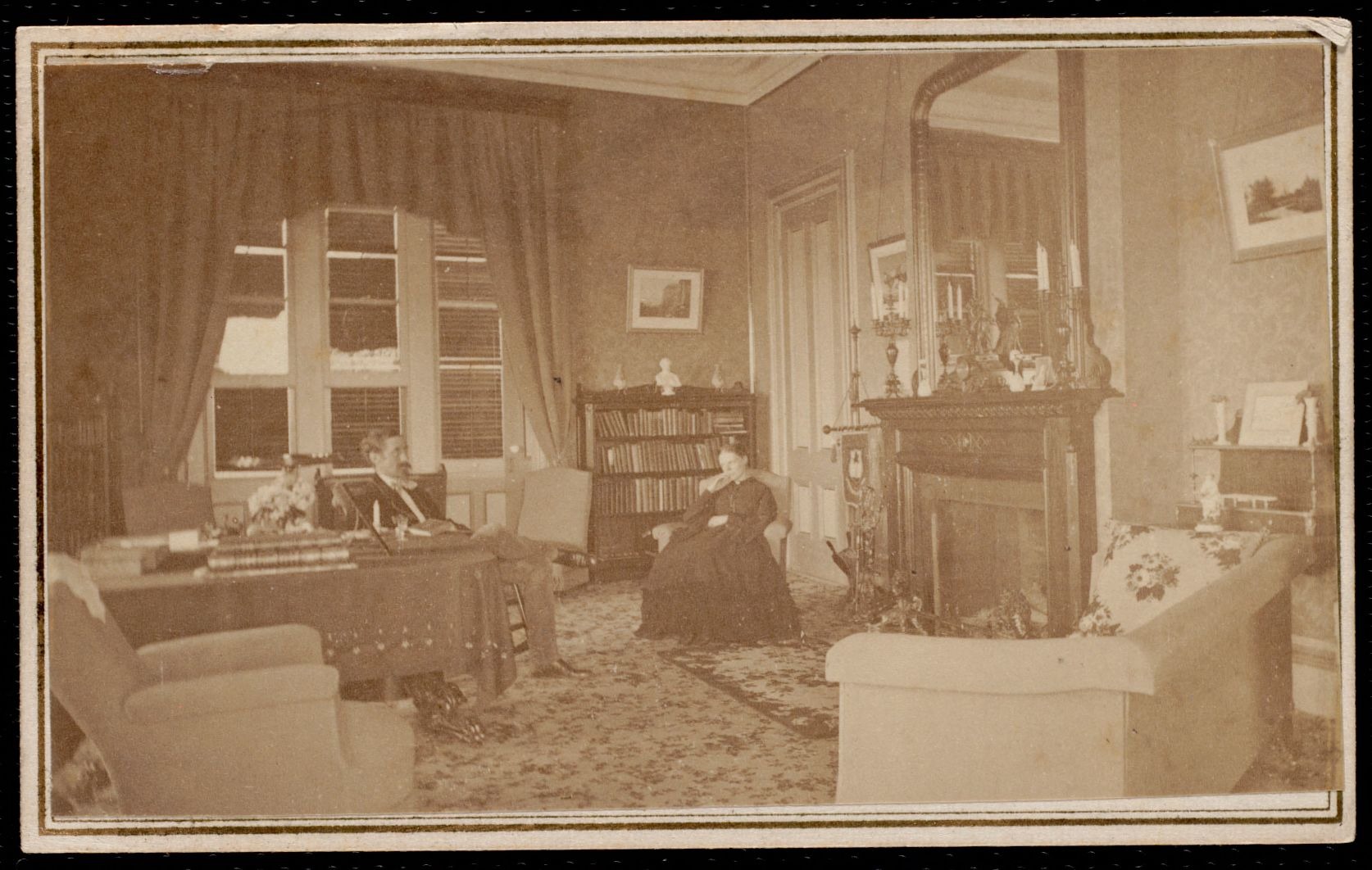
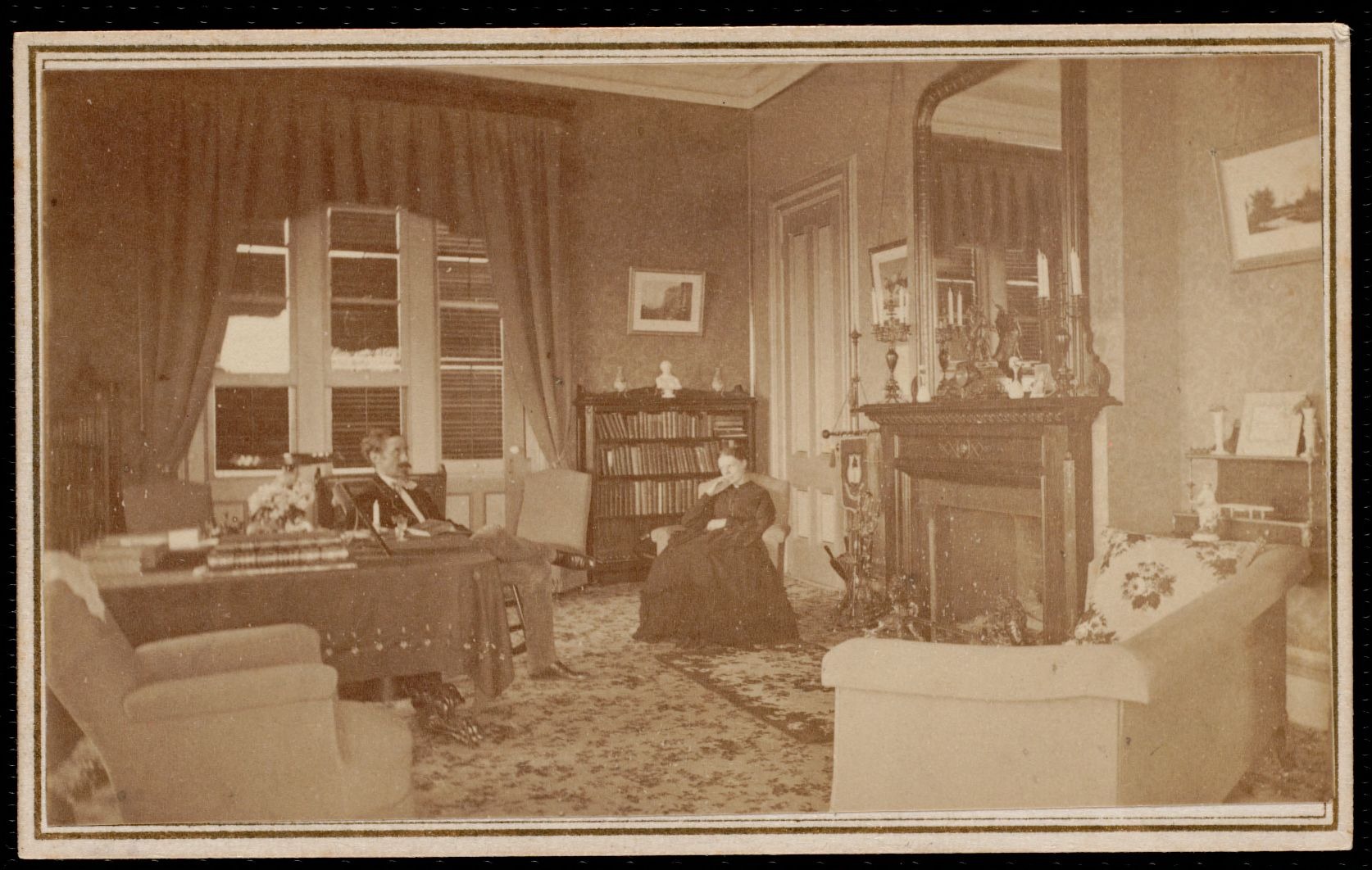
Three of the photographs show a man and a woman seated indoors — in the parlor, and twice in a living area, dated by the catalogue to the same span. The catalogue does not name them. This page will not either. What can be said is that the dates are the dates of the Auchmutys’ occupancy, and that these are not staged studio portraits but two people in their own chairs beside their own fire, with the bookcases and the mantel clutter behind them.
The gate posts and the drive were photographed in 1893. That is the year the Colonel died.
The house still stands, in the Twelve Oaks condominium development.
Sources
Lenox Library Association, Local History Photograph Collection, via Digital Commonwealth: twelve items, eleven CC BY-NC-ND 4.0 and one CC BY 4.0. Titles and dates are the Lenox Library’s own; the inscription on the front view is transcribed from the mount. Lenox History (Lenox Library Association), “The Auchmutys of the Dormers,” for Auchmuty’s dates of 1831–1893, his enlistment in 1862, his arrival at Lenox in 1866 and the purchase on the Pittsfield road, the founding of the New York Trade Schools in 1881, the school built and given in 1883, the Trinity Church building committee and the $20,000, the town hall, the water and sewer work, Memorial Day and the Patterson monument, the horse Mrs. Gaines, the New York Times obituary line, Ellen Schermerhorn Auchmuty’s death in 1927 and her habits, and the Schermerhorn gift of the second county courthouse in 1874 that became the Lenox Library. Wikipedia, “Richard T. Auchmuty,” for the exact dates of 15 July 1831 and 18 July 1893, the Fifth Corps and Gettysburg, the rank of lieutenant colonel, the partnership with James Renwick Jr., St. Mary’s Episcopal in Brooklyn and Trinity Episcopal in Lenox, the cause of death and the burial at Green-Wood. Lenox History, “Lenox as a Resort — Cottages to the North,” for the date of about 1868, Auchmuty as his own architect, and the house’s survival within the Twelve Oaks development. No Olmsted job for this estate appears on the firm’s Berkshire list. The identity of the sitters is not stated in the catalogue and is not asserted here.