Everything else in this section is about building these houses — the quarry, the frame, the plaster, the wiring, the men. This one begins the day the builders drove away, when the owner had a finished shell and a great deal of money and had to decide what that money was going to look like. Three answers turn up in the Berkshires, and they are not variations on a theme. They are different theories of what wealth is for.
I. Buy it new, and buy what everyone else is buying
The first answer is the one almost everybody chose, and it is stranger than it looks.
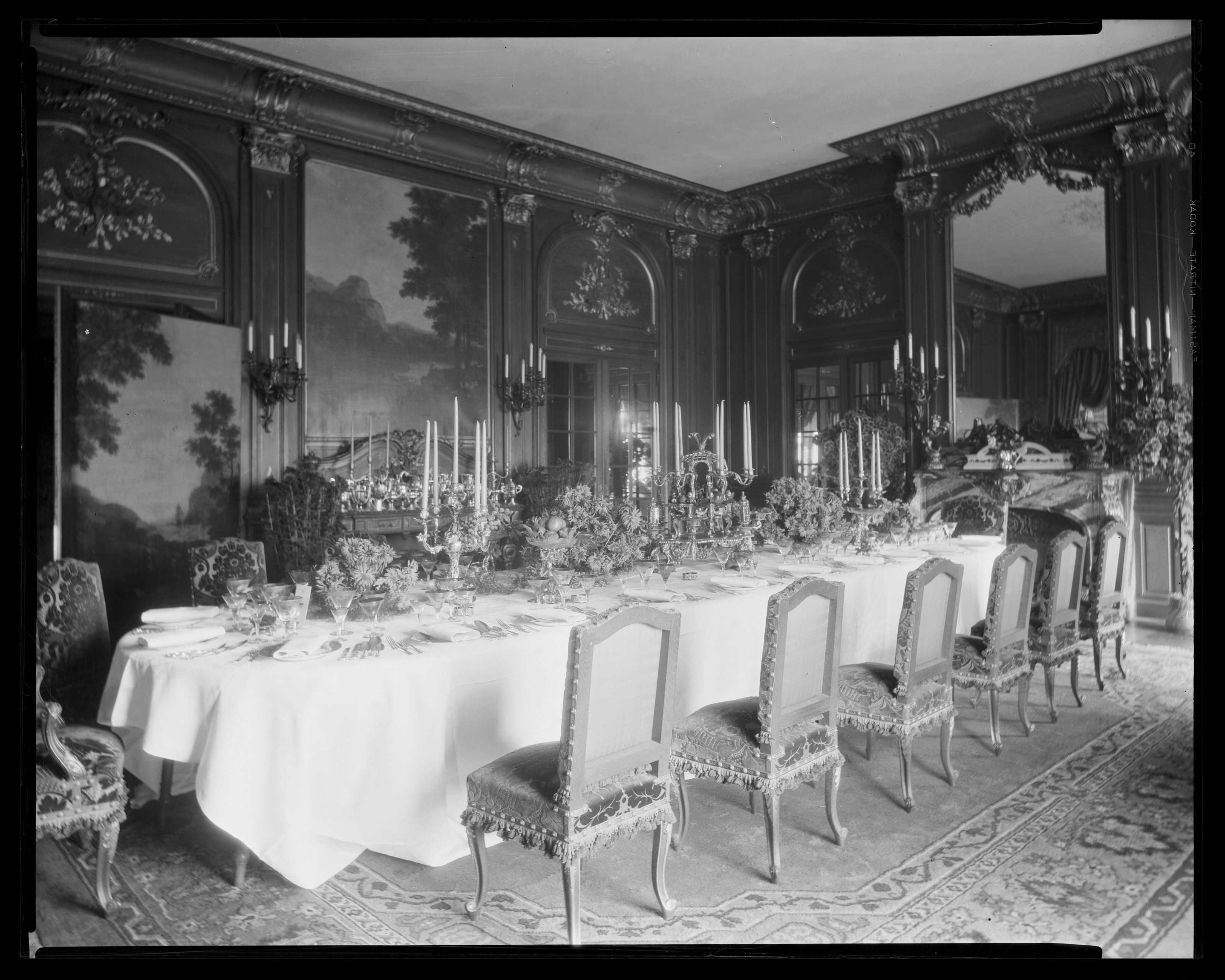
There was no shopping. A house like Elm Court or Wyndhurst or Bellefontaine did not get furnished object by object; it got decorated under one contract by a New York firm that designed the rooms, manufactured most of what went in them, bought the rest in Europe on its own account, crated the lot, put it on a train and sent its own men up to install it. “Decorator” then did not mean someone who chooses. It meant someone who makes — cabinet shops, carving shops, upholstery, gilding, drafting rooms, all on the payroll.
And the firms that could do it at that level were four or five houses within about a mile of each other in Manhattan: Herter Brothers, William Baumgarten & Company, W. & J. Sloane, the Tiffany Glass and Decorating Company, Pottier & Stymus.
Which produces the thing worth sitting with. If you had the money for a Berkshire cottage in 1893, your drawing room was going to be designed by one of about five firms, who were designing each other’s clients’ rooms in the same month, out of the same workshops, in the same manner. The proof that you had arrived was that your house looked like the houses of the people who had arrived.
That is conspicuous consumption, certainly. It is also conformist consumption, which is a different animal. It is expensive, it is correct, and it is replaceable — and because what it signals is currency, this year’s correctness, it starts going out of date the week it is installed.
Two of the principals of W. & J. Sloane, the largest furnishing house in the United States, built at either end of one Lenox road in one decade — John Sloane at Wyndhurst in 1893, his brother William Douglas Sloane at Elm Court from 1885. Whatever went into those two houses did not have far to travel through the trade. Nobody in the Berkshires wrote down which firm did which house, because nobody needed to: anyone who walked into the room could see what it was.
II. Buy it old, because old cannot be bought new
The second answer costs more and solves a problem the first one cannot.
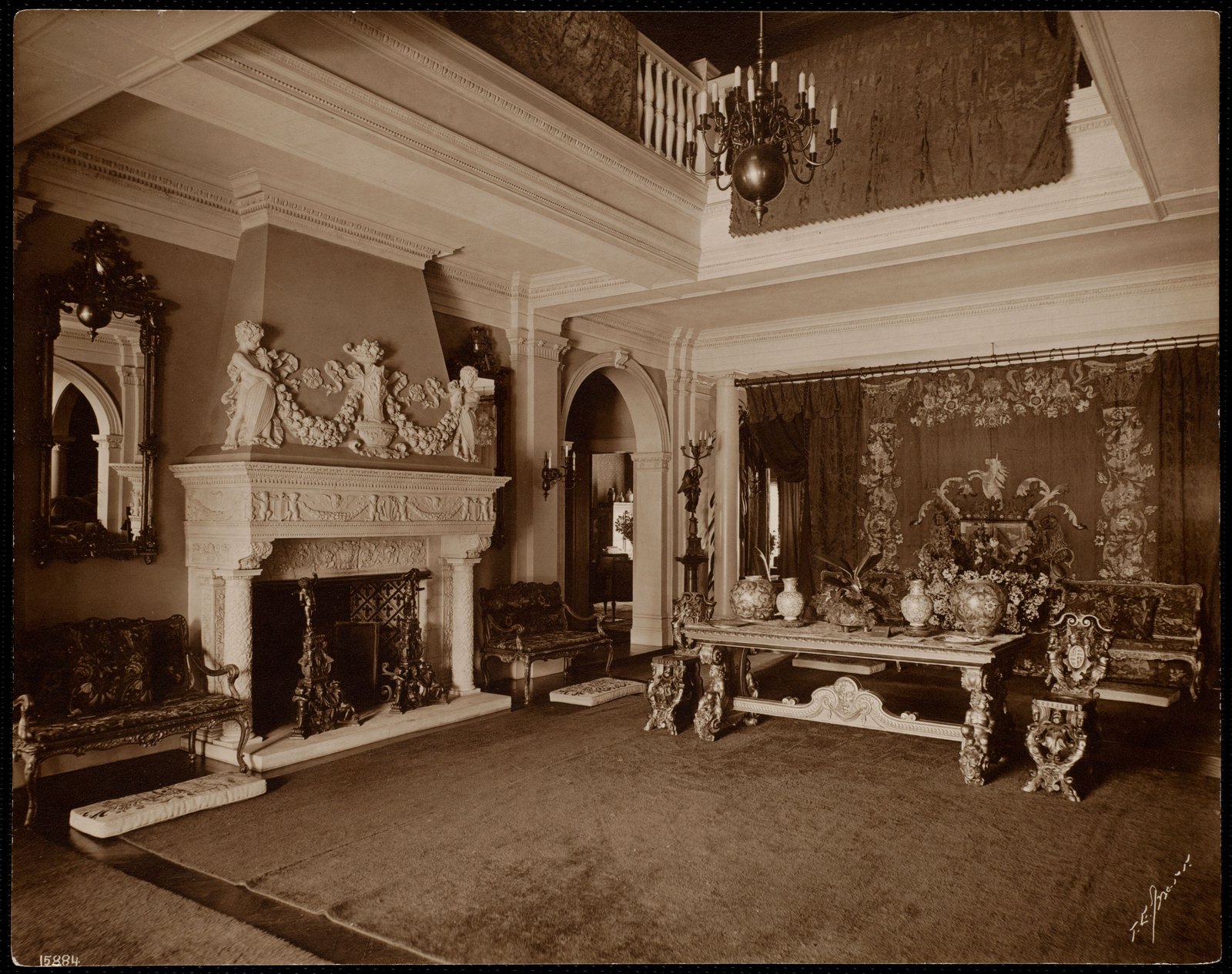
The Lenox Library holds three interior views of Wheatleigh, and the cataloguer who titled them had no doubt about what was on the walls: interior with tapestries and chairs, interior with dining table and tapestries, interior with dining tables and tapestries and fireplace. Three titles, the word in all three. Nothing in the record says where those hangings were made or how old they were when they arrived — but the market they came out of is documented to the loom, and it explains exactly what a tapestry was doing on that wall.
What an American with money wanted in the 1890s was the old work. Not tapestry — old tapestry. And the reason is in a single object: a twenty-one-foot millefleurs hanging woven in Hainault in the 1520s, a wall of dark ground sown with identifiable flowers, with a family’s arms set into it twice over so that everyone in the room knows whose room it is.
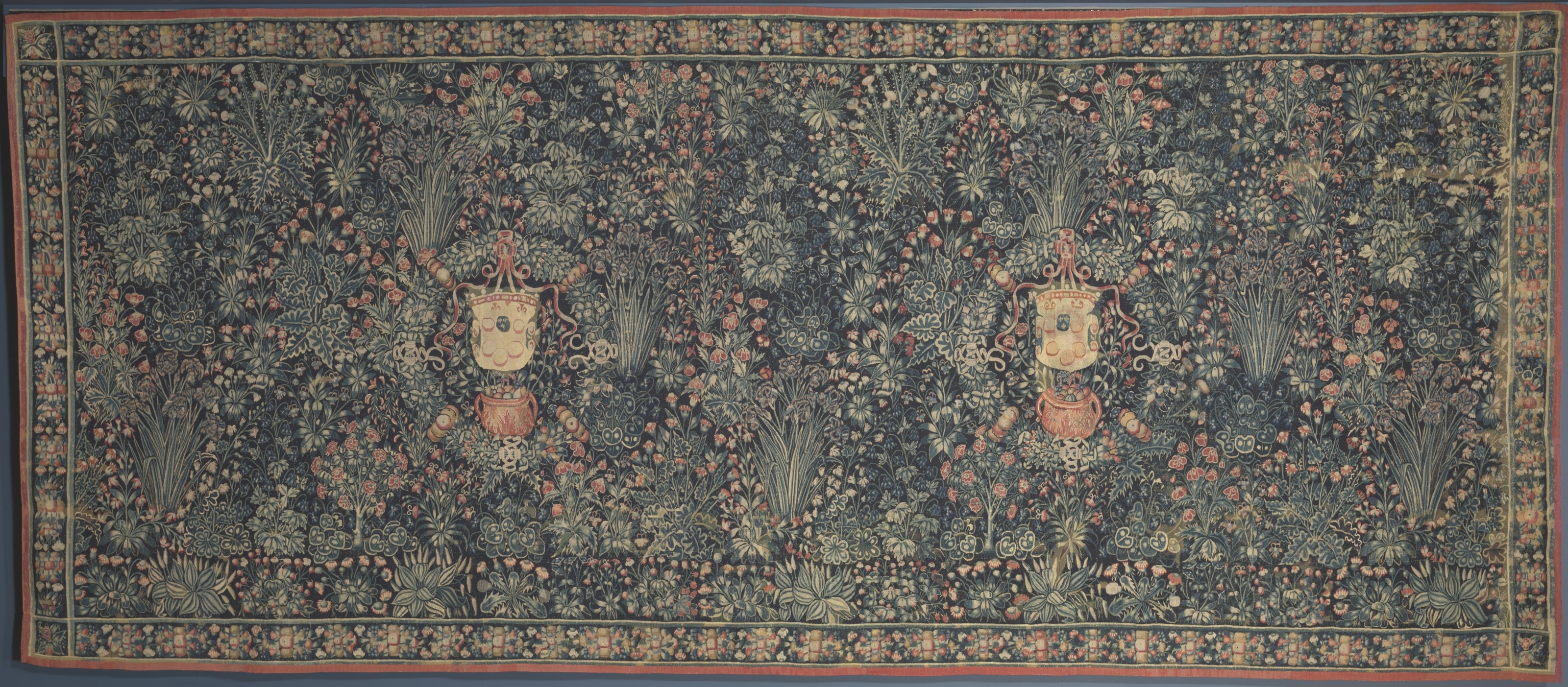
A wall, a garden, a pedigree and a portable fortune at once — and four hundred years old before it ever crossed an ocean. That is what the money was actually buying. Not decoration. Ancestry, by purchase, for a family that had made its money in soap or carpets or copper inside living memory.
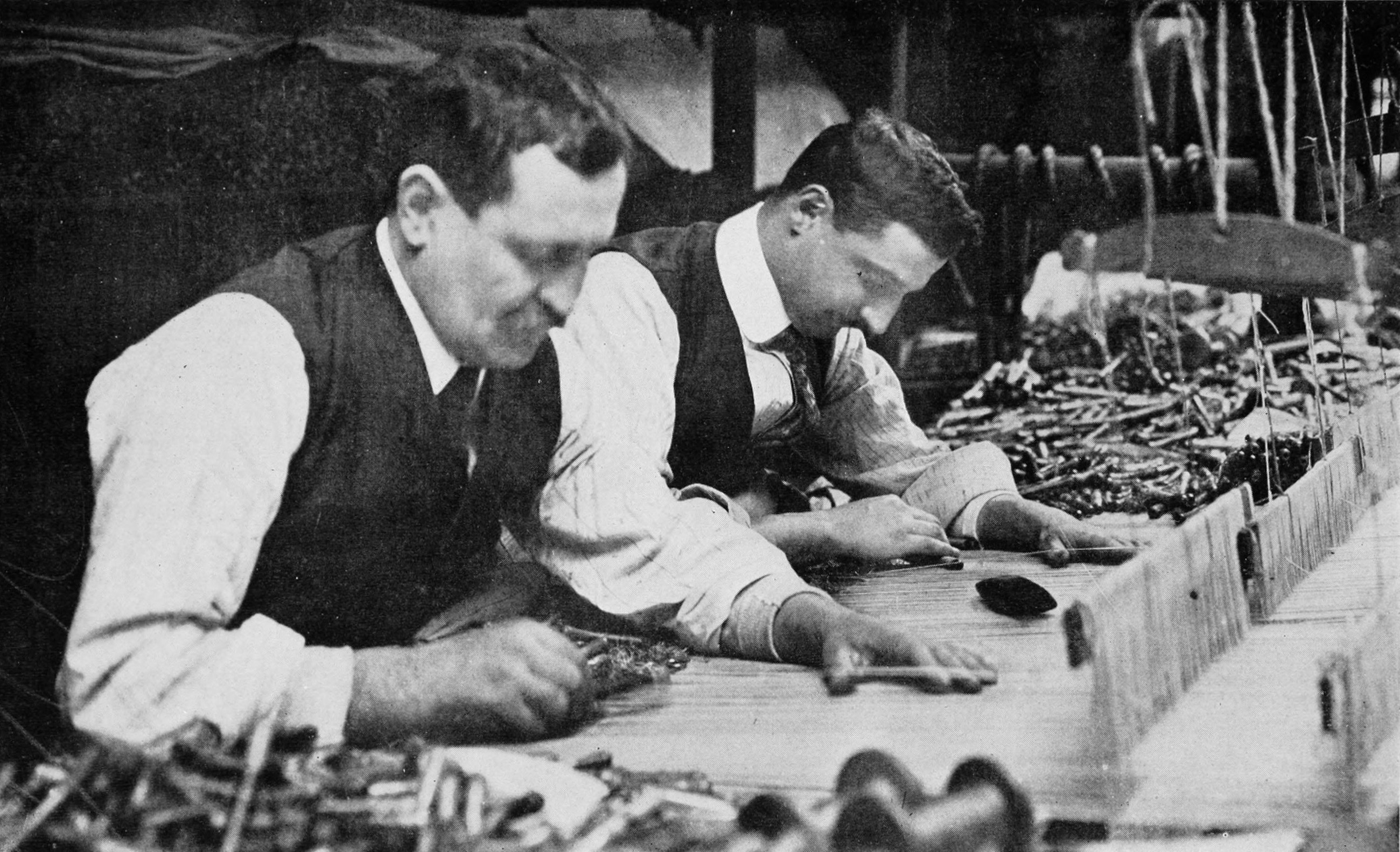
And here the trade gave itself away. William Baumgarten, who had spent twenty years going to Europe to buy the stuff and then built his own looms on the Bronx River in 1893, was proud of his dyes: he left finished pieces in direct sunlight for weeks and could find no fading. He also noted, drily, that he had “frequently seen with my own eyes in France, manufacturers put new pieces of tapestry in the sun in order to fade the colors and make them more delicate and to resemble the old.”
New tapestry, laid out in a French courtyard to be bleached, because the customer wanted 1520 and it was 1894. The second strategy is the first one wearing a costume: still buying new, but buying new things that have been made to look like old things, because what is actually for sale is time.
III. Buy nothing, and spend it outside
Four miles from Wheatleigh, over the hill at Orleton Farm, a family with the Procter & Gamble fortune behind it did neither.
The album they kept has a run of pages dated 1934 that walks through the house room by room, and there is nothing in them. The walls are the boards that were already there. The floor is laid for use. The chairs are plain, the mantel is plain, the china sits on an open shelf. The one extravagance in the place is a chandelier hung from the frame of a barn nobody took down — which reads less like decoration than like a joke about what the building used to be.
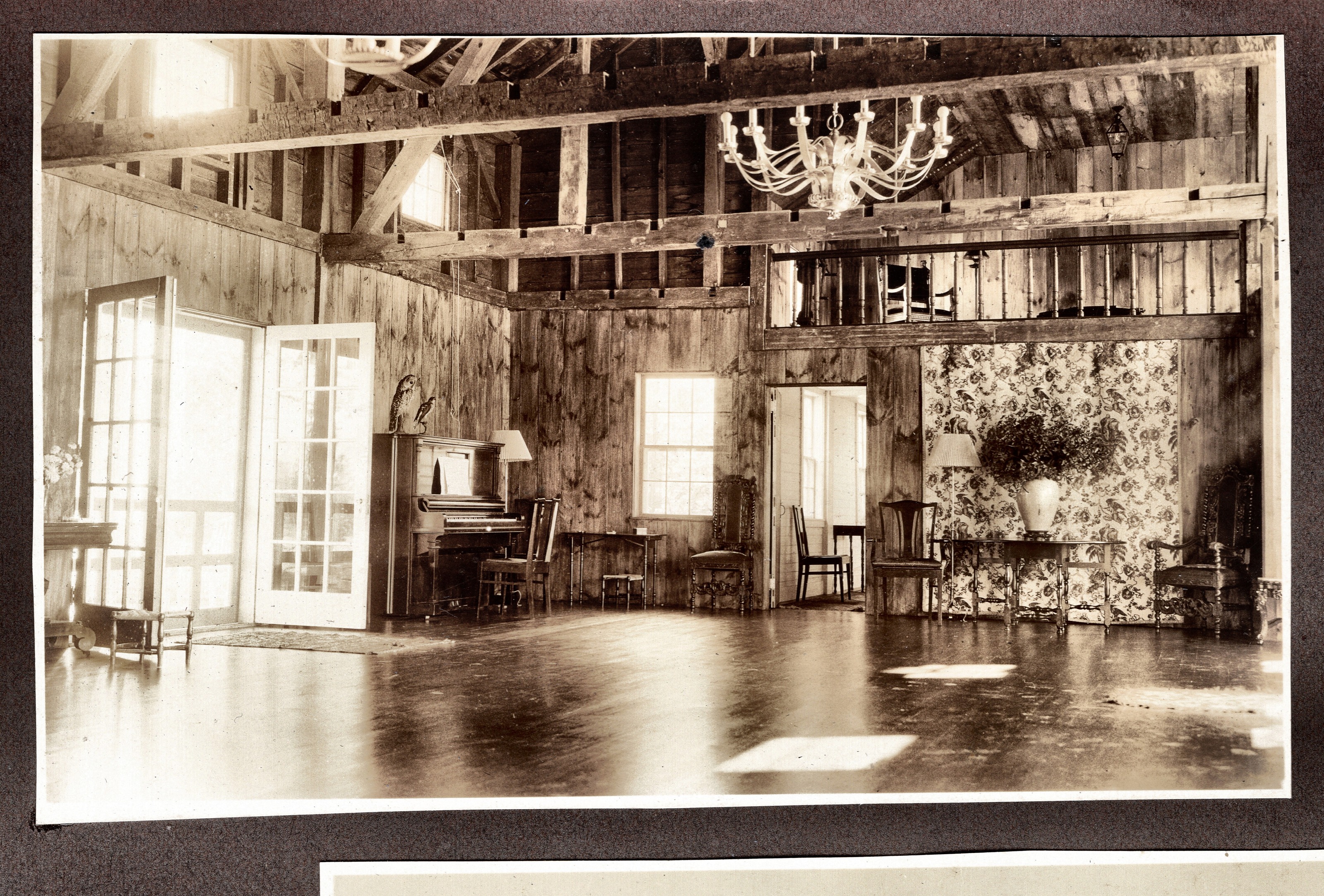
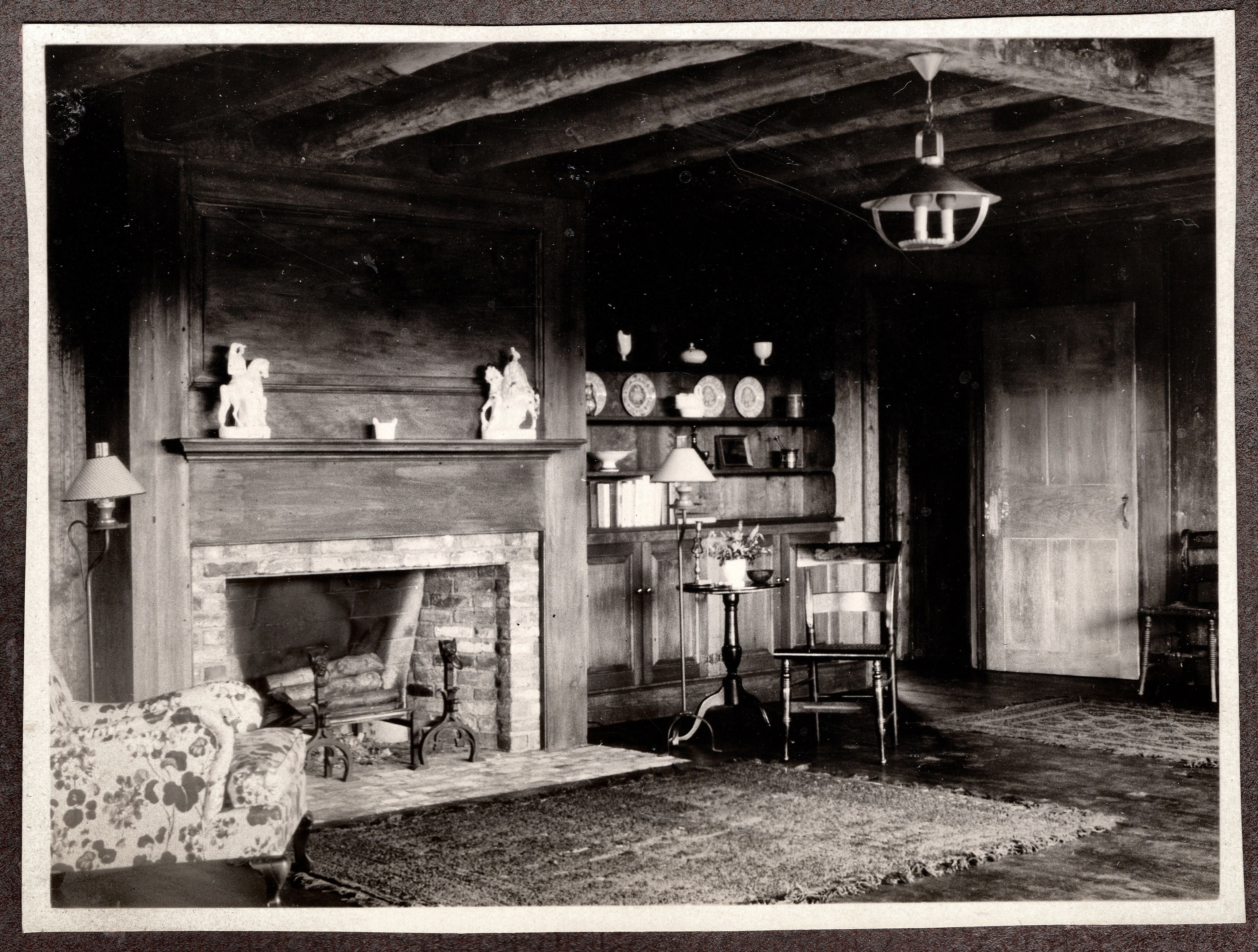
This is not thrift. The same family held an estate in Williamstown, built a house on Walker Street in Lenox, named all three places Orleton, and took the train to Florida for the winter. What they declined was display indoors. The money went into the working half of the place: barns going up one after another between 1905 and 1910, a pig barn, a cow barn, a chicken house, horses, land — and, parked in the farmyard, this.
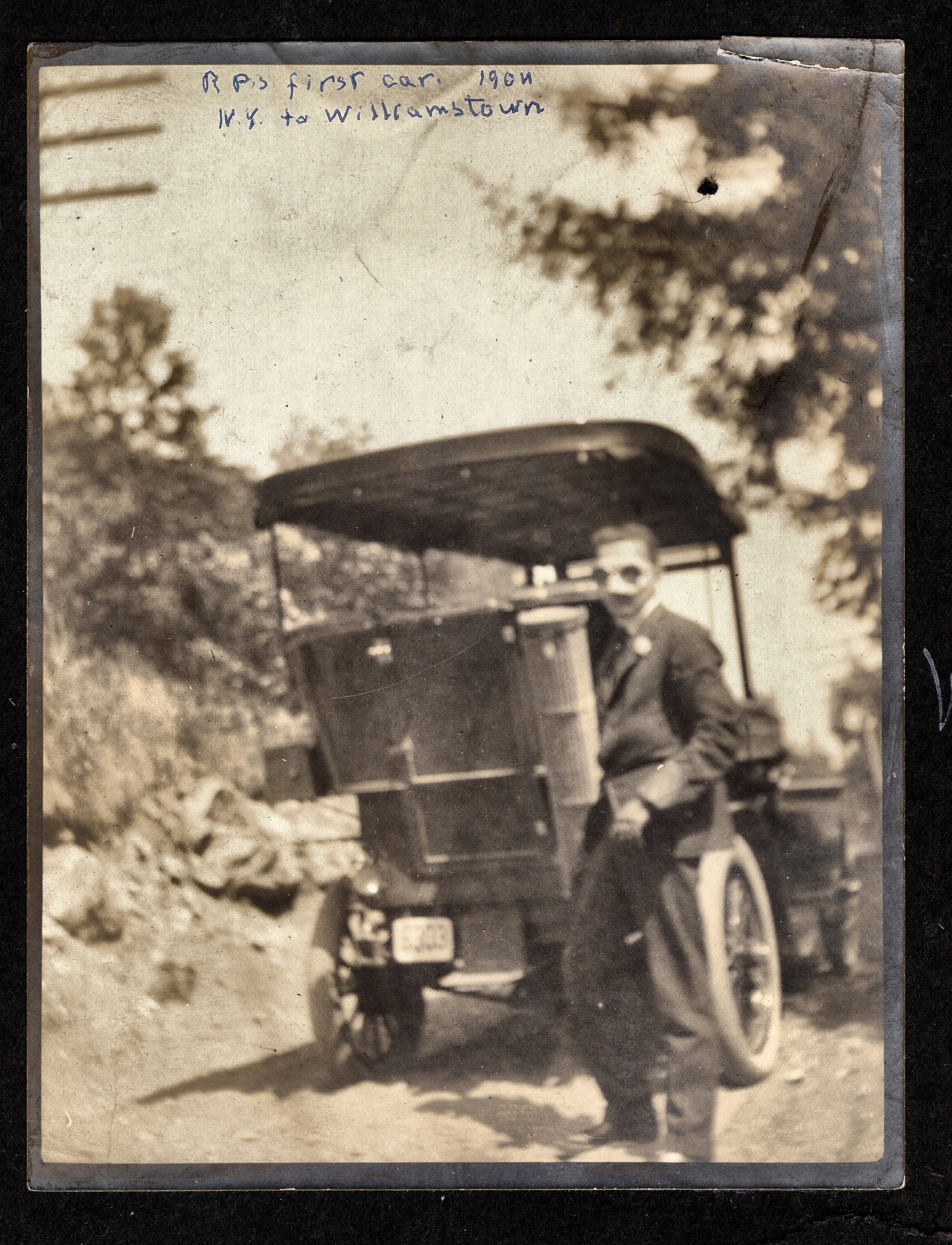
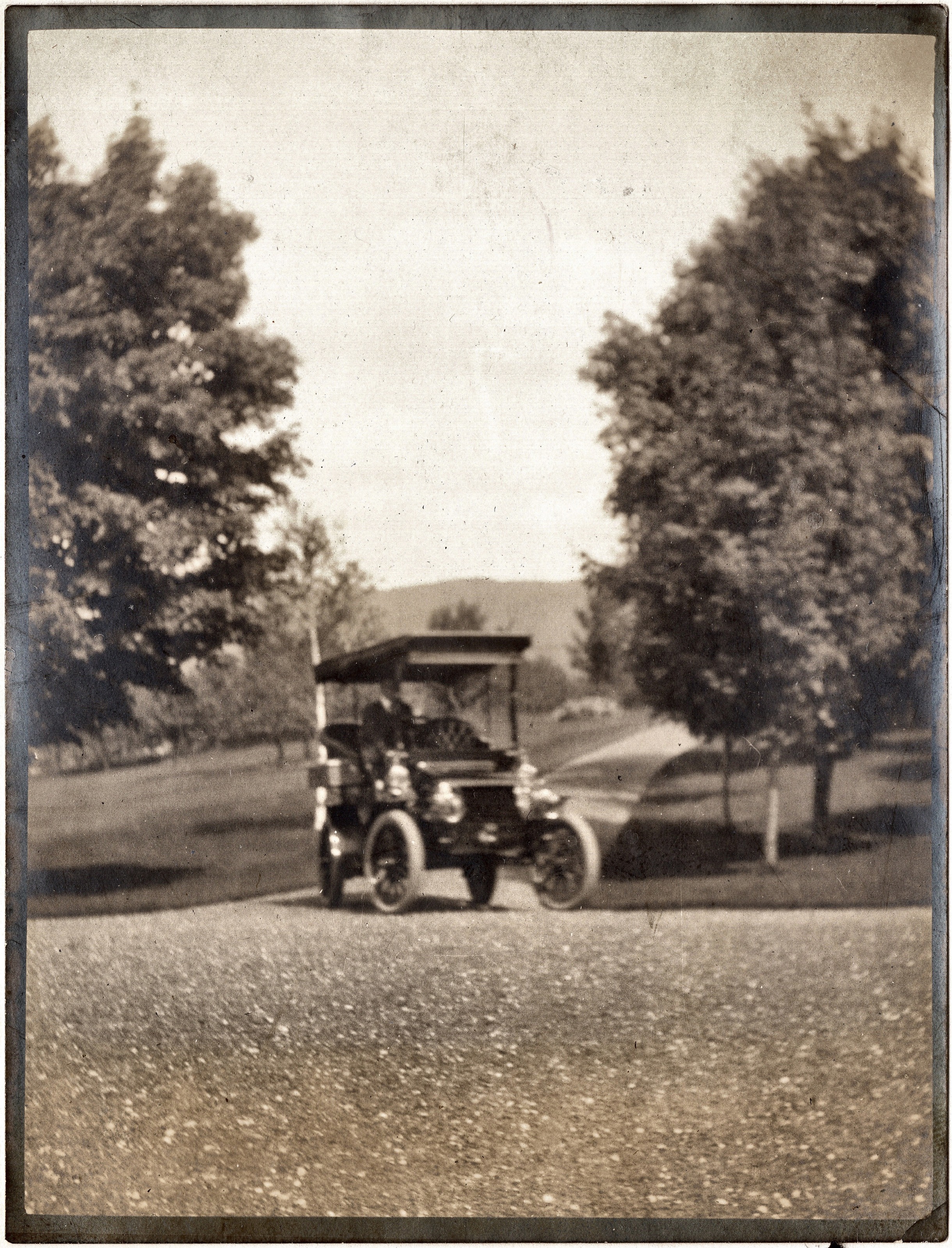
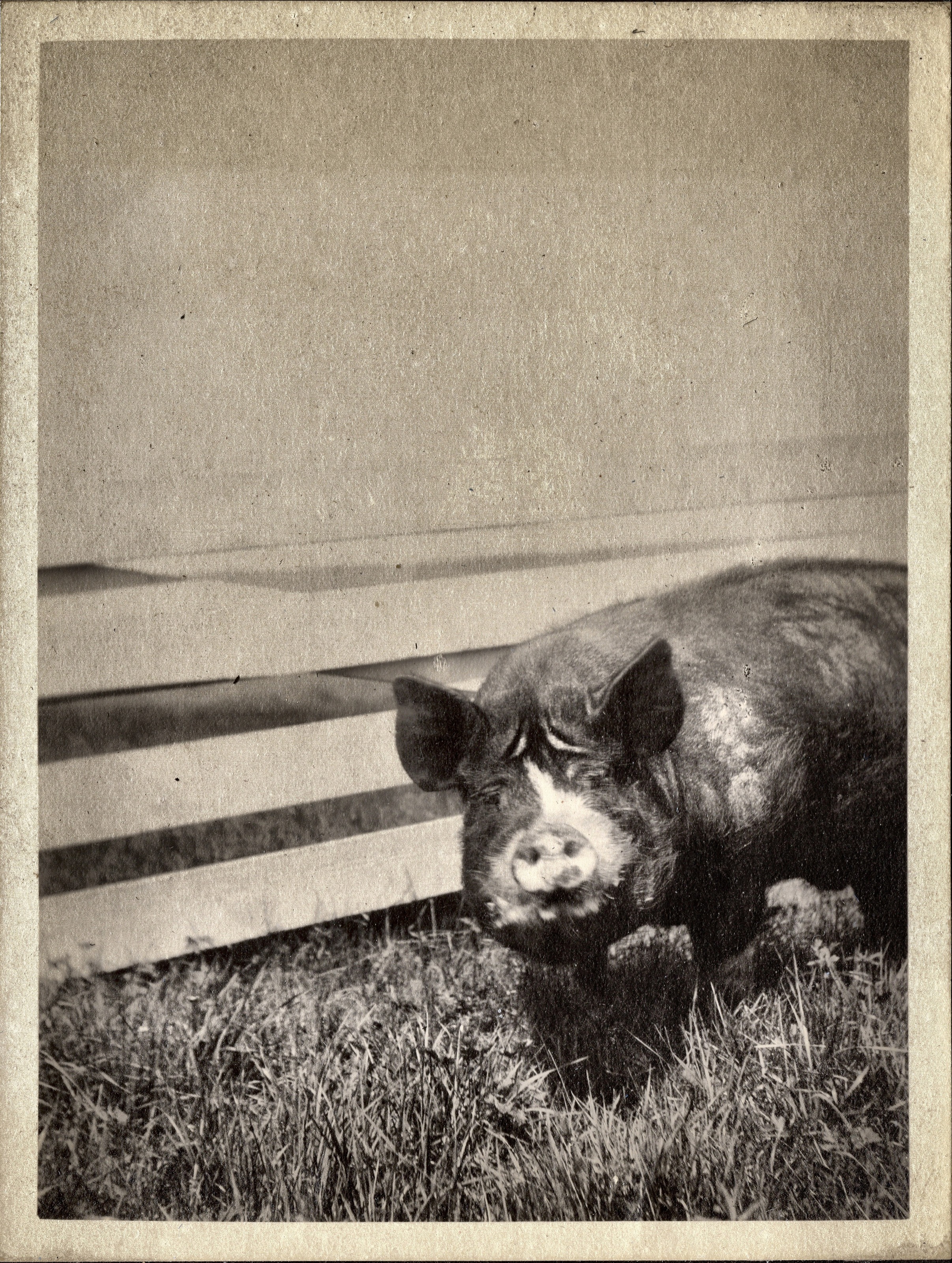
A motor car at the price of a house, standing on a farm where the parlor has board walls. On the album page the Winton sits directly above a photograph of a pig at a fence, and the two frames together are the whole argument: these people spent enormously, and only on things that do something. A barn does something. A horse does something. A five-thousand-dollar Winton does something — it is a machine, bought the way you buy a good animal. A set of Herter Brothers chairs does not.
IV. What each one bought
Set the three against the only test that matters at this distance, which is what is still here.
The crated rooms exist now as photographs. Not one Berkshire house on this site has a decorating firm on record; the contracts are presumably still in a ledger in New York, unread. The rooms themselves were comprehensively professional, enormously expensive, and so completely of their moment that they survive mainly as captions in a library catalogue: interior with fireplace and table.
The tapestries did better, because they were worth moving. The millefleurs that came out of Hainault in the 1520s is in a museum in Cleveland, bought by a man whose money built it. Old things get rescued. That is most of what being old is worth.
And Orleton Farm has not been sold since 1901. Four generations, one deed, and the family is still on it. The barns in those 1905 photographs were still being added to and torn down and replaced within the same family’s working life. The thing that survived was the thing that was never meant to be looked at.
V. The common denominator
None of the three is really about taste. All three are about time.
Buying new buys the present, which is the one commodity that is guaranteed to expire — and buying new from the same five firms as everyone else buys the present twice over, because it is correct only for as long as the consensus holds.
Buying old buys the past, which is the one thing a new fortune cannot manufacture, which is precisely why there was a trade in bleaching new wool in the sun.
Buying work buys the future, and it is the only one of the three that compounds. A farm has something to hand down that is not itself. A room has nothing to hand down but the room, and sooner or later nobody can afford to keep looking at it.
Which is not an argument that the Procters were wiser than their neighbors. They were lucky in a son who wanted to run a farm. But it does explain why, of the three houses in this story, the one whose interiors nobody photographed for a magazine is the one you can still walk into and find the same family.
The decorating trade, the New York firms, and what a decorating house actually manufactured: see The rooms arrived crated and its sources — principally the New York City Landmarks Preservation Commission designation report for the William and Clara Baumgarten House, and published accounts of W. & J. Sloane. The tapestry trade, Baumgarten’s 1894 figures, the sunlight remark and the Williamsbridge works: see Faded on purpose, drawing on George Leland Hunter, Tapestries: Their Origin, History and Renaissance (New York, 1912). Interiors at Wheatleigh and Bellefontaine: Lenox Library Association, Local History Photograph Collection, through Digital Commonwealth, titles quoted as catalogued. The millefleurs hanging: Cleveland Museum of Art, public domain. Orleton Farm, the 1934 run of album pages, the two motor cars and the farm buildings: Procter family album, reproduced by permission of Mary Stokes Waller; see A Working Farm. Winton Motor Carriage Company dates, the 1903 transcontinental crossing and the 1908 shift to six-cylinder cars: published histories of the firm. No decorating firm is attributed to any Berkshire house here, because no source consulted attributes one, and nothing is claimed about what became of the contents of any house on this page. Disclosure: the author owns the north gatehouse at Wheatleigh.