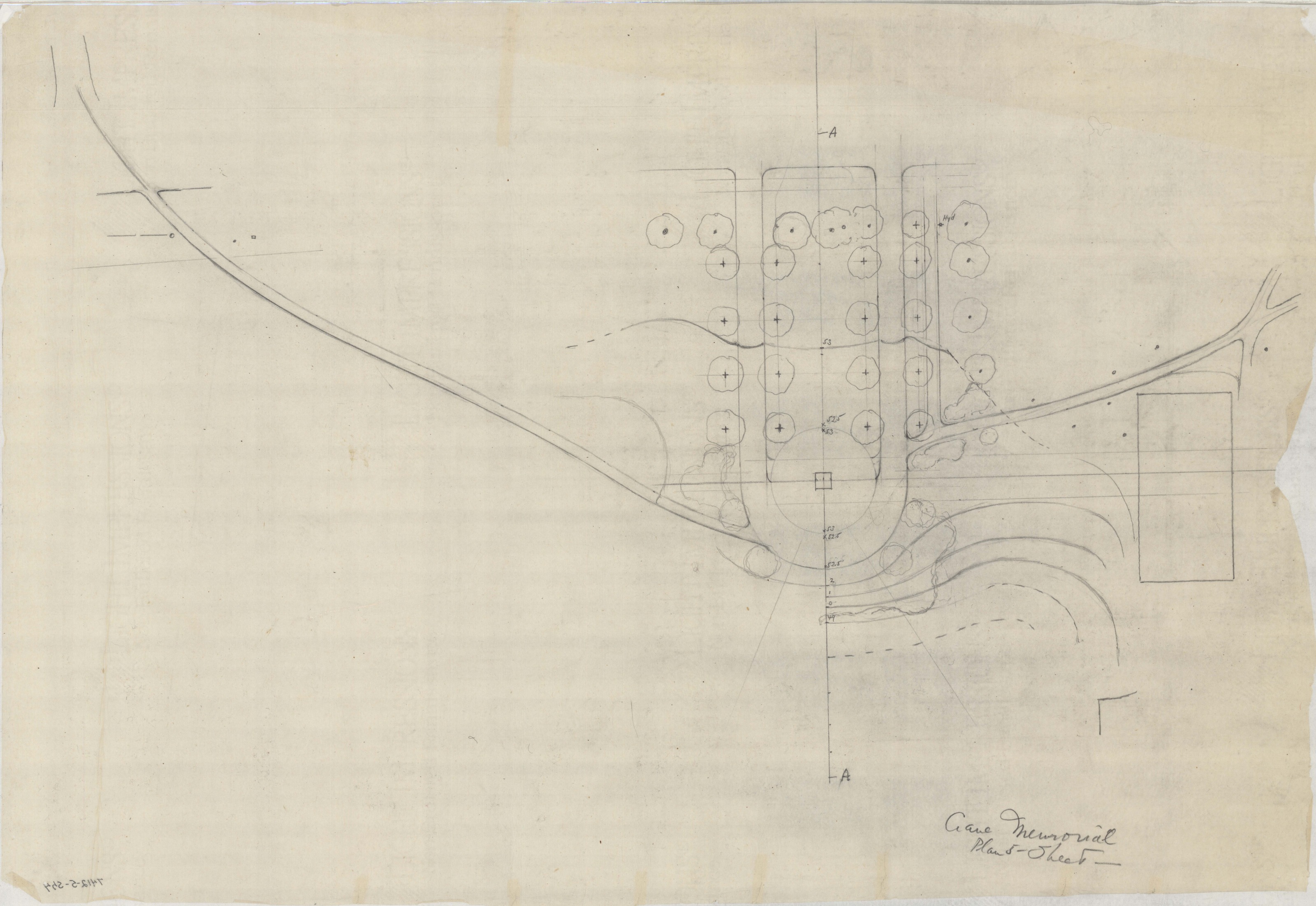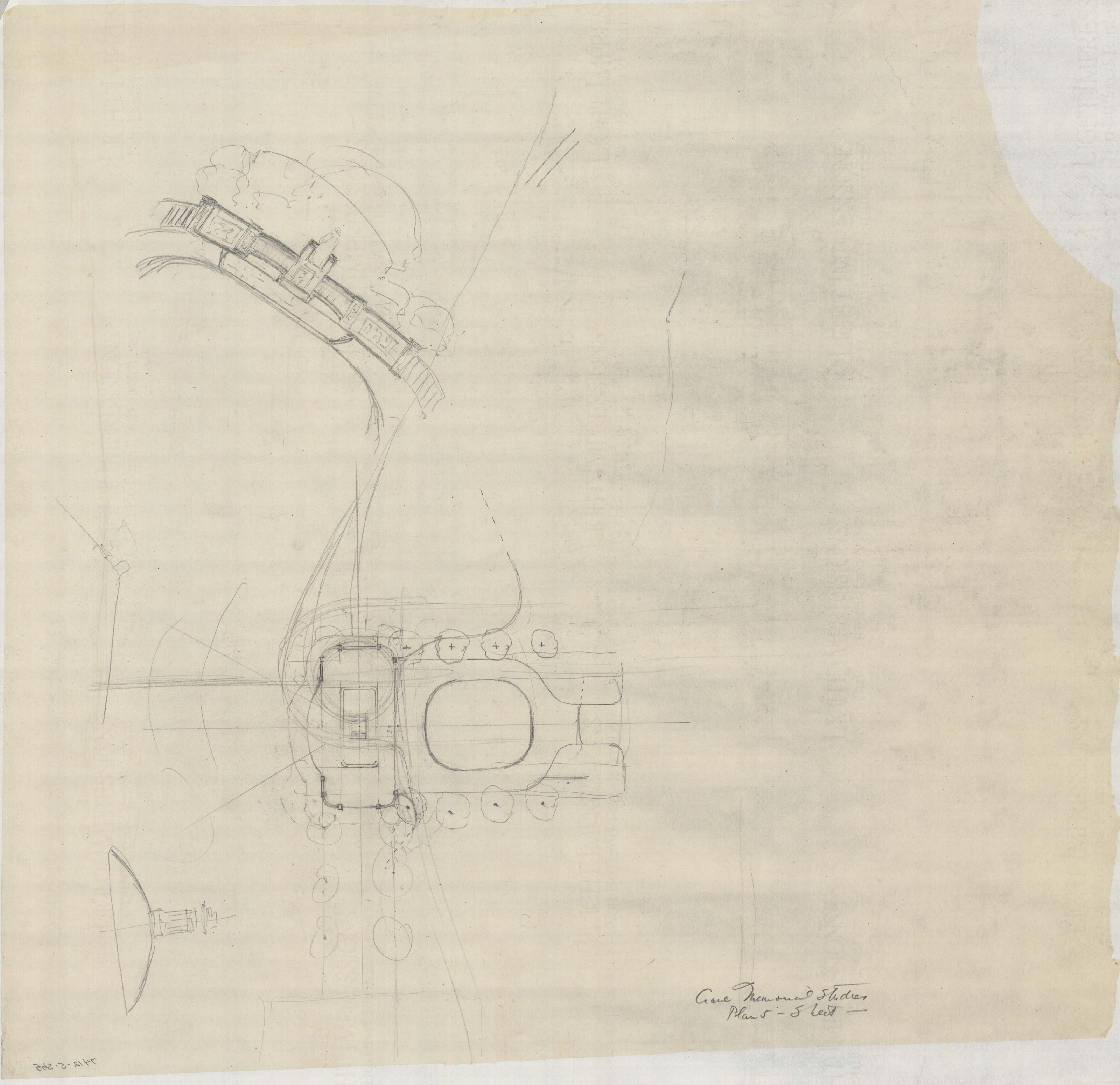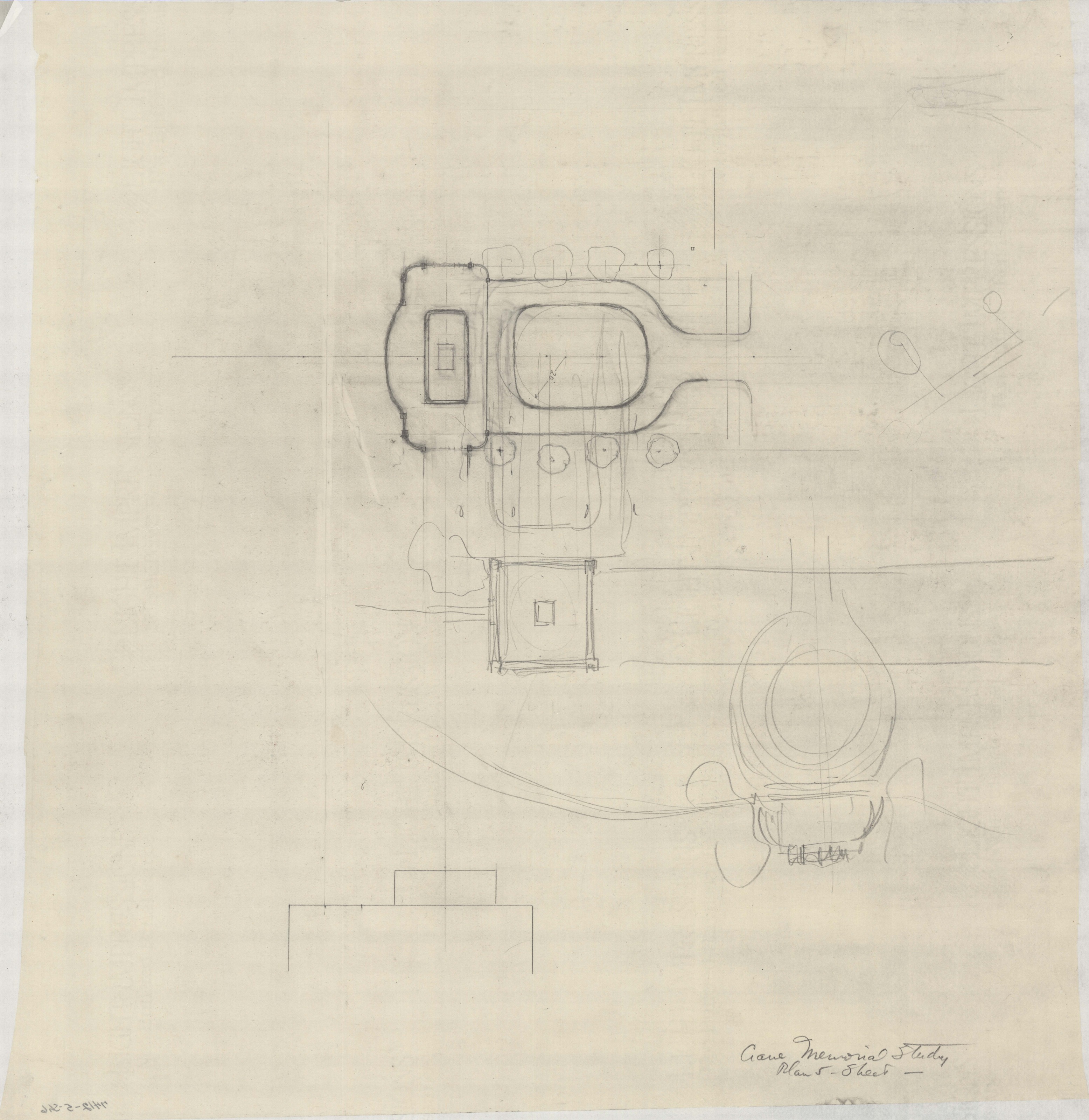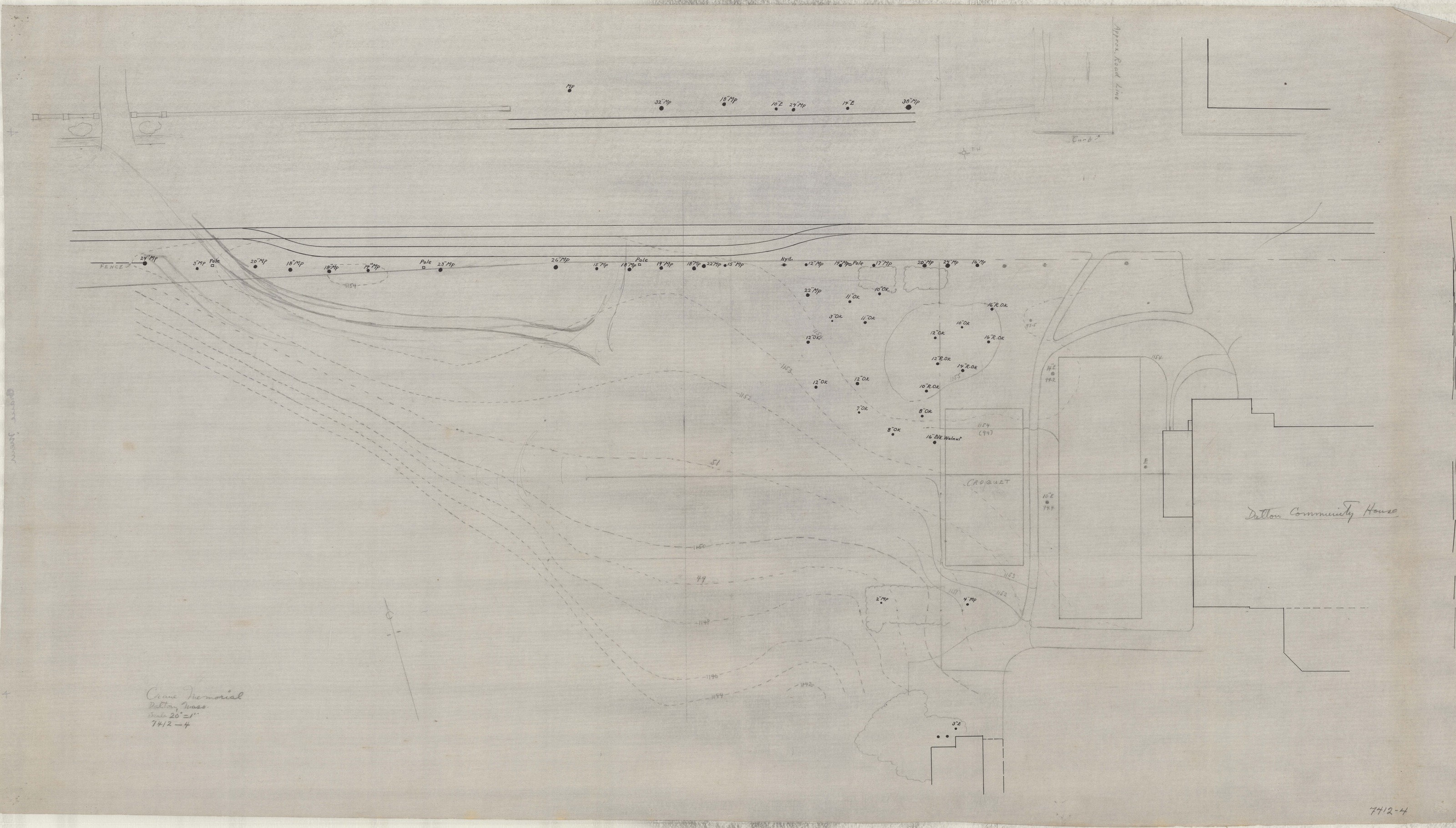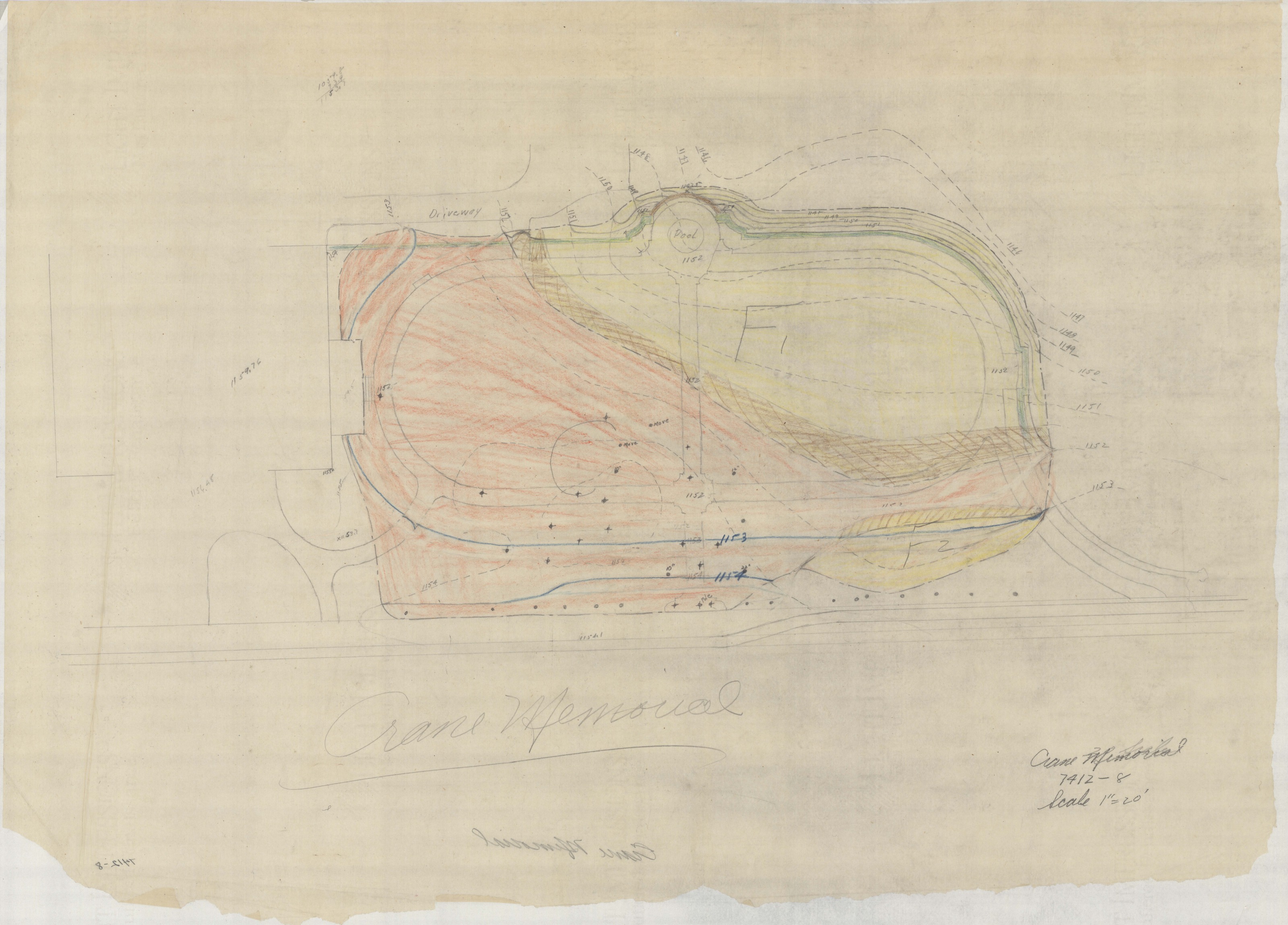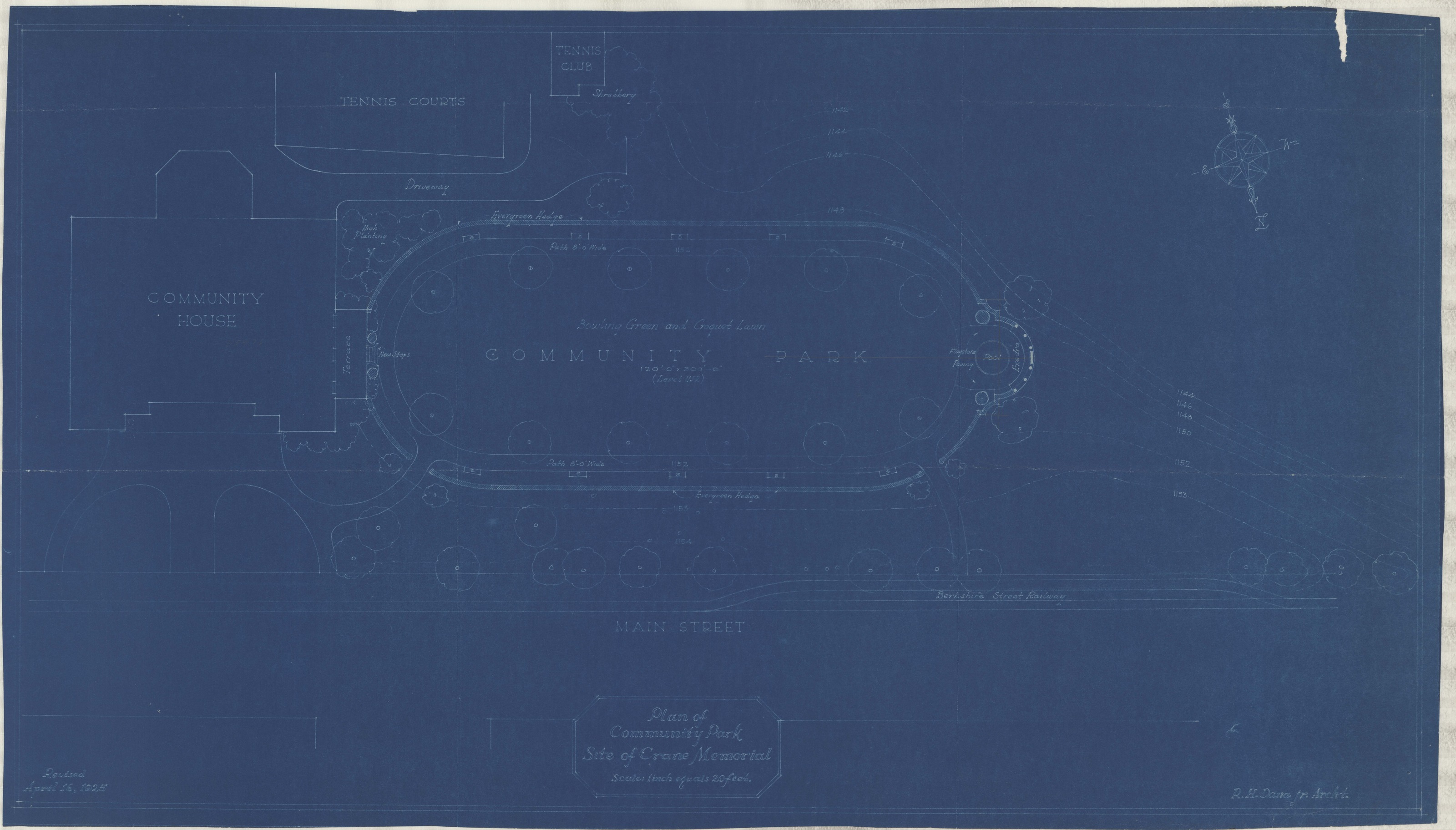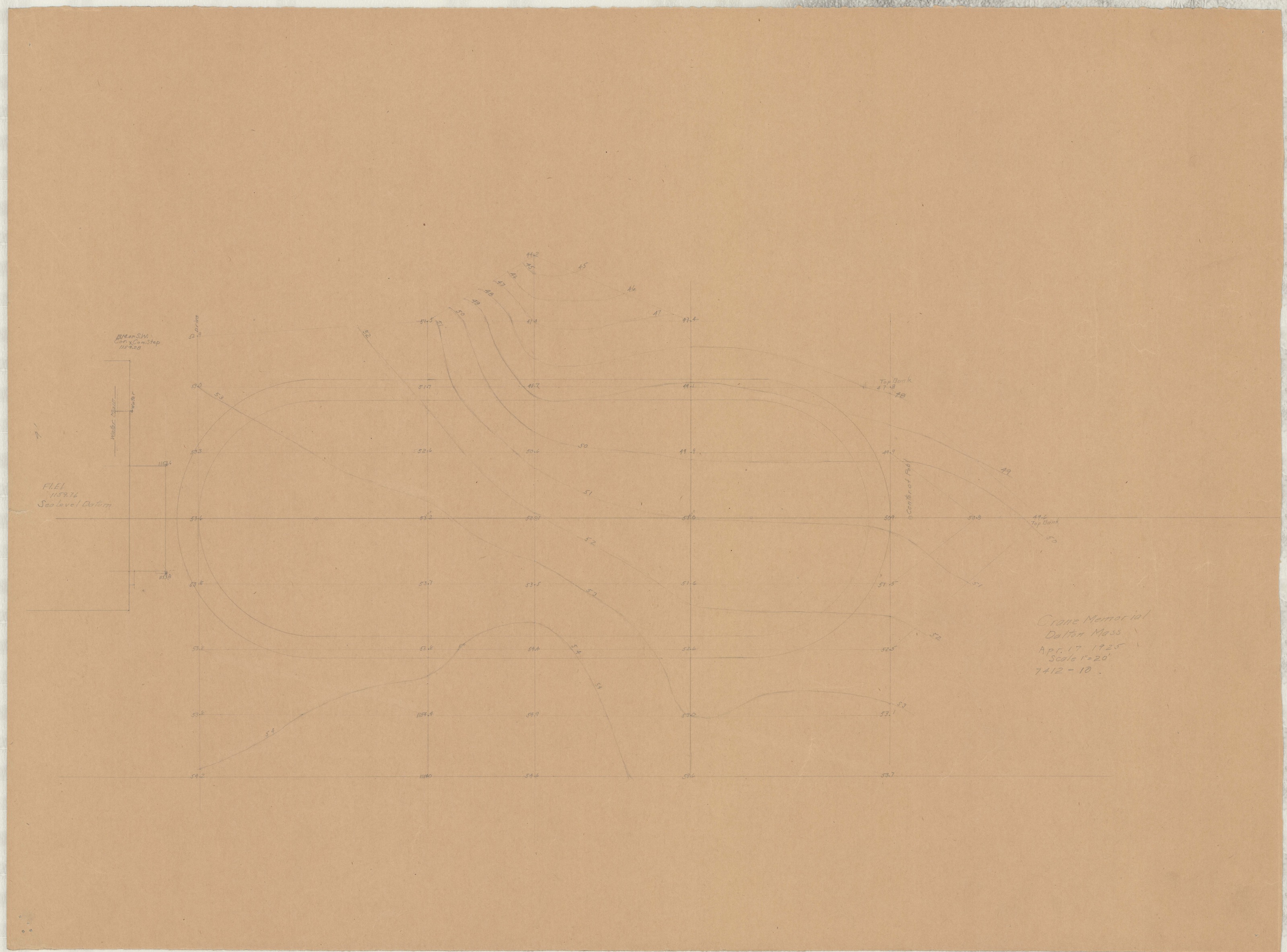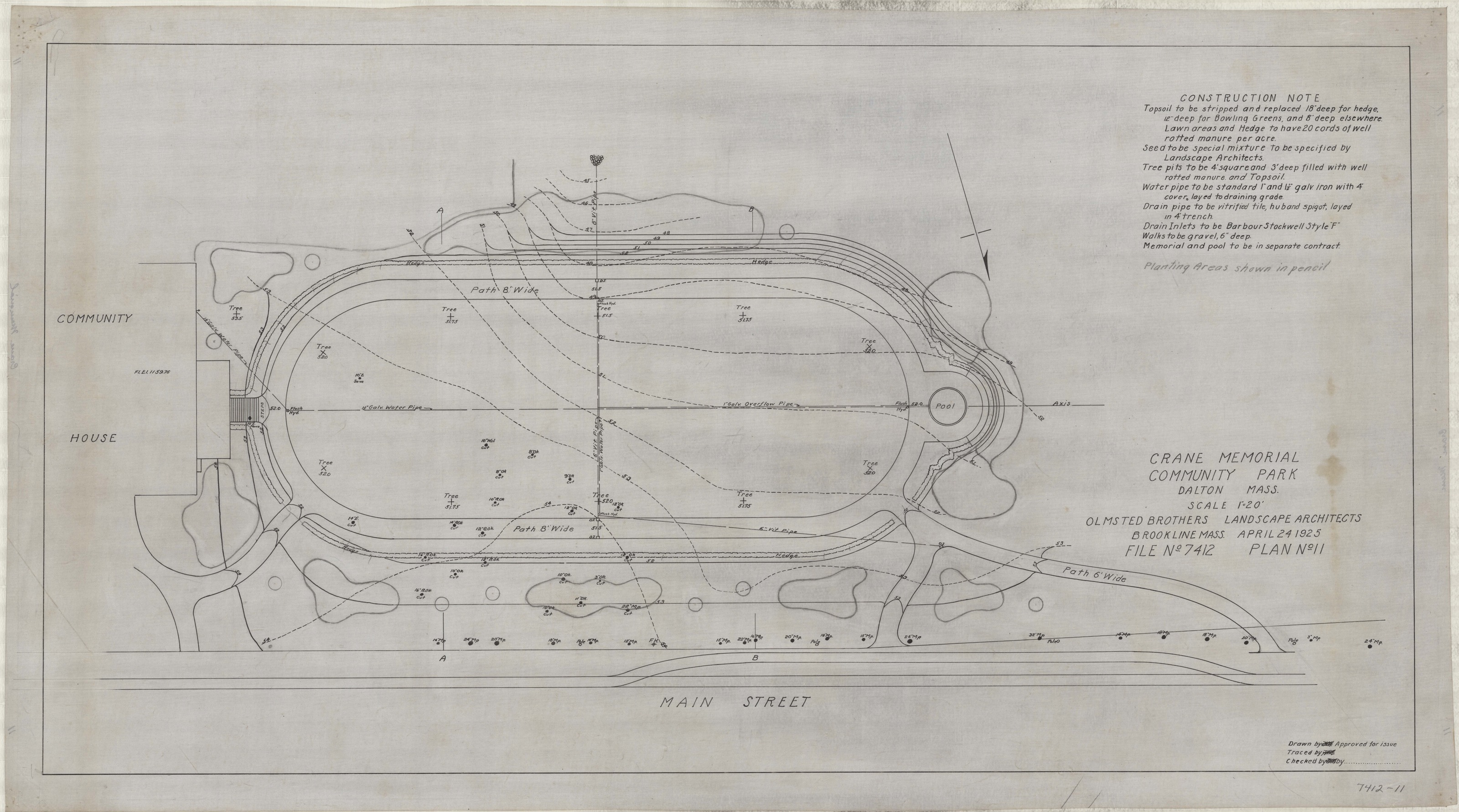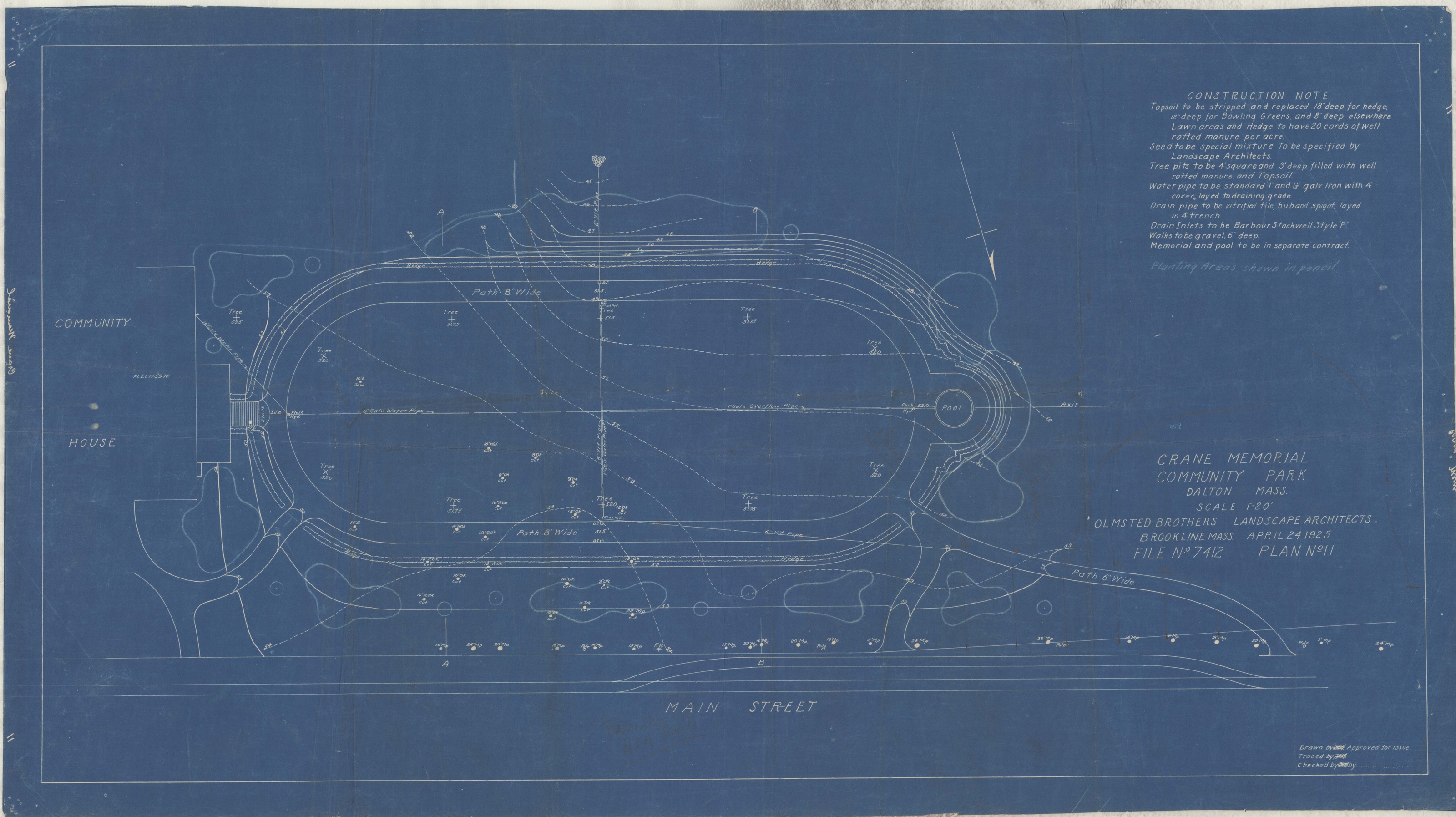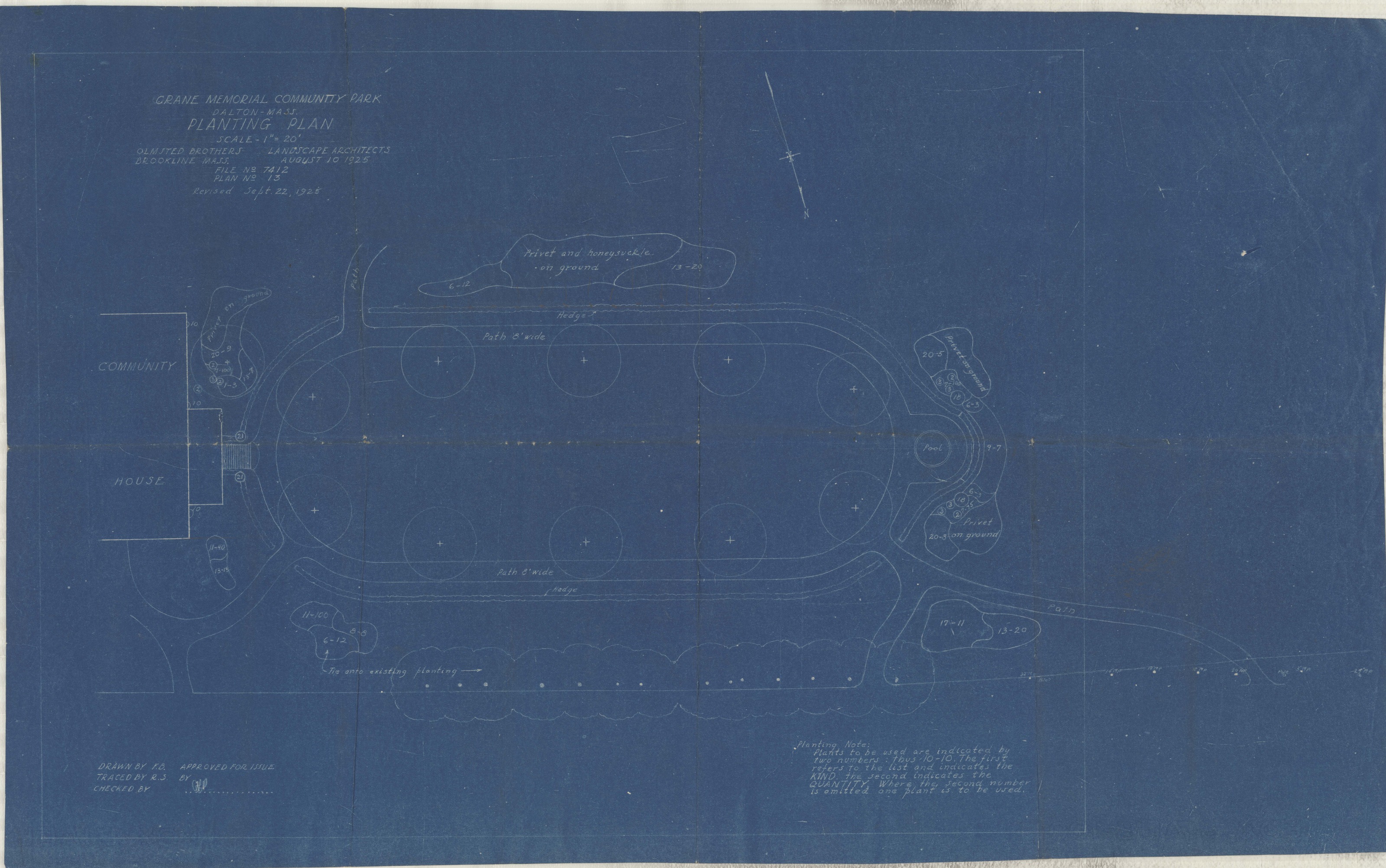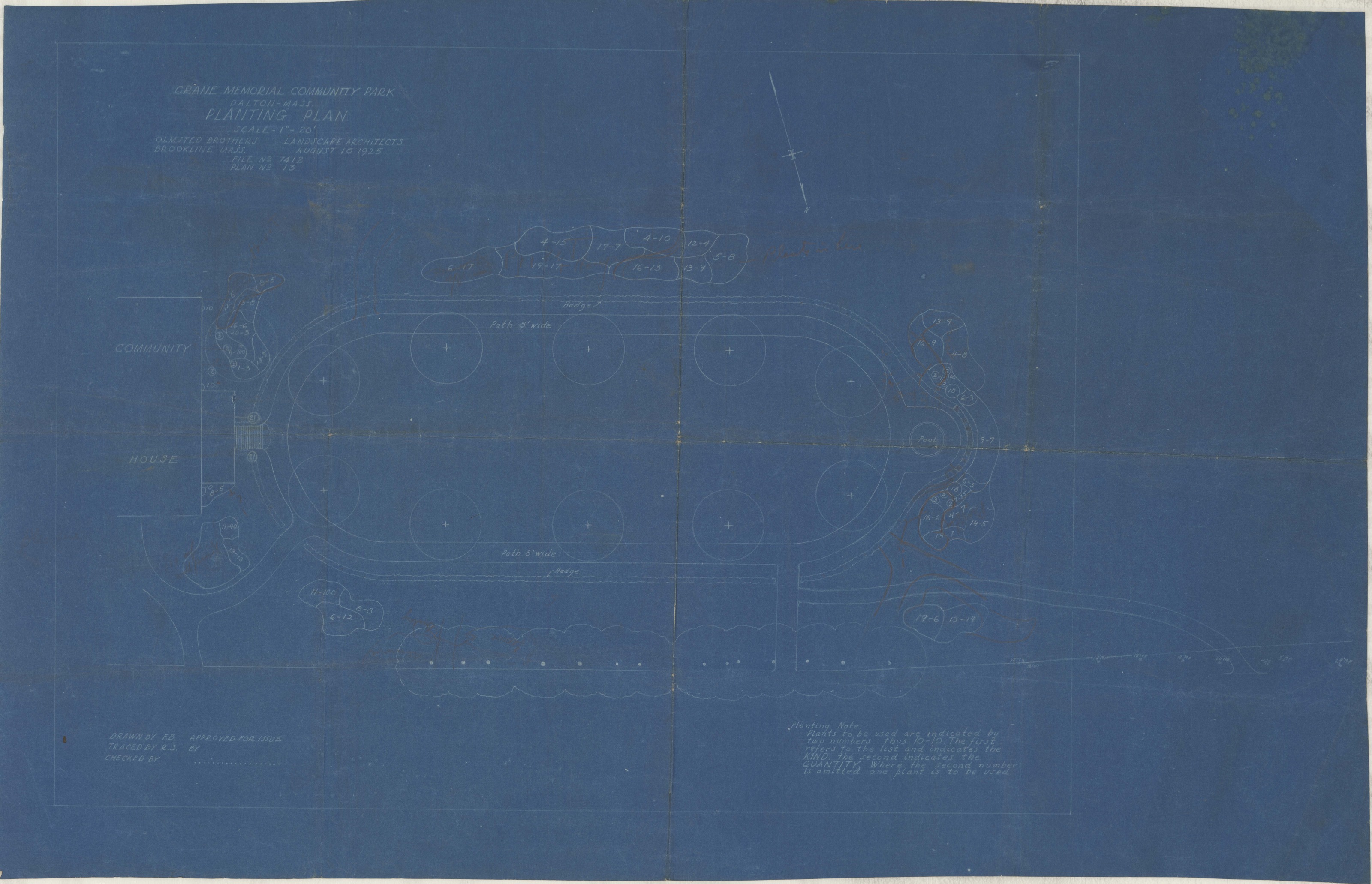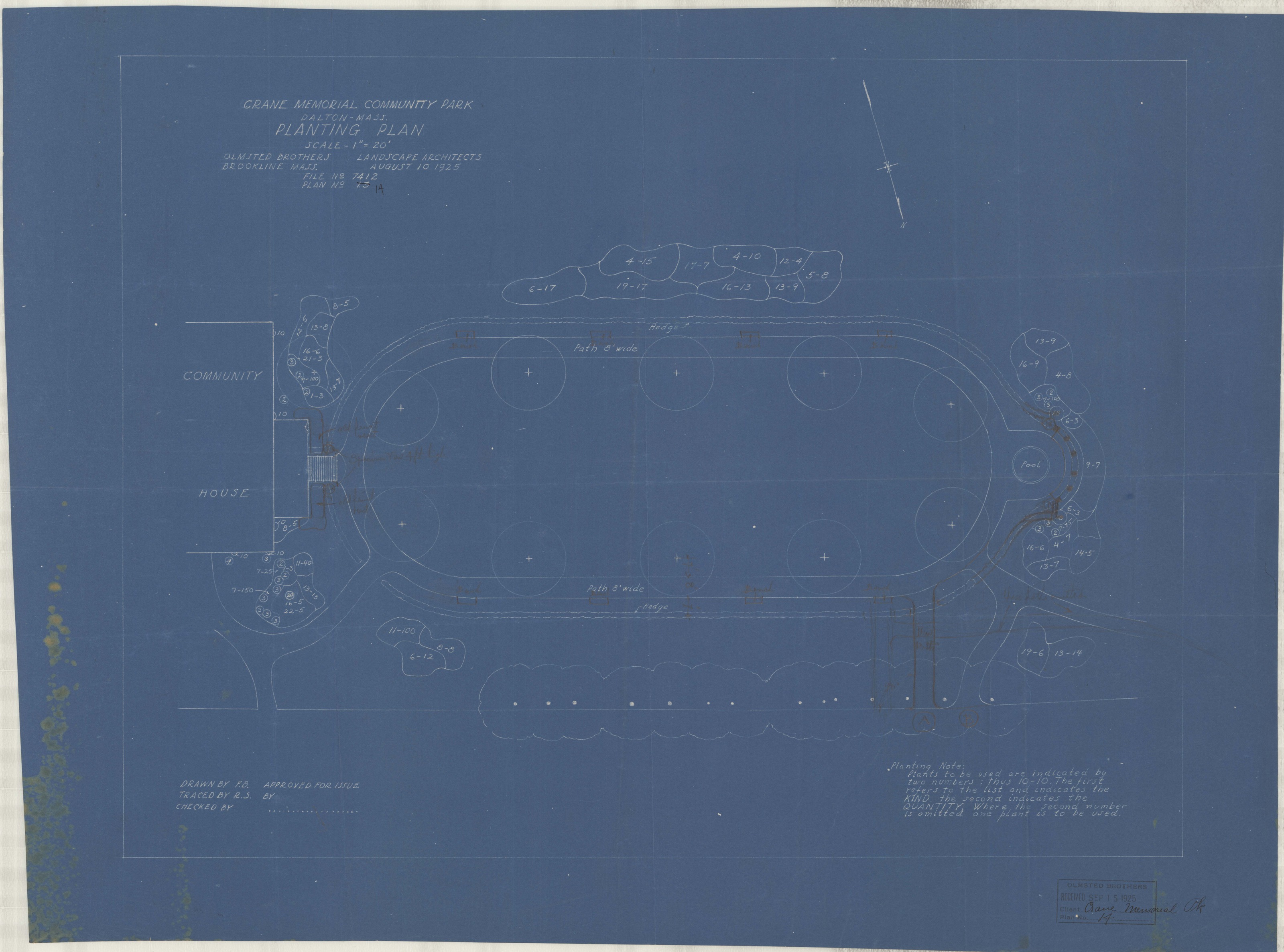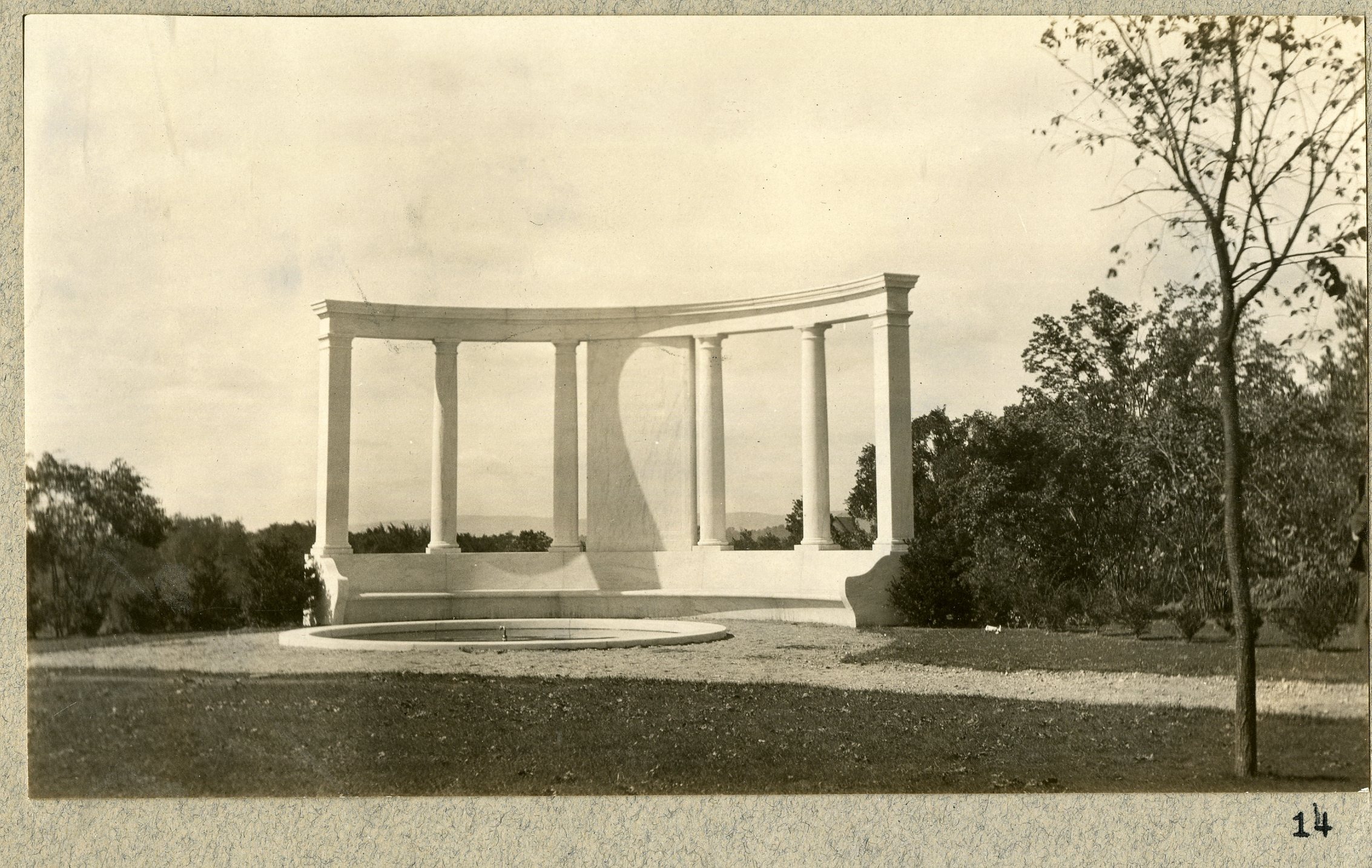
Seven months, twenty-eight drawings and a photograph album — for a curved marble colonnade and a fountain basin on a village lawn. The Olmsted Brothers began surveying the site on 26 February 1925 and revised the planting plan on 22 September. Somewhere in that year, four thousand people gathered on the same lawn to watch it dedicated, and one of them was the Chief Justice of the United States.
I. The file
Olmsted job 07412 is filed as Crane Memorial — Dalton, MA, type “Cemeteries, Burial Lots, Memorials and Monuments.” Twenty-eight plans are inventoried and all of them are scanned, together with an office photograph album of twenty prints. This is one of the few Berkshire jobs on this site that is complete.
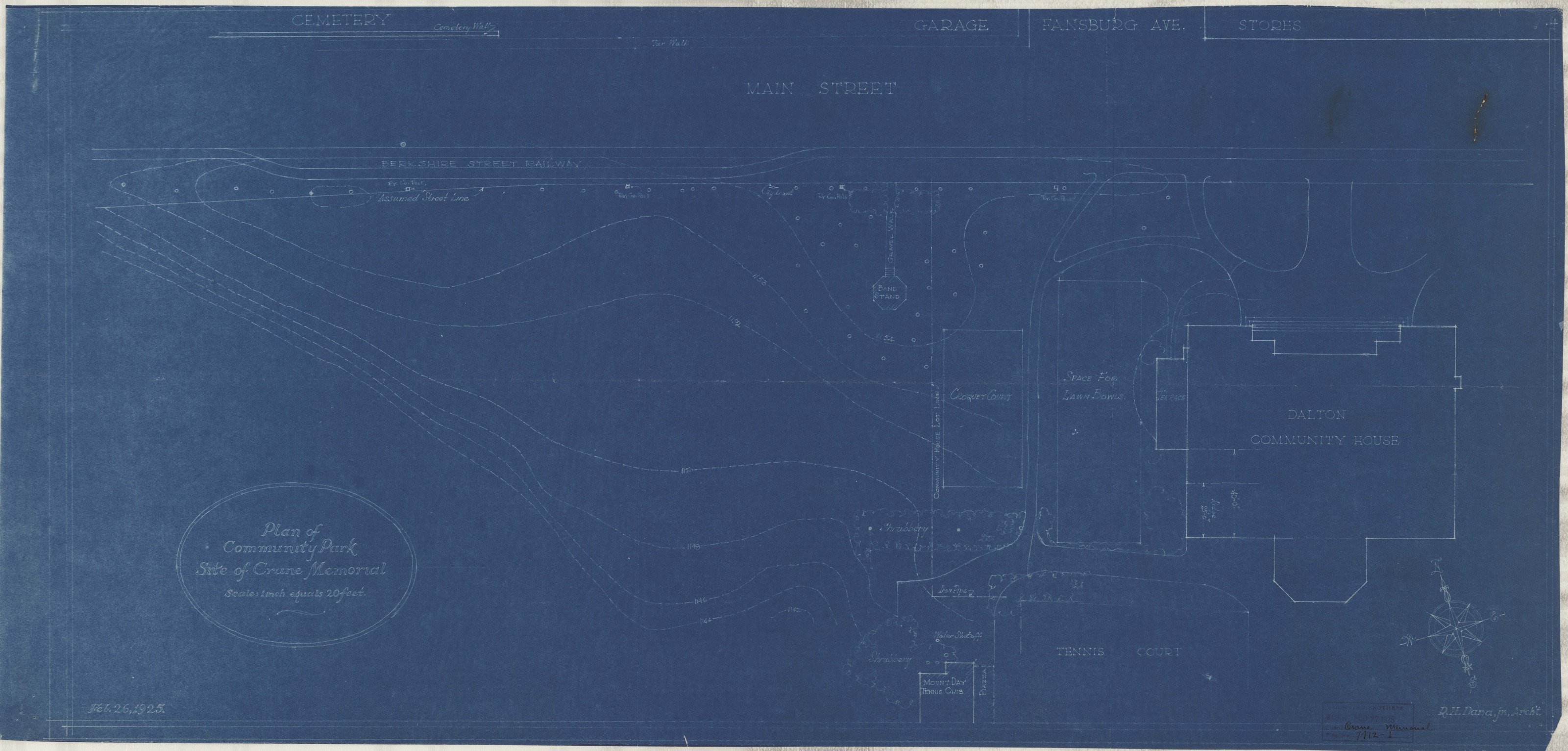
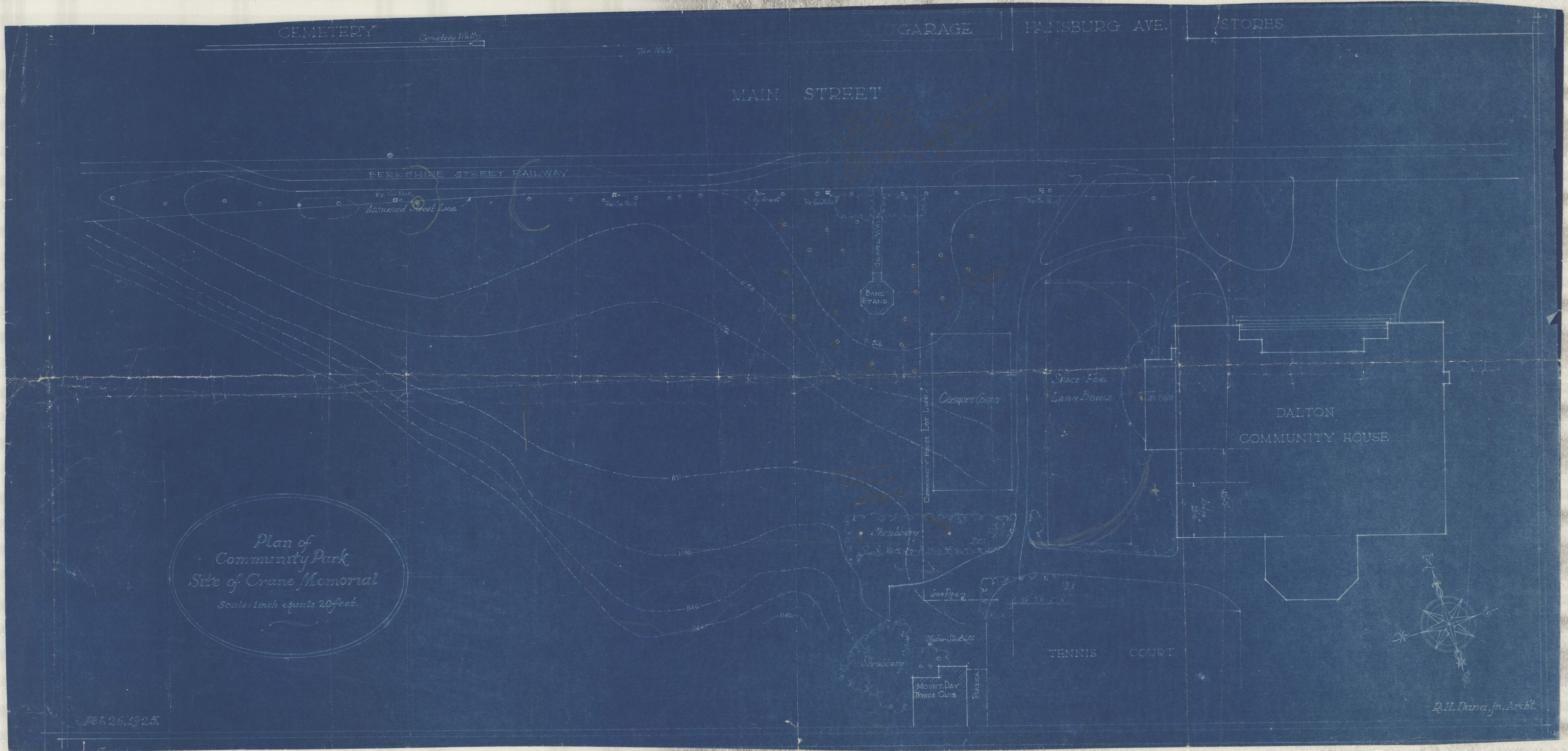
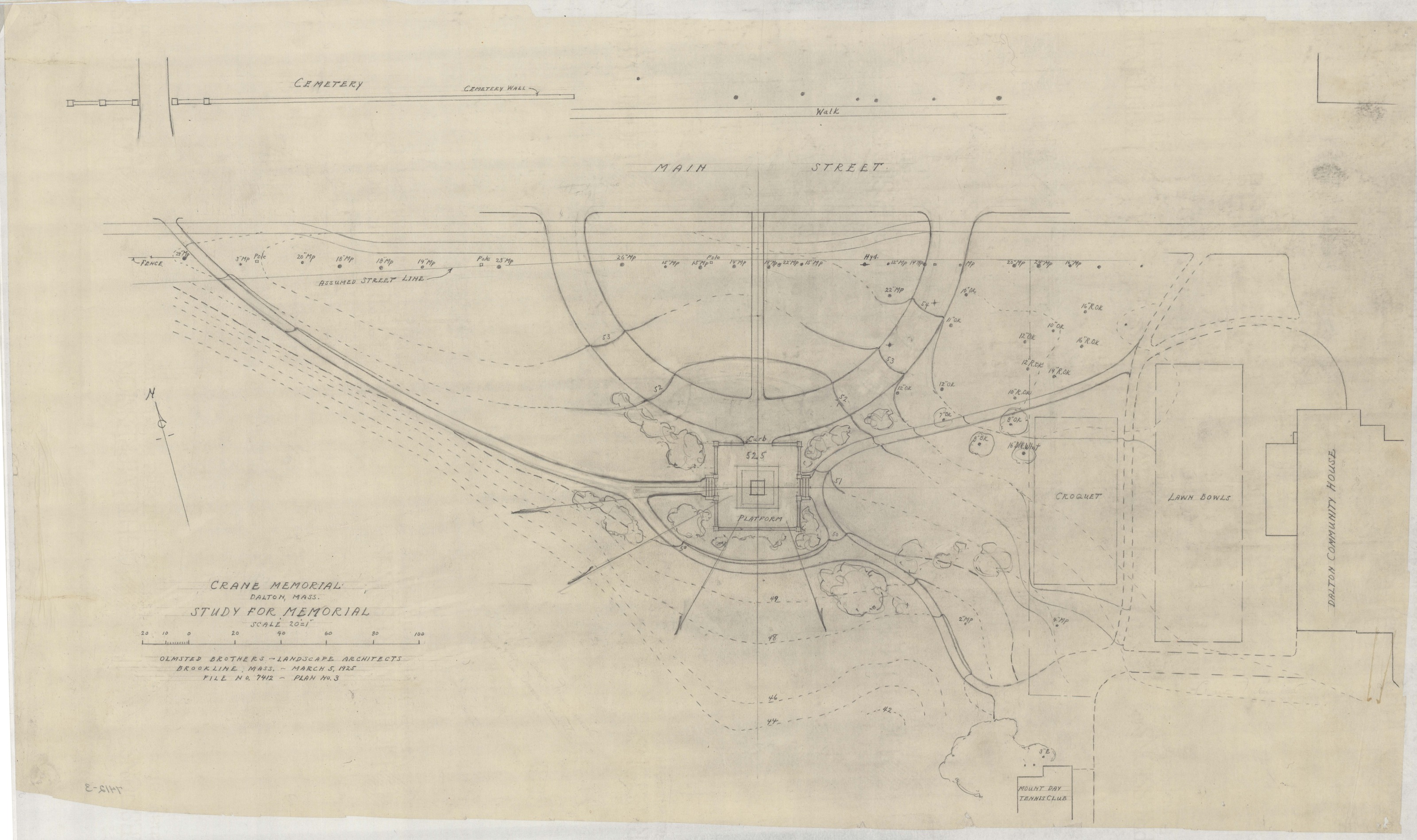
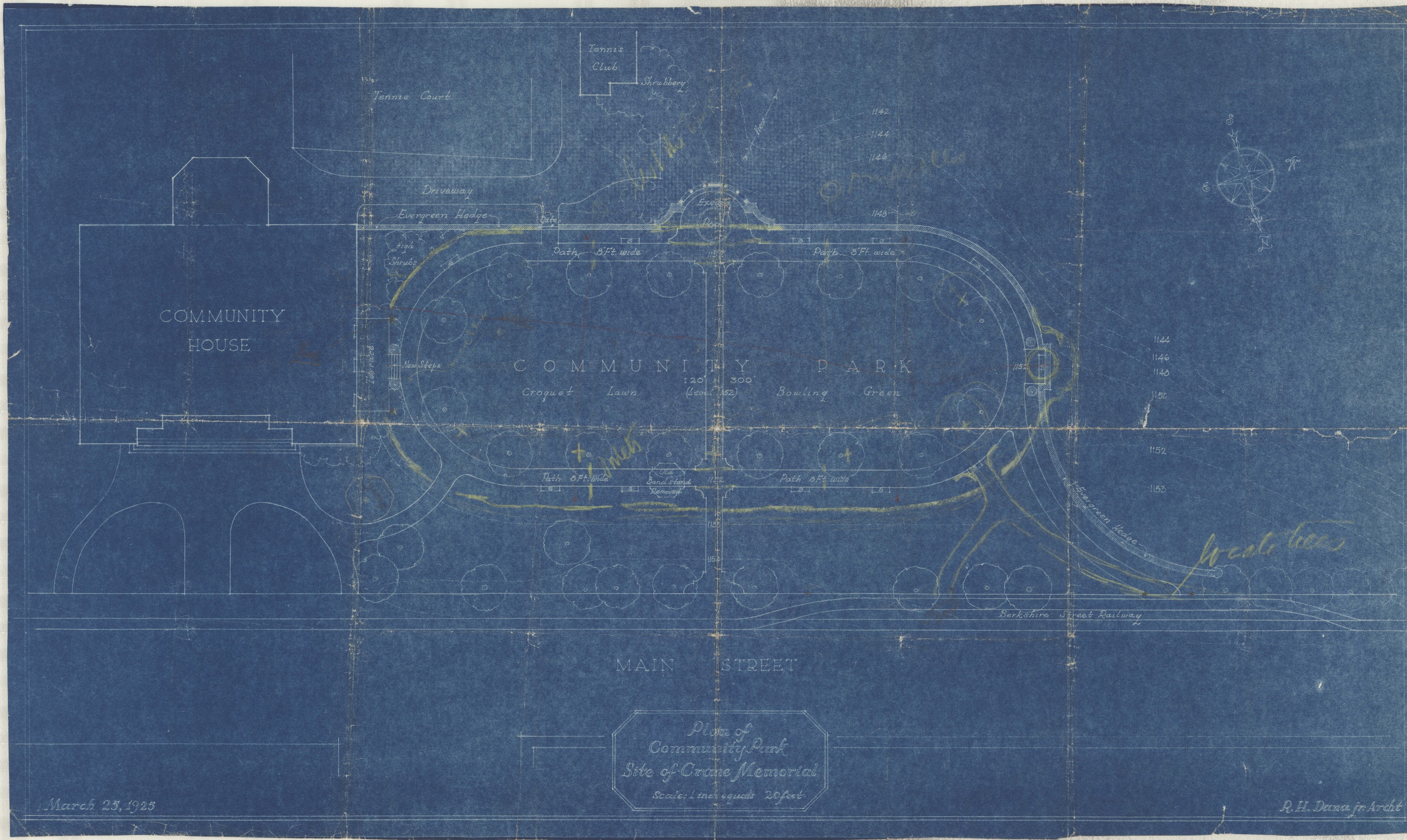
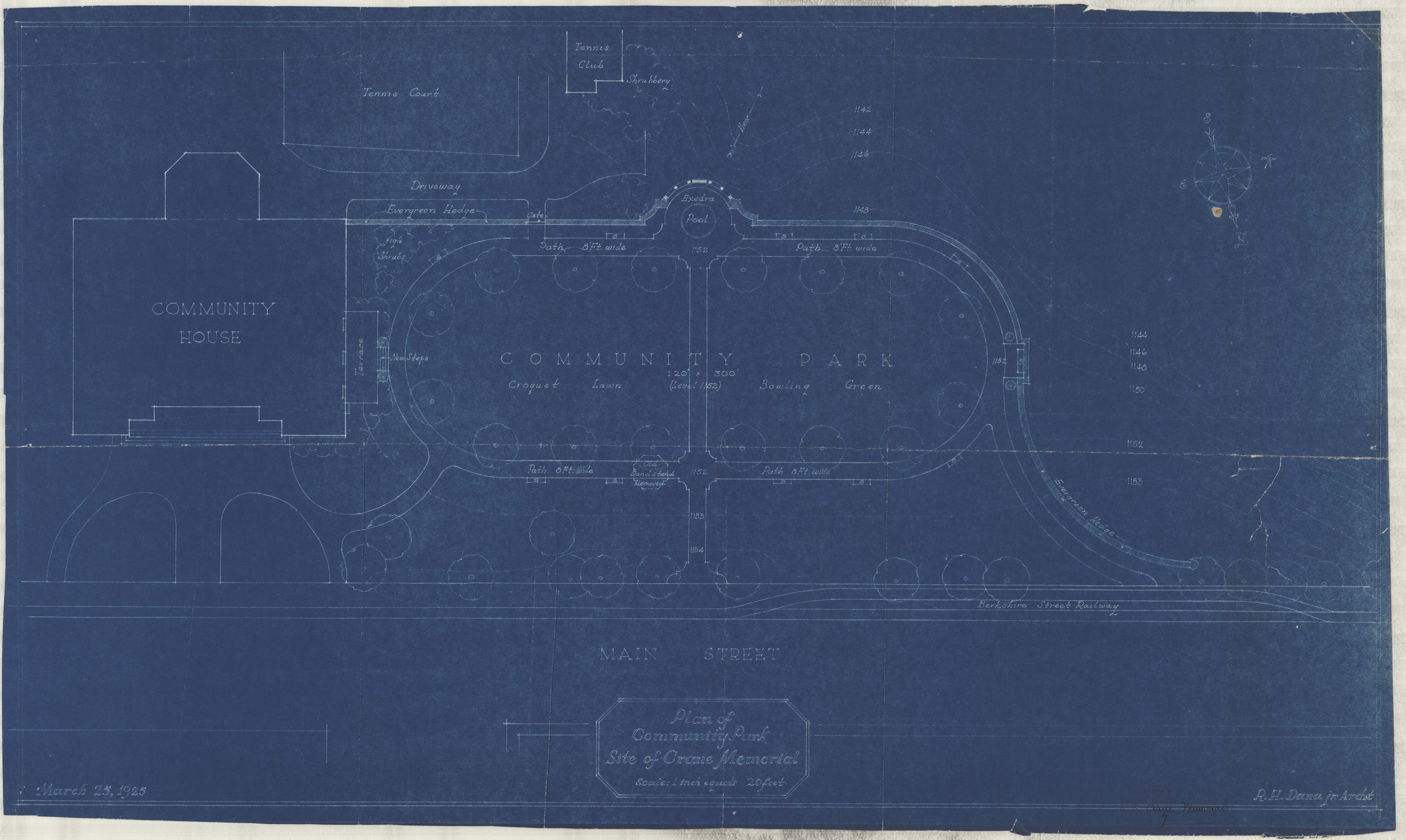
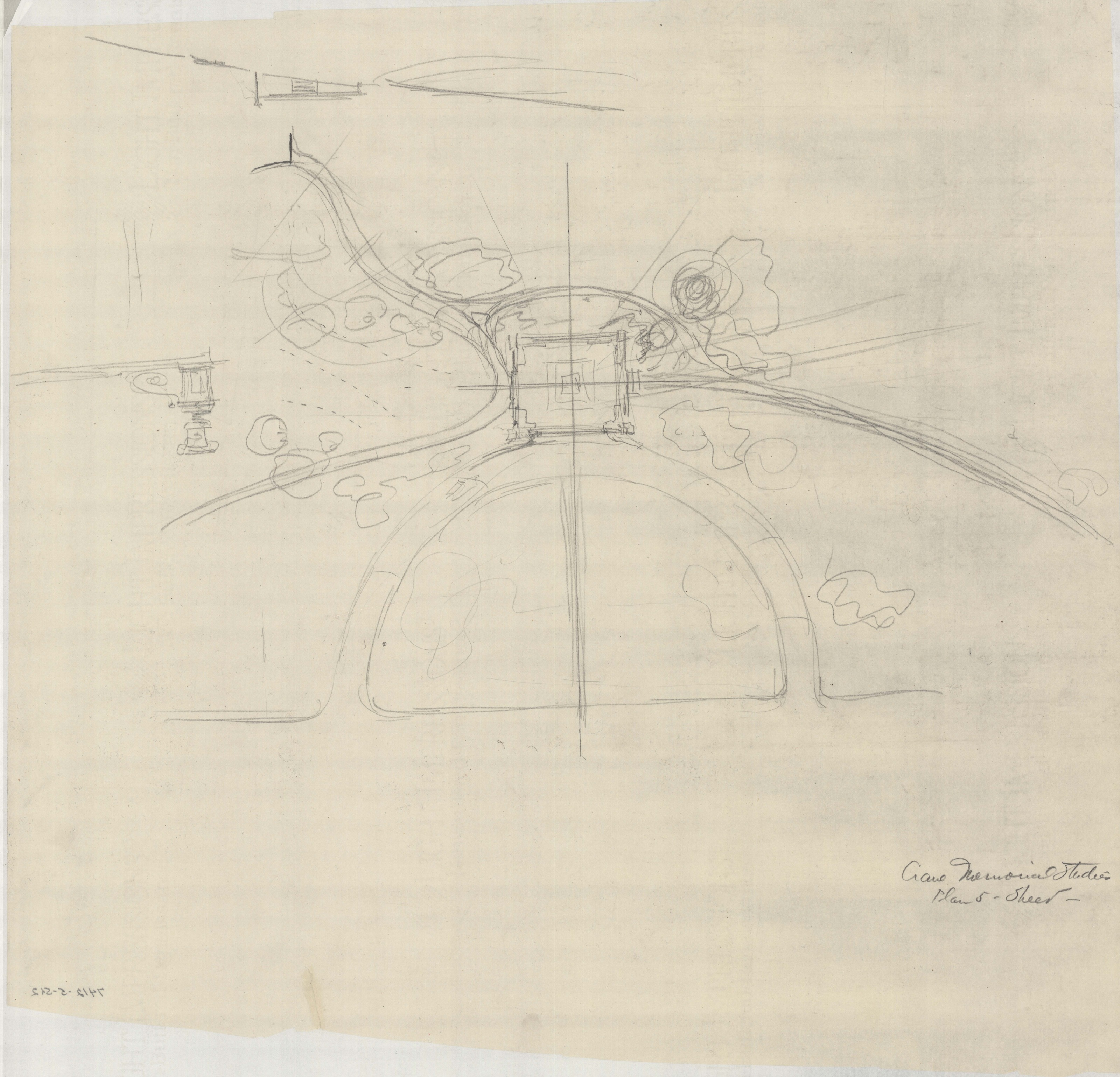
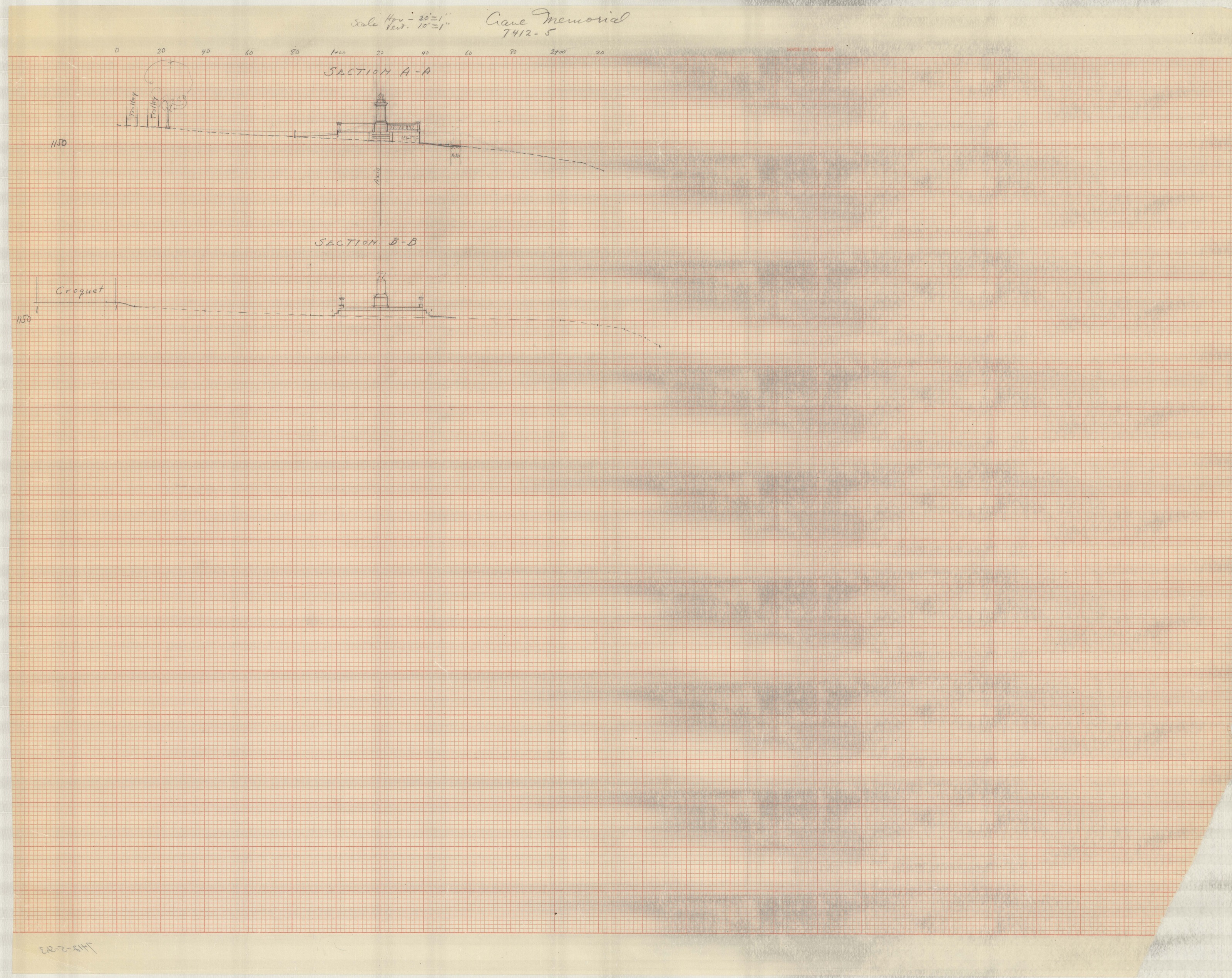
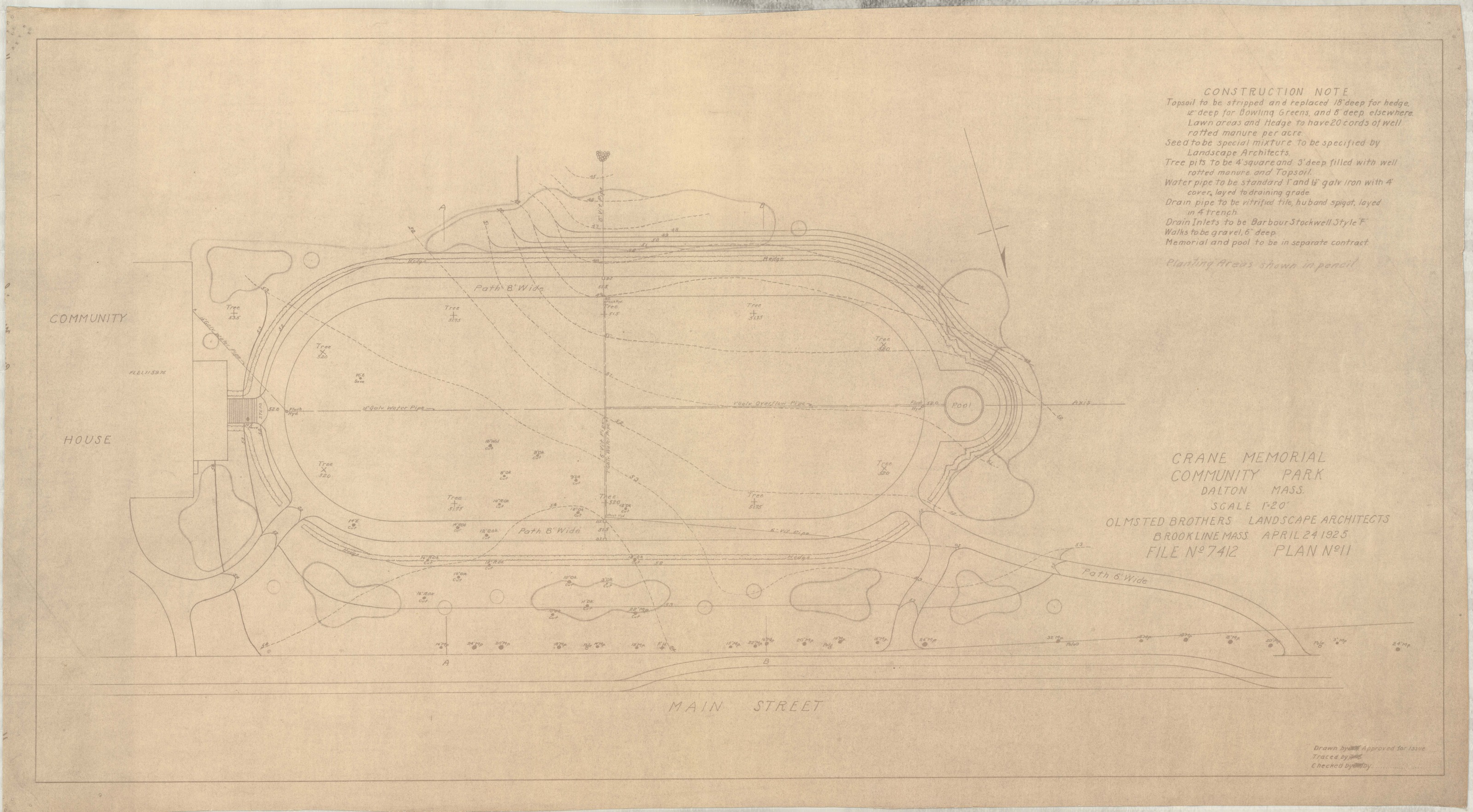
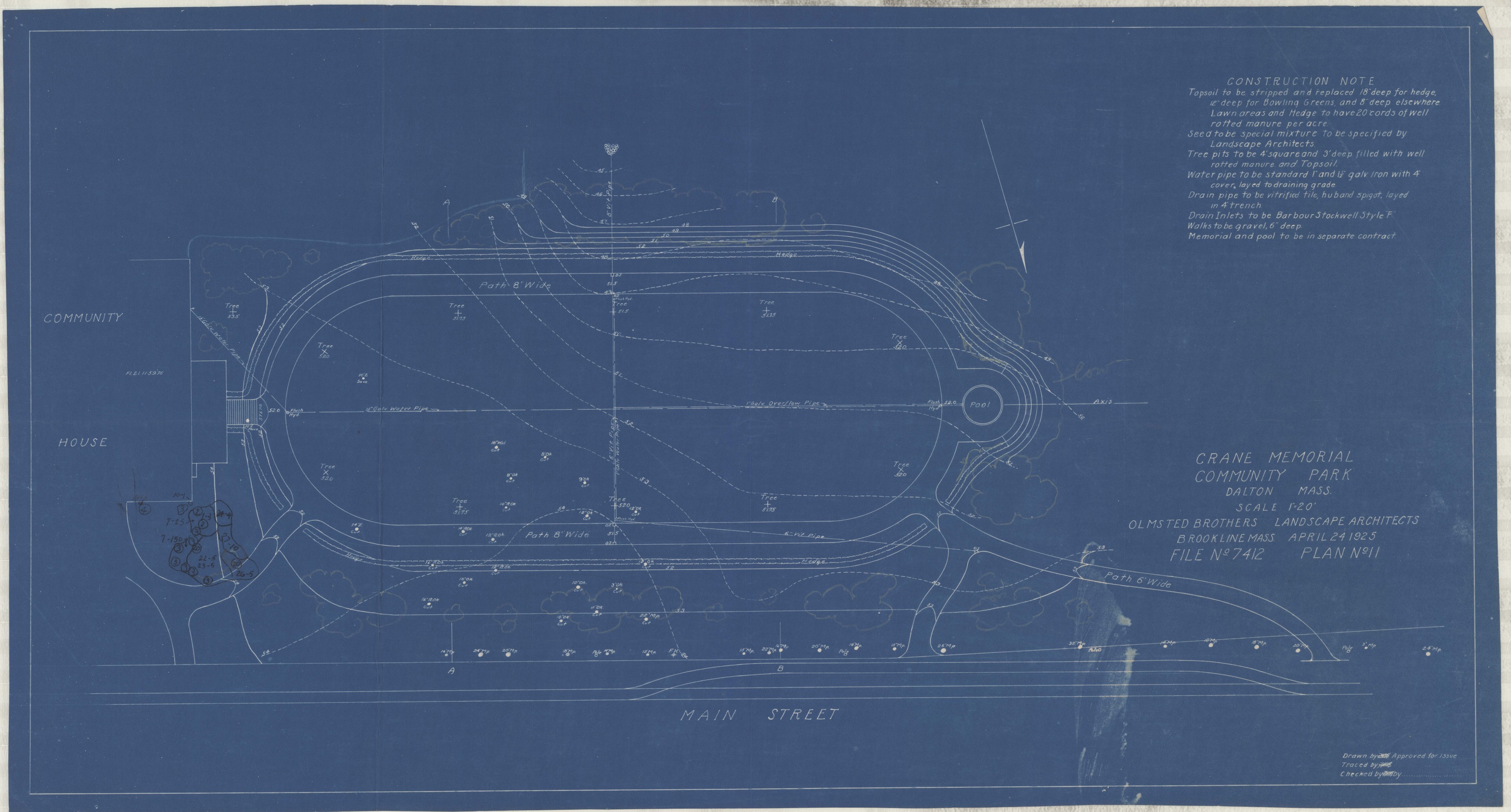
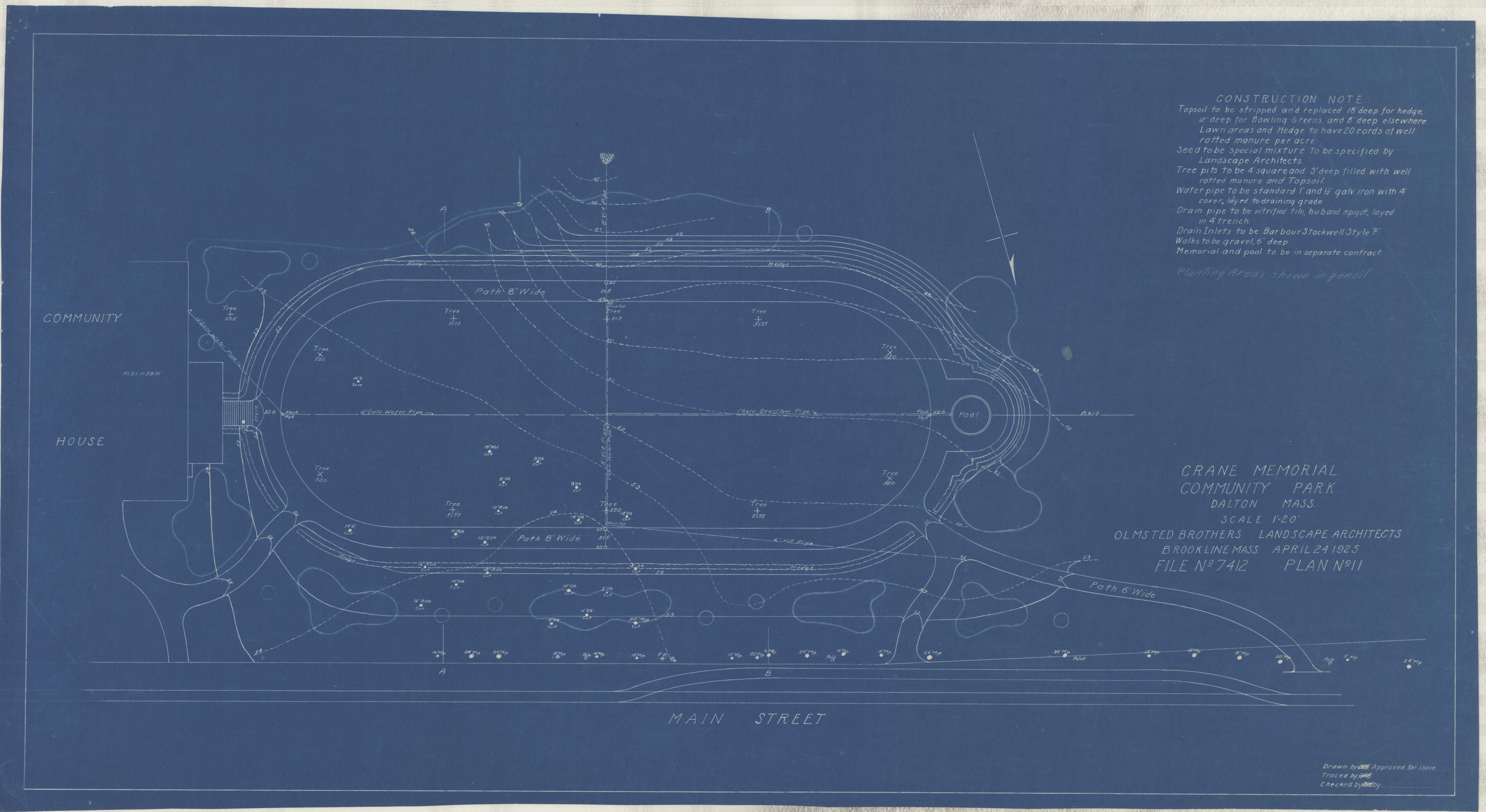
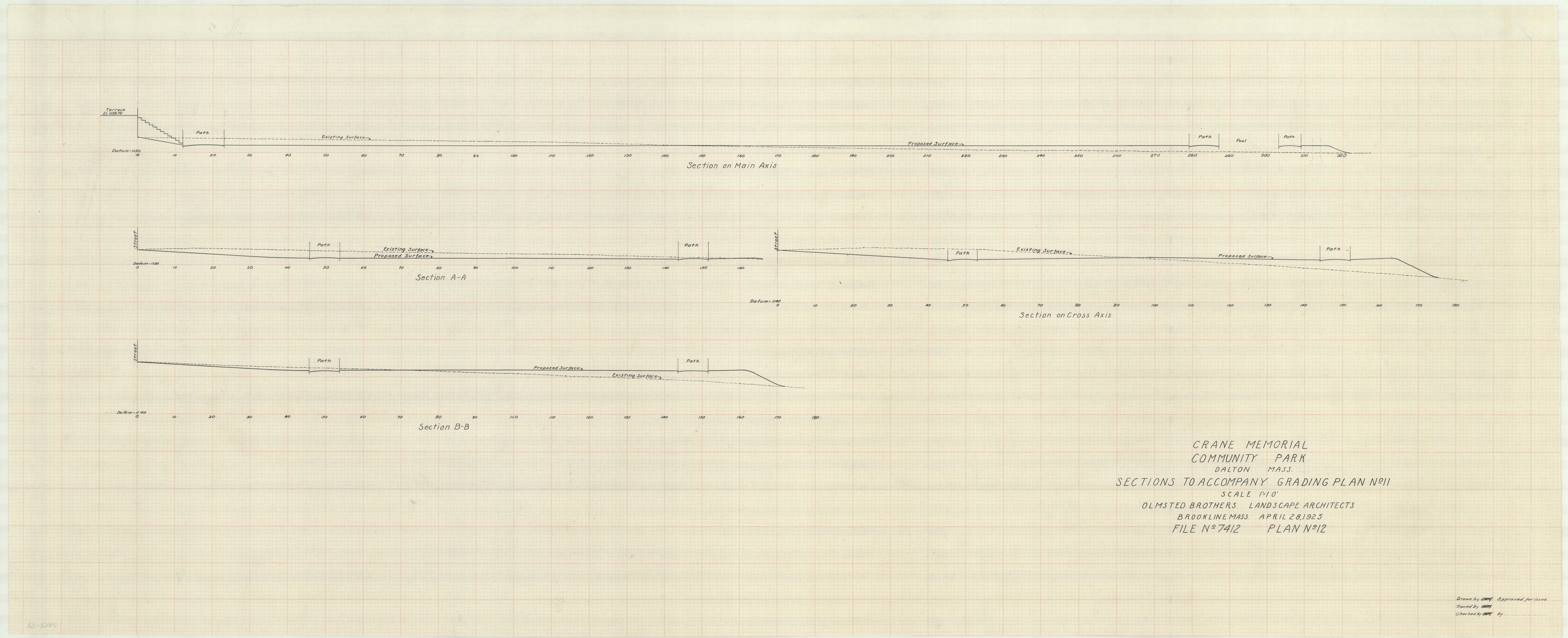
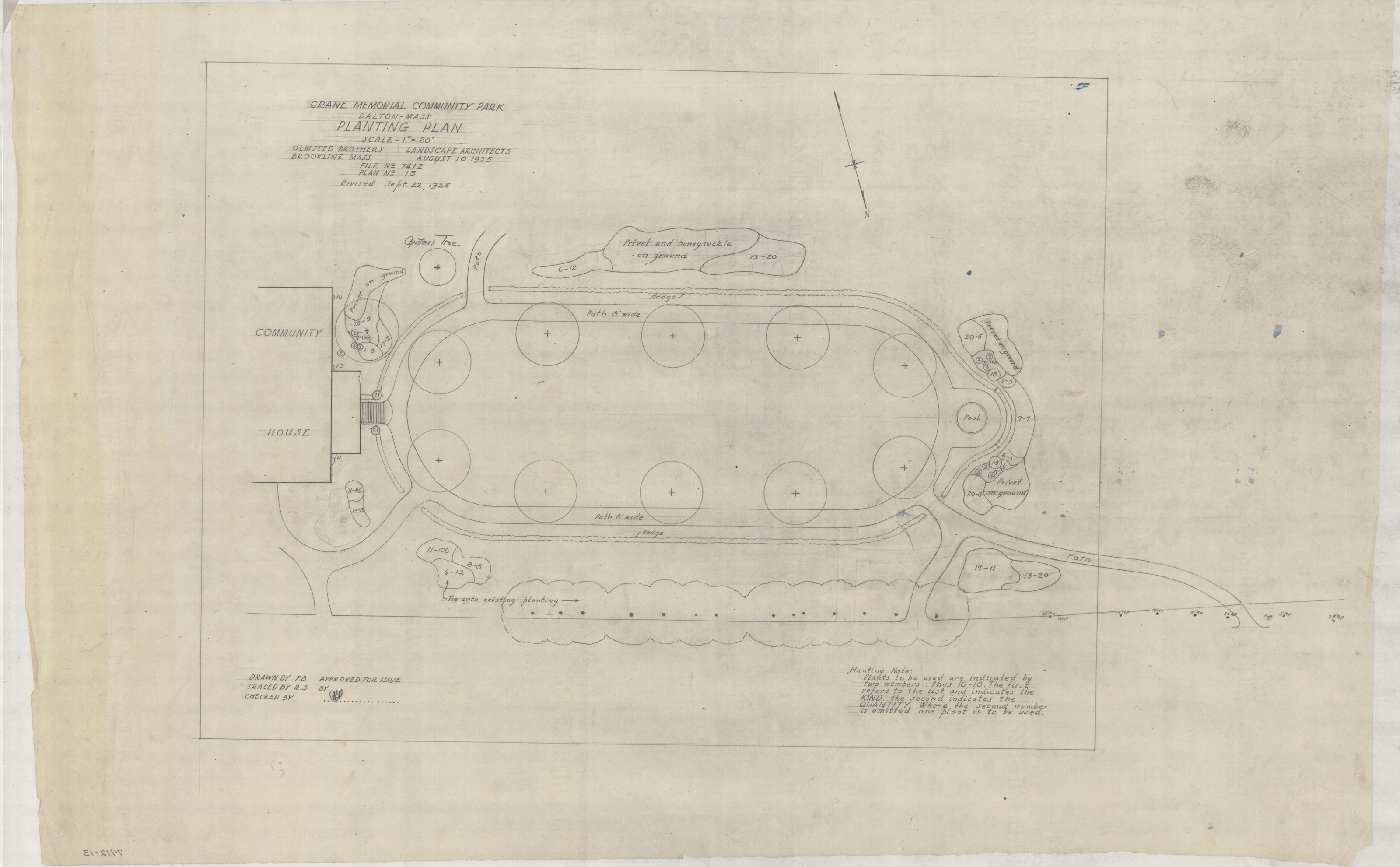
The work is dated more closely than most. Site plans on 26 February 1925; a study on 5 March; two more site sheets on 25 March; a revision on 16 April; a plane table sheet on the 17th; the construction plan on the 24th, printed four times over and marked up differently on each; sections on the 28th. Then a pause, and the planting plan on 10 August, revised 22 September.
II. The man
Winthrop Murray Crane was born at Dalton on 23 April 1853 and died there on 2 October 1920. In 1879 he won Crane & Company the contract to supply the paper for United States currency — the business described on this site’s Willow Brook page. He was Lieutenant Governor of Massachusetts from 1897 to 1900, Governor from 1900 to 1903, and United States Senator from 1904 to 1913. In 1902 Theodore Roosevelt asked him to mediate the anthracite coal strike.
His first wife, Mary Benner, whom he married in 1880, died in childbirth in 1884; their son was Winthrop Murray Crane Jr. In 1906 he married Josephine Porter Boardman, and they had three children: Stephen, Bruce and Louise.
The Berkshire Eagle reports that in 1923 Winthrop Murray Crane, the former governor, set up the trust fund that established the Dalton Community Recreation Association, its trustees and its two building sites. He had died three years earlier. The account is given as it stands.
III. The lawn
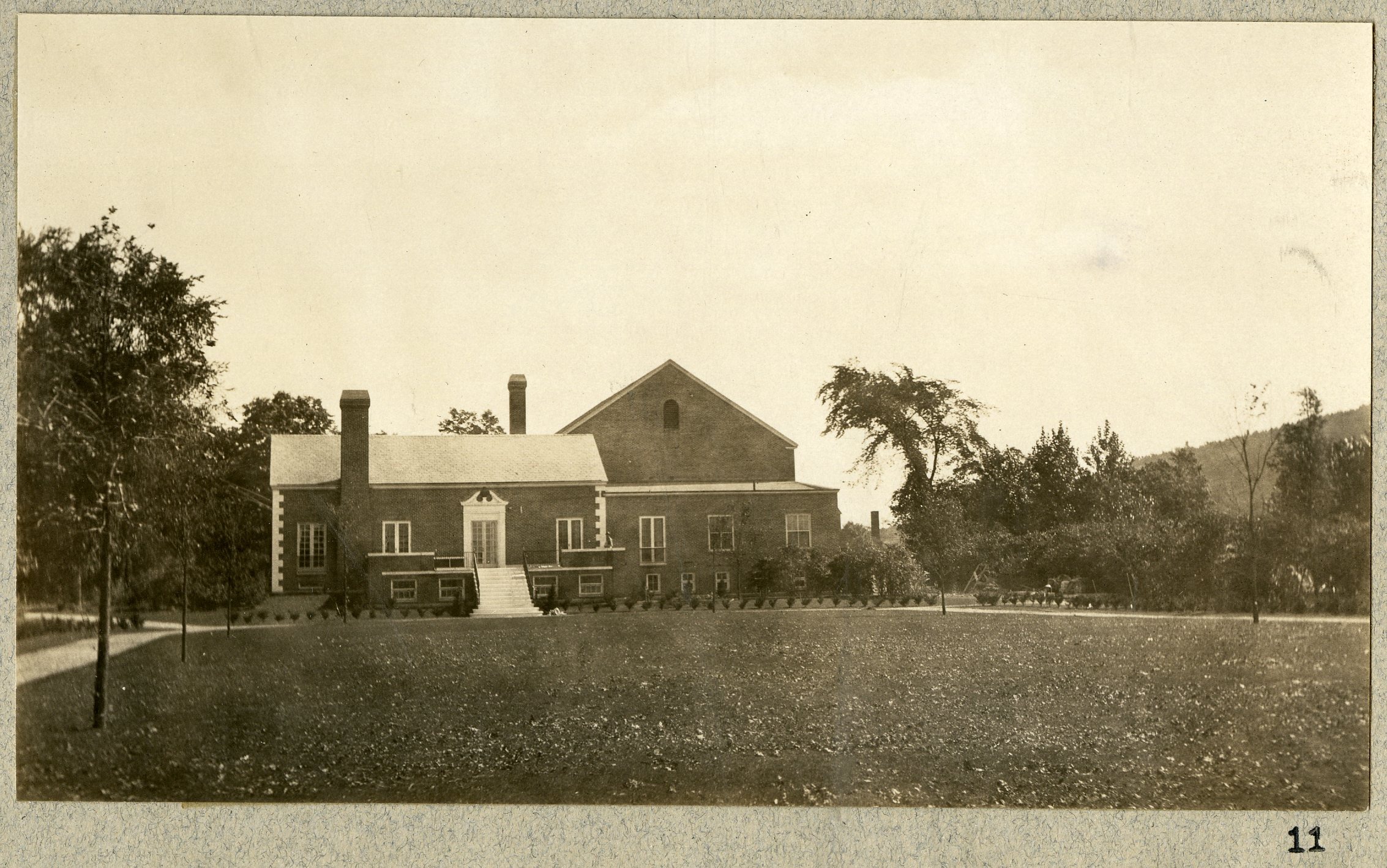
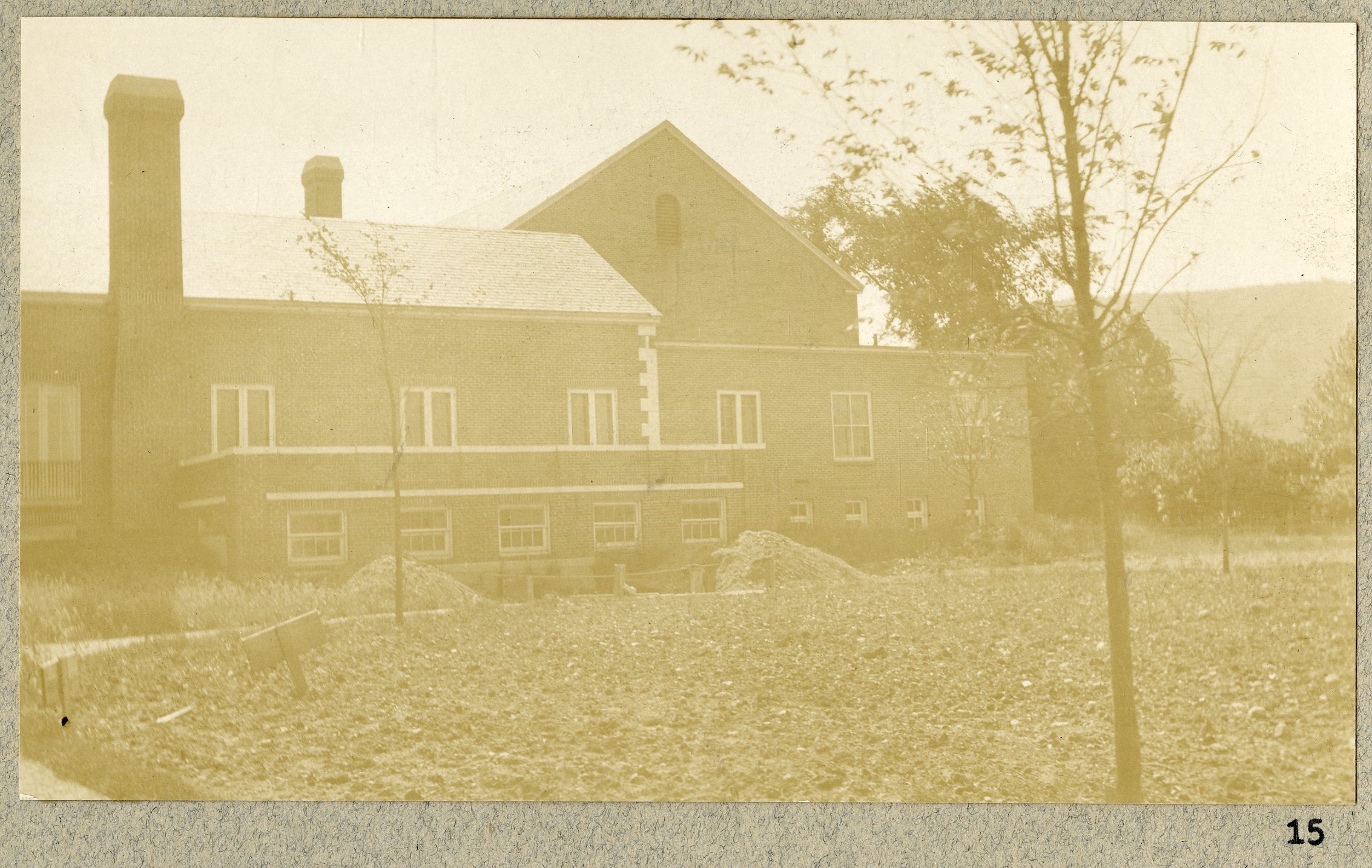
The memorial was not put in a cemetery. It went on the Main Street lawn in front of the Winthrop Murray Crane Community House — a building by Jallade, Lindsey & Warren of New York, built by D. Herbert Pike of Dalton, with interiors by Francis Bacon of Boston, and holding a swimming pool that is among the oldest still running in the country.
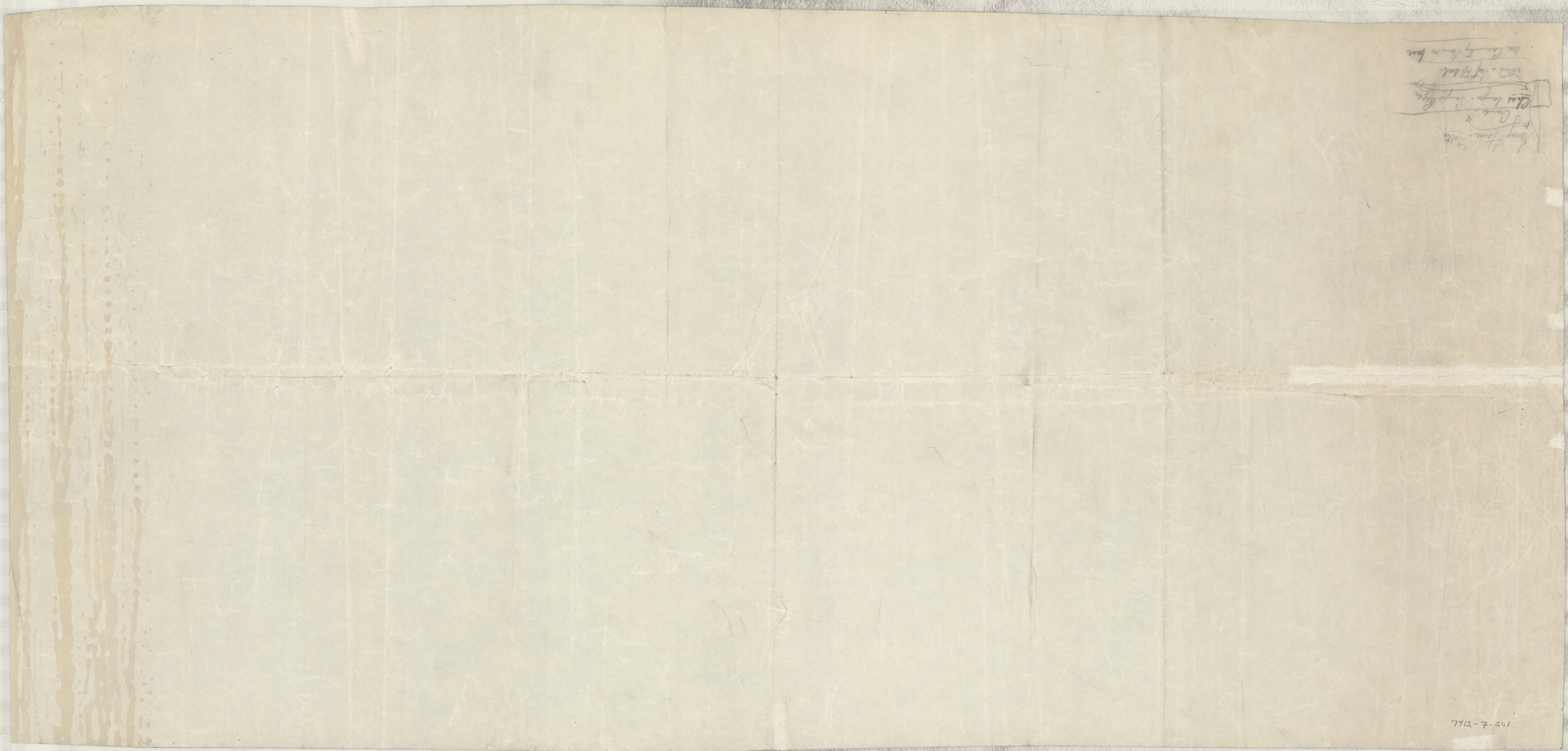
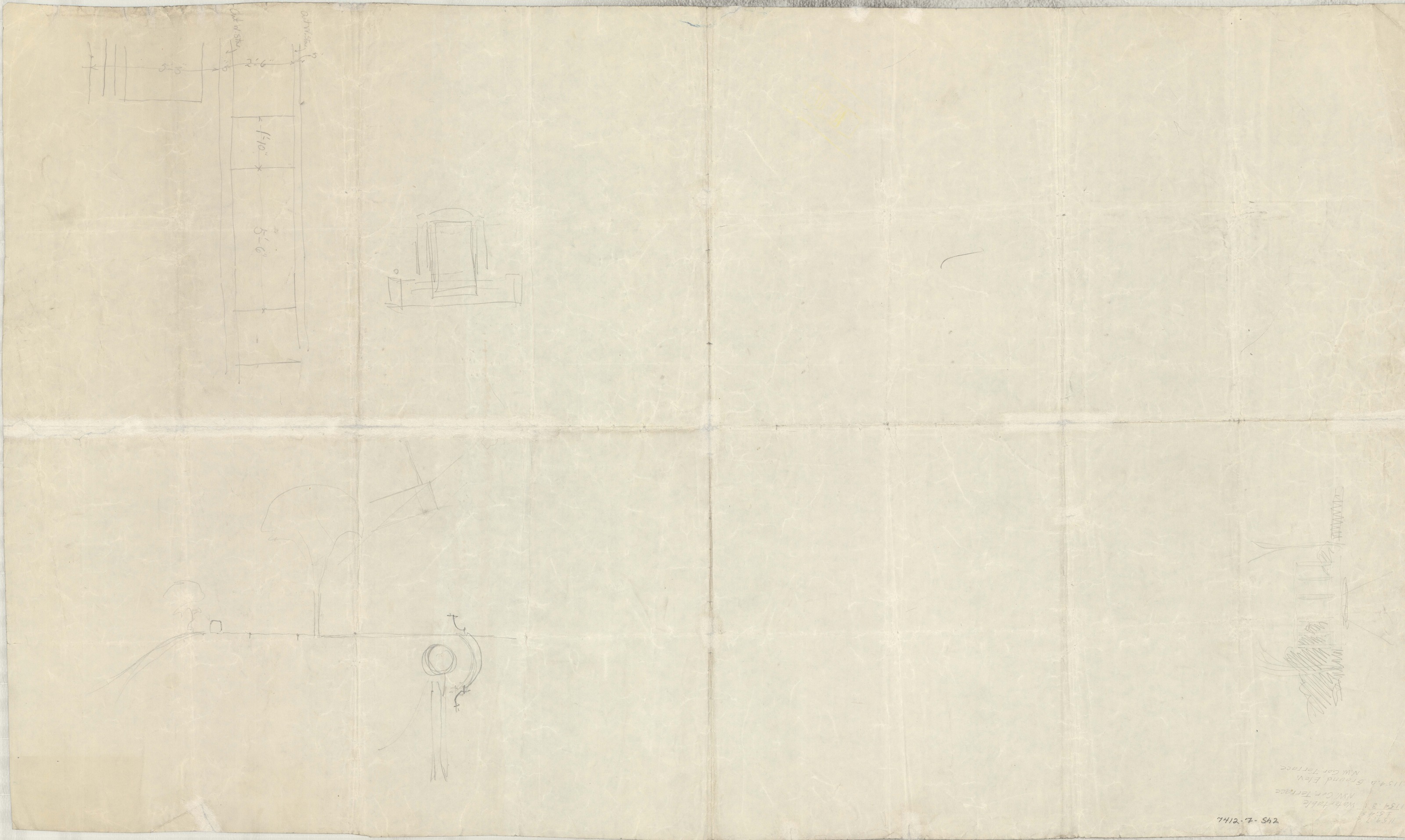
The first sheet locates the site in seven words: “Main Street, west of Dalton Community House.” On the back of another February sheet someone wrote a site-visit list that the cataloguer preserved: “Irving House, Crane, Chas. Sawyer-Sawyer Ragen, use Community House as base. Sections - test top soil.”
Three of those are Olmsted clients in their own right. Charles F. Sawyer has his own Dalton job, 07103; the Sawyer, Regan Company Mill is job 07102. The Irving House is the building the Detroit Publishing Company photographed as negative LC-D4-72591, shown on the Willow Brook page. And “use Community House as base” is the instruction that set the whole survey’s datum.
IV. The same sheet, four times
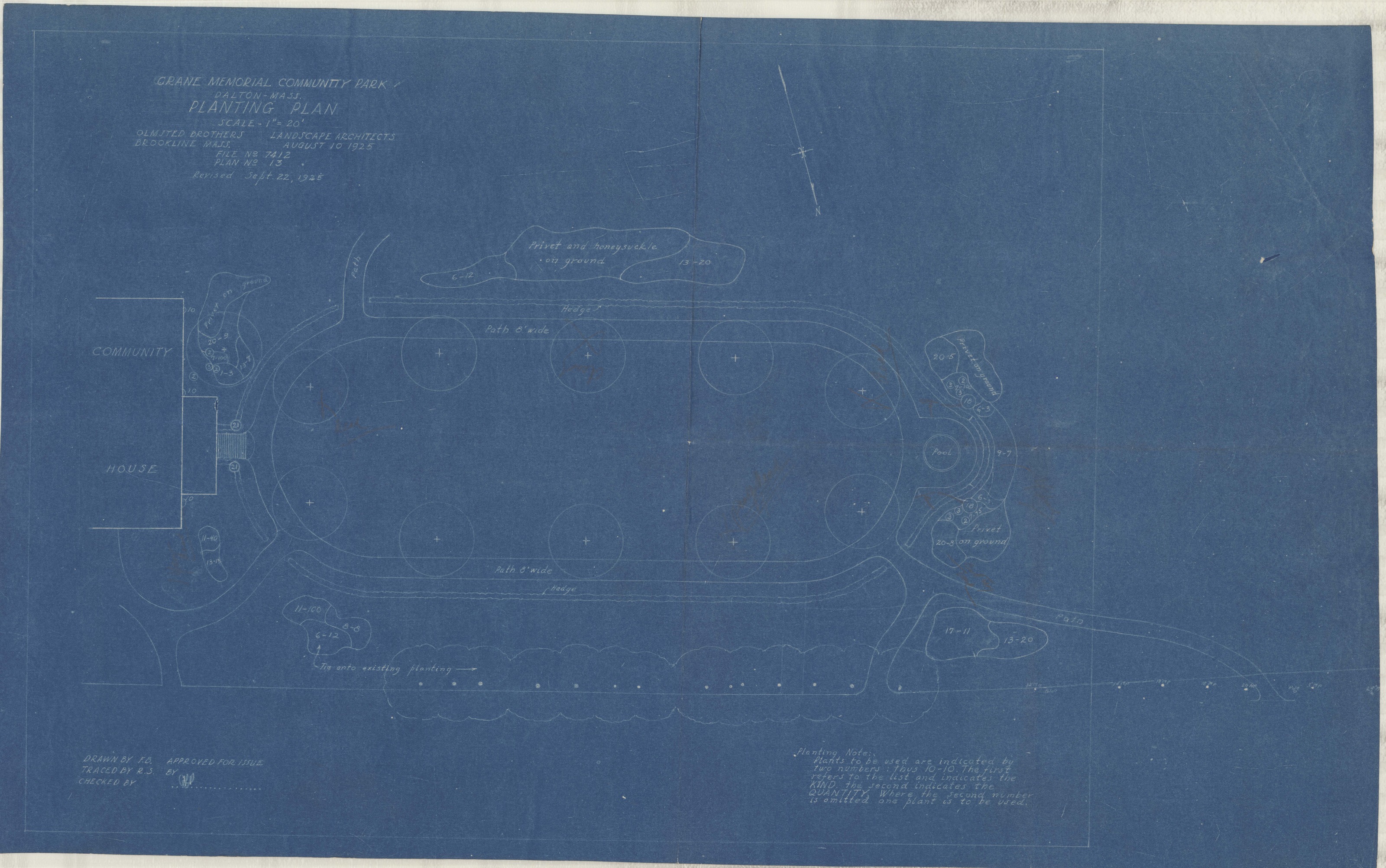
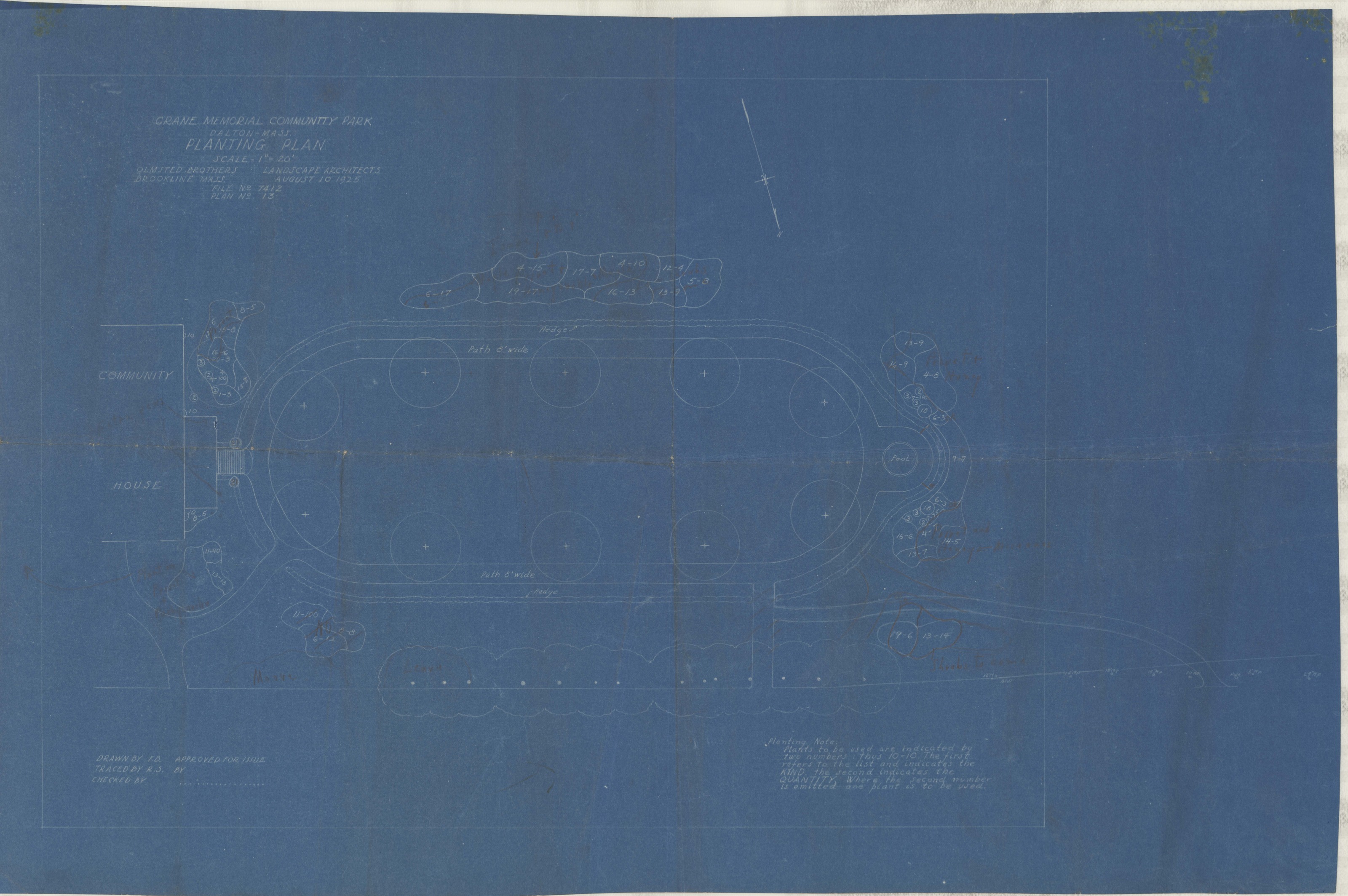
The most instructive drawings in this job are the duplicates. Plan 11, the construction plan of 24 April, survives as the original and four prints. One carries construction notes and a key to the planting areas in graphite; another carries construction and planting notes; a third, dated the following day, has “planting groups and numbers added”; a fourth carries construction and planting notes again. Plan 13, the planting plan of 10 August, survives the same way — original plus four prints, two of them revised on 22 September, one with additions in graphite, one with “notes and changes in graphite.”
This is what an office actually produced. Not one finished drawing but a working sheet run off repeatedly, sent out, marked up in the field and on the drawing board, and filed with every set of marks still on it. Most of the estate jobs on this site survive as a single presentation sheet per idea. Here you can watch the same idea being argued over on five pieces of paper.
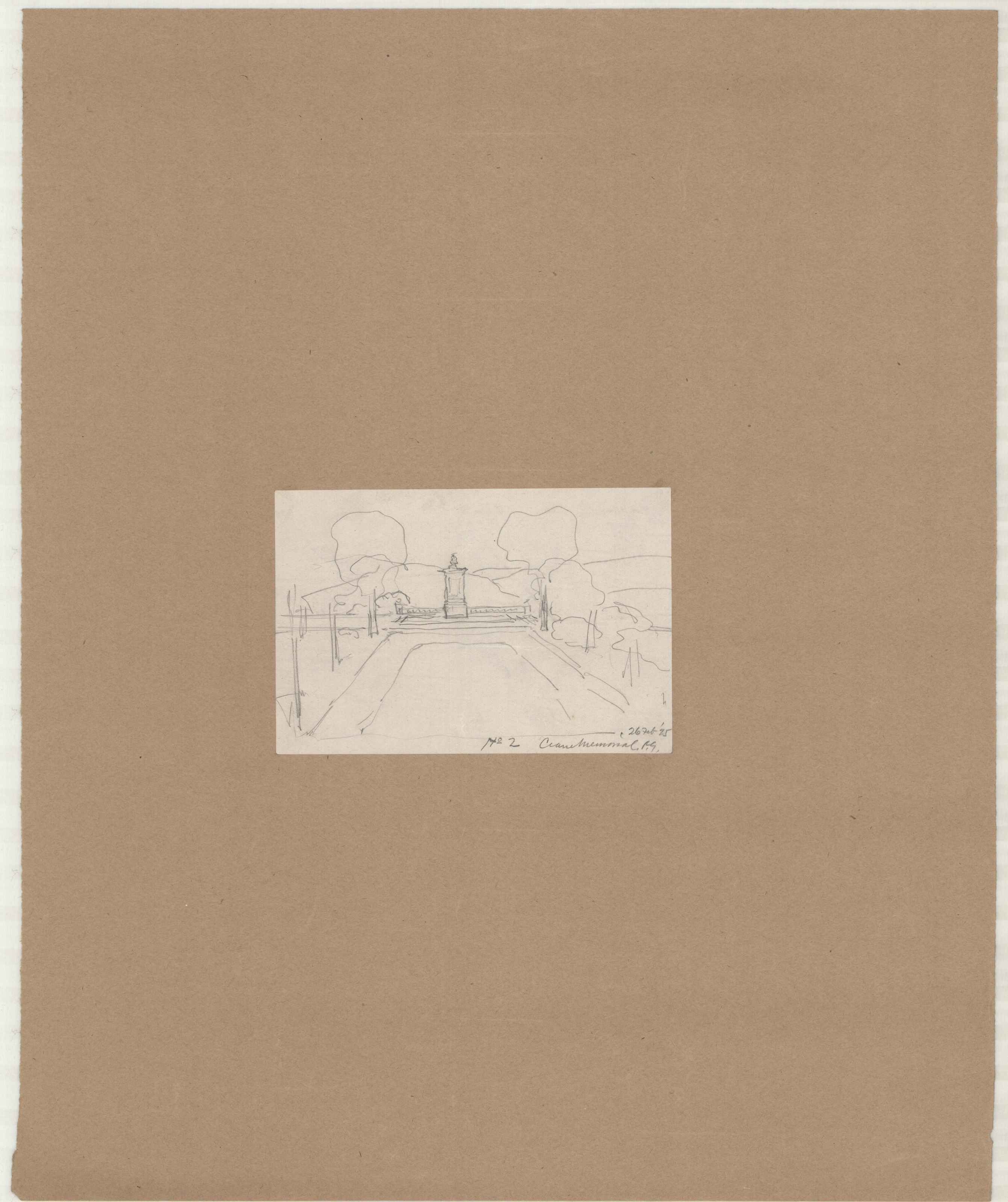
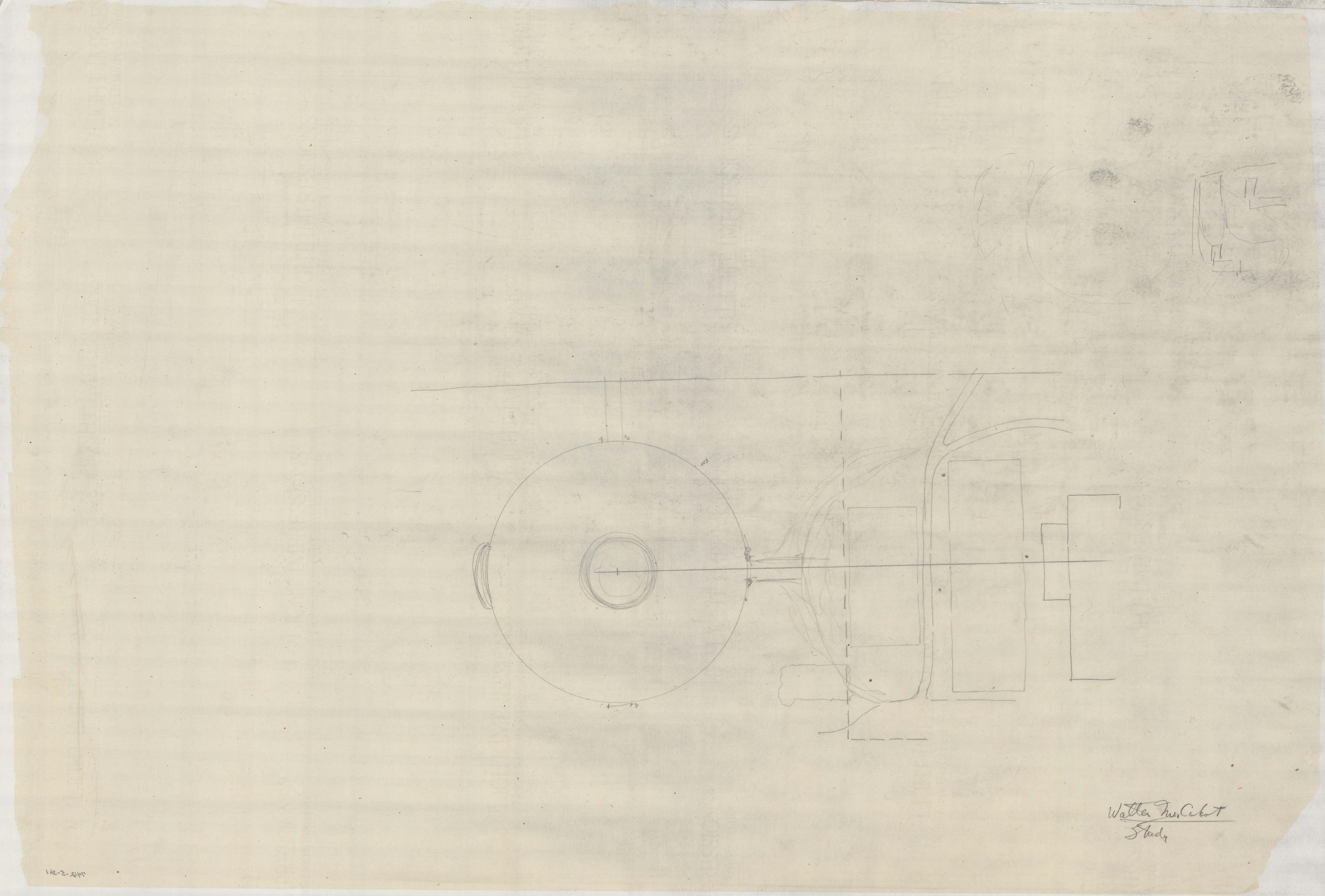
One undated study carries a note the cataloguer recorded only as “Note, Walter, Mr. Cabot.” Another is a color rendering “showing existing areas and fill.” A third is a perspective on a piece of white paper four inches by six, stuck onto brown kraft.
V. The album
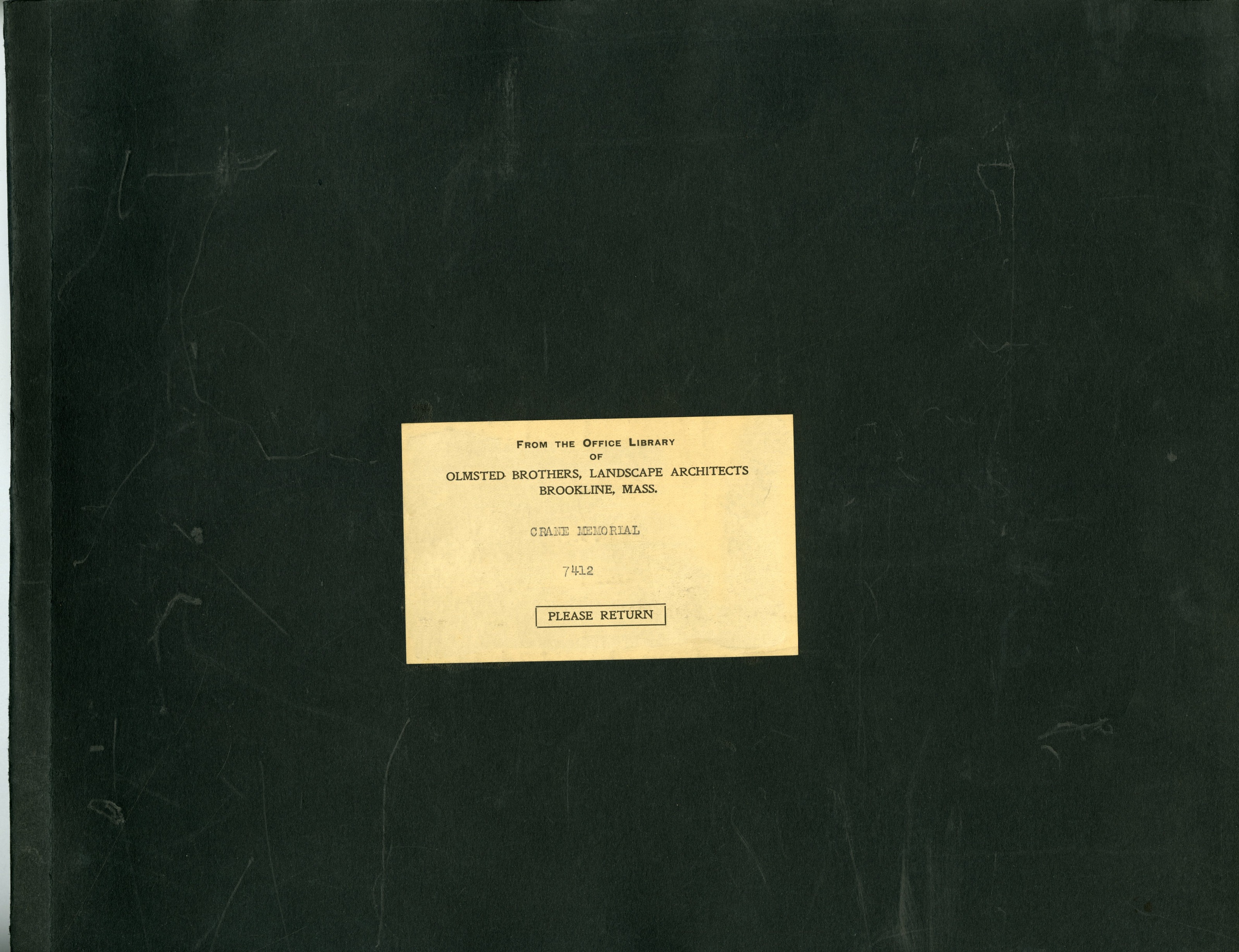
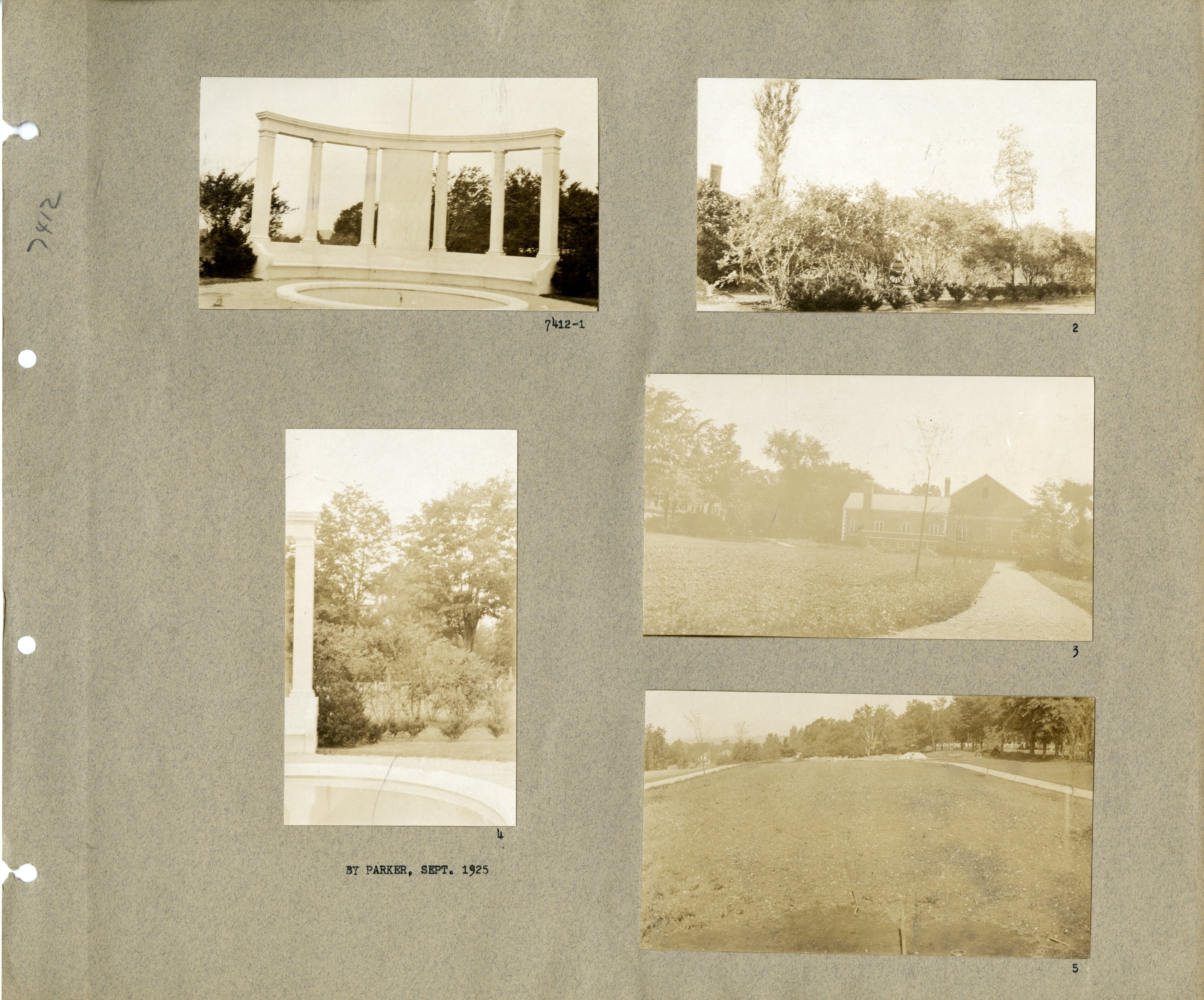
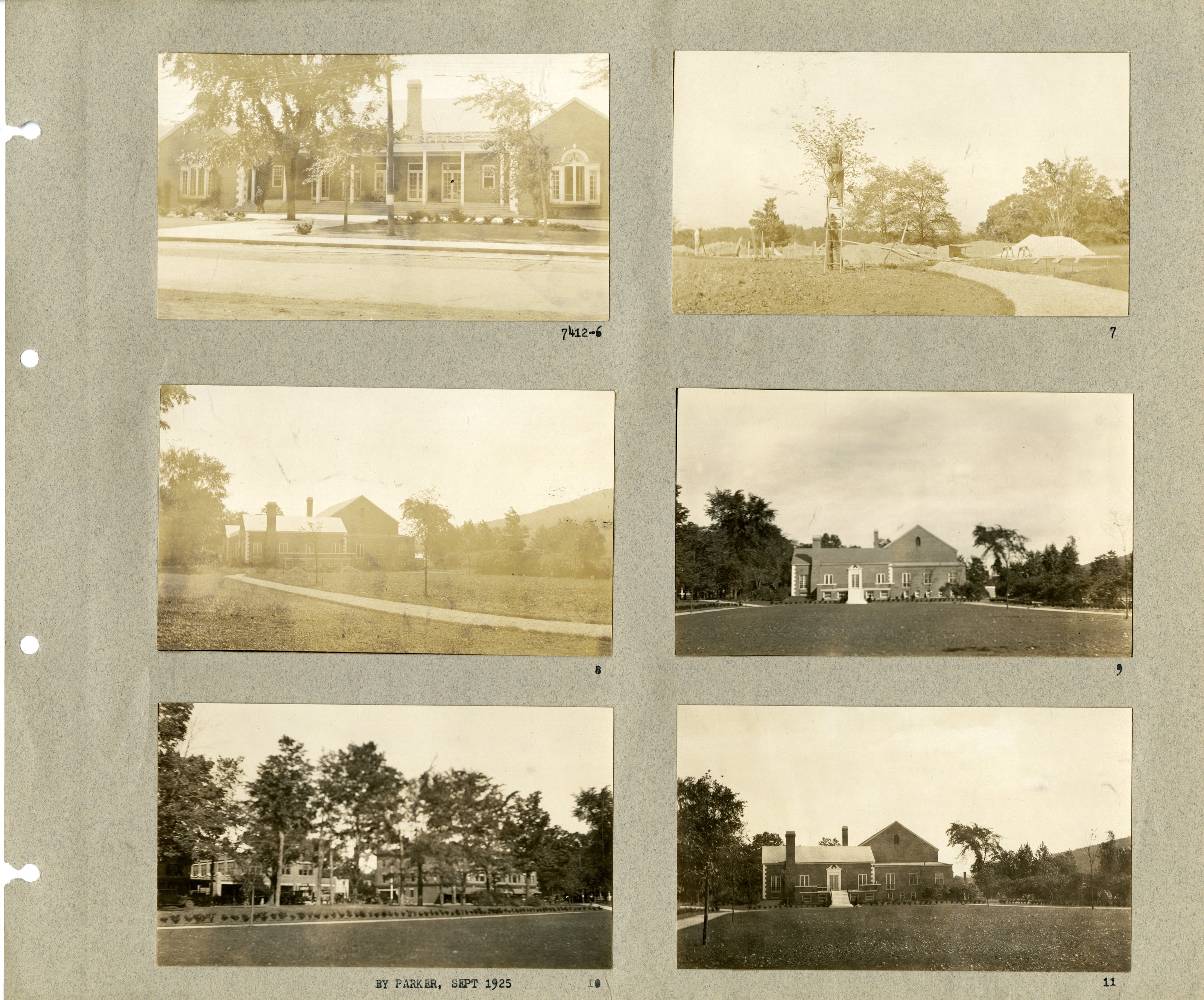
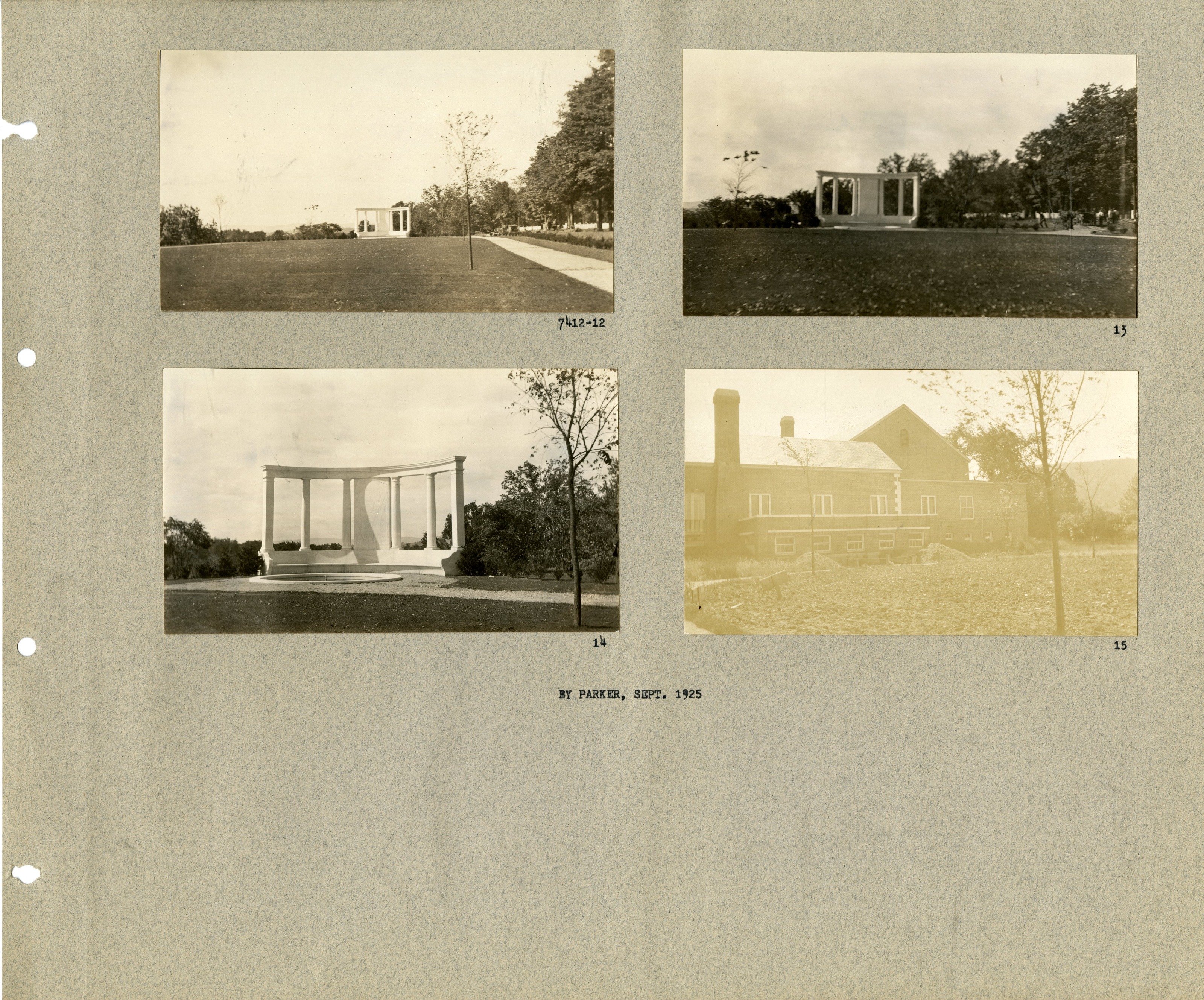
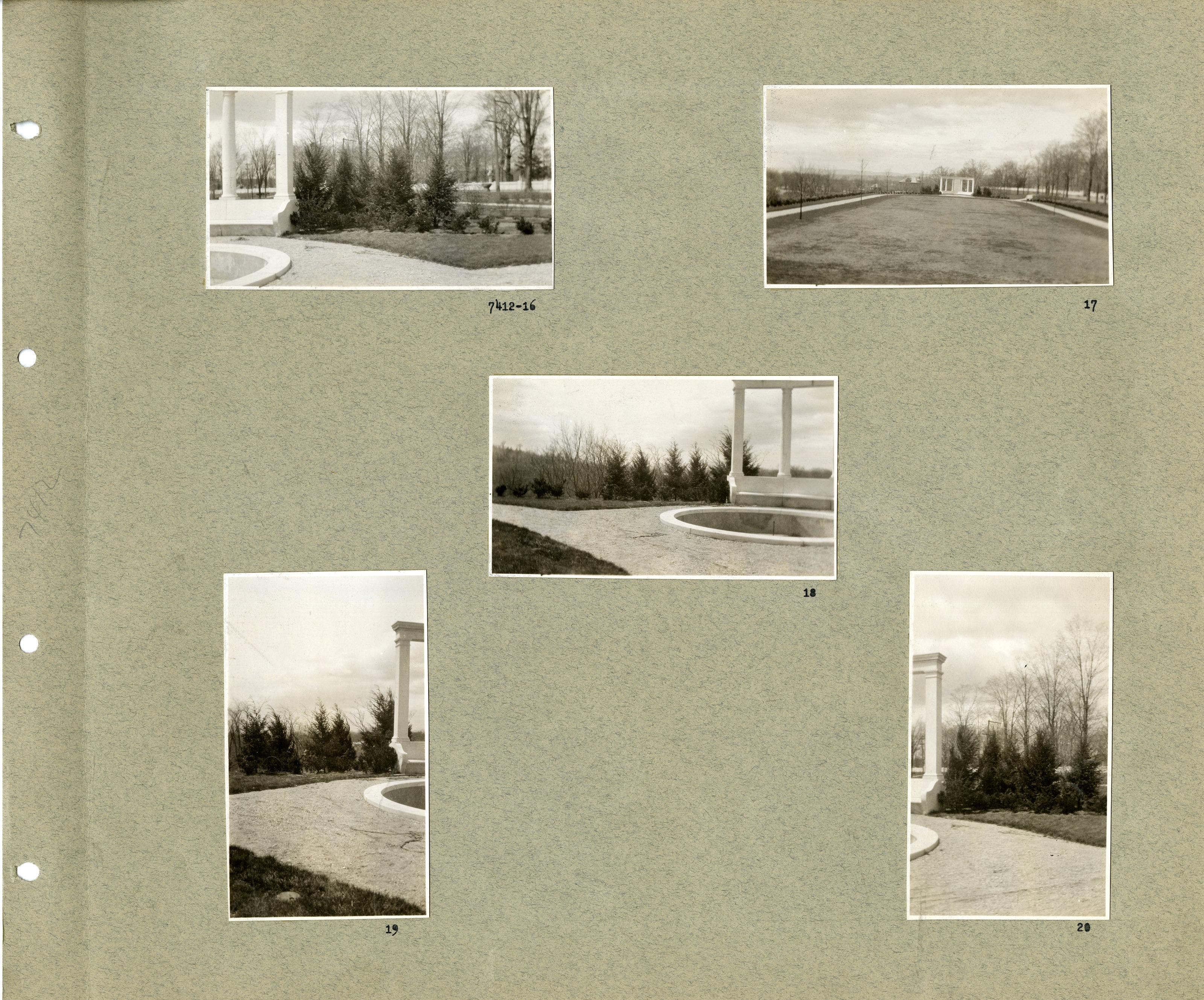
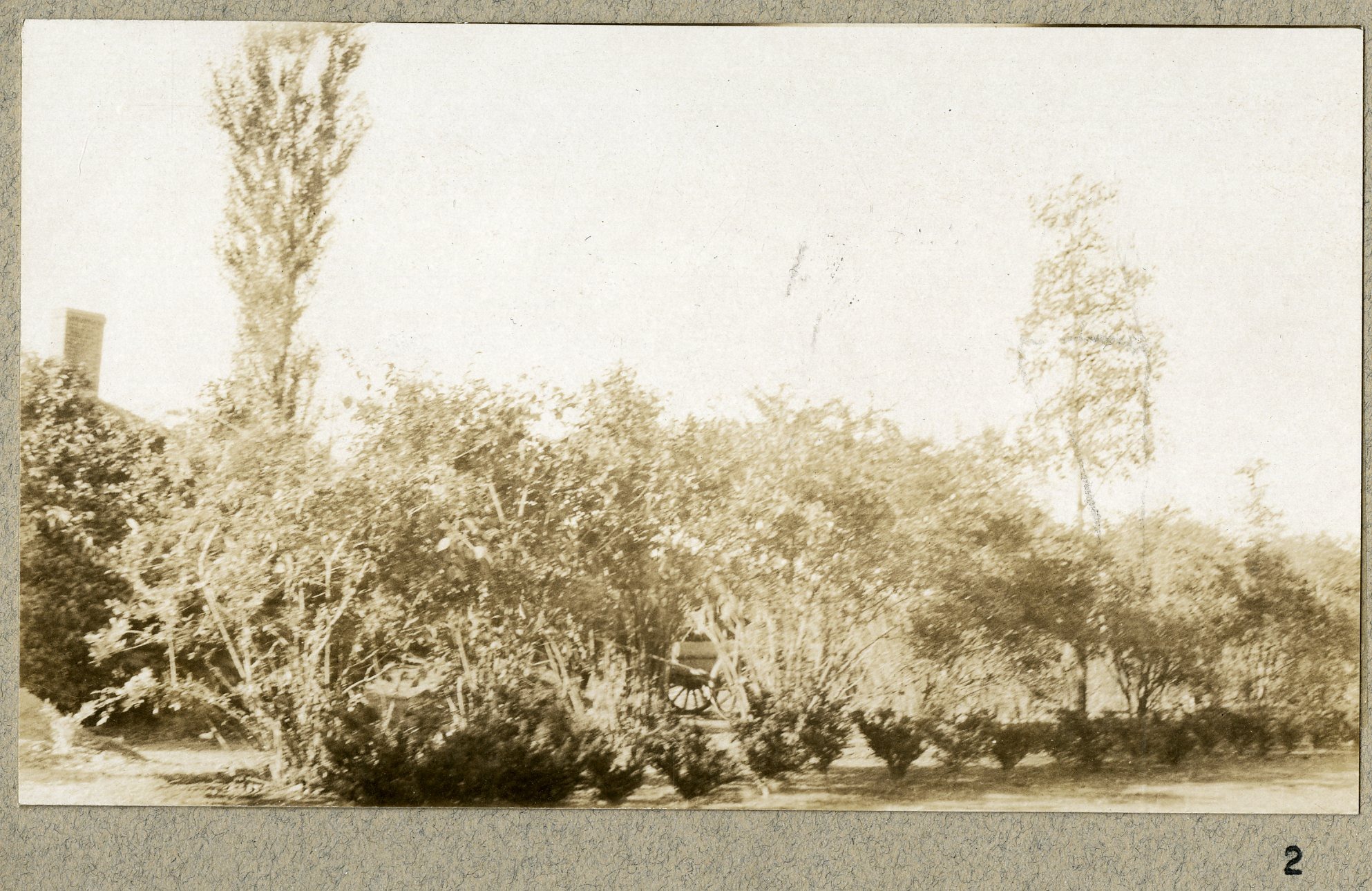
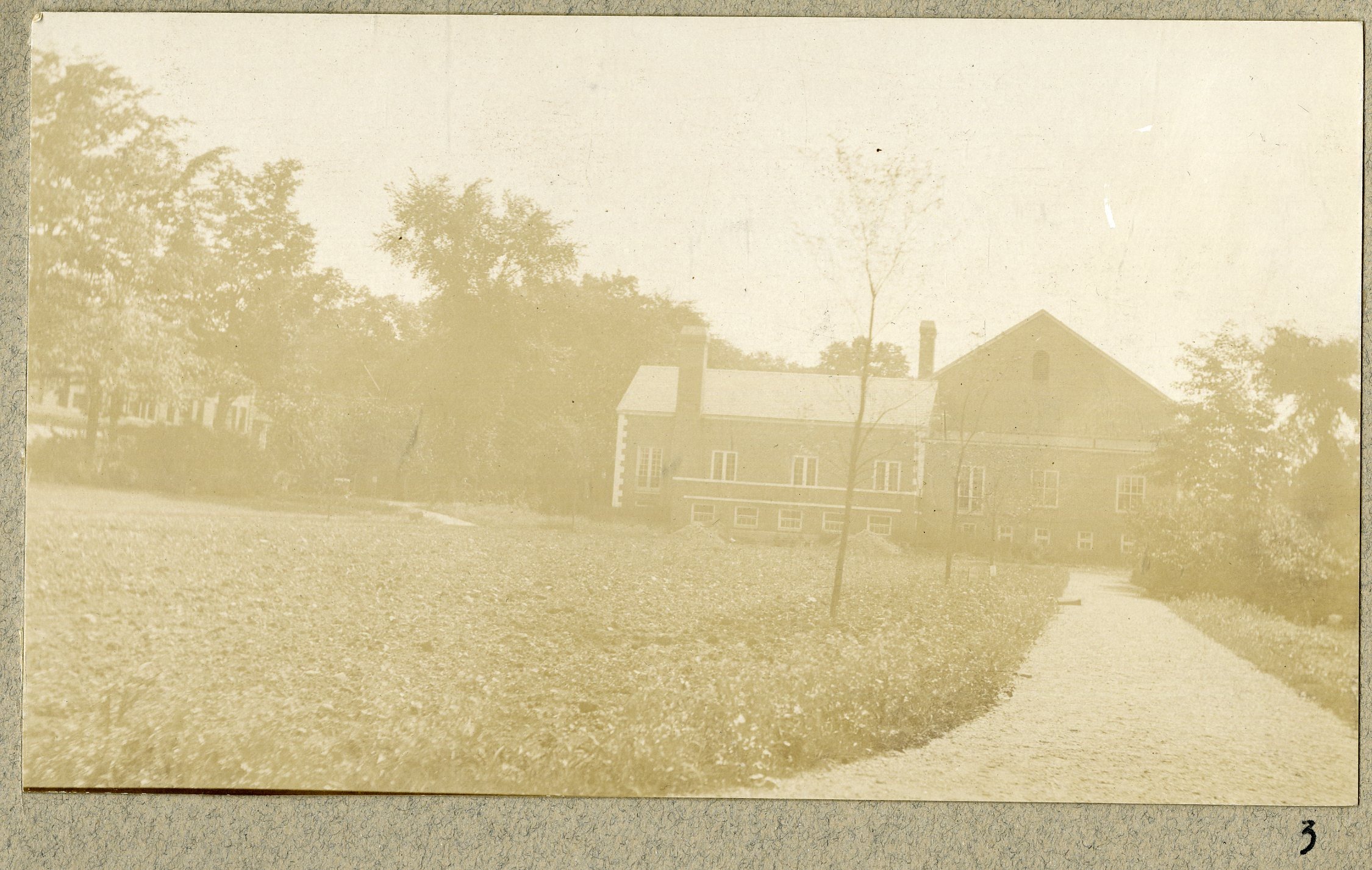
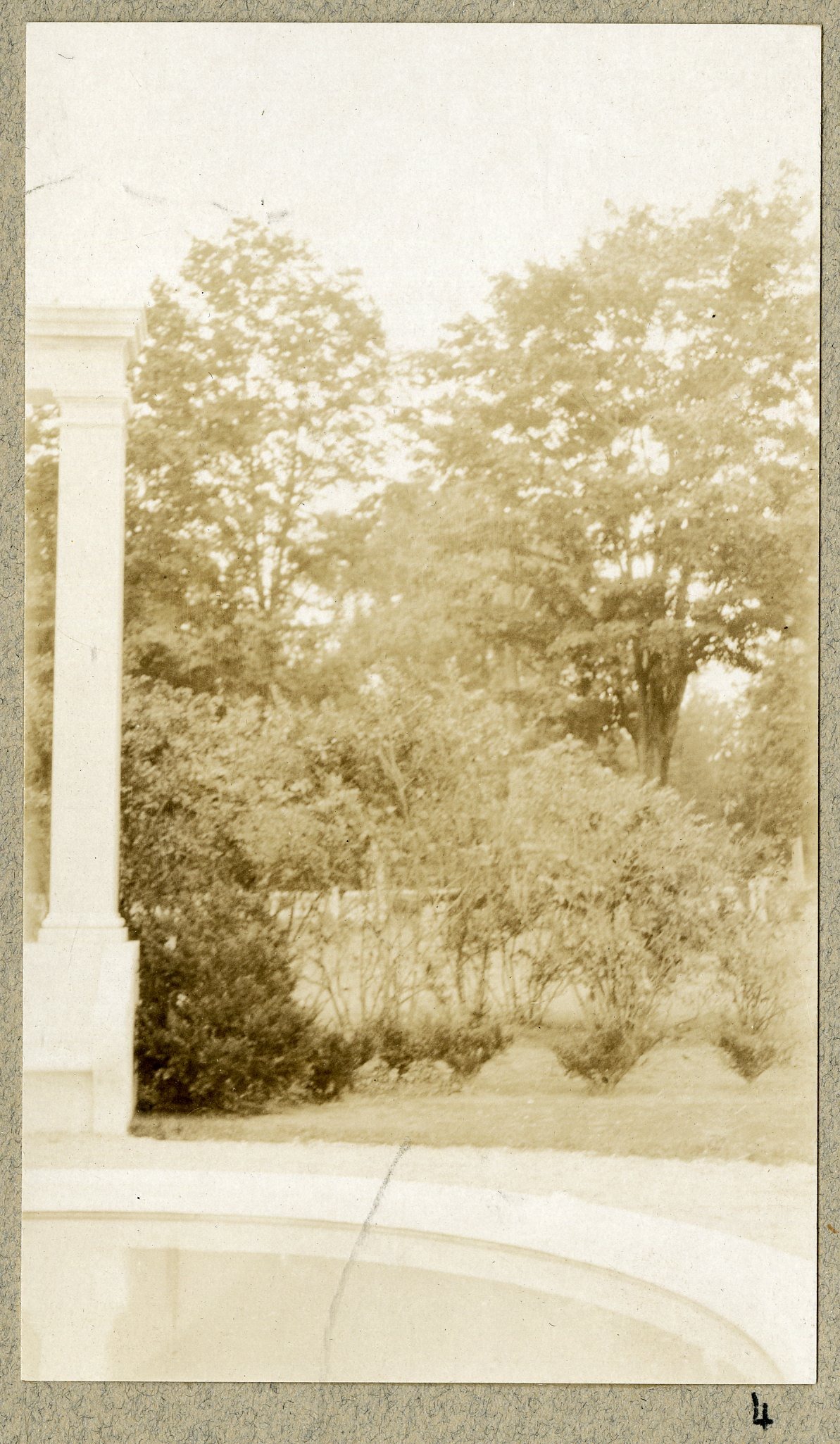
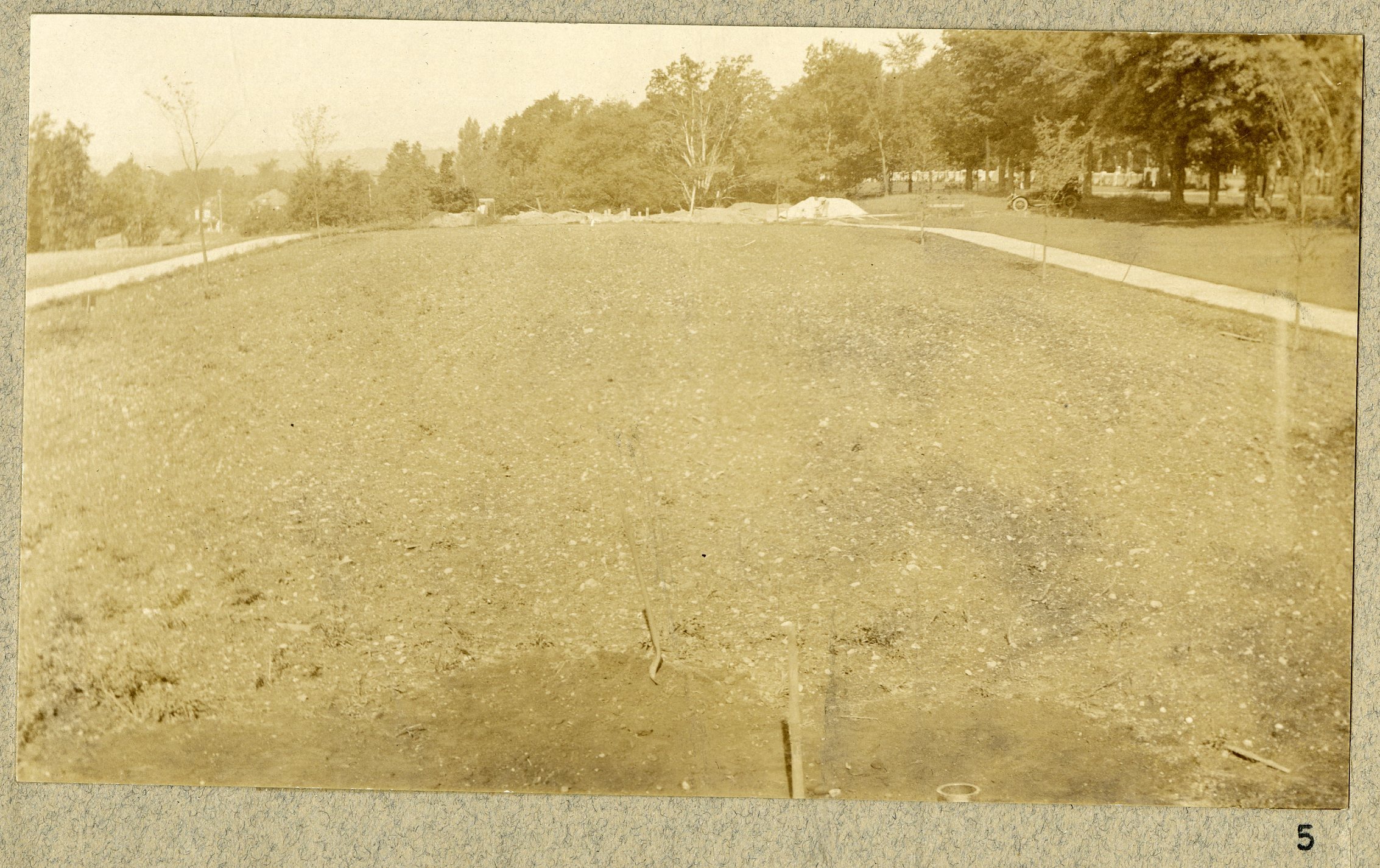
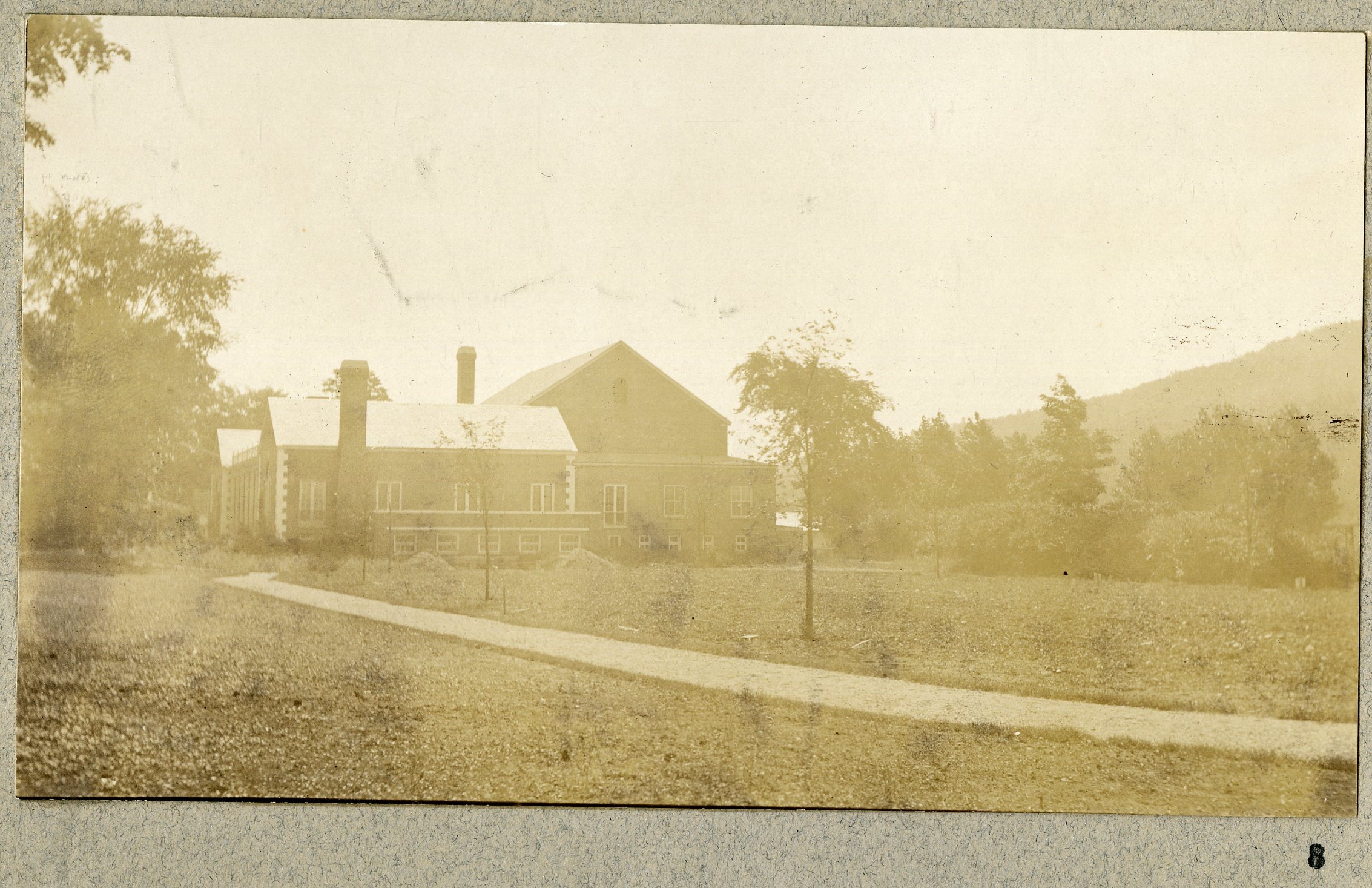
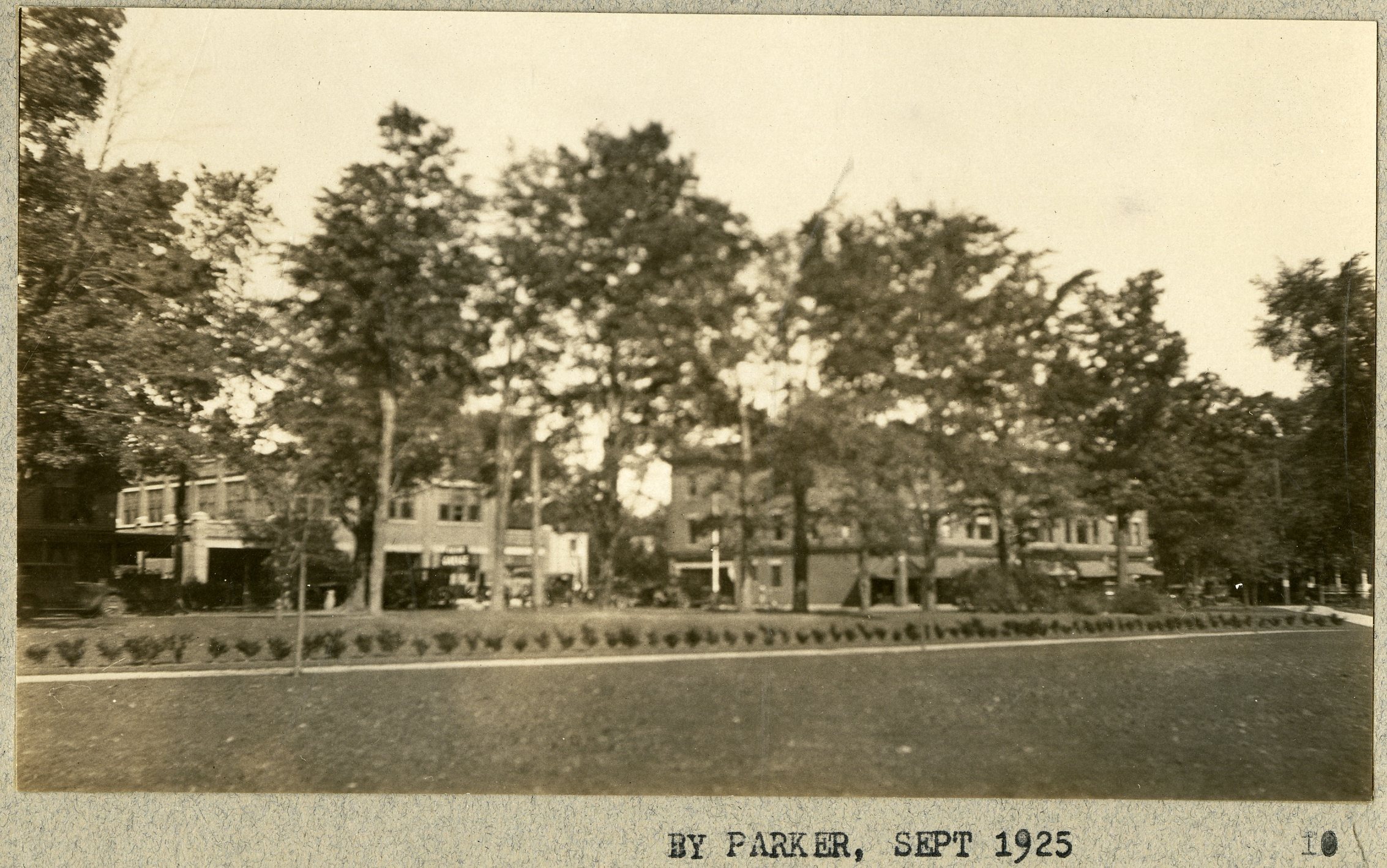
The office album is labeled “FROM THE OFFICE LIBRARY OF OLMSTED BROTHERS, LANDSCAPE ARCHITECTS, BROOKLINE, MASS. CRANE MEMORIAL 7412. PLEASE RETURN.” Twenty prints are mounted on eight pages. Three of them are captioned in type: “BY PARKER, SEPT 1925.”
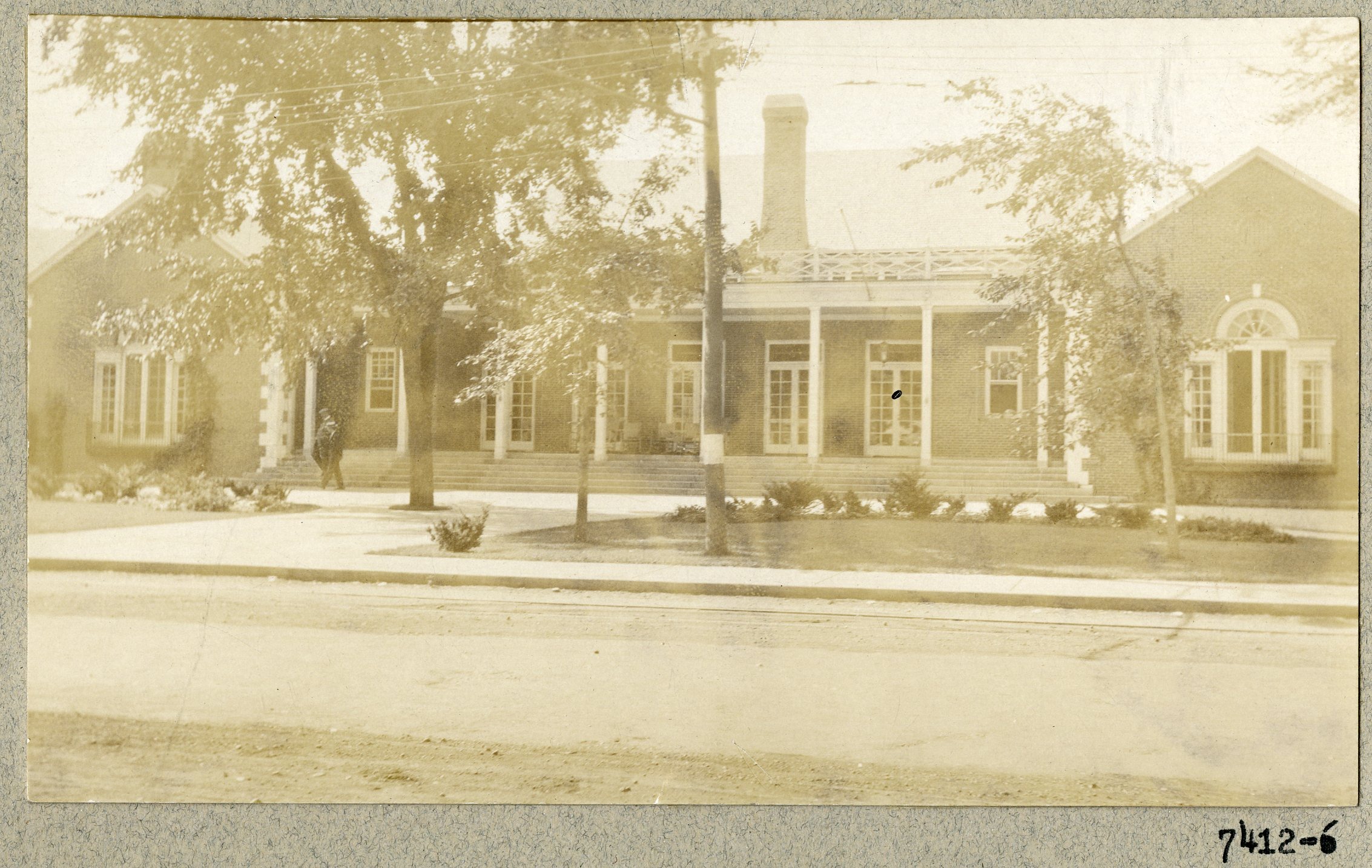
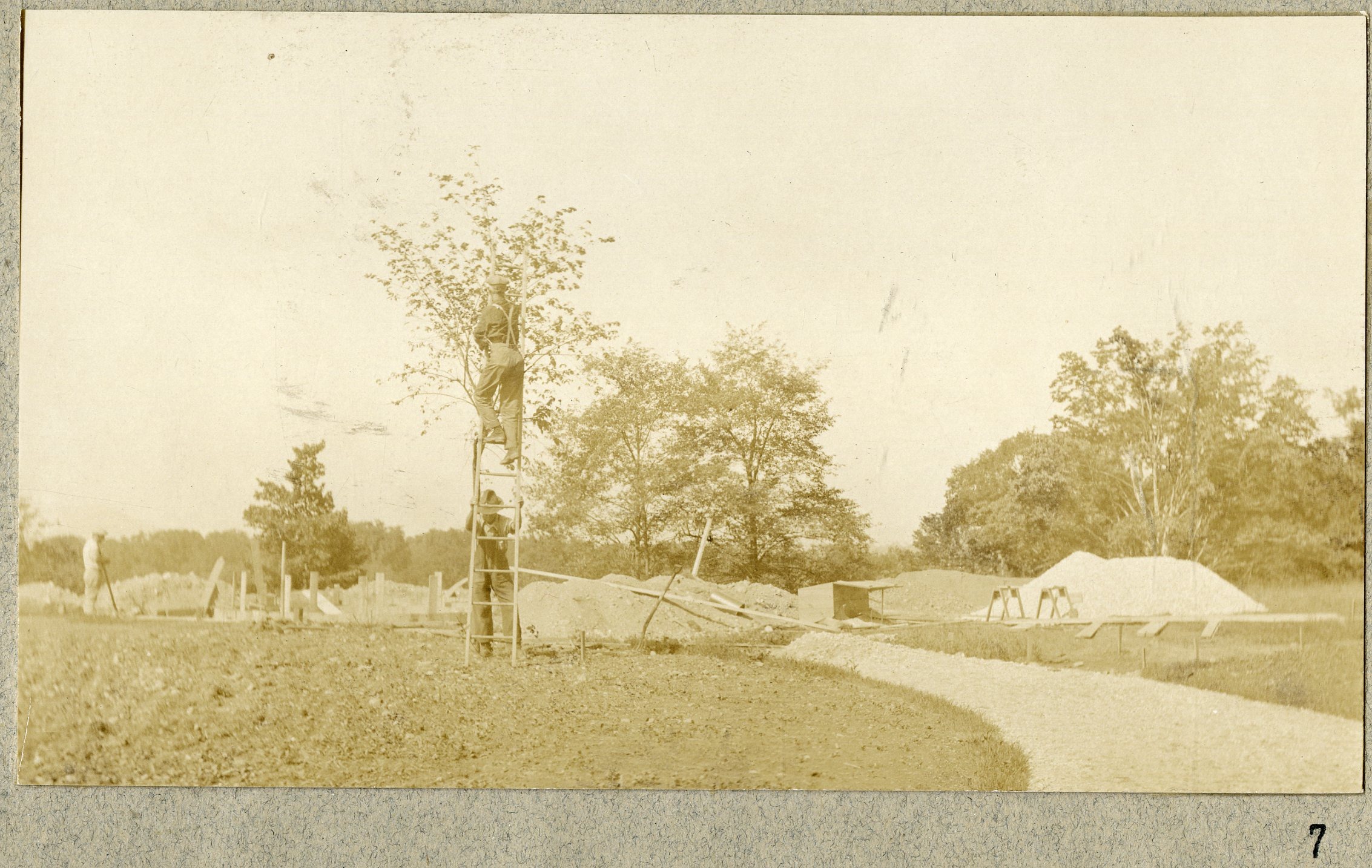
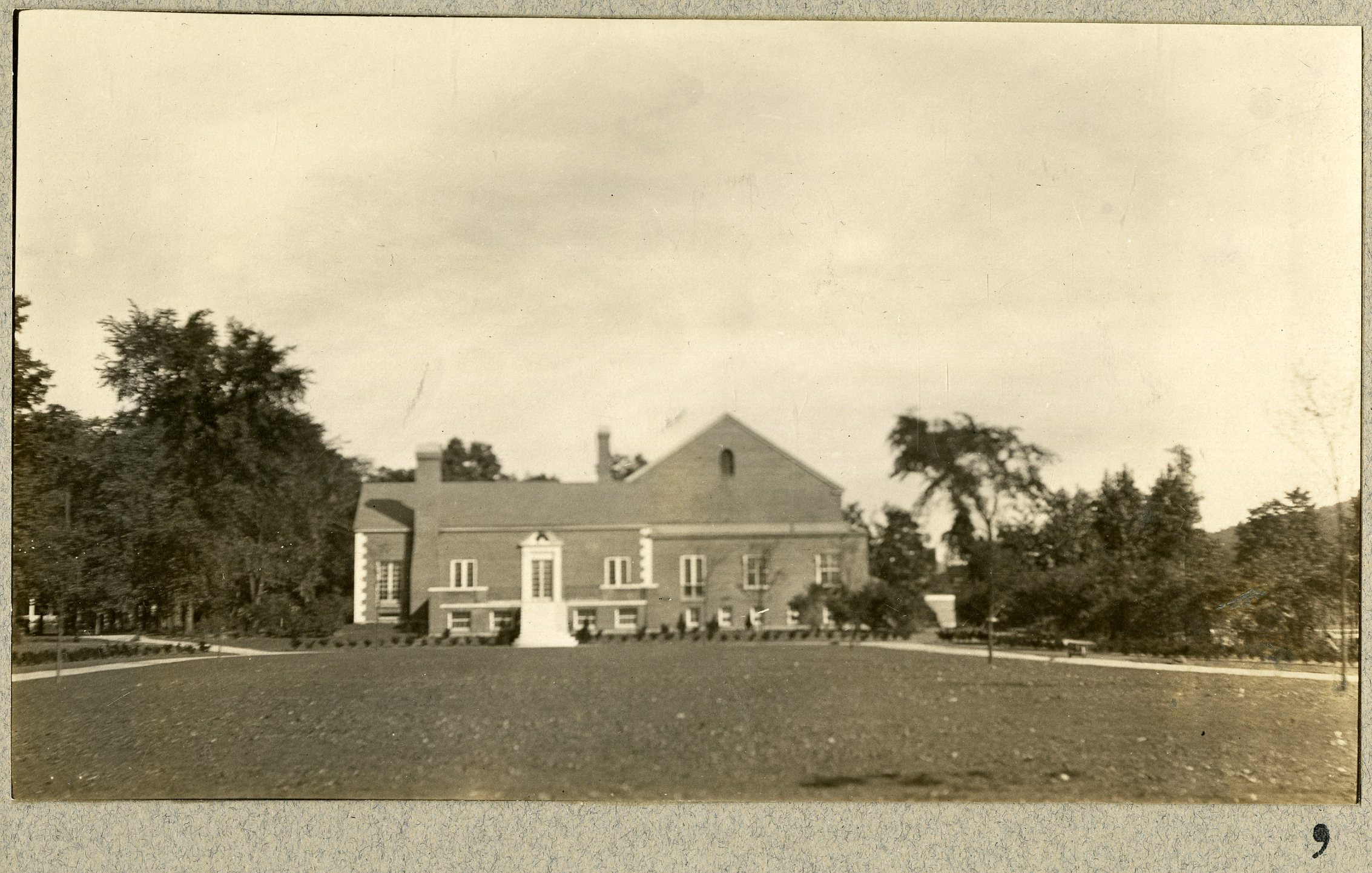
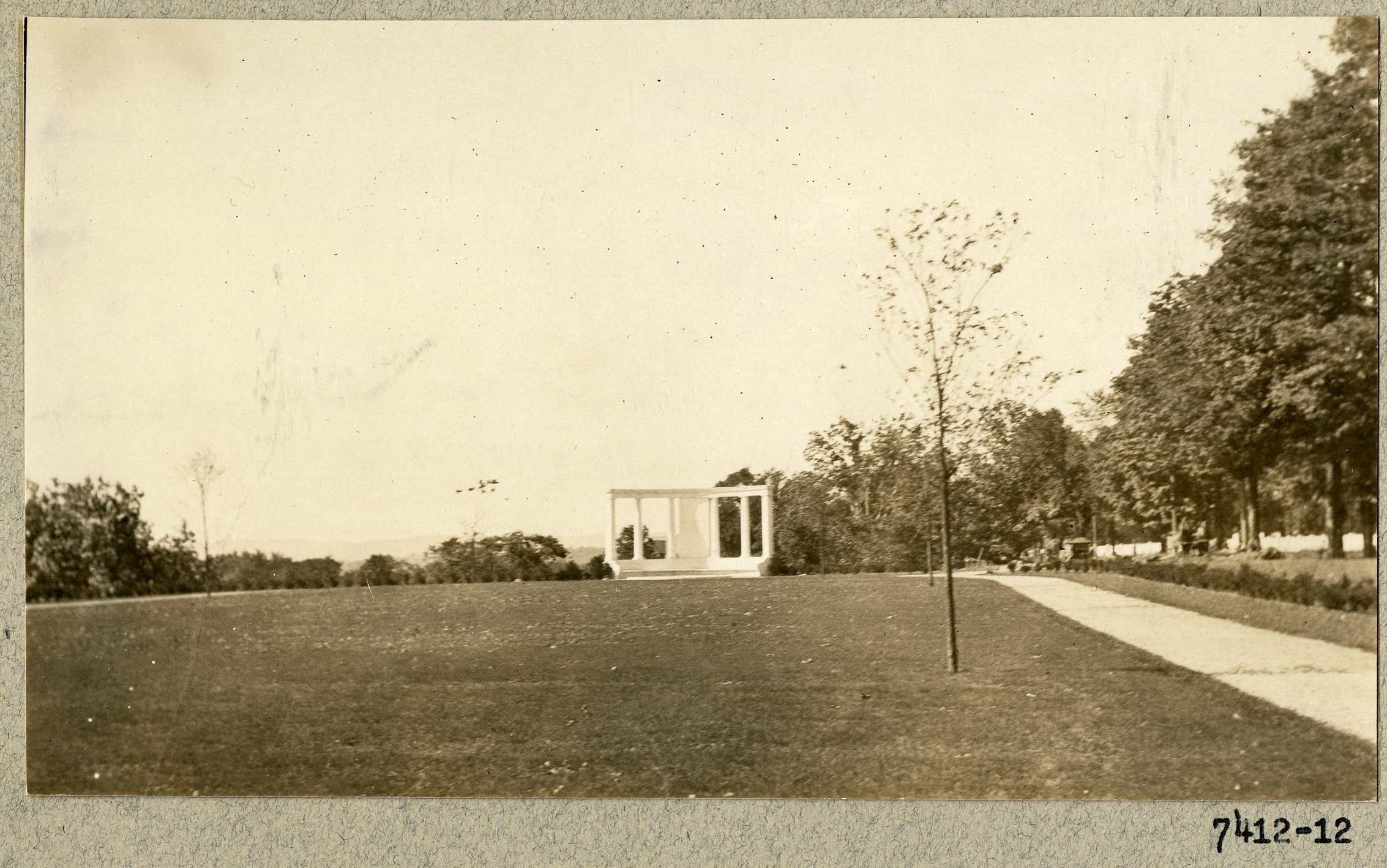
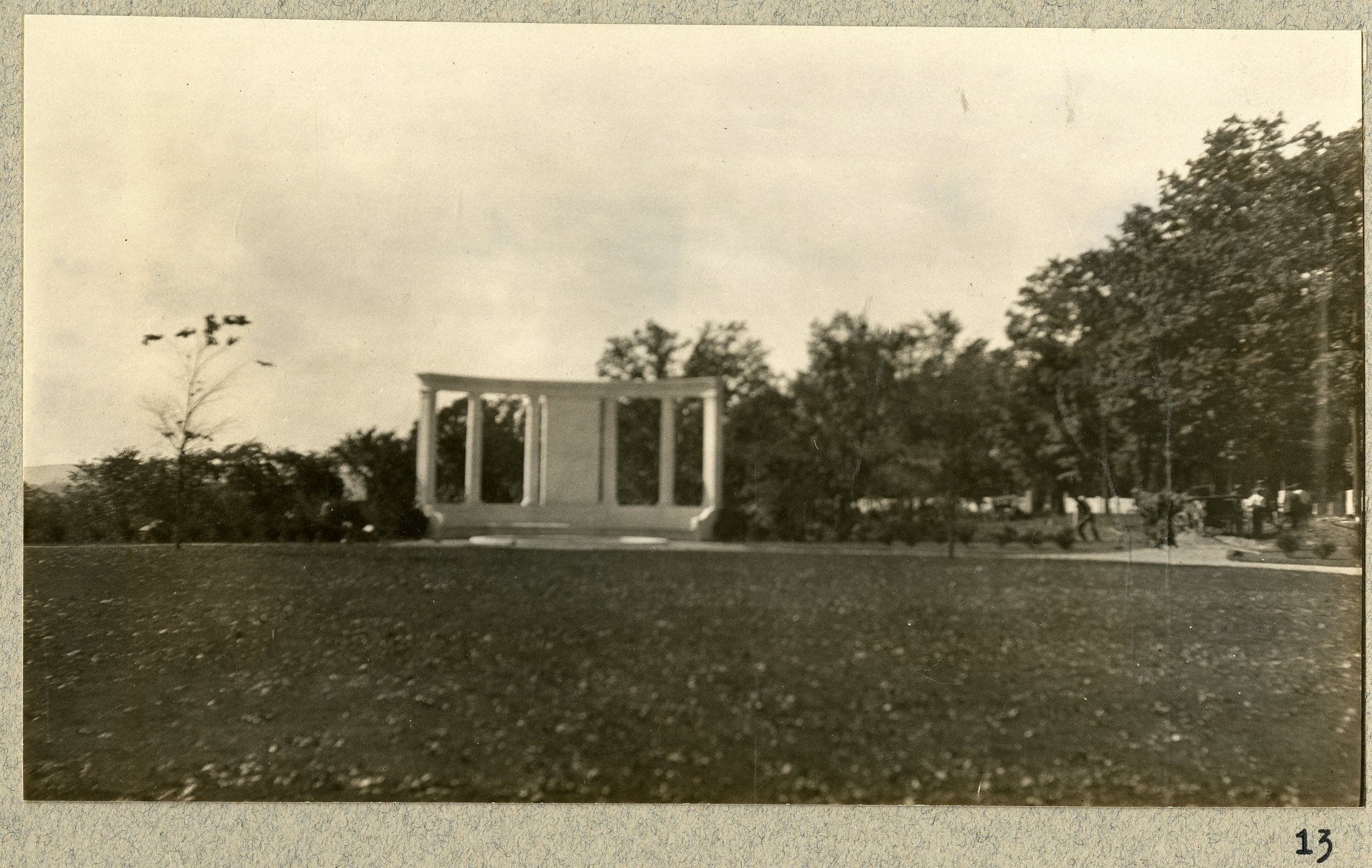
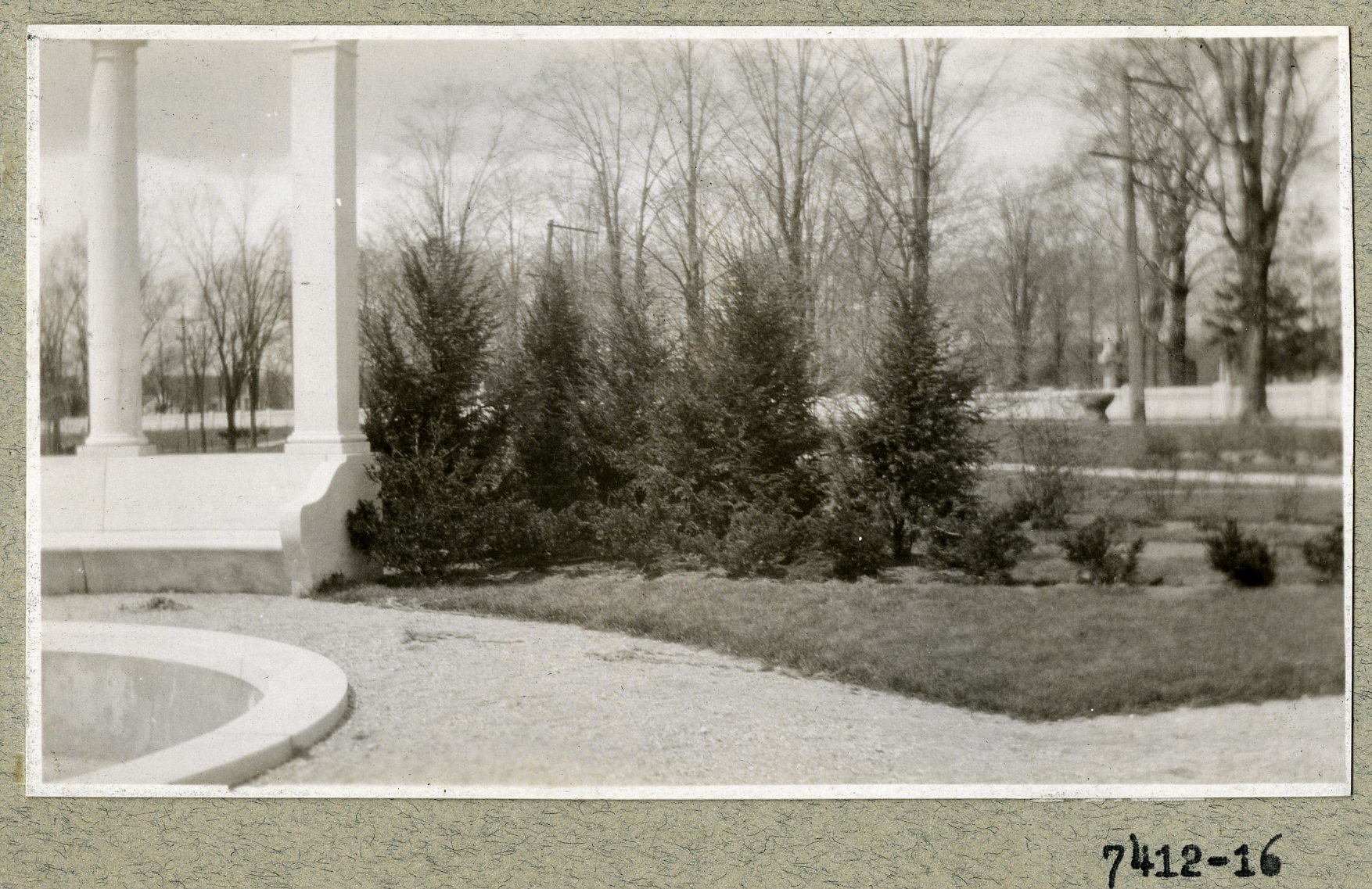
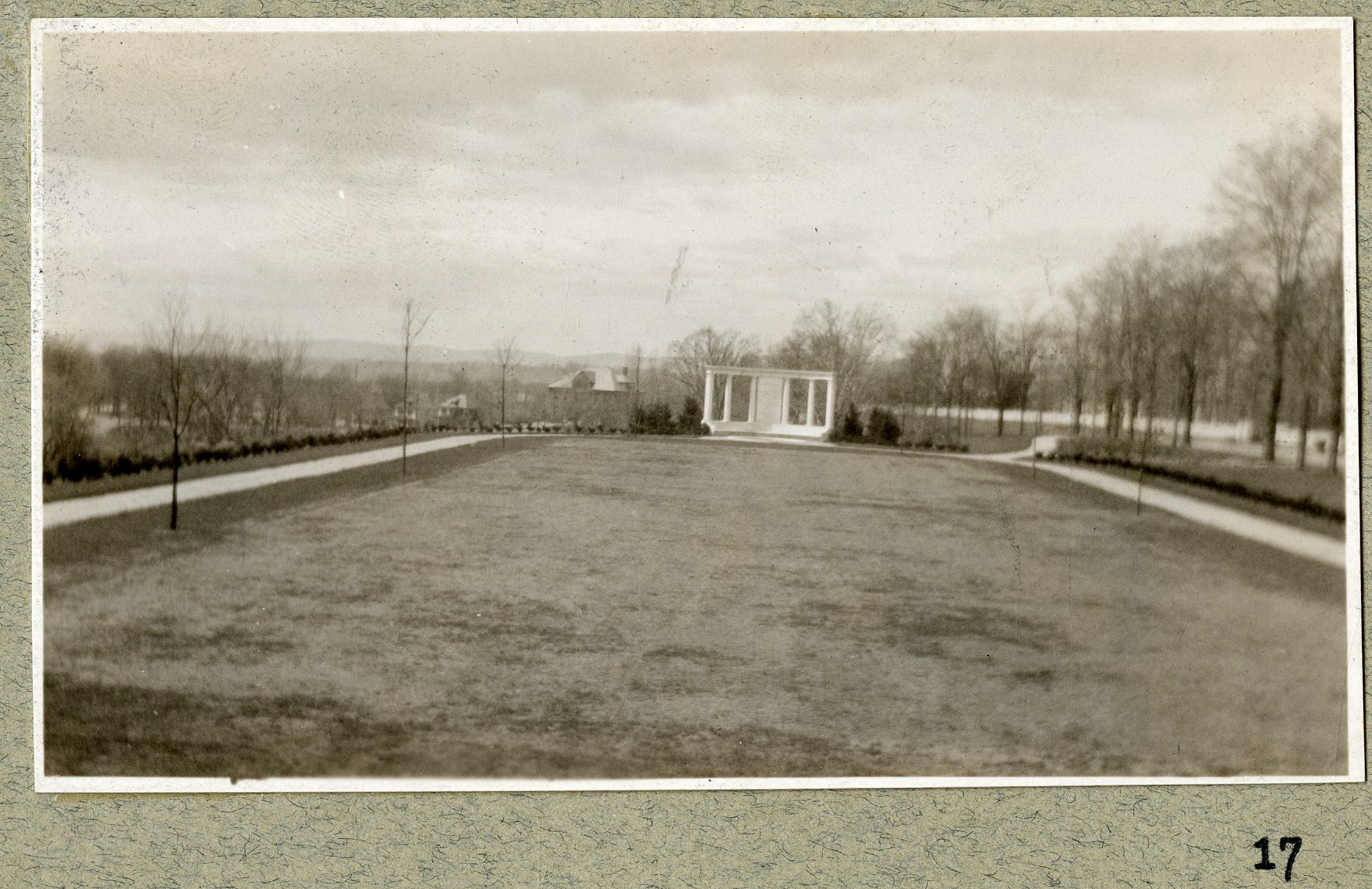
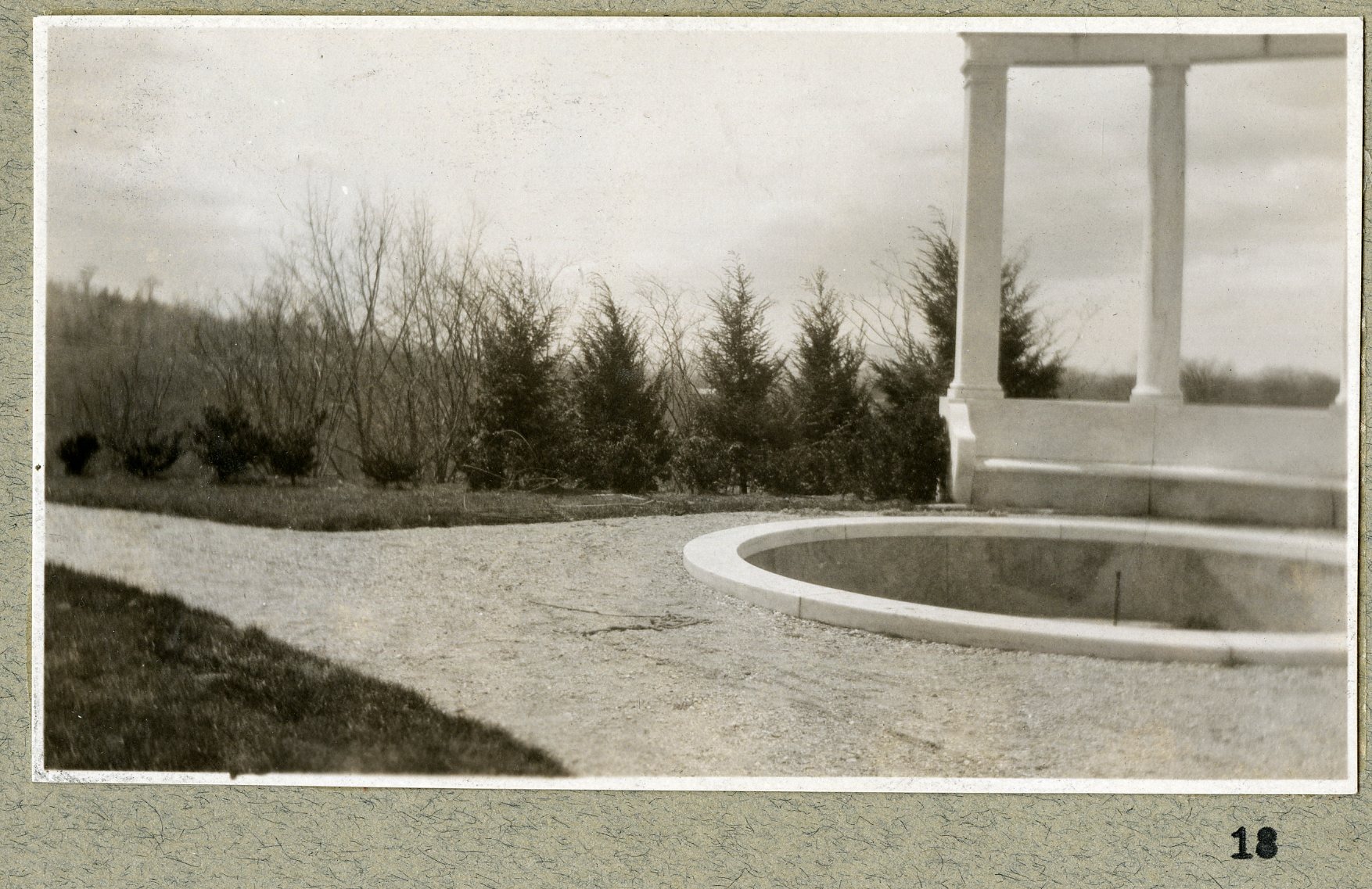
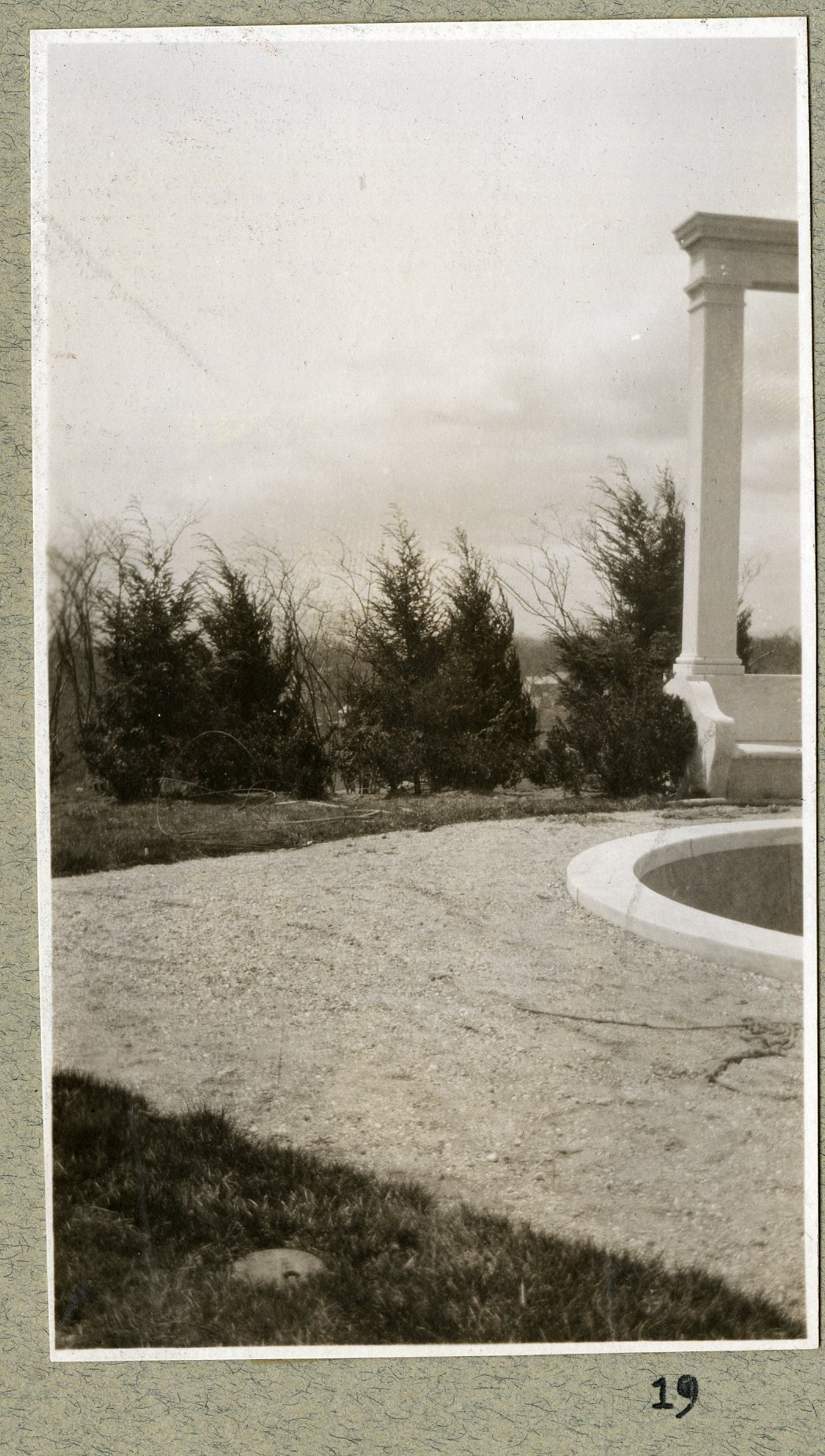
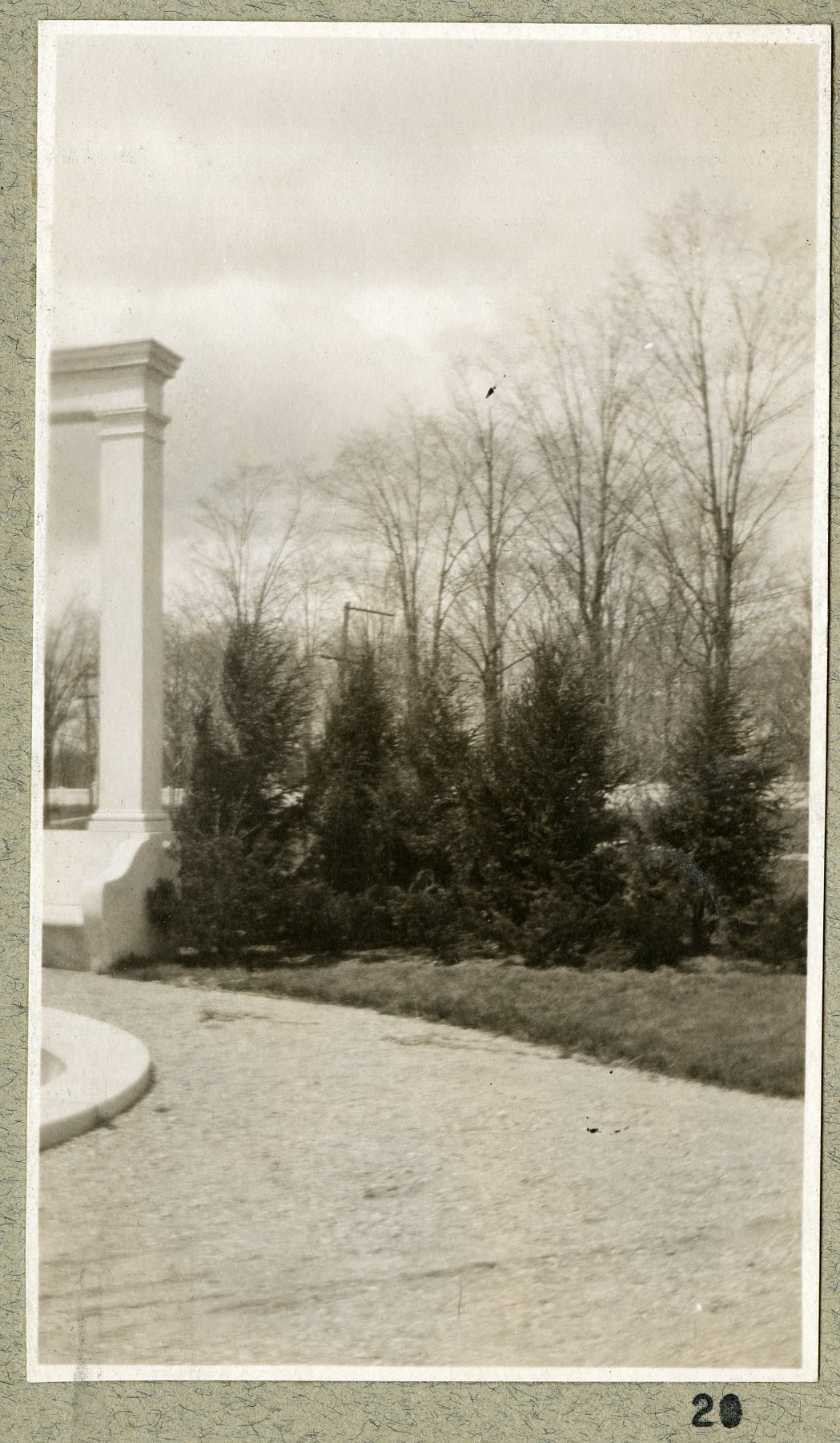
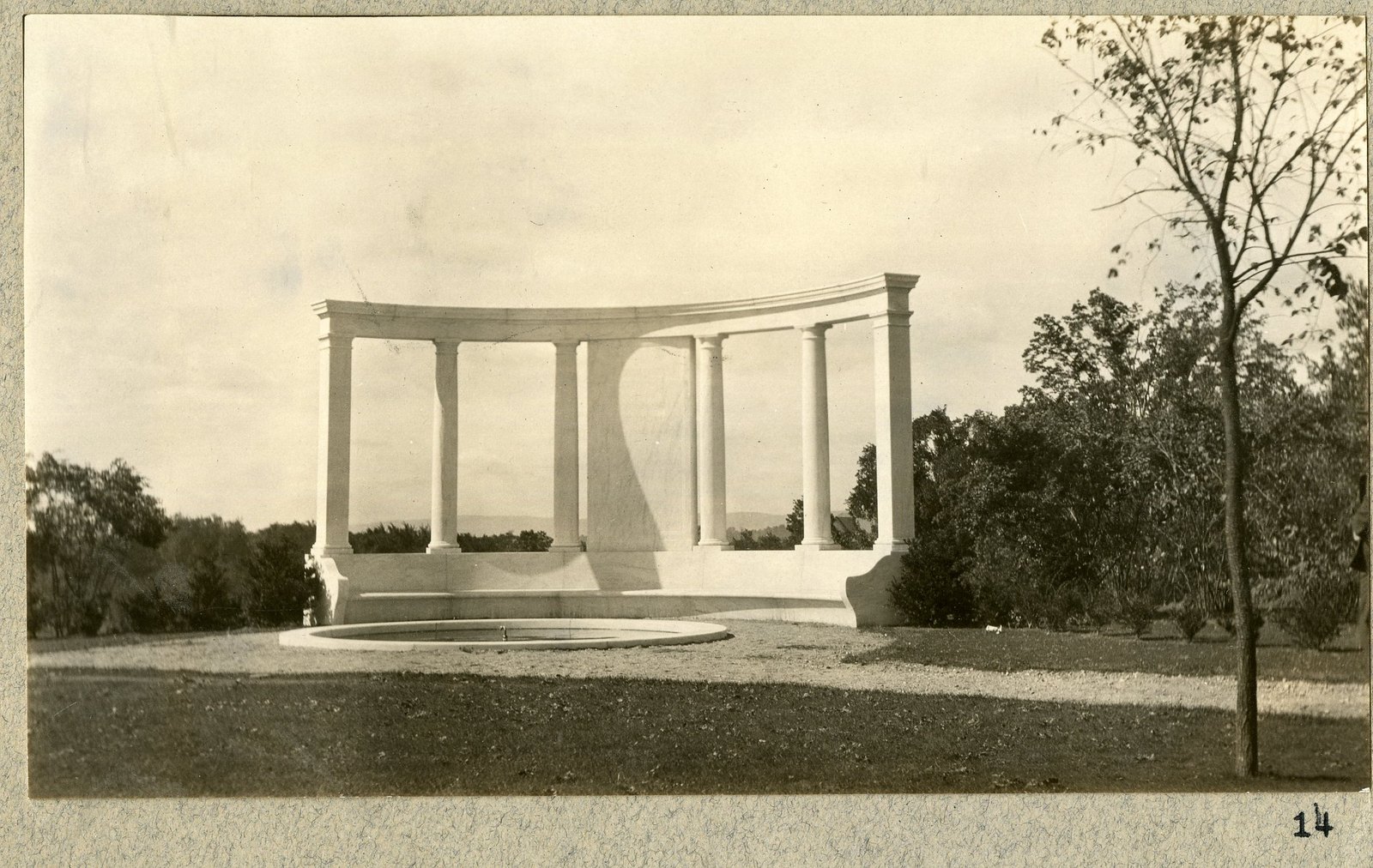
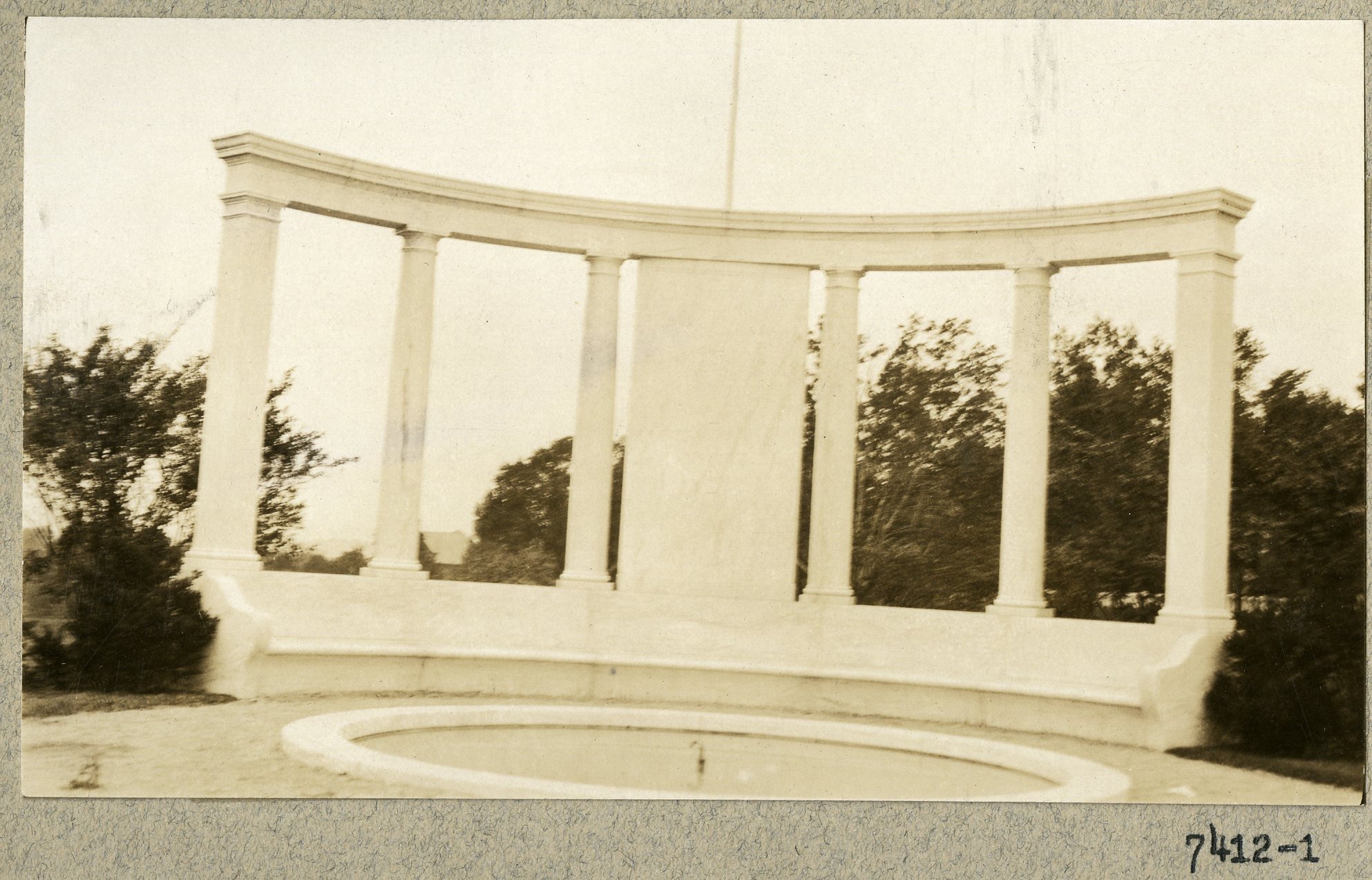
They are a before and after. Prints 5 and 7 show raw graded ground with spoil heaps and a newly staked tree. Prints 9, 12, 13 and 17 show the finished lawn with the colonnade standing at the far end of it. Prints 16, 18, 19 and 20 are close in among the columns, with young evergreens set around the fountain basin. Print 10 shows the Main Street frontage with its new hedge and the shopfronts behind.
The Berkshire Eagle records that former president and Chief Justice William Howard Taft stood on this lawn with a crowd of four thousand for the dedication in 1925. These are the photographs of the ground he stood on, taken by the office that laid it out, in the month the planting plan was revised.
Sources
Olmsted Archives, Frederick Law Olmsted National Historic Site, National Park Service: job 07412, twenty-eight plans and an office photograph album of twenty prints, with titles, dates, sheet sizes and inventory notes as recorded at olmstedonline.org; scans from the Olmsted Archives on Flickr. Titles, inventory notes and the album’s own typed captions are quoted as they stand. Wikipedia, “Winthrop M. Crane,” for his birth at Dalton on 23 April 1853 and death there on 2 October 1920, the 1879 currency contract, the Lieutenant Governorship of 1897–1900, the Governorship of 1900–03 and the Senate term of 1904–13, Roosevelt’s request that he mediate the 1902 anthracite coal strike, and the two marriages and five children. The Berkshire Eagle, “Dalton CRA keeps up with times nearing its 90th birthday,” for the 1923 trust fund and the founding of the Community Recreation Association, the architects Jallade, Lindsey & Warren, the builder D. Herbert Pike and the interiors by Francis Bacon, the swimming pool, and the 1925 dedication of the white marble Crane Memorial before a crowd of four thousand with William Howard Taft present — and for the dating difficulty noted above. The identifications of the Irving House and of the Sawyer jobs are from the Olmsted Berkshire job list and the Library of Congress records cited on the Willow Brook page. Descriptions of what the album photographs show are this survey’s reading of the prints, not captions from the album.