I. Two letters
Crowley & Lunt’s canvassers had a shorthand, and it is printed at the front of the book so that anybody can use it. h means the house is this person’s. bds means they board. rms means they have rooms. And do — ditto — means the same as the address I just gave you.
So a line reading bds do means: this person sleeps at the place they work.
There are one hundred and fifty-two of them in the South Berkshire volume.
Bagnasci Clara Miss maid H Lyles’ Elm bds do. Belcher May Miss maid Miss E A Lawrence’s Granite ave bds do. Finn James laborer G M Lasher’s Daisy Hill rd bds do. Hadsell Charles farmhand N Stevens’ Main EC bds do. Each of those is a whole life compressed into a street name and a ditto mark: no address of one’s own, because the address of one’s own is somebody else’s.
II. The split
Sort the workers in that volume by trade and ask which of them kept a house and which boarded, and the answer is not a gradient. It is a line.
Of the ninety-five household servants — butlers, maids, cooks, housekeepers, laundresses — sixty-two per cent board and only thirteen per cent have a house. Of the one hundred and sixty carpenters, seventy-four per cent have a house and twelve per cent board. The masons run sixty-three per cent house, seven per cent board. The gardeners — who are outdoor staff but skilled, married and senior — run sixty-four per cent house.
Chauffeurs sit exactly on the line, forty-two per cent house against forty per cent boarding, which is what you would expect of a trade that was half servant and half mechanic and had existed for twenty years.
Read it the other way and it is starker still. If you worked inside the house, you probably lived in it. If you built the house, you went home.
III. Two addresses
The exception at the top of the servants’ hall is worth its own line, because it is printed exactly as it happened:
Richards Alfred butler Brookside rd bds do and at 23 West 54th N Y
A butler with two addresses, one in the Berkshires and one off Fifth Avenue, because the household had two addresses and he went where it went. The directory, which is a local book, records the New York one anyway.
And from the other end of the same arrangement:
Connelley Annie (6 E 58th st N Y) maid Mrs O Jackson’s (smr)
Her home is East 58th Street. The (smr) means summer. She is in this book because she was in this county for the season, and the canvasser found her, and rather than leave her out he put her own New York address in parentheses in front of her name.
That is the migration in two lines: the staff came up with the family in June and went back down with them in September, and the only reason we know is that a directory salesman was thorough.
IV. What a staff house was
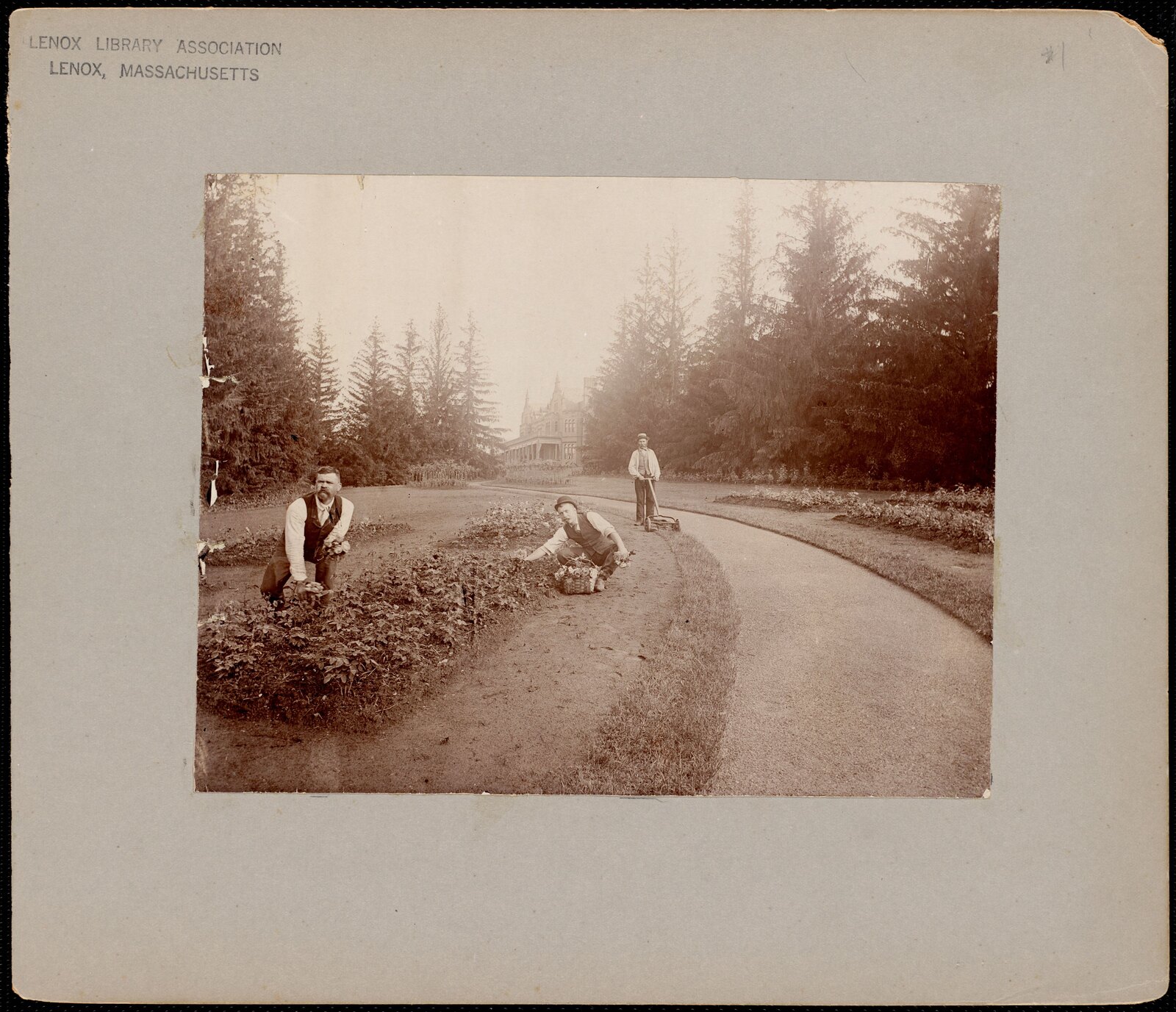
The senior outdoor men — superintendents, head gardeners, coachmen with families — got a house on the place. Not a room. A house.
In February 1938 an appraisal firm from Pittsfield, J. R. Hampson, Inc., measured one of them: the superintendent’s house at Halstead Lindley’s place in Lenox. The sheet is drawn, dimensioned and totalled like any other piece of property, because that is exactly what it was.
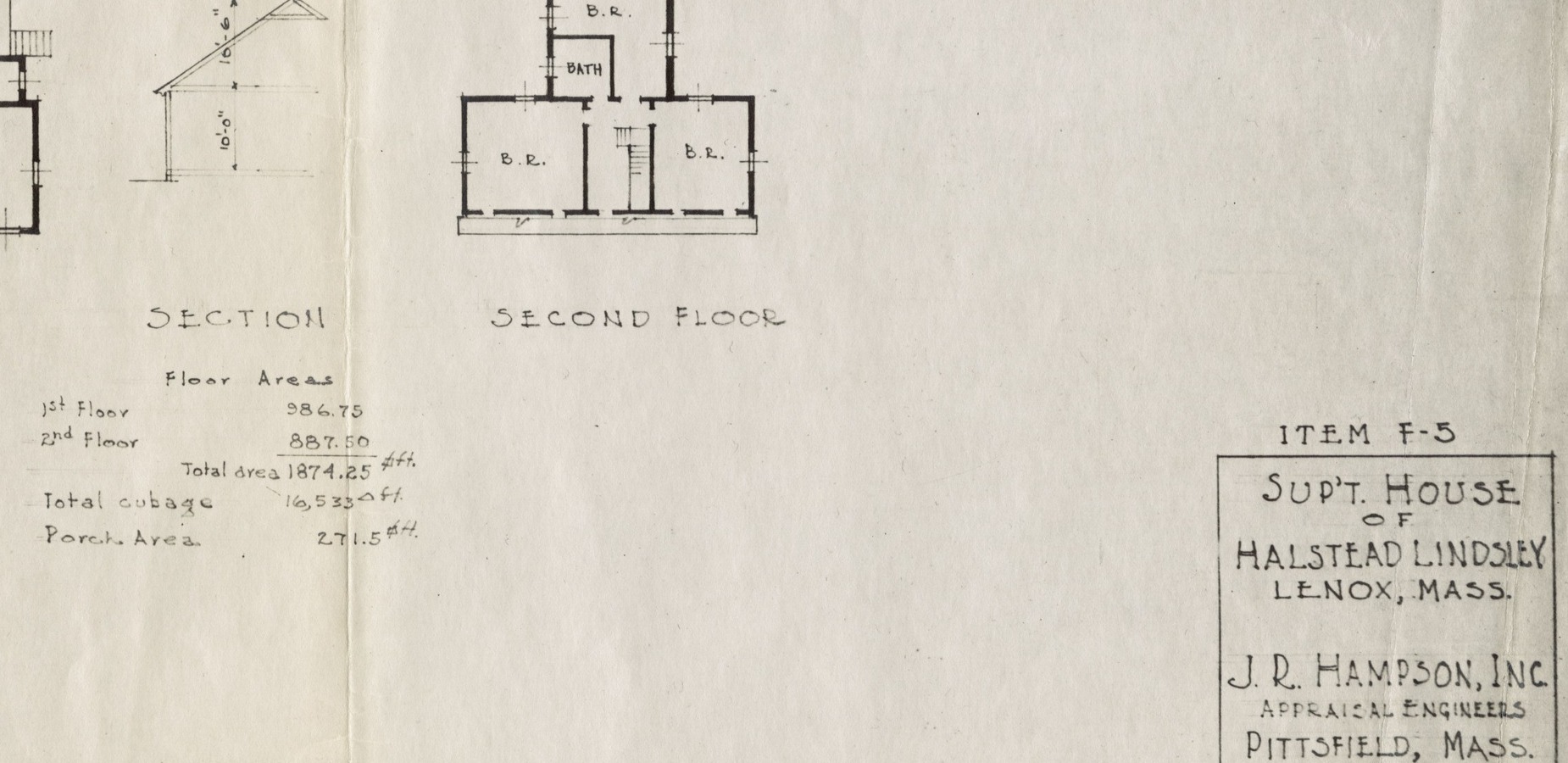
Eighteen hundred and seventy-four square feet. Three bedrooms and one bathroom on the second floor. A porch of two hundred and seventy-one and a half square feet, measured to the half foot, because an appraiser was going to put a number on it.
By the standards of the main house it is a rounding error. By the standards of 1938 in a Berkshire village it is a perfectly good family house — better than most of the men in the building trades were living in, and it came with the job, which is the whole point and the whole catch.
V. Three of them
They were photographed, as it happens, but not for the reason you would want. Two of the three below were taken in the same appraisal campaign of the late 1930s, when these estates were being valued to be broken up.
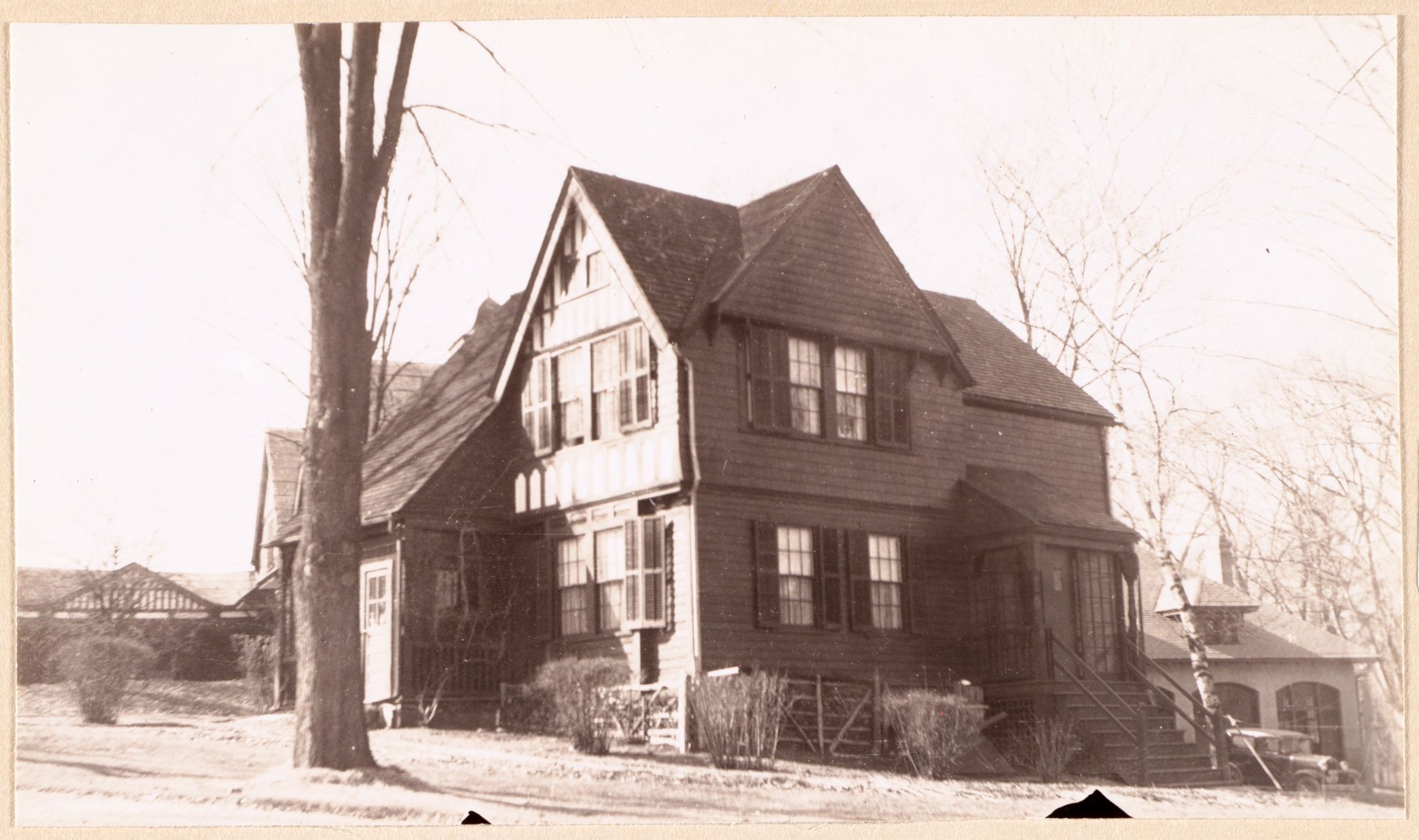
A gambrel roof, dormers, a porch across the front, a bay. Nobody calls this a cottage in the derogatory sense. It is a substantial house, of the kind a successful tradesman in the village would have been pleased with, and it stands on somebody else’s land.
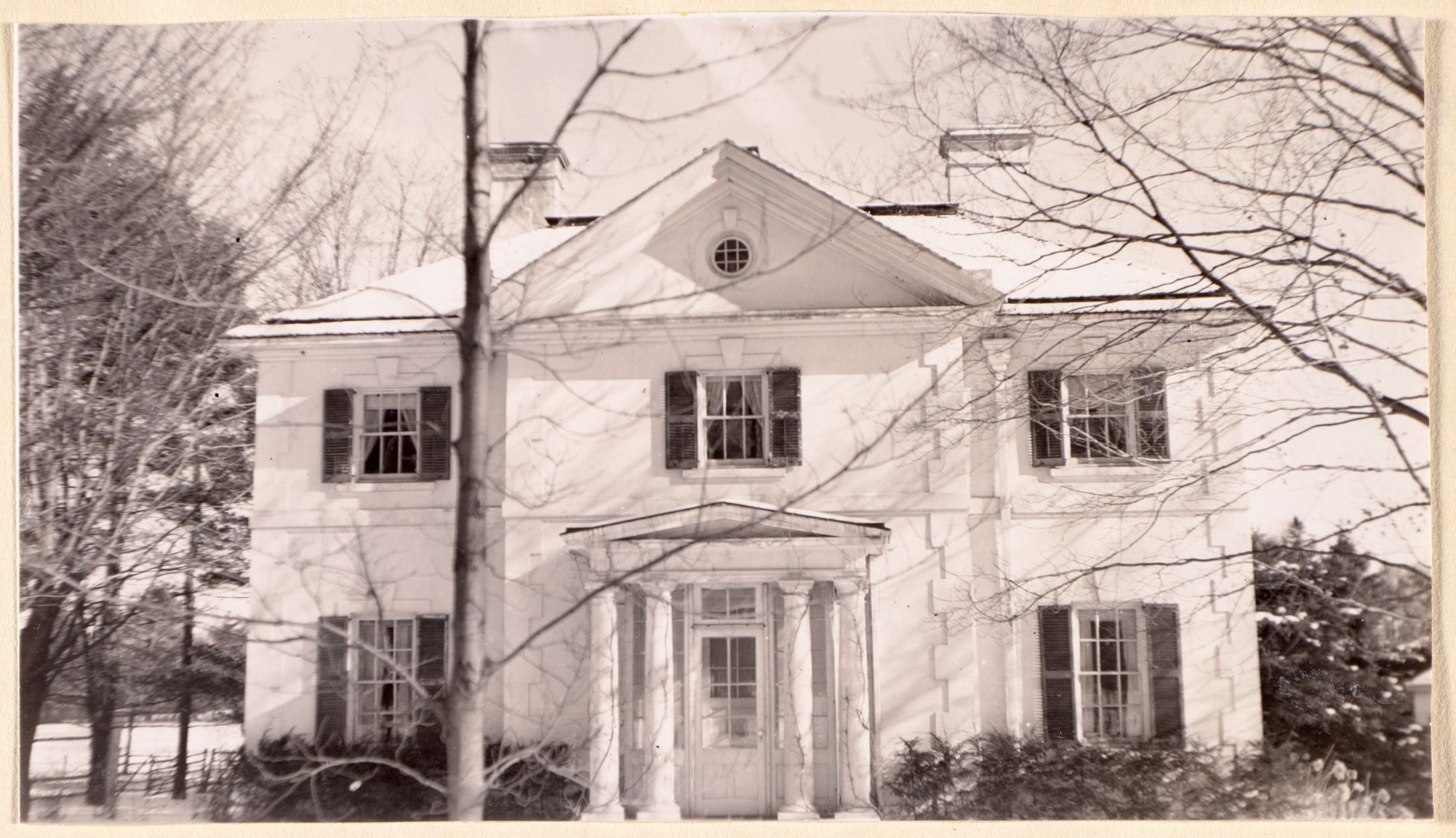
Look at that doorway. Somebody detailed the superintendent’s house at the Mount — pediment, pilasters, a round window over the door — because it stood where visitors would see it. The consideration is real and it is also not entirely for the superintendent.
VI. And the rest of them
Everybody else lived in the village, and the directory gives the streets.
The carpenters, masons, painters, plumbers and teamsters are listed with numbers on Main, Railroad, Church, Castle, Cottage, Mahaiwe, East, Oak Avenue. Many of them own. Some of them board with a widow — bds Mrs C Daly’s, bds Miss E Shields’, bds Thomas Byers’ — which was its own small economy, and one of the few ways a woman without a husband could hold a house in 1923.
Those streets are the other half of the cottage era, and they look nothing like the photographs. The houses on them are two-story, wood, close together, with a porch and a maple. They are still there. Several of the estates are not.
VII. The catch
The reason the bds do line matters is what happens when the work stops.
A carpenter who lost a job lost income. A maid or a butler or a farmhand who lost a job lost income, bed, meals and address on the same afternoon — and the next line of the same directory shows you where that led. Rem to — removed to — appears against two hundred and eighteen entries in this one volume, and the names of the places run from Pittsfield and Great Barrington out to Torrington, Waterbury, Troy, Rochester, Brooklyn, Chicago, Cleveland, Jacksonville, California, Ireland, Scotland and Italy.
Ninety-four of the two hundred and eighteen left the county altogether.
Which is the next story.
All counts and quoted lines from Crowley & Lunt, South Berkshire Directory, 1923–’25, reproduced in full here, from a parse of the ten town sections producing 2,329 worker records; that volume does not cover Lenox, so the Lenox estates are absent from these percentages. The 1926 Central Berkshire directory does cover Lenox, and lists the great houses there as street addresses. Percentages are of the entries in each trade whose tenure the book states. Directory lines are quoted as printed, abbreviations and all. Superintendents’ houses at Ethelwynde, Brookhurst and the Mount: Lenox Library Association, via Digital Commonwealth, with the cataloguer’s notes recording what is written on the mounts. Floor areas as lettered on the J. R. Hampson, Inc. appraisal sheet, February 1938. “Ventfort Hall: men working on grounds,” Lenox Library Association; the note on the back reads “Ventfort Hall; G. Morgan estate.”