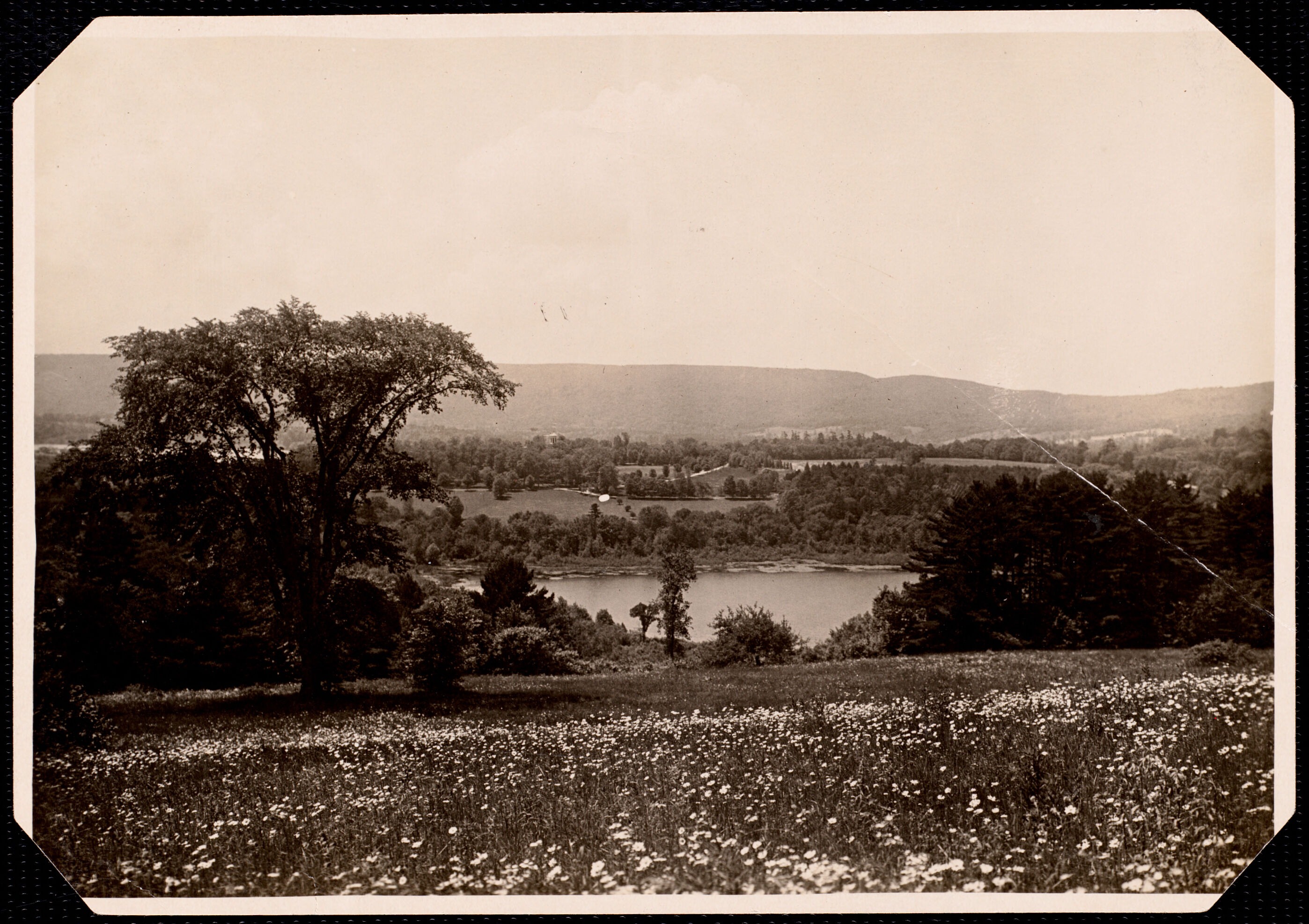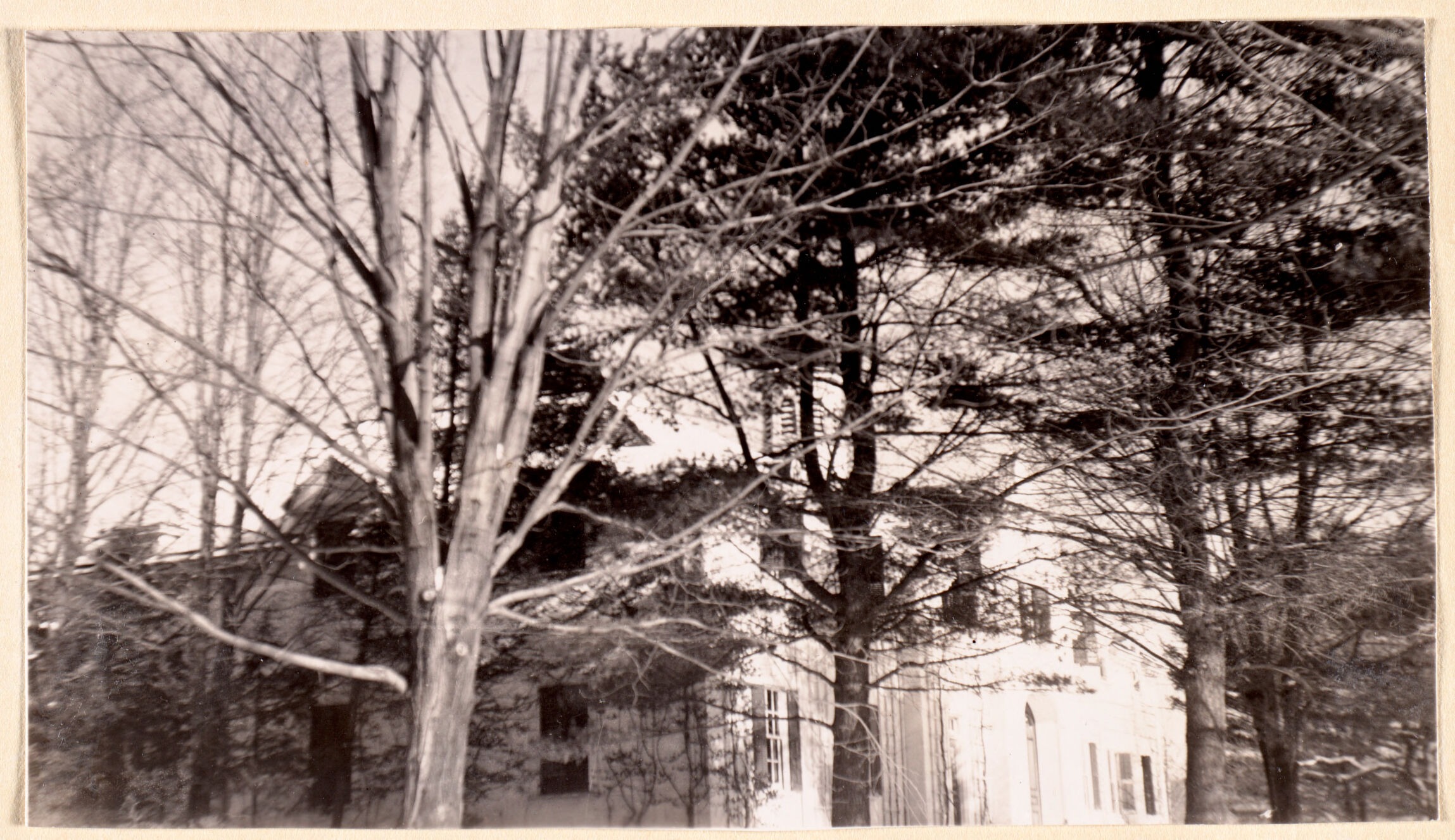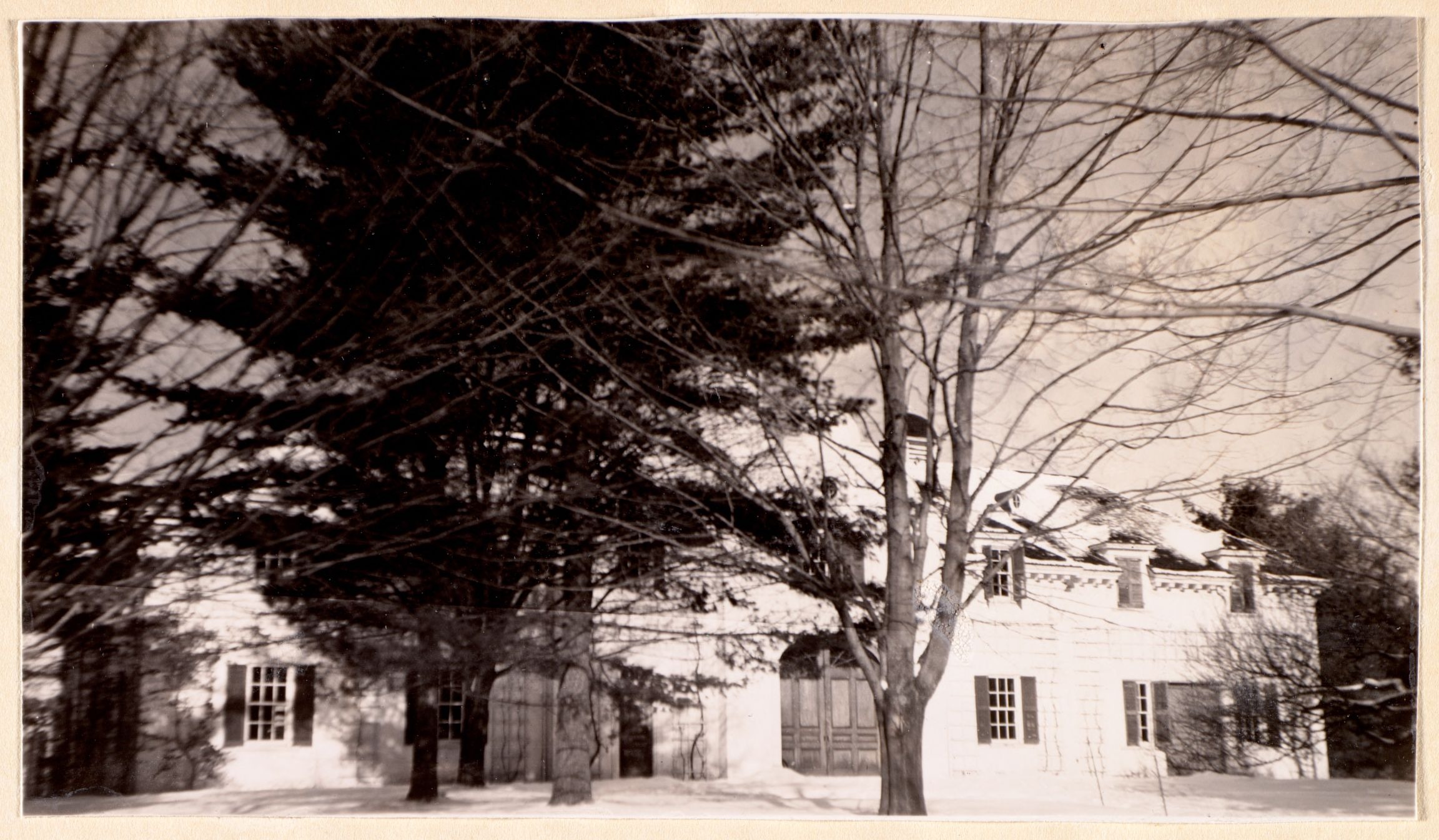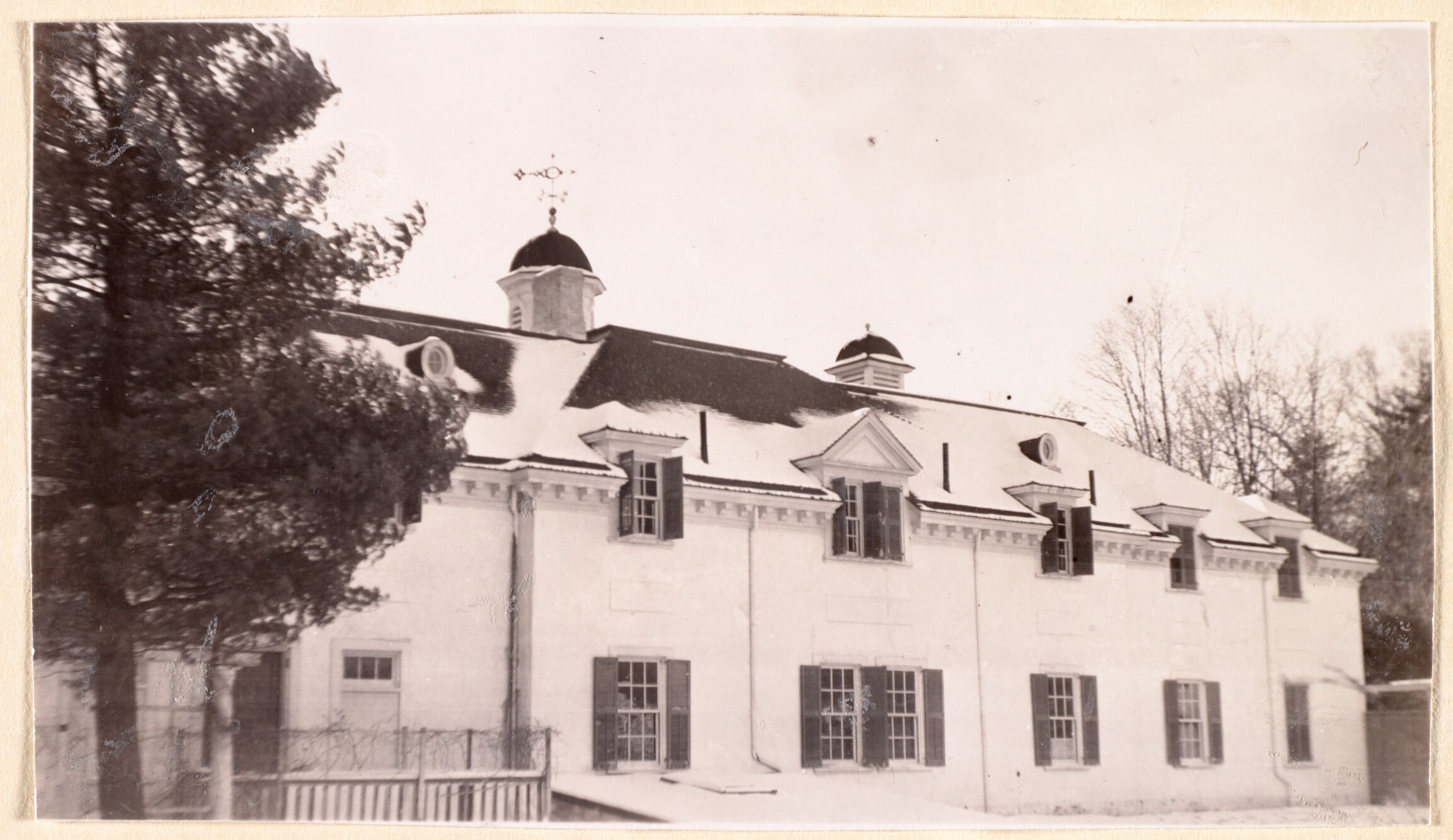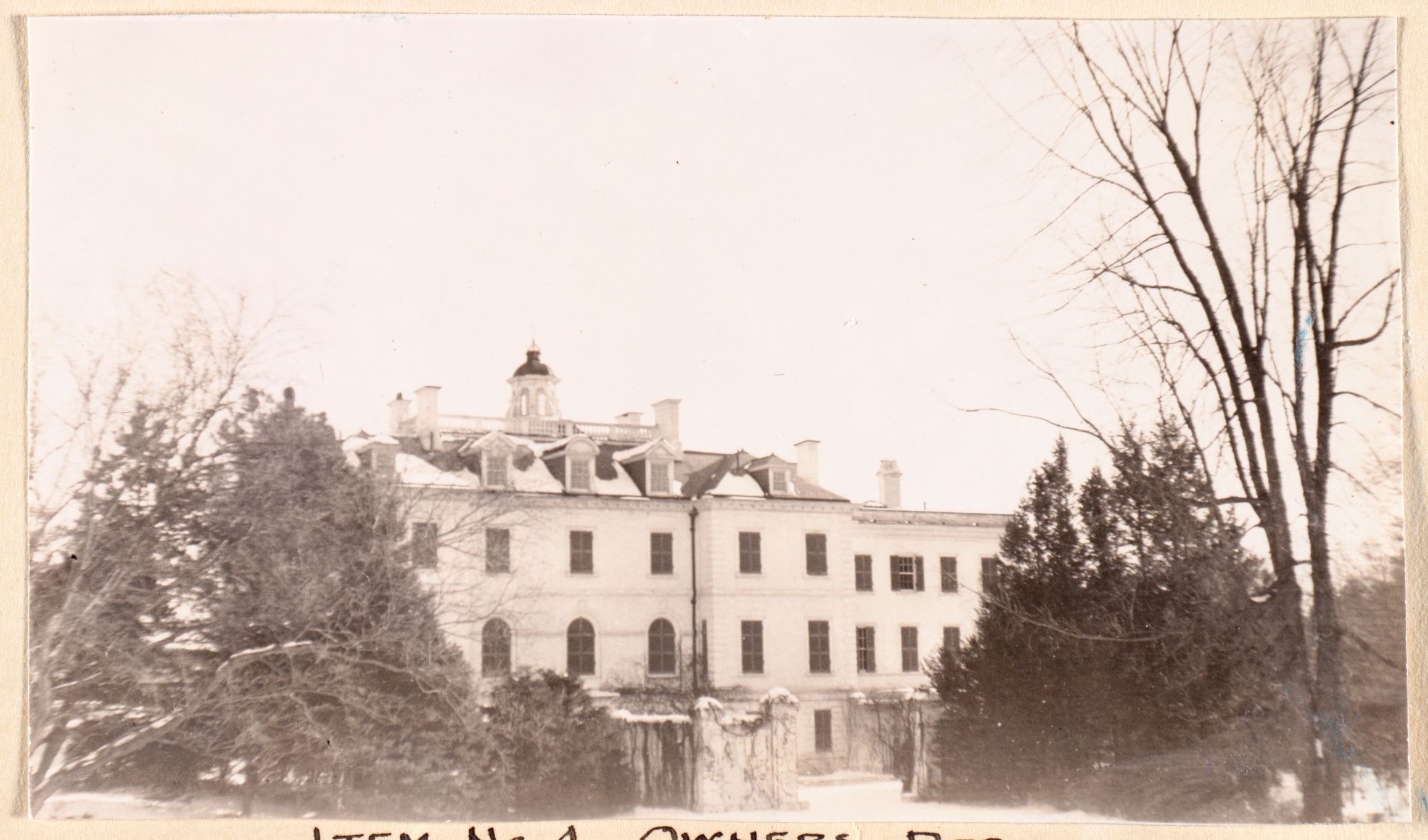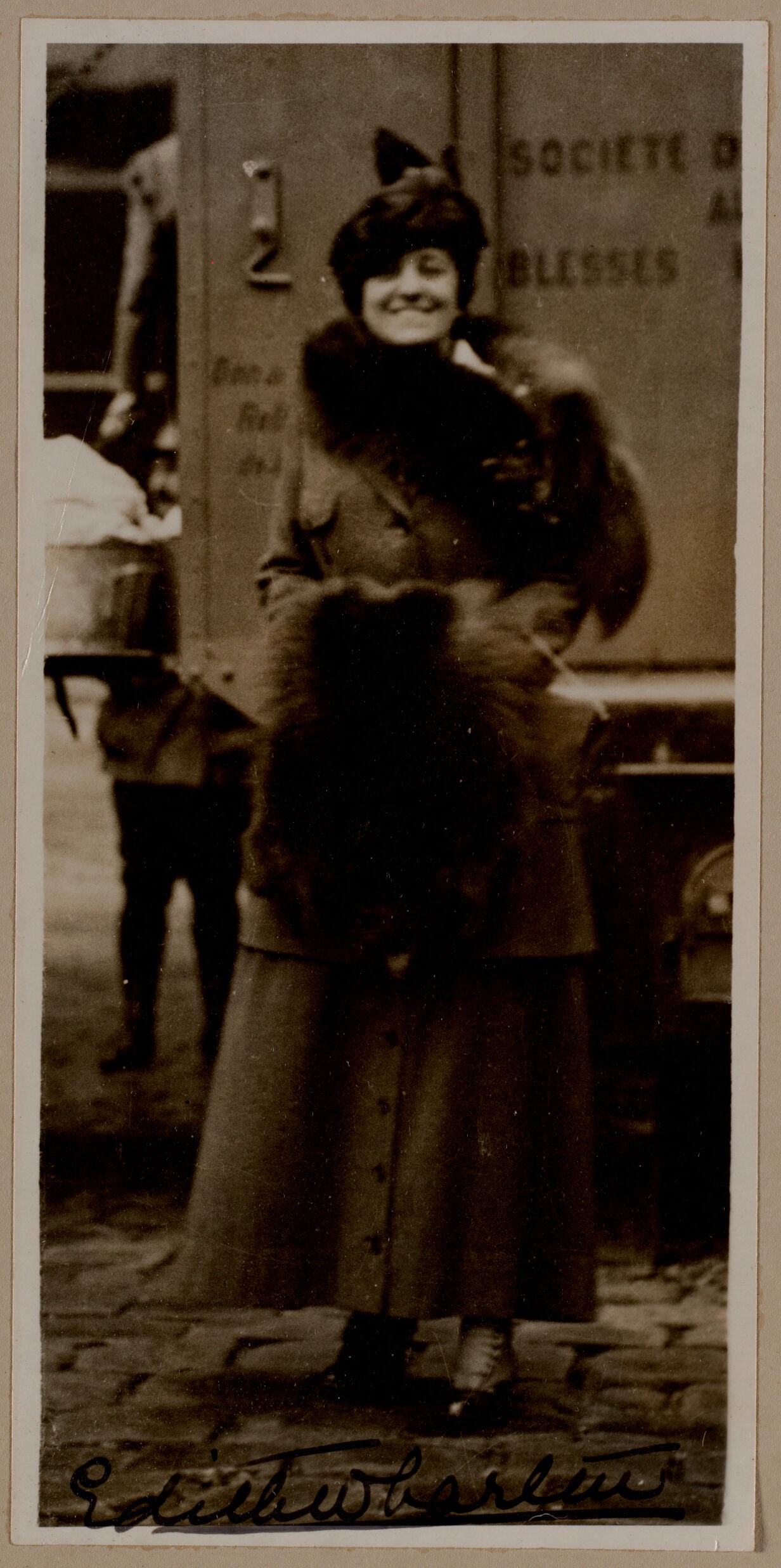
There is no Olmsted job for this house. The firm’s Berkshire list runs to sixty-three commissions between 1883 and 1979 and Edith Wharton is not on it — which is exactly right, because she had written the book. What survives instead is a run of photographs in the Lenox Library, and the best of them is not a portrait of a famous garden at all. It is a numbered, building-by-building survey of the whole estate, made on one winter day in January 1940, thirty years after she had gone.
I. The woman who did not need a landscape architect
Edith Wharton built The Mount in 1902, on land she and Edward Robbins Wharton had bought the year before — 113 acres for $40,600. American Aristocracy puts the house at 16,850 square feet, thirty-five rooms and more than a hundred windows, entirely symmetrical.
Ogden Codman Jr. drew the first plans and then parted from the project; Francis L. V. Hoppin carried it through. Wharton designed alongside them, applying the principles she and Codman had set out in The Decoration of Houses in 1897 — order, scale, harmony — and looking back to the seventeenth-century Belton House in England. Two years after the house was finished she published Italian Villas and Their Gardens.
The one professional landscape hand on the place was family: Beatrix Jones Farrand, her niece, who laid out the kitchen garden and the drive. Farrand was one of the eleven founders of the American Society of Landscape Architects — the same meeting, on 4 January 1899, that made John Charles Olmsted its first president and seated Nathan Barrett of Naumkeag at the table. She turns up on this site once before, planting beds at Elm Court in 1908.
So the absence of an Olmsted job here is not a gap in the record. It is the record.
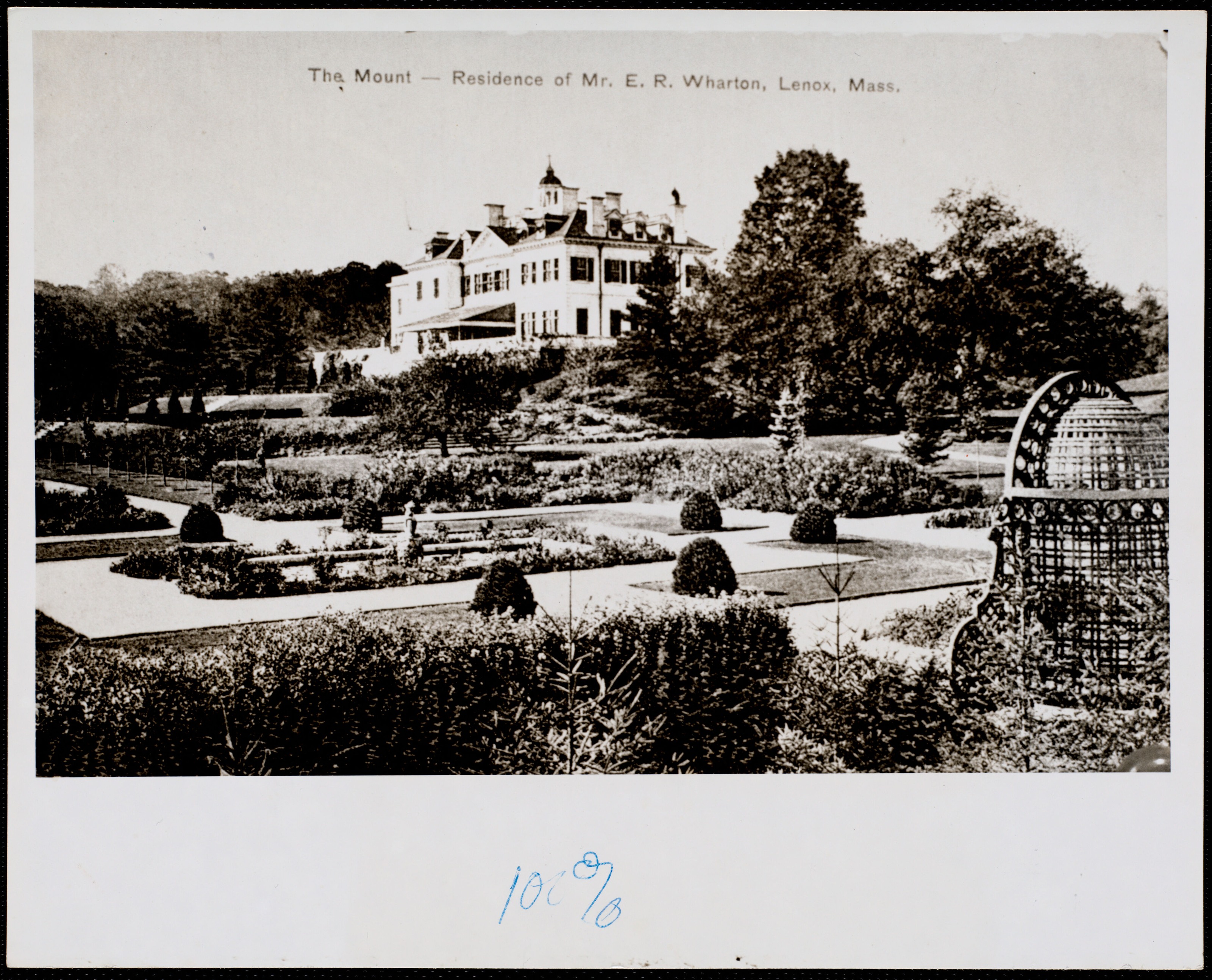
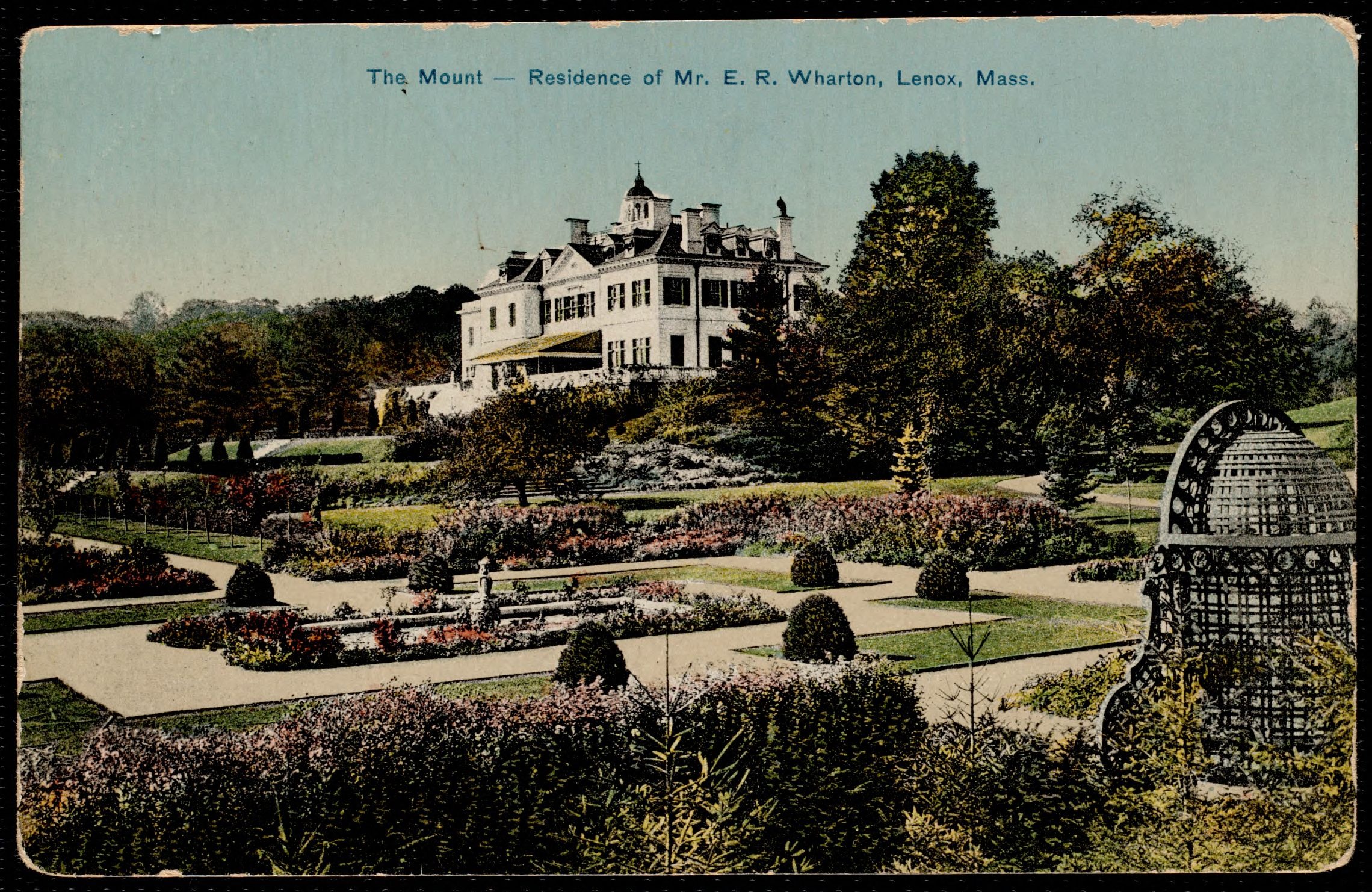
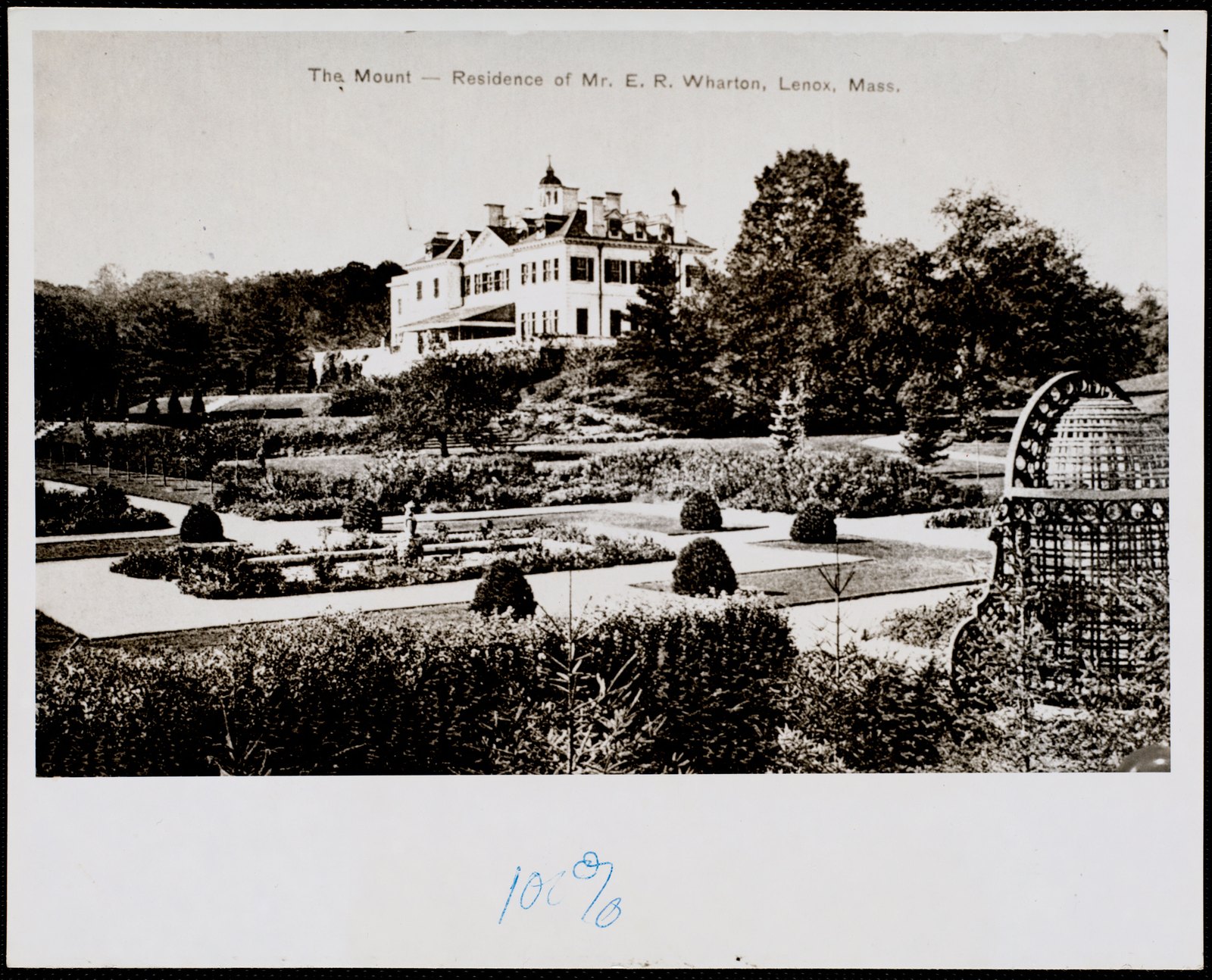
And note what that postcard calls the place. Residence of Mr. E. R. Wharton. The house was conceived, financed largely and substantially designed by the woman who would win the Pulitzer Prize for The Age of Innocence; the card names her husband. This survey has met the same habit at Wheatleigh, filed in the Olmsted archive under a husband’s name, and at Elm Court, filed under two of them.
II. Nine years, then the sales
The Whartons had The Mount for nine years. She called it her first real home, and she wrote The House of Mirth and Ethan Frome in these years. In 1911 the place was sold to Albert R. and Mary Shattuck — American Aristocracy gives $180,000 with 127 acres — and Wharton went to France.
The Shattucks held it until 1935. In 1938 it went at auction for $25,062: about an eighth of what it had fetched in 1911, and less than two-thirds of what the bare land had cost in 1901. The buyers are given as Carr Van Anda and Louise Drane Shipman. In 1942 it became a girls’ dormitory for the Foxhollow School, which kept it until 1976. Shakespeare & Company played here from 1978 until 2001, and Edith Wharton Restoration has had it since.
It was made a National Historic Landmark on 11 November 1971 and is a museum now, on about forty-nine acres of the original hundred and thirteen.
III. 8 January 1940
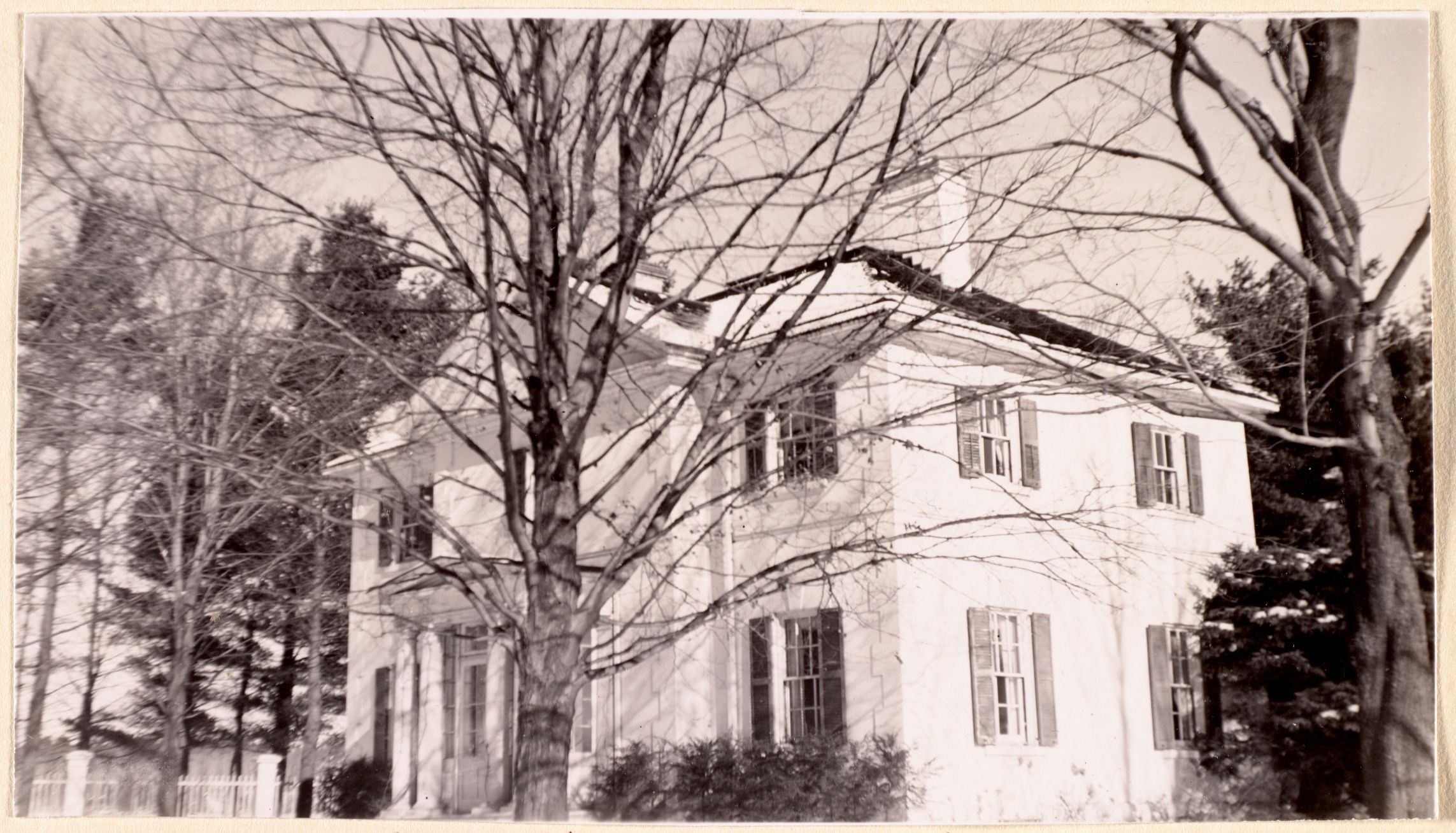
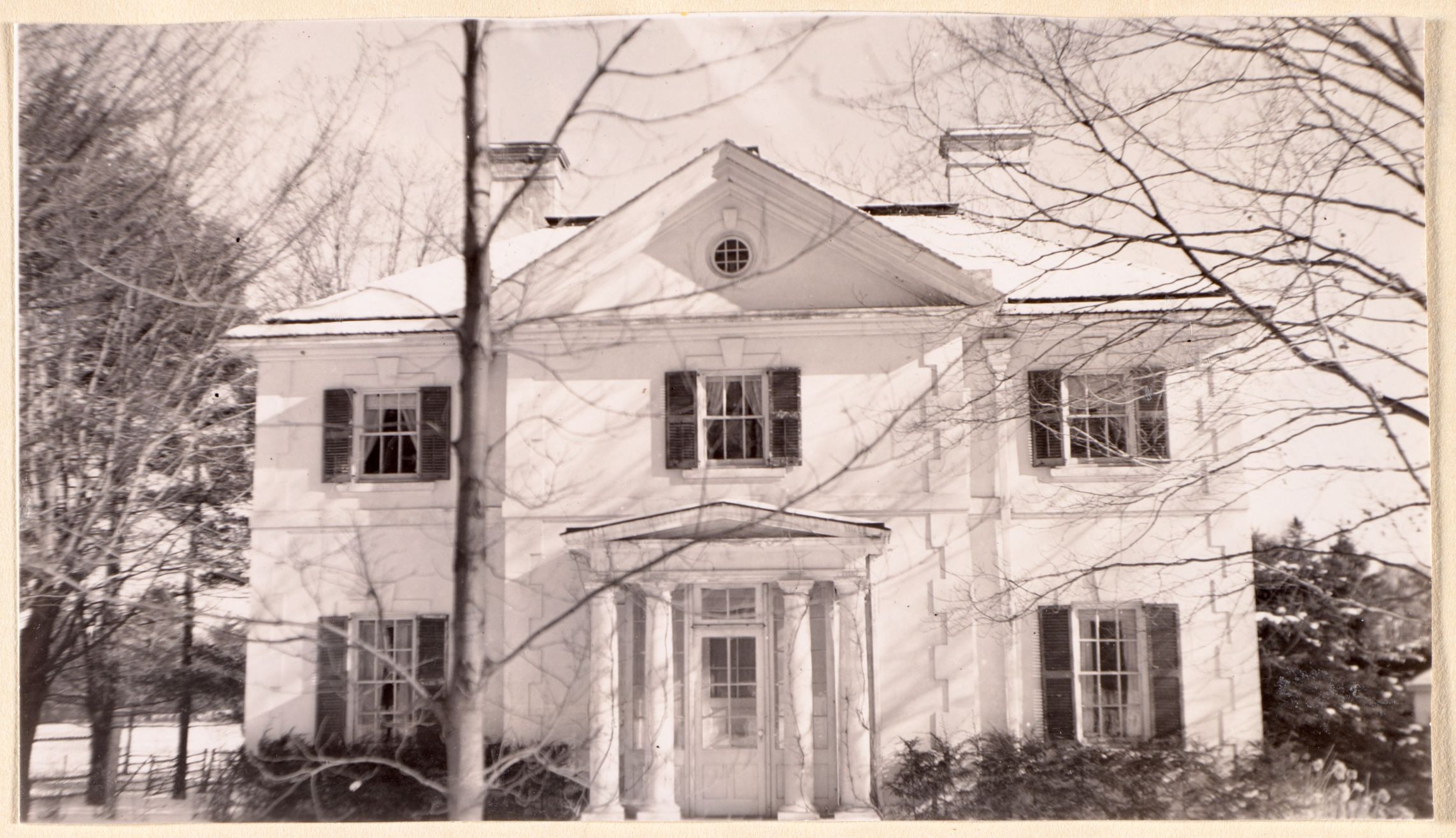
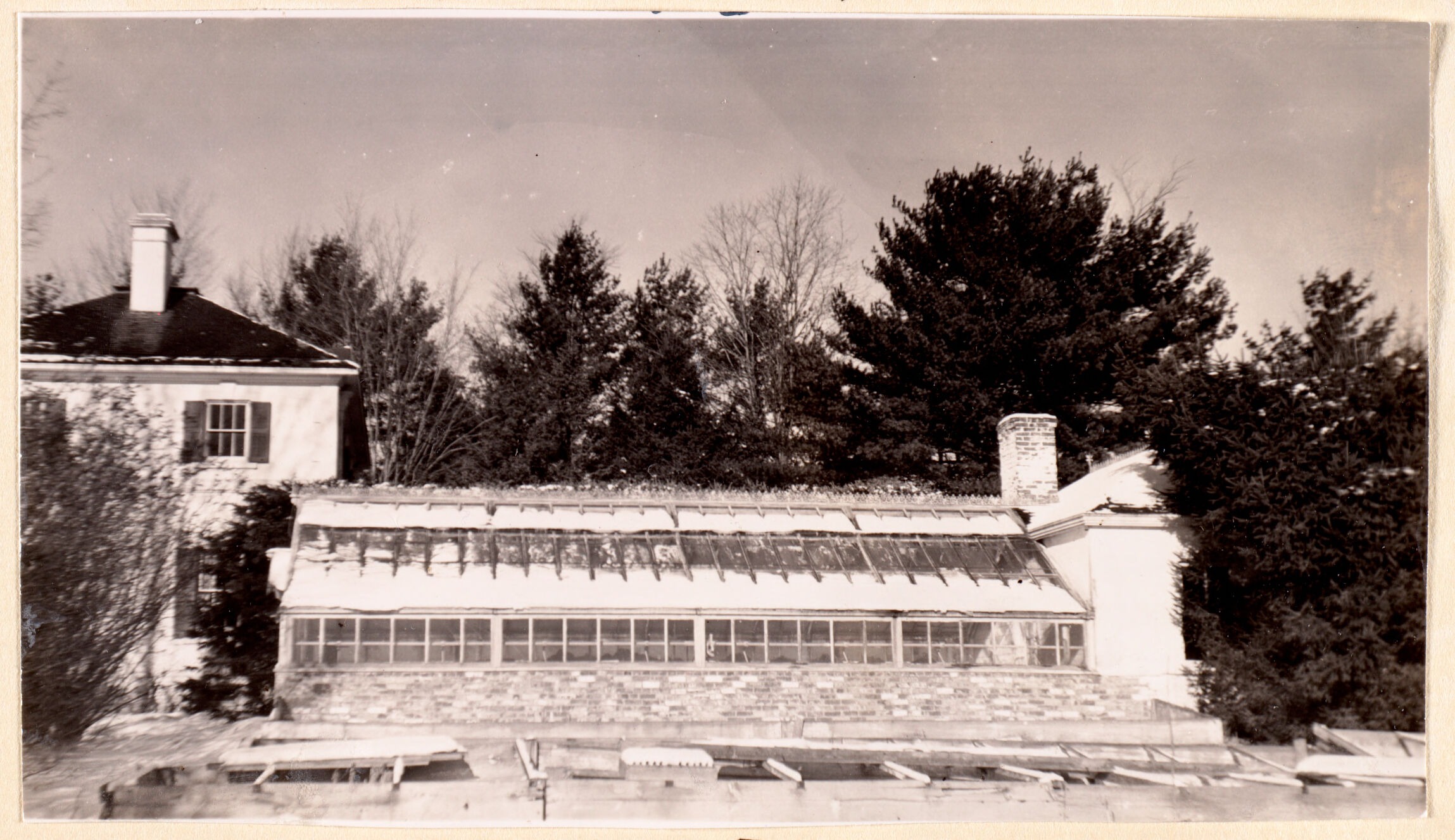
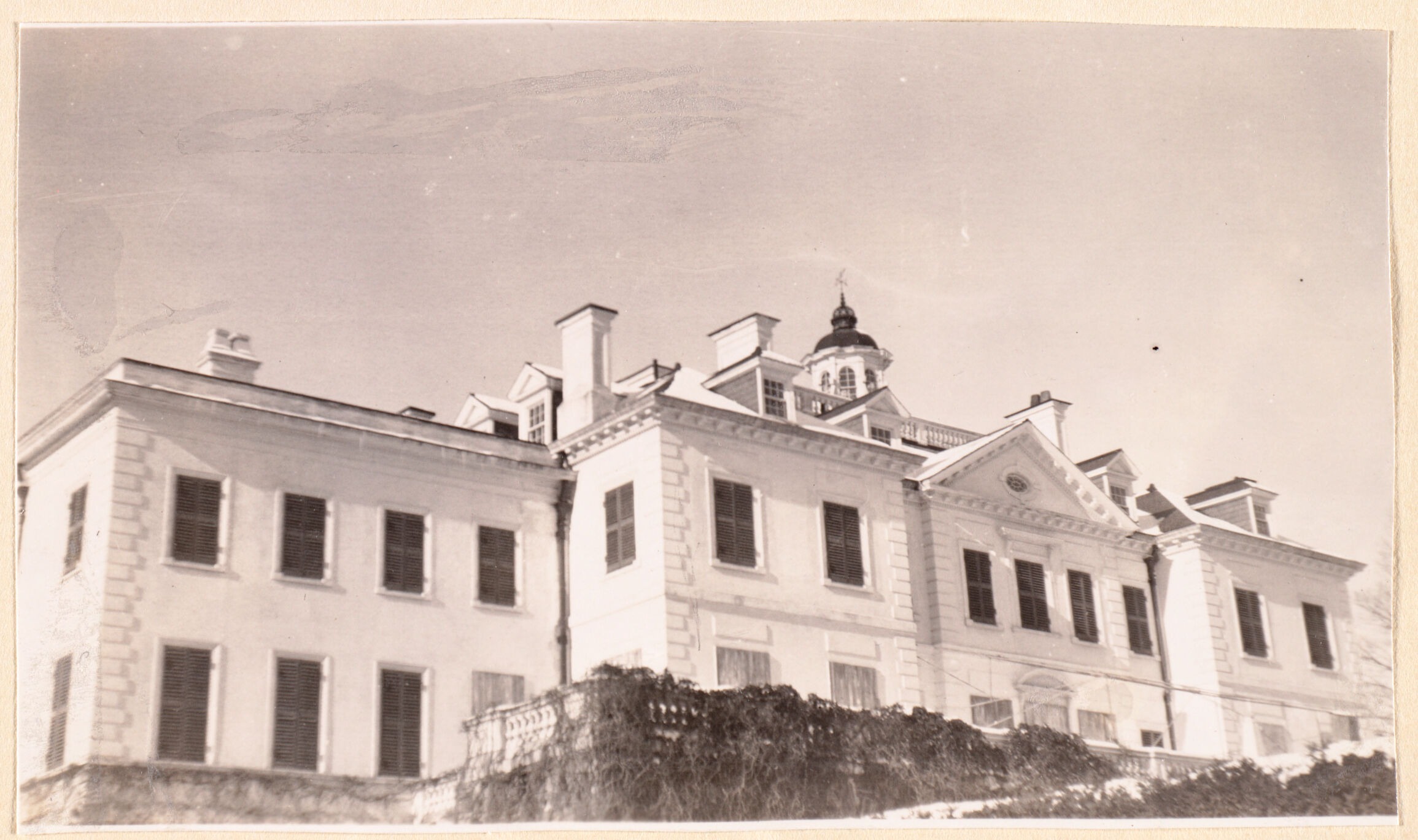
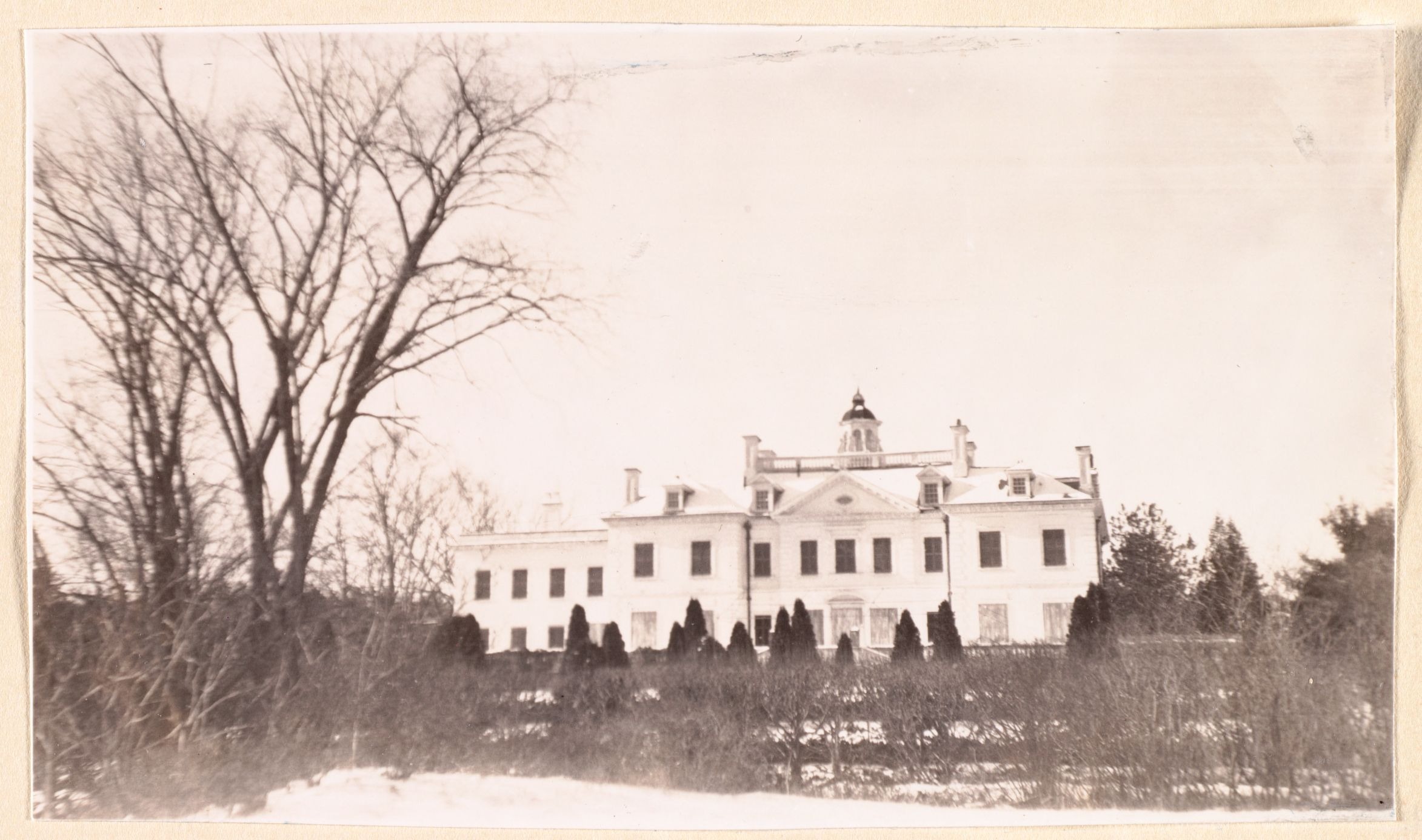
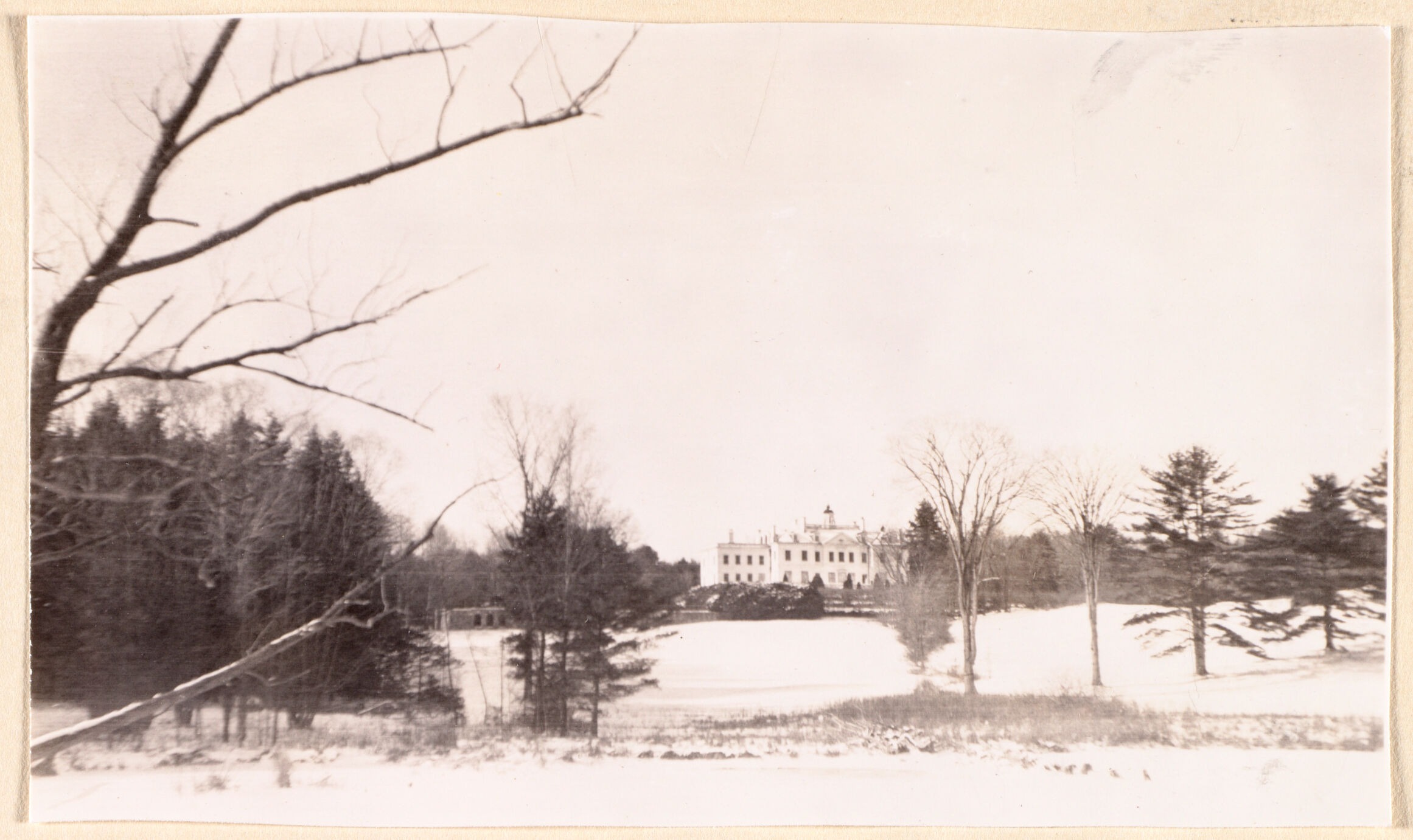
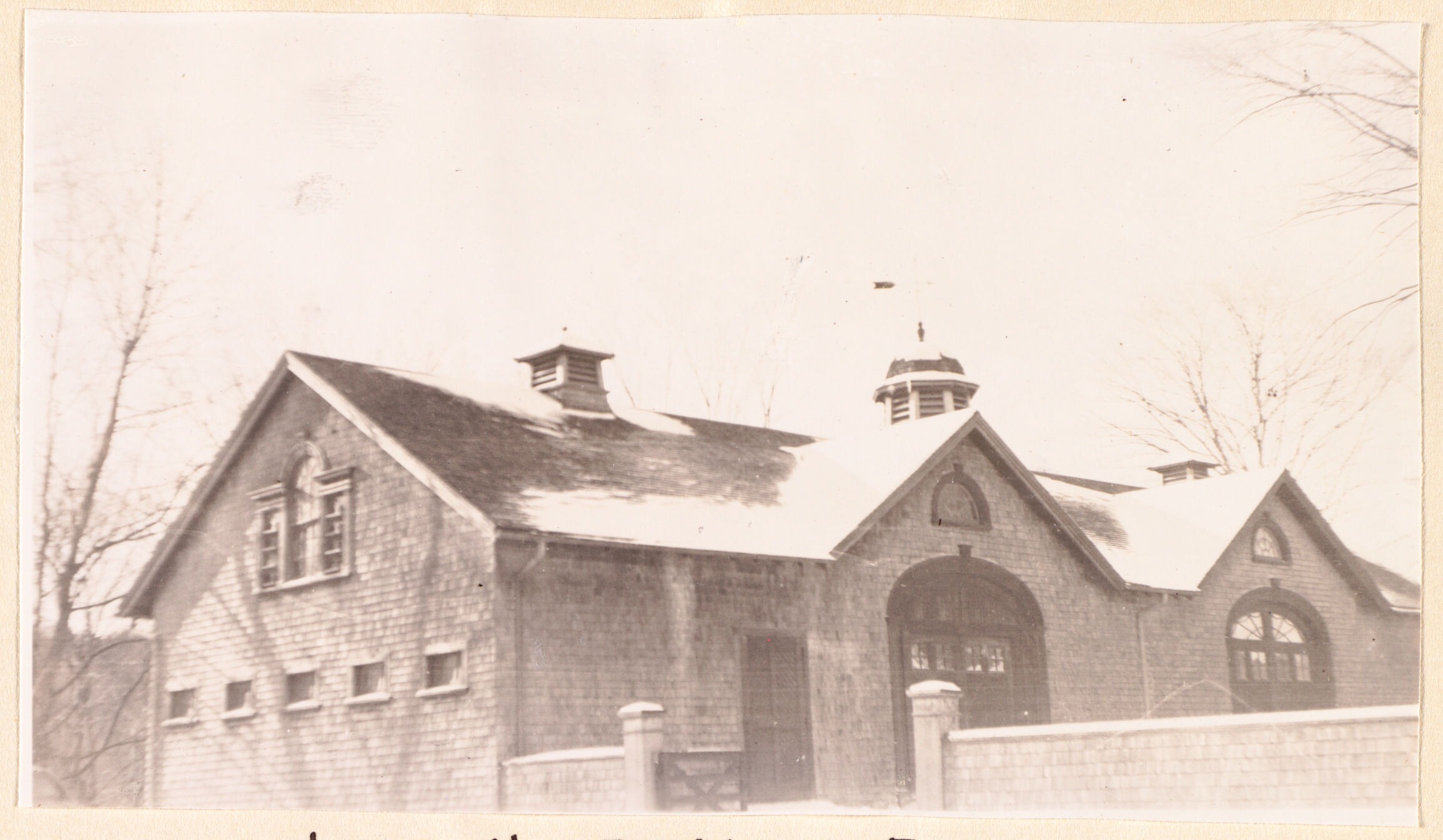
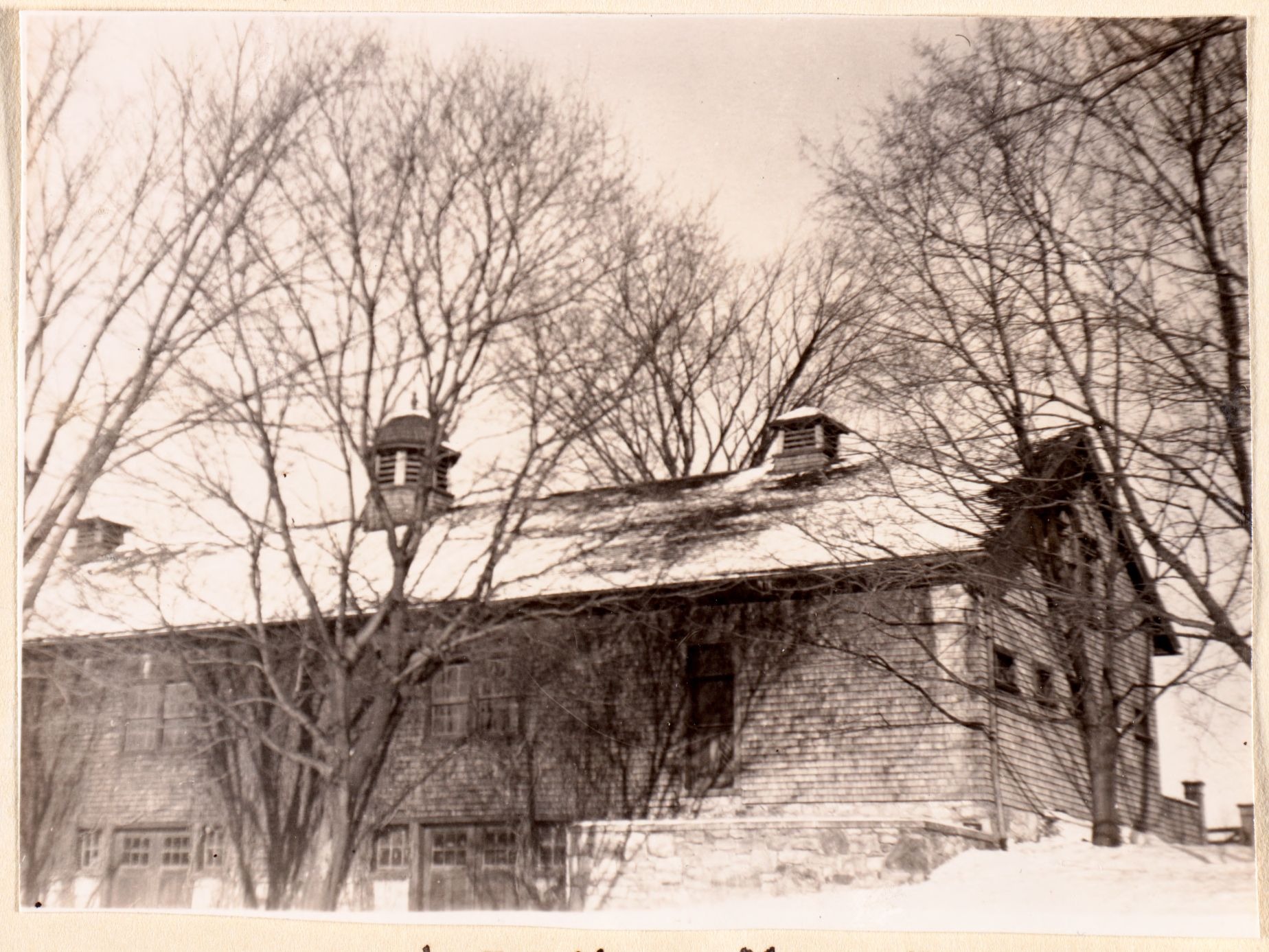
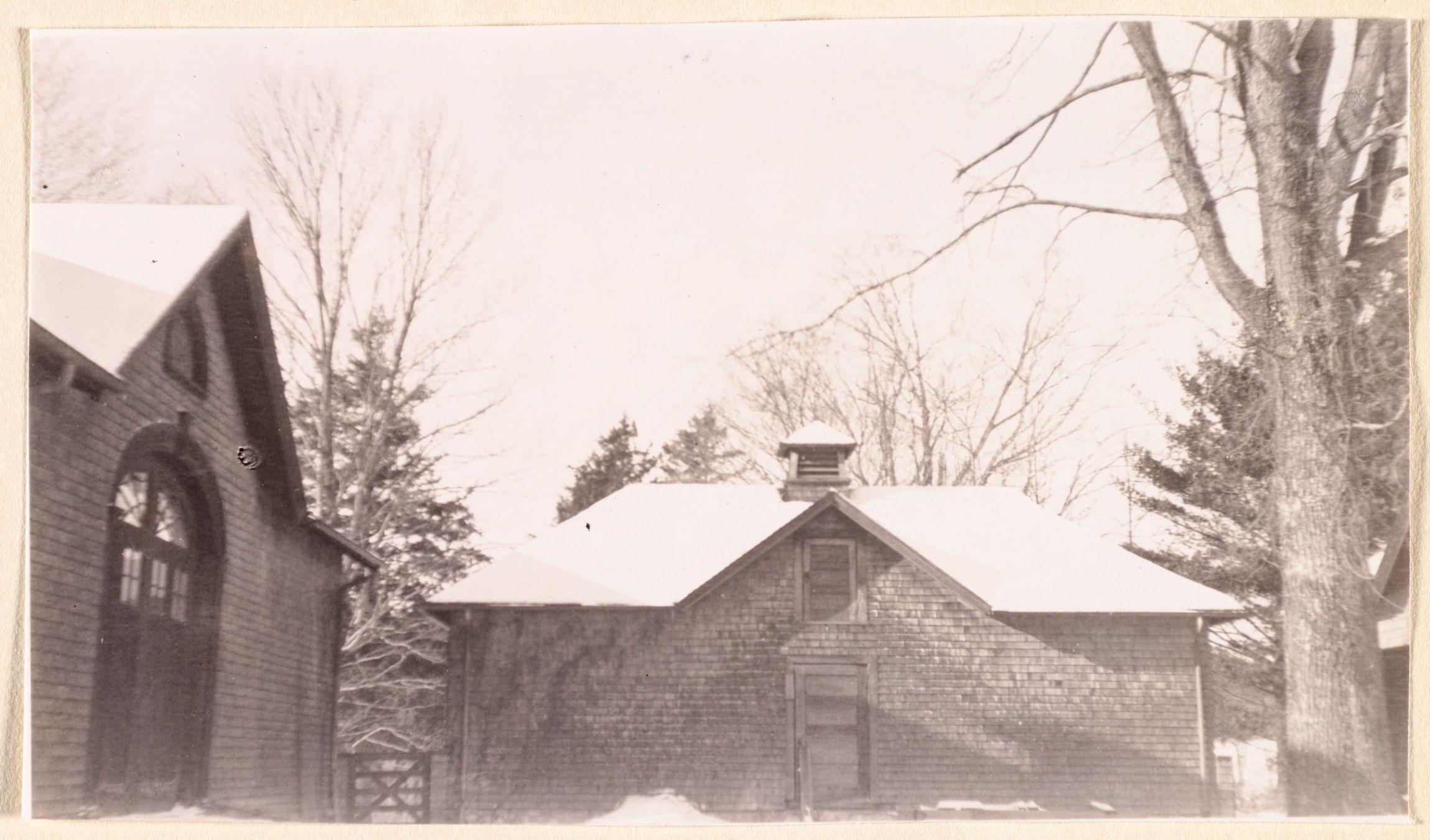
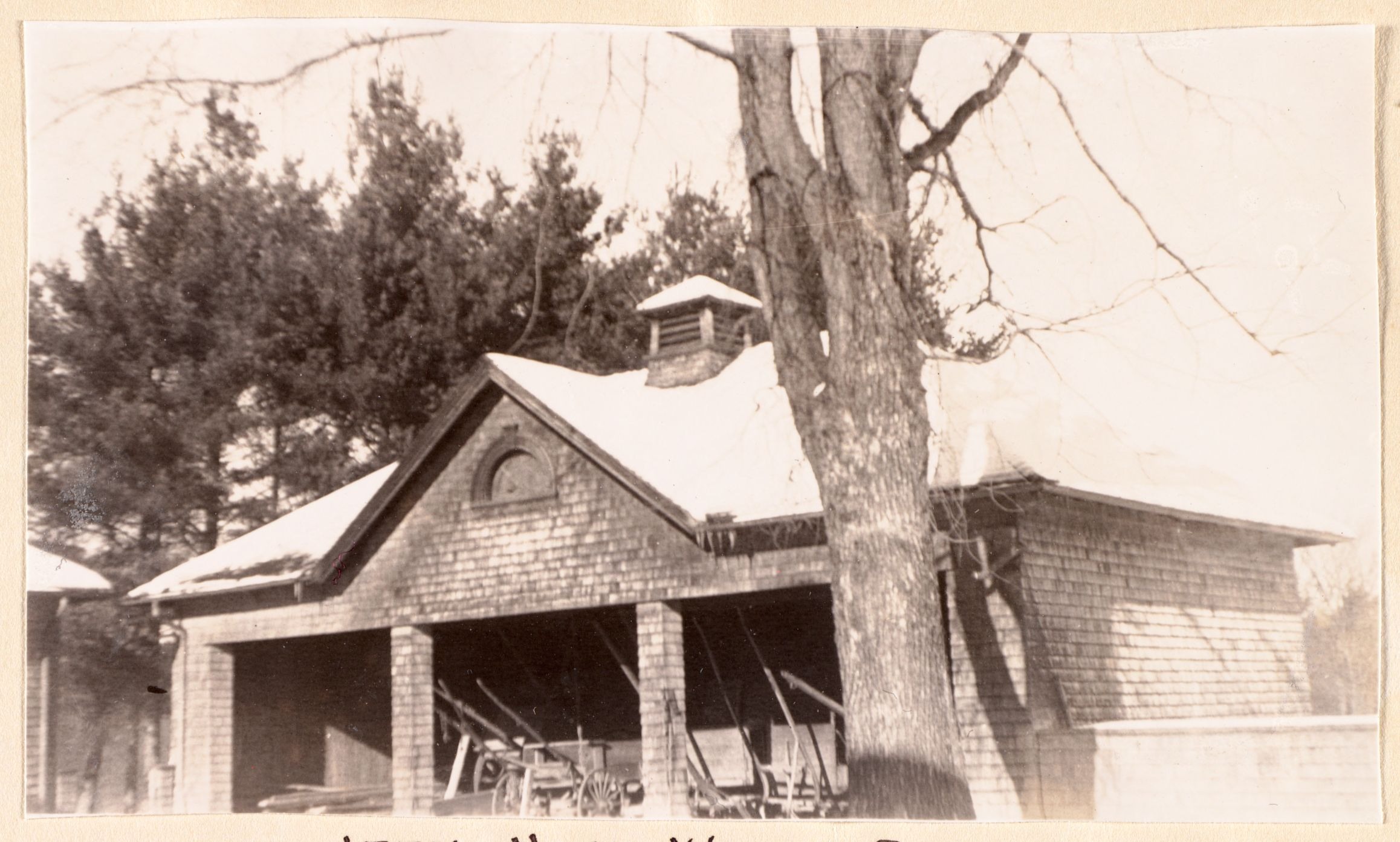
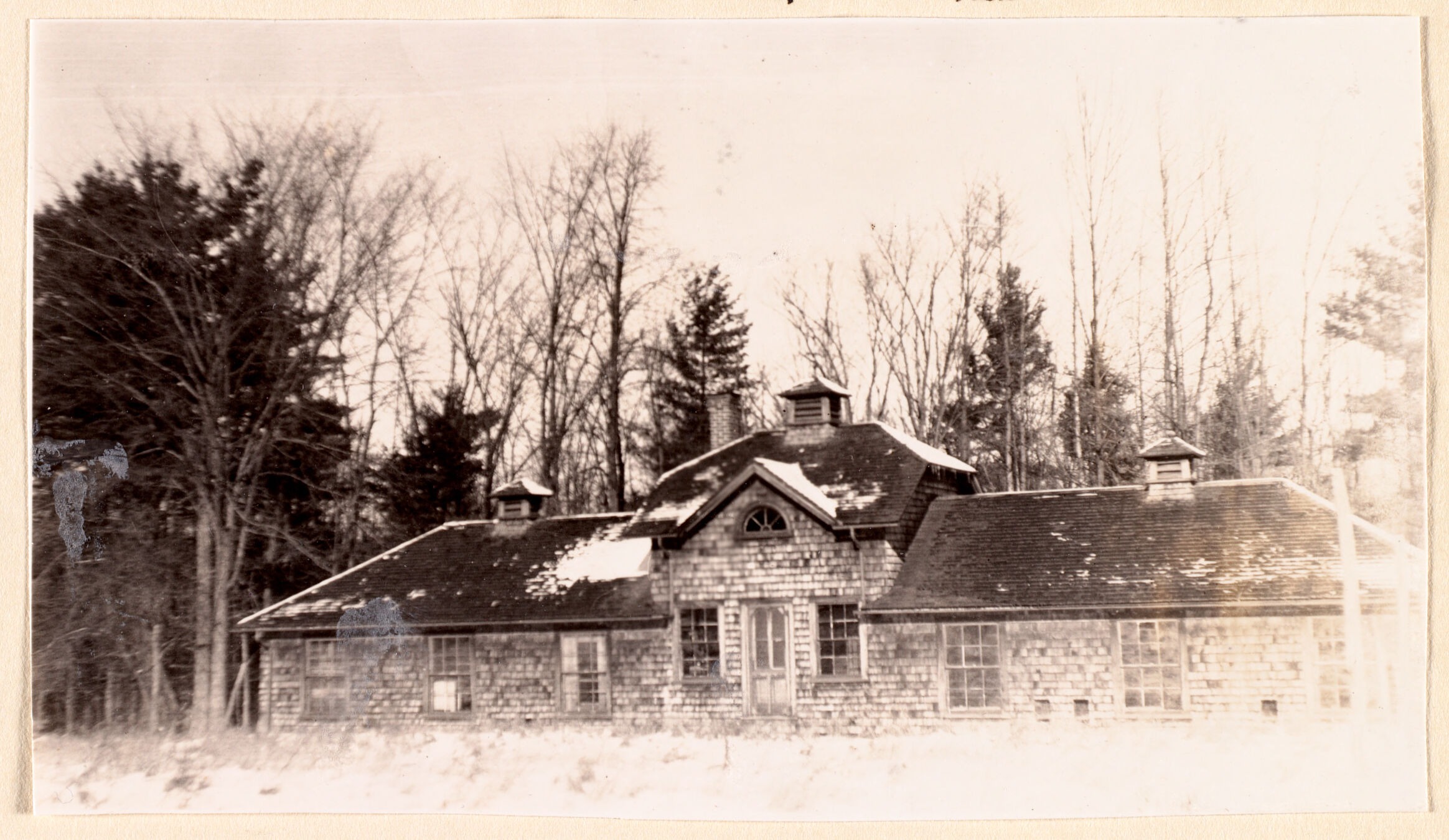
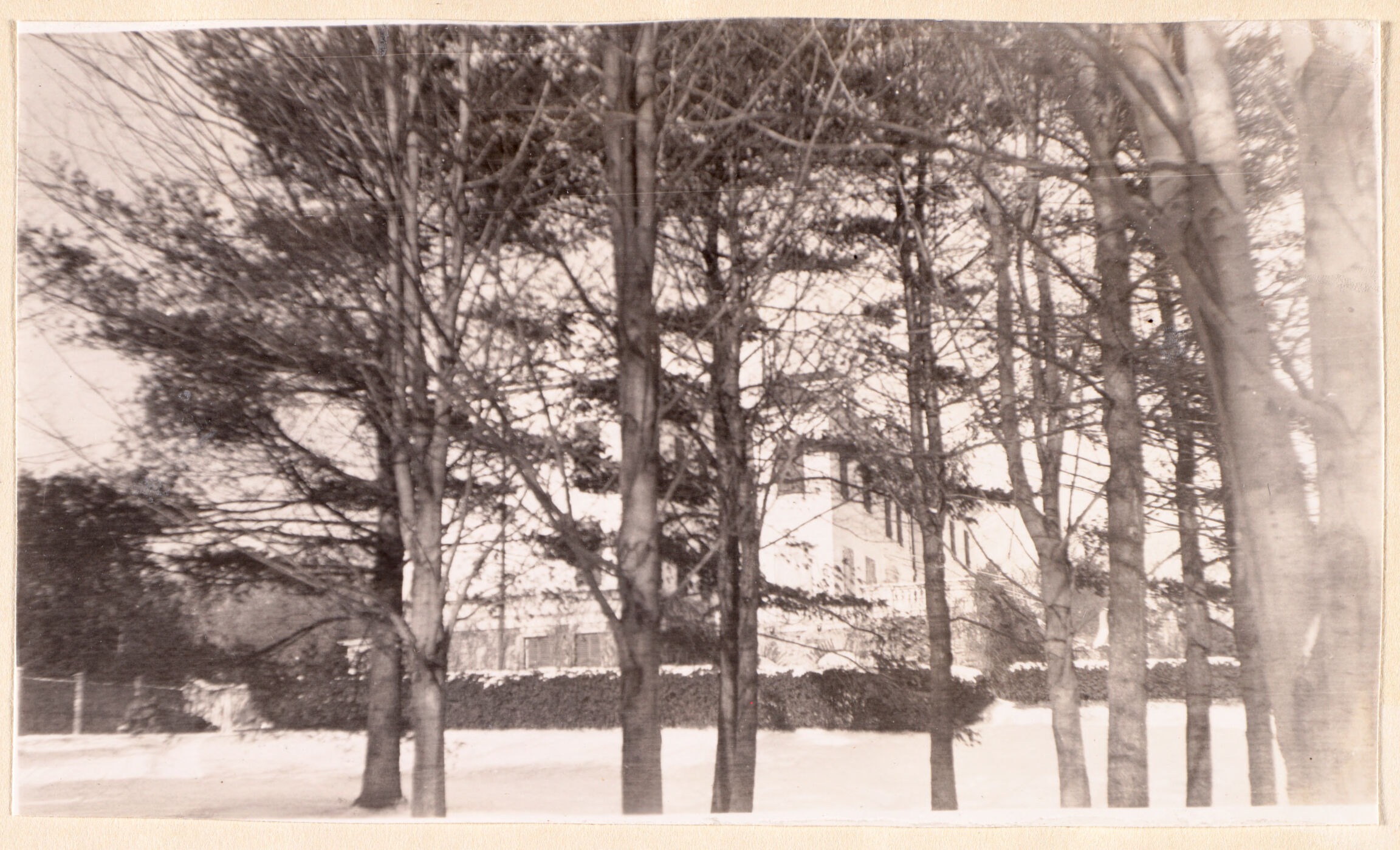
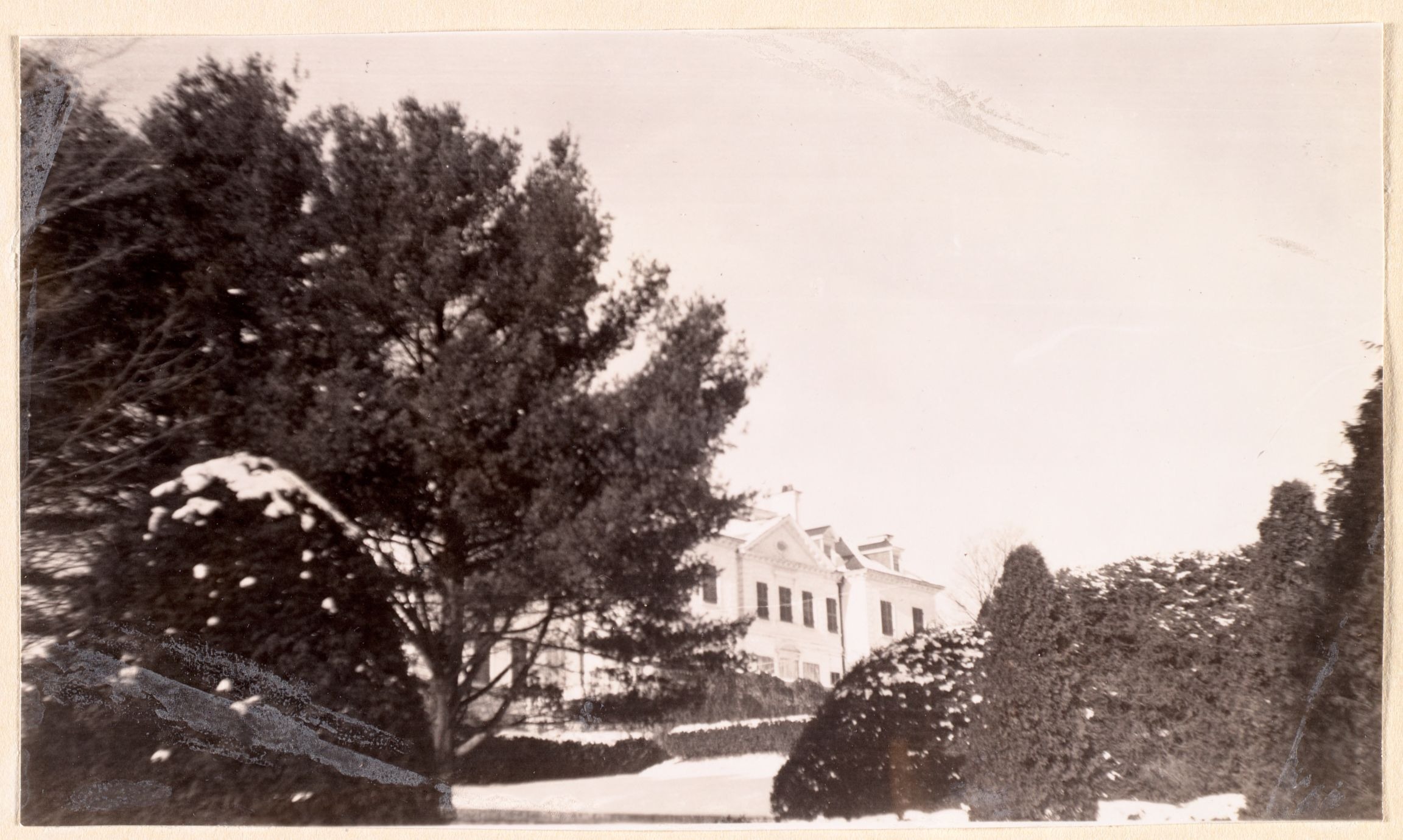
Seventeen of the photographs below were made on one day in the winter of 1940, and they are not pictures of a famous house. They are a schedule. Each print is captioned in type with a number and a name: Item No. 1, superintendent’s house. Item No. 2, greenhouse. Item No. 3, garage coach barn. Item No. 4, owner’s residence. Item No. 5, main barn. Item No. 6, ice house. Item No. 7, wagon shed. Item No. 9, hen house.
The catalogue does not say what the schedule was for, but the form is unmistakable: every structure on the property, numbered, photographed square on, in leafless winter when nothing is hidden. The Lenox Library holds the same kind of sequence for Brookhurst and for Ethelwynde, both made in February 1938 — and among Ethelwynde’s there is a measured floor plan whose title block names the firm: J. R. Hampson, Inc., Appraisal Engineers, Pittsfield, Mass. These photographs carry no such attribution, so the identification is not certain here. What is certain is the date: two years after the auction of 1938.
What it produces is something none of the garden photographs can: the whole working estate at once. The greenhouse is a long glazed range with its cold frames laid out in front of it. The coach barn gets three exposures, one of them straight into the open bay with the wheels and shafts still inside. There is an ice house. There is a wagon shed. There is a hen house, and it is item nine.
Item eight is not in the collection. Whatever the eighth building was, its photograph has not survived with the rest.
IV. 23 June 1941
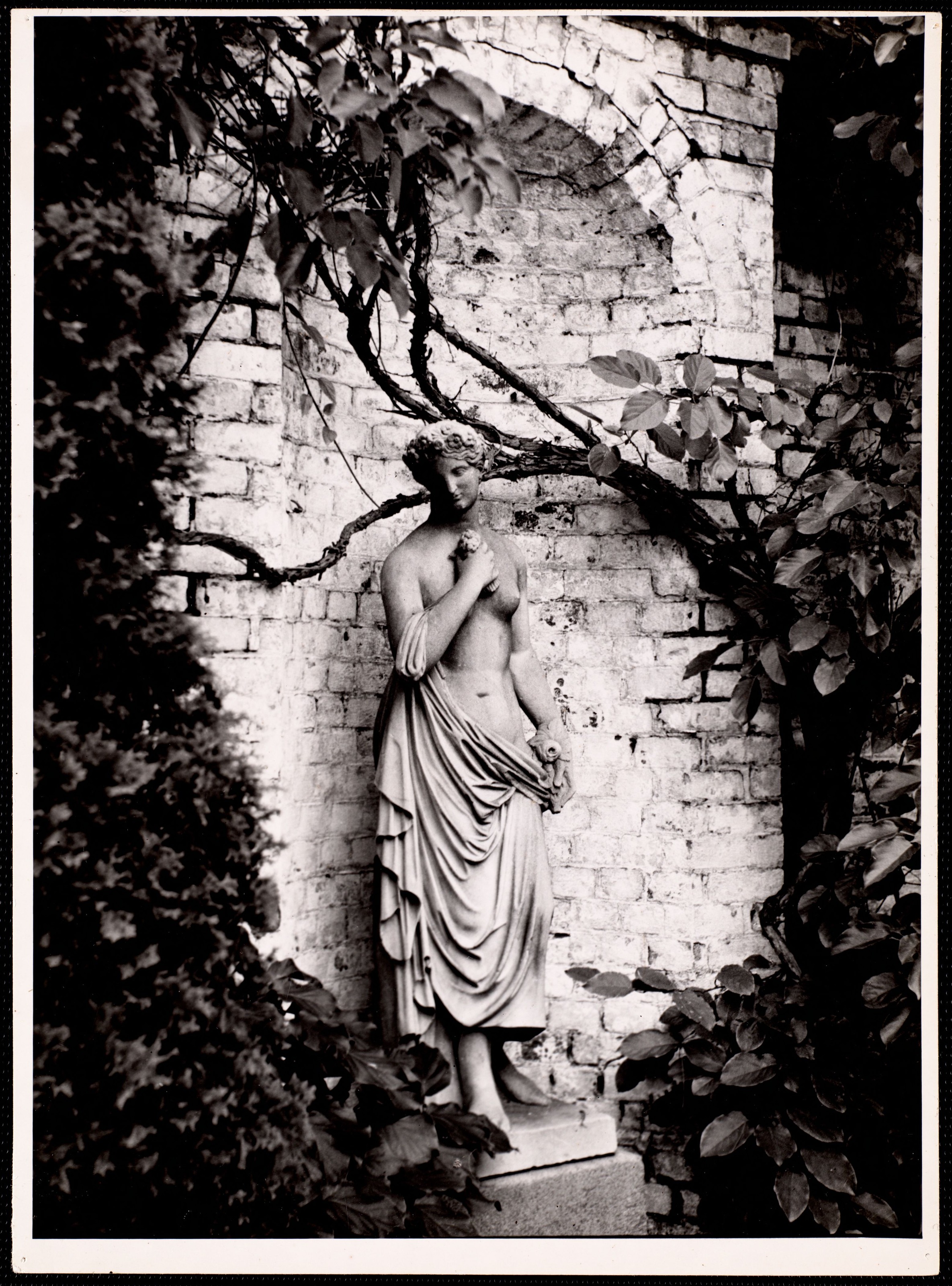
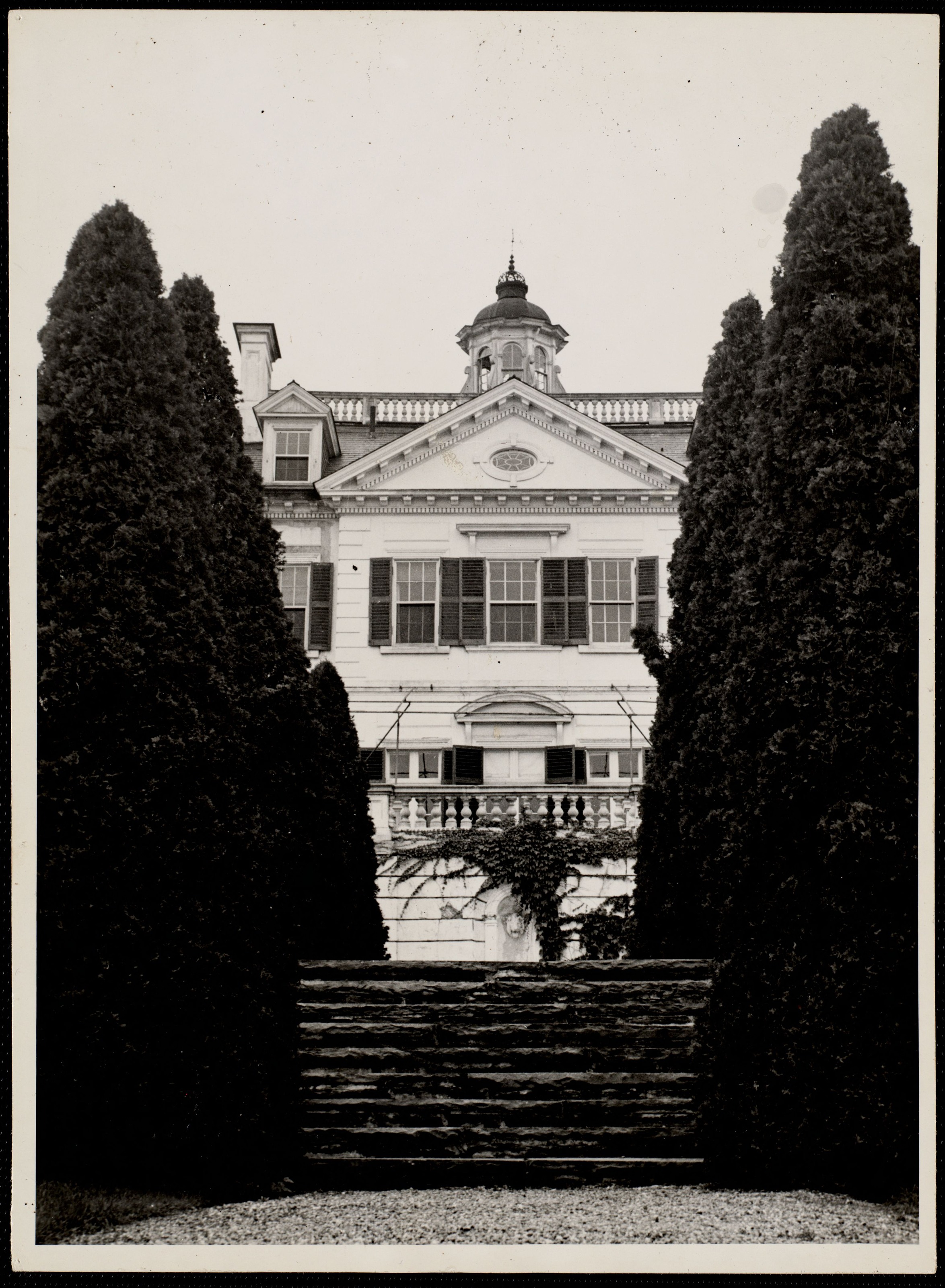
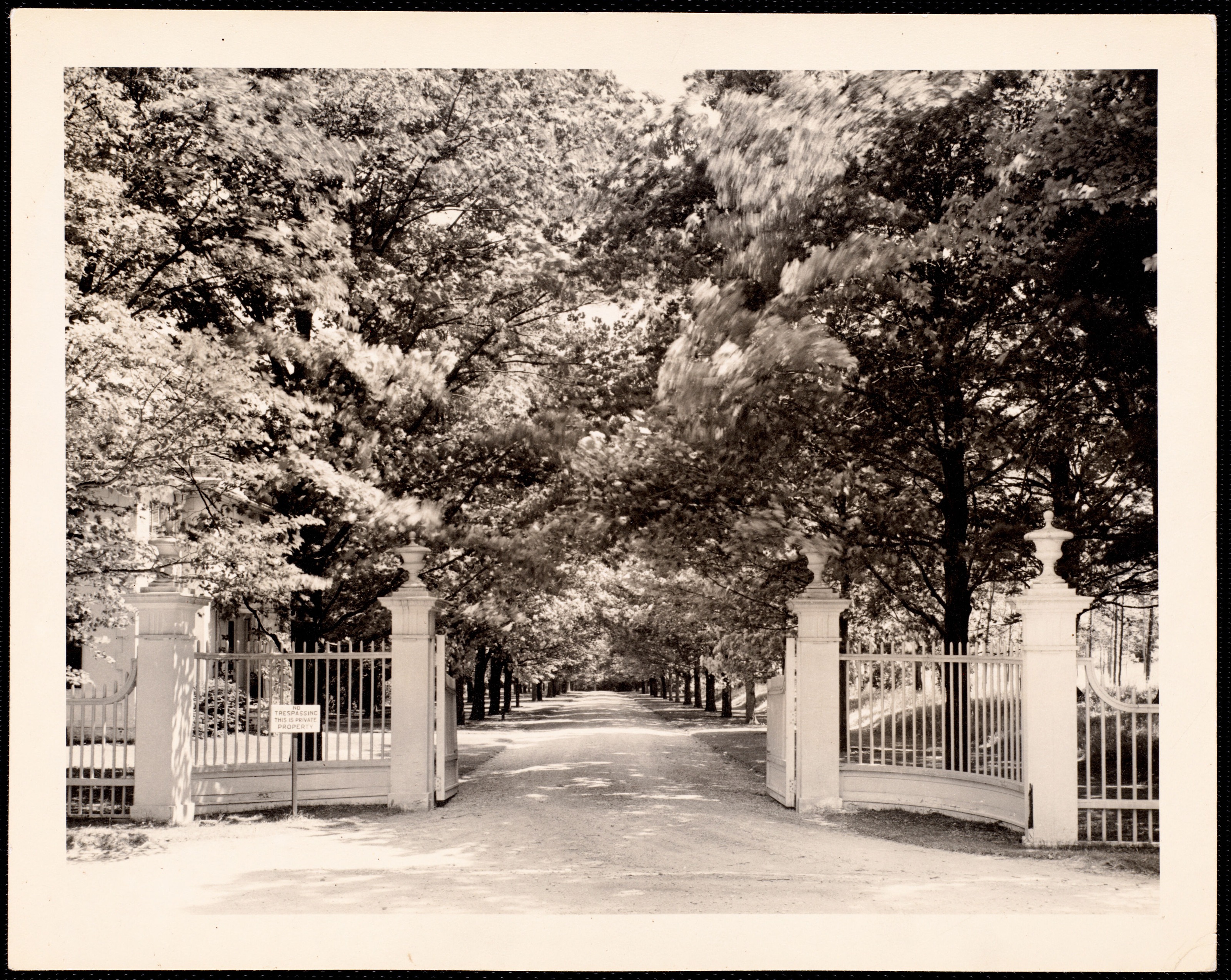
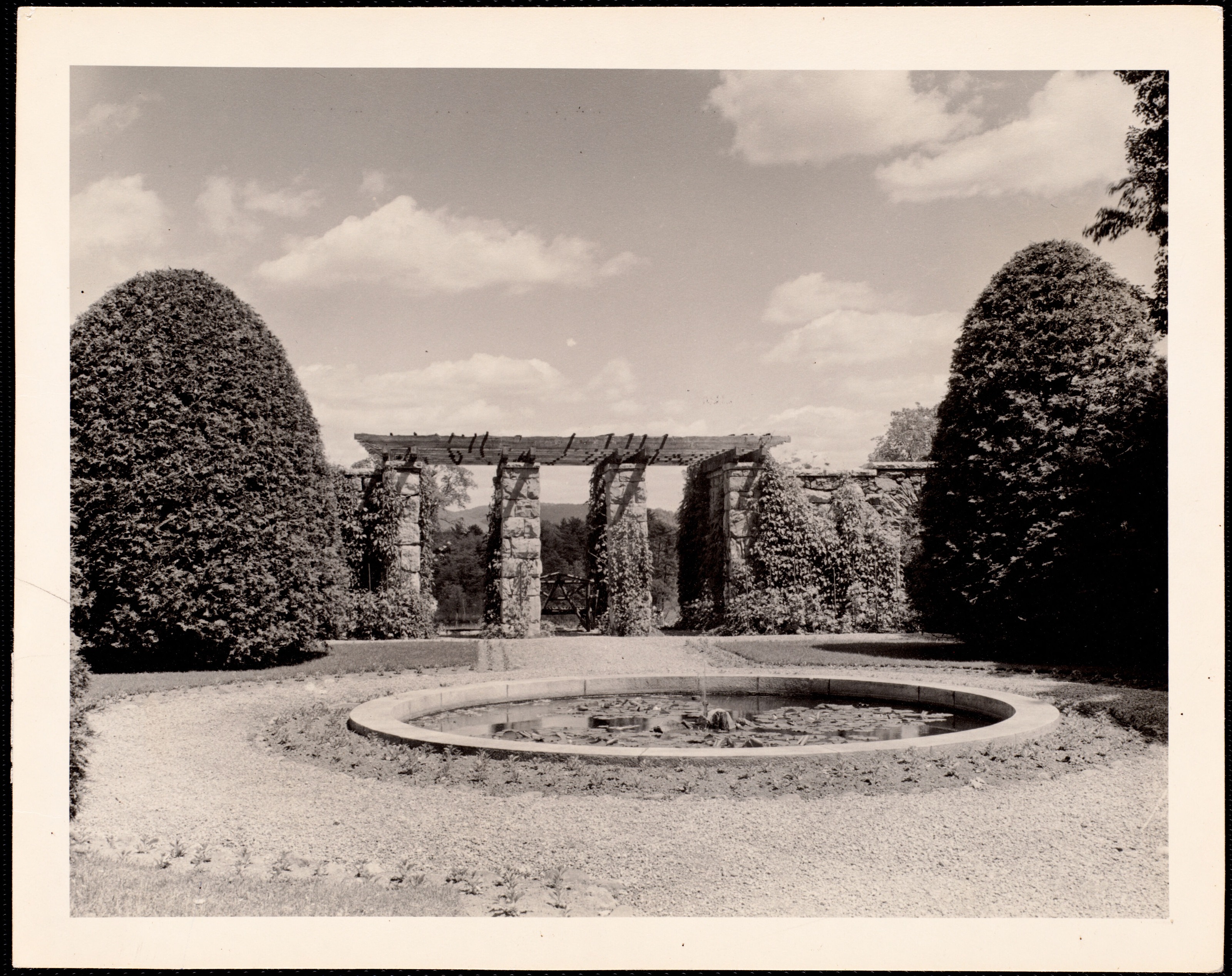
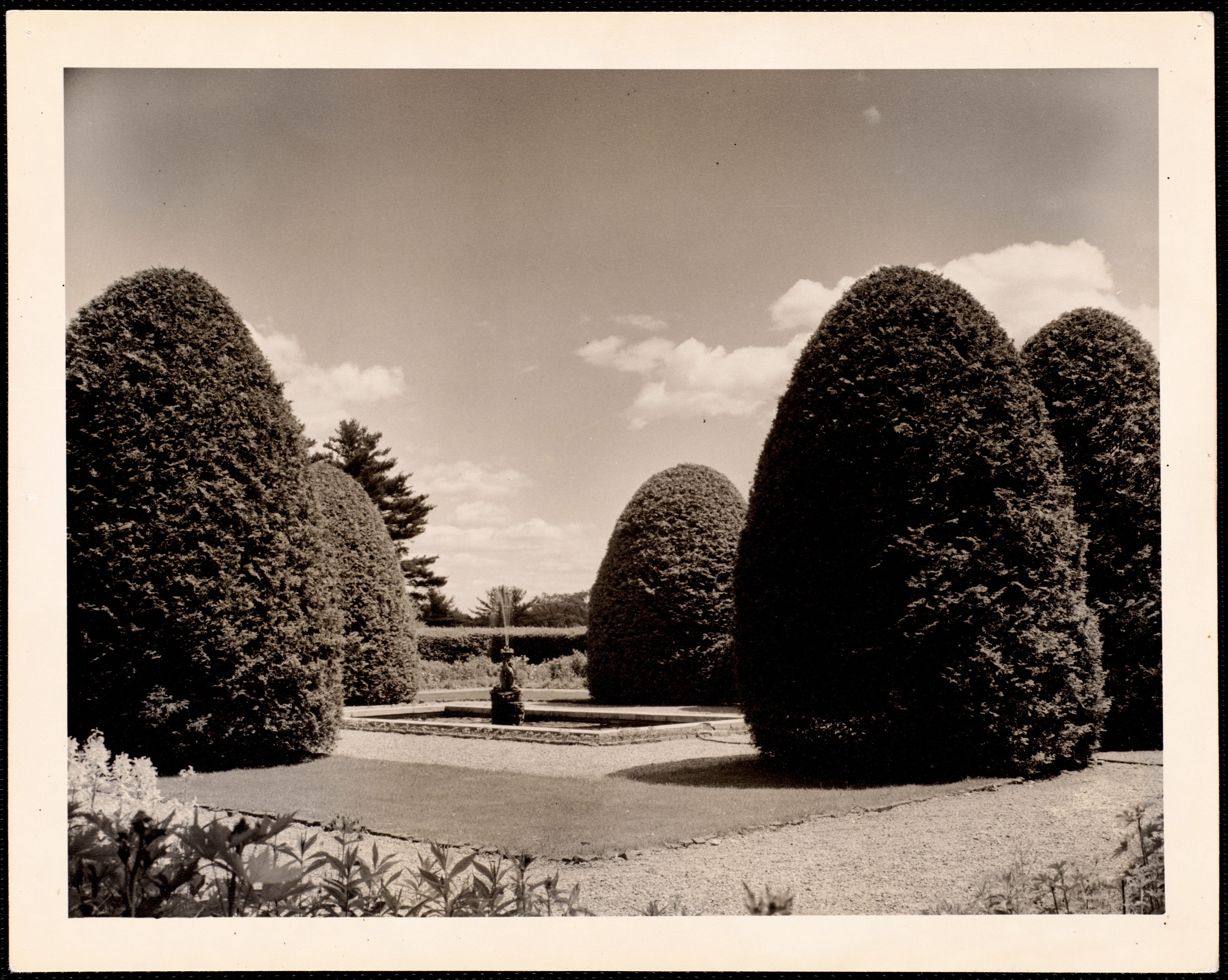
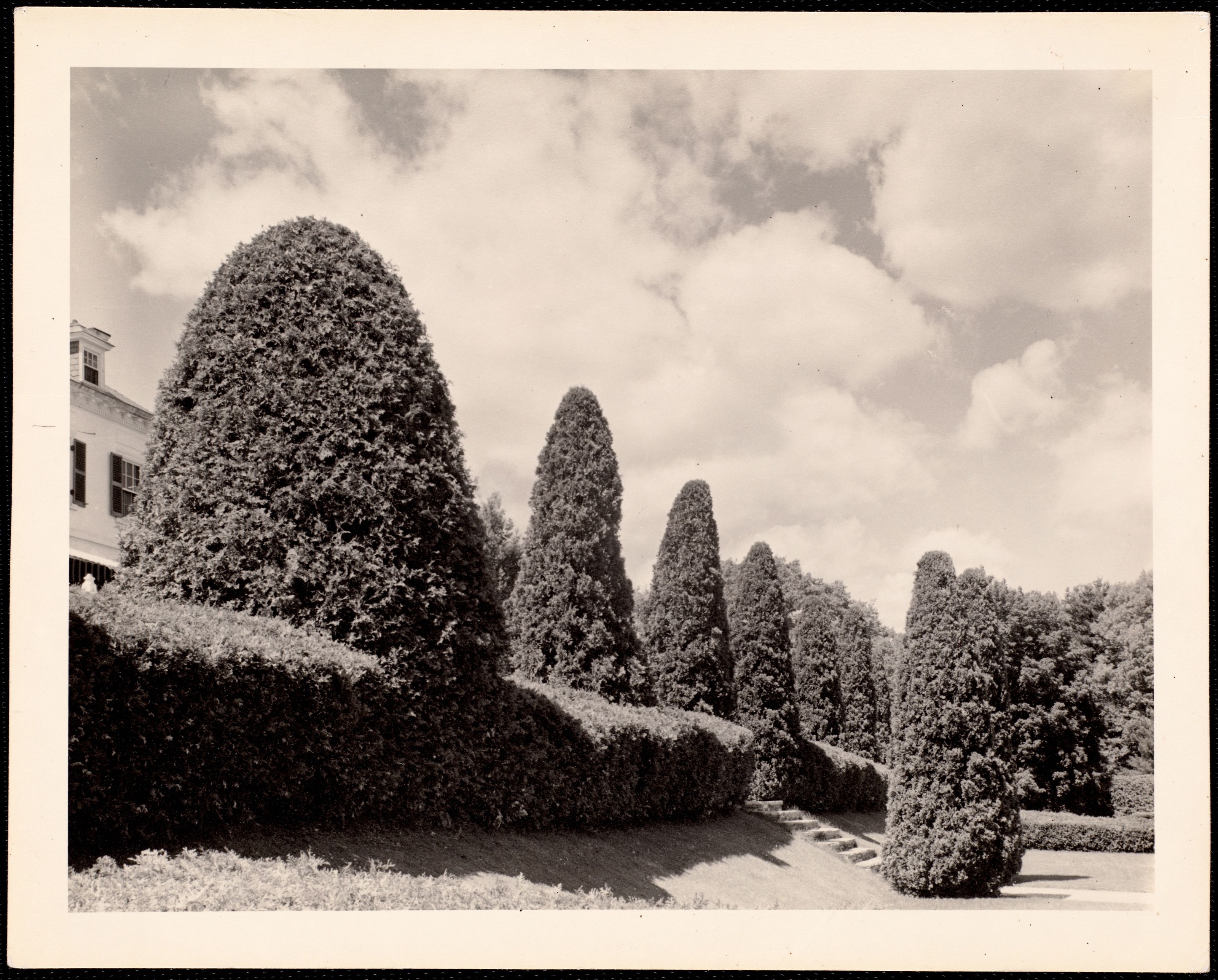
Eighteen months later somebody went back in midsummer and made four more, and these are the opposite kind of picture: the gates and the driveway, the round pond and its fountain, trees and a fountain, the trees and the steps down to the lawn. No numbers, no captions, no buildings. The garden, in leaf, a year before the school moved in.
Sources
Lenox Library Association, Local History Photograph Collection, via Digital Commonwealth: twenty-six photographs and one portrait of Edith Wharton, licensed CC BY-NC-ND 4.0 except the portrait, which is CC BY 4.0. Item numbers, dates and titles are the Lenox Library’s own. A further view, “The Mount: front of house” of 1992, is in the collection but is marked all rights reserved and is not shown here. Wikipedia, “The Mount (Lenox, Massachusetts),” for the 1902 construction, Ogden Codman Jr. and Francis L. V. Hoppin, The Decoration of Houses of 1897 and the debt to Belton House, Beatrix Jones Farrand’s kitchen garden and drive and her founding role in the American Society of Landscape Architects, the 113 acres and the 49.5 today, the nine years of Wharton’s residence, the Foxhollow School from 1942 and Shakespeare & Company after 1976, and the National Historic Landmark designation of 11 November 1971. American Aristocracy, “The Mount,” for the 1901 purchase at $40,600 for 113 acres, the 16,850 square feet and thirty-five rooms, the 1911 sale to the Shattucks at $180,000 with 127 acres, the 1938 auction at $25,062, and the sequence of owners: Shattuck 1911–1935, Van Anda and Shipman 1938–1942, Foxhollow 1942–1976, Shakespeare & Company 1978–2001, Edith Wharton Restoration from 2001. The absence of a Wharton job is from the Olmsted office’s own Berkshire job list of sixty-three commissions, 1883–1979, which is the list this survey works from. The purpose of the January 1940 photographic schedule is not stated in the catalogue; the attribution to J. R. Hampson, Inc. is this survey’s inference from the shared form of the Ethelwynde and Brookhurst material, and only the Ethelwynde drawings carry that firm’s name.