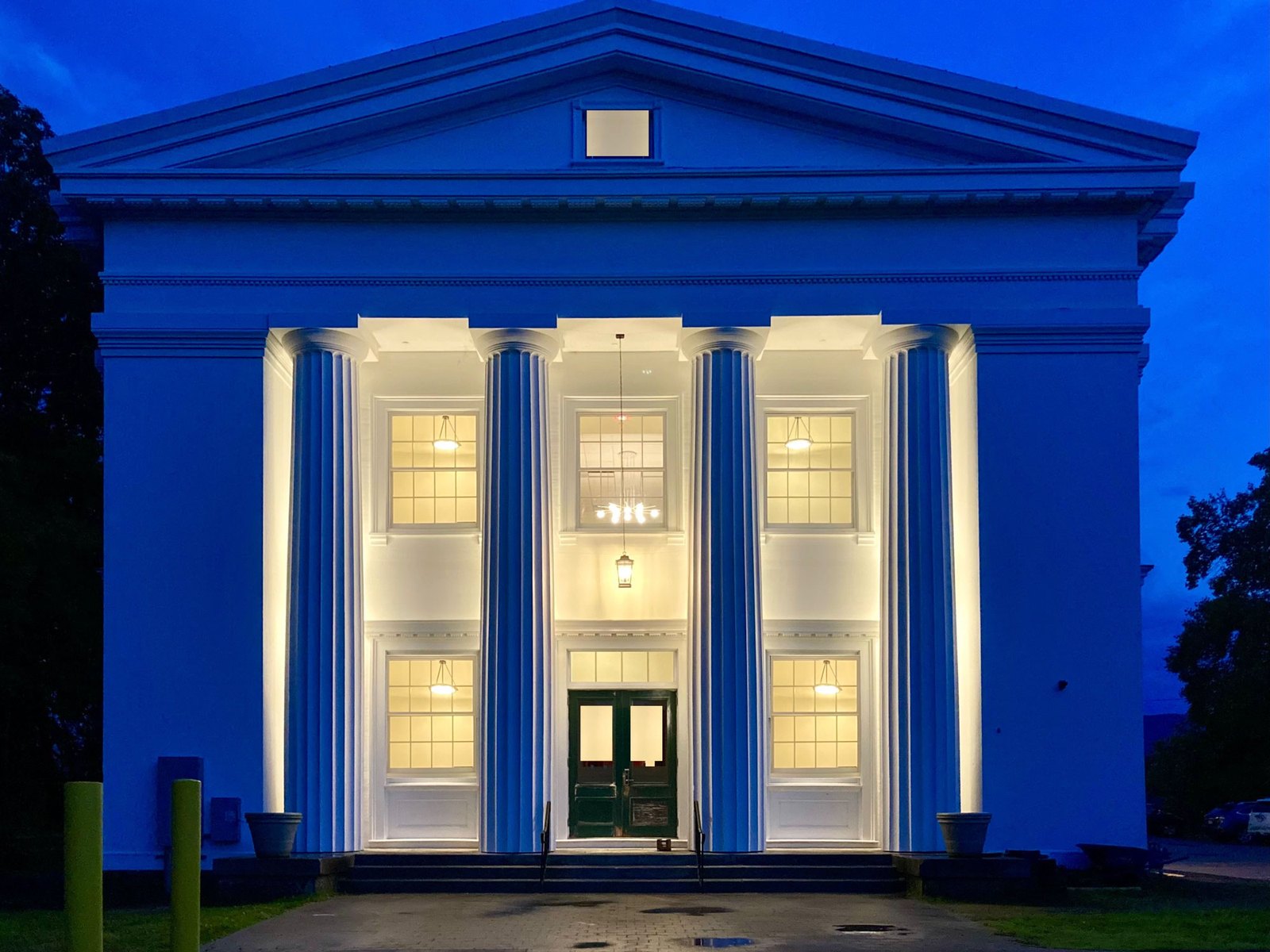
Stockbridge has governed itself from this ground for very nearly three hundred years, and for most of that time it did not own it. The building there now is a high school. Before that it was a town hall, a police station, a movie theater, a dancehall and a basketball court; before that a burned-out shell; before that a townhouse on leased land; and before any of it, by two separate accounts, the seat of government of a nation.
I. Two accounts of the same ground
Franklin Leonard Pope, writing in 1886, put the Mahican council-fire at Wah-nah-ti-kook in the present town of Stockbridge and called the place “the capital of the Mahican nation at the time of the first settlement of the English on the Housatonic.” He cited Loskiel, Dwight, and the 1768 treaty at Fort Stanwix. That page is here.
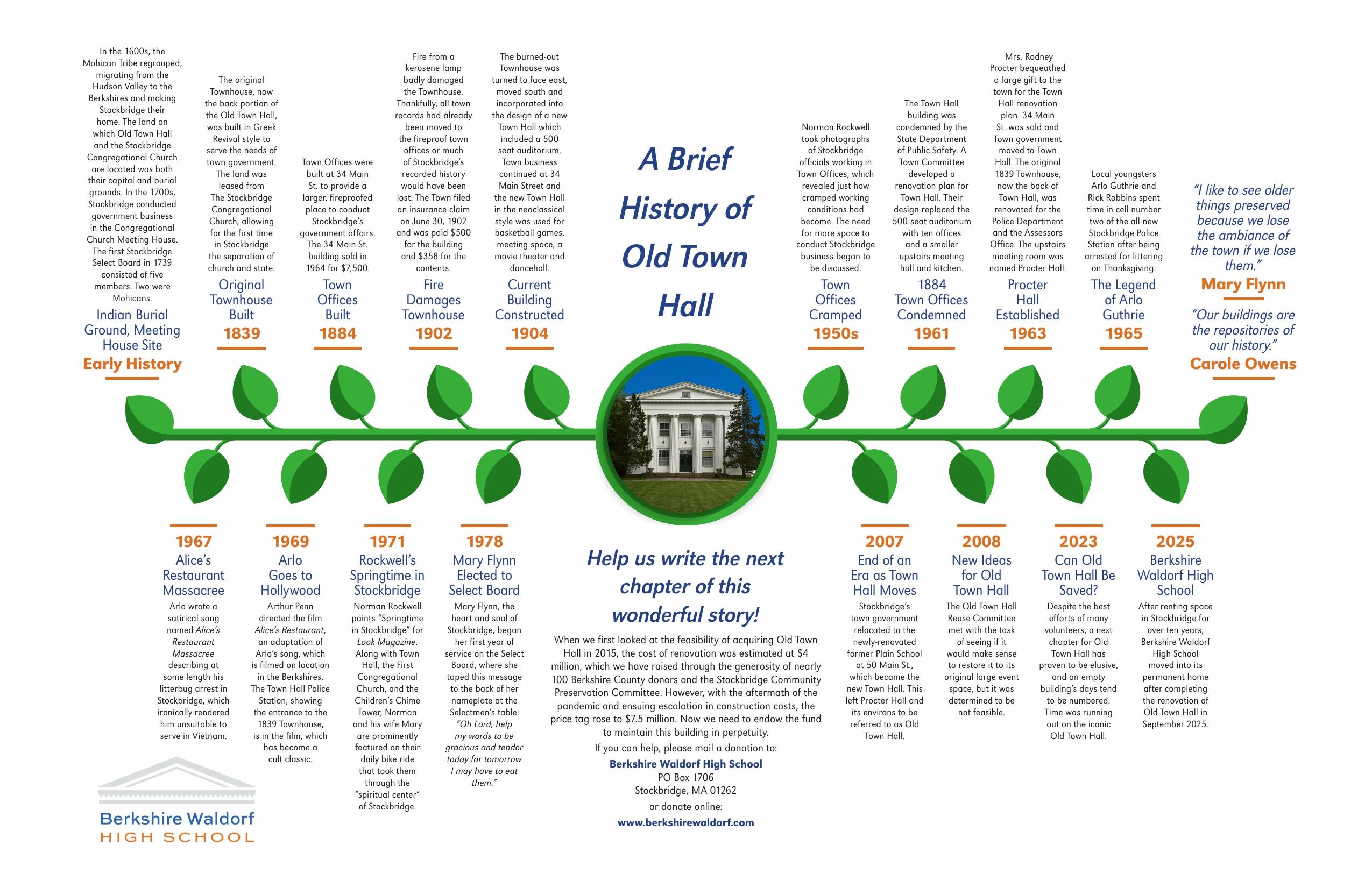
The timeline drawn in 2025 for Berkshire Waldorf High School, raising money to save the building, opens with the same claim in plainer words: in the 1600s the Mohicans regrouped out of the Hudson valley into the Berkshires, and “the land on which Old Town Hall and the Stockbridge Congregational Church are located was both their capital and burial grounds.”
Neither account was written with the other in view. One is a surveyor working the manuscript archives of three states; the other is a fundraising chart. They are not independent proof of each other — a 2025 chart may well be drawing on the same nineteenth-century sources Pope used — and this page does not treat the agreement as confirmation. It is worth printing because the claim has been continuously made, in Stockbridge, about this specific parcel, for at least a hundred and thirty-nine years.
II. Konkapot and Umpachene, selectmen
Through the seventeen-hundreds the town conducted its business in the Congregational Church meeting house. When the town held its first meeting, on 11 July 1739, two of its selectmen were Mohican: Capt. John Konkapot and Aaron Umpachene, named as selectmen in Carole Owens’s account of the town’s founding. The English in the place numbered six.
Read that against the rest of this section. The removal to New Stockbridge came in 1785, and the Mohicans held town office here for the last time in 1779 — forty years after Konkapot and Umpachene sat as selectmen of a town chartered for them. The distance between those two dates is the whole story, and it is about forty years long.
III. 1839: the lease
The original Townhouse went up in 1839 in Greek Revival, for the needs of town government. The detail that matters is the tenure: the land was leased from the Stockbridge Congregational Church, which the timeline describes as allowing, for the first time in Stockbridge, the separation of church and state.
So the town's first building of its own stood on ground it rented from the church — which was itself standing on ground the same two accounts call the Mohican capital. Three governments, one parcel, in sequence, and only the last of them bought it.
IV. Fire, and the building that stands now
Town offices were built separately at 34 Main Street in 1884, larger and fireproofed. That turned out to matter. In 1902 a kerosene lamp badly damaged the Townhouse; the records had already gone to the fireproof offices, so the town's recorded history survived. The insurance claim was filed on 30 June 1902 and paid $500 for the building and $358 for the contents.
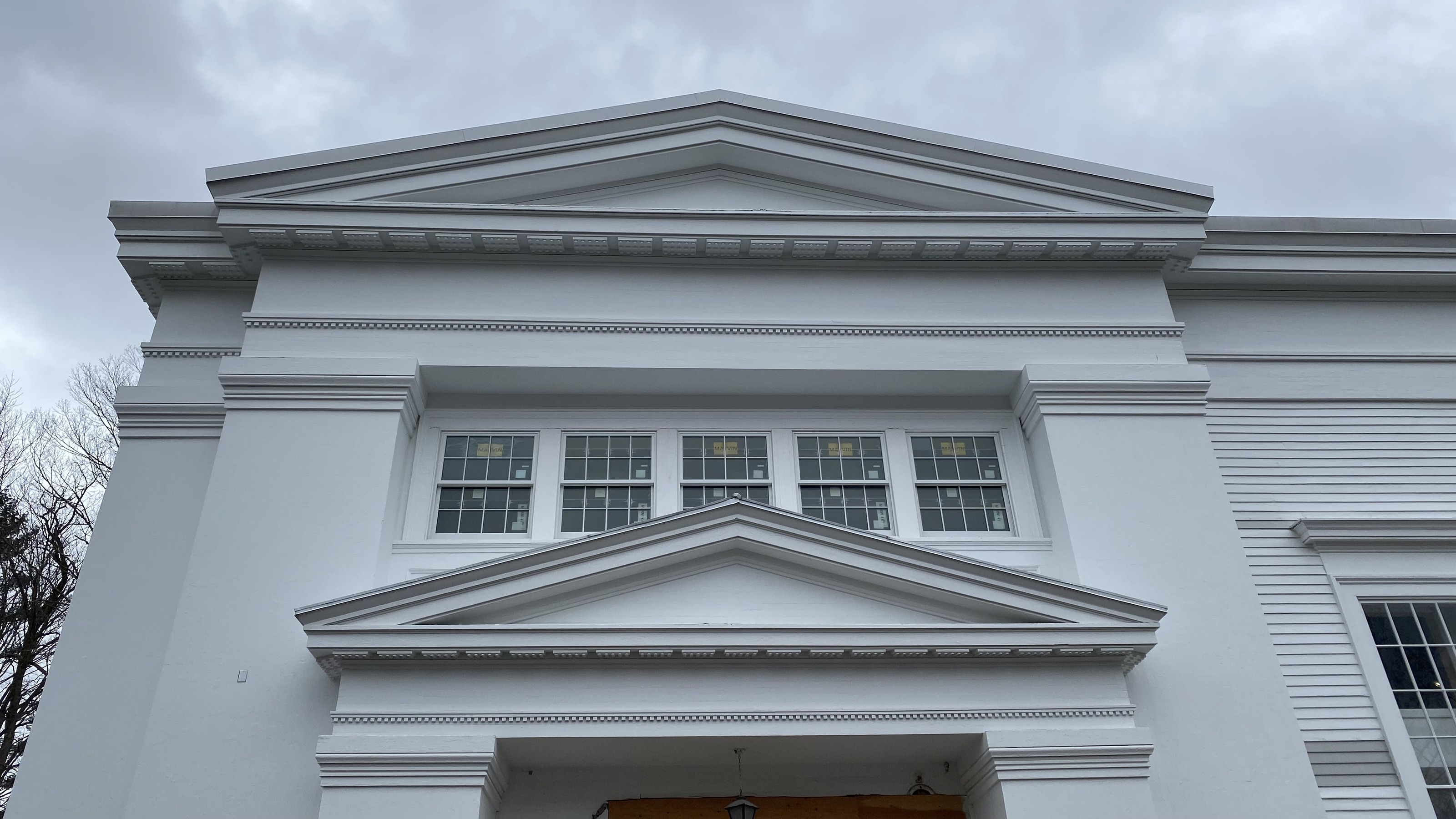
In 1904 the burned-out Townhouse was turned to face east, moved south, and built into a new neoclassical Town Hall with a five-hundred-seat auditorium. The 1839 building is still in there, at the back. The new hall did duty as a basketball court, a meeting space, a movie theater and a dancehall.
V. Condemned, and rescued by Orleton
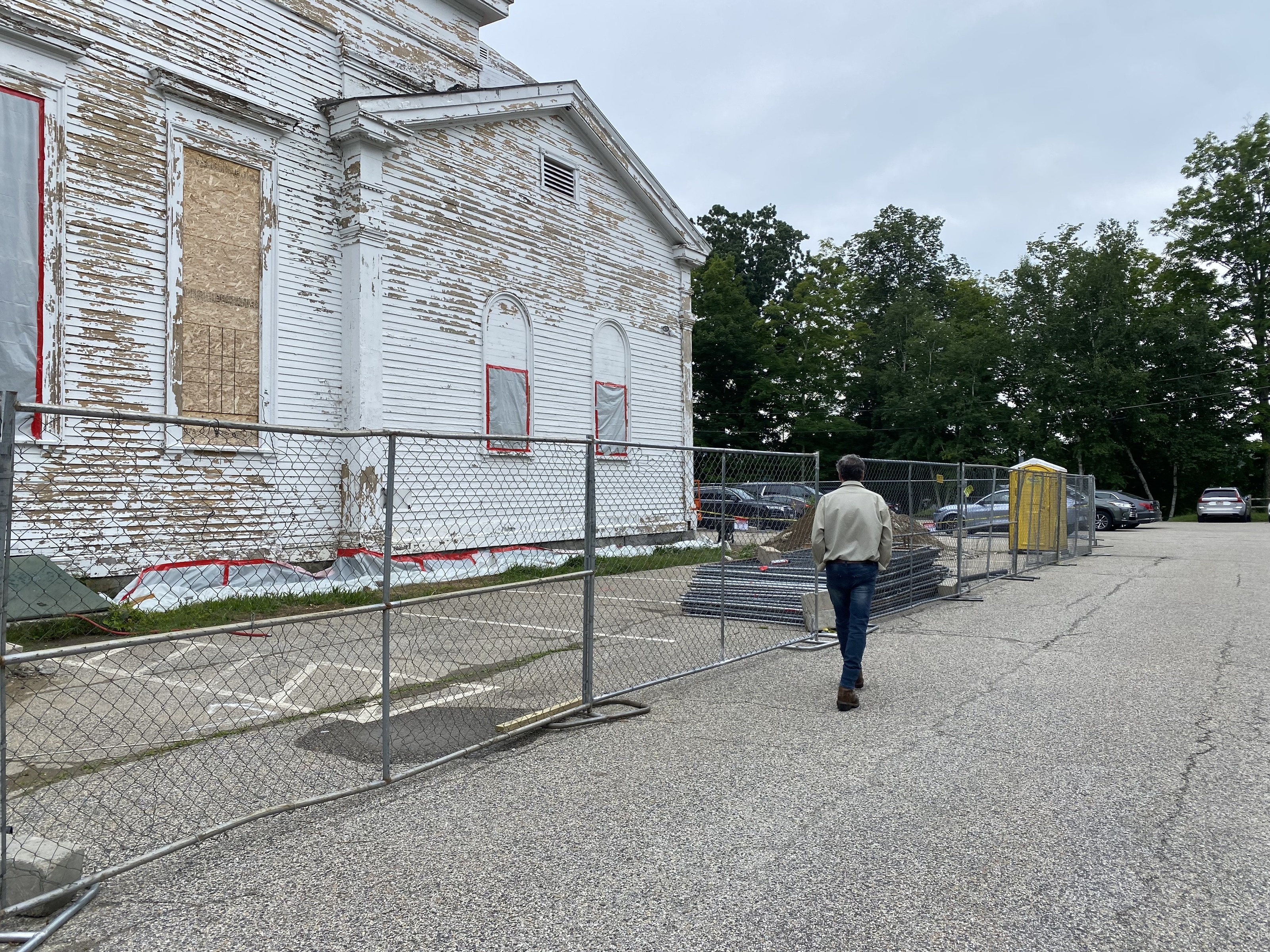
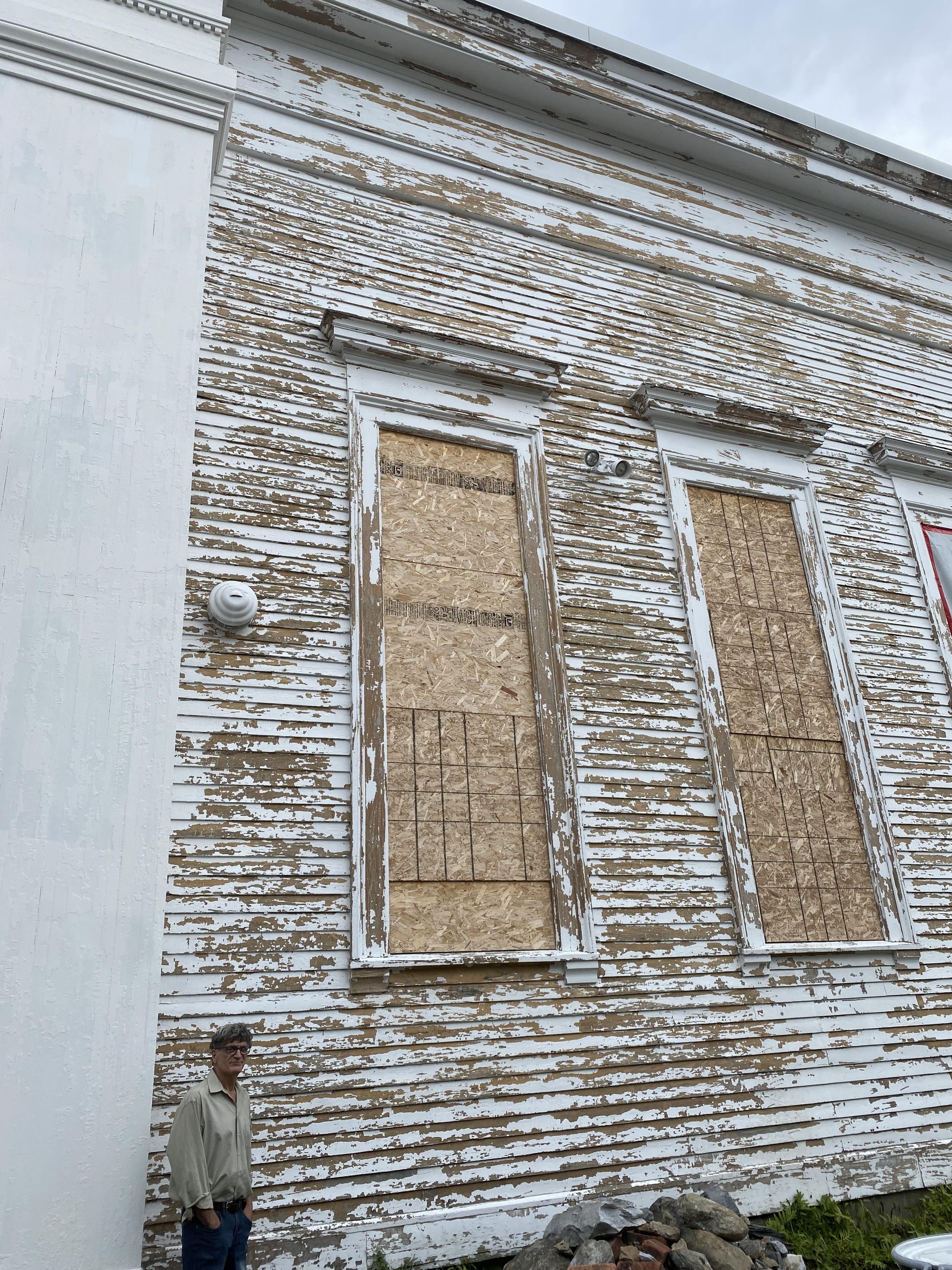
The State Department of Public Safety condemned the building in 1961. A town committee drew a plan that gave up the five-hundred-seat auditorium for ten offices, a smaller upstairs hall and a kitchen.
What paid for it is the thread back to the rest of this site. In 1963, Mrs. Rodney Procter left the town a large bequest for the renovation. 34 Main Street was sold — for $7,500, in 1964 — and town government moved into the Town Hall. The 1839 Townhouse at the back was fitted out for the Police Department and the Assessors, and the upstairs meeting room was named Procter Hall.
Rodney Procter is the son who wanted the farm: Harley Thomas Procter bought Orleton Farm in 1901 and it passed to Rodney, and from Rodney to his daughter Hope. The timeline names only “Mrs. Rodney Procter,” and this page does not go further than that — the identification with the Orleton family is near-certain on the name and the period and has not been checked against a will.
VI. Cell number two
The police station in the back of the 1839 Townhouse has a second life in the record. On Thanksgiving 1965, two local young men, Arlo Guthrie and Rick Robbins, spent time in cell number two after being arrested for littering. The song came in 1967; Arthur Penn filmed the adaptation on location in 1969, and the entrance to the 1839 Townhouse is in it.
In 1971 Norman Rockwell painted Springtime in Stockbridge for Look, with the Town Hall, the First Congregational Church and the Children’s Chime Tower in it, and himself and Mary on their bicycles. Rockwell had already photographed town officials at work in the 1950s, and those pictures are the reason the cramped offices became a subject at all.
VII. Empty
Town government left for the renovated Plain School at 50 Main Street in 2007, and what it left behind took the name Old Town Hall. A Reuse Committee sat in 2008 and found that putting the big room back was not feasible. By 2023 the timeline’s own words are that a next chapter had proven elusive, and that an empty building’s days tend to be numbered.
VIII. What is there now
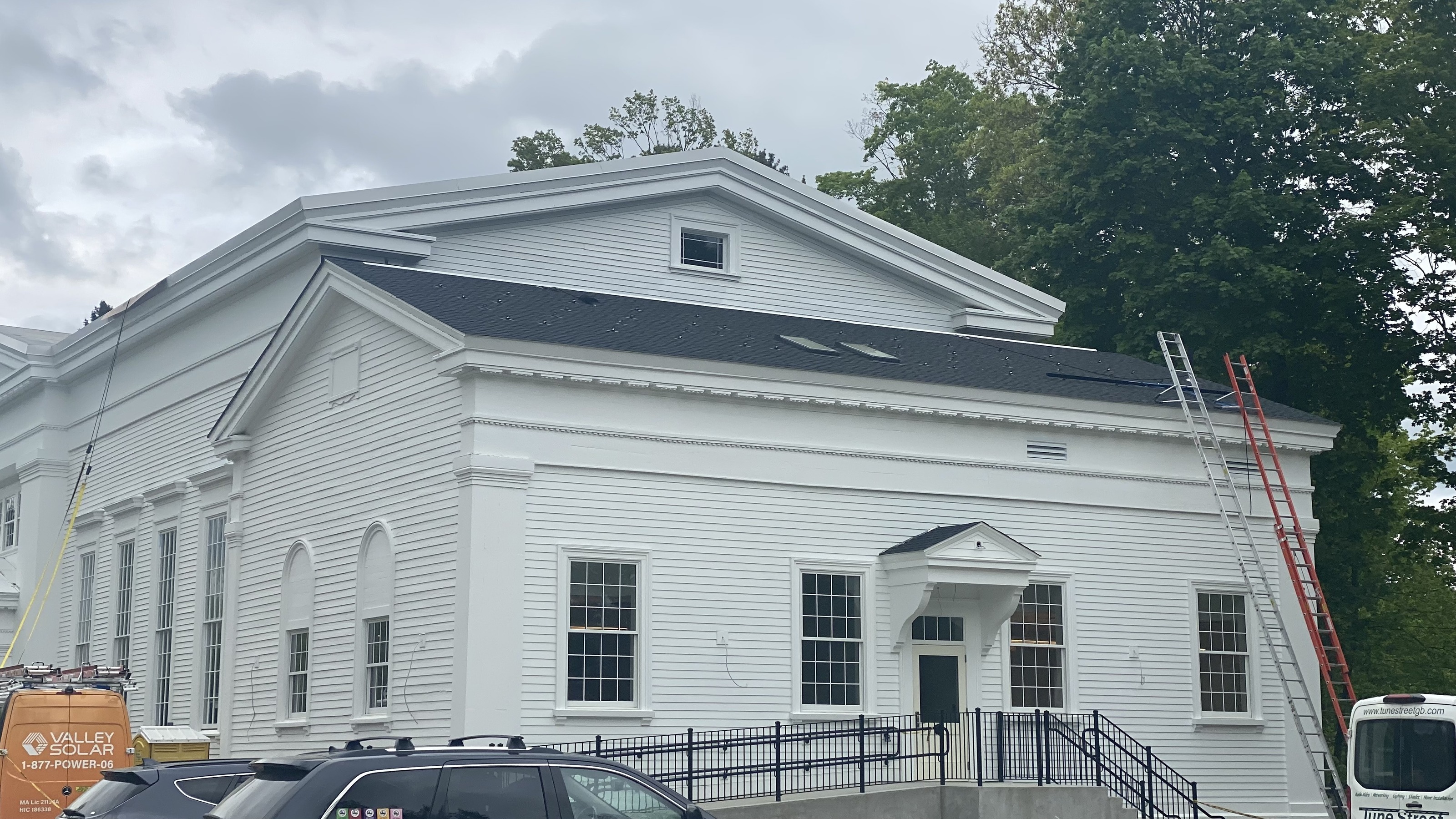
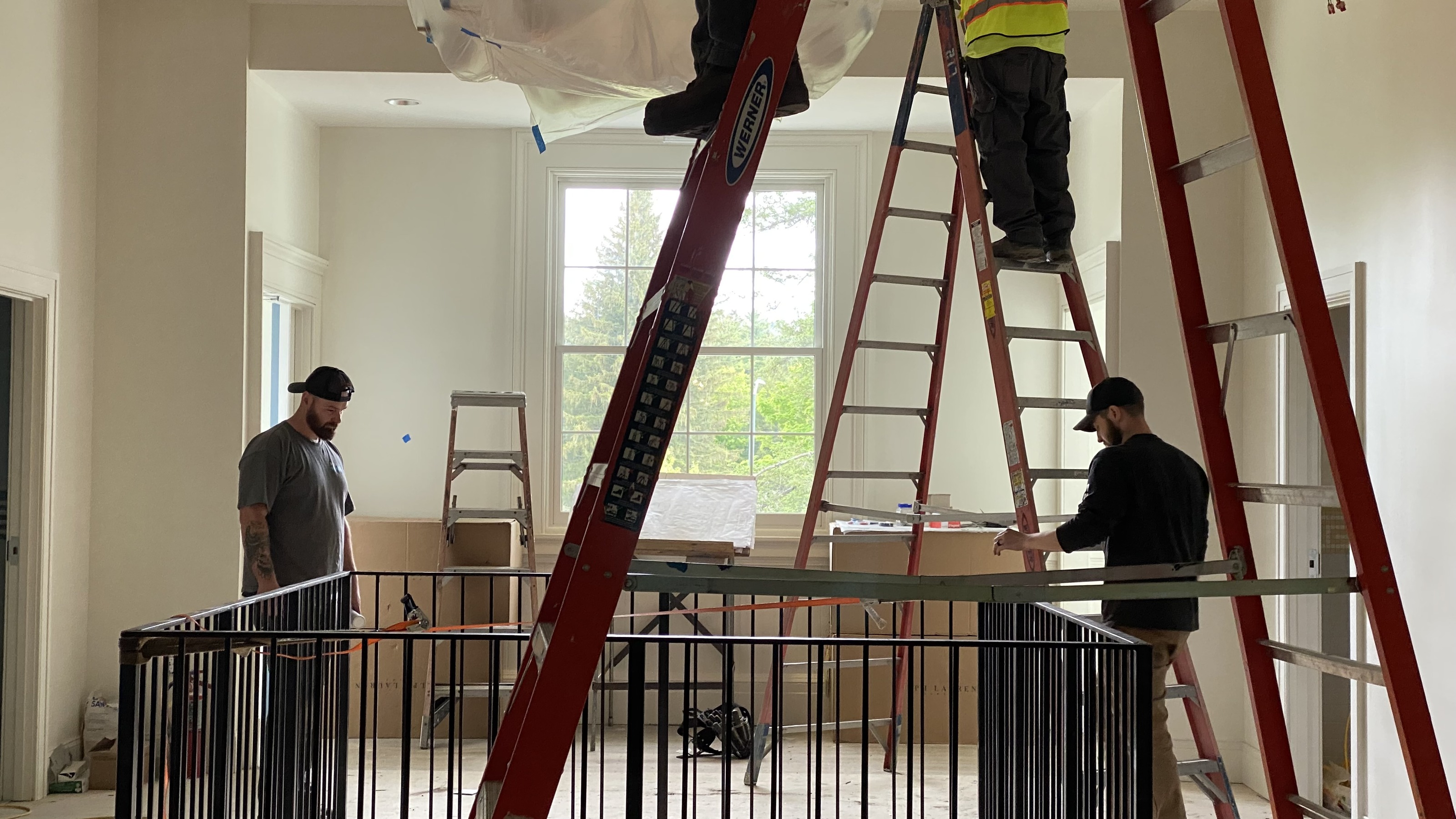
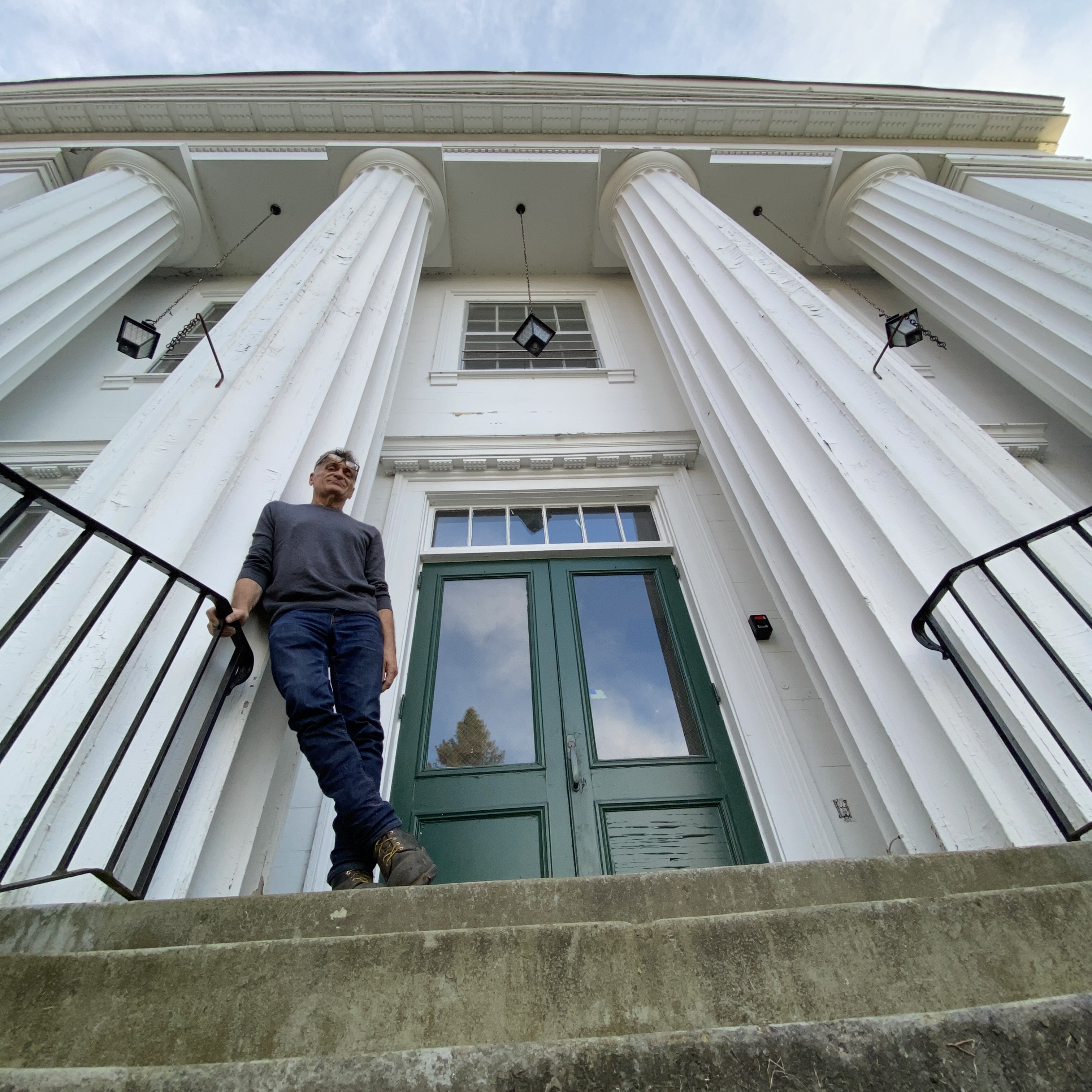
Berkshire Waldorf High School, which had rented space in Stockbridge for more than ten years, completed the renovation and moved into the building in September 2025. The timeline gives the arithmetic without softening it: at the 2015 feasibility stage the renovation was costed at $4 million, raised from nearly a hundred Berkshire County donors and the Stockbridge Community Preservation Committee; after the pandemic and the rise in construction costs the figure reached $7.5 million.
Two sentences are printed on the chart as epigraphs, and they are the argument for the whole of this site as much as for that building. Mary Flynn: “I like to see older things preserved because we lose the ambiance of the town if we lose them.” Carole Owens: “Our buildings are the repositories of our history.”
Mary Flynn was elected to the Select Board in 1978 and taped a line to the back of her nameplate at the selectmen’s table: “Oh Lord, help my words to be gracious and tender today for tomorrow I may have to eat them.”
IX. The sequence
A capital and a burial ground. A meeting house, with two Mohicans on the first board. A townhouse on leased church land. A fire. A building turned east and moved south and swallowed by a bigger one. A condemnation. A bequest from a farm four miles up the road. A jail cell that became a song. An empty building. A school.
One parcel of Main Street, and every government the town has had has sat on it.
Sources
Disclosure: Patrick White, who writes this site, is the chief financial officer of Berkshire Waldorf High School, which owns and occupies the building this page is about, and was a member of the Stockbridge Select Board. Readers should weigh the page accordingly. The dates, figures and quoted passages in sections II to VIII are taken from “A Brief History of Old Town Hall,” the timeline chart prepared for Berkshire Waldorf High School in 2025 and reproduced whole above; it is a fundraising document, it names no sources of its own, and nothing in it has been checked here against a town record, a deed, a vote or a newspaper. That applies to the 1839 lease from the Congregational Church, the 1884 offices, the 1902 fire and the insurance sums, the 1904 move and rebuilding, the 1961 condemnation, the 1963 Procter bequest and the naming of Procter Hall, the 1964 sale at $7,500, the 1965 arrest, the 2007 move to 50 Main Street, the 2008 Reuse Committee, the September 2025 occupation and the $4 million and $7.5 million figures. The claim that this ground was the Mohican capital and burial place is the chart’s. That Capt. John Konkapot and Aaron Umpachene sat as selectmen at the first town meeting on 11 July 1739, and that the township then held six English landowners against fewer than fifty Mohicans, is from Carole Owens, “Stockbridge, one step from Heaven,” The Berkshire Edge; the 1737 charter’s provision for four English families is noted by the Bidwell House Museum. The chart gives the board five members; that figure is not used here, and no town record has been consulted for the size of the board. The capital claim is independently made by Franklin Leonard Pope in The Western Boundary of Massachusetts (1886), on which see the page here, but a 2025 chart may be drawing on the same older sources and the agreement of the two is not treated as corroboration. The Mohican removal dates are from the town’s published history, as given on the testimony page. The identification of “Mrs. Rodney Procter” with the family of Orleton Farm rests on the name and the period alone and has not been checked against a will or a probate record. Photographs of the building before, during and after the restoration are by Patrick White. The epigraphs attributed to Mary Flynn and Carole Owens, and the line Mary Flynn taped to her nameplate, are quoted as the chart prints them.