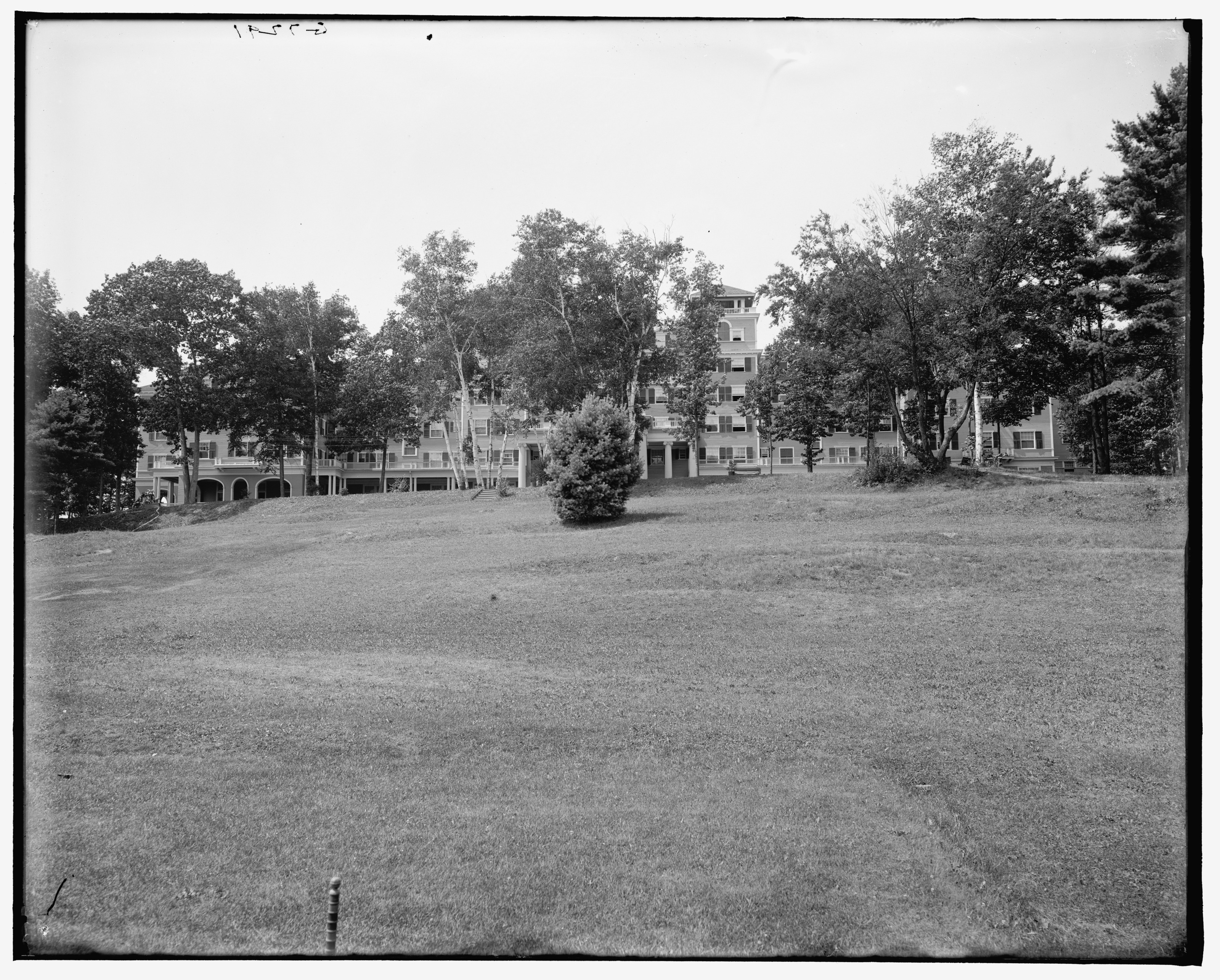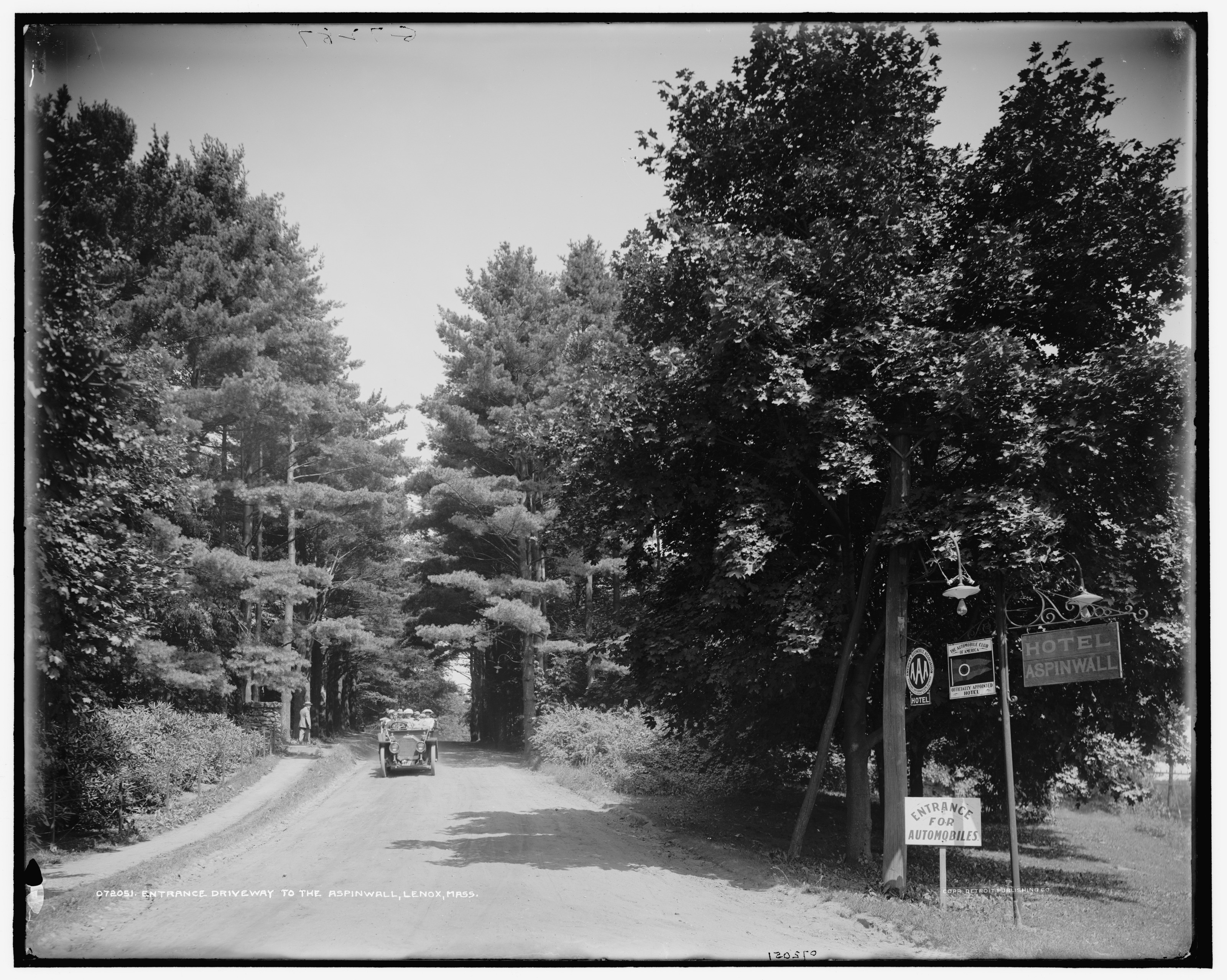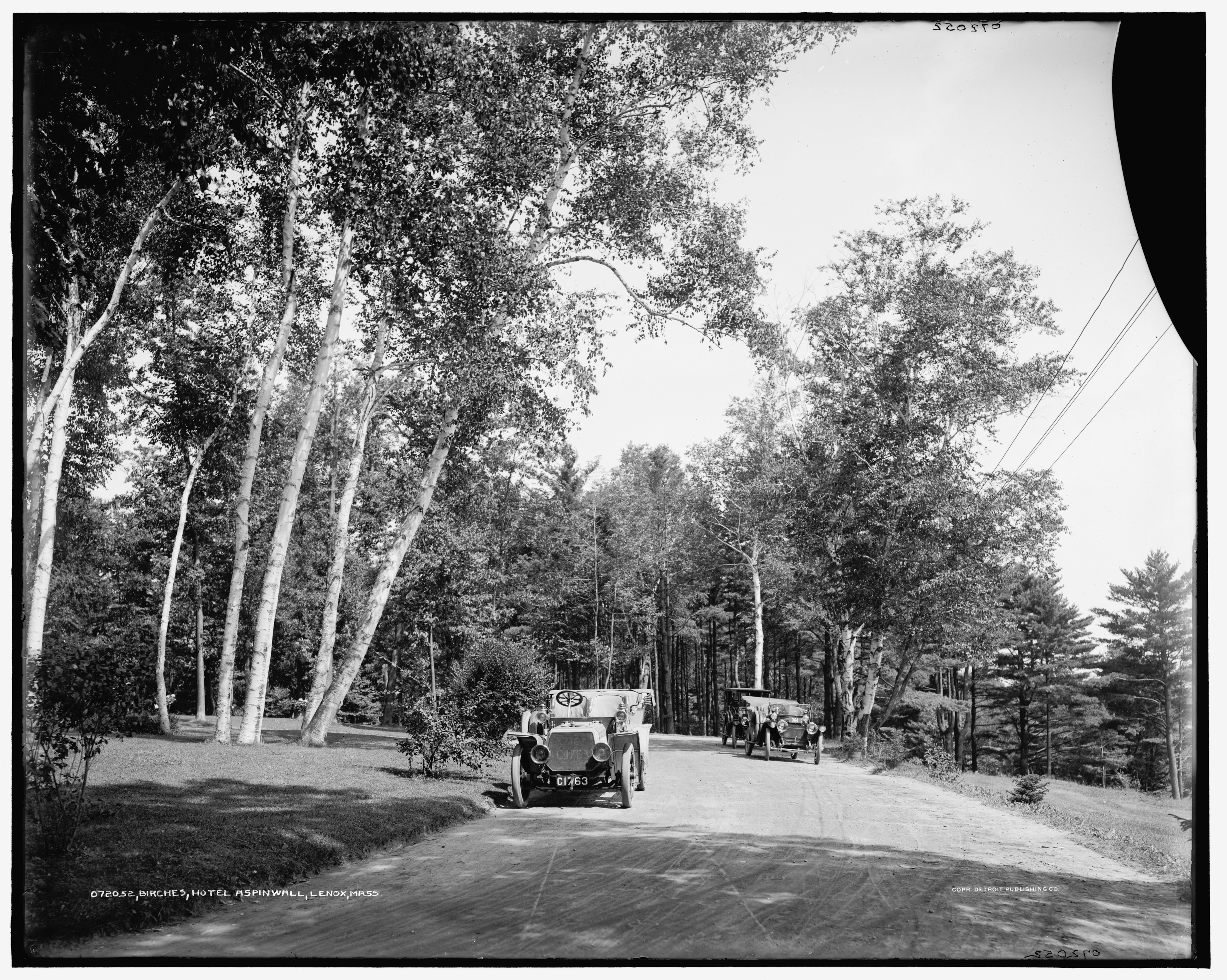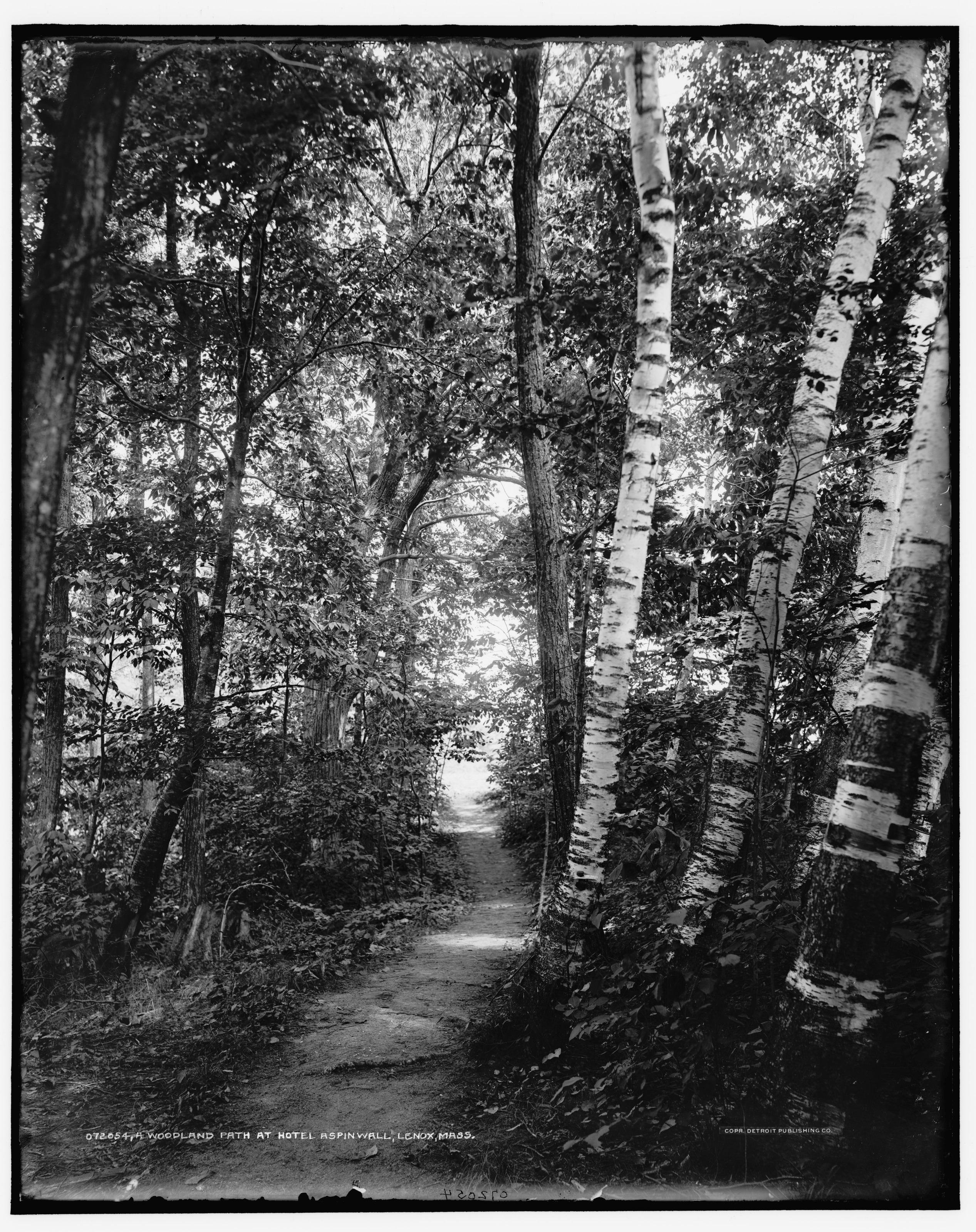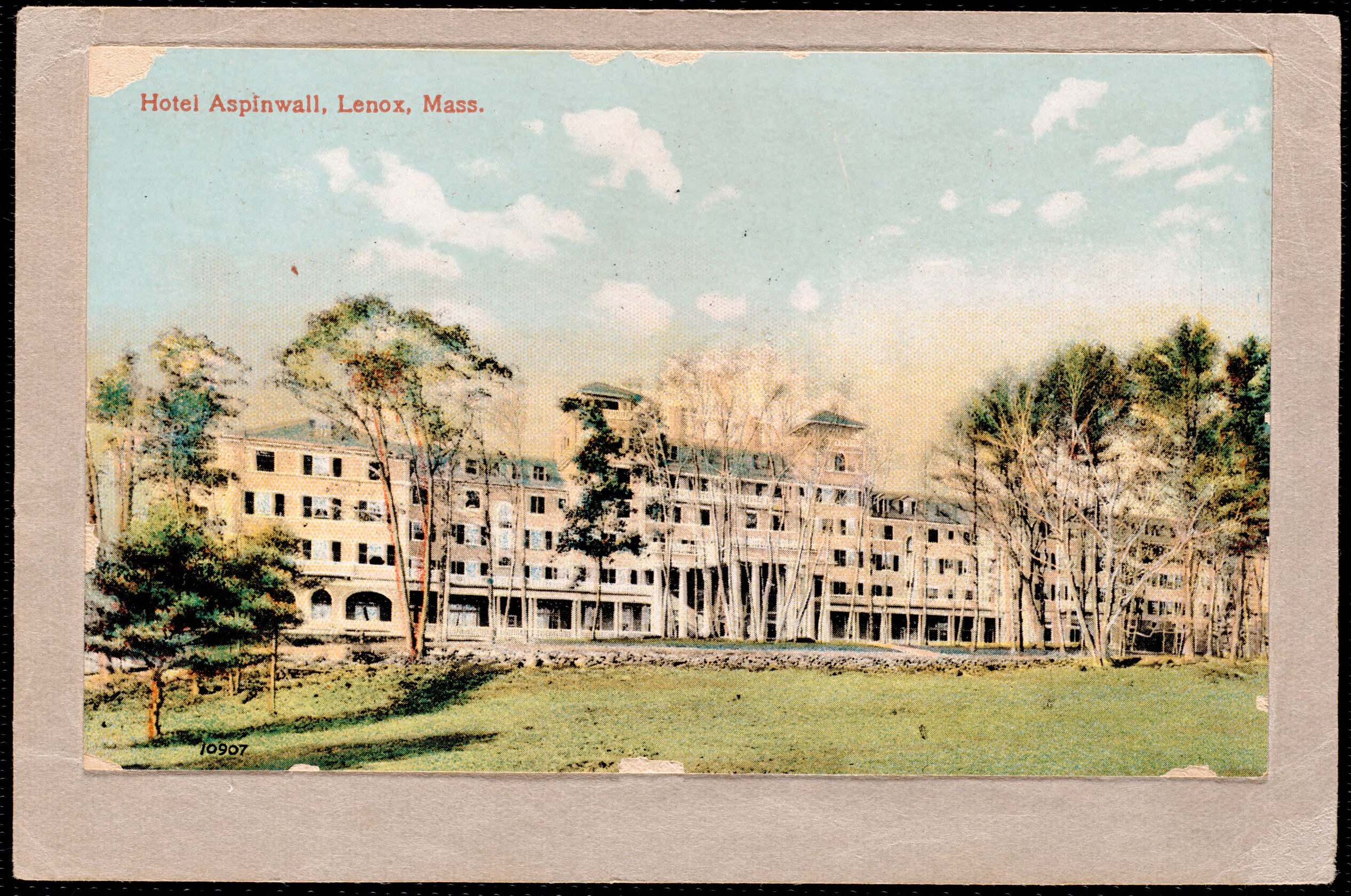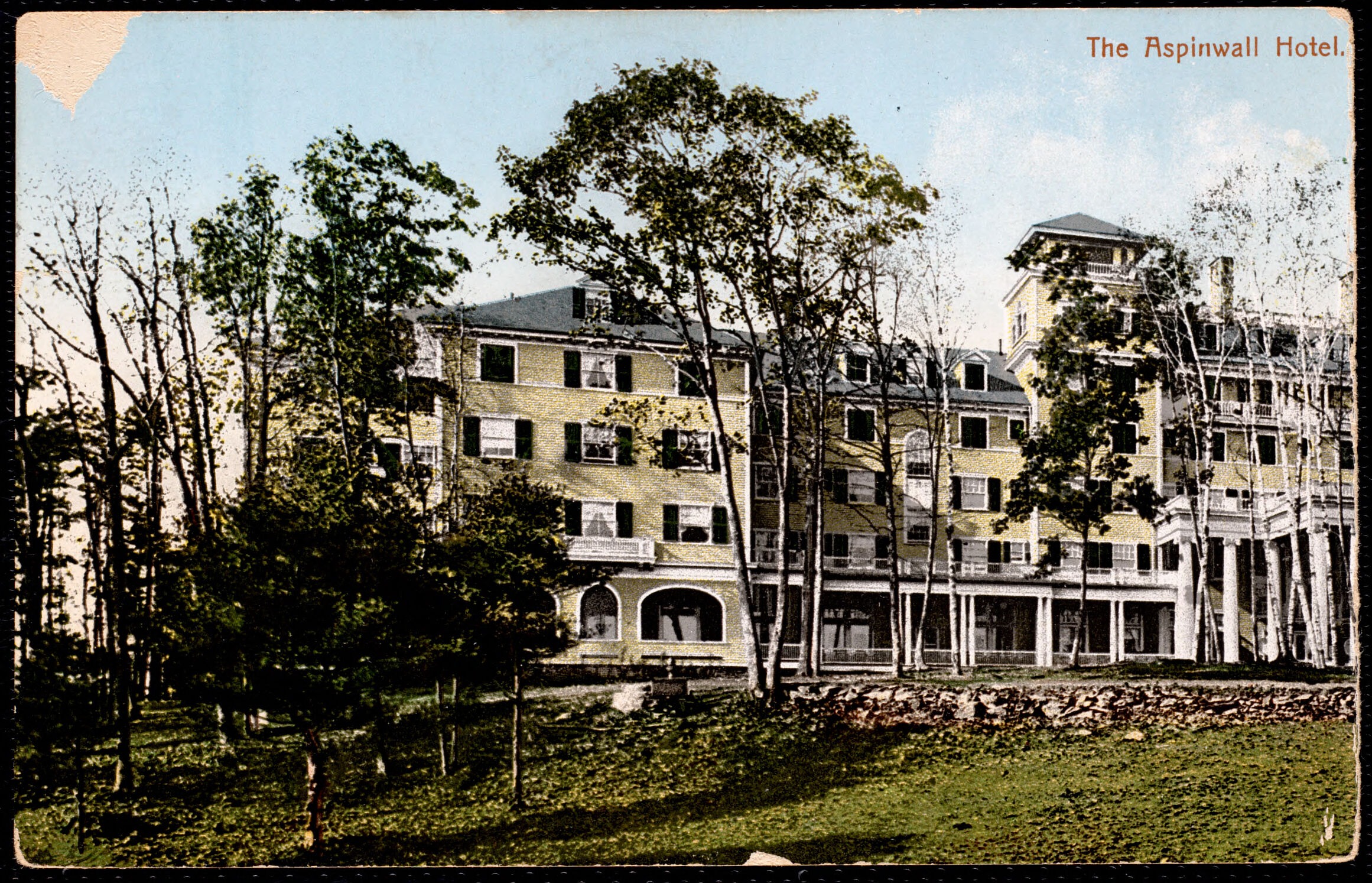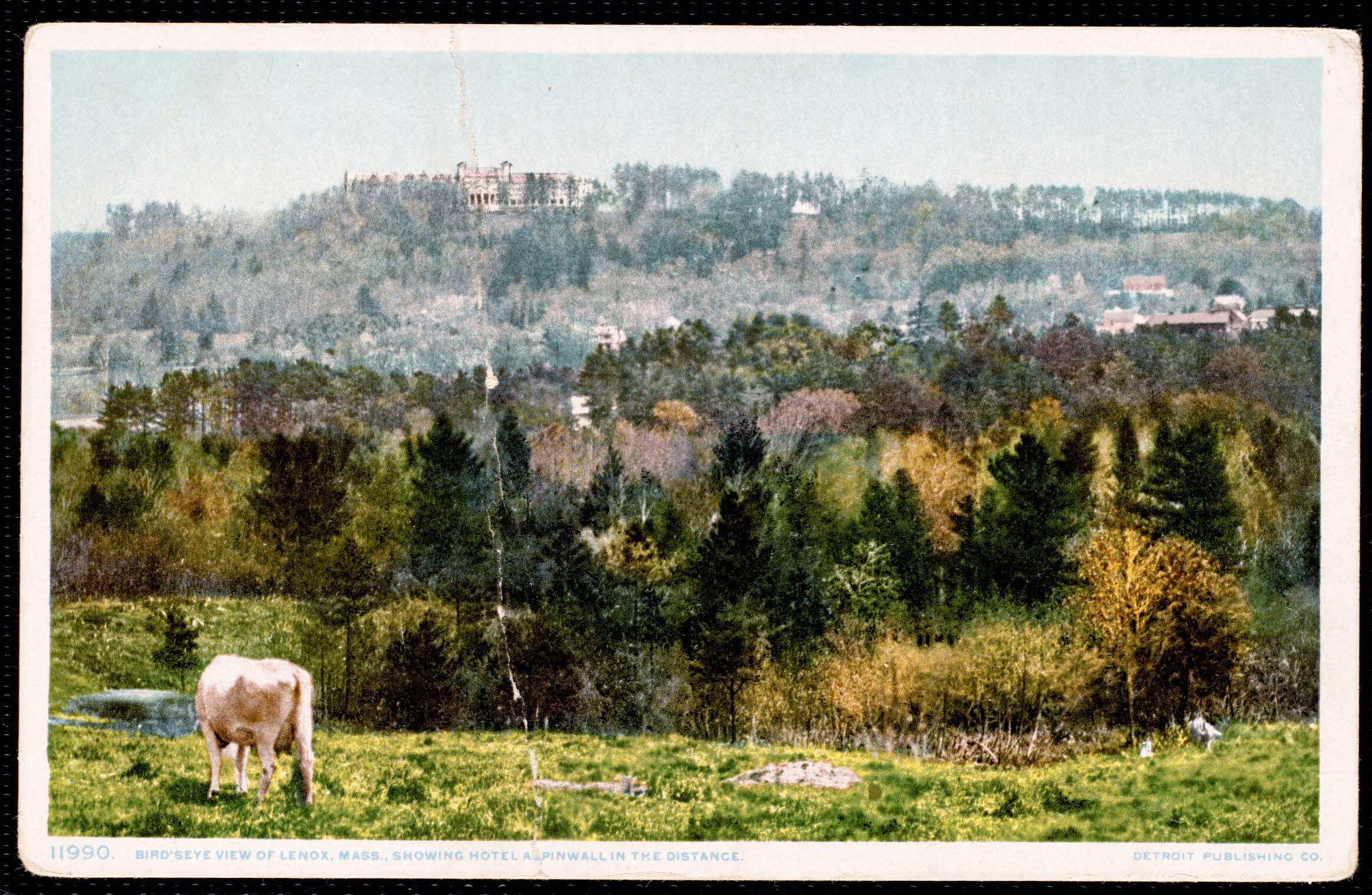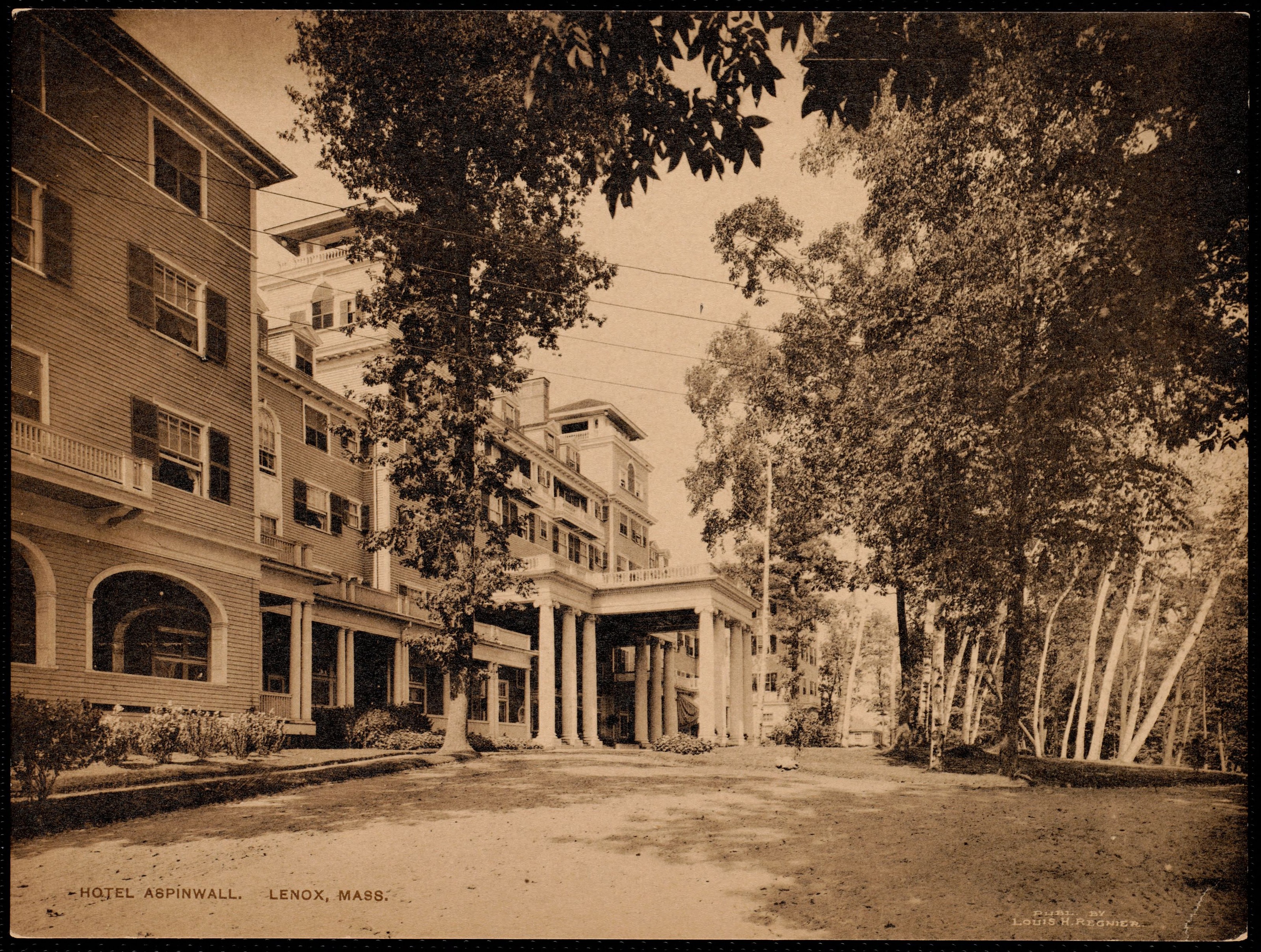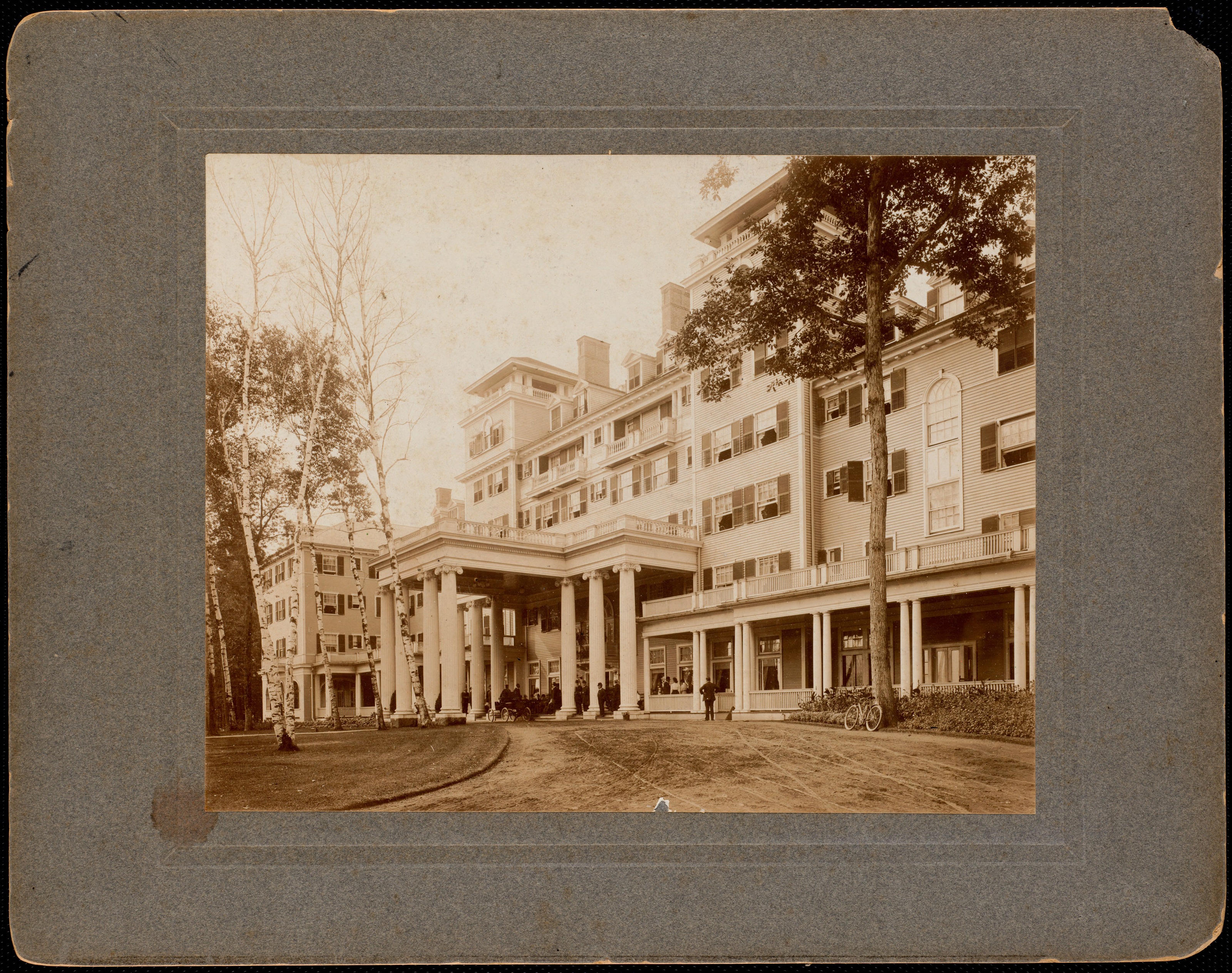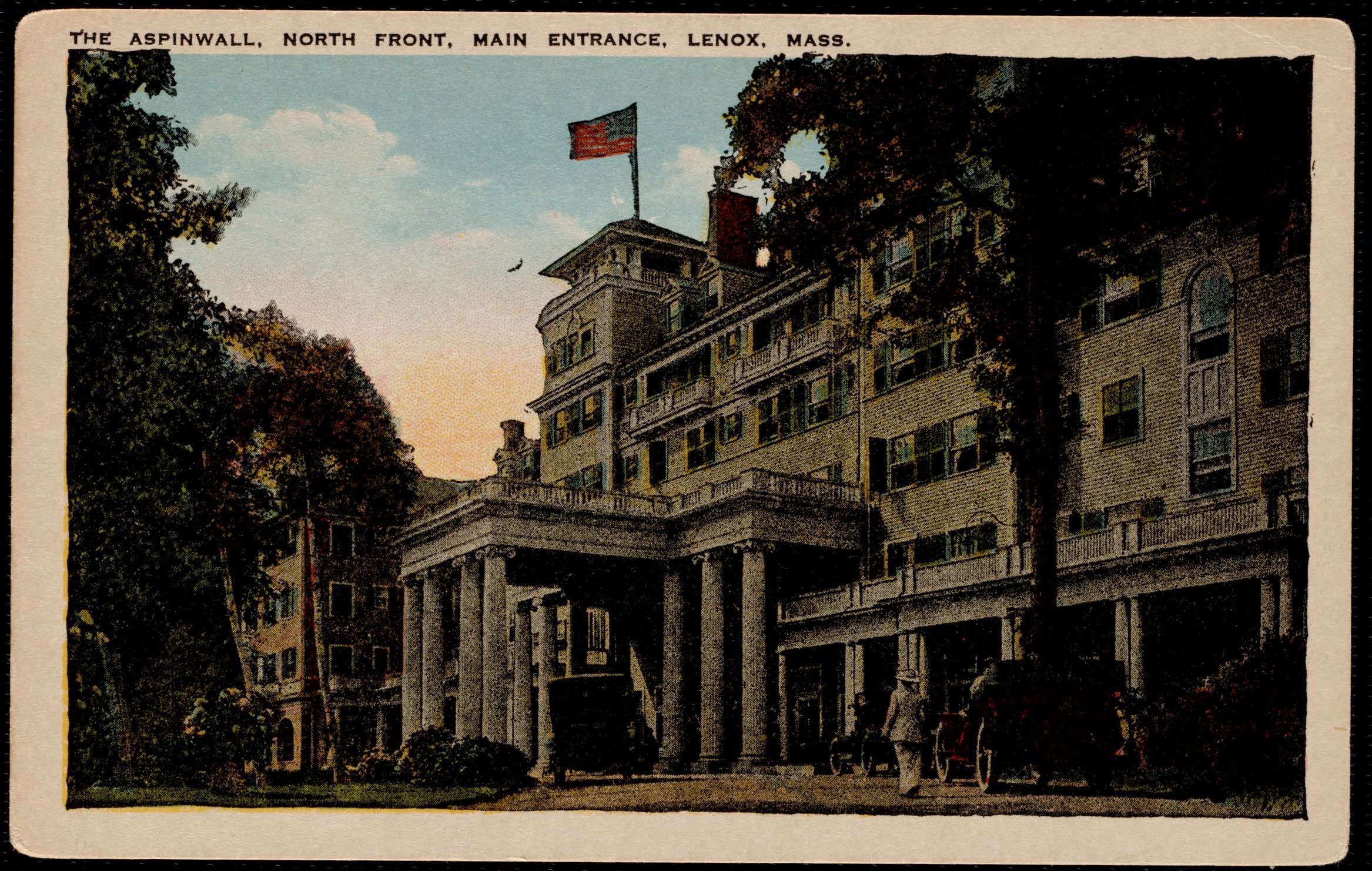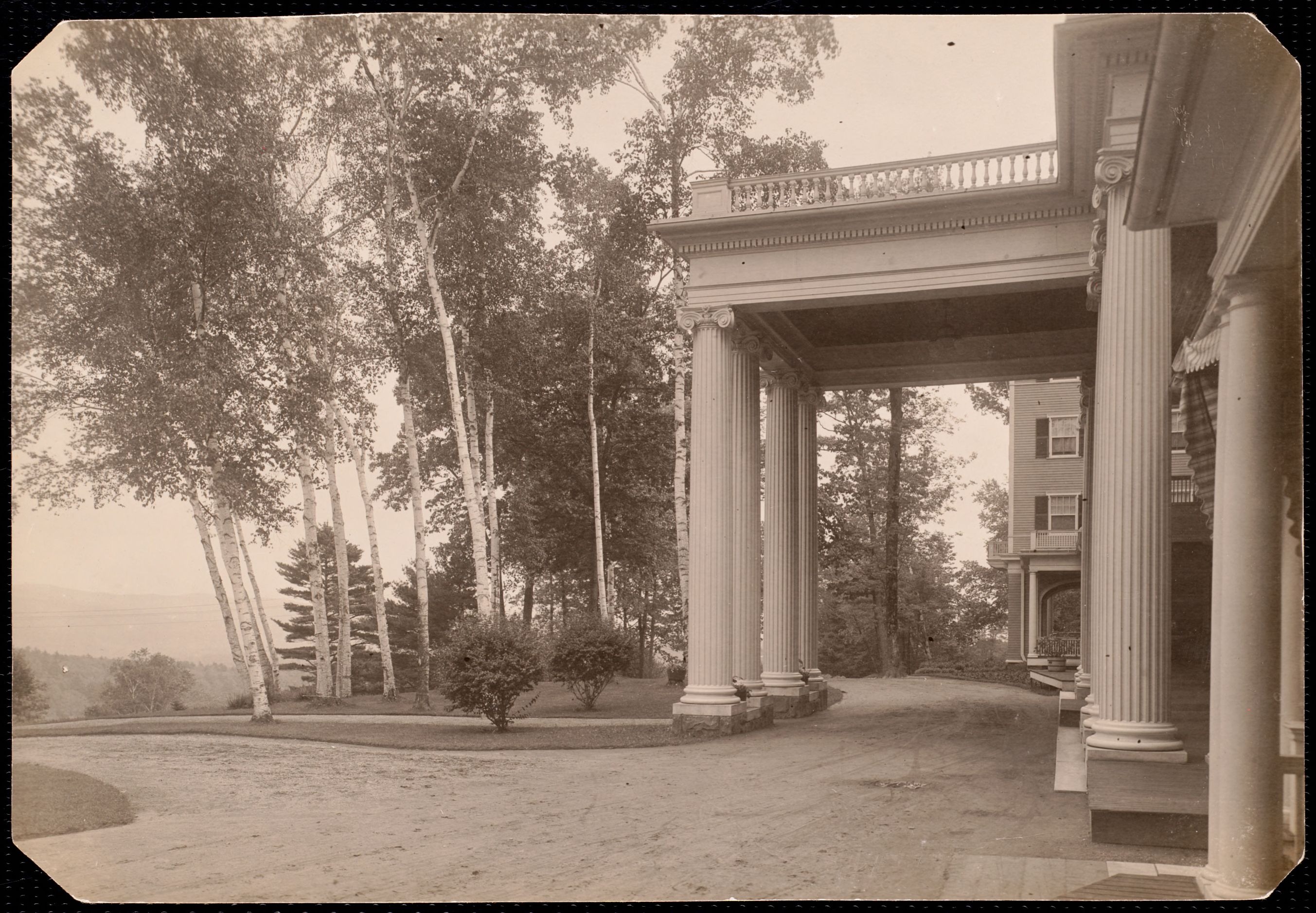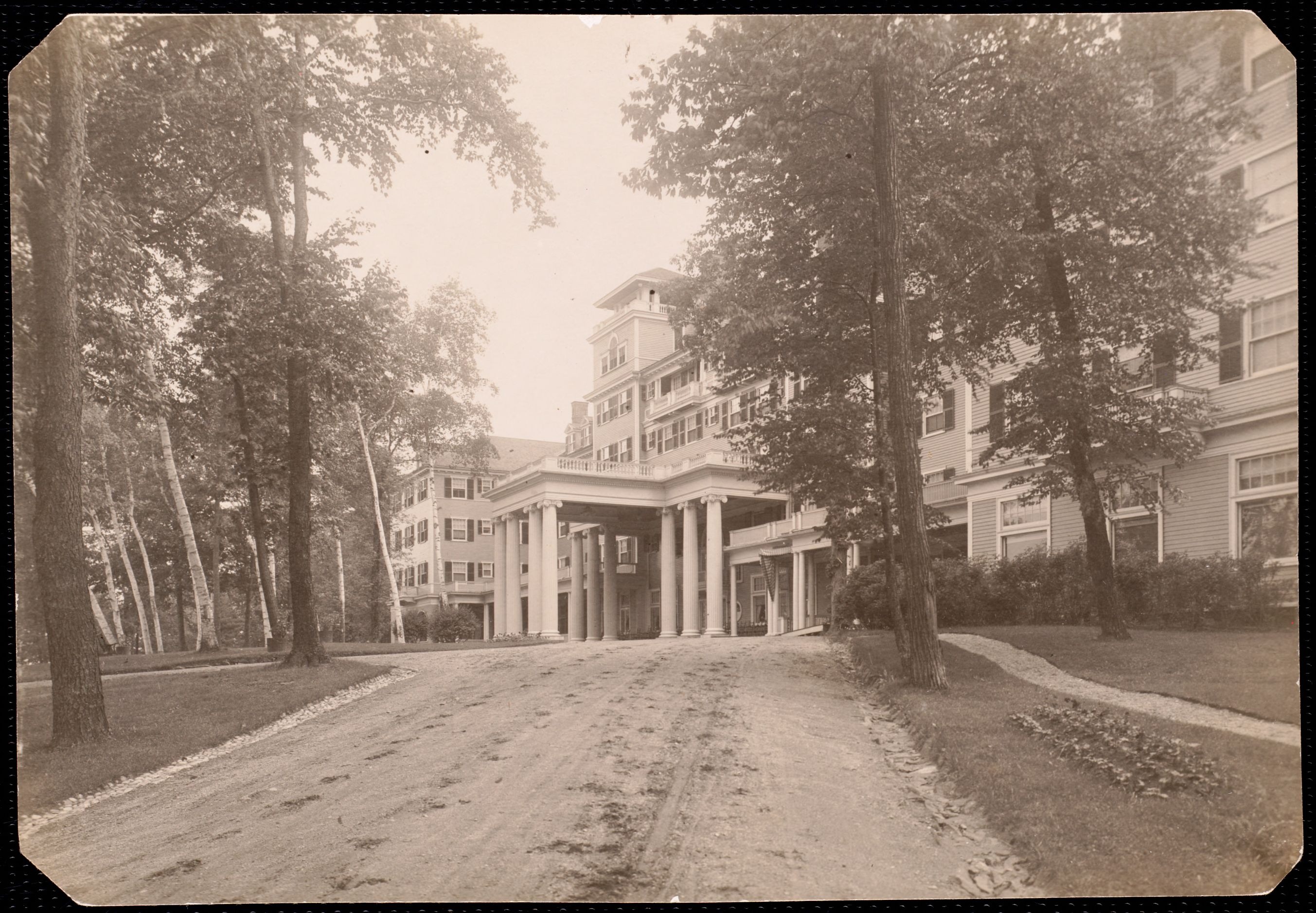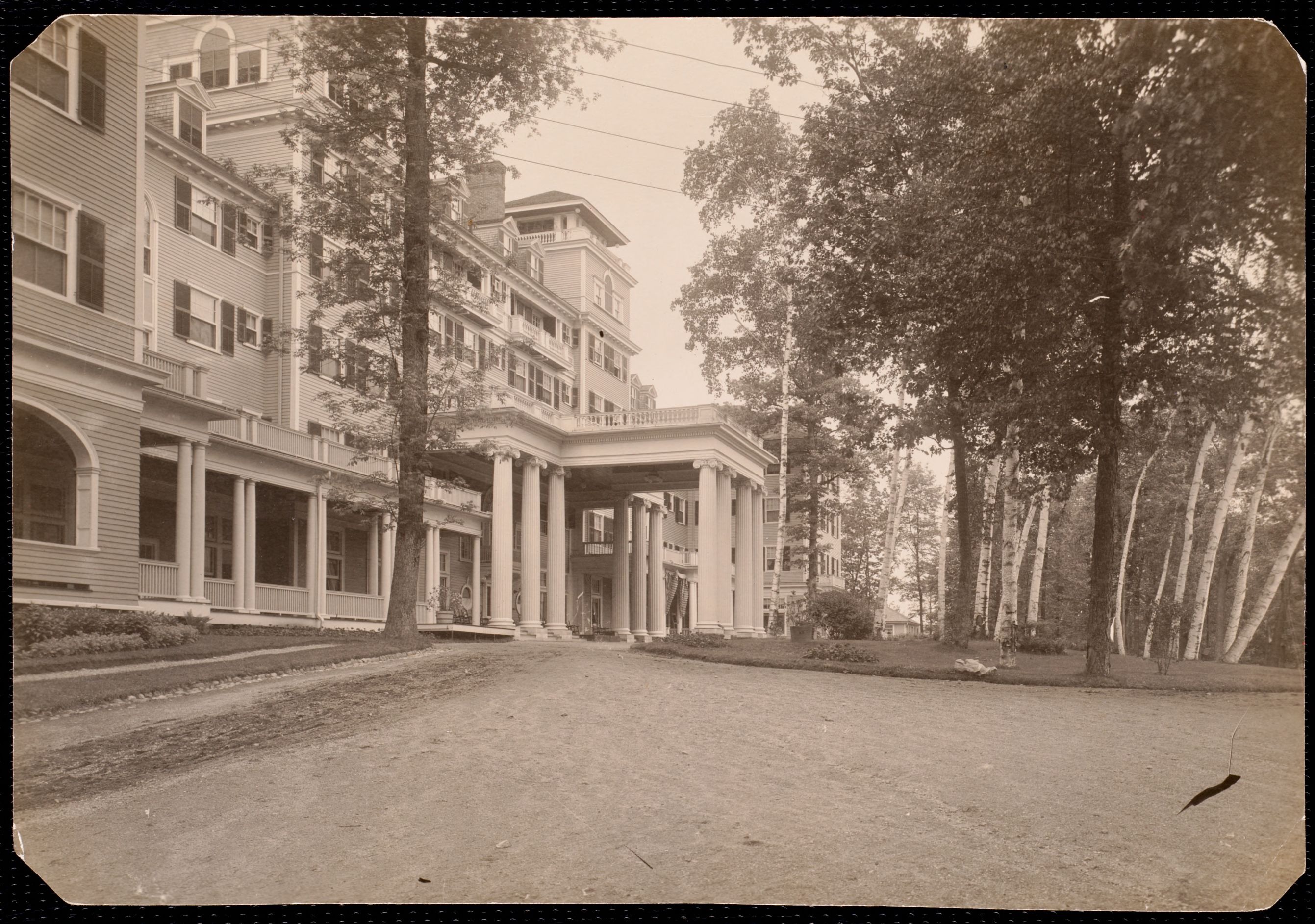
The Berkshire cottages were built so that a few families could be alone with the view. The Hotel Aspinwall was built so that four hundred people could buy the same view by the week. It stood for twenty-nine seasons on the ridge north of Lenox, burned in an hour on an April night in 1931, and is now a town park that most of its visitors walk through without knowing a building was ever there.
I. The name came with the land
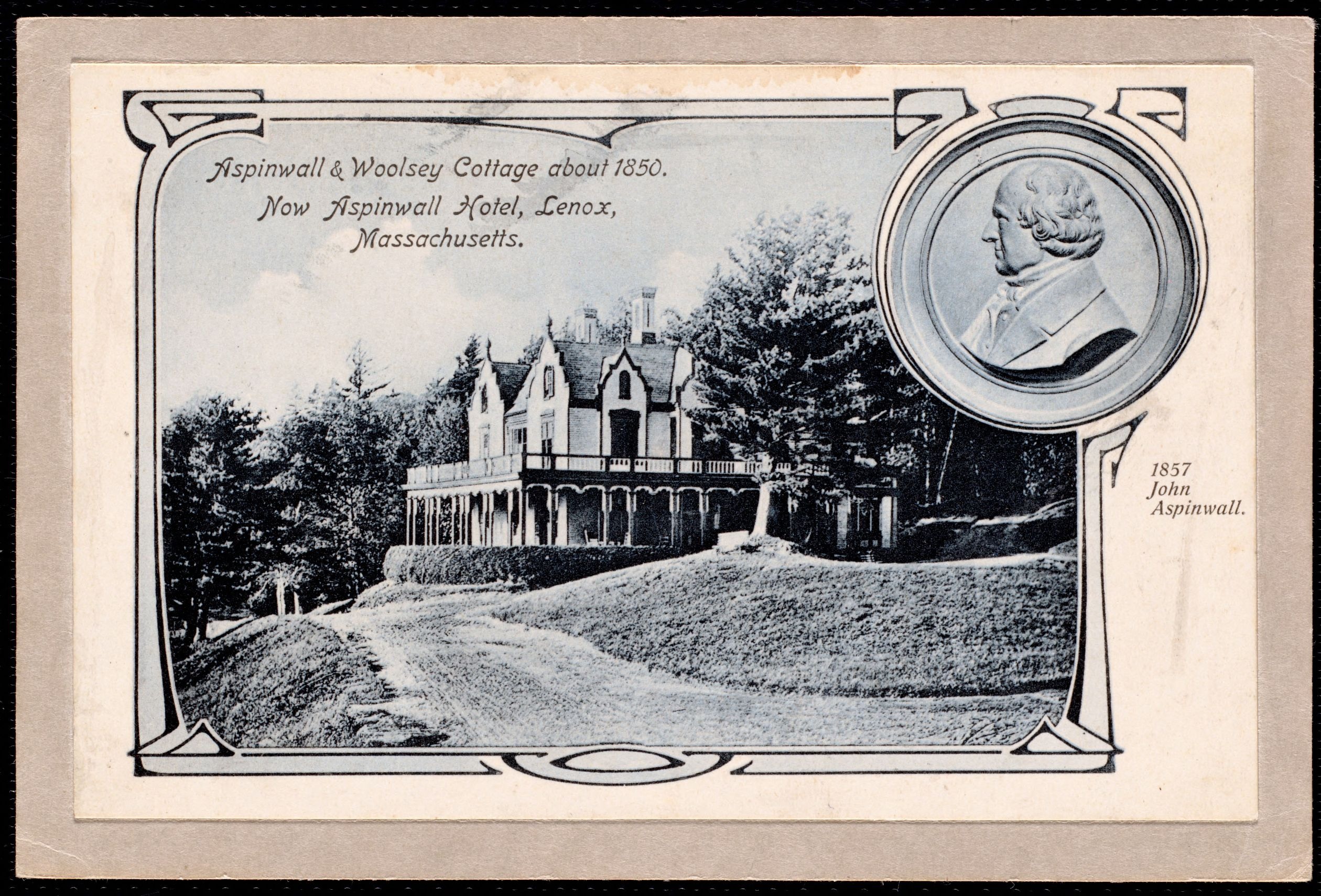
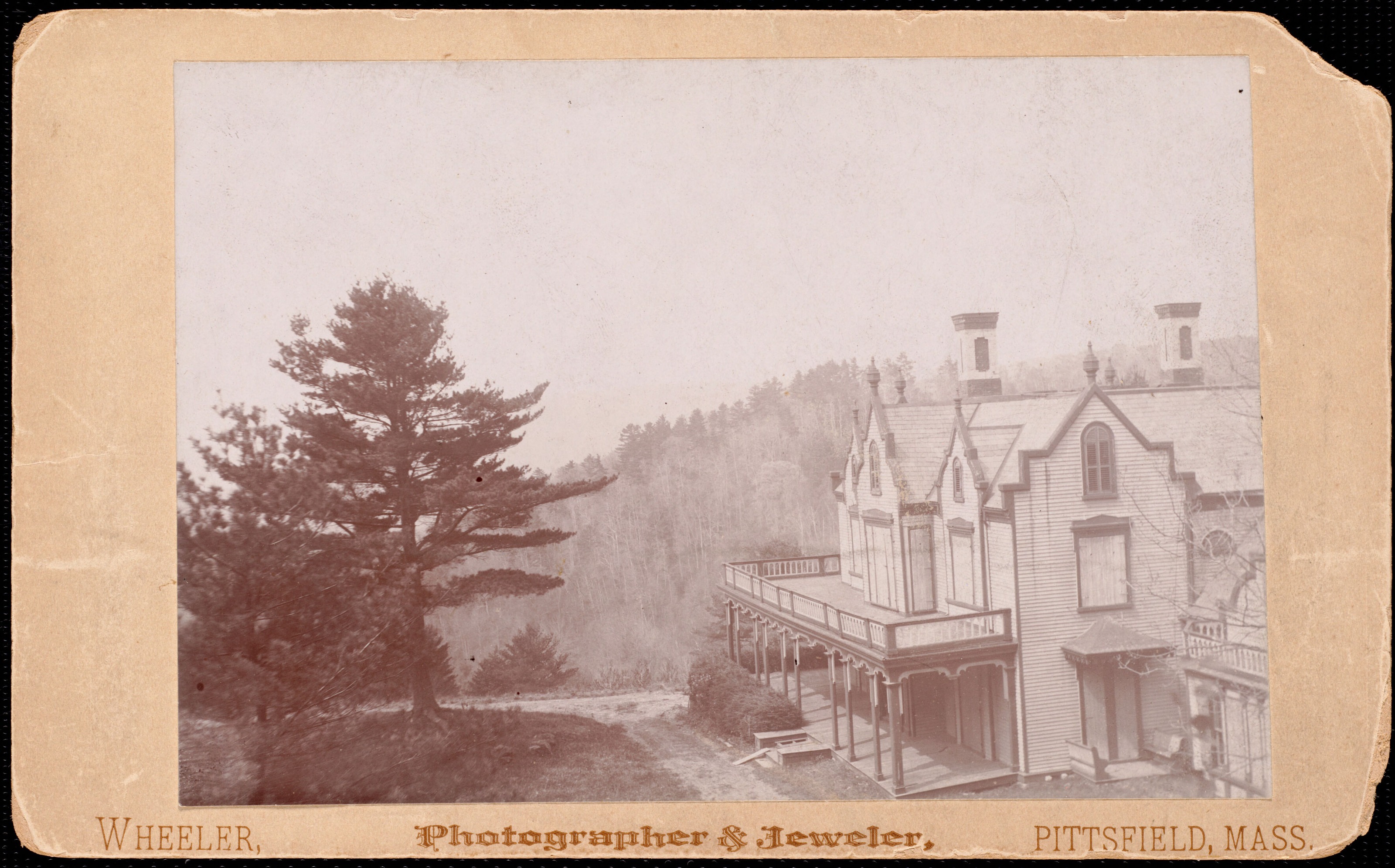
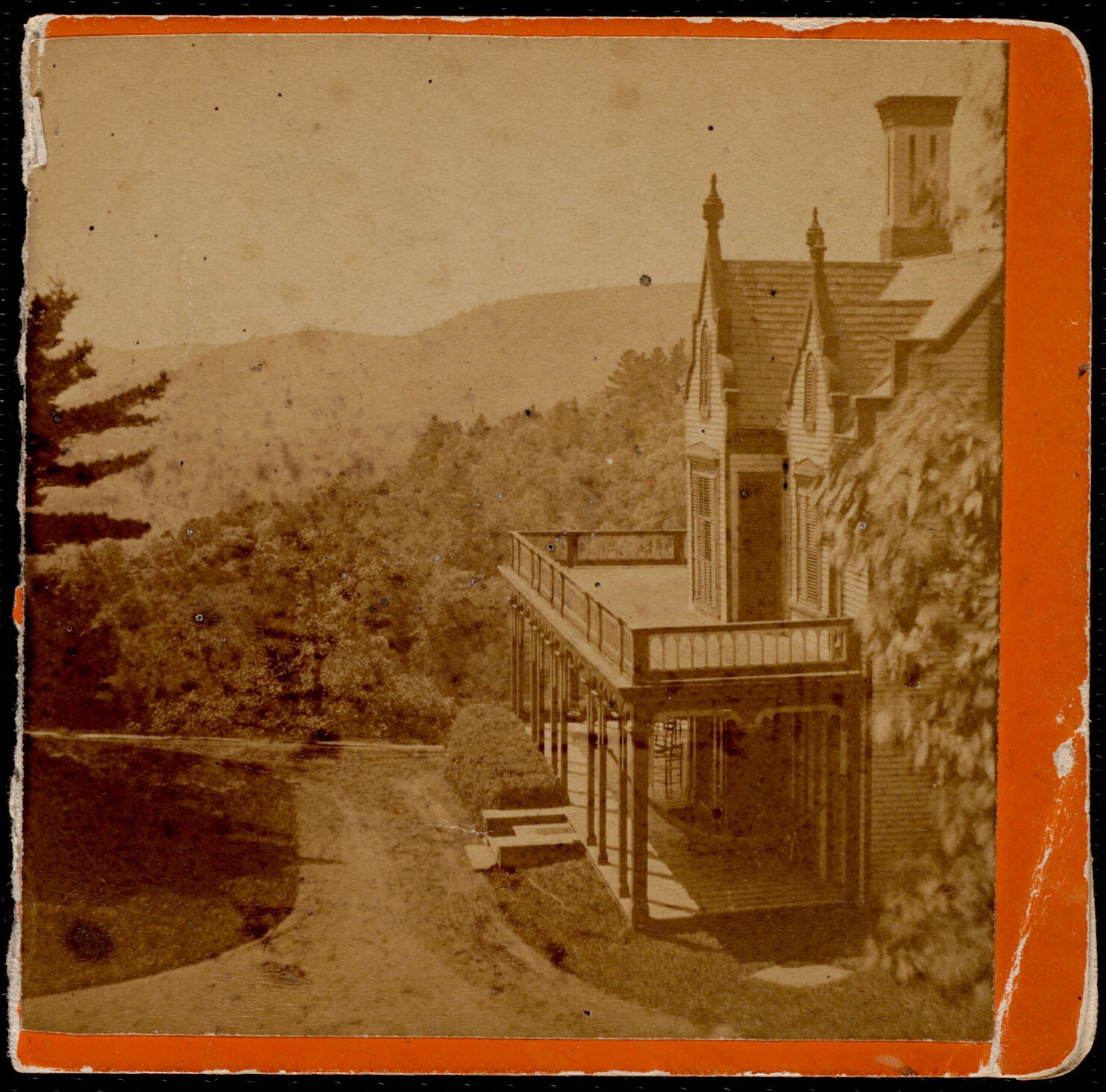
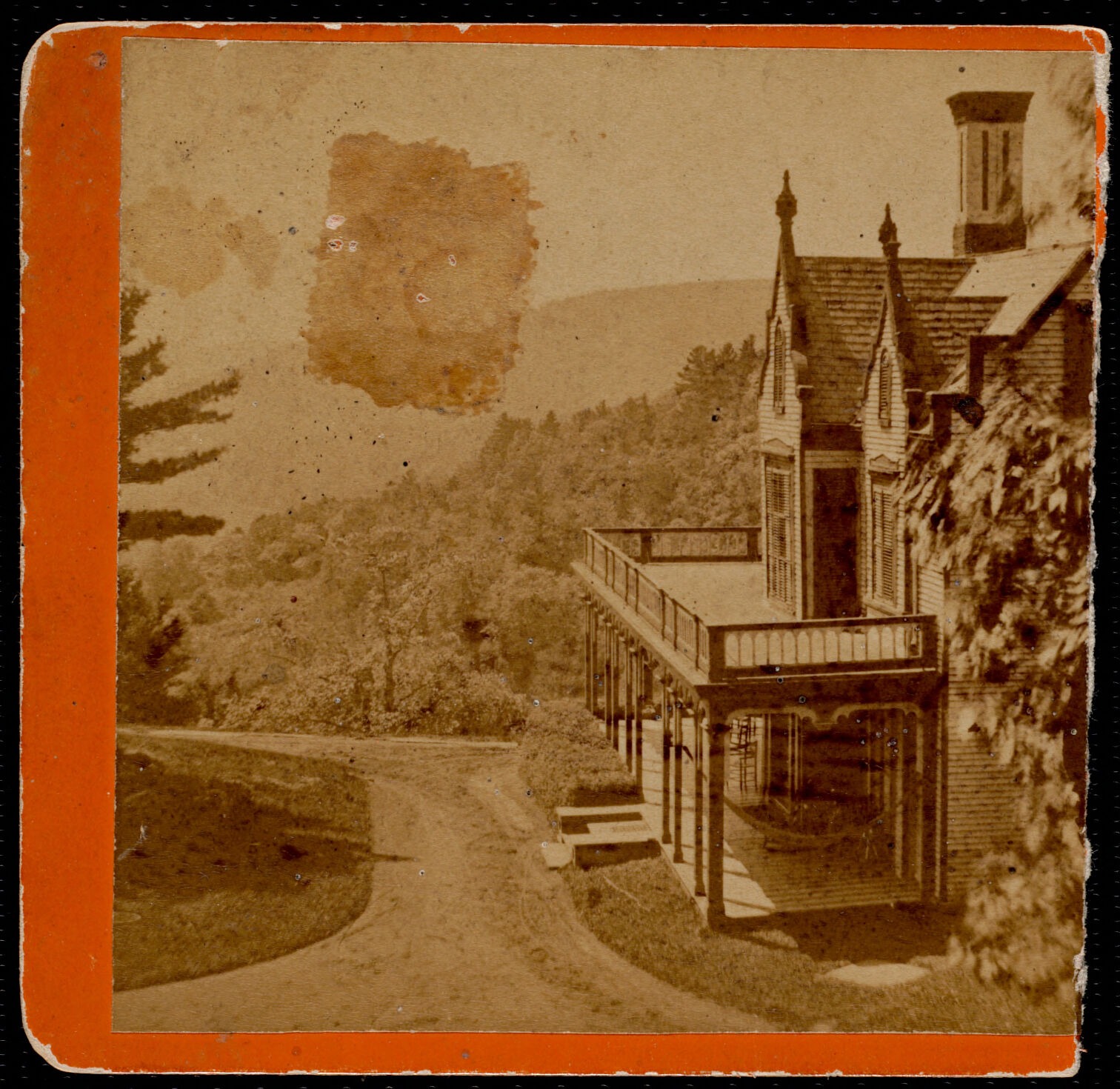
The hotel was not named for the man who built it. A card in the Lenox Library’s collection, printed about 1907, carries an engraving of a gabled Gothic house with the caption “Aspinwall & Woolsey Cottage about 1850. Now Aspinwall Hotel, Lenox, Massachusetts,” and beside it a portrait medallion labeled “1857 John Aspinwall.” Another photograph, catalogued “Woolsey House on Aspinwall property” and dated about 1870, shows the same house from the drive.
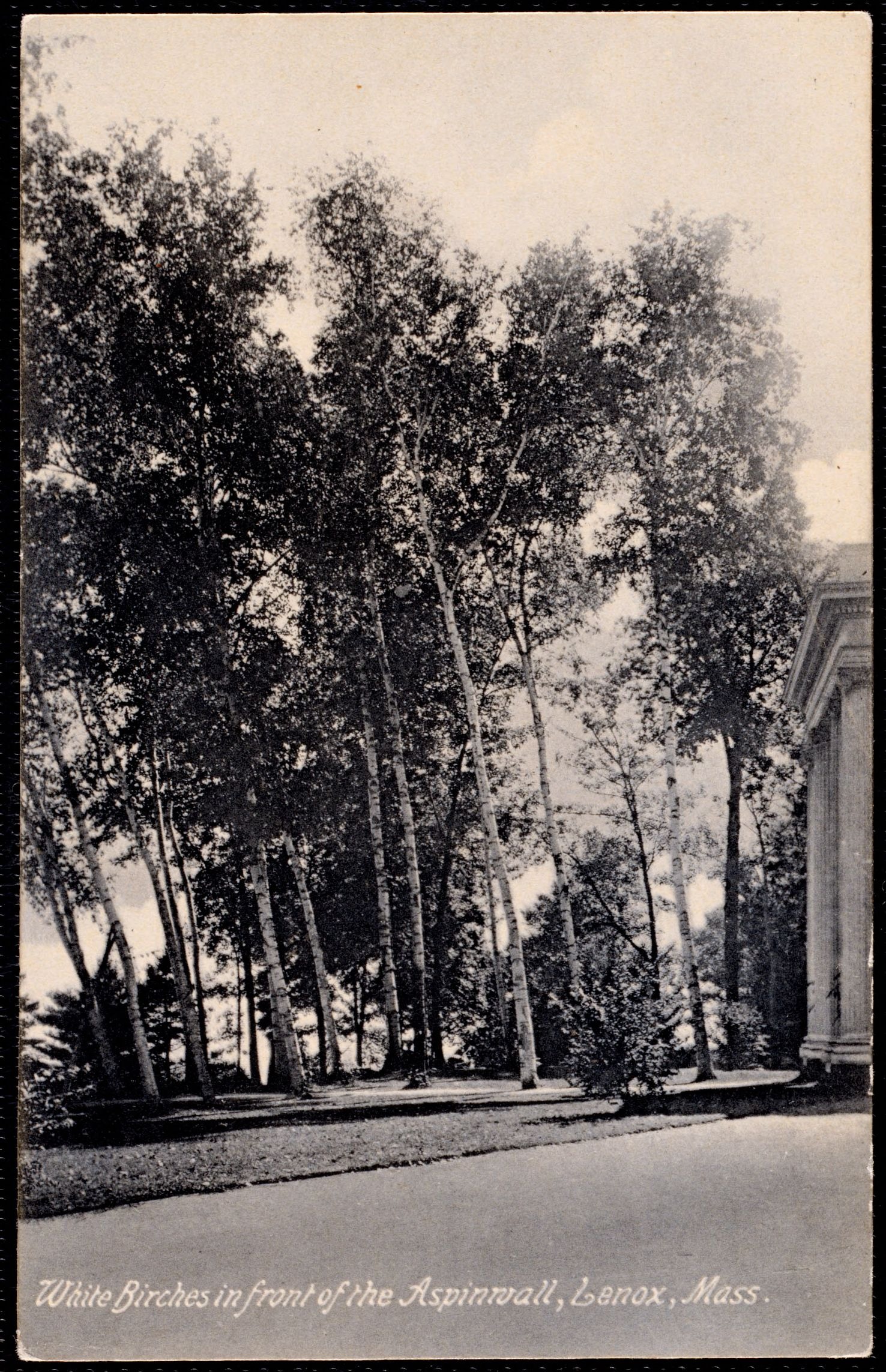
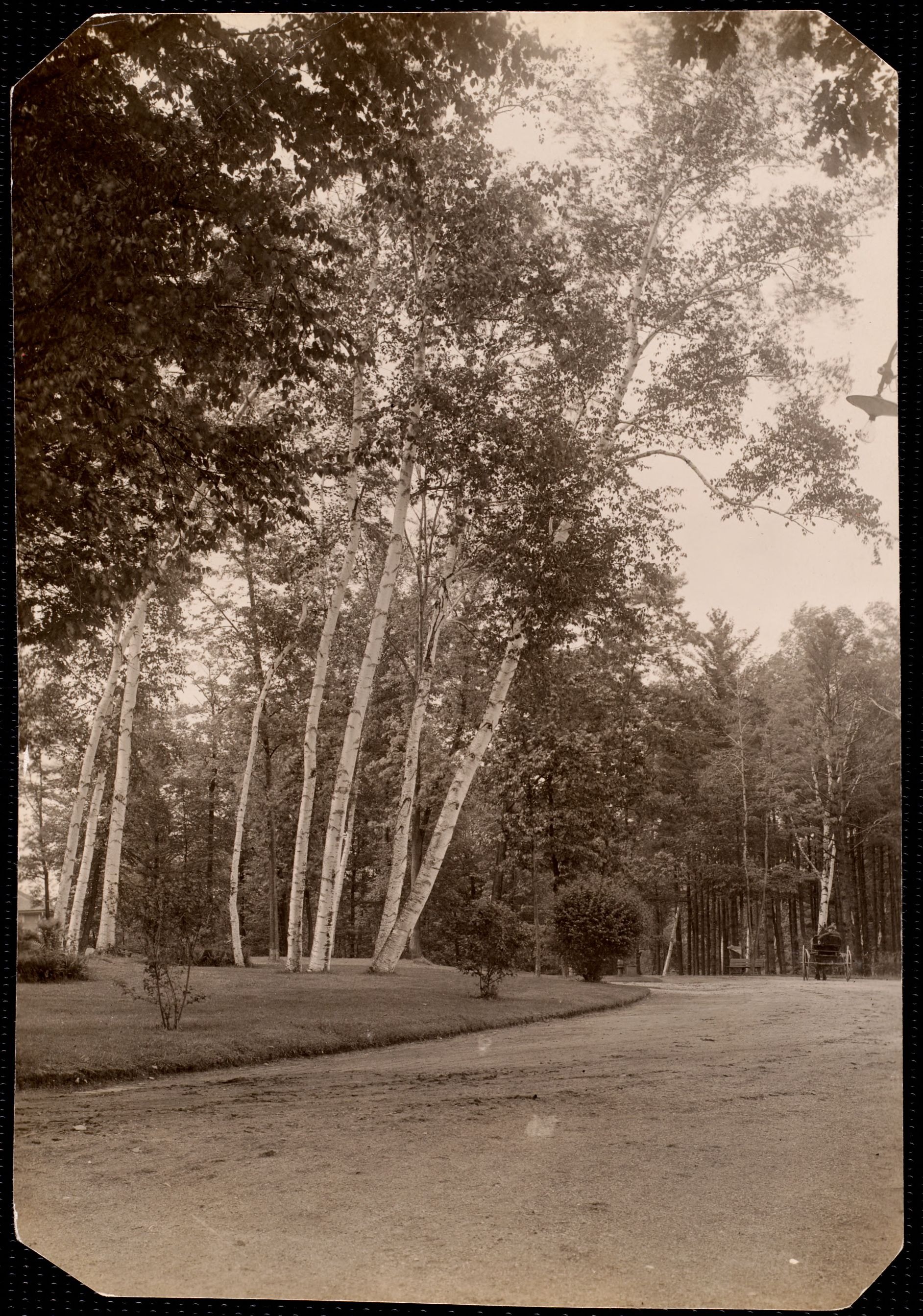
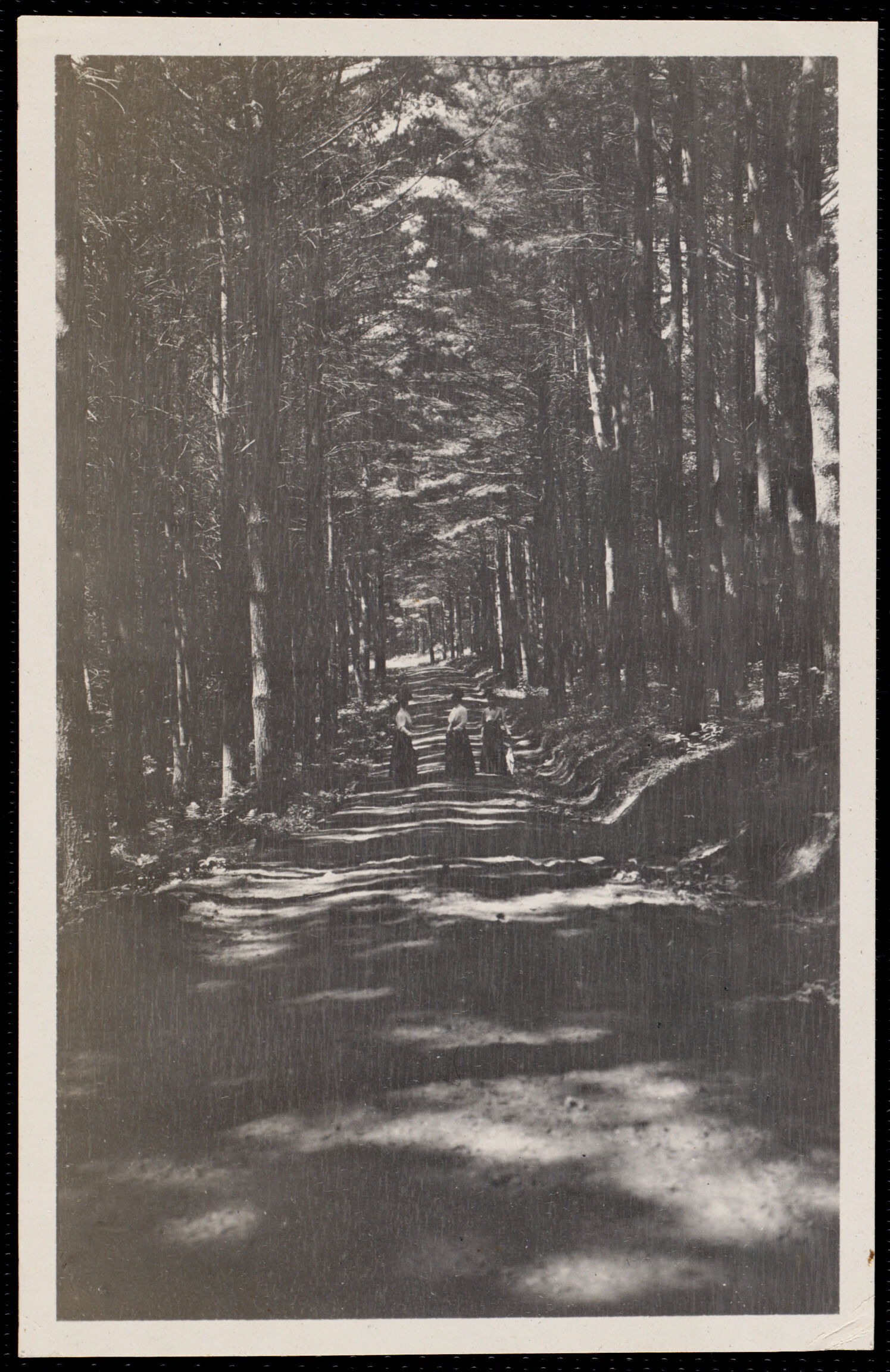
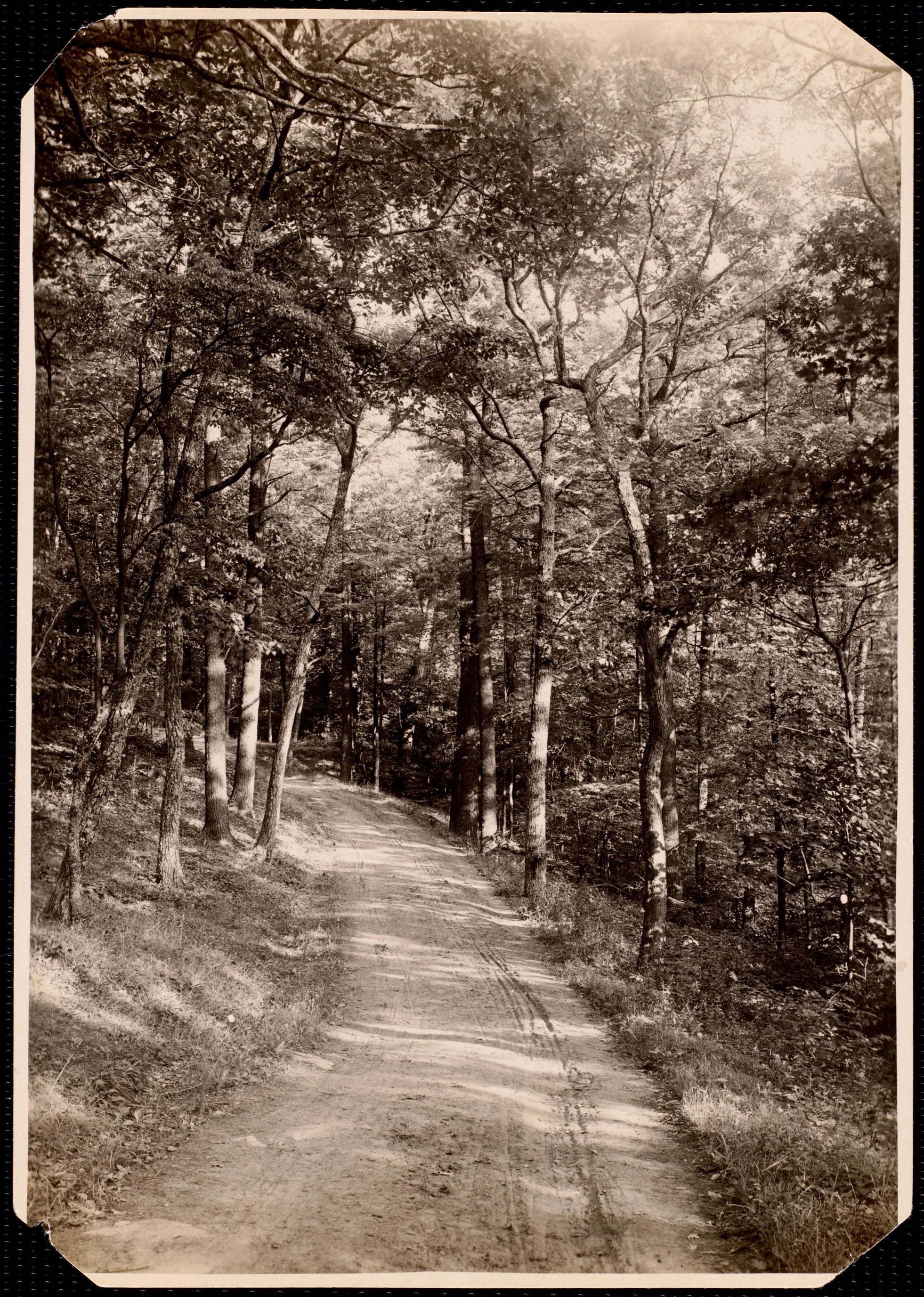
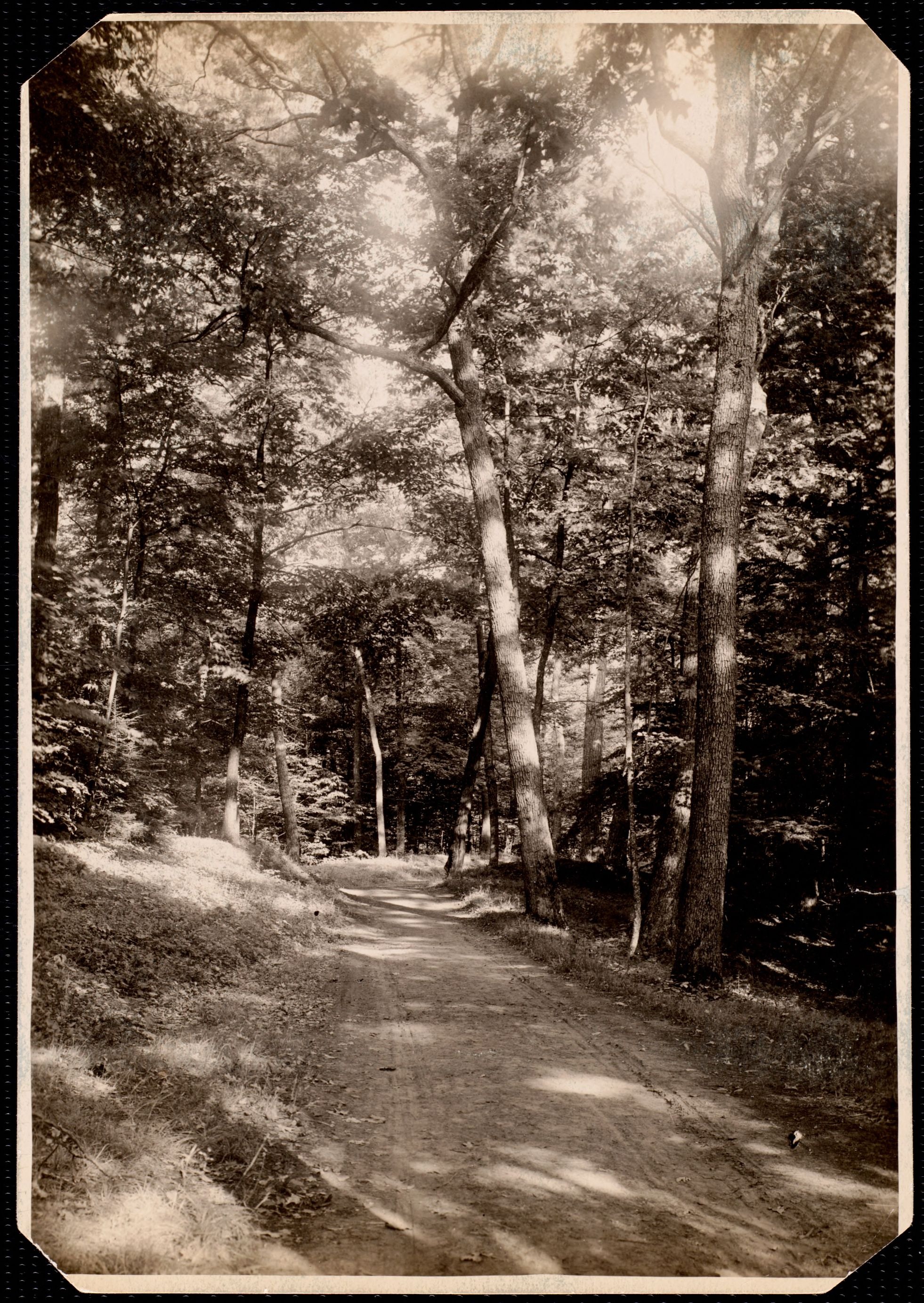
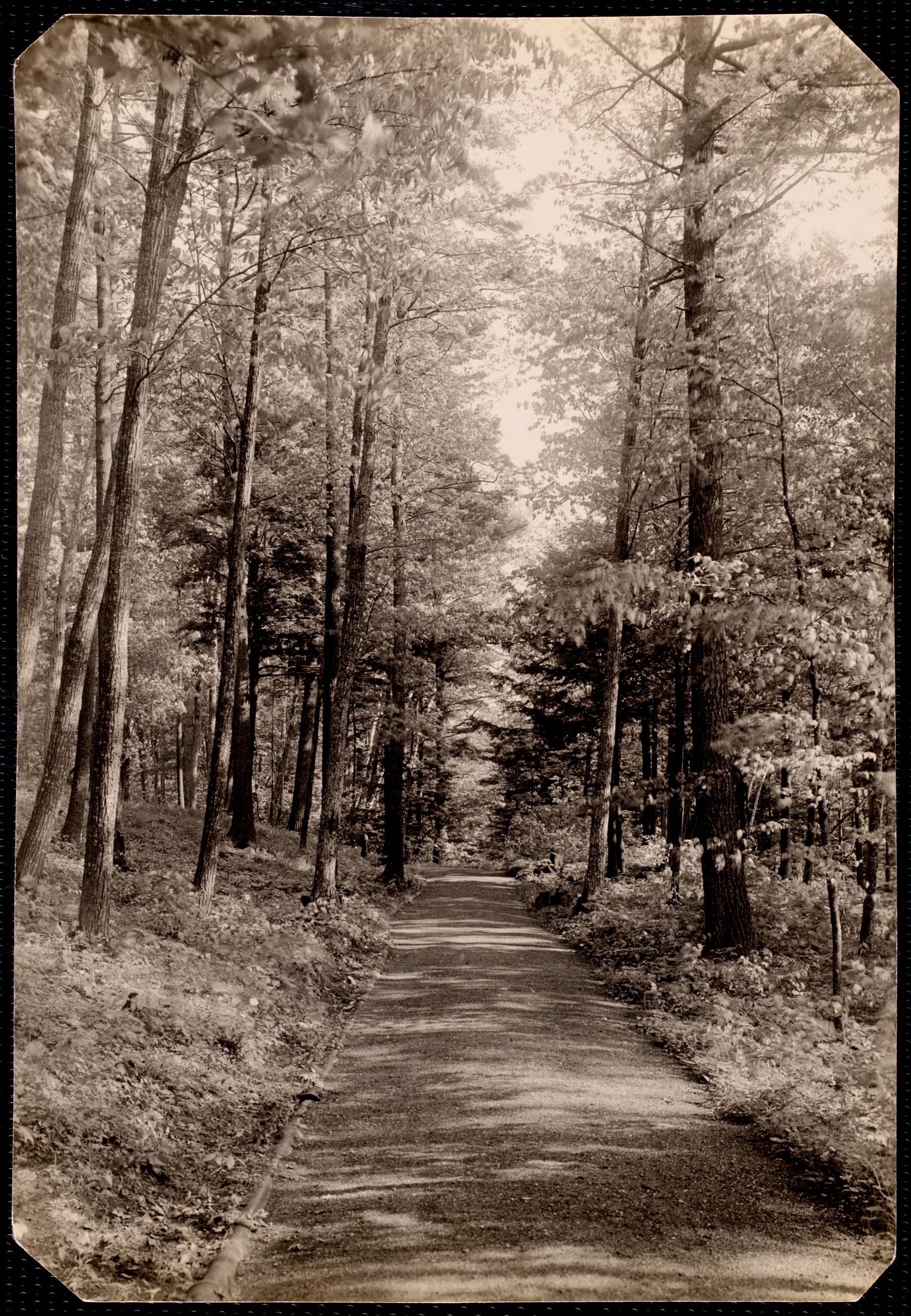
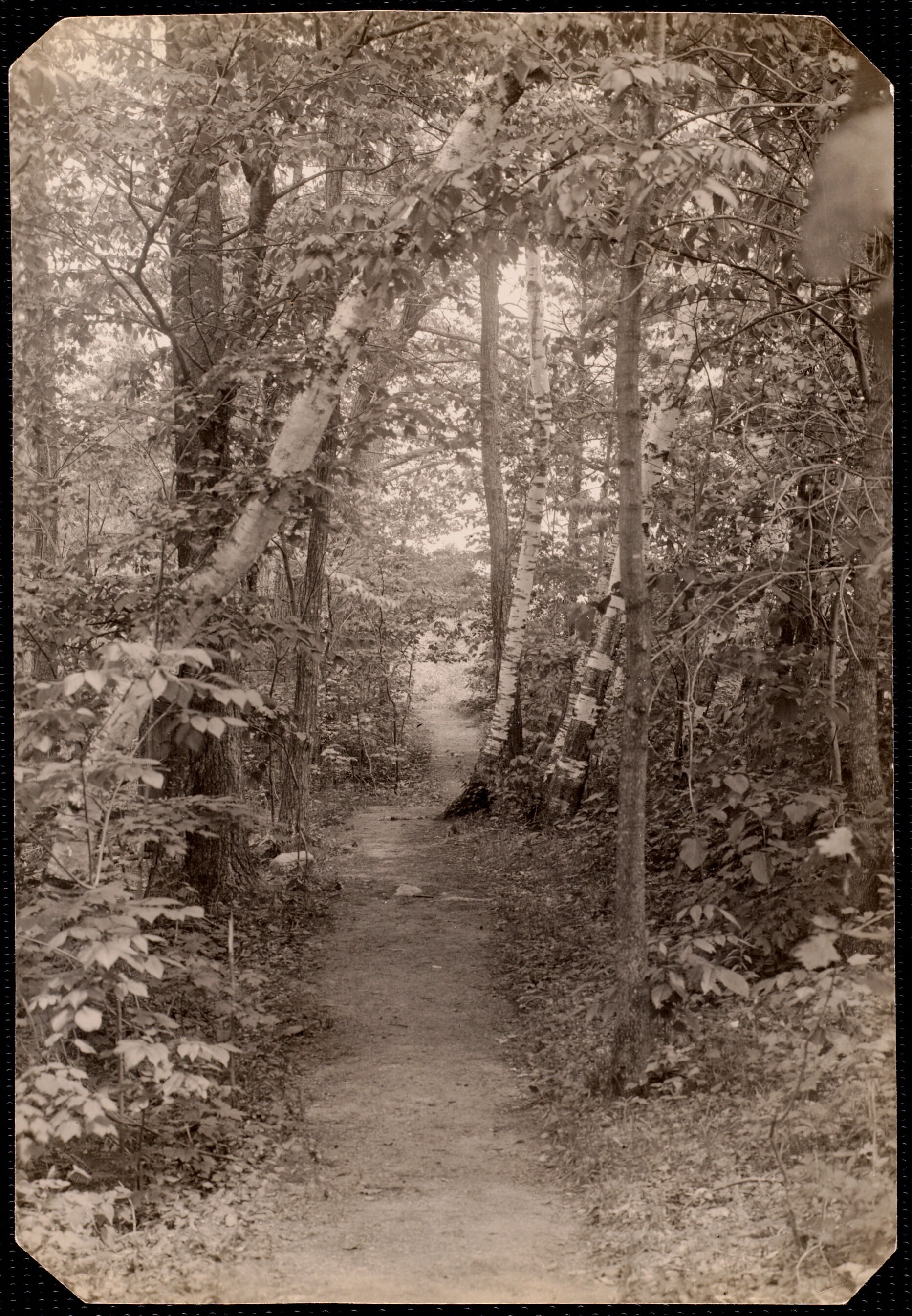
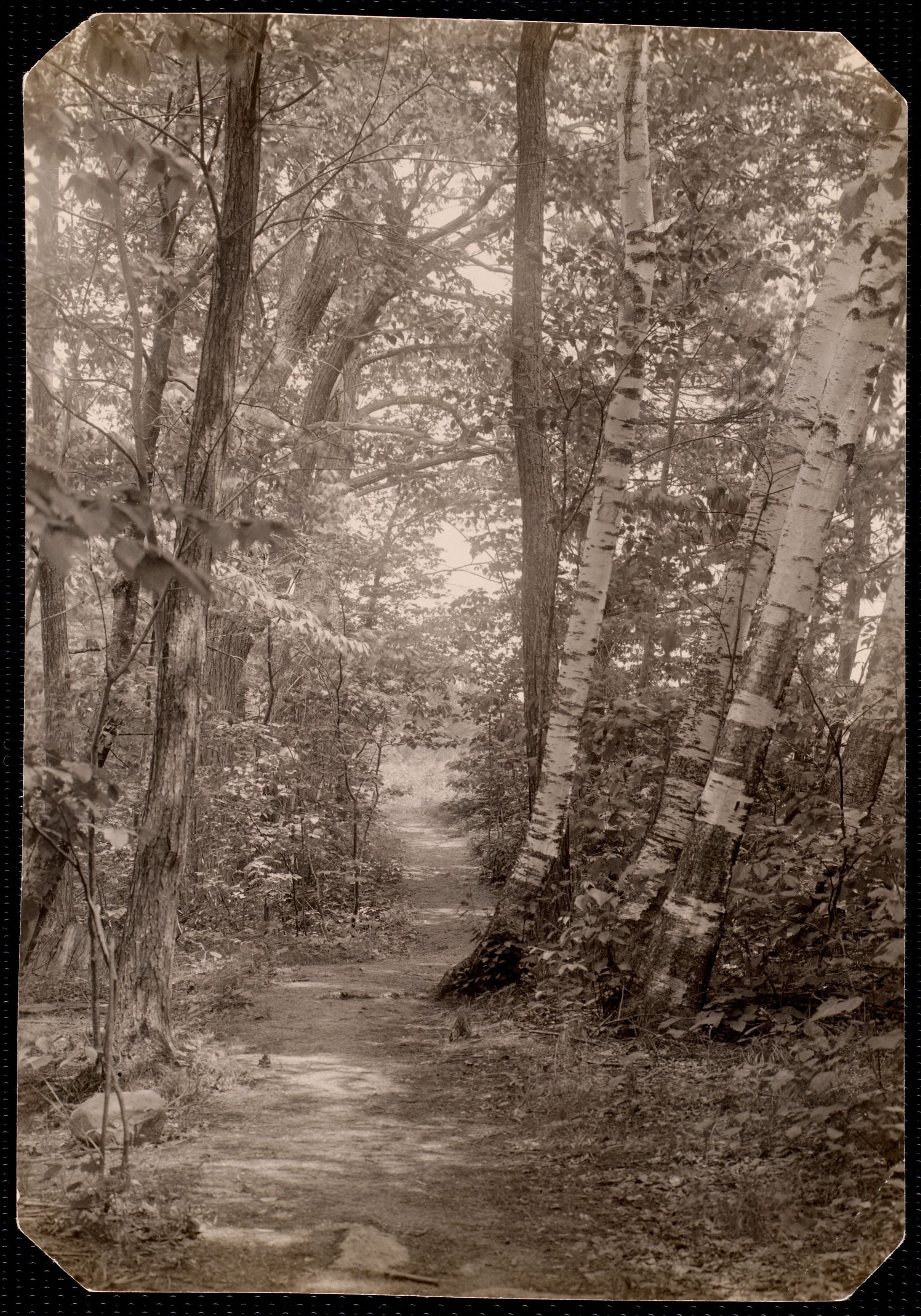
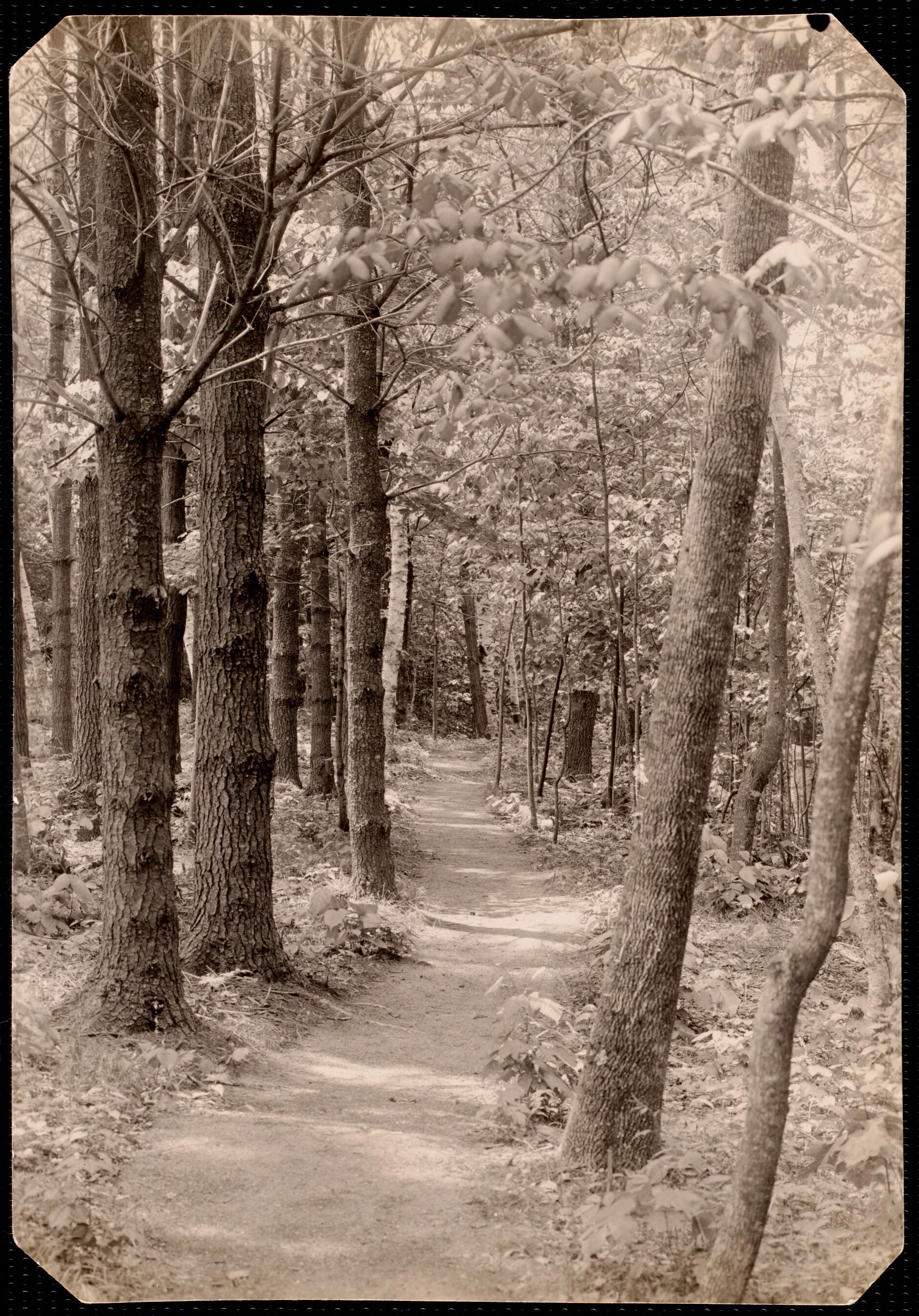
The two families were connected by marriage: Edward John Woolsey, whose Lenox summer place was called Woodcliff, was married to Emily Aspinwall. Lenox History says Woodcliff was built by William Aspinwall in 1854, and adds that “the Aspinwalls and Woolseys allowed townspeople to wander through the scenic woods” — which is what the ridge is used for now. The Lenox Library’s photographs still file the whole tract under two headings: Aspinwall Hotel, and Woolsey Woods.
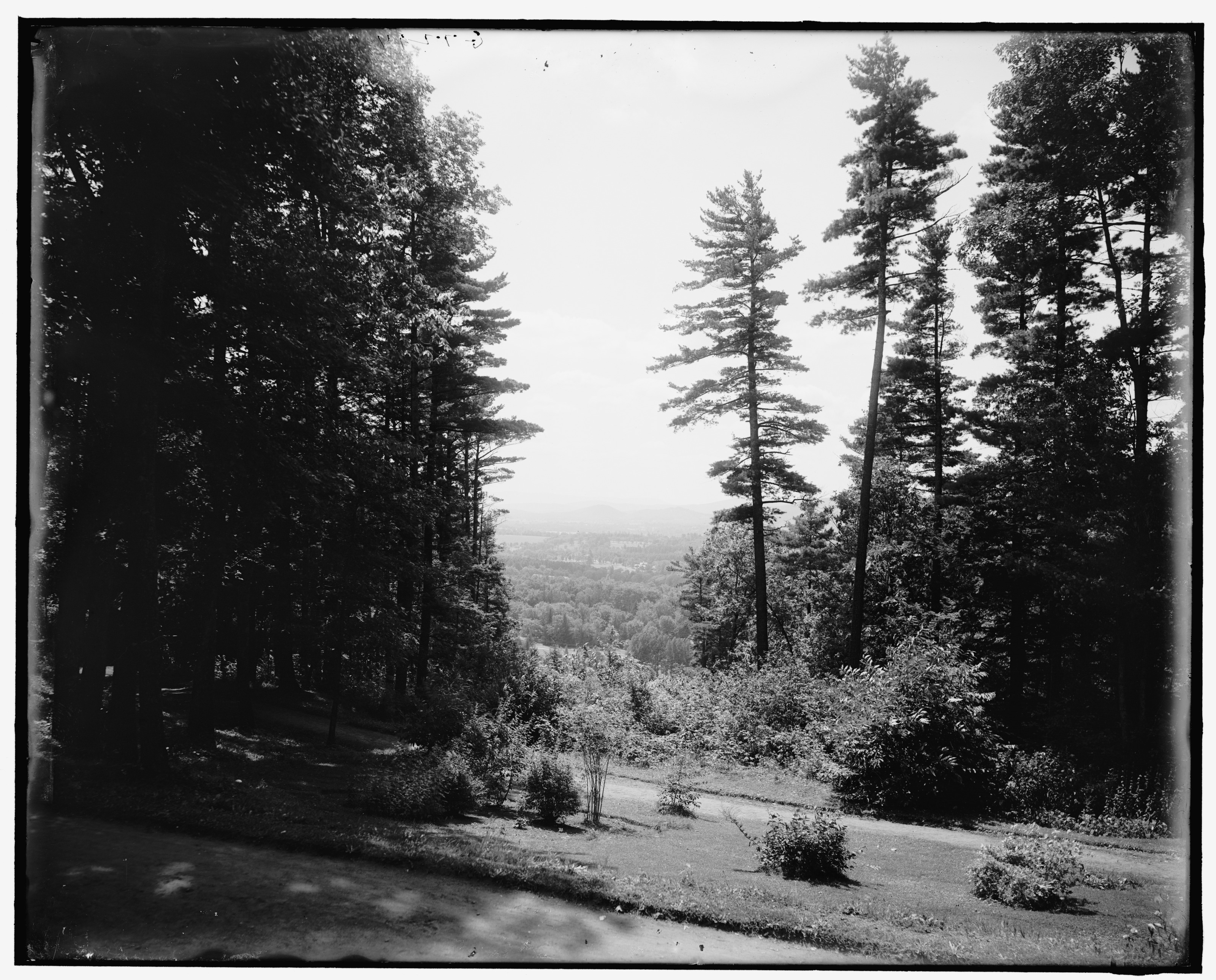
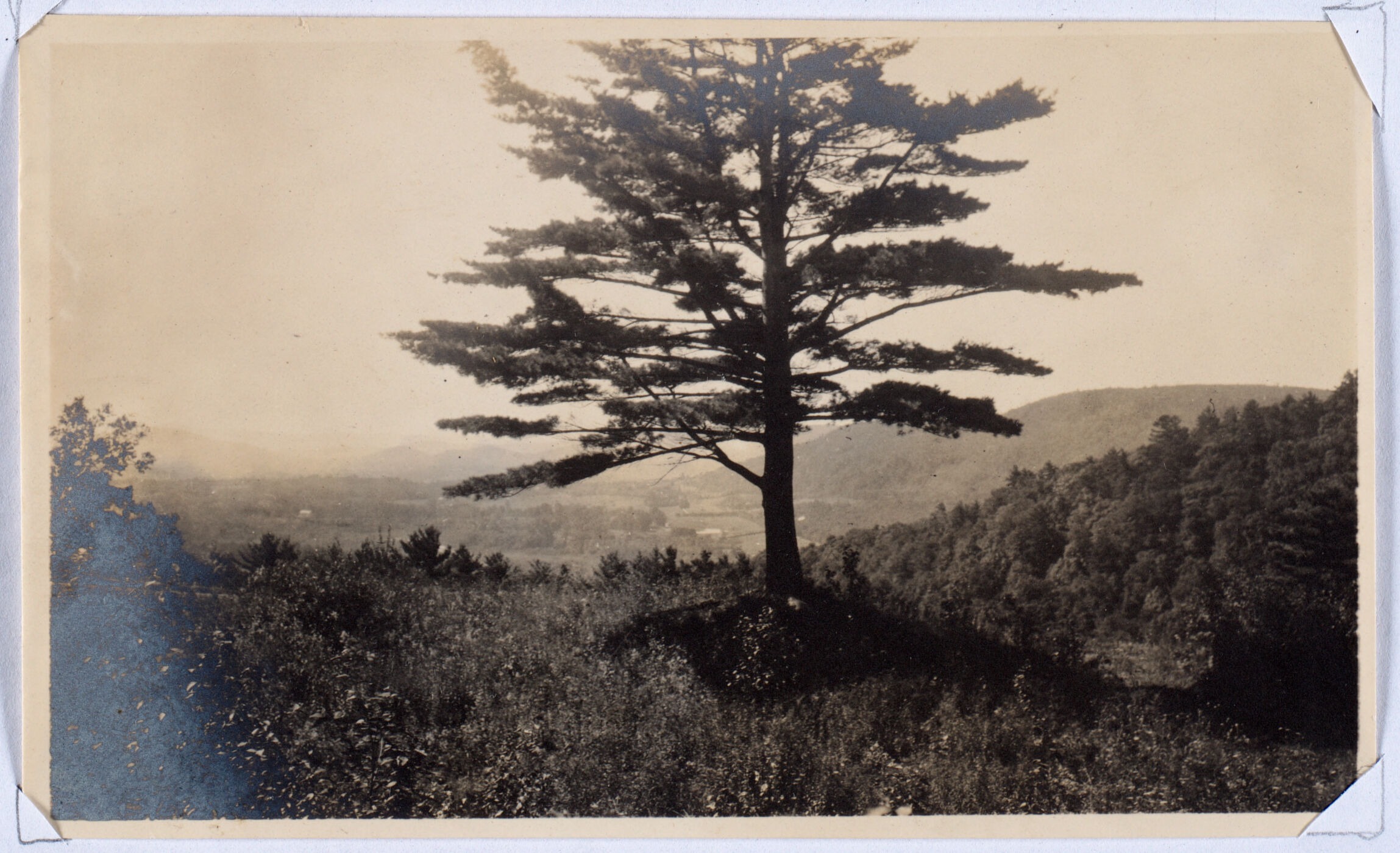
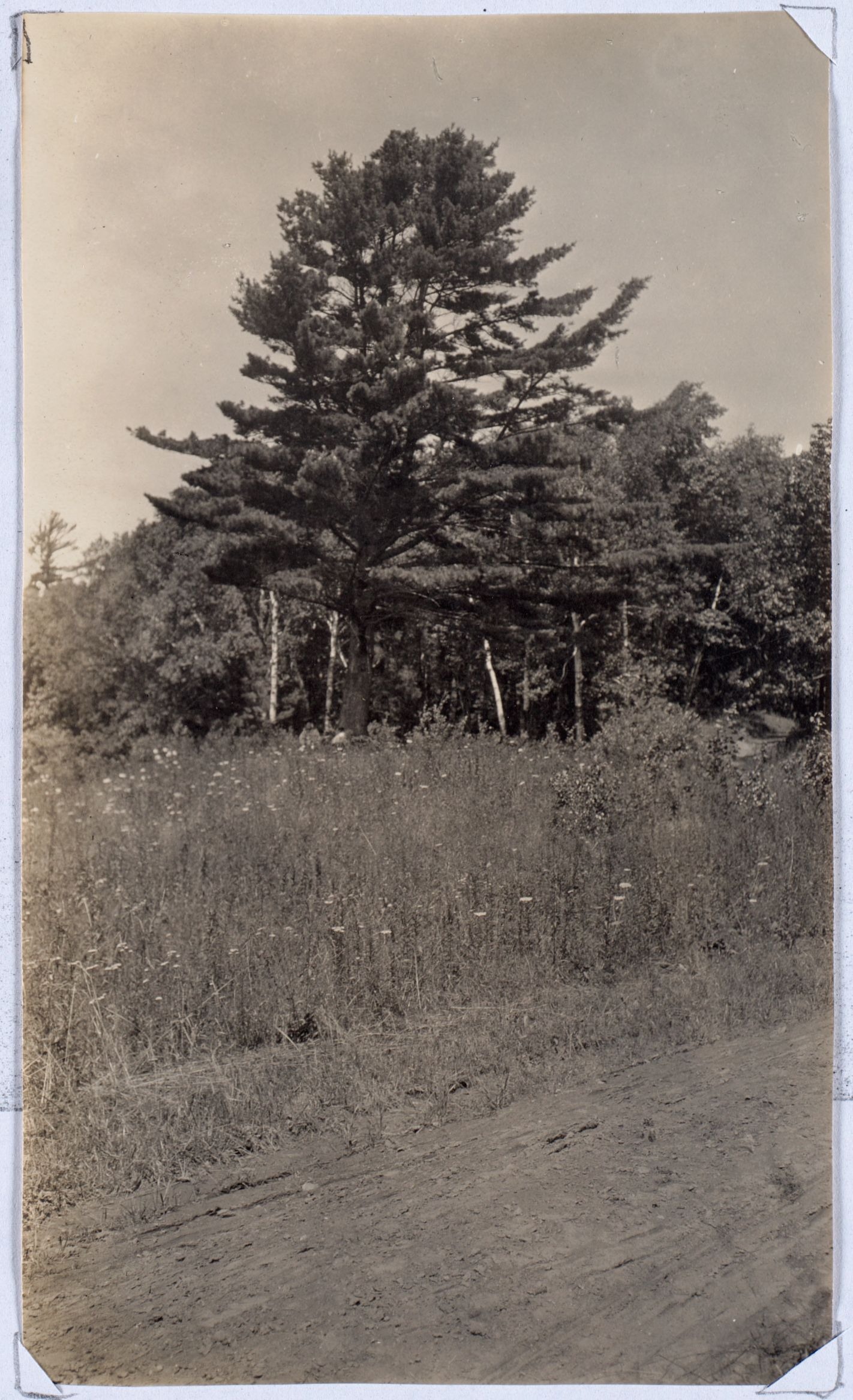
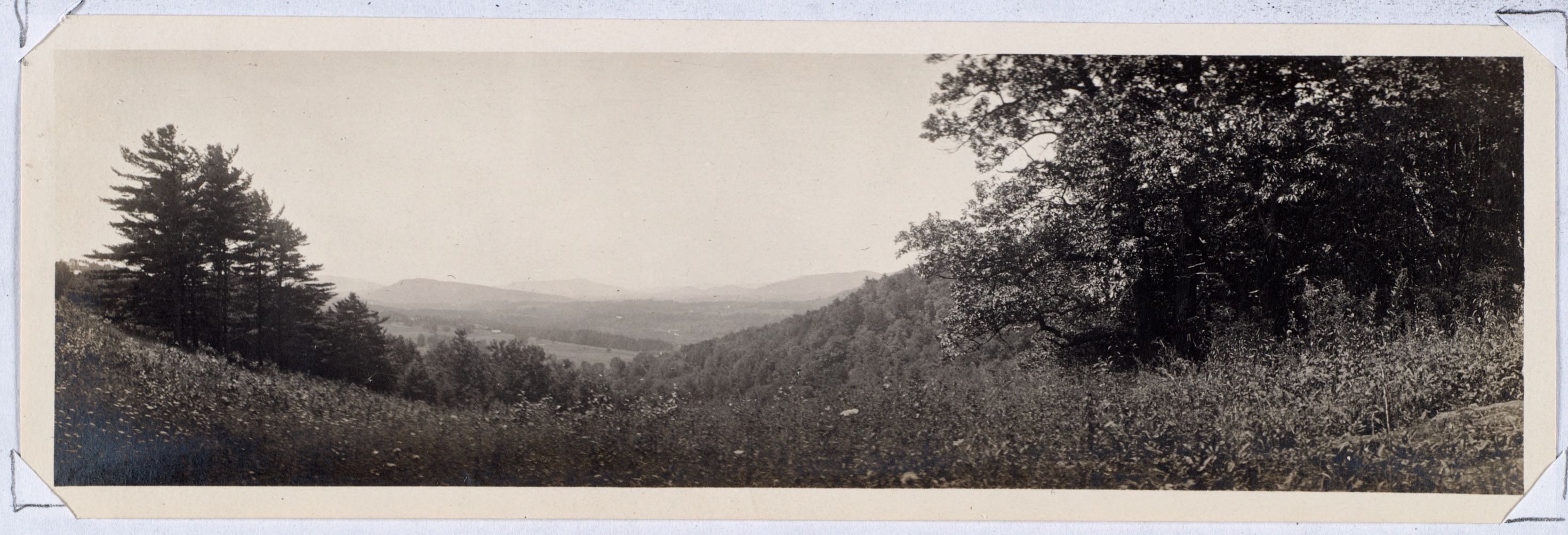
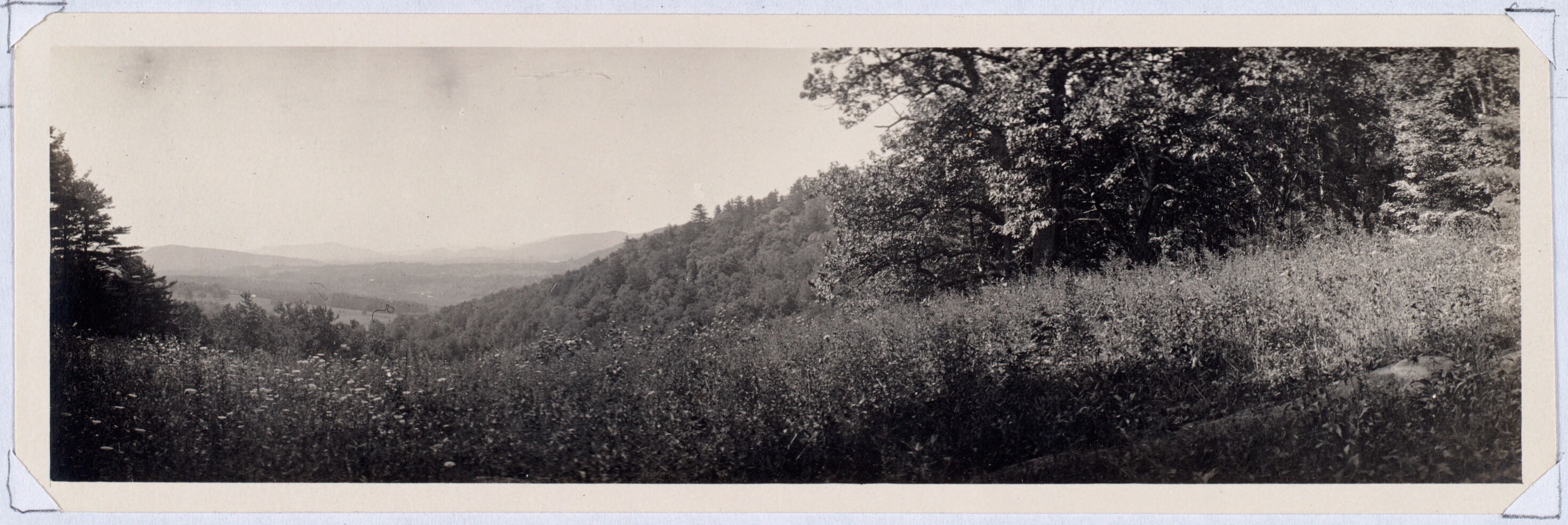
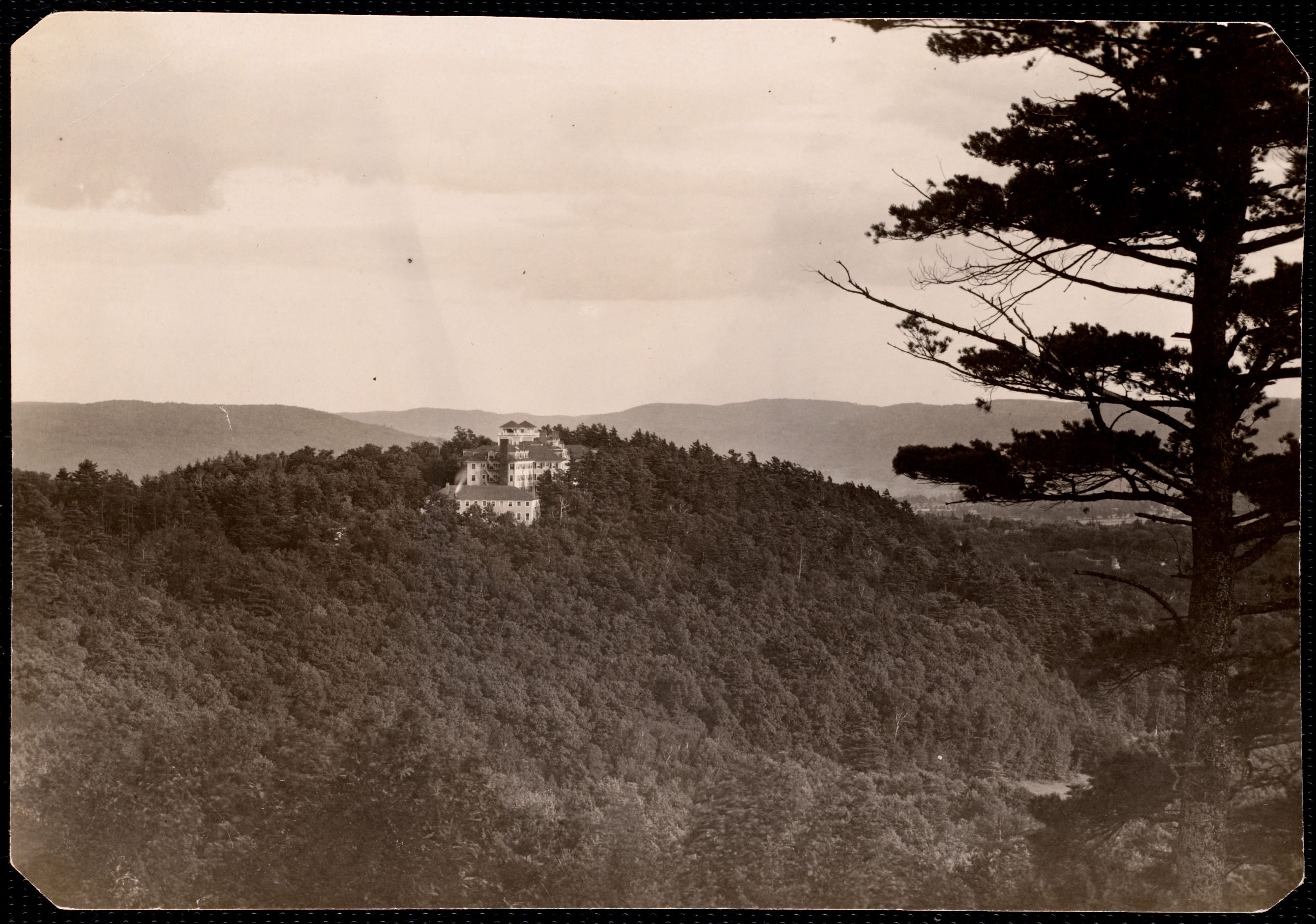
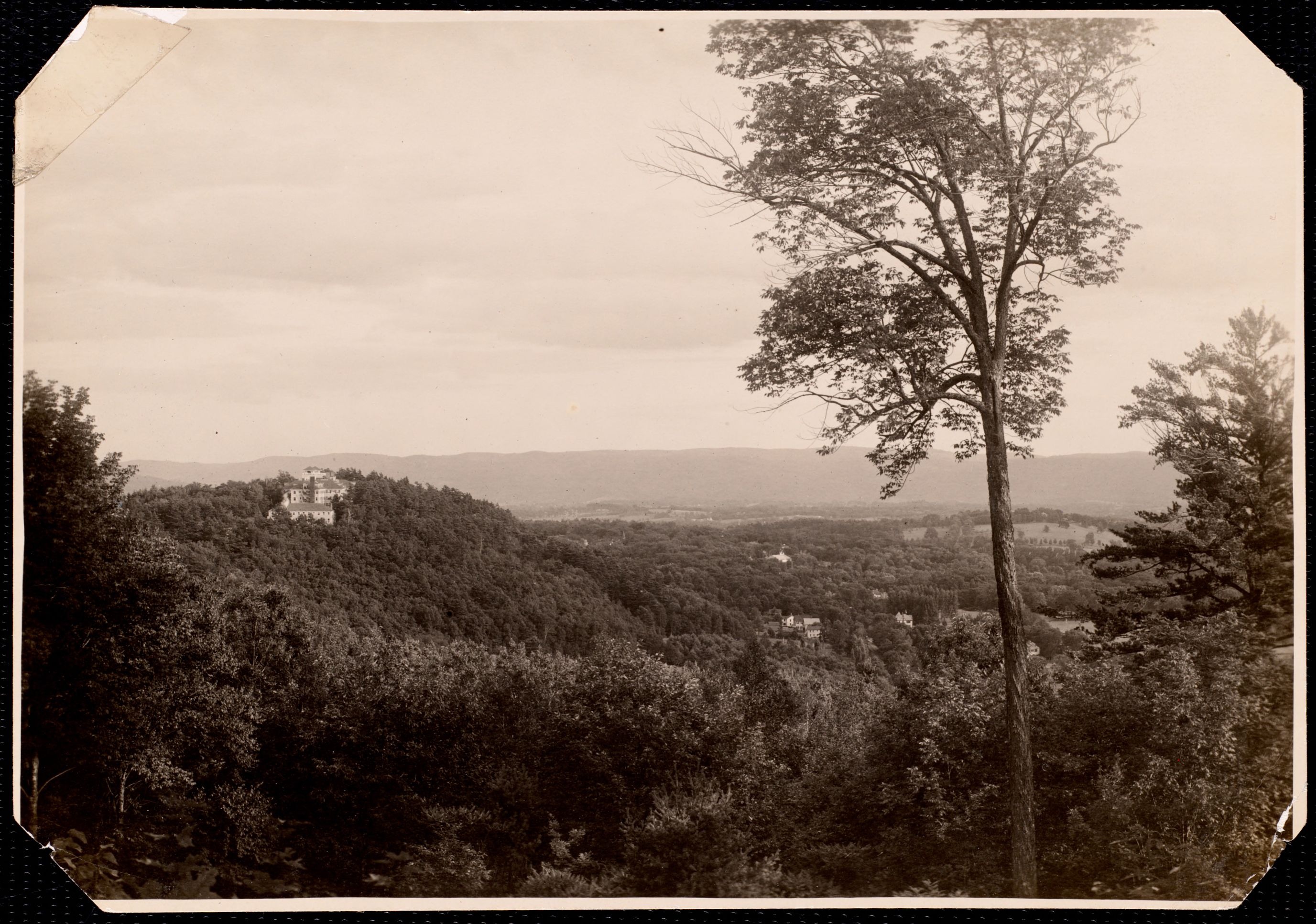
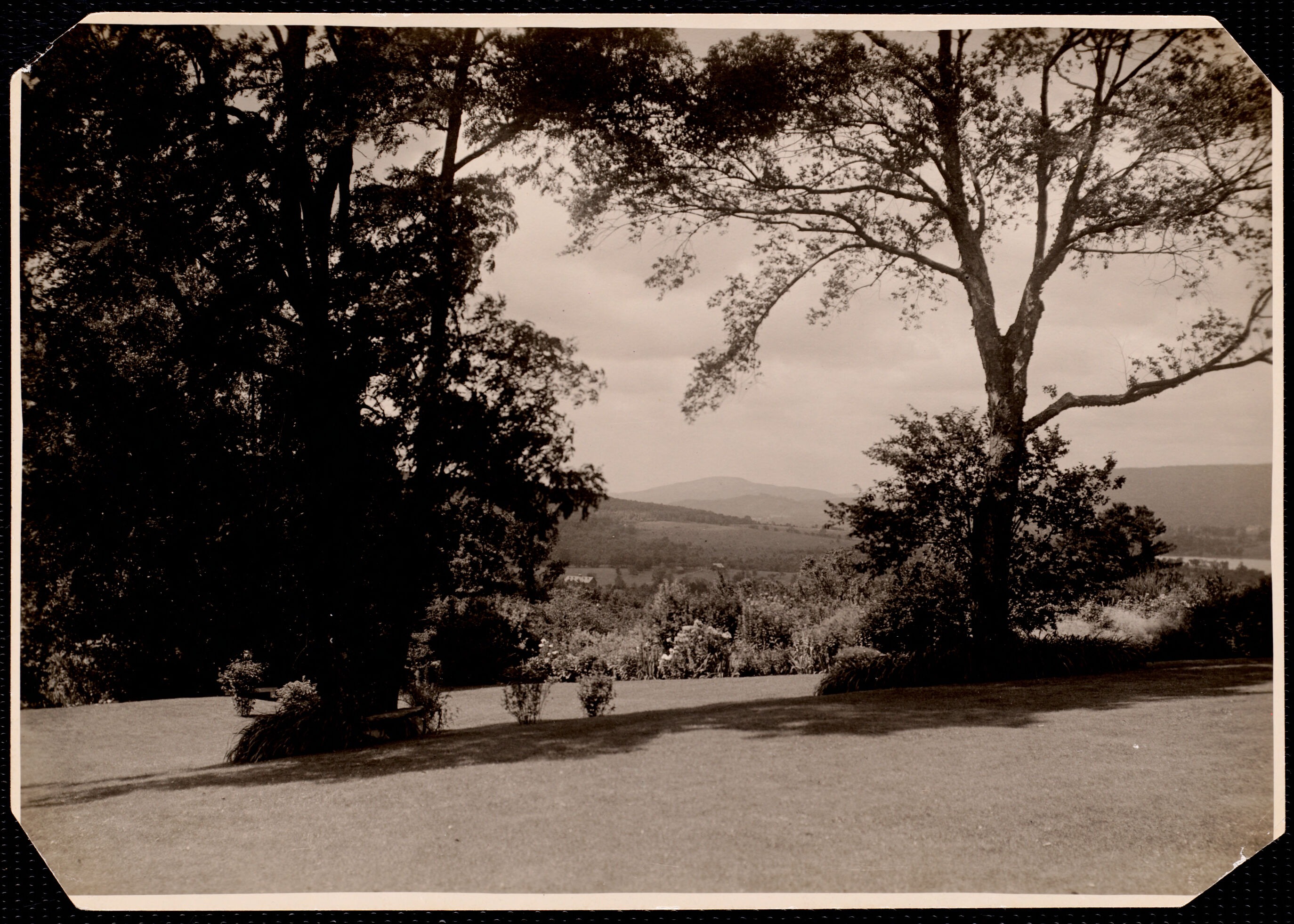
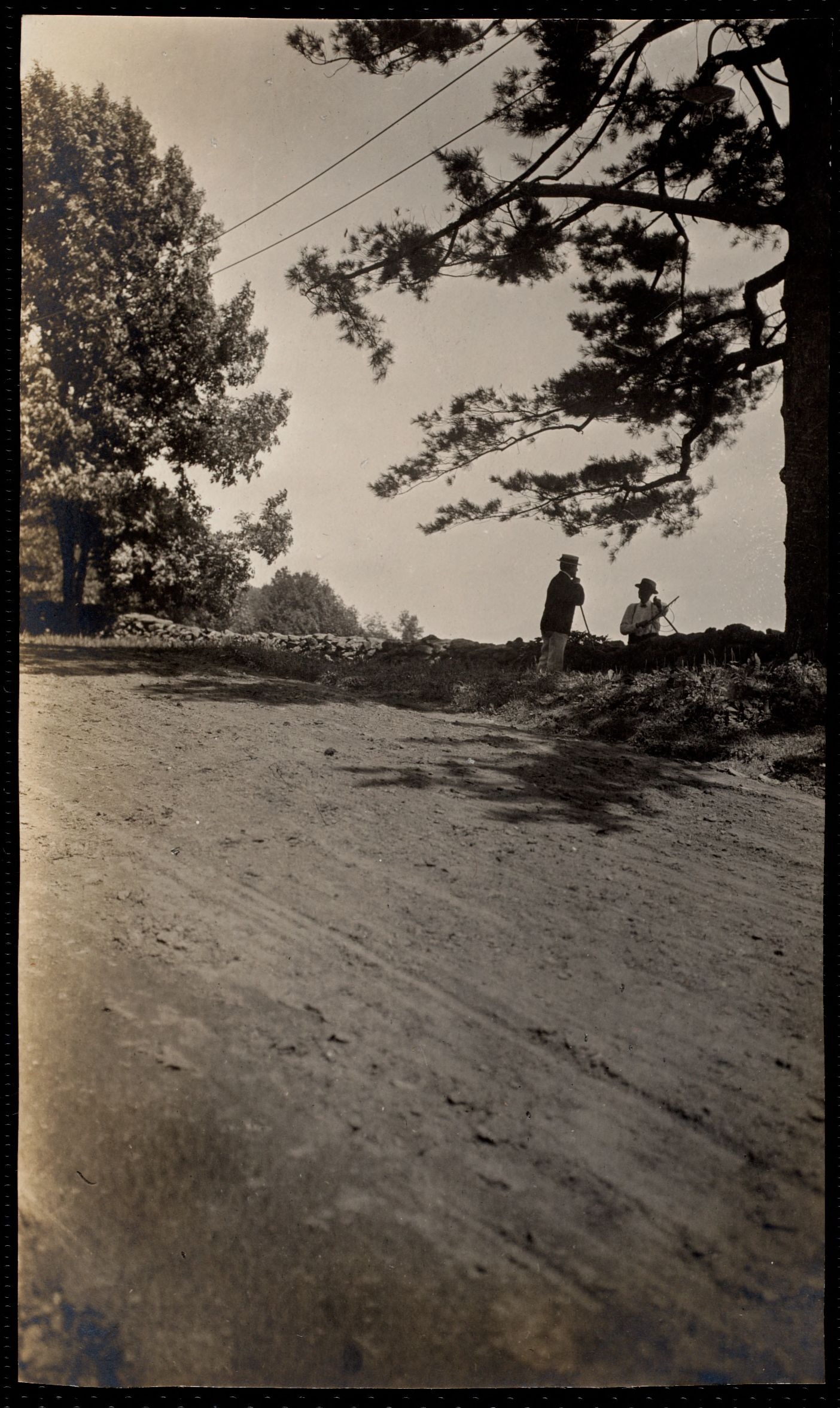
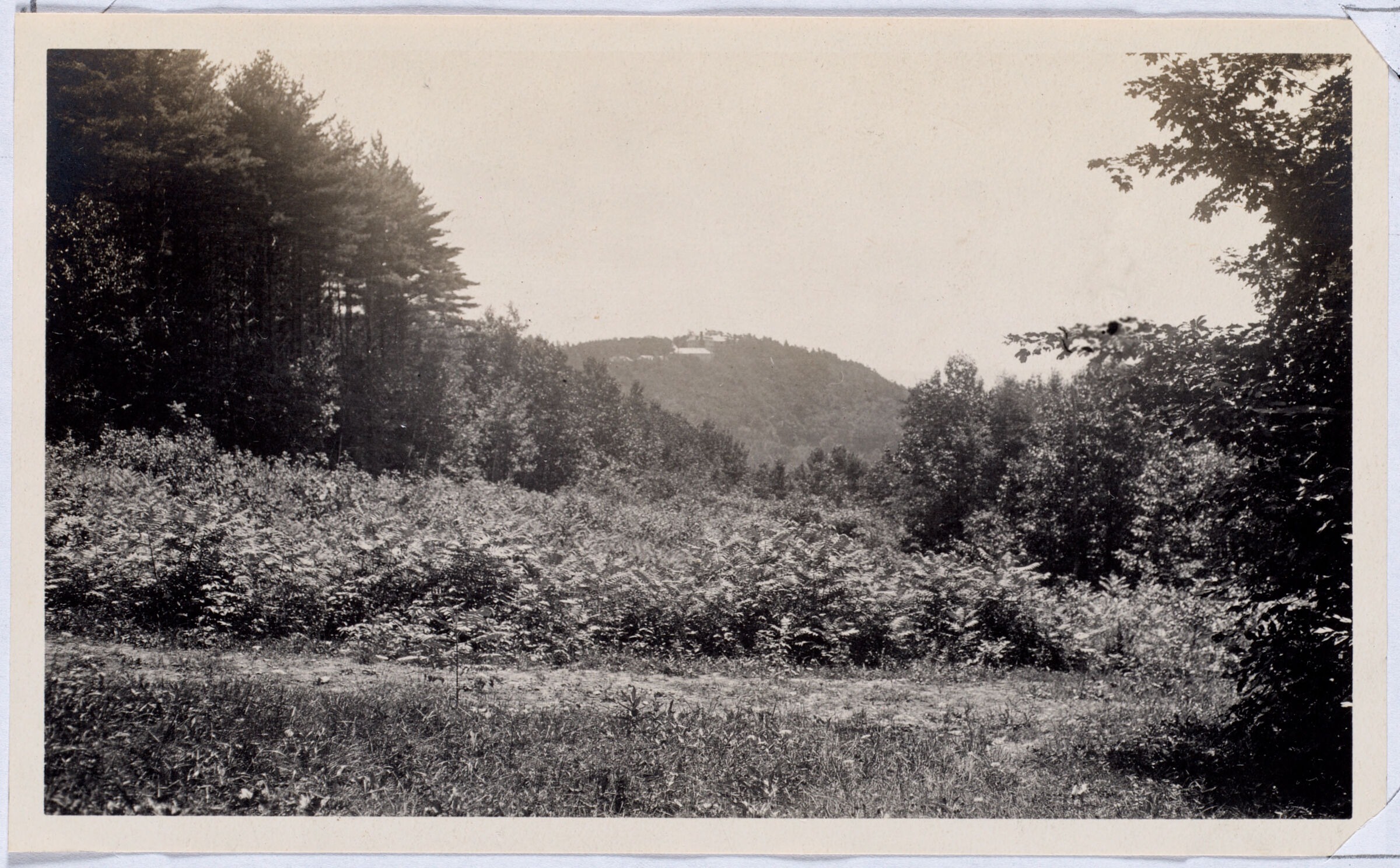
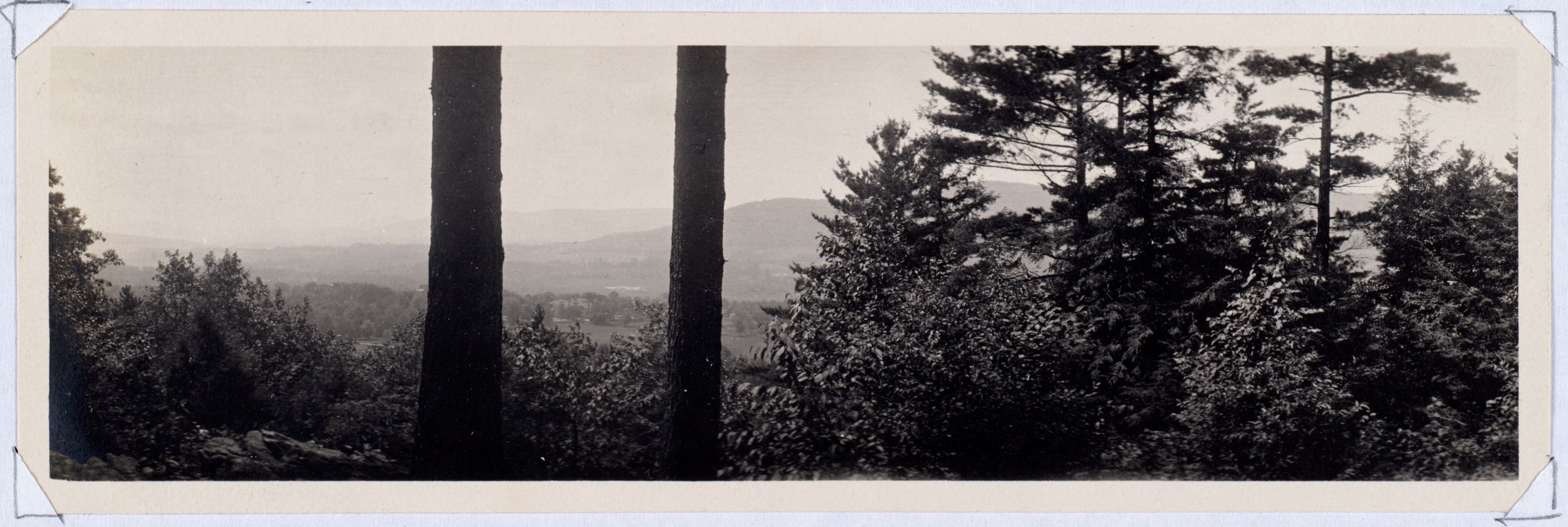
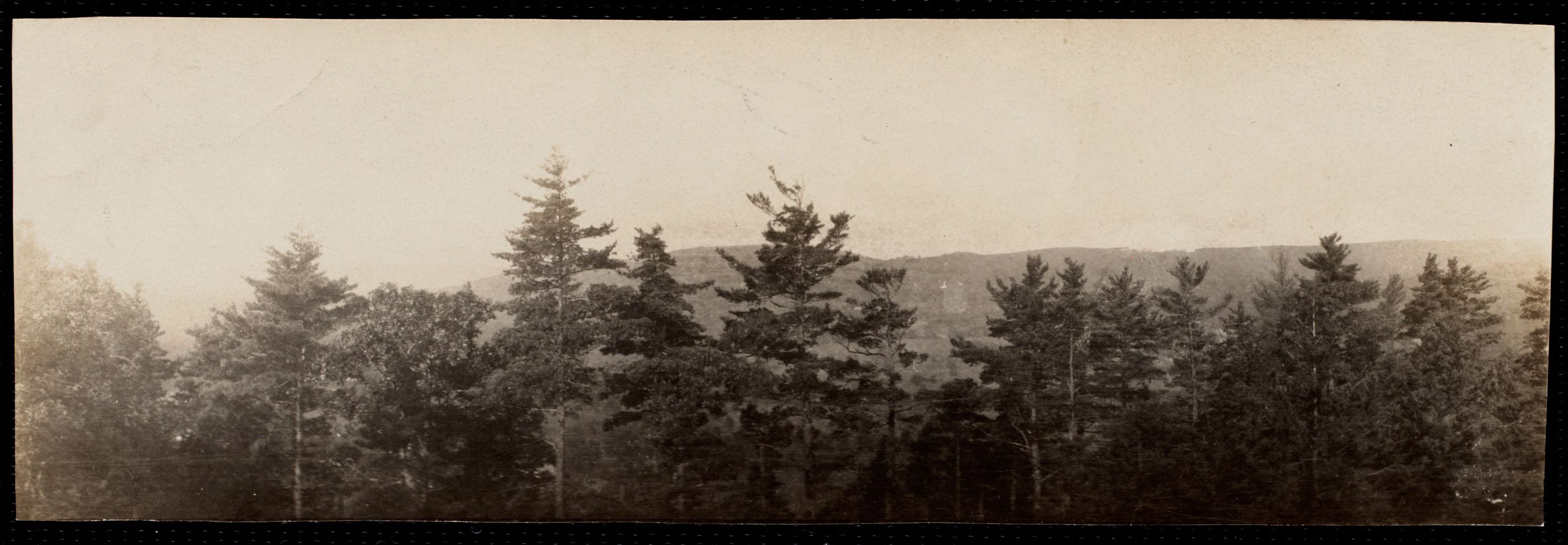
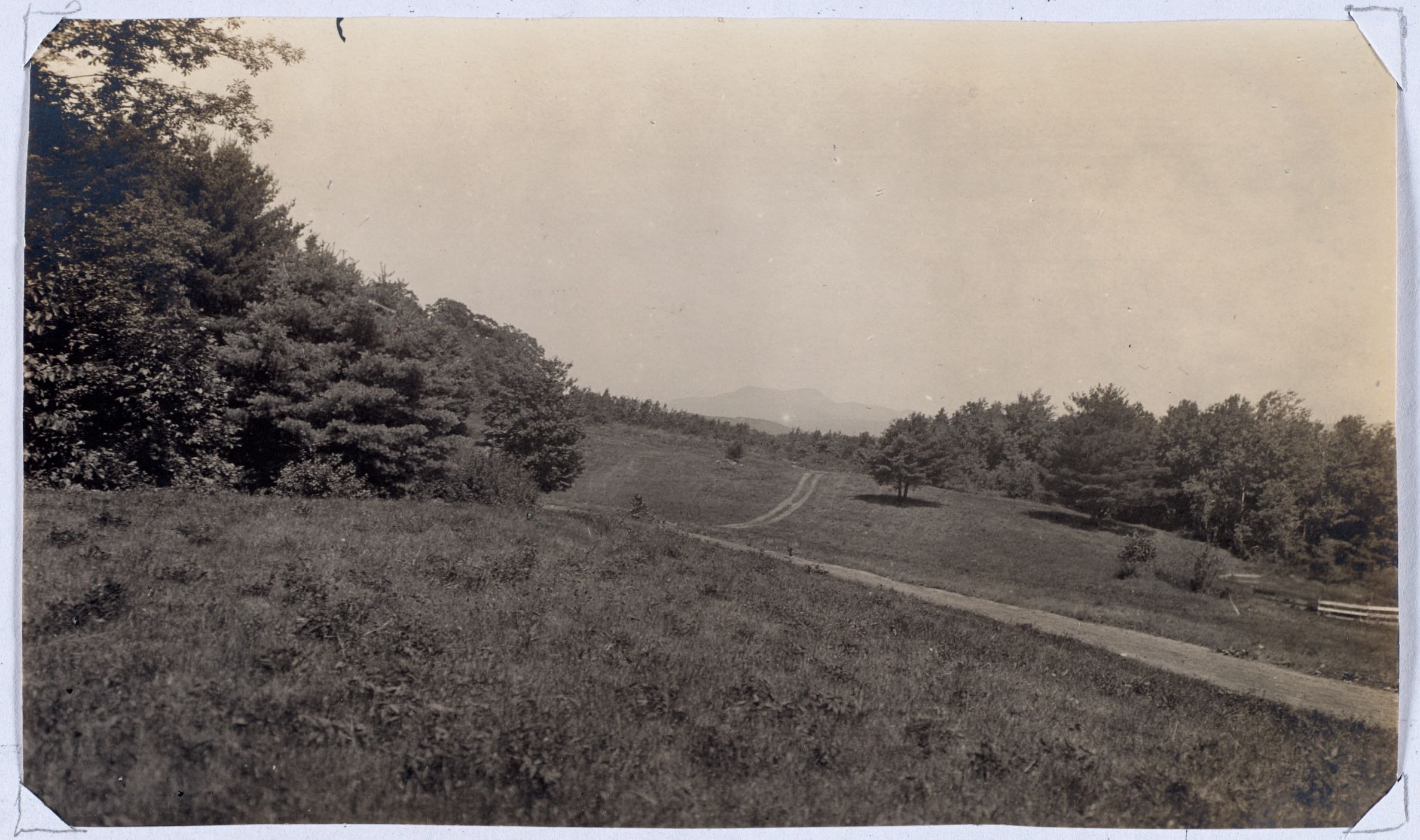
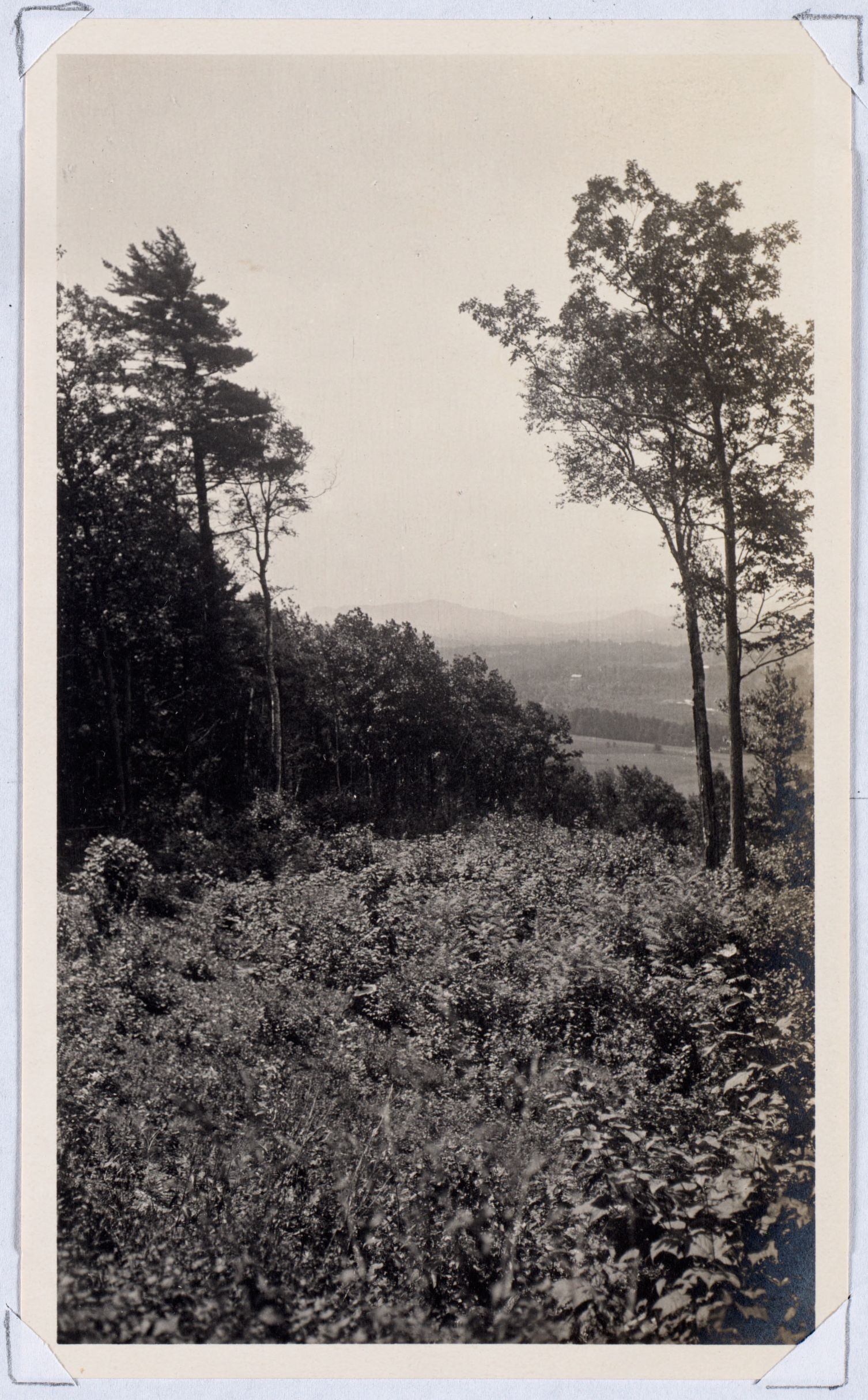
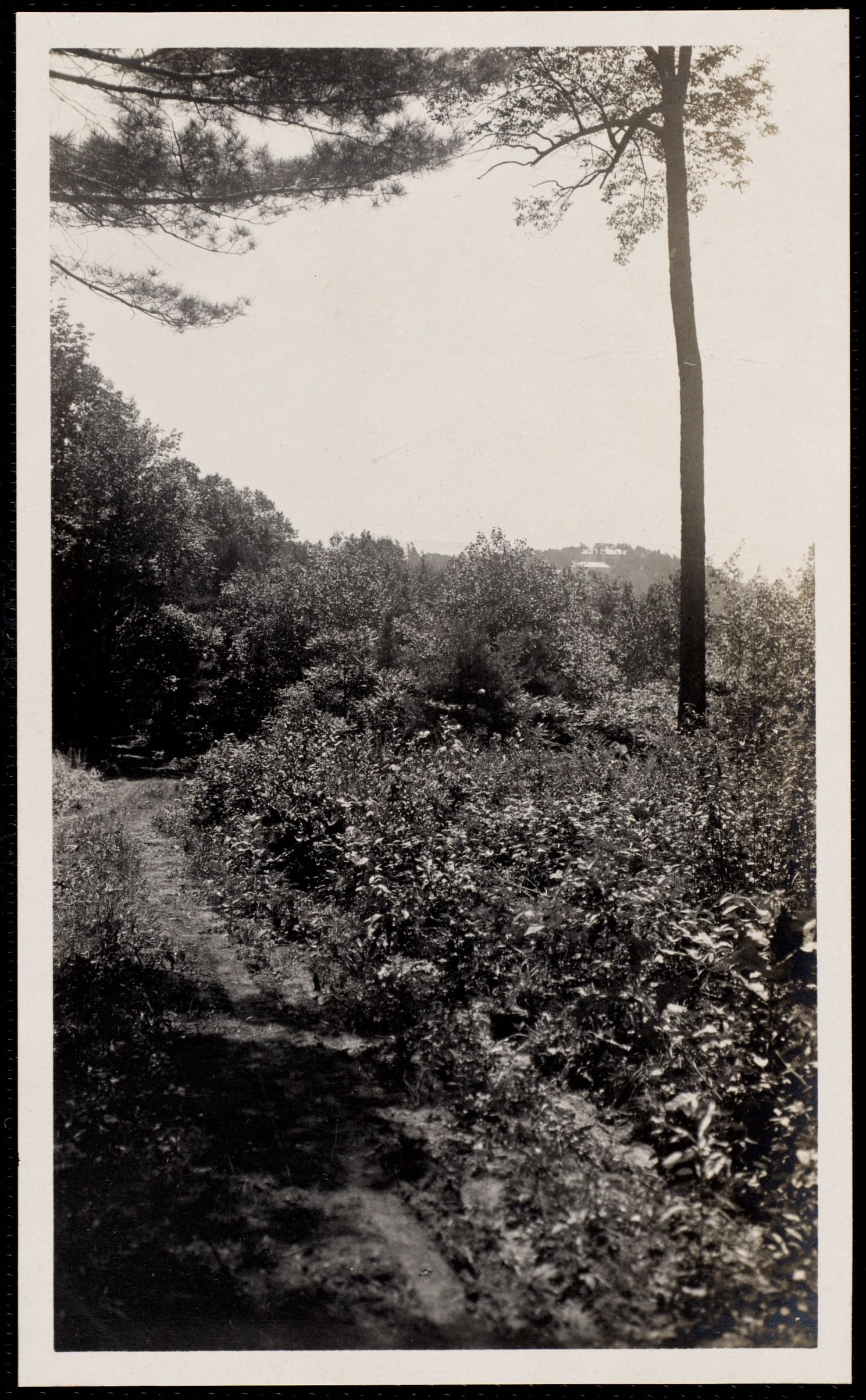
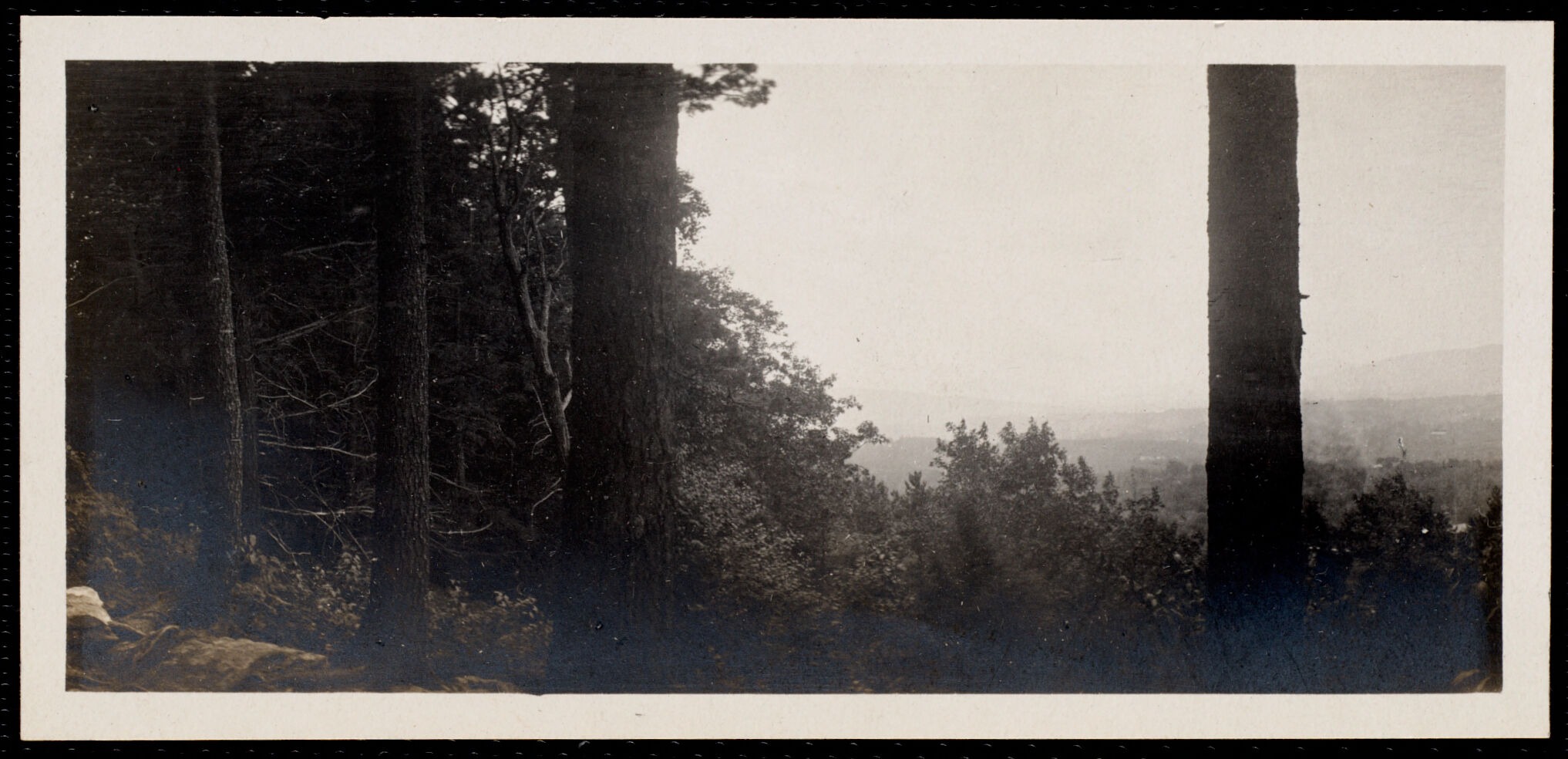
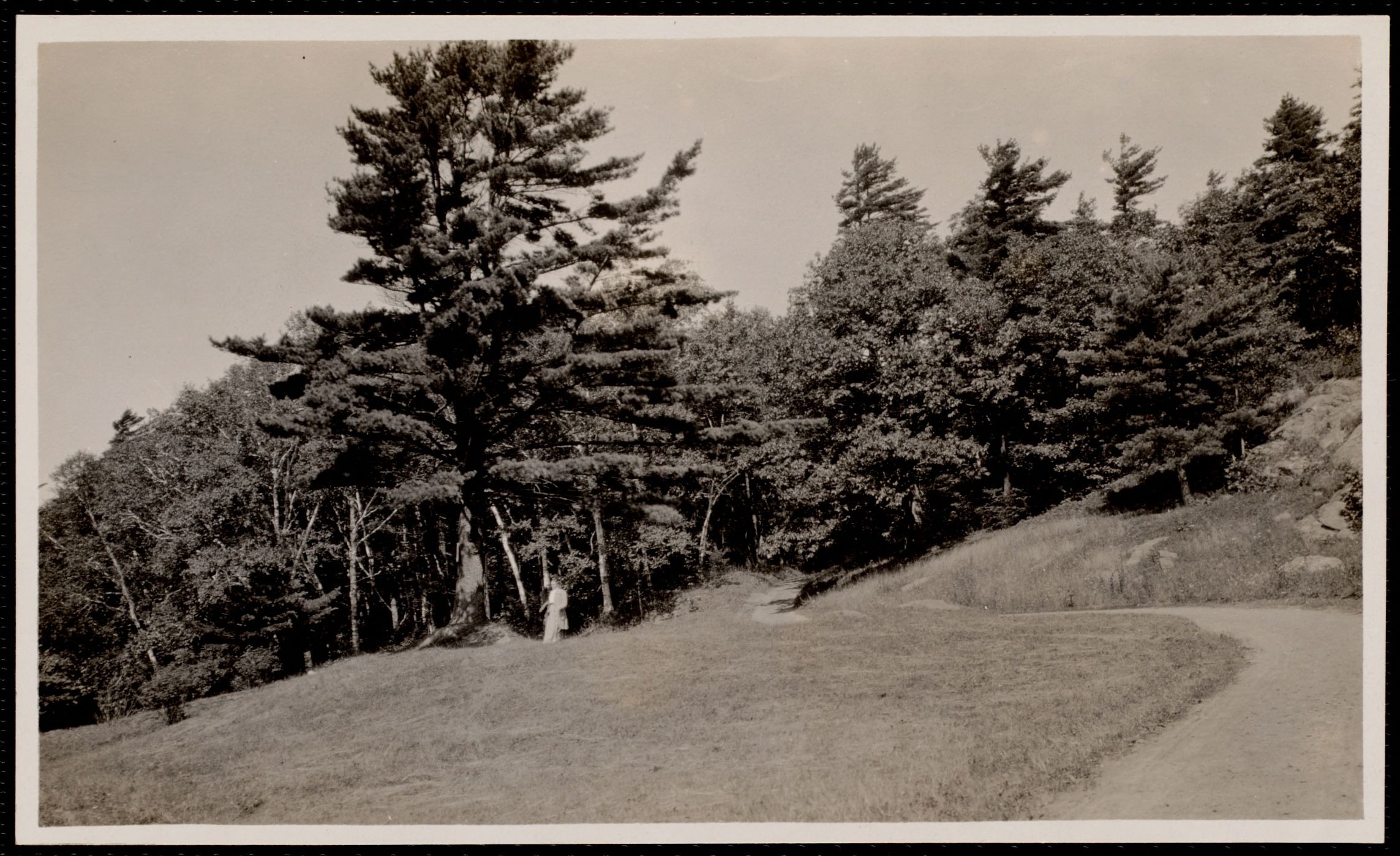
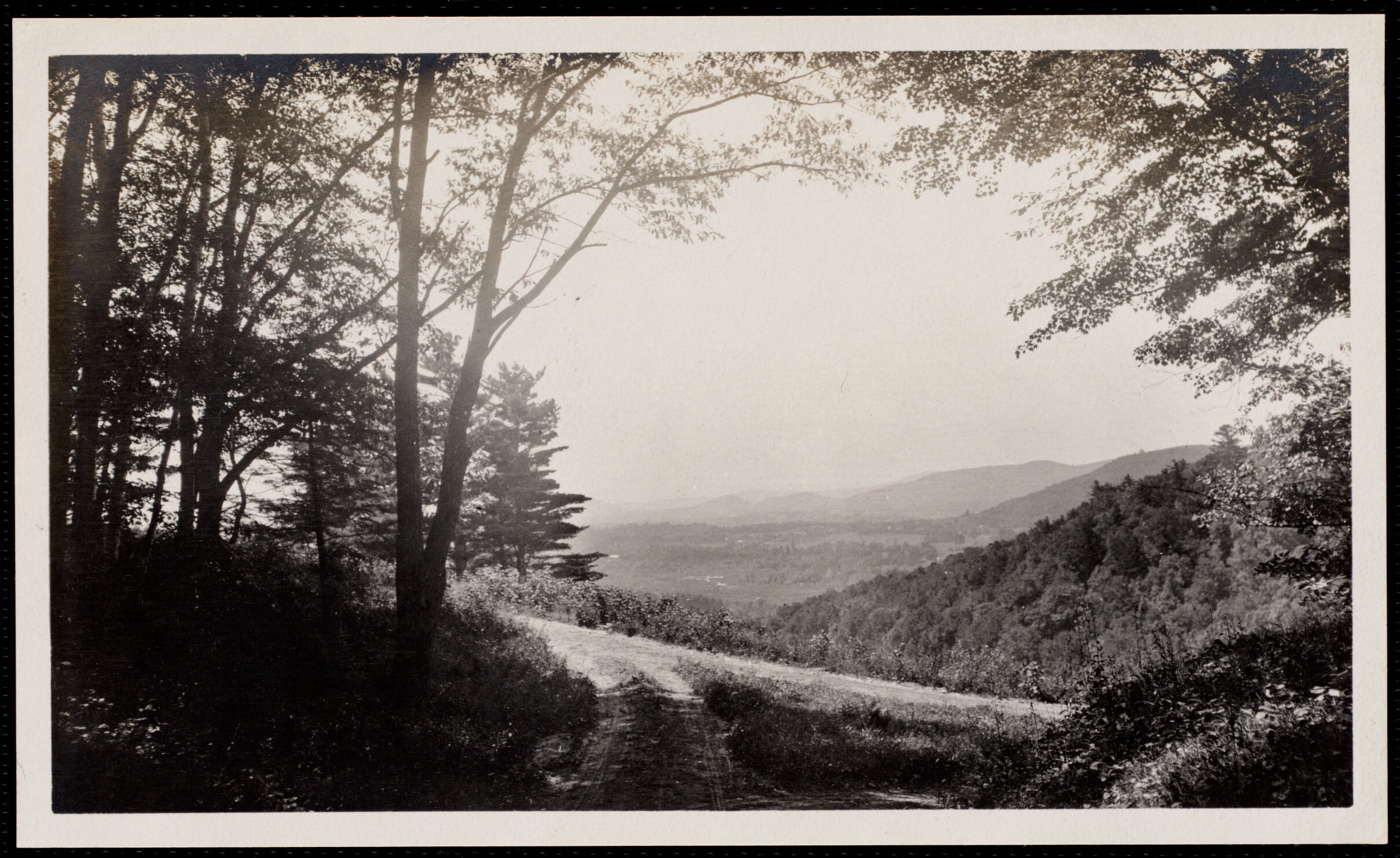
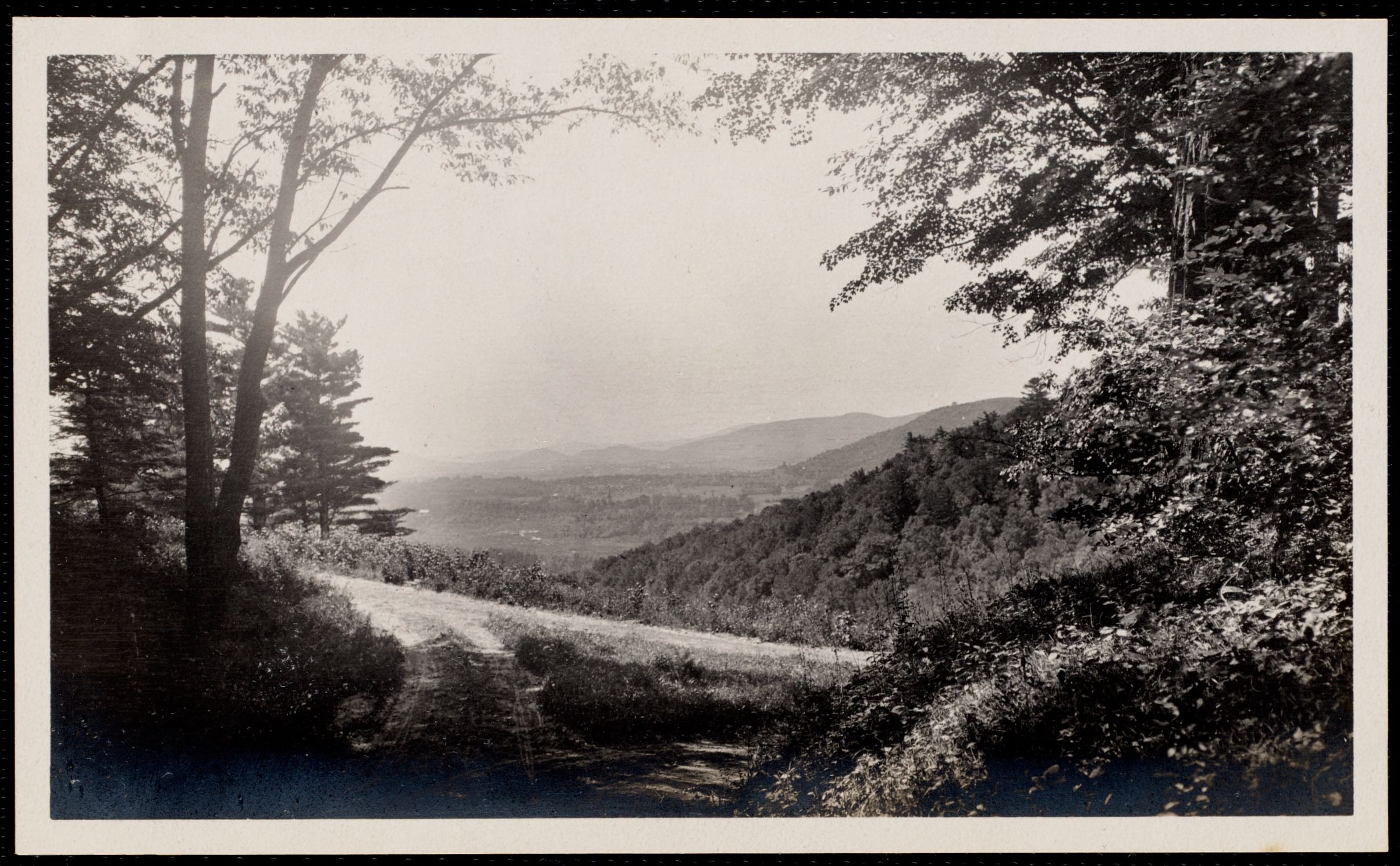
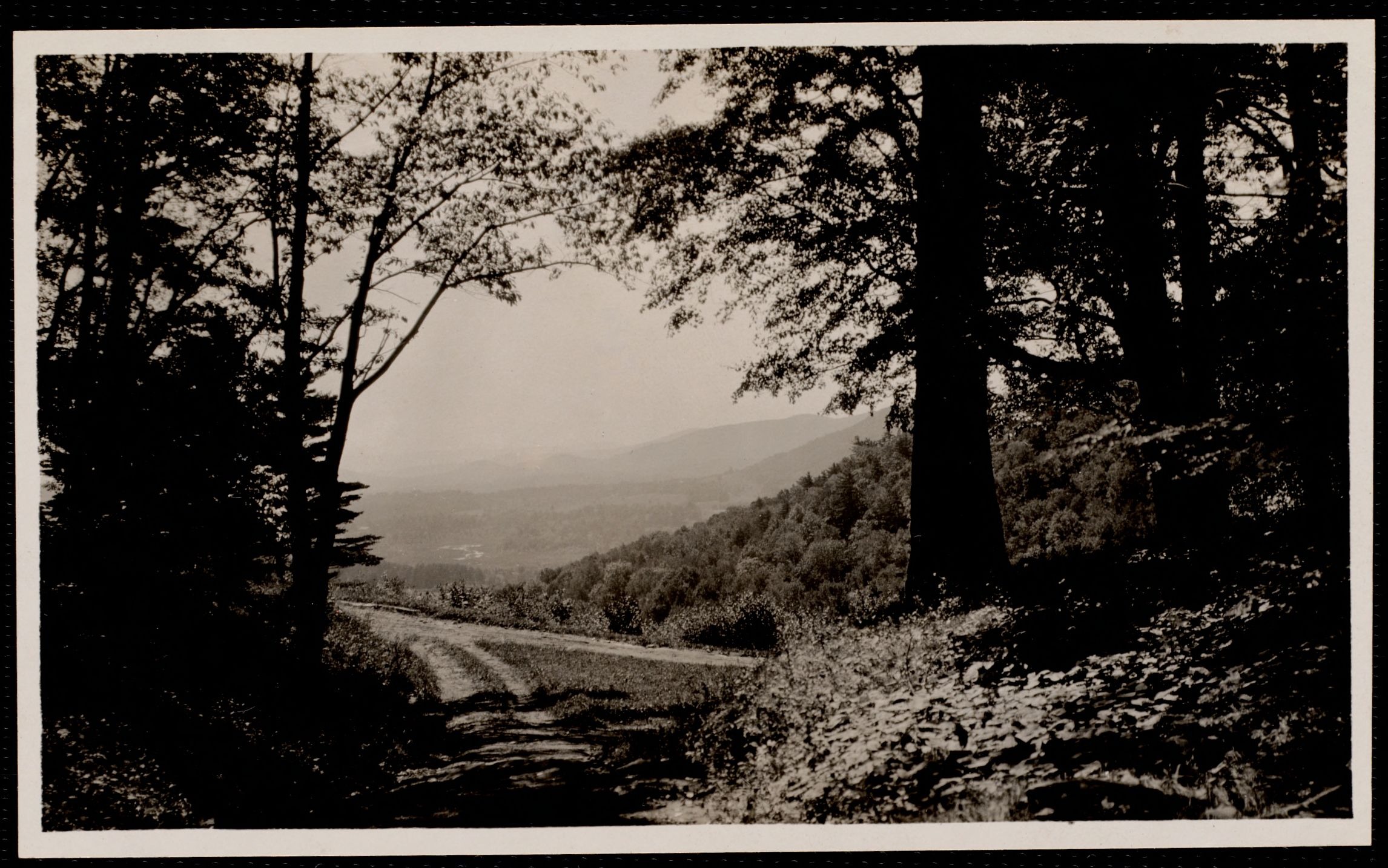
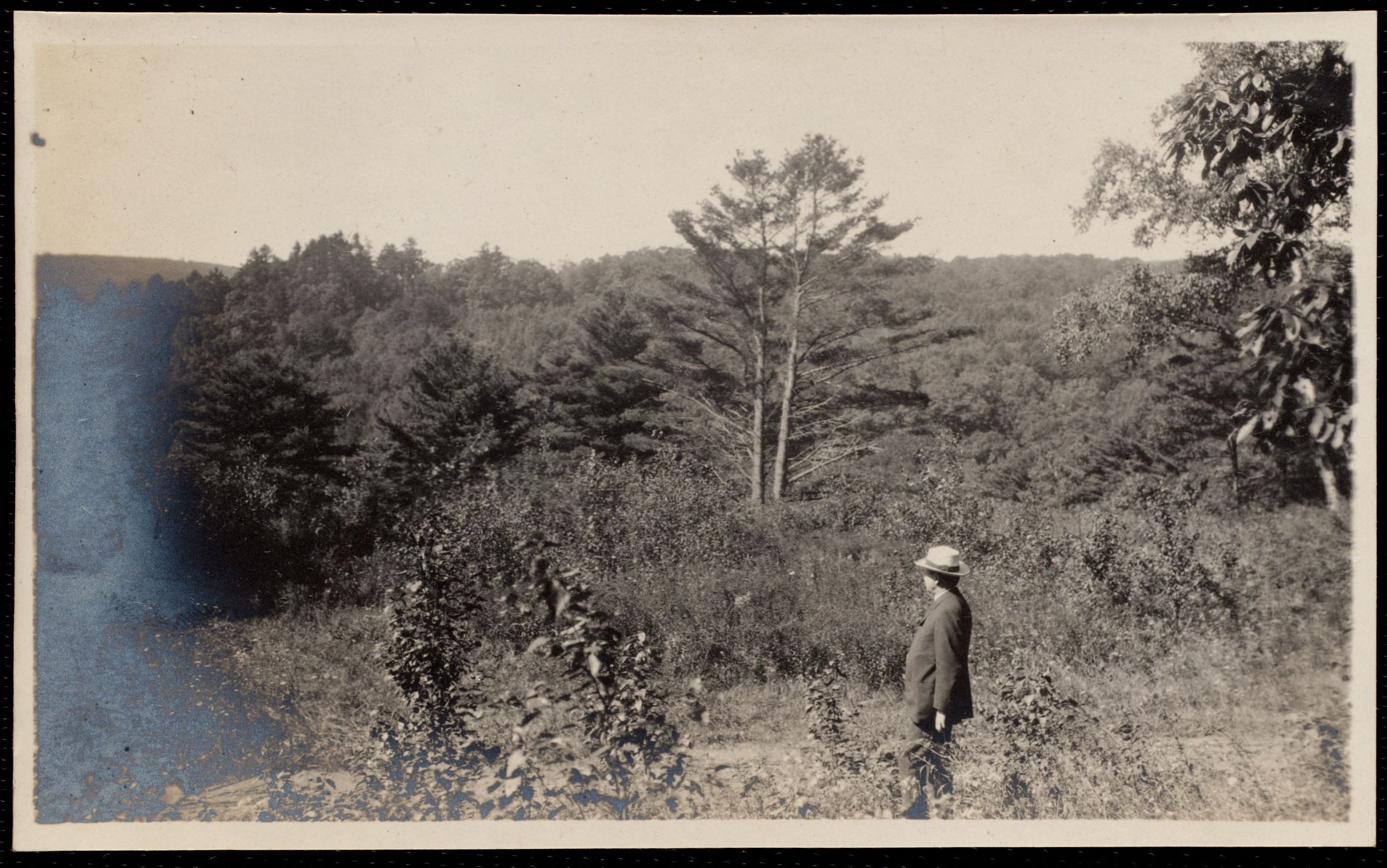
By August 1905 the house itself was gone. Two photographs from that month are catalogued “Pine tree near site of old Woosley House” — the misspelling is the cataloguer’s — and two more from 1 August 1906 give the view of the Lenox valley from the site.
II. Fifteen months, 1901–02
The hotel was built for Thomas H. Hubbard, a New York lawyer and financier who had commanded the 30th Maine Infantry in the Civil War and was brevetted brigadier general in 1865. He was president or director of a long list of railroads, banks and insurance companies. The Berkshire Eagle gives his name as “Gen. Thomas A. Hubbard” and says he commissioned the hotel with partners; Lost New England gives “Thomas H. Hubbard.” The initial is the only thing in dispute.
The architect was Joseph McArthur Vance (1868–1948), who had worked in Francis R. Allen’s Boston office from 1891, became Allen’s partner in 1897, and remained with him until 1902 — the year the hotel opened. The Berkshire Eagle credits the design to “Allen & Vance of Pittsfield” and the construction to a local Lenox company. Vance went on to build the Mahaiwe Theater in Great Barrington in 1905.
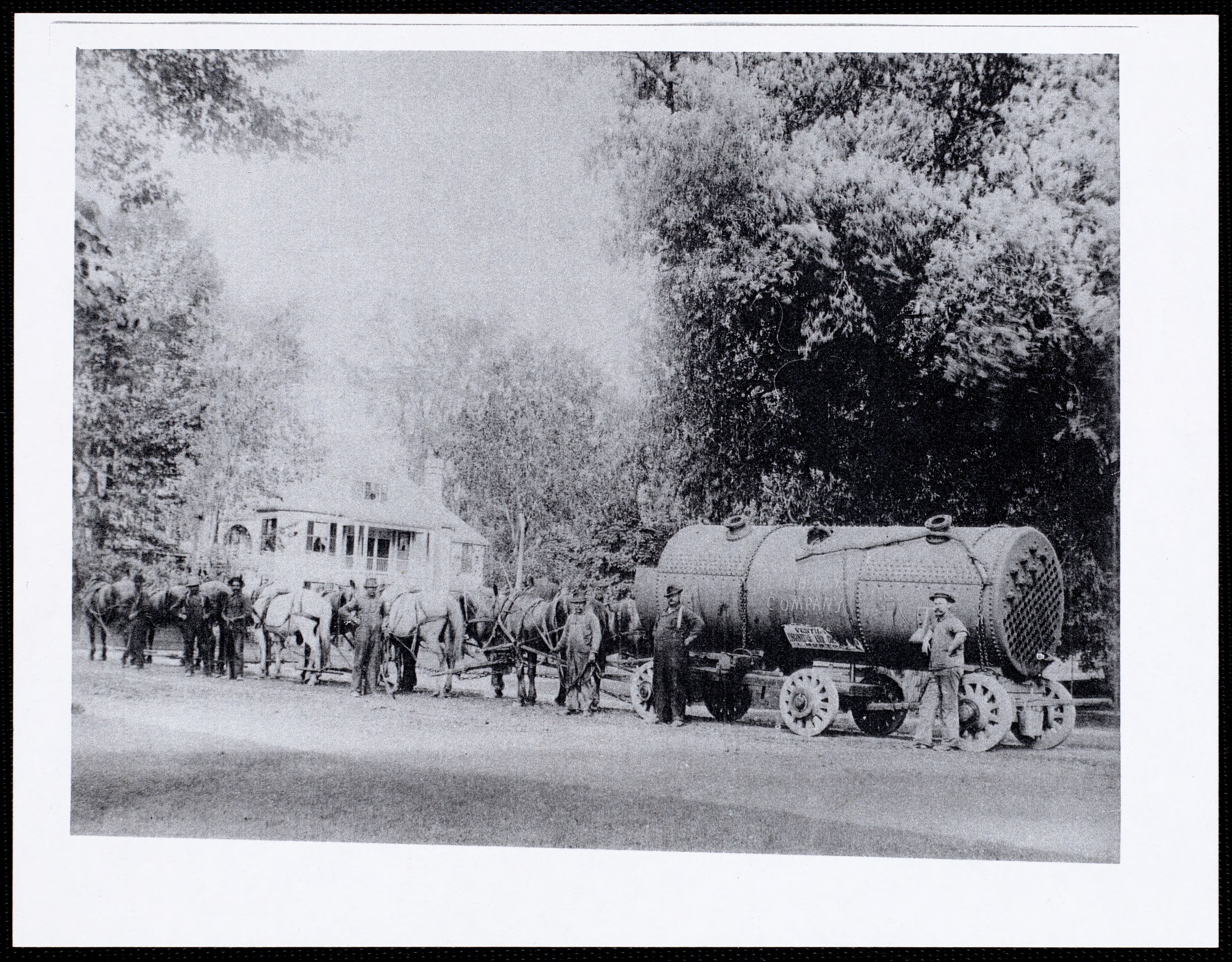
The Lenox Historical Society holds a photograph of the machinery arriving: a steam boiler for the hotel on a low wagon at the foot of Church Hill, hitched to a team of ten horses, with a crowd walking beside it.
The hotel opened in late June 1902, after roughly fifteen months of work, on land that had been offered before that for development as a private community on the model of Tuxedo Park.
III. How big it was
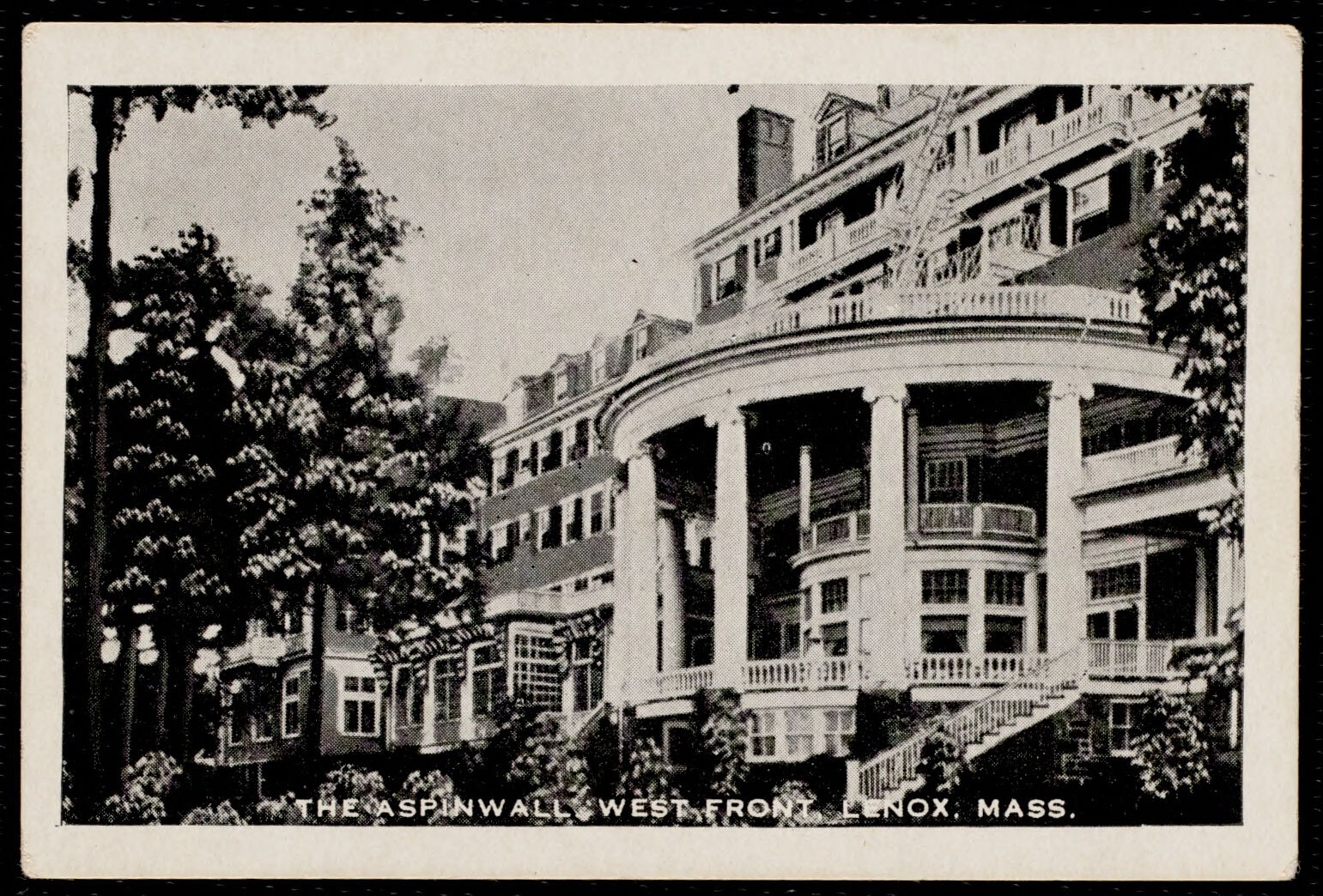
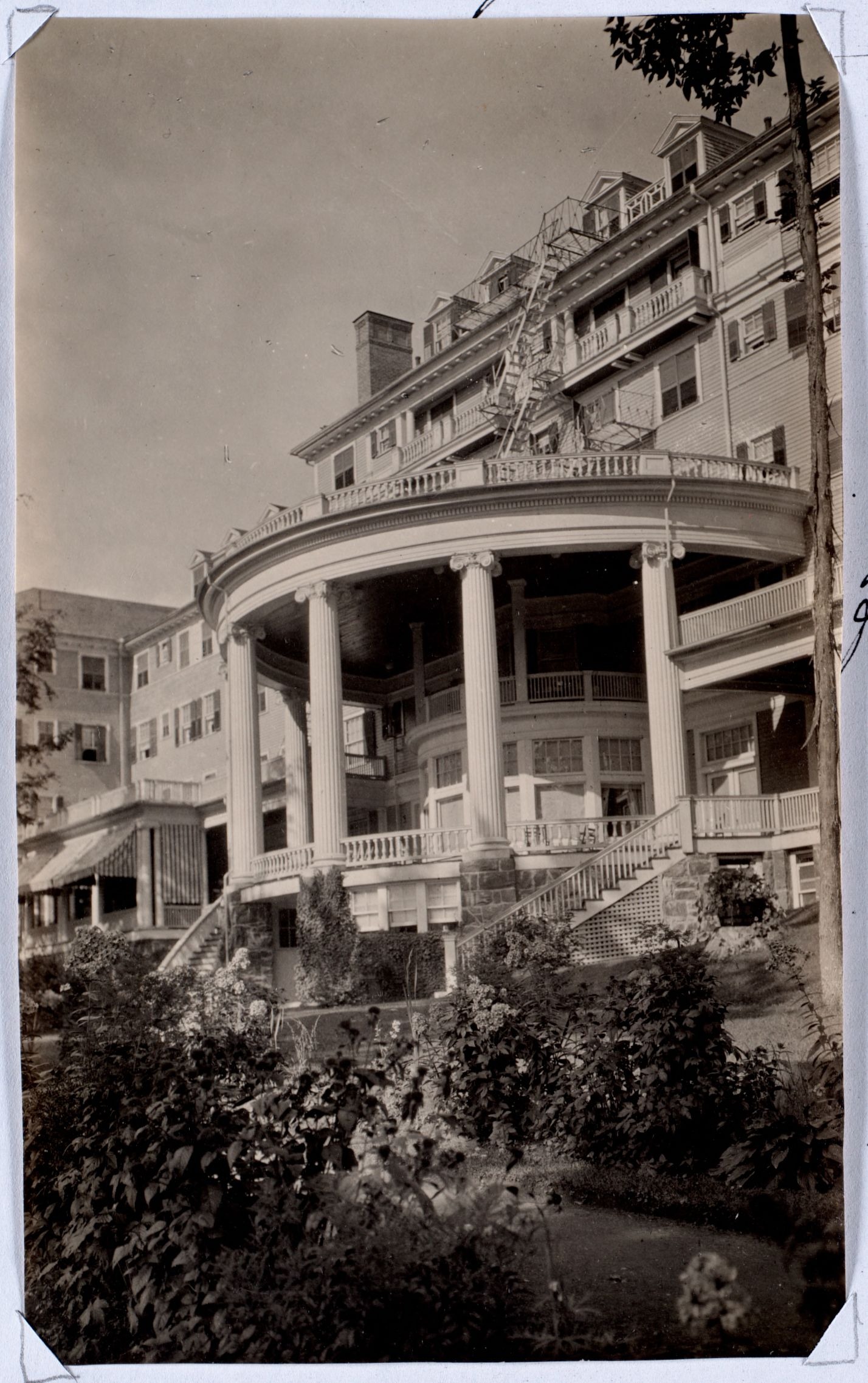
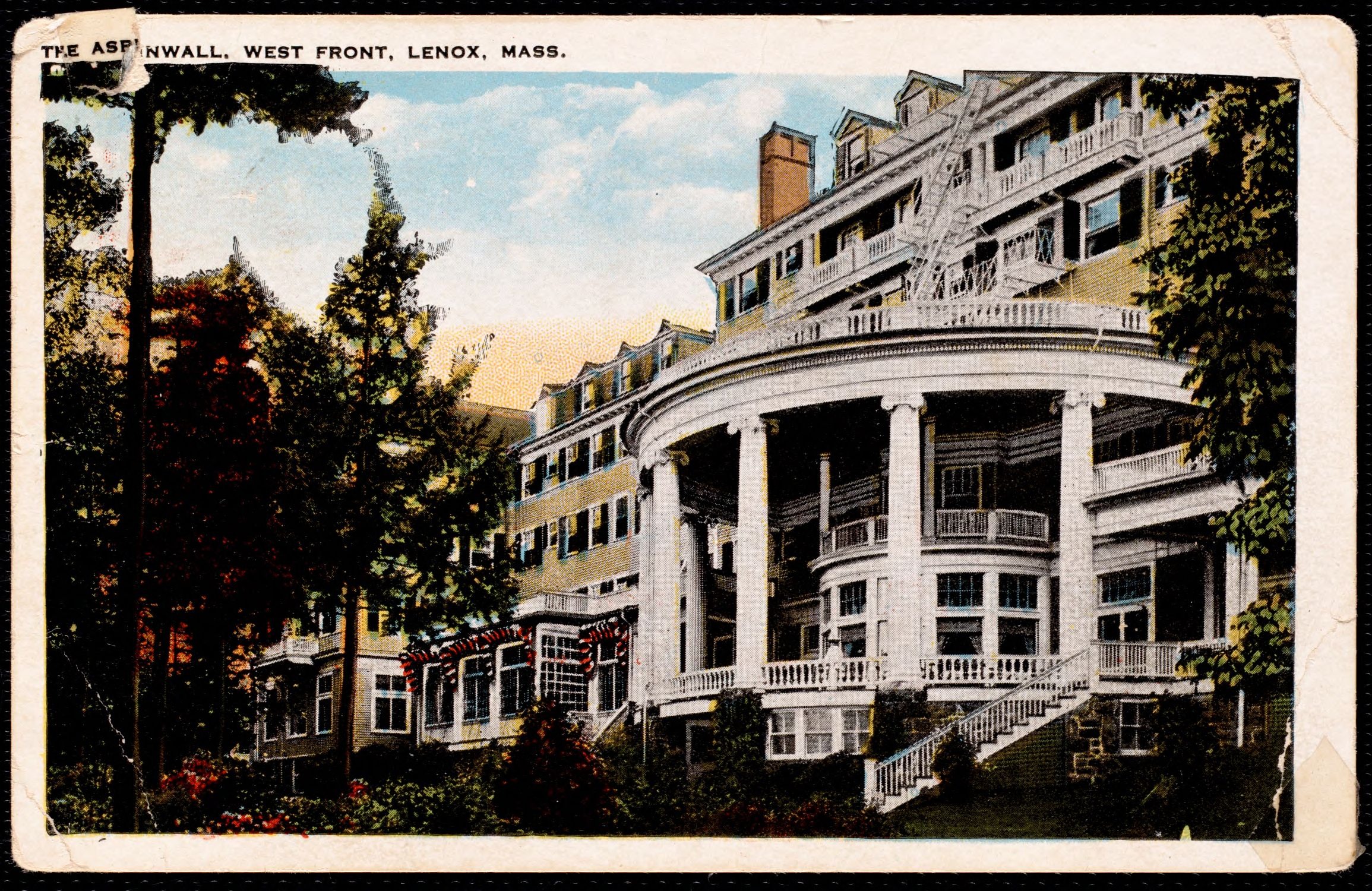
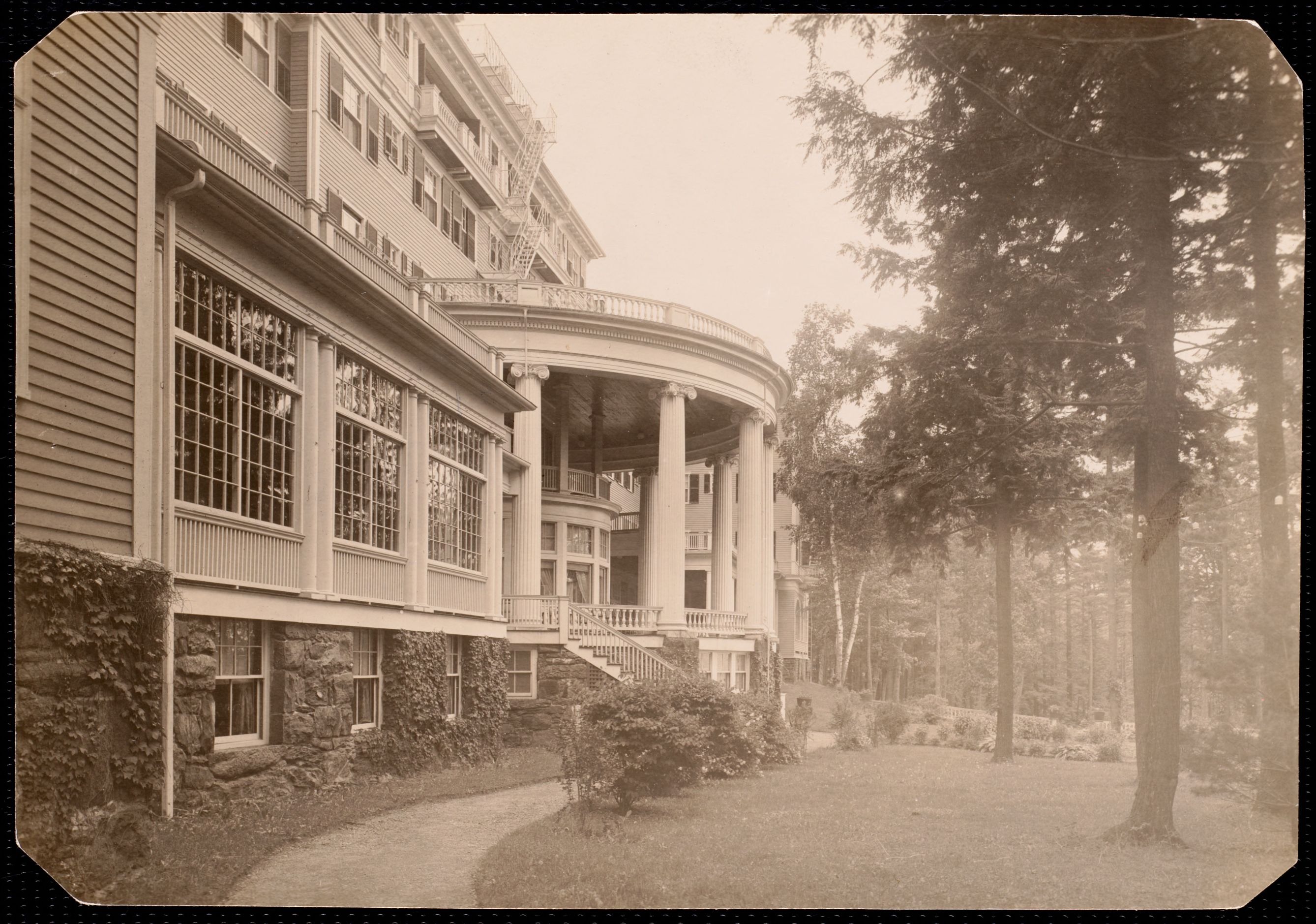
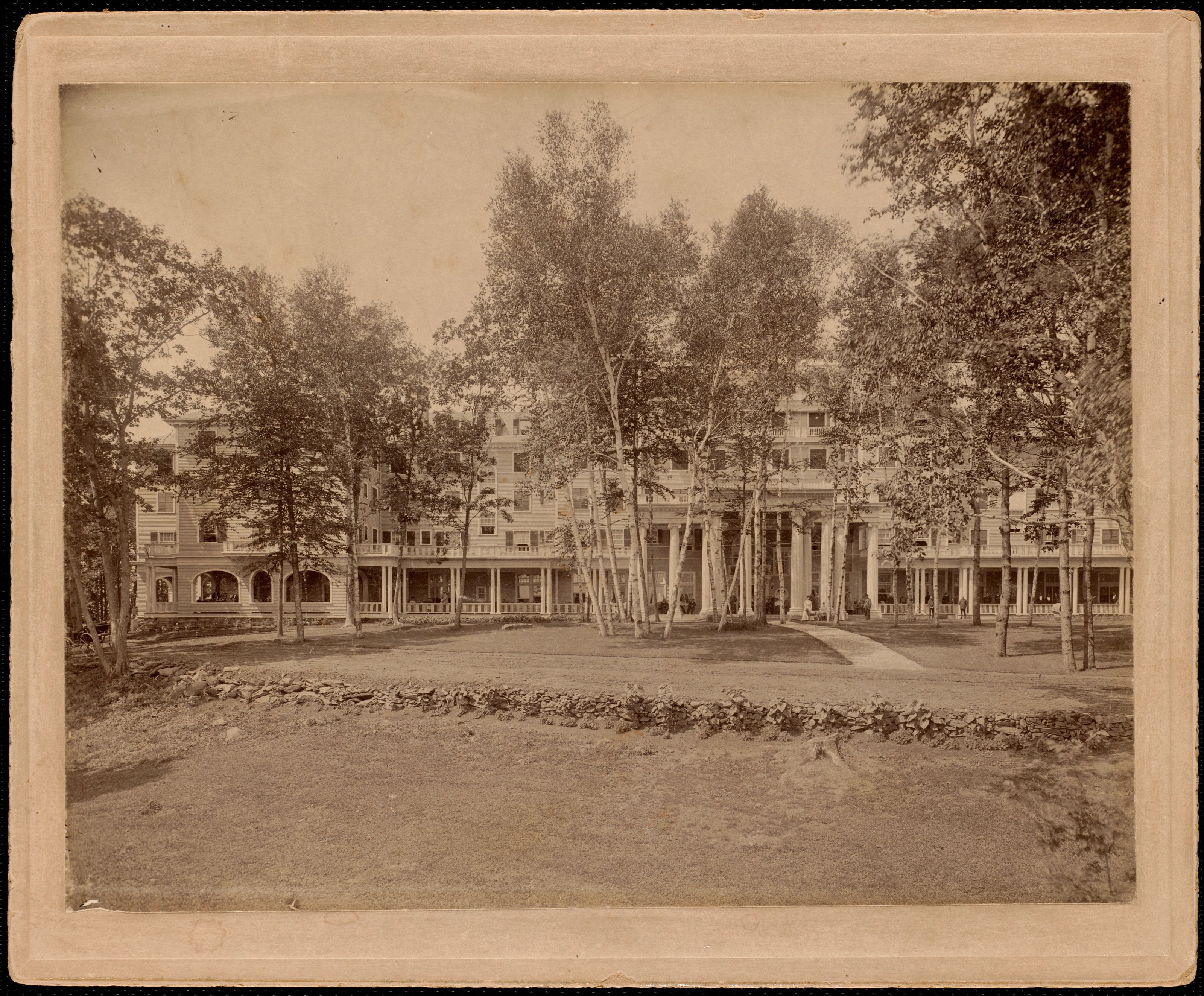
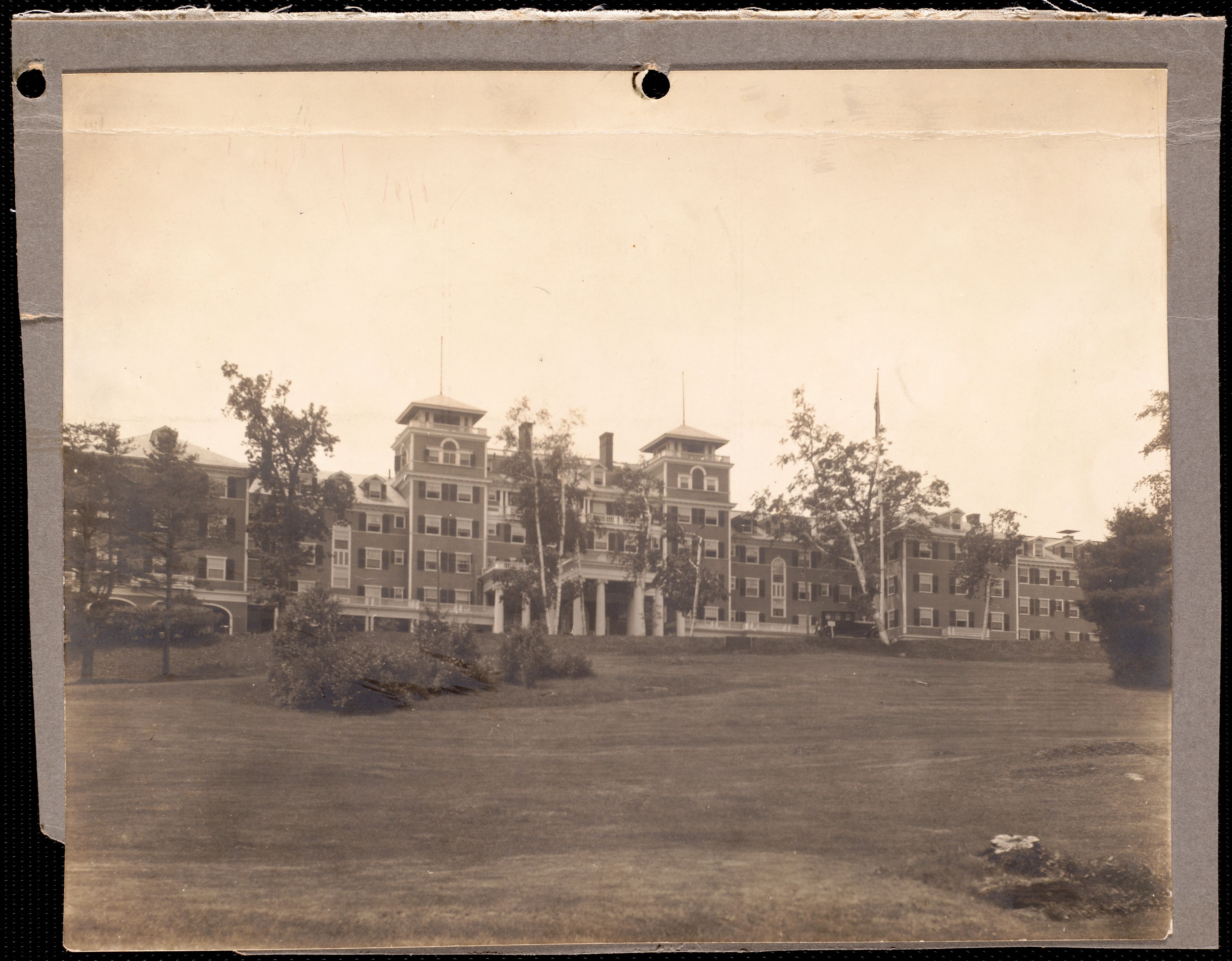
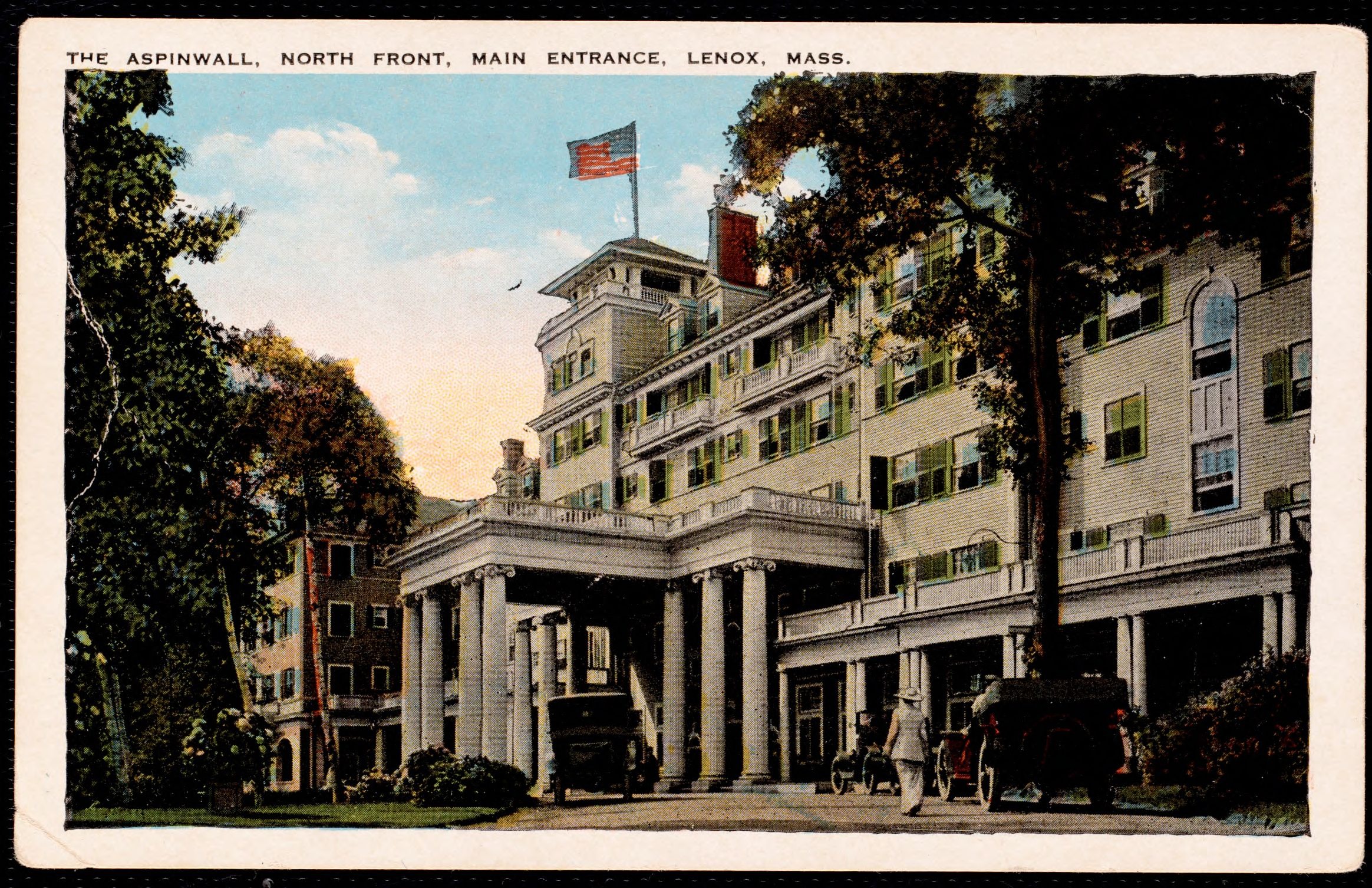
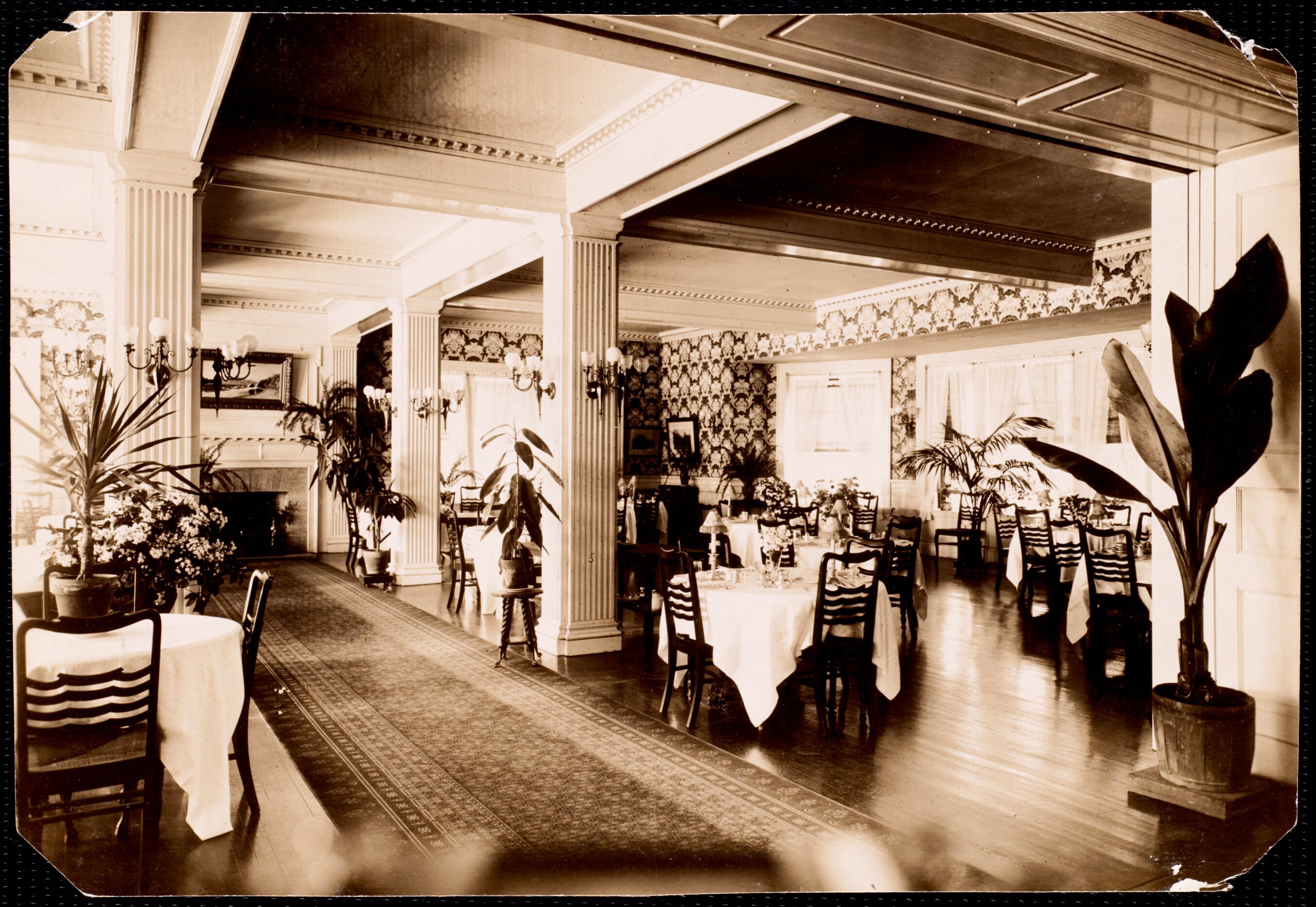
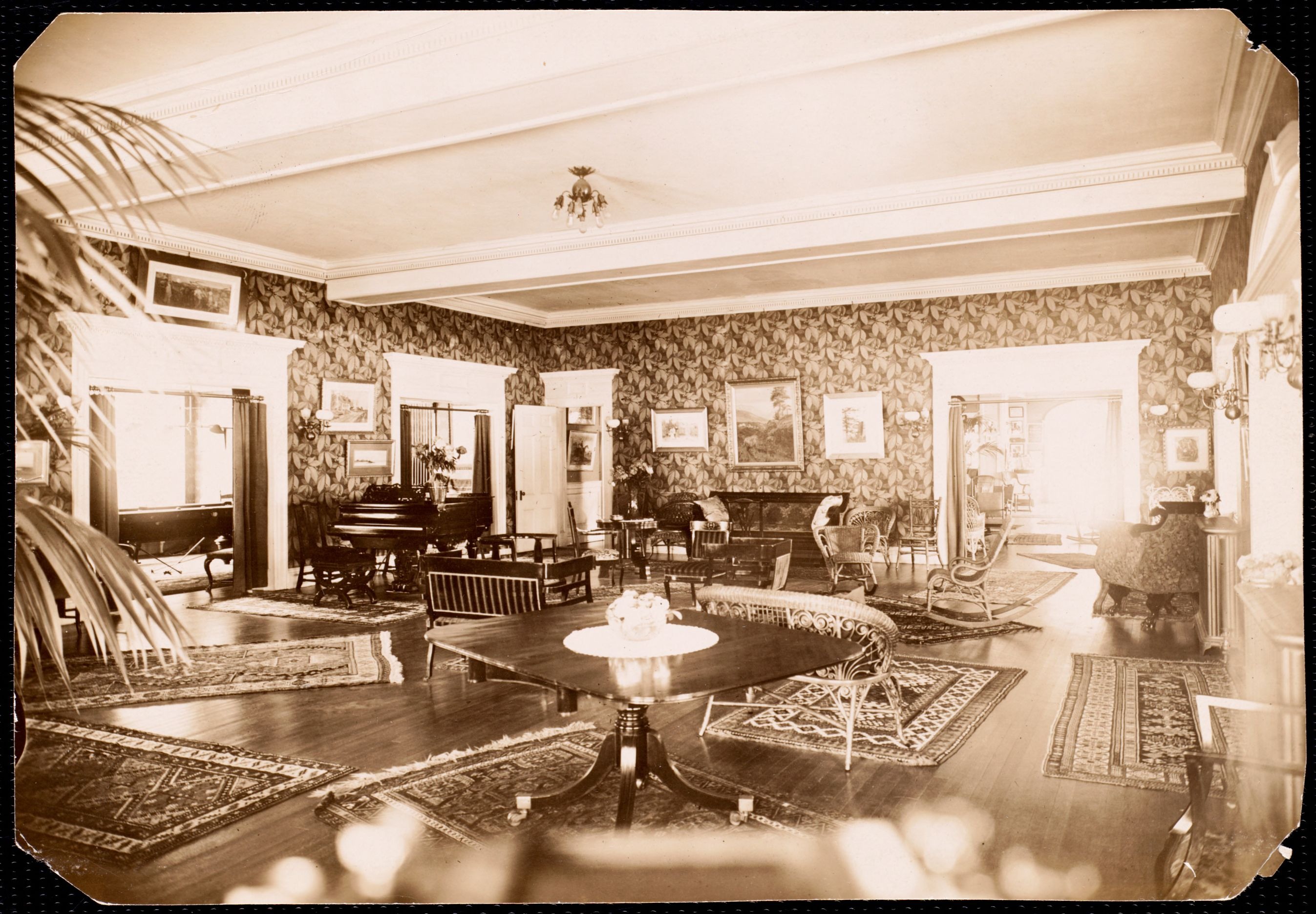
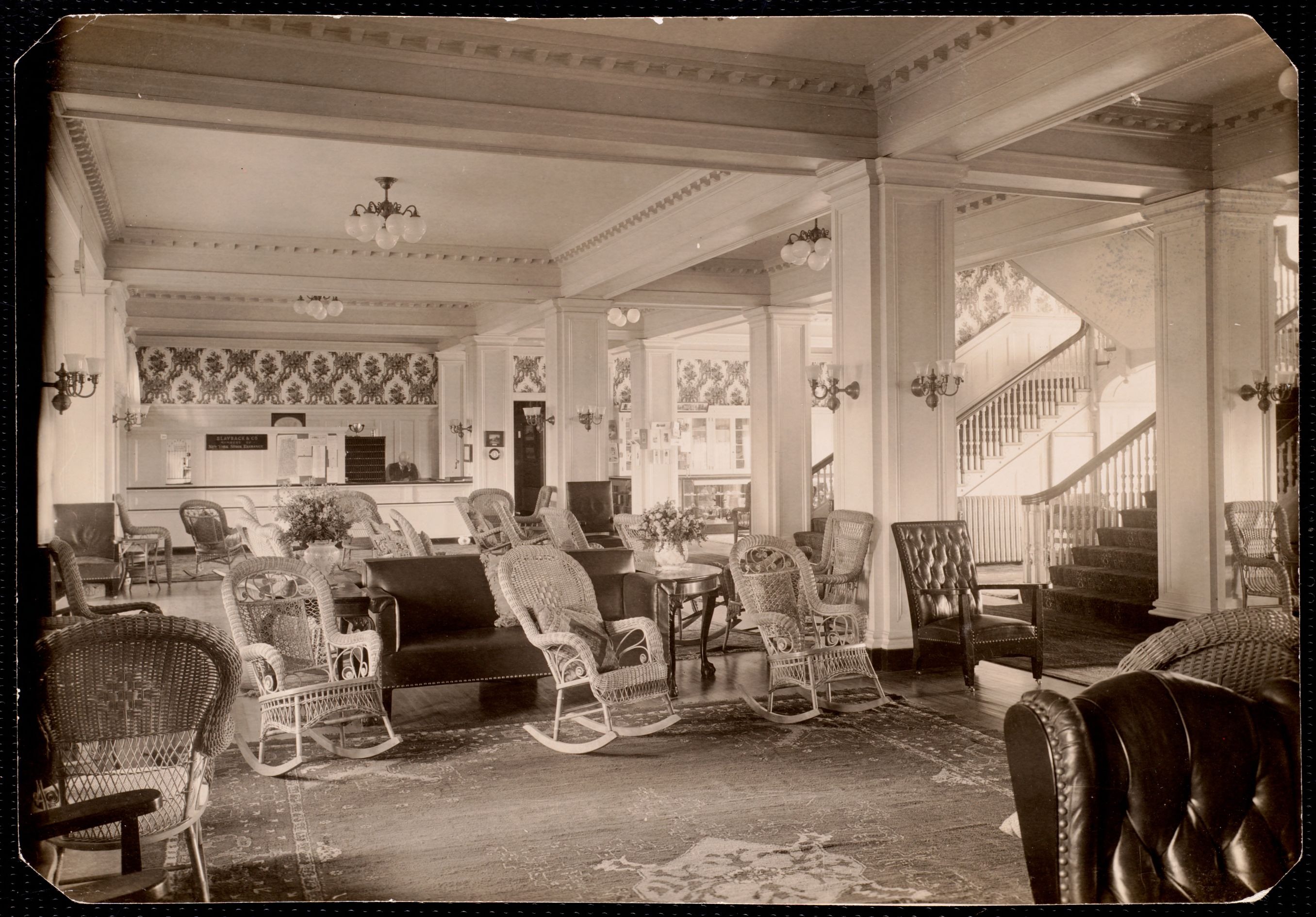
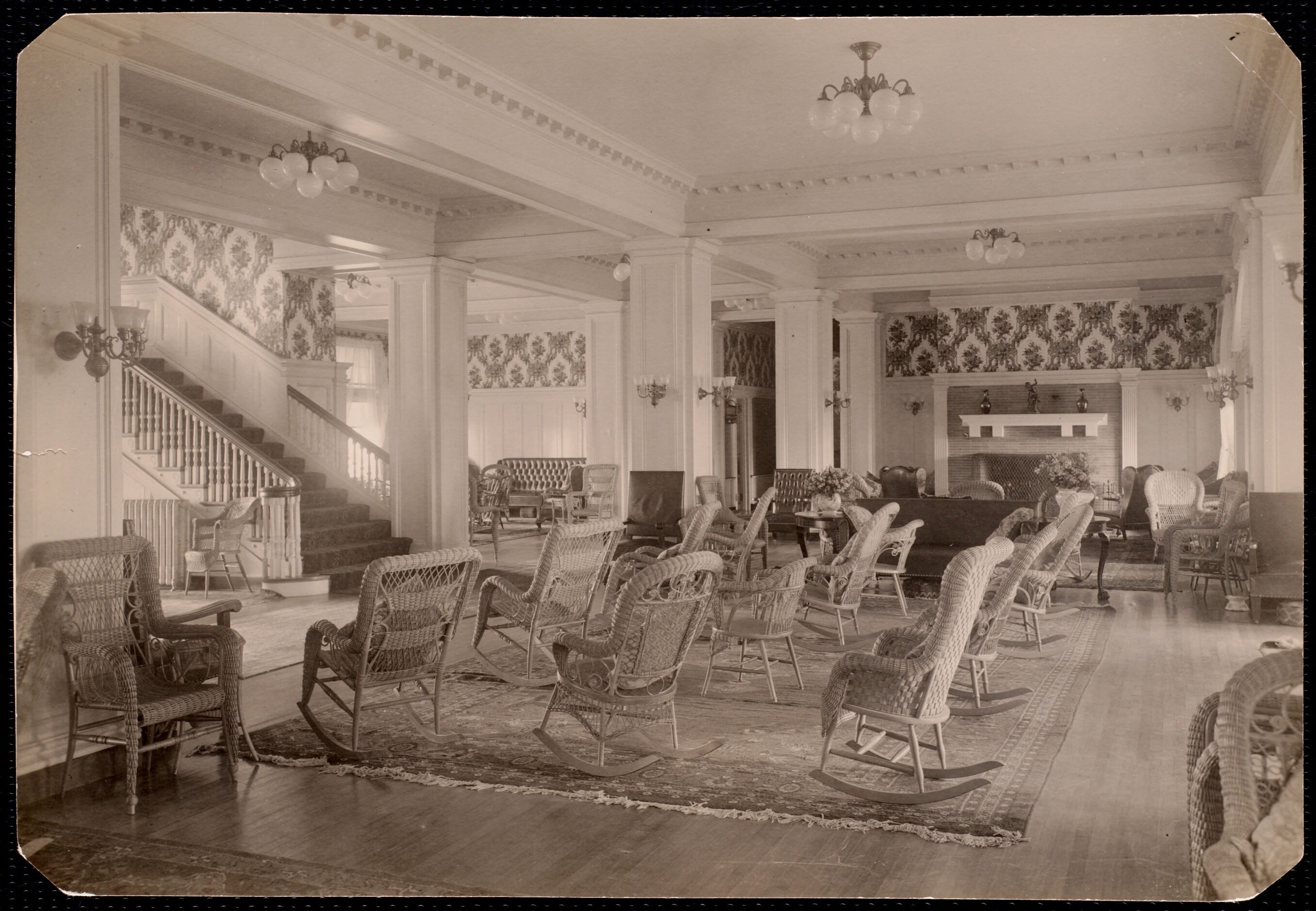
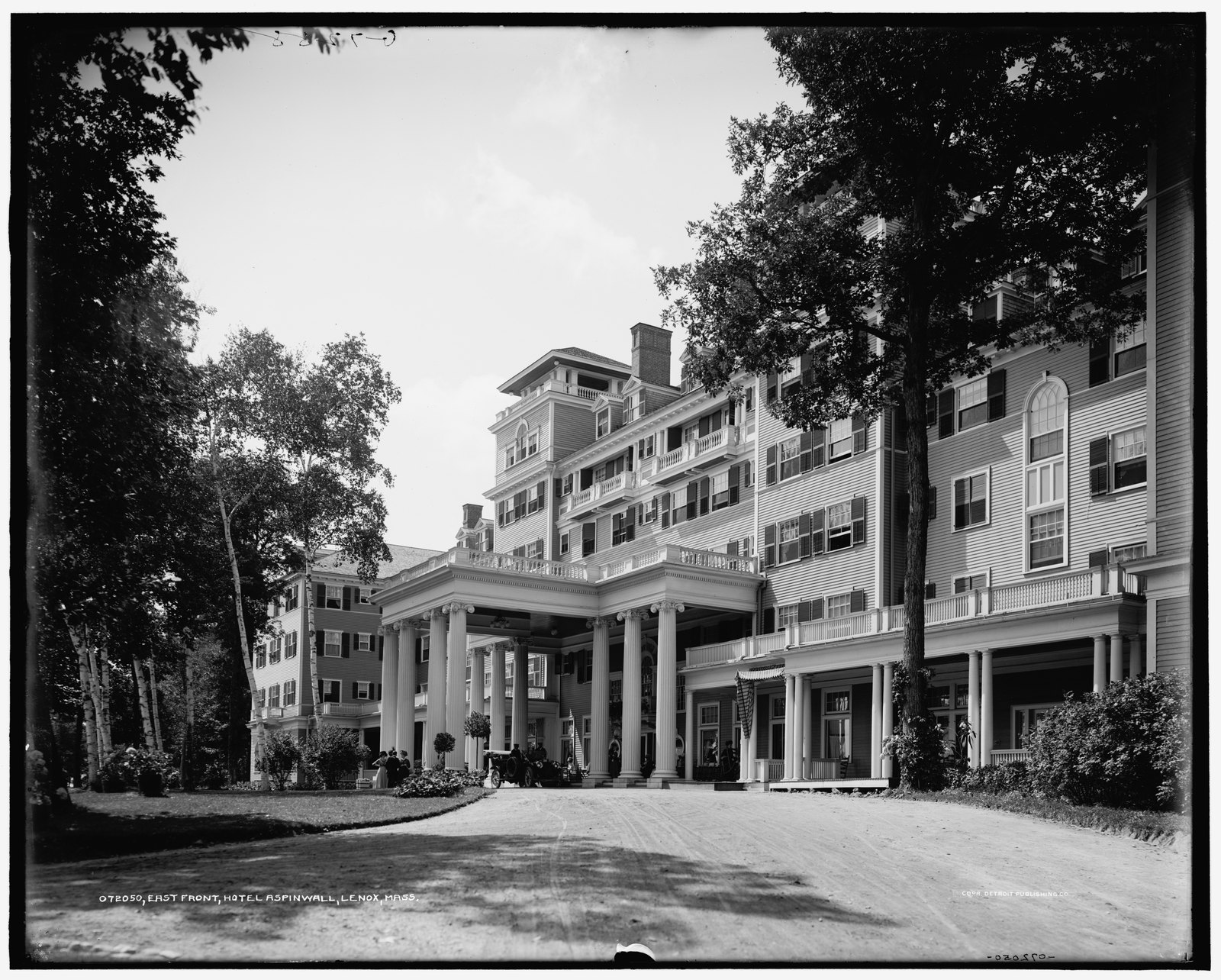
The two fullest accounts disagree, and both are worth having. The Berkshire Eagle gives 250 guest rooms out of 310 rooms in all, accommodation for about 400 people, a ballroom seating five hundred, an eleven-thousand-foot veranda running round the building, a dancing piazza twenty-eight feet wide, a concert rotunda with an orchestra, ten miles of motor and riding trails, and 410 acres. Lost New England gives 225 guest rooms, capacity 425, and over 400 acres.
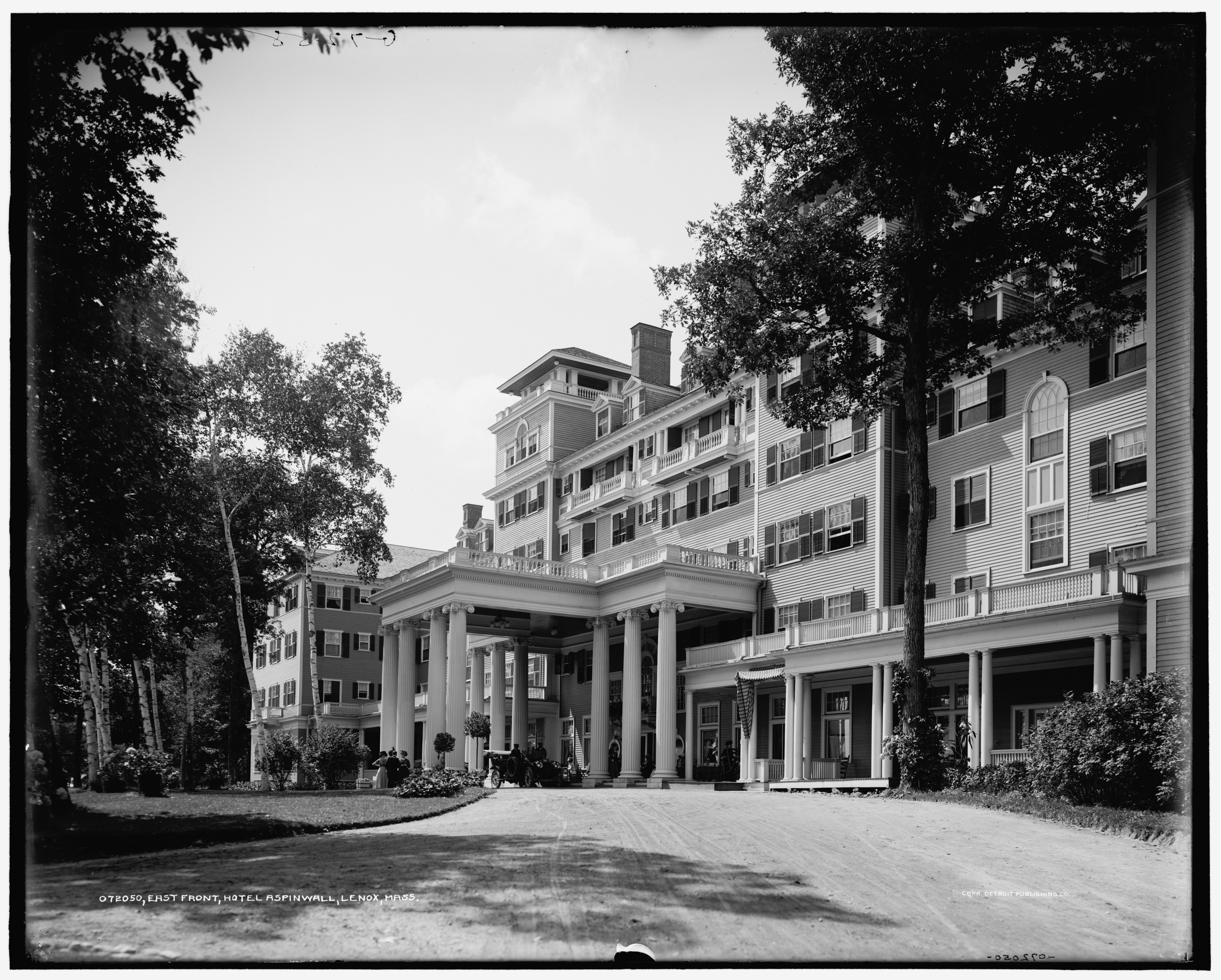
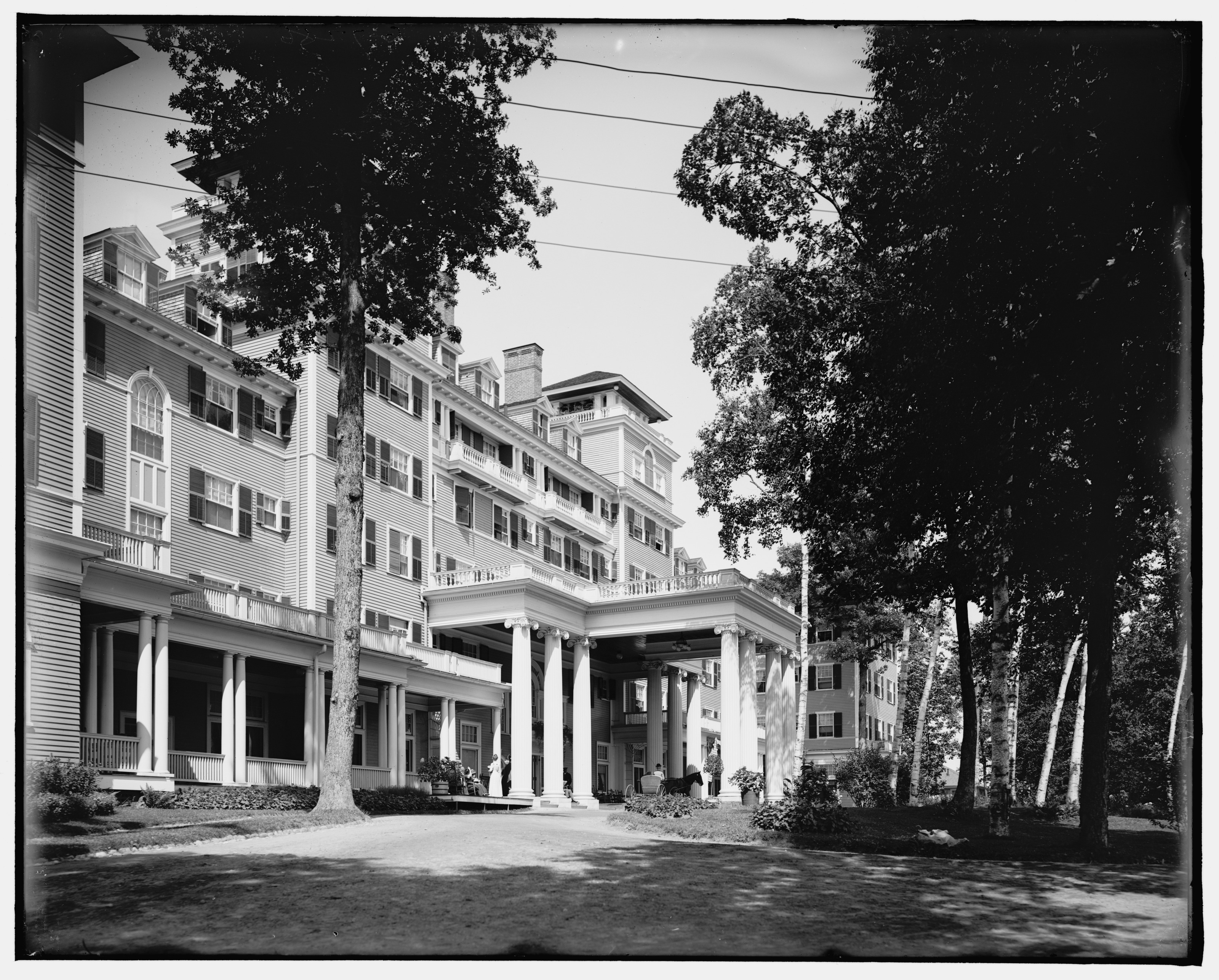
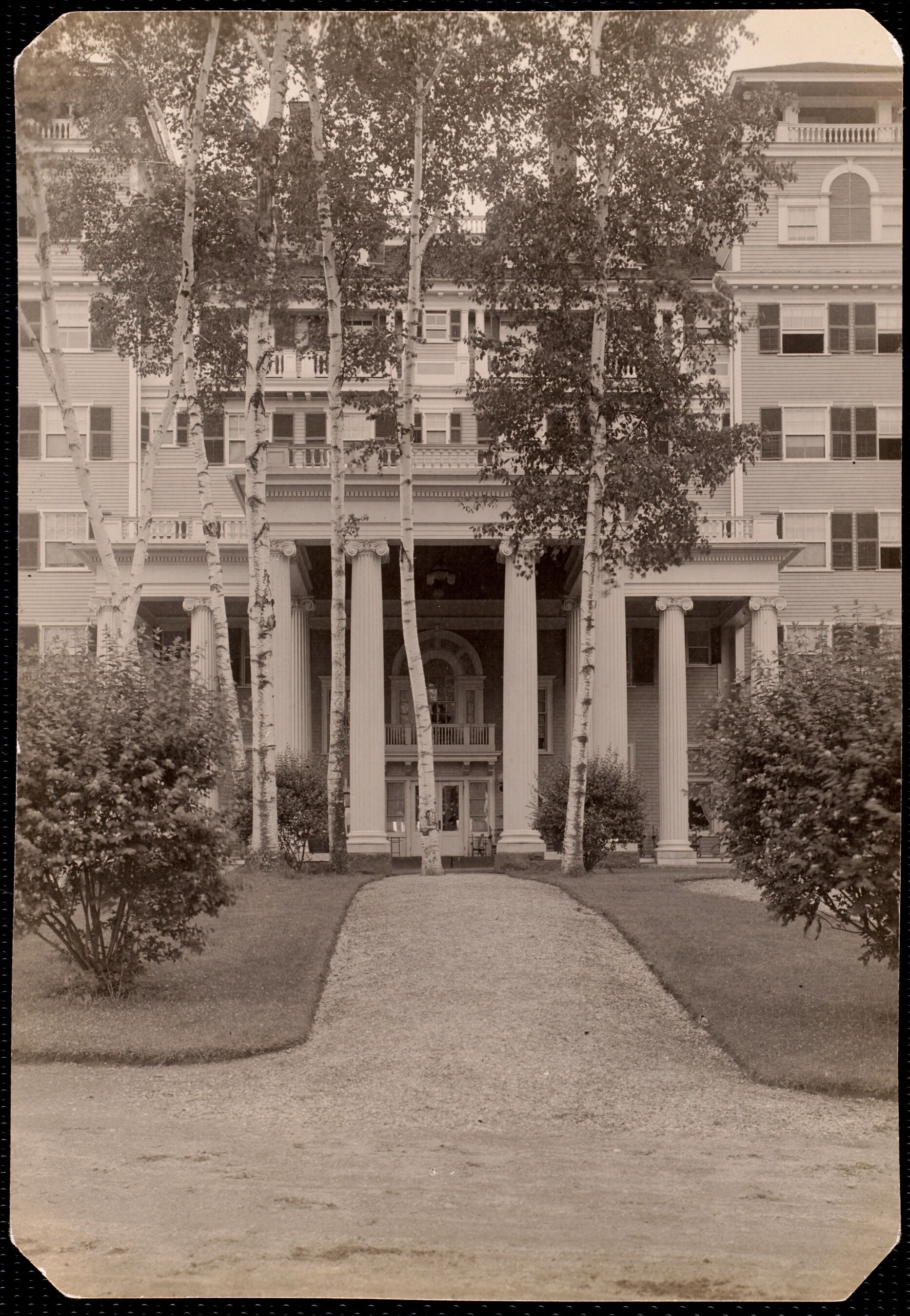
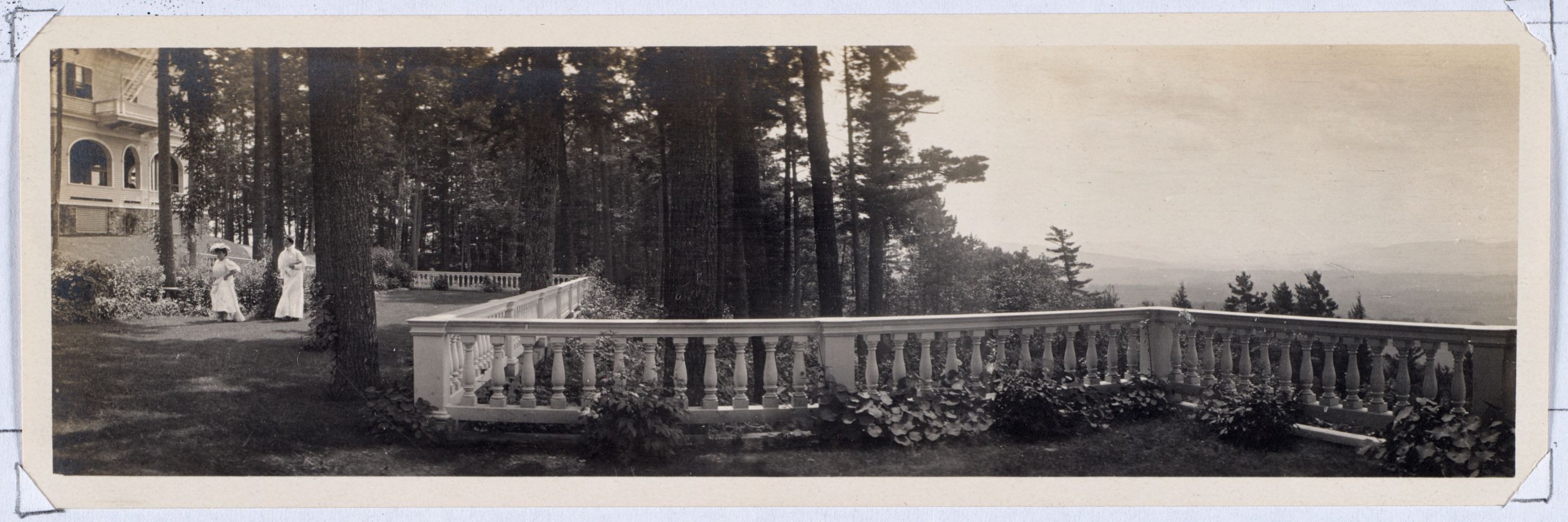
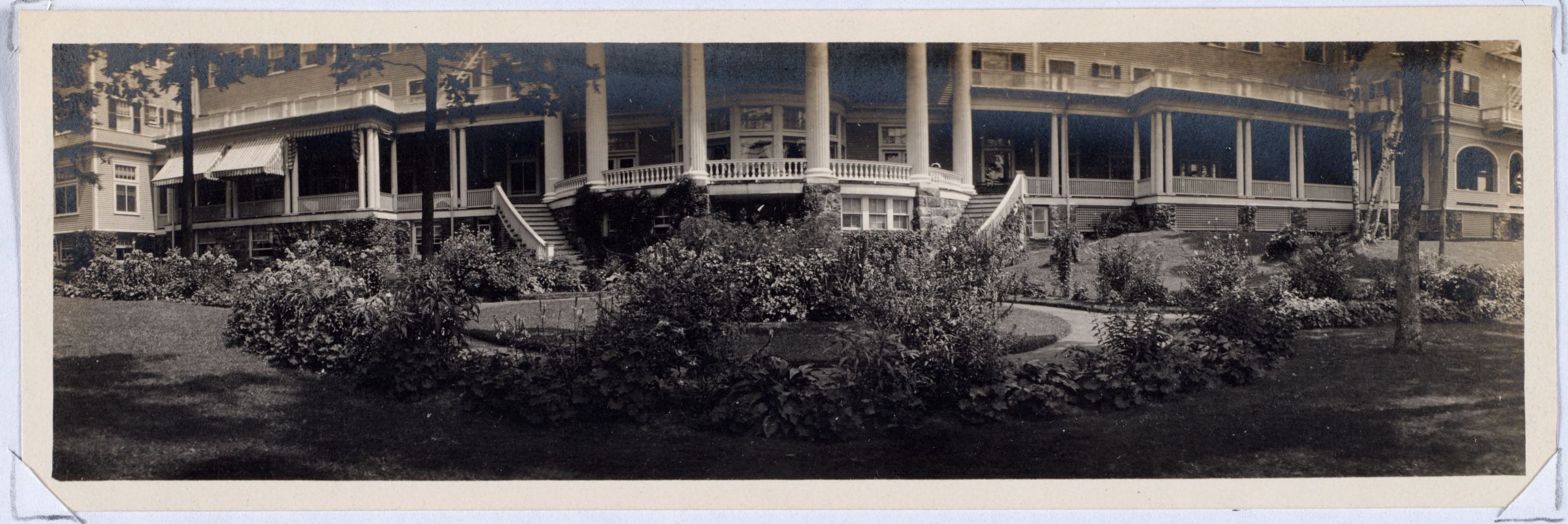
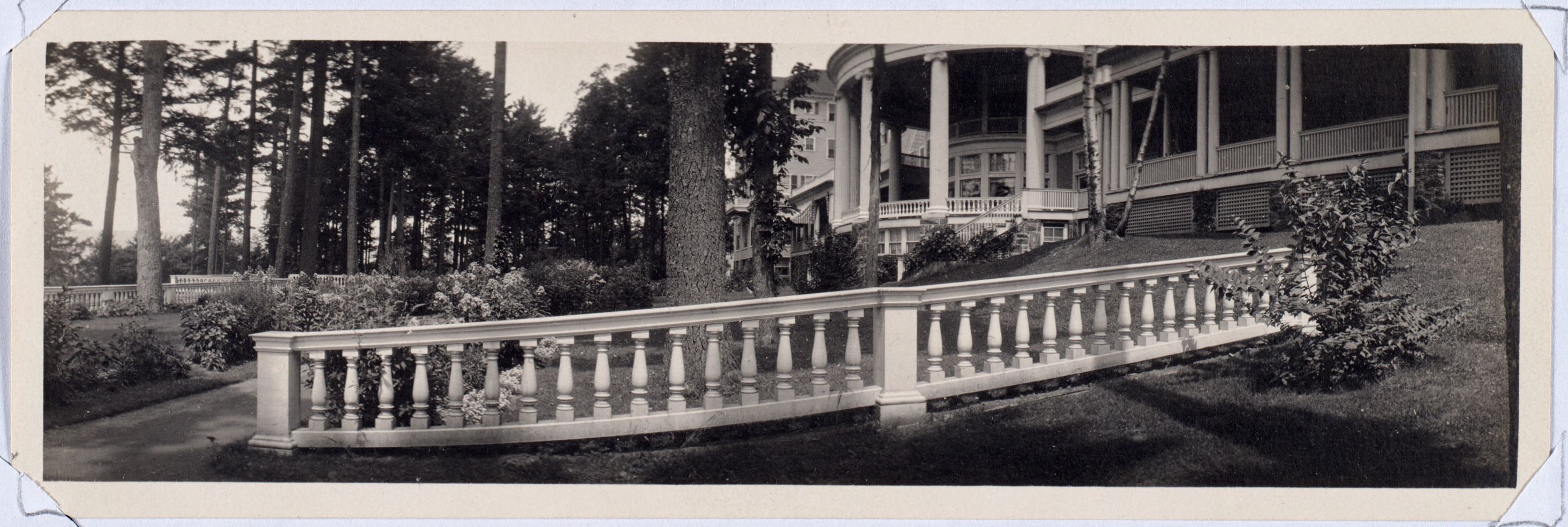
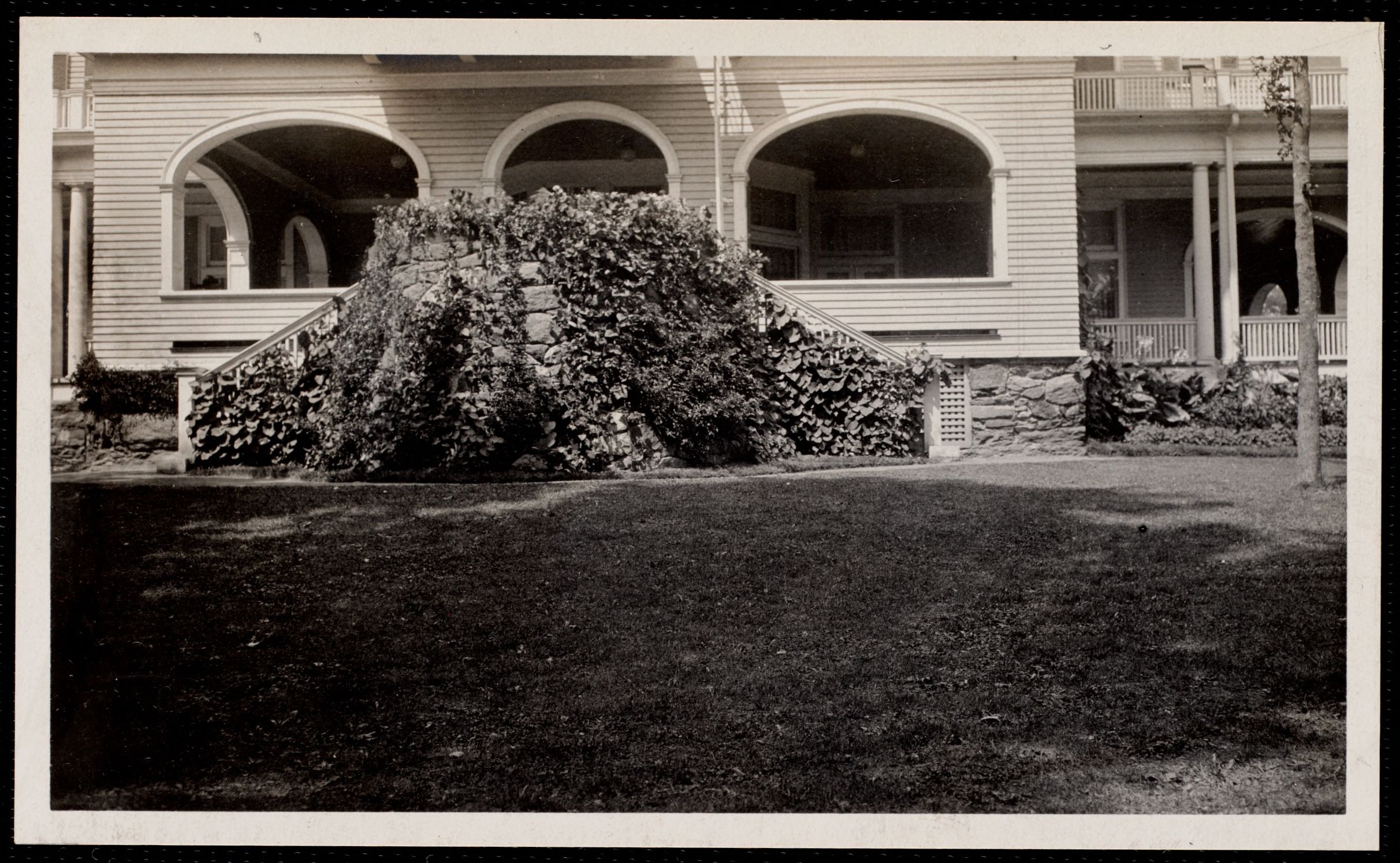
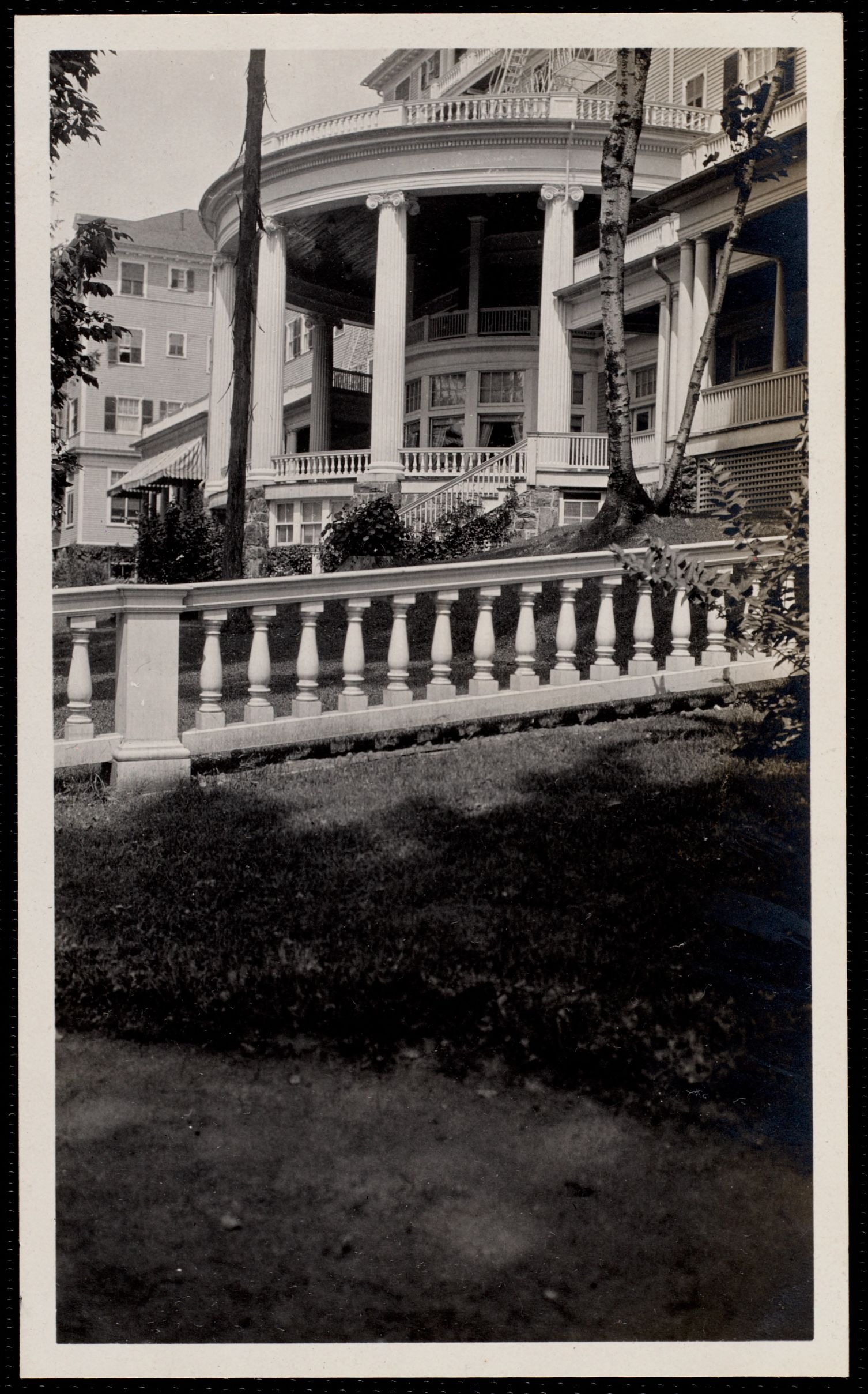
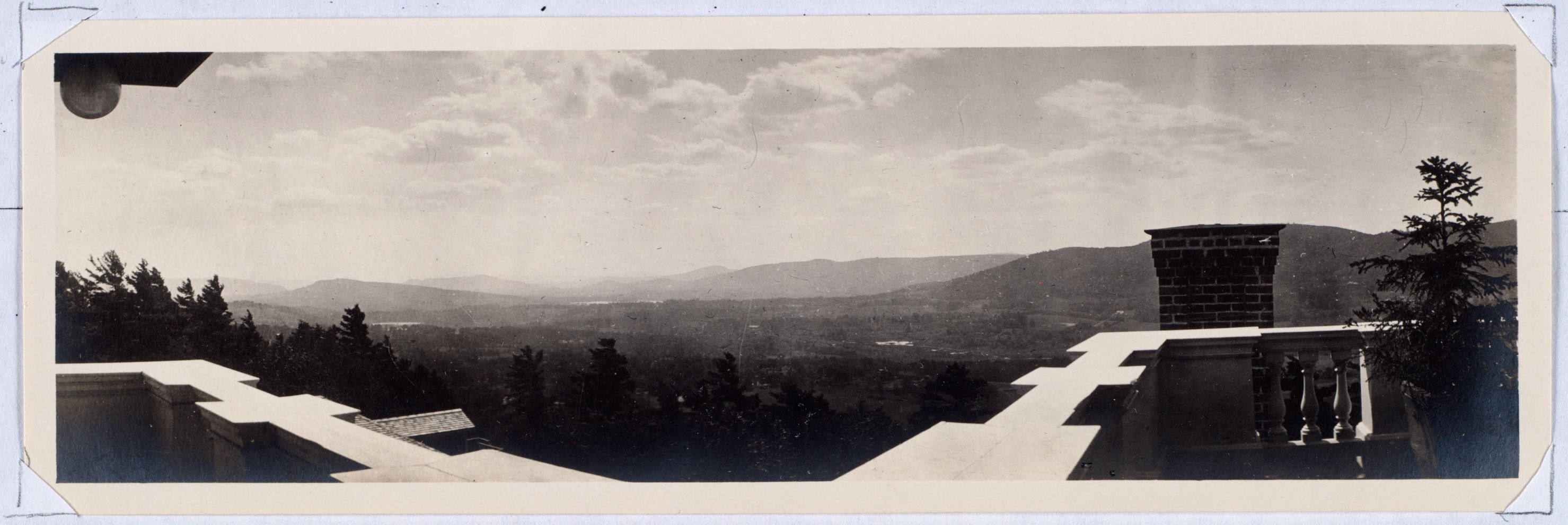
The photographs support the general scale without settling the count. The plate catalogued “Aspinwall Hotel: whole front” had to be taken from a long way back. The Detroit Publishing Company’s “East front” shows a two-story columned portico with wings running out of the frame on both sides; the panoramic prints of the southern porch and the south west piazza show a veranda that simply leaves the picture at each end.
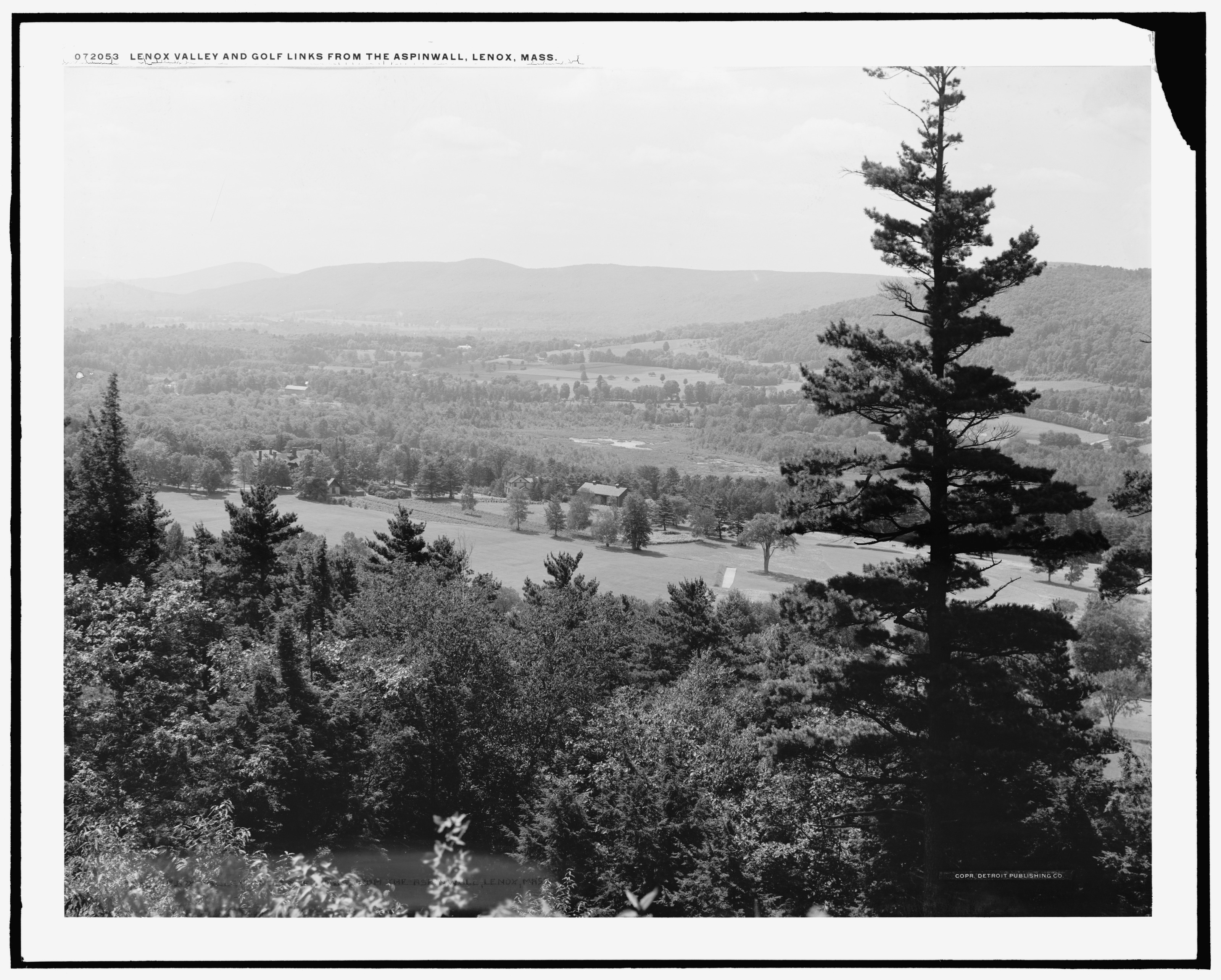
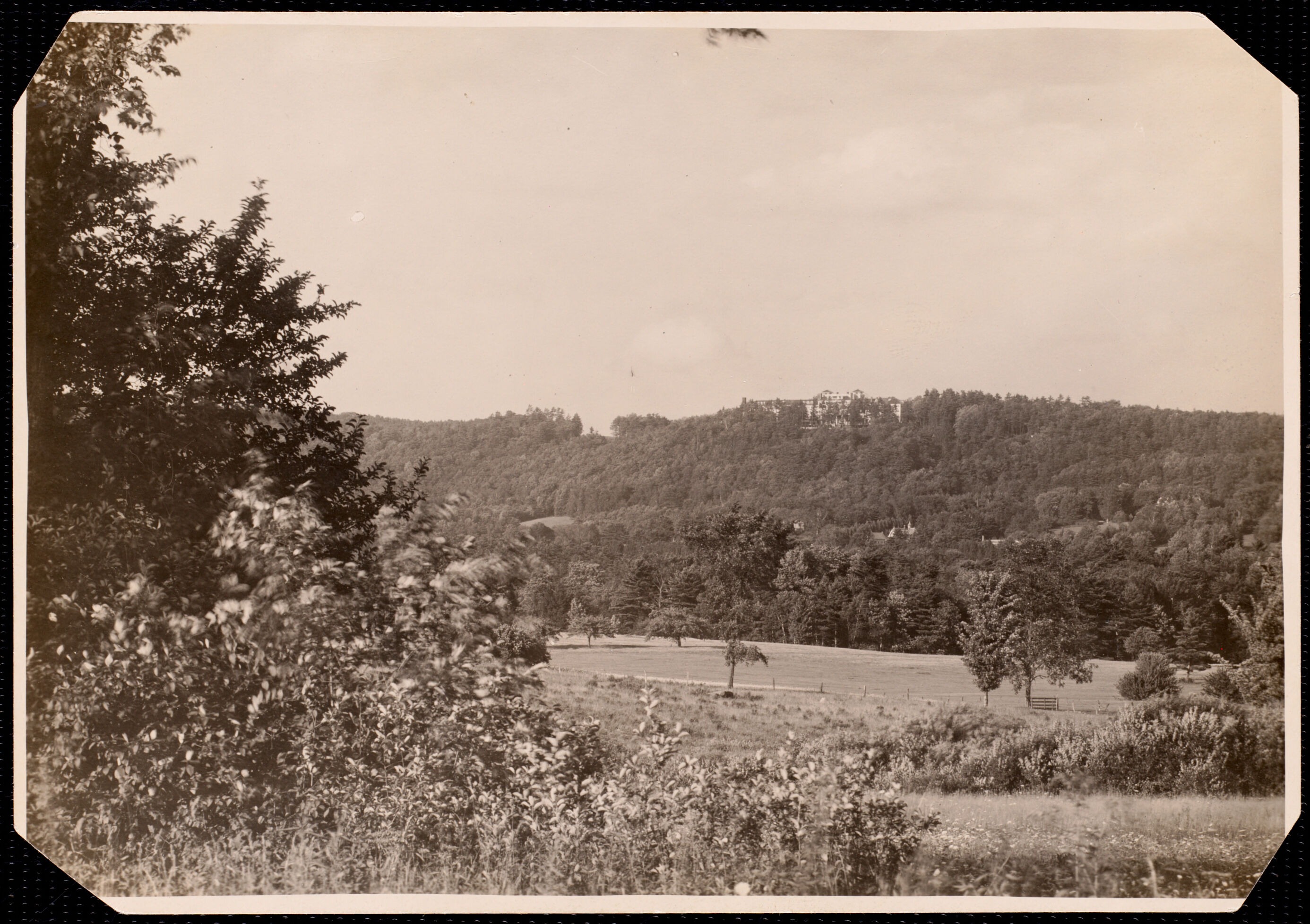
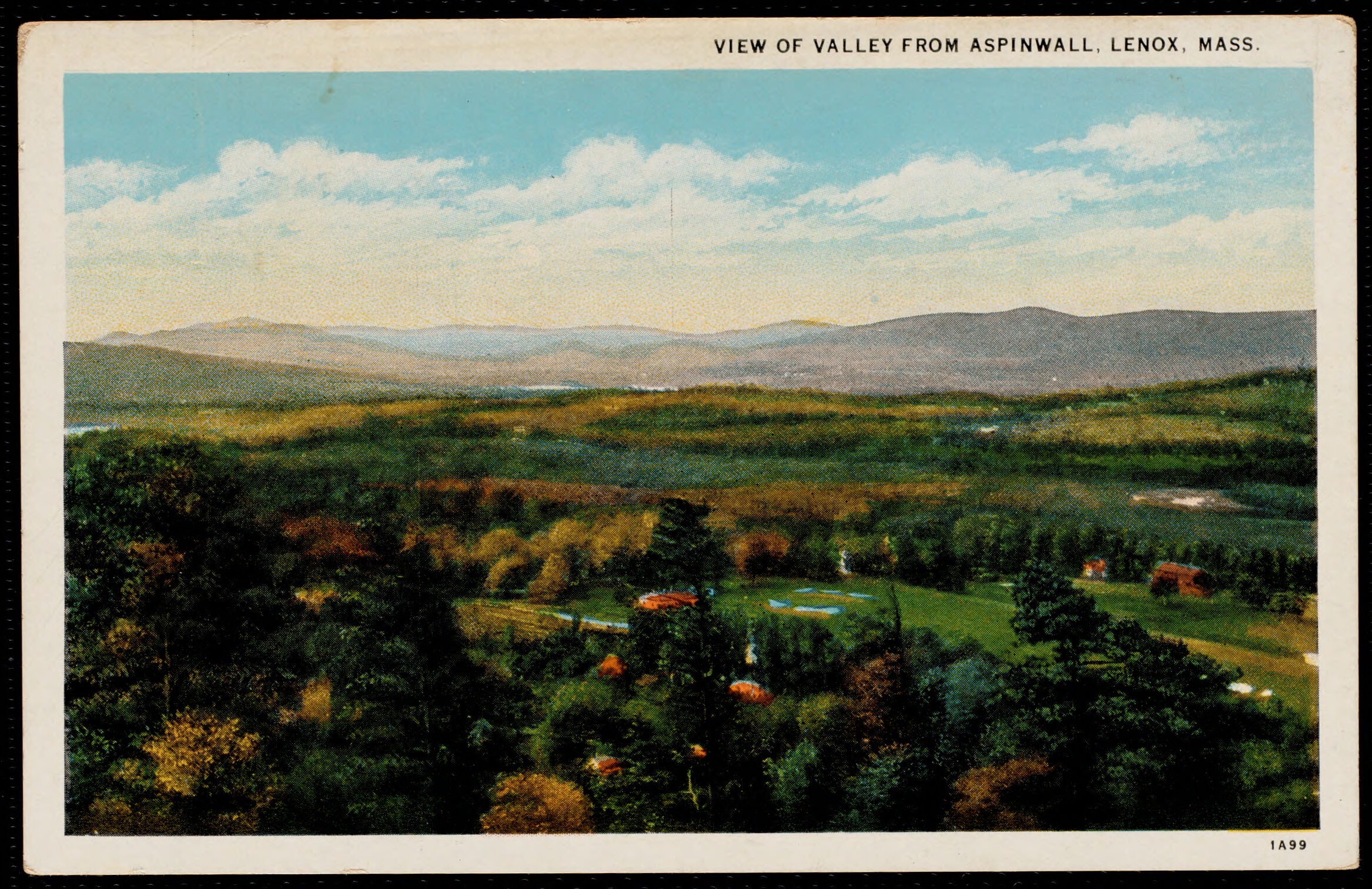
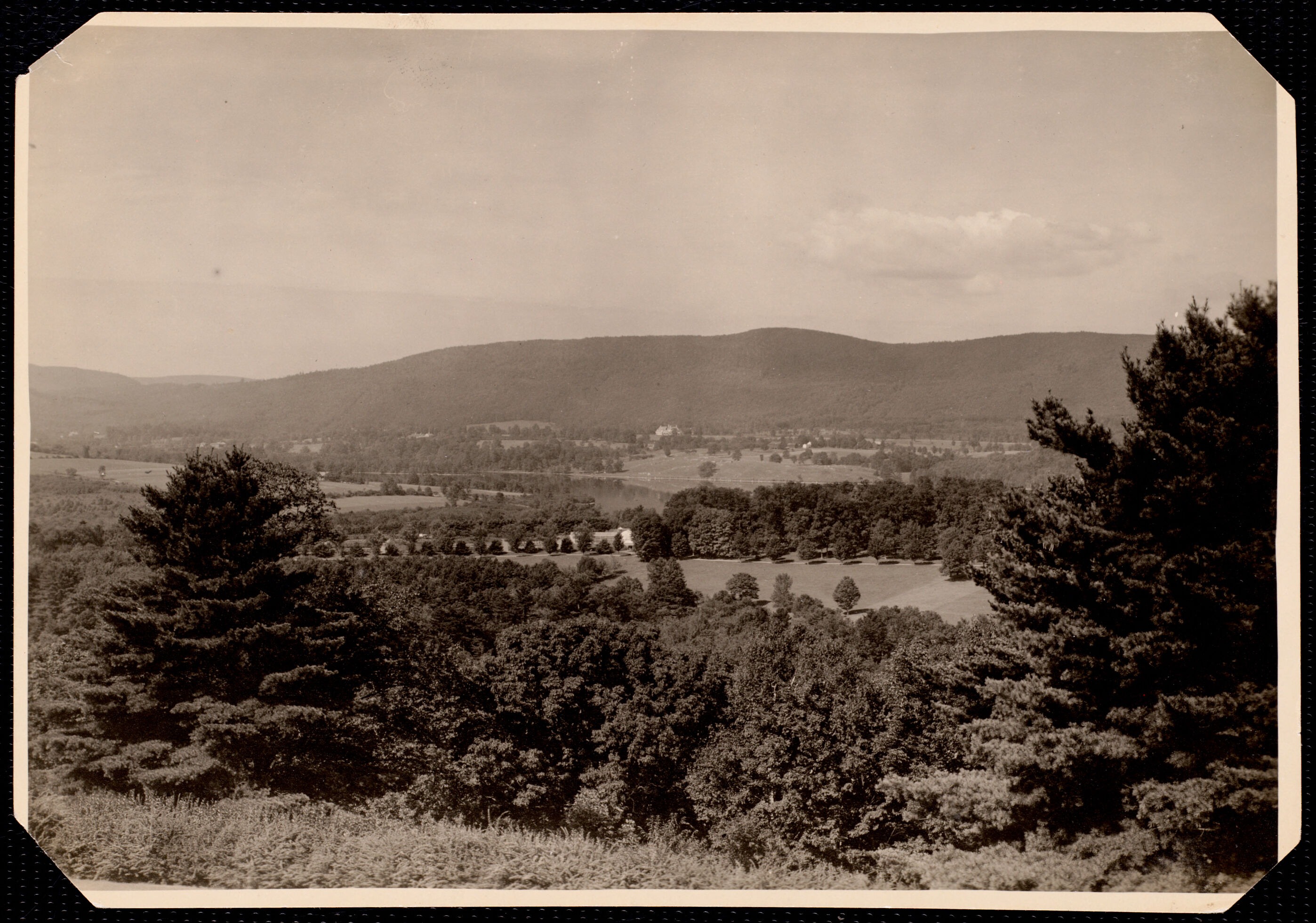
One caption does raise a question. A Detroit plate dated between 1905 and 1915 is titled “Lenox Valley and golf links, from the [Hotel] Aspinwall” — so there were links in the view early on. The Berkshire Eagle says guests played at the Lenox Country Club nearby; Lost New England says a nine-hole course and a baseball field were added on the hotel’s own land in the early 1930s. Both can be true; the photograph does not tell us whose links it shows.
IV. Two weeks in the summer of 1906
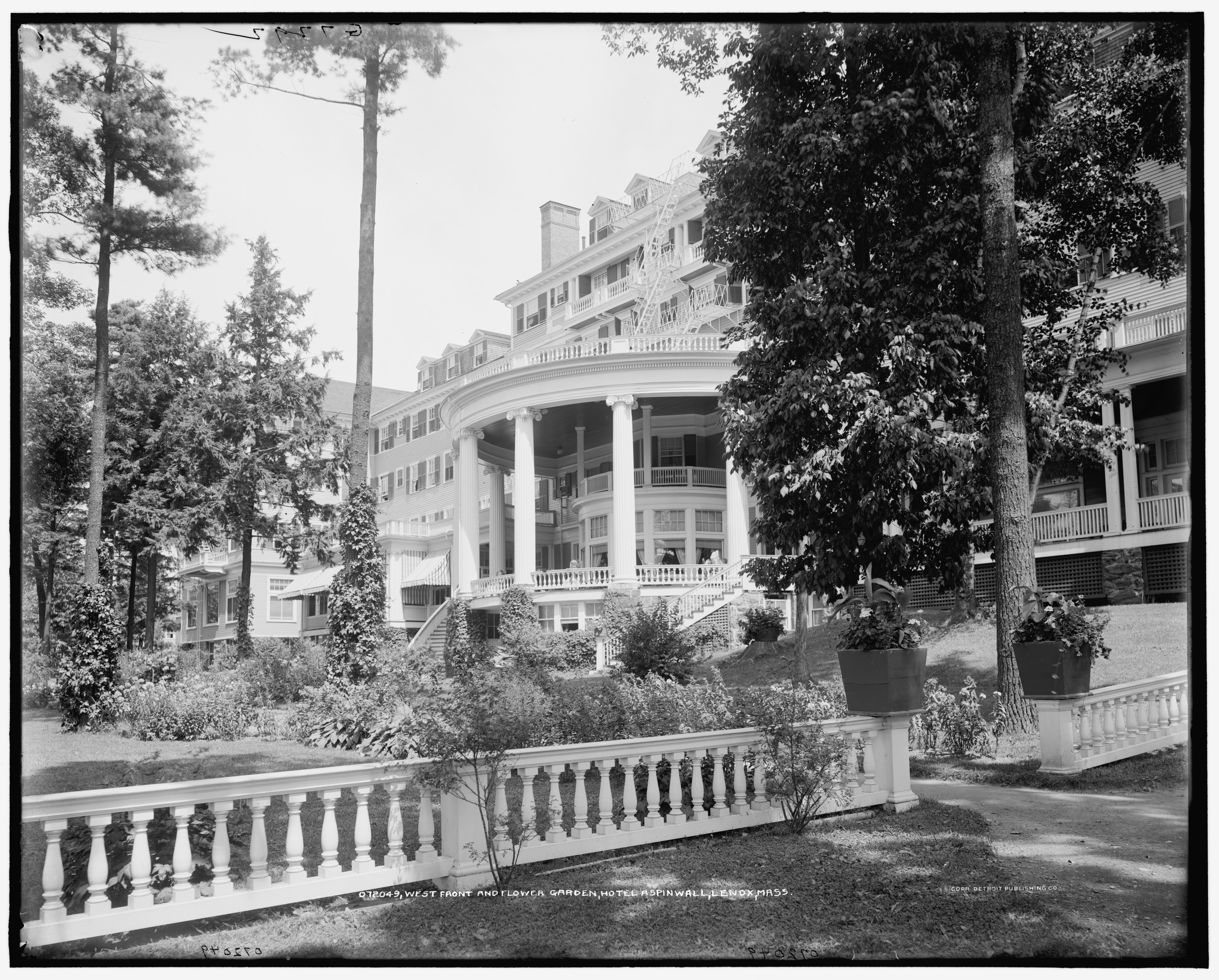
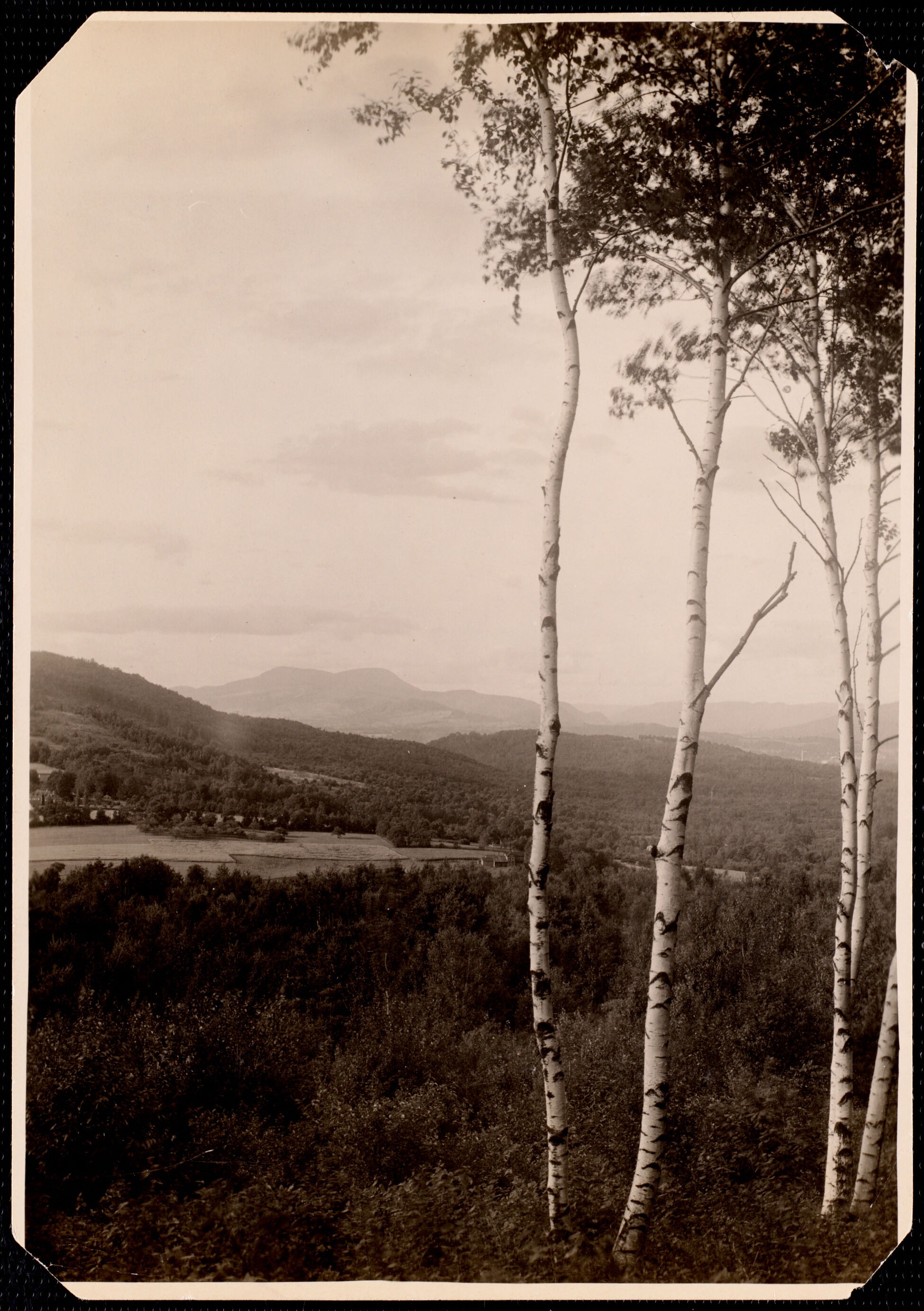
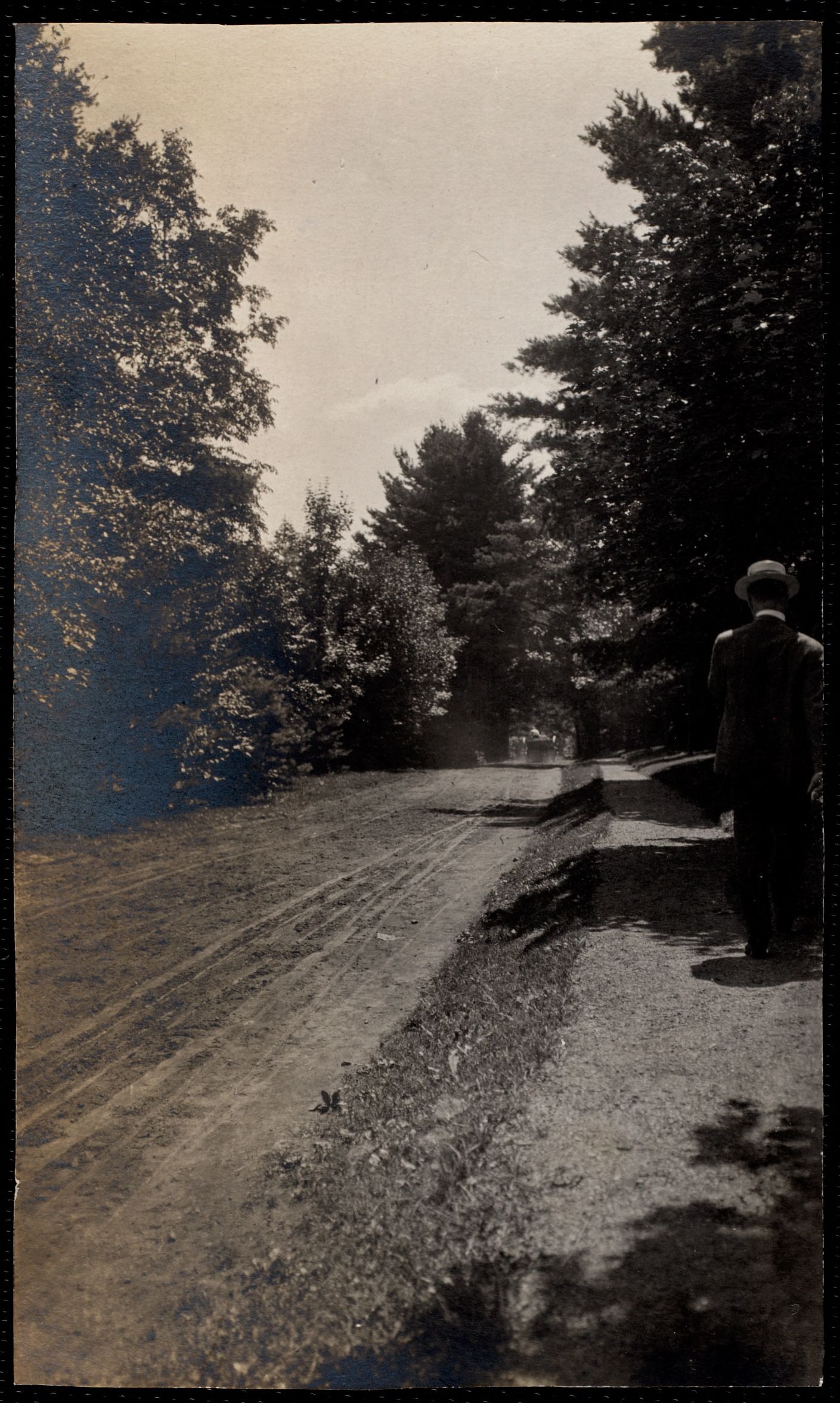
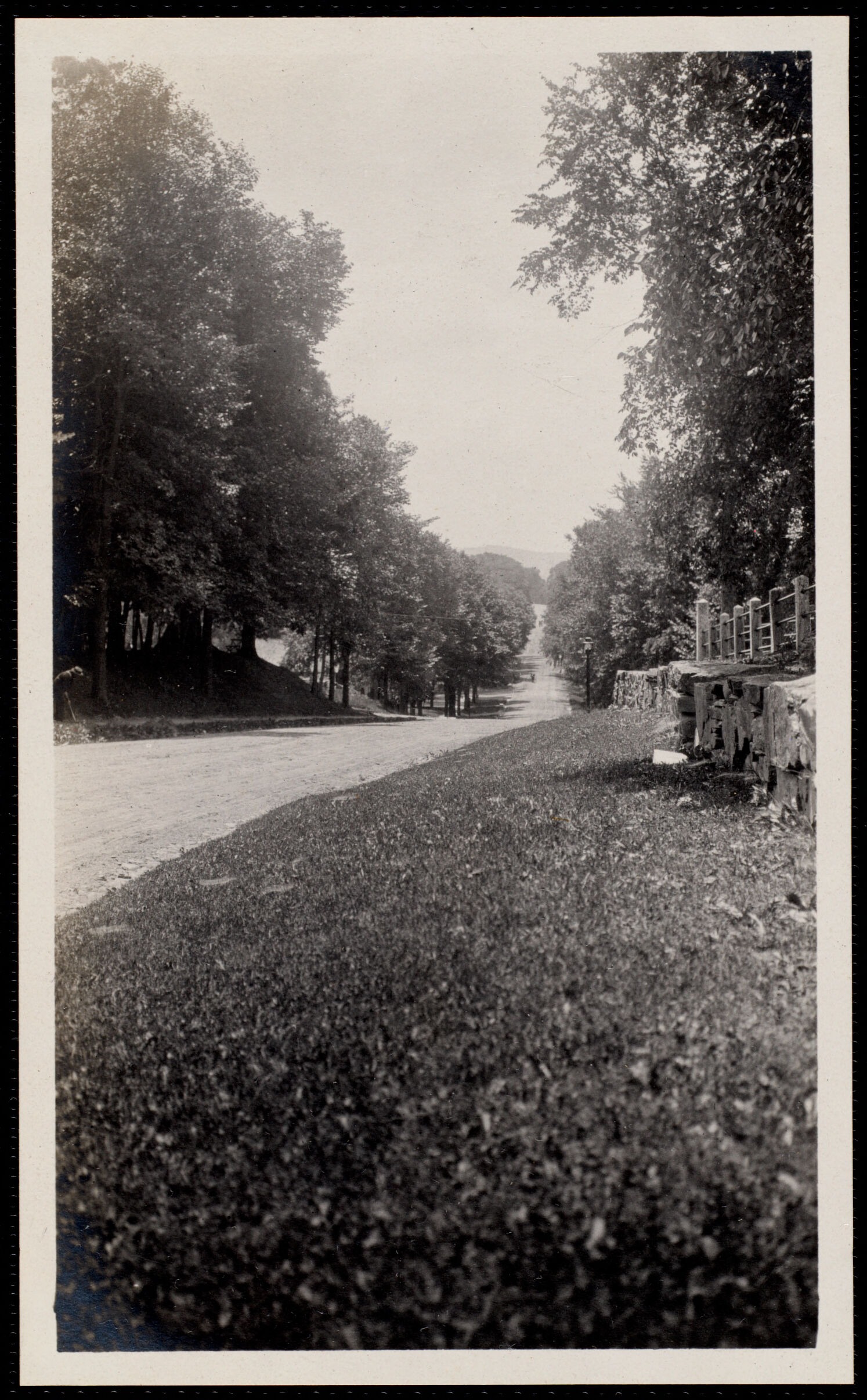
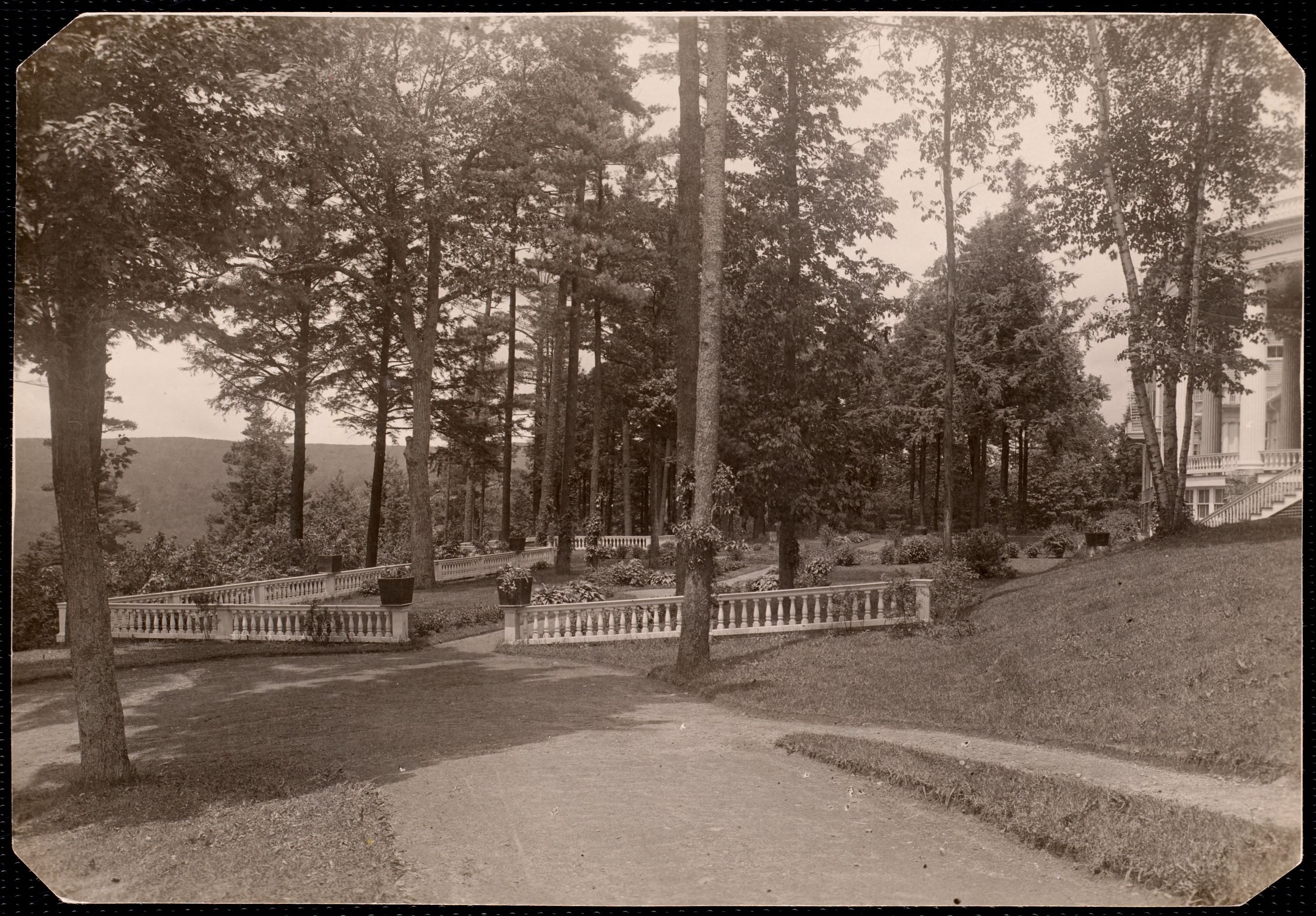
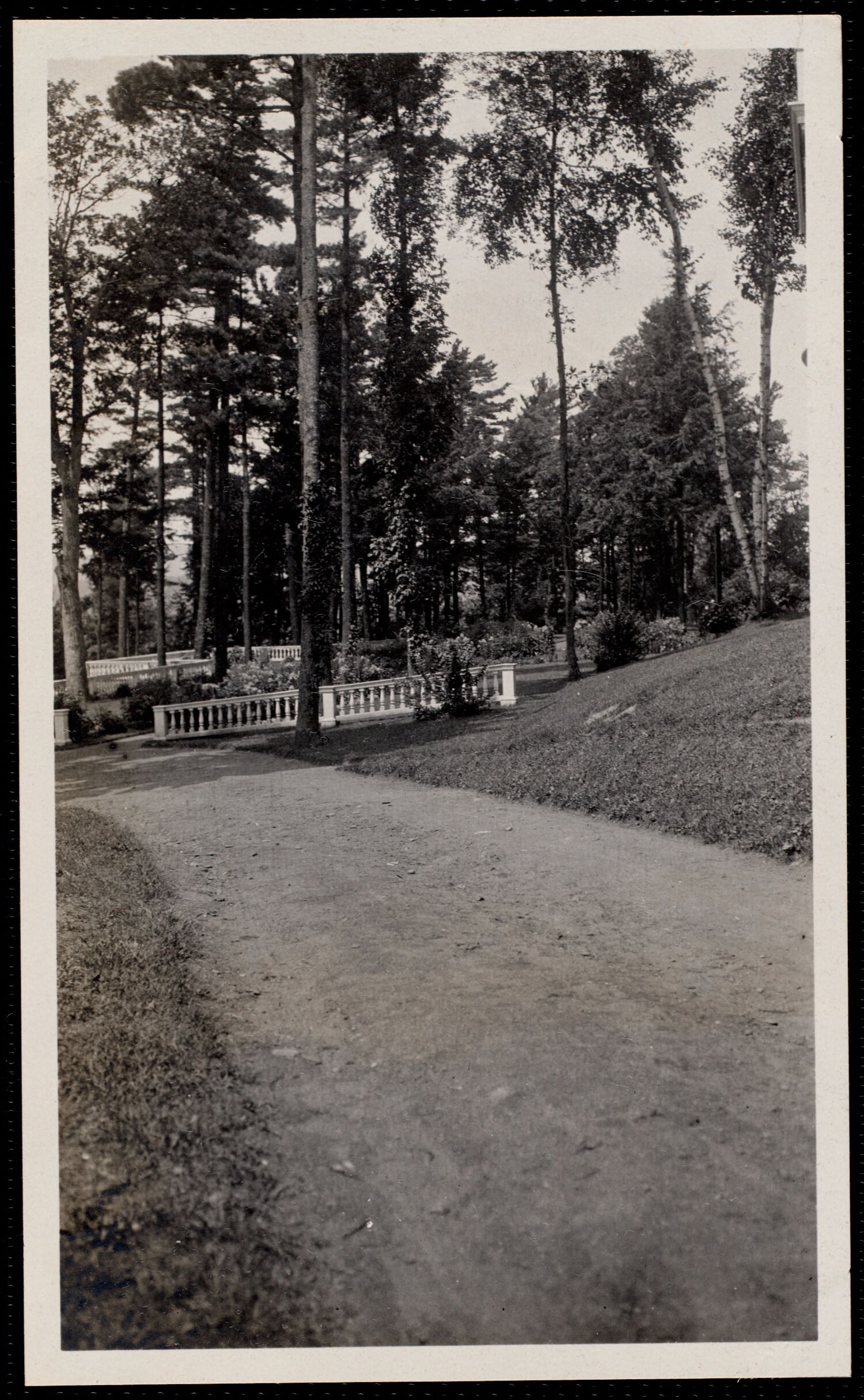
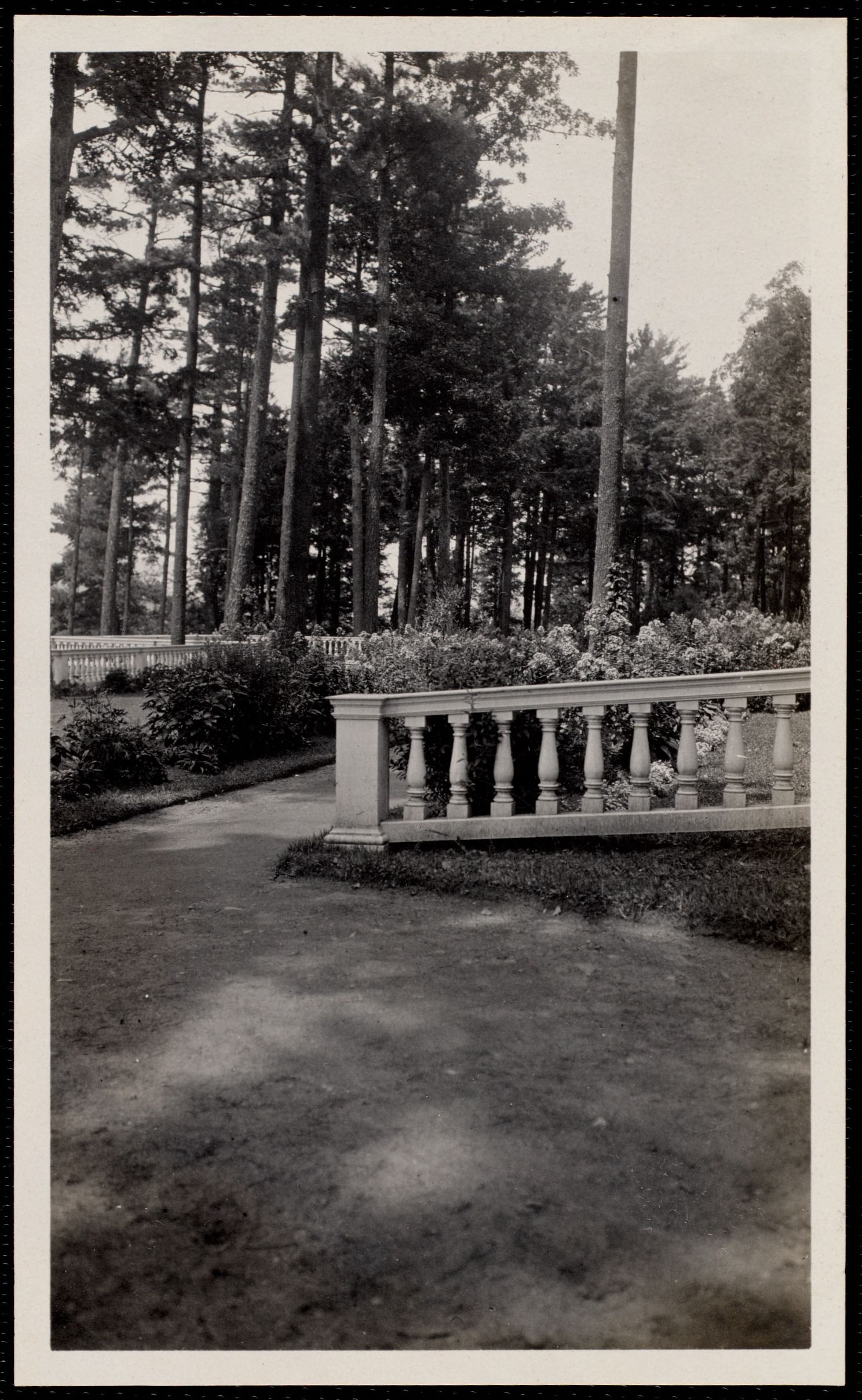
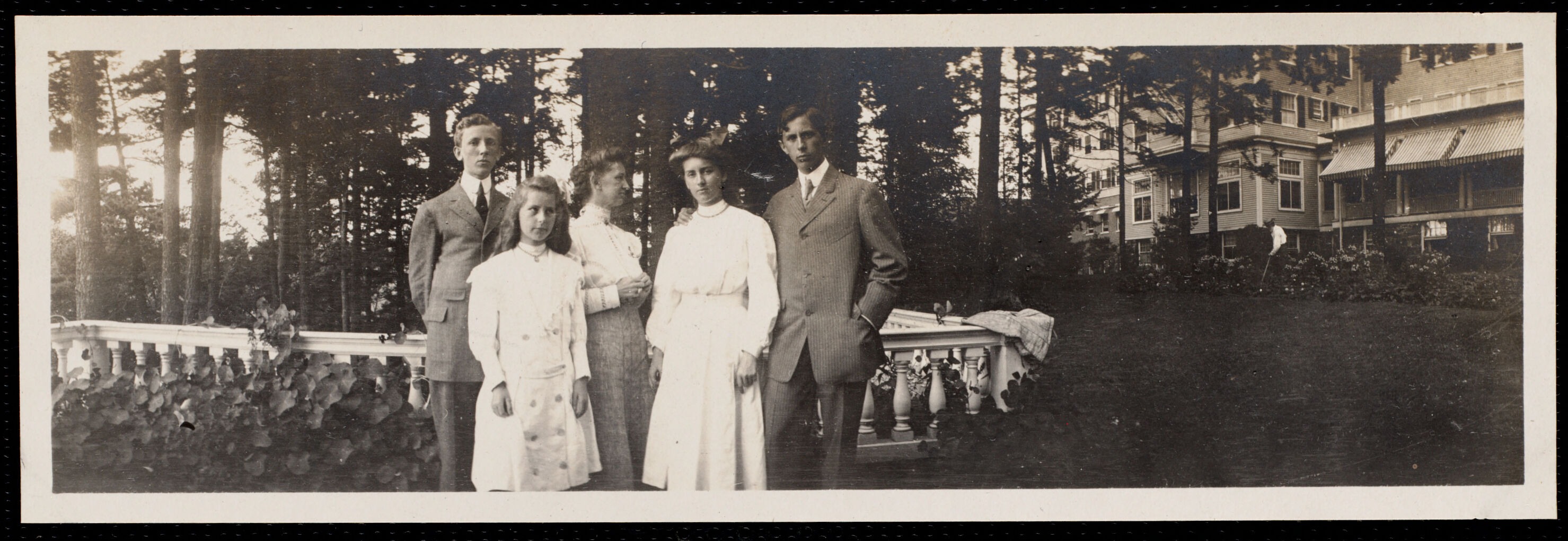
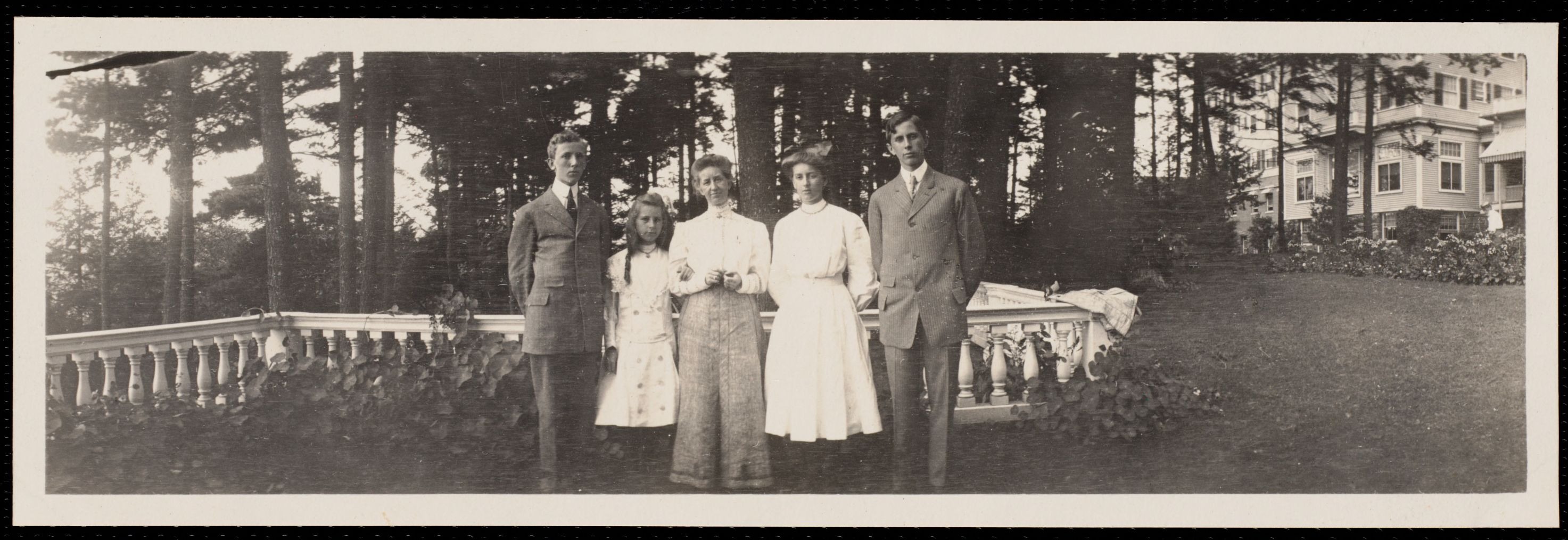
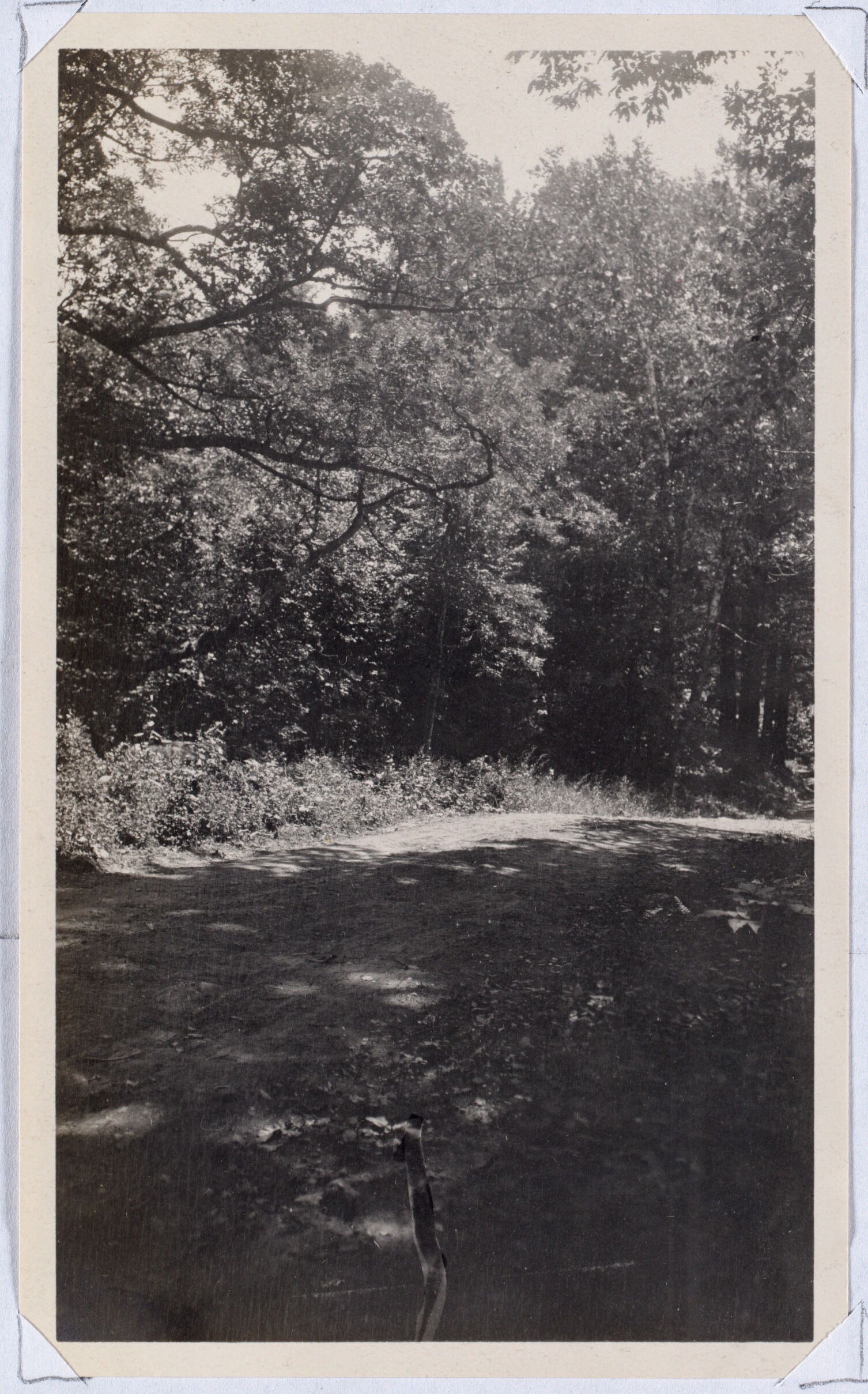
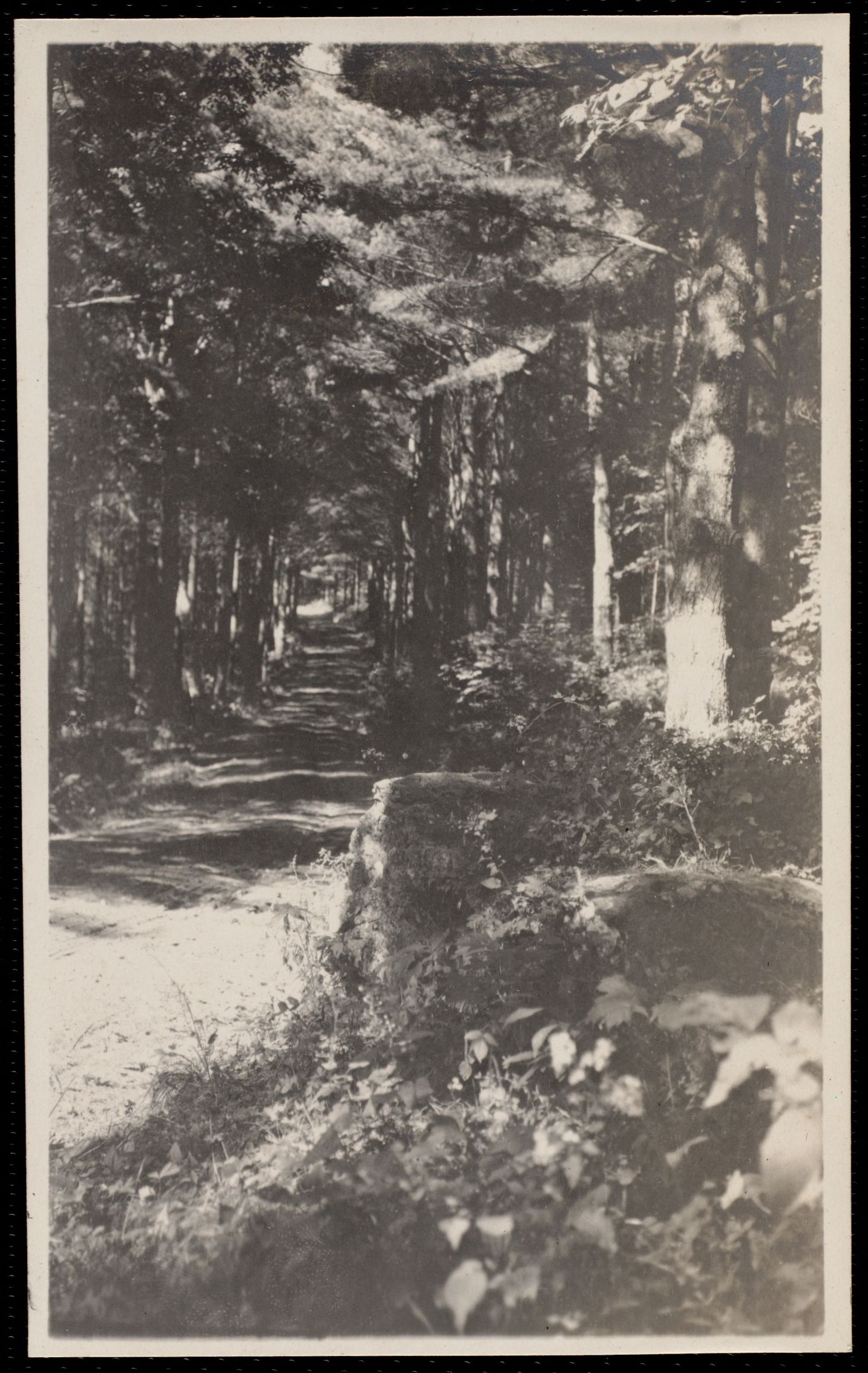
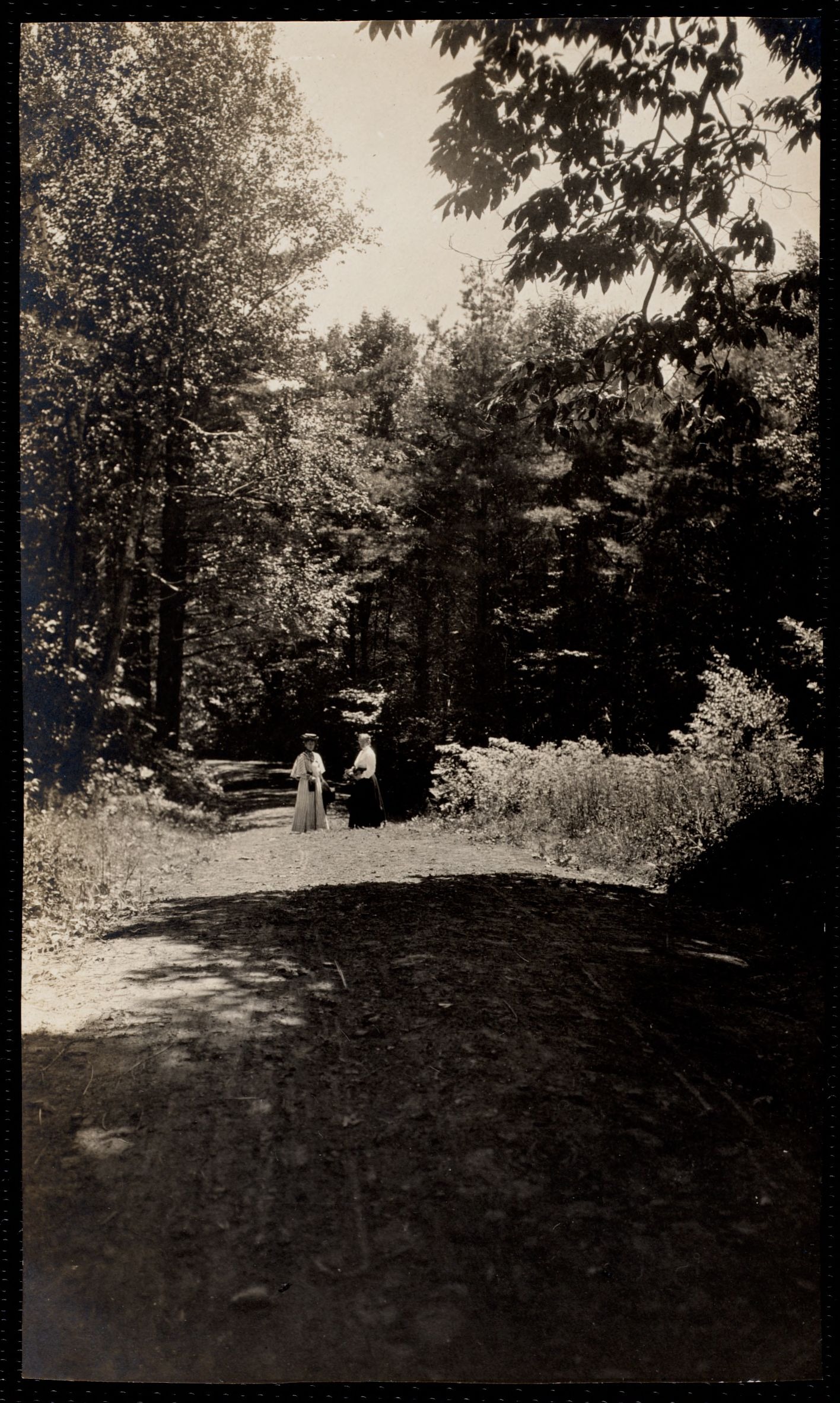
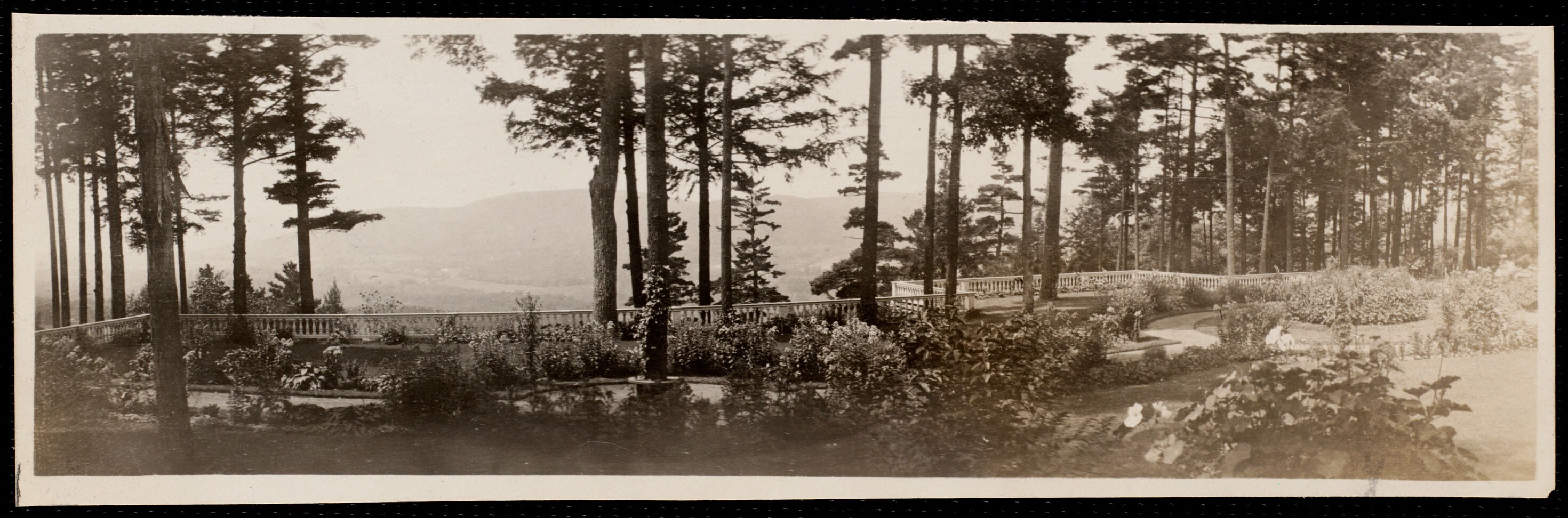
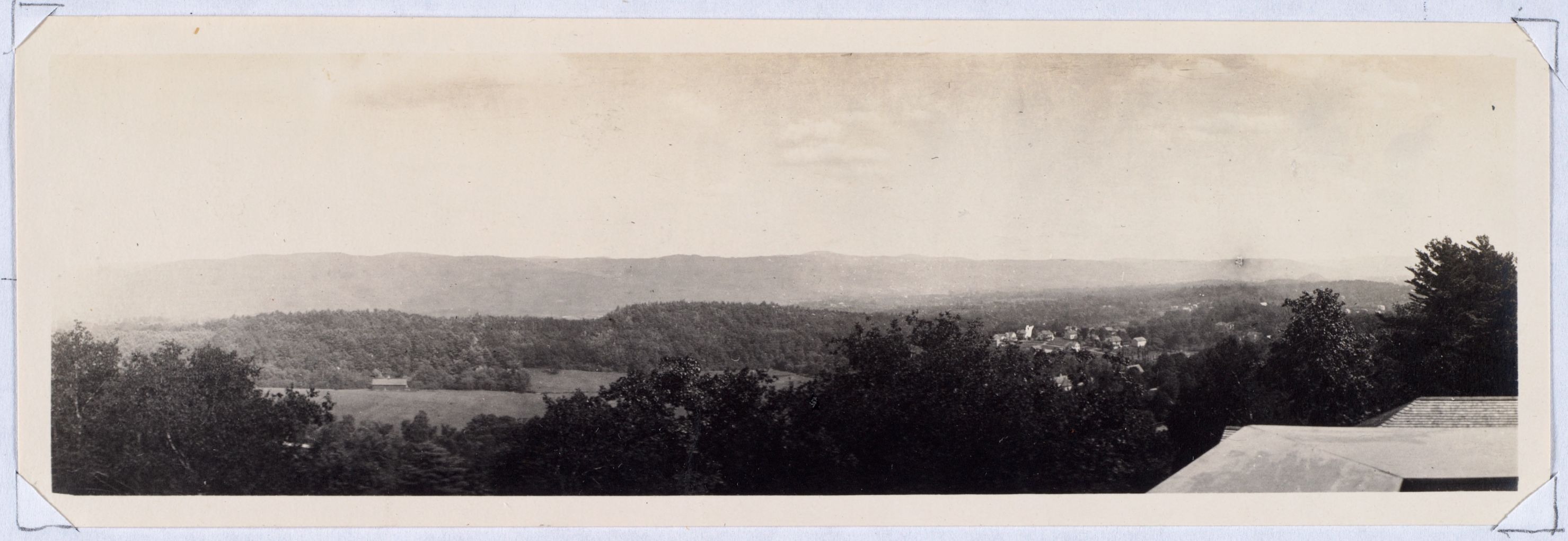
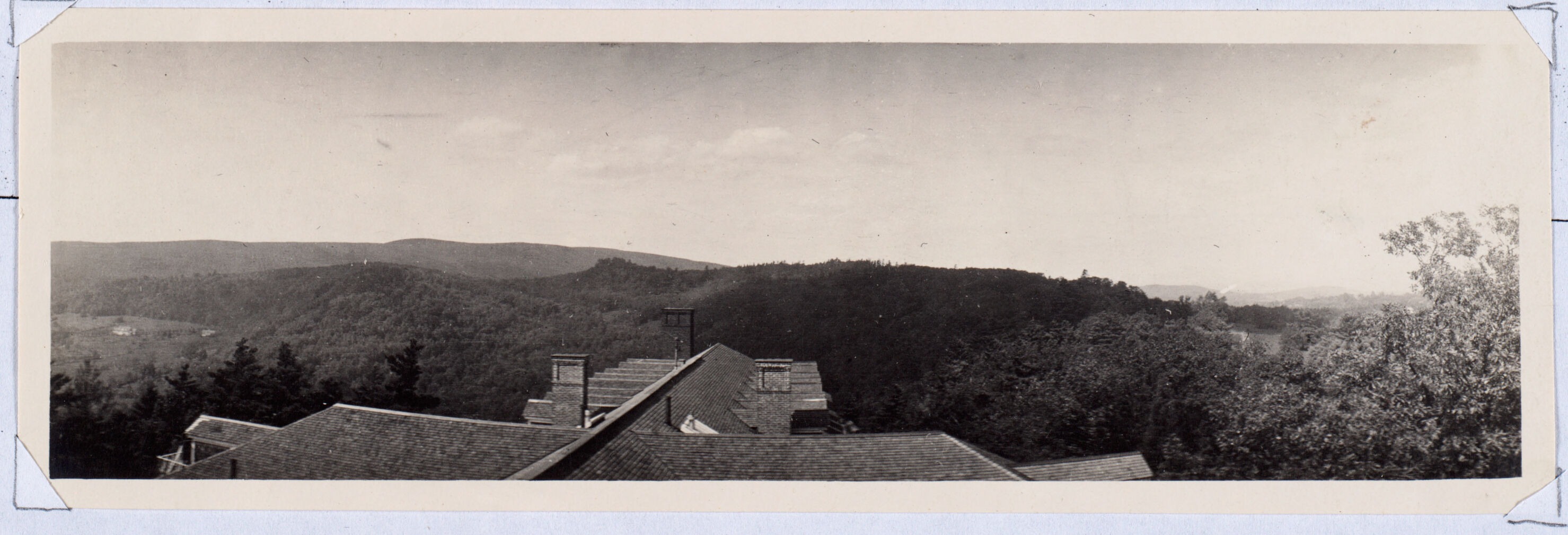
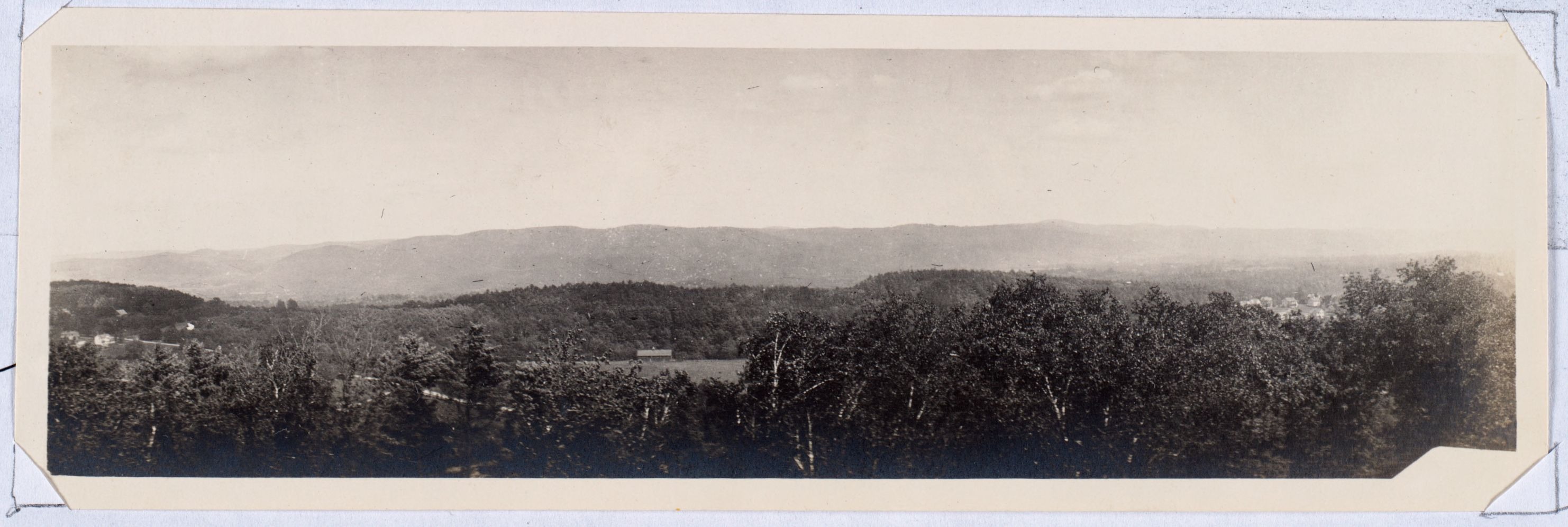
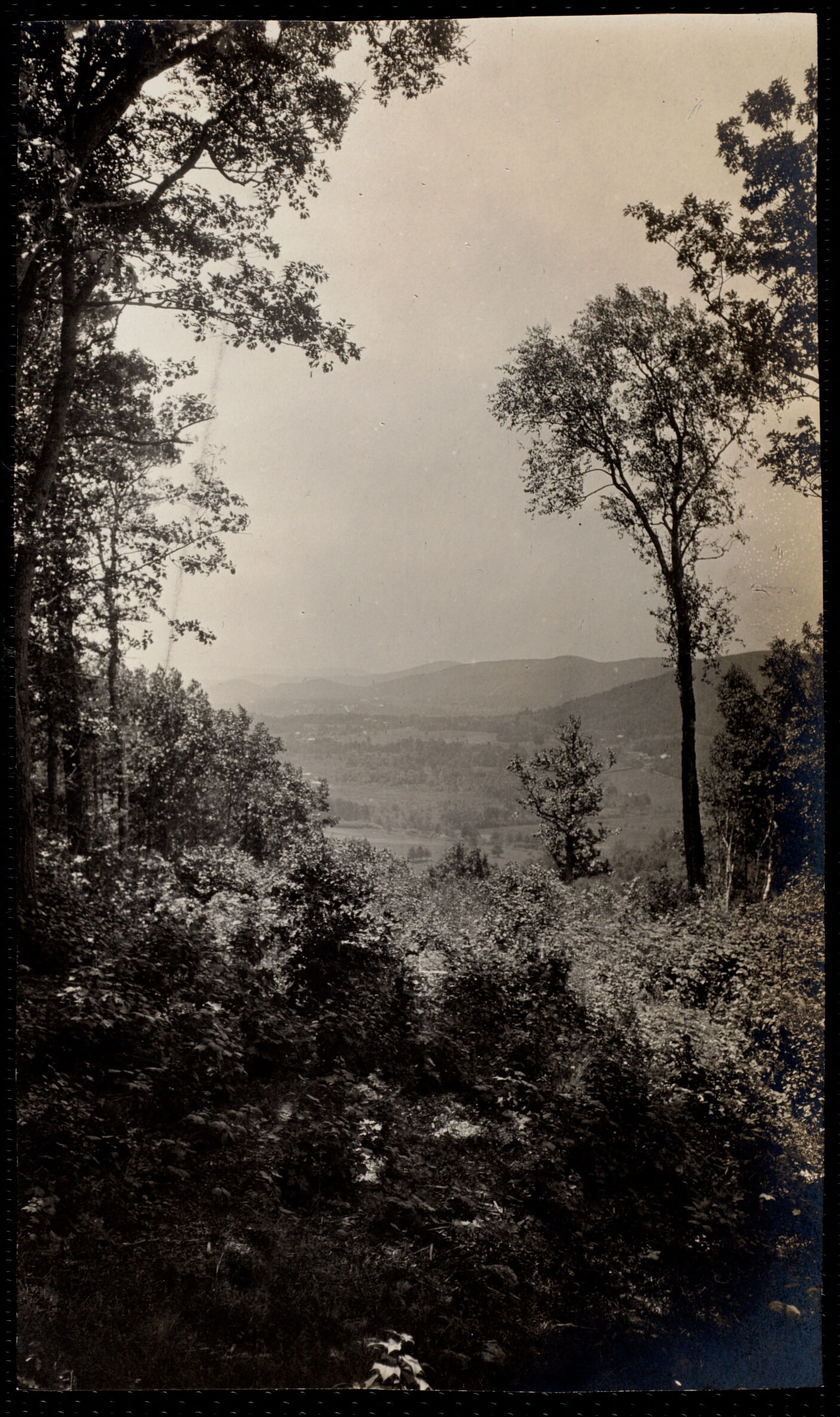
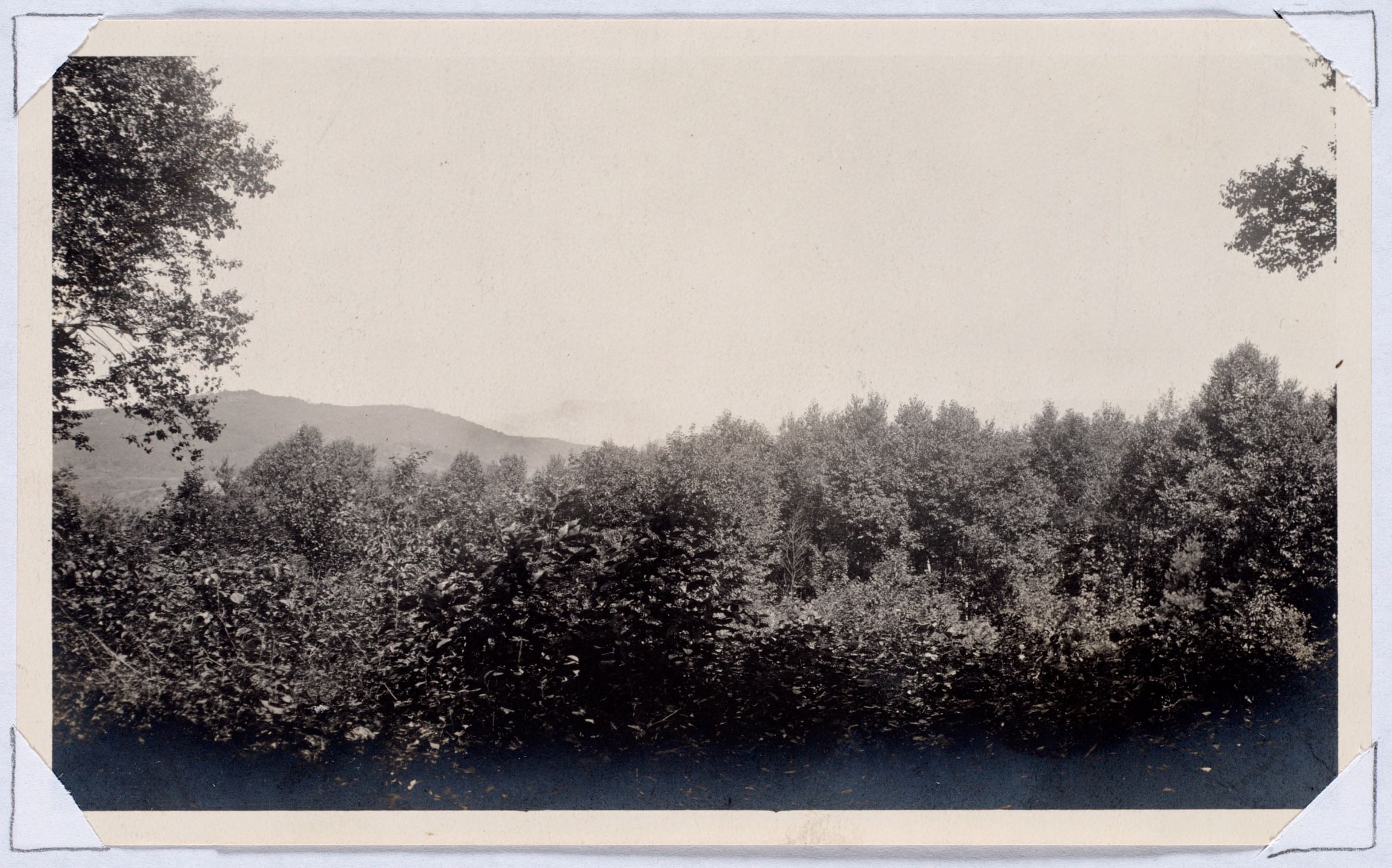
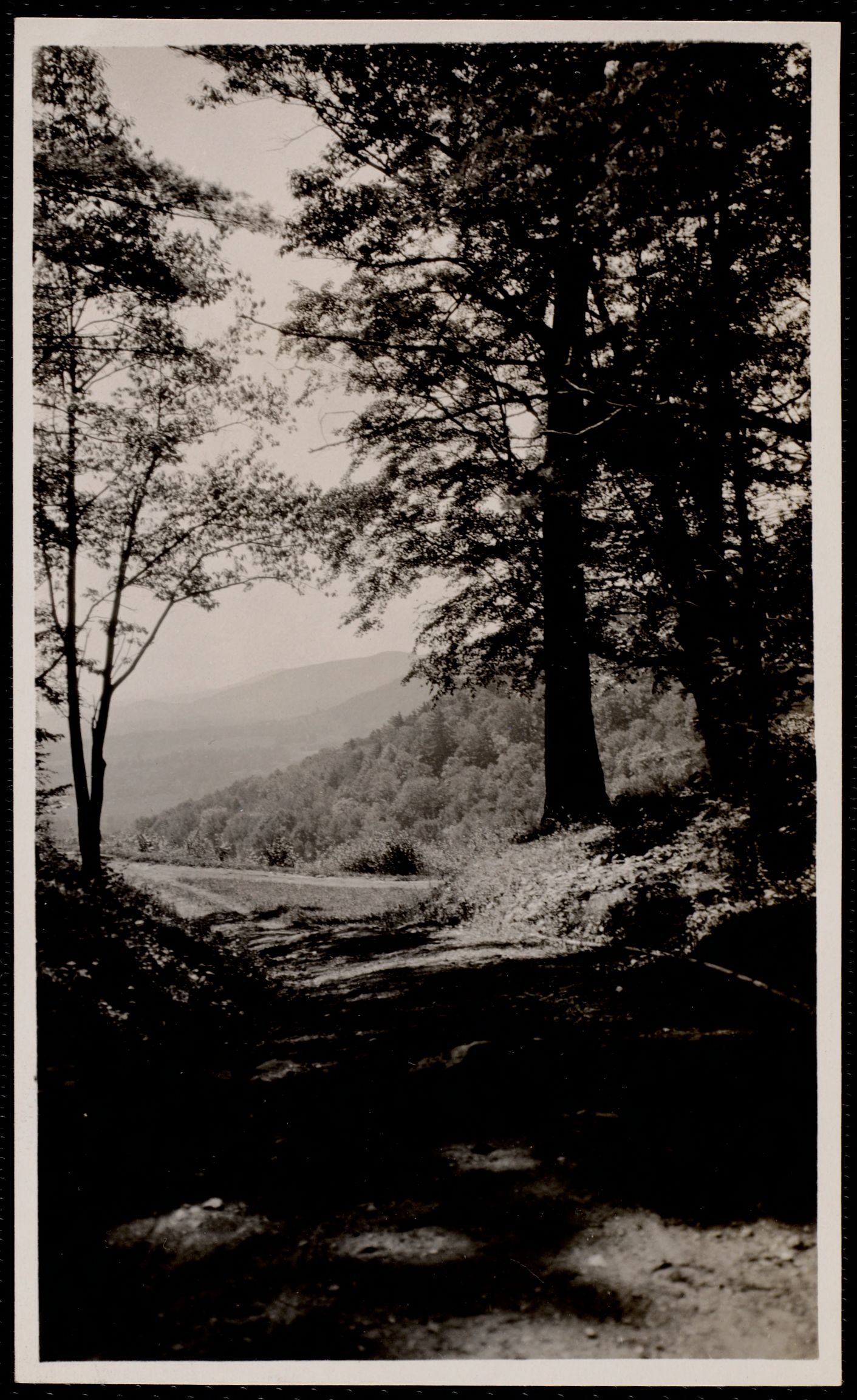
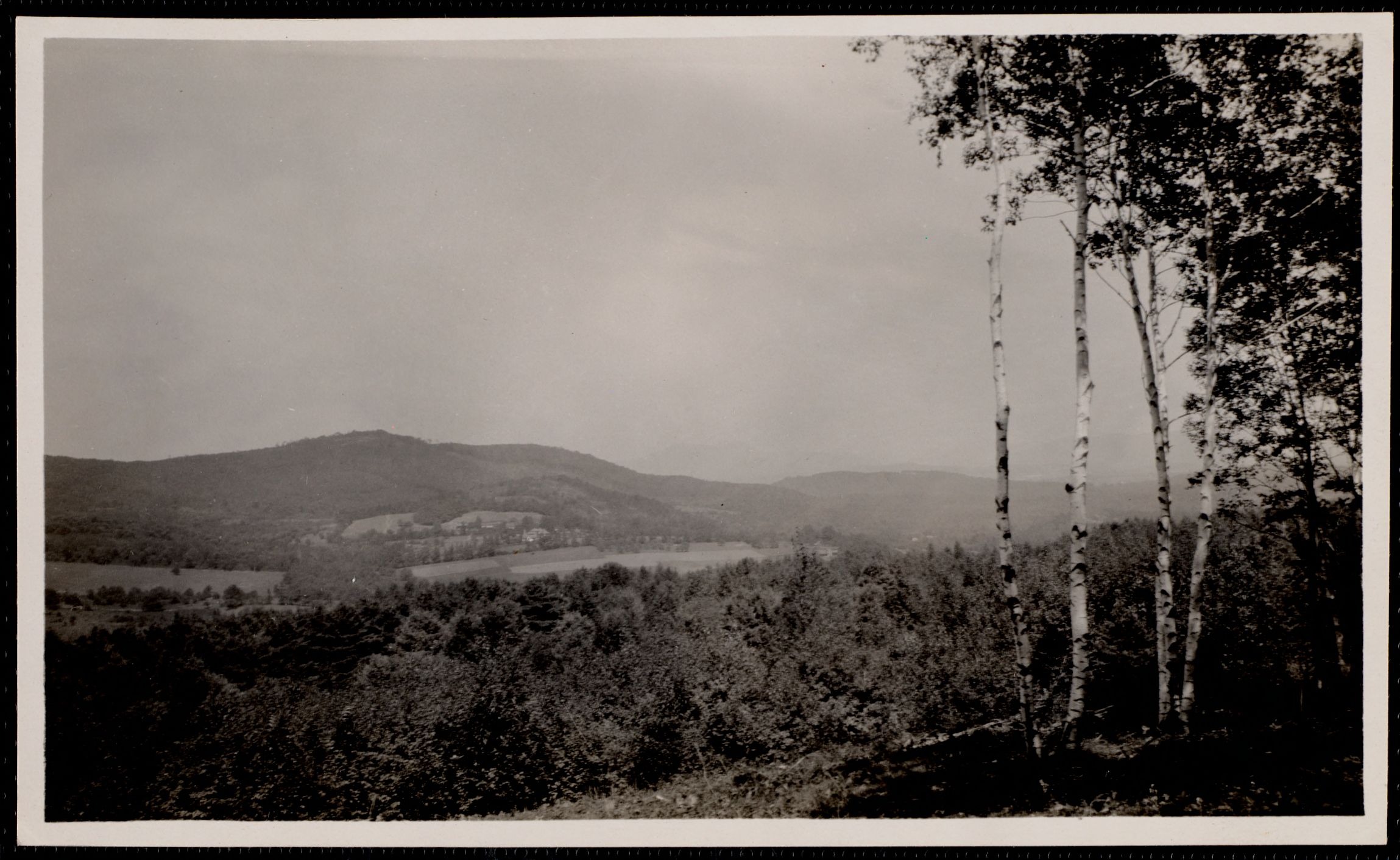
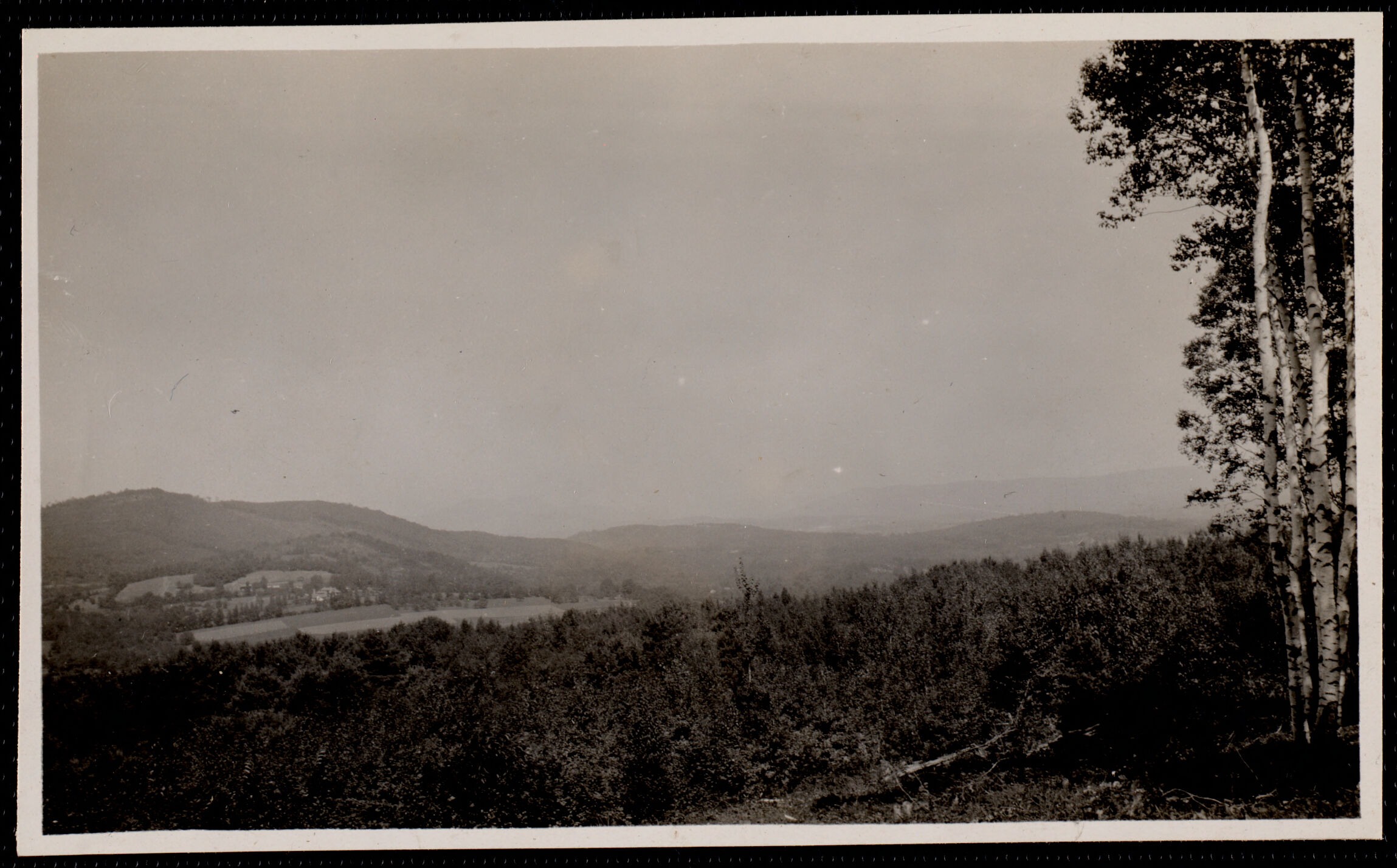
The largest single group of photographs here was made across a fortnight in the summer of 1906, most of it on 1 August, by someone with a panoramic camera and the run of the place. That day produced the southern porch, the south west piazza, two family groups, the daily morning walk, the entrance to the Italian garden, the fork of the roads in Woolsey Woods, the main avenue seen from the Congregational Church, and four views out — north, east, south and west. Later in the month came the Italian garden and landscape, the hotel and garden, and the Lenox valley through the trees, one of which carries the handwritten note “Lenox Valley thro’ trees near Aspinwall Aug ’06.”
The photographer went back in September 1910 and made more pictures of the woods, and nothing else.
V. 25 April 1931
The fire began about one in the morning on 25 April 1931. The hotel had not opened for the season. Its own fire-protection system was shut down for the winter and the nearest hydrant was close to a mile away, so there was never enough water; the firemen gave up the building and worked to keep the fire out of the woods and the surrounding houses. The Berkshire Eagle puts the loss at a million dollars.
No cause was ever established. Both accounts report the same suspicion: that the grounds were used at night by courting couples — “parkers,” the newspapers of the day called them — and that a cigarette was left behind. That is a surmise repeated for ninety-five years, not a finding.
It was never rebuilt.
VI. Kennedy Park
The land was logged. In 1956 it passed to the town: The Berkshire Eagle says 360 acres including the ruins were given to Lenox that year; Lost New England says the land was sold to the town for $12,000. It is now Kennedy Park, and its trails are called Woolsey and Aspinwall. The stone gateposts of the hotel drive are still standing.
Sources
Photographs: Lenox Library Association, eighty-four items via Digital Commonwealth, titles and dates quoted exactly as catalogued, licensed CC BY-NC-ND; Lenox Historical Society, one item (the boiler at the foot of Church Hill), via Digital Commonwealth; Library of Congress, Detroit Publishing Company Collection, nine plates (LC-D4-39868 to 39870 and LC-D4-72049 to 72054), no known restrictions on publication. Text: The Berkshire Eagle, “The Cottager: Hotel Aspinwall: Ghosts of grandeur,” for the architects, the opening, the room counts, the amenities, the acreage, the fire and the 1956 gift; Lost New England, “Hotel Aspinwall, Lenox, Mass.,” for Hubbard, the capacity, the golf course and baseball field, the fire and the 1956 sale; Wikipedia, “Joseph McArthur Vance,” for his dates and his partnership with Francis R. Allen; Wikipedia, “Thomas Hamlin Hubbard,” for his war service and business career; lenoxhistory.org, “Lenox as a Resort — Cottages to the North,” for Woodcliff and the Aspinwalls and Woolseys; americanaristocracy.com, “Edward John Woolsey,” for the Aspinwall marriage and Woodcliff. The two main accounts disagree on the room count, the capacity and the terms on which the town got the land in 1956; both are given above. No Olmsted job for this property appears in the firm’s Berkshire list, and none of the 63 Berkshire jobs is entered under Aspinwall, Woolsey or Hubbard.