The Berkshires
The estates
Cottage-era places, read from the Olmsted firm’s drawings and from photographs made while the owners were still in the house.
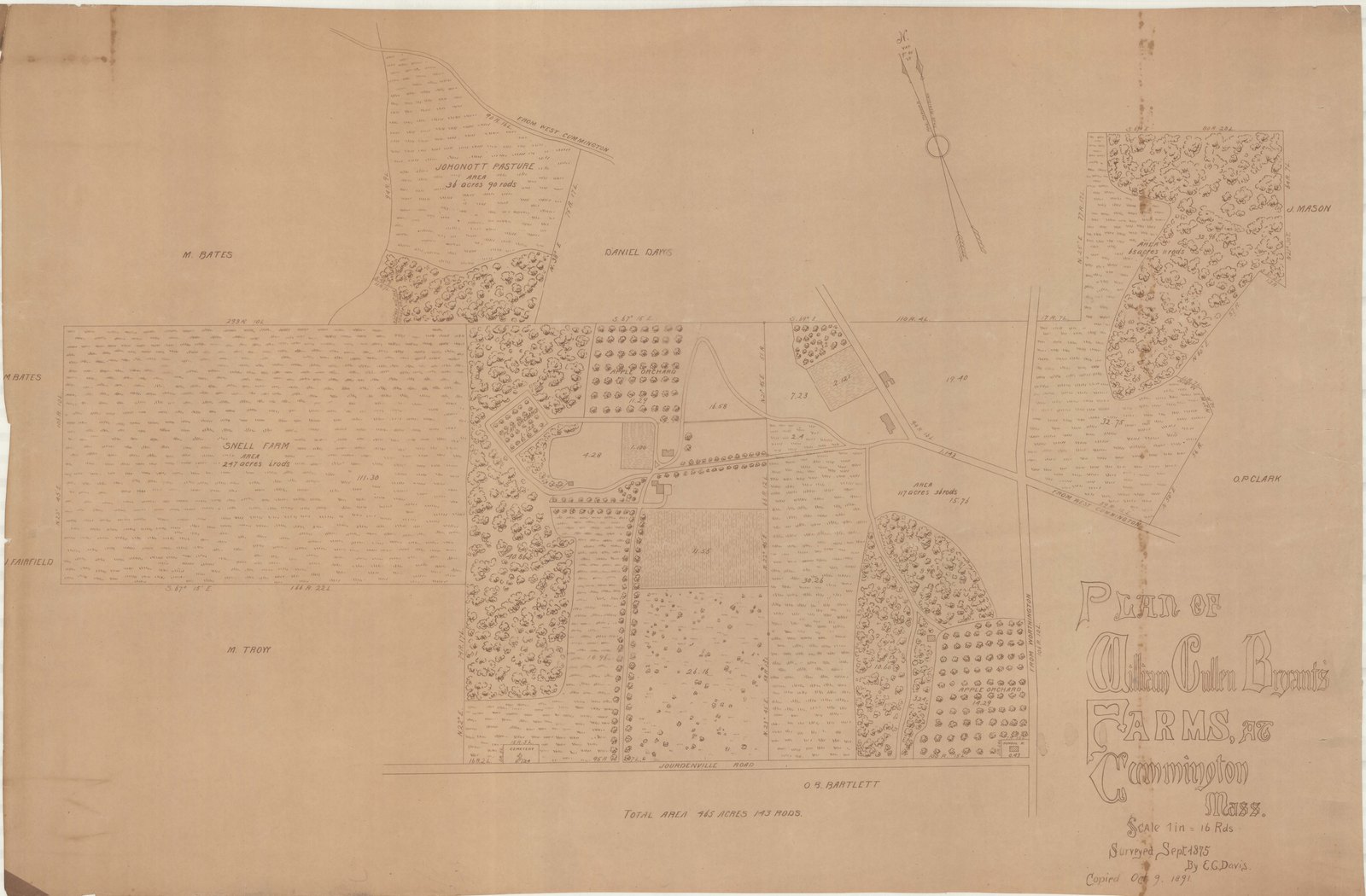
Cummington · 1891
The Bryant Homestead
A poet’s farms, redrawn in the founding year of the Trustees of Public Reservations by the office of the man who founded them.
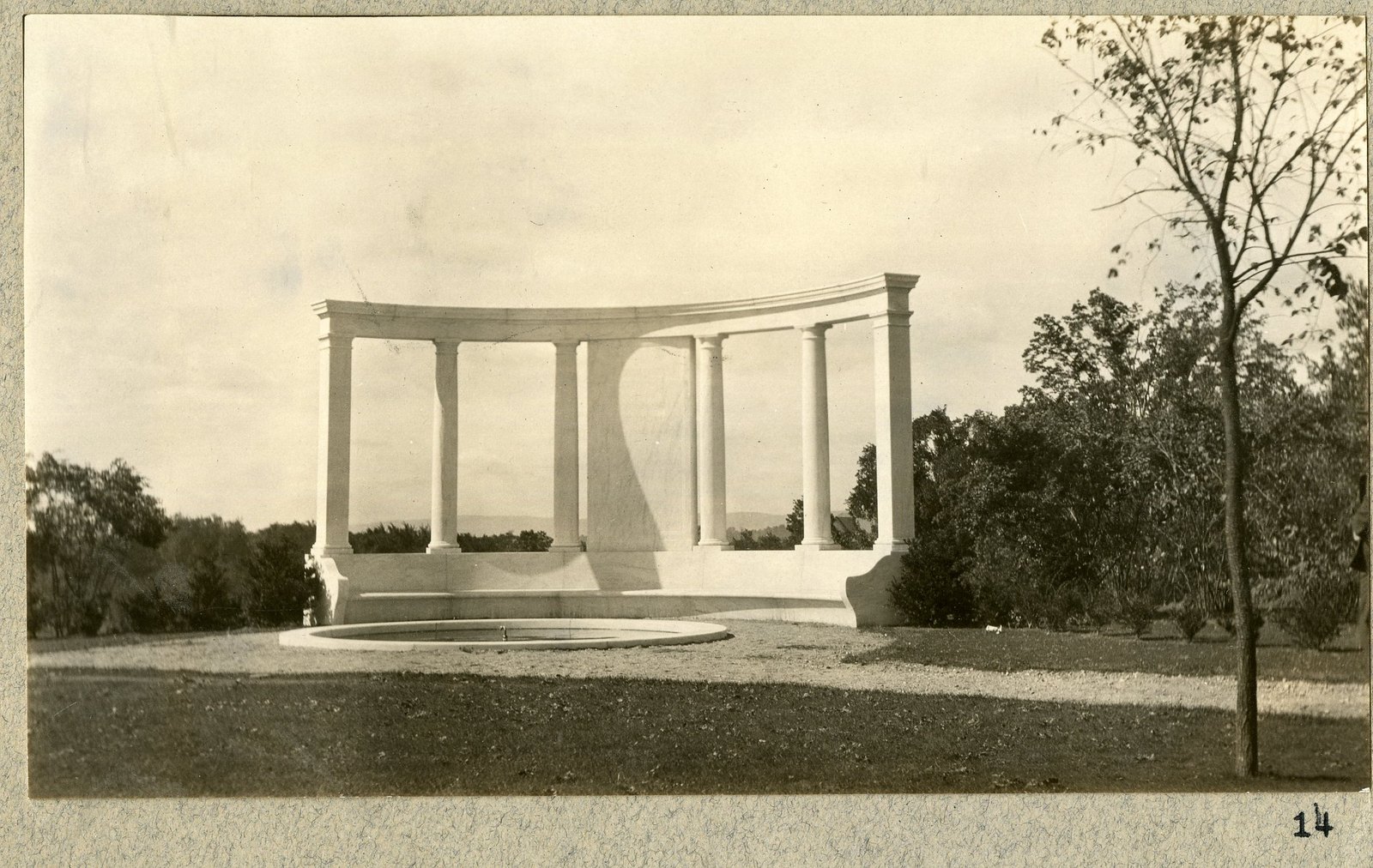
Dalton · 1925
The Crane Memorial
A complete job, beginning to end: twenty-eight sheets and twenty photographs for a marble colonnade and a fountain, dedicated in 1925 before four thousand people.
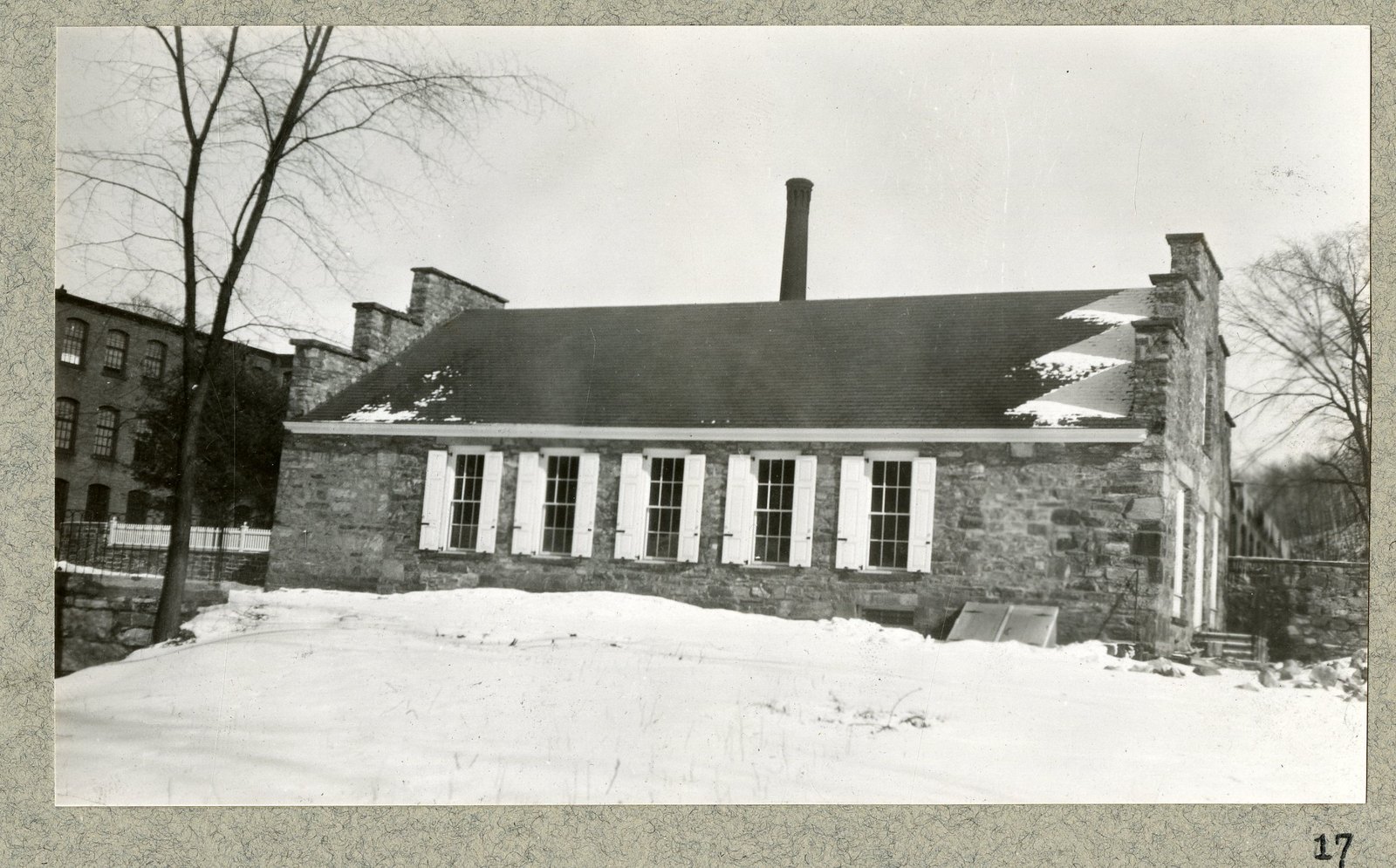
Dalton · 1929–31
The Crane Museum
Filed by the archive as a library. Every drawing says museum — and the office kept the magazine page that printed the credit.
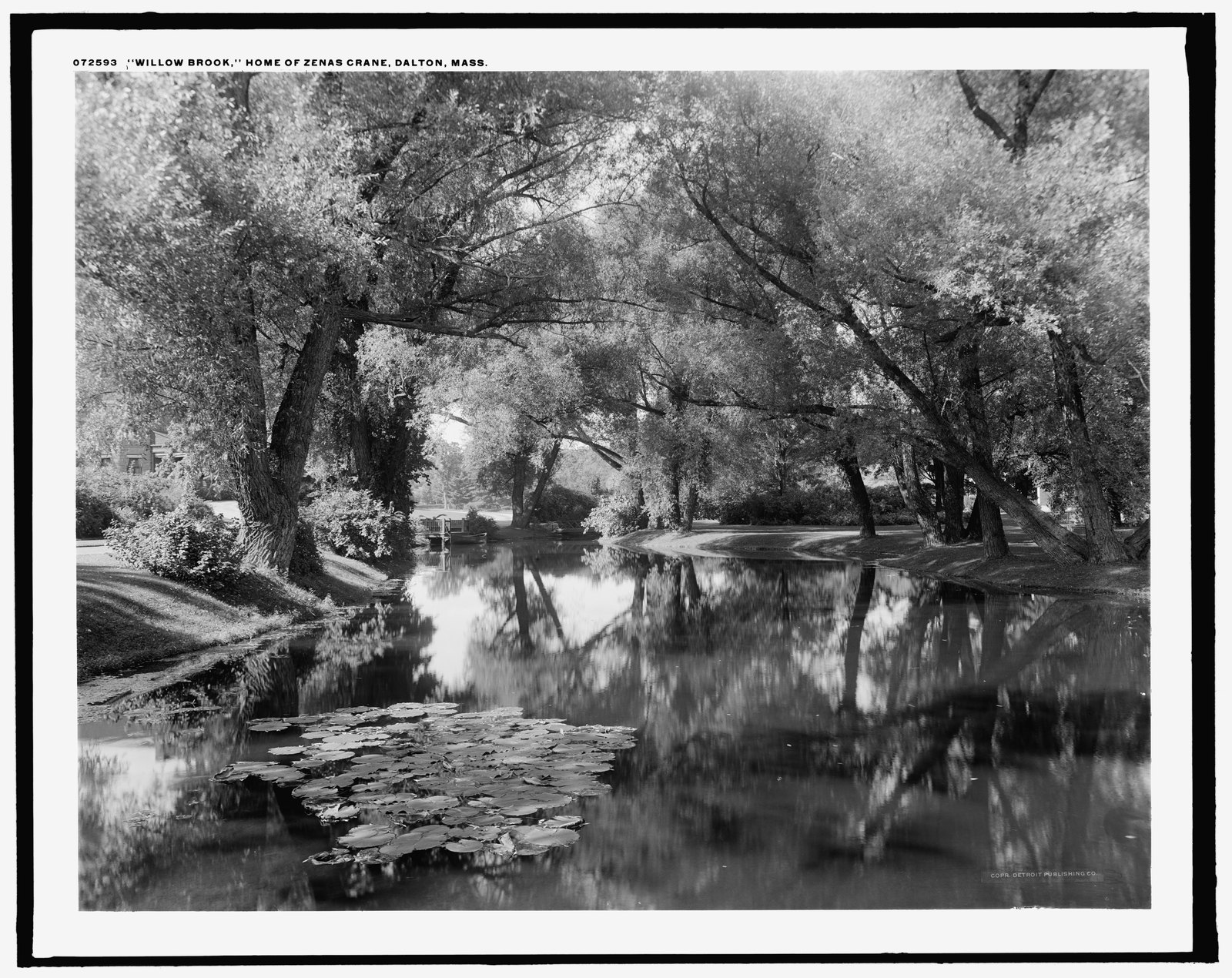
Dalton · 1897–1903
Willow Brook
Six years of Olmsted drawings for a flower garden and a lilac hedge at the house of the family whose mills have made the paper of the American dollar since 1879.
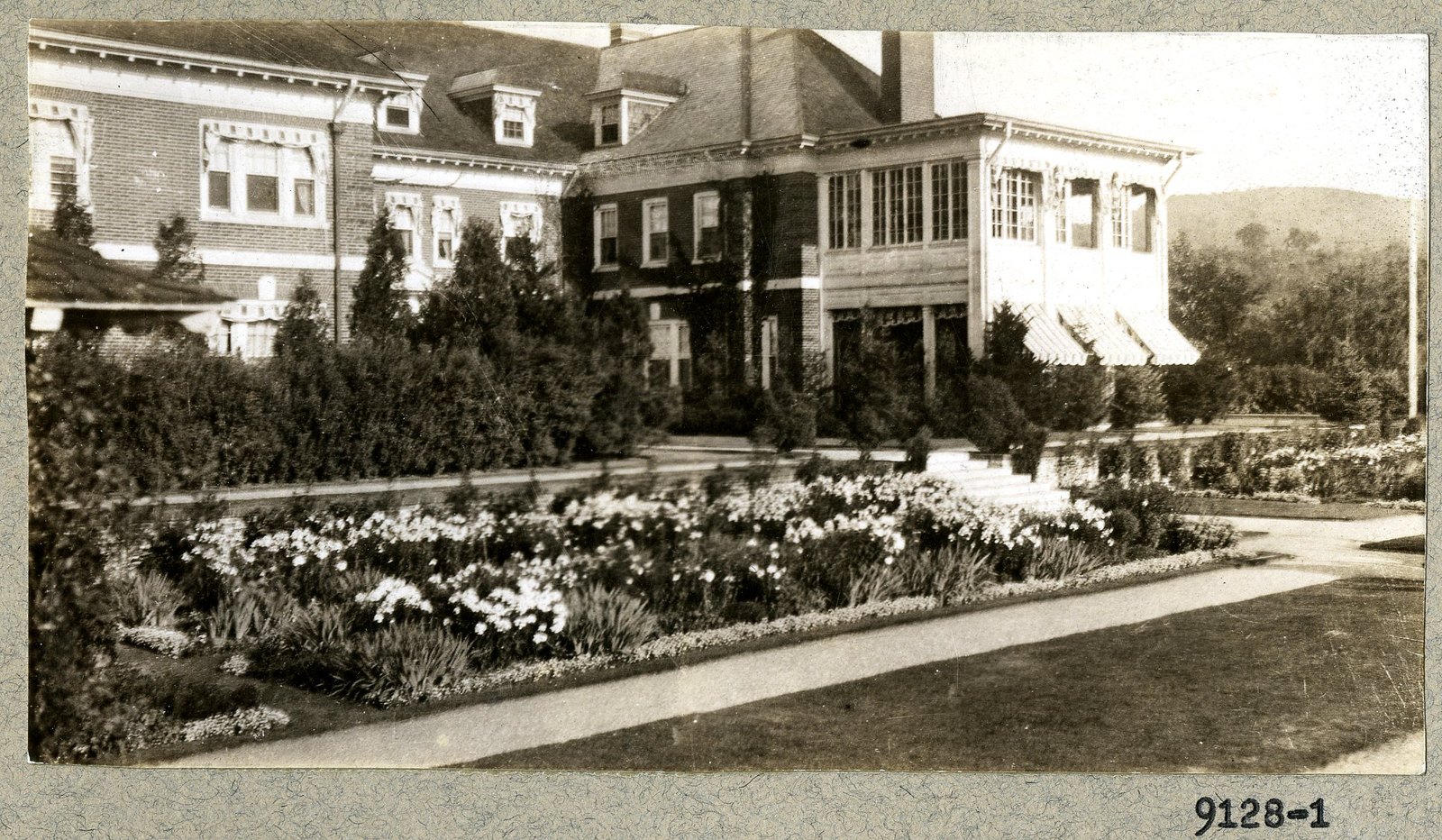
Dalton · 1917, 1929–31
The Winthrop M. Crane Jr. Garden
A garden by the man who won an Olympic medal for Marine Park, photographed in flower and then redesigned — with the client’s own dimensions written onto one of the prints.
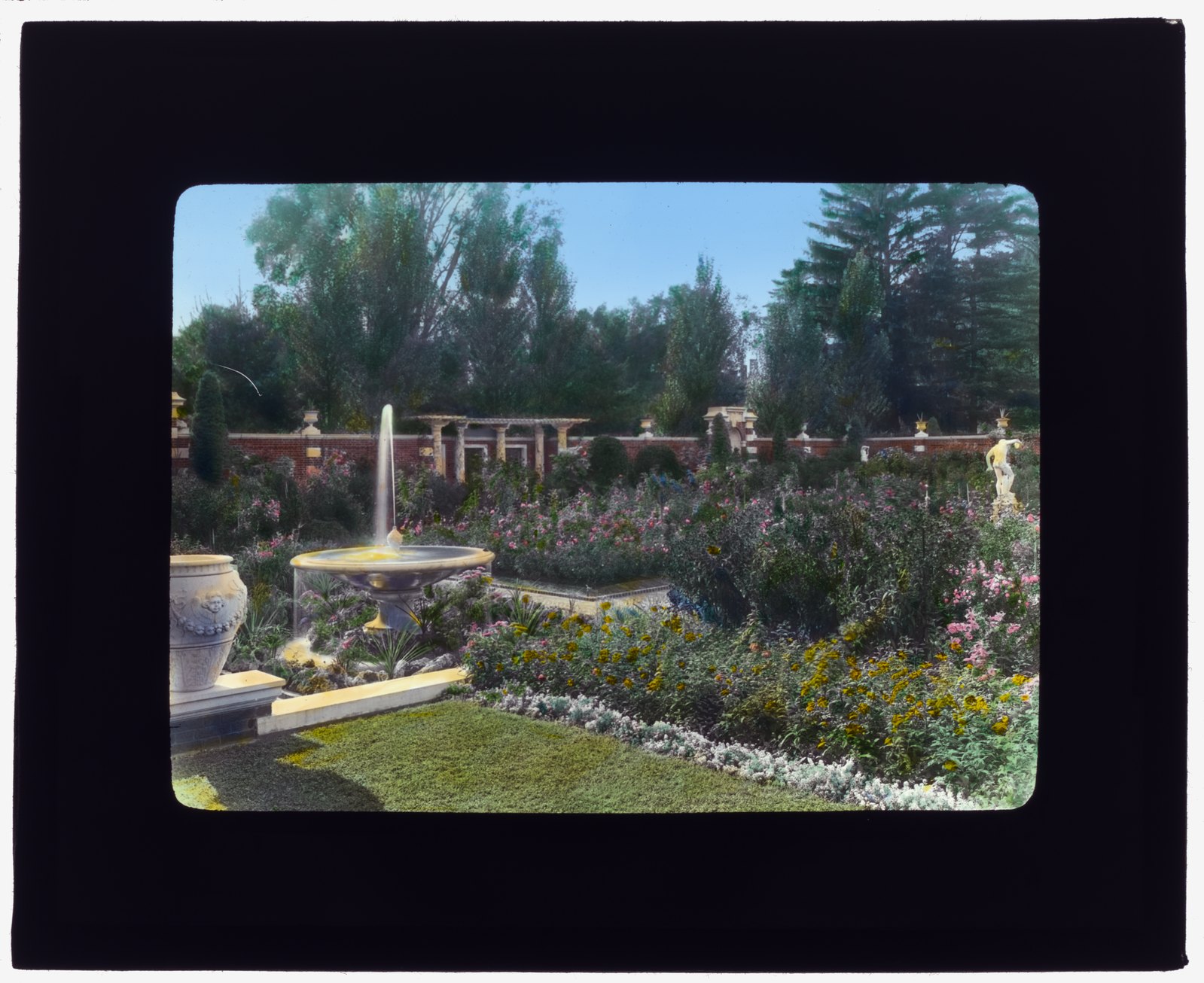
Great Barrington · 1855; rebuilt from 1905
Brookside
The man who invented the transformer lost this house to fire and rebuilt it in concrete — and its gardens survive only as eight hand-colored lantern slides.
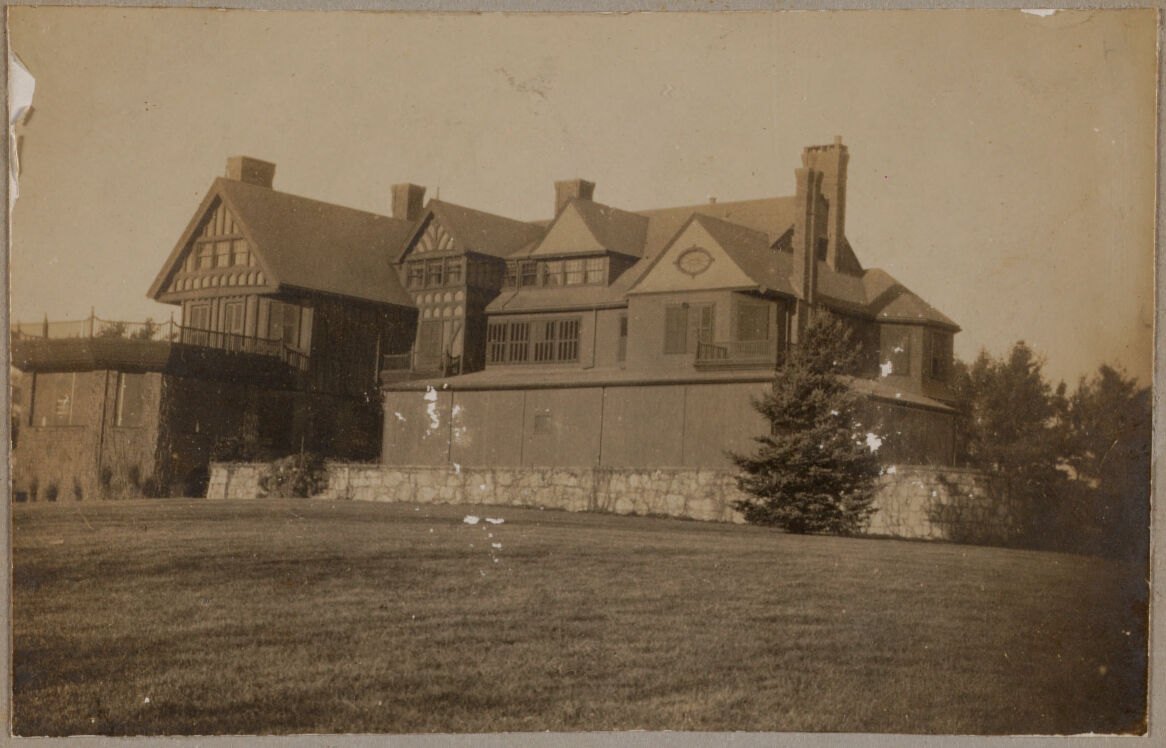
Lenox · 1882–1928
Allen Winden
Named for a village above Zurich, set over Laurel Lake, pulled down in 1928 — and one plate shows the estate managers in their own parlor, named.
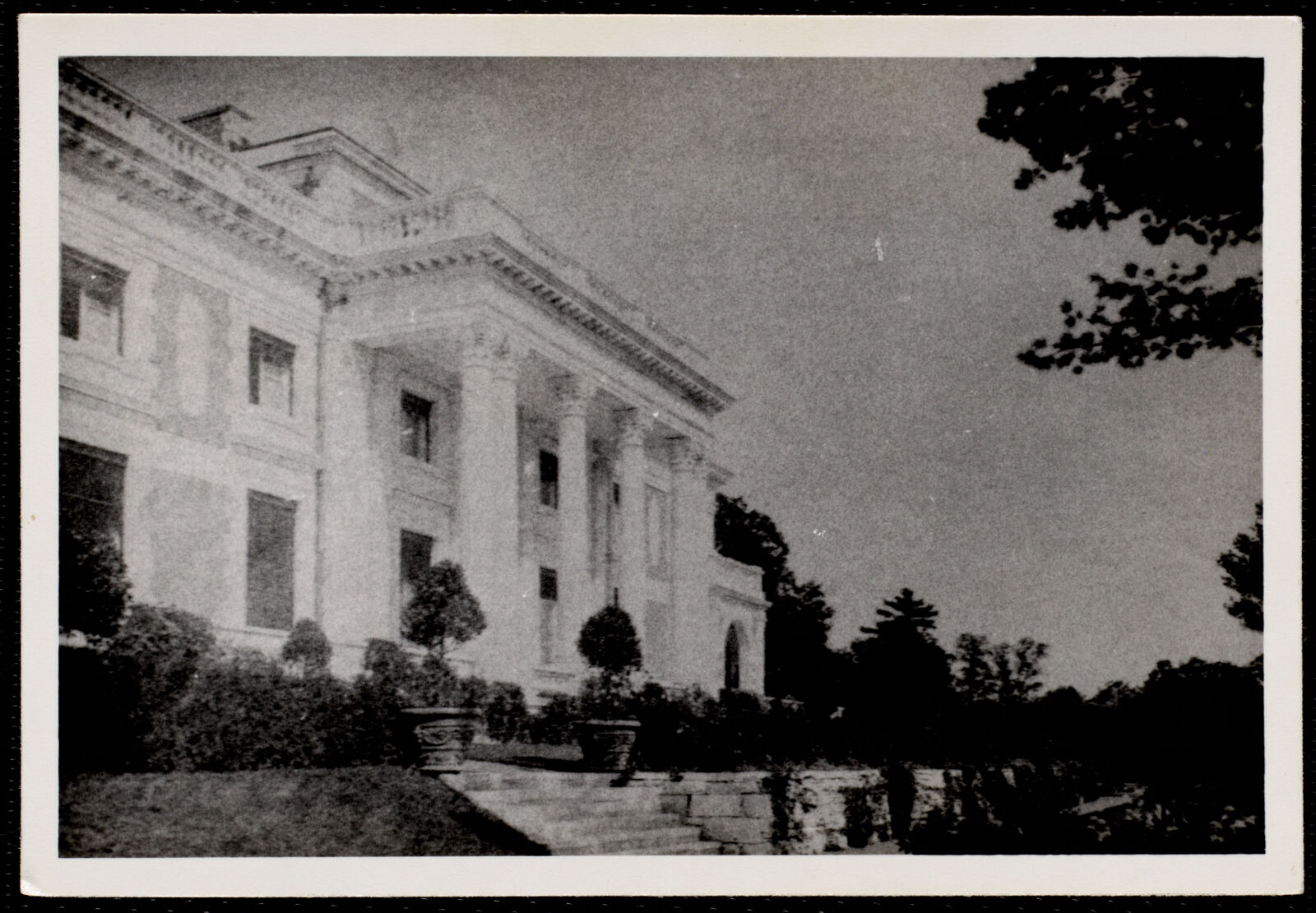
Lenox · 1896–98
Bellefontaine
Carrère & Hastings built it for Giraud Foster with a nod to the Petit Trianon. He lived in it until he died at ninety-four; it burned four years later.
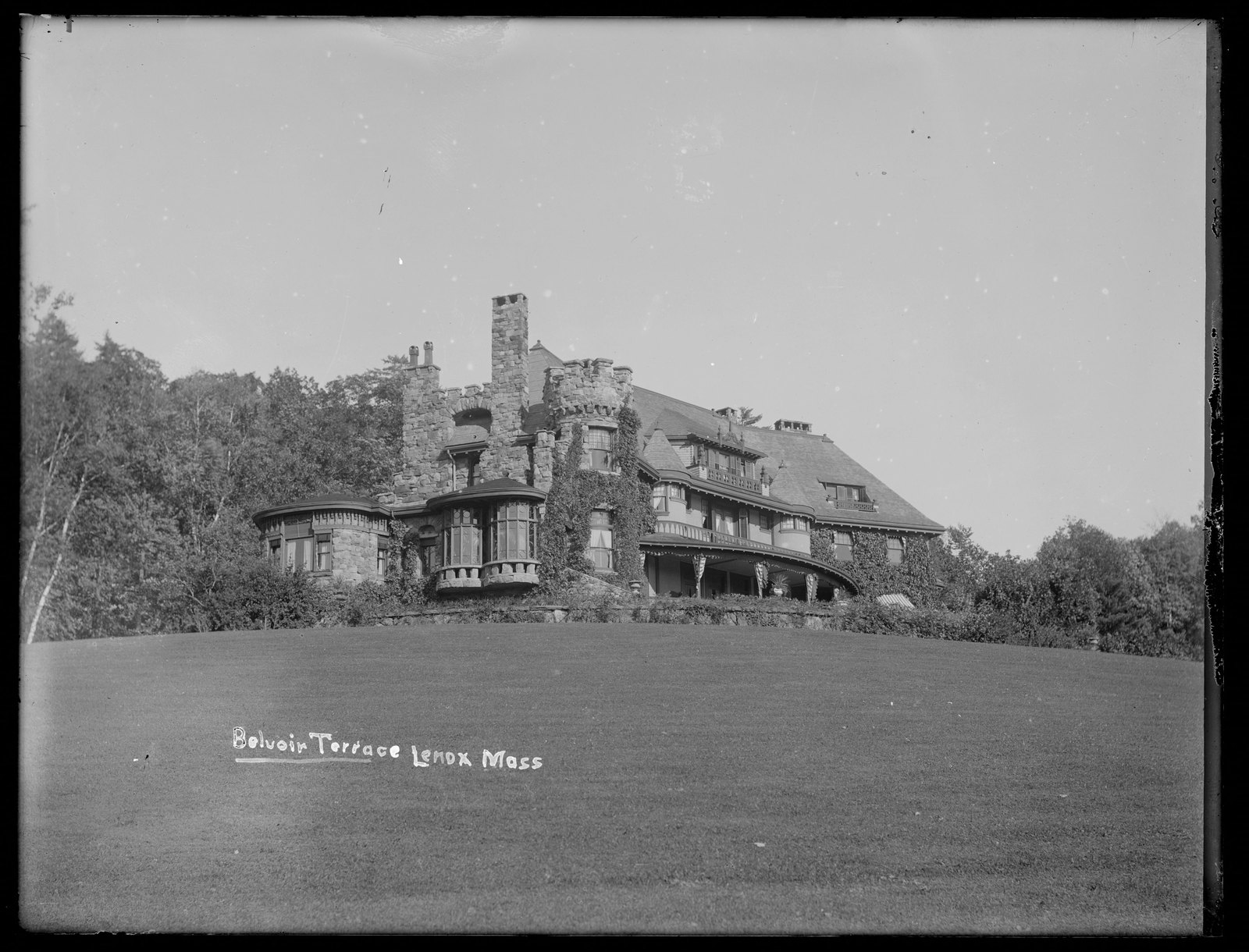
Lenox · 1888–91
Belvoir Terrace
Twelve sheets in one summer for the president of the American Museum of Natural History — catalogued under a misspelled name in a misspelled town, and still in use every summer.
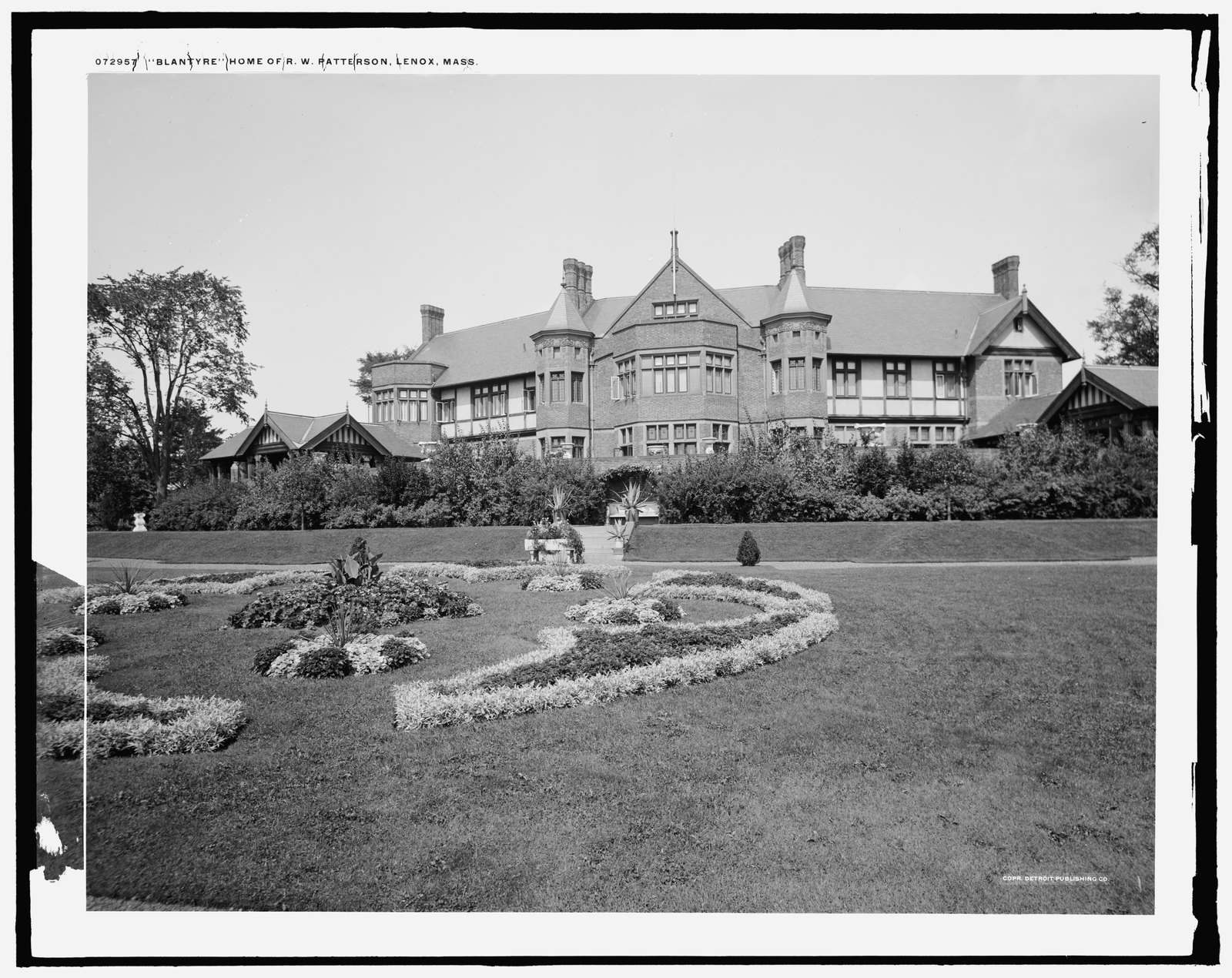
Lenox · 1901–04
Blantyre
A turpentine fortune and a house sketched on the back of an envelope — with the only complete photographic inventory of a Berkshire cottage’s art collection, made in 1912.
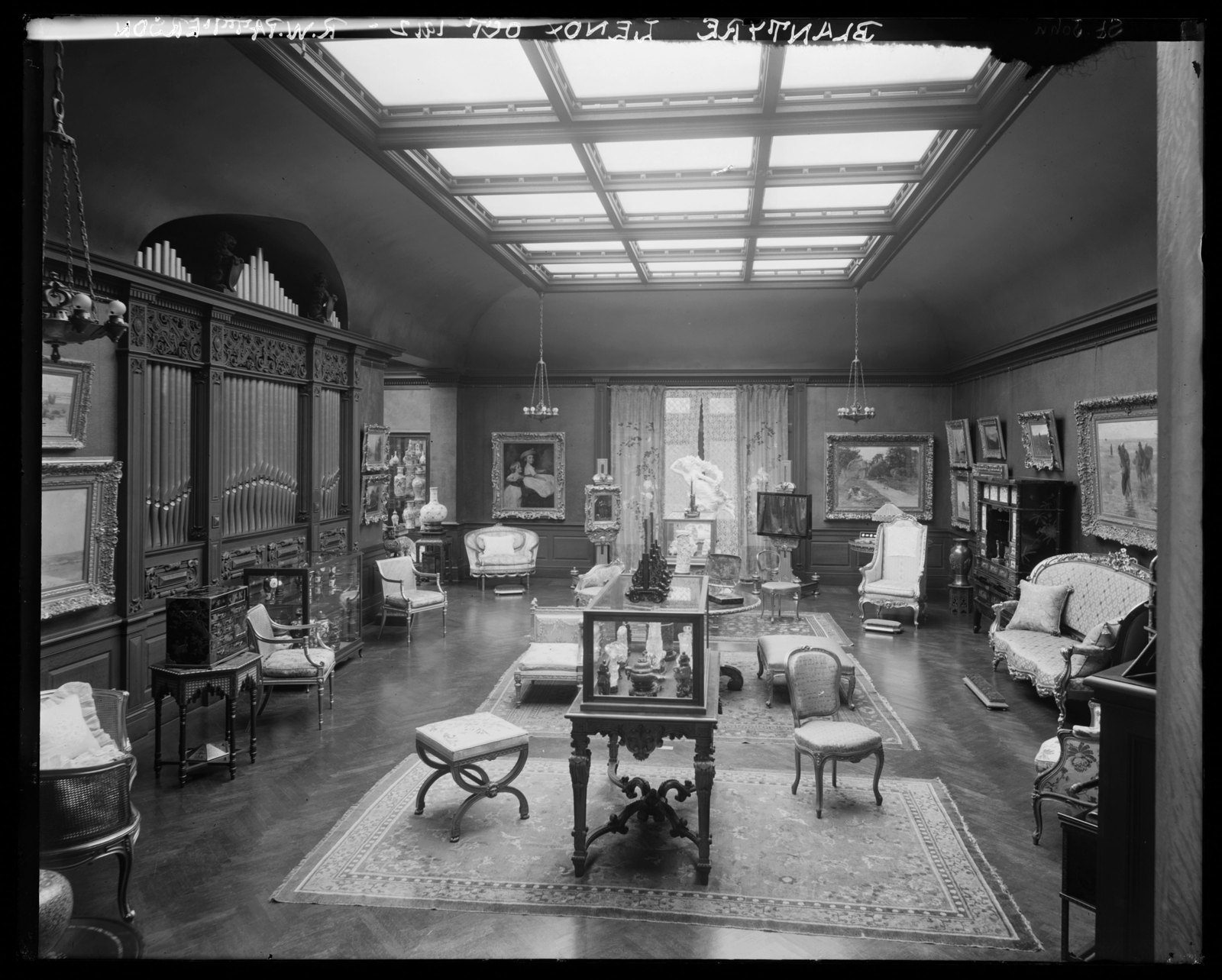
Lenox · 1912
The paintings at Blantyre
Forty-two painters, read off the brass plaques on the frames — Corot twice, a Millet, a Turner, three Gainsboroughs and four panels under Constable’s name.
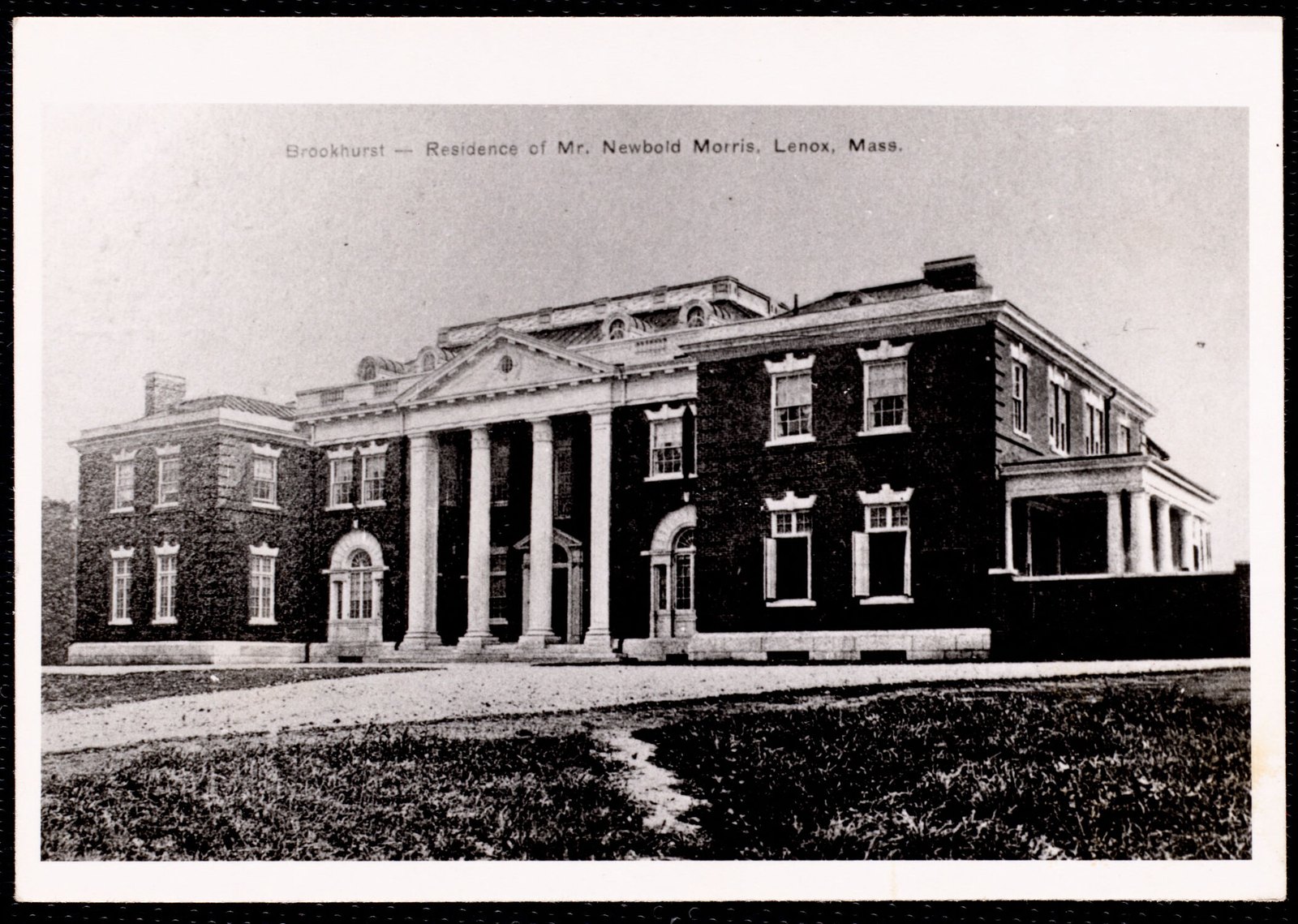
Lenox · 1885; rebuilt 1908
Brookhurst
Built for Edith Wharton’s cousin, kept by one family until 1986, and photographed by elevation — cow barn included — in the winter of 1938.
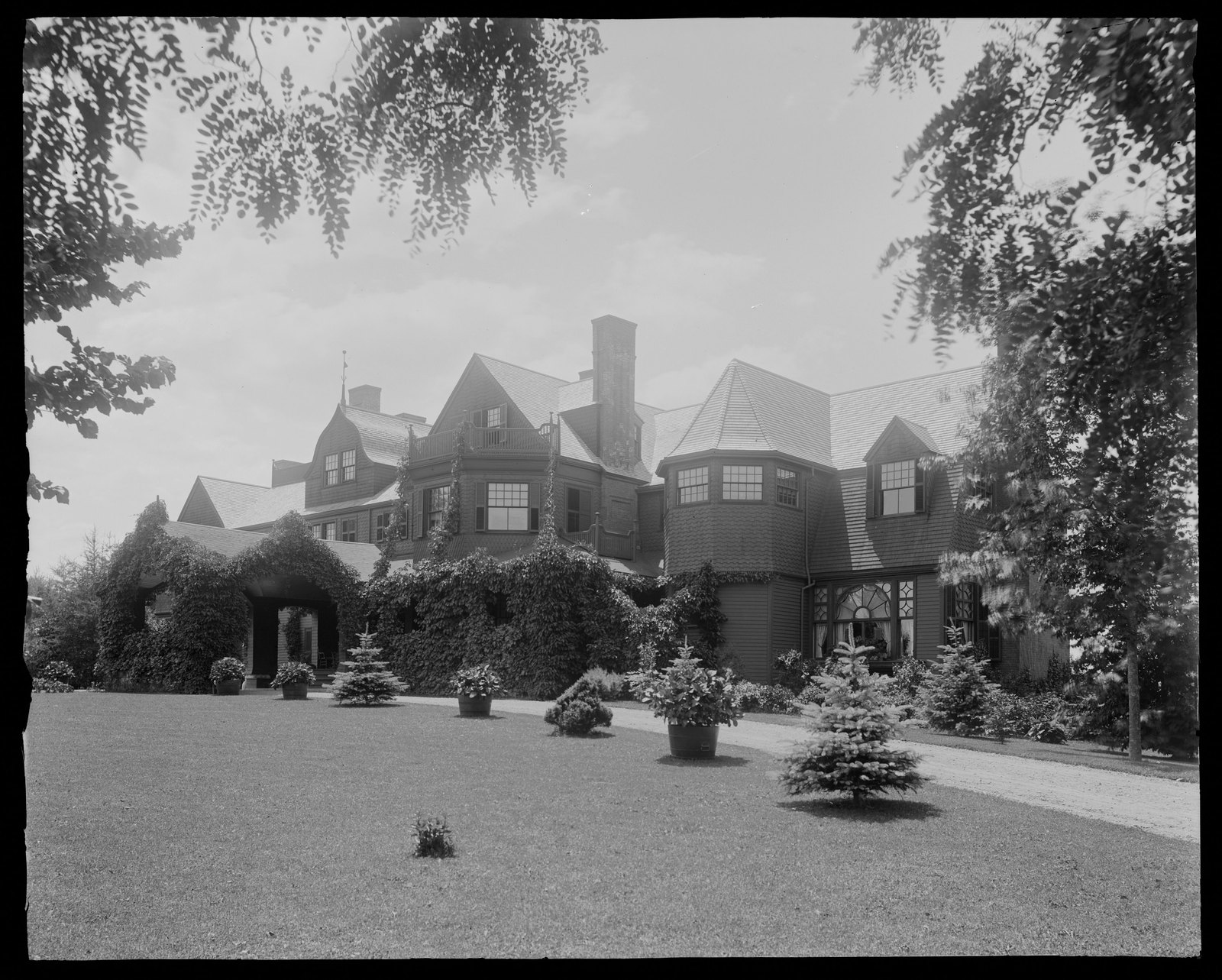
Lenox · 1882
Coldbrooke
Built by the author of the first major book on torpedo warfare, who then financed the Great Northern Railway — and later absorbed into a Jesuit school.
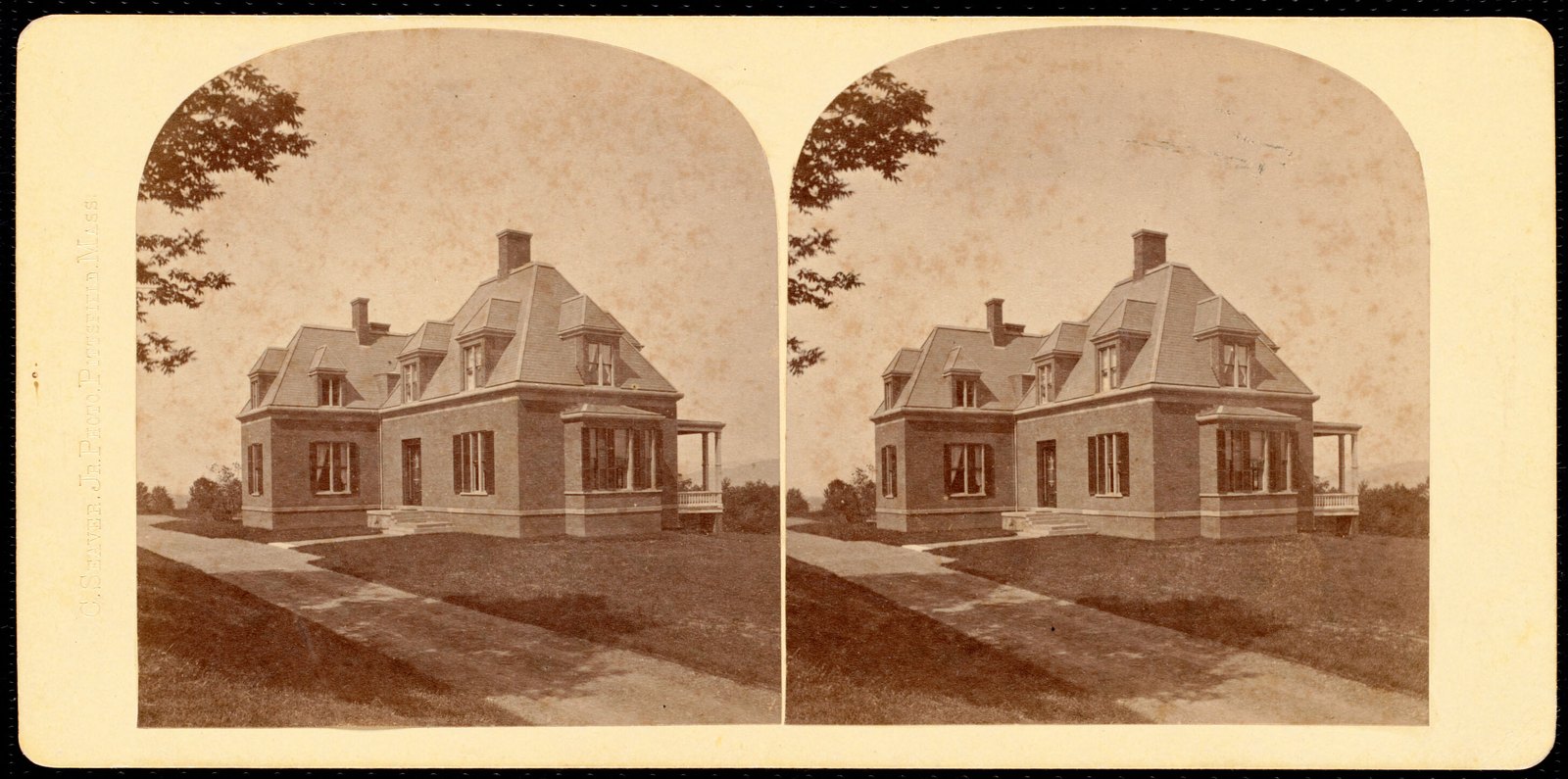
Lenox · about 1868
The Dormers
The man who designed Trinity Church, the town hall and the Lenox water works built this for himself — and had his dining room photographed three times in stereo.
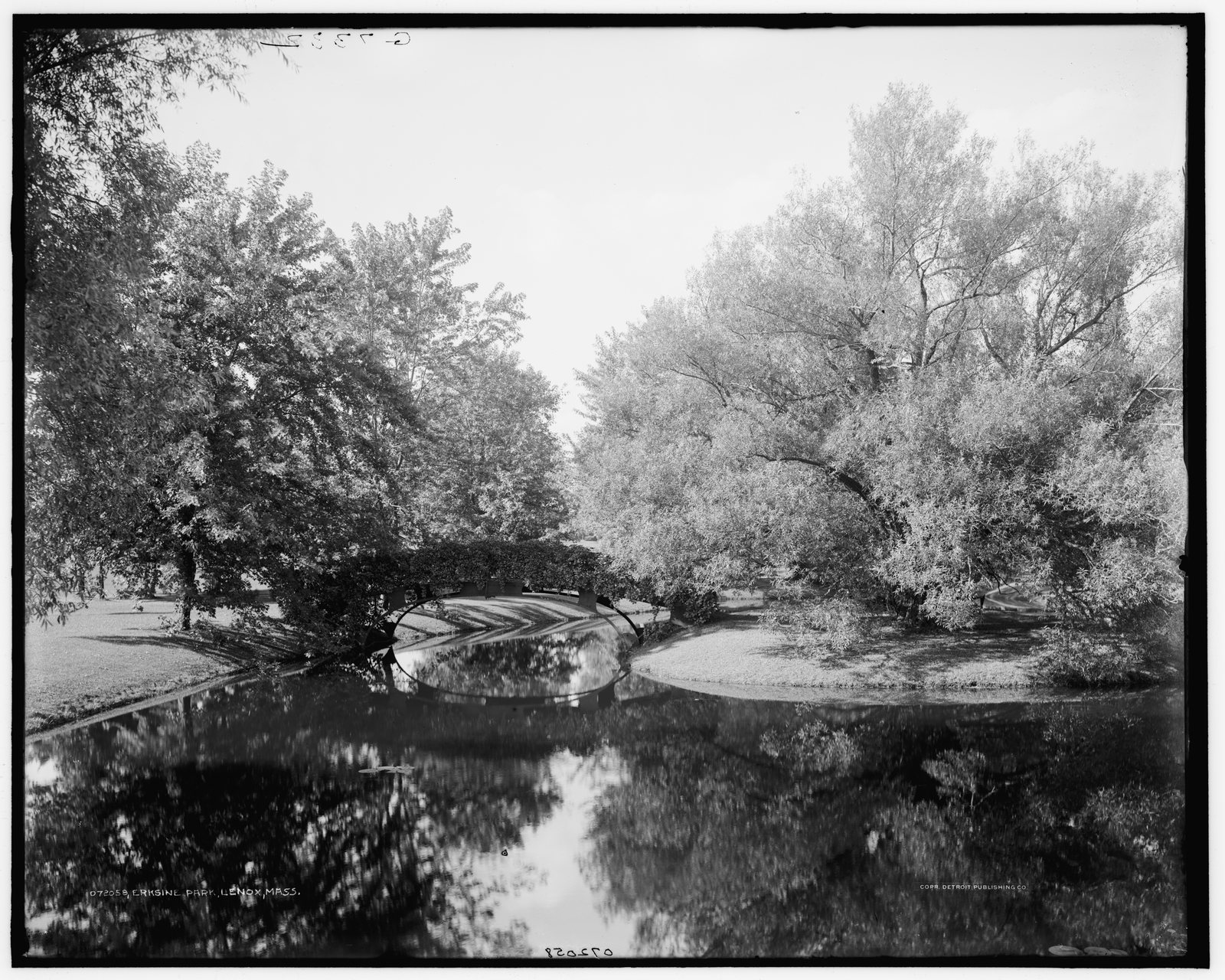
Lenox · by 1893 – 1919
Erskine Park
George Westinghouse’s white house above Laurel Lake — lit by his own current, photographed thoroughly, and pulled down by agreement in 1919.
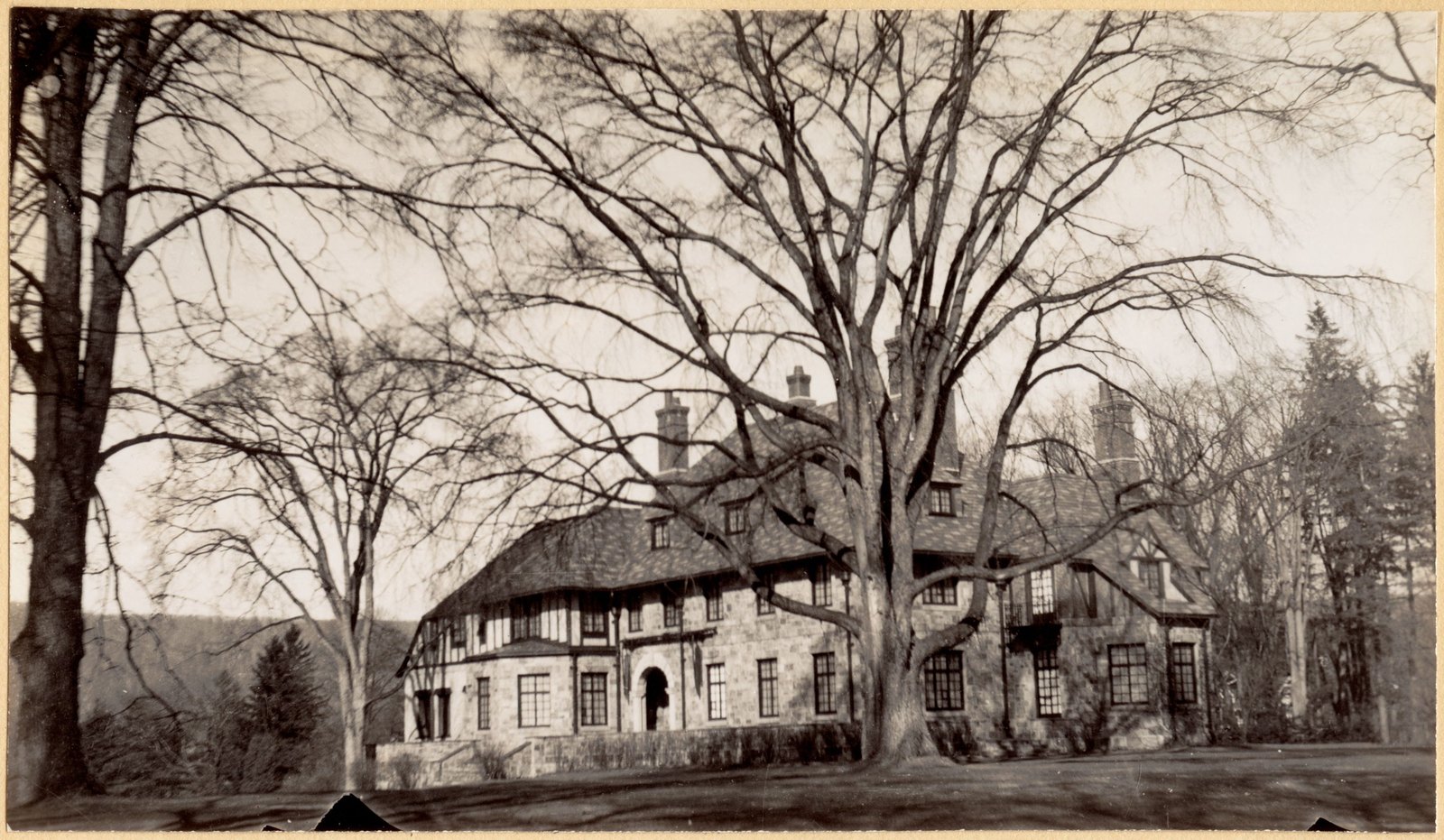
Lenox · 1875; rebuilt 1930
Ethelwynde
The house the builder of Groton Place grew up summering at — and the one estate whose 1938 survey drawing names the appraisal engineers who made it.
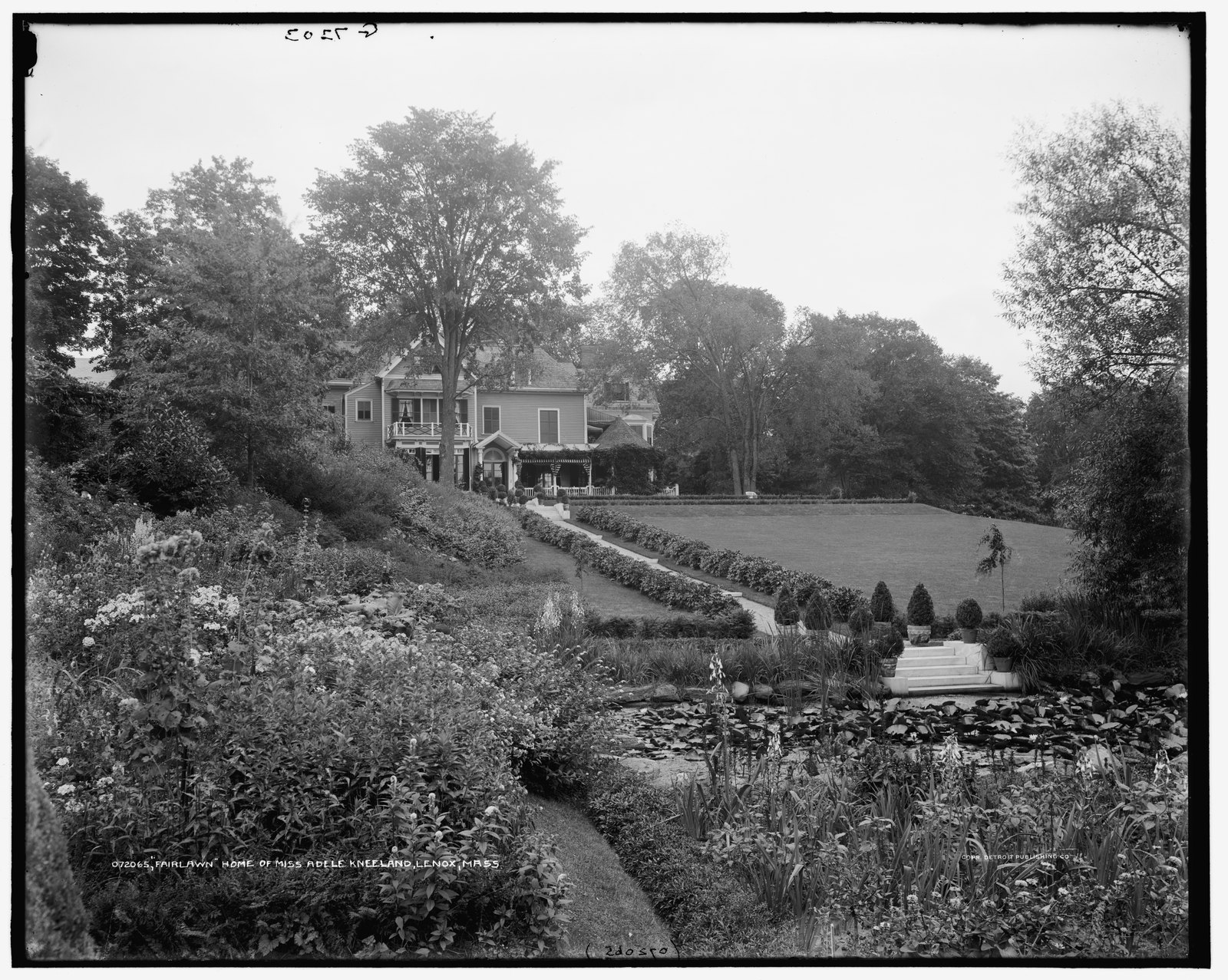
Lenox · by 1885
Fairlawn
A garden photographed far more often than its house, and a Detroit Publishing plate given over entirely to the sundial in it.
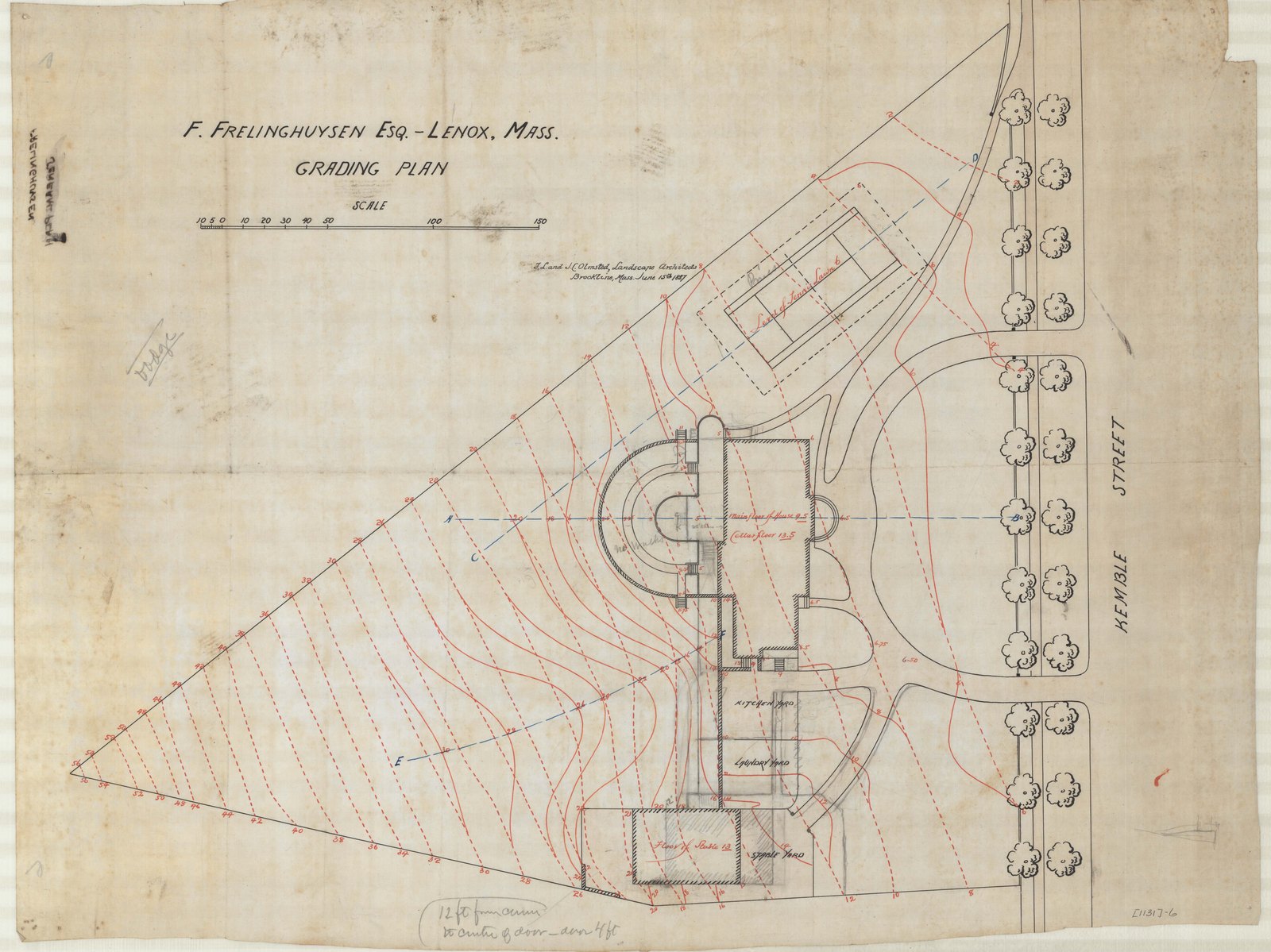
Lenox · 1887–88
The Frelinghuysen house
Sixty-one sheets for a town lot — including the field notes taken at the back door, the five-page plant order, and eleven pages of longhand arithmetic.
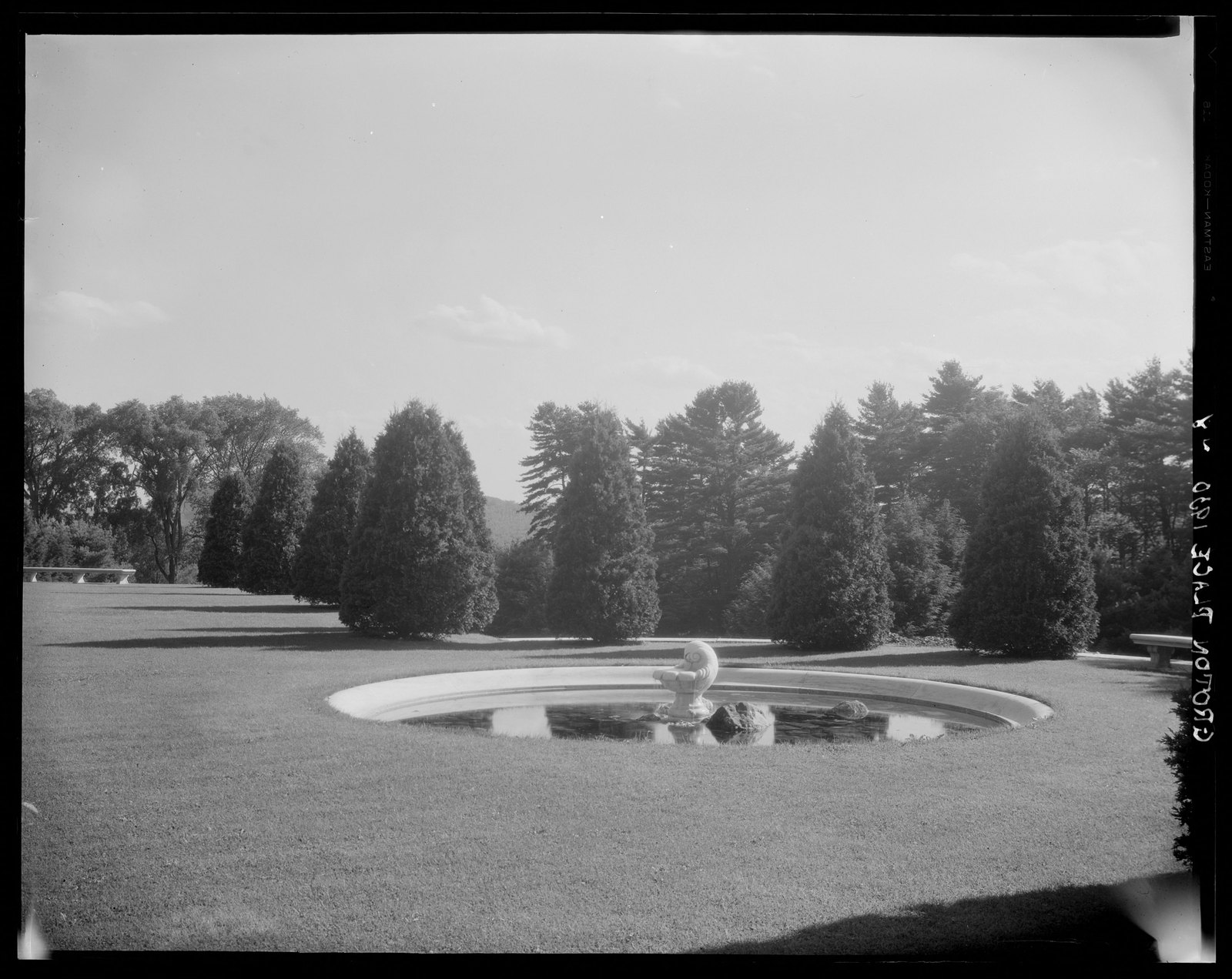
Lenox · 1905
Groton Place
A hundred negatives of a garden made of grass, evergreen and stone, with no flowers in it — kept by a collector who left four thousand works of art to Harvard.
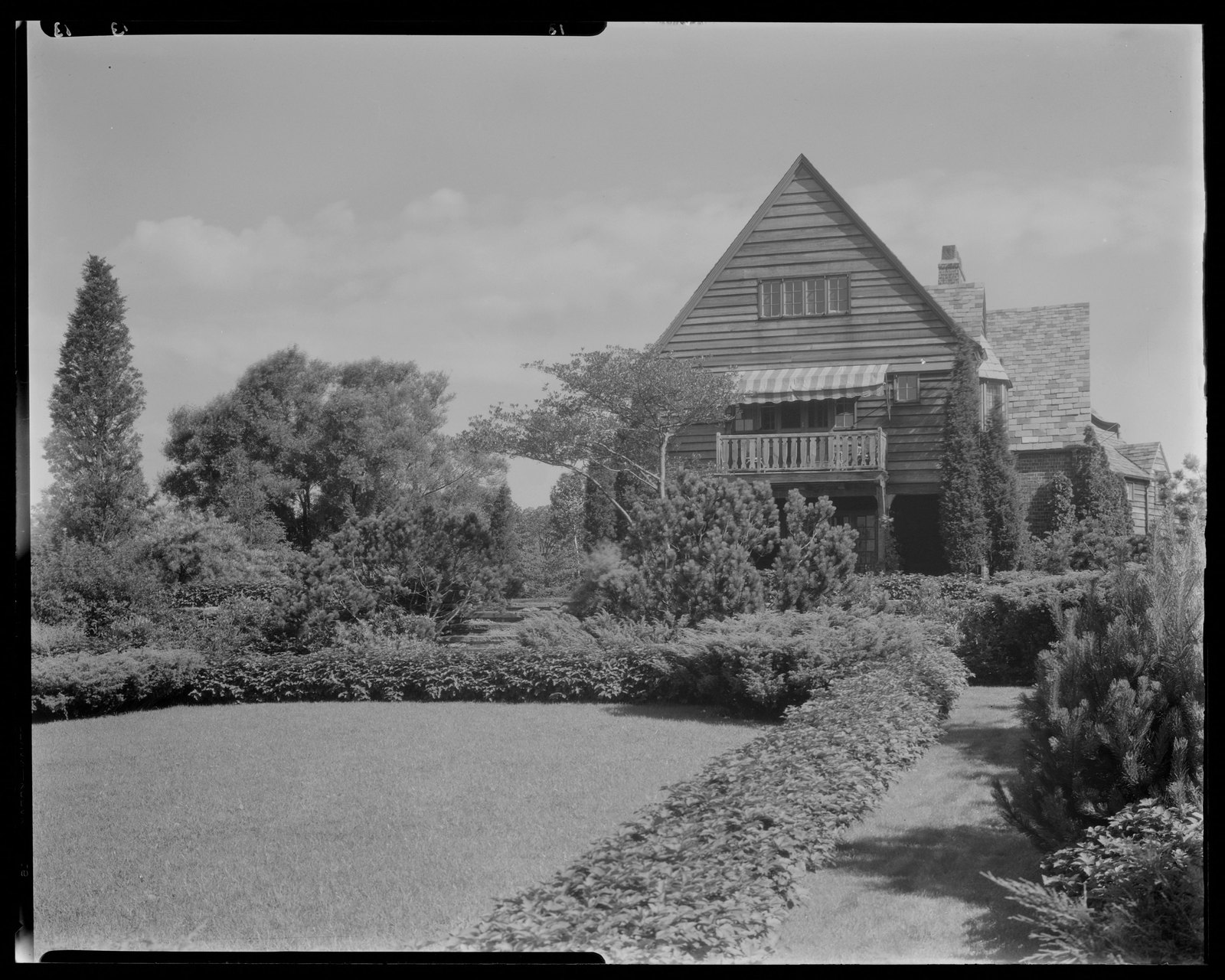
Lenox · about 1925–35 (photographed)
Hillingdon
Forty-four Edwin Hale Lincoln negatives — house, grounds, interiors and a log cabin — of a place no published source seems to describe.
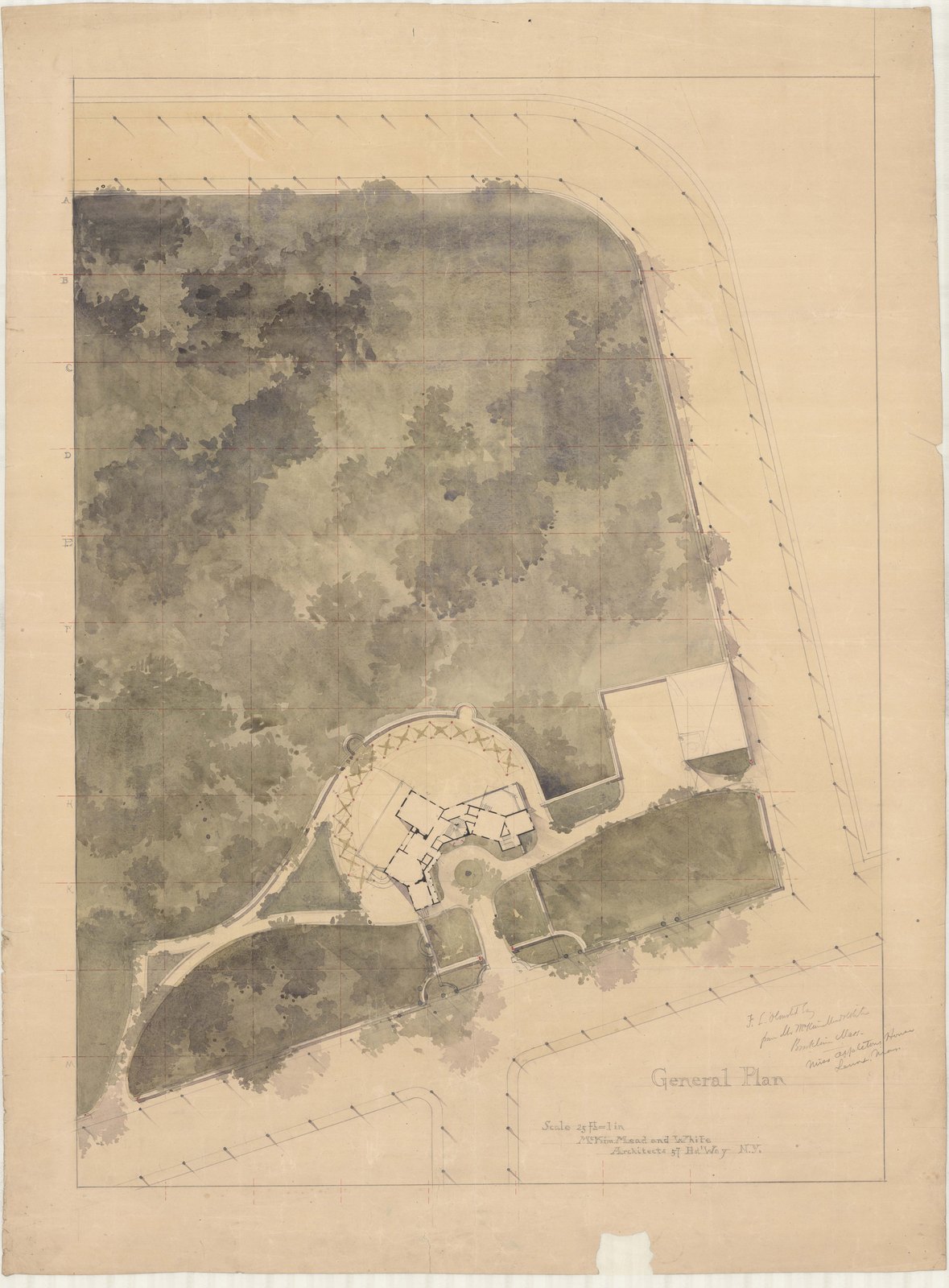
Lenox · 1883–84
The Homestead
The office’s first Berkshire job, drawn from McKim, Mead & White’s plan. The architect married the client; she died eighteen months later; the house burned in three and a half hours.
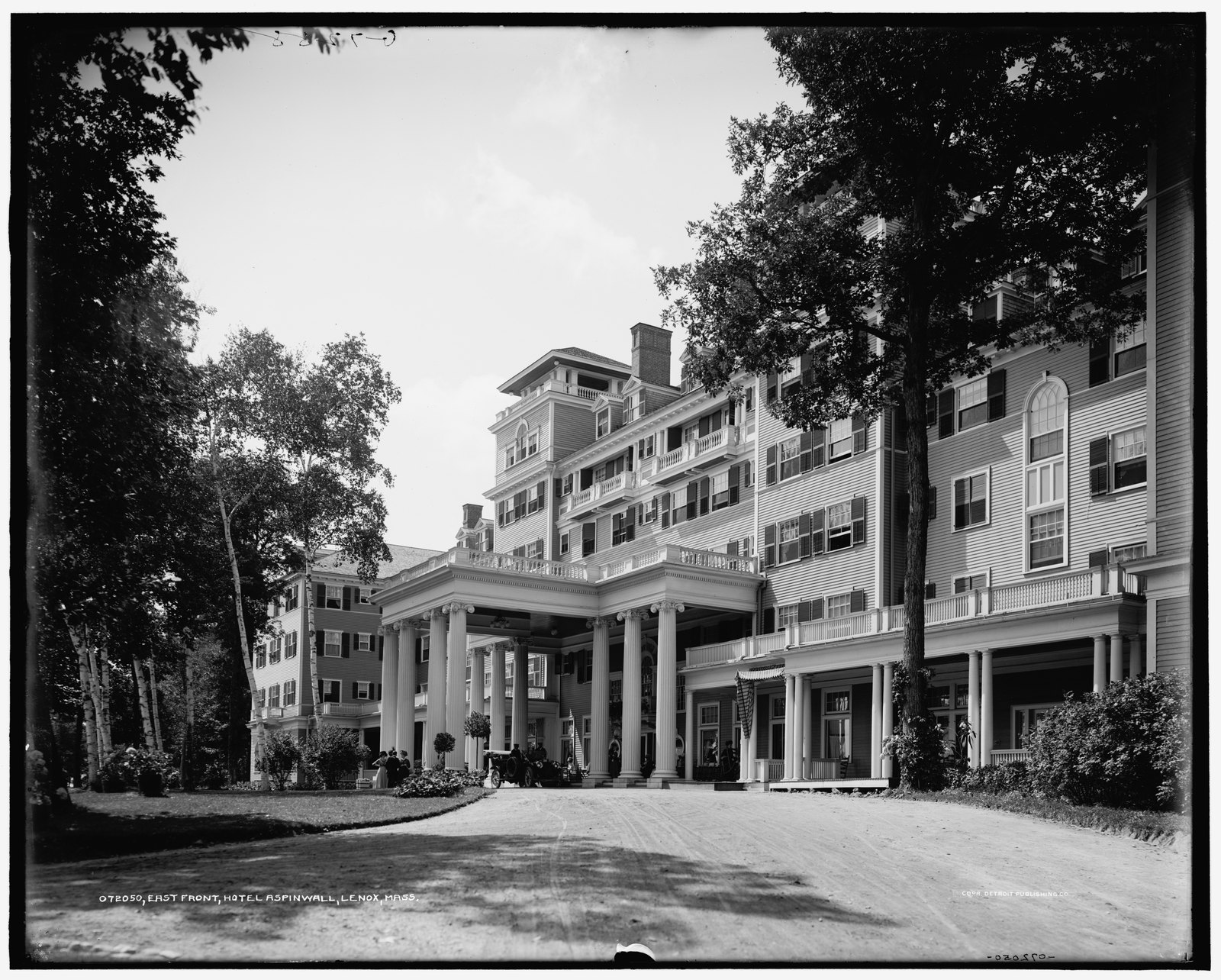
Lenox · 1902–1931
Hotel Aspinwall
A hotel that sold the cottagers’ view by the week — two hundred and fifty rooms by one account, on the ridge north of Lenox, twenty-nine seasons, and an hour’s fire in April 1931.
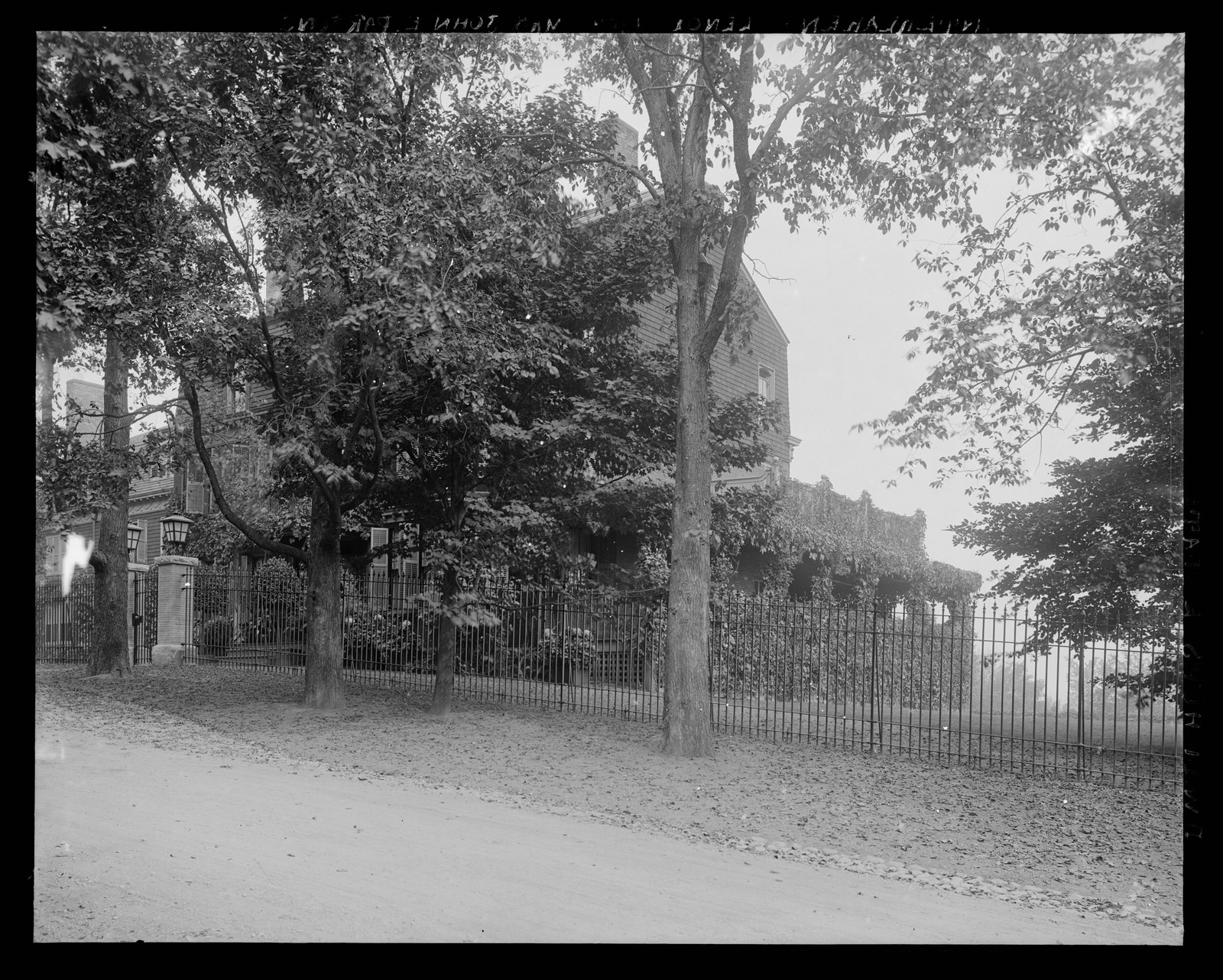
Lenox · photographed 1908–09
Interlaken
Photographed in the winter the son of the house was offering $250 to the first four people who could fly a kilometer. He pulled it down in 1922.
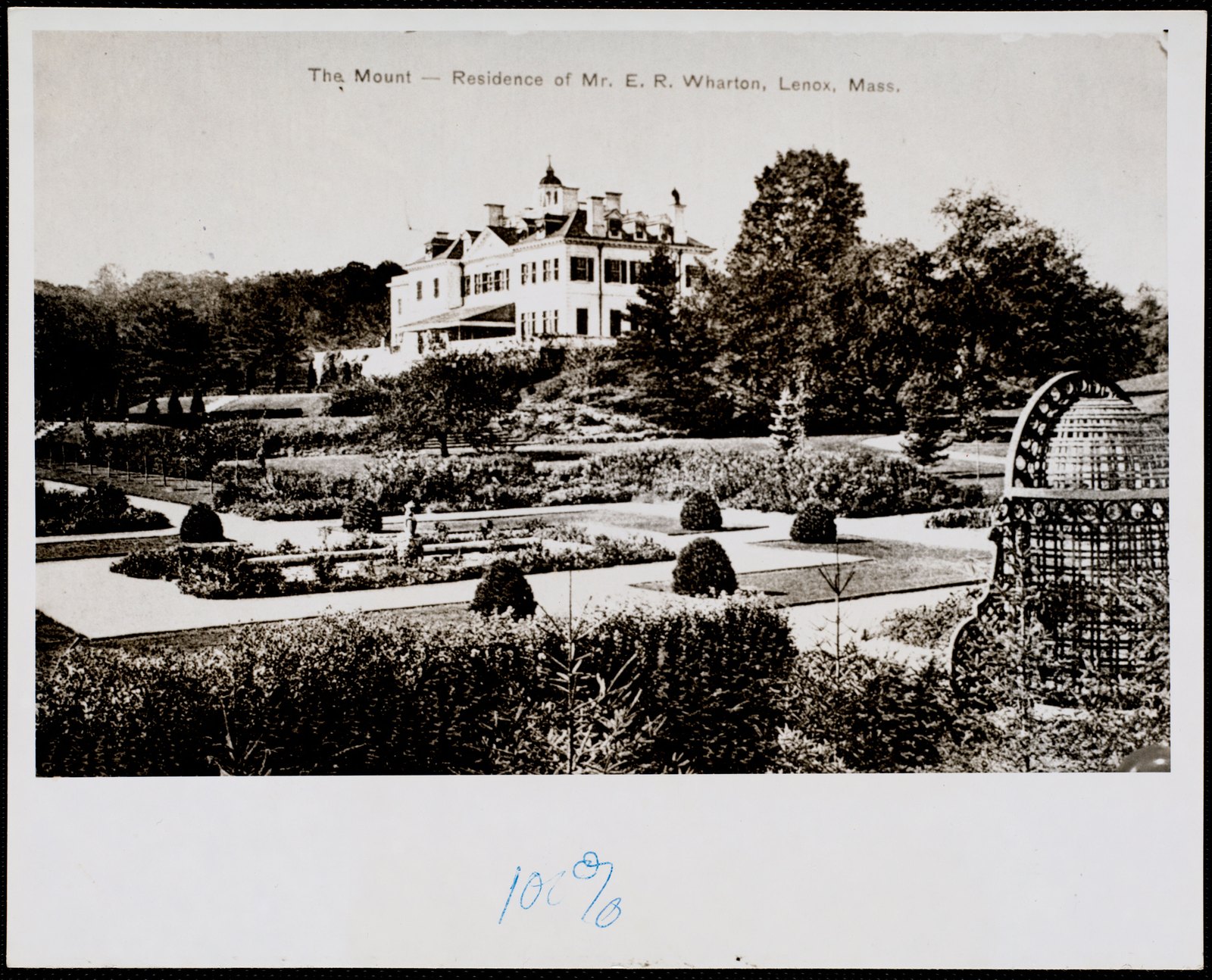
Lenox · 1902
The Mount
The house of the woman who wrote the book on houses — and a numbered photographic survey of every building on the estate, made on one winter day in 1940.
Lenox · photographed 1909–18
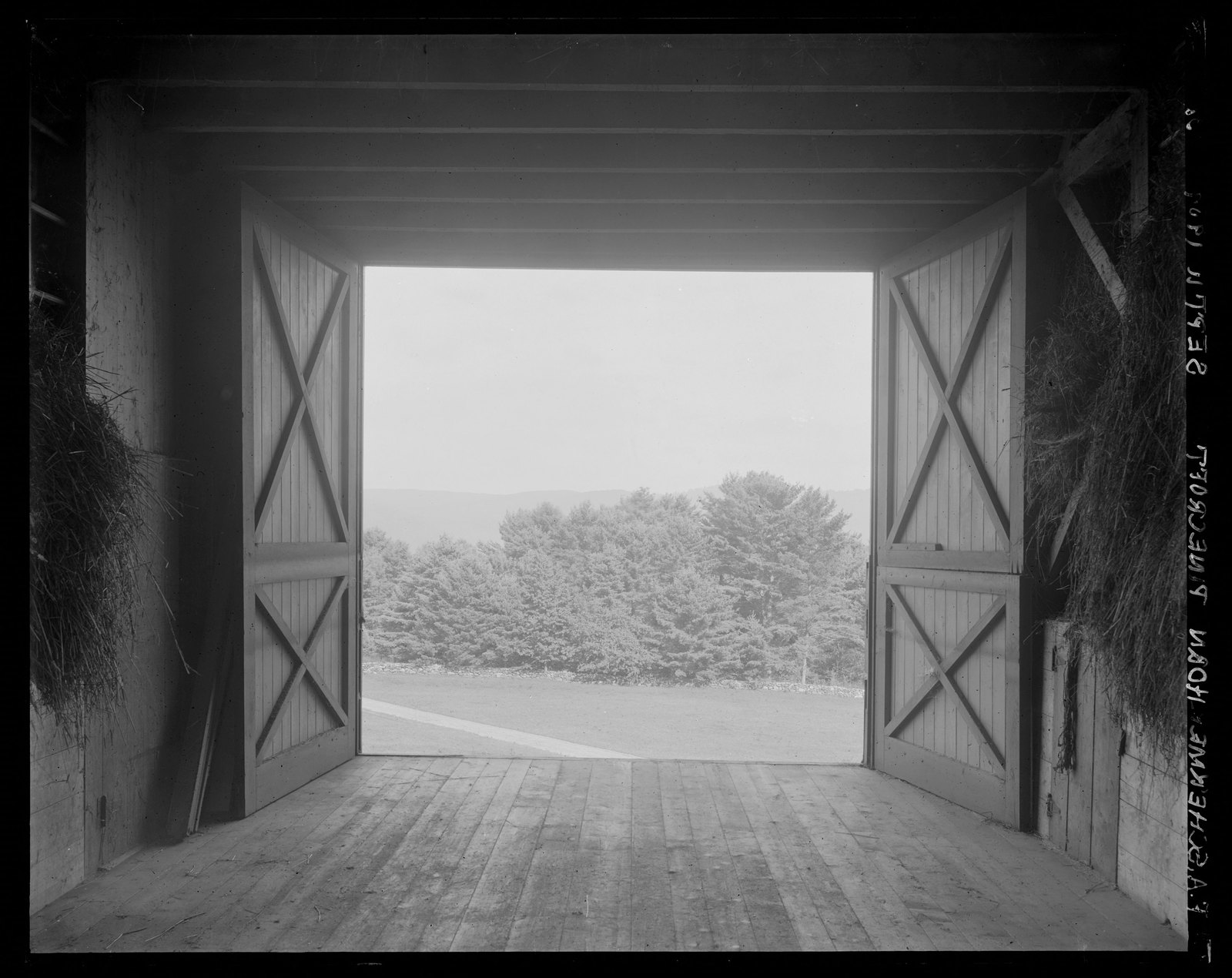
Pinecroft
Eleven of its thirty-seven surviving photographs are of hay and wheat — and two of the men who worked here are named on the backs of prints.
Lenox · photographed 1915
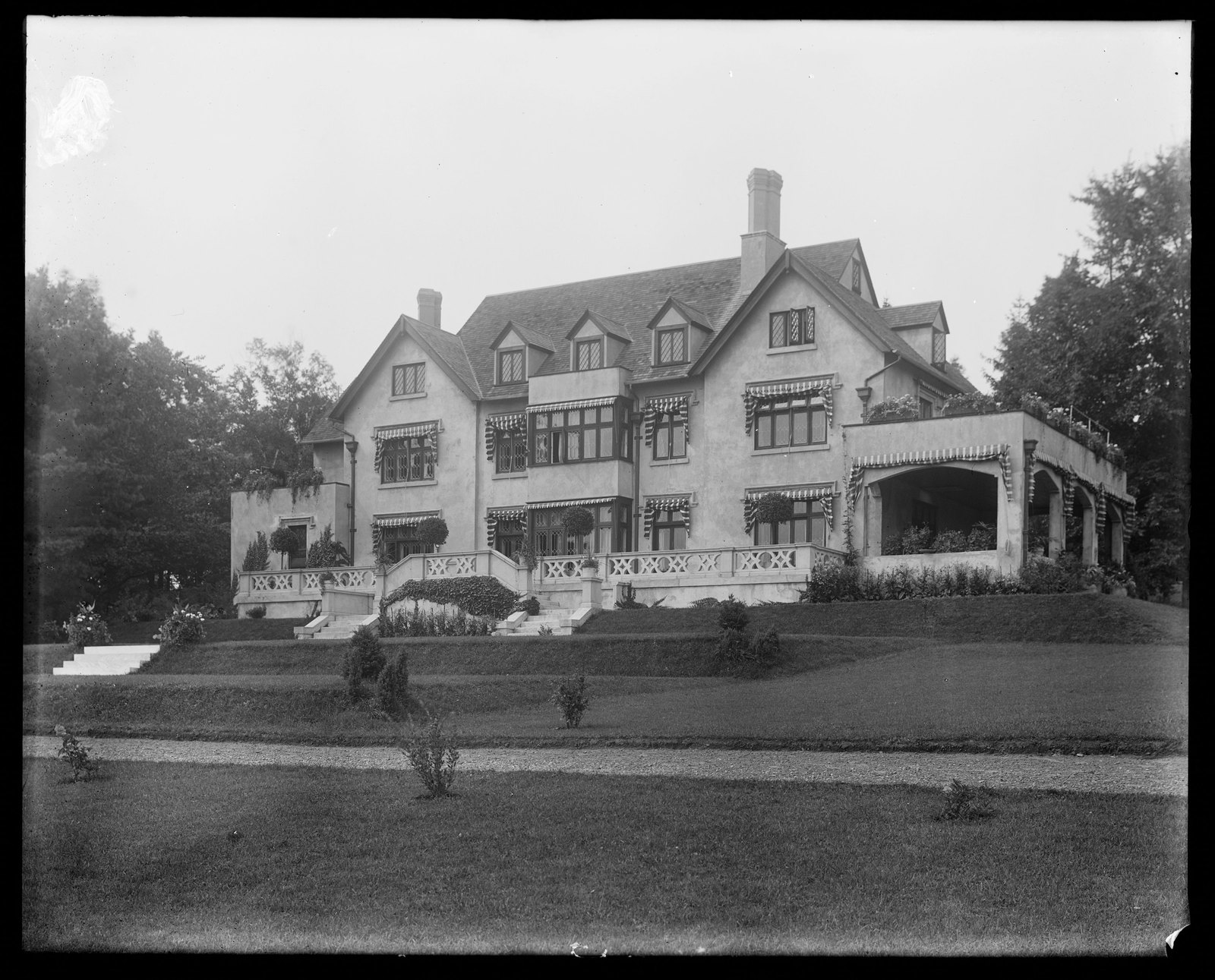
Shipton Court
Ten plates of a house and four of its paintings, carried out onto the grass and copied in daylight — one of them a Knight Grand Cross of the Order of the Redeemer.
Lenox · 1904
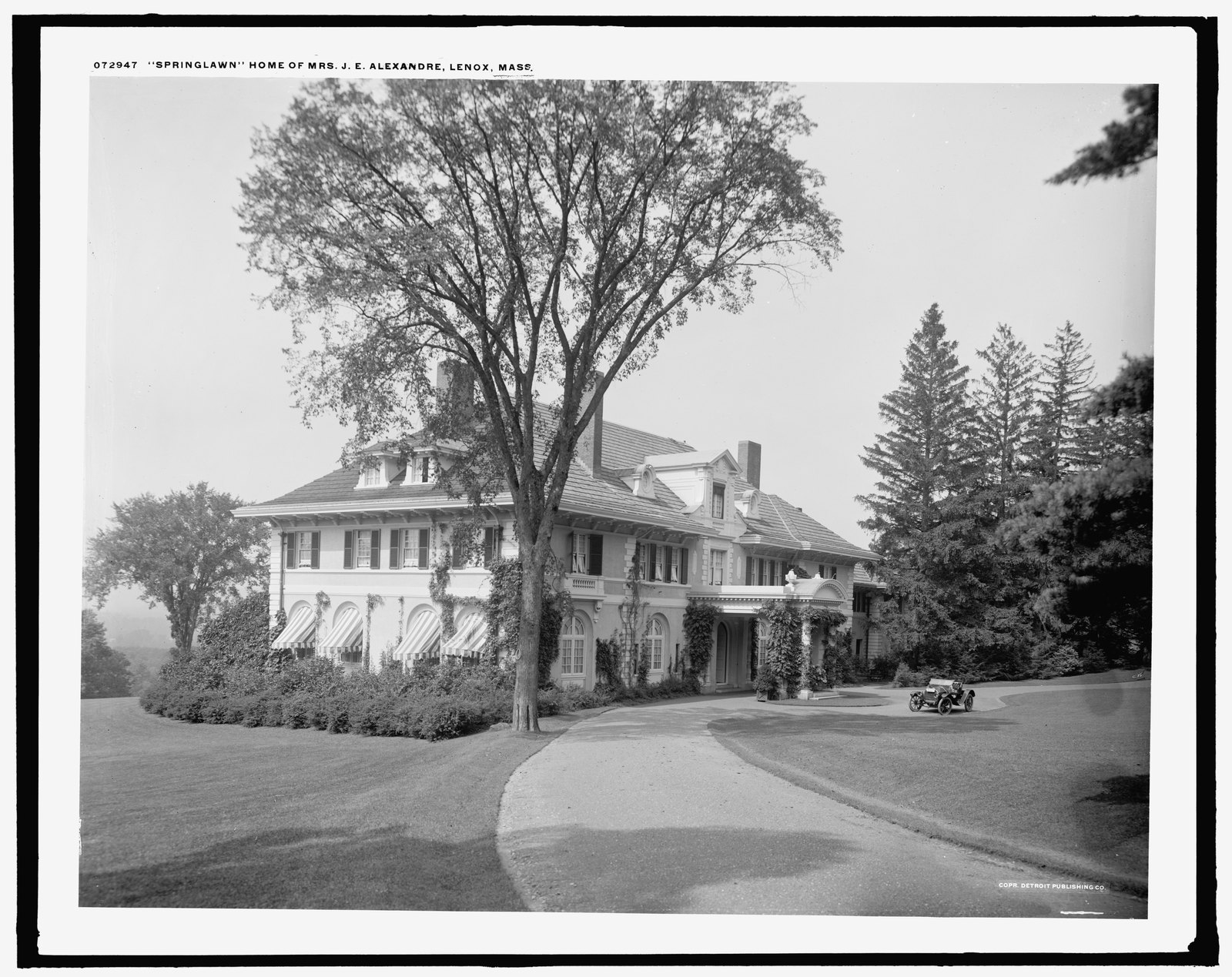
Spring Lawn
Guy Lowell’s Beaux-Arts house of 1904, photographed room by room about a year later — sixteen interiors, at a moment when the building itself may not survive.
Lenox · 1875; remodeled 1921
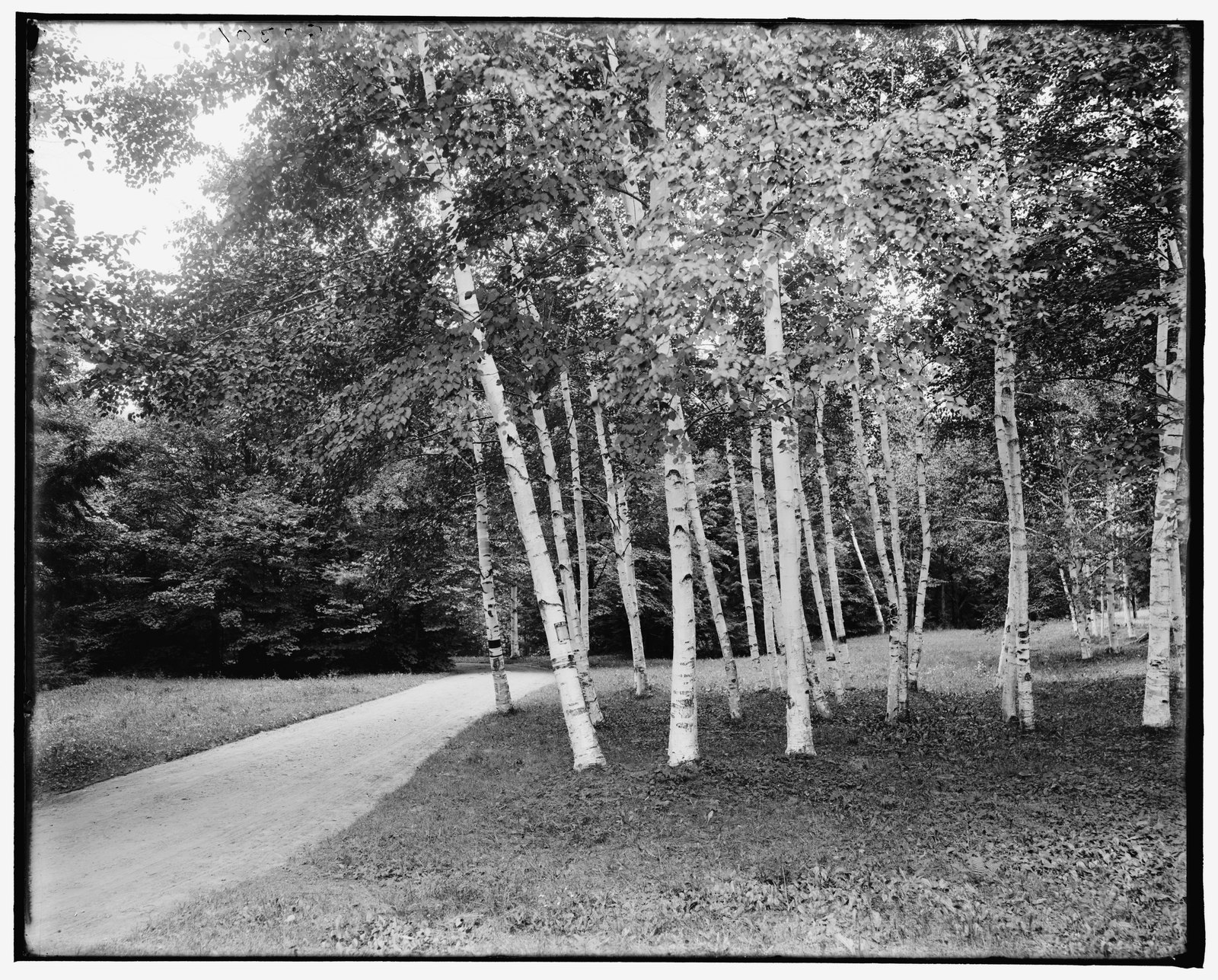
Stonover
A Victorian house turned French by Delano & Aldrich in 1921, then bought by the neighbors after the last sister died and taken apart because it blocked the view.
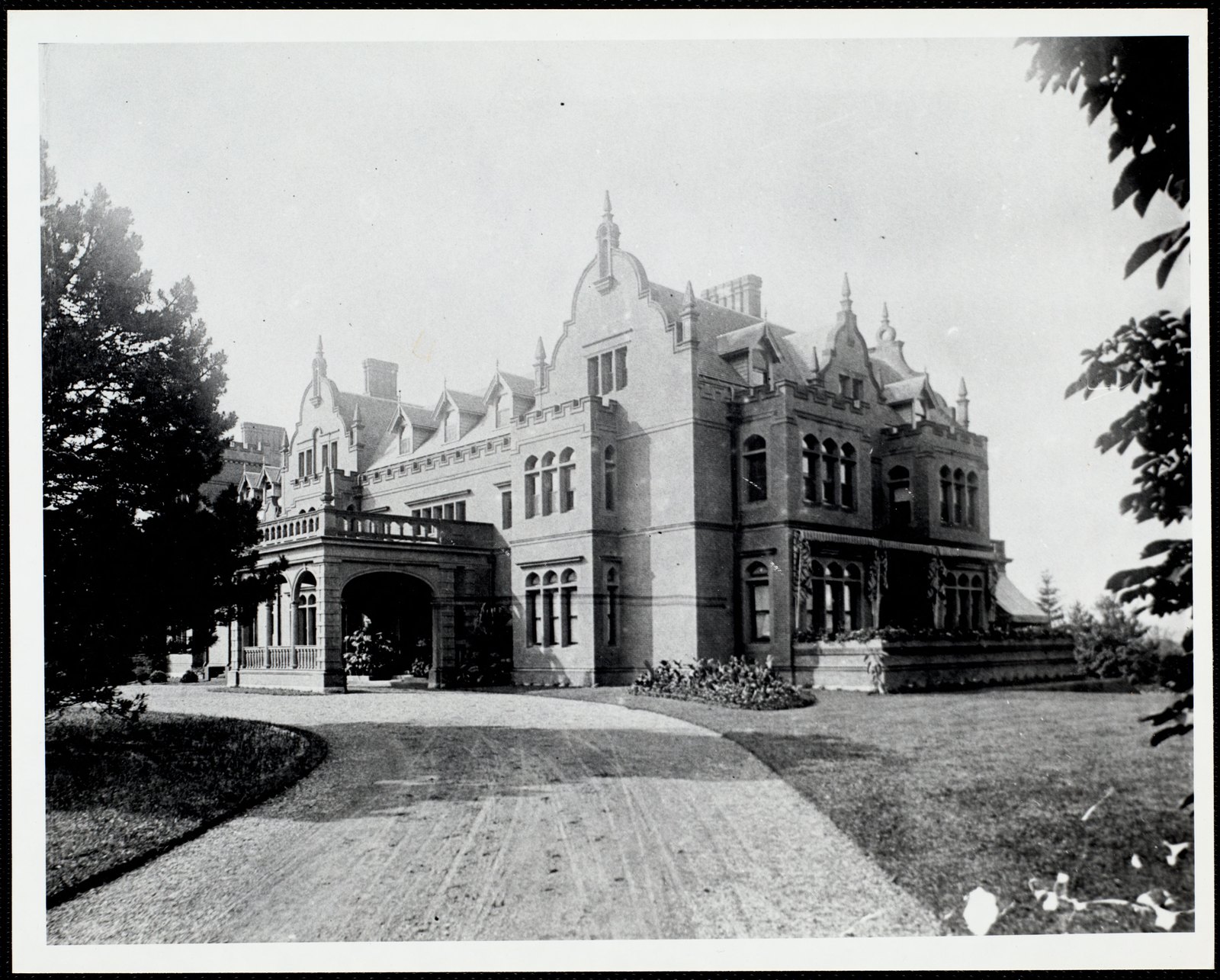
Lenox · 1891–93
Ventfort Hall
Fifty-nine plates, and most of them are of people — the painters dated 13 May 1893, the carriage men, the gardeners, and a baby in a pram beside a dog.
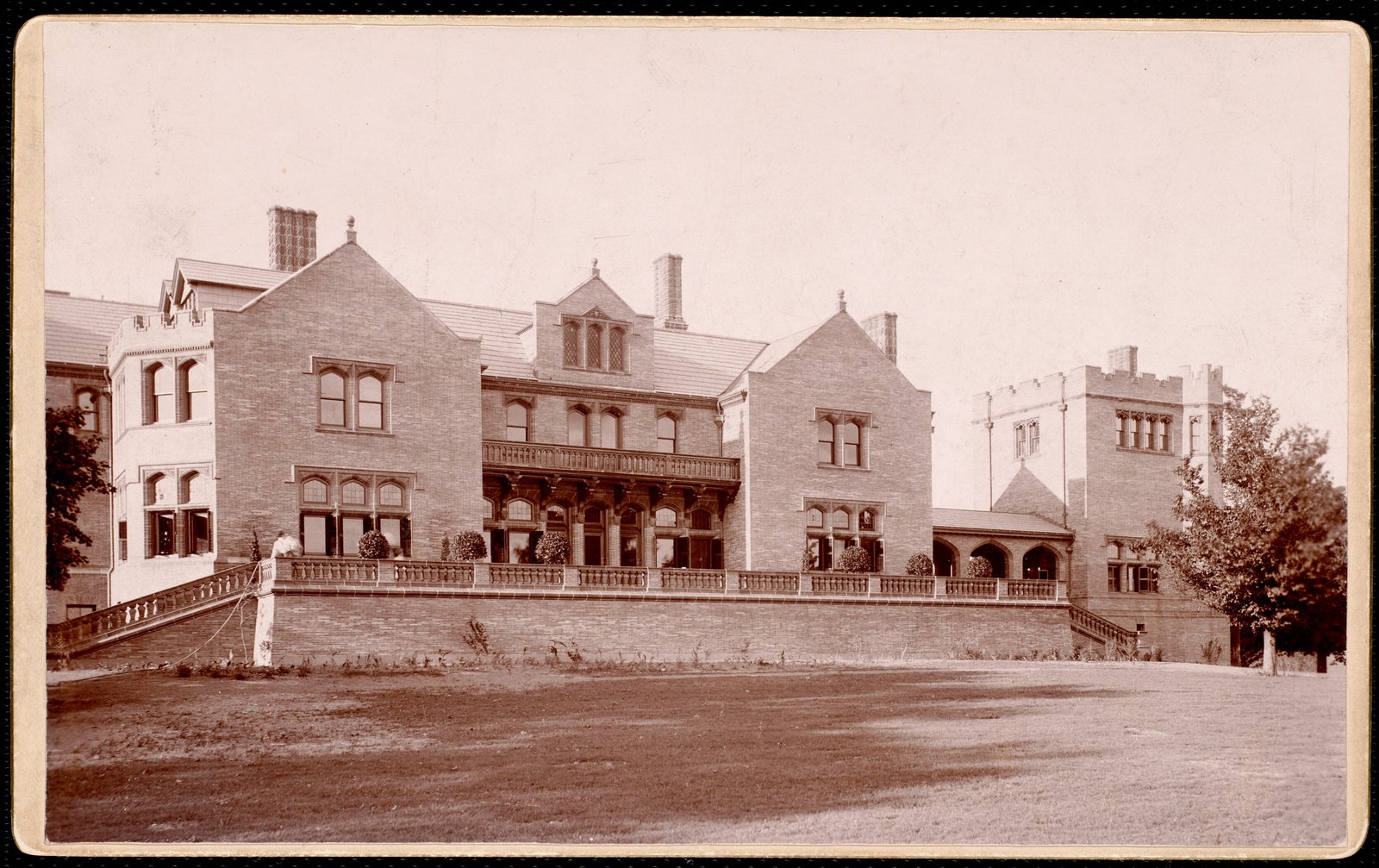
Lenox · 1893–94
Wyndhurst
Built on Henry Ward Beecher’s hill by the brother of Elm Court’s owner, with the grounds drawn by the same Olmsted partnership, in the same winters, as Wheatleigh.
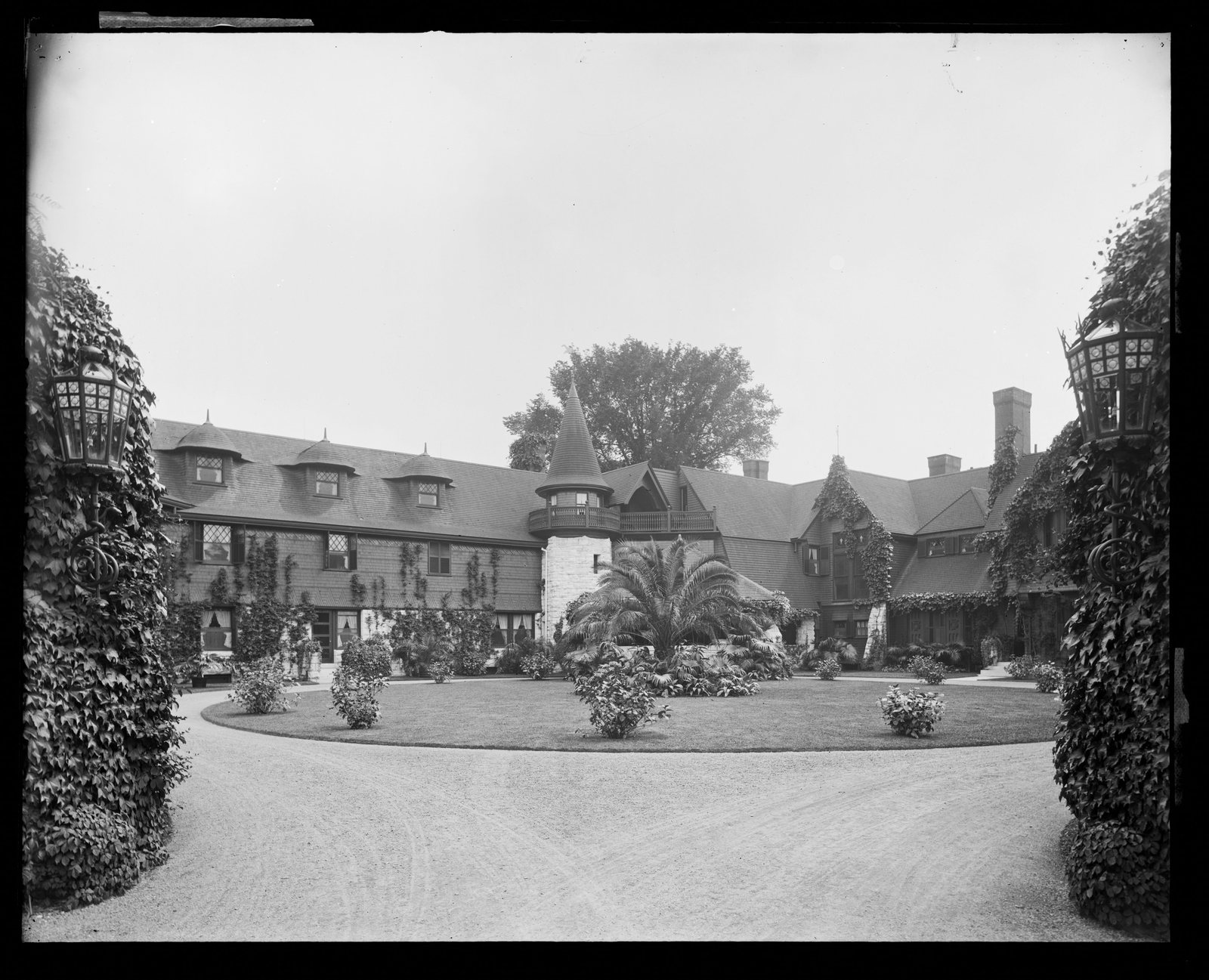
Lenox and Stockbridge · 1885–86, 1924–29
Elm Court
The Sloane–Vanderbilt estate, drawn twice by the Olmsted firm for the same woman under two names — and a garden rebuilt in fourteen months, photographed from bare soil to full bloom.
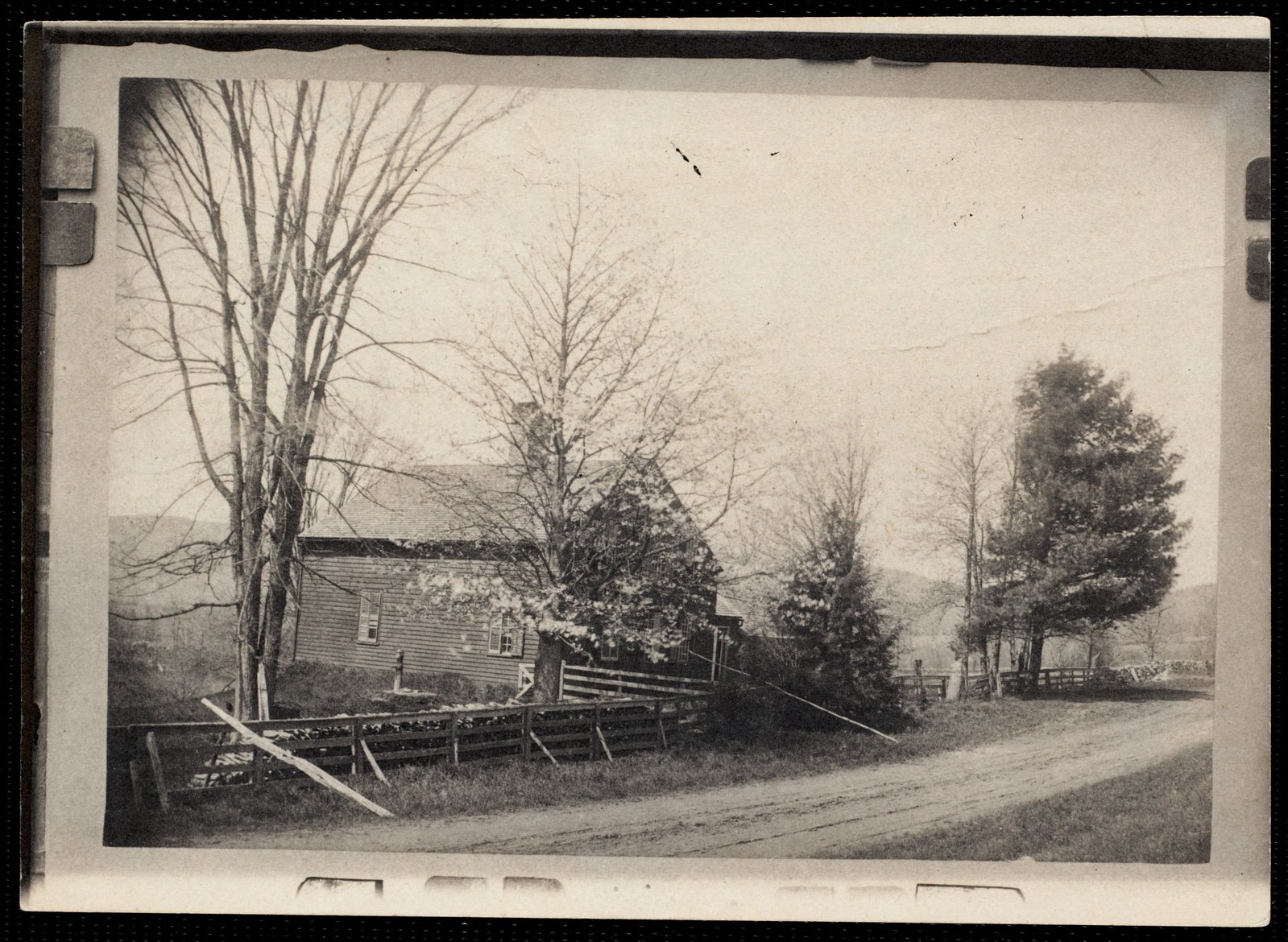
Lenox and Stockbridge · 1844–1938
Tanglewood
Two houses above the Stockbridge Bowl, and between them the red farmhouse where Hawthorne wrote the book the place is named after.
Lenox and Stockbridge · 1895–1917
The village work
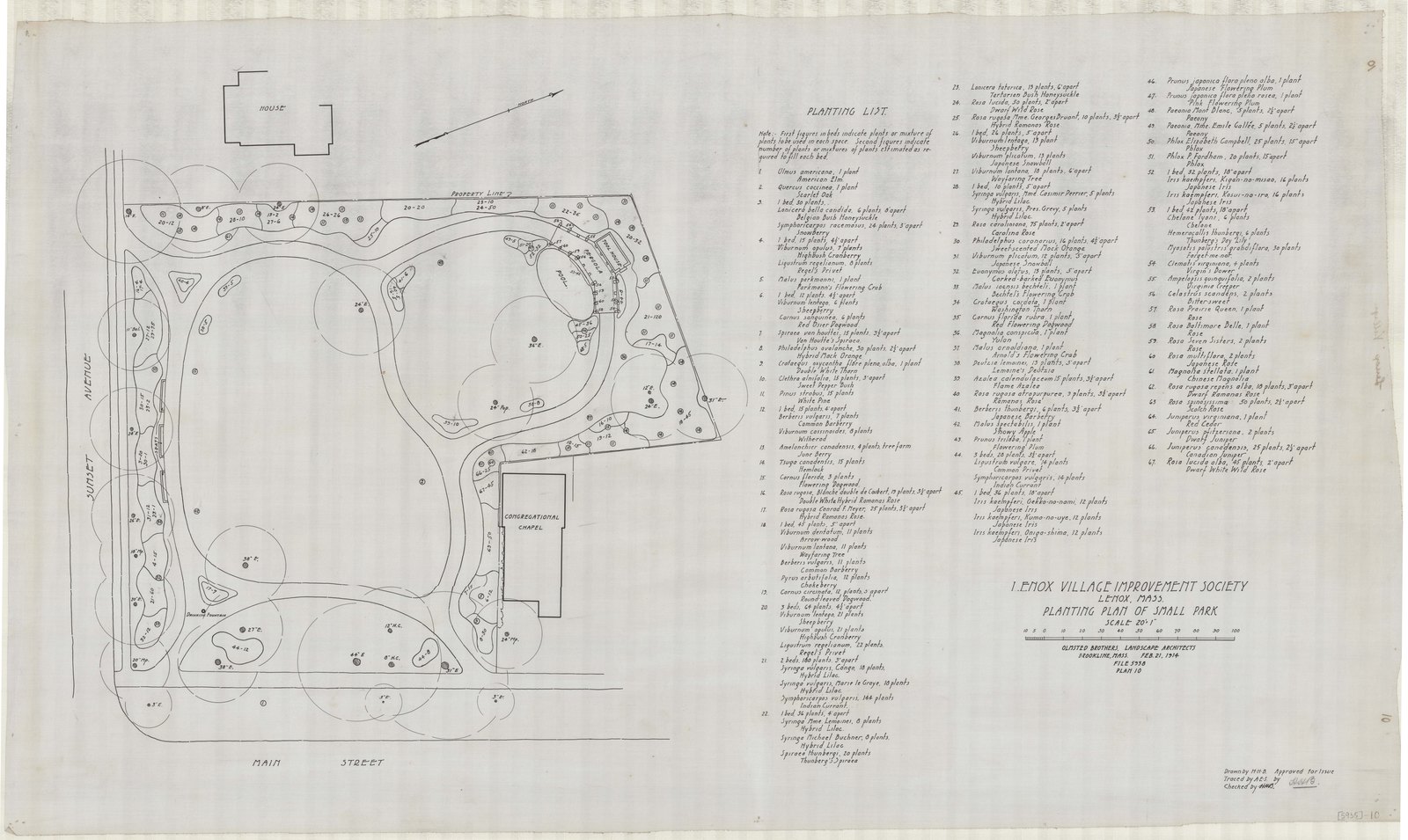
The two towns hired the office that had spent thirty years drawing the hills above them — a small park with sixty-seven kinds of plant on one sheet, and the ground by the railroad station.
Pittsfield · 1888–1899; Olmsted work 1891–93
Blythewood
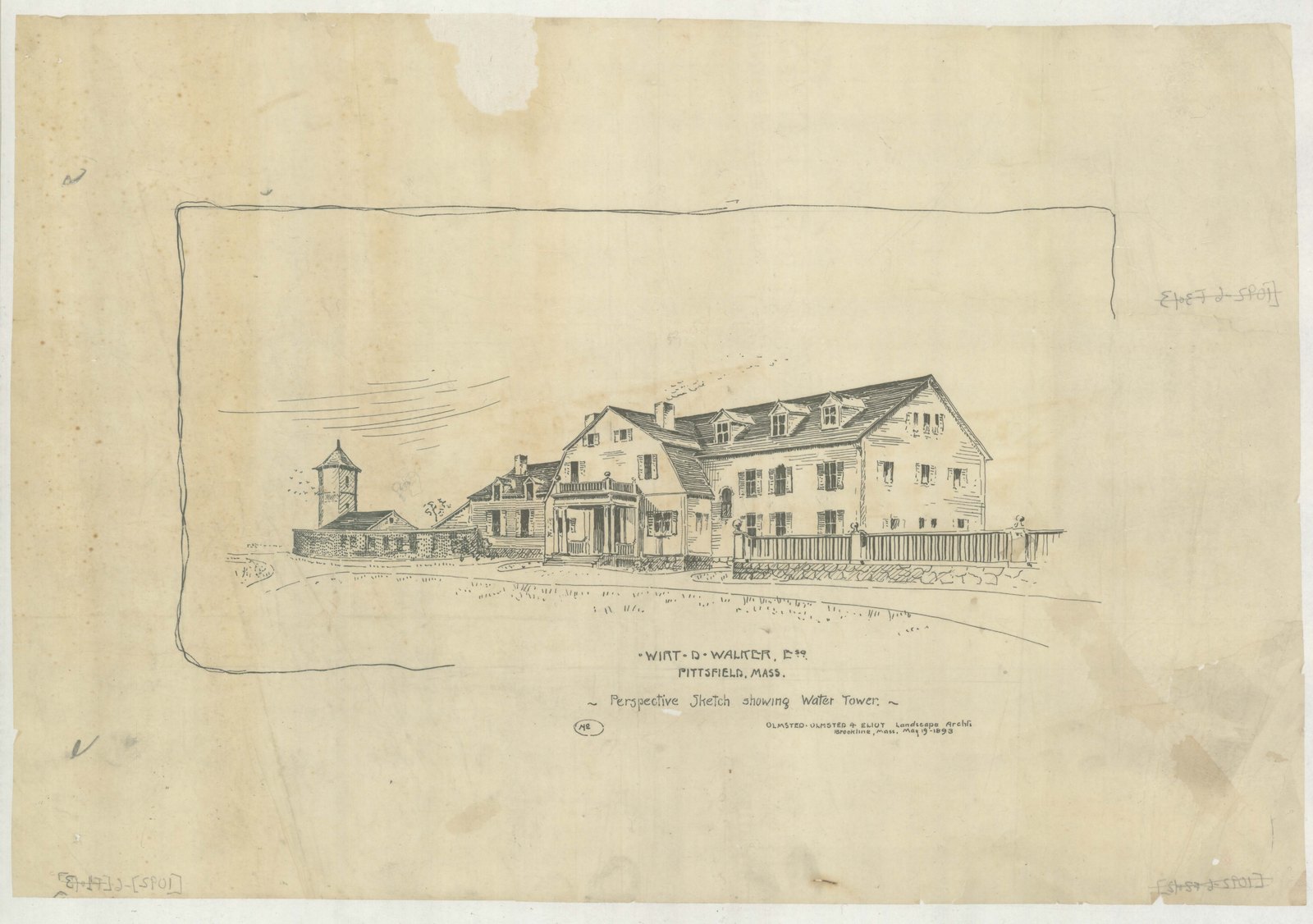
Seventy-seven Olmsted sheets for a Chicago lawyer who bought four hundred and fifty acres to get well in — nine of them for a water tower the office drew in perspective.
Pittsfield · 1906–07
The Franklin Weston Place
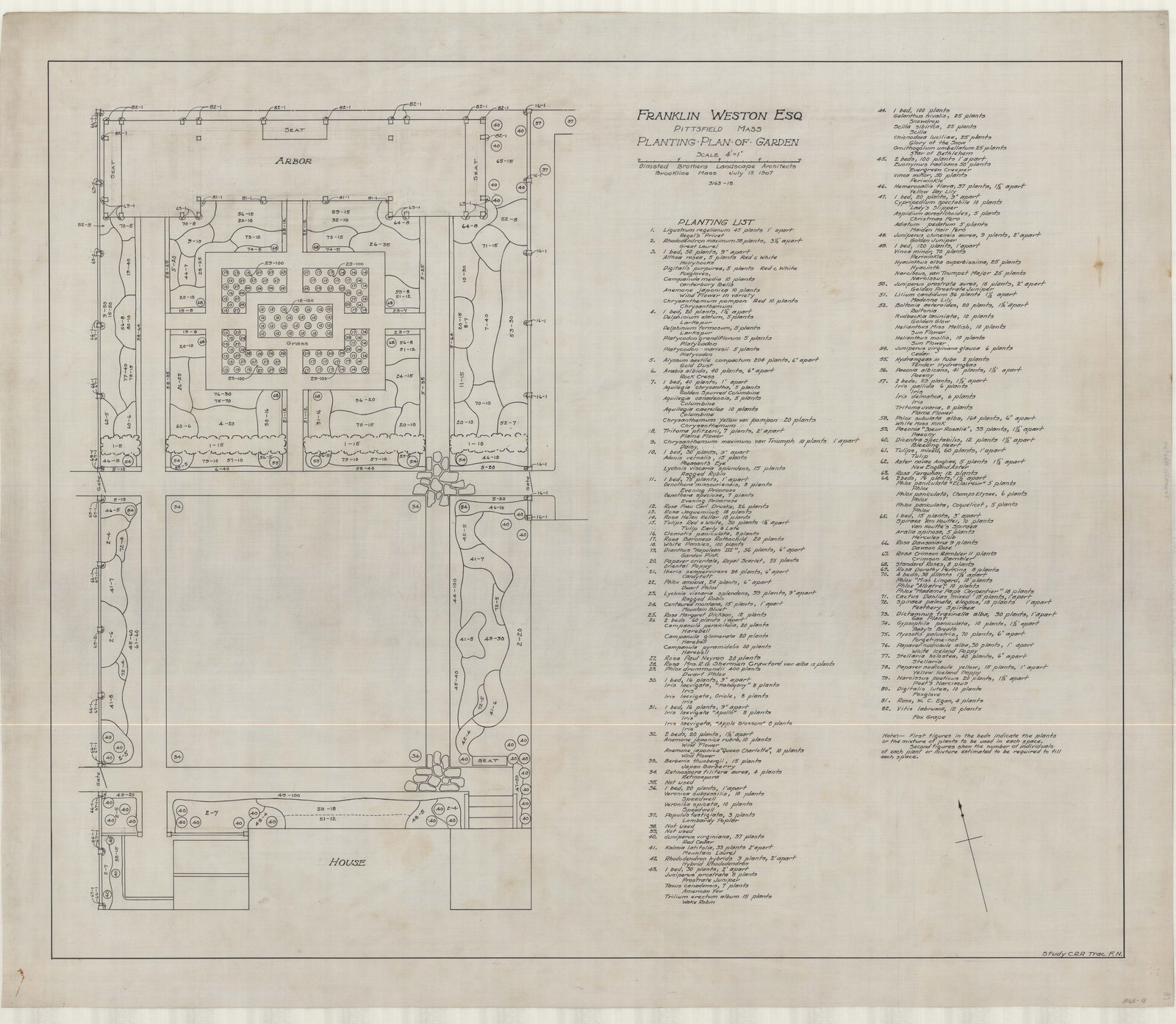
A survey bought from a Pittsfield engineering office, and a formal garden drawn at four feet to the inch with a planting list of eighty-two numbers.
Pittsfield · 1890–91
The Ogden and West Places
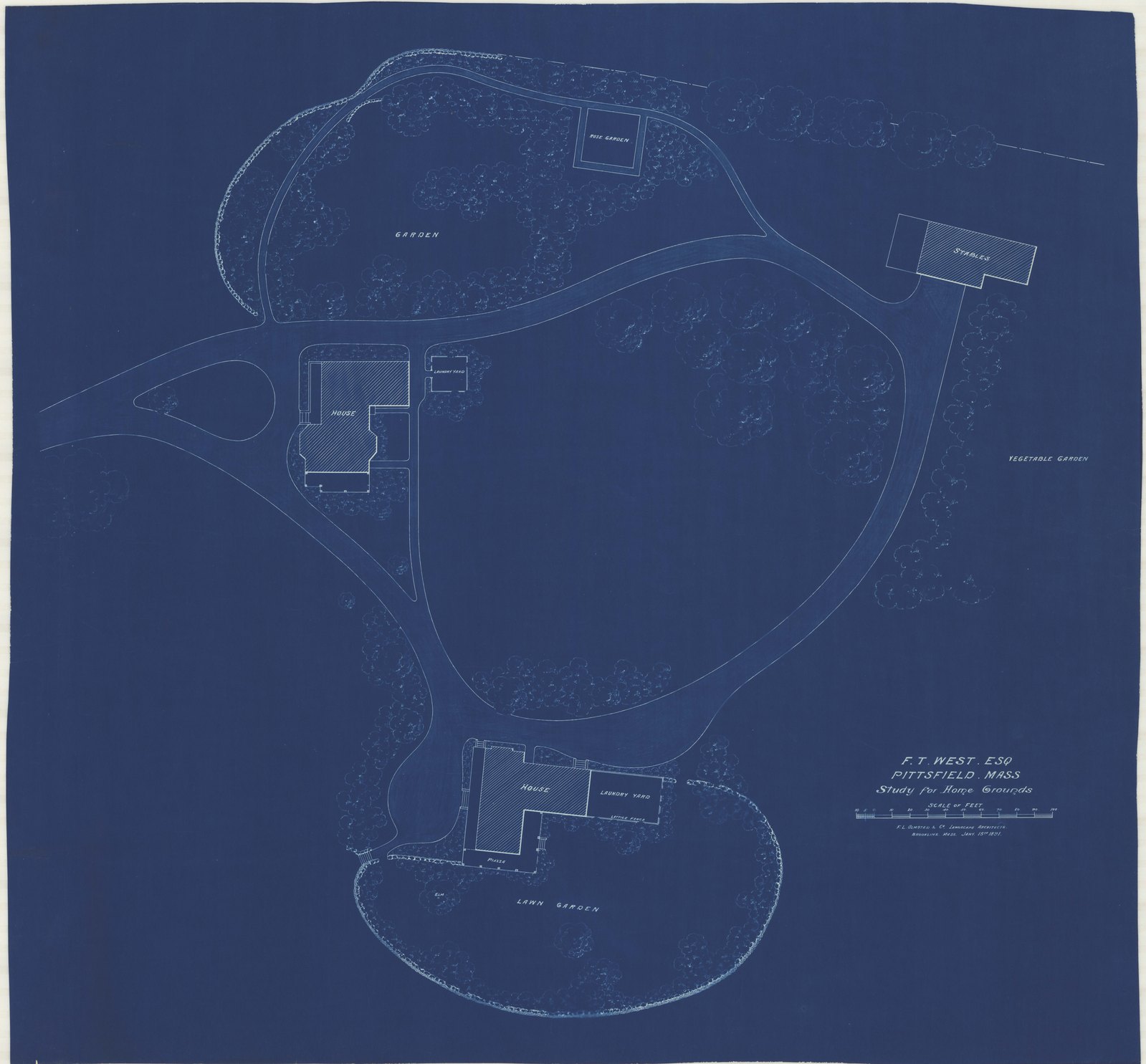
Two adjacent households laid out as one landscape — and five planting lists that give the quantity, the cost and the nursery for every shrub.
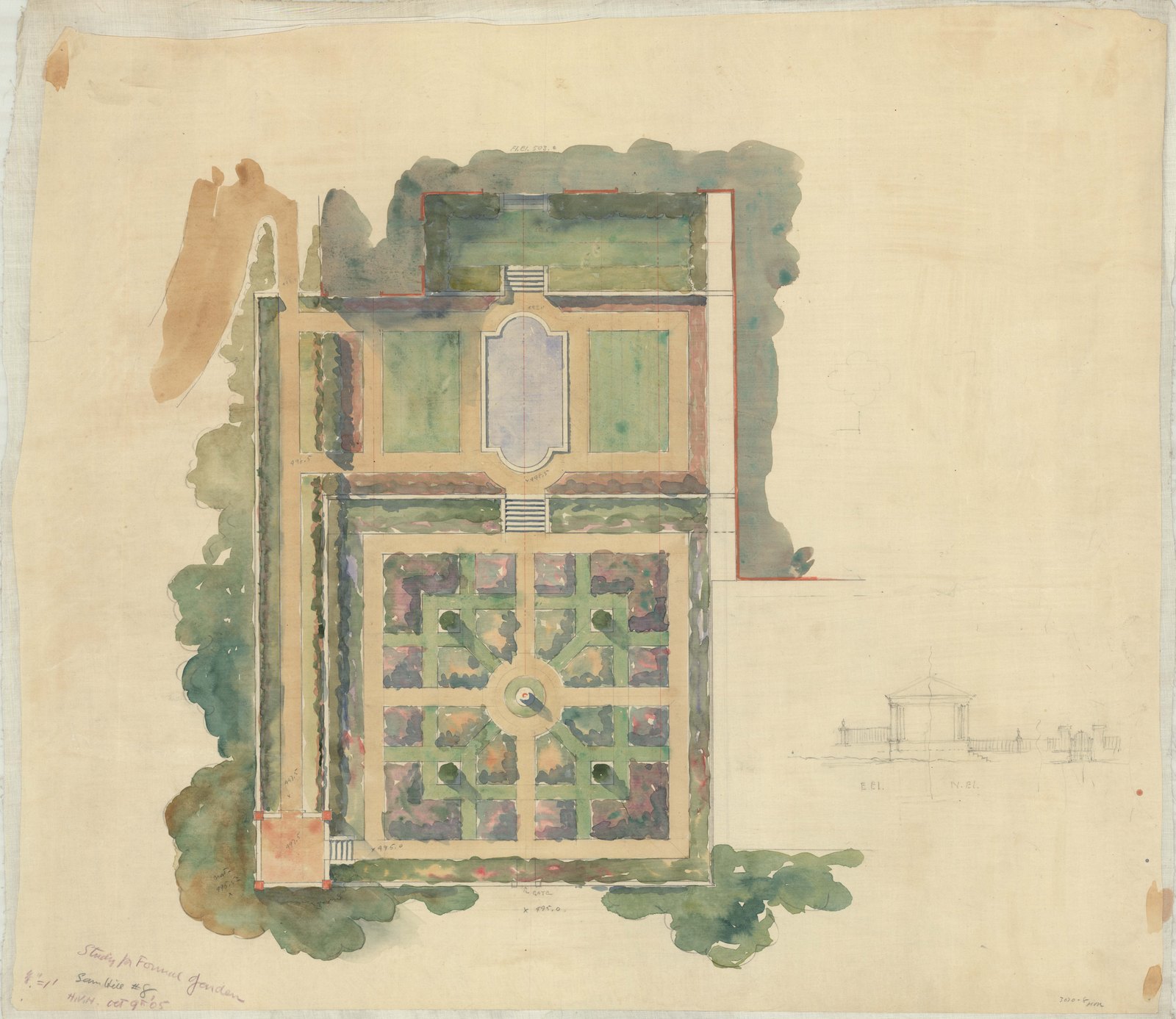
Stockbridge · 1892; Olmsted work 1905
Beckwithshaw
Three names for one hill — Beckwithshaw, then Shaughlin, then Bonnie Brier. Nine Olmsted sheets from the autumn of 1905, and the ground where the Berkshire Symphonic Festival began in 1934.
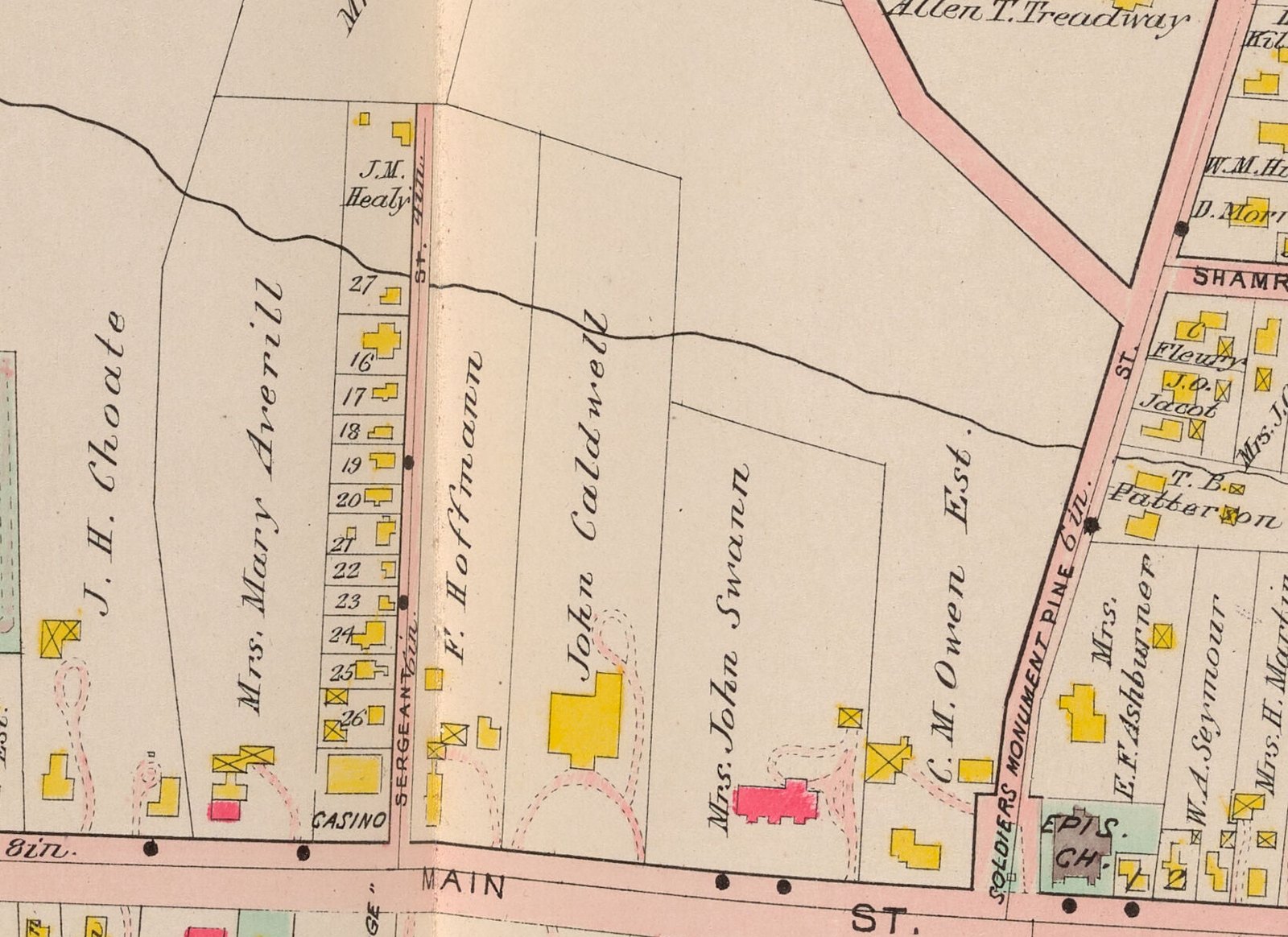
Stockbridge · 1894
The Butler House
The one brick house on its stretch of Main Street in 1904, Mrs. John Swann’s; the Martin Inn from 1924; now Austen Riggs — and the Riggs houses on either side of it.
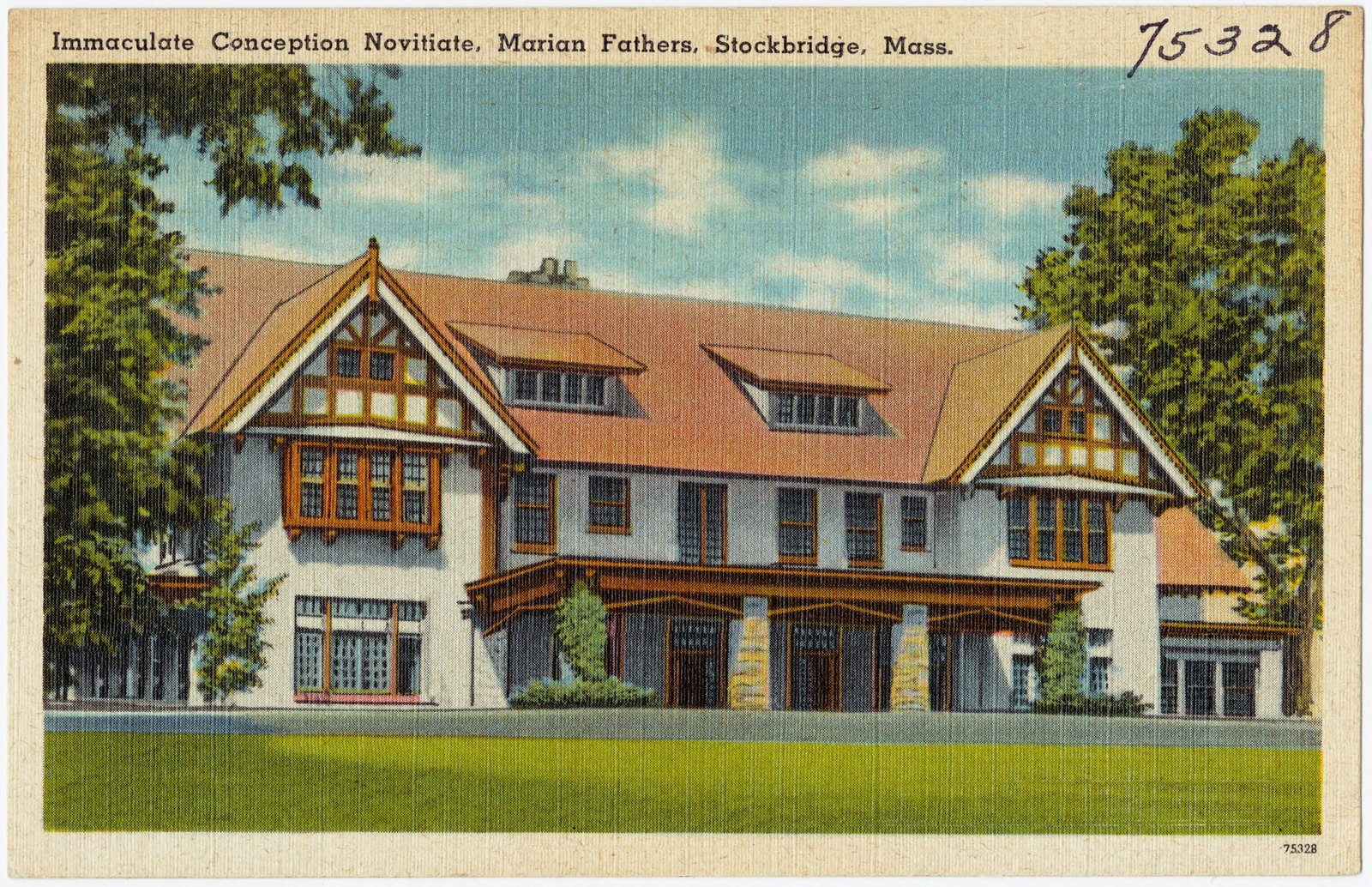
Stockbridge · Field’s purchase 1865 (or 1855); Woodward’s house 1906
Eden Hill
David Dudley Field’s hilltop, a Washington merchant’s house of 1906, a steamship man’s cellar — and the Mission House, which stood on the lawn until 1926.
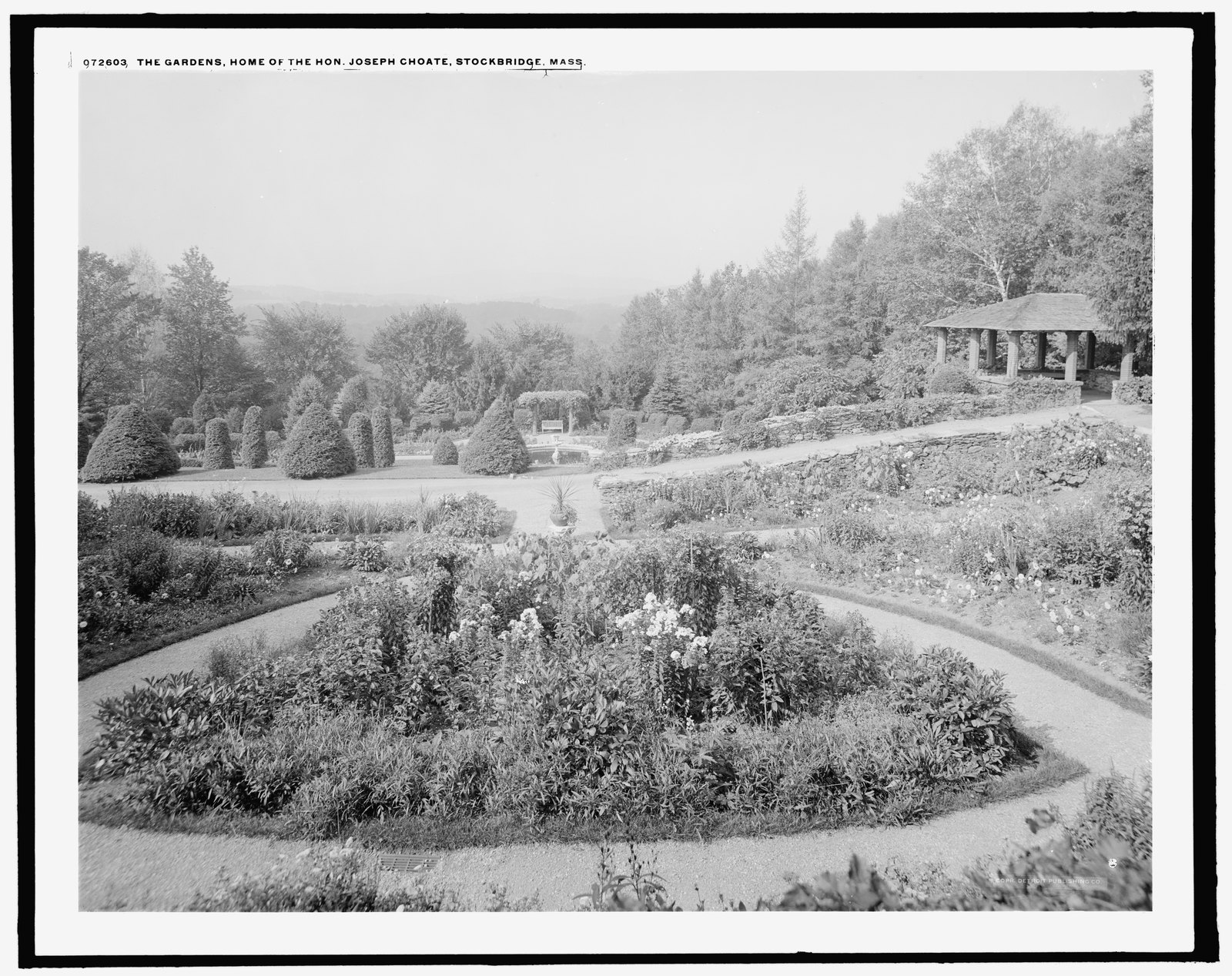
Stockbridge · 1885; gardens 1926–1955
Naumkeag
Stanford White’s house, Nathan Barrett’s gardens, and the thirty years Mabel Choate and Fletcher Steele spent remaking them — including the steps a magazine once captioned, without a name, “MODERN STEPS, painted blue.”
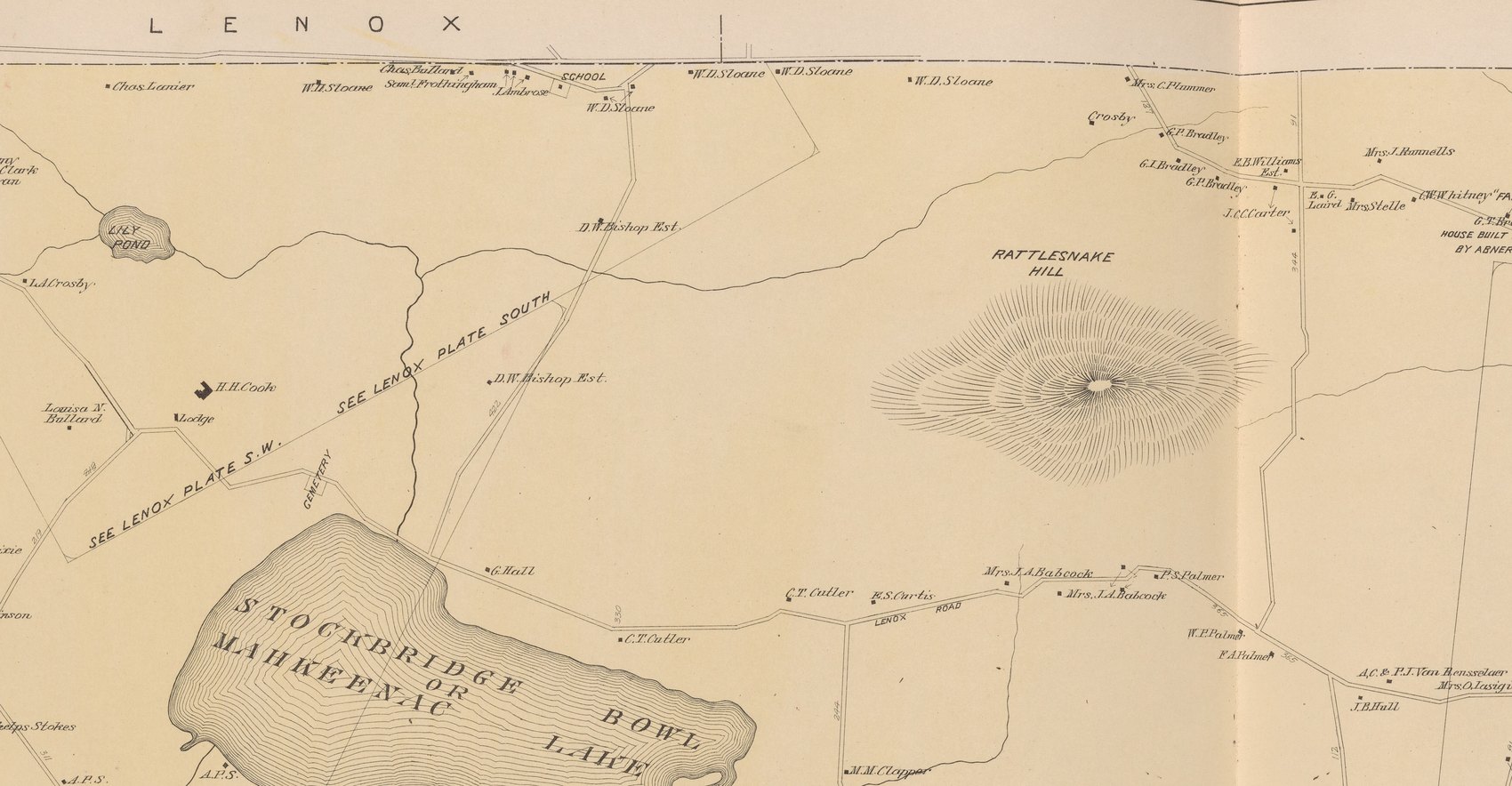
Stockbridge · Named in the directories from 1923
Orleton Farm
Seventh of eighteen houses on Lenox Middle Road — and the last four houses on the same road are Wheatleigh.
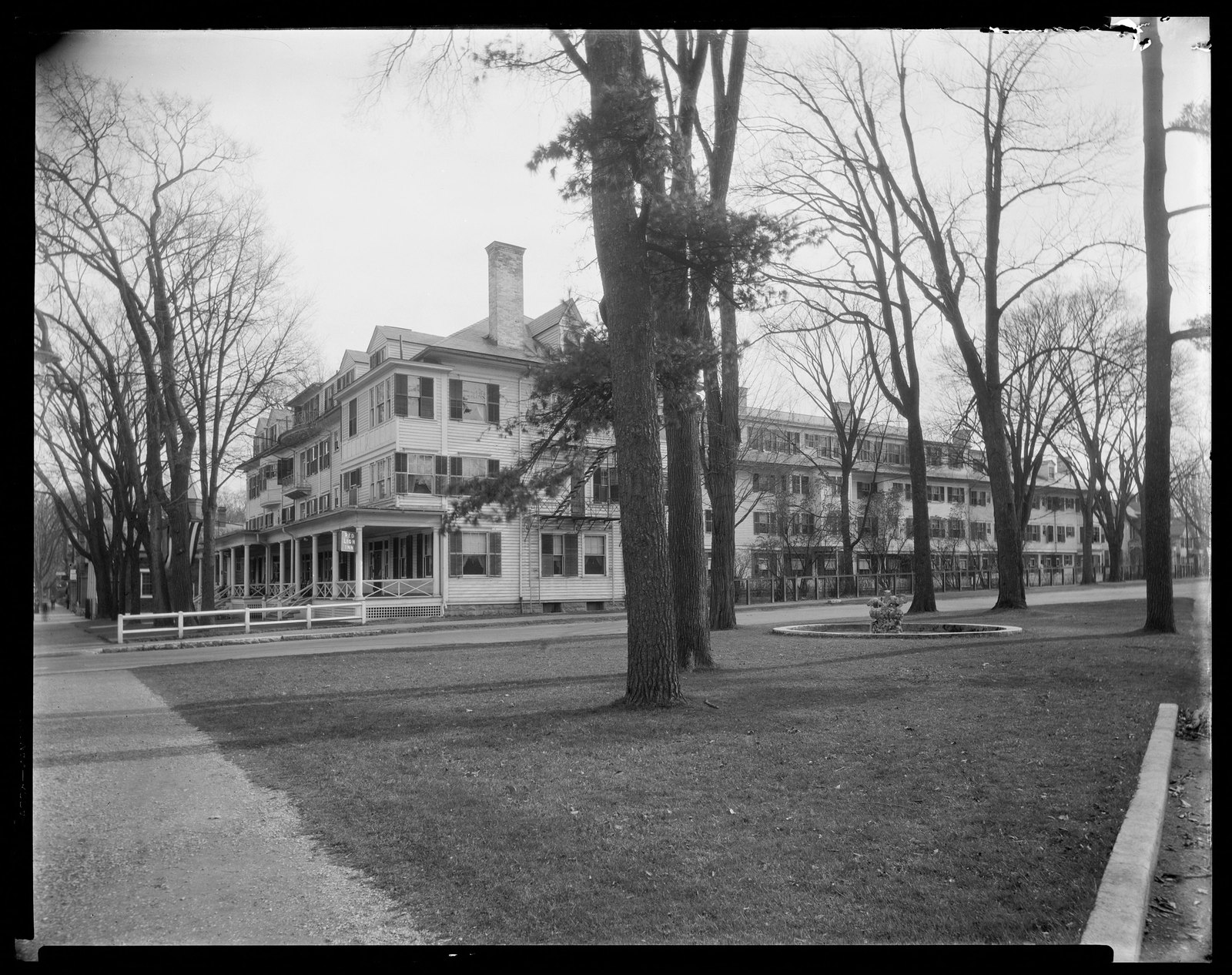
Stockbridge · 1773; burned 1896; rebuilt 1897
The Red Lion Inn
Burned to the ground in 1896 and rebuilt “as much as possible like the old one” — with Mrs. Plumb, her collection, her will, and Edwin Hale Lincoln’s photographs of the rooms a generation later.
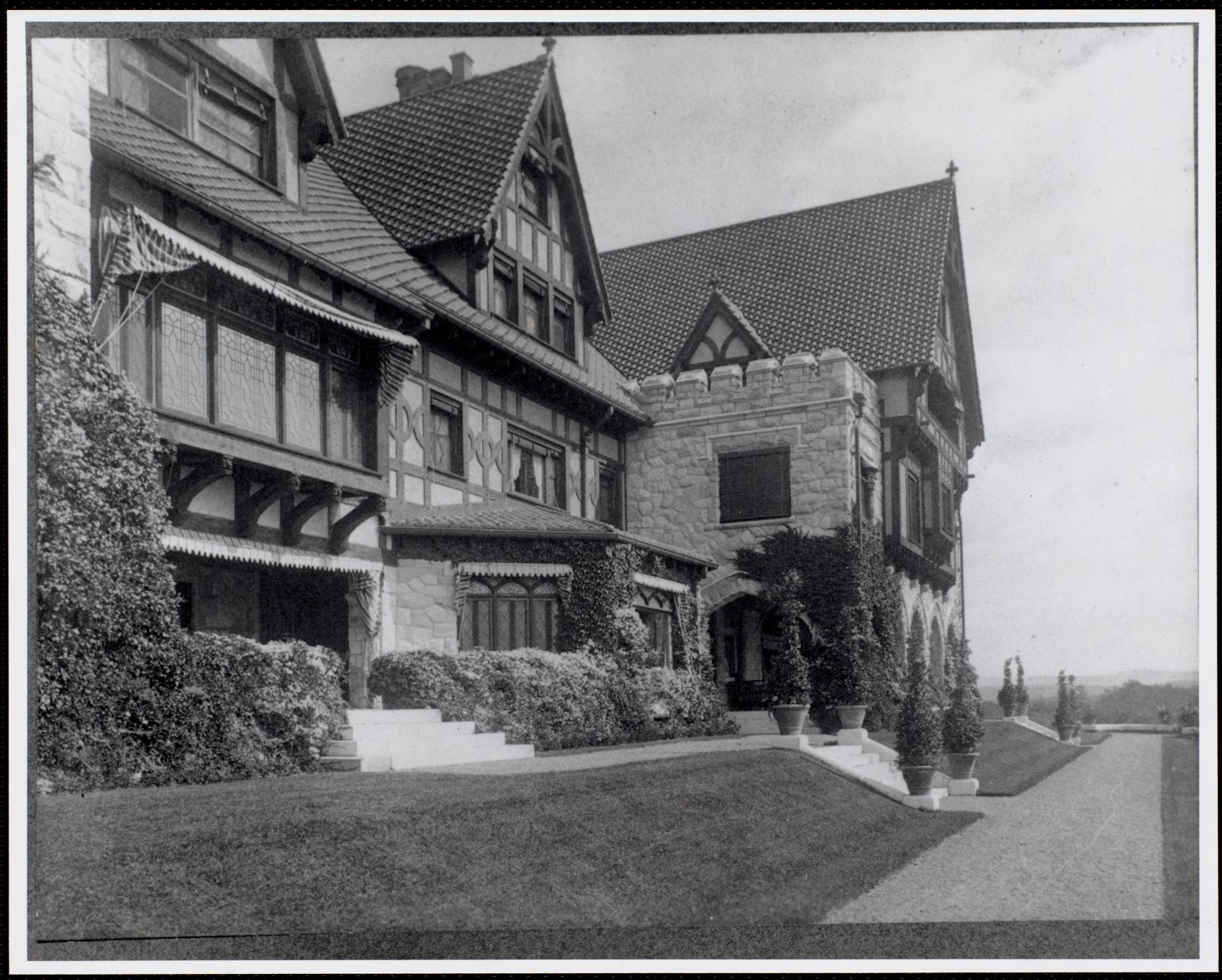
Stockbridge · 1893–1956
Shadow Brook
The second largest private house in America, finished in 1893 above the Stockbridge Bowl. Carnegie died in it, the Jesuits made it a novitiate, and it burned in 1956.
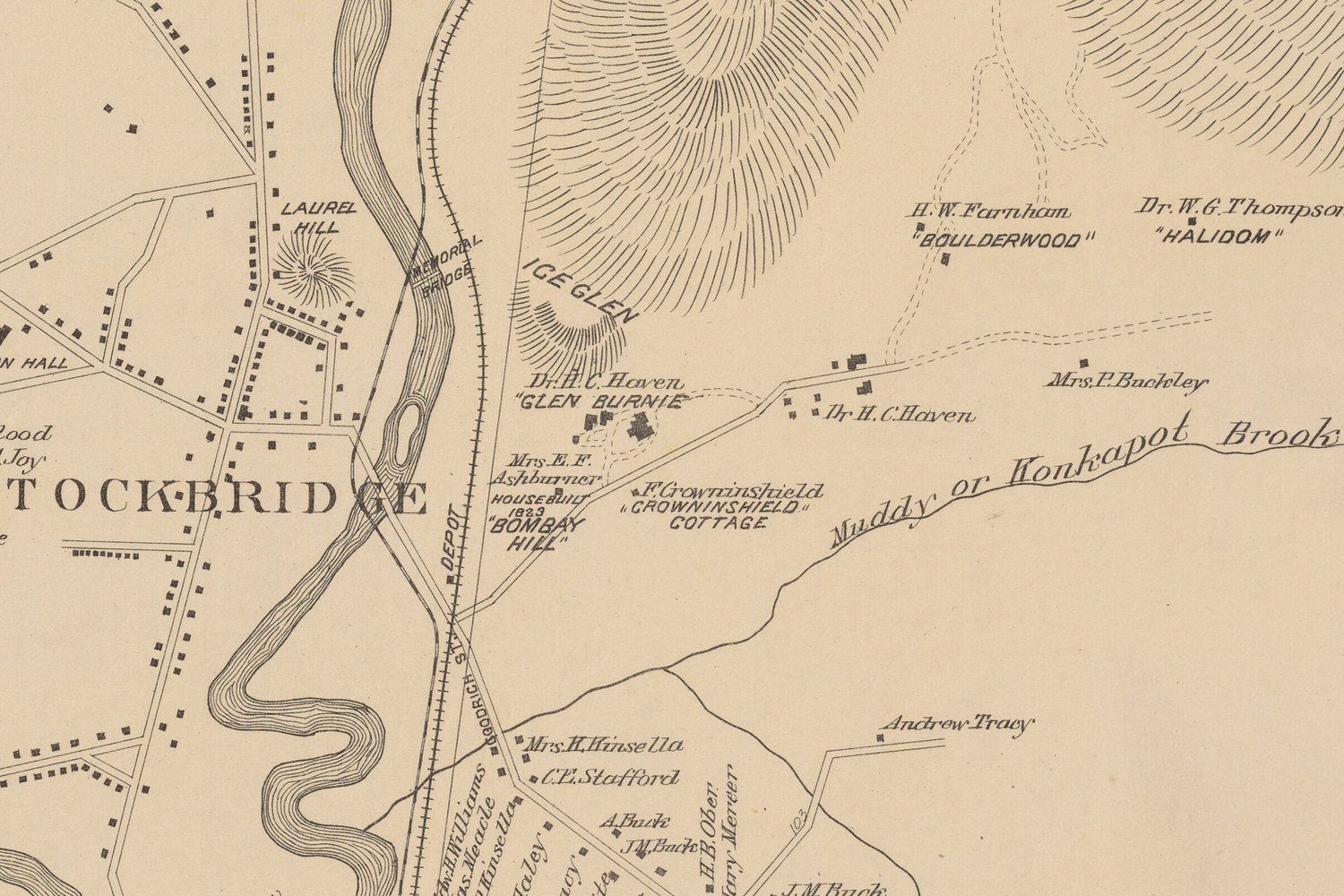
Stockbridge · 1914–15
Villa Virginia
The last of the great summer houses built in Stockbridge, ten years too late for the county atlas — and the Glen Burnie cattle farm the atlas draws underneath it, with an owner the published accounts have lost.
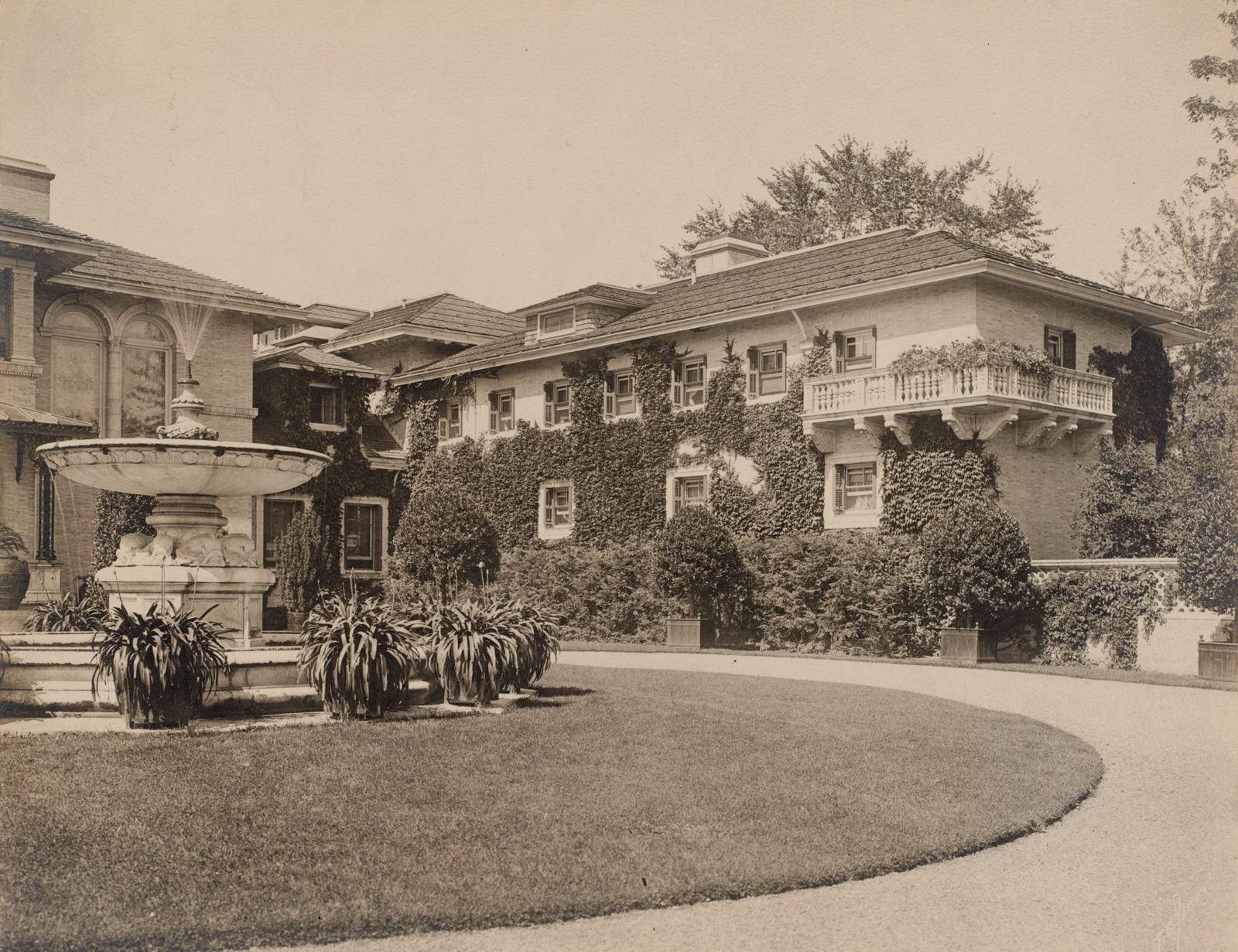
Stockbridge · 1893–94
Wheatleigh
An introduction and seven stories read out of forty-seven drawings by Olmsted, Olmsted & Eliot for the Henry H. Cook estate — with the drawings themselves, full size.
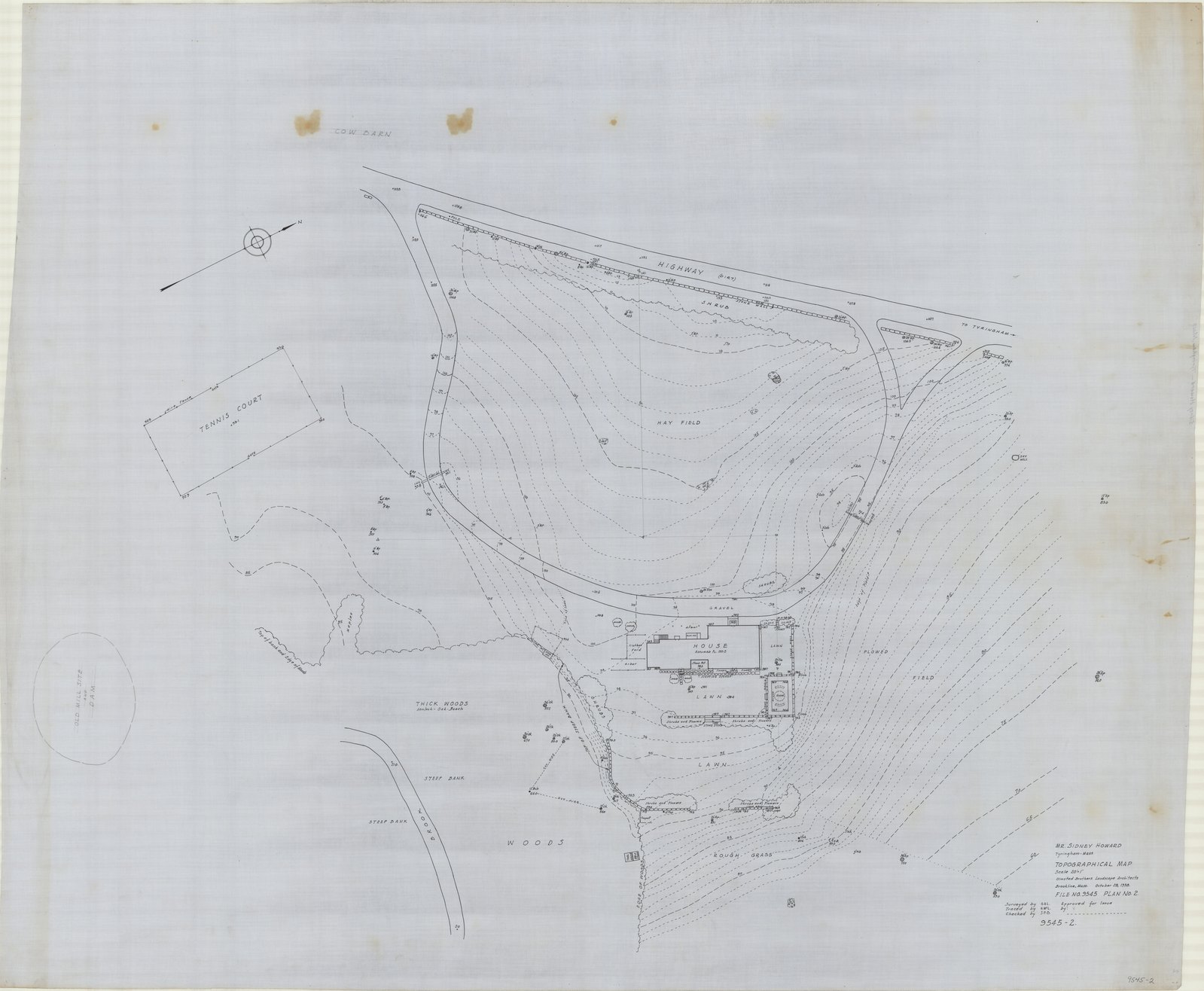
Tyringham · 1938–39
The Sidney Howard Farm
A cow barn, a tennis court and an old mill dam surveyed for the man who wrote the screenplay of Gone with the Wind — the last sheet dated nineteen days before he died.
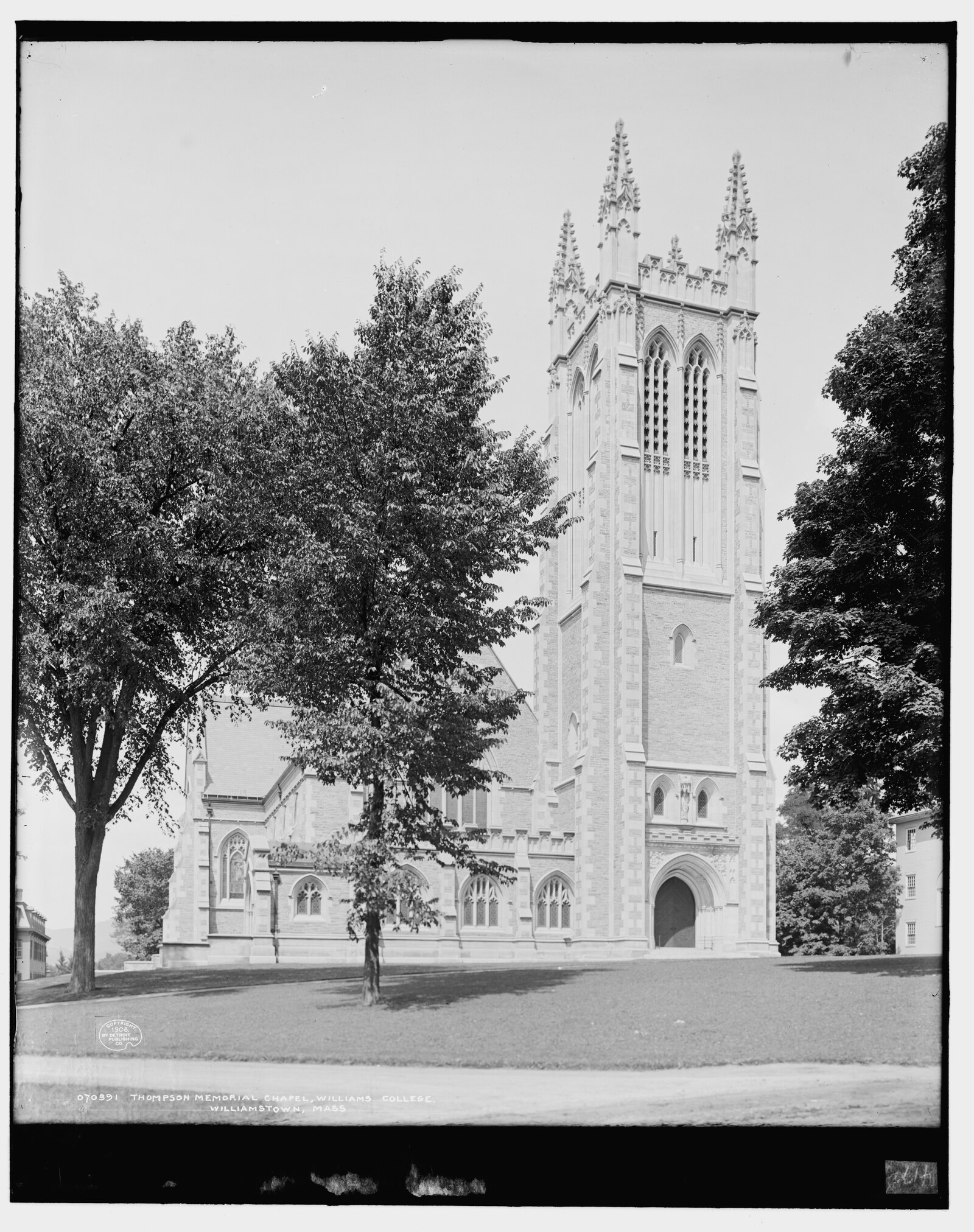
Williamstown · 1902–1963
Williams College
Job 00318, and six hundred and sixty-eight drawings — forty-two per cent of everything the office drew in this county.
Keep up with it
New properties go up here as the research turns them up.