In the summer of 1906 S. W. Woodward of Washington pulled down David Dudley Field’s house on Eden Hill to build his own. While the new one went up, a Washington paper reported, “the family will occupy the old Mission house, which is on the estate.” The oldest house in Stockbridge was, for twenty more years, a cottage on a rich man’s lawn.
I. Field’s hill
David Dudley Field, the New York lawyer, grew up in Stockbridge and “always spent his vacations” there. His brother Henry M. Field, writing his life in 1898, says he lived first at Laurel Cottage, and then “a few years later he bought a large farmhouse, perhaps a hundred years old, with two or three hundred acres of ground, on the top of a hill, that is a background for the village which it looks down upon.” Henry bought too: “About the same time I bought a more modest farmhouse, with a few acres, a little farther to the West, so that we saw each other every day” (The Life of David Dudley Field, pages 213–214).
When the old house came down in 1906, the Springfield Republican wrote its history in one paragraph. The ground was “the original farm of 50 acres, called the ‘Settle lot,’ set off for John Sergeant by the Indians, and on it still stands the old mission house in which he lived, built about 1737.” Josiah Jones of Weston built on the house site “about 1740, first a log house, then a frame building.” Then: “When David Dudley Field bought the property in 1865 he added to the original frame house a tower and fireproof library.” the Shrine’s own history gives the purchase as 1855. Both are recorded here.
Stockbridge 1739–1939 remembers Field in old age there: he “lived on the top-most peak of the Hill, in a fine house he had just completed,” gave the Ice Glen to the town, and offered the Chimes tower in memory of his grandchildren. The book says “just completed”; the Republican says an old frame house with a tower added. Both are on the page.
II. Lady Musgrave
Field died in 1894. His will, as the New-York Tribune printed it, left his daughter the place: “Eden Hill Park, with its buildings, furniture and appurtenances, is left to the daughter also.” The will names her Lady Jennie Lucinda Musgrave; her husband, the late Sir Anthony Musgrave, had been “formerly the Governor of Queensland.” Henry M. Field was one of the executors.
In January 1899 the Springfield Republican reported “one of the largest and most important real estate transactions that has ever taken place in Stockbridge”: “S. W. Woodward of Washington, D. C., having bought of Lady Musgrave the residence and park known as ‘Eden Hill,’ formerly owned and occupied by her father.” The park held 275 acres. “Mr Woodward, who was a guest at the Red Lion inn last fall, will make Stockbridge his summer home.” the Shrine’s own history dates Woodward’s purchase to 1906, the year he rebuilt.
III. Woodward’s house
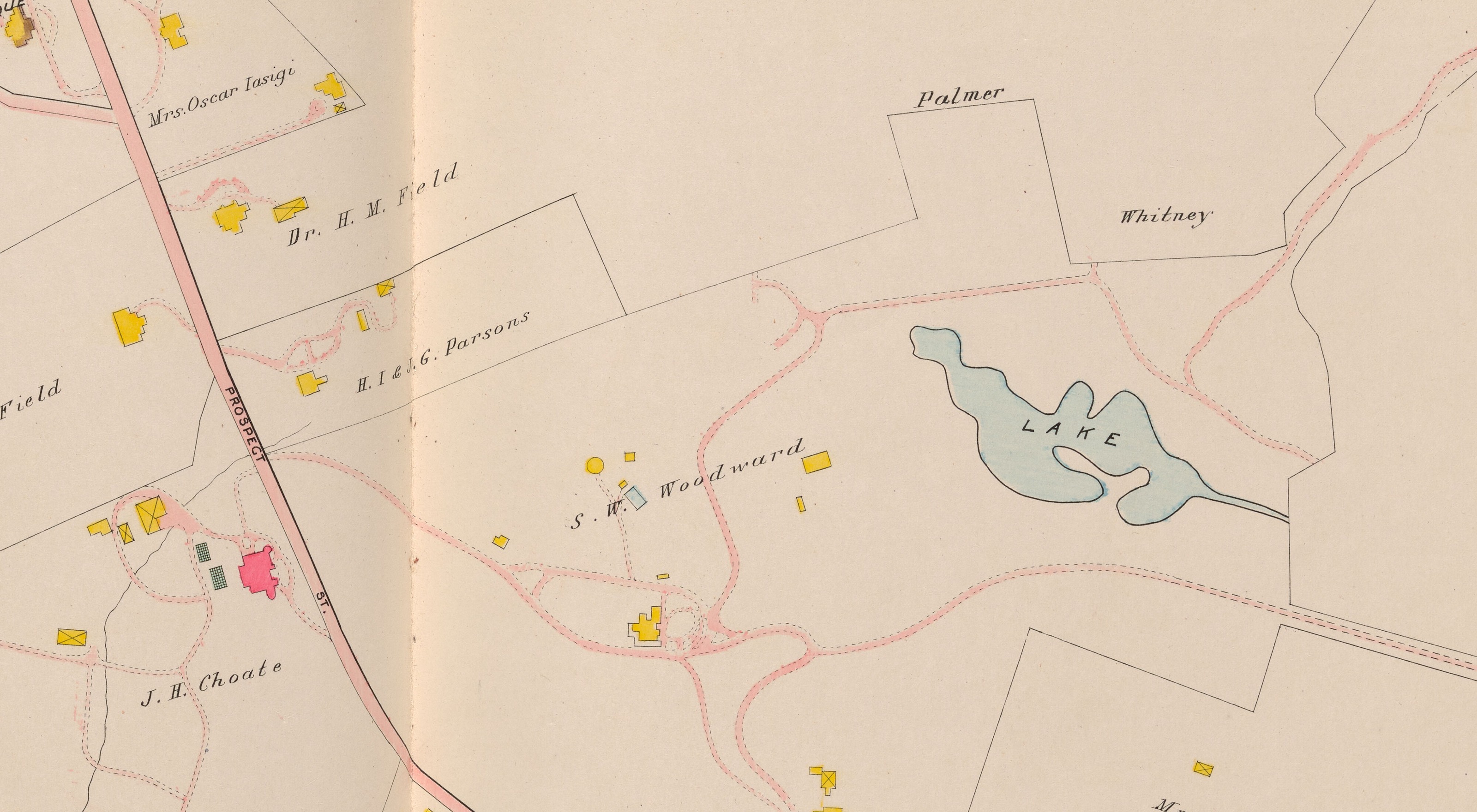
The 1904 county atlas catches the hill between owners’ houses. plate 28 letters S. W. Woodward across it. The old Field house was still standing — it came down two years later — but the plate does not say which of the buildings it is.
Woodward had wanted to build from the start. In May 1903 the Springfield Republican, describing the site of Allen T. Treadway’s new hotel, wrote: “North of the hotel is the former David Dudley Field place, now owned by S. W. Woodward of Washington. Despite the attractive residence now there, Mr Woodward contemplates the erection of a new and costly home.” The hotel became Heaton Hall. The paper thought it would be called “The Hill and Vale.”
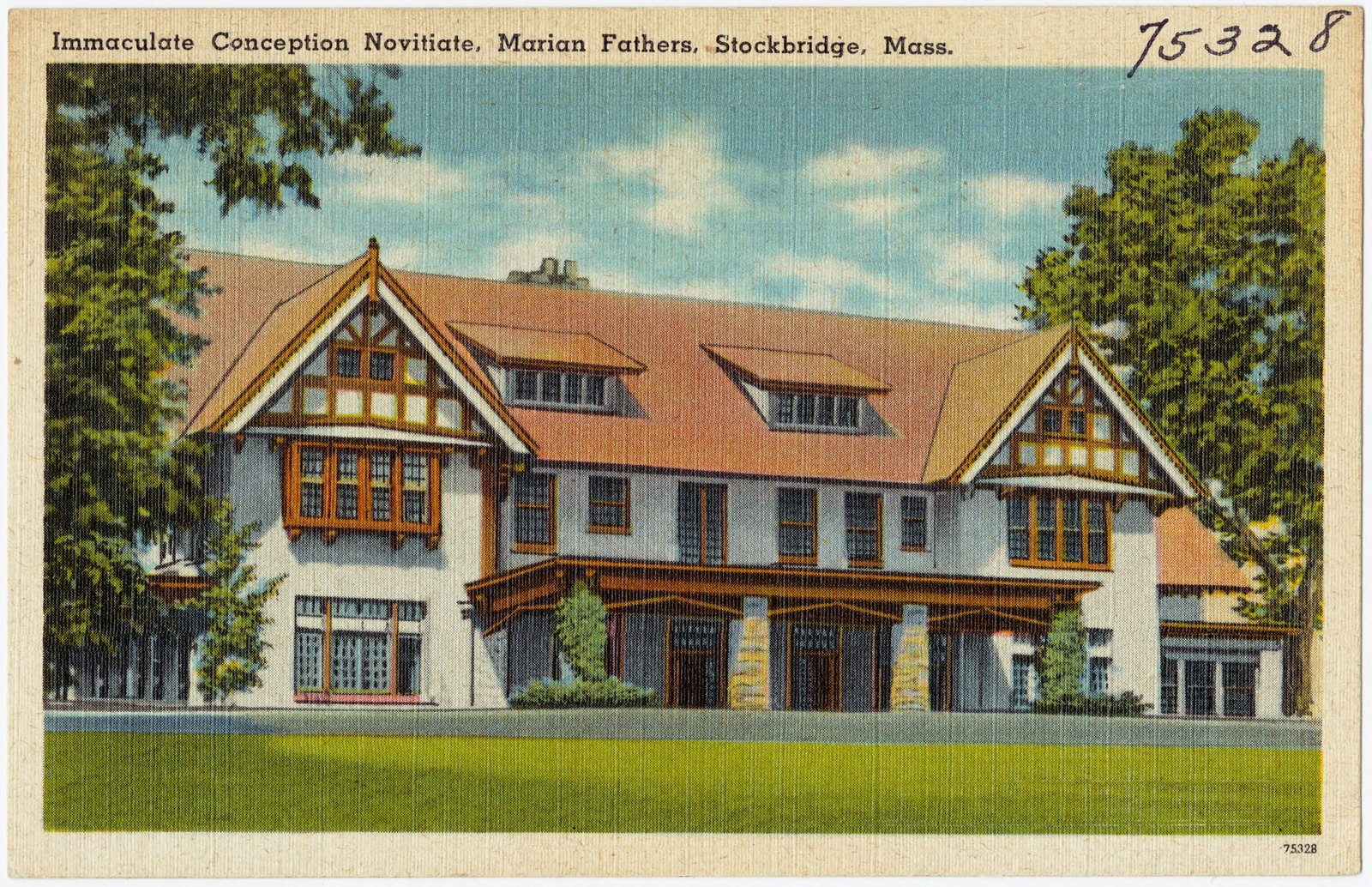
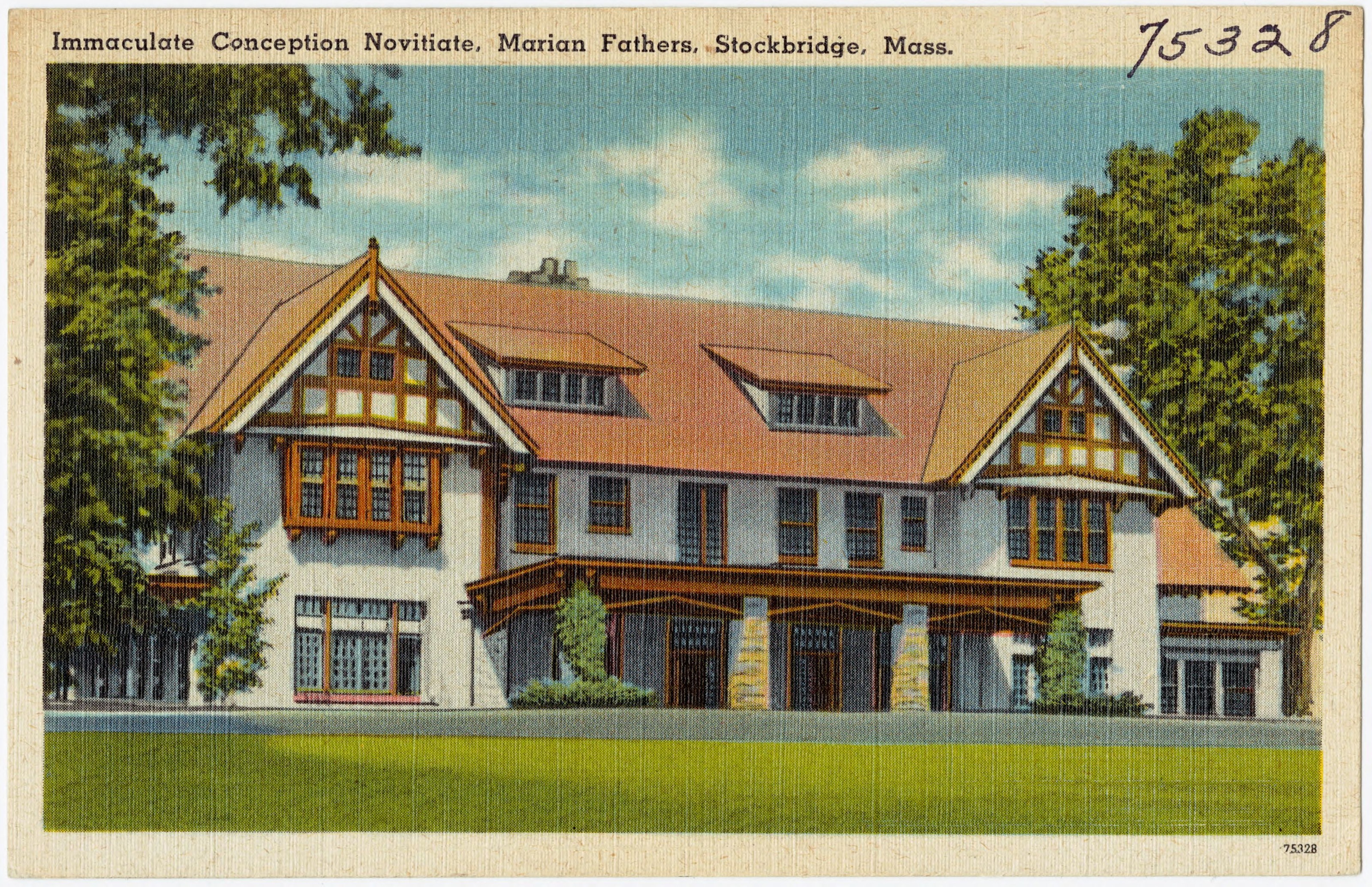
He did it in 1906. The Evening Star of Washington: Woodward “has torn down the old David Dudley Field house at ‘Eden Hill,’ Stockbridge, and is to erect a handsome cottage on the site,” to cost “upward of $100,000.” The Republican said it would be “a fine colonial house.” Twelve years later the New-York Tribune called it “a stone and stucco villa,” and the only picture found of it, a postcard from after the Marian Fathers came, shows a half-timbered house under a red roof, its porch on stone piers. No architect is named in any source found.
Samuel Walter Woodward was “the founder and senior member of the firm of Woodward & Lothrop,” the Washington department store. He “died suddenly at 8 o’clock last evening at his summer home at Stockbridge, Mass.,” the Evening Star reported on 2 August 1917.
IV. The Mission House on the lawn
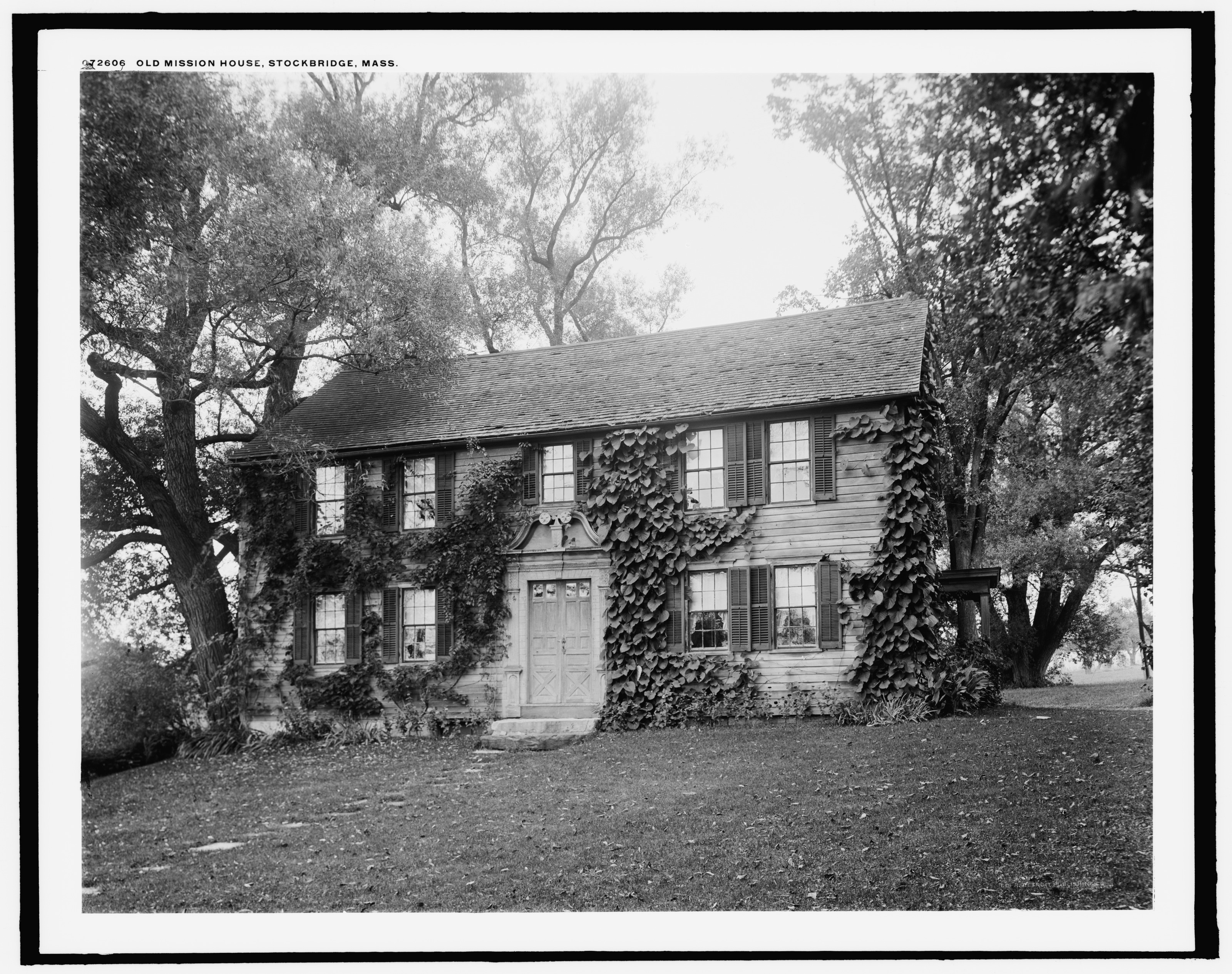
The house John Sergeant built for himself among the Mohicans stood on Eden Hill through all of this. Glimpses of Stockbridge and Vicinity, the village picture book, says so plainly: “the old Mission House is still standing on the estate of S. W. Woodward, formerly the David Dudley Field property.” In the summer of 1906 the Woodwards were to live in it while their own house went up.
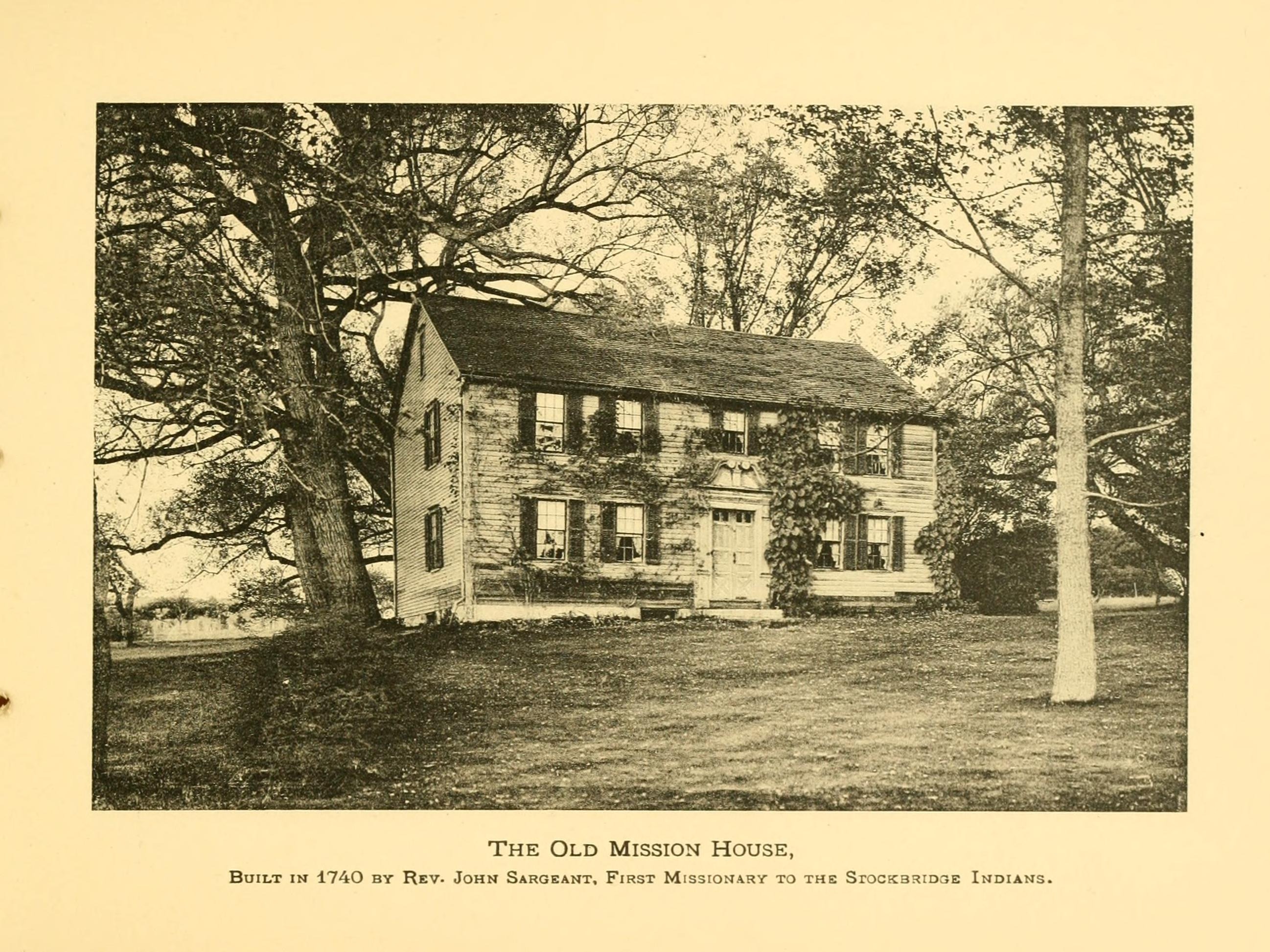
The dates on it do not agree. The Republican of 1906 says “about 1737”; Glimpses prints 1740; the paper that reported its removal in 1926 says 1740 as well.
V. The Mayers
In 1918 Eden Hill sold again. The New York Sun: “Revenue stamps on the deed filed in Pittsfield this week indicate that Judge Charles Mayer of New York, who lately bought Eden Hill in Stockbridge from the estate of the late Samuel W. Woodward of Washington, paid $200,000 for the property.” The same item gives 207 acres, with a frontage on the lake. Six weeks earlier the Tribune had said 300.
The directory of 1923–25 has the household: Mayer Charles (Mary R H) h “Eden Hill” Prospect Hill, with Francis R. and Juan R. Mayer at the same address (image 329), and Sanson William H (Marie) supt ‘‘Eden Hill Park” h Prospect Hill (image 335). The papers call Mayer a “wealthy steamship magnate”; none found explains the title Judge.
He kept a cellar. On a January night in 1924, the Springfield Republican reported, “Twelve armed bandits in a high-powered automobile and truck” held the superintendent’s family at gunpoint and “got away with $100,000 worth of liquor from Eden Hill.” The superintendent, William Sansom, was made to open the house “and to help the visitors get into the concrete vault where the liquor was stored.” The paper that reported Mayer’s death two years later puts the robbery in January 1923.
Mayer died in Paris in June 1926. The Springfield Republican: “at one time a wealthy steamship magnate, whose affairs became involved after the war.” By that summer’s directory the superintendent had gone — Sanson William H., (Marie) rem to England (image 308) — and a farmer is listed as emp Mayer Estate, h The Lodge House (image 301).
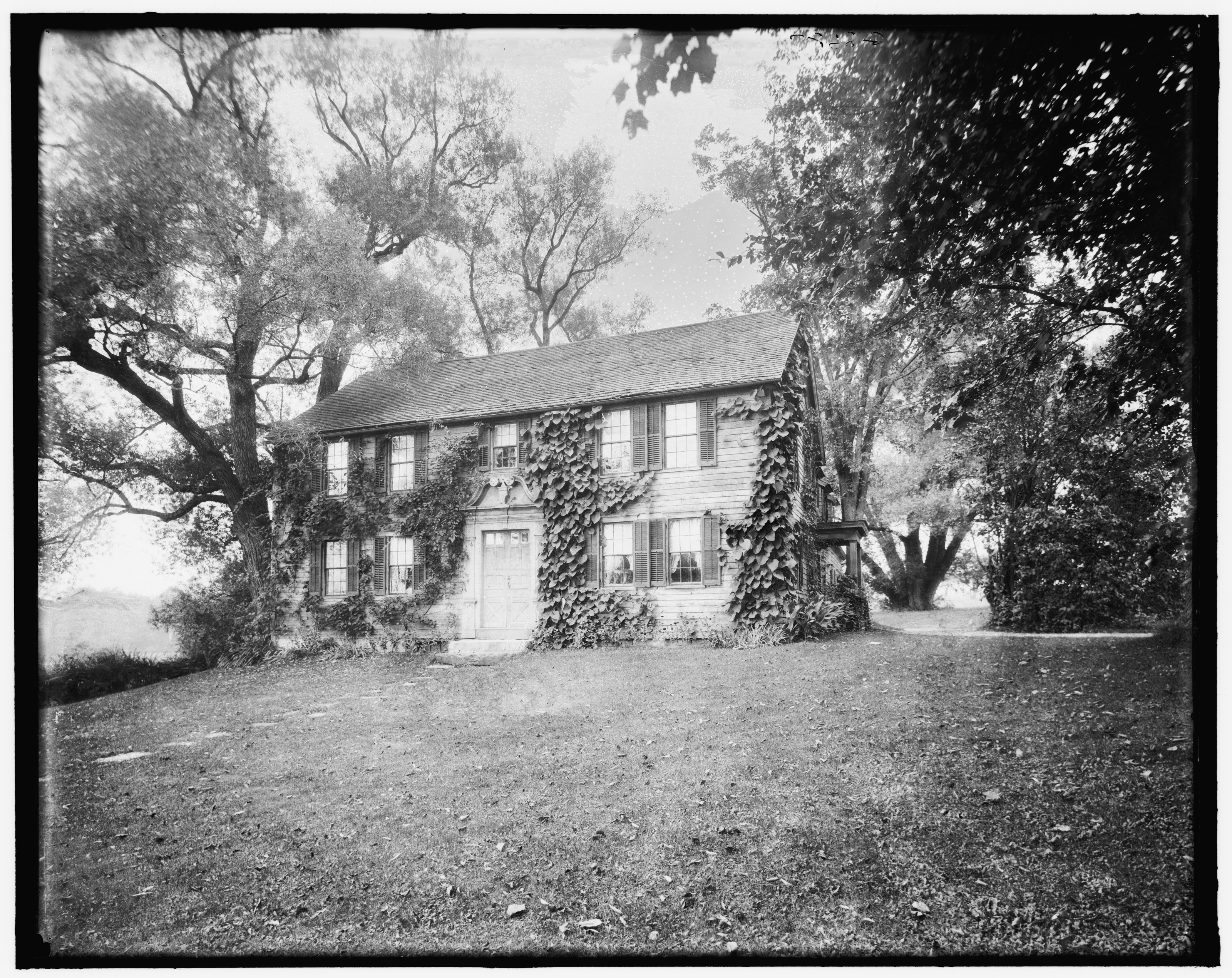
A month after his death, the Republican again: “The old Mission house at Stockbridge, built by John Sergeant in 1740 has been secured by Miss Mabel Choate of New York through the generosity of Mrs Charles W Mayer of New York, whose husband died recently in Paris, and it is to be moved from Eden Hill, the Mayer estate on Prospect hill to Stockbridge Plain.” It stands on Main Street now; the Shrine’s own history gives the move as 1927.
VI. A school, and the Marians
By the summer of 1938 the place belonged to Robert G. Stewart, and its contents were being sold. The Springfield Republican: “The attendance today at the auction sale of house furnishings at Eden hill, the Prospect hill estate of Robert G. Stewart, totaled about 500.” How he came to own it has not been found.
the Shrine’s own history takes it from there. The house — “then known as Eden Hall” — was owned by several families, “and by 1938 it had become St. Edmund’s School — an Episcopalian preparatory school for boys.” The Congregation of Marian Fathers of the Immaculate Conception “purchased Eden Hill on November 24, 1943,” for a novitiate. In 1950 they gave the building of a shrine church to Antonio Guerrieri, “a 74-year-old resident of Stockbridge”; it was dedicated in 1960. The 1923–25 directory has an Guerrieri Antonio (Arma) antiques and upholstering Main (image 321). That he is the same man is likely, and not established here.
Sources
Newspapers, all read in the Library of Congress’s Chronicling America: New-York Tribune, 19 April 1894, page 7, and 16 June 1918, page 35; Springfield Weekly Republican, 27 January 1899, page 12; 29 May 1903, page 14; 21 June 1906, page 16; 31 January 1924, page 14; 17 June 1926, page 14; 22 July 1926, page 14; 14 July 1938, page 14; Evening Star (Washington), 17 June 1906, page 56, and 2 August 1917, page 1; The Sun (New York), 28 July 1918, page 22. Quotations are from the machine-read text with obvious misreadings corrected. Henry M. Field, The Life of David Dudley Field (1898), pages 213–214. Sarah Cabot Sedgwick and Christina Sedgwick Marquand, Stockbridge 1739–1939: A Chronicle (1939), page 254. “The History of the National Shrine of The Divine Mercy,” shrineofdivinemercy.org, read October 2026. Directory lines are quoted as printed from the 1923–25 and 1926 volumes on this site. Atlas of Berkshire County, Massachusetts, Barnes & Farnham, 1904. Boston Public Library copy, via Digital Commonwealth. No known copyright restrictions. The transcription of plate 28 on this site gave the Parsons parcel as “H. I. & G. Parsons”; re-read for this page, the plate has H. I. & J. G. Parsons, as plate 27 does, with the J. in the binding gutter, and the transcription has been corrected. Glimpses of Stockbridge and Vicinity, photogravures, E. A. Benjamin, Stockbridge. University of Massachusetts Amherst copy, via the Internet Archive. Not in copyright. Detroit Publishing Co., Library of Congress Prints and Photographs Division. No known restrictions on publication. Tichnor Bros. postcard. Boston Public Library, Tichnor Brothers Collection, via Digital Commonwealth. No known copyright restrictions. Disagreements left standing: when Field bought (1855 or 1865); whether his house was old with a tower added or “just completed”; when Woodward bought (1899 or 1906); what his house was meant to be (“colonial”) and what it was called later (“stone and stucco villa”); the acreage in 1918 (207 or 300); the year of the liquor robbery (1924 or 1923); the Mission House’s date (about 1737, or 1740) and the year it left the hill (1926 or 1927); the name of the place (Eden Hill, Eden Hill Park, Eden Hall). Not found: the architect of 1906; who sold to Robert G. Stewart, and when; who sold to the Marian Fathers, and for how much. No Olmsted job is recorded for Eden Hill. Nothing on this page concerns the property after the dedication of the shrine in 1960.