Two houses stand on the hill above the Stockbridge Bowl, three-quarters of a mile apart, and the Boston Symphony Orchestra owns both of them. It took a hundred and forty-two years. The first was finished in 1845 for a twenty-seven-year-old banker; the second was begun in 1864 for his tenants, who had spent fifteen years failing to get it built. Between the two, in a red farmhouse that no longer exists, Nathaniel Hawthorne wrote The House of the Seven Gables and fell out with his landlady over an orchard.
I. Highwood, 1845
Samuel Gray Ward — poet, author, banker, and later a founder of the Metropolitan Museum of Art — first walked the ground on a dreary day in the third week of March 1844 and pronounced it “very good.” He was twenty-seven. The house was finished the next year and called Highwood. The design is credited to Richard Upjohn, though one account gives it to his son, Richard M. Upjohn; the attribution is argued either way. What is not argued is that it did not look like Upjohn’s churches. It was built as an Italianate country house, and the mansard roof that makes it read as Second Empire today came later, from owners who were not afraid to alter it.
Those owners were William Story Bullard and Louisa Norton Bullard, who bought Highwood in 1857 when Ward was recalled to Boston. The Bullards kept it for a century. On the death of Mary Reynolds Bullard in 1960 the house went to Harvard, then to the New York lawyer John Mason Harding and his wife Mary Riker Harding, and in 1986 to the Boston Symphony Orchestra for $1.7 million — about forty per cent more land for Tanglewood, and the ground Seiji Ozawa Hall was built on in 1994.
II. The Tappans buy the next farm
In 1849, William Aspinwall Tappan and Caroline Sturgis Tappan bought 210 acres of farmland next door to Highwood. They did not build at once. They lived in a red farmhouse on the property and planted an orchard — apples, peaches, pears and plums — and waited.
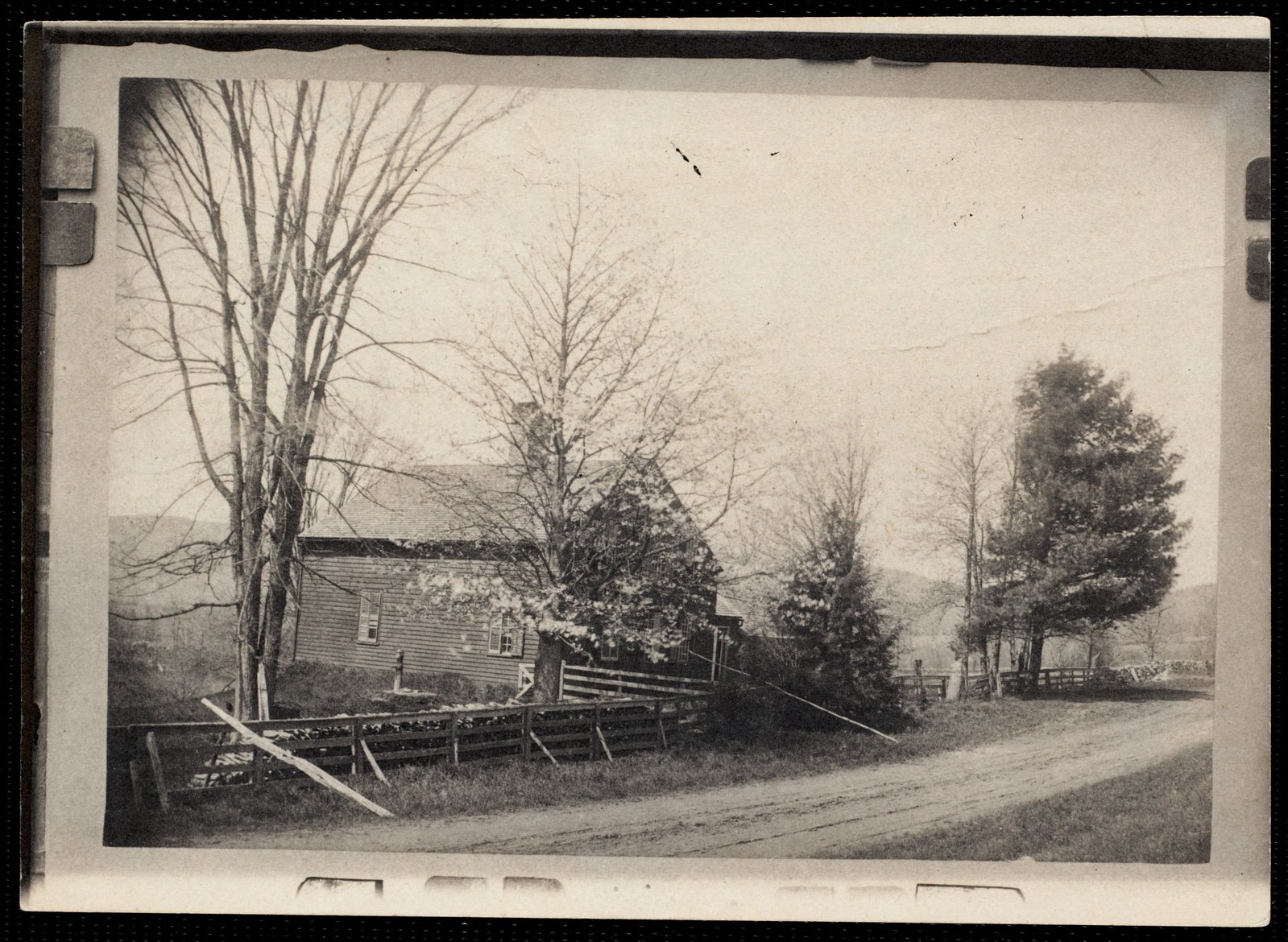
The red farmhouse they rented out. In 1850 the tenants were Nathaniel and Sophia Hawthorne, who stayed rather more than a year. In that house Hawthorne finished The House of the Seven Gables, wrote A Wonder-Book for Girls and Boys, and began Tanglewood Tales — which is where the estate’s name comes from. It came from the tenant, not the owner.
Sophia Hawthorne wrote to her mother in the summer of 1851 that Ward had supplied “an excellent drawing of Highwood Porch, for ‘A Wonder-Book.’” So the porch of the house next door went into the book, drawn by the man who built it. That September there was a disagreement about who owned the fruit in the orchard, and the Hawthornes left the Berkshires.
III. Fifteen years to a house
The Tappans went to Richard Upjohn, Highwood’s architect, and had plans by April 1859. Then Upjohn went to Europe to rest, and the drawings were put away. While they waited, the Tappans rented Highwood itself from Samuel and Anna Ward — so for a stretch of years the family that owned the larger property was living in the smaller one.
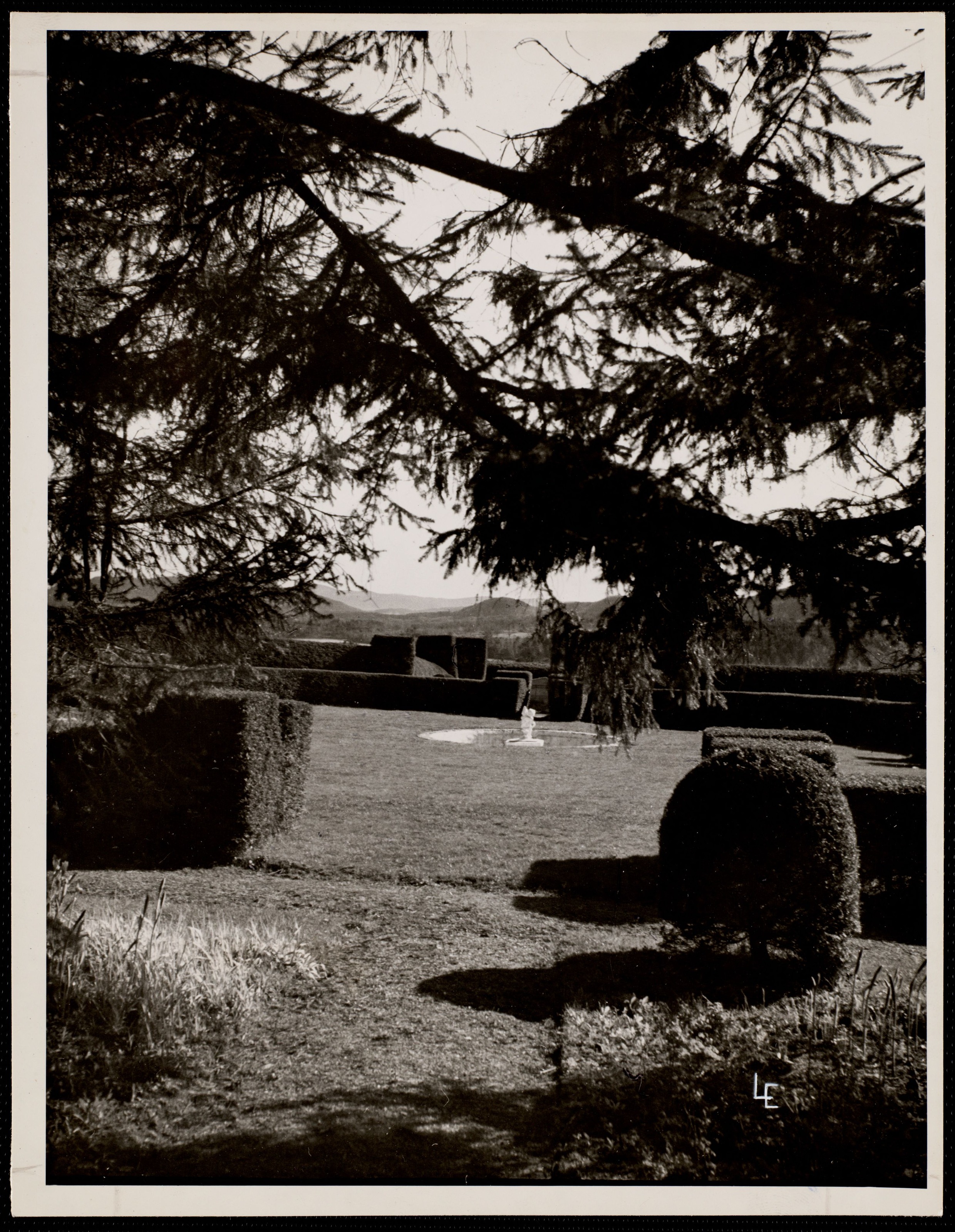
Building began in 1864, with a different architect: John Hubbard Sturgis, Caroline’s cousin. What went up is stick and Gothic together, five gables, and a porch built for entertaining, looking out over the Bowl. Their daughter Ellen Tappan Dixey went at the inside of it in 1896 — a music room big enough for two pianos — and laid out formal gardens and a hedge maze outdoors.
IV. What the photographs are
The Lenox Library’s Tanglewood material is almost entirely about the cottage rather than the mansion, and it splits into three layers.
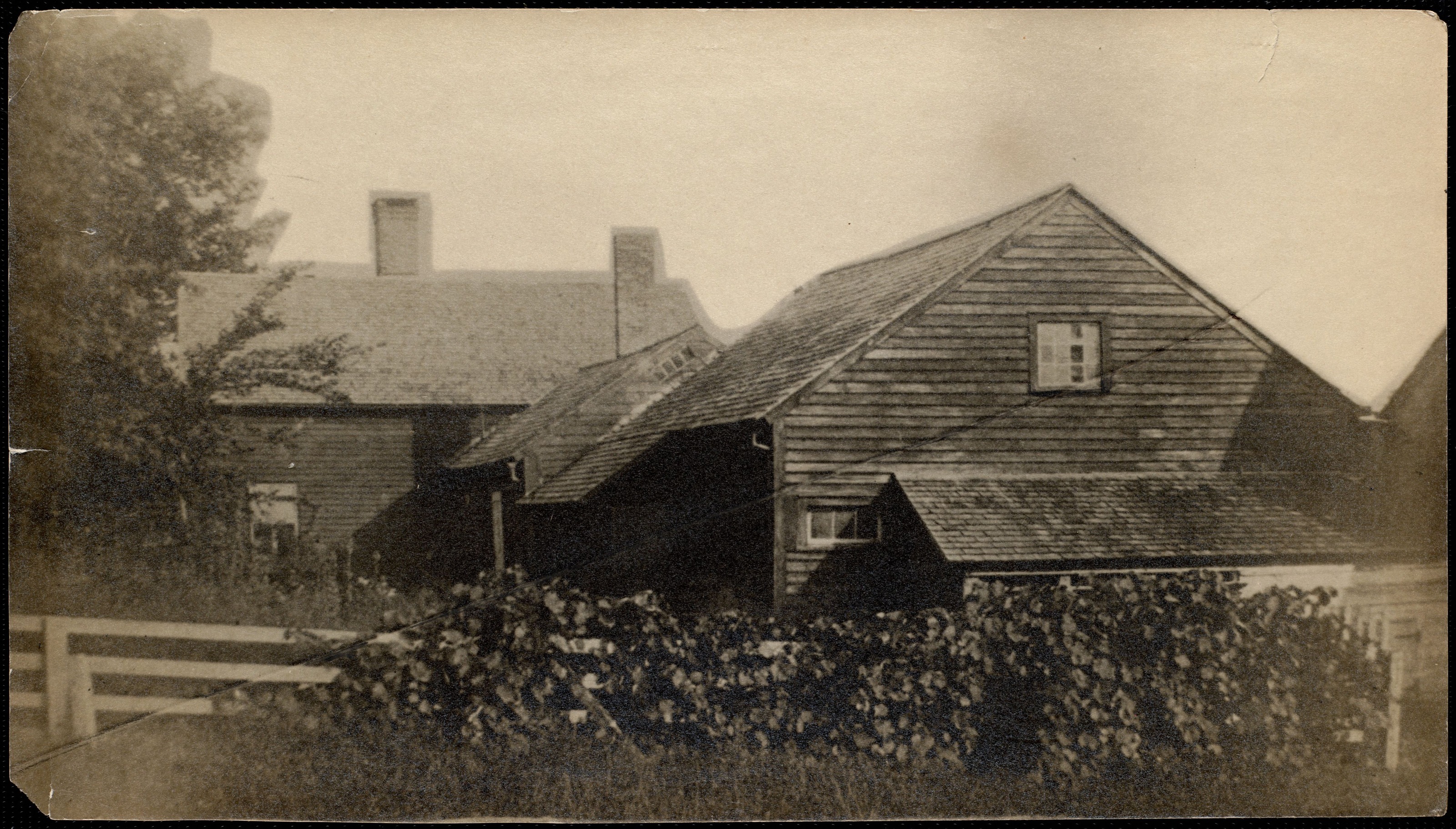
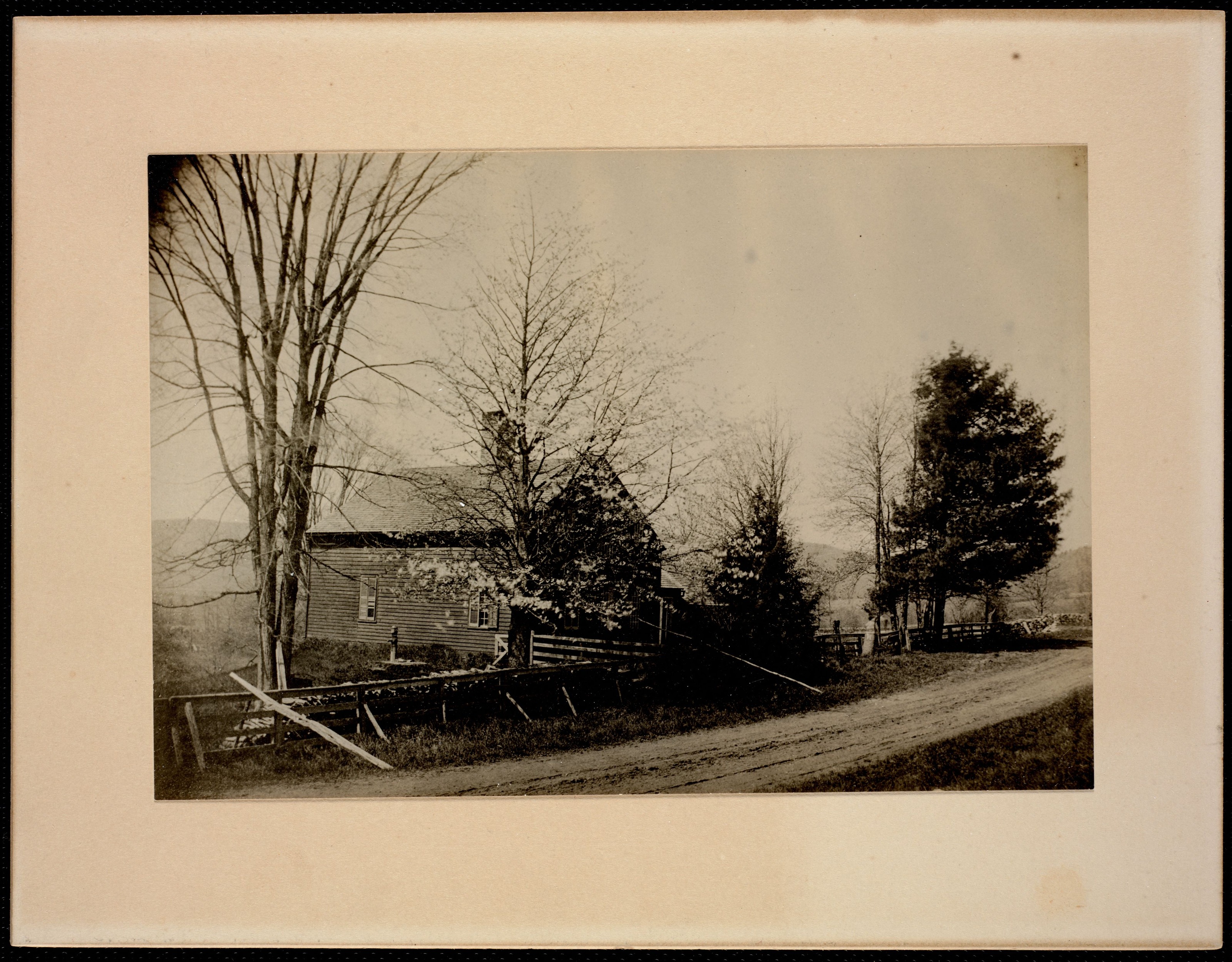
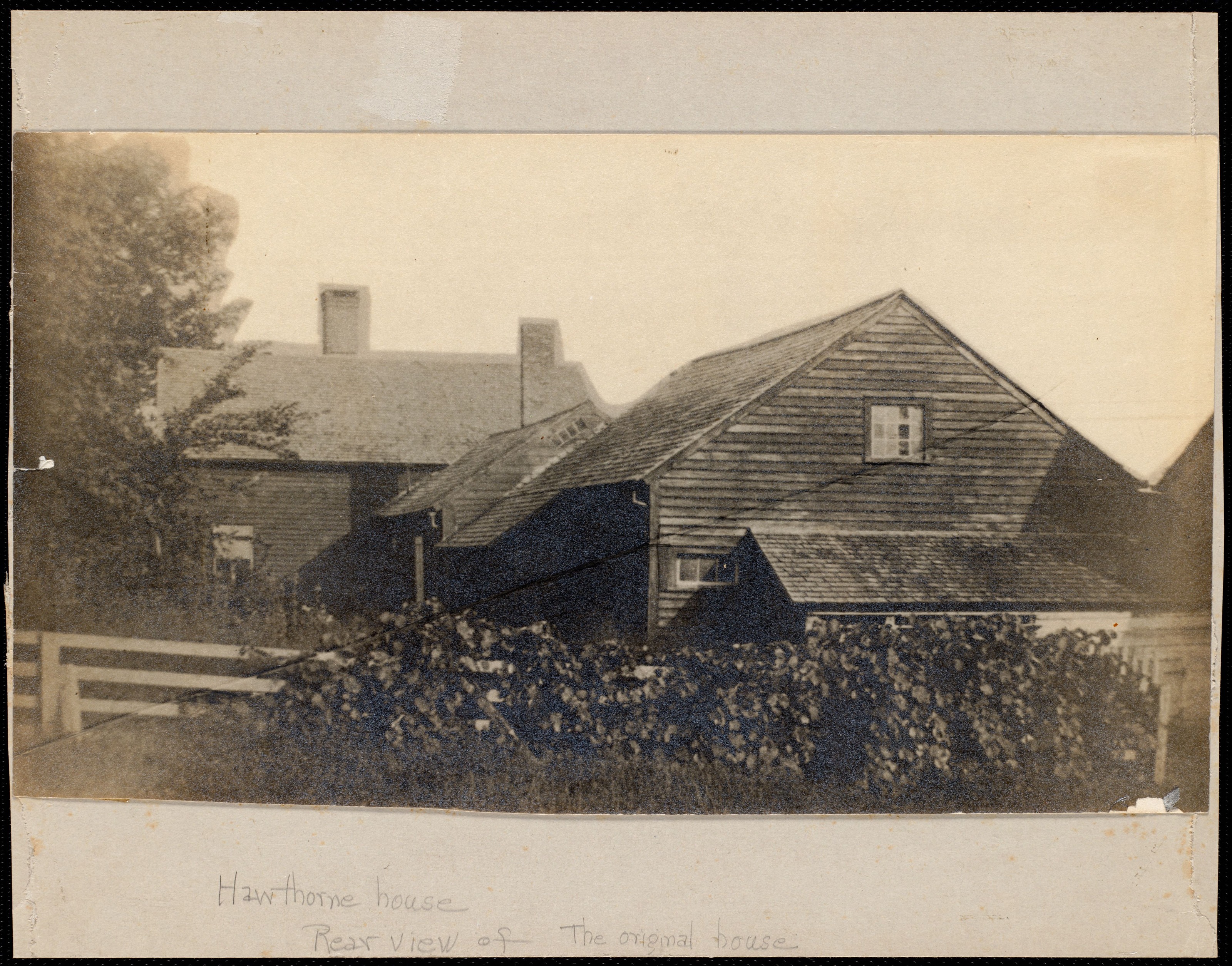
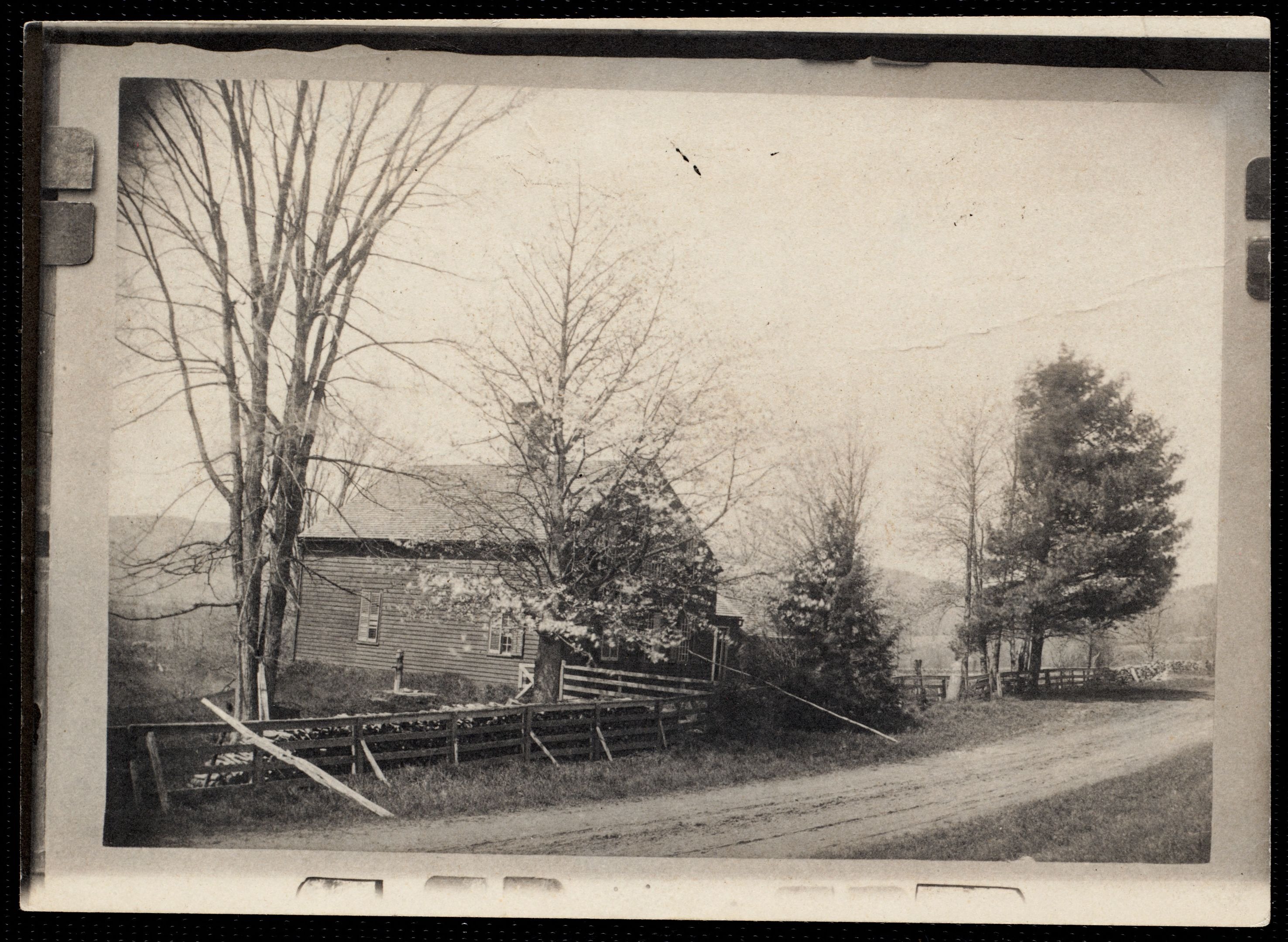
First, photographs of the original Little Red House, taken somewhere between 1860 and 1890: a small clapboard house with a broken rail fence and a dirt road running past it. On the back of the rear view somebody has written “McConnachie Supt. Of Tappan place” — the superintendent, named on a print of the tenant’s house.
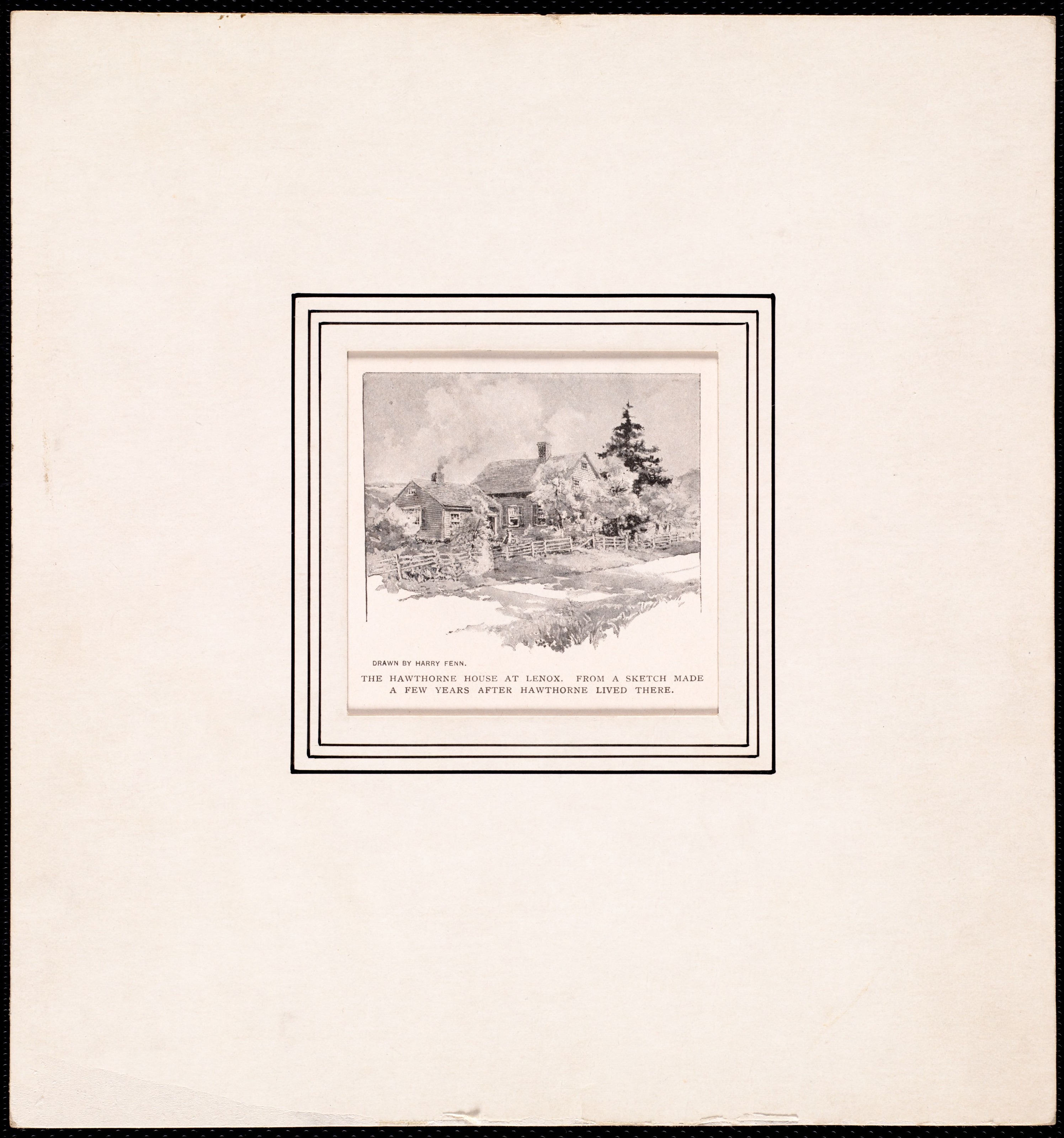
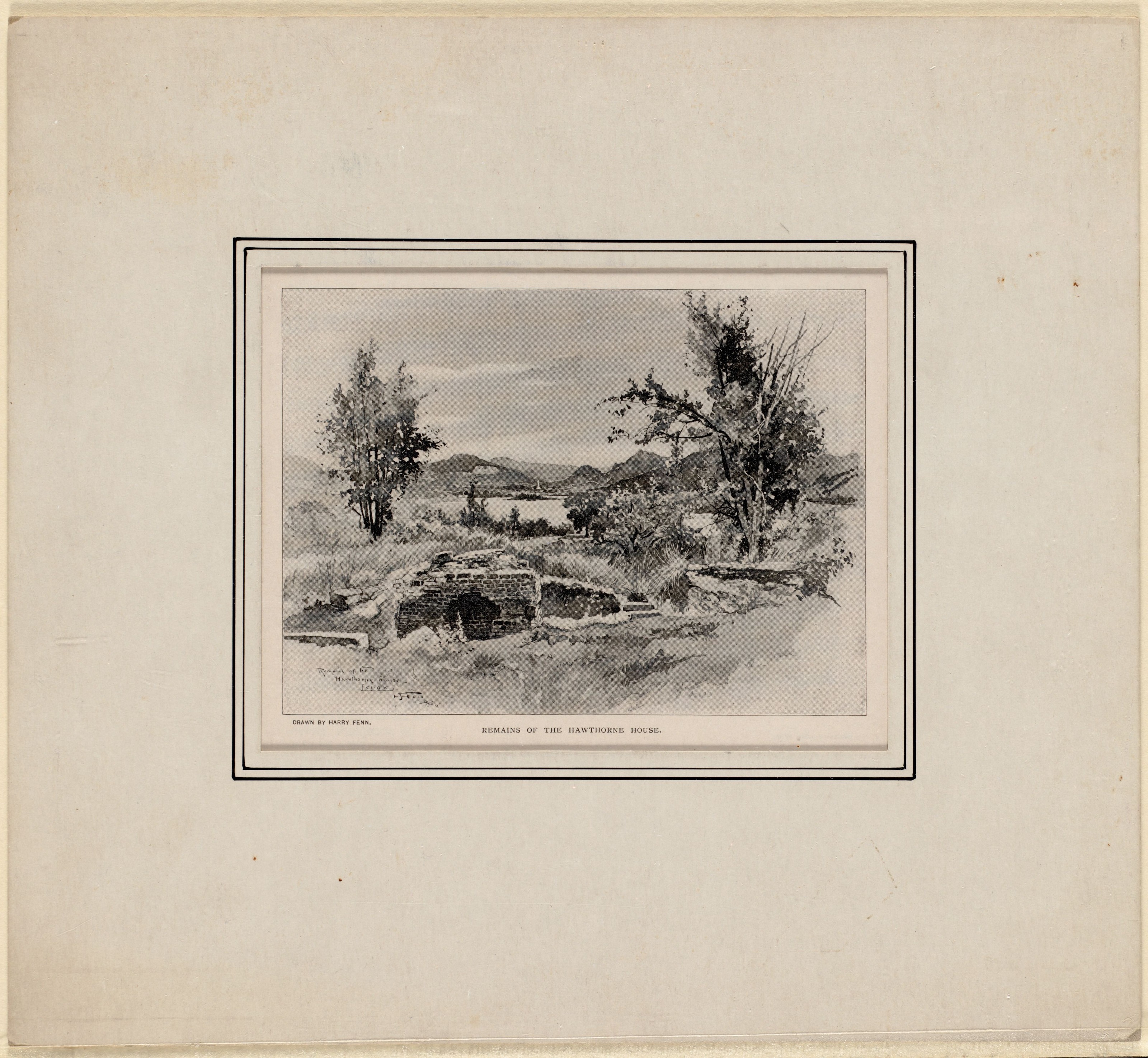
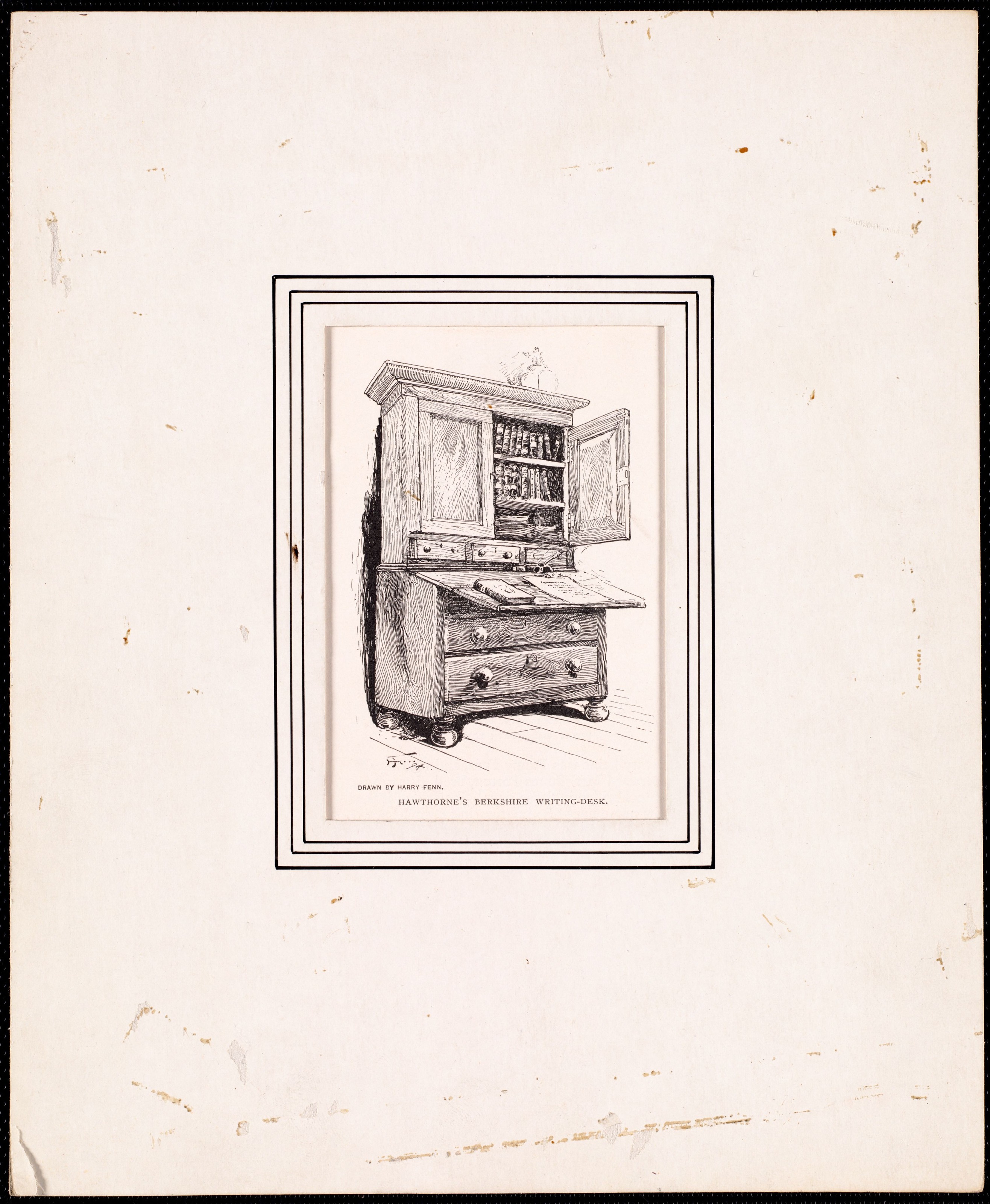
Second, four drawings by Harry Fenn, three of them from 1894 and all marked as taken from nature. One is captioned “the Hawthorne House at Lenox” and noted as “from a sketch made a few years after Hawthorne lived there.” Another is captioned “Remains of the Hawthorne House.” The third is the writing-desk. By 1894 there was not much house left to draw.
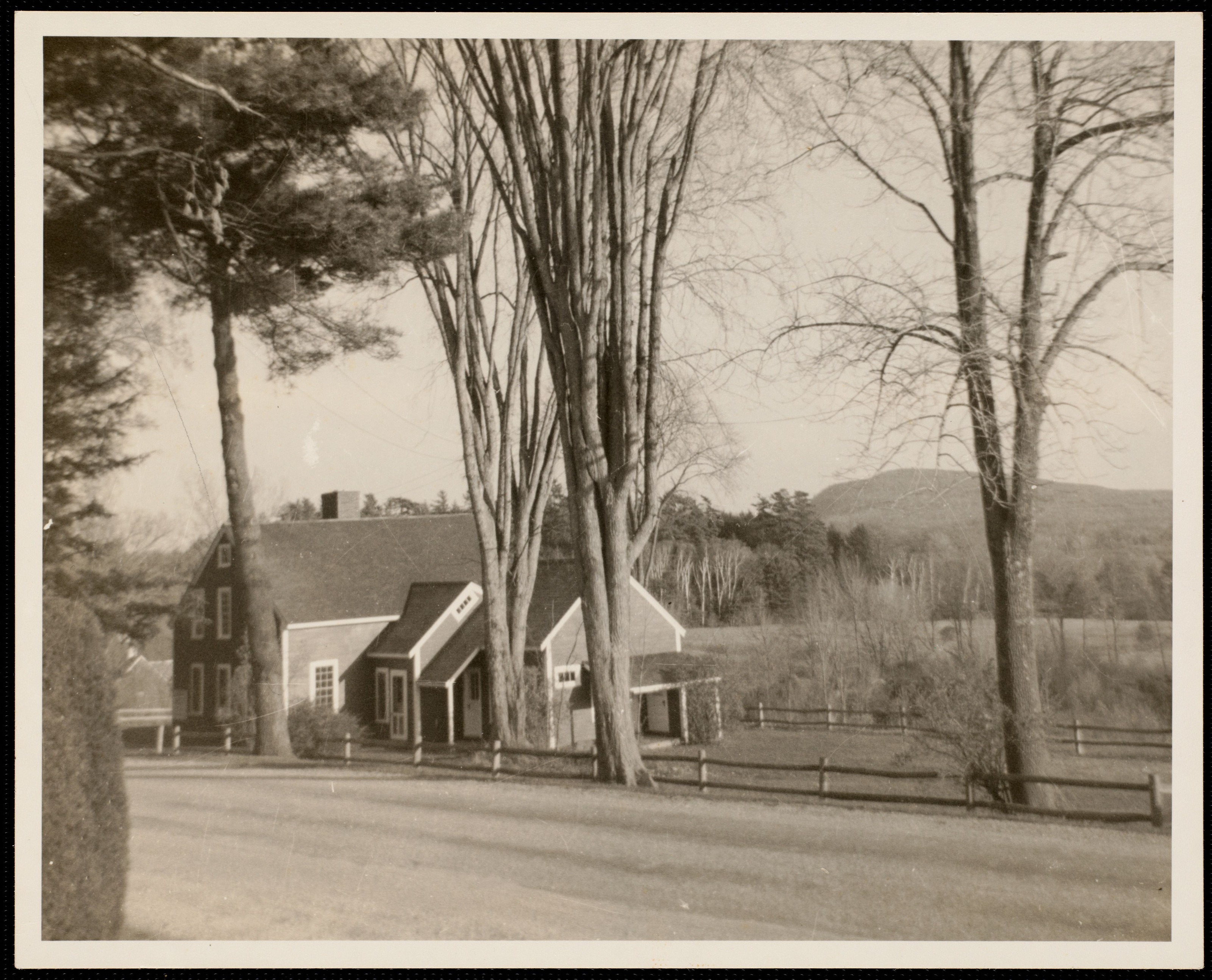
Third, the house again, photographed about 1948–1955 — standing, red, whole. It is a rebuilding.
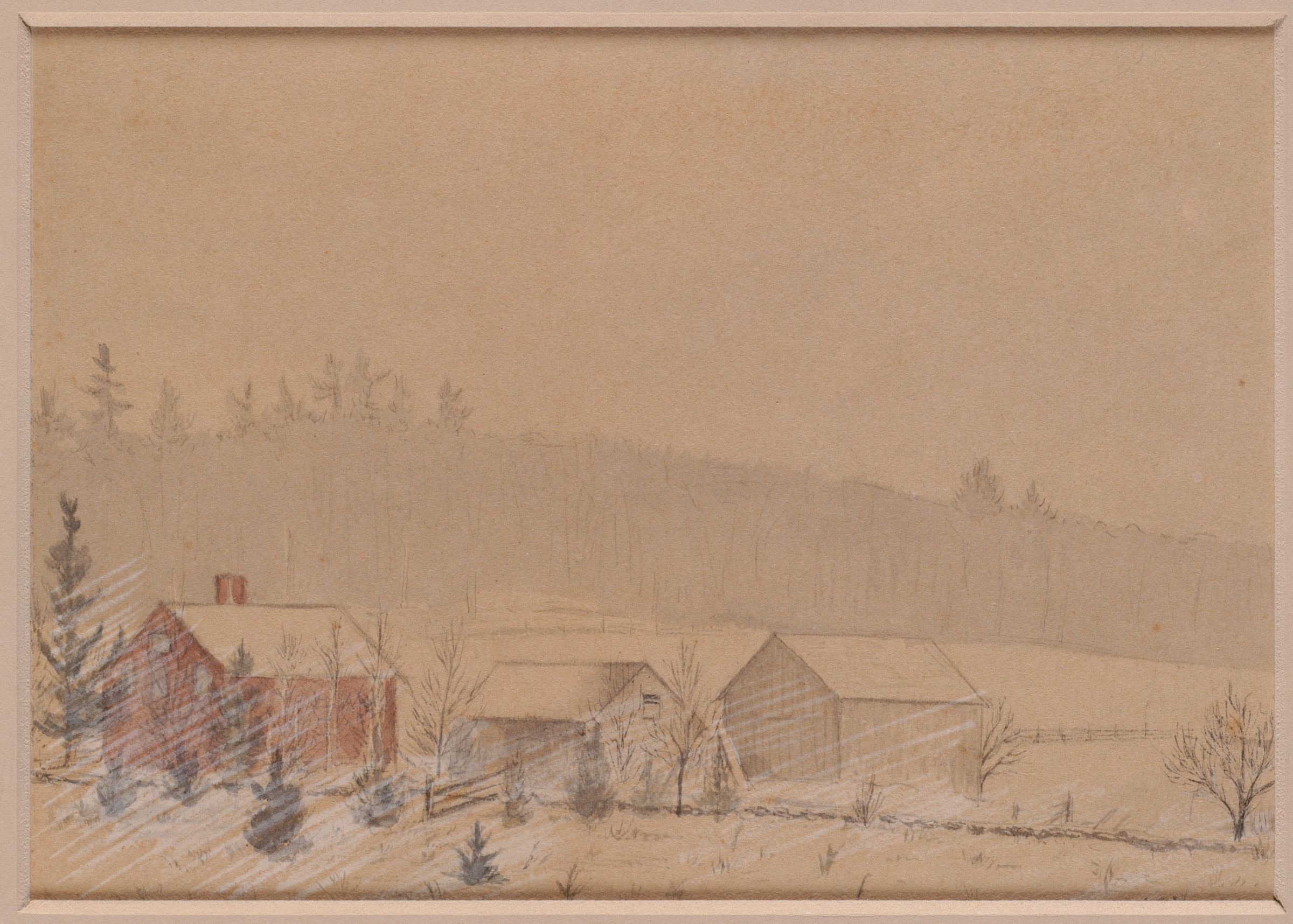
Two of the prints carry something extra. The mount of one rear view turns out to be a cut-up cardboard sign, printed in red, white, blue and olive with soldiers on it, reading “Our men need … Any book you really want to keep is … Leave it at the nearest collection …” — a wartime book drive, sacrificed for backing board. And in the Lenox Historical Society’s collection there is a watercolor and pencil drawing of the cottage in snow, with its outbuildings and the wooded hill behind, by Ellen Sturgis Tappan Dixey: the daughter of the house on the ridge, painting the house at the bottom of the field.
V. Forty-five thousand dollars, and no takers
Caroline Sturgis Tappan died in 1888. The estate went to her daughters, Mary Aspinwall Tappan and Ellen Tappan Dixey, and on Ellen’s death her share passed to her daughter Rosamund Dixey Brooks Hepburn. In 1935 the two of them put Tanglewood on the market at $45,000. Nobody bought it.
So in 1937 they gave it away — to Serge Koussevitzky and the Boston Symphony Orchestra, who had been holding the Berkshire Symphonic Festival in a tent. The Koussevitzky Music Shed, designed by Eliel Saarinen and simplified in execution by the engineer Joseph Franz, opened on 4 August 1938 with some 5,100 seats. The Berkshire Music Center followed in July 1940.
The road that runs from Lenox village down past Wheatleigh toward the Bowl is called Hawthorne. Not Tappan, and not Ward.
Sources
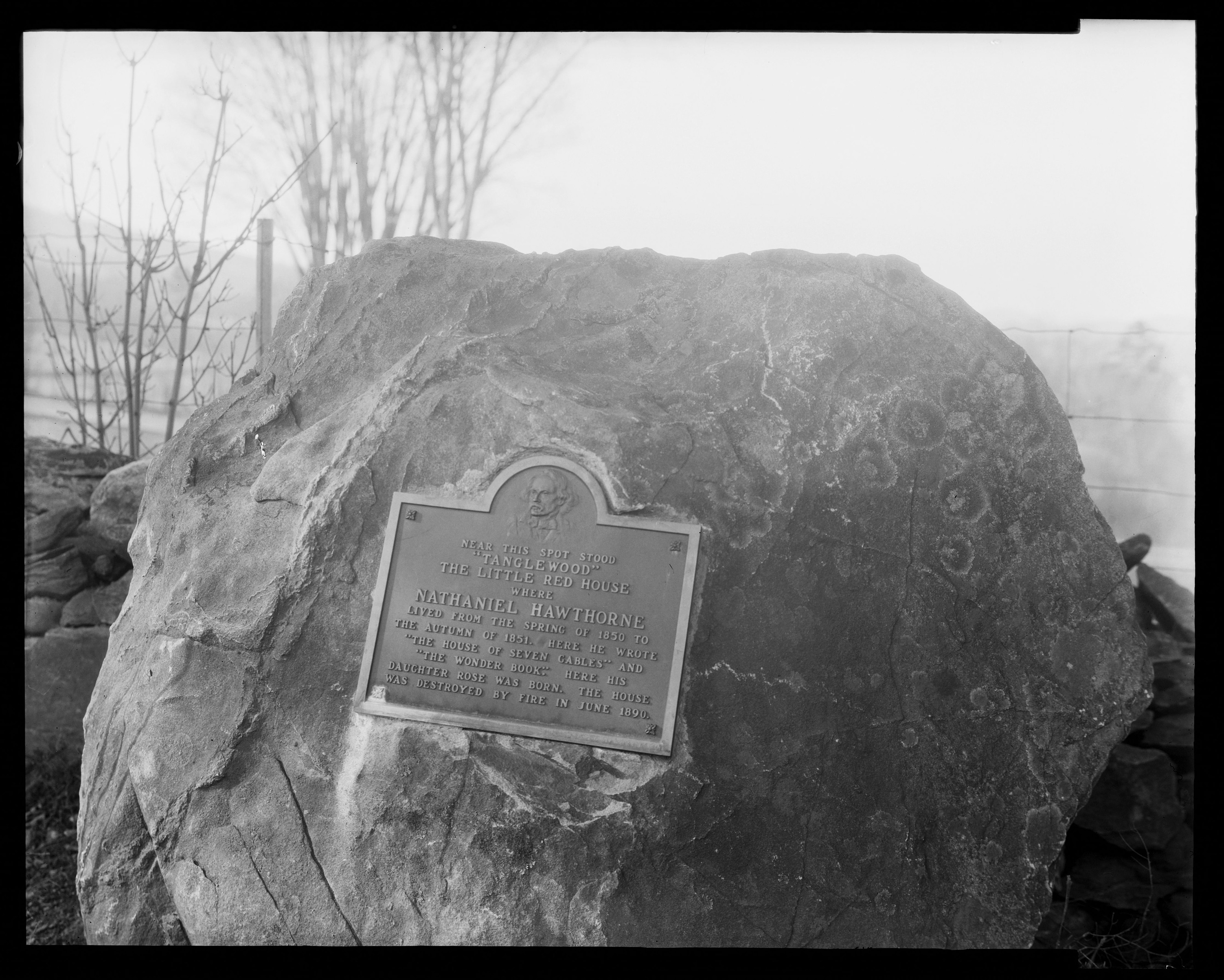
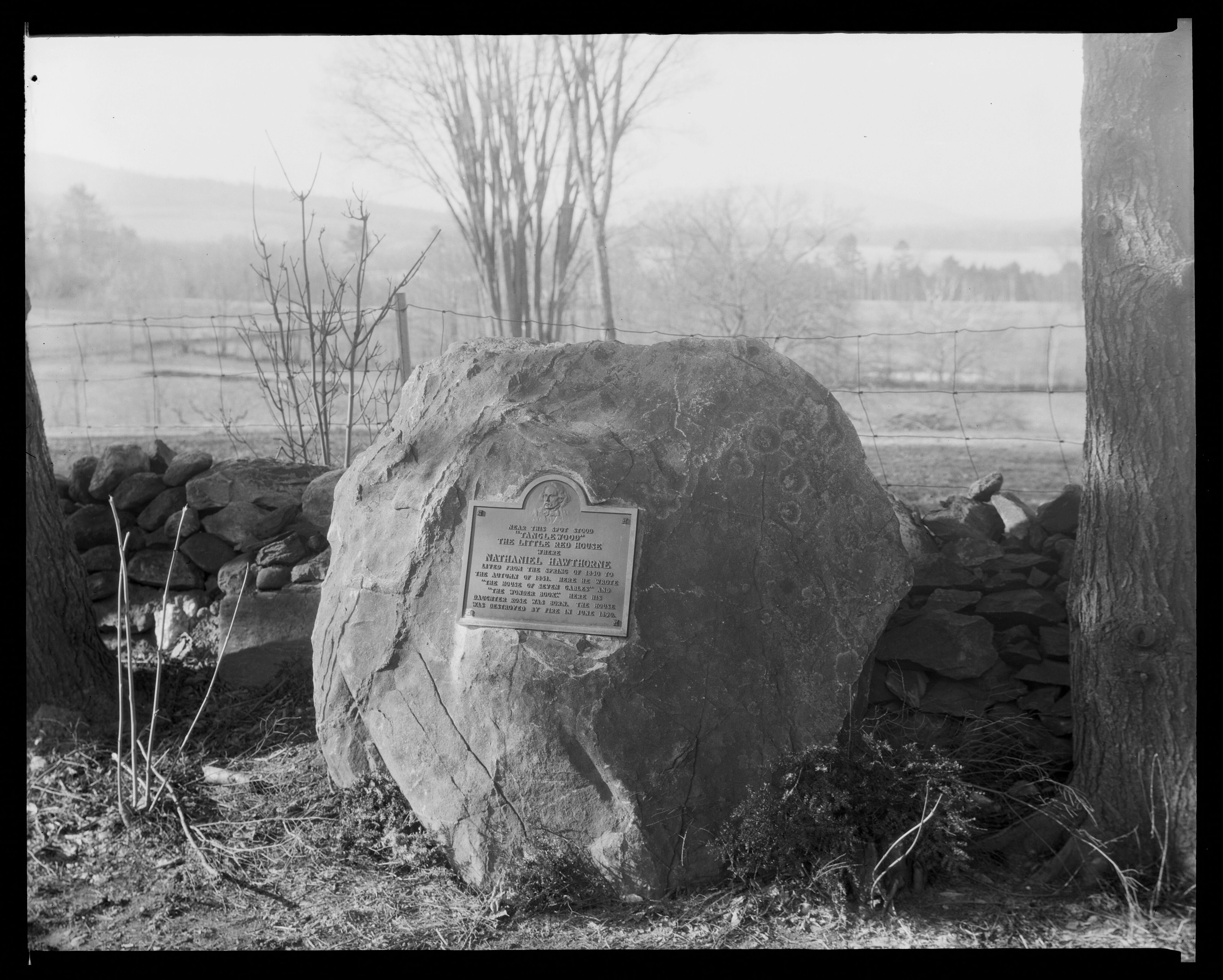
Photographs and drawings: Lenox Library Association, Local History Photograph Collection, via Digital Commonwealth — twelve items, licensed CC BY-NC-ND 4.0, with titles, dates and the inscriptions on prints and mounts quoted as catalogued; two Edwin Hale Lincoln photographs of the Hawthorne commemorative rock, whose rights the Library gives as “No known copyright restrictions,” asking that it be contacted about reuse. Lenox Historical Society, via Digital Commonwealth: “The Little Red Cottage” by Ellen Sturgis Tappan Dixey, CC BY 4.0. A thirteenth Local History view, “Tanglewood: trees and views,” is marked all rights reserved and is not shown. The Berkshire Eagle, “The Cottager: Highwood Manor: Where Hawthorne dreamed up Tanglewood tales,” for Ward’s visit in the third week of March 1844 and his verdict “very good,” the completion in 1845, the original Italianate character and the Bullards’ mansard, the 1857 purchase by William Story and Louisa Norton Bullard, Mary Reynolds Bullard’s death in 1960 and the bequest to Harvard, and the 1986 purchase by the BSO for $1.7 million; and Sophia Hawthorne’s 1851 letter about “an excellent drawing of Highwood Porch, for ‘A Wonder-Book.’” The Berkshire Eagle, “The Cottager: Tanglewood: When parties, picnics on the lawn were private,” for the 1849 purchase of 210 acres, the orchard of apples, peaches, pears and plums, the Hawthornes’ tenancy and the September 1851 dispute over the orchard, Upjohn’s plans of April 1859 and his departure for Europe, the Tappans’ rental of Highwood from Samuel G. and Anna Ward, the start of building in 1864 under John Hubbard Sturgis, the five gables and entertaining porch, Ellen Dixey’s 1896 music room, formal gardens and hedge maze, Caroline’s death in 1888, the descent to Mary Aspinwall Tappan and Rosamund Dixey Brooks Hepburn, and the 1935 asking price of $45,000. Buildings of New England, “Highwood // 1845” and “Tanglewood // c.1865,” for Ward’s age, the attribution to Richard M. Upjohn, John Mason Harding and Mary Riker Harding, and the Stick Style of the Tappan house. Wikipedia, “Tanglewood,” for the 1937 gift by Rosamond “Dixey” Sturgis Brooks and Mary Aspinwall Tappan, the name’s descent from Tanglewood Tales, the Koussevitzky Music Shed by Eliel Saarinen with Joseph Franz, its opening on 4 August 1938 and some 5,100 seats, and the 1986 Highwood acquisition adding about forty per cent to the property. The Cultural Landscape Foundation, “Tanglewood,” for the Berkshire Music Center opening in July 1940 and Seiji Ozawa Hall in 1994. No Olmsted job for either estate appears on the firm’s Berkshire list.