The people themselves
The year they worked, the houses they slept in, the places they went when it ended — and the two books that record more working people in these towns than anything else that survives.
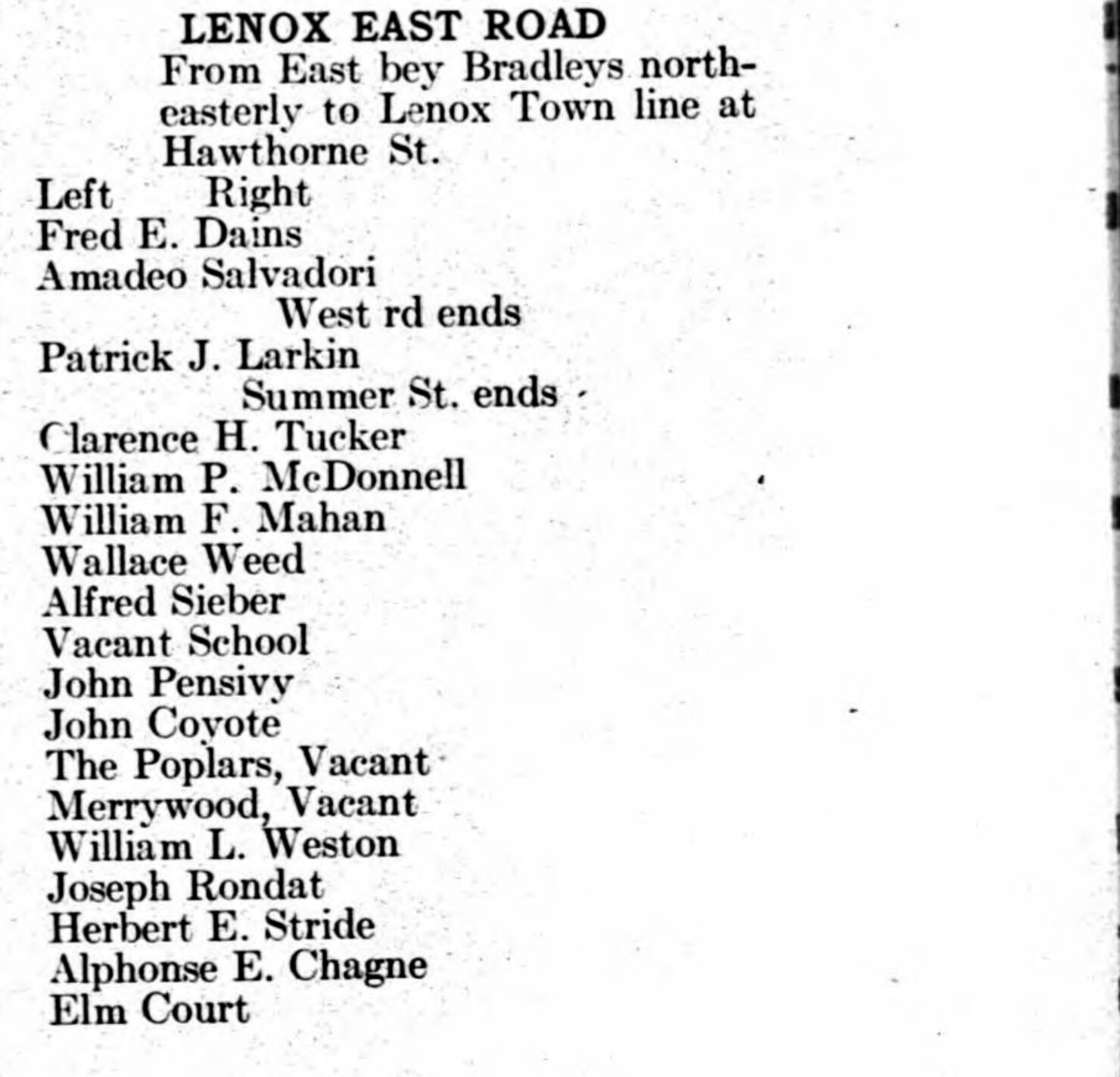
The index
Everyone named
The rest of this section argues that these people were not recorded. This is the list of the ones who were, with the source for each.
Read →
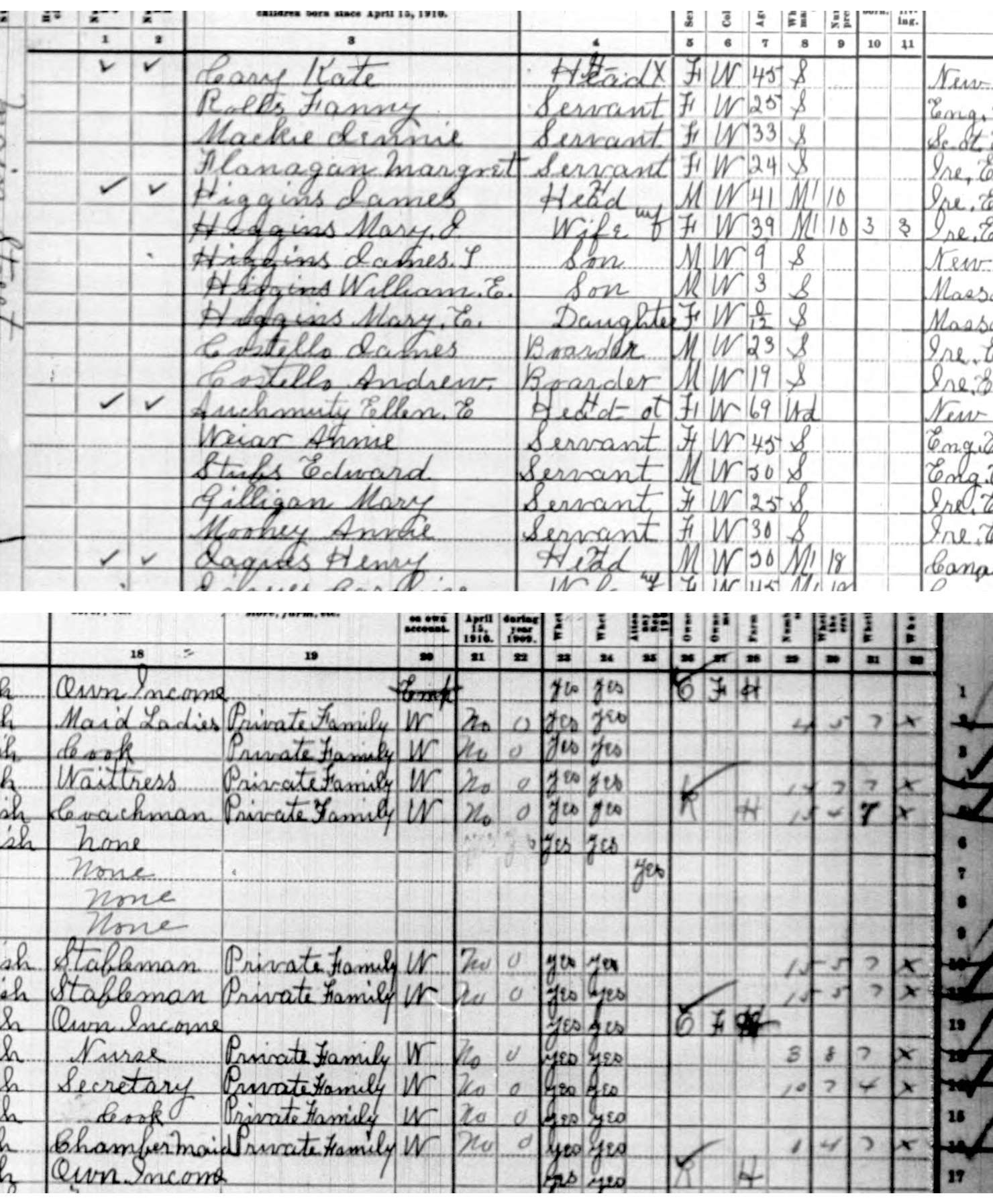
The census
Twelve weeks out of work
Maid, cook, waitress, chambermaid, coachman, stableman — eight occupations on one 1910 page, every one of them a blank in the directories.
Read →
The village in 1910
Operator, paper mill
The census prints what the directories will not: rag cutter, sorter, beater man, machine tender — and two sisters of twenty-one and nineteen in the rag room.
Read →
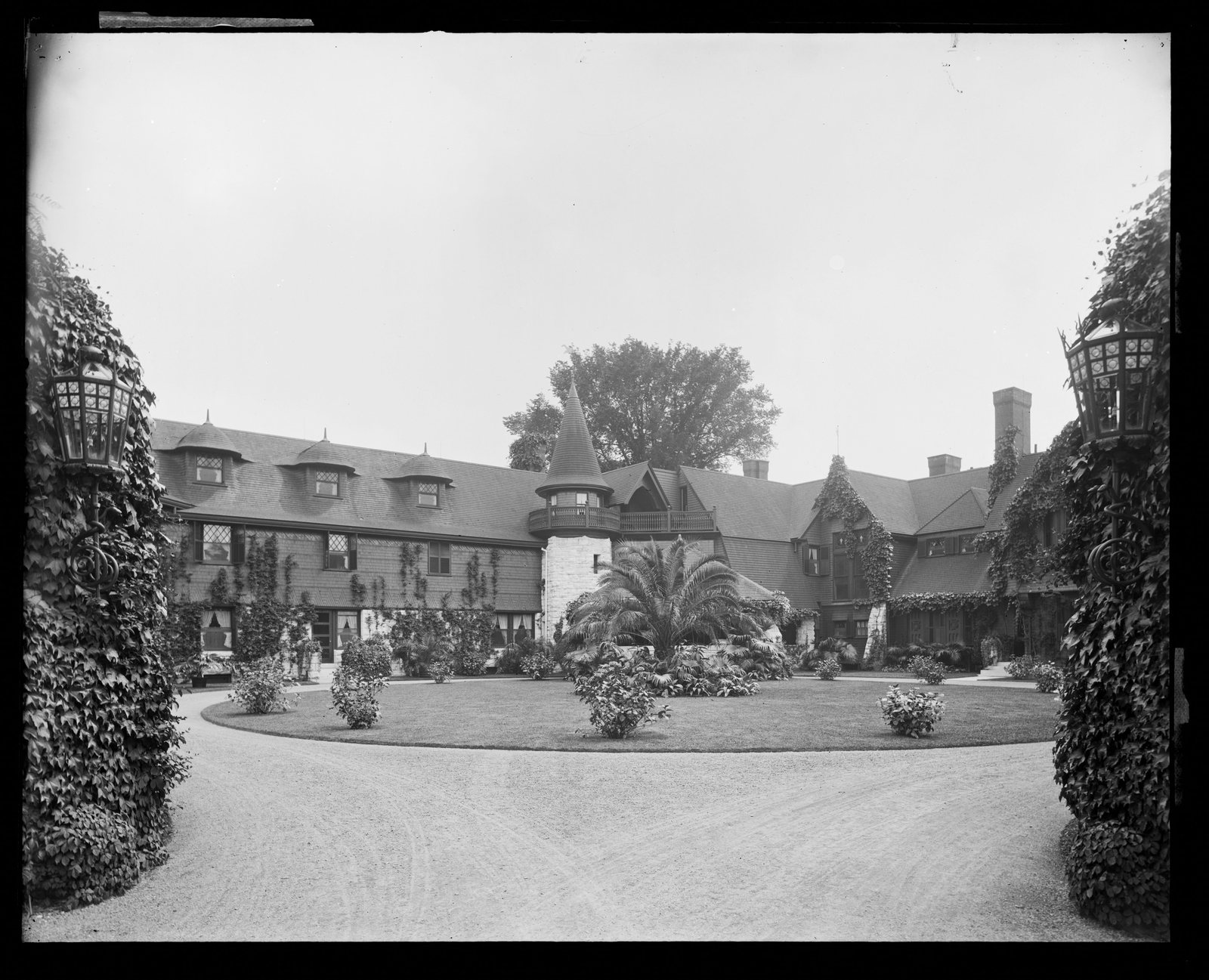
One house, named
Emp Elm Court
Elm Court straddles the Lenox–Stockbridge line and the 1926 directory lists its staff twice, once in each town. Twenty-eight people, eight trades — and one of the blanks turns out, three volumes later, to be running the place.
Read →
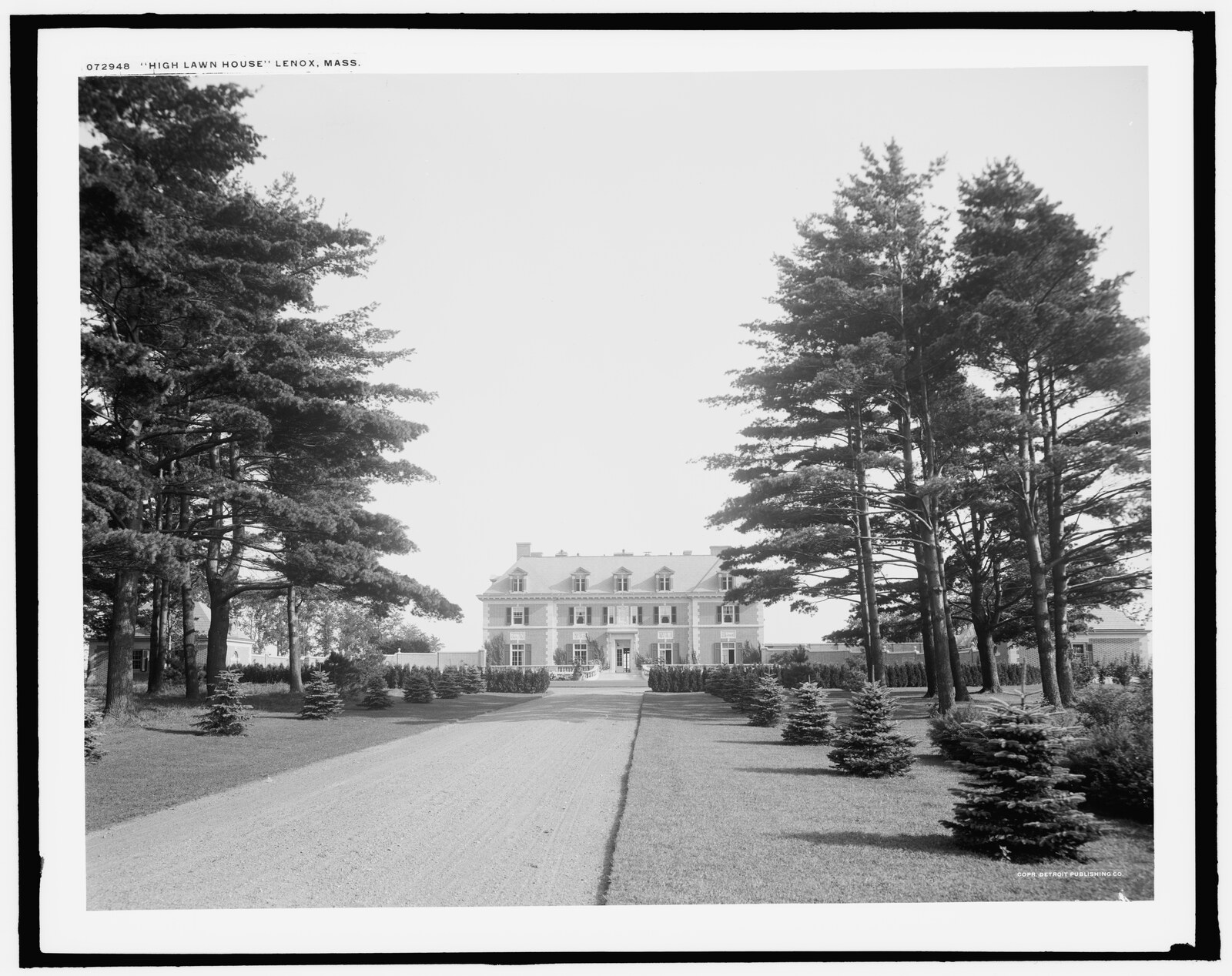
One house, three towns
Emp Highlawn
Elm Court straddles two towns. Its neighbor straddles three, and the 1926 book enters it under four different names — thirty-seven working people, a boarding house of its own, and an Olmsted file with no drawings in it.
Read →
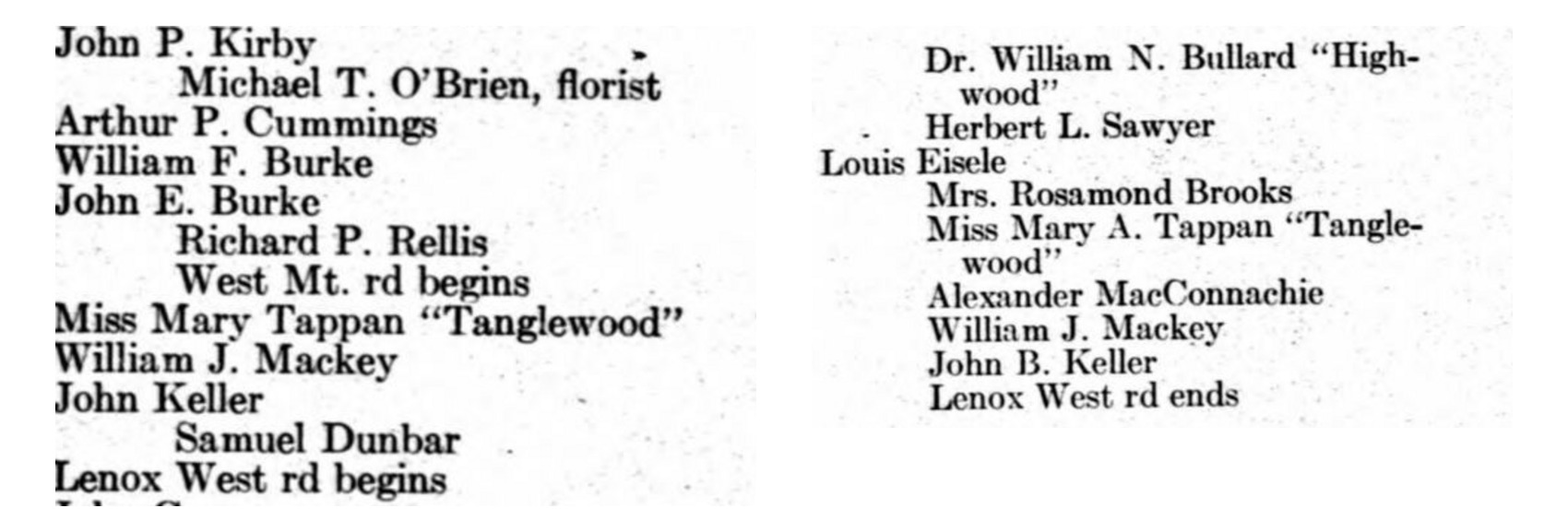
Two names, two towns
The Two Hawthornes
Lenox had a Hawthorne Street in 1926 and so did Stockbridge, and the book that printed both never mentions the other. One stretch of ground, walked twice from opposite directions, ninety pages apart.
Read →
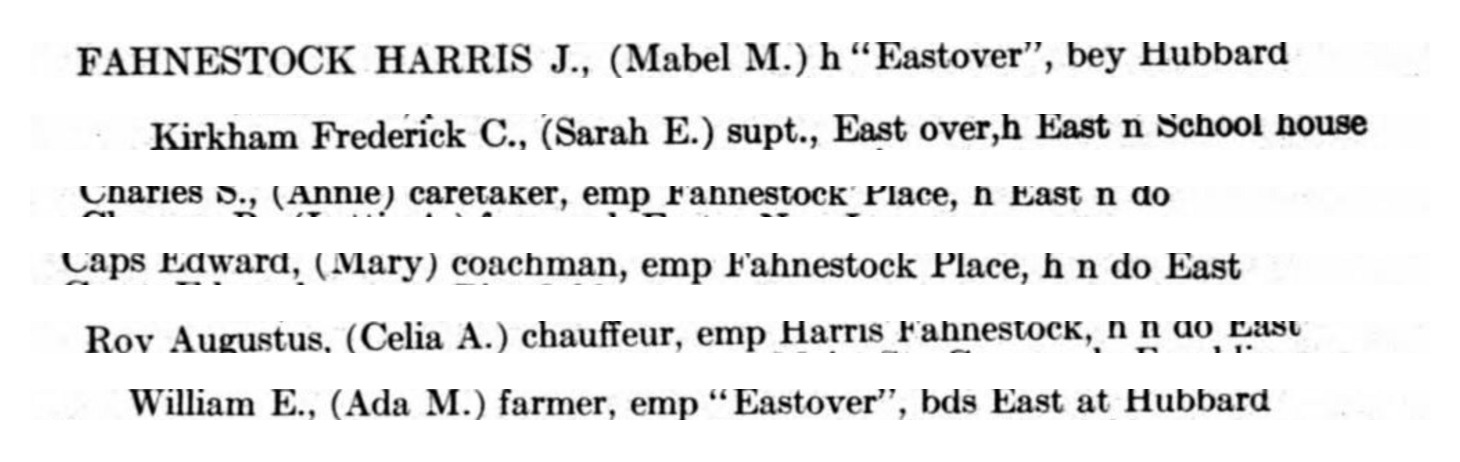
One payroll, eight names
Supt., East over
Eastover kept sixty-four servants. The directory that walked every door in Lenox in 1926 names eight of them — and four live in a row on the other side of the road, past the schoolhouse.
Read →
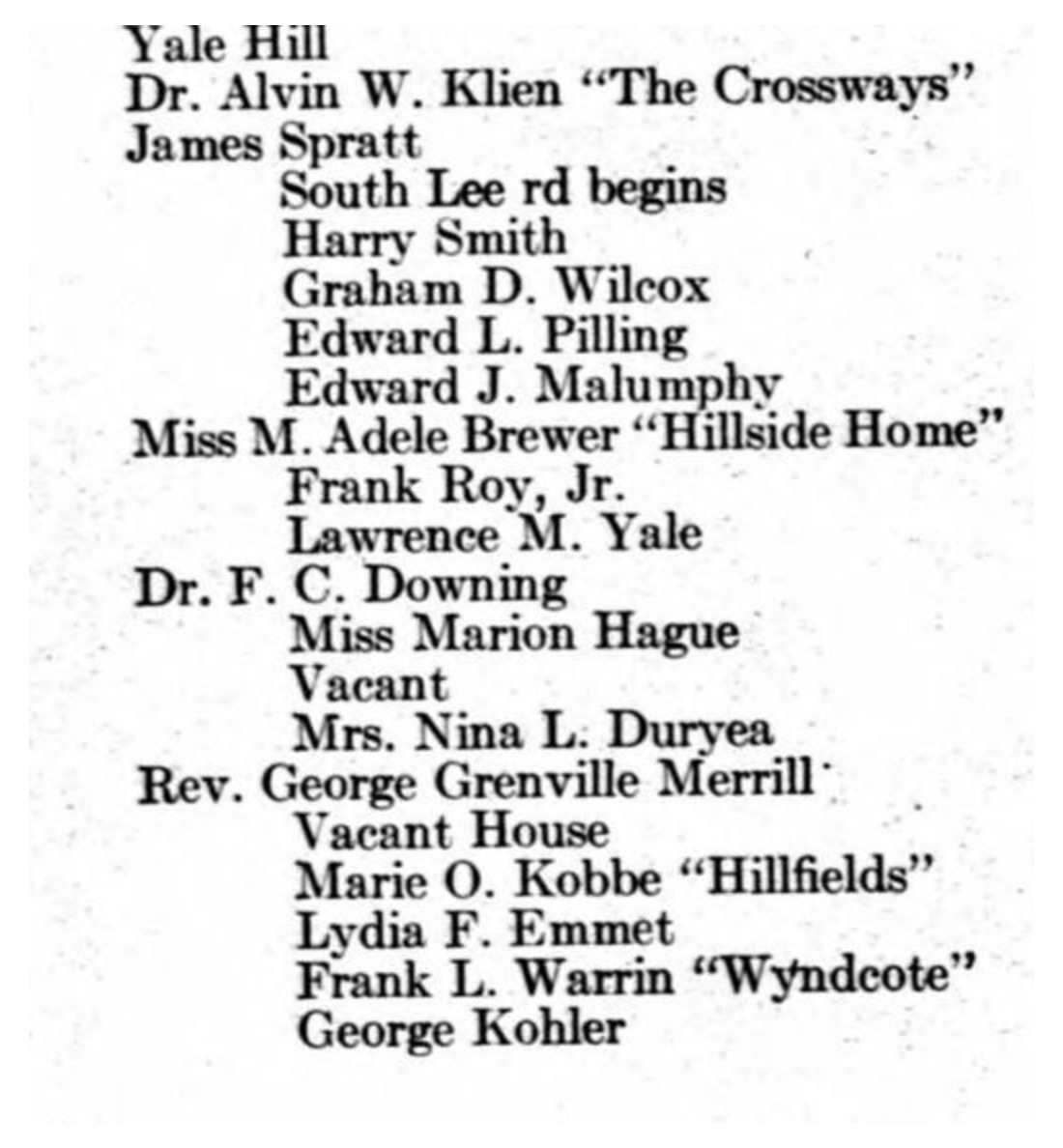
A hill, not a house
Yale Hill
Yale Hill turns up on lists of Stockbridge cottages. In the 1926 directory it is a line in a street list — and then twenty households including two painters, a novelist in a converted grist mill, and a man named Yale who dusted carpets.
Read →
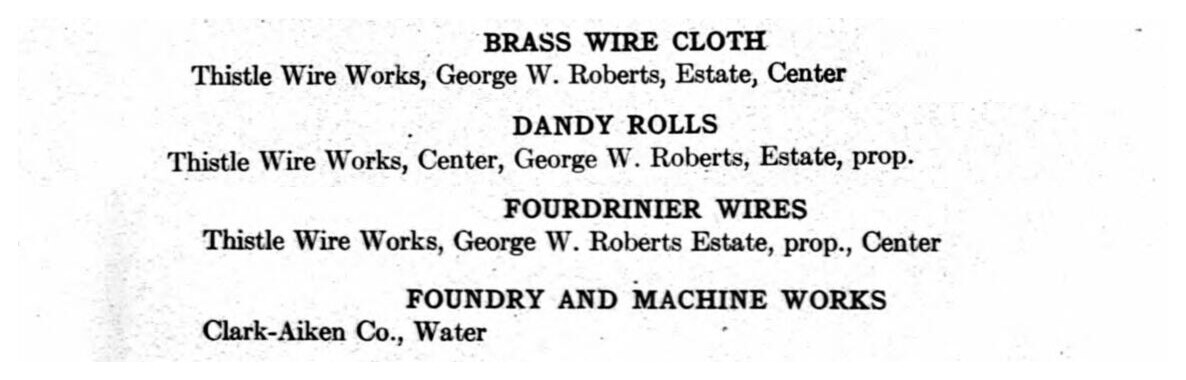
The other payroll
Emp Valley Mill
Three miles from the Lenox cottages, the 1926 classified directory lists fourdrinier wires, dandy rolls, marble and lime — and gives 191 of 229 mill workers an employer with no trade against it.
Read →
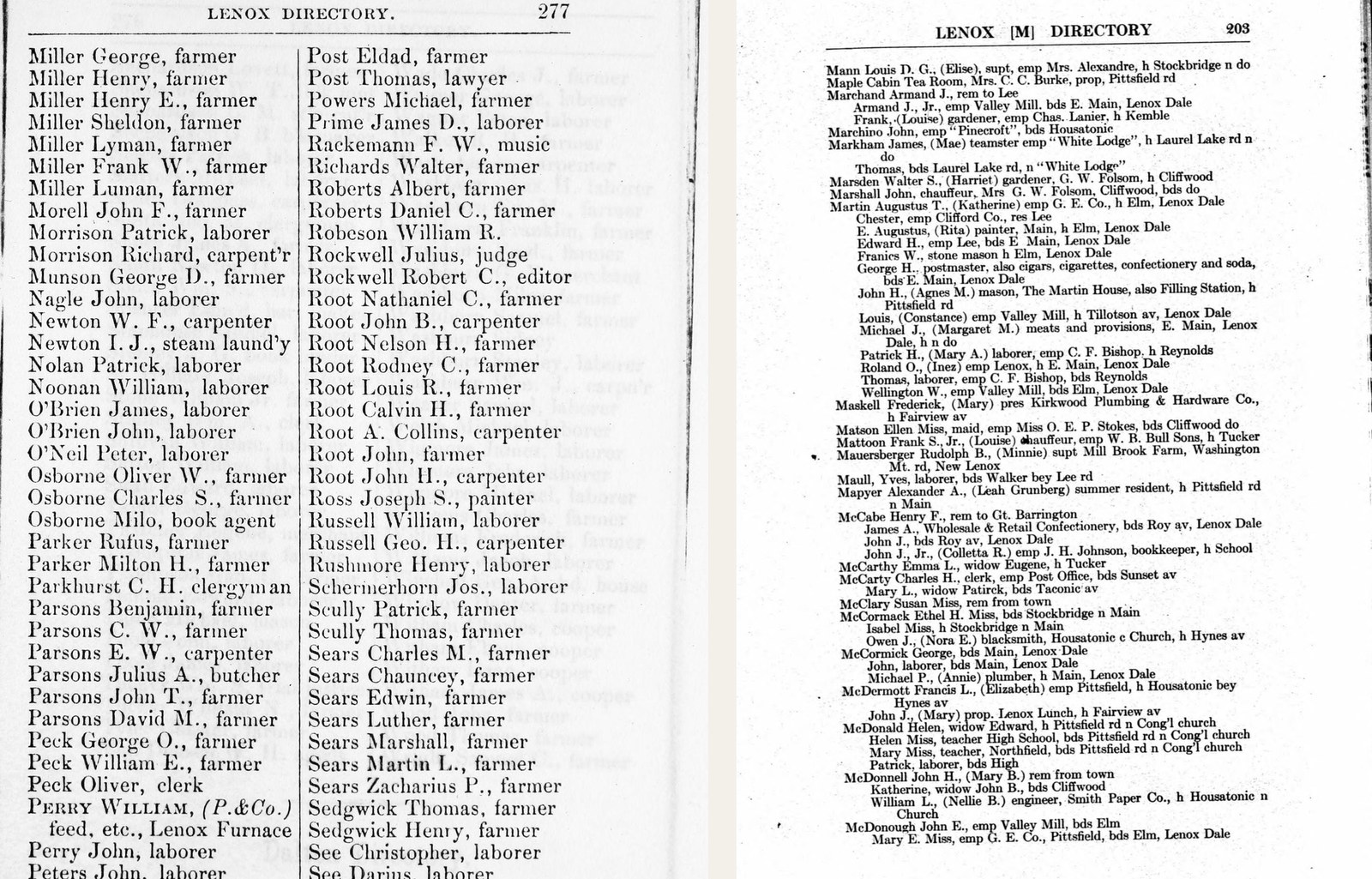
Fifty-two years apart
Not one gardener
Lenox in 1874 had 158 farmers, seventeen paper makers and four glass makers, and not one gardener, chauffeur, butler or maid. Fifty-two years later the makers are gone and the servants are there. The same town, counted twice by the same rule.
Read →
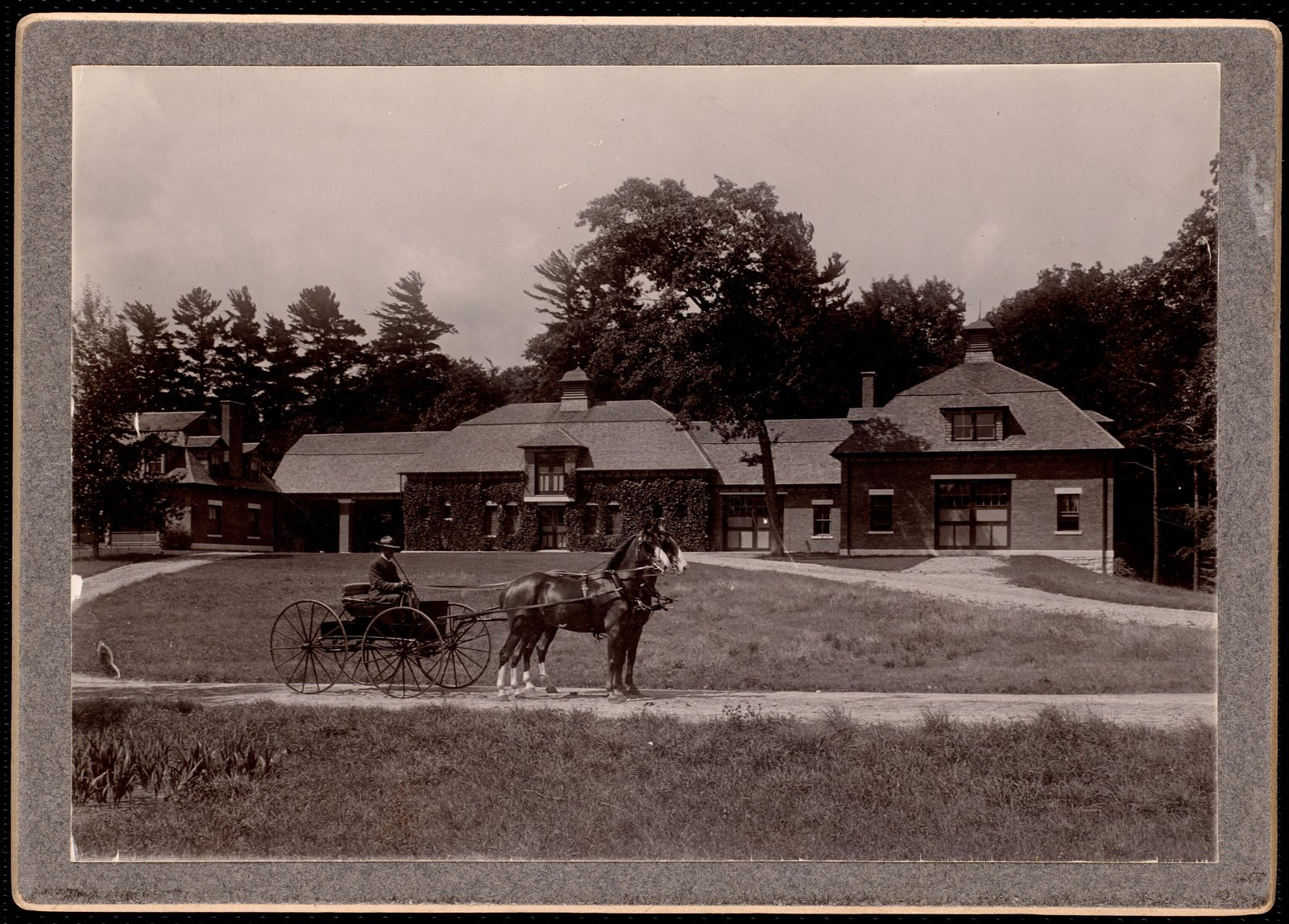
The trades over time
1911
Seventy-two Pittsfield directories counted trade by trade, 1882 to 1943. In 1911 there were twenty-two coachmen in the book and twenty-three chauffeurs. The line never crosses back.
Read →
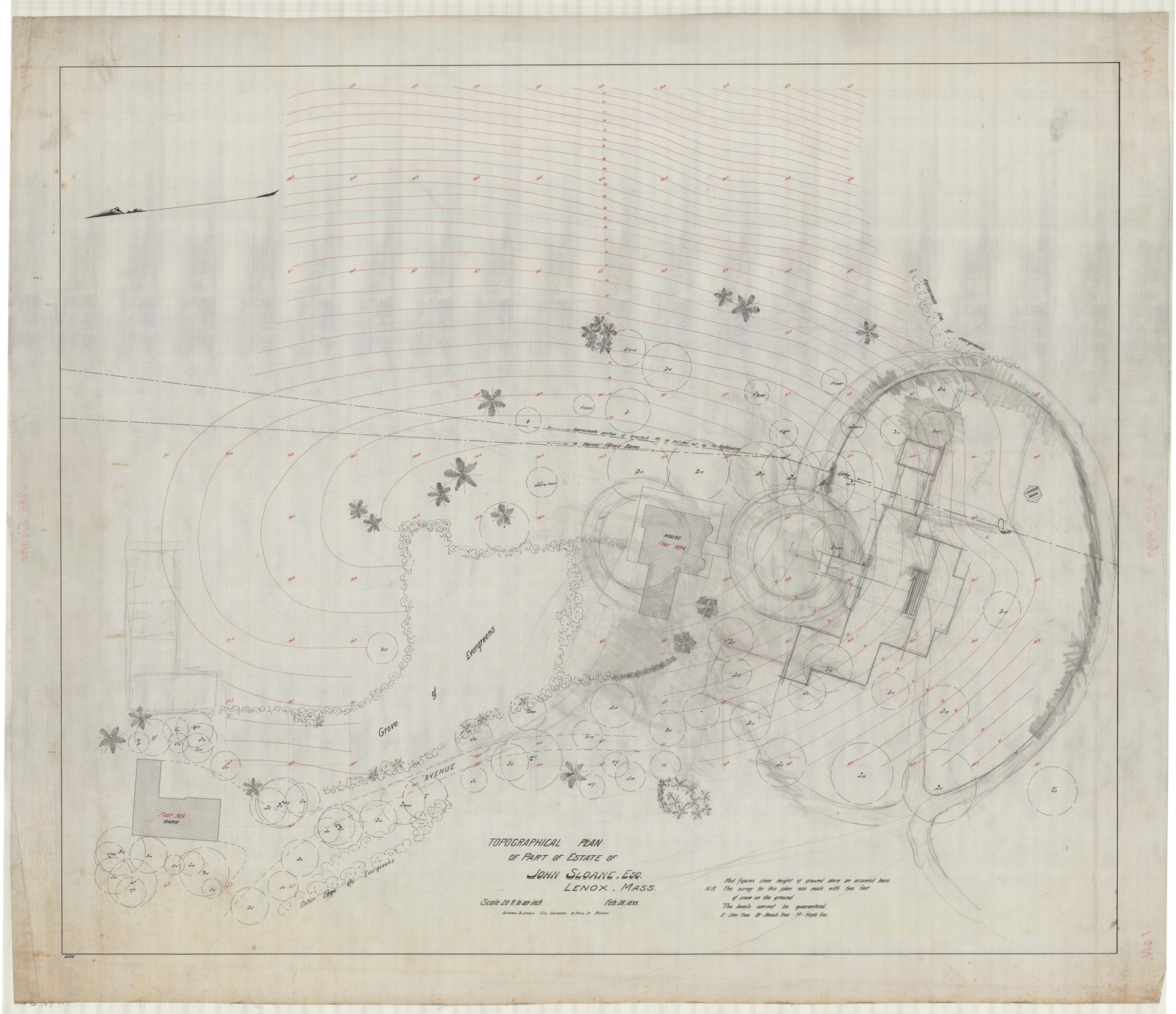
The working year
Two feet of snow on the ground
Everything here had a season, and the season was not negotiable. The calendar of the work, read off the dates on the drawings — and it starts in February, in the snow.
Read →
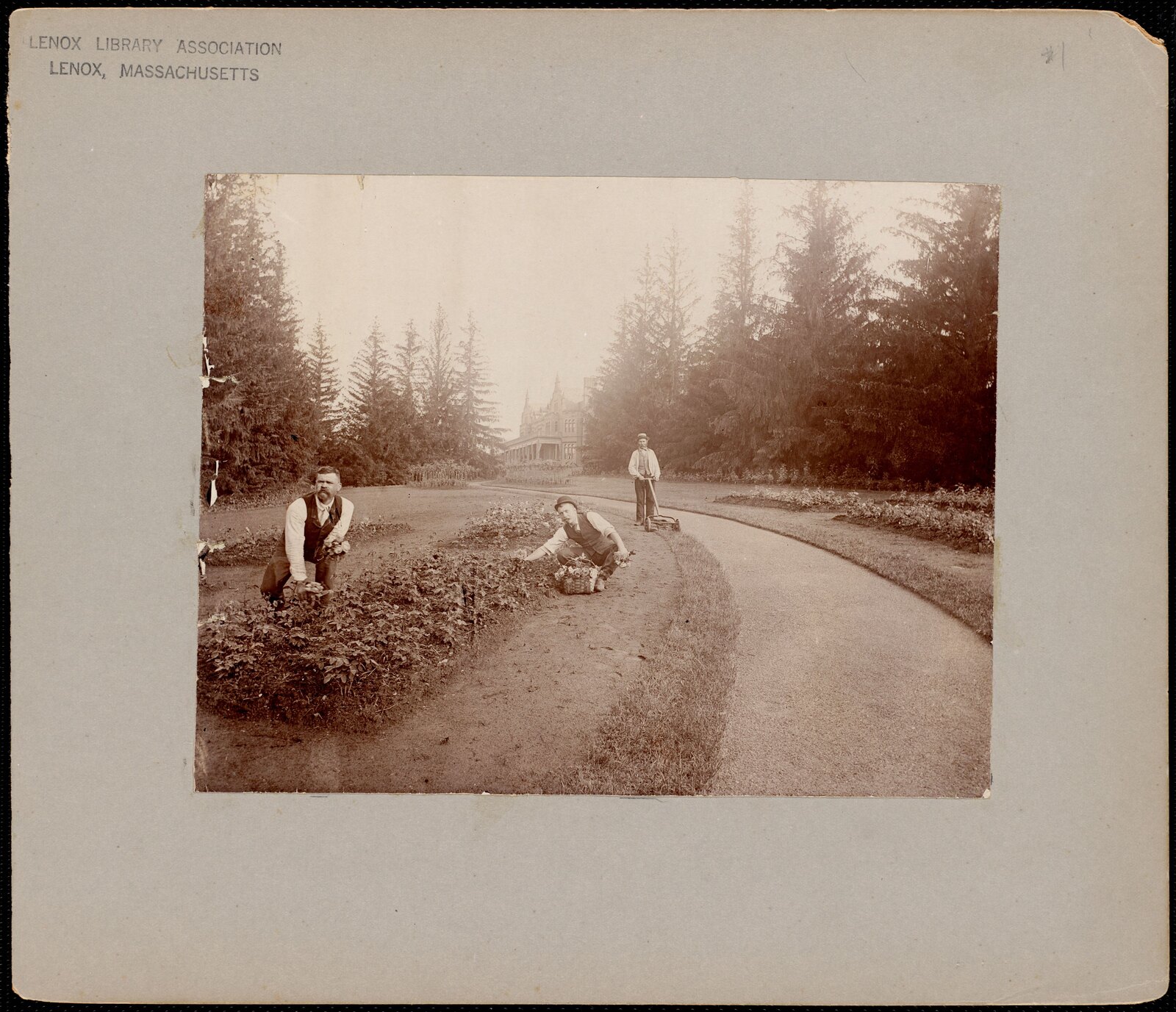
Where they lived
Three bedrooms and a bath
Sixty-two per cent of the indoor staff boarded where they worked. Three-quarters of the carpenters owned a house in the village. One abbreviation tells you which life you had.
Read →
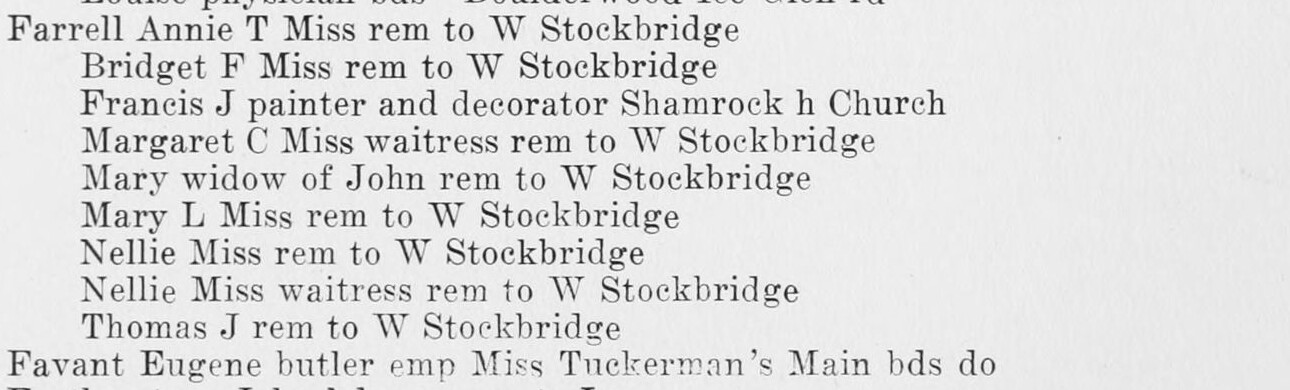
What happened to them
Rem to Ireland
Two hundred and eighteen working people in one directory are recorded as gone, with the place they went printed after their names. Ninety-four left the county.
Read →
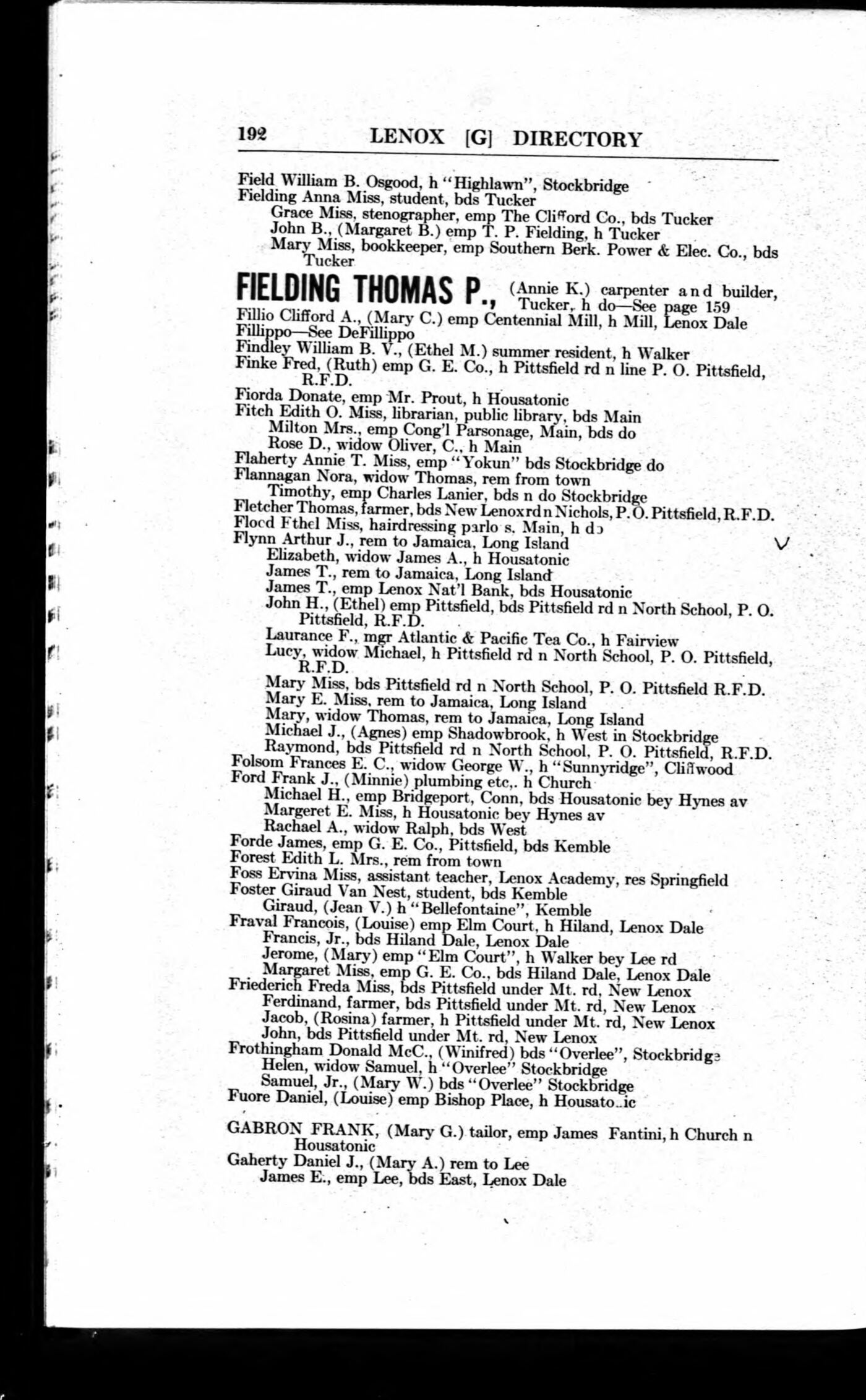
Central Berkshire, 1926
The book with Lenox in it
The volume the other two are missing: Lenox, Lee, Stockbridge and six more towns, with Elm Court, Wheatleigh, Stonover and Tanglewood printed as street addresses.
Read →
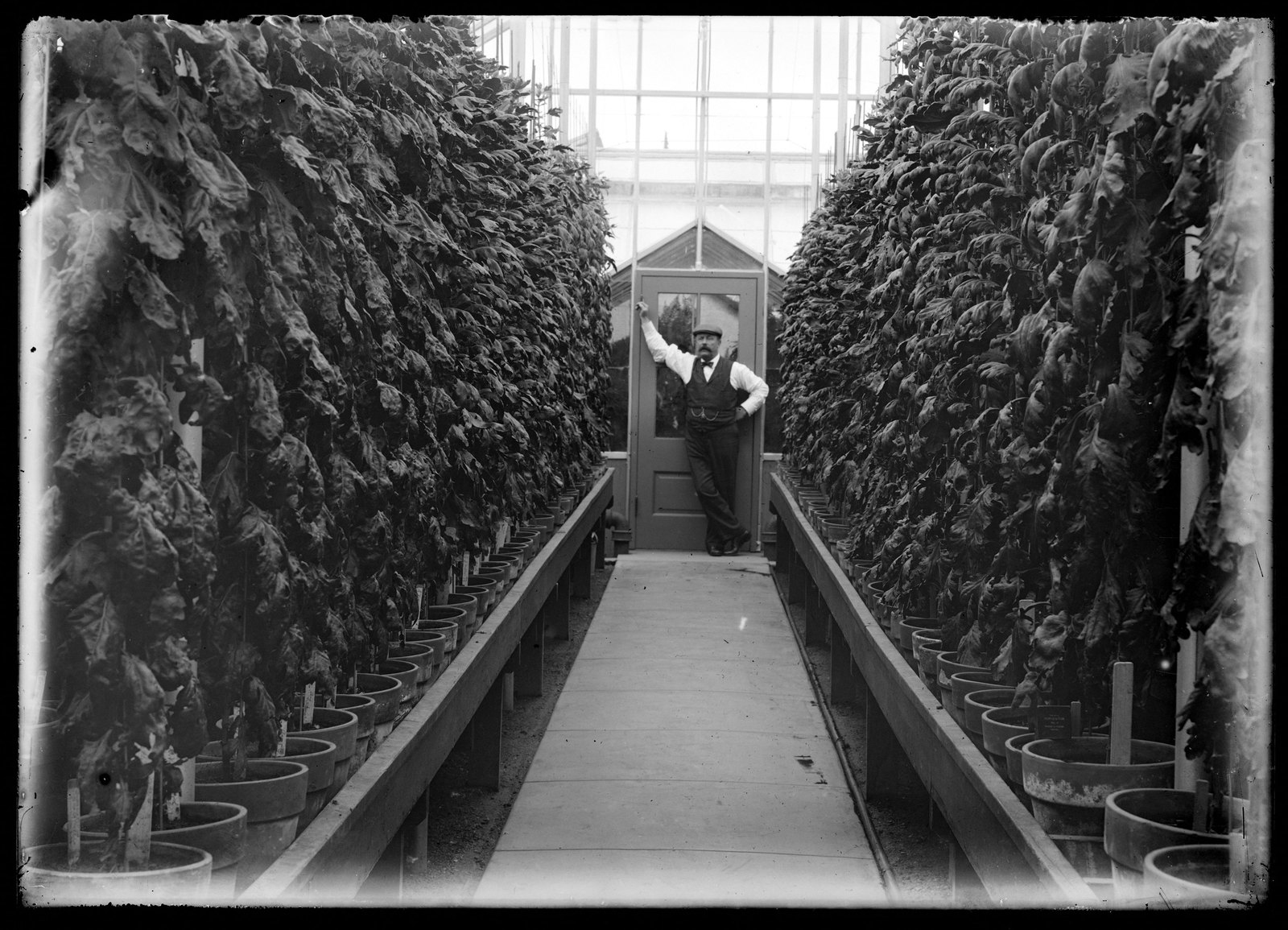
South Berkshire, 1923–’25
The whole county, door to door
Every household in ten towns, canvassed door to door and printed — name, trade, employer, street. All 448 pages, and the advertising that paid for them.
Read →
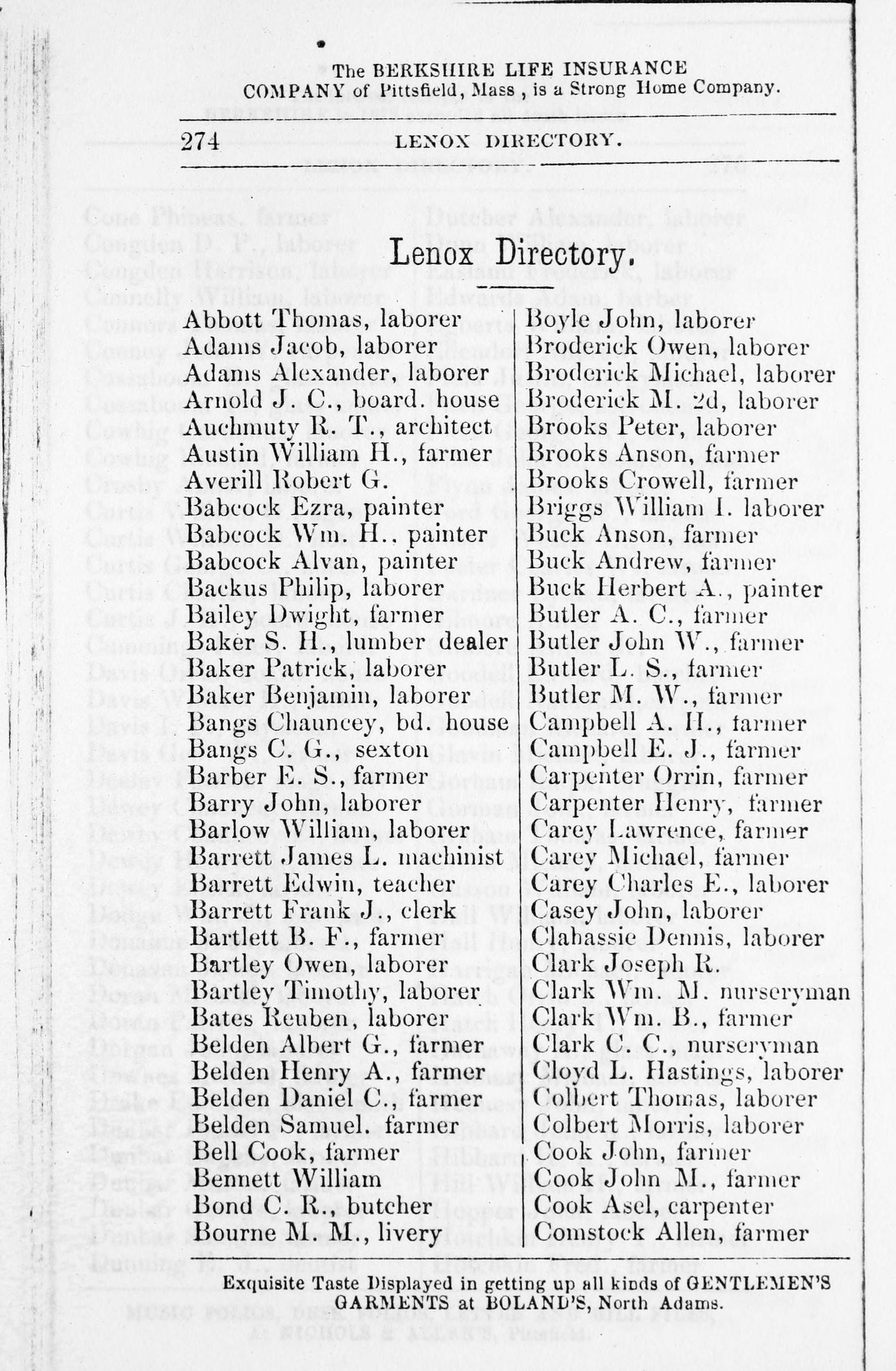
Berkshire County, 1874
The county before
Briggs canvassed the whole county nineteen years before Wheatleigh. Lenox burned lime, sawed lumber and had not one coachman in it.
Read →
Keep up with it
New properties go up here as the research turns them up.